博客

  • Cargo plane wreckage found off Pakistan’s coast as search continues for 5 missing crew

    Cargo plane wreckage found off Pakistan’s coast as search continues for 5 missing crew

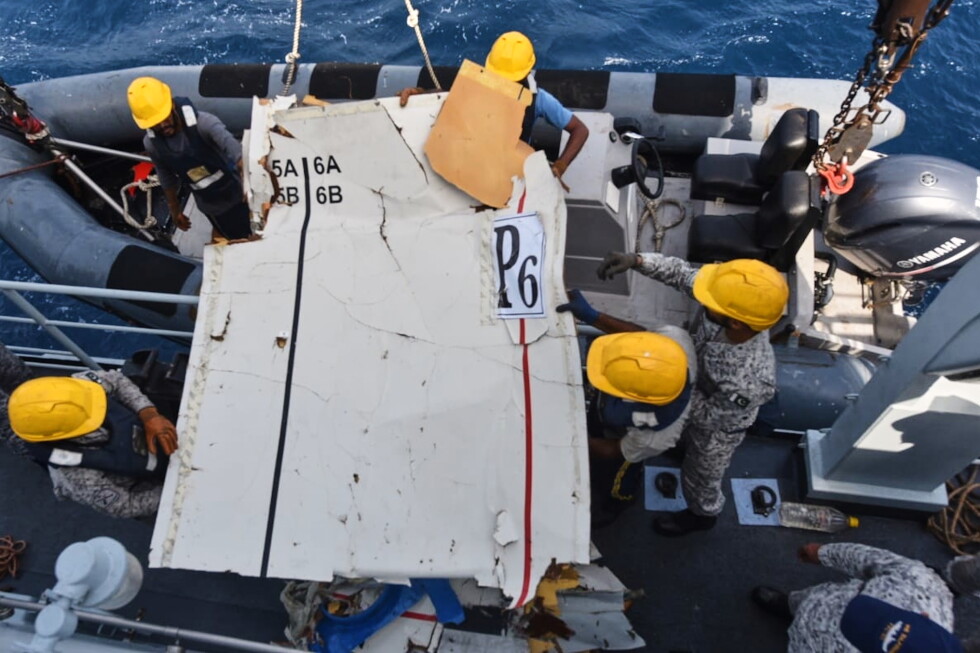
    KARACHI, Pakistan – Rescue teams comprising Pakistani navy personnel and civilian search units have located and pulled out debris from a private cargo plane that vanished mid-approach to Karachi’s major southern port, officials confirmed Wednesday, with operations ongoing to locate five missing crew members who were on board the aircraft.

    The aircraft, operated by Pakistan-based private aviation firm K2 Airways, had begun its journey from Sharjah, United Arab Emirates, before flight crews alerted ground control to a critical navigational system malfunction. Contact with air traffic control was lost late Tuesday, shortly after the distress report was filed.

    According to an official update posted to the social platform X by Pakistan’s Airports Authority, combined search teams deployed on ships and patrol aircraft spent roughly 12 hours combing the northern Arabian Sea before successfully pinpointing the plane’s wreckage. Even with debris recovered, the hunt for the five missing crew members remains ongoing.

    Three senior officials briefed on the details of the search operation, speaking on condition of anonymity due to the incident’s sensitive status, shared that rescuers face steep barriers to completing their mission. The wide, unmarked search zone in the Arabian Sea combined with rough monsoon-driven sea conditions have slowed search efforts considerably, they noted.

    Pakistan’s Prime Minister Shehbaz Sharif has formally extended his condolences to the families of the missing crew, a statement from his office confirmed, and issued orders to relevant government agencies to commit every available resource to the search-and-rescue operation.

    K2 Airways later released a formal statement naming the five missing crew members: Captain Muhammad Rizwan Idris, First Officer Faisal Jatoi, flight engineers Muhammad Hamid and Muhammad Arif Siddiqui, and aircraft loader Muhammad Taufiq Khan. “We continue to pray earnestly for the safety of our colleagues,” the statement read.

    Early data from Pakistani aviation authorities offers preliminary clues to the plane’s final moments. Pakistan’s Airports Authority said earlier this week that radar tracking showed the jet made an abrupt, unexplained course change and entered a rapid descent before all contact was lost at approximately 9:21 p.m. Tuesday. At the time of disappearance, the plane was roughly 155 nautical miles (178 miles, 287 kilometers) west of Karachi’s port.

    Aviation specialist Imran Aslam told local Pakistani broadcaster ARY News late Tuesday that the root cause of the incident remains undetermined as of yet. Aslam noted that even in the event of a total engine failure, commercial cargo aircraft are designed to glide for extended periods rather than suffer a sudden, uncontrolled plunge. A full determination of the crash’s cause, he added, will only be possible after investigators retrieve additional evidence, including the plane’s black box flight recorders.

    The crash marks the latest serious aviation incident near Karachi’s major airport. In May 2020, a passenger jet operated by state-owned Pakistan International Airlines carrying 98 people crashed into a densely populated residential neighborhood just outside the airport while on final approach. Ninety-seven of the 99 people on board died, along with multiple people on the ground, leaving just one survivor. A subsequent official government investigation concluded that the crash stemmed from preventable human error by both the flight crew and on-the-ground air traffic controllers.


  • Trains and emergency calls affected after major outage at Australia’s largest telecoms company

    Trains and emergency calls affected after major outage at Australia’s largest telecoms company

    Australia’s largest telecommunications provider Telstra has confirmed that a widespread service outage that hit the country on Wednesday caused broad-ranging disruptions, from halted public transport to failed payment processing, and triggered an official probe into unconnected emergency calls.

    The fault emerged at 4:30 a.m. local time on Wednesday, impacting both mobile calling connectivity and mobile data services for users across every state and territory. In an official briefing, Telstra Chief Financial Officer Michael Ackland issued a formal apology to customers affected by the incident. Roughly six hours after the outage was first detected, Ackland confirmed that 90 percent of the company’s national network had been restored to normal operation.

    Initial investigations have pinned the issue on faulty time-keeping servers located at Telstra core data centres in Sydney and Melbourne. As of Wednesday, the root cause of the server failure remained under review, and company officials have ruled out cyberattack as a possible trigger.

    Describing the event as “intermittent” in its impact across the network, Telstra nonetheless acknowledged that the disruption was felt on a national scale. The company has launched welfare checks for customers who attempted to contact Australia’s emergency line, Triple Zero, during the outage. While Ackland noted that Triple Zero operates on separate, dedicated network configurations that were not affected in the same way as general consumer services, the provider is still investigating all potential impacts on emergency call access.

    When questioned whether Australians could continue to trust the country’s largest mobile network, Ackland emphasized: “Australia can absolutely have faith in its biggest telco… we take these outages very very seriously. Our investment in resilience and cyber security and redundancy in our network is significant but it is a big and complex network and from time to time, issues do occur.”

    Federal Communications Minister Anika Wells confirmed that officials are conducting welfare outreach related to approximately 36 unconnected emergency calls placed during the outage, but stressed that the core Triple Zero system remained functional throughout the incident. The Australian Communication and Media Authority, the country’s independent telecommunications regulator, will lead a full formal investigation into the outage.

    The disruptions spilled over into critical public and commercial services across the country. In the state of Victoria, all regional passenger train services were scrapped for the day due to the loss of network connectivity that supports rail operations. Some regional services in neighboring New South Wales also faced delays and cancellations, and national freight operations were impacted as well. On the commercial side, point-of-sale payment systems failed for roughly 80,000 small and medium businesses that rely on the Tyro payment processing platform.

    The incident comes less than a year after a major network failure at Optus, Australia’s second-largest telecommunications provider, that had fatal consequences. In September 2024, a 13-hour nationwide Optus outage left hundreds of thousands of users unable to contact emergency services, resulting in three recorded deaths. Optus was also fined by regulators over a separate 2023 outage that left thousands of customers unable to access emergency call services. Prime Minister Anthony Albanese described Wednesday’s Telstra outage as “deeply concerning.”

  • Dozens of banks cut home loan rates despite RBA hold

    Dozens of banks cut home loan rates despite RBA hold

    As Australia’s central bank holds the official cash rate steady, a wave of independent rate cuts from domestic lenders has upended the country’s mortgage market, driven by intensifying competition to win over home loan borrowers. In an unexpected shift that defies the Reserve Bank of Australia’s (RBA) June decision to keep the cash rate at 4.35%, 18 lenders have moved to slash variable home loan interest rates for existing and prospective customers, with several more cutting fixed rate offerings.

    Data from finance comparison platform Canbar shines a light on the core dynamic driving this unconventional move: cutthroat price competition forcing providers to undercut one another to gain market share. “Competition among lenders continues to create opportunities for some households to cut their borrowing costs,” noted Sally Tindall, Canstar’s director of data insights. Tindall added that while negotiating a lower rate with a current lender can deliver modest savings, the largest reductions still typically come from refinancing a home loan with a new provider.

    The most prominent cut highlighted by Tindall came from Bendigo Bank, which reduced its lowest variable rate for refinancing customers by 15 basis points, bringing the rate down to 5.89%. Following this round of cuts, 15 separate lenders now offer home loan rates below 5.9% — a threshold that was far less common just months earlier. Fixed rate home loans have also seen downward movement, with five lenders rolling out reduced fixed rate terms for new borrowers. AMP Bank led the fixed rate cuts, trimming some of its long-term fixed rates by as much as 50 basis points.

    This wave of private sector rate cuts comes even as the RBA opted to hold the official cash rate at its June monetary policy meeting, with the board voting unanimously to keep rates steady despite inflation remaining well above the central bank’s 2-3% target. Recent official data from the Australian Bureau of Statistics puts annual headline inflation at 4.0% as of May, down slightly from 4.2% in April. The cooling of headline inflation is largely attributed to the Australian government’s temporary fuel excise halving, which drove an 11.9% drop in automotive fuel prices in May following a 7.0% decline in April.

    However, core inflation — the RBA’s preferred indicator that strips out volatile price movements for items like fuel — tells a less encouraging story. The trimmed mean inflation rate rose 0.4% month-on-month in May, accelerating from a 0.3% increase in April, pushing the annual core rate to 3.6%. RBA governor Michele Bullock emphasized after the June rate decision that inflation remains unacceptably high, and left the door open for future rate hikes if necessary. “I want to be very clear that inflation remains too high,” Bullock said. “Rate hikes remained on the table if that is what is required to bring inflation down.”

    The conflicting signals from inflation data have split economic experts over the RBA’s next policy moves, with forecasters divided between expecting extended rate holds, gradual cuts, and additional hikes to curb persistent price growth. HSBC chief economist Paul Bloxham expects the RBA will hold rates steady for a prolonged period, in large part due to a cooling housing market that is already expected to dampen consumer spending and ease inflationary pressure. “Although the RBA does not target housing prices, the housing price correction will have implications for monetary policy,” Bloxham explained. HSBC’s base case forecasts housing prices to decline in the second half of 2026, and fall 2-6% over the full 2027 calendar year. “At some level, the cooling housing market will be helpful for the RBA if it slows down consumer spending, as this will also help to take some more pressure off inflation, which is too high,” he added.

    Three of Australia’s four largest major banks also predict rates will remain on hold until 2027, with only subtle differences in their outlooks. Commonwealth Bank projects the RBA will hold rates steady through the rest of 2026, though it acknowledges rates could rise if inflation continues to exceed forecasts. National Australia Bank expects the RBA to hold before starting gradual rate cuts in the second quarter of 2027, while Australia and New Zealand Banking Group forecasts two rate cuts will be implemented over 2027.

    Westpac, the only major bank to break ranks, is forecasting two more 25-basis-point rate hikes before the RBA pauses for a 12-month period. Westpac chief economist Luci Ellis argues that persistent above-target inflation makes additional rate increases likely before the end of the year. “We still regard our two-hike track as the most appropriate base case view, given the inflation outlook,” Dr Ellis said in comments late last week. Ellis pointed to two key factors that could keep inflation higher than policymakers expect: lingering pass-through effects from recent fuel price increases to other consumer goods and services, and a larger-than-expected increase in minimum and award wages that could put upward pressure on broader labor costs. “If we are right about the inflation profile from here, the RBA will be surprised on the upside,” she added. “We therefore retain our view that further rate hikes will occur in the following meetings (in August and September).”

  • US strikes target Iranian military boats

    US strikes target Iranian military boats

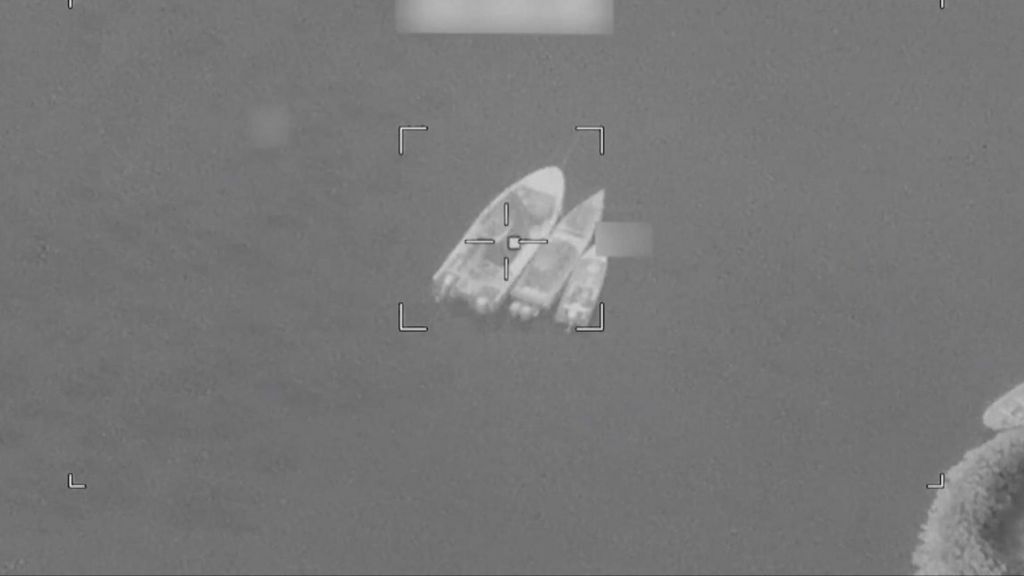
    Tensions in the strategically critical Strait of Hormuz have spiked sharply after the United States executed targeted strikes against Iranian military boats, in a direct retaliatory move following recent attacks on three commercial oil tankers transiting the key waterway.

    The Strait of Hormuz, a narrow passage that connects the Persian Gulf to the Arabian Sea, handles roughly one-fifth of the world’s daily oil consumption, making it one of the most geopolitically important maritime chokepoints on the planet. Any disruption to shipping through this corridor has the potential to send global energy prices soaring and escalate long-running tensions between the U.S. and Iran into a broader regional conflict.

    According to initial official confirmations, the U.S. military launched the strikes after three oil tankers came under attack while moving through the strait, a waterway that Iran has long claimed partial sovereignty over, and where it has frequently seized or attacked commercial shipping in recent years amid rising tensions with Western powers. U.S. officials have framed the operation as a proportional response intended to deter further attacks on commercial maritime traffic, which is protected under international maritime law to move freely through global waterways.

    The incident comes amid more than a decade of escalating friction between Washington and Tehran, over Iran’s nuclear program, its regional military influence through proxy groups, and disputes over international trade sanctions. Global leaders have already begun calling for immediate de-escalation, warning that any further military confrontation in the Persian Gulf could have catastrophic consequences for global energy markets and regional security.

    At this early stage, there has been no official confirmation of casualties or damage to the Iranian vessels from the strikes, and Iran has not yet issued an official public response to the U.S. operation. International shipping companies have already announced they are temporarily rerouting some vessels away from the Strait of Hormuz as a precaution, raising concerns about near-term disruptions to global oil supplies.

  • Russian fuel shortages bite – but will Putin change tack in Ukraine war?

    Russian fuel shortages bite – but will Putin change tack in Ukraine war?

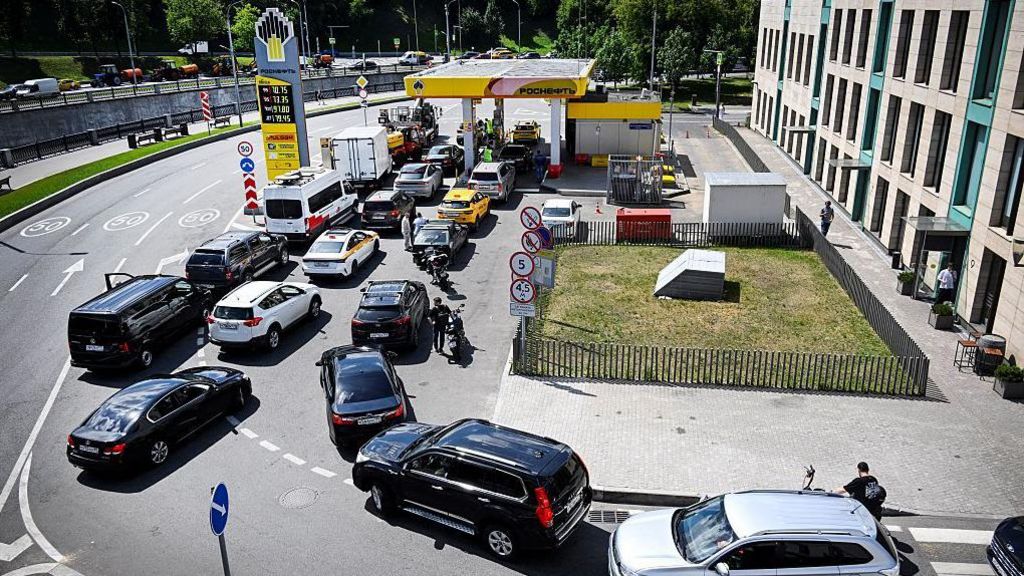
    Across Russia, even in the resource-rich capital of Moscow, a severe fuel crisis has brought the far-reaching consequences of the ongoing Ukraine conflict directly to ordinary citizens’ daily lives. A day of travel through Moscow’s streets reveals a consistent scene: lengthy queues of passenger cars and heavy goods vehicles snake out from nearly every operating petrol station, while any forecourt without a line has already run dry and closed its gates.

    For a country that ranks among the world’s top crude oil producers, this widespread shortage of gasoline and diesel has come as a shock to many residents. Even in the nation’s wealthiest, most well-supplied capital, federal and local authorities have failed to maintain steady fuel distribution for motorists. Among those waiting in lines, the prevailing mood is frustration rather than open rage, though quiet anxiety over future supplies simmers beneath the surface.

    Yekaterina, one motorist stuck in a queue, acknowledged widespread panic driven by fears of total fuel depletion, but expressed hope that restructuring distribution networks would resolve the issue. Elmar, another driver planning a long-distance trip to Dagestan, complained of skyrocketing prices and hours wasted waiting to refuel, saying he now doubts whether he can safely make the journey by car. When asked to identify who was responsible for the crisis, he offered a knowing, cautious smile, noting that open criticism of leadership is not something most Russians feel comfortable sharing in public. Valery, meanwhile, pointed to both systemic unpreparedness and Ukrainian missile strikes on energy infrastructure as contributing factors, saying it is absurd for a major oil-producing nation to face such widespread shortages, and expressed hope for a quick resolution to the chaos.

    The roots of the crisis stretch back to escalating Ukrainian drone and missile strikes targeting Russian oil refineries deep within Russian territory, including facilities within striking distance of Moscow. These strikes have disrupted domestic refining capacity, leaving the country unable to meet even baseline domestic fuel demand. The situation has been exacerbated by internet restrictions that limit the spread of real-time information about fuel availability, allowing panic to spread faster than accurate updates.

    Social media platforms are flooded with user-posted images of queues stretching for miles, and reports of violent scuffles between frustrated drivers have become common. In the Black Sea coastal resort of Anapa, local Cossack units have been deployed to maintain order at crowded petrol stations. Fuel rationing is now in place across most regions, many areas have banned the use of portable jerry cans to prevent bulk hoarding, a Siberian mayor has arranged for portable toilets to be installed for drivers waiting multiple hours in lines, and local governments have been forced to cut back on public bus routes and municipal rubbish collection due to fuel shortages. Farmers across the country are already warning that the crisis could derail the critical summer harvest, threatening food security as well as energy supplies.

    The shift in public mood is already visible in independent and state-run polling. Independent pollster Levada Center recorded a drop in President Vladimir Putin’s approval rating to roughly 74%, while the share of Russians who believe the country is moving in the right direction fell 9 percentage points to just 52% between May and July. Last week, Gallup reported that Russian pessimism about the national economy has hit a 20-year high, with 60% of respondents saying local economic conditions are worsening. Even state-run polling firm VCIOM recorded a 3.4 percentage point drop in public trust in Putin over one week, falling to 73%.

    In Kyiv, military and political strategists are counting on this growing public frustration to build enough domestic pressure to force the Kremlin to enter peace negotiations. That expectation is shared by some NATO leaders gathering in Ankara, who are watching the economic turmoil closely for signs of political cracks in the Kremlin.

    The Kremlin has not ignored the growing discontent. Putin publicly addressed the shortage on state-run television, acknowledging that Ukrainian strikes have “obviously created problems” but insisting the situation is not critical. Even as he downplays the severity, authorities have moved quickly to mitigate the crisis: they have ramped up fuel imports, introduced price subsidies to cap rising costs, and authorized the sale of lower-grade fuel that many experts warn could damage vehicle engines.

    Analysts are divided on whether the fuel crisis will shift the Kremlin’s strategic course on the war. Christopher Weafer, head of regional consultancy Macro Advisory, called the shortage a potential “game-changer” for Russian economic growth, noting that “the costs of the conflict are rising. While the full impact from the fuel crisis will not be seen in the statistics until July, the likelihood of lasting crisis has significantly dimmed the growth prospects for the remaining part of the year.”

    Nina Khrushcheva, a professor of international affairs at The New School in New York, argues that Western hopes for public pressure forcing Putin to the negotiating table are misplaced. “The more pressure he feels, the more likely he would act aggressively and repressively,” she explained. “I think it is serious, but the Western expectation that Russians are going to just take down the regime is very far-fetched.” She added that while many Russians feel anger and desperation, there is also widespread resignation to the current situation, making broad public opposition unlikely.

    All current indicators suggest Putin is doubling down on his military strategy rather than backing down. Last Friday, he was filmed meeting with frontline commanders in military fatigues, where he claimed ongoing victories on the front line and pledged to seize additional Ukrainian territory. “The Russian Armed Forces continue to confidently hold the strategic initiative in the special military operation zone,” he stated. He also ordered commanders to analyze the involvement of Ukraine’s European allies in what he calls “real combat actions” that are prolonging the conflict, saying the analysis would inform future decision-making. The vague, charged statement has raised alarm in diplomatic and military circles, leaving Western capitals questioning what escalation Putin may pursue next.

  • A southern Chinese region reels from floods and destruction from remnants of tropical storm

    A southern Chinese region reels from floods and destruction from remnants of tropical storm

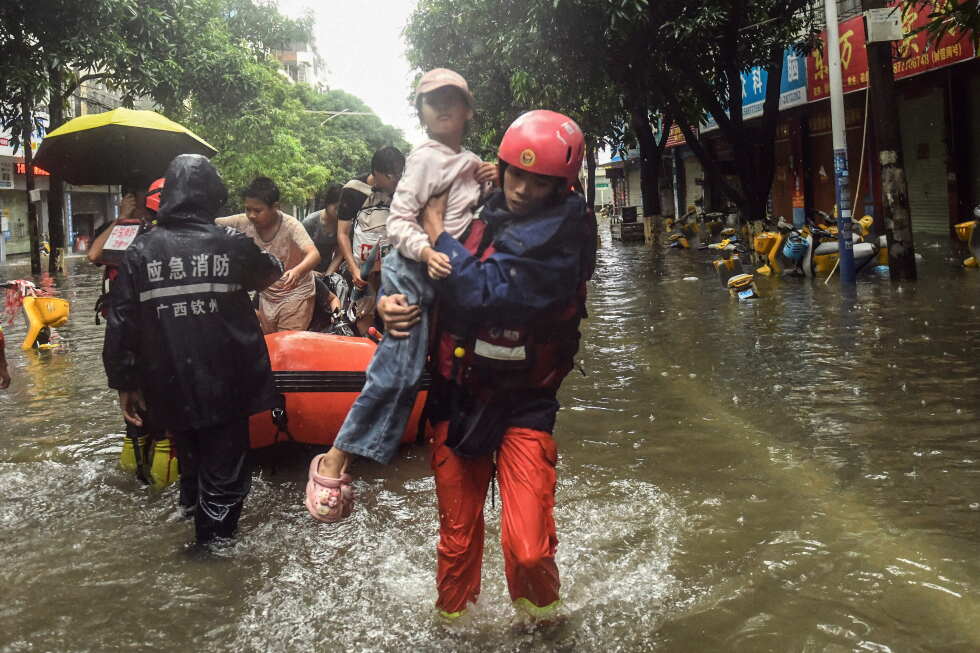
    As remnants of Tropical Storm Maysak dumped historic volumes of rain across southern China’s Guangxi Zhuang Autonomous Region, authorities and local residents are grappling with widespread destruction, massive displacement, and a growing humanitarian crisis that emerged by Wednesday. As of Tuesday evening, regional officials confirmed six fatalities and 11 people still unaccounted for in the flood disaster, with more than 130,000 local residents forced to evacuate their inundated communities, according to the region’s official propaganda office.

    Many stranded residents remained trapped in affected areas waiting for emergency rescue teams to reach them, even days after the worst of the rainfall began. Lu Xiaofei, a professional working in the nearby tech hub of Shenzhen, shared details of her brother’s trapped family in Lu Village, located in Guangxi’s Qintang District. Her brother, his wife, their 9-month-old infant, his parents, and elderly grandfather have been confined to the second floor of their home, after floodwaters rose to more than the height of an adult. Since Tuesday morning, the household has been cut off from both electricity and running water, Lu told the Associated Press in a phone interview.

    Lu added that her brother reported flood levels climbed further overnight, leaving the family in an increasingly desperate situation: their supplies of drinkable water are nearly exhausted, and local emergency responders have not yet reached their community. Dozens of nearby villagers face identical unaddressed crises, she said. Many other trapped residents have turned to social media to plead for assistance, posting footage of their submerged neighborhoods and drawing public attention to critical shortages of food, water, and emergency supplies.

    Local Chinese outlet Litchi News has also reported a secondary hazard spreading through Hengzhou City: snakes from commercial breeding facilities were swept away by floodwaters and are now loose across populated areas. Multiple residents have reported the loose snakes attempting to enter local homes, with more than a dozen people already bitten by the wandering reptiles, according to a local villager quoted by the outlet.

    China’s National Meteorological Center confirmed that relentless heavy rain has pummeled central-eastern and southern districts of Guangxi since last Saturday. Cumulative rainfall totals have hit between 100 and 400 millimeters (4 to 16 inches) across most affected areas, while the hardest-hit locations have recorded more than 900 millimeters (35 inches) of total precipitation. Forecasters warned that additional heavy rainfall would continue to batter the region through Wednesday, worsening already dangerous flood conditions. In response to safety risks, multiple regional passenger train services have been suspended indefinitely.

    As Guangxi continues its emergency response to Maysak’s aftermath, a new severe weather threat is already approaching southeastern China: Super Typhoon Bavi is projected to make landfall in the region over the coming weekend. The extreme weather disaster in China is part of a broader pattern of deadly monsoon and tropical storm activity across South and East Asia this season. In southeastern Bangladesh, monsoon rain-triggered landslides have killed multiple Rohingya refugees, including five children, while neighboring India has seen more than a dozen fatalities from severe monsoon flooding across its northern and eastern regions over the past three days.

    This reporting featured contributions from AP writer Fu Ting based in Washington, D.C.

  • Oil prices jump nearly 6% after Trump says ceasefire with Iran is ‘over’

    Oil prices jump nearly 6% after Trump says ceasefire with Iran is ‘over’

    Global financial markets faced a day of heightened volatility on Wednesday, driven by a sudden escalation of geopolitical tensions between the United States and Iran that sent crude oil prices jumping sharply, while a painful correction in overinflated artificial intelligence-related equities dragged most major global indexes lower.

    The market upheaval began after U.S. President Donald Trump announced from the sidelines of the NATO summit in Ankara, Turkey that the interim ceasefire agreement with Iran is effectively “over,” even as he left the door open for continued diplomatic negotiations. Trump’s announcement came in direct response to recent attacks on three commercial vessels operating in the strategic Strait of Hormuz, which preceded new U.S. military strikes on Iranian targets.

    Within hours of Trump’s comments, international oil benchmarks surged by more than 5%: Brent crude, the global benchmark, climbed 5.6% to top $78 per barrel, while the U.S. West Texas Intermediate benchmark jumped 5.8% to settle at $74.55 a barrel. This sharp reversal comes after oil prices had steadily declined from peaks above $100 a barrel, returning to roughly pre-conflict levels seen before the U.S.-Iran war began in late February.

    The existing 60-day interim ceasefire deal between Washington and Tehran had opened the Strait of Hormuz, a critical waterway that carries roughly one-fifth of the world’s daily oil trade, to unobstructed free passage. But the agreement has been fraught with tension from the start: Iran has maintained its right to control vessel routing through the strait and has vowed to impose transit fees once the interim deal expires, a move that would upend decades of established open access practice for the waterway. Tuesday’s attacks targeted ships that were all following the traditional routing along Oman’s coastline, rather than the new route mandated by Tehran, setting off the latest cycle of escalation.

    The geopolitical shock to oil markets arrived alongside a growing wave of investor anxiety that the months-long AI stock boom has pushed valuations far beyond what underlying productivity and profit gains can support, even after massive investments in chip manufacturing capacity and data center infrastructure.

    Ipek Ozkardeskaya, a senior analyst at Swissquote, noted in a Wednesday market commentary that geopolitical developments will almost certainly drive short-term market sentiment. “A further deterioration in the situation could weigh further on equity valuations along with rising stress in technology,” she warned.

    The investor sell-off hit European markets first: Germany’s DAX index fell 1.1% to close at 25,191.69, France’s CAC 40 declined 0.9% to 8,358.67, and the U.K.’s FTSE 100 slid 0.8% to 10,579.09. U.S. equity futures also pointed to further declines ahead of the opening bell, with S&P 500 futures edging 0.1% lower and Dow Jones Industrial Average futures down 0.4%.

    Across Asian trading sessions, losses were even steeper for AI-heavy indexes. Tokyo’s Nikkei 225 dropped 2.1% to 66,819.05, while South Korea’s Kospi plummeted 5.4% to 7,246.79. The South Korean benchmark has seen extreme whipsaw movement in recent weeks, briefly topping the 9,000 mark last month before entering a sharp correction driven by heavy selling of top tech stocks including Samsung Electronics and SK Hynix, two of the world’s largest memory chip manufacturers for AI systems. Samsung extended its losses to fall 6.3% in early Wednesday trading, after a 7% drop the previous session, while SK Hynix gave up early gains to close 5.7% lower.

    Not all Asian markets moved lower: Taiwan’s Taiex gained 0.6%, and Hong Kong’s Hang Seng Index jumped 3% to 24,193.56, led by a 14% surge in shares of Chinese AI startup Zhipu (also known as Z.ai, traded as Knowledge Atlas Technology). The company made its $558 million Hong Kong trading debut in early January, and a six-month lock-up period for its cornerstone investors was set to expire this week. Market analysts had previously warned the expiration could trigger a large sell-off, but state-owned China National Radio reported late Tuesday that nearly 70% of cornerstone investors have committed to retaining their holdings. Zhipu’s share price has already soared more than 1,300% since its January debut, defying broader market caution. Mainland China’s Shanghai Composite Index bucked the Hong Kong trend to decline 0.5% to 3,970.88, while Australia’s S&P/ASX 200 shed 0.2% and India’s Sensex lost 0.7%.

    The AI stock sell-off first began on Wall Street on Tuesday, when the sector’s roller-coaster rally reversed sharply to drag the broader market lower. The Nasdaq composite, which has a heavy weighting toward tech and AI stocks, fell 1.2%, while the S&P 500 declined 0.4% and the Dow fell 0.2% despite a majority of individual S&P 500 stocks posting gains. Top semiconductor stocks bore the brunt of the selling: Advanced Micro Devices fell 6.5%, Intel dropped 9.7%, and Micron Technology lost 4.7%. Even SpaceX, parent company of AI firm xAI, fell 6.8% in its first trading day after being added to the Nasdaq 100 index.

    In currency markets, the U.S. dollar saw mild gains, rising slightly to 162.26 Japanese yen from 162.11 yen in the previous session, while the euro edged up to $1.1426 from $1.1414.

  • UN officials urge Western nations to engage with Afghanistan to prevent it sliding into instability

    UN officials urge Western nations to engage with Afghanistan to prevent it sliding into instability

    Two senior United Nations leaders have issued a stark warning to Western nations: continued disengagement from Afghanistan risks pushing the conflict-weary country back into widespread instability, with ripple effects that will extend far beyond its borders. The warning came during a joint visit to Afghanistan by UN High Commissioner for Refugees Barham Salih and UN Development Program chief Alexander De Croo, who spoke to The Associated Press in a shared interview Tuesday. Salih, who joined the conversation via video link, emphasized that recent global policy toward Afghanistan has delivered a clear lesson: turning a blind eye to the country’s crises serves no one’s interests.

    “Despite the long list of unresolved challenges this nation faces, it is far more prudent to remain engaged, provide targeted support and back policy reforms that keep Afghanistan stable and secure,” Salih said. Without active international engagement, he added, the world risks a resurgence of instability that fuels transnational threats including drug trafficking, violent extremism, organized criminal activity and large-scale refugee displacement.

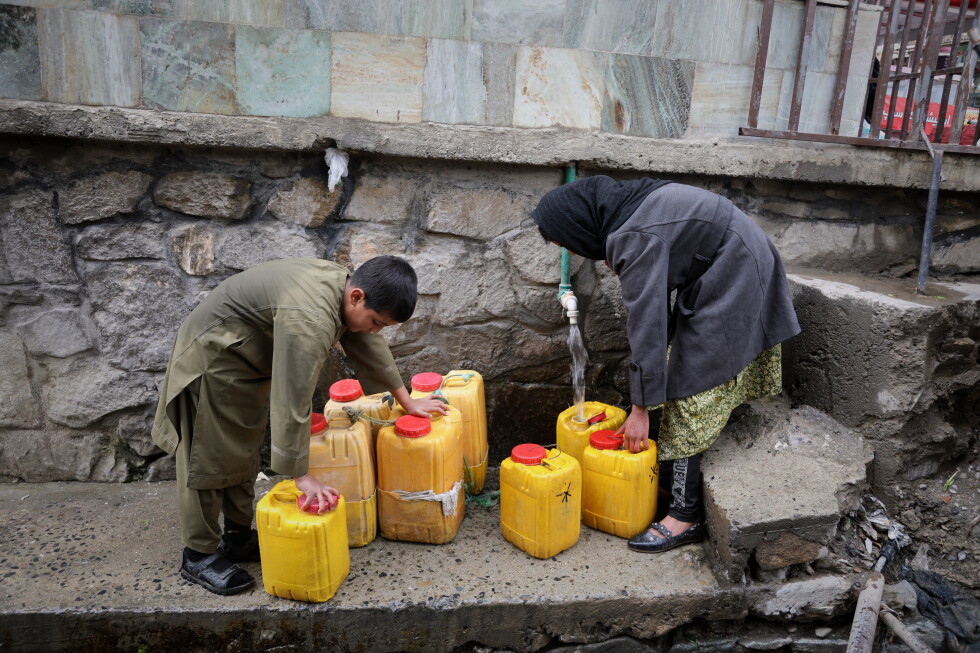
    After four decades of continuous armed conflict, Afghanistan is an impoverished nation almost entirely reliant on international aid, and it currently grapples with a cascading series of overlapping crises that compound one another: devastating natural disasters amplified by accelerating climate change, and the largest single wave of returning refugees the globe has witnessed in 70 years. “In Afghanistan, you never face just one crisis at a time,” De Croo explained to reporters. “Crises stack one on top of the other, and that layered pressure is what we see shaping daily life here right now.”

    Since 2023, nearly 6 million Afghans have been forced to return to their home country, the overwhelming majority expelled from neighboring Pakistan and Iran amid harsh government crackdowns on undocumented migrants. UN projections indicate an additional 2 million Afghans could be forced to return in 2025, placing already strained local communities under unprecedented pressure. With widespread poverty endemic across Afghanistan and acute malnutrition threatening the lives of the most vulnerable groups, most host communities already operate with barely enough resources to support their existing populations.

    Already difficult conditions have been made far worse by deep cuts to international aid, and the Taliban government’s systemic exclusion of half the country’s population: since seizing power in August 2021, following the chaotic withdrawal of U.S.-led NATO troops, the Taliban has banned women and girls from accessing secondary and higher education, and barred women from working in most sectors of the economy. Afghanistan also remains largely diplomatically isolated: no Western country has extended formal recognition to the Taliban-led government, though Russia became the first major global power to grant recognition in 2025. A small crack in this isolation emerged last month, when a Taliban government delegation traveled to Brussels to hold talks with European Union officials focused on diplomatic cooperation and the repatriation of Afghans residing in European countries.

    Against this daunting backdrop, the two UN leaders acknowledged that unexpected progress has been made in key policy areas, most notably public security, anti-corruption efforts and the reduction of illicit drug production. “I would not ignore the progress that has been achieved — progress few observers would have predicted possible just five years ago,” De Croo said. He highlighted that opium production, for which Afghanistan was long the world’s largest supplier, has dropped by 95% since the Taliban government launched a national poppy eradication campaign.

    De Croo stressed that if the international community abandons Afghanistan now, the negative consequences will not be contained within the country’s borders. “If Western nations want to live in peaceful, stable societies, that goal cannot be achieved through domestic policy alone,” he explained. “Your own peace and stability depends on peace and stability in your broader neighborhood.”

    The draconian national restrictions imposed on women and girls remain the single biggest point of tension between the Taliban government and the global community. The UN leaders confirmed they raised the issue directly during meetings with Afghan officials during their visit, and both argued that constructive, sustained engagement is the only path to incremental progress on the issue. “We hope that constructive engagement will open a path forward to reform,” Salih said. “Tangible progress and inclusive policy reforms are essential to building a political system that serves all Afghans.”

    Deep cuts to international aid have already left measurable, lasting damage across the country, De Croo confirmed. Over the past 12 months alone, 422 medical facilities have been forced to shut down because of lost funding, leaving more than 3 million Afghans without access to basic primary healthcare. Earlier this year, the World Food Program announced that funding shortfalls had forced it to turn away three out of every four acutely malnourished children seeking life-saving nutritional support.

    While the Taliban launched its poppy eradication campaign shortly after taking power, De Croo noted that the sharp drop in opium production was also supported by international programs that provided alternative crop options for farming households dependent on poppy cultivation. Funding for these programs has been slashed dramatically amid broader international aid cuts, raising fears that poppy production could rebound if support is not restored. “If we cannot continue working with farmers to provide them with viable alternatives to drug production, we risk seeing the entire trade reemerge,” De Croo warned.

    Although global media and political attention has shifted away from Afghanistan in recent years, Salih noted that despite all the country’s challenges, the current moment offers a critical opening for the international community to reengage. “It is vital to remind the world that the cost of inaction far outweighs the cost of sustained engagement,” Salih said. “The truth is simple: you cannot ignore Afghanistan, and the problems that emerge in Afghanistan will not stay contained in Afghanistan.”

  • ‘Robbed’: Egypt-Argentina match sparks accusations of World Cup bias

    ‘Robbed’: Egypt-Argentina match sparks accusations of World Cup bias

    A dramatic late comeback victory for Argentina against Egypt in the World Cup round of 16 has been drowned out by widespread controversy, with Egyptian players, coaching staff, fans, and high-profile public figures calling out a series of lopsided key refereeing decisions that they claim cost Egypt a historic quarter-final spot. Egypt looked set to secure a stunning upset after jumping out to a 2-0 lead early in the second half, holding the advantage deep into the closing stages of the match. But Argentina flipped the script with three unanswered late goals, snatching a stoppage-time winner to seal a 3-2 win and advance to the final eight. What should have been a celebration of one of the most dramatic knockout-stage comebacks in recent World Cup history quickly turned into a national outcry for Egypt, with multiple questionable calls at critical junctures sparking fury over biased officiating. The most high-profile dispute came over a disallowed Egypt goal that would have put the North African side 3-1 up, a call that Egyptian camp says changed the entire trajectory of the match. The Egyptian side also had repeated late penalty appeals turned down by officials, and protests from the Egyptian bench were ignored in the moments before Argentina’s match-winning stoppage-time goal. Scenes of anger played out on the touchline immediately after key calls, with members of Egypt’s coaching staff surrounding officials to contest decisions, and players confronting match referees over the rulings. The frustration spilled over onto social media platform X, where thousands of fans and dozens of high-profile figures weighed in to condemn the inconsistent officiating, with many arguing the lopsided calls robbed Egypt of a fair shot at advancing. In his post-match press conference, Egypt head coach Hossam Hassan did not hold back in his criticism, insisting his side was the better team on the pitch and that the final result was fundamentally unfair. He questioned the logic behind the disallowed Egypt goal, and raised eyebrows by suggesting that tournament organizers had implicit “marketing” incentives to keep the previous World Cup champions in the competition. Despite the disappointment, Hassan praised his players’ effort, saying they had delivered everything the nation asked of them. Egyptian winger Mustafa Ziko was visibly overcome with emotion in his post-match interview, breaking down in tears as he accused the referee of unfair officiating. He said the incorrect calls had wasted the hard work and hope of an entire nation, and labelled the entire tournament’s officiating in the match as biased. The criticism extended far beyond the Egyptian camp, with prominent global figures from sports, politics, and other fields adding their voices to the outcry. Former world chess champion and political commentator Garry Kasparov highlighted the clear inconsistency in rulings: he pointed out that Egypt’s goal was disallowed for a minor foul far from the goalmouth, but an identical scenario just minutes later that led to an Argentina goal was allowed to stand. He went further, calling FIFA a “corrupt joke” and accusing the governing body of favoring high-profile star teams. Former England captain and legendary striker Alan Shearer, now a leading football pundit, echoed the criticism of inconsistent decision-making, writing on X that “Either both are fouls or neither is a foul. But they’re not going to re-referee they told us.” BBC Sport football correspondent Dale Johnson also argued that the ruling to disallow Egypt’s goal ran completely counter to the officiating standard used throughout the entire tournament. He noted that match officials had adopted a “light touch” approach to minor contact for the entirety of the competition, making it inexplicable that they would overturn a goal for a very minor shirt-tugging incident via VAR. Football analyst Geronimo Morgans added another layer of criticism, pointing out that VAR failed to review two clear fouls against Egyptian players inside the Argentina penalty area in the build-up to Argentina’s equalizing goal scored by Enzo Fernandez, while a far less significant foul was used to overturn Egypt’s valid second goal. “Why does the treatment have to be so one-sided?” he asked, concluding that “Egypt have been robbed.” Even Egyptian Nobel Peace Prize laureate and former International Atomic Energy Agency head Mohamed ElBaradei waded into the debate, writing on X that FIFA had “lost a lot of credibility and trust” for reasons “known to everyone.” Former British ambassador and political commentator Craig Murray summed up the widespread sentiment of foul play with a viral quip: “Not my invention, but FIFA = Fixing It For Argentina has been blatant.” For Argentina, the controversial win moves them forward to the World Cup quarter-finals, where they will turn their focus to their next matchup. For Egypt, the tournament ends far earlier than the team and its supporters hoped, bringing an end to an impressive unbeaten campaign that captured the imagination of the football world. The early exit leaves a bitter taste for the Egyptian camp, who remain united in their belief that they were denied a fair opportunity to continue their historic World Cup run through lopsided officiating.

  • US cancels waiver allowing Iran oil sales as Gulf vessels attacked

    US cancels waiver allowing Iran oil sales as Gulf vessels attacked

    Escalating tensions in the Gulf region have triggered a major shift in US policy toward Iran, with the Trump administration announcing Tuesday it will revoke a temporary license that had eased oil sanctions on Tehran. The decision comes in direct response to a series of targeted attacks on commercial vessels operating in the strategically critical Strait of Hormuz, with both Qatar and Saudi Arabia formally blaming Iran for the incidents that have put global energy security at risk.

    The sanctions waiver, which had allowed Iran to produce, export, and ship crude oil and related petroleum products through August 21, was a core compromise in ongoing negotiations aimed at reaching a permanent ceasefire to end long-running hostilities in the Middle East. The relief had represented the primary economic incentive the US extended to encourage Iranian cooperation in peace talks, a concession that had already emerged as a major sticking point in discussions between the two sides.

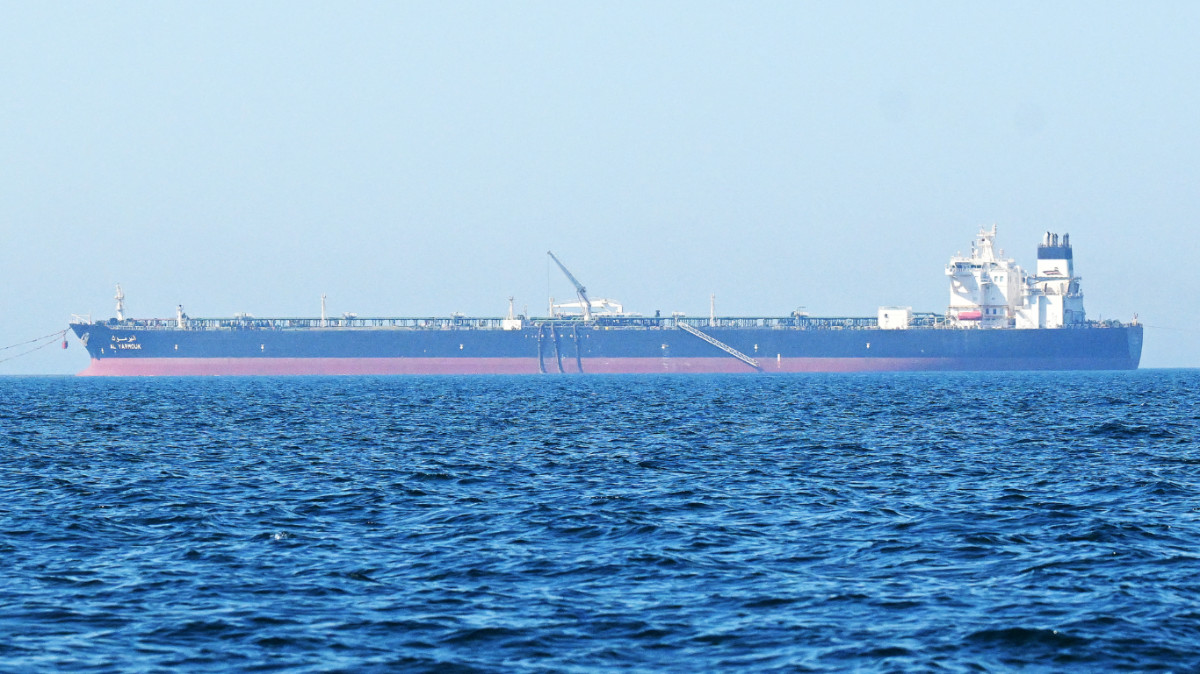
    Within a window of just a few hours on Tuesday, three separate commercial tankers came under attack while transiting the Strait of Hormuz, one of the world’s busiest and most vital maritime chokepoints for global energy trade. Among the damaged vessels was a Qatari liquefied natural gas (LNG) tanker that was traveling off the coast of Oman when the attack occurred, according to Qatari government officials and independent maritime monitors.

    In response to the incident, Qatar’s foreign ministry issued a formal condemnation, summoning Iran’s deputy ambassador to Doha to file an official diplomatic complaint. “We demand a full explanation for this unacceptable act and call on Iran to immediately cease any practices that undermine regional security, and refrain from endangering the safety of international shipping and global energy supplies,” the ministry said in an official statement. A second, Saudi-flagged crude oil tanker was also struck in the same area of the Gulf, per announcements from the Saudi foreign ministry, which also publicly blamed Iran for the assault.

    While Iran has not issued any formal claim of responsibility for the attacks, it has been locked in a tense standoff with regional powers over shipping routes in the strait in recent days. Tehran has pushed back against the growing trend of commercial vessels bypassing Iranian territorial waters to use an alternative southern route through Omani territorial waters, a shift that has cut into Iranian revenue and leverage over regional maritime traffic.

    In comments to AFP, a senior United States official reiterated Washington’s firm stance against Tehran’s actions in the region: “Iran’s actions in the strait were wholly unacceptable to the United States and will be met with consequences.” The revocation of the sanctions waiver quickly rippled through global energy markets, with Brent crude, the global benchmark for oil prices, surging nearly 5% in trading as investors priced in heightened geopolitical risk and potential disruptions to energy supplies.