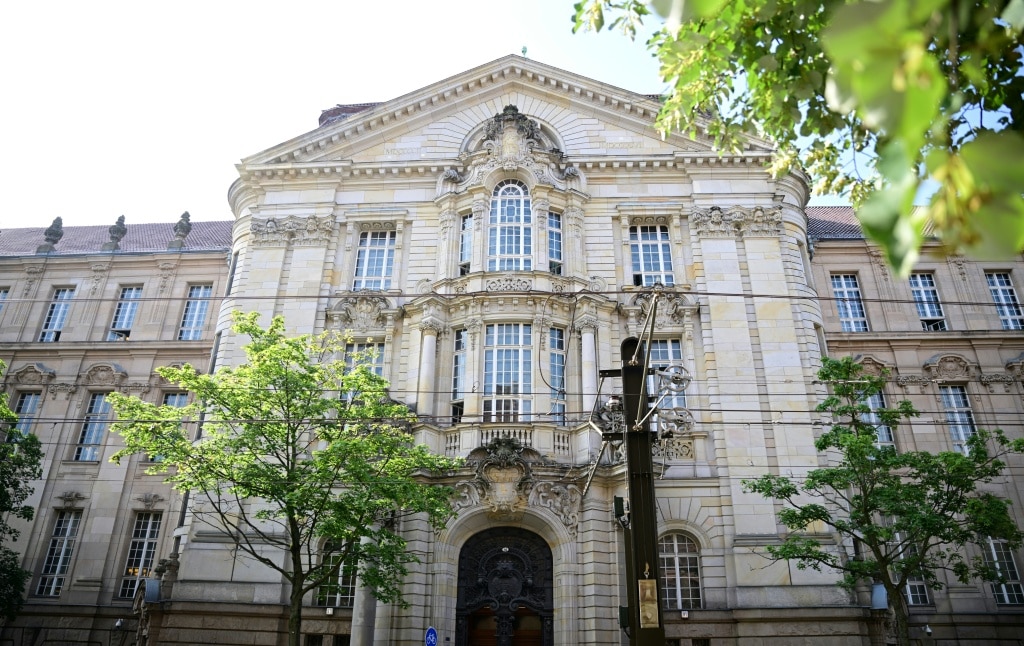
In a landmark ruling that has sent shockwaves through Germany’s medical community, a 41-year-old Berlin palliative care doctor has been sentenced to life imprisonment after being convicted of murdering 15 patients between 2021 and 2024, with authorities continuing to investigate his suspected involvement in more than 70 additional unexplained deaths. The Berlin Regional Court formally found the defendant, identified only as Johannes M. in line with German privacy rules, guilty of killing 12 women and three men during routine home care visits between September 2021 and July 2024. Presiding judge Sylvia Busch labeled the physician a “serial killer” at the center of an “unfathomable” and “extraordinary” case that ranks among the most disturbing serial killing incidents in modern German criminal history. After determining Johannes M. bore “particular gravity of guilt” for his premeditated crimes, the court handed down the harshest possible sentence under German law, a ruling that drastically reduces his chance of being granted parole in the future. The court also issued a permanent ban barring him from ever practicing medicine again. Unlike cases of unlawful assisted dying, where defendants often claim compassionate motivation, the court definitively ruled that Johannes M.’s killings were driven by a desire for power over his vulnerable victims. Prosecutors argued during the five-month trial that the doctor acted out of “a lust for murder”, noting he had “no other motive for killing these people than the act of killing itself”. All victims were patients under his ongoing palliative care at the time of their deaths, ranging in age from 25 to 94. Court documents detail that Johannes M. intentionally administered lethal combinations of anesthetic and muscle relaxant to his victims. The drugs paralyze the body’s respiratory muscles, triggering rapid respiratory arrest that leads to death within minutes. In at least five separate cases, the court found he set fire to victims’ apartments after killing them in an attempt to destroy evidence and cover up his crimes. The case exposes a pattern of escalating violence: on July 8, 2024, he killed two patients within a matter of hours in neighboring Berlin districts, first a 75-year-old man in Kreuzberg, then a 76-year-old woman in Neukoelln. His attempt to burn the second crime scene ultimately failed when the fire failed to spread, leaving critical clues for investigators. In a last-minute admission ahead of the verdict, Johannes M. confessed earlier this week that he had “killed people”, telling the court “I despair at myself”. According to reporting from Germany’s leading Frankfurter Allgemeine Zeitung, he added that he has only recently come to terms with “the extent of the suffering” he inflicted on victims and their families. Red flags about the doctor’s practice were first raised by local care services, prompting a formal police investigation that led to his arrest and remand in custody in August 2024. What began as an inquiry into just four suspicious deaths quickly expanded as investigators connected the dots between the doctor’s patient roster and unexplained deaths. As of the verdict announcement, dozens of additional cases remain under active investigation. The case is not an isolated incident in Germany, drawing immediate comparisons to the 2019 conviction of Niels Hoegel, a German nurse who was sentenced to life for murdering 85 patients across two hospitals. More recently, another palliative care nurse was handed a life sentence in November 2024 for killing 10 patients and attempting to kill 27 more with lethal injections.
博客
-

Paris hosts the Esports World Cup with eight weeks’ notice
In an extraordinary display of logistical agility and commitment to the global esports community, the French capital of Paris has stepped forward to host the prestigious Esports World Cup, organizing the major international event on a remarkably tight timeline of just eight weeks.
The last-minute hosting arrangement came together after an unexpected shift in original planning, requiring local event organizers, city authorities, and esports stakeholders to rush through venue preparation, participant coordination, and spectator logistics in less than two months. Despite the compressed schedule, thousands of passionate French esports fans have already locked in their plans to attend the competition, eager to cheer on top professional players and teams from around the globe.
The rapid organization of this high-profile tournament highlights Paris’ growing reputation as a leading hub for competitive digital gaming, as well as the surging popularity of esports across Europe. Fans are expected to fill the host venue across the tournament’s match days, creating a lively, energetic atmosphere that matches the intensity of the elite-level competition on display.
-
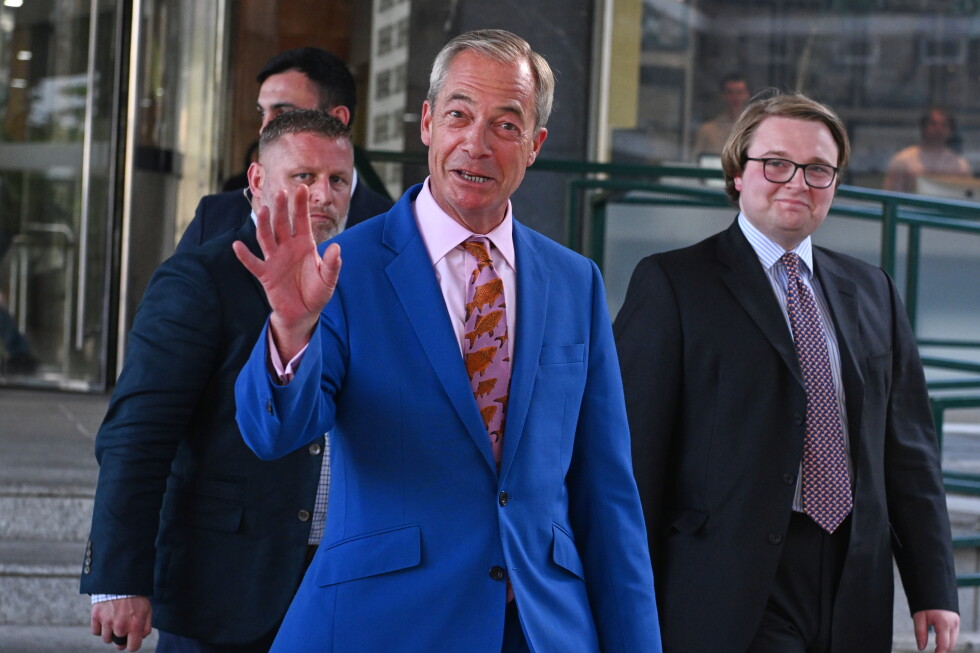
What to know about Nigel Farage’s dramatic resignation and political gambit
LONDON — For populist firebrand Nigel Farage, leader of Britain’s hard-right Reform UK party, the narrative is simple: he is an outsider fighting a corrupt political establishment that has colluded to end his career. But Farage’s latest attempt to prove that narrative has quickly unraveled, leaving the Brexit architect facing unexpected humiliation and fresh questions about his political future.
The chaos began when parliamentary officials launched a formal probe into potential violations of ethics rules tied to Farage’s personal finances, a controversy that has loomed over the two-year lawmaker for weeks. Rather than wait for the investigation to conclude— a process that could end in his suspension from Parliament and an involuntary special election for his Clacton constituency— Farage announced a dramatic gambit: he would resign his seat immediately and force an early by-election, framing the contest as a pitched battle of “the people versus the establishment.” Critics quickly denounced the move as a cynical stunt to dodge the ongoing standards inquiry and redirect public attention away from damaging financial allegations.
Farage’s plan relied on a simple premise: major rival parties would field candidates against him, allowing him to frame the race as a referendum on his agenda and his claim of establishment persecution. Instead, the United Kingdom’s biggest political parties — Labour, the Conservatives, the Liberal Democrats, and the Green Party — all refused to play his game, announcing they would not put forward candidates to oppose him. The only likely challenger to emerge so far is Count Binface, a veteran joke candidate who campaigns wearing a trash can as a helmet and has built a political brand out of offbeat, tongue-in-cheek policy proposals. For Farage, the outcome leaves him running almost unopposed, stripping his planned “against all odds” narrative of any real stakes.
The risk of further backlash remains high. Even if Farage wins the by-election as expected, parliamentary rules allow the standards investigation to resume once he returns to office. If the probe ultimately finds he violated ethics rules, he could still face suspension, triggering yet another special election for Clacton within months.
This high-stakes political drama comes at a defining moment for Reform UK and for British politics more broadly. Farage, who secured his first seat in Parliament just two years ago after seven failed attempts, has spent decades as one of the UK’s most influential and divisive political figures. His decade-long campaign to pull Britain out of the European Union transformed a fringe policy goal into the 2016 Brexit referendum result, reshaping British politics permanently. Today, he carries that same populist energy into new issues, stoking public anxiety over small-boat migration across the English Channel — which he has called an “invasion” — and echoing the populist rhetoric of his ally, former U.S. President Donald Trump, and far-right leaders across Europe.
Reform UK currently holds just 8 of the 650 seats in the House of Commons, but the party has surged in national opinion polls this year, scoring major gains in May’s local and regional elections that forced the ouster of Prime Minister Keir Starmer. Andy Burnham, the Labour candidate who won Reform’s most recent attempted by-election gain, is now widely expected to replace Starmer as prime minister within weeks. If Reform’s momentum holds, political analysts say Farage could have a realistic path to becoming prime minister after the next national election, scheduled for no later than 2029.
The current controversy centers on two key financial relationships under scrutiny by Parliament’s Independent Parliamentary Standards Authority. The first is a £5 million ($6.7 million) donation from Christopher Harborne, a Thailand-based cryptocurrency billionaire with a prior fraud conviction. Farage argues the sum was a personal gift he used to fund private security amid repeated threats against his life, and that the donation predated his election to Parliament, so it does not need to be disclosed under current rules. The second line of inquiry focuses on Farage’s business ties to George Cottrell, an aristocratic crypto and gambling entrepreneur who previously served a prison sentence in the U.S. for fraud.
Farage has repeatedly denied any wrongdoing, framing the investigation as a coordinated dirty tricks campaign by political enemies and a biased media that has spent years demonizing him. Beyond his parliamentary salary, Farage earns income from a wide range of ventures: he sells gold bullion, hosts a right-wing current affairs television show, gives paid public speeches, and records personalized video messages for fans on the Cameo platform.
Political analysts say Farage’s gambit was designed to turn adversity into advantage, even as it carries major risks. “Fighting and winning a by-election is perhaps his best hope of suggesting to people that he is still very much a man alone, fighting the establishment,” said Tim Bale, a professor of politics at Queen Mary University of London. But the refusal of major parties to contest the seat has undermined that narrative, leaving Farage open to criticism that he is a self-pitying populist chasing publicity to distract from awkward ethical questions.
Opponents have gone further, arguing the botched gambit is proof Farage and Reform UK are already on the ropes. The party has lost three consecutive by-elections it targeted as potential upset wins, leading some political observers to question whether its lead in national polls is starting to soften.
For now, the most high-profile challenger Farage faces is Count Binface, the alter ego of comedian Jon Harvey, who describes himself as a 5,000-year-old intergalactic space warrior and has run against a who’s who of British political leaders, including former prime ministers Boris Johnson and Rishi Sunak, London Mayor Sadiq Khan, and most recently Andy Burnham. While he is a joke candidate, Binface campaigns on a platform of quirky, voter-focused policies, from synchronizing traffic lights on congested local roads to moving a mispositioned hand dryer in a London pub and capping croissant prices at £1.10 ($1.47). When asked about the Clacton race, he told the BBC his main selling point to voters is simple: “I’m not Nigel Farage.”
-

Outcry as Meta lets users make AI images from public Instagram profile pics
Tech giant Meta has sparked widespread public and regulatory criticism over its newly launched artificial intelligence image generation tool, Muse Image, which carries the controversial capability to create AI-altered images using existing public profile pictures from users without their prior explicit consent.
As a new addition to the fast-growing market of text-to-image generative AI tools, Muse Image converts short text prompts into custom-created images. It is currently rolled out to users across the United States, accessible via the Meta AI standalone app and web interface, as well as integrated into WhatsApp and Instagram Stories. Unlike many competing tools that rely exclusively on user-uploaded source material, Muse Image draws on the massive library of public user content hosted across Meta’s social platforms, enabling it to incorporate existing profile and user images into new AI-generated creations.
While Meta has framed the tool as an accessible creative innovation, and confirmed that even users with public Instagram accounts can opt out of having their images repurposed for AI generation via a dedicated settings toggle, critics have decried the feature as a major threat to digital privacy and personal security. The opt-out process requires users to manually navigate to Instagram’s settings menu, select the “Sharing and Reuse” tab, and disable the content reuse toggle for posts and reels – a step many users are unaware of, according to campaigners.
Donald Campbell, advocacy director at UK-based tech justice non-profit Foxglove, told the BBC that the unconsensual reuse of personal images is an “obvious recipe for disaster”. Campbell noted that over the past 12 months alone, social platforms have already recorded a long list of harms stemming from non-consensual AI-altered images, ranging from non-consensual deepfake pornography to identity fraud and reputational damage. He questioned why Meta CEO Mark Zuckerberg would choose to facilitate what he described as “creepy image manipulation” on a mass scale.
Privacy International, another global digital rights advocacy group, also joined the criticism, arguing that the launch of Muse Image is the latest example of big AI companies treating users’ personal data and likenesses as uncompensated raw material for commercial exploitation. The criticism has been echoed by ordinary social media users, with one commenting on X that pulling real users into AI-generated photos without explicit permission is “a privacy landmine waiting to detonate”.
The controversy comes as global regulators are already ramping up scrutiny of non-consensual AI image generation across the tech sector. UK communications regulator Ofcom is currently conducting an investigation into X (formerly Twitter) over the role of Elon Musk’s Grok AI in creating and distributing non-consensual AI-altered images of real individuals. Meta’s launch of Muse Image is almost certain to face intensified regulatory review amid growing concerns about the risks of unregulated generative AI.
In its official description of the tool, Meta says Muse Image uses advanced AI reasoning to interpret complex user prompts, and can seamlessly blend multiple source images into high-quality finished creations that users can download and share across any platform. The tool also includes preset prompt suggestions to inspire creative ideas, and allows users to sketch custom edits directly onto generated images. While the core tool is free for casual everyday creative use, Meta offers expanded usage limits for heavy users via its paid subscription plans.
A test of the tool demonstrated its capabilities: when asked to generate an image of the tester driving a car, the AI produced a convincing result – though it made a notable error, placing the steering wheel on the left side rather than the right, the standard for vehicles in the United Kingdom where the test was conducted.
Looking ahead, Meta has confirmed that it plans to expand access to Muse Image in the coming months, rolling the feature out to Facebook and Messenger, and also making the tool available to advertisers for commercial content creation. A video generation variant of the tool is also reportedly in active development at the company.
-
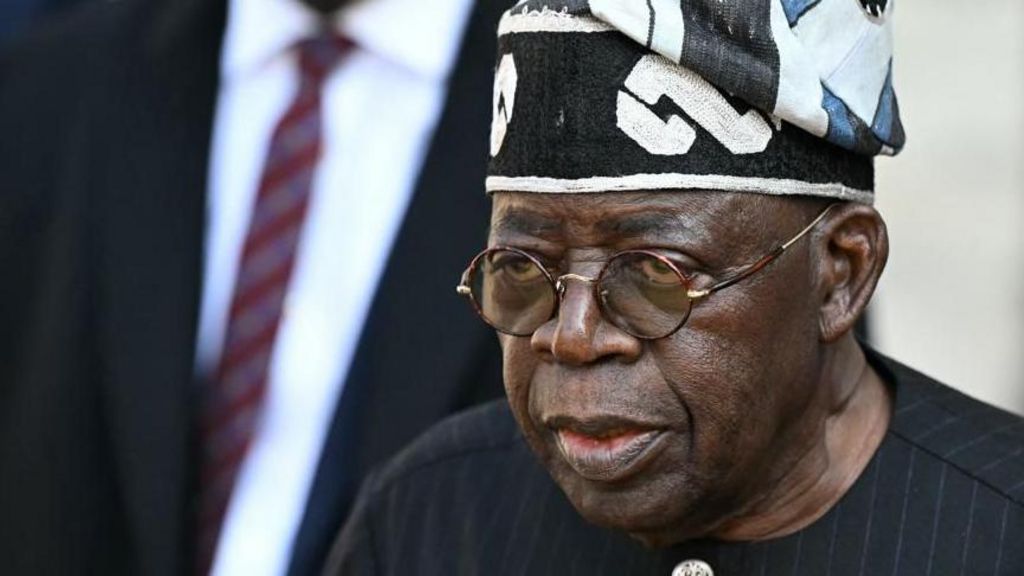
Nigeria’s president demands to know how fake agency was allegedly set up in his office
A high-stakes corruption scandal has unfolded in Nigeria’s highest office, prompting President Bola Tinubu to launch a formal, time-bound investigation into the alleged creation of a fictitious federal agency that siphoned nearly $1 million in public funds. The controversy centers on the so-called Presidential Foreign Intervention Promotion Council (PFIPC), an entity that carved out office space in Abuja’s central Federal Secretariat, secured accounts at Nigeria’s Central Bank, and secured a 1.3 billion naira ($950,000) allocation in the 2026 national budget — all without official government authorization.
Presidential officials confirm that forensic police analysis has verified the founding document for the PFIPC, purportedly signed by Chief of Staff Femi Gbajabiamila, was a deliberate forgery. At the heart of the investigation is Adeniyi Adeyemi Matthew, a man who has publicly claimed the title of PFIPC Director General. Nigerian law enforcement has launched a national manhunt for Matthew, who faces charges including forgery, criminal impersonation, and fraud alongside two unnamed co-defendants. Before evading authorities, Matthew told local media he maintains his innocence, claims his life is under threat, and has pledged to appear in court to clear his name once the situation stabilizes.
In an official directive issued Tuesday, President Tinubu instructed the Independent Corrupt Practices and Other Related Offences Commission (ICPC), Nigeria’s top anti-corruption body, to complete a full investigation and submit a detailed final report within 30 days. The presidential order requires investigators to probe a wide range of alleged misconduct: the fabrication of official appointment letters and government documents; the use of false credentials to obtain official recognition, diplomatic backing, and visa processing support; the opening of multiple bank accounts under the PFIPC name with forged paperwork; and the complicity of any public officials, private actors, financial institutions, or middlemen who may have aided the fraudulent scheme.
Beyond holding individual actors accountable, Tinubu has also ordered investigators to unpack the systemic gaps that allowed a fake agency to gain all the trappings of a legitimate government body. The probe is tasked with identifying procedural weaknesses in Nigeria’s public administration that the conspirators allegedly exploited to pull off the scam.
The revelation of the fake agency has sparked widespread public outcry, with civil society organizations, opposition political figures, and senior legal leaders all calling for a fully independent, transparent inquiry to get to the root of the scheme. In his official statement, President Tinubu emphasized that the credibility of the presidency and Nigeria’s federal institutions must be safeguarded from criminal exploitation. “All persons found culpable are to be treated strictly in accordance with applicable law,” the statement read.
Additional on-the-ground reporting for this story was contributed by Adesola Abisoye in Lagos.
-
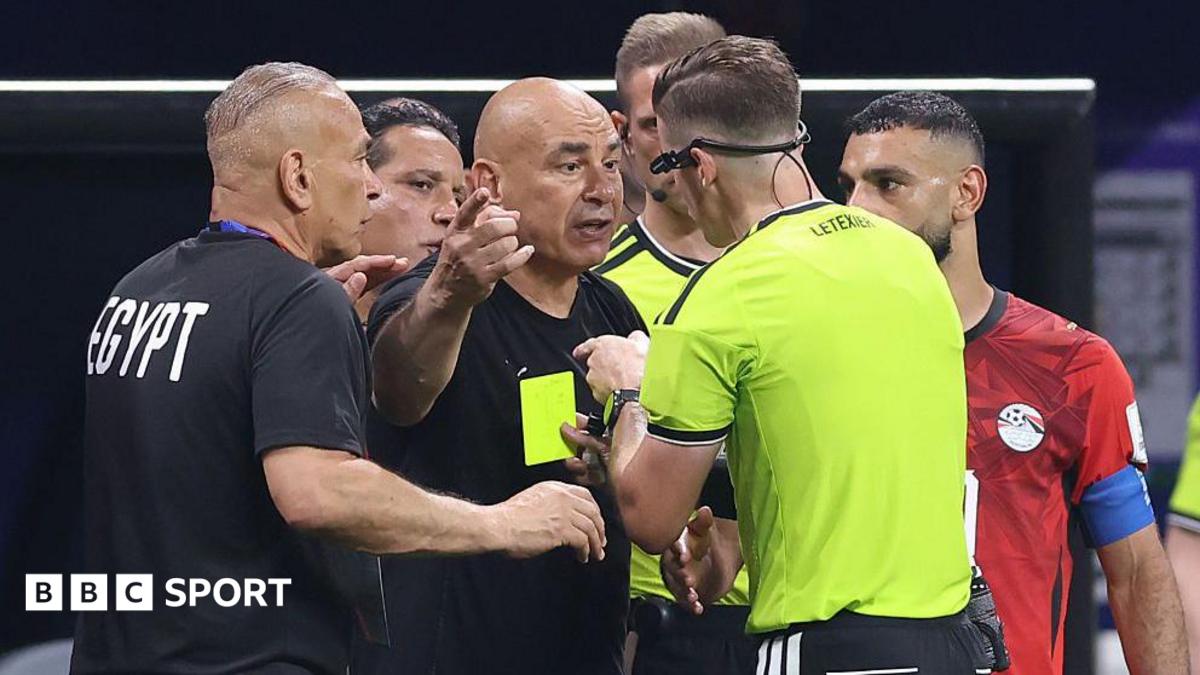
Egypt want officials kicked out of World Cup
The 2026 FIFA World Cup round of 16 clash between Egypt and defending champions Argentina has erupted into controversy after the Egyptian Football Association (EFA) submitted an official complaint to global football’s governing body, calling for the entire officiating crew to be removed from the tournament. Egypt fell to a dramatic 3-2 stoppage-time defeat, ending their bid to reach the first World Cup quarter-final in the nation’s history, and Egyptian officials have levied serious accusations of blatant mistakes, double standards, and even discriminatory officiating against the team led by French referee Francois Letexier.
The most contentious decision came in the second half, when Egypt held a 1-0 lead. Attacking play for a potential second goal was built from a foul call against Egyptian midfielder Marwan Attia, who was penalized for stepping on Argentina defender Lisandro Martinez’s foot. The VAR overturned the would-be goal from Mostafa Zico, a call that immediately sparked outrage from the Egyptian side. Compounding their frustration, Egyptian players and staff say star forward Mohamed Salah was fouled inside Argentina’s penalty area just moments before the defending champions launched the counterattack that secured their stoppage-time winning goal.
In an official statement released after the match, EFA president Hany Abou Rida confirmed the complaint had been lodged with FIFA, demanding a full investigation into the refereeing team’s actions. The federation specifically called out what it describes as “blatant errors” and the crew’s refusal to review key match footage, alongside the broader accusation of discrimination against the Egyptian national team. “It demands the exclusion of the referee and the entire crew from the World Cup after investigating these mistakes,” the statement read.
Egypt manager Hossam Hassan doubled down on the criticism post-match, saying his side had been “treated unfairly” and “suffered injustice.” He pointedly suggested that officials favored Argentina to keep the defending champions — and captain Lionel Messi, widely expected to be playing in his final World Cup — in the competition. “Perhaps they wanted to keep the world champion in the competition. Perhaps they wanted Messi to stay in the running,” Hassan said. Striker Mostafa Zico echoed that anger, claiming outright that “this tournament has been fixed,” adding that unfair officiating had been evident from the opening kickoff.
Messi, for his part, was central to Argentina’s comeback victory: the captain set up the side’s 79th-minute opening goal before scoring an 83rd-minute equalizer to set up the late winner. Argentina will next face Switzerland in a quarter-final clash in Kansas City this Saturday, with a kickoff scheduled for 02:00 BST on Sunday.
As of publication, FIFA has not responded to requests for comment from BBC Sport. Looking at precedents for this kind of officiating protest, history suggests such complaints rarely result in meaningful action, according to football journalist Dale Johnson. Historically, FIFA has dismissed most post-match refereeing appeals with minimal explanation. For example, at the 2022 Qatar World Cup, France submitted an official protest after a late group-stage goal was ruled out by VAR in a 1-0 defeat to Tunisia, a decision that appeared to contradict existing VAR protocol. FIFA’s Disciplinary Committee dismissed the protest in a one-sentence statement with no further clarification.
Experts note that most refereeing decisions carry an inherent element of subjectivity, and human error is an accepted, if frustrating, part of the sport. Most complaints raised in the immediate emotional aftermath of a knockout-stage exit tend to fade from public discussion without any formal action, and few expect FIFA to issue a substantive public response to the EFA’s grievance this time around.
-
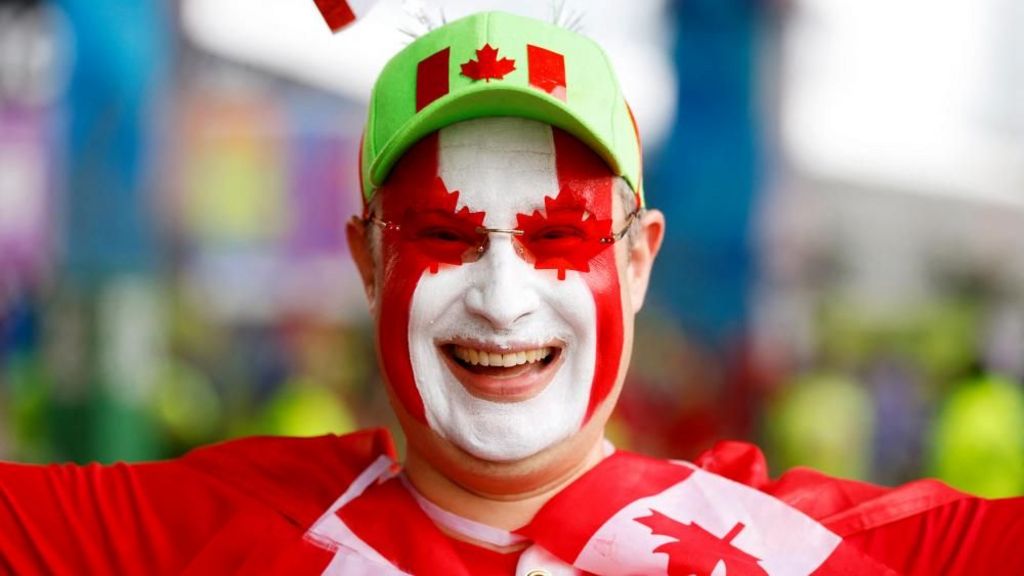
‘Forgotten’ host Canada’s unforgettable World Cup
Long labeled the ‘forgotten co-host’ of the 2026 FIFA World Cup shared with the United States and Mexico, Canada has emerged from the tournament with a historic legacy that extends far beyond its 13 hosted matches, transforming domestic soccer culture and uniting the nation behind its men’s national team.
Heading into the tournament, few outside the country expected Canada to make waves on the pitch. Long overshadowed by the nation’s obsession with ice hockey, and competing with the already established popularities of Major League Baseball and the National Basketball Association, men’s soccer has long lived as a largely recreational pastime in Canada, even as the country’s women’s national team has climbed to ninth in the global FIFA rankings. This year, however, the underdog Les Rouges defied every projection to deliver the best men’s World Cup run in Canadian history.
Led by outspoken American head coach Jesse Marsch, Canada captured its first ever World Cup group stage point, claimed its first tournament win, and fought all the way to the knockout round of 16 – a milestone no Canadian men’s side had ever reached before – before bowing out to Morocco. For long-suffering Canadian fans, the historic run has already cemented itself as an unforgettable cultural touchstone. ‘They shocked everyone by making it as far they did,’ Calgary-based fan Matt Lorincz told reporters, echoing a widely shared sentiment across the country.
The co-hosting tenure for Canada wrapped up in early July with a round-of-16 match in Vancouver that saw Switzerland defeat Colombia. Over the tournament’s run, host cities Toronto and Vancouver delivered vibrant, fan-first experiences that earned praise from international visitors and football leaders alike. Portugal manager Roberto Martinez praised Toronto’s compact, temporary-seated stadium, comparing its electric atmosphere to classic old-school Premier League grounds, while Norwegian visitor Gudmund Agotnes noted the unbeatable vantage point that offered views of both the pitch and the city’s iconic skyline.
Beyond the on-pitch magic, the World Cup delivered tangible economic and cultural shifts across Canada. In British Columbia, local food service and hospitality industries saw an approximate 5% jump in alcohol sales compared to 2025, with widespread foot traffic injecting much-needed momentum into a Canadian economy facing ongoing stagnation. ‘It raised the spirits of the entire province. I think the whole conversation for the last four weeks had been about soccer,’ said Ian Tostenson, head of the British Columbia Restaurant and Foodservices Association, adding that the event proved Canadians would spend on shared, high-quality experiences even during economic slowdowns.
Domestic viewership numbers also underscore the growing pull of soccer in Canada: Bell Media, the official host broadcaster, reported the round-of-16 match against Morocco peaked at 11.7 million unique Canadian viewers, making it the most-watched non-final World Cup match in Canadian history. That figure outpaced the 9.8 million total viewers for the 2025 National Hockey League season opener, and average viewership for Canada’s round-of-32 matches beat the typical audience for the long-running iconic broadcast *Hockey Night in Canada*.
This growing momentum has already translated to tangible investment in the future of Canadian soccer. Canada Soccer, the sport’s national governing body, wrapped up a C$25 million fundraising campaign months ahead of schedule, with the windfall earmarked for expanded youth access, coaching development, national team programming, and the creation of a new national training centre.
Canadian political leadership has also leaned into the moment, embracing the opportunity to showcase the country on the world’s biggest sporting stage. Prime Minister Mark Carney, an avowed sports fan who made headlines as the only leader among the three co-host nations to attend multiple in-stadium matches, delivered a rousing pep talk to the Canadian team in the Vancouver locker room following their 6-0 group stage win over Qatar. ‘You showed a level of character that some people never achieve in their life,’ Carney told the squad. ‘And you showed it when a good part of the country and the world is watching.’ Sports Minister Adam van Koeverden framed the hosting opportunity as a meaningful milestone for Canada as a mid-sized global power, calling the experience a ‘sincere privilege’ that the nation did not take lightly.
Still, the 2026 World Cup has not been without controversy for Canadian co-hosts. Critics have pushed back on the C$1.1 billion in taxpayer funding allocated to prepare Canadian stadiums and infrastructure for the tournament, with Toronto alone spending an estimated C$380 million amid ongoing municipal budget pressures. ‘I don’t think that hosting the games made the city’s situation any better,’ Toronto City Councillor Josh Matlow said of the spending. Van Koeverden countered that public spending was prudent, arguing that the widespread economic activity generated by full stadiums, hotels, and restaurants more than recouped the initial investment.
Sports industry observers note that Canada was always set to play a less prominent role than its co-host the United States, which hosted the majority of matches and dominated international media attention amid heightened political attention around the Trump administration. Even so, industry analyst John Kristick, a former executive director of the tri-nation United Bid Committee, said the tournament has still fostered widespread national pride across Canada. ‘Every Canadian knows Canada is hosting it, and I think there’s been a great deal of national pride,’ Kristick said.
For Canadian fans, the biggest win extends far beyond economic numbers or historic match results. In a deeply divided era, the team’s run has drawn diverse communities together around a shared passion. ‘It brought a lot of people together in a very kind of segregated world that we’re living in,’ said Zeileen Reardon, a fan watching the Morocco match at a Calgary bar. ‘So, I think it actually showed the world that we can come together, even for a game.’
The question hanging over Canadian soccer now is whether this World Cup momentum will prove a one-time high or a permanent turning point. For the millions of new fans drawn to the sport over the past month, the ‘forgotten host’ has already secured its place in Canadian sports history.
-
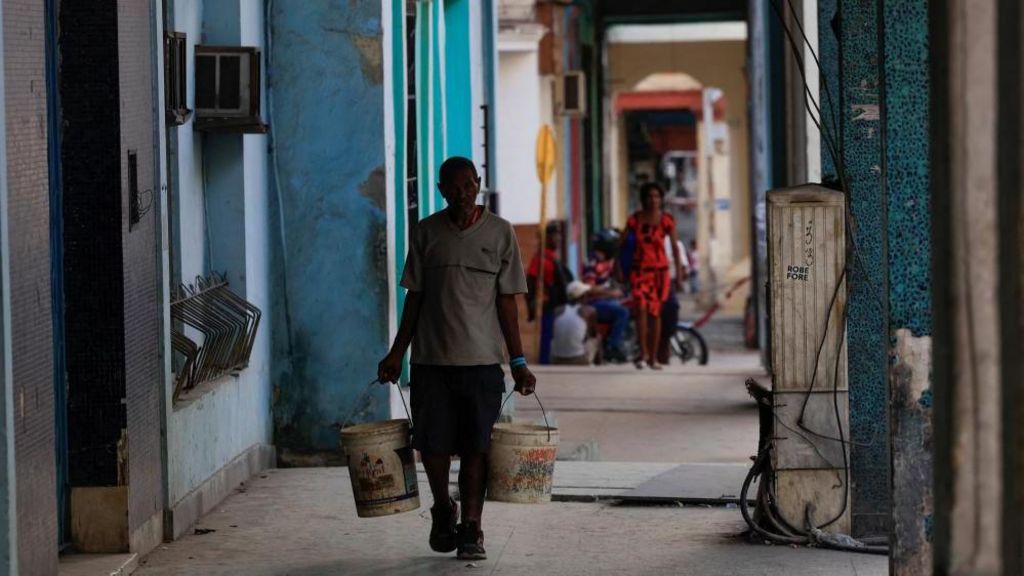
Cubans protest after third nationwide power cut this year
On Tuesday evening, spontaneous public demonstrations broke out across multiple Cuban communities, with furious residents banging pots and pans and lighting refuse ablaze to voice their frustration over a fresh nationwide power outage that has left large swathes of the island without electricity. This act of public dissent, rare in a country where open opposition to the ruling Communist government is commonly met with lengthy prison sentences, reflects the growing public anger over the island’s ongoing energy crisis that has dragged on for months.
The root of Cuba’s energy shortage traces back to long-standing fuel scarcity, a crisis that has been sharply worsened by stringent US sanctions and a de facto oil blockade on the island. Even residents who own backup generators are often left unable to operate them, as there is no fuel available to power the units amid ongoing shortages.
This latest unplanned outage, which occurred on Monday, marks the third nationwide blackout Cuba has experienced in 2026. It comes on top of pre-planned rolling blackouts that the Cuban government has implemented to conserve the country’s dwindling fuel supplies. In hard-hit rural regions, communities have been left without power for as long as 70 consecutive hours during scheduled outages, while urban centers face planned cuts that can stretch up to 30 hours at a time. As of Tuesday evening local time, the state-owned national electricity company had not released any explanation for what caused this latest unplanned full-grid outage. One of the hardest-hit areas that remained without power Tuesday was Santiago de Cuba, the country’s second-largest city. While Cuban officials announced that power service had been restored to most of the country by Tuesday, residents in still-dark neighborhoods took to the streets shouting demands to “turn on the lights!”
Cuban President Miguel Díaz-Canel has publicly acknowledged that discontent is spreading across the island. In an interview with Puerto Rico-based Spanish-language weekly Claridad, he admitted that the widespread hardships facing ordinary Cubans have fueled frustration. “There are shortages of transport, food, medicines, there are lengthy power cuts lasting more than 20 hours, that causes dissatisfaction, nobody can be happy, the people are suffering,” Díaz-Canel told reporters. However, the president placed full blame for the crisis on the United States, urging angry Cubans to direct their protest toward the US government instead of his own. “People bang pots, some with more anger than others. I say: direct your pot-banging towards our northern neighbours, who are the ones behind these power cuts,” he added.
The United States has rejected this blame, with US Ambassador to the United Nations Michael Waltz placing full responsibility for the outage and the broader crisis squarely on the Cuban government during a Tuesday address to the UN General Assembly. Waltz called on the Cuban government to “change your ways and turn the lights back on for your people,” and claimed that “there always seems to be enough power for the Cuban dictatorship.”
Cuba’s Foreign Minister Bruno Rodríguez countered by accusing the US of waging “multi-dimensional, non-conventional warfare” against the Cuban government and people, which he said has “become ever more cruel” over the past seven months.
Decades of already strained US-Cuba relations have deteriorated sharply since the start of 2026, after US President Donald Trump labeled the Cuban government a national security threat to the United States. Tensions spiked further in January, after US forces seized former Venezuelan President Nicolás Maduro — a close ally of Havana — leading Trump to publicly speculate that Cuba was “ready to fall.”
In the months following Maduro’s ousting, the Trump administration imposed sweeping new sanctions on Cuba, enacted the effective oil blockade that has crippled the country’s energy sector, and threatened to impose punitive tariffs on any third-party country that supplies fuel to Havana. The US also recently filed murder charges against former Cuban President Raúl Castro, who remains an influential political figure on the island at the age of 95.
Despite the very public exchange of accusations and escalating tensions, officials from both countries have confirmed that private negotiations have been ongoing in recent weeks. Rodríguez said Tuesday that the secret talks have so far “show no progress,” but confirmed that Cuba remains open “to dialogue based on mutual respect and non-interference in Cuba’s internal affairs.”
-
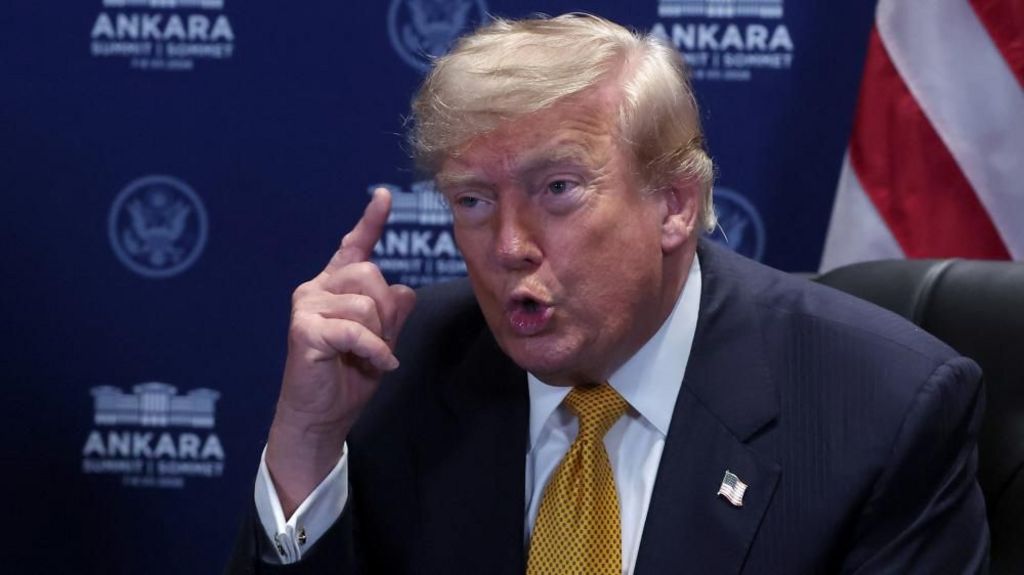
Trump says ceasefire is ‘over’ after US and Iran trade strikes
A months-long fragile ceasefire between the United States and Iran has collapsed completely, after U.S. President Donald Trump publicly declared the interim agreement dead and launched a scathing personal attack on Iran’s top leadership in remarks ahead of a NATO summit in Turkey.
Speaking to reporters alongside NATO Secretary General Mark Rutte, Trump did not mince words in his assessment of the collapsed deal, labeling Iranian leaders “scum” and “cuckoo”, and claiming the Islamic Republic’s leadership is made up of “sick, vicious, violent people”. The breakdown of the June 17 interim ceasefire agreement came after a new round of cross-border strikes that marked the most intense violence between the two nations since the deal was first signed.
The cycle of renewed hostilities began earlier this week, when three commercial oil tankers were targeted in attacks in the strategic Strait of Hormuz. The U.S. Central Command (CENTCOM) responded by launching what it described as “powerful” retaliatory strikes against Iranian targets late Tuesday. By Wednesday, Iran had hit back, launching strikes against U.S. military installations stationed in Bahrain and Kuwait in a coordinated retaliatory action.
In tandem with the collapse of the ceasefire, the Trump administration announced it was reversing its temporary suspension of oil sanctions on Iranian crude exports, a key concession that had been part of the June interim agreement. That move, paired with Trump’s comments, sent global crude oil prices spiking by roughly 6% in immediate market reactions, though prices remained far below the record highs recorded when the Strait of Hormuz was fully closed to commercial traffic earlier in the conflict.
Trump said that while he would allow U.S. negotiating teams to continue talks if they chose to, he personally sees any further diplomatic engagement as a pointless exercise. “I think it’s over. I don’t want to deal with them anymore,” he told reporters. “We make a deal. They go outside, talk to the press, they say ‘we never even talked about it’. There’s something wrong with them. As far as I’m concerned, it’s over. Frankly, I don’t want to waste my time with them. They’re liars.”
Iran has pushed back against U.S. claims that it violated the ceasefire, with Parliament Speaker Mohammad Bagher Ghalibaf accusing Washington of being the party that broke the memorandum of understanding (MoU). Ghalibaf pointed to previous U.S. strikes in southern Iran and what he called repeated violations of Iranian territorial jurisdiction in the Strait of Hormuz as proof of American bad faith. “The era of bullying and extortion is over. It leads nowhere. We don’t fold,” Ghalibaf said in a statement responding to Trump’s remarks.
This is not the first time the ceasefire has been tested since it was signed mid-June. Just one week after the deal was reached, the U.S. launched a new round of strikes after an Iranian projectile hit a commercial cargo ship transiting the strait, before both sides agreed to de-escalate by June 29.
The original June 17 MoU laid out 14 core terms, including an immediate and permanent end to all military operations across all fronts, and an Iranian commitment to use its best efforts to guarantee safe passage for all commercial vessels through the Strait of Hormuz free of charge for a 60-day period. Following the signing of the interim deal, both sides had been negotiating toward a permanent peace agreement, but talks were paused last week to allow for national mourning ceremonies following the death of former Iranian supreme leader Ayatollah Ali Khamenei, who was killed on the first day of joint U.S.-Israeli strikes on Iran.
As of Wednesday, mourning processions for Khamenei were being held in Iraq, with final funeral rites and burial scheduled for Thursday in the northeastern Iranian city of Mashhad. It remains unclear when diplomatic talks will resume following the latest outbreak of violence, with Trump dismissing questions of a post-funeral resumption saying “I don’t care.”
-
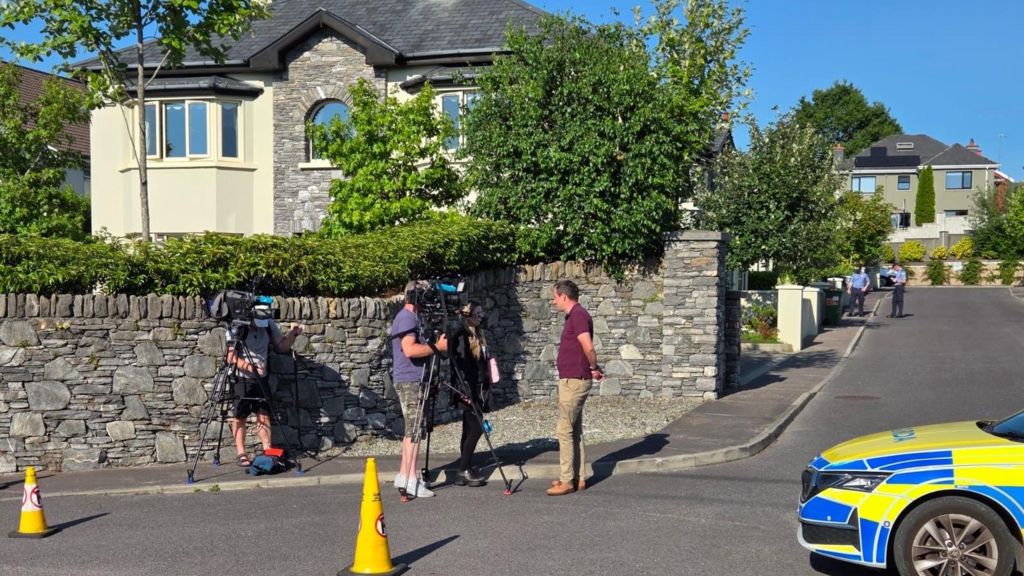
‘Dark cloud’ over town as woman’s death investigated
A tight-knit community in the popular Irish tourist town of Killarney, County Kerry, has been plunged into shock and grief following the sudden death of a local woman at her home, with law enforcement currently working to unravel the circumstances of the incident.
Irish national police, known as Gardaí, confirmed they were called to a residential address on Muckross Road on Tuesday, where the woman, believed to be in her 40s, was pronounced dead at the scene. Per local reporting from Irish public broadcaster RTÉ, the deceased has been identified locally as Jamey Carney, who is reported to have personal connections to the United States.
The tragedy has upended the normally upbeat atmosphere of the town, which had been enjoying a stretch of warm sunny weather that drew both locals and visitors out into public spaces ahead of the news breaking. John O’Donoghue, who serves as both a local councillor and the cathaoirleach (mayor) of Killarney, described the sudden loss as casting a “dark cloud” over the entire community.
Speaking to reporters near the police cordon outside the woman’s home in the Homeland estate housing development, O’Donoghue noted that the quiet, relatively new residential neighborhood sits in one of Killarney’s most sought-after areas, a stretch often nicknamed the town’s “Golden Mile”. Though he did not know Carney personally, O’Donoghue said he frequently saw her walking in the area, and confirmed she was a parent to a young teenager.
“There was a real almost festival atmosphere,” he told media, referring to the days before the incident, when unseasonably good weather had drawn crowds to the town’s streets. “When this news broke yesterday, it was just like a dark cloud came over the town.”
Fellow local councillor Niall O’Callaghan echoed the community’s widespread sorrow, saying “We’re devastated, we send deepest sympathy to the family. I’m really sad and disappointed that this has happened to someone who was living in our community.” He also joined local leaders in urging any residents or visitors with relevant information to step forward to assist law enforcement.
As of Tuesday, the exact cause of Carney’s death has not been confirmed. Gardaí have preserved the crime scene as the investigation moves forward, and have officially requested a post-mortem examination to determine the cause of death. Investigators are asking any person who was present in the Muckross Road area between the evening of July 6 and the afternoon of July 7, 2026, to share any relevant footage they may have, including CCTV recordings from private properties and dashcam footage from vehicles.
A dedicated incident room has been established at Killarney Garda station, and a senior investigating officer has been assigned to lead the case as authorities work to piece together what led to the woman’s death.