博客

  • A mountain of rubbish in Indonesia has been on fire for more than a week

    A mountain of rubbish in Indonesia has been on fire for more than a week

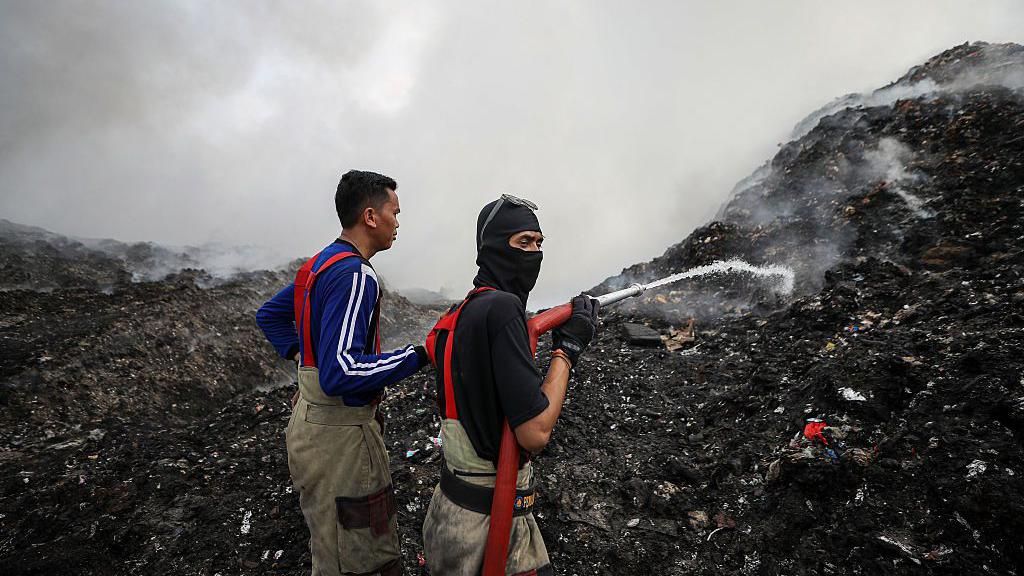
    An eight-day underground fire that has ravaged a massive open-air waste mountain on the outskirts of Jakarta has pushed hundreds of residents from their homes, pushed local hospitals to treat a surge of respiratory illness, and laid bare a systemic national waste management crisis decades in the making. The inferno, which ignited on June 30 at the Jatiwaringin Landfill in Tangerang Regency, has spread across more than 15 hectares of piled waste, blanketing nearby residential neighborhoods in thick, toxic smoke that pushed local air quality into hazardous levels, according to Indonesia’s Ministry of Environment.

    Initial investigations by environmental activists point to a buildup of methane gas released by decomposing organic waste trapped beneath thousands of tons of uncompacted rubbish as the most likely cause. A small initial spark, fanned by strong seasonal winds, spread the fire across multiple hard-to-reach sections of the waste mountain, where deep-seated smoldering continues to plague firefighting efforts eight days on. Unlike conventional surface fires, this blaze burns within the compacted layers of waste, requiring specialized response tactics. Authorities have deployed a large contingent of resources including helicopters, water tankers, bulldozers, and surveillance drones to contain and extinguish the fire, with officials projecting full containment by the end of the week.

    For local residents, the impact has been immediate and devastating. Hundreds have been forced to evacuate their smoke-filled homes to government-run emergency shelters, with many reporting severe respiratory irritation from toxic fumes. “The smoke was so thick you couldn’t see anyone,” 45-year-old local resident Sarmanah told reporters. “It stings the nose, makes you cough and have a runny nose, and makes you unable to breathe… We were forced to leave the house because we couldn’t take it anymore.” As of the latest update, local health authorities have examined at least 234 residents for smoke-related respiratory issues, with 72 confirmed cases of acute respiratory tract infection. While hazardous air quality has eased slightly in recent days, active hotspots and smoldering pockets of fire remain in the western and southern sections of the landfill.

    Environmental campaigners say the Jatiwaringin fire is not an isolated accident, but a predictable “ecological disaster resulting from systemic negligence” that has plagued Indonesia’s waste management sector for years. According to the Indonesian environmental NGO Forum for the Environment (Walhi), the Jatiwaringin facility was only designed to handle 2,700 tons of waste per day, which meets just 59% of Tangerang Regency’s total daily waste output. The excess waste is dumped illegally in unregulated open sites within 100 meters of residential neighborhoods, creating sprawling, unmanaged waste mountains that trap methane and create a persistent public safety risk.

    Long before the current blaze, local residents reported constant issues with foul odors, pest infestations, and fears of catastrophic landslides from the overgrown waste piles. Climate change and more frequent extreme heat waves have exacerbated the risk, turning these unregulated dumping grounds into what activists describe as “time bombs” waiting for a single spark to ignite. This pattern is not unique to Jatiwaringin: major landfill fires swept across multiple Indonesian sites in 2023, including a 40-hectare blaze at Bandung Regency’s Sarimukti Landfill and a fire that destroyed 80% of a 35-hectare Tangerang landfill, both linked to methane buildup from poor waste management.

    In response to the disaster, Indonesian officials announced that a full investigation into the cause of the Jatiwaringin fire will begin once extinguishing operations are complete. The Ministry of Environment and Forestry also plans to conduct a nationwide evaluation of 390 landfills starting in early August 2026, and confirmed that Jatiwaringin already received administrative sanctions for poor management practices in 2025. Authorities have ordered local governments to transition to controlled landfill systems, where waste is compacted and regularly covered with soil to reduce methane buildup and fire risk.

    But activists warn that incremental changes and emergency responses are not enough to address the root of the crisis. Walhi campaigner Wahyu Eka Styawan argues that persistent underfunding for regional waste management, weak enforcement of existing environmental regulations, and a lack of public education on source-separated organic waste have created conditions where disasters like this are inevitable. “This is a time bomb of accumulated waste management problems that have been ignored for years without fundamental improvements,” Wahyu said. Without systemic changes that reduce waste at the source, implement consistent sorting, and process organic waste to prevent methane formation, he added, “It could definitely catch fire again if the pattern isn’t changed. Once the weather gets hot again, be prepared for more fires.”


  • Chinese men in Germany used Telegram groups to share rape videos and drugging tips, prosecutors say

    Chinese men in Germany used Telegram groups to share rape videos and drugging tips, prosecutors say

    BERLIN — Framed to outsiders as an exclusive “German expert driving school”, a sprawling network of hidden Telegram group chats hid a horrific, well-organized criminal enterprise: a ring of predators who openly bragged about raping drugged, unconscious women, traded step-by-step tips for carrying out attacks, and even shared graphic photos and videos of their assaults. Court documents reveal the group used dehumanizing coded language to mask their crimes: women were labeled “cars”, sedating medications “fuel”, rape “driving”, and victims were dismissively called “dead pigs”.

    After years of the network operating undetected, German law enforcement has uncovered a ring primarily made up of Chinese men targeting mostly Chinese women living across Germany. To date, three core members of the group have been convicted on rape and related charges, with a fourth high-profile defendant awaiting a verdict in a Berlin court.

    The full scale of the abuse remains shrouded in secrecy, in large part due to strict German privacy rules that restrict public disclosure of court details and limit what prosecutors can share outside of official proceedings. During the ongoing Berlin trial, portions of hearings have even been closed to the general public. This lack of transparency has contributed to the case flying under the radar in mainstream German discourse, but members of Germany’s local Chinese community — mostly women — have mobilized to show solidarity, traveling hundreds of kilometers to attend court hearings to support victims they have never met.

    Fu Xiao, one community member who made the 310-mile trip to Berlin to observe the trial, emphasized the anger over the group’s blatant misogyny. “What makes one really angry is to see that such groups hate women, they have no respect. Women aren’t seen as people,” she said.

    While Chinese state media has covered the court proceedings extensively, public discussion on Chinese-language social platforms including Rednote has faced partial censorship. Screenshots and searches confirm that posts using direct keywords referencing the case are often deleted or banned, while content using indirect phrasing such as “date rape” or “students studying abroad in Germany” often avoids removal. Neither China’s Ministry of Public Security nor Rednote have responded to requests for comment on the censorship policy.

    Legal observers and judges have drawn clear parallels between this case and the high-profile Gisèle Pelicot trial in France, where a woman was drugged and repeatedly raped by her husband and dozens of strangers he recruited over a decade. Pelicot’s choice to waive her anonymity sparked a global reckoning with systemic rape culture, and German judges note the “German Driving School” case is far from an isolated incident tied to any single nationality or region.

    “This is not a Chinese or French phenomenon, but one that also exists in Germany and, ultimately, worldwide,” said Judge Markus Koppenleitner during a Munich hearing for one of the convicted defendants.

    The exposure of the German ring has already rippled across the globe, triggering new investigations and arrests linked to similar networks of predatory misogynist groups. Last year, German investigators shared intelligence with Los Angeles law enforcement that led to charges against a Chinese graduate student accused of drugging and assaulting three local women, who allegedly obtained his sedatives from a contact connected to the German network. Just last month, Dutch police arrested four men on suspicion of drug-facilitated sexual abuse after receiving tips from German and UK authorities; the Dutch group also used social media chat groups to share assault footage and coordinate attacks.

    Last week, the European Union’s law enforcement agency Europol launched Operation Medusa, a coordinated international crackdown specifically targeting online networks that facilitate drug-facilitated sexual assault. Led by law enforcement from Germany and the United Kingdom, the operation has already resulted in 57 arrests across multiple countries.

    The case has also reignited long-simmering criticism of Telegram, the encrypted messaging platform that hosted the abusive chats for years in direct violation of the platform’s own terms of service. Questions continue to mount over how the chats — some boasting tens of thousands of members dating back to at least 2020 — operated undetected for so long. In 2024, Telegram’s founder was arrested in Paris over allegations the platform has repeatedly become a haven for criminal activity, ranging from drug trafficking to the distribution of child sexual abuse material. He has denied all wrongdoing, framing the abuse as a growing pain tied to Telegram’s surging user base that outpaced content moderation capacity.

    In a generic statement, Telegram said “Sexual violence is explicitly forbidden by Telegram’s terms of service and such content is routinely removed,” adding that the platform complies with all legal obligations under the EU’s Digital Services Act. The company declined to answer specific questions about the German network, including whether moderators were aware of the abusive content, what steps were taken to remove it, and whether the platform alerted law enforcement to the ongoing criminal activity before police made their own discovery.

    Court documents confirm the earliest chats linked to the network date to 2020. Magdalena Gebhard, an attorney who represented one victim in a prior convicted case, told reporters the network had a core inner circle of eight ringleaders, while some of the broader public chat groups counted up to 50,000 members. German police only first learned of the network’s existence in 2024, after ringleader Dapeng Z. shifted his tactics from assaulting female acquaintances to targeting strangers he met online, leaving a trail that alerted authorities. Dapeng Z. was arrested in Germany the same year in a joint operation with Chinese law enforcement, and sentenced to 14 years in prison in February on charges of aggravated rape, attempted murder, and other offenses. He has since filed an appeal, and his legal team has not responded to requests for comment.

    Authorities have not publicly released a full count of confirmed victims or linked perpetrators, and stress the investigation remains ongoing. Multiple victims only learned they were assaulted after police uncovered graphic video footage of the attacks stored in the group chats. On Wednesday, the fourth inner circle defendant, Zhiting S., will receive his verdict in Berlin. Prosecutors allege Zhiting S. used his prior medical training to share detailed guidance with the chat group on which sedatives were most effective for subduing victims before assault, and at least one attacker followed his instructions to carry out an assault in Frankfurt. He is also charged with possession of child sexual abuse material and the repeated sexual assault of a woman in China, which he documented and shared to the network. Under German law, defendants are not required to enter formal pleas, and Zhiting S.’s legal team has declined to comment on the charges.

    Editor’s Note: This report contains discussion of sexual violence. Individuals affected by sexual assault can seek support at 1-800-656-4673 in the U.S., 116 016 in Germany, and 15117905157 in China.

  • Will Le Pen rise again? French nationalist leader defiant after court’s ruling

    Will Le Pen rise again? French nationalist leader defiant after court’s ruling

    On a Tuesday in mid-2026, a Paris court of appeal handed down a ruling that sent shockwaves across French political life: it upheld far-right nationalist leader Marine Le Pen’s conviction for misappropriation of public funds, but slashed the original five-year ban on running for public office, clearing a path for her to launch a historic bid for the French presidency. By early Wednesday morning, France was still reeling from the rapid cascade of political drama that followed: within hours of the verdict, Le Pen defied all expectations of her political demise and officially confirmed she would contest the 2027 presidential election, immediately rolling out her social media campaign to supporters across the country.

    Le Pen’s campaign branding leans heavily into deliberate political messaging. Her online campaign poster, emblazoned with the slogan “Pour la France” (“For France”) and subtitled “La Renaissance” (“The Rebirth”), features Le Pen smiling with outstretched arms against the backdrop of France’s blue-white-red tricolor. The choice of “Renaissance” is no accident: it is the official name of incumbent President Emmanuel Macron’s centrist political party, a sharp jab at the leader who has repeatedly categorized Le Pen’s National Rally as an extremist political force, and who promised upon his first election to eliminate voter support for far-right extremism.

    For years, Le Pen has built her political brand around a populist divide: framing her movement as the voice of “the people” and “patriots” pushing back against a detached “metropolitan elite” and what she dismisses as “globalist” interests. Her core platform centers on putting French citizens first in policy, a message that has resonated deeply with a large swathe of the French electorate disillusioned with traditional mainstream politics and frustrated by widening societal inequality. This is not Le Pen’s first attempt at the presidency: she lost twice to Macron in 2017 and 2022, but Macron is constitutionally barred from running for a third term, and current polling puts Le Pen in a stronger position than ever before. She has also repeatedly defied predictions of her political end, bouncing back from major setbacks—including a poorly received 2017 televised debate against Macron—to rebuild her movement and grow her support.

    Prior to the appeal ruling, most political observers had predicted the court would reaffirm the full public office ban, effectively ending Le Pen’s decades-long political career. Instead, the court left the decision to run to Le Pen, only requiring her to wear an electronic monitoring tag for 12 months as part of her sentence. Le Pen responded to the verdict with characteristic defiance: in a televised address shortly after the ruling, she confirmed her candidacy, announced she would appeal the conviction to France’s highest court, the Court of Cassation, and refused to wear the ankle tag until the court issues its final ruling, arguing the French electorate should be the ultimate judge of her candidacy.

    Critics across the French political spectrum have slammed Le Pen’s move as a Trumpian power play and a high-stakes political gamble. Legal and political analysts note Le Pen and her legal team are likely counting on the Court of Cassation’s famously slow procedural timeline: if a ruling does not come until spring 2027, Le Pen could already have won the presidency and gained the legal immunity that comes with the office for a full five-year term. However, the court could also choose to expedite proceedings given the unprecedented political stakes of the case. If a ruling comes before the election and requires Le Pen to wear the electronic tag during the final stretch of campaigning, it could remind swing voters of her embezzlement conviction, which involved €4.1 million (£3.5 million) in misused public funds drawn from French taxpayers. While the tag would not alienate her loyal base, it could turn off the moderate conservative voters Le Pen has worked aggressively to court in recent years.

    Left-wing lawmaker Francois Ruffin, leader of the Debout! Party, summed up the opposition’s position: “She has been found guilty twice of embezzling public money from French taxpayers. That makes her a criminal, and she has no business running for the highest office in the country.”

    The outcome of France’s 2027 presidential election carries major implications far beyond France’s borders. As the European Union’s second-largest economy, a nuclear-armed military power, and a key geopolitical actor at a moment of rising global tension with Russia and China, France’s leadership shapes the entire trajectory of European and transatlantic policy. Le Pen and her 30-year-old protégé Jordan Bardella—who Le Pen has tapped as her preferred prime minister if she wins—are both openly Eurosceptic and have expressed skepticism of NATO, continued French military support for Ukraine, and the major increase in defense spending that Macron has pledged. These policy positions have already sparked deep anxiety among European allies, who view a Le Pen presidency as a major shift that could reshape the European political order. While Le Pen is not guaranteed victory, current polling shows she enters the race as one of the most competitive candidates, with a clear path to the Elysee Palace.

  • AFL 2026: Melbourne coach Steven King downplays Demons’ finals talk

    AFL 2026: Melbourne coach Steven King downplays Demons’ finals talk

    As the Melbourne Demons continue their steady climb up the AFL ladder and speculation around a 2024 finals berth grows louder, first-year senior coach Steven King is refusing to get caught up in the hype, urging his side to stay focused on the immediate task at hand rather than looking ahead to September football.

    The Demons currently sit sixth on the premiership ladder after a dominant first-half blitz against Hawthorn kept their hopes of a top-four finish well and truly alive. Entering the run home to the finals, Melbourne has just one side currently ranked above them — Fremantle — left on their schedule, with a clash against 17th-placed Richmond at the MCG this Sunday as their next challenge. But King is acutely aware of how quickly fortunes can shift in the hyper-competitive modern AFL, where small margins separate ladder leaders from battlers and results can swing wildly week to week.

    When asked directly if it was too early to start discussing the so-called “F-word” — finals — King did not hesitate to shut down the premature speculation. “Yeah, it is, absolutely,” he told reporters. King, who took over the top coaching role at the club this off-season amid a major roster and leadership overhaul, said the uncertainty of the competition makes long-term forecasting pointless. “I know how marginal this competition is,” he explained. “One week you’re spoken about really highly and you slip up or come up against a really good team, and you can’t control what other clubs are doing around you.”

    Rather than looking ahead to a potential finals spot, King said his full attention is fixed on how his side will bounce back from a underwhelming fourth quarter in their previous win in Tasmania. While the line has become a common talking point for coaches across the league, King said it remains the unvarnished reality for his emerging side. “I think it’s too early for us to mention that word. I am really just keen to see how we respond from that fourth quarter in Tassie this week. That’s a bit of a cliche for a coach to say, but that’s pretty much the reality.”

    King added that Sunday’s opposition Richmond, fighting to avoid the wooden spoon this season, will be hungry to pull off an upset against the in-form Demons. “I think on the weekend Richmond will be looking at our game going that’s them at their best, and there’s a patch there that looks like an opportunity to get up,” he said. “We have to keep controlling what we can and therein lies a great opportunity for us as a club.”

    Off the field, the Demons have received positive injury news on key attacking targets, even as key forward Brody Mihocek remains sidelined in the short term. Mihocek returned to the club for a scheduled training appearance this Wednesday, just weeks after suffering a neck injury on King’s Birthday, providing a boost to the club’s long-term outlook. For this weekend, Melbourne remains quietly optimistic that star forward Bayley Fritsch will be fit to take the field despite a painful early injury against Hawthorn.

    Fritsch dislocated his finger in the opening stages of the win over the Hawks, but returned to the field to boot four goals in what King called an incredibly brave showing. “Yeah, good. He had that dislocation and had to go off, I think it broke a bit of skin,” King said. “He’s had that out so he will be a test this week, but we’re hopeful, he got through and kicked another four goals with it. It was a really brave effort from him and hopefully he can recover in time. Luckily, this Sunday gives us an extra day. (We’re) optimistic he’ll be right.” Fritsch is expected to wear a protective glove on the injured finger if he is cleared to take the field against Richmond.

  • Nato allies announce £37bn for new missile project

    Nato allies announce £37bn for new missile project

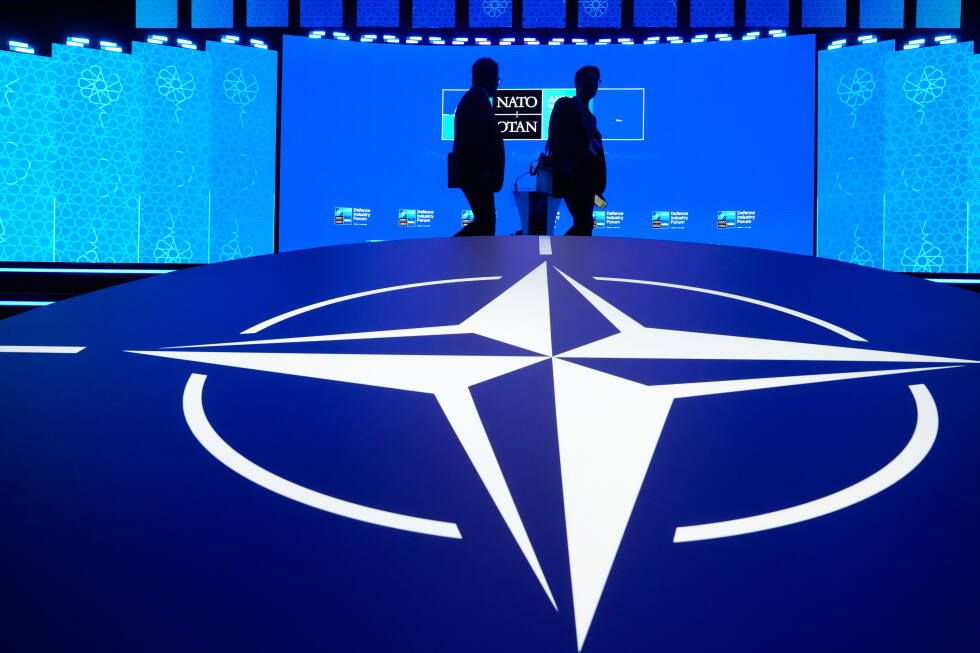
    As NATO leaders gather in Ankara, Turkey, for their annual summit this week, a landmark UK-led multinational weapons development program has taken center stage. Twelve allied nations including the United Kingdom have committed to invest more than £37 billion ($50 billion) over the next decade to develop a cutting-edge long-range precision missile system, a project billed as one of the most ambitious defensive upgrades in the alliance’s recent history.

    The newly announced Deep Precision Strike initiative will be a core topic of discussion among participating leaders on Wednesday, marking one of the key policy announcements of Keir Starmer’s final NATO summit as UK prime minister. Ahead of the meeting, Starmer has positioned the program as a unifying European-led effort to bolster collective defense. “This UK-led initiative will help bring European allies together to keep NATO safe for years to come,” the prime minister said, framing the project as a critical step toward delivering on his pledge to build “a stronger, more European NATO.”

    Designed to strike high-value enemy targets with extreme accuracy at ranges up to 300 kilometers (nearly 200 miles), with potential future extensions out to 2,000 kilometers (1,250 miles), the new missile system is intended to disrupt enemy supply lines, neutralize key military infrastructure, and deter potential aggressors. Like many large-scale advanced military development projects, the Deep Precision Strike system is not projected to enter operational service until the 2030s. It builds on the UK’s existing long-term defense commitments, which include a £300 billion Defence Investment Plan allocated through 2030.

    The summit comes amid growing tensions between NATO and Russia, and mounting pressure from US President Donald Trump on alliance members to increase defense spending. Last year, nearly all NATO members agreed to a target of spending 3.5% of GDP on defense by 2035, with an updated target of 5% for total defense and security spending by the same deadline. Starmer is expected to face criticism from Trump for failing to release a concrete timeline to hit the 3.5% target during this week’s meetings.

    In June, US Defense Secretary Pete Hegseth launched a six-month strategic review of US force posture across Europe, a move aligned with Trump’s long-standing position that European allies must carry a larger share of the continent’s defense burden. Ahead of the summit, Starmer has sought to shore up support for European-led defense integration within NATO, emphasizing the growing threat Russia poses to alliance territory. UK government data shows NATO fighter jets have scrambled more than 700 times this year alone to intercept Russian aircraft approaching allied airspace, while Russian military activity near UK territorial waters has jumped 30% compared to previous periods.

    “Whilst NATO did not seek confrontation with Russia, it must be ready to defend every ally,” Starmer is set to tell fellow leaders. Foreign Secretary Yvette Cooper expanded on the strategic purpose of the new missile program, noting that the capability would allow allies to disrupt the core military logistics that sustain offensive operations. “At Ankara we are sending a clear message to [Russian] President [Vladimir] Putin; NATO is stronger, more European and ready to defend our citizens against the long-term threat posed by him and the Russian state,” Cooper said.

    The initiative also aligns with lessons drawn from Ukraine’s ongoing defense against Russia’s full-scale invasion, now in its third year. On Tuesday, Ukrainian President Volodymyr Zelensky used his summit address to urge allies to accelerate deliveries of urgently needed air defense systems, as Russia ramps up airstrikes across Ukrainian territory. Ukraine has already demonstrated the game-changing impact of long-range strike capabilities, carrying out repeated attacks on Russian oil refineries, logistics hubs, and military positions deep inside Russian territory. These strikes have caused widespread fuel shortages and power disruptions in Russia, and significantly degraded Moscow’s ability to sustain its offensive operations in Ukraine, according to a Downing Street briefing.

    “Ukraine’s Armed Forces have proved that the effective use of long-range systems can have game-changing impacts on the battlefield, giving the Armed Forces the ability to degrade enemy forces far behind the frontline,” a Number 10 spokesperson said. “Ukrainian long-range strikes, such as those on key logistics hubs, have significantly impacted Russia’s ability to sustain their offensives.”

    For its part, the Kremlin has responded to the summit’s agenda with a firm rejection of the alliance’s confrontational framing. Kremlin spokesman Dmitry Peskov told reporters on Tuesday that Russia would closely monitor all discussions and outcomes from the Ankara gathering, reaffirming that Moscow would continue its military operation in Ukraine until all its stated objectives are met. Peskov dismissed new weapons pledges to Ukraine as unable to alter the course of the conflict, noting that most summit statements about Russia have been adversarial rather than constructive. “To our regret, these were not statements about constructive engagement and dialogue but rather statements of a confrontational nature,” Peskov said. He added that Russia still views a political and diplomatic settlement of the conflict as the preferable outcome.

  • The NATO summit was supposed to focus on defense spending. Trump’s strikes on Iran changed that

    The NATO summit was supposed to focus on defense spending. Trump’s strikes on Iran changed that

    On the eve of a critical NATO summit in Ankara, Turkey, a sudden announcement from U.S. President Donald Trump upended months of careful planning by alliance leaders, throwing a gathering meant to celebrate rising defense spending and unified support for Ukraine into geopolitical chaos. Late Tuesday, not long after leaving a welcoming dinner hosted by Turkish President Recep Tayyip Erdogan for all 32 NATO member leaders, Trump ordered a new round of military strikes against Iran and revoked the export license that allowed Tehran to sell its crude oil on global markets. The U.S. action came in retaliation for recent attacks that damaged three commercial merchant vessels in the strategic Strait of Hormuz, and it immediately highlighted the extreme fragility of a temporary ceasefire deal that had paused months of open conflict between Washington and Tehran.

    Unusual for a sitting U.S. president, Trump authorized the military action while traveling abroad; the only recent precedent came in 2011, when former President Barack Obama approved Libya strikes during an official visit to Brazil. Trump did not issue any direct public statement on the strikes on Tuesday night, but the move was not entirely unforeseen: European NATO allies and Canada had spent weeks warning that Trump could suddenly escalate tensions over the ongoing U.S.-Iran conflict, a conflict they were never consulted on before it began.

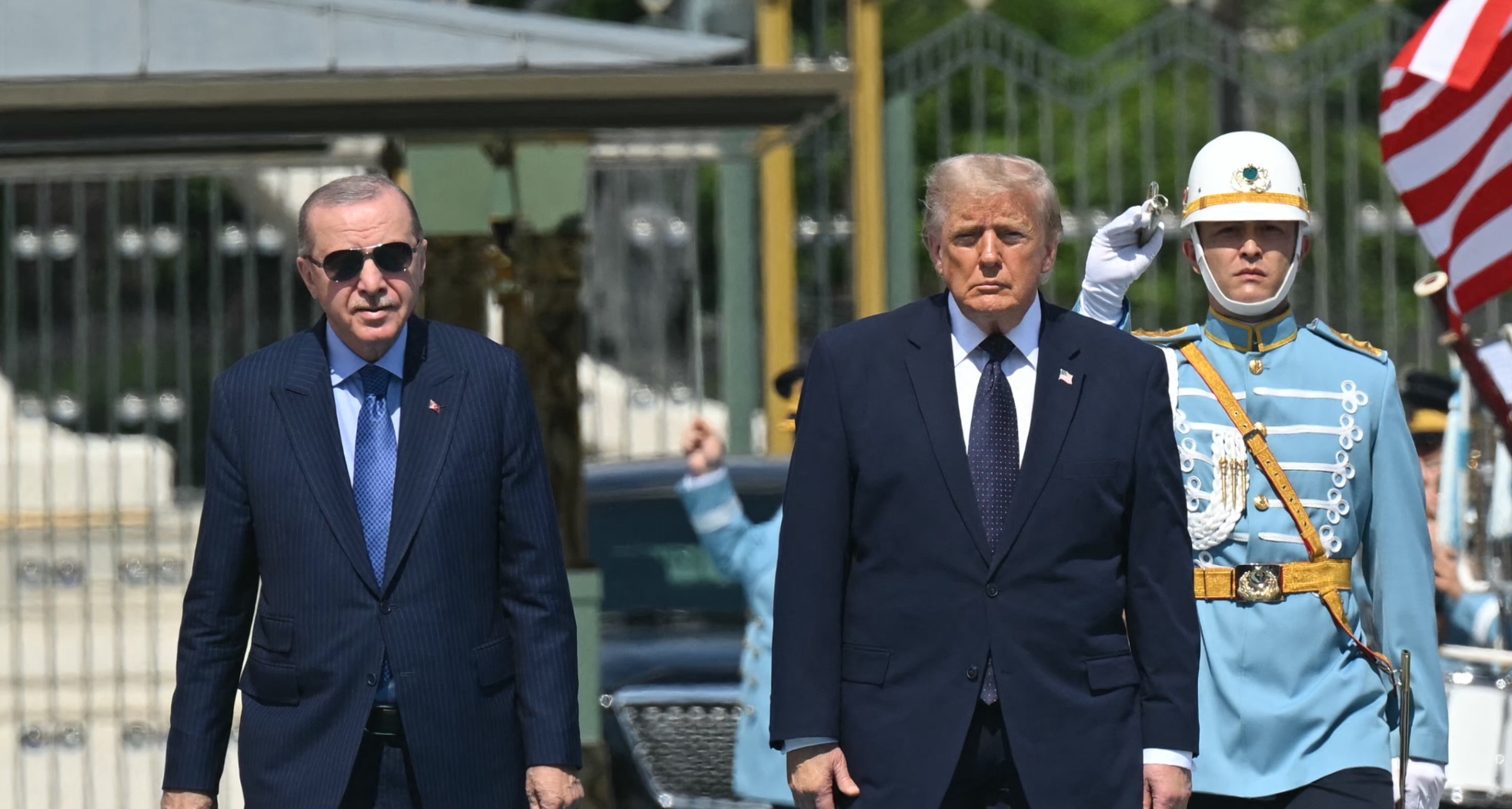
    Relations between Trump and many alliance members have already been strained by his past criticism of NATO’s Iran policy. When several allies refused to grant U.S. forces open access to their military bases for operations against Iran, Trump publicly called NATO a “paper tiger” and demanded unwavering loyalty from member states. Speaking during a bilateral meeting with Erdogan earlier Tuesday, Trump doubled down on that critique, confirming his public questioning of ally commitments. “Italy turned us down and Germany turned us down and France turned us down,” he said. “And that’s OK. But, you know, why are we spending hundreds of billions of dollars and they’re not there for us?” Trump added that his request for base access had been a test of alliance solidarity, a remark that deepened unease among participating leaders.

    The summit was originally structured to showcase NATO unity at a moment of heightened global risk, as Russia continues its full-scale invasion of Ukraine and fears grow that other European nations could face future aggression. To pre-empt Trump’s long-standing complaints that the U.S. carries an unfair share of NATO’s defense burden, alliance leadership had worked for weeks to frame progress on spending as a win for the U.S. president. Last month, NATO Secretary-General Mark Rutte traveled to Washington D.C. to promote what he called the “Trump Trillion” — the $1.2 trillion in additional defense spending that European allies and Canada have committed to since Trump first took office in 2017. As leaders arrived in Ankara, Rutte even hosted a public event to highlight planned spending projects, a large share of which will go to U.S. defense contractors, generating thousands of American jobs in the process.

    Despite these outreach efforts, NATO diplomats and officials acknowledge they remain bracing for new public criticism from Trump. Tensions rose even before the summit opened when Trump reopened a long-simmering dispute with Denmark, a core NATO ally, repeating his claim that the U.S. should take control of Greenland, the semiautonomous Danish island. The remark struck at the heart of NATO’s founding principle, which is based on mutual respect for member state territory and collective defense against external aggression.

    Trump’s core grievance against NATO remains his argument that the U.S. bears too much of the alliance’s defense cost. Last year’s summit saw allies agree to a new target of investing 5% of total gross domestic product in defense-related spending: 3.5% for formal defense budgets, and 1.5% for upgrading critical infrastructure including roads, bridges, and ports to enable rapid movement of troops and equipment during a crisis. Ahead of this year’s gathering, Rutte demanded all member states submit detailed, credible plans to meet the new spending targets. New NATO data released Tuesday shows that Slovenia, Belgium, Spain, and the Czech Republic are already at risk of pushback from the Trump administration, as they continue to fall short of the alliance’s original 2% of GDP defense spending target.

    The Trump administration is pushing for a restructuring of the alliance it calls “NATO 3.0,” a leaner, more combat-ready framework where European states take full responsibility for their own conventional security, including support for Ukraine’s war effort, while the U.S. continues to provide its nuclear deterrent umbrella. European allies and Canada still lack clarity, however, on how large a drawdown of U.S. troop deployments in Europe Trump intends to carry out. The Pentagon has launched a six-month review of U.S. force presence on the continent, and the scale of any cuts will reportedly depend on how quickly allies increase their spending and whether they agree to expand U.S. access to their military bases.

    Alongside the tensions over Iran and spending, the summit has also drawn attention to Ukraine’s ongoing push for NATO membership. Ukrainian President Volodymyr Zelenskyy, who is scheduled to meet one-on-one with Trump in Ankara on Wednesday, issued a renewed appeal for membership on Tuesday, arguing that Ukraine’s battle-tested armed forces would add significant strength to the alliance. Zelenskyy highlighted Ukraine’s operational capabilities, including its ability to strike deep inside Russian territory and target key Russian energy infrastructure such as oil refineries, claiming that Ukrainian forces eliminate roughly 30,000 Russian troops on average each month. Many NATO members in northern, central, and eastern Europe share growing concern that Russian President Vladimir Putin, bogged down and unable to secure a decisive victory in Ukraine, could launch a large-scale hybrid attack combining conventional military action with cyber and disinformation tactics across the European continent.

    Beyond NATO business and the Iran escalation, Trump has a full schedule of bilateral meetings on the summit’s sidelines. He is set to hold talks with Syrian President Ahmad al-Sharaa, the former insurgent leader whose offensive ousted long-time autocrat Bashar al-Assad in December 2024. Despite al-Sharaa’s past ties to al-Qaida, Trump has already publicly backed the new Syrian leader as he works to rebuild the war-ravaged country and restore diplomatic relations with Western nations. Trump has repeatedly claimed that al-Sharaa would be more effective at rooting out the Iran-aligned militia Hezbollah from Lebanon than the Israeli military, a remark that has sparked deep alarm in both Lebanon and Israel. Al-Sharaa has repeatedly rejected that claim, saying he has no interest in conducting such an operation.

  • No ‘magic wand’: Trump faces layers of resistance on Turkey F-35 deal

    No ‘magic wand’: Trump faces layers of resistance on Turkey F-35 deal

    During a joint appearance with Turkish President Recep Tayyip Erdogan in Ankara ahead of the NATO summit, former President Donald Trump made a sweeping promise to roll back existing U.S. sanctions on Turkey and revive the stalled sale of American F-35 stealth fighter jets to the NATO ally. “We don’t want to sanction friends. It’s very simple,” Trump stated, adding that a final decision on the F-35 deal – which he described as “the best plane by far” – would be finalized after careful consideration.

    Despite Trump’s public confidence, regional and foreign policy experts warn that significant legal and political barriers stand between the proposed policy shift and implementation, with congressional buy-in emerging as the single biggest obstacle.

    Geopolitically, Turkey occupies a uniquely important position for the Western alliance today: it boasts NATO’s second-largest standing military, and has gained renewed goodwill across European capitals amid ongoing efforts to counter Russian aggression following the invasion of Ukraine. For many policymakers in Washington, Turkey also serves as a critical counterweight to Iranian regional influence, particularly after Ankara-backed Syrian leader Ahmed al-Sharaa ousted the Iran-aligned Assad government in 2024. For Trump personally, the push for warmer ties is also shaped by a longstanding close personal relationship with Erdogan – so much so that Trump confirmed he attended the NATO summit primarily as a favor to his Turkish counterpart.

    But that warmth has not extended to Capitol Hill, where Turkey has faced deep, bipartisan criticism for years. U.S. lawmakers have repeatedly condemned Erdogan’s domestic crackdown on political opposition, while foreign policy disagreements have further strained relations: pro-Kurdish lawmakers have decried Turkish military incursions into northern Syria, pro-Israel legislators have pushed back against Ankara’s support for Palestinians and Erdogan’s description of Hamas as resistance fighters, and supporters of U.S. ally Greece have criticized Turkey’s longstanding territorial disputes in the Aegean Sea.

    The most consequential rift, however, dates back to 2019, when Turkey completed its purchase of Russia’s S-400 air defense system, triggering sweeping U.S. punitive measures that derailed the original F-35 partnership. Before the S-400 purchase, Turkey was an integrated partner in the F-35 joint production program, set to manufacture roughly 900 parts for the jet and purchase 100 aircraft for its own air force. Within days of the S-400 delivery, the Trump administration at the time removed Turkey from the program and canceled the sale. In 2020, the Turkish Defense Industry Agency (SSB), the country’s arms procurement body, was formally sanctioned under the Countering America’s Adversaries Through Sanctions Act (CAATSA), a law initially crafted to respond to Russian interference in the 2016 U.S. presidential election.

    Experts note that Trump does retain limited flexibility to work around CAATSA sanctions: the administration recently notified Congress of a planned $700 million sale of jet engines to Turkey for its domestic Kaan fifth-generation fighter program, bypassing SSB by structuring the deal directly with Turkish Aerospace Industries. But that small step is far different from reviving full F-35 participation and sales, which face additional legal barriers. A 2020 National Defense Authorization Act amendment explicitly bans F-35 sales to Turkey as long as it retains possession of the S-400, with no provision for a presidential waiver.

    This has sparked speculation of a behind-the-scenes compromise between Trump and Erdogan to resolve the S-400 impasse. Notably, Turkey has never activated the S-400 system, with most components still stored in original packaging, a choice experts frame as a deliberate gesture to Washington. Former U.S. Ambassador to Turkey James Jeffrey, now a senior analyst at the Washington Institute for Near East Policy, told Middle East Eye that he expects a deal under which Turkey would render the S-400 permanently inoperable. “I suspect Trump and Erdogan are talking behind the scenes on some sort of deal to render the S-400 inoperative,” Jeffrey said.

    Aaron Stein, president of the Foreign Policy Research Institute, echoed that assessment, noting that any path forward hinges on redefining what “possession” of the S-400 means for the purposes of U.S. law. “Trump wants to sell stuff, but he is prevented from doing so by pieces of legislation that he has no control over. One option is to lean on Congress to make changes. He can also certify non-possession and get Congress to agree,” Stein explained. Even if the two leaders reach a compromise on the S-400, however, experts warn that congressional opposition remains a major risk. Longstanding procedural rules allow any chair or ranking member of the House or Senate Foreign Affairs Committees to place a hold on proposed arms sales, and the Trump administration already faced pushback over the recent jet engine deal, overriding a hold placed by House Foreign Affairs Committee ranking member Gregory Meeks, who accused the White House of refusing to share details of the transaction.

    For F-35 sales, opposition is expected to be even fiercer. As Gonul Tol, a senior fellow at the Middle East Institute, put it: “The engine sale is low-hanging fruit. The most challenging element to the sanctions is Turkey becoming part of the F-35 production line again.” In a reflection of the long odds facing the proposal, Stein noted that Trump has no ability to unilaterally override existing law. “This is very messy. Trump can’t wave a magic wand,” he said.

  • Grim forecast warns Australians face years of falling wages and longer hours

    Grim forecast warns Australians face years of falling wages and longer hours

    Australia’s post-pandemic economy is facing deep structural vulnerabilities that are leaving ordinary households trapped in a cycle of eroding purchasing power, with living standards stuck near multi-year lows and workers forced to make tough tradeoffs to keep up with rising costs, new reports from leading global and domestic economic bodies have confirmed.

    The Organisation for Economic Co-operation and Development (OECD) has issued a stark warning that persistent high inflation has outpaced wage growth across Australia, creating a sustained drag on household incomes that shows little sign of reversing even as the national labor market maintains a broadly solid headline performance. Unlike many other advanced economies that have bounced back from post-pandemic inflation shocks, Australia remains among a small group of OECD nations where real wage erosion is set to continue, with the country’s minimum wage set to fall in inflation-adjusted terms between April 2025 and April 2026. This decline disproportionately hits the lowest-paid Australian workers, compounding already severe cost-of-living pressures.

    Inflation-adjusted wage declines have been recorded in other wealthy nations including New Zealand, the Czech Republic, Italy and Sweden, but most of these European economies have since recovered lost ground. The OECD’s data confirms that both Australia and New Zealand are unique among developed countries for their failure to rebound, with living standards in both nations still stuck near the troughs hit after the COVID-19 pandemic.

    To offset the rising cost of basic goods and services, Reserve Bank of Australia (RBA) chief economist Sarah Hunter outlined two primary coping strategies households are adopting: cutting discretionary spending entirely, or increasing their working hours to boost total incomes. Speaking at the recent Australian Conference of Economists, Hunter explained that post-pandemic data already bears out this trend. Joint research conducted by the RBA and the International Monetary Fund found clear evidence that households have responded to cost-of-living pressures by expanding their labor supply. Most notably, households with larger mortgage balances, which face greater exposure to rising interest rates, are significantly more likely to enter or re-enter the workforce to cover higher monthly repayments.

    But the ability of households to work their way out of financial pressure is set to be tested by a coming cooling in the labor market, a separate report from Deloitte Access Economics warns. The firm forecasts that the combination of persistent high inflation and elevated interest rates will push the national unemployment rate higher over the next 12 months, rising to an average of 4.9% in the 2026-2027 financial year before peaking near 5% by 2028. That increase in joblessness will only come after inflation cools sufficiently to allow the RBA to begin cutting interest rates.

    Deloitte projects that headline inflation will remain above 4% for the remainder of the 2026 calendar year, extending the financial strain on households that has already stretched budgets thin. Deloitte Access Economics partner Stephen Smith noted that multiple overlapping shocks have left the Australian economy exposed: inflation has reaccelerated, interest rates have already climbed to multi-year highs, and the oil price shock sparked by Middle East conflict remains unresolved. “To date, 2026 has revealed the vulnerabilities that have developed within the Australian economy over recent history. Australia is now structurally exposed in ways that have become hard to ignore,” Smith said.

    The firm predicts that the RBA will implement a fourth interest rate hike in August, lifting the official cash rate to 4.60% before holding rates steady for the following 12 months. The OECD echoes this downbeat outlook, projecting that real wages in Australia will fall a further 1% by September 2026, driven by a temporary inflation spike tied to the conflict between the US, Israel and Iran. The dispute led to the closure of the Strait of Hormuz, which disrupted 20% of global oil and gas supplies and pushed crude prices up to roughly $US120 per barrel before a tentative peace agreement was reached. While prices have since fallen back to pre-conflict levels around $US70 per barrel, the volatility has already left a mark on domestic inflation. Financial services firm AMP estimates that every $US10 increase in global oil prices adds an extra 10 cents per liter to Australian fuel prices.

    Australia’s most recent official inflation data, released for the 12 months ending May 2026, put annual inflation at 4.0%, down slightly from 4.2% in April. Both readings remain well above the RBA’s official 2-3% target inflation range. The modest cooling recorded in May was almost entirely driven by the federal government’s temporary cut to the national fuel excise, which halved the levy and pushed automotive fuel prices down 11.9% in May following a 7.0% drop in April.

  • Utah boarding school where Paris Hilton alleged abuse as a teen loses its licence

    Utah boarding school where Paris Hilton alleged abuse as a teen loses its licence

    After more than 50 years of unaddressed survivor claims of mistreatment and a years-long advocacy campaign led by high-profile survivor Paris Hilton, Utah state regulators have officially revoked the operating license of Provo Canyon School’s Springville girls’ residential campus.

    Utah’s Department of Health and Human Services (DHHS) announced the license cancellation in an official letter, ordering all campus operations to cease permanently by August 6. The regulator documented a years-long pattern of serious noncompliance at the facility dating back to 2025, including unnecessary physical restraint of students, aggressive inappropriate physical contact between staff and residents, and multiple confirmed instances of neglect. DHHS confirmed the school repeatedly failed to meet required health and safety standards for the youth in its care. The facility, which markets itself as an intensive psychiatric residential treatment center for girls aged 12 to 18, has been given 15 days from the date of the order to file an appeal against the decision. School officials confirmed to local media they are currently reviewing all legal and administrative options, including a formal challenge to the revocation. “As this is an ongoing matter, we are limited in what we can say at this time,” a school spokesperson said in a statement. “Our priority remains providing safe, high-quality care and support for adolescents and their families, and we remain committed to serving those in need.”

    The regulatory action comes after decades of allegations from former students, spearheaded by 45-year-old media personality and hotel heiress Paris Hilton, who was sent to the Provo Canyon School campus as a teenager in the 1990s, when the facility operated under different ownership. Hilton first went public with her allegations in a 2020 documentary about her life, claiming she endured severe abuse during her 11-month stay, including physical assault, forced medication, and extended periods in solitary confinement, all under the guise of “behavioral reform.” She told the BBC in a recent statement that the revocation confirms what survivors have long known. “For more than fifty years, children came forward with stories of abuse, neglect, and trauma. Today, the state confirmed what survivors have known all along: Provo Canyon School failed the children in its care. I was one of those children,” she said. “I know what it feels like to cry for help and believe no-one is coming. Today, children still inside that facility know someone is finally coming to protect them.”

    Hilton’s advocacy has gone far beyond calling for the closure of this specific facility. She has become a leading voice against abuse in the so-called “troubled teen industry,” a network of private for-profit residential treatment facilities that house youth labeled as having behavioral issues. In December 2024, she testified before the U.S. Congress about her experience, and has lobbied legislatures across multiple U.S. states to pass new regulations to protect vulnerable teens in these facilities. Echoing her years of advocacy, Hilton emphasized after the revocation that institutional power does not shield bad actors from accountability. “When survivors refuse to stay silent, change is possible,” she said.

    This is not the only regulatory action taken against Provo Canyon School in recent months. Last June, health officials imposed emergency temporary restrictions on the facility’s separate boys’ campus in Provo, Utah, after an investigation found staff failed to intervene to protect a student during a violent altercation and delayed seeking urgent medical care for his injuries. Prior to the Springville license revocation, hundreds of former students had joined Hilton in calling for the facility to be shut down, and a new round of formal complaints was submitted to the state licensing agency just last month.

  • Australia dock workers call for 28-hour week in AI talks

    Australia dock workers call for 28-hour week in AI talks

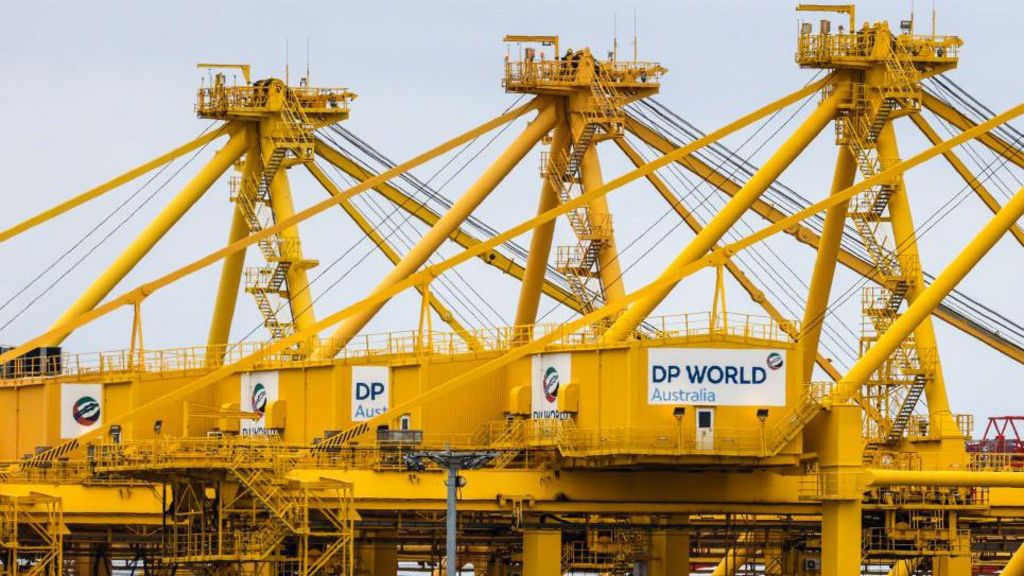
    As global port logistics giant DP World rolls out artificial intelligence and automated systems across its Australian operations, dockworkers represented by the Maritime Union of Australia (MUA) have sparked a tense industrial debate by calling for a reduced 28-hour workweek with no corresponding cut to pay.

    Headquartered in Dubai, DP World ranks among the world’s biggest port operators, employing more than 126,000 people globally and managing over 10 percent of the world’s total container shipping volume. In Australia alone, the firm controls port infrastructure in Sydney, Melbourne and other major coastal hubs, moving millions of containers annually and accounting for approximately 40 percent of all container shipments entering the country. That outsized market share means any changes to its operations carry major implications for Australia’s entire supply chain and logistics sector.

    According to an MUA-commissioned study from the Centre For International Corporate Tax Accountability and Research, DP World has been ramping up testing of AI tools for workforce management and scheduling, with broader plans to introduce AI-assisted remote-controlled cranes and autonomous driverless vehicles across its Australian terminals. The research warns that this automation push is being rolled out without meaningful consultation with workers, and could threaten as many as 1,000 roles – more than 60 percent of DP World’s current Australian dock and maintenance workforce.

    The MUA argues that the adoption of new AI technology should benefit workers rather than only boost corporate profits, framing the 28-hour workweek demand as a way to share the productivity gains from automation. Currently, DP World dockworkers average between 32 and 35 hours of work per week, with minor variations based on terminal location, according to the *Australian Financial Review*, which first broke news of the ongoing negotiations.

    “If DP World wants AI and automation, then they must pay the social dividend. The new technology doesn’t have to cost our members their jobs or put their livelihoods at risk just so a terminal operator can boost profits,” the union stated. In a 3 July announcement formalizing the demand, the MUA added: “The technology should be used to improve workers’ lives, not destroy them.”

    As of this reporting, the BBC has reached out to DP World for official comment on the union’s claims and the automation program, and has also requested additional details from the MUA. No responses have been released publicly, leaving the future of the negotiations and DP World’s Australian automation rollout unclear.