博客

  • Kostyuk sets up Wimbledon semi-final against Noskova

    Kostyuk sets up Wimbledon semi-final against Noskova

    The 2024 Wimbledon Championships delivered another dramatic day of women’s quarter-final action on Wednesday, as Ukraine’s Marta Kostyuk turned in a masterclass performance to crush Italy’s Jasmine Paolini and book her spot in the final four of the grass-court Grand Slam. The 12th-seeded Kostyuk needed just 69 minutes on Wimbledon’s iconic Centre Court to secure a lopsided 6-3, 6-2 victory over 2023 runner-up Paolini, booking a semi-final showdown with Czech ninth seed Linda Noskova for Thursday. For Kostyuk, the run marks her second consecutive Grand Slam semi-final appearance, and a particularly poignant moment on the sport’s most famous showcourt.

    Nine years before her quarter-final win, the 24-year-old Ukrainian visited the All England Club as a spectator, watching tennis legend Roger Federer compete on the very same court. “I was on this court as a spectator once nine years ago watching Roger (Federer) and to be back here as a player is amazing,” Kostyuk said after her first-ever Centre Court match at the championships. “I walked past the ‘wall of honour’, stood beside it and took a moment.”

    Kostyuk enters Thursday’s semi-final on one of the hottest streaks in women’s tennis, having dropped just one match across her last 22 outings. That sole defeat came in the French Open semi-finals last month, where she lost to eventual champion Mirra Andreeva. For Paolini, the result brings an end to her 2024 Wimbledon run; the Italian could not replicate the clinical form that carried her to a fourth-round win over Alexandra Eala, falling at the quarter-final stage of a major for the first time in her career.

    Standing between Kostyuk and a spot in her first Grand Slam final is 21-year-old Linda Noskova, who lived up to her top-seeded billing in the bottom half of the women’s draw to defeat experienced Belgian 25th seed Elise Mertens 6-3, 7-5 on Court One. The Czech has enjoyed a breakout grass-court season this year, claiming her second career WTA title in Berlin earlier this month before powering into her first ever Grand Slam semi-final at Wimbledon. After early upsets knocked out top contenders Iga Swiatek and Elena Rybakina, Noskova became the highest remaining seed in the bottom half of the draw, and she delivered against Mertens, who was playing her first major quarter-final since 2020. Though Mertens fought hard throughout the two-set clash, she could not match Noskova’s aggressive power from the baseline.

    Noskova acknowledged the challenge of facing in-form Kostyuk, who defeated the Czech in straight sets during the Madrid Open quarter-finals earlier this season, en route to lifting the Madrid title. “A tough one, it’s never going to be easy,” Noskova said of the upcoming semi-final. “Marta, she’s an incredible player.” The winner of Thursday’s clash will go on to compete for the Wimbledon crown on Saturday, against either American top seed Coco Gauff or Czech 10th seed Karolina Muchova.

    In the men’s draw, the quarter-final round continues Wednesday with two matches that could set up a rematch of this year’s French Open men’s final. Second seed Alexander Zverev, who claimed his maiden Grand Slam title at Roland Garros last month, will face sixth-seeded American Taylor Fritz for a spot in the semi-finals. A win for Zverev would set up a repeat clash with Italy’s Flavio Cobolli, who he defeated in a five-set French Open final. If Cobolli defeats British wildcard Arthur Fery in his own quarter-final clash, the two will meet again for a spot in the Wimbledon final four.

    Zverev enters the match as a respected contender, but he will face a tough test against Fritz, who has won seven consecutive matches against the German. Fritz boasts a proven record on grass, having reached the Wimbledon quarter-finals four times in the last five years, and his powerful serve makes him a dangerous opponent on the All England Club’s fast courts.

    For Cobolli, the quarter-final run marks his second consecutive deep run at Wimbledon; 12 months ago, he fell to Novak Djokovic in the last eight, and this year he faces a very different opponent in Fery. The Italian entered the tournament with an unexpected off-court hurdle: he did not book extended accommodation in London, forcing an Italian family to step in and “give him a house in Wimbledon” to stay for his deep run. Cobolli enters the match as the heavy favorite against Fery, who is ranked world number 114 and the lowest-ranked men’s player to reach the Wimbledon quarter-finals since Nick Kyrgios in 2014. However, Fery holds a win over Cobolli, having defeated the Italian in the first round of this year’s Australian Open — that win remains Fery’s only career Grand Slam match victory to date. If Fery upsets Cobolli, he will become the first men’s wildcard to reach the Wimbledon semi-finals since Goran Ivanisevic claimed his iconic title run in 2001. “I played really well in Australia,” Fery said. “Felt like I dominated the match. So we’ll use that experience for Wednesday.”
  • Oil shoots back up, stocks slide as Trump says Iran ceasefire over

    Oil shoots back up, stocks slide as Trump says Iran ceasefire over

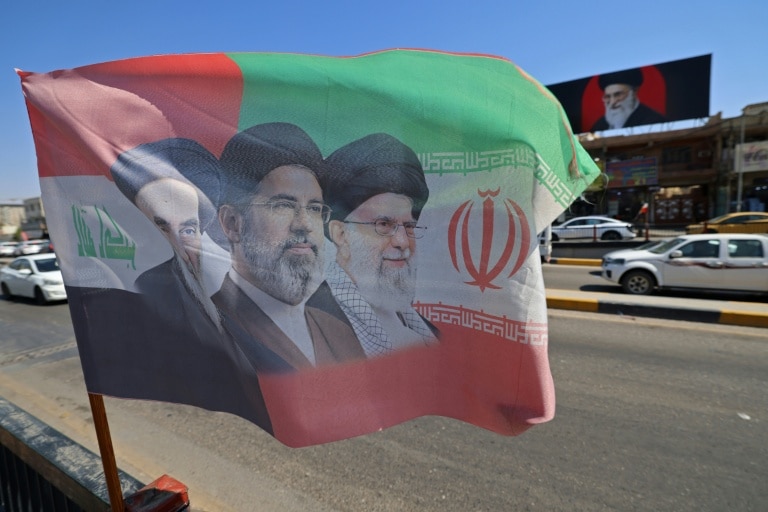
    Renewed geopolitical upheaval in the Middle East sent shockwaves through global financial markets on Wednesday, after U.S. President Donald Trump announced that a temporary ceasefire with Iran had ended, reigniting investor fears over disrupted energy supplies. The resurgence of tensions traces back to recent Iranian attacks on commercial vessels transiting the Strait of Hormuz, the world’s most critical chokepoint for global oil shipping, which prompted the U.S. to launch new extensive strikes against Iranian targets this week. Washington also moved to revoke a temporary sanctions waiver that had allowed limited exports of Iranian crude, further tightening global energy supplies.

    Speaking to reporters on the sidelines of a NATO summit held in Turkey, Trump confirmed the ceasefire was “over” while stopping short of ruling out future diplomatic negotiations. The announcement immediately upended market sentiment that had stabilized in recent days, when oil prices had drifted back down to pre-conflict levels following a period of earlier volatility.

    By mid-trading on Wednesday, global energy prices had posted sharp double-digit percentage jumps from their previous closes. The international benchmark Brent North Sea crude climbed more than 5% to peak near $78 per barrel, while U.S. West Texas Intermediate crude also gained 4.6% to settle around $73.65 a barrel. Both benchmarks pulled back slightly in afternoon trading, but still held onto most of their daily gains by the 1350 GMT reporting cutoff.

    The spike in geopolitical risk triggered a broad sell-off across equities markets worldwide. On Wall Street, the Dow Jones Industrial Average fell 1.0% to 52,412.15 in early midday trading, while the broad S&P 500 dropped 0.5% and the tech-heavy Nasdaq Composite declined 0.3%. “Trump triggered a sell-off,” noted Sam Stovall, chief market analyst at CFRA Research, summarizing the immediate market reaction.

    European markets saw even steeper losses: 90 minutes before closing, France’s CAC 40 and Germany’s DAX were both down 1.8%, while London’s FTSE 100 had shed 1.2%. Asian equities closed the trading day deep in negative territory as well, compounded by existing investor concerns over overinflated valuations and excessive capital spending in the AI technology sector. South Korea’s Kospi, which has been the leading benchmark for the regional AI-driven tech rally, plummeted 5.4% to close at 7,246.79 — falling more than 20% below its record high set just one month prior. Tech giants Samsung and SK hynix both dropped around 6% on Wednesday, extending steep losses from the previous session even after Samsung projected a roughly 19-fold year-on-year jump in second-quarter operating profit fueled by strong AI chip demand.

    “Investors have been spooked in recent weeks by fears of excessive spending in the AI world and rich valuations in parts of the tech space, causing widespread profit-taking,” explained Dan Coatsworth, head of markets at British investment firm AJ Bell.

    Market analysts warn that the return of open conflict in the Middle East could have long-lasting spillover effects for the global economy. “Geopolitical risks are rising for markets,” said Kathleen Brooks, research director at global trading group XTB. Fawad Razaqzada, a senior market analyst at Forex.com, framed the renewed tensions as an unwelcome development for market participants heading into the summer holiday period. “After a long and eventful first half of the year dominated by the US-Israel war on Iran and Trump’s constant flip-flopping, the last thing investors, and frankly anyone else, needed was a return of the same geopolitical environment,” he said. “Unfortunately, it looks like we could be heading back to that.”

    Brooks added that a further escalation that blocks the Strait of Hormuz would send prices even higher: “For the Brent crude oil price to extend gains above $80 per barrel, we would need to see another US naval blockade of the Strait of Hormuz, which would stop Iran from selling its oil and cause a major escalation in tensions.”

    The U.S. dollar posted modest gains against most major global currencies on Wednesday, as investors priced in the risk that sustained higher oil prices will keep global inflation elevated longer than previously projected. That outcome would put additional pressure on the U.S. Federal Reserve to implement further interest rate hikes to cool price growth, which typically supports dollar valuations. By 1350 GMT, the dollar rose to 162.49 Japanese yen from 162.09 yen the previous day, while the euro fell to $1.1399 from $1.1415 against the greenback.

  • Eight killed after landslide hits girls’ school in Bangladesh

    Eight killed after landslide hits girls’ school in Bangladesh

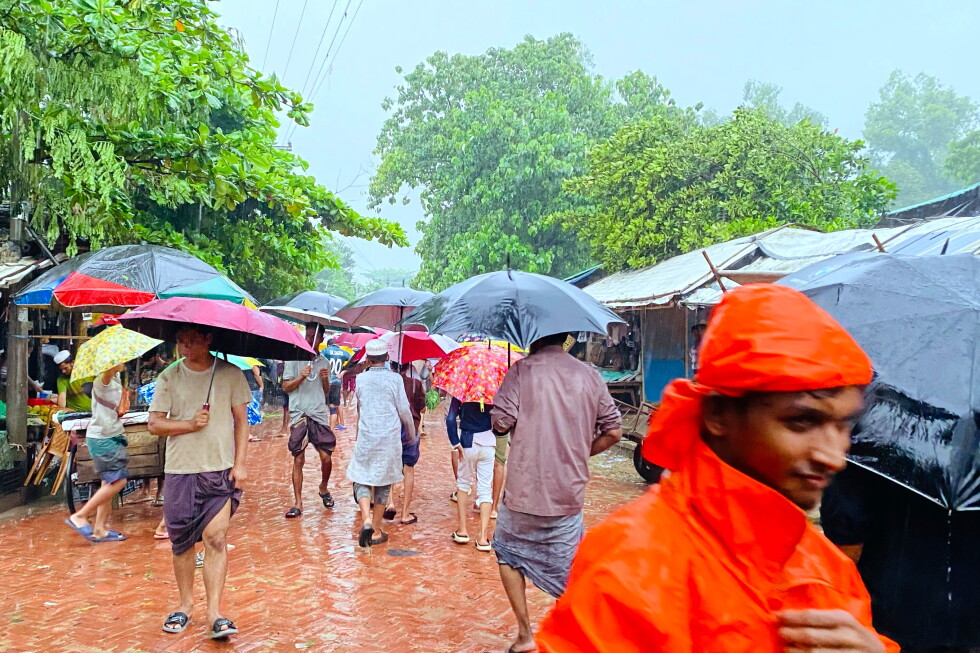
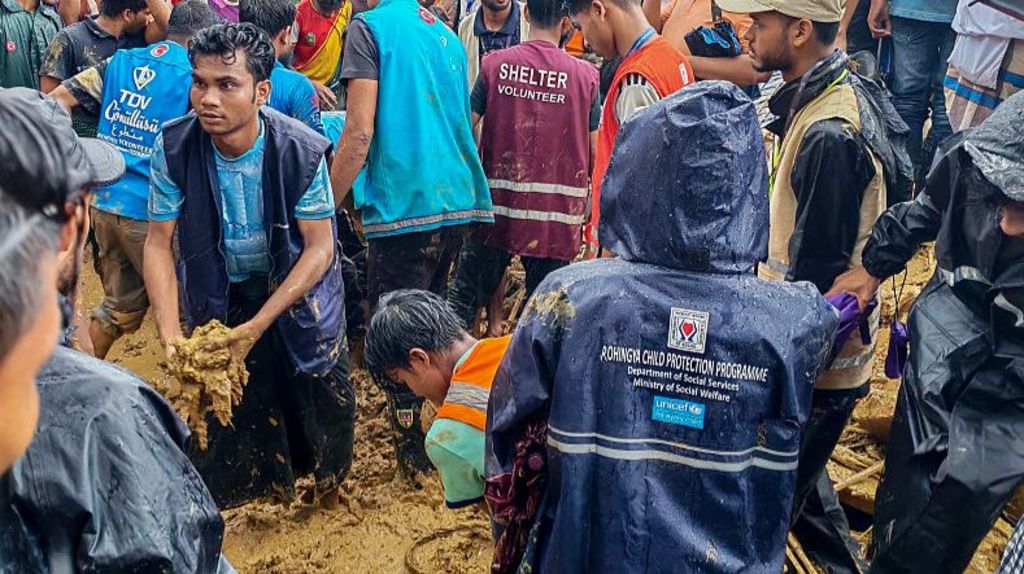
    A devastating landslide has claimed the lives of eight people, among them seven student girls, after it struck a girls’ Islamic study school at the world’s largest Rohingya refugee settlement in Bangladesh’s Cox’s Bazar, compounding a growing humanitarian crisis fueled by relentless seasonal monsoon rains.

    The disaster unfolded on Wednesday afternoon, when a cascade of mud and debris buried the makeshift school hut, triggering immediate, frantic search and rescue operations led by local relief authorities. As of the latest official updates, rescue teams have managed to extract 13 people trapped beneath the mudslide, eight of whom could not be revived after being pulled from the debris. Among the fatalities are seven students between the ages of 7 and 12 and one female teacher, while five other injured children have been transported to local medical facilities for urgent care. The total number of people who were inside the school at the time of the landslide remains unconfirmed, local officials confirmed.

    This landslide is just the latest in a string of rain-triggered disasters that have shaken the Cox’s Bazar region since Sunday, when this year’s monsoon season intensified to bring record levels of rainfall to the coastal district. Prior to the school disaster, official data already recorded at least eight additional Rohingya refugee deaths from separate landslides across the settlement, five of which were children.

    Cox’s Bazar is currently home to more than 1 million Rohingya refugees, the vast majority of whom fled a brutal military crackdown in their native Myanmar in 2017 that left thousands of Rohingya dead and forced more than 700,000 to cross the border into Bangladesh. As a stateless ethnic Muslim minority in majority-Buddhist Myanmar, Rohingya people have long been denied full citizenship and basic rights in their home country, leaving them dependent on humanitarian aid in the overcrowded Bangladesh camps. Most refugees live in flimsy, makeshift homes constructed from tarpaulin and bamboo, many of which are built on precarious steep hillsides that are extremely vulnerable to mudslides during heavy monsoon rains.

    Local disaster management authorities have warned that the risk of further catastrophe remains high, with additional heavy rainfall forecast across the region in the coming days. Officials have already issued urgent warnings for impending landslides and flash floods, and have begun moving high-risk families out of vulnerable slope-side settlements to safer emergency shelters.

  • Woodside pursues protesters over 2023 stinky gas stunt in the WA Supreme Court

    Woodside pursues protesters over 2023 stinky gas stunt in the WA Supreme Court

    A high-stakes legal clash between energy giant Woodside Energy and three convicted climate activists is set to resume next week in Western Australia’s Supreme Court, as the company pushes to force the protesters to disclose the identities of other co-conspirators behind a disruptive 2023 protest that forced the evacuation of thousands of staff.

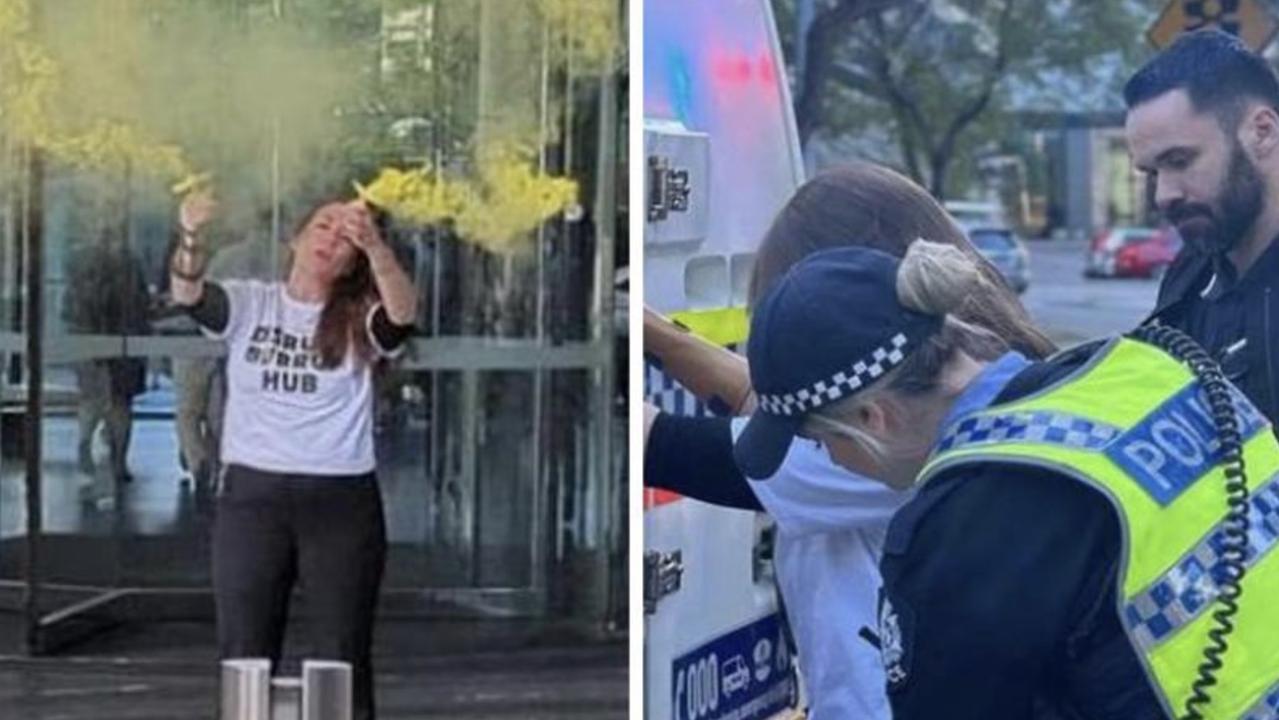
    The incident at the center of the dispute dates back to 2023, when three environmental activists affiliated with the Disrupt Burrup Hub campaign carried out a deliberate stunt inside Woodside’s Perth headquarters. Activist Kristen Morrissey deployed a foul-smelling “stench bomb” in the building’s main lobby, with logistical support from co-activists Joana Partyka and Emil Davey. The action was deliberately designed to be mistaken for a toxic gas leak, triggering a full evacuation that displaced roughly 2,000 employees from the site.

    The protest was organized to draw public attention to Woodside’s controversial Burrup Hub gas expansion project. Activists argue the project poses severe threats to both the global climate and sacred Aboriginal cultural heritage sites located in the project area. Last year, all three activists pleaded guilty to criminal charges in the WA District Court. Morrissey and Partyka received suspended prison sentences, while Davey was ordered to complete a community-based sentence.

    Months before the criminal case concluded, Woodside first issued a demand to the activists: hand over internal documentation that would reveal the identities of other people involved in planning and executing the 2023 stunt, or face civil litigation. When the activists refused to comply while criminal proceedings were still ongoing, Woodside followed through on its threat and filed a civil suit against the trio in the WA Supreme Court five months after the initial warning.

    When the case returns to court on July 16, Woodside’s legal team is widely expected to formally ask the Supreme Court to compel the three protesters to disclose the names of other collaborators. In its court filings, Woodside argues that the stunt caused measurable financial harm, including costs for cleaning services, lost workplace productivity, and other damages, and that the company has legal grounds to pursue claims against all responsible parties.

    But activists and their legal representatives have framed the legal action as a blatant campaign of intimidation against climate campaigners speaking out against the company’s fossil fuel expansion. “This is a blatant attempt by Woodside to threaten, intimidate and silence young campaigners sounding the alarm about their gas expansion,” Davey said in a statement ahead of the hearing. Represented by the advocacy group Climate Defenders Australia, Davey added that the Burrup Hub project destroys both sacred Aboriginal cultural sites and contributes to planetary damage for future generations, and that the campaign has successfully held the company accountable for its actions.

    “Every Australian now understands that the gas industry is ripping us all off and refusing to pay its fair share,” Davey said.

    Partyka echoed Davey’s criticism, describing the legal action as a calculated attempt to bully peaceful citizens challenging a multi-billion dollar corporation. Instead of discouraging her activism, Partyka said Woodside’s legal push only confirms how effective the campaign has been at disrupting the company’s plans.

    “Far from cowing me, Woodside’s legal move serves only to confirm the significant impact of our campaign. Woodside is trying to prevent people from doing this again, because it was so successful,” Partyka said. “Woodside may have endless resources at their disposal to pursue legal action against me, but they sure as hell don’t have history on their side.”

    The upcoming court hearing will mark the next major step in a conflict that has become a flashpoint for tensions between fossil fuel developers and climate campaigners opposing new fossil gas projects in Australia.

  • ‘Ferytale’ rolls on at Wimbledon as British wild card Fery into semifinals after meeting queen

    ‘Ferytale’ rolls on at Wimbledon as British wild card Fery into semifinals after meeting queen

    Wimbledon 2024 has delivered one of its most breathtaking underdog stories in recent memory, as British wild card Arthur Fery has etched his name into Grand Slam folklore by storming into the men’s singles semifinals — a feat only one other unranked qualifier has pulled off at the All England Club in more than two decades.

    Growing up just five minutes away from Wimbledon’s iconic grounds, the 23-year-old local hopeful has turned a childhood dream into reality, beating Italy’s ninth-seeded Flavio Cobolli in straight sets 6-4, 7-6(4), 6-0 in front of a raucous Centre Court crowd Wednesday. The stands were packed with cheering home fans, and the Royal Box even included Britain’s Queen Camilla, who got an early surprise meeting with both Fery and Cobolli in the player hallway moments before the match kicked off.

    Fery’s run has already made history: he is only the second men’s singles wild card to reach the Wimbledon semifinals, following Goran Ivanisevic’s legendary championship run in 2001. The young Brit’s emotional victory had the crowd roaring from start to finish. After clinching the opening set, he earned a full standing ovation from the Centre Court crowd, and the cheer that followed his tiebreak win to seal the second set was so loud it carried across to No. 1 Court, where Alexander Zverev was competing against Taylor Fritz. Fery sealed the match with a blistering ace, then fell onto his back to soak in the moment, overwhelmed by the support.

    “It gets better and better every match,” Fery told reporters in an on-court interview after the win. “I just can’t believe it. That last game, I felt emotions that I hadn’t experienced before in my life.”

    Zverev, who wrapped up his own straight-sets 6-4, 6-4, 6-2 win over Fritz shortly after Fery’s victory, will now face the local favourite in the semifinals on Friday. Friday’s other men’s semifinal will be a blockbuster clash between seven-time Wimbledon champion Novak Djokovic and 2023 title holder Jannik Sinner.

    The day also delivered historic milestones on the women’s side, as Ukraine’s Marta Kostyuk booked her spot in her first ever Wimbledon semifinal with a dominant 6-3, 6-2 win over Italy’s Jasmine Paolini. The 24-year-old 12th seed, who also reached the French Open semifinals earlier this year, called the moment surreal after the win, recalling that she watched Roger Federer play on Centre Court as a spectator just nine years ago.

    “I was flabbergasted by this entrance and everything inside,” Kostyuk said. “I was like, ‘wow,’ I need one day to recover from what I saw. I was on this court as a spectator once nine years ago watching Roger.” After Paolini misfired on second match point, Kostyuk dropped to her knees in celebration before spinning in a joyful pirouette for the crowd.

    She will face 21-year-old Czech rising star Linda Noskova, who notched a 6-3, 7-5 win over Belgium’s Elise Mertens on No. 1 Court to claim her first ever Grand Slam semifinal spot. Noskova, who carried a 9-1 grass court record into Wimbledon after winning the Berlin Open, said she thrives under pressure when stakes are highest.

    “I was a little bit nervous before the match,” Noskova admitted after the win. “Usually when it’s really, really important for me and I’m putting a little bit of pressure on myself, that’s when I play the best.”

    Kostyuk and Noskova will compete for a spot in Saturday’s women’s singles final on Centre Court Thursday, following the first women’s semifinal between American Coco Gauff and Czech player Karolina Muchova. As the tournament enters its final stretch, Fery’s historic Cinderella run has already given British fans something massive to cheer for, with local supporters already poised to celebrate wildly if the local wild card can keep his fairy tale run going.

  • At least 5 children die in monsoon landslide at a Rohingya camp in Bangladesh

    At least 5 children die in monsoon landslide at a Rohingya camp in Bangladesh

    A devastating monsoon-driven landslide has claimed the lives of at least five children after crashing into an Islamic school within a sprawling Rohingya refugee camp in southeastern Bangladesh’s Cox’s Bazar district, a senior fire service official has confirmed. The Cox’s Bazar camp complex hosts more than 1 million displaced Rohingya refugees who fled persecution in neighboring Myanmar, making it one of the largest refugee settlements in the world.

    Dollar Tripura, local head of Bangladesh’s Fire Service and Civil Defense, stated that the disaster struck mid-lesson, when children were gathered in their classes for the school day. Rescuers managed to pull five injured children out of the debris alive, but the official warned that the death toll is likely to rise, as teams suspect additional people remain trapped and buried under the mud and rubble.

    As of Wednesday evening, search and rescue efforts were still ongoing, with crews working through the night to locate possible survivors. This latest tragedy comes just three days after separate rain-induced landslides in the same camp region killed at least eight other people, amplifying concerns about the safety of refugees living in at-risk hilly terrain.

    Bangladesh’s national weather office, based in the capital Dhaka, has issued warnings for additional heavy rainfall across the region over the coming days, raising fears of more landslides. In response to the ongoing risks, local authorities have launched an urgent relocation effort to move refugees out of high-risk hilly areas that are prone to mudslides during monsoon season. More than 1,000 refugees have already been moved to safer locations, though officials report that many displaced families remain reluctant to leave their makeshift huts and small plots of land, even after repeated official warnings of the dangers.

    For years, Bangladesh has hosted the bulk of the Rohingya refugee population, who fled a 2017 military crackdown in Myanmar’s Rakhine State that the United Nations has labeled ethnic cleansing. The Bangladeshi government has repeatedly called on the international community to support a safe repatriation process for refugees to return to their homeland in Myanmar, but years of negotiations have failed to move the process forward, leaving the repatriation initiative effectively stalled.

  • Istanbul mayor ejected from court in corruption case

    Istanbul mayor ejected from court in corruption case

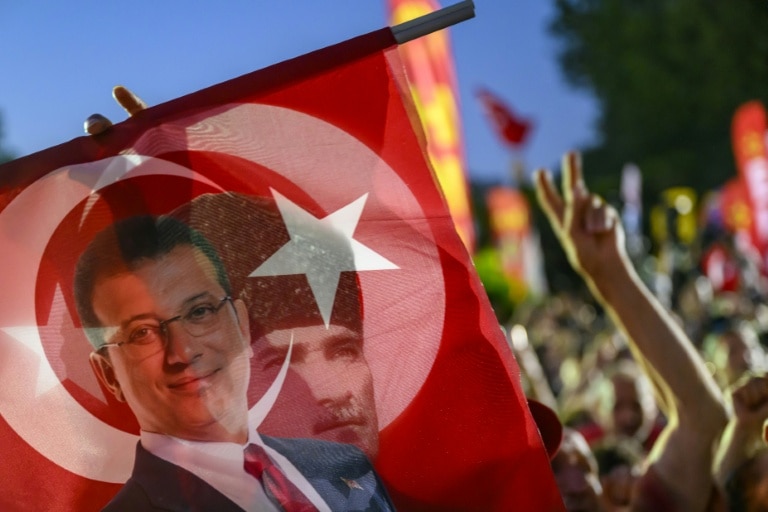
    As leaders from 36 NATO member states gathered in the Turkish capital Ankara for a landmark summit, a high-stakes domestic political trial took another dramatic turn on Wednesday, when Istanbul mayor and leading Turkish opposition figure Ekrem Imamoglu was removed from the courtroom for the second time in as many weeks. The 55-year-old politician, widely viewed as the primary potential challenger to long-serving Turkish President Recep Tayyip Erdogan in future national elections, was ejected over accusations that he disrupted courtroom order and discipline, according to Turkish broadcaster T24, which shared the update on social platform X. Imamoglu has remained in pre-trial detention since March 2024, and his ongoing trial, held at a prison courthouse since March 2025, includes 414 co-defendants, 59 of whom are also being held in custody. The latest confrontation between the mayor and the presiding judge comes one week after his first removal from the court, which stemmed from a heated argument over the schedule and procedures for defense arguments. Ahead of Wednesday’s hearing, the judge had already warned Imamoglu that he would face ejection again if he interrupted proceedings, after ordering the mayor to present his defense that day. Before bailiffs removed him from the courtroom, Imamoglu pushed back against the court’s timeline, questioning why his full defense was required to be wrapped up by July 9, according to independent journalist Furkan Karabay, who has covered every hearing of the high-profile case. “I did not come here to be questioned. I came to express my demands,” Imamoglu stated before the removal order was enforced, Turkish opposition newspaper Bir Gun reported. As global leaders gathered less than 300 kilometers away in Ankara, the mayor directly highlighted the political timing of the court’s actions, asking: “With the leaders of the entire world present in Turkey, in Ankara, how and to whom will you explain that Ekrem Imamoglu is being silenced?” He also made a sharp rebuke of Turkey’s judicial leadership, calling the Ministry of Justice a “ministry of collapse.” Imamoglu’s defense attorney, Tora Pakin, slammed the ejection decision as arbitrary and unlawful, noting the unusual timing of the confrontation as the NATO summit drew global attention to Turkey. The case has already drawn widespread condemnation from opposition political figures, who argue the charges against Imamoglu are politically motivated. Ozgur Ozel, the newly elected leader of the opposition Republican People’s Party (CHP), attended Wednesday’s hearing and described the entire trial as a “sham.” “Nothing about this case is acceptable; even the worst courts at least try to pretend to be courts but here they don’t even bother with that,” Ozel told reporters after the hearing. In a statement shared on his official X account, Imamoglu denounced the ejection as a major violation of his rights and the “height of injustice.” He argued that court officials have deliberately restricted and ignored arguments presented by him and his legal team, the targets of the central indictment in the case. “This proves that the entire Istanbul metropolitan authority case has collapsed and is turning into a series of extrajudicial decisions,” he added. The trial comes amid a broader government crackdown on dissenting voices in Turkey in the lead-up to the NATO summit, which has seen dozens of critical figures arrested in recent weeks. Imamoglu, who won re-election as mayor of Turkey’s largest city in March 2024, was taken into custody on the same day he was officially nominated as the CHP’s candidate for the 2028 Turkish presidential election. He has repeatedly denied all charges that he led a large criminal network, and faces a total of 142 separate counts. If convicted on all charges, he risks a cumulative prison sentence of 2,430 years.

  • German doctor jailed for killing 15 of his patients

    German doctor jailed for killing 15 of his patients

    A 41-year-old German palliative care physician has been handed a permanent life sentence and ordered to serve additional preventive detention after a Berlin court convicted him this Wednesday of murdering 15 of his patients between 2021 and 2024. In line with Germany’s strict privacy regulations, the defendant is only publicly identified as Johannes M. He was found guilty of the premeditated killings of 12 women and three men, in a case that has shaken the German medical community and sparked widespread public shock.

    All of Johannes M.’s convicted victims were between 25 and 94 years old, and all were living with critical illnesses. Court testimony confirmed that while the patients required palliative care, their deaths were not medically imminent when the killings took place. Prosecutors laid out detailed evidence that during routine home visits, the doctor administered lethal, unprescribed combinations of powerful medications to his patients without their knowledge or consent. In multiple instances, prosecutors added, Johannes M. set fire to his victims’ homes in an attempt to destroy evidence and cover up the unnatural causes of death.

    The investigation into the killings was triggered by the doctor’s final two murders in July 2024, just days before his arrest. Prosecutors confirmed that within the span of a single day, he killed a 75-year-old man in central Berlin, then traveled to a neighboring district to murder a 76-year-old woman. When he attempted to set fire to the woman’s home to cover his crime, the attempt failed, leaving critical evidence that led to his rapid arrest.

    Johannes M. remained silent for the majority of his year-long trial. It was only last month that he broke his silence, confessing to the killings of 12 severely ill patients. He told the court he had convinced himself his actions were justified, claiming he was sparing his victims from ongoing suffering and physical infirmity. “Throughout it all, I thought this was the best thing for everyone,” he said, adding an apology for the profound pain he had inflicted on victims’ families.

    However, the guilty verdict this week covers 15 murders, three more than the doctor confessed to, and law enforcement officials warn that the 15 convicted killings may only represent a small fraction of the doctor’s total crimes. Prosecutors are currently actively investigating 76 additional suspicious deaths connected to Johannes M. German media outlets note that if even a portion of these additional cases are proven in court, this will become one of the worst serial killing sprees in modern German history. The defendant told the court he intends to cooperate more fully with the ongoing investigations and upcoming legal proceedings tied to the additional suspicious deaths.

    During the trial, family members of the victims delivered emotional testimonies describing their ongoing disbelief and grief. The mother of the youngest victim, a 25-year-old woman who died in 2021, told the court through tears, “She never said she didn’t want to live anymore.” The son of a 72-year-old victim who died in 2024 added that his mother had made concrete travel plans to visit the Baltic Sea with her sister, emphasizing “My mother wanted to keep on living.”

    Alongside the life sentence, the Berlin court issued two additional punitive measures: a permanent preventive detention order that will keep Johannes M. incarcerated beyond his base sentence if he is deemed a continued threat to the public, and a lifetime ban on practicing medicine in Germany. The case has prompted new calls for increased oversight of palliative care providers working in home health settings across the country.

  • Snow’s legacy seen as bridge for understanding in divided world

    Snow’s legacy seen as bridge for understanding in divided world

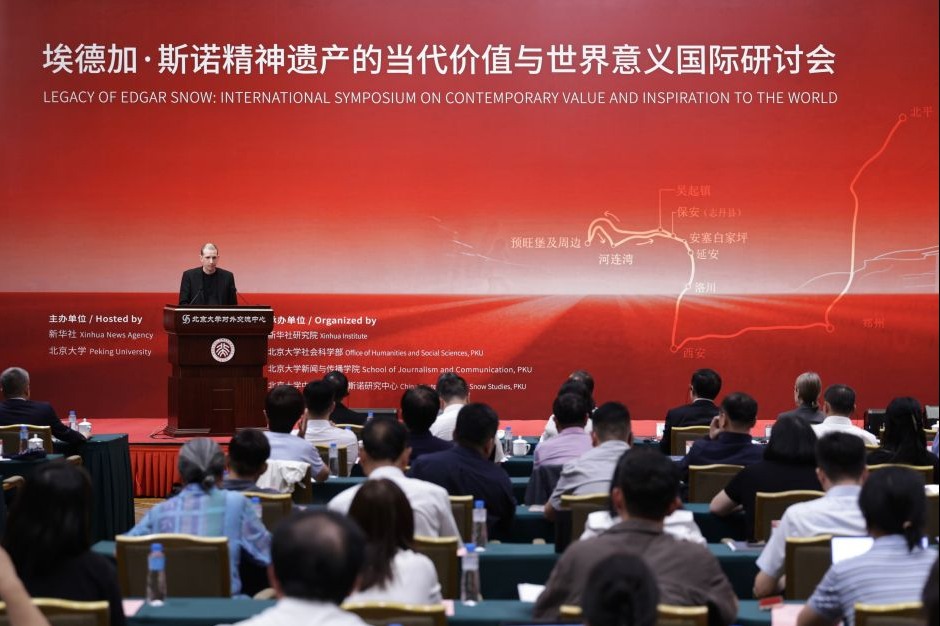
    Ninety years after American journalist Edgar Snow completed his groundbreaking journey to China’s northern Shaanxi revolutionary base area, scholars, family representatives, and legacy stewards from around the globe gathered at Peking University this Tuesday to reaffirm the enduring global relevance of his work: a commitment to truthful reporting that builds bridges of understanding across deeply divided societies.

    Hosted under the theme *Legacy of Edgar Snow: International Symposium on Contemporary Value and Inspiration to the World*, the event drew a diverse cohort of attendees, including members of Snow’s direct family, leadership from the U.S.-based Edgar Snow Memorial Foundation, and Chinese and international researchers who have spent decades studying Snow’s life and impact. Experts from a range of academic and policy fields also joined the conversation to contextualize his work for 21st-century geopolitics.

    In 1936, Snow made history as the first Western journalist to secure on-the-ground access to China’s revolutionary base areas, at a time when most of the world had almost no accurate information about the Chinese Communist Party, the Red Army, and the unfolding Chinese revolution. His resulting book, *Red Star Over China*, became the first widely circulated, authoritative account of China’s revolutionary movement for global audiences, shaping how generations of people outside China understood the country’s trajectory.

    A personal statement from Snow’s daughter, delivered to symposium attendees by his great-grandnephew Samuel Colin Maclean, outlined the core journalistic principles that guided Snow’s work throughout his career. Snow, she wrote, held firm to the belief that a journalist’s core duty is to witness events firsthand and report what they see freely, independently, and without bias. “When he saw progress, he reported it. When he saw problems, he reported those too,” the statement read, adding that Snow wished to be remembered as two things above all: a loyal friend of the Chinese people, and a truth-seeking reporter dedicated to fostering deeper mutual understanding and peaceful relations between people of all nations.

    Sidne Ward, president of the Edgar Snow Memorial Foundation in the United States, framed the symposium as more than a commemorative event—it was an opportunity to reflect on how Snow’s values speak directly to the challenges of today’s interconnected yet fractured world. Ward noted that Snow built his work on four core commitments: curiosity, open dialogue, intentional understanding, and the courage to step into unfamiliar contexts to listen to perspectives that differ from one’s own. Through his unflinching, on-the-ground reporting, she said, Snow helped people on opposite sides of geopolitical divides see each other more clearly.

    Ward emphasized that few bilateral relationships carry as much global weight today as the relationship between China and the United States, and that Snow’s legacy is more relevant now than ever. Unlike many historical legacies that are tied to a single institution or nation, she added, Snow’s work is now sustained by a dynamic, global network of researchers and advocates committed to his values.

    Rigorous, fact-based reporting, rigorous academic scholarship, and sincere person-to-person connection remain the most effective tools to cut through misunderstanding and build mutual respect, Ward argued. Snow’s greatest contribution to the world, she said, is not just the landmark stories he wrote, but the cross-cultural bridges of understanding he helped build between peoples and communities separated by ideological and geographic divides.

    He Guangcai, secretary of the Communist Party of China Peking University Committee, echoed that framing, noting that when Snow traveled to northern Shaanxi in 1936, the outside world operated with profound misinformation and limited knowledge of the Chinese Communist Party. Snow broke through information blockades to get to the ground and report what he actually saw, He said.

    Through his firsthand writing and original photojournalism, Snow accurately recorded the realities of the Chinese revolution and opened a critical window for the global community to understand the Chinese Communist Party, as well as the core ideals and mission of Chinese communists, He added. Looking back at Snow’s full life and career, his legacy offers clear, urgent lessons for today’s world: a non-negotiable commitment to truth, facts, and firsthand observation, paired with a deep humanistic commitment to global peace and equality.

    Along with panel discussions and keynote addresses, the symposium also marked two key new initiatives to expand global research into Snow’s legacy: attendees oversaw the release of a new think tank report exploring the contemporary value and global significance of Snow’s work, and formally launched a new global academic research program dedicated to studying Snow’s life and lasting impact.

  • China urges end to US embargo against Cuba at UN debate

    China urges end to US embargo against Cuba at UN debate

    On Tuesday, the United Nations General Assembly moved forward with a long-awaited debate on Washington’s six-decade-old economic, commercial and financial embargo against Cuba, defying opposition from the United States after a preliminary vote saw 136 nations back the discussion, nine oppose it, and 30 abstain. The debate, which Cuba formally requested, centers on the urgent global demand to terminate the punitive US measures that have crippled the Caribbean island’s development for generations.

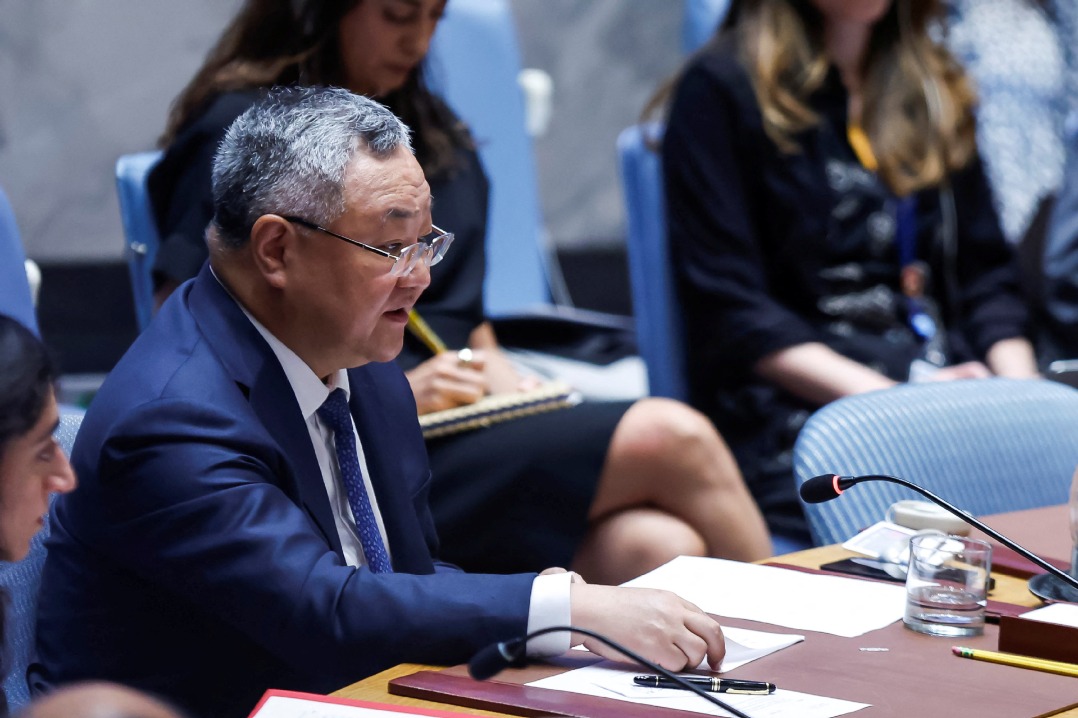
    Speaking during the debate, Fu Cong, China’s permanent representative to the UN, confirmed Beijing’s full support for the meeting and for Cuba’s campaign to lift the blockade. He emphasized that the lopsided 136-9 vote in favor of holding the debate is a clear reflection of the international community’s collective aspiration for justice and rejection of unilateral coercive measures.

    Fu detailed the staggering human and economic toll of the 60-plus-year embargo, noting that Cuba has accumulated more than $170 billion in direct losses from the blockade. Critical public infrastructure serving everyday Cubans — including hospitals, schools, public water systems, and grain storage facilities — have been pushed to the brink of collapse under the sustained pressure of the sanctions, he added.

    Currently, Cuba is grappling with a cascading set of crises exacerbated by the embargo: severe acute fuel shortages, a worsening national energy and electricity crisis, and persistent blockages to the import of life-saving medicines, medical equipment, and other essential goods. Vulnerable populations, including children and pregnant women, have borne the brunt of these shortages, Fu said. According to Xinhua News Agency, Cuba, which relies almost entirely on fuel imports to keep its economy running, received only one oil tanker — the Russian-flagged Anatoly Kolodkin carrying 100,000 metric tons of crude — in the six months leading up to the debate. The country requires approximately eight fuel tankers per month to maintain normal economic and social operations.

    Fu stressed that the US embargo directly violates the core purposes and principles of the UN Charter, including the fundamental norms of sovereign equality, peaceful resolution of international disputes, and the prohibition of the threat or use of force against other states. Beyond violating international law, the measures infringe on the basic rights of the Cuban people to subsistence and sustainable development, and erode the global international order rooted in international law and established multilateral norms, he added.

    In a clear call to action, Fu reiterated China’s demand that the United States immediately end its blockade of Cuba, eliminate all forms of coercive pressure against Havana, and stop violating the Cuban people’s fundamental rights to survival and development. He also called on the wider international community to stand with Cuba in defense of its national sovereignty, equal standing in the global community, and national dignity, and to collectively push back against illegal blockades, unilateral sanctions, and military targeting of small states.

    Fu emphasized that all nations must uphold the UN Charter’s core principles, adhere to the norm of sovereign equality, reject external interference in the internal affairs of sovereign states, prioritize peaceful dispute settlement, and oppose unilateral use of force. He added that all unauthorized unilateral sanctions — those imposed without explicit approval from the UN Security Council — have no basis in international law and systematically damage the sovereignty and security of targeted states.

    “The international community must protect the Cuban people’s rights to subsistence and development, and pressure relevant parties to implement longstanding General Assembly resolutions calling for an end to the embargo,” Fu said. “All sanctions and secondary sanctions targeting Cuba must be terminated immediately, and frequent threats of additional punitive measures must end, so that the Cuban people can exercise their right to pursue a better life.”

    Addressing the broader global implications of unilateral coercion, Fu noted that international fairness and justice are central to the survival and development of every nation, and no country can remain insulated from the harm of hegemonism and power politics. “No country has the right to anoint itself as the global police, nor can any nation claim to be the world’s sole judge of acceptable conduct,” he said.

    Fu affirmed that the Chinese people deeply empathize with the suffering the Cuban people have endured for decades, and that China will continue to provide all possible support and assistance to Cuba within its means. He also called on UN member states and global UN agencies to scale up humanitarian aid to Cuba, help address critical shortages of fuel, food, and medicine, ease the ongoing humanitarian crisis on the island, and uphold the basic norms of international humanitarianism.

    Cuban Foreign Minister Bruno Rodriguez Parrilla welcomed the General Assembly’s decision to proceed with the debate, pushing back against longstanding US claims that Cuba poses a national security threat to Washington. “Cuba is not a threat. Cuba is the nation that is under threat,” Parilla said, affirming Cuba’s unwavering commitment to peace, international law, multilateralism, truth, and justice, while condemning Washington’s decades-long policy of hostility and aggression toward his country.

    Speaking on behalf of the Group of 77 developing nations and China, Laura Dupuy Lasserre, Uruguay’s permanent representative to the UN, echoed these calls, noting that the embargo harms every critical sector of Cuba’s economy, including public health, food security and nutrition, agriculture, trade, foreign investment, tourism, and banking. “The Group therefore calls for the immediate, complete and unconditional lifting of the embargo, including all measures with extraterritorial effects,” Lasserre said. “Ending these restrictions is essential not only for Cuba’s development and the well-being of its people, but also for upholding the UN Charter, international law and the credibility of multilateralism.”