博客

  • World Cup quarterfinals: It’s Messi, Morocco, and 6 teams from Europe. And that’s not unusual

    World Cup quarterfinals: It’s Messi, Morocco, and 6 teams from Europe. And that’s not unusual

    MIAMI GARDENS, Fla. — The expanded 48-team 2026 FIFA World Cup has reached its final eight teams, and the competition’s historic power dynamic remains largely intact. Six of the eight remaining quarterfinalists call Europe home, with just one spot filled by a South American side and one by an African representative. Unless Morocco can pull off two consecutive upset wins to claim the trophy, the world championship will once again go to a nation from either Europe or South America — a trend that has held for nearly 100 years of World Cup history.

    Since the first tournament kicked off in 1930, 22 editions of the World Cup have concluded. All 22 championships have been split exclusively between European and South American teams: 12 titles have gone to European sides, while 10 have been claimed by South American squads. No nation from any other confederation has ever reached the top of the podium. This year’s quarterfinal lineup, with only two non-European/South American teams in the field, does little to upend that long-standing status quo.

    Even for Europe, this tournament has delivered stronger-than-expected results, according to some of the continent’s top stars. Erling Haaland, the talismanic Norwegian striker, notched a brace to lead his nation past Brazil and secure Norway’s first-ever World Cup quarterfinal berth — a result he called surprising. “I thought it was not possible to do some things,” Haaland said. “I guess I’m wrong.” Haaland’s unexpected success stands in sharp contrast to the disappointment suffered by this year’s joint tournament hosts, the United States, Mexico, and Canada, all from the North American, Central American and Caribbean Football Confederation (CONCACAF).

    Expanded to 48 teams for the first time, this World Cup gave North America three chances to break the European-South American stranglehold on the late stages of the tournament. All three hosts navigated the group stage and the newly introduced round of 32 with impressive form, posting a combined 9 wins, 2 draws, and 1 loss across those early matches while outscoring their opponents by a 20-goal margin. Early optimism quickly evaporated when the round of 16 kicked off, however.

    England eliminated Mexico 3-2, Belgium rolled to a lopsided 4-1 win over the U.S., and Morocco cruised to a 3-0 shutout of Canada. All three hosts exited the tournament in that round, finishing with a combined 0-3 record and being outscored by seven goals across their three knockout matches. The result extended a long drought for CONCACAF: no North American side has reached the World Cup quarterfinals since Costa Rica’s 2014 run, and the region’s most recent deep run before that was the U.S.’s historic third-place finish in 1930, followed by a quarterfinal appearance in 2002. Canada has never advanced past the round of 16, while Mexico has reached that stage eight times in its last nine World Cup appearances — and never moved further.

    “We need to get over that next hurdle,” U.S. star Christian Pulisic said in a post-elimination televised interview. “Trying to compete and beat the world’s best, that’s our next step … There’s still another step that we have to take.” Mexico midfielder Erik Lira echoed that sentiment, saying “Everyone gave everything. But, in the end, it wasn’t enough.”

    That refrain has become a familiar one for every region outside of Europe and South America. Only once in the last two decades has the quarterfinal field featured broad representation from across the globe: the 2002 tournament saw five different confederations — Europe, South America, Asia, Africa, and North America — all claim spots in the final eight. That tournament remains a rare outlier: across the six World Cups held since 2002, Europe has claimed 30 of 48 total quarterfinal spots, South America has taken 14, Africa has earned three, and North America has secured just one.

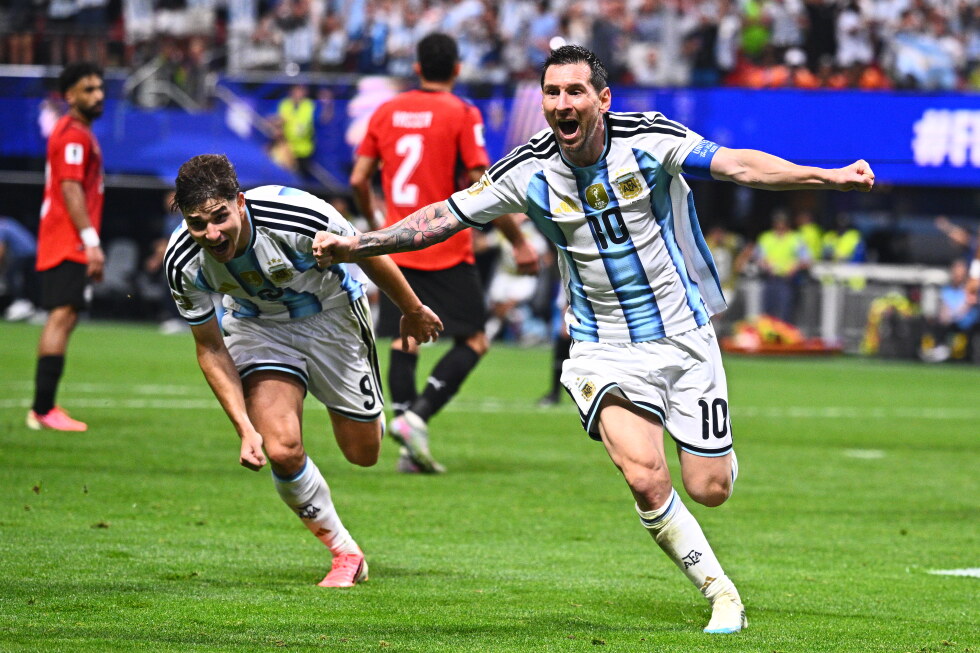
    This year, Africa entered the knockout stage poised for a potential breakthrough, sending 10 teams to the expanded tournament with nine advancing to the round of 32. Morocco is the only African side that remains, after most other African nations were eliminated by late, devastating goals. Ivory Coast, South Africa, and Congo all conceded match-deciding goals in the 86th minute or later to bow out of the competition. Cape Verde’s surprising run ended with an own goal against defending champion Argentina in extra time. Senegal and Egypt suffered particularly heartbreaking exits: both held 2-0 leads late in the second half, only to collapse to 3-2 defeats at the hands of Belgium and Argentina, respectively.

    Egypt’s coaching staff has alleged that biased officiating cost their team the win. “Perhaps they wanted to keep the world champion in the competition,” Egypt coach Hossam Hassan said. “Perhaps they wanted Messi to stay in the competition.” For Argentina and Messi, the comeback win simply延续了 the consistent success that elite powerhouses have enjoyed at the World Cup. Messi’s side has reached the quarterfinals in five of the last six tournaments, a reminder that some hierarchies remain hard to shift.

    “It wasn’t easy to come back from a 2-0 deficit in a World Cup knockout match — especially given how games are going these days, where no one gives you anything for free,” Messi said after the match. “But thank God, we did it once again.” As the tournament enters its final two weeks, all eyes will be on Morocco to see if it can finally rewrite the World Cup’s long-standing narrative.
  • Israel kills Gaza elder tasked with broadcasting Egypt-Argentina game

    Israel kills Gaza elder tasked with broadcasting Egypt-Argentina game

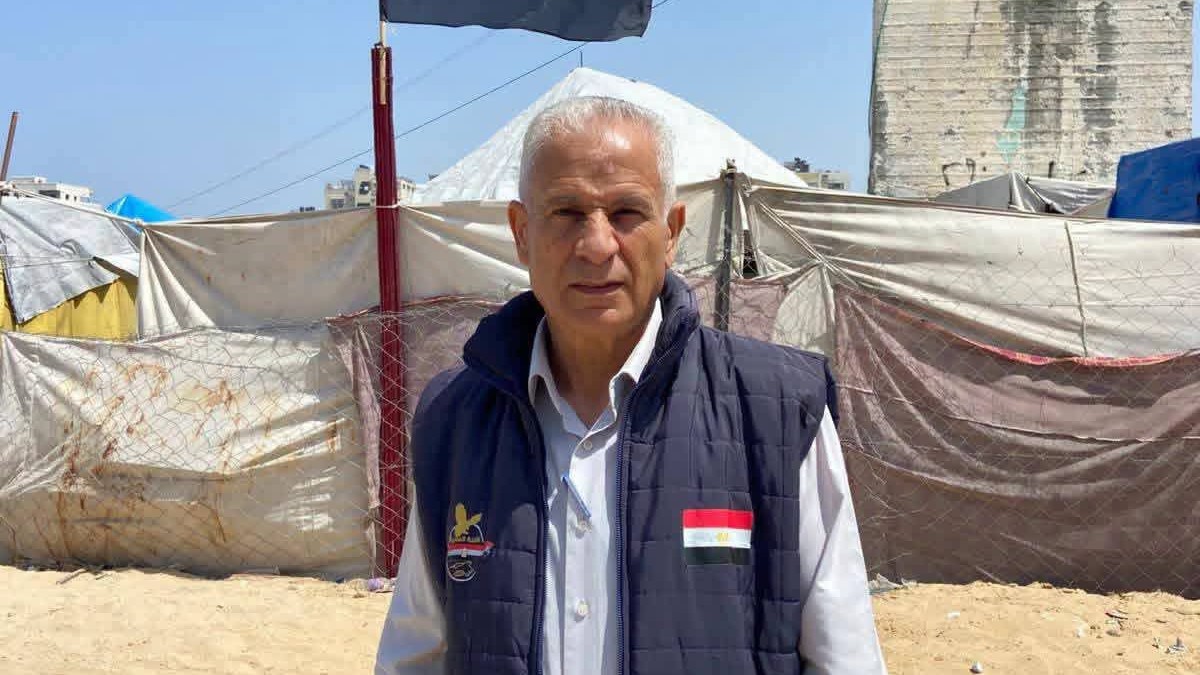
    A deadly Israeli airstrike in central Gaza City has killed a senior Egyptian aid official and two other civilians, including a child, drawing sharp diplomatic pushback from Cairo amid ongoing ceasefire negotiations hosted by the Egyptian capital. The Tuesday attack targeted a civilian vehicle traveling through the al-Sabra neighborhood of Gaza City, claiming the life of Mohamed Fawaz al-Wahidi, who held dual leadership roles as public relations director for the Egyptian Relief Committee (ERC) and head of the committee’s Office of Mukhtars and Community Elders at its Gaza City headquarters, according to multiple regional news outlets including the Palestinian Information Center and Arabi Post. Two additional passengers in the vehicle — one a minor — also died in the strike, and several bystanders sustained injuries. Wounds
    The timing of the attack carried unusual resonance: it unfolded mere hours before the ERC was set to host a free public screening of the World Cup match between Egypt and Argentina, a popular community event the aid organization had organized across multiple Gaza locations. Prior to the strike, Wahidi had just wrapped up work at a local neighborhood reconciliation meeting, a role he was widely recognized for across the Gaza Strip. ERC spokespeople described Wahidi as a deeply respected community figure who dedicated his career to mediating local disputes and supporting Palestinian families in need. The al-Sabra strike pushed the total death toll from Israeli strikes across all of Gaza on that Tuesday to at least seven people, with an additional 20 people injured, according to casualty tallies from local medical sources. Additional drone strikes were confirmed Tuesday in the southern city of Khan Younis and across northern Gaza, local sources told Israeli outlet Haaretz and medical teams at Nasser Hospital in southern Gaza. Founded under the direction of Egyptian President Abdel Fattah el-Sisi, the ERC is a key humanitarian actor in blockaded Gaza, coordinating a broad range of critical aid operations that include food distribution, rubble clearance after airstrikes, and management of displacement camps for Palestinians displaced by repeated rounds of conflict. The attack comes at a sensitive diplomatic moment: Cairo is currently hosting high-level talks aimed at securing a second phase of a regional ceasefire between Israel and Hamas. Following the strike, Egyptian authorities delivered a strongly worded formal protest to Israel, demanding a full explanation for the killing of the Egyptian-affiliated aid worker, Haaretz reported. This strike is far from an isolated incident: Israel has sustained a regular campaign of airstrikes and ground operations in Gaza even after a US-brokered ceasefire agreement between Israel and Hamas took effect last October. In the eight months following the ceasefire’s implementation, at least 1,072 Palestinians have been killed and more than 3,460 injured in Israeli actions across the Gaza Strip, according to aggregated casualty data. This report draws on verified on-the-ground sourcing from multiple independent regional and international news outlets covering the ongoing conflict in Gaza.

  • Are Argentina being treated favourably at World Cup?

    Are Argentina being treated favourably at World Cup?

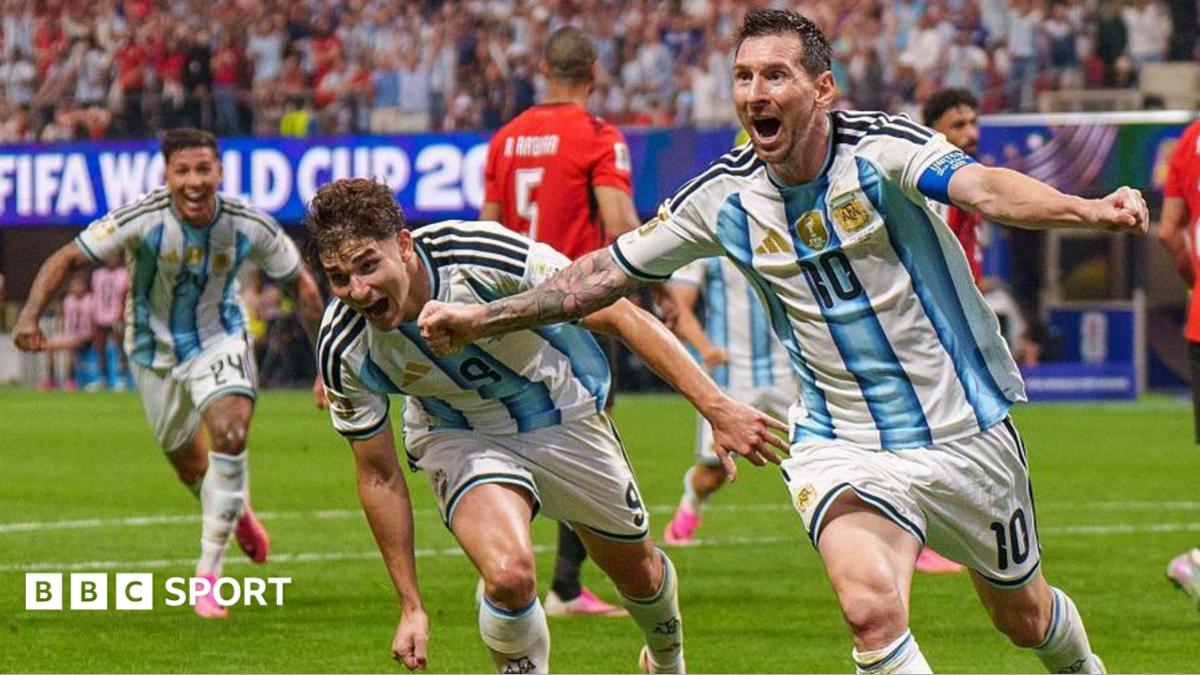
    Defending World Cup champions Argentina have booked their spot in the tournament’s quarter-finals, but their passage has been anything but smooth, and has sparked fierce debate over potential officiating favouritism. La Albiceleste entered the first two knockout rounds as heavy favourites to cruise past Cape Verde and Egypt, but on both occasions they scraped by with identical narrow 3-2 wins. Following their latest last-16 exit at the hands of Argentina, Egypt has launched an official complaint to FIFA, demanding the match officials be removed from the remainder of the tournament, and levelling claims of systemic bias designed to protect the defending champions and their global superstar, Lionel Messi.

    The dramatic nature of Egypt’s defeat has only amplified their frustration. On Tuesday, the African side held a shock 2-0 lead over Argentina with just 11 minutes left on the clock, on the cusp of pulling off one of the biggest upsets in World Cup history and securing the first quarter-final spot in their nation’s history. But Argentina launched a stunning late comeback, overturned the deficit, and scored the match-winning goal in stoppage time. Egypt has pinned its elimination on serious refereeing errors and inconsistent decision-making from French referee Francois Letexier and his team.

    Key contentious calls include a disallowed Egyptian goal chalked off after VAR intervention. Mostafa Zico’s well-taken strike was ruled out following a foul call on Marwan Attia for stepping on the foot of Argentina’s Lisandro Martinez in the build-up. Egypt also argues Argentina’s stoppage-time winner should have been ruled out, and that two clear penalty appeals for their side were ignored. Hamdi Fathy went down under a challenge from Alexis Mac Allister, while star forward Mohamed Salah claimed he was tripped by Julian Alvarez. While the decisions were controversial, BBC Sport’s analysis finds no concrete evidence to back the theory of a deliberate plot to favour Argentina.

    This dispute is not the only question mark over officiating and preferential treatment for the defending champions at this tournament. Ahead of Thursday’s high-profile quarter-final clash between France and Morocco, FIFA’s appointment of an all-Argentine on-field officiating team – the first of the tournament – has raised eyebrows. While top Argentine referee Facundo Tello is a highly experienced official who officiated at the 2022 World Cup quarter-finals and would be expected to uphold full professional integrity, critics argue the appointment creates a problematic perception of bias, given Argentina’s clear interest in seeing tournament favourite France eliminated earlier.

    Further questions have been raised over inconsistent disciplinary treatment of Messi earlier in the tournament. In the group stage, Messi escaped without even a yellow card for a challenge on Algeria captain Aissa Mandi that had clear contact with the opponent’s upper calf. Just days later, United States forward Folarin Balogun was sent off via VAR review for a near-identical challenge against Bosnia. The US has already formally appealed to have Balogun’s suspension overturned, with many pointing to the Messi incident as proof of double standards. Had Messi been sent off in that group stage match, he would have missed subsequent games, wiping out five of the eight goals he has scored at this tournament – which have already made him the World Cup’s all-time leading top scorer with 21 career tournament goals.

    Critics also point to off-field decisions that suggest FIFA has a vested interest in keeping Messi and Argentina in the tournament long-term. They note that FIFA president Gianni Infantino has previously made exceptions to allow Messi to compete in high-profile events, including the 2025 inaugural expanded Club World Cup hosted in the US. Despite MLS play-off winners LA Galaxy earning their spot through competitive merit, host nation berth was given to Inter Miami – Messi’s current club – allowing him to play the opening match of the tournament on home soil at the club’s Hard Rock Stadium.

    Structural tweaks to the 2026 World Cup format have also added fuel to the conspiracy claims. Last December, FIFA adjusted the final draw to ensure the world’s top four ranked teams – France, Argentina, Spain and England – were placed in separate quarter-brackets. This guaranteed that, if they won their groups (which all four did), they would not face each other before the semi-finals. While the official rationale is to keep elite matchups for the later stages of the tournament, the structure has given the top sides far easier routes through the knockout rounds – and none have benefited more than Argentina. So far, Argentina have faced only Cape Verde (ranked 67th globally) and Egypt (29th) to reach the quarter-finals, where they will next face 19th-ranked Switzerland. By comparison, Spain has already beaten 5th-ranked Portugal and will face 9th-ranked Belgium, while France takes on 7th-ranked Morocco in their quarter-final tie. Argentina’s path is by far the softest of the remaining elite sides.

    Disciplinary data also hints at potential favourable treatment for Argentina. Seventeen players across the remaining quarter-finalists are one yellow card away from suspension for a potential semi-final, but only one Argentine starter – Gonzalo Montiel – is at risk of missing the next round. When comparing the ratio of yellow cards issued to total fouls committed, Argentina receives a caution just once every 19.7 fouls. For context, England, who have committed fewer total fouls than Argentina, receive a yellow card once every 7.7 fouls, meaning Argentina have half as many cautions despite more fouls. Only three other remaining sides have a better (higher) yellow-to-foul ratio than Argentina, suggesting the defending champions have been let off far more lightly for foul play than other nations. This pattern echoes Argentina’s 2022 World Cup win, where they received five penalties – more than any other team in a single World Cup in history. At this tournament, they already lead all sides with three penalty awards, though Messi has missed two of them.

  • Bowen: For all his bluster, Trump has no better option than talks with Iran

    Bowen: For all his bluster, Trump has no better option than talks with Iran

    At the NATO summit held in Turkey, U.S. President Donald Trump delivered an unusually harsh verbal attack against Iran, issuing a stark new threat of expanded military action that has sent fresh shockwaves through already tense Middle Eastern geopolitics. In unvarnished remarks, Trump dismissed Iran’s leadership as “scum” and “sick, vicious people,” claiming the regime would immediately use a nuclear weapon if it acquired one, and declaring that diplomatic efforts to resolve the standoff were effectively finished. “It’s over,” he told reporters, before doubling down on the threat of new attacks hours later: “We will probably hit them harder again tonight. I gave them a little warning. We’re going to hit them hard again tonight.”

    Trump’s shifting rhetoric on the conflict has been well-documented: he has alternated between declaring victory over Iran, threatening the complete destruction of Iranian civilization, and signaling openness to negotiated settlement. Even in his latest bellicose remarks, however, the president left the door open for ongoing talks. When asked whether the recent escalation of strikes between U.S. forces and Iran had ended negotiations, Trump noted that his chief negotiators Steve Witkoff and Jared Kushner could continue discussions if they chose, adding “I don’t care, they can talk. But I think they’re wasting their time,” and labeling Iranian leaders “a bunch of lying guys.”

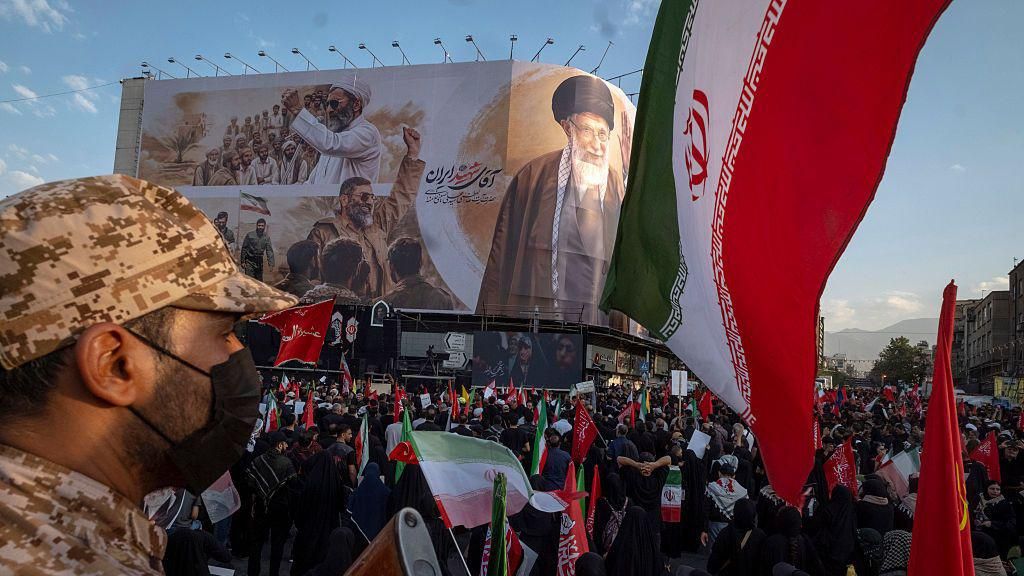
    This mixed messaging underscores a core reality: despite months of joint military operations by the U.S. and Israel, the two countries have failed to topple the Islamic regime in Tehran, leaving diplomacy as the only viable path forward for Washington. The current crisis comes amid a period of national mourning in Iran, which this week held funeral rites for former Supreme Leader Ayatollah Ali Khamenei, who was killed in a U.S.-Israeli airstrike on the first day of the war on February 28. Negotiations had already been paused to accommodate the funeral period, and the new round of threats has dealt a significant blow to already fragile diplomatic efforts.

    Mediators working to broker a negotiated settlement described the recent escalation as “a setback for sure,” noting the atmosphere between the two sides is “very tense.” The deep lack of trust between Washington and Tehran means even minor escalations can derail progress, as neither side believes the other will uphold the terms of any final agreement. No one disputes that the U.S. retains overwhelming military capacity to inflict massive damage on Iranian targets, but successive strikes have failed to break the Iranian regime’s resolve to defend its core strategic demands, chief among them full Iranian control over the Strait of Hormuz.

    The strait remains the central sticking point in all negotiations. Roughly one-fifth of the world’s global oil and gas supplies pass through its waters, giving Iran unparalleled leverage over the global economy – a far more practical strategic asset than an unbuilt nuclear program. Tehran has made clear it will not surrender authority over the strait, even if that means walking away from a proposed memorandum of understanding (MOU) that includes significant economic incentives for Iran, such as the unfreezing of billions in overseas assets and the lifting of restrictions on Iranian oil exports. The regime has been emboldened by the failure of U.S. and Israeli forces to eliminate it, and Khamenei’s well-attended funeral demonstrated that the Islamic government retains a strong base of domestic support. While domestic opposition to the regime still exists, a brutal crackdown on mass protests in January that killed thousands of demonstrators has forced opposition groups into hiding, eliminating any immediate domestic challenge to Tehran’s leadership.

    The framework for a potential final agreement has already been outlined by mediators. In exchange for international recognition of Iran’s authority over the Strait of Hormuz, the unfreezing of overseas assets, and the normalization of Iranian oil exports, Tehran would agree to new limits on uranium enrichment, allow the return of United Nations nuclear inspectors, and account for existing stockpiles of highly enriched uranium – which Trump has labeled “nuclear dust.” Even as the broad outlines of a deal remain on the table, however, the past 24 hours of escalation have underscored how difficult it will be to bridge the gap between the two sides and reach a lasting, stable resolution to the conflict.

  • Teenager arrested after two girls, 13, seriously injured in German school attack

    Teenager arrested after two girls, 13, seriously injured in German school attack

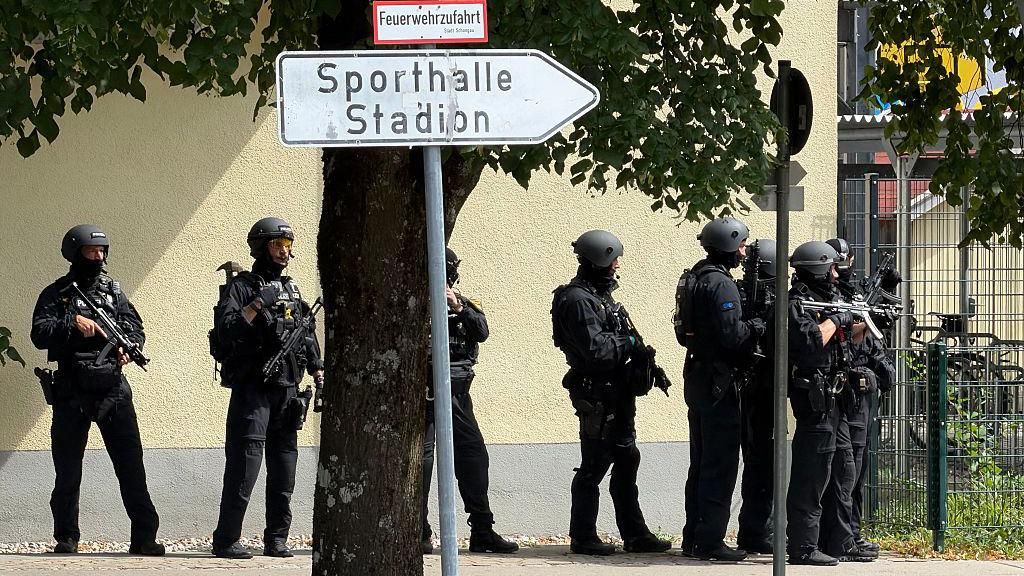
    A violent attack at a German secondary school has left two young teenagers seriously injured and sparked a large-scale emergency response in the small town of Schongau, Upper Bavaria. Law enforcement authorities have confirmed that a 16-year-old suspect has been taken into custody following the Wednesday incident at Welfen-Gymnasium, a local public secondary school with deep community roots stretching back to its founding in 1887.

    According to official statements from German police, responding officers found the suspect in possession of both a knife and a firearm when they arrived at the scene. Investigators currently believe the suspect acted alone in carrying out the attack, though many details about the incident remain under active investigation as of Wednesday afternoon.

    The two victims, both 13-year-old female students at the school, suffered severe wounds in the attack. Police confirmed that while their injuries are serious, they are not currently considered life-threatening. However, authorities have noted that they are still working to confirm whether additional people were hurt, and are still assessing the full scope of harm from the incident.

    Early in the response, a police spokesperson told AFP that the type of weapon used had not yet been confirmed, and declined to confirm initial reports of a stabbing. Bavaria’s Interior Minister Joachim Herrmann later told local public broadcaster Bayerischer Rundfunk that he believed the two girls had been stabbed, though this detail has not yet been formally confirmed by law enforcement.

    Multiple key details about the suspect remain unconfirmed, including their full identity and their connection to the school. Herrmann told reporters that the suspect had received prior psychiatric treatment, and there are unconfirmed reports that the individual is a former student of Welfen-Gymnasium. Police have publicly classified the incident as a “rampage” as their investigation continues.

    Local authorities have moved quickly to support affected families and community members in the wake of the violence. A dedicated support and contact point for parents, relatives of students, and witnesses has been set up at the town’s local fire station to provide information and mental health resources.

    Founded more than 135 years ago, Welfen-Gymnasium began as an almost entirely all-girls school before shifting to a co-educational model roughly 40 years ago, according to information posted on the school’s official website. The incident has shocked the quiet small town community, with a large police operation still ongoing in the area surrounding the school as investigators collect evidence and piece together the full sequence of events.

  • IMF cuts 2026 world growth forecast, flags risks from new Mideast fighting

    IMF cuts 2026 world growth forecast, flags risks from new Mideast fighting

    The International Monetary Fund (IMF) has once again downgraded its 2026 global economic growth projection, citing heightened geopolitical uncertainty and rising risks spurred by the resumption of hostilities in the Middle East. In its latest World Economic Outlook update released Wednesday, the fund cut the 2026 global growth forecast to 3.0 percent, down 0.1 percentage points from its April prediction. This marks the second downward adjustment to global growth expectations this year, and represents a gradual cooling of economic expansion from 2025 levels.

    Crucially, the revised projections were finalized before recent cross-border military exchanges between the United States and Iran reignited open conflict in the region. Petya Koeva Brooks, deputy director of the IMF’s research department, emphasized that the rapid escalation of tensions overnight underscores the profound uncertainty hanging over the global economic outlook. “We’re going to be monitoring developments very closely,” she told reporters, speaking shortly after former U.S. President Donald Trump announced an end to the temporary U.S.-Iran ceasefire and warned of imminent heavy strikes on Iranian targets.

    Inflation projections have also been revised upward, with the IMF now forecasting global inflation will hit 4.7 percent in 2026, higher than earlier estimates. While Koeva Brooks projected that any disruptions from the conflict would normalize gradually over a nine-month period, she warned that sustained shocks pushing up oil prices and unanchoring inflation expectations could cause further damage to global economic activity.

    Despite the downgrade, the downward revision remains modest, as booming growth in the artificial intelligence sector has partially offset the economic drag from the Middle East war. The IMF projects global growth will rebound to 3.4 percent in 2027, a recovery Deniz Igan, division chief at the IMF’s research department, describes as a “V-shaped recovery”. Delayed post-conflict normalization, prolonged supply chain disruptions and elevated energy costs are the core factors dragging down 2026 global growth, Igan told Agence France-Presse.

    The economic fallout from the conflict varies dramatically across different national economies, the fund notes. Energy-exporting countries outside the active conflict zone benefit from improved terms of trade driven by higher oil prices, while economies integrated into the AI-led technology expansion have recorded stronger activity even if they rely on energy imports. By contrast, energy-importing economies with limited participation in global technology value chains have seen a pronounced slowdown in economic activity.

    The current conflict traces back to February 28, when U.S.-Israeli strikes on Iran prompted Tehran to retaliate by effectively blocking traffic through the Strait of Hormuz, the world’s most critical chokepoint for global oil shipments. The closure sent global oil prices soaring, putting immediate pressure on major economies around the world. A temporary U.S-Iran truce later reopened the waterway and resumed oil and gas flows, but hostilities have now reignited.

    While the global economy has weathered the conflict’s initial shocks better than many analysts initially feared, the IMF warns the aggregate global outlook masks stark divergence across regions and countries. For example, retail gasoline prices rose 30 percent in emerging Asia after the conflict began, compared to just a 15 percent increase in Latin America. The U.S. economy is still projected to grow 2.3 percent in 2026, but growth for the Middle East and Central Asia region has been cut by 1.2 percentage points to just 0.7 percent. The euro area also saw a downward revision, with 2026 growth now pegged at 0.9 percent; France’s growth forecast was cut 0.3 percentage points to 0.6 percent.

    China, the world’s second-largest economy, saw a small upward adjustment to its 2026 growth projection, which now stands at 4.6 percent. Even so, the IMF warns the full economic impact of the renewed conflict has not yet filtered through to global data. The release of strategic petroleum reserves has temporarily eased energy market pressures, but weakening growth remains a distinct possibility going forward. The conflict could also accelerate global trade fragmentation, pushing up prices for key goods across the board.

    There are some bright spots amid the gloom, however. Major economies central to global technology supply chains have posted stronger-than-expected performance, even amid their exposure to conflict-related disruptions. The world’s four largest net exporters of AI-related hardware — Taiwan, South Korea, Thailand and Malaysia — have all recorded resilient growth this year. Igan added that the upward revision to 2026 inflation forecasts only represents a temporary pause in the global disinflation trend, rather than a permanent reversal.

  • Trump takes aim at ‘wasted cause’ Spain and revives Greenland claim at Nato summit

    Trump takes aim at ‘wasted cause’ Spain and revives Greenland claim at Nato summit

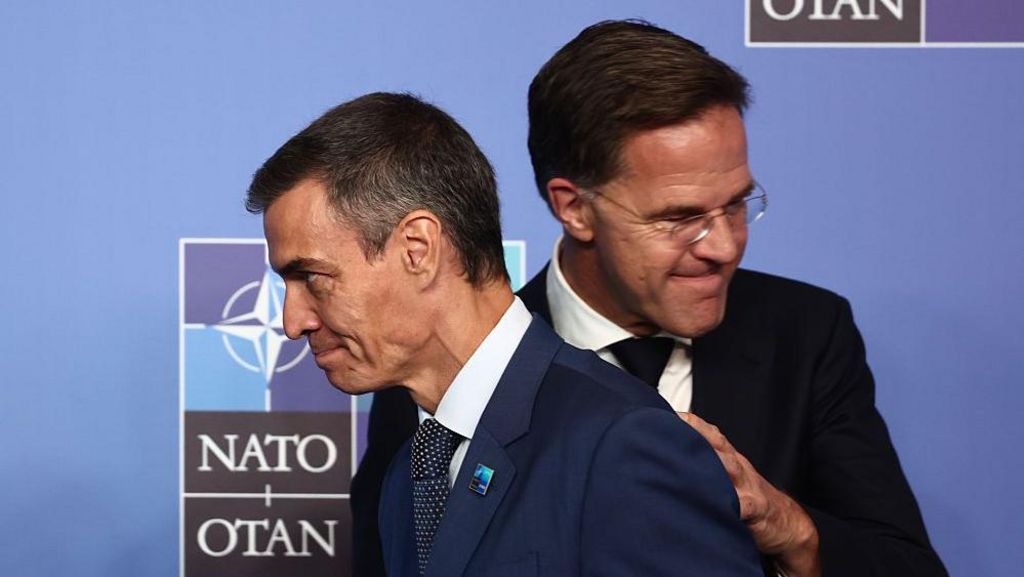
    The 2026 NATO summit hosted in Ankara has become a stage for fresh diplomatic friction, as U.S. President Donald Trump launched a new public criticism of alliance member Spain and reignited his long-stated ambition to acquire the self-governing Danish territory of Greenland. Speaking alongside newly appointed NATO Secretary General Mark Rutte, Trump issued a stark threat to cut off all bilateral trade with Spain, labeling the Southern European ally a ‘wasted cause’ and a ‘terrible partner’ within the transatlantic defensive alliance. He also framed NATO allies’ widespread opposition to his Greenland takeover plan as a major sticking point for U.S. interests. The public outburst stems from long-simmering tensions between the Trump administration and Spanish Prime Minister Pedro Sánchez’s socialist government. Earlier this year, Sánchez refused U.S. requests to access Spanish military bases at Morón and Rota for operational missions tied to the conflict with Iran, a stance that already drew Trump’s anger. The U.S. president has also repeatedly pushed Spain to ramp up its defense spending to 5% of gross domestic product, a demand Sánchez has rejected as unreasonable and counterproductive. Currently, Spain meets the existing NATO defense spending target of 2% of GDP, a benchmark many members have only recently hit. This is not the first time Trump has threatened Spain with trade restrictions: he issued an identical warning back in March 2026, after Sánchez publicly stated his opposition to joining military action against Iran. That threat never translated into actual policy changes, and economic data points to the mutually beneficial nature of the bilateral trade relationship. According to figures from the U.S. Congress, total two-way trade between the two nations reached $75 billion in 2025, with the U.S. holding a $3 billion trade surplus over Spain – a fact Madrid has repeatedly highlighted to emphasize the imbalance works in Washington’s favor. Despite the sharp public rebuke from Trump, Spanish officials have responded with deliberate calm, stressing that bilateral relations remain stable and constructive. Following the public confrontation, Sánchez told reporters that he had an informal, friendly chat with Trump during the summit focused on the ongoing FIFA World Cup, and denied any atmosphere of tension between the two leaders. Madrid government sources reaffirmed that Spain has no plans to adjust its long-standing, robust social, cultural and economic ties with the U.S. and will maintain its policy positions unchanged. The European Union has quickly stepped forward to back Spain, with European Commission spokesperson Olof Gill noting that EU-U.S. trade is deeply integrated and delivers mutual benefits for both blocs. Gill emphasized that the European executive will always fully protect the interests of the EU and all its member states, reminding stakeholders of the comprehensive EU-U.S. trade agreement finalized last year that establishes structured tariff rules for cross-Atlantic imports. Beyond his attack on Spain, Trump used the summit platform to repeat long-held grievances against NATO allies, claiming that the alliance has failed to meet its commitments to the U.S. even as Washington has shouldered massive defense costs to protect Europe from Russian aggression. ‘We’ve been there for them, but they weren’t there for us,’ Trump told reporters, asserting that the U.S. has poured more than $1 trillion into European defense efforts in recent years. The U.S. president also once again pushed his controversial plan to acquire Greenland, arguing that the Arctic territory is strategically critical for U.S. national security, and claiming it holds little value for Denmark. Greenland is a semi-autonomous territory that remains under Danish sovereignty, and both Copenhagen and Nuuk have repeatedly rejected any suggestion that the territory is up for sale. On the sidelines of the NATO summit, Danish Prime Minister Mette Frederiksen reaffirmed that long-standing position, while the European Commission stressed that any decisions regarding Greenland’s status are exclusively for Greenlandic and Danish stakeholders to make. Danish Foreign Minister Lars Løkke Rasmussen later noted that while Trump raised the topic publicly with reporters, he did not bring up the acquisition proposal during closed-door summit negotiations. Despite the public drama generated by Trump’s comments, NATO Secretary General Mark Rutte characterized the summit as a tremendous success, highlighting that all 32 member states reaffirmed their unwavering commitment to the alliance’s Article 5 mutual defense clause, which frames an attack on one member as an attack on all.

  • Police name man wanted over murders of wife and daughters

    Police name man wanted over murders of wife and daughters

    A cross-border manhunt is underway after a mother and her two young daughters were found dead in a residential property near Bedford, in what UK police describe as a targeted, deeply distressing suspected triple murder. The victims are 42-year-old Nothabo Zandile Tshuma and her children, 15-year-old Natalie and five-year-old Nala. Their bodies were discovered on Monday, when officers from Bedfordshire Police forced entry into their home in the Great Denham neighbourhood after community members raised alarm that the entire family had not been seen in public for several days.

    Authorities have named the prime suspect as 45-year-old Ndodana Mkhanyisi Tshuma, also known by the informal name Mark, who is the husband of the murdered mother and father of the two dead girls. Investigators have confirmed that Tshuma used a valid British passport to leave the United Kingdom through London Heathrow Airport on Saturday, two full days before the bodies were found. Detective Inspector Lee Martin, the lead officer on the case, confirmed that UK police believe Tshuma has traveled to Zimbabwe, and that law enforcement teams are collaborating with domestic national agencies and international partners to track the suspect down.

    “We are urgently working to find and apprehend him, and would appeal to him directly to hand himself in,” Martin said in a public statement. Addressing the suspect directly, he added: “Mark, unthinkable harm has been caused to those around you and this has left your relatives and friends utterly devastated. Criminal investigation knows no borders. Please do the right thing, come forward and hand yourself in to local authorities.”

    As of Tuesday, Zimbabwean national police have not yet received a formal Interpol notice regarding Tshuma’s possible presence in the country, a police spokesperson Paul Nyathi told the BBC. Nyathi added that Zimbabwean authorities were aware of the case through media reports, and had already put monitoring systems in place to flag any credible sightings of the suspect.

    The tragic deaths have prompted an outpouring of grief from the local community and the girls’ schools, which have paid warm tribute to the two young lives cut short. Jo Webster, headteacher at Pilgrims Pre-Prep School, where Nala was a pupil, described the five-year-old as a “ray of sunshine” celebrated for her curious personality and wonderful sense of humour. “Many of our staff had known her since she was just seven months old and had the privilege of watching her grow,” Webster said.

    At Bedford Girls’ School, headteacher Gemma Gibson remembered 15-year-old Natalie, a Year 10 student, as a bright, accomplished young person with extraordinary talents across dance, music and sport. “She was fun-loving, full of life and had a positive impact on everyone she came into contact with. She will be remembered with great warmth and affection,” Gibson said.

    The family’s Carnoustie Drive home has been cordoned off as an active crime scene, and local residents have left bunches of flowers at a nearby hedge as a quiet tribute to the victims. One tearful resident who left flowers told the BBC: “We’re really sorry to lose her. She was such a gracious mother.” Multiple neighbours told reporters they were deeply shocked that such violence could occur in what they described as a quiet, typically safe residential area.

    Bedfordshire Police Assistant Chief Constable John Murphy previously called the incident “a deeply distressing incident in which a mother and her two children are believed to have been murdered.” The force stressed there is no current evidence to suggest the suspect poses any wider risk to the general public, but has confirmed it will increase visible patrols in the Great Denham area to reassure anxious residents.

    Formal identification of the victims has not yet been completed, according to a police update. Investigators are asking any member of the public who noticed suspicious activity in the local area between Friday and Saturday, or who holds any relevant information about the case, to contact Bedfordshire Police immediately with details.

  • Last woman executed in Britain for killing abusive lover is given a conditional pardon

    Last woman executed in Britain for killing abusive lover is given a conditional pardon

    LONDON – Seventy-one years after Ruth Ellis became the final woman executed in Britain, the UK government has granted her a posthumous conditional pardon, recognizing a profound miscarriage of justice in one of the nation’s most infamous 20th-century legal cases.

    Ellis, a 28-year-old nightclub hostess and single mother, was hanged at London’s Holloway Prison on July 13, 1955, after being convicted of murdering her abusive partner, race-car driver David Blakely. The fatal shooting took place outside the Magdala pub in North London’s Hampstead neighborhood on April 10 that same year, following months of escalating abuse that the trial would never consider as a mitigating factor.

    Deputy Prime Minister David Lammy announced the long-awaited pardon this Wednesday, clarifying that the executive action does not dispute that Ellis killed Blakely, but instead revises her original sentence: replacing the unlawful by modern standards death penalty with a life imprisonment sentence to correct a clear historical injustice. “This exceptional case exposed a gaping flaw in the mid-century British justice system that cannot stand,” Lammy noted in his official statement.

    The killing and subsequent rapid trial sparked immediate national outcry. When Ellis was led to the gallows, nearly 1,000 members of the public gathered outside Holloway Prison for a silent vigil protesting the sentence, turning the case into a cultural and political cause celebre that reshaped British criminal law. Just two years after Ellis’s execution, Parliament passed a landmark bill introducing the diminished responsibility defense, a change legal experts widely trace back to public outrage over the shortcomings of her trial.

    For decades after the execution, Ellis’s family campaigned for justice, with her grandchildren leading the modern push to revise her conviction. Last year, legal representatives from Mishcon de Reya submitted a formal pardon application on the family’s behalf, presenting extensive evidence that Ellis met the modern diagnostic criteria for battered woman syndrome. As the firm outlined, multiple witnesses including Ellis’s close friends and treating physicians confirmed Blakely subjected her to repeated brutal abuse: public assaults that left her covered in bruises, a push down a flight of stairs that caused severe injury, and one severe blow to her abdomen that resulted in a miscarriage. Blakely also repeatedly threatened to kill Ellis, leaving her in constant fear for her life.

    During the 1955 trial, however, jurors were explicitly barred from considering any evidence of Ellis’s abuse at Blakely’s hands. The entire proceeding lasted little more than 24 hours, and the jury returned a guilty verdict in under 30 minutes. Pardon campaign legal teams argue that if the 1957 diminished responsibility law had been in place at the time of Ellis’s trial, she would likely have been convicted of manslaughter rather than murder, avoiding the death penalty entirely.

    Speaking after the pardon announcement, Laura Enston, one of Ellis’s grandchildren, said the acknowledgment of injustice ends a decades-long fight for her family. “Justice has finally been done,” Enston said. “This pardon does not undo what happened 71 years ago. It does not restore the lives that were broken — the children left behind, the years lost. But it says, formally and finally, that Ruth should not have been executed; that the justice system failed her. That acknowledgment matters profoundly to our family.”

    Enston also detailed the intergenerational trauma caused by Ellis’s execution. Ellis’s two children never recovered from their mother’s death: her son died by suicide, and lifelong trauma left Ellis’s daughter unable to care for her own children during much of their childhood. “The shadow of Ruth’s execution has fallen across two generations. We have carried shame that was never ours to bear,” Enston added.

    The UK formally suspended capital punishment for murder in 1965, and fully abolished the death penalty across all offenses in 1970. Ellis’s case has remained a cultural touchstone in Britain in the decades since her death, inspiring the 1985 feature film *Dance with a Stranger* and a 2024 ITV miniseries titled *A Cruel Love: The Ruth Ellis Story*.

  • Queen Camilla visits Wimbledon and is joined by actor who played her husband

    Queen Camilla visits Wimbledon and is joined by actor who played her husband

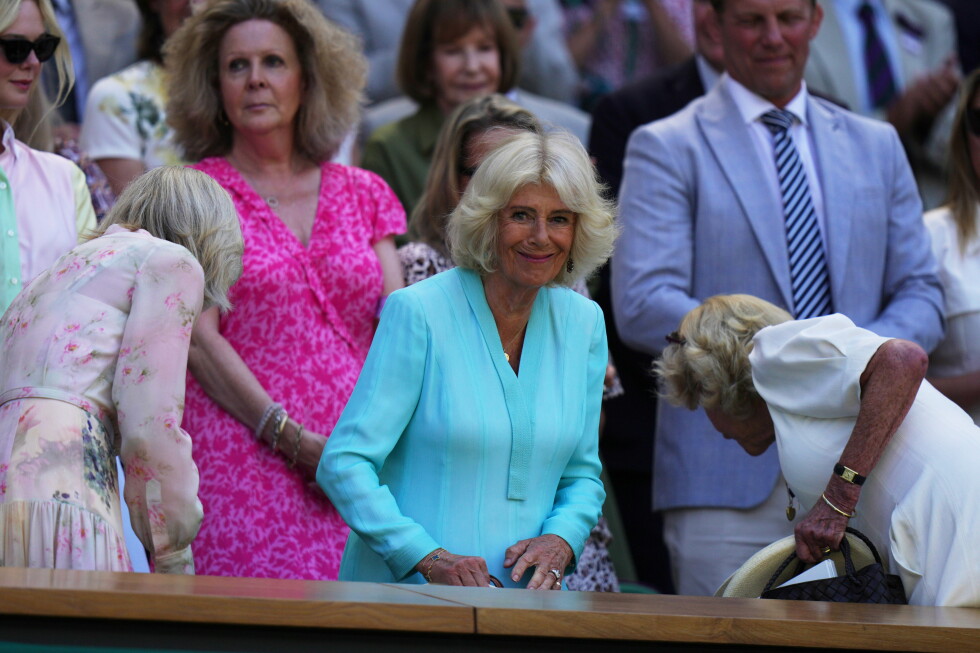
    LONDON – As the Wimbledon Championships reached its tenth day of competition on Wednesday, Queen Camilla, wife of Britain’s King Charles III, continued her annual tradition of attending the iconic Grand Slam tournament, marking her fourth straight year in attendance at the All England Lawn Tennis Club. This year’s outing brought an unexpected, charming twist: the British monarch was joined in the event’s exclusive Royal Box by Dominic West, the Emmy-nominated actor who famously brought King Charles III to life on the hit Netflix drama series *The Crown*.

    Queen Camilla stepped into Centre Court dressed in a soft light blue ensemble, taking her traditional seat to watch one of the women’s singles quarterfinal matches between Italy’s Jasmine Paolini and Ukraine’s Marta Kostyuk. Alongside West, other high-profile celebrity guests also occupied the Royal Box on the day, including acclaimed American actor Elle Fanning.

    After Kostyuk secured her spot in the semifinal with a victory over Paolini, the queen surprised the next scheduled players: British wild card entrant Arthur Fery and Italian star Flavio Cobolli. As the two athletes prepared to make their entrance onto Centre Court, Camilla walked over to greet the pair with personal handshakes, a warm gesture that delighted onlookers. Before the day’s tennis action got underway, the queen also carved out time to meet with a ball boy, a ball girl, and multiple long-tenured staff members who have dedicated decades of service to the All England Club.

    This year’s royal presence at the tournament has been split between two senior members of the British royal family. The Princess of Wales, Kate Middleton, who holds the ceremonial role of patron of the All England Club, made her own trip to Wimbledon the previous week. During her visit, she stopped to interact with thousands of tennis fans waiting in the legendary queue outside the tournament grounds, before taking her seat on Centre Court to watch early round play alongside two-time Wimbledon champion Andy Murray.