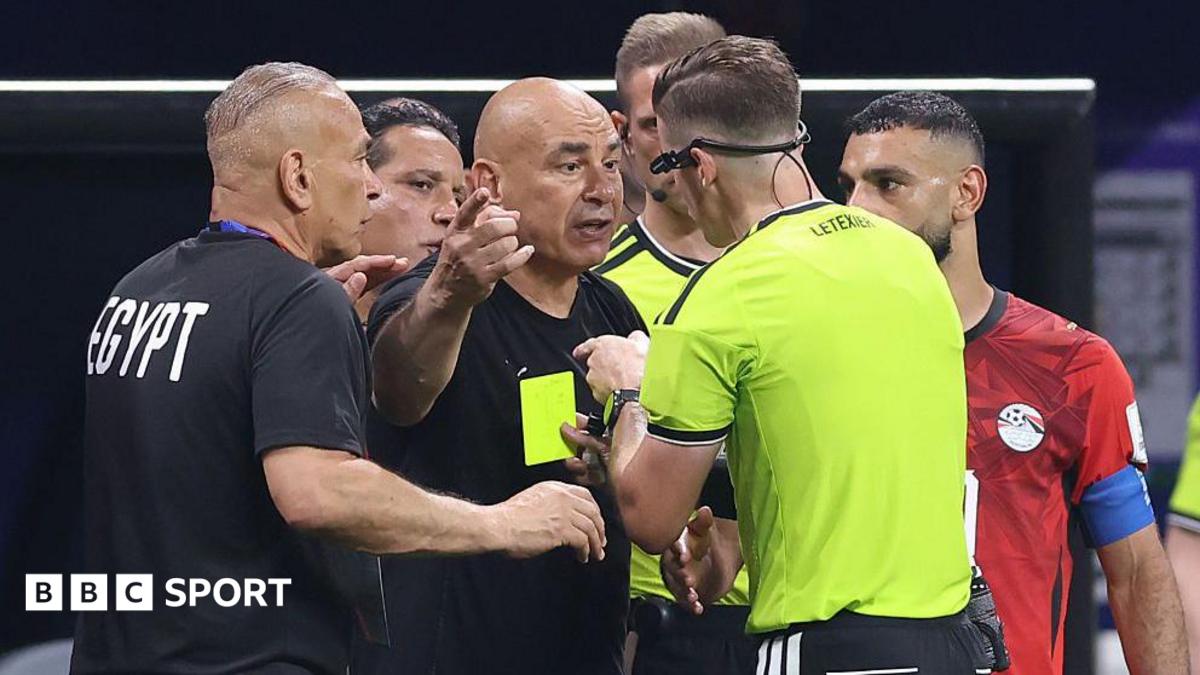
The 2026 FIFA World Cup round of 16 clash between Egypt and defending champions Argentina has erupted into controversy after the Egyptian Football Association (EFA) submitted an official complaint to global football’s governing body, calling for the entire officiating crew to be removed from the tournament. Egypt fell to a dramatic 3-2 stoppage-time defeat, ending their bid to reach the first World Cup quarter-final in the nation’s history, and Egyptian officials have levied serious accusations of blatant mistakes, double standards, and even discriminatory officiating against the team led by French referee Francois Letexier.
The most contentious decision came in the second half, when Egypt held a 1-0 lead. Attacking play for a potential second goal was built from a foul call against Egyptian midfielder Marwan Attia, who was penalized for stepping on Argentina defender Lisandro Martinez’s foot. The VAR overturned the would-be goal from Mostafa Zico, a call that immediately sparked outrage from the Egyptian side. Compounding their frustration, Egyptian players and staff say star forward Mohamed Salah was fouled inside Argentina’s penalty area just moments before the defending champions launched the counterattack that secured their stoppage-time winning goal.
In an official statement released after the match, EFA president Hany Abou Rida confirmed the complaint had been lodged with FIFA, demanding a full investigation into the refereeing team’s actions. The federation specifically called out what it describes as “blatant errors” and the crew’s refusal to review key match footage, alongside the broader accusation of discrimination against the Egyptian national team. “It demands the exclusion of the referee and the entire crew from the World Cup after investigating these mistakes,” the statement read.
Egypt manager Hossam Hassan doubled down on the criticism post-match, saying his side had been “treated unfairly” and “suffered injustice.” He pointedly suggested that officials favored Argentina to keep the defending champions — and captain Lionel Messi, widely expected to be playing in his final World Cup — in the competition. “Perhaps they wanted to keep the world champion in the competition. Perhaps they wanted Messi to stay in the running,” Hassan said. Striker Mostafa Zico echoed that anger, claiming outright that “this tournament has been fixed,” adding that unfair officiating had been evident from the opening kickoff.
Messi, for his part, was central to Argentina’s comeback victory: the captain set up the side’s 79th-minute opening goal before scoring an 83rd-minute equalizer to set up the late winner. Argentina will next face Switzerland in a quarter-final clash in Kansas City this Saturday, with a kickoff scheduled for 02:00 BST on Sunday.
As of publication, FIFA has not responded to requests for comment from BBC Sport. Looking at precedents for this kind of officiating protest, history suggests such complaints rarely result in meaningful action, according to football journalist Dale Johnson. Historically, FIFA has dismissed most post-match refereeing appeals with minimal explanation. For example, at the 2022 Qatar World Cup, France submitted an official protest after a late group-stage goal was ruled out by VAR in a 1-0 defeat to Tunisia, a decision that appeared to contradict existing VAR protocol. FIFA’s Disciplinary Committee dismissed the protest in a one-sentence statement with no further clarification.
Experts note that most refereeing decisions carry an inherent element of subjectivity, and human error is an accepted, if frustrating, part of the sport. Most complaints raised in the immediate emotional aftermath of a knockout-stage exit tend to fade from public discussion without any formal action, and few expect FIFA to issue a substantive public response to the EFA’s grievance this time around.