博客

  • A Putin critic is convicted on charges that will keep him from campaigning for Russia’s parliament

    A Putin critic is convicted on charges that will keep him from campaigning for Russia’s parliament

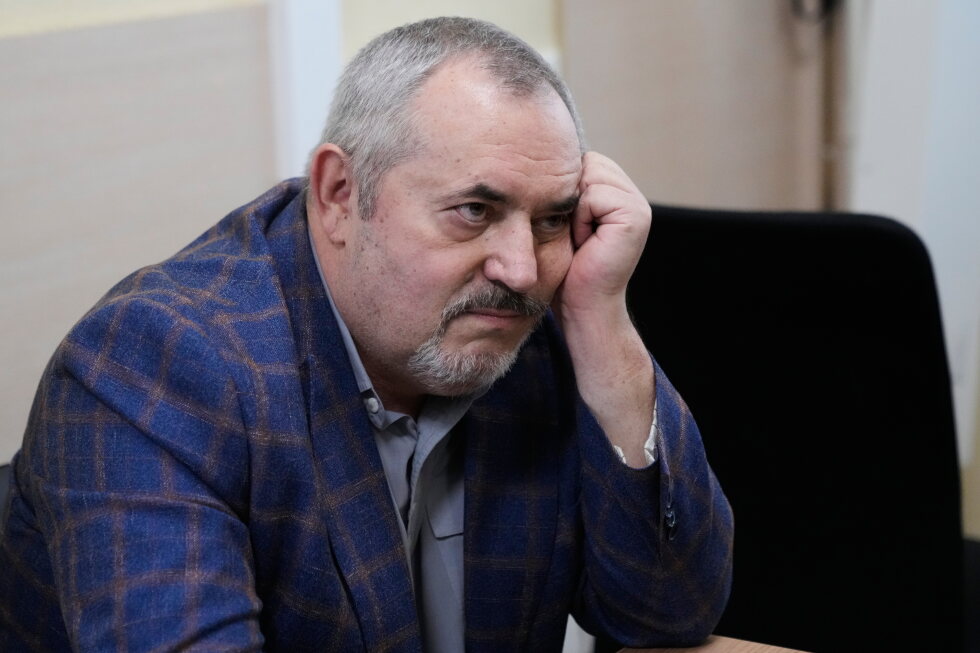
    On a Friday in mid-2024, a Moscow suburban court delivered a verdict that effectively removes one of Russian President Vladimir Putin’s most vocal domestic critics from the upcoming national parliamentary race. Sixty-three-year-old Boris Nadezhdin, who has openly condemned Moscow’s military operation in Ukraine and attempted to challenge Putin in the 2024 presidential election, was found guilty of displaying prohibited “extremist symbols” in a 2023 online interview.

    The conviction stems from a brief appearance of an image of late opposition leader Alexei Navalny during that interview. At the time of the conversation, Navalny was already serving a 19-year prison sentence on widely discredited extremism charges that global observers and human rights groups uniformly labeled as politically motivated. Navalny, who had been the most prominent opposition figure to challenge Putin’s rule for years, died in February 2024 under suspicious circumstances while detained in a remote Arctic penal colony.

    Nadezhdin has repeatedly dismissed the conviction as a baseless, absurd political maneuver, arguing that Russian authorities are deliberately blocking him from participating in September’s scheduled parliamentary election. The court in Dolgoprudny, the Moscow outer suburb where Nadezhdin resides, handed down a 1,000 ruble fine (equivalent to roughly $13) alongside the guilty verdict. While the fine is minor, the conviction carries profound political consequences that permanently block Nadezhdin from holding public office.

    This legal action marks the latest in a string of restrictions placed on the Putin critic over the past several months. Just one week prior to the verdict, Russia’s Justice Ministry added Nadezhdin to its controversial “foreign agent” registry, a designation that brings heavy social stigma, constant state surveillance, and formal bars on running for public office. Prior to Friday’s ruling, Nadezhdin had still been permitted to pursue a symbolic, low-profile campaign for a parliamentary seat; that option is now fully closed.

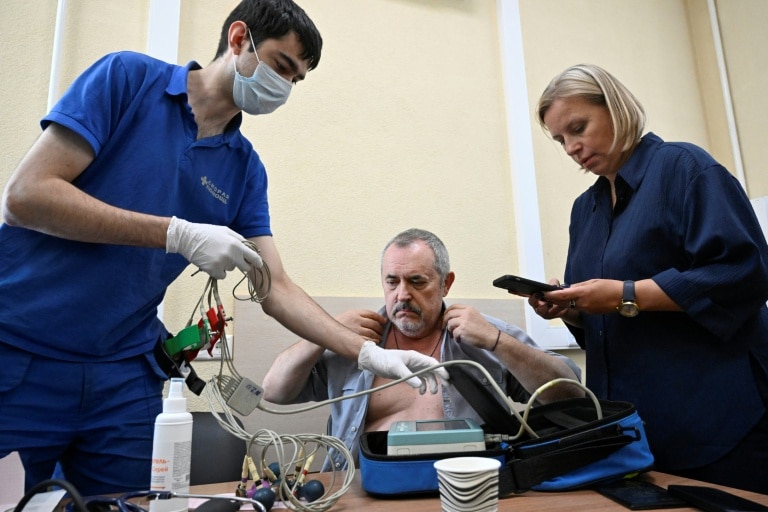
    During the court hearing, Nadezhdin reported feeling unwell, forcing proceedings to pause briefly so an ambulance team could conduct a medical evaluation. Before the session began, he told reporters he had considered traveling abroad for medical treatment and political safety, but Russian authorities have already imposed an exit ban barring him from leaving the country.

    Nadezhdin’s exclusion from electoral politics follows a pattern of opposition crackdown that played out earlier this year during the 2024 presidential race. In January 2024, he drew widespread public support by openly calling for an immediate ceasefire in Ukraine and collected more than the required number of voter signatures to qualify for the ballot. However, Russia’s Supreme Court ultimately disqualified him, ruling that over 9,000 of his submitted signatures were invalid — a margin just large enough to remove him from the March 2024 race. Putin ultimately won a fifth presidential term with only token, widely compliant opposition on the ballot, a result that drew international criticism for lack of democratic competition.

    The conviction of Nadezhdin comes amid a broader ongoing crackdown on anti-government dissent that accelerated after the Kremlin launched its full-scale invasion of Ukraine in February 2022. Since that time, Russian authorities have dramatically expanded restrictions on freedom of speech and political opposition, targeting independent journalists, human rights organizations, civil society leaders, LGBTQ+ activists, and minority religious groups with sweeping legal penalties. Hundreds of dissidents have been jailed on politically motivated charges, while thousands more have fled the country to avoid persecution.

    In a parallel development on the same day as Nadezhdin’s verdict, another former supporter-turned-critic of Putin was taken into custody in St. Petersburg. Ilya Remeslo, a pro-Kremlin blogger and activist who publicly broke with the government earlier this year, was arrested on charges of spreading “false information” about the Russian military — a criminal offense that has become one of the most common tools used to target government critics. The state-run Tass news agency confirmed that Remeslo will be transferred to Moscow for an upcoming court hearing. Remeslo first publicly criticized the military campaign in Ukraine and called for Putin’s resignation in March 2024; shortly after that announcement, he was involuntarily committed to a psychiatric clinic for a month, a move he described as retaliation for his public comments.
  • How the World Cup made an ‘NFL-obsessed’ American a football fan

    How the World Cup made an ‘NFL-obsessed’ American a football fan

    The 2026 FIFA World Cup, co-hosted by the United States, has ignited a sudden and widespread wave of new soccer enthusiasm among American viewers, turning casual onlookers into die-hard fans and driving measurable growth in participation and viewership across the country.

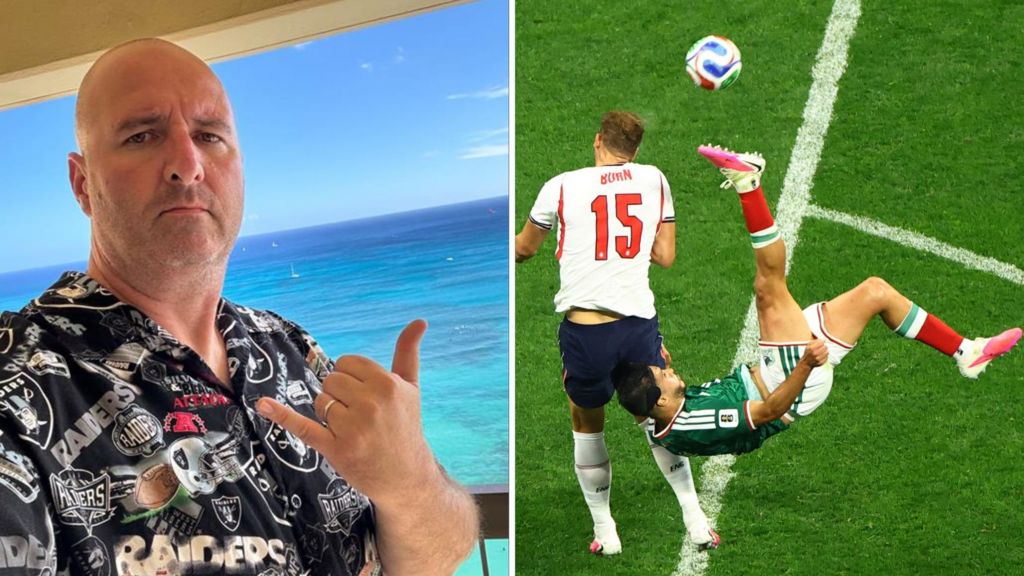
    One of the thousands of newly converted fans is Jamie Druley, a 51-year-old car salesman from Indiana and self-proclaimed lifelong NFL fanatic. His journey into soccer fandom began when he learned about the boisterous, widely documented celebrations of Scotland’s iconic Tartan Army fan contingent during their time in Boston for the tournament. Curious about what drew thousands of fans to travel thousands of miles and spend thousands of dollars just to cheer on their national teams, Druley decided to tune into the matches.

    What started as a casual experiment quickly turned into a full-blown obsession. Druley’s passion grew so intense that his wife eventually texted him from their bedroom asking him to lower his volume as he yelled at match broadcasts from the living room. On slow work days, Druley and his colleagues would stream matches directly in the car dealership’s showroom; the tense semi-final match between England and Argentina sparked such heated friendly banter and shouting between coworkers that it ended with a formal bet between Druley and his boss ahead of the tournament’s final. Today, Druley is even considering purchasing season tickets for his local minor league side Fort Wayne FC, which opened a new 9,200-seat stadium earlier this year.

    Druley is far from alone in this newfound love for soccer. Countless Americans with little to no prior interest in the sport have jumped on the World Cup bandwagon, driving record-breaking viewership numbers across major US broadcasters. Nielsen Media Research data shows that an average of 5.1 million American viewers tuned in to watch each of the 72 matches broadcast across Fox, FS1, and Tubi – a 92% increase in average viewership compared to the 2022 World Cup in Qatar. The broadcast of the United States’ knockout stage loss to Belgium drew 30 million viewers alone, making it the most-watched English-language soccer broadcast in US history, according to Fox.

    Courtney Silbaugh, a 33-year-old mother from Pennsylvania who describes herself as “not a sports spectator at all,” is among the scores of newly minted fans. Silbaugh had never connected with traditional American sports: she tried watching American football with no success, and struggles to follow baseball due to impaired vision that makes it hard to track the ball. But since the World Cup kicked off, she has watched every match except six, and now calls soccer her favorite sport. “I’m understanding the game more while watching the World Cup… versus watching recreational leagues,” she explained.

    Another new fan is 54-year-old Indiana banker and grandmother Heather Earhart. While her son-in-law works as a high school soccer coach and her grandchildren play youth soccer, Earhart had long felt confused by the sport’s rules and flow, leaving her unengaged even when attending her grandchildren’s games. That all changed during the 2026 tournament, when she found herself fully caught up in England’s World Cup run, even falling in love with the fan favorite chants *Hey Jude* and Oasis’s *Wonderwall*. She now streams the songs while cleaning her kitchen, checks match highlights on YouTube first thing every morning, and has even watched beginner tutorials to learn the sport’s rules and basic skills, from bending free kicks to offside regulations. Earhart says she is now considering following a Manchester club and Real Madrid to watch English star Jude Bellingham, and is eager to visit a local soccer bar in Indianapolis to watch matches now that she understands the action.

    The surge in interest extends far beyond living room viewership, according to soccer industry insiders across the US. Nate Roberts, a 40-year-old soccer coach and fitness instructor who moved to Connecticut from Lincoln, England more than a decade ago, says his organization has been flooded with inquiries from people eager to play. In response, he is launching a new adult pickup “beer league” (with alcohol restricted to those of legal drinking age) in the coming weeks to meet unanticipated demand. Roberts says he now receives 10 to 20 personal emails a week from prospective players and parents looking to sign their children up for youth programs, with double that number of inquiries coming through social media. “We’re noticing players that are looking for that rec experience or that first opportunity to start their soccer journey,” he explained.

    Much of the new enthusiasm for the sport among American fans stems from the unique atmosphere of the co-hosted tournament, which brought thousands of international fans to cities across the US. Many new fans say they were struck by the widespread positivity, good sportsmanship, and cross-cultural camaraderie on display as fans from every corner of the globe celebrated together in North American host cities.

    Druley, who is now considering following Manchester City and MLS clubs alongside his NFL fandom, summed up the sentiment: “It sounds cliche as can be, but the whole world getting along, in the way that I saw them doing while here in America, visiting for the World Cup, was just eye-opening to me. As silly as a game or a sport may be to some people, seeing people come together the way that they did over this was just truly amazing to me. It was… maybe what the world needs right now, you know?”

    For all his newfound love of the sport, however, Druley is standing firm on one longstanding American tradition: he will not be calling it “football.” “I know that the entire world outside of us pretty much calls it football, but I am so ingrained in American football that I just cannot call it anything but soccer,” he said. “I have my limits.”

  • Dialogue remains key to Sino-US ties

    Dialogue remains key to Sino-US ties

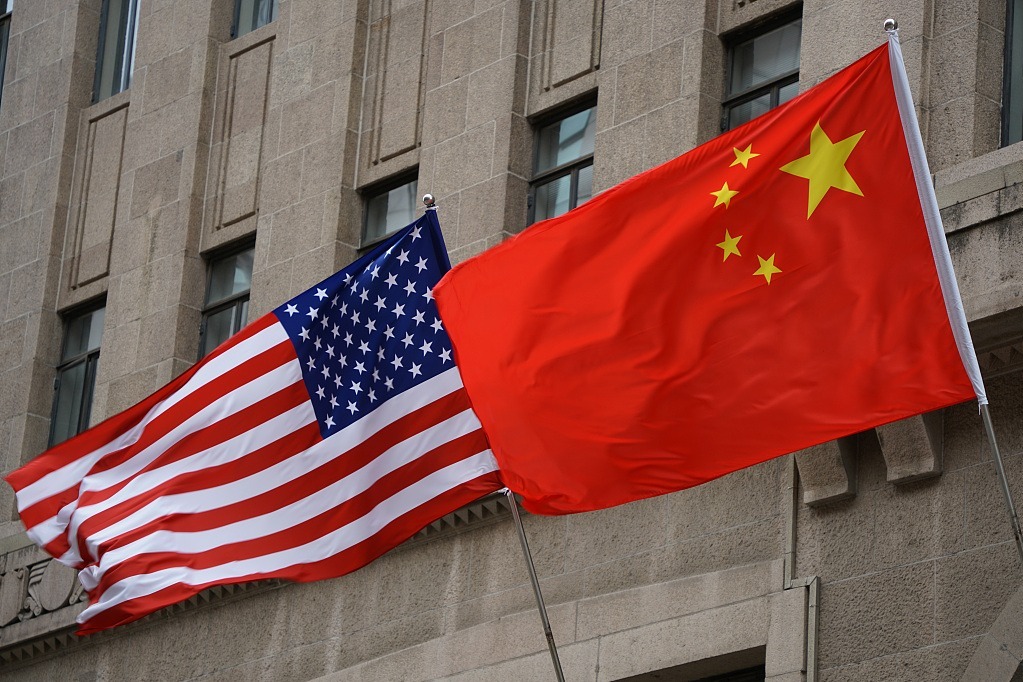
    On a Thursday in New York, over 100 senior business executives, policymakers and academic scholars gathered for a landmark forum focused on resetting the trajectory of US-China economic relations, hosted by the China General Chamber of Commerce-USA (CGCC) and the CGCC Foundation. Titled “The Path Forward 2026: Mutual Benefit, Uncovering New Opportunities for US-China Economic and Trade Relations”, the event brought together cross-sector stakeholders to explore collaborative pathways for the world’s two largest economies, at a time of rising global geopolitical turbulence.

    Against a backdrop of growing strategic competition between Washington and Beijing, participants universally highlighted sustained dialogue as an irreplaceable foundation for productive bilateral relations. Susan Elliott, CEO of the National Committee on American Foreign Policy, argued that calls for full economic decoupling between the two nations are neither practical nor beneficial for either side. “We have to figure out how to rebalance our economic ties in a way that supports sustainable growth, systemic resilience and long-term shared prosperity,” Elliott explained. “These adjustments will not be easy; they demand open, honest difficult conversations across all sectors. A healthier, more sustainable bilateral economic relationship will ultimately benefit not just our two countries, but the entire global economy.”

    Elliott emphasized that competition between the two powers does not erase the urgent need for consistent communication, nor should ideological or policy disagreements block progress in areas where both sides stand to gain. “Moving forward requires patience, pragmatic problem-solving, and an unwavering commitment to keep talking,” she added.

    Chen Li, China’s Consul General in New York, outlined the deep, mutually beneficial interconnectedness that still defines the bilateral economic relationship, noting vast untapped potential for both subnational and broad-based commercial collaboration. “US companies have long recognized the immense value of China’s massive consumer market and robust, comprehensive industrial supply chain support,” Chen said. “On the other side of the equation, Chinese firms seek to grow their operations in the United States within a stable, predictable regulatory environment, while simultaneously contributing to local communities and delivering better services to American consumers.”

    Chen called on both governments to uphold the core principle of mutual benefit, ensuring cooperation delivers shared gains rather than one-sided advantages. He urged both sides to approach each other’s concerns with open minds and good-faith judgment, and to maintain momentum for ongoing dialogue and practical collaboration. “Going forward, China will continue to streamline processes for foreign trade and investment, protect the legitimate rights and interests of international businesses operating within our borders, and cultivate a world-class business environment,” he said. “We hope US companies will seize these opportunities and achieve stronger growth by tapping into the momentum of China’s ongoing development.”

    Beyond national-level cooperation, participants highlighted that subnational engagement between cities, states and local business communities delivers tangible, immediate benefits for local economies on both sides. Steven Fulop, president of Partnership for NYC and former mayor of Jersey City, pointed to the decades-long contributions of Chinese international students to New York City’s economic growth. Student demand for housing has sustained local real estate development, while their everyday consumer spending has provided a steady boost to local small businesses and the city’s broader economy, he noted.

    Glori Norwitt, Connecticut’s international engagement envoy at AdvanceCT, added that her state has already built deep people-to-people and commercial ties with China, with enormous room for further expansion. Connecticut is currently home to roughly 80,000 Chinese residents and nearly 2,000 Chinese-owned businesses, ranging from small local startups to large multinational corporations. “We have been actively building these connections, and we strongly encourage these relationships to continue and deepen moving forward,” Norwitt said.

    New data from the latest CGCC Annual Business Survey underscored the resilience of Chinese firms operating in the United States, even amid a generally cautious broader business outlook. The survey found that around one-third of responding Chinese companies reported year-over-year revenue growth in 2025, while 81 percent remained profitable. Most notably, 79 percent of respondents said they plan to reinvest their profits back into their US operations — the highest share recorded in the history of the survey, a clear signal of Chinese businesses’ long-term commitment to the US market.

  • Inside rugby’s greatest production factory

    Inside rugby’s greatest production factory

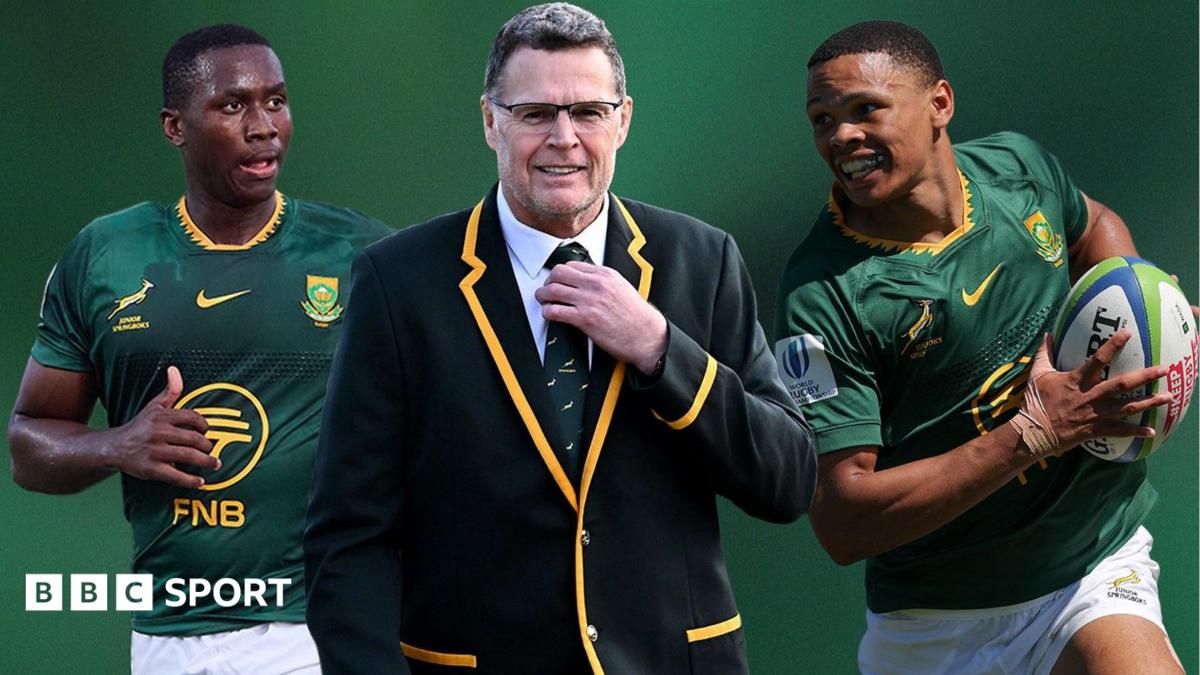
    South African rugby’s unmatched global legacy—four Rugby World Cup titles, with the 2027 title defence already in planning—has long left other rugby-playing nations green with envy. Every time veteran stars retire or talented players move abroad to chase club contracts, the national men’s side, the Springboks, somehow replenishes its ranks with next-generation world-class talent. No recent example illustrates this better than 20-year-old Sharks fly-half Vusi Moyo, who will make his Test debut starting against Wales in Durban this Saturday, having logged only 58 minutes of senior professional rugby to his name. For most national programs, handing a starting cap to a player with so little top-flight experience would be a massive, risky leap of faith. For South Africa, it is just the latest normal outcome of a talent development system that has been refined for decades. Many point to South Africa’s massive pool of registered rugby players as the simple explanation for the country’s consistent output, but industry insiders argue that only scratches the surface of what makes the Springboks’ production line work.

    Rito Hlungwani, forwards coach for the Cape Town-based United Rugby Championship side Stormers, says large-scale participation is just the starting point. Backed by back-to-back World Cup wins in 2019 and 2023, following the transformative 1995 post-apartheid title, participation across racial demographics has exploded, vastly expanding the base of young athletes entering the system. But participation alone is not enough: a cultural mentality focused on emulating the Springboks’ iconic identity drives improvement from a young age. “Kids these days, that’s all they want to be like. They want to be like the Springboks. They talk about physicality at the age of nine,” Hlungwani explained. Former Springbok player Hanyani Shimange echoed this, noting that defensive solidity, high work rate, and powerful play are core expectations for any player who wants to wear the famous green and gold national jersey. Hlungwani argues this collective mindset, paired with intentional coaching and fierce domestic competition, turns promising raw youth into Test-ready internationals.

    If broad participation provides the raw material, South Africa’s school rugby system is where the production line truly fires into action. Veteran South African rugby journalist Simnikiwe Xabanisa compares the cultural status of rugby in the country to that of New Zealand, calling it a de facto national religion. Unlike many other nations, school rugby draws national television audiences comparable to professional club matches, and top school rugby coaching roles can pay more than positions at the professional level. After school, the best young talent is filtered through a structured development pathway: elite youth tournaments such as the iconic Craven Week for under-18 players act as a national scouting showcase, before athletes move on to university-level competition in the Varsity Cup and eventually into professional provincial rugby. A unique strength of the system, Hlungwani notes, is that schools are not forced to adhere to a rigid national playbook, allowing them to develop distinct playing identities that blend into a diverse, adaptable talent pool at higher levels. “If you go to Cape Town, the Afrikaans schools have bigger kids and they play similar to the Springboks. If you come to the southern suburbs, it’s more evasive skills, more flair,” he explained. This diversity of development styles ultimately creates more well-rounded players when they converge at the provincial and national levels. Xabanisa adds that young South African players also gain an edge by growing up playing in front of packed stadiums, becoming accustomed to high pressure from early in their careers that prepares them for Test rugby.

    The biggest shift expanding South Africa’s talent pool over the past 30 years has been the removal of apartheid-era barriers that excluded non-white players from national selection and limited access to the sport for non-white communities. Today, the talent net is cast far wider than the small demographic that dominated the sport for most of the 20th century. “If you cast your net wider than that 10%, surely you’re going to get better athletes. You’re going to get better players, you’re going to get more players, and as a result of getting more players, you’re going to get better players,” Xabanisa said. For many young Black athletes from low-income communities, rugby has also become a tangible path out of poverty, driving extraordinary commitment and ambition among the next generation, Hlungwani added.

    Even with a strong development pathway, producing talent is only half the battle: national leadership must be willing to trust young prospects with key opportunities early. Shimange argues that current head coach Rassie Erasmus’ greatest strength is his focus on building a deep, competitive national squad rather than just selecting a starting 15, and he is unafraid to throw young players into the deep end if he believes they are ready. This philosophy played out with the rise of Sacha Feinberg-Mngomezulu, who made his Springboks debut after fewer than 20 senior appearances, and it is on full display with Moyo’s selection this weekend. Age and senior club experience are no longer barriers for prospects with proven talent, a policy that keeps the Springboks’ depth chart consistently stocked with emerging stars.

    Remarkably, even with the system’s current success, Xabanisa argues that South Africa’s talent production is still operating below its full potential. He points to two-time World Cup winner Makazole Mapimpi, who rose to stardom from a rural area with almost no formal rugby infrastructure. Today, large swathes of rural South Africa remain untapped for talent, with no clear development pathway for passionate young players in those regions. “The great irony, or scary thing for the rest of the free world, is that there are places we could still tap into – more markets that haven’t been tapped,” Xabanisa said. “The day we work that out too, it could be a scary one for the rest of the free world.” Right now, the next generation of Springbok stars is already waiting in the wings: alongside Moyo, other highly touted prospects include Junior Springboks captain Riley Norton, a 20-year-old lock who chose rugby over elite cricket; fly-half Yaqeen Ahmed, praised for his cool temperament and kicking skill; elusive full-back Zekhethelo Siyaya; and 18-year-old loose forward Jacobus de Villiers, already signed to the Stormers and rated as one of the top young prospects in the country. With a proven system, expanding participation, and a culture that nurtures talent from childhood to Test rugby, South Africa’s rugby production line shows no signs of slowing down as it builds toward the 2027 World Cup.

  • ‘Concerns’ after Amnesty labels J.K. Rowling women’s centre ‘anti-rights’

    ‘Concerns’ after Amnesty labels J.K. Rowling women’s centre ‘anti-rights’

    A brewing controversy over a retracted Amnesty International UK briefing that labeled a women’s sexual violence support center founded by author J.K. Rowling as ‘anti-rights’ has prompted Britain’s Charity Commission to review concerns raised about the incident.

    Rowling, the 60-year-old creator of the globally successful Harry Potter franchise, has been a prominent public voice in debates over gender identity for years, openly advocating for the preservation of single-sex spaces for women and speaking out against what she describes as overreach from trans activism. The author, herself a survivor of domestic abuse, launched Edinburgh-based Beira’s Place in 2022, a facility that provides free advocacy and support services exclusively to women who have experienced sexual violence and abuse.

    Last week, the controversial briefing document titled *A Growing Threat: The Anti-Rights Movement in the UK* was published to Amnesty UK’s website. According to international media reports, the briefing categorized dozens of organizations across the United Kingdom as either ‘gender critical’ or ‘anti-rights’—including Beira’s Place. The document was quickly removed from the platform after drawing public backlash.

    Earlier this week, Amnesty UK issued a public statement acknowledging the misstep, saying it regretted the briefing had been uploaded to the organization’s website without completing the internal review processes designed to ensure content aligns with the group’s official positions, maintains accuracy, and retains policy consistency. ‘Its use of language does not reflect the position of Amnesty International UK which is why it was promptly removed,’ the statement read.

    For leaders of Beira’s Place, the inclusion on the list remains a shocking and hurtful oversight. Lesley Johnston, chief executive of the center, called the labeling ‘inexplicable,’ adding that the designation was ‘deeply offensive’ to both frontline staff who work daily to support abuse survivors and the women who rely on the center’s services.

    Rowling, who has repeatedly pushed back against accusations of transphobia by framing her position as a defense of women’s rights rather than an attack on trans people, has been a frequent target of activism from militant transgender rights supporters in recent years. Following the publication of the now-deleted briefing, concerns about the incident were formally filed with the Charity Commission, the UK’s independent charities regulator.

    A representative for the Commission confirmed Thursday that the regulator is currently reviewing the concerns raised to determine what action, if any, it may take as the official oversight body for charity law in the UK. At this stage, no formal investigation has been opened into the matter.

  • Final medal table as Australia dominate Glasgow 2026

    Final medal table as Australia dominate Glasgow 2026

    After 10 days of fierce competition spanning 10 distinct sporting disciplines, the 2026 Commonwealth Games in Glasgow has drawn to a close, with 215 gold medals ultimately awarded to top athletes from across the Commonwealth of Nations. Australia’s national team delivered an unrivaled performance to top the overall medal table, securing an extraordinary 70 gold medals – a total 16 higher than the combined gold medal haul of all four British home nations: England, host Scotland, Wales, and Northern Ireland. Across all medal categories, Australia walked away with 171 total podium finishes.

    In the final medal rankings, England claimed second place with 29 gold medals, finishing ahead of Canada and India. Host nation Scotland landed in fifth position with 13 gold medals, while Wales secured ninth place with nine golds – four of which went to star cyclist Emma Finucane. Northern Ireland rounded out the home nation results in 12th, with three gold medals overall. In total, 45 out of the 74 participating nations and territories left Glasgow with at least one medal.

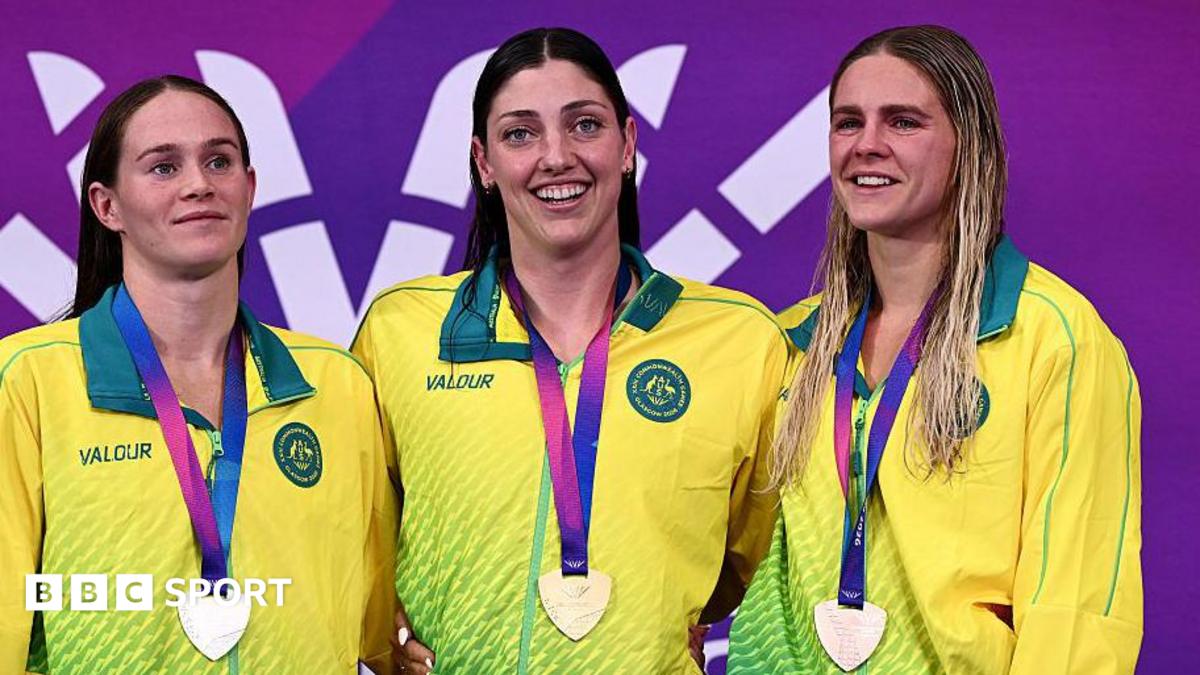
    Aquatics emerged as Australia’s strongest discipline, with the nation claiming a staggering 37 gold medals and 76 total medals in swimming events alone. Rising star swimmer Meg Harris led the charge for her country, taking home six individual gold medals – more than any other athlete at this year’s Games. Beyond swimming, Australia also finished atop the medal tables for athletics, track cycling, and 3×3 basketball.

    Sam Short, another standout Australian swimmer who earned four gold medals in Glasgow, spoke to the nation’s relentless focus on the Commonwealth Games. “We just really love the Commonwealth Games. That and the Olympics is what Australia seems to live for,” he explained. “We’ve just been flogging ourselves in training all year. This is the target. We’ve got Pan Pacs (Pan Pacific Swimming Championships) in a couple of weeks but the general public in Australia don’t really care about that, it’s all Commonwealth Games. Representing the Green and Gold is a big honour.”

    Alongside team achievements, the 2026 Games saw multiple historic individual records broken across sports. South African swimming legend Chad le Clos cemented his place as the most decorated athlete in Commonwealth Games history, earning his 21st overall Commonwealth medal – a bronze in the men’s 4x100m medley relay. The 32-year-old, who made his Commonwealth debut at the 2010 Delhi Games, moved one medal clear of Australia’s Emma McKeon, the previous record holder, to claim the unique milestone. Le Clos now holds seven gold, five silver, and nine bronze medals across five consecutive Commonwealth Games appearances. “Looking back on the whole Commonwealth Games journey, from India through to now, I never thought I’d be standing here,” Le Clos said after the race. “To stand alone in history is unbelievable.”

    Another historic milestone was set by 76-year-old Para-bowls athlete Louise Hoskins, who became the oldest gold medal winner in Commonwealth Games history. Hoskins claimed the top spot in the Para-bowls women’s pairs competition at 76 years and 173 days old, breaking the previous record set by Scotland’s George Miller, who won gold at 75 during the 2022 Birmingham Games. Competing alongside 44-year-old partner Serena Bonnell, Hoskins delivered a winning performance that inspired athletes of all ages. “It just goes to show anyone can do it,” she said after the win. “Young, old – bowls is for anyone.” Hoskins’ gold was one of 141 Para-sport medals awarded in Glasgow, marking a new record for Para-sport participation and medal distribution in Commonwealth Games history. Fans can find full results and additional coverage on the official Commonwealth Games website.

  • Bodycam footage shows airlift of girl stranded by Texas floods

    Bodycam footage shows airlift of girl stranded by Texas floods

    Newly released body camera footage has documented a high-stakes airlift rescue operation that saved a young girl who became stranded alongside her family after catastrophic floods swept through Uvalde County, Texas. The raw footage, captured by a first responder on the scene, shows the tense moments leading up to the extraction: floodwaters have already completely destroyed the family’s three-person household, leaving them trapped with no safe route to escape on foot. As rising water continues to surround their location, the rescue team coordinates with air support to pull the young girl to safety first, in a operation that highlights the life-saving work of emergency responders amid extreme weather events. The floods that hit the region have caused widespread destruction, wiping out residential properties and leaving dozens of residents stranded in sudden, fast-moving floodwaters. The bodycam footage offers a rare, on-the-ground look at the dangers first responders face when conducting rescue operations during natural disasters, and underscores the vulnerability of communities in Texas to increasingly intense flood events driven by extreme weather patterns.

  • Ghana TikToker jailed after sharing false news about the president

    Ghana TikToker jailed after sharing false news about the president

    A prominent Ghanaian social media creator has been handed a 12-month custodial sentence after admitting to charges of offensive behavior and disseminating unsubstantiated false news targeting the country’s president, John Mahama, reigniting long-running tensions between regulating harmful misinformation online and protecting constitutionally guaranteed freedom of expression.

    Forty-three-year-old Camilla Alhassan, who commands a following of more than 70,000 users on the short-form video platform TikTok, posted a string of videos in June and early July 2026 claiming without evidence that Mahama had carried out a ritual sacrifice of 32 cows to secure victory in the country’s upcoming 2024 general election. Alhassan extended her unproven claims to argue that a government-led program distributing sanitary pads to communities affected by recent flooding was intentionally designed to cover up her alleged ritual killing.

    After rejecting legal requests for a non-custodial, lenient sentence, the presiding judge ruled that a prison term was required to deter other social media users from engaging in comparable harmful activity. Prosecutors had argued during proceedings that Alhassan’s false and defamatory accusations against the sitting president posed a unique risk due to their wide reach across the platform. The creator’s arrest earlier this month, triggered by the viral spread of her videos, has opened a new national conversation in Ghana about how to address the growing crisis of social media misinformation without eroding core democratic rights.

    In his ruling, the judge emphasized that the sentence was a necessary intervention to slow the proliferation of falsehoods, which have become increasingly common across major social media platforms in the country. Alhassan’s case is not an isolated incident: in September 2025, another high-profile Ghanaian TikToker, David Kwodwo Prah Afful, widely known by his online alias Kwame Nkrumah II, was sentenced to seven months in prison after being convicted of issuing death threats and engaging in offensive conduct that threatened public peace. Afful had threatened to assassinate President Mahama and multiple members of Ghana’s parliament in a viral online video.

    The current administration has been moving to strengthen oversight of social media content for more than a year. During a public press briefing last year, President Mahama stated that the government was exploring new strategies to “sanitise” social media platforms, directing law enforcement and regulatory bodies to identify and prosecute individuals spreading harmful misinformation and disinformation. “I’m sending a clear signal to all Ghanaians: if you spread falsehoods, peddle hate speech, or make statements calculated to cause fear and panic across the public, we will find you and hold you accountable,” the president said at the time.

    Twelve months ago, Ghana’s Communications Minister Samuel Nartey George unveiled plans for new legislative action targeted at curbing misinformation. The draft legislation is intended to establish a formal legal framework for enforcement of content rules, while including provisions designed to protect freedom of expression from overreach.

    Ghana is consistently recognized as one of West Africa’s most robust democracies, with explicit constitutional protections for freedom of expression and a historically open, diverse media ecosystem. However, rising anxiety over the rapid spread of false and harmful information on social media over the past five years has pushed policymakers to call for stricter regulation, even as human rights organizations warn that heavy-handed enforcement could erode the country’s long-standing commitment to free speech.

  • BRICS playing key role amid tensions: Experts

    BRICS playing key role amid tensions: Experts

    As rising geopolitical friction, unilateral power grabs and protectionist policies reshape the global order, the BRICS bloc of emerging economies has emerged as an increasingly critical platform for delivering alternative, inclusive solutions to global challenges, according to leading South African scholars and policymakers.

    Ari Sitas, emeritus professor at the University of Cape Town and former chair of the South African BRICS Think Tank, argues that the bloc holds far more global relevance today than it did at its founding. The growing spread of unilateral decision-making driven by major power interests, he says, has created an urgent need for BRICS to act as a balanced counterweight to unaccountable global power dynamics.

    “BRICS is relevant more than it started because it has to provide a counterweight to random decisions that are taken based on power in the world now. It owes the developing world a protective umbrella from the madness that is happening to the rest of the world,” Sitas explained. He added that BRICS must maintain its commitment to cross-country tolerance as it continues to grow, while serving as a counterpoint to destabilizing trends in existing global systems. Beyond geopolitical balancing, Sitas noted that the bloc is already reshaping global economic structures, redefining how knowledge and scientific research are produced across the world, and advancing collective advocacy for lasting global peace. He also pushed back against early skepticism of the bloc: when BRICS was first established, some Western commentators predicted it would collapse within its first year, or dismissed its formation as a misguided idea. Instead, Sitas pointed out, the bloc has not only survived but thrived, expanding its membership to incorporate more emerging economies from the Global South.

    Cecil Masoka, director for Europe and the Gulf States at South Africa’s Department of Science, Technology and Innovation, highlighted the tangible, on-the-ground benefits BRICS cooperation has delivered to his country through targeted bilateral collaboration across member states. Masoka emphasized that progress across the bloc’s priority areas, particularly in science, technology and innovation, becomes clearly visible when examining the concrete outcomes of its coordinated working groups.

    South Africa lacks the financial resources to develop the large-scale, cutting-edge research infrastructure that major BRICS members including China and Russia have built, but Masoka explained that bloc-wide cooperation has closed this critical gap. “The bilateral relations among BRICS members have allowed us to send our students to access these research infrastructures and undertake research in cutting-edge technologies with people from different countries,” he said. When these South African students return home after training in BRICS member states such as China, they bring back valuable expertise that drives productive domestic development. Beyond science and technology, Masoka added that the bloc’s trade and industry working groups have delivered measurable gains, boosting South African exports to other BRICS markets, most notably China.

    Rasigan Maharajh, chief director of the Institute for Economic Research on Innovation at South Africa’s Tshwane University of Technology, framed BRICS’ work as a modern extension of the South-South solidarity movement that emerged from the 1955 Bandung Conference. Today, Maharajh noted, BRICS and its expanded BRICS+ framework have grown into one of the world’s leading platforms for addressing all dimensions of global transformation — from political and economic progress to social and ecological action.

    Maharajh argued that expanding productive capacity, technical skills and institutional capabilities across emerging economies is an essential step to redressing the deep material inequalities that shape global quality of life. He drew a clear contrast between BRICS’ development-focused agenda and the priorities of Western blocs such as NATO, which recently agreed to require member states to allocate 5 percent of their gross domestic product to military spending. Instead of pouring resources into military expansion, Maharajh said, BRICS should prioritize sustained investment in science and technology development for shared global progress.

    For South Africa, the benefits of BRICS institutional development are already clear: the bloc’s created bodies including the Contingent Reserve Arrangement and the New Development Bank, which has provided financing for a cross-border water infrastructure project with neighboring Lesotho to address South Africa’s chronic water scarcity challenges.

  • Russia fines anti-war politician in chaotic court hearing

    Russia fines anti-war politician in chaotic court hearing

    In a chaotic, widely watched court hearing on Friday, a Russian judge handed down a $13 fine to veteran opposition politician Boris Nadezhdin, a prominent critic of the Kremlin’s ongoing military campaign in Ukraine, convicting him of violating laws against the display of what the Russian state labels “extremist symbols.” The ruling came just minutes after emergency medical personnel were called into the courtroom to conduct an urgent cardiogram on the 63-year-old politician, who was found to be suffering from severely elevated blood pressure.

    The charges against Nadezhdin stem from a 2023 social media video he reposted that featured an image of Alexei Navalny, the late Russian opposition leader whose organizations have been officially designated as extremist by Russian authorities. Nadezhdin, who has a pre-existing history of heart conditions, recorded his blood pressure before the hearing began, and court observers from AFP confirmed the reading reached dangerous hypertensive levels.

    Nearly an hour after Nadezhdin’s legal team requested an ambulance, paramedics entered the courtroom and carried out the urgent cardiac assessment around midday local time, or 0900 GMT. Despite repeated pleas from his lawyers to postpone the verdict due to the politician’s acute medical distress, the judge declined to delay proceedings and moved forward with the guilty ruling.

    The charge Nadezhdin faced carries a maximum penalty of 15 days of custodial prison time. Before the ruling, Nadezhdin had publicly described the case against him as baseless nonsense, and warned that he would not survive imprisonment given his fragile health.

    Following the announcement of the verdict, Nadezhdin spoke to reporters outside the courtroom, saying, “I’m glad to be alive… We live in a sick state.” Nadezhdin is one of the last remaining high-profile anti-war politicians still operating openly within Russia’s borders. Before his arrest this Monday, he had been actively campaigning for a seat in the local legislature for the Moscow-region district of Mytishchi, where September elections are scheduled to take place.

    In a Wednesday interview with AFP, Nadezhdin claimed Russian authorities brought the politically motivated charges because they were unnerved by his growing grassroots popularity among voters. Since launching its full-scale military offensive in Ukraine in February 2022, the Kremlin has enacted sweeping restrictions on public dissent, jailing or fining thousands of people who have spoken out publicly against the war or criticized government policy.

    Nadezhdin’s political career stretches back more than two decades: he served as a member of Russia’s national parliament, the State Duma, from 1999 to 2003, and most recently held a seat as a city councillor in Dolgoprudny, his hometown located just outside the Moscow city limits.