博客

  • Yunnan’s terraced rice fields burst with summer greenery in Guangnan

    Yunnan’s terraced rice fields burst with summer greenery in Guangnan

    As the peak of summer settles over southwest China’s Yunnan province, the centuries-old terraced rice fields of Tangdaxin village, Guangnan county, have burst into a vibrant tapestry of green that draws the eye and calms the spirit. This layered agricultural landscape, a cultural staple of the local Zhuang ethnic community, has transformed rolling hillsides into a picture-perfect display of rural harmony between people and nature.

    Freshly transplanted rice seedlings spread across the stepped slopes in overlapping swathes of bright lime and deep forest green, with light filtering through the summer sky to cast shifting shades across the water-filled paddies. When soft mountain winds drift down from the surrounding peaks, gentle ripples cascade from the valley floor all the way up to the village edge, and the soft rustle of rice leaves sways in the breeze, echoing across the quiet hills.

    Unlike static scenic vistas, this landscape is alive with the quiet work of local farmers, who move between the paddies to tend to young seedlings and clear silt-clogged irrigation channels, their daily labor adding a warm, lively energy to the otherwise tranquil setting. In the distance, mist-dusted mountain ridges cluster behind scattered traditional village homes, all blending seamlessly into the rolling tiers of green to create an idyllic snapshot of sustainable rural life that has endured for generations in this corner of Yunnan.

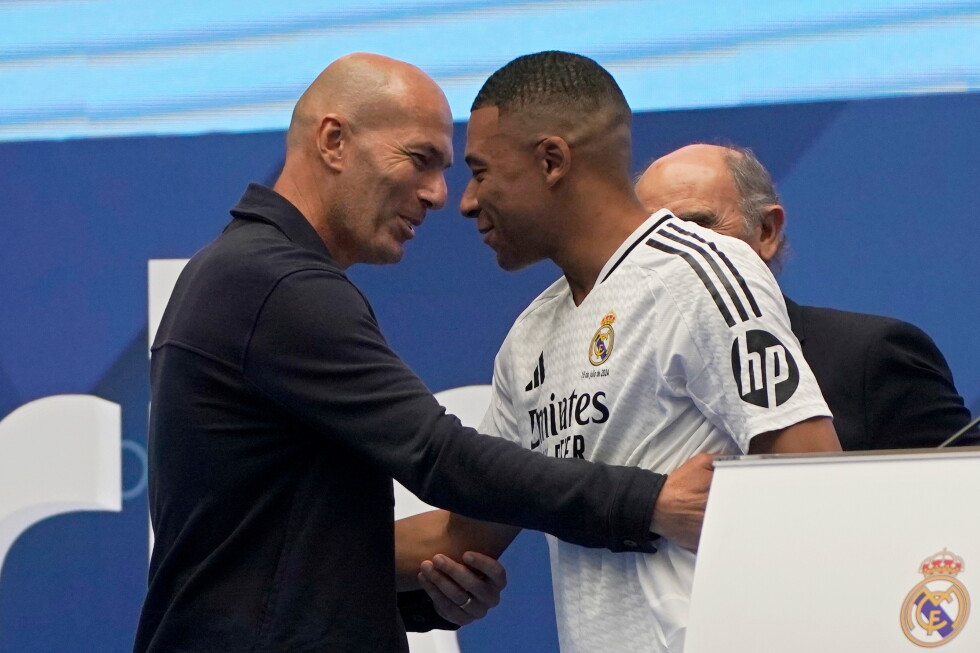
  • With Deschamps stepping down after 14 years, France needs a new coach and Zidane is in pole position

    With Deschamps stepping down after 14 years, France needs a new coach and Zidane is in pole position

    PARIS (AP) – This Saturday, France national men’s football team will face England in the World Cup third-place playoff in Miami, a match that will mark the end of Didier Deschamps’ 11-year tenure as Les Bleus’ head coach. For both sides, the bronze medal match is a hollow consolation prize, coming after crushing semifinal eliminations that cut short each team’s dreams of lifting the sport’s most coveted trophy. The outcome marks a underwhelming close to Deschamps’ reign, after widespread expectations that his star-stacked squad would compete for a second world title under his leadership. In the wake of his departure, football legend Zinedine Zidane is widely tipped to be confirmed as the new head coach by the French Football Federation in the coming days.

    Deschamps’ legacy with the French national team is defined by both historic glory and lingering debate. As a manager, he led France to a World Cup victory in 2018, a gut-wrenching penalty shootout loss in the 2022 World Cup final, and an early semifinal exit against Spain in this year’s tournament. Over his 14 years at the helm, Deschamps claimed only one major senior trophy – the 2018 World Cup – after falling to Portugal in the 2016 UEFA European Championship final on home soil. Critics argue that this trophy haul underdelivered given the elite talent Deschamps had at his disposal, a group that included global stars such as Kylian Mbappé, Paul Pogba, Antoine Griezmann, 2022 Ballon d’Or winner Karim Benzema and Ousmane Dembélé. Supporters, however, point out that Deschamps delivered consistent high-level results for Les Bleus throughout his tenure. Regardless of differing takes on his legacy, the next France head coach will face enormous pressure to live up to Deschamps’ track record, and few candidates carry the prestige and profile to match the role better than Zidane. Widely regarded as France’s greatest ever player, and a coach with three Champions League titles to his name during a trophy-laden spell at Real Madrid, Zidane looks like an ideal fit for the job.

    Ironically, Deschamps and Zidane have been linked to French football glory for decades, despite their wildly contrasting playing styles. When France claimed its first home World Cup title in 1998 and followed it up with a Euro 2000 crown, Deschamps was the hard-working, tireless defensive captain who anchored the midfield, while Zidane was the magical creative playmaker who drove the team’s attacking threat and produced the iconic moments that lifted the side to glory.

    France’s 2-0 semifinal defeat to Spain exposed clear tactical gaps in Deschamps’ game plan that have fueled calls for a new approach. Pinned back by Spain’s relentless, fluid possession play, France was completely overrun in central midfield, its pressing system failed to generate any disruption, and its vaunted attack was effectively neutralized – with Deschamps unable to adjust with an effective alternative strategy to turn the tide. This has long been a core criticism of Deschamps from detractors, including former France teammate Christophe Dugarry, who have repeatedly argued that Deschamps’ pragmatic, defensive-focused approach stifles creative freedom in midfield. For Zidane, who made his name as one of the most creative playmakers in football history, a shift to a more expansive, attacking style is widely expected. That could open the door for technically gifted young talents such as Michael Olise or Rayan Cherki to earn increased opportunities in central playmaker roles, or a tactical shift that sees Dembélé drop into a deeper playmaking position, a role he has excelled in at Paris Saint-Germain.

    One of the most anticipated potential changes under Zidane would be a return to the national squad for Benzema, who shares a close personal and professional bond with Zidane from their time together at Real Madrid. The pair won three consecutive Champions League titles between 2016 and 2018, and Zidane was widely credited with developing Benzema into a complete, ruthless goalscorer who would go on to claim the Ballon d’Or in 2022. At 38, Benzema’s age is cited as a barrier to a return to international football, but Zidane may well see an outside role for the veteran, following in the footsteps of 39-year-old Lionel Messi, who turned back the clock to lead Argentina to glory in this tournament. Benzema could thrive in a more withdrawn attacking role, where his elite technical skill and passing vision would create space for younger, faster forwards, an outcome that would draw a sharp contrast with Deschamps, who excluded Benzema from the national squad for nearly six years over his alleged involvement in a blackmail scandal involving former teammate Mathieu Valbuena. Benzema was eventually recalled for Euro 2020, where he finished as France’s top scorer with four goals, and formed a lethal attacking partnership with Mbappé as France won the 2021 UEFA Nations League. Their relationship fractured permanently ahead of the 2022 World Cup, when Benzema was sent home from the squad with a thigh injury, a sequence of events Benzema has publicly disputed. While recalling Benzema would be a bold decision for Zidane, it remains firmly on the table.

    A key question surrounding Zidane’s potential appointment is his readiness for the high-pressure role of France manager, given he has not held a coaching position since departing Real Madrid for a second time in 2021. On the flip side, the five-year break from the scrutiny and stress of top-tier management leaves Zidane refreshed and hungry for a new challenge. If confirmed, Zidane’s first match in charge of France will be an away Nations League fixture against Turkey on September 25, followed by a trip to Belgium three days later. French fans will get their first look at Zidane as head coach at the Stade de France on October 2, when Les Bleus face Italy. That match carries extra narrative weight: Zidane’s final appearance as a France player also came against Italy, in the 2006 World Cup final, where he opened the scoring with a cheeky Panenka penalty before being sent off in extra time for a infamous headbutt on Italian defender Marco Materazzi. France went on to lose the final on penalties, but the French public never held the incident against their beloved “Zizou”, whose deep connection with the nation remains as strong as ever.

  • How a young Alabama man has become a leading — and booming — opera voice

    How a young Alabama man has become a leading — and booming — opera voice

    MUNICH, Germany — Three decades ago, a small-town American teenager with a blue-collar background and a childhood knack for imitating country star Conway Twitty had no idea he would one day become one of the most celebrated Wagner singers of his generation. Today, 37-year-old bass-baritone Nicholas Brownlee stands at the pinnacle of the global opera world, his name tied to one of Richard Wagner’s most iconic roles: Wotan, the conflicted king of the gods in Wagner’s monumental Ring Cycle.

    Brownlee’s journey to operatic stardom began with youthful overconfidence. Freshly falling in love with opera, he was desperate to test his developing voice against Wagner’s demanding repertoire, even when his college teacher warned him he wasn’t ready. Early on, he brought a lighter excerpt from Wagner’s *Tannhäuser* — Wolfram’s beloved “Song to the Evening Star” — to Thomas Rowell, his voice professor at the University of South Alabama. Rowell laughed off the attempt, noting Brownlee’s powerful natural voice was still a young, unrefined instrument not ready for the heavy demands of Wagnerian repertoire.

    Nearly 20 years later, Brownlee smiles at the memory, acknowledging his early overambition. That same relentless drive — what he describes as “a fire in my belly that burns brighter every day” — is what pushed him to the top of his field, where he now headlines major Wagner productions across Europe.

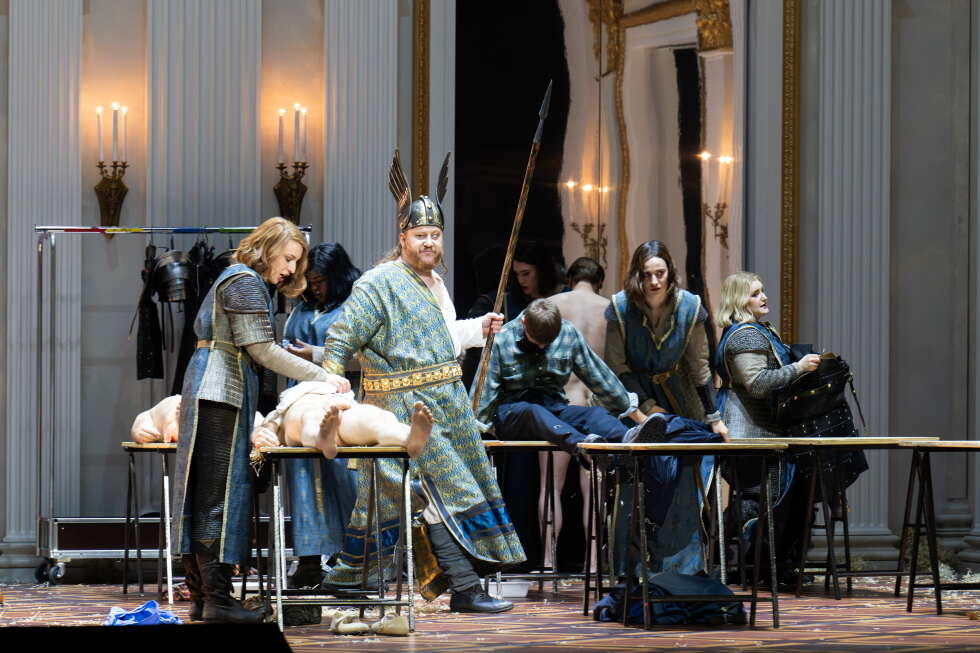
    Brownlee recently made his highly anticipated debut as Wotan in *Die Walküre*, the second installment of the full Ring Cycle at the Bavarian State Opera, directed by Tobias Kratzer. He had already earned acclaim for the same role in *Das Rheingold*, the opening work of the cycle, and critics have hailed his performance with the highest praise. German outlet *Merkur* critic Markus Thiel described Brownlee as “a heroic baritone straight out of a textbook, with a powerful, resonant voice, a force of nature.” Writing for *Platea Magazine*, Carlota Moseguí praised both his vocal control and dramatic presence, noting he “possesses all the qualities to become the definitive Wotan of his generation.”

    Up next, Brownlee will take the title role in *Der Fliegende Holländer* (The Flying Dutchman) at Bayreuth, Germany’s legendary “Wagner shrine” dedicated exclusively to the composer’s works. His coming season is packed with Wotan performances across the globe: *Siegfried* in Munich, *Die Walküre* in Buenos Aires, *Das Rheingold* in Barcelona, two additional Ring operas in Frankfurt, and two full Ring cycles back in Munich next summer.

    For Rowell, who still remains a close friend and even officiated Brownlee’s wedding to mezzo-soprano Jennifer Feinstein, watching his former student rise to such heights feels surreal. “It’s a once-in-a-lifetime thing to have a student who goes that far, especially from a small regional state university like ours,” Rowell said. “I have to pinch myself. I’m enjoying it vicariously.”

    Many in the opera world warn that frequent performances of heavy Wagnerian repertoire risk damaging a singer’s voice, but Brownlee says he has no such concerns. “I don’t think you’re supposed to say this, but no, not really,” he admitted. “We like to put this big stamp on Wagner and say ‘Be Careful!’ But he noted that the demands of each role are distinct enough to prevent vocal burnout. He does plan to add more variety to his future schedules, including a return to one of his favorite non-Wagner roles: Baron Scarpia in Puccini’s *Tosca*. Longer-term goals include two iconic Verdi roles: the scheming villain Iago in *Otello*, and the boisterous comic lead Falstaff. “I want to flex a different muscle,” Brownlee explained. “I talk fast, I’m a bubbly, fun guy, but what I do on stage is so serious all the time. Boy it would be fun to just be a jolly fat guy!”

    Brownlee’s unlikely path from a working-class small town outside Mobile, Alabama, to international opera stardom began with unexpected roots: his first performance success came as a child doing Conway Twitty impressions for his large extended family, just to win attention. He did not discover classical music until high school, when his choral director sparked his interest. When he enrolled in college, he originally planned to study conducting, until Rowell heard him sing and persuaded him to join the Mobile Opera chorus.

    “I went in the first day and I hated it,” Brownlee recalled. “I said, this is in Italian, who cares? That’s for stuffy elite people, not for us blue-collar fellas.” Curiosity got the better of him, however, and he agreed to watch the final emotional scene of Verdi’s *La Traviata* from backstage one night. When the dying heroine Violetta gasped her final line “O, gioia!” and collapsed in her lover’s arms, Brownlee found himself weeping uncontrollably — even though he did not understand a word of the Italian libretto. That moment changed the course of his life.

    From that point on, Brownlee dedicated himself to voice training, studying and completing apprenticeships across the United States before moving to Germany to continue his career. He twice competed in the Metropolitan Opera’s prestigious National Council Auditions: in his early 20s, he made it to the New York semifinals but did not advance to the finals, a setback he calls a “great lesson.” Coincidentally, one of the winners that year was Ryan Speedo Green, who will sing Wotan in the Met’s upcoming new Ring Cycle. Brownlee returned to the competition in 2015 and took home one of the top prizes, and major accolades have followed ever since: in 2025, he won best male singer at the International Opera Awards and received the coveted Richard Tucker Award, given to the most promising American opera singer.

    Unusually for an American opera star, Brownlee has built almost his entire career in Europe, and remains largely unknown to mainstream audiences in his home country. He and Feinstein currently live in Germany with their two daughters, and are in the process of applying for German dual citizenship. “I can perform anywhere in Europe and be home in two hours to see my girls,” he explained. “In America that’s just not something you can do.”

    Though Brownlee has put down roots in Europe for now, major American opera companies are increasingly eager to bring him across the Atlantic. This past spring, he sang the prophet Jochanaan in Richard Strauss’s *Salome* at Chicago’s Lyric Opera, where general director John Mangum called his performance “absolutely thrilling” and said Brownlee is “definitely going be at the top of our list” for future Wagner productions. At the Met, general manager Peter Gelb heard Brownlee sing Wotan during the recent Munich run of *Die Walküre* and said he was “blown away,” confirming that the company will offer Brownlee major roles in upcoming seasons.

  • US, Iran trade attacks in return to full-blown war

    US, Iran trade attacks in return to full-blown war

    Just 30 days after the United States and Iran signed a preliminary memorandum of understanding aimed at de-escalating their open military conflict, the two long-time adversaries have returned to large-scale hostilities, launching a wave of reciprocal drone and missile strikes across the Middle East that marks the sharpest escalation since fighting first erupted in late February.

    The renewed clashes are concentrated around the strategic Strait of Hormuz, the world’s most critical chokepoint for global oil and natural gas trade, ending the brief lull in violence that followed last month’s tentative ceasefire. Iran has opened a wide front of retaliatory strikes targeting what it says are American military assets across six Middle Eastern nations, following accusations that U.S. forces launched pre-emptive attacks on Iranian civilian and energy infrastructure.

    Iranian state media reports that at least eight Iranian civilians were killed and 20 more wounded in U.S. strikes that hit a civilian airport, a major railway station, and two key bridges inside Iranian territory. Tehran also confirmed that U.S. attacks on energy generation facilities have severely strained the country’s national power grid, prompting the Iranian energy ministry to issue an urgent appeal for citizens to cut back on electricity consumption and turn off air conditioning during peak demand hours, even as regional summer temperatures climb to extreme highs. As of Saturday, Iran’s health ministry has confirmed 38 civilian deaths and more than 400 injuries across the country since fighting resumed six days ago.

    There was no immediate on-the-record response to Iran’s accusations from official U.S. government sources. However, the strikes mark an apparent expansion of U.S. military operations to target Iranian national infrastructure, a step that former U.S. President Donald Trump publicly threatened during earlier rounds of tensions.

    The current full-scale conflict between the two powers first ignited on February 28, when a joint U.S.-Israeli strike on Iranian targets killed multiple Iranians and sparked immediate retaliation from Tehran. In response to the opening attack, Iran effectively closed the Strait of Hormuz to international commercial shipping and launched its own strikes targeting Israeli and American interests across the Persian Gulf.

    Major General Majid Mousavi, commander of the aerospace division of Iran’s Islamic Revolutionary Guard Corps, reaffirmed Tehran’s commitment to continuing retaliation in a public statement Friday. “Effective and targeted strikes from across Iran against the enemy will continue until the U.S. ends its operation against Iran’s coastal facilities in the south and around the strait,” Mousavi said.

    Friday’s wave of Iranian retaliatory strikes stretched across the Middle East, leaving damage and casualties in multiple allied nations that host U.S. military forces. In Kuwait, Iran’s strikes damaged a joint power and water desalination plant, prompting Kuwait’s electricity ministry to call for immediate energy rationing. The Kuwaiti military confirmed that several of its service members were wounded when Iranian drones targeted multiple national military bases and encampments.

    Iran’s Revolutionary Guards said strikes targeting U.S. radar systems and military aircraft in Qatar were launched to “punish the aggressor” for earlier U.S. attacks. Qatari officials confirmed their air defense systems intercepted an incoming missile attack, though falling debris from the interception caused residential damage in coastal areas. Abu Baker, a Sudanese expatriate living in Qatar, described the shock of the attack to reporters: “I was about to go to sleep when I heard the air alerts, hoping the interception would be out at sea. Then it hit and it shook my house. I am worried that this war will drag on… but thank God we’re in a country that protects us.”

    Tehran also announced strikes on two U.S. radar sites in Oman and the long-contested Al-Tanf military base in eastern Syria. A senior Syrian military source denied any attack had taken place on Syrian territory, while U.S. military officials confirmed they had fully withdrawn all personnel from Al-Tanf earlier this year. Jordan’s military announced it shot down three incoming Iranian missiles that entered its airspace, while U.S.-led coalition forces shot down multiple Iranian drones over the city of Erbil in Iraq’s Kurdistan Region.

    Strikes on Erbil also killed nine members of an exiled Iranian Kurdish armed opposition group, the group announced Friday, blaming the attack directly on Iranian forces. The presidency of Iraq’s Kurdistan Region issued a formal condemnation, calling the attack “a serious escalation and a blatant violation of Iraq’s sovereignty.” In Bahrain, Iranian state media confirmed strikes targeted U.S. helicopters and fixed-wing aircraft at a major U.S. airbase on the island, prompting Bahrain’s civil defense authorities to urge all citizens to seek immediate emergency shelter.

    Six consecutive days of reciprocal fire around the Strait of Hormuz has fully rekindled the conflict that the preliminary ceasefire was meant to end. Iran has long claimed full territorial sovereignty over the waterway, which remained open to unimpeded global commercial shipping before the outbreak of war.

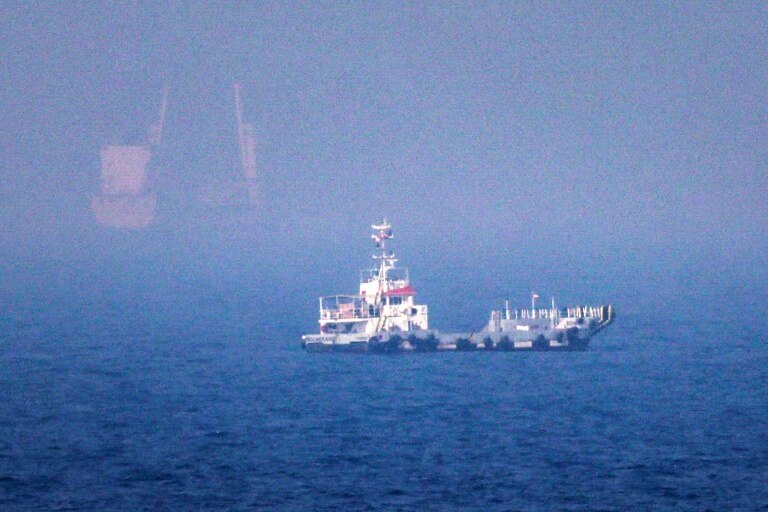
    International mediators have moved quickly to call for an immediate end to hostilities, with the foreign ministers of China and Pakistan issuing a joint statement urging both Washington and Tehran to return to the negotiating table to de-escalate. As part of its expanded military operations, the U.S. has reimposed a full naval blockade on Iranian commercial ports, and attacks on commercial shipping transiting the region have continued. The UK Maritime Trade Operations agency reported early Friday that an unidentified commercial tanker was struck by an unclaimed projectile off the coast of Oman overnight Thursday.

    Hamidreza Azizi, a visiting fellow at the German Institute for International and Security Affairs, noted that the latest round of fighting signals a shift in U.S. military objectives. “In the latest round of fighting, Washington’s apparent objective is more specific: to weaken and ultimately remove Iran’s control over the Strait of Hormuz,” Azizi explained.

  • Germany and France initiate nuclear cooperation as Europe seeks greater security independence

    Germany and France initiate nuclear cooperation as Europe seeks greater security independence

    COLOGNE, GERMANY — In a landmark shift for European defense cooperation, the leaders of Germany and France announced Friday that German conventional military forces will take part in a French-led nuclear deterrence exercise before the end of 2025, marking the first time Berlin has agreed to join such a partnership amid widespread uncertainty over long-term U.S. security commitments to the continent.

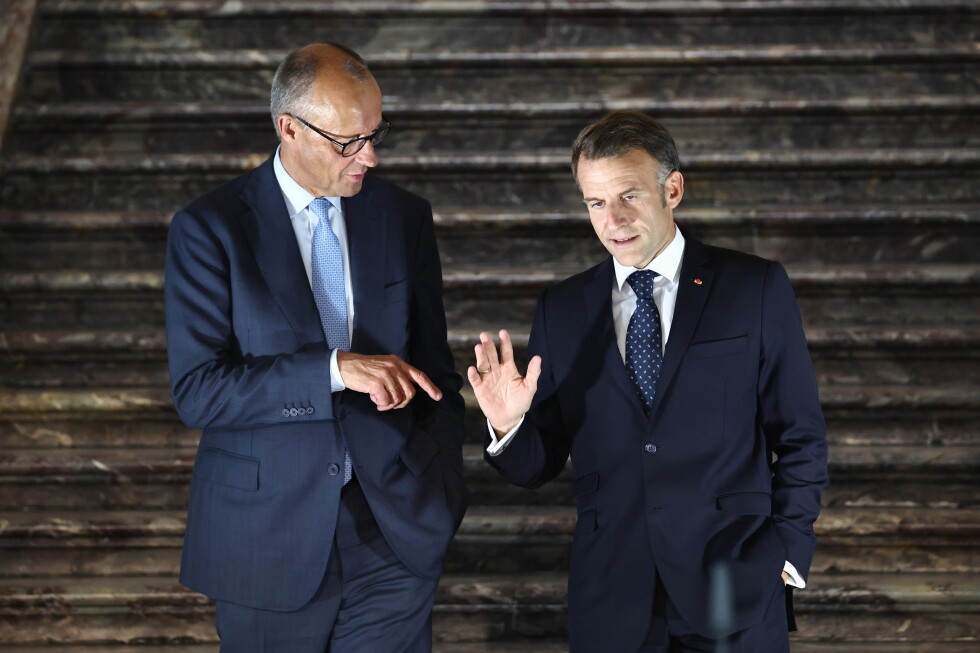
    Speaking alongside French President Emmanuel Macron following bilateral talks at Germany’s Norvenich Air Base near Cologne, German Chancellor Friedrich Merz confirmed the historic move, breaking with decades of refusal by previous German administrations to pursue formal nuclear cooperation with Paris. Merz emphasized that the new partnership is designed to complement, rather than replace, Germany’s long-standing commitments to NATO’s existing nuclear sharing arrangement, where the U.S. stations tactical nuclear weapons on German soil, with German fighter jets certified to deploy the weapons in the event of a large-scale conflict.

    “The world we live in today requires new answers,” Merz told reporters, noting that Germany will contribute only conventional military assets to the upcoming exercise for now. “We are proceeding step by step. It may be that this will result in a new doctrine for European deterrence, but it is far too early to draw that conclusion today.”

    For his part, Macron framed the expanded cooperation as a critical boost to European collective security, arguing that diversified, advanced deterrence capabilities create essential strategic uncertainty for potential adversaries. He said Germany will take a “vanguard role” in European deterrence efforts, adding that structured, visible cooperation on nuclear preparedness confuses potential opponents far more than a diffuse, uncoordinated approach.

    Macron outlined that the partnership will include sharing specialized military practices, joint training initiatives, capacity-building exchanges, and closer trust-building among military personnel and technical experts, though he declined to disclose specific operational details, noting that “Complete and absolute transparency is not necessarily the most effective strategy when dealing with adversaries on European soil.” He also confirmed that Germany will not be required to provide financing for France’s nuclear deterrence infrastructure as part of the agreement.

    The announcement comes on the heels of a symbolic preliminary joint exercise held Thursday, where French Rafale jets — the platform designed to deliver France’s nuclear weapons — and German Eurofighter fighters carried out a joint in-flight refueling drill to mark the launch of the new cooperation framework.

    The initiative traces back to an announcement Macron made in early March, where he unveiled plans to expand France’s national nuclear arsenal and formally invited European partners to deepen cooperation on nuclear deterrence. The proposal emerged against a backdrop of growing unease across Europe over the long-term reliability of U.S. defense guarantees for the continent.

    France has been the only nuclear-armed member of the 27-nation European Union since the United Kingdom left the bloc in 2020, and a broad coalition of European nations have already signaled interest in joining the initiative, including the UK, Poland, the Netherlands, Belgium, Greece, Sweden, Denmark, and Norway. Germany’s participation is seen as a major boost for the program, as Berlin is currently implementing a €100 billion rearmament plan aimed at building Europe’s most powerful conventional military force by 2039.

    Friday’s agreement also marks a key step toward repairing and reinvigorating bilateral Franco-German defense ties, which suffered a setback in June when the two countries’ ambitious $100 billion joint next-generation fighter jet program collapsed. That initiative was intended to replace the existing Rafale and Eurofighter fleets used by France, Germany, and Spain by 2040.

    Both leaders are moving quickly to lock in progress on the new partnership in the coming months, as Macron approaches the end of his second and final presidential term, with growing uncertainty over whether his successor will maintain the same level of commitment to deepening European integration and defense cooperation. The report was contributed by Claudia Ciobanu from Warsaw, Poland, and Samuel Petrequin from Paris.

  • Wildfire smoke engulfs millions in US ahead of World Cup final

    Wildfire smoke engulfs millions in US ahead of World Cup final

    A thick, choking plume of wildfire smoke drifting south from Canada has triggered widespread unhealthy air quality alerts across a large swath of the United States, stirring last-minute uncertainty just two days before the 2026 World Cup final kicks off in an open-air stadium outside New York City. The toxic haze has already pushed major metropolitan areas across the Midwest and Northeast into some of the worst air pollution levels on the planet, raising public health alarms for millions of residents and forcing questions about potential impacts on Sunday’s high-profile match.

    By Friday, Detroit and Chicago posted Air Quality Index (AQI) readings that fell into the official “hazardous” category, global air quality tracker IQAir ranked the two cities as the most polluted urban centers on Earth. Washington D.C., also caught in the southward drift of wildfire emissions, recorded “very unhealthy” AQI levels, prompting local officials to urge all residents to skip non-essential outdoor activity to avoid exposure to fine particulate matter linked to respiratory and cardiovascular harm.

    In the New York City metro area and neighboring New Jersey, home to the stadium that will host Sunday’s final, regional air quality fell into the “unhealthy” range Thursday, with smog obscuring the iconic Manhattan skyline so thoroughly that landmarks were barely visible from across the Hudson River. Forecasters with the U.S. National Weather Service (NWS) warned that smoke concentrations could rise again overnight heading into Saturday, as shifting wind patterns carry additional Canadian wildfire emissions into the Northeast.

    “What we should start to see is a return of northwesterly winds over the Great Lakes, and that’s going to pick up some of that smoke and push it over the Northeast,” Peter Mullinax, an NWS meteorologist, told Agence France-Presse. While hazy skies are expected to persist through match day on Sunday, Mullinax added that forecasters do not anticipate pollution levels will reach the dangerous highs recorded earlier in the week.

    “I don’t believe that this should be as impactful as if you might be playing a game today,” he said. Mark Parrington, a senior scientist with the European Union’s Copernicus Atmosphere Monitoring Service, noted that forecast rain across the Northeast this weekend could also help clear the worst of the smoke from populated areas, though the long-term situation depends on whether Canadian wildfire activity continues at its current pace.

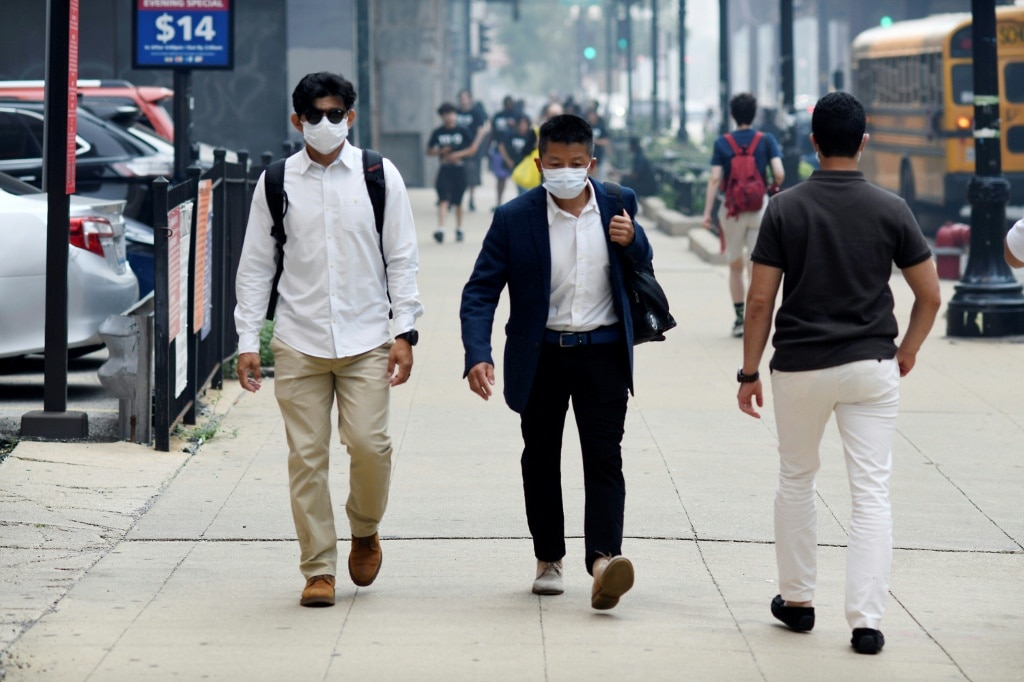
    Across affected regions, millions of residents are already adapting to the hazardous conditions: people are donning protective filtering masks for any outdoor trips, and public facilities including New York City libraries and train stations have been distributing free masks to help at-risk communities. The upper Midwest, which lies closest to the active Canadian fire zones, has borne the brunt of the pollution, with large parts of Michigan, Minnesota, and Wisconsin recording “hazardous” AQI readings for multiple consecutive days. The NWS has extended its air quality alert for Chicago through Friday, noting that additional smoke could return to the area Saturday evening and persist through Sunday.

    Climate and environmental advocates have highlighted this repeated wave of cross-border wildfire smoke as clear evidence of the link between accelerating climate change and worsening extreme wildfire risk. “Increasingly smoky skies underscore the importance of a rapid transition to clean energy rather than building more polluting fossil fuel infrastructure that further contributes to climate change,” said Paul Mathewson, science program director for Clean Wisconsin, an environmental advocacy group. Wisconsin has recorded a sharp rise in the number of smoky days annually in recent years, mirroring trends across much of North America.

    Parrington confirmed that climate change has created far more favorable conditions for intense, long-lasting wildfire seasons across Canada, driving higher surface air temperatures and drying out soil and vegetation across vast regions. “When there’s an ignition we see these really large-scale, persistent burning where these fires can burn for weeks and weeks at a time through summer,” he explained.

    As of Friday, Canadian authorities reported that more than 200 blazes were burning out of control across the country, with the most intense activity concentrated in Ontario. While the 2026 season has so far burned far less total area than 2023 — Canada’s worst wildfire season on record, which saw nearly 18 million hectares consumed — fire activity has escalated dramatically over the past seven days. Latest government data shows roughly 2.8 million hectares have burned across Canada since the start of 2026, up from just 1.6 million hectares a week earlier. No casualties have been reported from Ontario’s wildfires, but multiple remote indigenous and rural communities have already been evacuated to safer locations as blazes advance.

  • ‘Completely laughable’: Trent Robinson outraged by penalty call as Roosters overcome poor attack to beat the Storm

    ‘Completely laughable’: Trent Robinson outraged by penalty call as Roosters overcome poor attack to beat the Storm

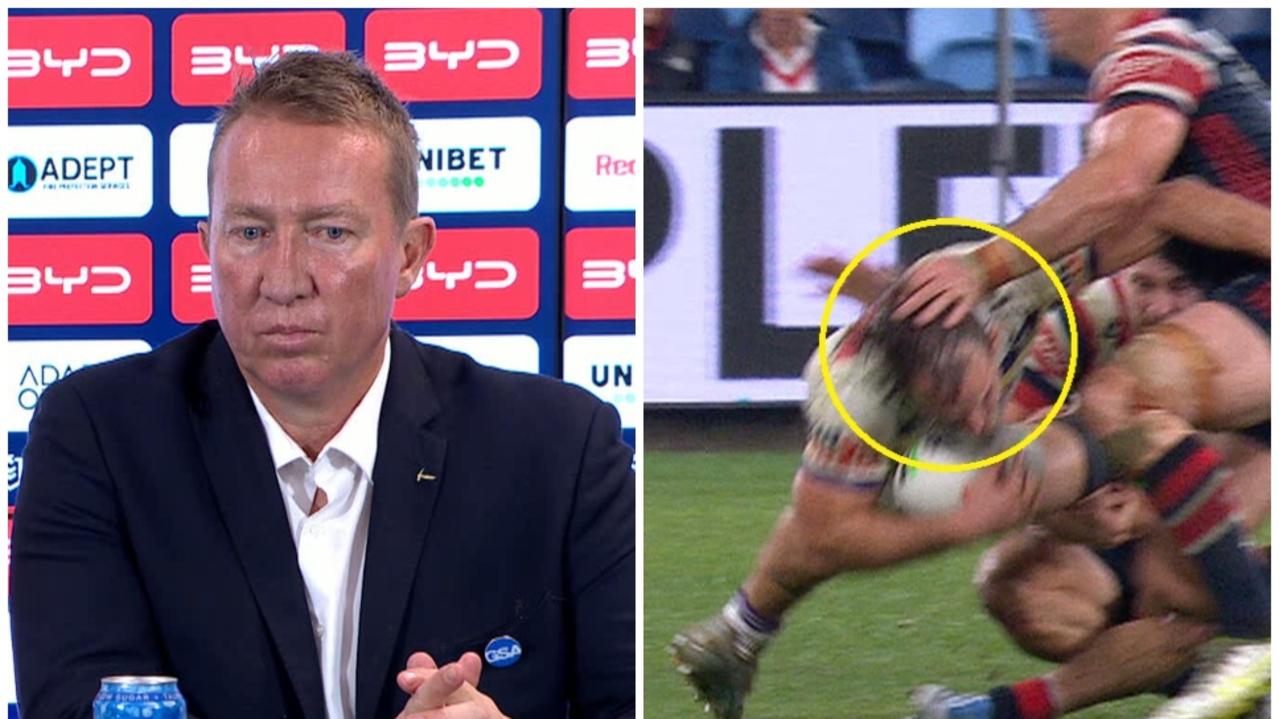
    The National Rugby League premiership race has been shaken up by a tense, rain-soaked clash that ended with a controversial refereeing call and a crucial win for the Sydney Roosters over defending contender Melbourne Storm, leaving Melbourne’s 2024 finals hopes all but dashed.

    The 14-6 final result pushes the Roosters to within just two points of ladder-leading Penrith Panthers, but the victory was overshadowed by a soft penalty decision in the second half that has drawn fierce criticism from Roosters head coach Trent Robinson.

    Melbourne had failed to threaten the Roosters’ try line for the opening 55 minutes of the match, until referee Gerard Sutton awarded the Storm a critical penalty for an alleged high tackle from Roosters forward Nat Butcher on Melbourne’s Alec MacDonald. The penalty gifted Melbourne prime field position deep in Roosters territory, and two minutes later, Stefano Utoikamanu crossed for the Storm’s only try of the night, setting up a nervy final stretch for the home side.

    Replays of the tackle contradicted the referee’s call, showing barely any contact between Butcher and MacDonald with negligible force applied. Robinson did not mince words in his post-match press conference, calling the decision “completely laughable.”

    “How do you find that (a penalty)? Why would a referee even look at that? It was laughable. It was completely laughable,” Robinson told reporters. “You’ve got to defend it, and there were some things that went our way against it, but if they have an error on that and then you’re looking at that, then you’re looking at the wrong thing.”

    The controversial call left Butcher fuming, and the forward immediately began arguing with match officials, only to be calmed down by teammate Victor Radley—until Radley saw the replay on the stadium big screen. “Nat was blowing up at the time. I was thinking ‘mate, be quiet Nat’ until I saw it on the big screen. I said ‘oh, you’ve probably got a right to blow up there,’” Radley recounted after the match.

    Despite the controversial setback, the Roosters’ defensive line held firm through the closing minutes of the game, and a late try from winger Daniel Tupou sealed the narrow win. Robinson acknowledged that the Roosters’ attacking play was far from their best, a issue he attributed to disrupted combinations following the recent State of Origin series and wet, slippery playing conditions. The side earned plenty of field position throughout the match but failed to convert those chances into points, leaving the coach frustrated with his side’s offensive execution.

    “We should have defended it, which is disappointing, but it is what it is,” Radley said. “It is reassuring (for us to win those tight games). It didn’t feel great at all, but our defence just held on, which was pleasing. I think those games, it didn’t feel great at the end of it at full-time there, but often those close contest games can be enjoyable. We won in the end, so happy days.”

    While Robinson was critical of the refereeing and his own side’s attacking performance, he praised the team’s relentless defensive energy in wet conditions, a result he believes will build critical confidence heading into the Finals series, where close, low-scoring contests are the norm.

    “I loved the defensive performance. We didn’t execute well and it wasn’t pretty, but I felt the energy we did have we put into defence, and I felt like we controlled the game through our defence,” he said. “There was a lot of live play, so the ball was in play a lot. There was a lot of kick return footy, both teams were going with high completion rates. If you want to play in decent games, you’ve got to play that style, so that was really pleasing. The execution of our attack was poor. I’ll take that. Just coming out of Origin, I’ll take that with different guys in and out in the wet. Of course I would have liked to have had better combinations and increased that because I thought we had enough field position there to do so. But there are also some really good signs on the defensive side of the ball.”

    For Melbourne, the loss all but ends their 2024 premiership campaign, falling further adrift of the top eight with few rounds remaining in the regular season.

  • 10 songs to get hyped for the World Cup final

    10 songs to get hyped for the World Cup final

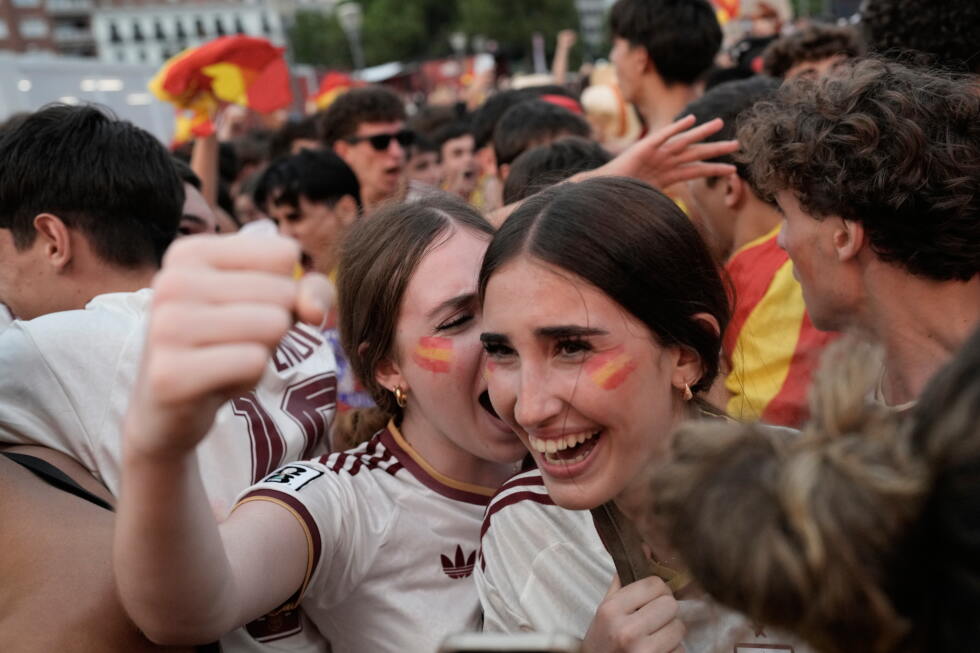
    As the World Cup’s decisive final match approaches on Sunday, soccer fans across the globe are gearing up for the big game — and no pre-match celebration is complete without a carefully curated set of anthems to fuel excitement. No matter which side you’re rooting for, whether you’re backing Argentina to make history or cheering on Spain’s rising young squad, The Associated Press has assembled a 10-song collection that has something for every viewer, with all tracks available to stream in full on Spotify.

    Leading off the lineup is this tournament’s official World Cup anthem, *Dai Dai*, the 2026 collaboration between Colombian global superstar Shakira and Afrobeats legend Burna Boy. Blending the artists’ distinct musical identities, the track merges infectious Latin rhythms with Afrobeats cadences to create a truly global, multilingual listening experience. After the opening chorus, the two artists trade verses in a dynamic back-and-forth before uniting for a rousing closing duet centered on themes of unity and competitive triumph. Shakira emphasized the unifying power of soccer in an interview with the AP, noting: “Fútbol is a thing that unites so many cultures and people of different walks of life. The big responsibility of making a World Cup song is that you’ve got to make a song that represents people’s feelings, emotions, and passion.”

    Next on the list is the genre-bending collaboration *DNA (More Than A Game)*, which brings together an unexpectedly electric lineup of legendary tenor Andrea Bocelli, EDM pioneer David Guetta, *KPop Demon Hunters* singer-songwriter EJAE and award-winning rapper Megan Thee Stallion. Performed across three languages — English, Italian, and Korean — the track delivers a surprisingly powerful anthem with a core message of collective empowerment. “’Cause it’s more than just a game / it’s our DNA,” Bocelli and EJAE harmonize on the catchy chorus. Bocelli told the AP that stepping outside his usual performance style brought a refreshing new energy to the project: “It’s a kind of music very, very far from the scores that I’m used to performing in general, but sometimes it’s very nice to do something different and to discover new atmospheres. It’s very happy, the song. I think it gives happiness.”

    No roundup of iconic World Cup anthems would be complete without Ricky Martin’s 1998 global hit *La Copa de la Vida (The Cup of Life)*, released for that year’s tournament in France. The Spanglish mambo-pop smash remains the gold standard for World Cup theme songs, thanks to its unmistakeable soccer-centric lyrics, driving horn section, and relentless Eurodance-club energy that still gets crowds on their feet decades after its release.

    For Spain supporters, the playlist opens with a selection of fan favorites closely tied to the team. Up-tempo merengue-pop track *Despechá* from Rosalía has become a go-to celebratory track for La Roja, played after every goal and final whistle victory. With the 2010 World Cup champions advancing to this year’s final, fans can expect to hear this track blaring over stadium speakers once again. The 1967 Latin pop classic *Mi Gran Noche* from legendary Spanish singer Raphael is another staple of Spanish World Cup celebrations, with its big band brass arrangement and infectious cheerful chorus earning it cross-generational appeal that has kept it popular for more than half a century. Rounding out Spain’s themed entries is *La Roja Baila*, the 2016 official European Championship anthem from former Spanish defender Sergio Ramos, flamenco-pop star Niña Pastori and hit producer RedOne. While Spain’s 2016 tournament run ended in disappointment, the track’s catchy, cheery call-and-response chorus still remains a favorite chant for fans.

    For fans backing Argentina, the playlist highlights the tracks that have become the soundtrack to the team’s deep tournament run. *La Cumbia de los Trapos*, the 2000 hit from Argentine cumbia band Yerba Brava, first became the country’s unofficial anthem during their 2022 Qatar World Cup victory, and it has retained that status for this year’s tournament. Written as a soccer anthem from its inception, the high-energy track takes its name from the “rags” that fans wave as flags in Argentine stadiums. *Matador*, the iconic 1993 (2008 remastered) hit from ska-samba-reggae-rock group Los Fabulosos Cadillacs, is another staple played every time Argentina finds the back of the net. While its driving brass section and chant-along chorus make it a perfect party track, the song also carries a deeper meaning: it is a public condemnation of Argentina’s late-1970s and early-1980s military dictatorship. Modern Argentine duo Ca7riel & Paco Amoroso round out the Argentine selections with their 2024 track *Dumbai*, a playful, hook-driven genre-blending number that captures the joy of matchday celebration.

    Closing out the playlist is another Shakira classic, widely considered the greatest World Cup anthem of all time: *Waka Waka (This Time for Africa)*, the official 2010 South Africa World Cup anthem featuring South African group Freshlyground. Built around a soca-influenced beat and drawing inspiration from Cameroonian band Golden Sounds’ 1986 track *Zangaléwa*, the song exemplifies what makes a great World Cup anthem: it lifts up regional musical traditions and shares them with a global audience, all while delivering an unforgettable, catchy hook that has kept it popular for 15 years.

  • Germany’s fastest sprinter Owen Ansah faces an anti-doping process

    Germany’s fastest sprinter Owen Ansah faces an anti-doping process

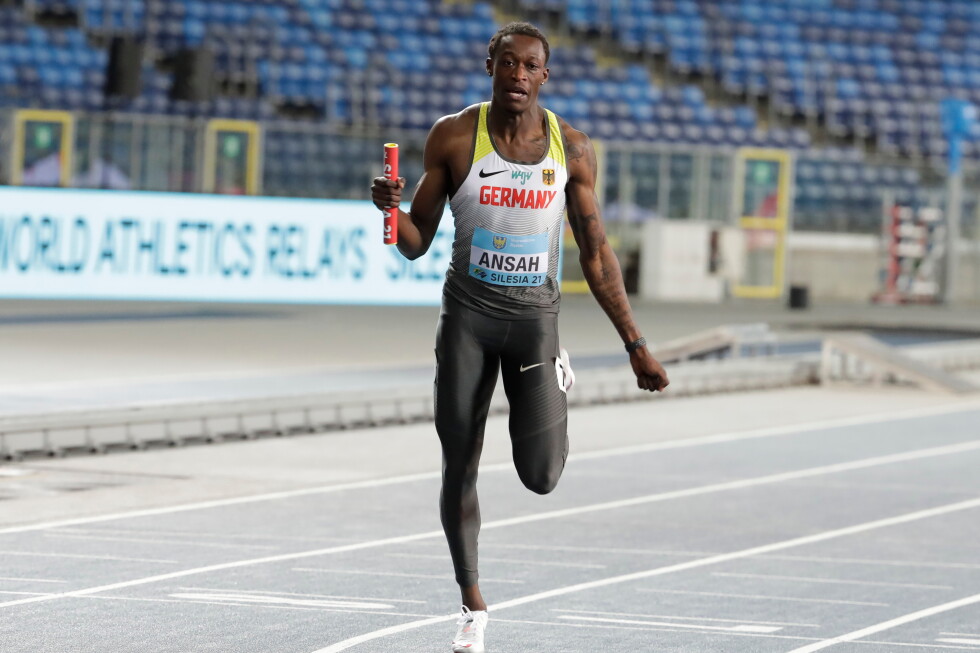
    BONN, Germany — One of Germany’s most decorated track and field athletes, history-making sprinter Owen Ansah, is at the center of an ongoing investigation by the country’s national anti-doping body that could result in a competition ban, over allegations he did not comply with required doping testing protocols.

    Ansah, who made history earlier this year as the first German sprinter to break the 10-second barrier in the men’s 100-meter event, will remain eligible to compete during the investigation, which the National Anti-Doping Agency of Germany (known commonly as NADA) has labeled a standard “results management process.”

    In an official announcement released Friday, NADA confirmed the probe is being conducted under anti-doping regulations that explicitly prohibit athletes from evading, declining, or failing to complete mandated out-of-competition or in-competition doping tests. This rule has resulted in lengthy competition bans for athletes across a wide range of sports in previous cases. Most recently, former Wimbledon singles champion Marketa Vondrousova was handed the maximum four-year suspension, the standard penalty for a first offense under this rule, just last month after she refused to submit to a test.

    Unlike some anti-doping cases that trigger an immediate provisional suspension, NADA confirmed that no mandatory temporary ban is in effect for Ansah at this stage of the investigation.

    The 25-year-old runner shaved enough time off his personal best to set a new German national record of 9.98 seconds in the 100-meter just last month, and he has been widely ranked as a legitimate medal contender for both the individual 100-meter and men’s 4×100-meter relay events at the upcoming European Athletics Championships, set to kick off next month in the United Kingdom.

    As of Friday, Ansah had not issued any public statement or responded to requests for comment on NADA’s confirmation of the investigation.

  • Danish police officer and 2 others shot, including suspected perpetrator

    Danish police officer and 2 others shot, including suspected perpetrator

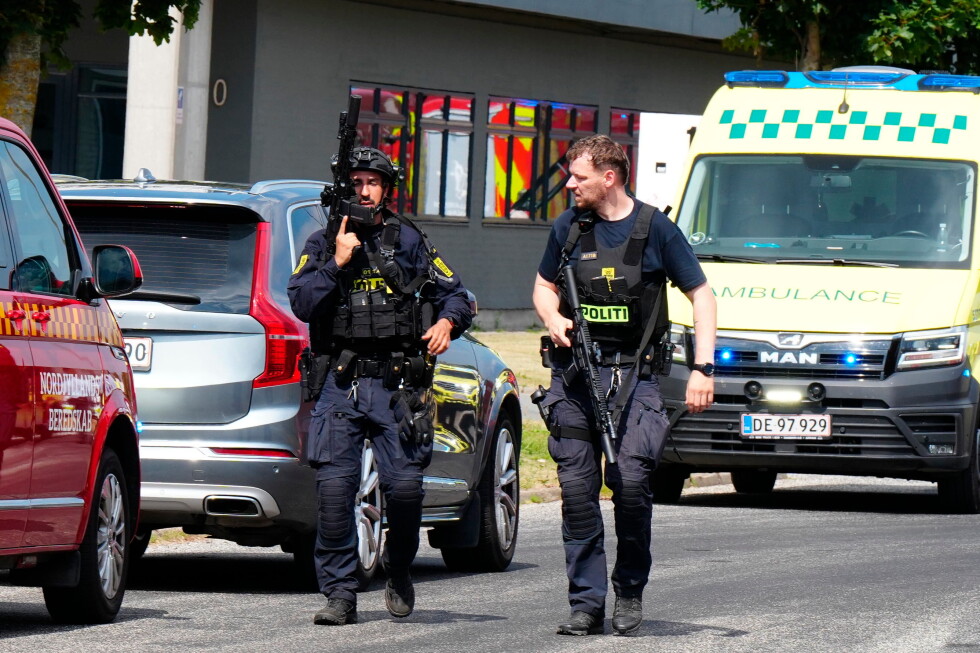
    A violent shooting incident in northern Denmark has left three people injured, including a Danish law enforcement officer and the suspected attacker, regional authorities confirmed Friday.

    The outbreak of gunfire unfolded in the city of Nørresundby, located within Denmark’s North Jutland region, according to official updates. Søren Pejtersen, a public information spokesperson for North Jutland Police, announced in an official Facebook post that all three victims sustained life-threatening serious injuries.

    Initial response protocols were triggered not by reports of gunfire, but by an emergency call about a structural fire in the city’s industrial zone, Danish public broadcaster DR detailed. Emergency dispatch received the alert at 1:39 p.m. local time, which translates to 11:39 GMT, and uniformed officers were immediately dispatched to the location to contain the blaze.

    When responding officers arrived at the scene, they were immediately met with a barrage of gunfire from an unknown assailant, the police statement confirmed. Out of self-defense and to neutralize the threat, the responding officers discharged their weapons and returned fire on the suspect.

    As of Friday afternoon, key details surrounding the incident remain under active investigation. Authorities have not yet confirmed whether the wounded police officer was hit by the suspect’s gunfire or struck by accidental friendly fire from fellow officers. Additionally, the identity of the third injured person and the circumstances of their shooting have not been clarified, leaving many core questions unanswered for the public.

    By 3 p.m. local time (1300 GMT), police confirmed the situation was fully under control, with the active shooting threat fully resolved. However, official investigations into the motive, background of the suspect, and sequence of events are ongoing, per DR’s reporting.

    Visual content captured from the site of the incident shows a thick plume of black smoke rising from the industrial area, matching the original report of an active fire at the location. As of the latest official update, no additional details on the condition of the injured or progress in the investigation have been released to the public.