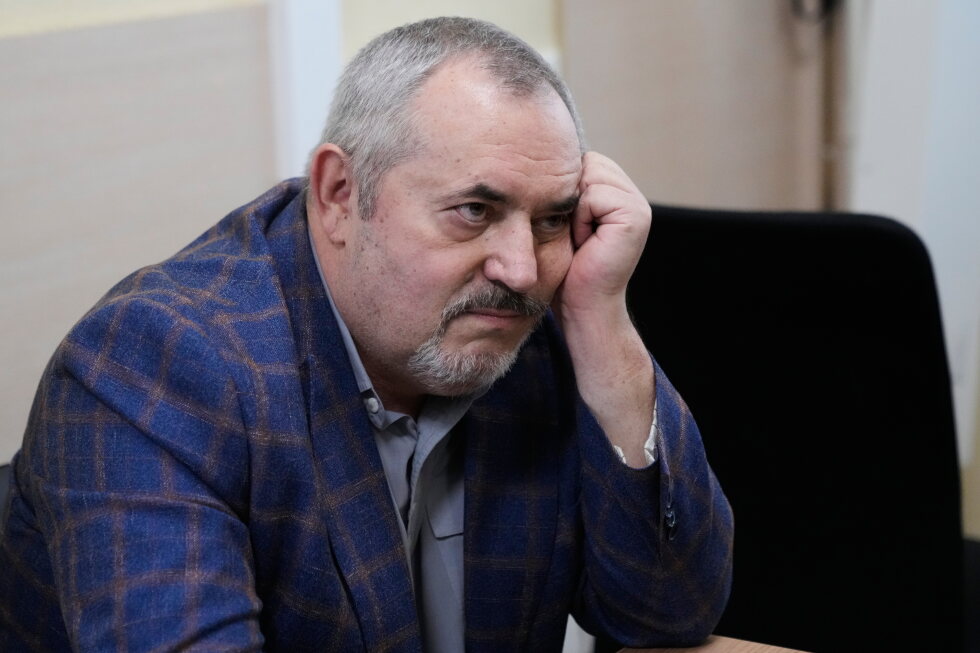
On a Friday in mid-2024, a Moscow suburban court delivered a verdict that effectively removes one of Russian President Vladimir Putin’s most vocal domestic critics from the upcoming national parliamentary race. Sixty-three-year-old Boris Nadezhdin, who has openly condemned Moscow’s military operation in Ukraine and attempted to challenge Putin in the 2024 presidential election, was found guilty of displaying prohibited “extremist symbols” in a 2023 online interview.
The conviction stems from a brief appearance of an image of late opposition leader Alexei Navalny during that interview. At the time of the conversation, Navalny was already serving a 19-year prison sentence on widely discredited extremism charges that global observers and human rights groups uniformly labeled as politically motivated. Navalny, who had been the most prominent opposition figure to challenge Putin’s rule for years, died in February 2024 under suspicious circumstances while detained in a remote Arctic penal colony.
Nadezhdin has repeatedly dismissed the conviction as a baseless, absurd political maneuver, arguing that Russian authorities are deliberately blocking him from participating in September’s scheduled parliamentary election. The court in Dolgoprudny, the Moscow outer suburb where Nadezhdin resides, handed down a 1,000 ruble fine (equivalent to roughly $13) alongside the guilty verdict. While the fine is minor, the conviction carries profound political consequences that permanently block Nadezhdin from holding public office.
This legal action marks the latest in a string of restrictions placed on the Putin critic over the past several months. Just one week prior to the verdict, Russia’s Justice Ministry added Nadezhdin to its controversial “foreign agent” registry, a designation that brings heavy social stigma, constant state surveillance, and formal bars on running for public office. Prior to Friday’s ruling, Nadezhdin had still been permitted to pursue a symbolic, low-profile campaign for a parliamentary seat; that option is now fully closed.
During the court hearing, Nadezhdin reported feeling unwell, forcing proceedings to pause briefly so an ambulance team could conduct a medical evaluation. Before the session began, he told reporters he had considered traveling abroad for medical treatment and political safety, but Russian authorities have already imposed an exit ban barring him from leaving the country.
Nadezhdin’s exclusion from electoral politics follows a pattern of opposition crackdown that played out earlier this year during the 2024 presidential race. In January 2024, he drew widespread public support by openly calling for an immediate ceasefire in Ukraine and collected more than the required number of voter signatures to qualify for the ballot. However, Russia’s Supreme Court ultimately disqualified him, ruling that over 9,000 of his submitted signatures were invalid — a margin just large enough to remove him from the March 2024 race. Putin ultimately won a fifth presidential term with only token, widely compliant opposition on the ballot, a result that drew international criticism for lack of democratic competition.
The conviction of Nadezhdin comes amid a broader ongoing crackdown on anti-government dissent that accelerated after the Kremlin launched its full-scale invasion of Ukraine in February 2022. Since that time, Russian authorities have dramatically expanded restrictions on freedom of speech and political opposition, targeting independent journalists, human rights organizations, civil society leaders, LGBTQ+ activists, and minority religious groups with sweeping legal penalties. Hundreds of dissidents have been jailed on politically motivated charges, while thousands more have fled the country to avoid persecution.
In a parallel development on the same day as Nadezhdin’s verdict, another former supporter-turned-critic of Putin was taken into custody in St. Petersburg. Ilya Remeslo, a pro-Kremlin blogger and activist who publicly broke with the government earlier this year, was arrested on charges of spreading “false information” about the Russian military — a criminal offense that has become one of the most common tools used to target government critics. The state-run Tass news agency confirmed that Remeslo will be transferred to Moscow for an upcoming court hearing. Remeslo first publicly criticized the military campaign in Ukraine and called for Putin’s resignation in March 2024; shortly after that announcement, he was involuntarily committed to a psychiatric clinic for a month, a move he described as retaliation for his public comments.