博客

  • ‘Everyone’s afraid to die’: Struggle to recruit soldiers in Ukraine turns violent

    ‘Everyone’s afraid to die’: Struggle to recruit soldiers in Ukraine turns violent

    Five years into Russia’s full-scale invasion, Ukraine’s push to mobilize new troops has devolved into a cycle of violence that is tearing at social cohesion within the country, leaving both serving soldiers and civilians injured and exposing deep flaws in the nation’s conscription system.

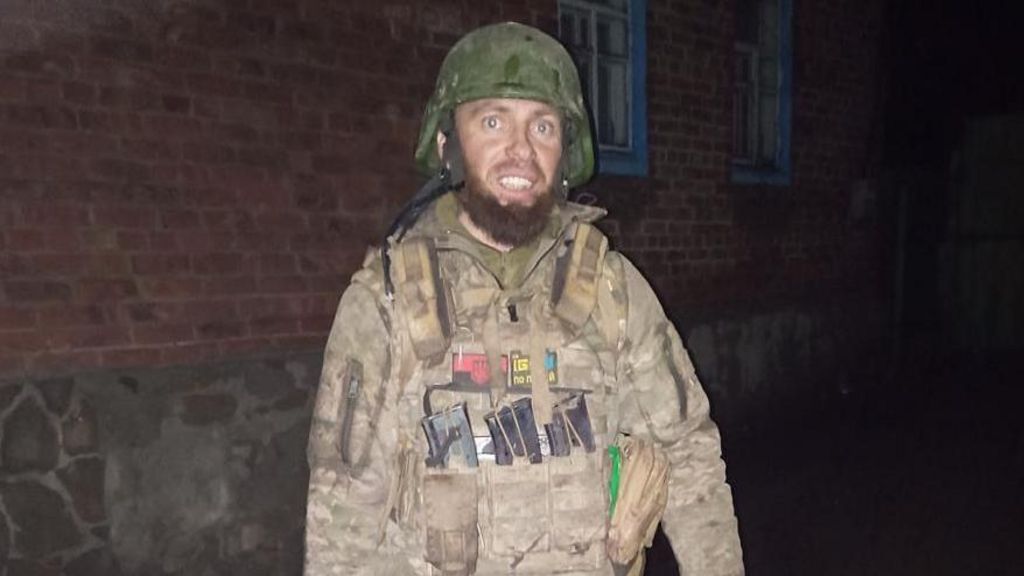
    For Vasyl Krupych, a veteran machine gunner who survived brutal Russian assaults on Ukraine’s eastern Donbas region, the danger did not end when he was reassigned to rear-area duty searching for people avoiding conscription. Last December, he encountered two men who refused to present identity documents and fled the scene. When his patrol gave chase, the pair beat Krupych severely with a crowbar, breaking one of his ribs and leaving him struggling to breathe. He spent six weeks recovering in a hospital, and still grapples with disillusionment over the attack. “What did we fight for, if soldiers can now get beaten?” the frontline veteran asked in a recent interview.

    Krupych’s assault is far from an isolated incident. Ukraine’s military ombudswoman has confirmed that attacks on conscription officers are now “regular” and represent a “major problem” as Kyiv races to replenish frontline ranks depleted by years of continuous combat. While the topic is rarely discussed openly in Ukraine, out of caution that it could be exploited by Russian propaganda, official data tells a stark story: Ukraine’s National Police Service has recorded more than 600 assaults on recruitment personnel to date, and has warned that the violence is growing increasingly aggressive.

    The first major public outcry over the crisis came in April, when several recruiters were stabbed in a single attack that left one dead. Just this month, tensions boiled over in the western city of Lviv, where roughly 200 protesters surrounded officers attempting to detain a suspected draft dodger. The crowd smashed and overturned the officers’ vehicle, sparking national headlines and drawing condemnation from President Volodymyr Zelenskyy.

    In the wake of the Lviv riot, Zelenskyy’s controversial decision to dismiss Defence Minister Mykhailo Fedorov has thrown efforts to resolve the conscription crisis into further chaos. Fedorov, who was removed over reported disagreements over strategy and leadership with Ukraine’s commander-in-chief, had only served six months in the role and had just begun implementing reforms to address growing conscription tensions. His departure leaves the ministry with only an acting minister, and all planned overhauls of the conscription system are currently stalled. Despite the policy pause, public anger over the current system has reached a breaking point, making urgent action unavoidable.

    Analysts and politicians point to multiple root causes of the current backlash. After five years of war, nearly every Ukrainian knows someone who has been killed or injured on the front line, and widespread fear is compounded by a sense that the conflict has no clear end in sight. Enthusiasm for voluntary enlistement peaked only once after the initial 2022 wave of mobilization, during Ukraine’s late 2023 counteroffensive to retake southeastern territory. When that counteroffensive failed to deliver major territorial gains, public willingness to volunteer faded rapidly. Opposition MP Oleksandr Honcharenko argues that the government’s shift to what he calls “brutal mobilization” tactics after the counteroffensive directly sparked the current wave of violence. “These officers are hunting for people on the streets and sometimes using quite violent methods,” Honcharenko explained. “Violence leads to violence. It’s a huge problem and it’s going to get worse.”

    Military analyst Ivan Stupak agrees that aggressive tactics are the core of the problem. He notes that mounting battlefield casualties and a growing shortage of manpower forced Ukraine’s high command to adopt the controversial practice widely known as “busification” — mobile conscription patrols that detain eligible men on the street and bundle them directly onto buses bound for recruitment centers. “When they need an extra 5,000 men, they start grabbing them — and if they refuse it turns into fights on the street,” Stupak said.

    Accounts of abuse by conscription officers are just as common as reports of attacks on those officers. Ukraine’s Human Rights Commissioner received more than 6,000 complaints about illegal or aggressive conscription practices last year — double the number recorded in 2024. Complaints range from excessive use of force and unlawful detention to poor, dangerous conditions at recruitment processing centers.

    Kyrylo Ogdansky, a university professor who qualifies for a legal draft exemption, is one of hundreds of civilians who have experienced this abuse firsthand. Last November, he was stopped on a street in Dnipro by an unaccompanied man in plain clothes who demanded to check his conscription status — a violation of official rules that require uniformed officers and police presence for street checks. When Ogdansky objected, he was violently assaulted. “One of them knocked the phone from my hand and two pushed me into the bus from behind. When I asked what’s happening, one started to beat me to the head. He hit me in the nose several times,” Ogdansky recalled. The recruiters even threatened to ship him directly to the frontline city of Pokrovsk regardless of his exemption. Ogdansky spent two weeks in hospital recovering from a suspected neck injury and severe bruising, and has filed formal complaints over the attack. Like many Ukrainians, he hesitated to speak publicly out of fear his story would be exploited by Russian propaganda, but ultimately decided to go public to force change. “If everyone is silent, then why would it stop? I understand the problem of conscription, but no official has the right to act like this,” he said.

    For Krupych, the violence exposes a painful disconnect between soldiers who have fulfilled their duty and civilians willing to use violence to avoid service. The veteran volunteered on the first day of the full-scale invasion, survived an FPV drone strike that killed two of his comrades, and dragged an injured friend to safety. He still bears the physical and psychological scars of the war, suffers from regular nightmares, and wears a neck tattoo reading “Glory to the Ukrainian Armed Forces” as a testament to his pride in his service. His own assault case remains tied up in Ukrainian courts, and he says the anger he feels runs deeper than his own injuries. “We are doing our duty. We fought, we defended our people — and now they are attacking us,” he said.

    When asked what could encourage more voluntary enlistment instead of relying on coercive patrols, Krupych pointed to higher salaries for frontline troops, but ultimately acknowledged there are no easy fixes. “It can’t be done differently, it can’t. Our lads need to be replaced. But nobody volunteers,” he said. “Everyone is afraid to die.”

    Before his dismissal, Fedorov had begun rolling out incremental reforms to make military service more appealing, including fixed-term contracts with an option to end service after the contract term, and increased pay for troops in high-risk frontline roles. The reforms were still in their early stages, and a full overhaul of the flawed conscription system was still on his to-do list when he was removed from office. Policy proposals still on the table include shifting responsibility for conscription patrols from military recruiters to police officers, who are seen as less likely to use aggressive tactics, as well as requiring formal training and psychological screening for all recruitment staff.

    For the first time, the Ukrainian government has openly acknowledged it has a serious crisis on its hands. But with no permanent defence minister in place and no consensus on how to move forward, a concrete solution to the growing cycle of violence remains out of reach.

  • ‘The Odyssey’ storms N. American Box Office

    ‘The Odyssey’ storms N. American Box Office

    One of the most anticipated film releases of the year has made a historic splash at the global box office, as Christopher Nolan’s adaptation of Homer’s ancient epic *The Odyssey* has sailed straight to the top of North American weekend box office rankings, delivering the strongest opening for any live-action movie in 2024. Industry data published Sunday confirms the epic feature pulled in $124.5 million in ticket sales across North America during its debut three-day weekend, far outpacing pre-release projections that predicted an opening haul of less than $100 million.

    Produced by Nolan’s longtime collaborator and wife Emma Thomas and distributed by Universal Pictures, the film boasts a star-studded ensemble cast headlined by A-list actors Matt Damon and Anne Hathaway. It also earned an additional $139 million from international theaters over the opening weekend, bringing its total global launch revenue to $263.5 million — a figure that already covers the project’s full reported $250 million production budget in just its first three days on screens.

    A groundbreaking creative project, *The Odyssey* marks the first feature film ever to be shot entirely on IMAX 70mm film stock. For his retelling of Homer’s 3,000-year-old poem, Nolan leaned into traditional analog filmmaking techniques to reimagine the classic story of hero Odysseus, who battles countless mythic and natural obstacles on his decade-long journey home following the end of the Trojan War.

    Veteran entertainment industry analyst David A. Gross highlighted the unique appeal of Nolan’s work in a commentary on the opening weekend results, noting: “Nolan is the only filmmaker working today who could take an ancient story like this, attract a cast as sprawling and accomplished as this, and make it a pop culture event.”

    The rest of the top five on the North American weekend box office charts saw holdover titles from major studios maintain solid traction with audiences. Disney’s animated hit *Moana* held steady in second place, adding $19 million in its second weekend of release to push its North American total to $82 million and global cumulative sales to $178 million. Universal’s *Minions & Monsters* followed closely behind in third, earning $14.8 million domestically to bring its three-week global total to nearly $357.6 million. Disney’s *Toy Story 5* dropped one spot to fourth in its fifth weekend on screens, pulling in an estimated $13 million domestically for a global total approaching $958 million. Warner Bros.’ horror release *Evil Dead Burn* rounded out the top five with a $5 million domestic haul, pushing its two-week global total to $51 million and domestic total to more than $24 million.

    The remaining positions in the weekend’s top 10 highest-grossing films were filled by: *The Invite* at $3.9 million, *Young Washington* at $3.7 million, *Obsession* at $2.5 million, *Supergirl* at $1.5 million, and *Disclosure Day* at $1.45 million.

  • Argentina’s Martinez plays cool in net, even as teammates turn reckless in historic World Cup final

    Argentina’s Martinez plays cool in net, even as teammates turn reckless in historic World Cup final

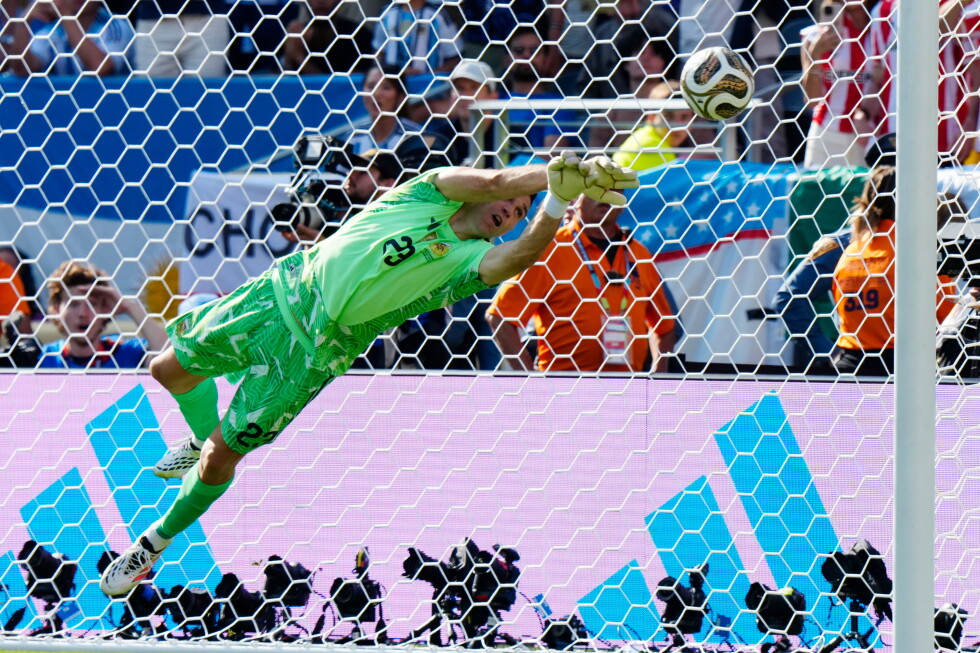
    The 2026 FIFA World Cup final delivered one of the most dramatic displays of individual grit and team tension in modern tournament history, as Spain claimed their first world title since 2010 with a 1-0 extra-time victory over defending champions Argentina in East Rutherford, New Jersey. The story of the match, however, will forever be tied to Argentine goalkeeper Emiliano “Dibu” Martinez, who delivered an all-time great performance even while playing through a broken finger that could have kept him off the pitch entirely.

    Martinez, who cemented his legacy as a national hero with a title-saving stop in the 2022 World Cup final against France, outdid even that iconic moment on Sunday. The 6-foot-5 keeper set a new World Cup final record with 11 saves, repeatedly turning away high-powered Spanish chances to keep a 10-man Argentine side in the game deep into extra time. Martinez originally fractured his right finger in May during a Europa League fixture with his club side Aston Villa, but made the deliberate choice to delay surgery to lead Argentina’s defense in the tournament — a sacrifice that nearly carried his team to a second consecutive championship.

    For 106 minutes, Martinez held firm, but Argentina’s own aggressive, pugnacious style that had rallied them from multiple deficits throughout the tournament ultimately became their undoing. The first crack in Argentina’s discipline appeared in the 52nd minute, when Leandro Paredes escaped a second caution for shoving Spain’s Rodri from behind before earning a yellow for taking down Dani Olmo in the ensuing scuffle.

    The decisive moment came in the 93rd minute, just one minute after Martinez made a spectacular two-handed stop on Nico Williams’ close-range strike to keep the match scoreless. Midfielder Enzo Fernández, already on a yellow card for dissent over an uncalled foul, picked up a second caution for a reckless challenge that sent Spanish defender Pau Cubarsi flying, leaving Argentina down a man for the final half hour of extra time.

    With space to exploit against the depleted Argentine defense, Spain broke through in the 106th minute. Ferran Torres fired a clinical strike past Martinez to notch his first goal of the tournament, putting La Roja up 1-0 in what would prove to be the match-winner. Even in the final moments, Martinez continued to stun: his 10th save of the game denied Lamine Yamal on a well-placed free kick, leaving the teenage star stunned in disbelief at being turned away.

    After the final whistle, the match’s tension spilled over into ugly post-game clashes. Paredes was at the center of multiple altercations, shoving Spain’s Eric García and Gavi at separate points. Argentine manager Lionel Scaloni had to be restrained by a Spanish player as he shouted at opposing staff, while veteran defender Nicolás Otamendi traded heated words with multiple Spanish players including Rodri. Spain fans, however, quickly turned chaos into celebration, flooding the stands with dancing, hugs and waving the national flag as their team prepared to lift the trophy.

    Even in defeat, opposing coach Luis de la Fuente was quick to praise Martinez’s historic performance. “We should have put the game to bed much earlier. We had many chances,” de la Fuente said after the match. “But Dibu was nothing short of exceptional. It was thanks to Dibu’s saves, and this goes to show that winning is very difficult.”

    Throughout the group stage, Martinez had already proven his form, notching clean sheets in Argentina’s 3-0 win over Algeria and 2-0 victory over Austria, starting every match for the side on their road to the final. While all global attention has long focused on Lionel Messi’s quest for a second World Cup title, it was Martinez who carried Argentina to the brink of history, outperforming every expectation even with an injured hand. In the end, the relentless Spanish attack finally broke through, but the 2022 hero cemented his place as one of the greatest goalkeepers in World Cup history with one of the most impressive individual performances the final has ever seen.

  • Aust kicks off huge military drills in Darwin amid China tensions

    Aust kicks off huge military drills in Darwin amid China tensions

    Two weeks after China tested a nuclear-capable missile in the South Pacific, Australia has kicked off its largest-ever Indo-Pacific air combat exercise, bringing together a broad coalition of regional and global military partners to demonstrate collective commitment to regional security. The event, known as Exercise Pitch Black, was officially opened by Australian Prime Minister Anthony Albanese on Monday in Darwin, the capital of Australia’s Northern Territory. Over the next three weeks, the drills will bring together 100 aircraft and thousands of military personnel from Australia and 20 partner nations, including major regional players the United States, Japan and Indonesia.

    According to an official statement from the Australian government, the core objective of the exercise is to deepen collaborative ties between allied and partner militaries by building operational interoperability through rigorous, realistic, high-end combat training. Albanese emphasized in his opening remarks that Australia maximizes its strategic strength when working hand-in-hand with regional and global partners. “Exercise Pitch Black strengthens those partnerships and demonstrates Australia’s commitment to working closely across our region to support peace, stability and security,” the prime minister said. He added that Pitch Black, which has been hosted by the Northern Territory for more than four decades, serves as another reminder of the territory’s central role to Australia’s national defense architecture and its broader regional engagement.

    China’s earlier missile test sent ripples of political concern across the Pacific. The launch came just hours after Australia and Fiji signed a new mutual defense agreement, a pact that Canberra has indicated could be expanded to other Pacific island nations in the future. Beijing has characterized the test as routine military activity, in line with standard training protocols. However, many governments and independent analysts have framed the launch as a deliberate show of force designed to project influence amid intensifying strategic competition between China and Western-aligned powers in the region. The test also drew near-universal condemnation from across the Pacific, including from several Pacific Island countries that have historically maintained closer diplomatic and economic ties to Beijing.

    Australian officials have framed the timing of the large-scale air exercise as a demonstration of coordinated resolve in response to the test. Canberra has argued that the missile launch underscores the urgent need for regional defense agreements such as the newly signed Australia-Fiji pact. Deputy Prime Minister and Defense Minister Richard Marles, who also attended the opening ceremony for Pitch Black, stated publicly that China’s test was an intentional “message” to Australia about its expanding nuclear capabilities. Marles went on to describe Pitch Black as one of the most complex and strategically significant air exercises held across the Indo-Pacific. “Through this exercise, our Air Force is showcasing Australia’s ability to bring together partners from the region and beyond to enhance interoperability and deepen defence co-operation,” Marles said.

  • Moment fans in Madrid celebrate World Cup win

    Moment fans in Madrid celebrate World Cup win

    On a late Sunday night, the bustling heart of central Madrid transformed into a sea of red and yellow as thousands of elated supporters gathered to witness and celebrate Spain’s triumphant World Cup win. What began as a planned public viewing event quickly escalated into an outpouring of national joy, with crowds packing plazas, sidewalks and open public spaces across the city center to catch a glimpse of the decisive match. As the final whistle blew confirming Spain’s victory, deafening cheers erupted across the gathering. Fans waved national flags, chanted team anthems, and embraced one another, turning the central district into an impromptu street party that stretched into the early hours of Monday. Local reports note that the gathering remained largely peaceful, with supporters sharing their excitement over the landmark win that adds another prestigious title to Spain’s decorated soccer history.

  • Trump lingers on stage to lap up World Cup spotlight

    Trump lingers on stage to lap up World Cup spotlight

    The 2026 FIFA World Cup final between Spain and Argentina, held on July 19 at the New York/New Jersey Stadium in East Rutherford, became the stage for an unexpected political spectacle when U.S. President Donald Trump chose to linger on the awards podium long after his scheduled appearance, soaking up global attention even as the Spanish championship team prepared to celebrate their historic victory.

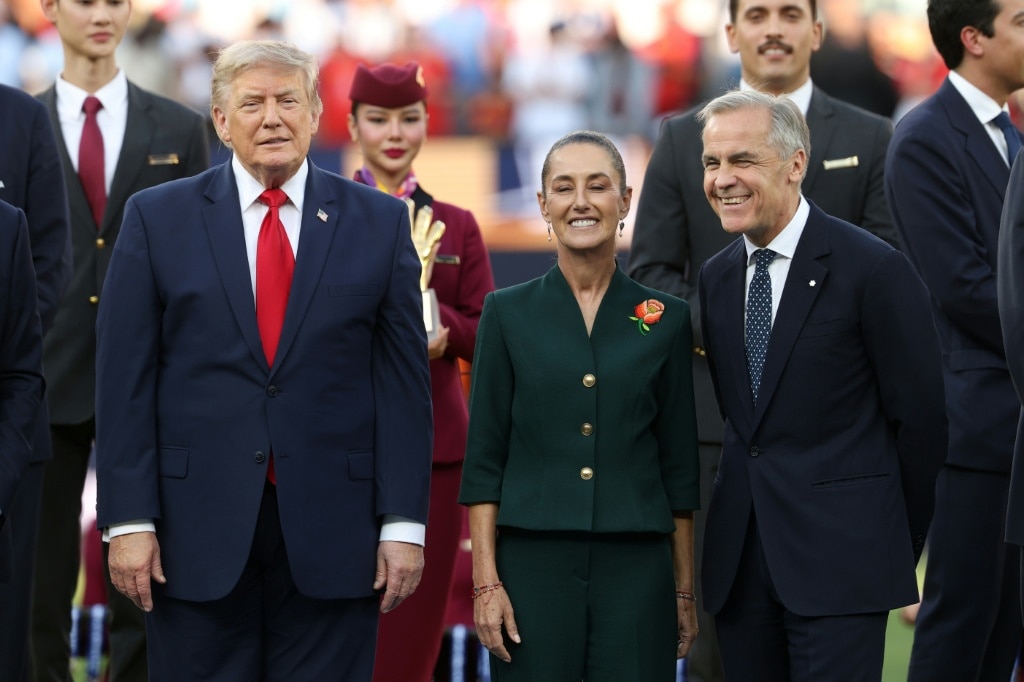
    Two U.S. Marine Corps helicopters, one carrying the sitting president, flew over the stadium ahead of kickoff, marking Trump’s arrival for the first World Cup match he has ever attended. Flanked by First Lady Melania Trump and FIFA President Gianni Infantino in the stands, Trump sat near two fellow North American leaders – Mexican President Claudia Sheinbaum and Canadian Prime Minister Mark Carney – whose nations co-hosted the 2026 tournament alongside the United States. Relations between the Trump administration and both leaders remain strained: just days before the final, Trump threatened new tariffs on Canada over wildfire smoke that drifted into the northeastern U.S. and raised air quality concerns during the event, while tensions with Mexico persist over Trump’s aggressive immigration crackdown and repeated threats of military action against cross-border drug trafficking networks. Despite these underlying frictions, the president exchanged brief pleasantries with both leaders, and also shook hands with Spanish Prime Minister Pedro Sánchez, even after recently criticizing Madrid for its perceived lack of support in the Iran conflict and failure to meet NATO defense spending targets.

    Before the match kicked off, Trump offered his prediction for the game, stating that Argentine superstar Lionel Messi would give his side a competitive edge. He also praised Argentine President Javier Milei – who skipped the final out of a long-held sports superstition – calling the right-wing leader “a friend of mine” who “has done a terrific job” leading his country. When the U.S. national anthem played before the match, Trump stood and offered a formal salute to the flag.

    When the final whistle blew, marking Spain’s 2026 World Cup victory over Argentina, Trump joined Infantino onstage to co-present the trophy to the winning Spanish side. As the team lifted the trophy aloft to celebrate, Infantino attempted to guide Trump off the podium to make way for the champions’ photo opportunity, but the 80-year-old president refused to leave, lingering in the spotlight and even performing a shortened version of his iconic signature dance in front of the assembled Spanish players. The moment echoed a similar controversy at the 2025 FIFA Club World Cup, also held at the New Jersey stadium, when Trump remained on the podium after handing the trophy to winning side Chelsea as the team tried to celebrate, and later falsely claimed the trophy was being kept in the Oval Office (FIFA later clarified it was only a replica).

    This unscripted moment at the final is far from Trump’s first high-profile intervention in the 2026 tournament. Less than two weeks before the final, Trump sparked widespread outrage over accusations of improper influence when he called Infantino directly to ask FIFA to reverse a red card issued to U.S. striker Folarin Balogun, so the player could participate in the team’s round-of-16 match against Belgium.

    Despite the repeated controversies, Trump has repeatedly lauded the 2026 World Cup as an unprecedented success. During a FIFA reception held at Trump Tower New York on the Friday before the final, Trump told attendees, “This has been the most successful sporting event maybe in the history of the world. It’s been amazing.” He added that the 104-match tournament had cemented soccer’s growing popularity in the U.S., noting, “It turned out we were a soccer country, and I think it’s going to remain.” Trump also mentioned that his 20-year-old son Barron is a passionate fan of the sport. Since returning to the Oval Office in January 2025, Trump has closely tied his political brand to the success of the co-hosted tournament, hosting Infantino at the White House on multiple occasions. The run-up to the tournament was not without its disruptions, however: Trump’s restrictive immigration policies created widespread visa delays and issues for international fans traveling to attend matches across the U.S. leg of the tournament.

  • Tasmania has announced its first ever AFL coach ahead of debut 2028 season

    Tasmania has announced its first ever AFL coach ahead of debut 2028 season

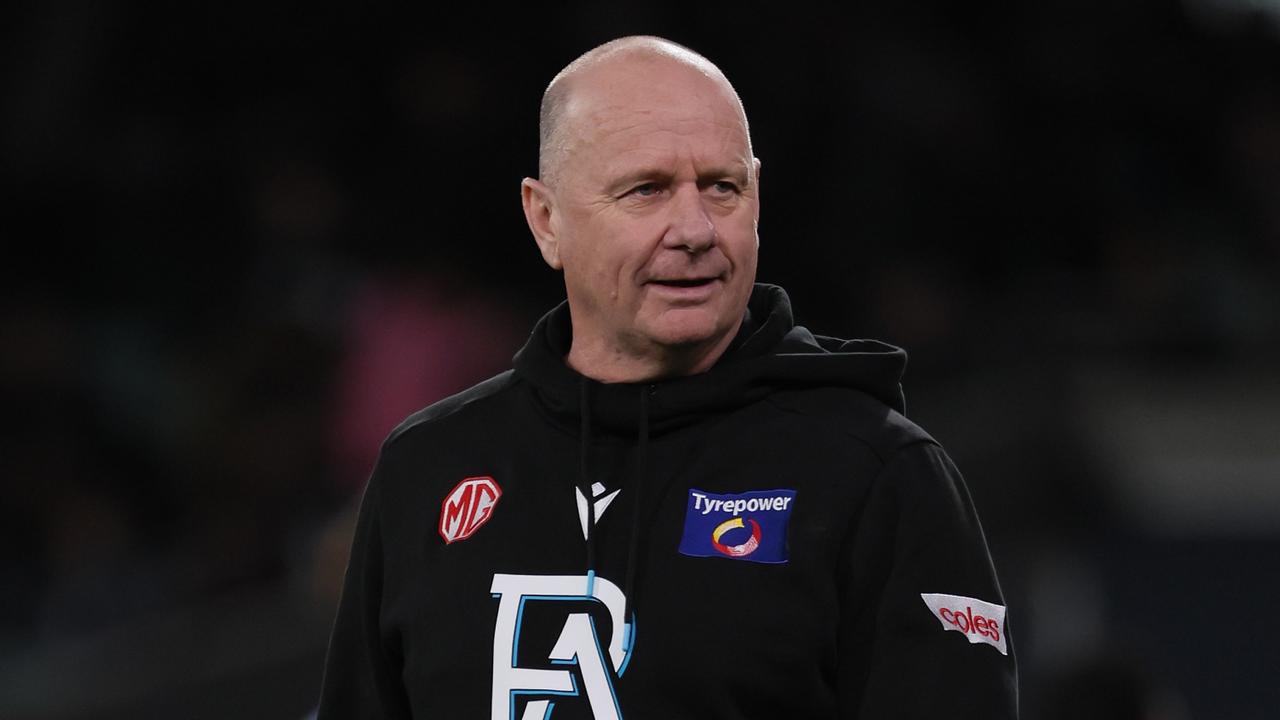
    After a closely contested selection process between three high-profile coaching candidates, Australian Rules football has marked a new chapter in Tasmania’s sporting history: veteran mentor Ken Hinkley has been officially confirmed as the first ever senior coach of the state’s upcoming Australian Football League (AFL) expansion side, the Tasmania Devils.

    Rumors of Hinkley’s appointment began circulating over the weekend, when reports emerged that he had presented to club leadership in Hobart. In the days leading up to the official announcement, the Devils fueled public speculation by sharing a cryptic social media clip showing the coach picking up an official club polo shirt, leaving fans to piece together the news before the formal reveal.

    Hinkley stepped down from his 12-season tenure as senior coach of Port Adelaide at the conclusion of the 2025 AFL season, as part of a pre-planned succession that saw long-time assistant Josh Carr take over the senior role at the Power. While Hinkley never secured a premiership title during his time at Port Adelaide, he left the club with an overall winning record and a widespread reputation for forging tight, cohesive team cultures and getting the best out of developing players.

    Speaking to media after his official unveiling in the Devils’ new team colors, Hinkley expressed overwhelming enthusiasm for the once-in-a-generation opportunity to build a new AFL club from the ground up. “This isn’t just coaching a new football club – this is building something for an entire passionate football state,” he said. “I can’t wait to lead this charge and put Tasmanian football on the national map in a way it’s never been before.”

    Reflecting on his decades-long career, Hinkley added: “When I first spoke to Brendon Gale 18 months ago about this role, I told him straight: I’m a football coach. It’s what I know, it’s what my family and I have built our lives around, and there’s nothing I love more than coaching young people and helping them grow. To get to do that as the first coach of the Tasmania Football Club? It’s an incredibly special moment for this place, and for me.”

    While the Devils are not scheduled to make their competitive AFL debut until 2028, Hinkley is expected to begin his role with the club at the start of the 2026 season, to oversee the final years of preparation for the team’s entry into the national competition. Tasmania already fields a team in the second-tier Victorian Football League (VFL), and the side has already exceeded expectations this season, drawing massive, record-breaking crowds to its home matches. The strong turnouts have silenced early critics and confirmed the deep existing appetite for top-level professional football across the Apple Isle.

    Hinkley emerged as the top candidate for the role beating out two other experienced AFL coaches: Nathan Buckley and John Longmire. Buckley, a former Collingwood senior coach, returned to coaching this season as an assistant mentor with Geelong, a move widely interpreted as a preparation run for the Tasmanian role. Longmire, who stepped down from his senior post at Sydney Swans following the club’s 2024 grand final loss to Brisbane, has worked as a football media commentator since leaving his coaching role.

  • Messi can conjure no more magic as crown passes from Argentina to Spain

    Messi can conjure no more magic as crown passes from Argentina to Spain

    EAST RUTHERFORD, N.J. – For 90 minutes, and another 30 minutes of extra time, the 80,663 fans packed into MetLife Stadium clung to every touch of the ball at Lionel Messi’s feet, hoping the 39-year-old legend would conjure one last bit of iconic magic to cement his legacy as the sport’s undisputed greatest. It was not to be. Two decades after his first World Cup appearance, and fresh off leading Argentina to the 2022 World Cup crown and back-to-back Copa America titles, Messi could not push the Albiceleste over the line to become the first men’s national team to win consecutive World Cup trophies in more than 50 years.

    From the opening whistle, Spain controlled every facet of the final. The European side’s signature possession-focused style dominated Argentina from start to finish, out-passing the two-time finalists 845 to 433 and holding a lopsided 20-1 advantage in total shots. Just 37 seconds into the second period of extra time, Ferran Torres found the back of the net, securing a 1-0 win for La Furia Roja and giving the nation its second men’s World Cup title.

    The result shifted the global soccer hierarchy. While Spanish stars climbed the podium at midfield to lift the golden trophy, an emotional Messi fought back tears alongside his dejected teammates, bowing to thousands of cheering Argentina fans gathered in the stadium’s south end. The moment served as a quiet passing of the torch: just moments after Torres’ game-winner, 19-year-old Lamine Yamal, widely tipped to be soccer’s next generational superstar, ran across the pitch to celebrate with the goalscorer.

    Spain’s dominant run through the entire tournament will go down in World Cup history. La Furia Roja conceded only one goal across their six matches – the lowest total ever for a men’s World Cup champion – and extended their unbeaten streak to 38 games, the longest run ever recorded by a European men’s national side. This historic victory also makes Spain the first country in soccer history to simultaneously hold both the men’s and women’s World Cup trophies, cementing their status as the new global powerhouse of the sport.

    For Messi, the match capped off a historic, record-breaking World Cup campaign that defied all expectations. When he left European top-flight soccer for Major League Soccer three years ago, after collecting four Champions League medals and 12 domestic league titles with Barcelona and Paris Saint-Germain, many analysts wrote him off as a fading legend winding down his career. Instead, he dragged Argentina back to the final, netting eight goals and notching four assists in the tournament, pushing his all-time World Cup career goal total to 21 (a record only broken by France’s Kylian Mbappé in the third-place match a day prior).

    Messi leaves the tournament as the first player in history to start three World Cup finals, and sits second on the all-time list of men’s international goal scorers with 125, only trailing Cristiano Ronaldo’s 146. For decades, he has been ranked alongside Pelé and Diego Maradona as one of the three greatest players to ever step onto the pitch, and his performance in this tournament only reinforced that standing. Even in defeat, his legendary career remains unmatched.

    Messi’s history at MetLife Stadium has long been marked by frustration. It was at this same venue that he dramatically retired from international soccer following a 2016 Copa America final loss to Chile on penalties, only reversing his decision 47 days later to lead Argentina to the 2022 World Cup title. In this final, he managed only 15 touches in the first half, and just 54 total touches across the entire match, with Spain’s defense shutting down every attempt he made to create danger.

    When the final whistle blew, several Spanish players crossed the pitch to embrace and console the Argentine legend. Messi dropped to the turf, hands propped behind him, staring blankly into the distance. As Spain formed a traditional guard of honor for the Argentina side to receive their second-place medals, Messi forced a faint smile that faded quickly, walking through the line of Spanish players with an empty expression as opponents patted him on the back and shoulder. As gold confetti rained down on the celebrating Spanish champions, Messi walked slowly toward a corner exit, shoulders hunched, his face etched with disappointment.

  • This farmer wanted to quit the cocaine industry – he couldn’t

    This farmer wanted to quit the cocaine industry – he couldn’t

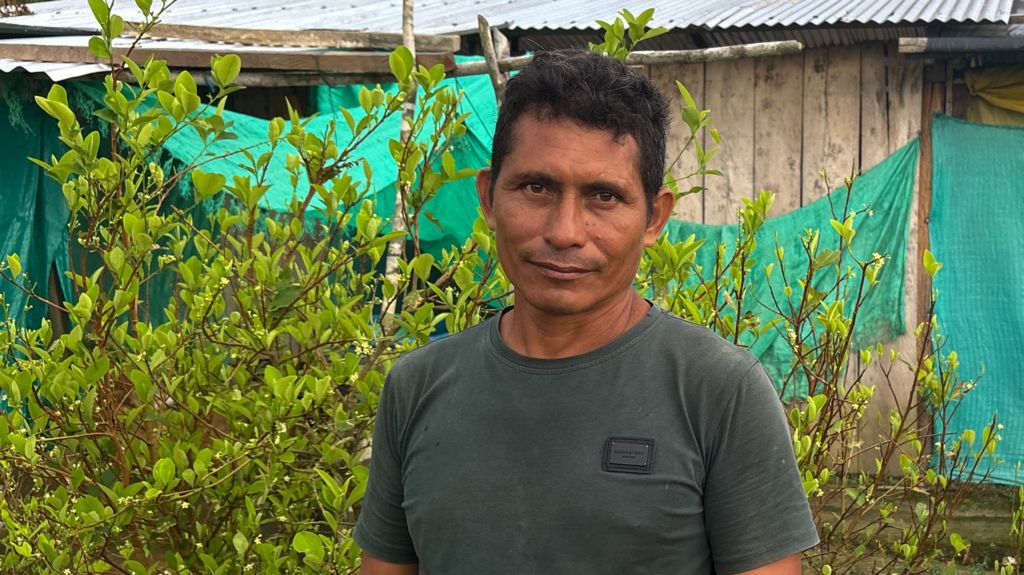
    Deep in the river-accessed remote farmlands of Colombia’s Meta province, coca farmer Juan Perea once made a promise: after pulling up every one of his coca bushes, he would never return to the crop that forms the base of illegal cocaine production. He replaced his illicit crop with legal staples – cassava and plantain – joining tens of thousands of Colombian smallholders who signed on to state-run initiatives designed to wean rural communities off coca cultivation. But for Perea, the support the government had guaranteed never materialized. Cut off from markets by a lack of paved roads and battered by repeated seasonal flooding that destroyed portions of his harvest, he had no way to earn a stable income to feed his family. By 2024, disillusioned and desperate, he replanted his fields with coca. “It’s a tragedy,” Perea said, standing amid the green bushes surrounding his small wooden home. “But when you have children and no work, what choice do you have? If no help ever arrives, you go back to growing it.”

    Coca has deep ancestral roots in Colombia, where indigenous communities have long used the leaf in traditional teas and remedies. Today, however, roughly 70% of the world’s illegal cocaine supply originates from Colombian coca crops, making the country central to the global trade in illicit drugs. For smallholder farmers, coca holds inherent economic advantages that legal crops struggle to match, explains Lucas Marín Llanes, a Colombian researcher specializing in the coca economy and substitution policy. Farmers can harvest three to four crops a year, the compact leaf is far easier to transport over unpaved rural terrain than bulkier legal produce, and growers face far less price volatility than they do with traditional agricultural goods. Marín’s own research found that between 2014 and 2019, coca cultivation boosted municipal GDP by as much as 10% in heavily affected growing regions, embedding the crop deeply into local economic systems.

    The most ambitious effort to date to reverse this trend grew out of the 2016 peace accord between the Colombian government and former guerrilla group FARC: the National Comprehensive Programme for the Substitution of Illicit Crops, known by its Spanish acronym PNIS. Launched nationally in 2017, the programme promised roughly 100,000 participating households 36 million Colombian pesos (around $11,000) in staggered financial support over two years, alongside technical agronomic guidance and support for soil management to help farmers transition to sustainable legal livelihoods. For Elena Hernández, who moved to Guaviare’s coca-growing region in the 1990s lured by higher wages, the initiative seemed like a path out of the violence and insecurity that had long defined the coca trade. Armed groups had battled for control of trafficking routes for decades, while government crackdowns – including manual eradication, aerial fumigation, and mass arrests – left families without income but failed to meaningfully reduce cultivation. “The way it was presented to us, it seemed very promising for the development of our territory,” Hernández said.

    In its early days, PNIS delivered results: across parts of southern Meta and Guaviare, coca fields were cleared and replaced with lemon groves, banana plantations, and small livestock operations. But systemic flaws quickly undermined progress. Payments were repeatedly delayed, and promised technical support rarely reached remote rural communities. Weak state presence in isolated growing regions and poor inter-agency coordination left thousands of participating farmers without the help they had been guaranteed. When Iván Duque took office as president in 2018, political priorities shifted back to forced eradication and security-focused crackdowns, draining momentum from the substitution initiative. By the time current President Gustavo Petro took office in 2022, PNIS was years behind schedule and failing to reach most target communities. Today, despite decades of interventions, Colombian coca cultivation sits at an all-time high, covering more than 250,000 hectares, with thousands of former substitution participants reporting they have been abandoned by the state.

    The programme has not been without its success stories, however. For Doralba Bejarano, a farmer in Puerto Rico, southern Meta, the stalled PNIS support eventually arrived, and her life has transformed for the better. “Before the programme we were terrified,” she explained. “We had to hide the coca paste because the police, the military, would put us in jail.” Today, she moves freely through her community without fear of arrest, and her local group now receives government support to market and sell legal produce. “I go wherever I want. I have no reason to hide,” she said.

    Beyond domestic policy failures, external forces continue to drive coca expansion. Global demand for cocaine remains high across traditional markets in the United States and Europe, and is growing rapidly in new markets around the world. “Right now there is expanding demand, and so there will be supply to meet that,” said Michael Weintraub, co-director of the Centre for the Study of Security and Drugs at Bogota’s University of the Andes. “That means Colombia will grow coca for the foreseeable future.” Weintraub added that Colombia’s ongoing security fragility further undermines substitution efforts: while the 2016 peace deal disbanded most of FARC, new armed groups have moved in to control trafficking routes and local coca economies, creating an unstable environment for legal development. The Petro administration’s “Total Peace” policy, which seeks to negotiate ceasefires with all active armed and criminal groups, has so far made limited progress, analysts note.

    In response to PNIS’s shortcomings, the government launched a new initiative, RenHacemos, last year, rolling it out first in pilot regions. The new programme retains the core commitment to financial support for participating farmers, but expands its scope beyond just crop replacement to tackle the entire local coca economy. Planned interventions include upgrading rural road infrastructure, expanding access to higher education, improving digital connectivity, and upgrading rural housing. “Coca is a business,” explained Gloria Miranda, director of the Colombian government agency in charge of illicit crop substitution. “It’s a criminal enterprise, but it functions like any other business. RenHacemos aims to replace not only the coca plant, but the entire economy surrounding it – from processing and agro-industry to transport and logistics.”

    Still, analysts remain sceptical that the new approach will deliver lasting change. Marín notes that the continuing record growth of coca cultivation demonstrates that decades of repeated policy interventions have failed to resolve the root drivers of the trade. For Perea and thousands of farmers like him, there is little confidence that government support will arrive any time soon. “The state has completely abandoned us,” he said. “We live day to day, sometimes even running out of food.” For now, he will keep growing coca – not out of a desire to participate in organized crime, he says, but because it is the only option he has to support his family. “We are not the drug traffickers – if I was, I wouldn’t be living like I do.”

  • New Zealand beats West Indies in a 1-wicket thriller to clinch ODI cricket series

    New Zealand beats West Indies in a 1-wicket thriller to clinch ODI cricket series

    BRIDGETOWN, Barbados – A dramatic final-over finish at Kensington Oval on Sunday delivered New Zealand a heart-stopping one-wicket victory over the West Indies in the fourth ODI of their five-match series, locking in an unassailable 3-1 series lead for the tourists ahead of Tuesday’s final fixture.

    The match was played under the shadow of mourning, just days after the passing of West Indian cricket icon Garry Sobers at the age of 89 in his hometown Bridgetown. Widely regarded as the greatest all-rounder in the history of international cricket – with more than 8,000 Test runs and 200 Test wickets to his name – Sobers cut his teeth at Kensington Oval, where the venue’s main pavilion bears his name. To honor his legacy, both teams wore black armbands, official flags were flown at half-mast across the ground, two seats were left vacant in the Sobers Pavilion, and a minute’s silence was held before the first ball. West Indies had entered the match with a fierce determination to seal a series-leveling win as a fitting tribute to their legendary compatriot.

    Play opened with New Zealand winning the toss and electing to bowl first, extending a curious trend that has seen the team bowling first claim victory in all four matches of the series so far. Batting conditions proved challenging from the first over, and West Indies collapsed to 81-6 before a resilient 81-run seventh-wicket partnership between wicketkeeper Amir Jangoo and spinner Gudakesh Motie dragged the hosts to a modest final total of 188 all out. Jangoo notched his first half-century of the series with a 71-ball 51, while Motie contributed a valuable 41 to the innings. For New Zealand, young pace bowler Matthew Fisher enjoyed a dream ODI debut with the ball, claiming 3 wickets for 40 runs including the prized scalp of West Indies captain Shai Hope, who fell to a searing cross-seamer that jagged sharply back into the top of off stump.

    New Zealand’s chase got off to a disastrous start, with the tourists slipping to 6-2 inside the first six overs. A steady 65-run fifth-wicket stand between batsman Mark Chapman and all-rounder Michael Bracewell pulled New Zealand back into control, with Chapman hitting a fluent 80 to put the visitors on the brink of victory. When Chapman was dismissed, New Zealand stood at 142-5, requiring just 47 more runs with almost 25 overs remaining – a target that looked well within their reach for a comfortable win.

    What followed was a breathtaking collapse that put West Indies on the cusp of a fairytale tribute win. A short rain break disrupted New Zealand’s rhythm, and Motie ripped through the tourists’ lower order, claiming Bracewell with his first delivery after the restart before quickly dismissing Nathan Smith, Jacob Duffy and Matthew Fisher. Motie finished the innings with outstanding figures of 5 wickets for 47 runs, while fast bowler Alzarri Joseph kept the pressure on with economical line and length that yielded just 23 runs from his allocation.

    New Zealand’s final pair of captain Mitchell Santner and No. 11 batter Jayden Lennox entered the match with the Black Caps needing just 8 runs to win. Santner inched the team within three runs of victory before a dropped catch off his own batting left the door open for a dramatic finish. When Santner left Lennox to face a full over from fast bowler Vitel Lawes, the last batter survived two separate reviews for caught behind and leg before wicket, turning aside confident West Indies appeals to stay at the crease.

    Lennox’s survival allowed Santner to hit the winning run from the very first ball of the 45th over, finishing the innings unbeaten on 34 and sealing the nervy win with 35 overs still to spare. Speaking after the match, Santner described the closing stages as chaotic.

    “It was pretty chaotic, especially the ending,” Santner said. “You try to chip off the total as much as you can. Even partnerships of 10 or 15 at that stage was going a long way. It probably shouldn’t have got that close but it was nice to get over the line.”

    West Indies captain Shai Hope praised his team’s fighting performance despite the narrow loss, noting that the tense match was a treat for neutral fans. “It’s been a really good cricket game for the onlookers,” Hope said. “If you watch a game like this as a neutral you’re going to be really happy to see play like this. It was one that could have gone to either side. I must commend our guys for the fight they showed.”

    After the match, New Zealand hold an unassailable 3-1 lead in the five-match series, having lost the opening fixture by seven wickets before claiming wins by five wickets in Game 2, six wickets in Game 3, and Sunday’s one-wicket thriller. The fifth and final match of the series will be held at Kensington Oval in Bridgetown this Tuesday.