博客

  • One month after earthquakes, Venezuelans still search for loved ones and answers

    One month after earthquakes, Venezuelans still search for loved ones and answers

    Thirty days have passed since powerful twin earthquakes tore through Venezuela’s northern coastline, and for countless grieving families, the agonizing search for the remains of missing loved ones continues, unfolding against a backdrop of unprocessed grief, mounting anger at official authorities, and deep uncertainty over the long road to recovery.

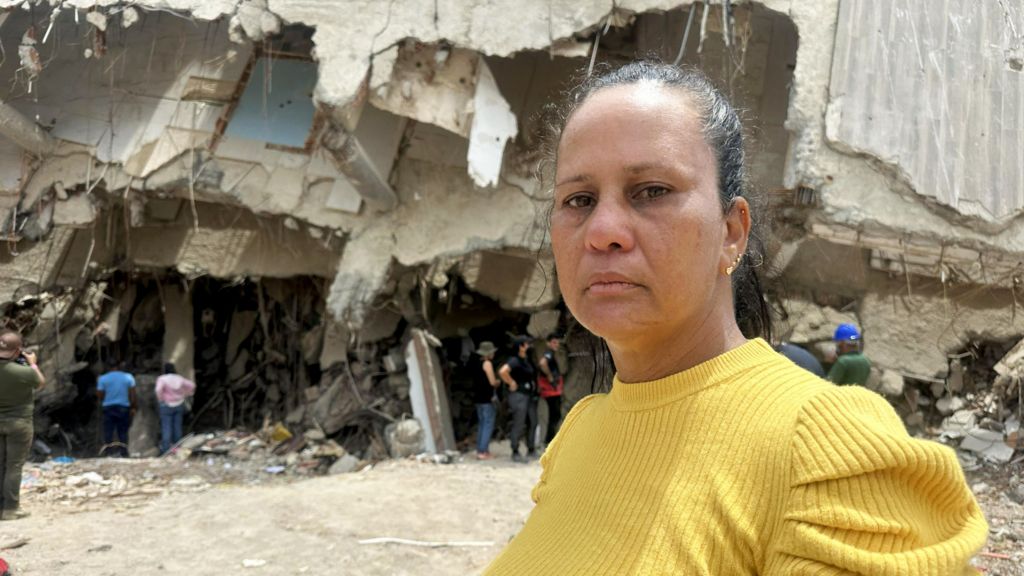
    For 49-year-old fisherman Victor Calderón, the tragedy struck while he was 18 days out at sea. When word arrived via radio that his family’s apartment building had collapsed, he rushed back to shore only to learn that 26 members of his extended family—ranging in age from a 2-year-old toddler to elders in their late 70s, including his sisters, stepfather, and nine cousins—were gone. “It’s a terrible, terrible thing,” he says, his voice tight with unwept emotion. “I haven’t cried for them yet, not until I find the last ones who are missing.” Today, Calderón and his two surviving family members live in a cramped tent on a local golf course, in what was Caraballeda’s OPPE 26 public housing complex, widely recognized as the epicenter of the disaster.

    Calderón’s story is far from unique. Official government data, updated daily, puts the confirmed death toll at more than 5,300, with over 16,500 people injured. While authorities have not released an official count of those still unaccounted for, independent estimates place the number of missing in the tens of thousands. As daylight faded at the OPPE 26 site recently, recovery teams pulled three more bodies from the twisted rebar and crumbled concrete, including that of an 11-year-old girl. As her small body was carefully wrapped in black sheeting, rescue workers paused their work to offer a silent prayer, while the father’s guttural howls of grief cut through the rumble of nearby earthmoving equipment. “This is soul-destroying,” said Magin Hernández, a member of a volunteer search team, wiping quiet tears. “For the rescuers, the families, the friends; just soul destroying.”

    Weeks after the disaster, nearly all of the international rescue teams that deployed to assist have departed, leaving families to sift through unstable rubble on their own. This abandonment has fueled widespread, palpable resentment toward the national government, with survivors questioning how 10 out of 12 residential buildings at the OPPE 26 complex completely collapsed. Many are demanding answers about whether flawed construction designs, cost-cutting shortcuts, or substandard building materials contributed to the disaster, and whether official negligence played a role.

    During a press tour of the affected area, Public Works Minister Juan José Ramírez pushed back against these claims, insisting the buildings were structurally sound. He argued that no country could have withstood the force of two nearly simultaneous earthquakes, moving in opposing directions, that leveled both public and private structures alike. “The earthquake didn’t discriminate between the two,” he said.

    A short distance away in the coastal town of Catia La Mar, Laura Barrios continues to dig through the remains of a collapsed private apartment building, searching for the body of her brother-in-law, still trapped in the building’s underground parking garage. It was in that same garage that security guard Hernán Gil was pulled alive eight days after the quakes, a rare miracle that briefly lifted the nation’s collective mood. But the international teams that assisted in that dramatic rescue have long since left, and even the heavy machinery assigned to clear unstable debris has been reassigned to another site—just one day after Barrios’ family recovered the bodies of her sister-in-law and the couple’s two young children, 10 and 3, found huddled together in their bedroom. “The other day was the Day of the Child in Venezuela,” Barrios said through sobs. “But we have no children to celebrate. Ours are gone.” Furious over the slow, inadequate government response, she says the removal of the heavy equipment she still desperately needs has drained her will to keep fighting. “What more can we say that this rubble doesn’t already tell us?” she asked, gesturing to the scattered remains of lives destroyed in just 39 seconds of shaking: lost children’s toys, unused cutlery, broken crockery, abandoned T-shirts, entire lifetimes erased.

    Amid the grief and anger, small acts of human solidarity persist. At meal queues run by US-based humanitarian group World Central Kitchen, survivors still share quiet jokes and warm hugs, holding onto their characteristic resilience in the face of unthinkable loss. But for most, the end of each day brings a return to flimsy nylon tents pitched along curbsides, their temporary homes for the foreseeable future. The acting government led by Delcy Rodríguez—who took office in January following the removal of former leader Nicolás Maduro by US forces—recently donated 200 temporary homes to displaced families, but aid groups estimate total need is more than 100 times that number.

    The scale of reconstruction is staggering: the World Bank estimates the twin quakes caused $19.6 billion in damage, a cost Venezuela is ill-equipped to cover. With US authorities currently controlling the country’s oil industry, its primary source of national revenue, the timeline and scope of long-term recovery remain deeply unclear. Thousands of families still wait for closure, their stories of loss adding up to a national trauma that has left an indelible scar on a country already grappling with political and economic upheaval.


  • How a new $4.5bn bridge became a symbol of a strained US-Canada relationship

    How a new $4.5bn bridge became a symbol of a strained US-Canada relationship

    After eight years of construction and multiple unplanned delays, the Gordie Howe International Bridge – a C$6.4bn cross-border infrastructure project connecting the North American automotive hubs of Detroit, Michigan and Windsor, Ontario – was meant to stand as a powerful symbol of unity between long-time allies Canada and the United States. Named for the legendary Canadian ice hockey star who spent most of his Hall of Fame career with the Detroit Red Wings, the bridge was set to host a joint inauguration ceremony this week attended by senior dignitaries from both nations. Instead, Canadian organizers have disinvited their American counterparts and will proceed with a solo national celebration on Friday, a dramatic shift triggered by former President Donald Trump’s latest threat to impose new tariffs on Canadian goods.

    The split inauguration is far more than a last-minute scheduling change: it lays bare the increasingly fraught trade relationship between the two neighboring countries, and amplifies mounting domestic political pressure on Canadian Prime Minister Mark Carney to navigate the ongoing standoff.

    The project’s origins stretch back almost 15 years, when Canada agreed to cover the full cost of construction to cut through American political gridlock and move forward with the critical trade artery, which was designed to alleviate dangerous bottlenecks at the existing Windsor-Detroit crossing. Every day, more than C$1bn in goods moves through this border corridor, making the new bridge a high-stakes asset for manufacturers and businesses on both sides of the border. When Canada took on the construction cost, the original agreement stipulated that the bridge would be jointly owned by the Canadian federal government and the state of Michigan, with Michigan gaining access to a share of toll revenues only after Canada recouped its full construction costs.

    That original framework started to unravel early this year, just weeks before a planned ribbon-cutting, when Trump announced he would block the bridge’s opening unless Canada agreed to cede shared authority and ownership to the US. “We should own, perhaps, at least one half of this asset,” Trump stated at the time. According to a New York Times report, the demand came just hours after billionaire Matthew Moroun – head of the Moroun family that owns the adjacent Ambassador Bridge, North America’s busiest privately owned commercial border crossing, and a top Trump donor – held a closed-door meeting with US Commerce Secretary Howard Lutnick.

    By June, Carney had agreed to a US request to delay the bridge’s opening to allow for additional negotiations. In a move that has sparked fierce domestic backlash, Ottawa agreed to split half of all bridge revenues for the next 15 years with an economic development fund controlled exclusively by the US government, a concession designed to unlock the project’s opening. Trump quickly celebrated the deal on social media, calling it “MUCH BETTER” for the United States.

    The latest rift over the inauguration comes as broader trade tensions between the two nations continue to escalate. During his election campaign, Carney vowed to tackle US trade disputes with an “elbows up” approach, a nod to the tough, physical playing style that made Gordie Howe a legend. But today, the prime minister faces growing criticism from political opponents who argue he has conceded too much to a US administration that a large share of Canadians view as acting in bad faith toward their country.

    Colin Robertson, a former Canadian diplomat and senior fellow at the Canadian Global Affairs Institute, told the BBC that working with the current US administration is unlike any previous experience for Canadian negotiators. “They renege on deals. They don’t follow agreements. It’s like dealing with pirates,” Robertson said.

    Beyond the bridge revenue dispute, the Carney government has already made a series of concessions the prime minister’s critics label as unnecessary, including dropping a planned digital services tax opposed by large US tech firms and rolling back some retaliatory tariffs imposed in response to earlier US trade measures. Conservative Member of Parliament Shuvaloy Majumdar argues the entire ordeal proves Canada has negotiated from a position of weakness as it pursues a broader comprehensive trade deal with the Trump administration. “Canadians are sick and tired of being made into a punching bag by President Trump and have the self-respect to fight for their existence and their country,” Majumdar said at a recent press conference. “They deserve a government that is willing to do the same thing.”

    Carney has also faced scrutiny over a lack of public transparency around the terms of the new bridge deal, particularly around how revenue sharing will be structured. During a press availability Thursday, he clarified that the original agreement with the state of Michigan to recoup construction costs remains in place, and the new US-focused revenue sharing arrangement runs “in parallel” to that original framework.

    Not all Canadian political leaders have criticized the deal. Ontario Premier Doug Ford praised Carney for “an excellent job of getting this deal done,” though he has also called Trump a “bully” and urged Ottawa to use Canada’s energy and critical mineral exports as leverage in ongoing trade talks. Robertson acknowledges that the revenue agreement is a clear concession, but argues it was a necessary compromise to protect cross-border commerce. “This new state-of-the-art bridge was done at a great expense, and yes we paid, but it is necessary to keep supply chains intact,” he said, noting that business communities on both sides of the border have pushed for years to get the bridge open.

    The split over how to approach US trade talks has already exposed deep cracks in Canada’s provincial consensus: while Ford pushes for a harder line, Alberta Premier Danielle Smith and Saskatchewan Premier Scott Moe have called for restraint. For Carney, the path forward remains uncertain. Robertson notes that while Gordie Howe played with “elbows up”, his ultimate goal was always to put the puck in the net – a metaphor for getting the critical infrastructure open. Even so, Robertson added, Canada has already reached the limit of what it should concede. “Any further concessions would be problematic and probably not in our interest, given the behaviour of the Trump administration up to now,” he said.

  • Major thing 4.8 million Aussies must do after Origin Energy hack

    Major thing 4.8 million Aussies must do after Origin Energy hack

    One of Australia’s largest utility providers, Origin Energy, has confirmed a major cybersecurity incident that has put the personal information of millions of its customers at risk, prompting urgent warnings for heightened scam awareness across the country. The unfolding breach, which was first flagged to the public last Wednesday, took a serious turn on Thursday when company executives confirmed that unauthorized actors had successfully accessed internal systems and stolen sensitive customer data.

    Initial media reports from *The Australian*, citing correspondence with the alleged perpetrator, claimed that roughly two million customer accounts had been compromised. To date, Origin Energy has not issued a confirmed number of affected accounts, out of its total 4.8 million residential and commercial customer base. According to the company’s official disclosure, the compromised data can include full names, residential addresses, dates of birth, contact telephone numbers, detailed account information, partial credit card numbers (only the final four digits), and partial bank account details (only the final three digits). Company officials have stressed that the incomplete financial information stolen cannot be used directly to make unauthorized purchases or access customer bank accounts, but that does not eliminate the long-term risk posed by the breach.

    Cybersecurity experts warn that the stolen data creates a perfect breeding ground for sophisticated targeted scams. Tyler McGee, head of Asia-Pacific operations for global cybersecurity firm McAfee, who himself received a breach warning from Origin, noted that scammers routinely leverage high-profile data breaches to exploit consumer trust. “Until there is full clarity around the scope of the breach, it is impossible to know exactly how exposed impacted consumers are, but the core fact remains: any stolen personal information allows scammers to craft more convincing targeted scams, either for their own use or to sell on to other criminal actors,” McGee explained. Stolen personal details let scammers create messages that reference specific personal information, making fraudulent communications appear legitimate, as if they came from Origin or another trusted business the customer interacts with regularly. For criminal groups, McGee added, this is a numbers game: even if only a tiny fraction of targets fall for the scam, the operation turns a profit.

    New details that emerged on Friday paint a clearer picture of the alleged perpetrator. *The Australian* reported that the hacker, who uses the online alias Edison Walhour, claims to be an Australian former Origin employee. The individual reportedly used a valid former employee login to access Origin’s customer management system, which is provided by third-party vendor Kraken. In a surprising development, the hacker has reportedly backed away from their initial threat to auction the full stolen dataset on public dark web marketplaces. It remains unclear what prompted this change of plans.

    In response to the incident, McGee has outlined clear steps Origin customers can take to protect themselves from subsequent scams. First, he advised all potentially impacted customers to update their online account passwords immediately and enable two-factor authentication wherever possible to block unauthorized access. Second, customers should exercise extreme caution around any unsolicited emails, text messages, or phone calls that ask them to click links, share personal information, or make payments. “Consumers need to maintain a heightened state of awareness for the foreseeable future, and anyone looking for extra protection should consider investing in commercial scam protection tools,” McGee added. He also noted that once personal data is leaked by criminals, it remains in circulation permanently, creating ongoing risk for affected individuals.

    McGee also pointed out that Australian companies are disproportionately targeted by hackers for two key structural reasons. Historically, Australian corporations have been more willing to pay large ransom demands to end breaches quickly, making them attractive targets. Additionally, Australian law enforcement has far limited capacity to pursue hackers based outside of the country, unlike jurisdictions such as the United States, which routinely works with international partners to extradite cybercriminals for prosecution.

    Origin Energy chief executive Frank Calabria has issued a formal apology to customers affected by the incident. “I am sorry this has happened. Customers trust Origin with their personal information, and I apologize for the stress and impact this may cause,” Calabria said. The company is currently working alongside independent cybersecurity experts and law enforcement authorities to investigate the breach, secure its systems, and mitigate further risk to customers.

    As the investigation continues, authorities and cybersecurity professionals are urging all 4.8 million Origin customers to remain alert to scam activity in the coming months, regardless of whether they have been formally notified that their data was compromised.

  • US imposes new tariffs on 60 partners as Trump rebuilds trade agenda

    US imposes new tariffs on 60 partners as Trump rebuilds trade agenda

    A fresh round of United States tariffs targeting 60 global trading partners entered into force on Friday, marking the Trump administration’s latest step to rebuild the sweeping import duty regime that was upended by a Supreme Court ruling earlier this year. This new measure replaces the temporary 10-percent tariff that expired the same day, after lasting just 150 days. The levies are set at two tiers, ranging from 10 percent to 12.5 percent, and impact most major global economies including China, India, and the European Union, covering the vast majority of U.S. trade volume.

    U.S. Trade Representative Jamieson Greer defended the new tariffs, framing them as a push for global adoption of forced labor import bans. “The United States has had a forced labor import ban for nearly a century, and rigorously enforces it; it’s well past time for our trading partners to do the same,” Greer stated. The tiered structure is designed to reward trading partners that have already adopted or committed to enforce similar forced labor prohibitions: those economies, including Canada, the European Union, India, and the United Kingdom, face the lower 10-percent rate, while China, Japan, South Korea and more than 30 other nations are assigned the higher 12.5 percent levy. A small group of economies including the EU, Taiwan, Japan, South Korea, and Switzerland receive partial exemptions under existing bilateral trade agreements with the U.S.

    The new tariffs were first proposed in June, developed after months of targeted investigation, and crafted specifically to withstand potential legal challenges. This careful legal structuring comes in direct response to a February Supreme Court ruling that struck down a large portion of Trump’s earlier tariff regime, stripping the White House of its ability to impose steep duties unchecked. Several categories of imports are carved out of the new measures: goods already subject to sector-specific tariffs such as steel and aluminum are not affected, along with certain energy products, fertilizers, and all goods covered by the U.S.-Mexico-Canada Agreement (USMCA).

    The announcement drew immediate pushback from affected economies. Japan issued a formal statement saying it “regrets” the new duties, while Australia’s trade minister labeled the measures “unjustified.”

    Beyond this broad tariff rollout, the Trump administration is currently conducting separate investigations into excess industrial capacity in 16 other economies, which could lead to additional targeted duties down the line. Trade experts note the structure of the new regime creates strategic leverage for Washington. By imposing a baseline tariff while keeping the threat of further increases on the table, the White House incentivizes trading partners to comply with existing trade commitments, according to Greta Peisch, a trade lawyer and former general counsel for the Office of the U.S. Trade Representative, now a partner at Wiley Rein. Peisch added that the months-long investigation process was intentional, designed to create a legally robust tariff regime that can survive court challenges.

    This legal robustness makes it far more likely the tariffs will remain in place for the rest of Trump’s term, signaling a permanent shift toward a more protectionist stance from the world’s largest economy, explained Josh Lipsky, senior analyst at the Atlantic Council. Lipsky also noted that the new tariffs will deliver an added benefit to the federal government by boosting overall revenue.

    Former U.S. trade official Ryan Majerus, now a partner at King & Spalding, noted that the Trump administration has actively been searching for legal frameworks that allow it to aggressively deploy tariffs. The current duties are authorized under Section 301 of the Trade Act of 1974, which Majerus said offers far more flexibility for adjusting rates and terms than many observers recognize, allowing officials to modify the measures as geopolitical and trade conditions shift.

    The latest broad tariff salvo comes on the heels of two other recent protectionist moves from the Trump administration: just weeks ago, a 25-percent tariff on a range of Brazilian goods went into effect, following accusations of unfair trade practices from Washington. This week, Trump also ordered a new 50-percent tariff on a wide swathe of Canadian products, citing Ottawa’s “discriminatory treatment” of U.S. alcohol, automobile, and dairy products. That Canadian tariff, set to take effect in one month, relies on an untested legal provision, demonstrating that the White House holds additional tools to quickly impose new trade measures if it chooses. Lipsky said this flurry of activity signals that existing U.S. trade agreements remain “fragile” in the current policy environment. Despite the uncertainty, the European Union — which has a existing trade pact with Washington — reaffirmed its expectation that the U.S. will honor the commitments laid out in the EU-U.S. Joint Statement.

  • British Open winner Ryan Fox arrives back in New Zealand, hankering for sleep and a pie

    British Open winner Ryan Fox arrives back in New Zealand, hankering for sleep and a pie

    After a whirlwind global victory lap that carried him across continents with golf’s most iconic prize, the Claret Jug, newly crowned British Open champion Ryan Fox touched down on home soil in New Zealand on Friday, already craving two simple post-triumph pleasures: a deep, uninterrupted sleep and one of his favorite local gourmet pies.

    The 39-year-old golfer was greeted with a warm family welcome at Auckland Airport, where his father Grant Fox — a former All Blacks rugby legend — pulled him into an embrace alongside Fox’s wife Anneke and their two children. Fox secured his first-ever major championship victory last Sunday at Royal Birkdale, clinching the title with a birdie on the tournament’s final 18th hole.

    “It’s good to be back,” Fox told reporters shortly after clearing customs.

    Just hours after his arrival, members of the press tracked the new champion down at his neighborhood bakery, where he was already digging into his go-to order: a loaded steak, bacon, jam and cheese pie. In the coming weeks, Fox says he plans to share his historic trophy with fans across the country, fit in a few fishing trips, and squeeze in a casual round of golf with old friends — but not before he catches up on much-needed rest. Since claiming the Claret Jug, his schedule has been packed with nonstop travel, media interviews and victory events, leaving little time for sleep.

    “I had a glass of wine, took a couple of sleeping pills and had more sleep last night than I’ve had the last four nights. It’s nice,” Fox shared. “I’m sure jetlag’s going to get me and I feel like I’m going to be pulled in every direction possible over the next 10 days or so we’re home. It’s definitely nice to be home.”

    Fox says he has already packed his golf clubs for casual outings with friends, though uncooperative weather may put a temporary hold on his plans. “We’ll see how it goes over the next couple of days. I’d like to catch up and play with some mates. I’ve had a look at the forecast and it doesn’t look real good over the next little while. I don’t want to play golf in the rain if I have to. But I’d like to get out on the course,” he explained.

    The champion also expressed deep gratitude for the outpouring of support he has received from New Zealanders and golf fans around the world since his historic win. “The support’s been unbelievable, to be honest; I can’t thank people enough,” he said.

    Fox also shared a piece of valuable advice he received from two-time PGA Championship winner Justin Thomas, who reached out to congratulate him after the victory. Thomas told Fox to hold onto every small memory of his first major win, as those moments will become meaningful touchstones down the line. Fox noted that perspective from a seasoned champion who has experienced both the high of major victory and the challenges of career slumps means a great deal.

    “Having someone who has gone through that — winning a major, accomplishing some dreams and then going through some down times as well,” Fox added. “I can imagine being able to draw on that is really important and a good nugget of advice.”

  • Sheikh Hasina ally to step down as Bangladesh’s president

    Sheikh Hasina ally to step down as Bangladesh’s president

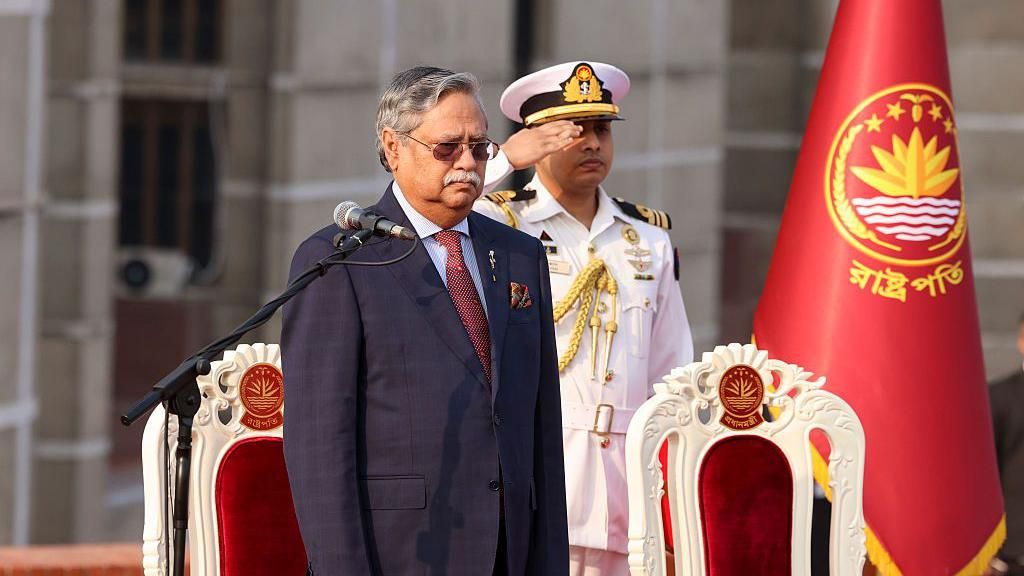
    Bangladesh is facing a new wave of political upheaval as President Mohammed Shahabuddin, one of the last remaining allies of ousted former Prime Minister Sheikh Hasina, prepares to step down from his post. The impending resignation comes amid growing speculation that Hasina, who was sentenced to death in absentia last year, will soon return to the country from her exile in India.

    Shahabuddin’s exit from office follows mounting pressure from leaders of the current ruling Bangladesh Nationalist Party (BNP), multiple anonymous sources confirmed to BBC Bangla. The 59-year-old president, who only took office in 2023 with a term scheduled to run through 2028, is expected to formally tender his resignation to Parliament Speaker Hafiz Uddin Ahmad on Friday. Ahmad, who has been receiving medical treatment in Thailand, has cut his trip short to return to Dhaka to receive the resignation, according to insider reports. Sources also indicate Shahabuddin is likely to cite health issues as the official reason for his departure, though political observers widely attribute the move to shifting power dynamics in the country.

    The trigger for Shahabuddin’s sudden decision traces back to recent comments from Hasina herself, who told Reuters earlier this month that she planned to return to Bangladesh to face the death sentence handed down against her by the country’s International Crimes Tribunal. Last year, widespread student-led protests against Hasina’s government erupted across Bangladesh, leaving more than 1,400 protesters dead after security forces used lethal force to suppress the unrest. The chaos ultimately forced Hasina to flee the country for neighboring India, and the tribunal later found her guilty of authorizing the crackdown, sentencing her to death in absentia.

    In the months after Hasina’s ousting, an interim government led by Nobel Peace Prize laureate Muhammad Yunus took power, and her long-ruling Awami League was banned from political activity. Hundreds of the party’s leaders have been arrested, and Hasina has repeatedly condemned what she calls widespread repression of her supporters. “My party leaders and workers are being subjected to tremendous repression,” she told Reuters in her recent interview. “If death comes, I want it to come on my own soil, where my parents are buried and where their blood was shed.”

    Shahabuddin was the only senior ally of Hasina who retained his position in government after the collapse of her administration. For months, he continued carrying out his ceremonial presidential duties under the new interim administration, but he made no secret of his discomfort in the role. In an interview with Reuters last December, he revealed he had felt “humiliated” after the interim government ordered his portraits removed from Bangladeshi embassies and consulates around the world. At the time, he said he would stay in office until general elections were held and allow the new elected government to determine his future.

    That election came in February, when the BNP secured a landslide victory that cemented its hold on national power. Even after the election, Shahabuddin remained in the presidency, but pressure for his resignation grew steadily as Hasina’s comments about returning home reignited tensions across the country.

    Current Home Minister Salahuddin Ahmed struck a measured tone when questioned by reporters on Thursday, noting that the government had not issued any formal demand for Shahabuddin to step down. He added that the Bangladeshi constitution explicitly grants the president the right to resign if he chooses to do so, confirming that the process would follow constitutional protocol.

    Under Bangladeshi law, if Shahabuddin follows through with his resignation, a new presidential election must be held within 90 days to fill the vacant post. Political analysts say the resignation clears the way for the BNP-led government to appoint a new head of state aligned with its policy priorities, as the country continues to navigate its post-Hasina political transition amid ongoing uncertainty over the ousted leader’s planned return.

  • Normalisation not discussed during months of Saudi-US nuclear negotiations, sources say

    Normalisation not discussed during months of Saudi-US nuclear negotiations, sources say

    Months of quiet, deliberate diplomacy between the United States and Saudi Arabia hit an unexpected cliff hours after the two countries signed a landmark civilian nuclear cooperation agreement last Wednesday, after former-turned-incumbent President Donald Trump unilaterally declared the entire deal depends on Riyadh normalizing ties with Israel via the Abraham Accords. This bombshell announcement contradicts what two U.S. officials familiar with the negotiations told Middle East Eye: for months of talks that began in November 2025, Saudi recognition of Israel was never raised as a requirement for the nuclear agreement.

    “Normalization was never listed as a condition. Not once,” one source confirmed to MEE. The contradiction has thrown a once-celebrated bilateral deal into chaos, leaving officials in Washington, Riyadh and across the Middle East scrambling to clarify the agreement’s future.

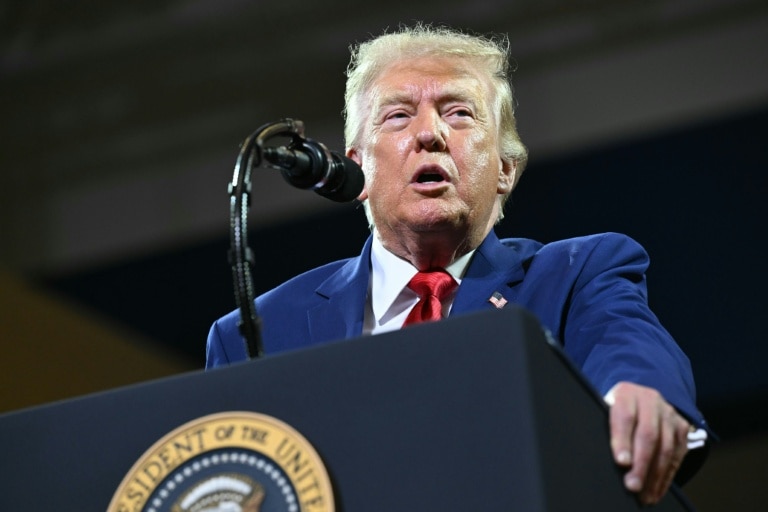
    Less than 24 hours after the nuclear 123 agreement was signed, Trump took to social media to assert that the deal was “totally subject to Saudi Arabia joining the very respected and successful Abraham Accords”. The surprise post caught U.S. and Arab officials off guard, even though Trump had spoken with Saudi Crown Prince Mohammed bin Salman earlier that same day, and top diplomats from both nations had also held a bilateral call that Wednesday. Trump has long positioned the 2020 Abraham Accords—through which the United Arab Emirates, Bahrain and Morocco normalized relations with Israel—as his signature foreign policy achievement, and has openly pushed Saudi Arabia to join the framework.

    Trump’s unilateral declaration has reshaped the entire context of a deal that experts say could reorient the strategic balance of the Middle East. The core point of contention centers on a provision in the still-unreleased agreement: multiple U.S. media outlets report the deal establishes a joint U.S.-Saudi working group to study the economic viability of domestic uranium enrichment in Saudi Arabia, a long-held Saudi policy goal framed as a matter of national sovereignty and energy independence. While U.S. allies including Japan and Brazil have secured 123 agreements that allow domestic enrichment, the UAE’s 2009 deal bars the country from the practice.

    Critics warn that permitting Saudi Arabia to enrich uranium could spark a regional nuclear arms race. If Riyadh moves forward with domestic enrichment, regional competitors including Turkey, the UAE and Qatar would likely pursue similar capabilities, they argue. Iran, which has defied international pressure to advance its own enrichment program amid years of regional conflict, would almost certainly harden its position, while Israel—the Middle East’s only undeclared nuclear-armed state—has made clear it opposes any shift that could erode its regional nuclear monopoly.

    Prior to Trump’s post, the agreement was framed as the culmination of steadily warming U.S.-Saudi ties, a reward for Riyadh’s longstanding stance opposing U.S. military escalation against Iran. The U.S. Department of Energy framed the pair of nuclear agreements (the 123 deal and a separate safeguards pact) as a decades-long, multi-billion-dollar partnership that advances both economic interests and nonproliferation goals, opening major new market access for U.S. nuclear firms while supporting Saudi Arabia’s growing energy demand.

    “These two agreements lay the legal foundation for a decades-long, multi-billion-dollar partnership that advances several priority economic and strategic objectives, including nuclear nonproliferation,” the DOE said in its original statement. “The 123 agreement provides great access for American companies in the Saudi nuclear energy program, benefiting American industry, workers, and supply chains while helping to meet Saudi energy needs.”

    Saudi Arabia has for its part consistently ruled out normalizing ties with Israel until the country commits to an irreversible path toward an independent Palestinian state. Saudi analysts note that Israel’s military campaign in Gaza has made any normalization politically impossible for Riyadh at present. This stance has shaped the kingdom’s negotiating strategy throughout the process: Saudi diplomats prioritized separating the nuclear cooperation track from any Israeli normalization talks, working for months to convince Trump—an administration focused on bilateral economic wins, with family business ties in the Gulf—to move forward with the nuclear deal regardless of progress on normalization.

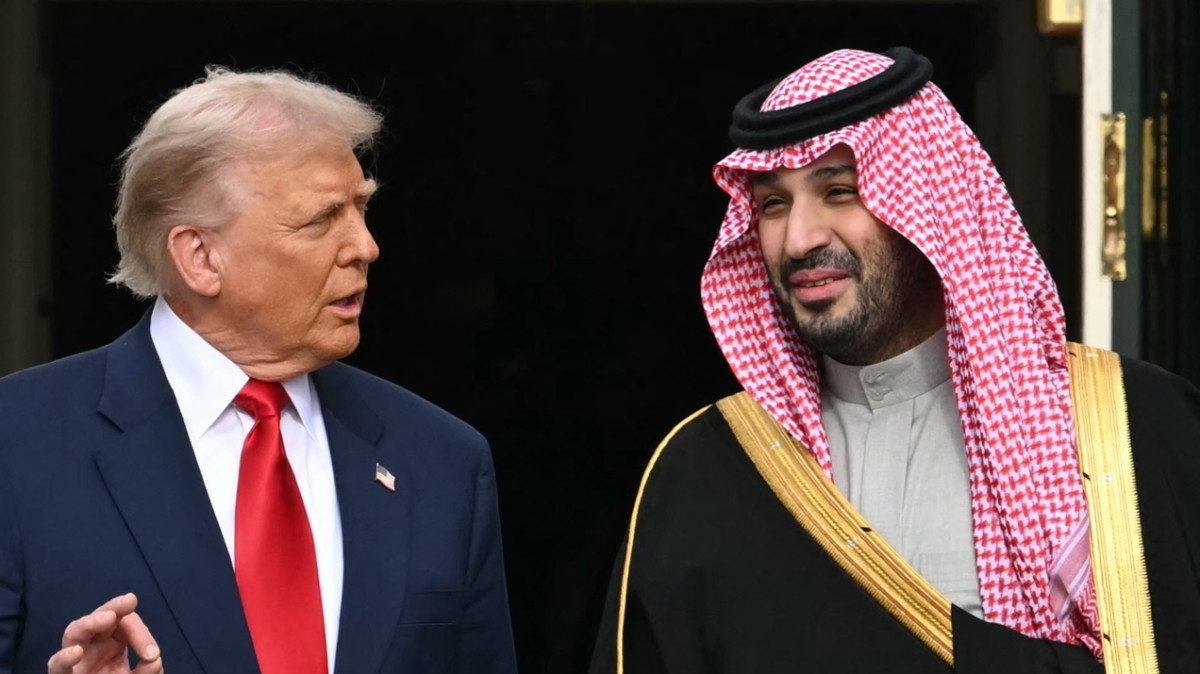
    The groundwork for the deal was laid during Crown Prince Mohammed bin Salman’s November 2025 visit to the White House, where he received a formal state welcome even after he declined pressure from Trump to move forward with normalization. Wednesday’s signing was viewed as the successful conclusion of that months-long process.
    “The decision to separate nuclear cooperation from the normalisation track reveals pragmatic American calculations,” said Hesham Alghannam, director general of strategic studies and national security programmes at Riyadh’s Naif Arab University, ahead of Trump’s announcement. “A thirty-year agreement that ties Riyadh to American nuclear supply chains would achieve a tangible commercial and strategic benefit for both countries. Everybody wins.”

    In the aftermath of Trump’s post, White House spokesperson Karoline Leavitt confirmed to reporters Thursday that Trump had not spoken with the crown prince since releasing the statement, and sidestepped questions about whether the normalization condition had been privately agreed to in prior talks. “The president is always the final dealmaker,” Leavitt said. “If they don’t join the Abraham Accords, the deal is off.”

    Middle East experts disagree on what comes next. Rosemary Kelanic, a Middle East analyst at the think tank Defense Priorities, noted that Trump’s social media post does not legally alter the agreement he already signed—but that he retains the power to scrap the deal entirely regardless. She added that permitting Saudi enrichment runs counter to U.S. national interests regardless of the Israel issue: “The US has no national interest, regardless of Israel, in allowing Saudi Arabia to enrich uranium. There are a million ways for US companies to make money without the risk of nuclear proliferation.”

    Other experts suggest Trump’s last-minute condition may be a strategic move to defuse opposition to the deal ahead of its mandatory congressional review. The agreement must be submitted to Congress, which can block it with a two-thirds majority, though Trump could override any rejection with a veto. Randa Slim, head of the Middle East programme at the Stimson Center, questioned whether the condition was added to win over skeptical lawmakers facing pressure from both the pro-Israel lobby and anti-Saudi advocacy groups.

    “You have to wonder who interfered in this? Who asked Trump to put that condition in – the Israelis? Or is this a way to counter pushback from the Israeli lobby and anti-Saudi lobby,” Slim told MEE. The fate of the bilateral nuclear deal now hangs in the balance, as Saudi leaders weigh whether to accept an unexpected new condition that contradicts months of agreed-upon negotiation, and regional powers watch closely for shifts that could reshape the Middle East’s security and nuclear landscape.

  • Perth bar owner says woman pestered him about entry to VIP area before she was allegedly raped: Court

    Perth bar owner says woman pestered him about entry to VIP area before she was allegedly raped: Court

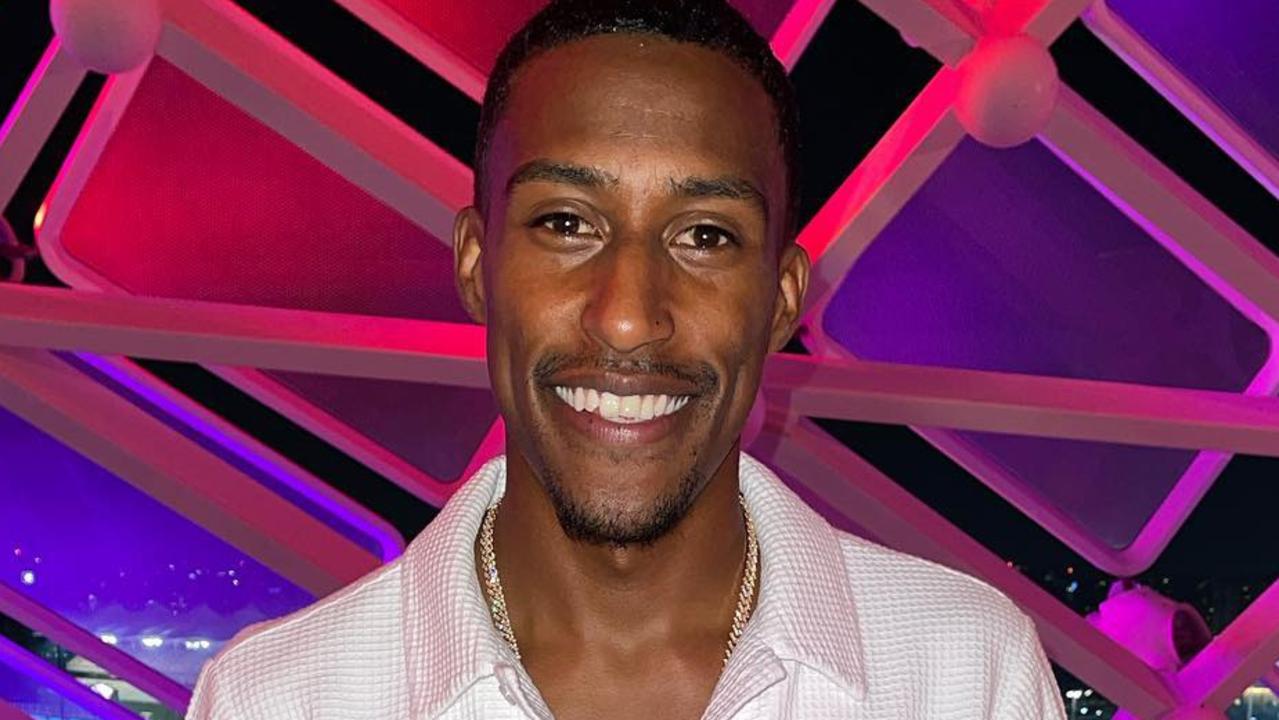
    A sexual assault trial unfolding in Western Australia’s Perth District Court has heard key testimony from the owner of the nightclub where British rapper Yung Filly performed the night an alleged attack took place. The rapper, legally named Andres Felipe Valencia Barrientos, has entered not guilty pleas to five charges including multiple counts of rape, assault, and intentional choking.

    Malcolm Pages, who owns Bar1 Nightclub, the venue that hosted the performer’s event, told the court the alleged victim repeatedly pestered him over several hours to gain entry to the restricted VIP section reserved for the celebrity and his entourage. Pages explained that venue protocols require strict approval for fan access to artist spaces, and he consistently told the woman she would need to wait for official authorization, which he calls getting “green lit.”

    The 20-something accuser, who cannot be named for legal reasons, did not limit her requests to in-person asks: she also sent multiple direct messages to the nightclub’s official Instagram account pressing for access. Pages told the court the repeated asks eventually became overwhelming, noting he encountered the woman asking for entry four to five additional times as the night progressed.

    Later in the evening, Pages observed the woman interacting socially with Yung Filly inside the VIP section, where roughly 30 to 40 other attendees were also gathered. While Pages noted that after-parties for performing artists are a common occurrence at his venue, he testified he had no knowledge of any planned after-party for Yung Filly on the night in question.

    According to the accuser’s account, she left Bar1 in a van alongside the rapper and his team, under the impression she was heading to a scheduled after-party. Instead, the group traveled to Perth’s Intercontinental Hotel, where she accompanied Yung Filly back to his hotel room. The woman told the court she initially agreed to consensual sexual activity with the rapper, but the encounter turned violent without warning. She alleges Yung Filly began biting, hitting, and choking her, continuing the assault even after she explicitly told him to stop.

    Prosecutors laid out their case that seven hours after the woman first met her celebrity crush, she fled the hotel with visible bruises and injuries across her face, neck, and entire body, sustained during what they argue was a prolonged sexual assault. Prosecutors summed up the accuser’s account to the court: “It was consensual until it wasn’t.” The trial is ongoing as additional witnesses and evidence are presented to the court.

  • ‘I will admit…’: Nathan Cleary yet to make up his mind on next deal, reveals scenario that could block move

    ‘I will admit…’: Nathan Cleary yet to make up his mind on next deal, reveals scenario that could block move

    One of the National Rugby League’s most decorated playmakers has opened up about the tricky personal factors complicating his upcoming contract decision, as his Penrith Panthers side notched a hard-fought win and locked in a new club record on Thursday night.

    28-year-old Nathan Cleary, the four-time premiership-winning halfback and New South Wales State of Origin hero, is currently contracted to Penrith through the end of the 2027 season, but the sport’s November 1 free agency window is fast approaching. If he declines to re-sign with the Panthers before the deadline, Cleary is widely expected to draw offers that shatter NRL salary records from a host of suitors across the globe.

    Potential destinations for the star playmaker have been heavily speculated in recent weeks. The newly proposed Bears and Chiefs expansion franchises have been cited as keen suitors, with the Papua New Guinea-based franchise able to offer extraordinary tax incentives that would outstrip any competing deal, even when third-party sponsorship agreements are added to other clubs’ offers. Overseas options have also been floated: a move to the European Super League or a switch to professional rugby union would allow Cleary to live closer to his partner, footballer Mary Fowler.

    Yet a return to the club where he debuted in 2016 remains a very real possibility, even after his father Ivan Cleary, the Panthers’ long-time head coach, steps down from his role at the end of the 2025 season.

    One reported move that Cleary has all but ruled out, however, is a shift to the New Zealand Warriors. Cleary, who spent much of his childhood in Auckland and grew up supporting the club, explained that a jump to the Warriors would put his younger brother Jett’s first-grade NRL dreams at risk.

    21-year-old Jett Cleary, who has not yet made his senior NRL debut, currently plays for the Warriors’ reserve side. Last season, he helped lead the team to both NSW Cup and State Championship titles, and is under contract with the Auckland club for another 12 months. With two other playmakers, Luke Metcalf and Luke Hanson, set to depart the Warriors at the end of the current season, Jett Cleary is on the cusp of earning his first senior call-up. Nathan Cleary noted that his arrival at the club would block that hard-earned pathway.

    Speaking to reporters Thursday night after Penrith’s win over Parramatta, Cleary said he is still weighing all his options and has not made a final decision on his future.

    “I still don’t know. I’m still in the process of thinking it over. I’m not sure yet,” Cleary said. “I wasn’t born in Auckland, but I grew up a fair bit there and I will admit I was a Warriors fan growing up. But at the end of the day, even if that was an option, I’d be blocking my little brother’s pathway. I’m not too sure about that. I want to put a bit more thought into it. The last few weeks there has been a bit of a comedown from Origin, and I’ve been trying to get back into routine with the boys and get back into consistent training. That sort of (contract) stuff will work itself out in the background.”

    Beyond Cleary’s contract update, Thursday’s match was a historic night for the Panthers. Winger Tom Jenkins scored his 26th try of the 2024 season, breaking a 21-year-old club record set by club legend Rhys Wesser, who notched 25 tries in the Panthers’ 2003 premiership-winning campaign. Jenkins still has a slim chance of breaking the all-time NRL single-season try record of 38, set by Dave Brown all the way back in 1935.

    Penrith ground out a gritty 14-12 win over Parramatta despite spending extended periods of the match with two players sin-binned. Ivan Cleary praised Jenkins’ historic achievement after full-time, highlighting the winger’s underrated all-around game that has allowed him to hit the record mark.

    “It’s a very, very good record. ‘Milky’ (Jenkins) has been amazing,” the Panthers head coach said. “Dyl (fullback Dylan Edwards) was saying a couple of weeks ago that his defence doesn’t get much recognition compared to the tries he scores, but his all-round game this year has been very consistent, and that’s probably why he’s been getting the tries. Rhys Wesser is a try machine and a bit of a legend in our club, so it’s pretty cool.”

    Right now, Cleary and the Panthers are fully focused on adding another premiership title to their already decorated collection, with contract talks set to play out behind the scenes in the coming months.

  • Is ‘superstar’ Pogacar’s Tour de France domination boring?

    Is ‘superstar’ Pogacar’s Tour de France domination boring?

    As 27-year-old Slovenian cycling star Tadej Pogacar stands on the cusp of matching the all-time record of five Tour de France titles, a fierce debate has broken out across the global cycling community over one pressing question: does his unprecedented dominance of the sport’s most prestigious race make professional cycling boring to watch?

    The conversation is not a new one, either. Periods of prolonged dominance by all-time greats have sparked the same discussion for decades. When Spanish legend Miguel Indurain claimed five consecutive Tour de France titles between 1991 and 1995, and when British star Chris Froome took four wins in five editions from 2013 to 2017, critics leveled the exact same accusation that is being aimed at Pogacar today. Interestingly, both Indurain and Froome were 27 and 28 respectively when they claimed their first Tour titles, putting Pogacar’s trajectory in a striking historical context.

    What makes Pogacar’s run even more remarkable is that according to conventional cycling wisdom, the 27-year-old is only just entering what should be his physical peak. That means fans could be looking at several more Tour de France titles from the Slovenian in the coming years. For his part, Pogacar makes no apologies for loving the feeling of crossing the finish line first. “Winning is nice. I will never deny it’s a nice feeling to cross the line first,” he told reporters this week.

    Not everyone in the peloton sees his dominance as a bad thing, however. Pogacar’s top rival, 26-year-old Belgian rider Remco Evenepoel, who currently sits second in the general classification after Thursday’s 18th stage, says racing against the Slovenian superstar is anything but boring. Evenepoel, who has pushed Pogacar hard in this year’s race, earning back-to-back stage wins on a mountain top finish and an individual time trial, says he views Pogacar’s historic performances as a benchmark to aspire to.

    “I see it as being super impressive, the performances that he’s putting out,” Evenepoel said. “I’m looking up to that, I try to learn from that and I try to reach that level as well. He’s a superstar, he’s the best rider ever, so I don’t think people should consider it as boring. I understand if you watch television and he goes whenever he wants, it looks boring. But for us, it’s a challenge and it’s a big honour to race against a champion like that. You should not forget, we are witnessing history.”

    Evenepoel’s admiration is shared by veteran cycling journalist David Walsh, who has covered the sport since the 1980s and witnessed first-hand the dominant eras of Indurain, Froome, and the drug-fueled reign of Lance Armstrong. Walsh, who famously exposed Armstrong’s decades-long doping scheme, says he has no doubts about the legitimacy of Pogacar’s success, and argues that the Slovenian makes domination feel exciting, unlike past dominant riders.

    “There were Tours where other riders were just as dominant,” Walsh told AFP. “Laurent Fignon for example in 1984 was really dominant. In a much less exciting way Miguel Indurain was dominant in the early 90s. That left me a little bit cold. This one doesn’t. Pogacar makes domination exciting.”

    Walsh drew a comparison to tennis legends Pete Sampras and Roger Federer, noting that unlike those two greats, who struggled on certain court surfaces, Pogacar wins across every type of terrain, even on routes that experts argue should not play to his strengths. “He’s a generational talent and my argument would always be, enjoy him because we shall almost certainly not see his like again,” Walsh added.

    Other outlets have offered a different perspective on the root of the perceived boredom. British publication *Cycling Weekly* argues that it is not Pogacar’s aggressive, high-risk riding style—marked by daring long-range attacks and superhuman uphill acceleration—that makes races feel dull, but rather the unmatched strength of his UAE Emirates-XRG team, which controls races from start to finish to support their star leader.

    French journalist Alexandre Roos of *l’Equipe* offered a historical perspective, noting that what feels boring to contemporary viewers often becomes legendary when viewed through the lens of history. Roos pointed to Eddy Merckx’s iconic 1969 stage 17 victory on the route to Mourenx, a ride that was dismissed as boring by spectators at the time but is now celebrated as one of the greatest performances in Tour de France history. “The stage to Mourenx was boring,” Roos said. “But almost 60 years later, we still talk about that stage to Mourenx as a legendary Tour stage.”

    As the 2024 Tour de France heads into its final stages, all eyes remain on Pogacar as he chases history, and the debate over whether his dominance is a curse or a gift to cycling looks set to continue for years to come.