博客

  • ‘I will admit…’: Nathan Cleary yet to make up his mind on next deal, reveals scenario that could block move

    ‘I will admit…’: Nathan Cleary yet to make up his mind on next deal, reveals scenario that could block move

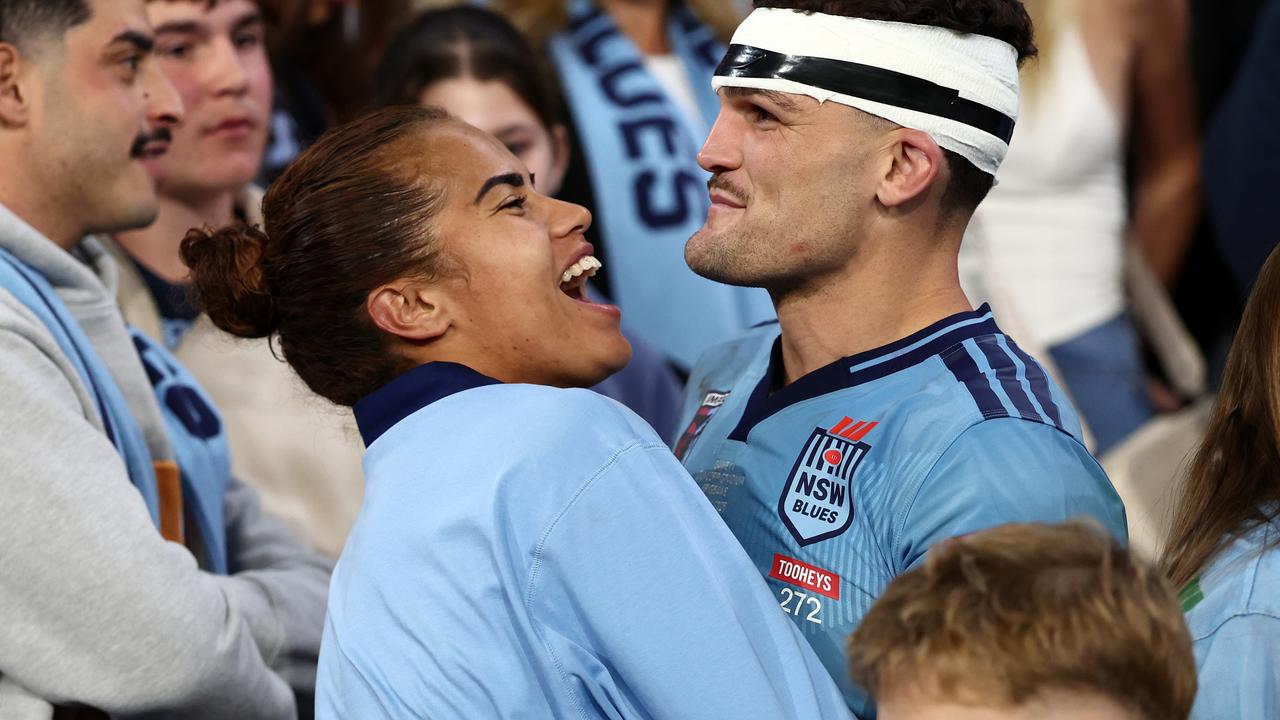
    One of the National Rugby League’s most decorated playmakers has opened up about the tricky personal factors complicating his upcoming contract decision, as his Penrith Panthers side notched a hard-fought win and locked in a new club record on Thursday night.

    28-year-old Nathan Cleary, the four-time premiership-winning halfback and New South Wales State of Origin hero, is currently contracted to Penrith through the end of the 2027 season, but the sport’s November 1 free agency window is fast approaching. If he declines to re-sign with the Panthers before the deadline, Cleary is widely expected to draw offers that shatter NRL salary records from a host of suitors across the globe.

    Potential destinations for the star playmaker have been heavily speculated in recent weeks. The newly proposed Bears and Chiefs expansion franchises have been cited as keen suitors, with the Papua New Guinea-based franchise able to offer extraordinary tax incentives that would outstrip any competing deal, even when third-party sponsorship agreements are added to other clubs’ offers. Overseas options have also been floated: a move to the European Super League or a switch to professional rugby union would allow Cleary to live closer to his partner, footballer Mary Fowler.

    Yet a return to the club where he debuted in 2016 remains a very real possibility, even after his father Ivan Cleary, the Panthers’ long-time head coach, steps down from his role at the end of the 2025 season.

    One reported move that Cleary has all but ruled out, however, is a shift to the New Zealand Warriors. Cleary, who spent much of his childhood in Auckland and grew up supporting the club, explained that a jump to the Warriors would put his younger brother Jett’s first-grade NRL dreams at risk.

    21-year-old Jett Cleary, who has not yet made his senior NRL debut, currently plays for the Warriors’ reserve side. Last season, he helped lead the team to both NSW Cup and State Championship titles, and is under contract with the Auckland club for another 12 months. With two other playmakers, Luke Metcalf and Luke Hanson, set to depart the Warriors at the end of the current season, Jett Cleary is on the cusp of earning his first senior call-up. Nathan Cleary noted that his arrival at the club would block that hard-earned pathway.

    Speaking to reporters Thursday night after Penrith’s win over Parramatta, Cleary said he is still weighing all his options and has not made a final decision on his future.

    “I still don’t know. I’m still in the process of thinking it over. I’m not sure yet,” Cleary said. “I wasn’t born in Auckland, but I grew up a fair bit there and I will admit I was a Warriors fan growing up. But at the end of the day, even if that was an option, I’d be blocking my little brother’s pathway. I’m not too sure about that. I want to put a bit more thought into it. The last few weeks there has been a bit of a comedown from Origin, and I’ve been trying to get back into routine with the boys and get back into consistent training. That sort of (contract) stuff will work itself out in the background.”

    Beyond Cleary’s contract update, Thursday’s match was a historic night for the Panthers. Winger Tom Jenkins scored his 26th try of the 2024 season, breaking a 21-year-old club record set by club legend Rhys Wesser, who notched 25 tries in the Panthers’ 2003 premiership-winning campaign. Jenkins still has a slim chance of breaking the all-time NRL single-season try record of 38, set by Dave Brown all the way back in 1935.

    Penrith ground out a gritty 14-12 win over Parramatta despite spending extended periods of the match with two players sin-binned. Ivan Cleary praised Jenkins’ historic achievement after full-time, highlighting the winger’s underrated all-around game that has allowed him to hit the record mark.

    “It’s a very, very good record. ‘Milky’ (Jenkins) has been amazing,” the Panthers head coach said. “Dyl (fullback Dylan Edwards) was saying a couple of weeks ago that his defence doesn’t get much recognition compared to the tries he scores, but his all-round game this year has been very consistent, and that’s probably why he’s been getting the tries. Rhys Wesser is a try machine and a bit of a legend in our club, so it’s pretty cool.”

    Right now, Cleary and the Panthers are fully focused on adding another premiership title to their already decorated collection, with contract talks set to play out behind the scenes in the coming months.

  • Is ‘superstar’ Pogacar’s Tour de France domination boring?

    Is ‘superstar’ Pogacar’s Tour de France domination boring?

    As 27-year-old Slovenian cycling star Tadej Pogacar stands on the cusp of matching the all-time record of five Tour de France titles, a fierce debate has broken out across the global cycling community over one pressing question: does his unprecedented dominance of the sport’s most prestigious race make professional cycling boring to watch?

    The conversation is not a new one, either. Periods of prolonged dominance by all-time greats have sparked the same discussion for decades. When Spanish legend Miguel Indurain claimed five consecutive Tour de France titles between 1991 and 1995, and when British star Chris Froome took four wins in five editions from 2013 to 2017, critics leveled the exact same accusation that is being aimed at Pogacar today. Interestingly, both Indurain and Froome were 27 and 28 respectively when they claimed their first Tour titles, putting Pogacar’s trajectory in a striking historical context.

    What makes Pogacar’s run even more remarkable is that according to conventional cycling wisdom, the 27-year-old is only just entering what should be his physical peak. That means fans could be looking at several more Tour de France titles from the Slovenian in the coming years. For his part, Pogacar makes no apologies for loving the feeling of crossing the finish line first. “Winning is nice. I will never deny it’s a nice feeling to cross the line first,” he told reporters this week.

    Not everyone in the peloton sees his dominance as a bad thing, however. Pogacar’s top rival, 26-year-old Belgian rider Remco Evenepoel, who currently sits second in the general classification after Thursday’s 18th stage, says racing against the Slovenian superstar is anything but boring. Evenepoel, who has pushed Pogacar hard in this year’s race, earning back-to-back stage wins on a mountain top finish and an individual time trial, says he views Pogacar’s historic performances as a benchmark to aspire to.

    “I see it as being super impressive, the performances that he’s putting out,” Evenepoel said. “I’m looking up to that, I try to learn from that and I try to reach that level as well. He’s a superstar, he’s the best rider ever, so I don’t think people should consider it as boring. I understand if you watch television and he goes whenever he wants, it looks boring. But for us, it’s a challenge and it’s a big honour to race against a champion like that. You should not forget, we are witnessing history.”

    Evenepoel’s admiration is shared by veteran cycling journalist David Walsh, who has covered the sport since the 1980s and witnessed first-hand the dominant eras of Indurain, Froome, and the drug-fueled reign of Lance Armstrong. Walsh, who famously exposed Armstrong’s decades-long doping scheme, says he has no doubts about the legitimacy of Pogacar’s success, and argues that the Slovenian makes domination feel exciting, unlike past dominant riders.

    “There were Tours where other riders were just as dominant,” Walsh told AFP. “Laurent Fignon for example in 1984 was really dominant. In a much less exciting way Miguel Indurain was dominant in the early 90s. That left me a little bit cold. This one doesn’t. Pogacar makes domination exciting.”

    Walsh drew a comparison to tennis legends Pete Sampras and Roger Federer, noting that unlike those two greats, who struggled on certain court surfaces, Pogacar wins across every type of terrain, even on routes that experts argue should not play to his strengths. “He’s a generational talent and my argument would always be, enjoy him because we shall almost certainly not see his like again,” Walsh added.

    Other outlets have offered a different perspective on the root of the perceived boredom. British publication *Cycling Weekly* argues that it is not Pogacar’s aggressive, high-risk riding style—marked by daring long-range attacks and superhuman uphill acceleration—that makes races feel dull, but rather the unmatched strength of his UAE Emirates-XRG team, which controls races from start to finish to support their star leader.

    French journalist Alexandre Roos of *l’Equipe* offered a historical perspective, noting that what feels boring to contemporary viewers often becomes legendary when viewed through the lens of history. Roos pointed to Eddy Merckx’s iconic 1969 stage 17 victory on the route to Mourenx, a ride that was dismissed as boring by spectators at the time but is now celebrated as one of the greatest performances in Tour de France history. “The stage to Mourenx was boring,” Roos said. “But almost 60 years later, we still talk about that stage to Mourenx as a legendary Tour stage.”

    As the 2024 Tour de France heads into its final stages, all eyes remain on Pogacar as he chases history, and the debate over whether his dominance is a curse or a gift to cycling looks set to continue for years to come.

  • Indian activist Wangchuk ends 26-day hunger strike as ‘Cockroach’ protesters vow to press on

    Indian activist Wangchuk ends 26-day hunger strike as ‘Cockroach’ protesters vow to press on

    NEW DELHI – After 26 days of refusing food, a hunger strike that became the catalyst for one of the largest grassroots protest movements India has seen in recent years, prominent Indian activist Sonam Wangchuk called off his fast on Friday. Even as Wangchuk ended his demonstration, the thousands of demonstrators who have gathered across the country made clear their campaign would not stop until the nation’s top education official steps down.

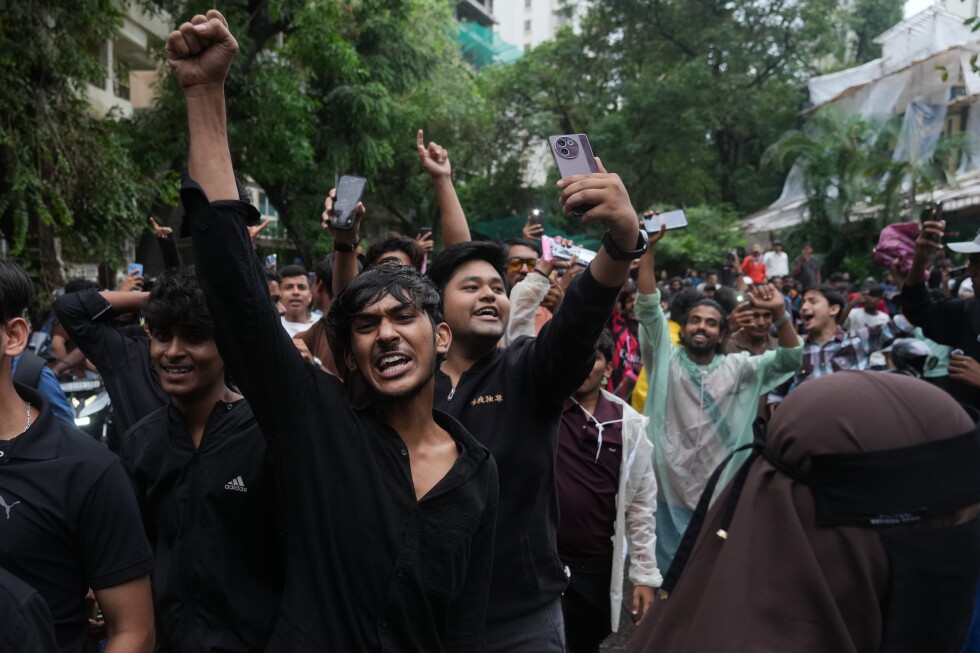
    Wangchuk’s extended fast emerged as a unifying rallying cry for the “Cockroach Protests,” a youth-led movement that launched more than a month ago. What began as a focused outcry over systemic gaps exposed by widespread leaks in India’s most competitive college and public service entrance exams quickly expanded into a broader movement channeling widespread public frustration over entrenched unemployment, weak government accountability, and shrinking economic opportunity for young people. Today, the movement draws participation from a cross-section of Indian society, including working professionals, working-class families, and veteran activists, with major demonstrations held in the capital New Delhi and major metropolitan centers across the nation.

    The sustained wave of dissent marks one of the most significant challenges to Prime Minister Narendra Modi’s government in recent years. Despite harsh police intervention earlier this week that saw officers deploy tear gas and baton charges to disperse thousands of marchers attempting to reach the national Parliament, protesters have continued to return to the streets in large numbers.

    In a public post on the social platform X, Wangchuk explained that he ended his fast during a meeting with two federal cabinet ministers, following appeals from dozens of members of India’s parliament and “a long negotiation on various conditions.” He added that the decision also came “in view of possible violence across the country,” though he offered no further details about the content of the closed-door negotiations.

    Movement organizers have rejected any tentative progress from talks, reaffirming that demonstrations will continue until Education Minister Dharmendra Pradhan resigns from his post. They have also called for coordinated protests across all of India’s states this Friday to stand in solidarity with student demonstrators who were beaten by police during a massive, thousand-person march to Parliament this week Monday.

    The movement’s unusual name carries a sharp political edge: it was coined by the Cockroach Janta Party, a satirical activist group that has led the campaign. The name references an offhand remark made by India’s chief justice of the Supreme Court, who compared unemployed young people to cockroaches. “We won’t let Sonam sir’s sacrifice go in vain,” said Abhijeet Dipke, the group’s founder.

    The end of Wangchuk’s hunger strike comes just one day after Prime Minister Modi broke his weeks-long silence to address the protests for the first time. In his first public remarks on the unrest, Modi announced plans to establish fast-track special courts to speed up prosecutions of individuals connected to exam paper leak schemes. He also released a separate video message, confirming that his government would introduce new legislation in Parliament to impose harsher penalties for paper leak offenses.

    But these policy announcements failed to ease protester anger, as movement leaders argue the measures do not go far enough to address core demands: comprehensive education reform, tangible improvements to government accountability, and financial compensation for the families of students who died by suicide in the wake of repeated exam leak scandals that have derailed thousands of young people’s career and education prospects.

  • Watch: Driver clad in Spider-Man outfit whisks man in a wheelchair across a busy road

    Watch: Driver clad in Spider-Man outfit whisks man in a wheelchair across a busy road

    A heartwarming small act of kindness has gone viral after dashcam and street surveillance footage captured an unusual good Samaritan stepping up to help a vulnerable road user at a crowded urban intersection. The video, which has spread rapidly across social media platforms, shows a driver who had stopped for a red light making an unexpected gesture: dressed head-to-toe in the iconic red and blue Spider-Man superhero costume, this driver exited his vehicle and rolled a man in a wheelchair across the heavy, multi-lane crossing, ensuring the disabled traveler made it to the other side safely amid moving traffic.

    The incident unfolded at a busy signalized intersection, where the wheelchair user had been stuck attempting to navigate the high-traffic crossing amid vehicles that had begun moving after a light change. The costumed driver, who was already stopped at the intersection, noticed the man’s struggle and acted immediately, moving quickly to guide the wheelchair through stopped and slowly moving cars before delivering him to the opposite sidewalk. Witnesses note that the entire exchange took just a few minutes, but the image of a person dressed as a beloved superhero carrying out a real act of heroism has resonated deeply with online audiences.

    While the identity of the Spider-Man-dressed driver has not been revealed as of yet, the footage has sparked a wave of positive reactions, with many social media users pointing out that the small, unplanned act of kindness fits perfectly with the core values the Spider-Man character is known for: with great power comes great responsibility, even for everyday good deeds.

  • Saudi and UAE showcase public display of unity after months of strained relations

    Saudi and UAE showcase public display of unity after months of strained relations

    After months of escalating public disputes that exposed deep rifts between the two Gulf monarchies, senior media officials from Saudi Arabia and the United Arab Emirates released synchronized social media statements Tuesday affirming the long-standing fraternal bonds between their nations and their shared commitment to unity under wise leadership.

    The coordinated posts, published on platform X at exactly 7:00 pm Riyadh time, came from Saudi Minister of Media Salman al-Dosary and Abdulla bin Mohamed Alhamed, chairman of the UAE National Media Authority.

    In his statement, Dosary framed the bilateral relationship as a connection rooted in shared history and common heritage that binds the two peoples together, rather than merely a formal diplomatic agreement between governments. He added that social media platforms bear a responsibility to push back against any actors that seek to spread false narratives about the state of Saudi-UAE relations, emphasizing that all public content about the ties between the two countries must prioritize factual accuracy.

    For his part, Alhamed stressed that Saudi Arabia and the UAE share a single collective destiny, and that the two states operate through close coordination and a unified strategic vision to build a future of shared prosperity for both their peoples and the broader Gulf region. Both statements reiterated that all media coverage from the two countries should center exclusively on these positive, unifying aspects of the bilateral relationship.

    The public display of unity comes after more than six months of growing tensions that spilled into public view, driven by divergent national interests on multiple critical regional and economic issues. Disagreements between Riyadh and Abu Dhabi have simmered for years, but recent disagreements have become impossible to conceal, most notably over oil policy, the future of the Yemeni conflict, and the appropriate response to the Israel-Iran conflict that has shaken regional security.

    The first high-profile public escalation came in December, when a Saudi air strike hit a shipment of UAE military supplies bound for the Southern Transitional Council, a Yemeni separatist faction that Abu Dhabi openly backs. Following that incident, tensions boiled over into the public sphere, with influential social media accounts, political pundits and state-aligned news outlets from both nations engaging in weeks of heated public feuds. By March, the UAE moved to restrict access, blocking the official X account of Saudi-owned major news network Al-Arabiya.

    The rift widened further during the regional conflict sparked by Iran’s strikes on Israel, a confrontation that put Gulf states at direct risk of escalation. The UAE adopted a sharply hawkish stance, reportedly carrying out dozens of unacknowledged air strikes against Iranian targets – exposing a far deeper and earlier involvement in the conflict than the international community had previously recognized. Saudi Arabia, by contrast, opted for a more hedged, pragmatic approach: it condemned Iran’s attacks on fellow Gulf states and agreed to open the King Fahd Air Base in Taif to U.S. forces, while also working quietly through diplomatic channels in Islamabad to push for negotiated de-escalation with Tehran.

    In May, the UAE announced its departure from OPEC, the Riyadh-led intergovernmental oil production cartel that has coordinated global oil supply for decades. Shortly after withdrawing, Abu Dhabi moved to sharply ramp up its own crude oil production, a move that put it in direct competition with Saudi Arabia’s production cut policies aimed at supporting global oil prices.

    By July, independent regional outlet Middle East Eye described the two neighboring powers as being “embroiled in an economic war of attrition”, with international business leaders reportedly drafting contingency plans to prepare for a potential further breakdown in bilateral relations that could disrupt cross-border trade and investment. In recent weeks, reports have emerged confirming that Saudi financial authorities have delayed or blocked a growing number of money transfers to UAE-based accounts, stoking fears that the political rift was already starting to damage commercial ties between the two economic hubs.

    Multiple sources told the Financial Times that payments from Saudi banks to Dubai-based accounts held by UAE companies and foreign individuals have been repeatedly returned or put on hold since May, often without any formal explanation from Saudi regulators. One Western executive at a Dubai-based healthcare firm told the outlet that Saudi banks had blocked and returned multiple payments from a long-standing Saudi client starting in mid-May. In response to queries, Saudi Arabia’s central bank denied implementing any “direct restrictions on specific countries” in its oversight of cross-border payments.

    The push for renewed unity comes as the region faces growing shared security threats. In recent days, Gulf Cooperation Council Secretary General Jasem Mohamed Albudaiwi joined senior diplomats from both Saudi Arabia and the UAE to call for coordinated regional action in response to rising Iranian-linked attacks and Houthi threats to impose a full maritime blockade on Saudi shipping lanes.

    On Monday, the Saudi-led military coalition operating in Yemen announced it would respond to Houthi threats against commercial shipping with “decisive force”, after the Yemeni rebel group formally declared a naval blockade on Saudi ports. Just this Thursday, the UAE officially condemned a recent Houthi attack targeting the Saudi-flagged cargo vessel Encelad as it transited the Red Sea, calling on the international community to enforce existing UN Security Council resolutions – including Resolution 2216 on Yemen and Resolution 2722, which protects freedom of navigation in the Red Sea.

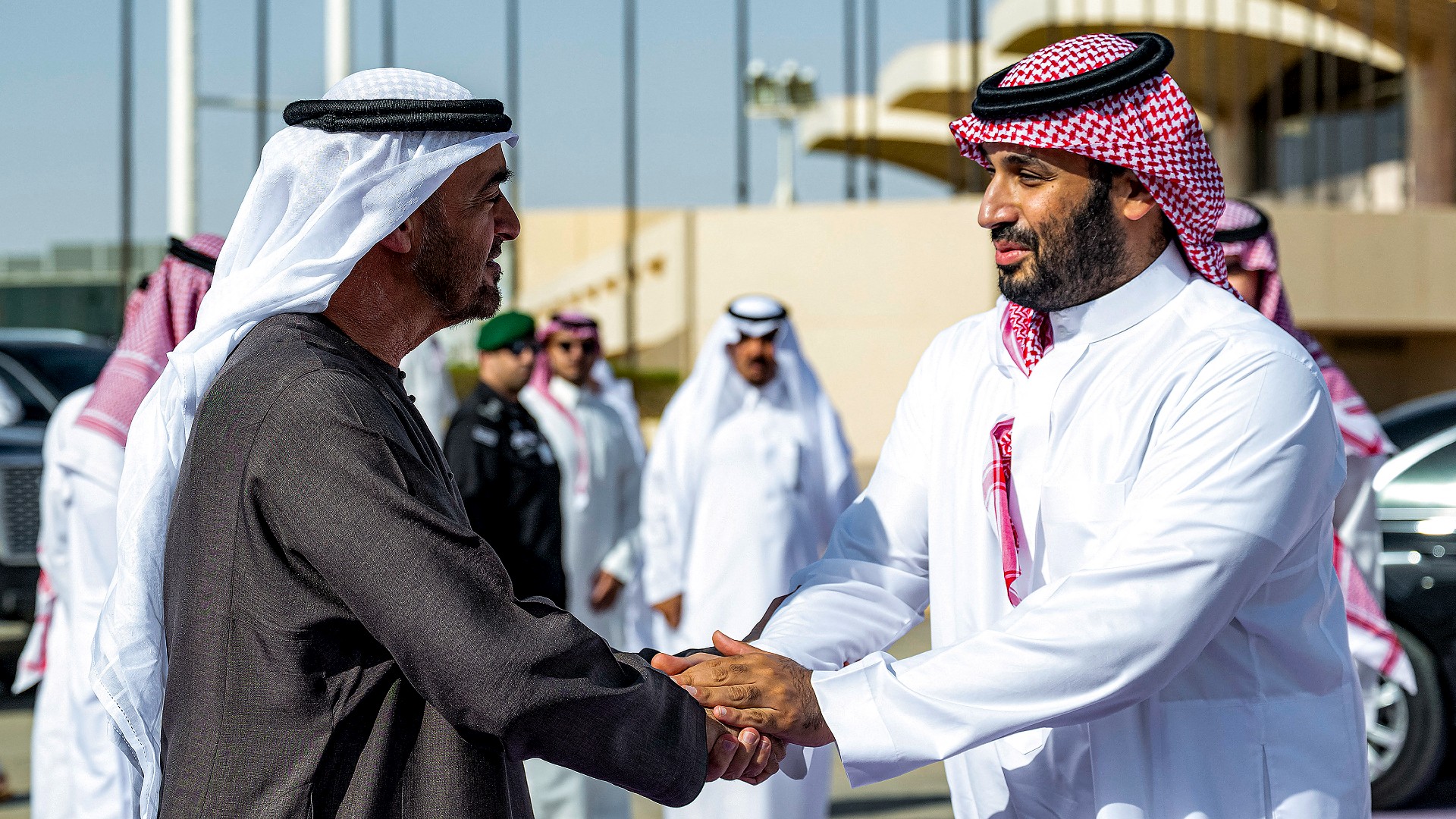
    The synchronized media statements Tuesday were preceded by a public signal of rapprochement just an hour earlier, when Turki Alalshikh, advisor to the Saudi Royal Court and head of Saudi Arabia’s General Entertainment Authority, posted a previously unshared photograph on X. The image shows Saudi Defence Minister Khalid bin Salman and UAE Vice President Sheikh Mansour bin Zayed al-Nahyan standing with their arms around one another, both smiling. Alalshikh captioned the post: “Saudi Arabia and the UAE: a story of brotherly relations and a deeply rooted partnership.”

    Anwar Gargash, diplomatic advisor to the UAE president, reposted the image with an proverbial caption nodding to the value of unity: “The spears refuse, when gathered, to be broken… and when they part, they break one by one.”

  • Victoria’s unemployment rate surges as experts warn of ‘economic problems’

    Victoria’s unemployment rate surges as experts warn of ‘economic problems’

    Fresh official labor data released this week has laid bare the deepening economic underperformance of Victoria, Australia’s second-most populous state, which is now dragging down national employment metrics and amplifying fears of additional interest rate hikes that could further strain household budgets across the country.

    Data published by the Australian Bureau of Statistics (ABS) on Thursday showed Australia’s overall unemployment rate held steady at 4.4% for the second consecutive month, defying forecasts of a small uptick. But beneath this stable national headline, Victoria’s labor market tells a far grimmer story: the state’s unemployment rate currently sits at 5.1%, a full 0.7 percentage points above the national average. To make the disparity starker, nearly one-third of all unemployed Australians – a total of 200,000 people – now reside in Victoria.

    Independent veteran economist Saul Eslake explained that Victoria’s drag on the national economy has been building for decades, a trend that predates recent state Labor governments but has worsened significantly under current leadership. “If you strip out the boost to headline gross domestic product growth that comes from Victoria’s faster population growth, the state has underperformed the rest of Australia for a long time,” Eslake told Sky News. “Over the past 20 years, Victoria has slipped from being one of Australia’s wealthiest states to now ranking as either the second or third poorest, depending on the metric you use.”

    Eslake added that per capita household disposable income in Victoria is now lower than the figure recorded in Tasmania, with only South Australia recording a lower income level across the country. He also noted the state has become increasingly reliant on federal Goods and Services Tax (GST) redistribution revenue to prop up its ailing public finances and sluggish growth.

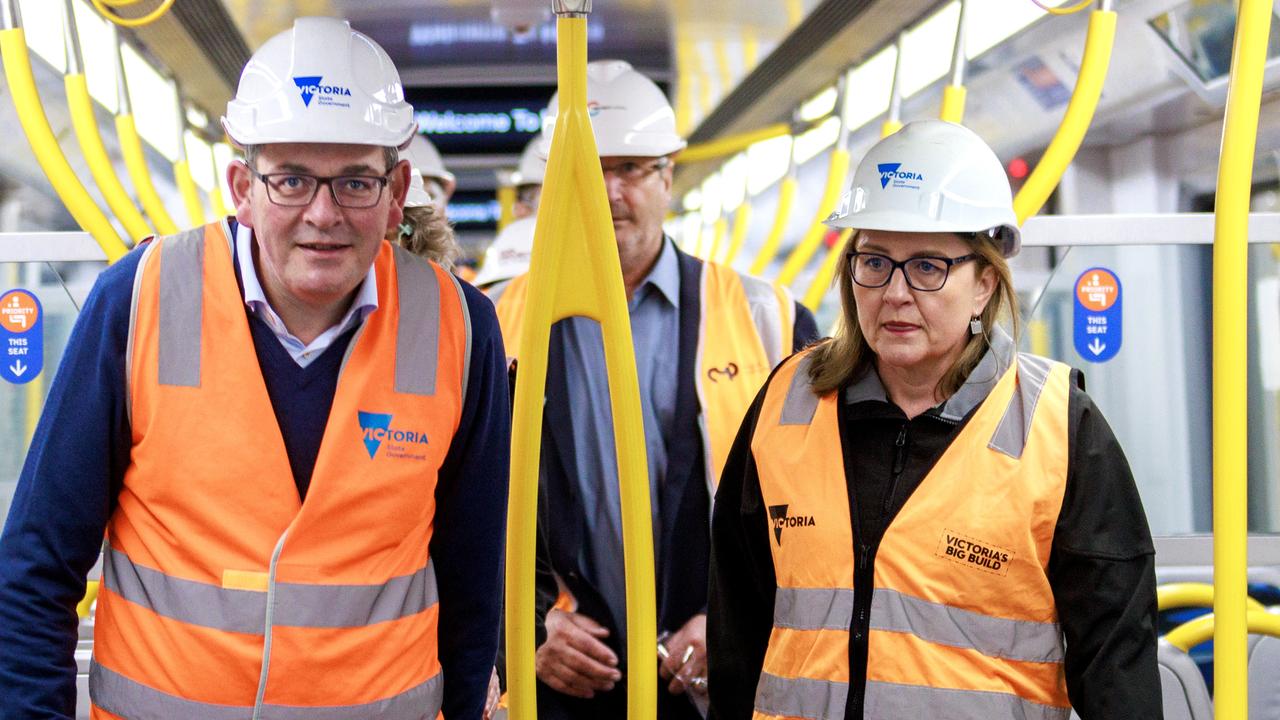
    The weak jobs numbers have reignited political pressure on Victorian Premier Jacinta Allan, just three months out from the state’s November 28 election. Unconfirmed public rumors have circulated that Allan could face an internal leadership challenge as early as next week, when the state parliament reconvenes for its final sitting before the poll.

    Beyond the state-level political and economic impacts, the uneven labor data has reinforced market and analyst expectations that the Reserve Bank of Australia (RBA) will move to raise interest rates further to combat persistent inflation, with some experts warning the hikes could hit Victoria harder than any other state.

    Warren Hogan, managing director of EQ Economics, warned that Victoria and New South Wales are the two most vulnerable state economies to additional monetary tightening, due to their high concentrations of mortgage holders and elevated household debt levels. Hogan projects that the RBA could implement up to three more rate hikes, adding a total of 75 basis points to the official cash rate and pushing it back above 5%.

    “Victoria already has a soft economy, and the state government’s massive and expanding footprint is impacting every sector,” Hogan said. “If we see multiple rate hikes, this state will get hit extremely hard.” He added that ongoing high government spending across Australia has added to inflationary pressures: national government spending has grown at roughly 3% annually, outpacing the economy’s potential growth rate of around 2%, eliminating a key potential source of relief for inflation.

    Over the past two years alone, Victoria’s unemployment rate has climbed by almost two percentage points, rising from a low of around 3.25% to its current level above 5%, Hogan noted.

    Cameron McCormack, senior portfolio manager at global investment firm VanEck, echoed the expectation for more rate hikes, forecasting at least one additional increase before the end of 2024, with a significant chance of two hikes. He explained that the resilience of the national labor market is keeping wage and inflation pressures elevated, removing the RBA’s incentive to pause rate hikes.

    “Australia’s labor market is refusing to cool, which means it isn’t giving the RBA the breathing room it needs to hold rates steady,” McCormack said. “With the labor market remaining close to full employment for a second straight month, the RBA has clear room to focus squarely on taming inflation.”

    He pointed to two key additional inflationary pressures: the 4.75% increase in minimum award wages that took effect this month, and the recent sharp rise in global oil prices. Labor-intensive service sectors such as hospitality and restaurants are already starting to pass higher wage costs through to consumers, McCormack said, and if energy and wage pressures begin to feed more broadly into core inflation, the RBA could pull forward its next rate increase.

    Looking at the fine print of Thursday’s jobs report, national employment actually rose by 76,000 positions in June, though 47,000 of those new roles were part-time positions, while 13,000 full-time jobs were lost. The unemployment rate held steady rather than falling only because the labor force participation rate – a measure of how many working-age people are active in the labor market – rose 0.3 percentage points to 67%, expanding the pool of people counted as unemployed.

  • Replica of the Virgin Mary’s House draws Catholic devotees in the Philippines

    Replica of the Virgin Mary’s House draws Catholic devotees in the Philippines

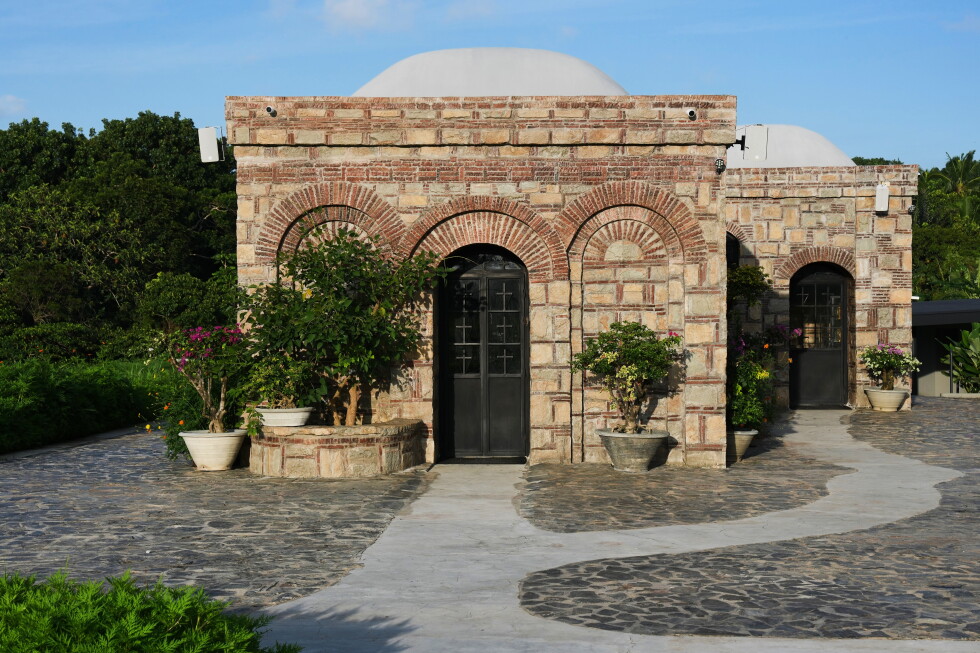
    Nearly 9,000 kilometers from the original House of the Virgin Mary in Ephesus, Turkey, a full-size, exact replica of the sacred shrine has opened its doors to pilgrims in the Catholic-majority nation of the Philippines. Inaugurated in early 2024, the site sits in a quiet field outside Alfonso, a small town in Cavite province roughly 70 kilometers south of the capital Manila, offering local devotees a accessible pilgrimage destination that has long required a costly trip across continents.

    The project was spearheaded by Dennis Paez, a Catholic priest and psychologist who works with vulnerable youth. From the earliest planning stages, Paez framed the replica as far more than a copy of a historic sacred site: it was conceived to be a judgment-free place of refuge for people facing hardship, grief, or uncertainty. “The idea began as a place of refuge,” Paez explained. “This is a place where no questions are asked.” For Paez, who specializes in supporting young people navigating life struggles, the space fills a unique emotional and spiritual need. “There is no therapy here. The therapist is our Mother,” he said, referring to the Virgin Mary.

    Construction of the 67-square-meter structure took roughly 10 months to complete, and mirrors every architectural detail of the original Ephesus site, from its overall dimensions and shape to the appearance of each individual stone. A particularly notable element of the build was the participation of workers from multiple different faith traditions across the Philippines — a reality Paez says embodies the unifying spirit of the site, demonstrating how the Virgin Mary brings people of all backgrounds together as one community.

    Per long-held Catholic tradition, the original House of the Virgin Mary in Ephesus is where Mary lived out her final years after the crucifixion of Jesus Christ. According to religious lore, the apostle John brought Mary to the region to protect her from religious persecution in Jerusalem, and she remained there until her assumption into heaven. For centuries, the site has been one of the most important Catholic pilgrimage destinations in the world, drawing millions of visitors annually from across the globe.

    The new replica fits seamlessly into the deep-rooted culture of Marian devotion that has defined Filipino Catholicism for more than 500 years. The Philippines is home to roughly 113 million people, nearly 80 percent of whom identify as Roman Catholic. Devotion to the Virgin Mary, widely referred to by Filipino faithful as the Blessed Mother, has been a core part of national religious life since Spanish colonizers introduced Christianity to the archipelago in the 16th century.

    Religious historian Michael Delos Reyes notes that this devotion has taken on unique national meaning through key moments of modern Philippine history. Many Filipinos credit the Virgin Mary’s intercession for the peaceful 1986 People Power Revolution that ousted authoritarian president Ferdinand Marcos. When Typhoon Haiyan, one of the most powerful tropical cyclones ever recorded, devastated the central city of Tacloban in 2013, survivors turned to the Blessed Mother as a source of hope and resilience amid overwhelming tragedy.

    Deirdre de la Cruz, a professor of history and Southeast Asian studies at the University of Michigan, explains that Mary’s maternal identity is the core of her deep resonance in Filipino culture. “To Jesus through Mary” is a common phrase that sums up her central role in Filipino spiritual life, with believers turning to her to intercede on their behalf before God. “Her maternal dimension is what Filipinos find meaningful, as well as her power to intercede on believers’ behalf,” de la Cruz said. “As someone who is known to provide comfort, Mary is a very familiar figure and someone to whom one can appeal in difficult times.” This deep cultural attachment is visible across daily life: Marian images and rosaries are common fixtures in Filipino homes, private altars, vehicles, public transport, and community spaces across both urban and rural areas.

    Inside the new Alfonso replica, donated Marian icons from across the country line the walls, with a statue of Mary modeled on the original Ephesus sculpture standing at the center, alongside a relic believed to be a fragment of the Virgin Mary’s veil. Most of the displayed icons were donated by Maritess Pineda, an art collector and Filipino culture advocate who had spent years building a private collection of Marian art, and welcomed the chance to give the collection a permanent public home at the new shrine.

    For many local faithful who had already visited the original Ephesus site, the project felt like a calling to contribute. Rupert Suarez and his wife traveled to Turkey to visit the original House of the Virgin Mary years ago, and when they learned about plans to build a local replica, they immediately joined the project. “It’s so very blessed that we already have this replica built,” Suarez said.

    Personal stories of comfort and renewal abound among early visitors. Daphne Oseña Paez, a recent pilgrim, said her devotion to Mary grew deeper in adulthood after a difficult high-risk pregnancy left her seeking spiritual refuge. “We don’t pray to Mary herself, but Mary intercedes for us,” she explained. “In my times of trouble, and I’ve had a lot, I really clung on to the love and comfort of her as a mother.”

    Despite minimal public promotion since its 2024 inauguration, the shrine has already drawn a steady stream of pilgrims seeking refuge and connection. For Paez, this organic growth is no accident. “I don’t at all think that it is me bringing them,” Paez said. “It’s The Blessed Mother asking them, inviting them to come.”

  • From prison fears to fireworks, Chinese pastor recounts sudden release after Trump’s intervention

    From prison fears to fireworks, Chinese pastor recounts sudden release after Trump’s intervention

    In a stunning, rapid reversal of fortune that spanned just 24 hours and 15 time zones, prominent Chinese underground Christian pastor Ezra Jin Mingri went from fearing a 15-year prison term in a southern Chinese detention center to reuniting with his family in Los Angeles, where he celebrated the U.S. Independence Day weekend marking the nation’s 250th anniversary.

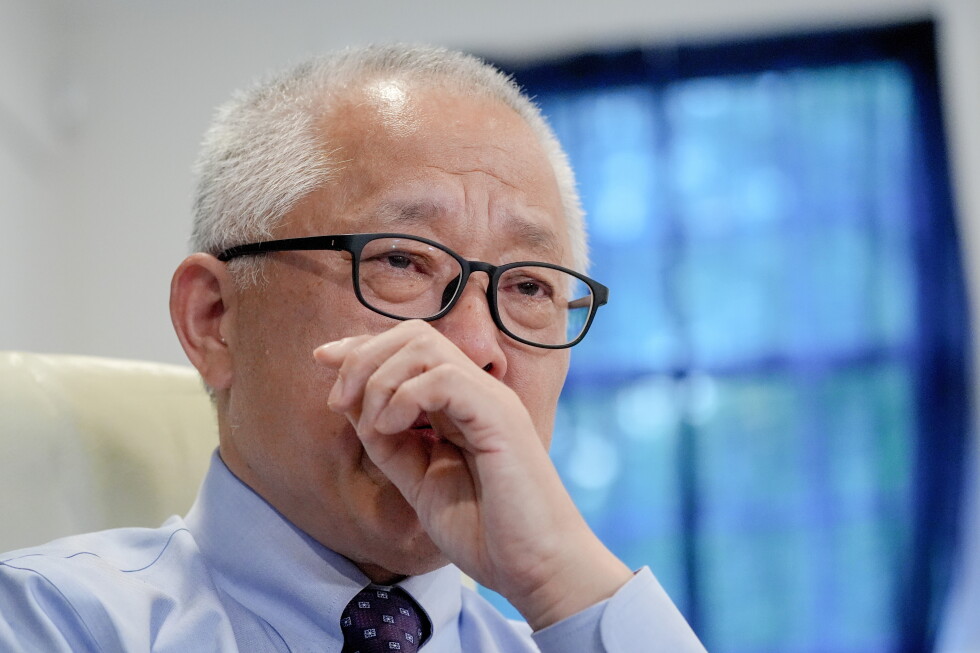
    The 57-year-old religious leader, who founded one of China’s largest and most influential unregistered Christian congregations, Zion Church, had spent 266 days in custody after being detained alongside other church leaders in a October 2025 government crackdown. Before his sudden release, Jin told the Associated Press he had wondered if he would ever live to see freedom again, convinced he would spend at least a decade behind bars.

    Jin’s release comes as a rare exception amid growing Chinese resistance to foreign policy pressure. The pastor credits direct intervention from former U.S. President Donald Trump, who raised his case during a May 2025 meeting with Chinese President Xi Jinping, for securing his freedom. “It’s so dramatic. It’s unimaginable,” Jin said from outside Washington D.C. “It’s a miracle.”

    The sequence of events that led to his departure from China began on the morning of July 3, when Jin was unexpectedly summoned to collect his few belongings — including his personal Bible — and issued new clothing and a pair of Nike shoes. Guards told him he was being transferred from the Beihai detention center, and Jin initially speculated he would be placed under house arrest, or even moved to an undisclosed closed location. He never entertained the possibility of full release, he says, because China rarely concedes to foreign pressure on domestic political and religious issues, and hundreds of other religious leaders and activists remain in custody.

    That speculation shifted when a police van bypassed his former neighborhood and carried him directly to a high-speed rail station, where he was escorted to a private car occupied only by himself and uniformed officers, who recorded the journey. After traveling 470 miles to the southern major metropolis of Guangzhou, he was taken directly to the city’s international airport. There, in a VIP terminal room, authorities convened an temporary court proceeding where prosecutors dropped all pending charges against Jin, including counts of illegal business activity and fraud linked to operating an unregistered house of worship. After announcing that all criminal procedures would be terminated, authorities returned Jin’s passport to him, clearing the way for his departure. A U.S. diplomat had waited on-site for hours ahead of his release, Jin said.

    Jin could not sleep during the 13-hour trans-Pacific flight to Los Angeles, too excited by the unexpected turn of events to rest. Upon landing, U.S. officials welcomed him and issued a one-year visa with no processing fees. He was finally reunited with his family, who had resettled in the U.S. years earlier after Jin sent them abroad ahead of an expected crackdown. For the first time, he was able to hold his three young grandchildren, the youngest of whom was just one month old. His daughter, Grace Jin Drexel, who had spent months lobbying for her father’s release, said she barely recognized him at first: he had lost significant weight and aged visibly during his 266 days in detention.

    Zion Church, which Jin founded in 2007, grew to become one of China’s most prominent independent Christian congregations, operating outside the government’s official state-sanctioned religious system that requires all places of worship to accept Communist Party oversight. In 2018, Beijing authorities shut down the church’s main public sanctuary after the congregation refused to comply with a mandate to install government surveillance cameras on site. Jin chose to send his family abroad to the U.S. while he remained in China, continuing to lead the congregation in small, scattered home groups that gained a large online following throughout the COVID-19 pandemic. He was finally detained in the October 2025 crackdown on unregistered religious groups.

    Jin emphasized that Chinese authorities did not force him to sign a forced confession or subject him to a public show trial before dropping all charges. He said he has no knowledge of any behind-the-scenes deal or detainee swap arranged for his release, but credits Trump’s brand of “unique diplomacy” for producing tangible results. When Trump left Beijing after his May meeting, he confirmed to reporters that he had raised Jin’s case directly with Xi, who responded that he would “strongly consider” the request. Trump has previously vowed to “save our Great Christian population” across the globe.

    When contacted for comment on Jin’s release, China’s Foreign Ministry reaffirmed that the country regulates religious affairs in accordance with domestic law, and said it “firmly opposes interfering in China’s internal affairs with so-called religious issues.”

    Now free and resettled in the U.S., Jin says he will not stop advocating until other detained Chinese Christians are also released. His current priorities include securing the freedom of eight other detained Zion Church leaders, as well as Wang Yi, the pastor of the Early Rain Covenant Church who is currently serving a nine-year prison sentence. Earlier this week, he met with U.S. House Speaker Mike Johnson alongside family members of three other detained Chinese Christians to push for continued U.S. advocacy.

    “I am free in this country, so warmly welcomed, so I am making a special call not to forget that many more are still detained,” Jin told the AP, his voice breaking with emotion. “I hope we will continue to strive for them to be free.”

    Speaker Johnson noted that Jin’s release has earned broad bipartisan support in the U.S. Congress, saying “This is something we all agree on. It’s about religious freedom around the world.”

    Beyond advocating for other detained believers, Jin says his greatest lifelong wish is for the Chinese government to formally legalize and recognize independent Christian churches. “Probably the most important wish in my lifetime is that Chinese churches can be recognized by their own government,” he said.

    Associated Press writers Ken Moritsugu in Beijing, Lisa Mascaro in Washington and Josh Funk in Omaha, Nebraska contributed reporting to this article.

  • Buried in the new defence budget, a plan to merge the US and Israeli militaries

    Buried in the new defence budget, a plan to merge the US and Israeli militaries

    The $1.5 trillion fiscal 2025 National Defense Authorization Act (NDAA), the must-pass annual legislation that funds all Pentagon operations, passed the U.S. House of Representatives by a razor-thin 216-212 vote this week – but its path forward in the Senate remains gridlocked, held up by intensifying backlash over a deeply divisive provision that would permanently codify deep military technology integration between the United States and Israel. The controversial measure, labeled Section 219 in the House version and Section 1217 in the separate Senate bill, would formally reorient the bilateral defense relationship, shifting Israel from its long-standing status as a top recipient of U.S. foreign military aid to a full, permanent partner in core U.S. defense development. Once enacted, future U.S. presidents would lack the authority to unilaterally withdraw from the integrated initiative, a detail that has amplified criticism from cross-partisan skeptics.

    Israeli Prime Minister Benjamin Netanyahu has framed the shift as a historic milestone for the bilateral alliance, but the provision has sparked fierce debate at a moment of already heightened tensions over U.S. entanglement in the ongoing, ferocious war between the U.S.-Israeli coalition and Iran, which has already claimed the lives of 18 U.S. service members and left more than 400 wounded.

    The core of the policy, officially named the United States–Israel Defense Technology Cooperation Initiative, is unprecedented for U.S. alliances. While Washington has long maintained deep joint defense research and development partnerships with close allies including the United Kingdom and Australia, this provision would enshrine the integration in binding congressional mandate, embedding Israeli-origin and co-developed technologies directly into U.S. defense supply chains and exempting the partnership from annual congressional budget oversight. The initiative outlines collaboration across high-stakes defense sectors: counter-drone systems, missile and air defense, quantum computing, artificial intelligence, and cyber and electronic warfare. It requires the U.S. Secretary of War to formalize integration across multiple key Pentagon bodies, including the Irregular Warfare Technical Support Directorate, Defense Innovation Unit, Missile Defense Agency, and U.S. Space Command, with a formal progress report due to Congress within 12 months of enactment.

    The House provision was first introduced by Texas Republican Congressman Ronny Jackson, former White House physician during Donald Trump’s first presidential term, who had his senior Navy rank restored by the Biden administration after it was stripped over allegations of sexual misconduct and alcohol-related infractions. In the Senate, the equivalent measure was introduced on a bipartisan basis by Democratic Senator Kirsten Gillibrand of New York and Republican Senator Ted Budd of North Carolina. Notably, the Senate version goes further than the House text: it explicitly requires ongoing consultation with the Israeli Minister of Defense on initiative coordination, a detail that critics argue erodes U.S. sovereign control over its own defense apparatus.

    While much of the day-to-day collaboration outlined in the provision already occurs informally between the two countries, codifying the partnership into permanent law has sparked opposition from across the political spectrum. A bipartisan amendment led by Democratic Congressman Ro Khanna and Republican Congressman Thomas Massie to strip Section 219 from the House bill failed to pass last week, but it earned more than 100 Democratic votes – a clear signal of the growing ideological distance between progressive U.S. liberals and Israeli policy, mirroring rising frustration among liberal voters with unconditional U.S. support for Israel.

    Massie, who is serving his final months in Congress after pro-Israel lobbying groups spent tens of millions of dollars to defeat him in Kentucky’s Republican primary earlier this year, took to social media platform X to denounce the provision as “a betrayal of our sovereignty.” Former National Counterterrorism Center head Joe Kent, who resigned in March just weeks after the February 28 start of the Iran war, echoed that criticism, arguing that the provision merges the most sensitive components of U.S. defense and intelligence infrastructure with a foreign government. Kent, who resigned over claims the Trump administration was pushed into the conflict by Israel, urged constituents to pressure Senate lawmakers to reject the NDAA until the provision is removed.

    Colorado Republican Congresswoman Lauren Boebert, a high-profile right-wing lawmaker, also highlighted constituent opposition, acknowledging she missed the House vote after hundreds of constituents reached out to oppose the provision – though she declined to support the Khanna-Massie amendment to remove it.

    Former senior State Department official Josh Paul, who resigned in 2023 to protest the Biden administration’s handling of Israel’s military campaign in Gaza and now co-leads the policy advocacy group A New Policy, told reporters the mandate is unnecessary and unprecedented. “If this was something that the U.S. government or U.S. industry wanted to do, it could already be doing it – there is no law against it,” Paul explained. “What you have here is essentially a political decision to require it, and to identify Israeli technologies to build into U.S. platforms. Those are both unique.”

    Paul’s group has publicly urged lawmakers to reject the provision, arguing it poses multiple threats to U.S. national security. In a policy brief, the group noted the initiative exposes sensitive U.S. defense capabilities to counterintelligence risk, puts U.S. defense firms at a competitive disadvantage against Israeli companies, deepens U.S. legal and reputational exposure for Israeli military actions without clear strategic justification, and shields ongoing U.S. military support for Israel from public and congressional transparency.

    Not all critics oppose the broader U.S.-Israel alliance. Ohio Republican Senator Bernie Moreno, a freshman member of the upper chamber, told reporters: “There’s nobody here who’s more of an ardent supporter of Israel’s right to exist and ability to defend themselves, but I don’t think we should integrate our military with anybody, not even the Bahamas.” Texas Republican Senator Ted Cruz, a leading pro-Israel voice in Congress, has dismissed all criticism of the provision as “weird conspiracy theories… by people who hate Jews.”

    Supporters of the initiative argue it creates a mutually beneficial partnership that reduces Israel’s reliance on direct U.S. foreign aid, while giving the U.S. access to cutting-edge Israeli defense technology and a live testing ground for new weapons systems in regional conflicts. “If you look at it from the perspective that Israel gets its funding and gets what it wants, and the Americans get to use Israeli incursions as a test bed for their own weaponry and also share intelligence, yeah, it is a win-win,” retired U.S. Marine Corps special operations officer Ivan Ingraham told Middle East Eye.

    Even so, Ingraham acknowledged the arrangement ties the U.S. more closely to any potential Israeli war crimes, particularly amid ongoing Israeli military actions that have drawn global condemnation. The International Criminal Court has already issued arrest warrants for Israeli Prime Minister Netanyahu and former Defense Minister Yoav Gallant on charges of war crimes. “If the Israelis start doing or continue with what they’re doing in their own areas in the battle space, that means not only are we already complicit, but now we’re absolutely tied in with it,” Ingraham said. “The Israelis can’t operate without our support – literally – this just allows them to have a much more deep-seated foothold within our infrastructure.”

    With the House bill stalled in the Senate over the provision and broader tensions over the Iran war, congressional leaders now face a delayed path to reconcile the two chamber’s versions of the NDAA. Lawmakers will not be able to finalize the legislation until both chambers pass a unified bill, a process that Paul says will likely not occur until November or December at the earliest.

  • Why have so many people died in the run-up to this election?

    Why have so many people died in the run-up to this election?

    As Pakistan-administered Kashmir prepares to hold its legislative election starting July 27, the region has been swept by unprecedented waves of violent unrest that have claimed at least 40 lives ahead of polling day. Most of the fatalities – 34 in total – are civilian protesters, with six police and paramilitary personnel also killed in the clashes. Rawalakot, a major population center in the territory, has borne the brunt of the worst bloodshed, with ordinary civilians often caught in the crossfire of confrontations between security forces and demonstrators.

    Naqash Zardad, a 30-year-old employee of the regional education department, was one such unintended victim. Zardad was tending to his buffalo farm on the outskirts of Rawalakot when nearby clashes between police and protesters erupted, blocking all routes leading back to his home. When gunfire rang out during the confrontation, a stray bullet struck Zardad, killing him instantly, his uncle Altaf Hussain confirmed in an interview with the BBC. His death is just one example of how ordinary residents have been trapped between two opposing sides in a mounting political crisis.

    At the core of the unrest is a long-simmering dispute over 12 reserved legislative seats in the territory’s 53-member regional assembly. These seats were first established under 1970s legislation to guarantee political representation for Kashmiri refugees who fled from Indian-administered Kashmir to settle in Pakistan decades ago, on the premise that they would retain a voice in regional governance if the long-standing Kashmir dispute between India and Pakistan was eventually resolved. Today, however, the majority of people eligible for these seats do not actually reside in Pakistan-administered Kashmir, effectively barring local residents from contesting these positions and denying them proportional representation in the legislature.

    The protest movement is led by the Joint Awami Action Committee (JAAC), an alliance of local activist groups that has organized widespread marches and demonstrations demanding the full abolition of the reserved seats. JAAC argues that all legislative seats should be reserved exclusively for permanent residents of the region to ensure fair and representative governance, and the group has stated it has no intention of contesting the upcoming election itself.

    In response to the protests, the Pakistani government has designated JAAC a banned organization under national anti-terrorism laws and launched a widespread crackdown on demonstrators. Critics of the government’s response have accused security forces of using excessive lethal force to suppress the peaceful protest movement, a charge that has sparked international condemnation.

    Large swathes of the local population have heeded JAAC’s call for protests, turning out in large crowds to demonstrate against the seat reservation policy. The unrest has upended the entire electoral process, forcing candidates from all major political parties to scale back their public campaigning dramatically. Candidates’ vehicles and campaign property have been targeted in arson attacks, and multiple candidates have been subjected to physical violence, with authorities blaming JAAC for these attacks. Today, most public political rallies have been canceled, with campaign meetings instead confined to private homes or small street corner gatherings.

    Noreen Arif, the only female candidate running for the ruling Pakistan Muslim League-Nawaz (PML-N) party, confirmed that JAAC’s protest movement had forced her to move all campaign activities into private residences rather than hold public gatherings. Sardar Mukhtar Khan, a candidate from the main opposition Pakistan People’s Party (PPP), noted that the protest movement commands widespread support among young local residents, leaving candidates with no option but to run limited, low-key campaigns. “An election candidate has to move according to the mood of the people in his constituency,” Khan told the BBC.

    It was only in the final week of campaigning that senior leaders from the PPP and PML-N held the first large public rallies of the election cycle, a marked departure from the open, large-scale campaigning that defined previous elections in the region. When the BBC visited the regional capital of Muzaffarabad in the lead-up to polling, reporters documented a pervasive atmosphere of tension and fear across the city. Most residents declined to speak publicly about the election: pro-election residents and candidates fear being labeled traitors or collaborators by JAAC supporters, while JAAC backers report persistent harassment and intimidation from law enforcement and intelligence agencies.

    The Pakistani government has remained firm in its commitment to hold the election as scheduled, spread across three voting phases starting July 27. Ameer Muqam, Pakistan’s federal minister for Kashmir Affairs, framed the vote as the only path forward for the region. “Whoever people vote for should come into power and make decisions regarding their future and destiny. This authority shouldn’t belong to just a few hundred or thousand people; it should rest with the millions of residents living here in Kashmir to decide who they want to bring in,” Muqam told the BBC.

    Not all local observers agree that proceeding with the vote is the right course of action. Zahid Amin, the former head of the Muzaffarabad Development Authority, argued that under current conditions, any election result would lack all credibility. The political context for the vote is already unstable: in the 2021 legislative election, Imran Khan’s Pakistan Tehreek-e-Insaf (PTI) won an outright majority, but the party was ousted from power in a 2022 no-confidence vote, and the region has seen four different prime ministers take office in the four years since. Political analysts describe the 2025 election outcome as too close to call.

    The mounting violence and political crackdown have drawn significant international concern. United Nations High Commissioner for Human Rights Volker Türk issued a public statement on July 17 calling for “prompt, thorough and impartial investigations into all deaths that have occurred due to the unrest, both amongst protesters and members of security forces.” Türk also criticized the government’s decision to ban JAAC under anti-terrorism legislation, noting that “the criminalisation of a civil society organisation and imposition of strict limitations on gatherings raise serious concerns about infringements on the rights to freedom of expression, peaceful assembly and association.”

    Neighboring India, which claims the entire territory of Kashmir alongside Pakistan, has blamed the unrest on “decades-long systemic exploitation and denial of fundamental rights” of local residents by Pakistan. The two nuclear-armed neighbors have each controlled part of Kashmir since independence from British rule, and the dispute has been a source of repeated cross-border conflict for decades. India has long accused Pakistan of sponsoring cross-border militant activity in Indian-administered Kashmir, a charge Pakistan consistently denies.

    Bilawal Bhutto, chairman of the PPP, dismissed Indian statements on the unrest and called for an amicable resolution to the current crisis. Bhutto argued that both JAAC and the Pakistani government bear responsibility for the escalation of violence, and called for the establishment of a truth and reconciliation commission to address grievances, urging both sides to end the punishment of ordinary civilians. He also criticized the 40-day long shutdown of mobile phone and internet services across the region, noting that the prolonged blackout amounts to de facto collective punishment of the entire local population.

    As polling day approaches, the region remains on edge, with deep divisions over the election and the future of political representation showing no signs of being resolved before votes are cast.