博客

  • At least 50 people killed and 700,000 displaced by India floods after monsoon rains

    At least 50 people killed and 700,000 displaced by India floods after monsoon rains

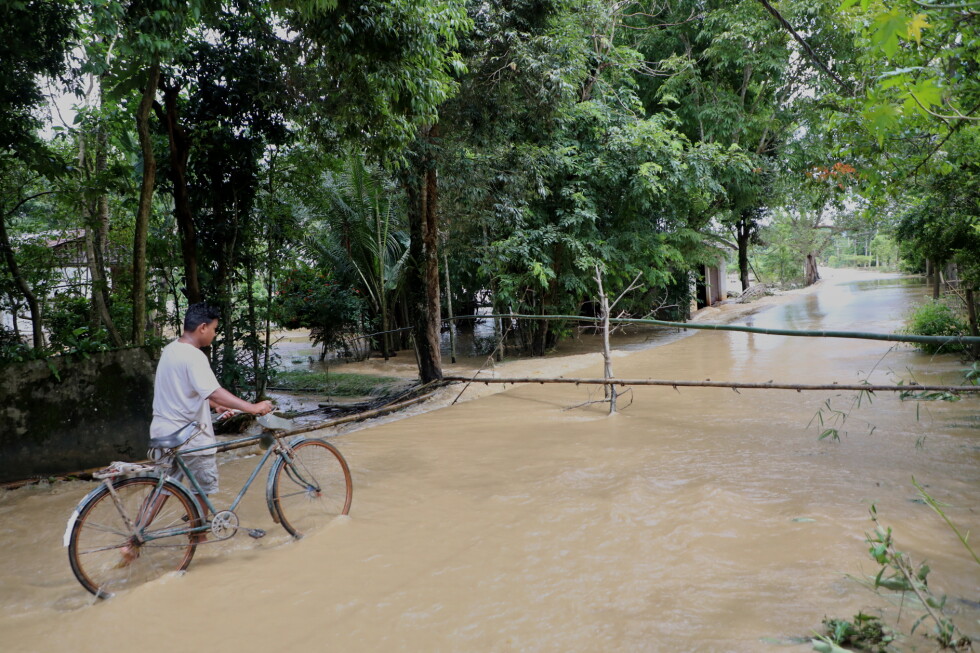
    Devastating floodwaters triggered by days of relentless heavy monsoon rainfall have swept through India’s northeastern Assam state, leaving at least 50 people dead and forcing more than 700,000 residents from their homes, government officials confirmed Friday. The downpour swelled the banks of the Brahmaputra River, one of Asia’s largest transboundary waterways, beyond capacity, turning vast swathes of the rural and urban landscape into submerged disaster zones.

    Originating in China’s Tibet Autonomous Region, the Brahmaputra cuts 900 kilometers through the length of Assam. This year’s extreme flood event has swallowed nearly 900 entire villages, destroyed thousands of structures, and left thousands of households without critical power access. Official data shows more than 7,000 homes are currently without electricity, while over 290,000 displaced people have sought emergency shelter in government-run relief camps across the state.

    Assam’s Chief Minister Himanta Biswa Sarma confirmed that disaster management authorities have rolled out large-scale relief operations, including airdrops of food, clean water, and essential supplies from military helicopters to cut-off communities. State police, national disaster response teams, and hundreds of local volunteers have been deployed to conduct rescue missions for residents stranded by rising floodwaters and distribute emergency provisions to affected populations.

    For residents like 52-year-old Nazira-based farmer Jatin Gogoi, the floods have brought total ruin. Rising waters washed away his traditional bamboo-walled home, killed all of his cattle, and destroyed his only source of income. With no property left to return to, Gogoi and his five-member family are now relying on the charity of relatives for temporary shelter. “I lost all my cattle. My five-member family and I have nowhere to go, so we are taking shelter in a relative’s home,” Gogoi shared in a phone interview.

    The disaster has also severely disrupted life in Assam’s capital city of Guwahati, a bustling urban center home to nearly 2 million people. Flash flooding on Thursday evening submerged major arterial roads, leaving commuters trapped in their vehicles or workplaces for hours. Sudip Mazumdar, a journalist based in Guwahati, recounted being forced to spend the night at his office after floodwaters reached waist depth on access roads, making travel impossible.

    Climate scientists have long warned that human-caused climate change is intensifying monsoon patterns across South Asia, where the seasonal rain system traditionally occurs in two predictable phases: June to September and October to December. In recent decades, the monsoon has grown far less predictable, with extreme short-duration rain bursts replacing gradual, steady rainfall, followed by extended dry periods that exacerbate both flood and drought risk across the region.
  • Spain declares an emergency after wildfires force evacuations of 10,000 people

    Spain declares an emergency after wildfires force evacuations of 10,000 people

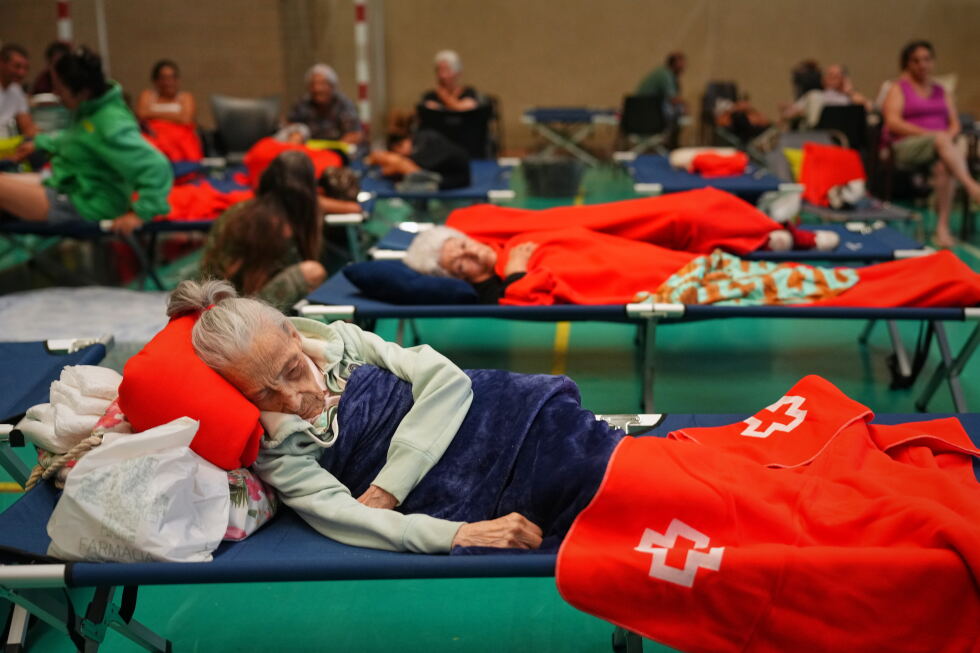
    MADRID – In a dramatic escalation of response to rapidly spreading wildfires that have displaced thousands, Spain’s national government enacted a nationwide state of emergency this Friday. The declaration comes as multiple out-of-control blazes, supercharged by an unrelenting heat wave, swept through central areas surrounding the capital, prompting emergency evacuation orders for nearly 10,000 residents across dozens of small villages.

    Under the new emergency framework, Spain’s interior ministry – the federal body that oversees the country’s national police and security forces – will assume centralized command of all wildfire suppression operations currently being carried out by regional authorities. This move streamlines coordination between local and national response teams, a step officials say is critical to containing the fast-moving fires that have overwhelmed regional resources.

    The Madrid regional government, which governs a broad swath of territory surrounding the capital city, confirmed that evacuation orders had been issued for communities across high-risk fire zones, with the total number of displaced residents climbing to 10,000 as of Friday afternoon. Record-high temperatures and persistent dry conditions have created tinder-dry vegetation across much of the country, turning small ignitions into large, unmanageable conflagrations that spread rapidly with shifting wind patterns.

    Spain has already suffered catastrophic fire damage in 2024, with more than 100,000 hectares (nearly 247,000 acres) of forest and scrubland consumed by flames since the start of the year. Among the most damaging blazes is the second-largest wildfire recorded in modern Spanish history, which has burned roughly 32,000 hectares (79,000 acres) in the central province of Guadalajara over the past several days. The disaster has already claimed human life: earlier this month, 13 people died in a large wildfire that tore through southern Spain, underscoring the deadly threat posed by this year’s extreme fire season.

  • China coast guard uses water cannons on 2 Philippine vessels as top diplomats meet in Manila

    China coast guard uses water cannons on 2 Philippine vessels as top diplomats meet in Manila

    MANILA, Philippines — A fresh maritime confrontation has escalated tensions in the South China Sea, just as top global diplomats gathered in the Philippine capital for high-stakes regional security negotiations. On Friday, the third such standoff in a single week, China’s coast guard deployed water cannons against two Philippine government fisheries vessels near Scarborough Shoal, marking the second consecutive day of clashes in that contested stretch of water.

    The South China Sea has been a flashpoint for competing territorial claims for decades. China asserts sovereign rights over nearly the entire waterway, one of the world’s busiest and most economically critical global trade routes. This broad claim was formally rejected by a 2016 international arbitration ruling issued under the 1982 U.N. Convention on the Law of the Sea, though Beijing has refused to recognize the verdict.

    According to Philippine coast guard officials, the incident unfolded when a Chinese coast guard vessel closed to within just 7 meters (23 feet) of a Philippine fisheries vessel in a maneuver Philippine authorities described as “reckless.” The close approach created a severe collision risk, the agency said, adding it strongly condemns the “dangerous and unprofessional actions of the China coast guard.” The Philippines maintains Scarborough Shoal is an integral part of its national territory, with its surrounding waters falling under the country’s territorial sea and exclusive economic zone.

    In its own official statement, the Chinese coast guard offered a conflicting account. It said multiple Philippine vessels, including three coast guard craft, had entered what it considers Chinese territorial waters on Friday. The agency confirmed it issued verbal warnings, deployed interception maneuvers, and used water cannons to expel the Philippine ships. It issued a stark warning to Manila: “We sternly warn the Philippines to immediately cease its infringing and provocative actions or bear all consequences that may arise.”

    Friday’s clash follows two other confrontations earlier in the week, including a violent encounter at Second Thomas Shoal on Monday that left two Philippine sailors injured. The Philippines says Chinese coast guard personnel struck the sailors with wooden poles, while China counters that Philippine sailors first attacked Chinese personnel with oars and long sticks.

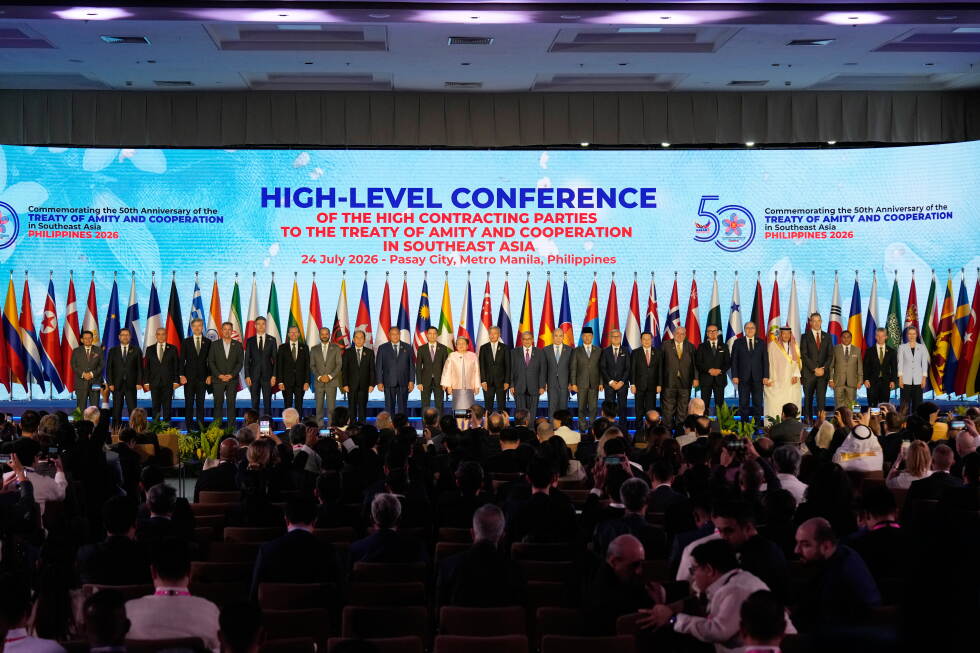
    The escalating series of incidents has placed South China Sea tensions at the top of the agenda for the annual Association of Southeast Asian Nations (ASEAN) foreign minister meetings, which have been hosted in Manila this week. Top diplomats from the 11-nation bloc and their global counterparts have held three days of closed-door talks focused heavily on the decades-long territorial dispute.

    On Tuesday, ASEAN foreign ministers released a joint statement addressing the tensions, noting that “concerns were expressed by some ministers on the land reclamations, activities, serious incidents in the area, including actions that put the safety of all persons at risk, and damage to the marine environment.” The bloc confirmed it has seen “significant progress” in ongoing negotiations with China on a formal code of conduct designed to prevent large-scale armed conflict in the region, with a stated goal of concluding the negotiations before the end of 2025.

    On the sidelines of the ASEAN talks, U.S. Secretary of State Marco Rubio and Chinese Foreign Minister Wang Yi held a bilateral meeting Wednesday to discuss Monday’s Second Thomas Shoal clash, with both sides describing the incident as “escalatory.”

    The week of diplomatic meetings in Manila concluded Friday with a commemoration of ASEAN’s 1976 Treaty of Amity and Cooperation, a landmark nonaggression pact for the region. In her remarks at the event, Philippine Foreign Secretary Theresa Lazaro emphasized the need to protect peace amid growing global uncertainty. “Peace is a daily choice,” Lazaro said. “It requires continuous labor, deliberate restraint, inclusive dialogue and an unyielding adherence to the rule of law.”

    Contributions to this report were provided by Associated Press video journalist Joeal Calupitan in Manila and writer Ken Moritsugu in Beijing.

  • Police say Australian World Cup player Volpato has tested positive for cocaine

    Police say Australian World Cup player Volpato has tested positive for cocaine

    In an early morning traffic stop on Sydney’s iconic Anzac Bridge that has sent ripples through Australian soccer, 22-year-old former Italian youth international turned Australian World Cup representative Cristian Volpato is facing serious allegations of speeding and testing positive for cocaine, New South Wales state police confirmed in an official statement released Friday.

    Law enforcement officers pulled Volpato over after radar detection clocked the player traveling 50 kilometers per hour, or 31 miles per hour, above the posted speed limit on the heavily trafficked bridge. Following the stop, officers administered a standard roadside drug screening, which returned a positive result for the presence of cocaine in Volpato’s system, according to police details.

    The case marks a sudden off-field controversy for the young player, who made a high-profile national team switch in the lead-up to the 2022 FIFA World Cup, choosing to represent Australia instead of his native Italy. During the tournament, Volpato earned three caps for the Socceroos, becoming part of one of the World Cup’s most memorable underdog stories that saw Australia advance to the knockout round.

    As of Friday, no formal charges have been announced by New South Wales police, and the investigation into the allegations remains ongoing. The Australian Football Association has not yet released an official comment on the matter following the public announcement of the allegations.

  • South Korean tycoon ordered to pay $644m in divorce

    South Korean tycoon ordered to pay $644m in divorce

    One of South Korea’s most high-profile and costly divorce cases has concluded a major new chapter this week, with a revised ruling cutting the massive settlement that leading tech tycoon Chey Tae-won must pay to his ex-wife Roh Soh-yeong to $644 million.

    Chey, 65, serves as chairman of SK Group, the South Korean conglomerate that owns SK hynix, a global industry-leading memory chip manufacturer that counts AI giant Nvidia among its key clients. SK Group is widely regarded as a core pillar of South Korea’s tech-driven national economy, making the long-running legal battle over the couple’s assets a closely watched case both in business and political circles.

    The pair were married in 1988 at Seoul’s presidential Blue House, when Roh’s father Roh Tae-woo was serving as South Korea’s president. Though they share three children, the couple has lived separately for more than 15 years. Chey publicly admitted to fathering a child with another woman in 2015, and filed for divorce two years later. Formal court proceedings began in 2022 after mediation efforts failed to resolve the split.

    In 2024, the Seoul High Court issued an initial ruling ordering Chey to pay Roh a record 1.38 trillion won, equal to roughly $940 million at the time. The unprecedented size of the payout led South Korean media to label the dispute the “divorce of the century.” Chey appealed the ruling to South Korea’s Supreme Court, which sent the case back to the lower court for re-evaluation. That reconsideration resulted in Friday’s adjusted ruling, cutting the settlement to 944 billion won ($644 million). The revised ruling does not mark the end of the legal process, however: either party still has the right to appeal the new decision back to the Supreme Court for a final ruling.

    At the heart of the acrimonious dispute has been debate over the definition and valuation of the couple’s shared marital assets, primarily Chey’s multi-billion dollar controlling stake in SK Group. The 2024 lower court ruling included a 30 billion won slush fund established by Roh’s father to support SK Group’s early growth as part of Roh’s contribution to the couple’s shared assets, arguing that the fund helped grow Chey’s holdings. But last October, the Supreme Court struck down that reasoning, ruling the slush fund amounted to illegal bribes and could not be counted as a legitimate contribution to the marital estate.

    In Friday’s new ruling, the Seoul High Court upheld Roh’s entitlement to one-third of the couple’s shared assets accumulated during the marriage. The ruling noted that Chey’s SK Group shareholdings grew substantially during the marriage through his executive work, while Roh contributed to that growth through managing the household, raising the couple’s children, and carrying out public-facing duties on behalf of the conglomerate. The court also explicitly accounted for the dramatic surge in SK Group’s share value that has occurred since the couple separated, driven in large part by the global AI boom that has sent demand for SK hynix’s memory chips soaring. SK Group’s stock price has more than tripled since December 2015, when Chey’s extramarital affair became public. Chey’s current stake in the conglomerate is valued at approximately $5.5 billion based on recent public regulatory filings.

    Beyond the property settlement, the Supreme Court has already ordered Chey to pay a separate 2 billion won in alimony to Roh. Roh, 65, has built an independent career in the cultural sector, where she operates a prominent digital art museum.

  • German leader Merz reshuffles top posts as he tries to counter far-right advance

    German leader Merz reshuffles top posts as he tries to counter far-right advance

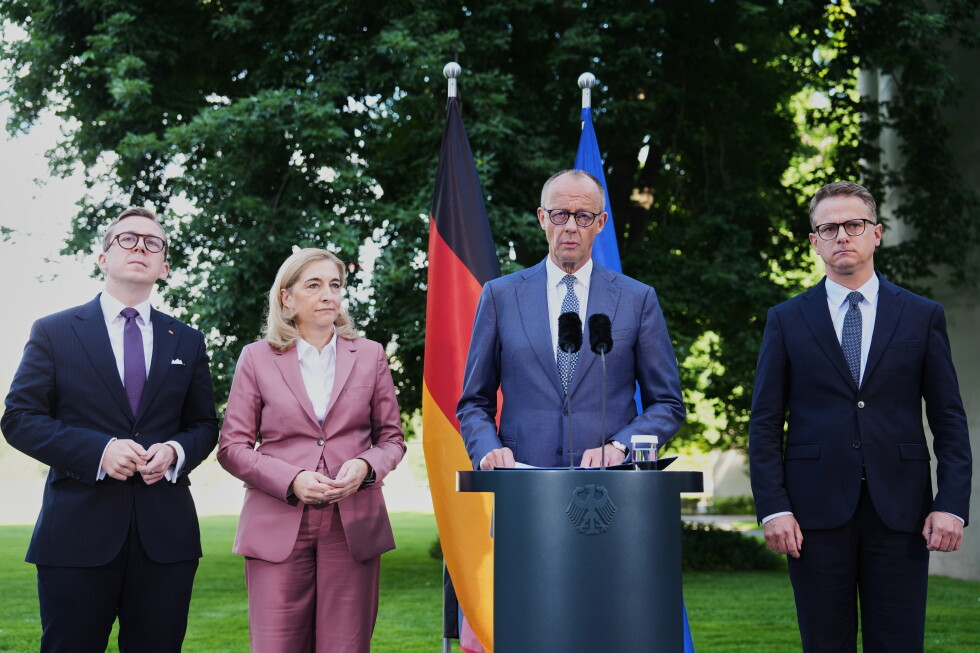
    BERLIN – German Chancellor Friedrich Merz has announced a sweeping overhaul of top government and party leadership posts on Friday, a desperate gambit to revitalize his flagging, deeply unpopular administration ahead of pivotal September regional elections that could see the far-right Alternative for Germany (AfD) claim its first ever state governorship.

    Merz, who took office less than 15 months ago on promises of sweeping economic reform and a recovery for Germany – the largest economy in Europe – after years of prolonged stagnation, has watched his agenda stall. His centrist grand coalition, an unlikely partnership between his center-right Union bloc and long-time rival center-left Social Democrats, has failed to convince voters of its ability to deliver tangible progress, dragging the chancellor’s approval ratings to historic lows. Against this backdrop of widespread public discontent, the far-right AfD has steadily climbed in polling, emerging as a serious contender in the upcoming regional votes.

    The trigger for the reshuffle came last week, when senior Union ally Jens Spahn was forced to resign from his post as leader of the party’s parliamentary group – one of the most powerful positions in the governing coalition – over a damaging credibility scandal. It was revealed that Spahn and his husband had used a commercial surrogate in the United States to welcome a child, a practice that is illegal in Germany and explicitly opposed by Merz’s party, a position Spahn himself had publicly defended for years. The revelation sparked widespread accusations of political hypocrisy, creating an unwanted distraction for the coalition just as it was attempting to roll out its new reform agenda.

    To fill Spahn’s vacant role, Merz has tapped his current chief of staff, Thorsten Frei, a seasoned party operative who previously served as the Union’s parliamentary chief whip during the bloc’s time in opposition, a post political analysts widely consider a better fit for his skill set. Taking Frei’s place as chancellery chief – a critical role responsible for coordinating the daily functions of the federal government – will be current Health Minister Nina Warken, a move that makes her the first woman to ever hold the position. Merz praised Warken for her recent success shepherding the government’s first major reform, a bill to curb soaring costs in Germany’s public health insurance system, through parliament, noting she has already proven she can “push through reforms against resistance.” He added that Warken is also well-versed in core security policy issues, a key priority for the chancellery.

    Warken’s spot at the Health Ministry will go to Carsten Linnemann, current general secretary of Merz’s Christian Democratic Union (CDU) and a staunch conservative who has not previously held national government office. Merz argued that Linnemann’s steadfast commitment to the administration’s reform agenda makes him the right pick to continue overhauling German health policy. The chancellor confirmed that additional cabinet changes are still in the works, but declined to share specific details, saying final decisions would take “a few days yet, and perhaps more time.” He did not address widespread media reports that Transport Minister Patrick Schnieder is also set to be replaced, a change that comes after the coalition’s multi-billion euro infrastructure upgrade fund has failed to resolve persistent public frustration over systemic issues like unreliable national railway service.

    Merz framed the personnel shakeup as a deliberate step to refocus the government on its reform mandate. “The personnel changes follow a clear line,” he said. “We want a government that works with great vigor and pleasure and also represents the personal diversity of our society and politics. We are a reform government and want to continue showing that.”

    Political analysts say the reshuffle is a clear response to the high-stakes electoral calendar this fall. Three critical regional elections will be held in September, with the first taking place on September 6 in the eastern state of Saxony-Anhalt, where the AfD is currently polling strongly enough to win a parliamentary majority that would give it full control of a state government for the first time in the party’s history. For months, the coalition has been dogged by public anger over internal infighting, but in recent weeks Merz’s government has laid out an ambitious slate of potentially controversial policy changes, including a gradual increase in the retirement age to overhaul the country’s strained pension system, income tax cuts for low- and middle-income households, and widespread deregulation to cut bureaucratic red tape. Last week, Merz insisted that “the government has found its rhythm, despite some criticism,” adding that “we have delivered, and we have recognized the dimension of the tasks we face.”

    Uwe Jun, a professor of political science at the University of Trier, told public broadcaster Deutschlandfunk that the reshuffle is intentionally designed to project competence and action ahead of the elections. “Friedrich Merz wants to show that this coalition is capable of acting, that he as chancellor is capable of acting,” Jun explained. “He wants to put it on a faster and stronger path now.”

  • France orders evacuation of peninsula as hundreds flee wildfires by boat

    France orders evacuation of peninsula as hundreds flee wildfires by boat

    A growing cross-border wildfire crisis has swept across southwestern Europe this week, forcing mass evacuations of a popular French tourist destination and prompting Spain to declare a national state of emergency as flames burn out of control near major population centers.

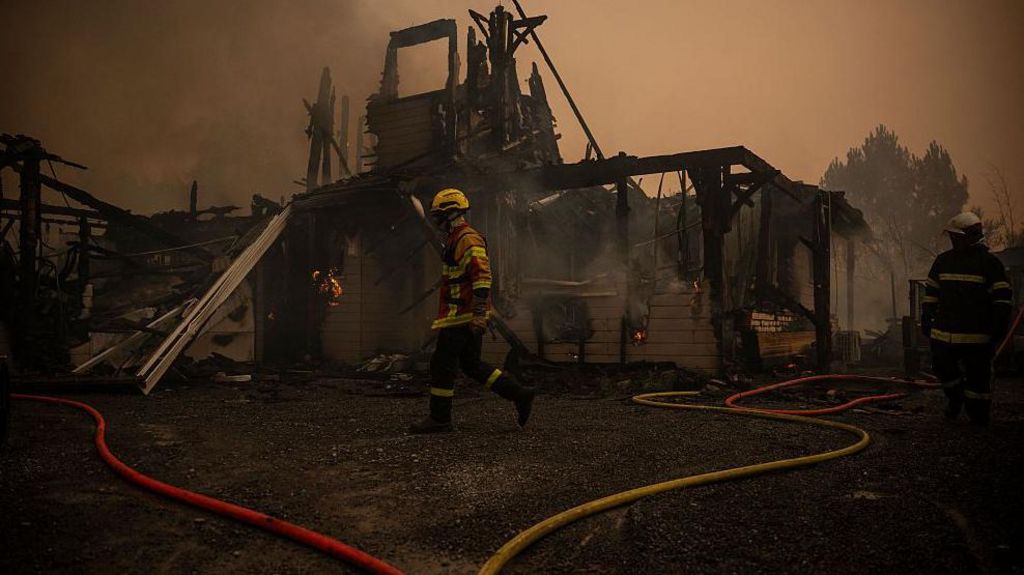
    In southwestern France, local authorities have issued a mandatory full evacuation order for the entire Cap Ferret peninsula, a beloved tourism hot spot in the Gironde region, where hundreds of residents and visitors have already fled the advancing wildfire by sea and road. The blaze, which ignited on Tuesday in the nearby town of Saumos, expanded rapidly overnight, scorching a total of 8,700 hectares (approximately 21,500 acres) of land as of Friday.

    The evacuation order, labeled the “final phase” of the area’s relocation plan, was issued early Friday by Gironde’s regional prefect Sophie Brocas. evacuees were instructed to exit the peninsula via the main highway connecting the area to Bordeaux, while special watercraft were deployed between 7 a.m. and 10 a.m. local time from four public piers to evacuate residents and visitors who could not leave by road.

    French President Emmanuel Macron described the country’s ongoing wildfire situation as “very tense” during an address Thursday night, singling out the Gironde region as the area of greatest concern. In response to the rapidly spreading blaze, Macron confirmed he has requested cross-border assistance from the European Union, with aerial fire-fighting support from Croatia, Portugal, the Czech Republic and Slovakia expected to arrive in the coming days to help ground crews contain the flames. Tragically, two firefighters lost their lives earlier this week while battling a separate blaze near Bordeaux’s airport, though officials confirmed Friday morning that no new casualties had been reported as of press time.

    Across the border in neighboring Spain, the crisis has prompted even stronger government action: Interior Minister Fernando Grande-Marlaska has officially declared a national emergency as out-of-control wildfires burn across multiple areas within close proximity to the capital city of Madrid. Active blazes are currently being fought at Villa del Prado and San Martín de Valdeiglesias in the Madrid autonomous region, as well as at Burgohondo in the neighboring province of Ávila.

    The concurrent wildfire outbreaks come as southwestern Europe faces ongoing record-high summer temperatures and dry conditions that have created extreme wildfire risk across the Iberian Peninsula and southern France, turning the 2026 summer fire season into one of the most challenging in recent years for regional emergency services.

  • Hundreds flee French peninsula by boat to escape wildfire

    Hundreds flee French peninsula by boat to escape wildfire

    A rapidly spreading wildfire forced the complete evacuation of France’s Cap Ferret peninsula on Friday, with more than 400 residents and vacationers escaping the blaze via a fleet of civilian and official boats. The evacuation order came as the inferno, burning just kilometers from one of France’s most famous Bordeaux wine regions, expanded to cover more than 8,000 hectares — an area roughly one and a half times the size of Manhattan. The Cap Ferret wildfire is not an isolated disaster: it is one of multiple active blazes burning across the country amid the peak summer vacation season, which has drawn thousands of tourists to the southwestern Atlantic coast. In response to the spreading flames, authorities have already ordered thousands more visitors to evacuate coastal campsites and seasonal holiday homes, as hundreds of firefighters backed by water-bombing aircraft work around the clock to contain the fire lines. As the crisis escalates beyond the capacity of national response resources, French President Emmanuel Macron announced that Paris has activated the European Union’s civil protection mechanism to request additional firefighting support from neighboring member states. Macron warned that the wildfire situation across the country remains “very intense”, with little sign of relief in the coming days. Data from the European Forest Fire Information System (EFFIS) confirms that 2024 is already shaping up to be one of the worst years for wildfire activity on the continent: the total area of burned vegetation across EU countries is already the second largest recorded since systematic satellite tracking began. The unfolding disaster comes as southern Europe continues to face record-breaking summer heat waves and drought conditions, which have created tinder-dry conditions across forests and shrublands, increasing the risk of uncontrolled wildfire spread.

  • WAFCON favourites Nigeria eye World Cup slot and record prize money

    WAFCON favourites Nigeria eye World Cup slot and record prize money

    The 2026 Women’s Africa Cup of Nations (WAFCON), the continent’s flagship biennial women’s football tournament, is set to kick off this Sunday in Morocco, with two major high-stakes rewards on offer for competing teams: direct qualification to the upcoming 2026 FIFA Women’s World Cup and a record-breaking $2 million first-place prize purse.

    This year’s edition marks a historic expansion of the tournament, growing from 12 participating nations at the previous tournament to 16 teams, all vying for continental glory. As 10-time WAFCON champions and the defending title holders, Nigeria’s Super Falcons enter the competition as the clear pre-tournament favorites, carrying the momentum of a dramatic 2022 final victory that saw them come back from a two-goal half-time deficit to beat host nation Morocco 3-2 with a late winning goal from midfielder Jennifer Echegini.

    Echegini, who plies her trade at Paris Saint-Germain, returns to the squad this year alongside the other two goal scorers from that iconic final: Canada-based forward Esther Okoronkwo and Chinese Super League attacker Folashade Ijamilusi, all hungry to add another continental title to their resumes. For the Super Falcons, the roadmap to success starts with securing one of four automatic World Cup qualification spots reserved for African semi-finalists, according to head coach Justine Madugu.

    “Our first priority is reaching the semi-finals and clinching one of four World Cup places automatically reserved for Africa,” Madugu told reporters ahead of the tournament opener. “Our second goal is to defend the trophy and bring it back to Nigeria. We know it will not be easy because every other nation wants to depose us. We have in our possession something precious that everybody else wants. However, we will remain resolute and focused and try to achieve both objectives.”

    Madugu has assembled a 25-player roster that blends veteran experience with emerging young talent, drawn from clubs across the globe ranging from Mexico and Israel to China. The squad includes just one home-based player, goalkeeper Fatima Oloko of Abia Angels, while the Super Falcons will be captained by Rasheedat Ajibade, Echegini’s PSG teammate. The team also boasts Chiamaka Nnadozie, the Brighton & Hove Albion shot-stopper widely recognized as the top women’s goalkeeper on the continent. One notable absence from the 2022 winning squad is defender Ashleigh Plumptre, the England-born Al-Ittihad player who has been ruled out of the tournament with an injury.

    Drawn into Group C, Nigeria will face a challenging opening round that includes strong contender Zambia, disciplined Egypt, and first-time WAFCON participants Malawi. Zambia boasts two of the most dangerous attacking players in African women’s football: Racheal Kundananji, who made headlines in 2024 when she transferred from Madrid CFF to America’s Bay FC for a then-world record transfer fee, and consistent goal scorer Barbra Banda. While Malawi enter the tournament as underdogs, they field a formidable attacking pair in the Chawinga sisters: Tabitha of Lyon and Temwa of Kansas City Current.

    Across the four groups, the tournament features a mix of continental powerhouse and rising contenders. In the 13 editions of WAFCON held since 1991, only two other nations have lifted the trophy besides Nigeria: Equatorial Guinea, which won twice, and South Africa, which claimed the 2022 title. Equatorial Guinea failed to qualify for this year’s tournament, while South Africa enters as the top seed in Group B, where they will face Tanzania, Ivory Coast and Burkina Faso.

    Host nation Morocco, which finished as runner-up in both of the past two WAFCON tournaments it hosted, will kick off Group A play against Algeria, Senegal and Kenya. The July 30 matchup between Morocco and Algeria is already expected to be a tense affair, carried by the long-standing strained political relations between the North African neighbors, rooted in the disputed phosphate-rich Western Sahara territory and historical border disagreements.

    Group D is rounded out by 2022 bronze medalists Ghana, three-time tournament runners-up Cameroon, and first-time qualifiers Cape Verde, who will look to replicate the incredible success of their men’s national team at the 2024 FIFA World Cup.

    A total of 34 matches will be hosted across five stadiums, with three venues in the capital city of Rabat and two in Morocco’s commercial hub Casablanca. The tournament also includes two classification matches between quarter-final losers, which will decide which African team earns a spot in the inter-continental World Cup play-offs.

  • Christian Brothers makes new sexual abuse payout proposals after pause bid

    Christian Brothers makes new sexual abuse payout proposals after pause bid

    In a dramatic policy reversal that has ended weeks of crippling uncertainty for hundreds of historical child sexual abuse survivors, trustees of the Christian Brothers have announced a landmark new compensation plan that shifts responsibility for all current and future payouts to the organization’s private school network, Edmund Rice Education Australia (EREA).

    The reversal comes just weeks after the Christian Brothers triggered widespread outrage and anxiety when it requested a moratorium on all compensation payments to survivors, claiming the organization faced imminent financial insolvency that left it unable to meet outstanding abuse claims. That decision left survivors who had already won settlements or were waiting for judgements in limbo, with no guarantee they would receive the redress they had been awarded.

    Under the new proposal submitted to the Supreme Court, EREA – which manages more than 40 Catholic schools across Australia, serving a student population of over 44,000 – will take on full legal and financial liability for all existing abuse claims, all future legal proceedings, and all claims submitted through the federal National Redress Scheme. In a formal statement released Friday, Christian Brothers trustees confirmed that the two organizations had signed a binding memorandum of understanding designed to deliver a final resolution for all creditors, including abuse survivors.

    “This means that not only will current claimants with settlements or judgments be paid in full, but EREA will assume responsibility and liability for all current and future legal proceedings as well as for claims before the National Redress Scheme,” the statement read.

    EREA board chair Stephen Brown emphasized that the organization views the decision as both a moral obligation and a commitment to the long-term stability of its educational mission. “By supporting a revised scheme of arrangement we are committed to supporting those who have suffered abuse,” Brown said. “This decision will also support the long-term sustainability of the educational ministry, including more than 44,000 students entrusted to EREA’s stewardship. EREA is committed to supporting those who have suffered abuse, so today we are seeking to provide reassurance that we will step in to address future funding shortfalls.”

    The new arrangement has been broadly welcomed by Australia’s Albanese Labor Government, which harshly criticized the original pause on payments for the unnecessary distress it caused survivors. Social Services Minister Tanya Plibersek noted that the weeks of uncertainty between the Christian Brothers’ original announcement and the new plan have been an unneeded burden for people who already carried profound trauma from their abuse.

    “The past few weeks of uncertainty have been difficult for victim survivors of abuse in institutions run by the Christian Brothers,” Plibersek said. “They should never have been put in the position of wondering whether their claims would be met. No level of compensation can undo the profound harm experienced by victim survivors of child sexual abuse. But we know that redress – including counselling, apologies and financial compensation – can play an important role in helping survivors feel heard, believed and supported.”