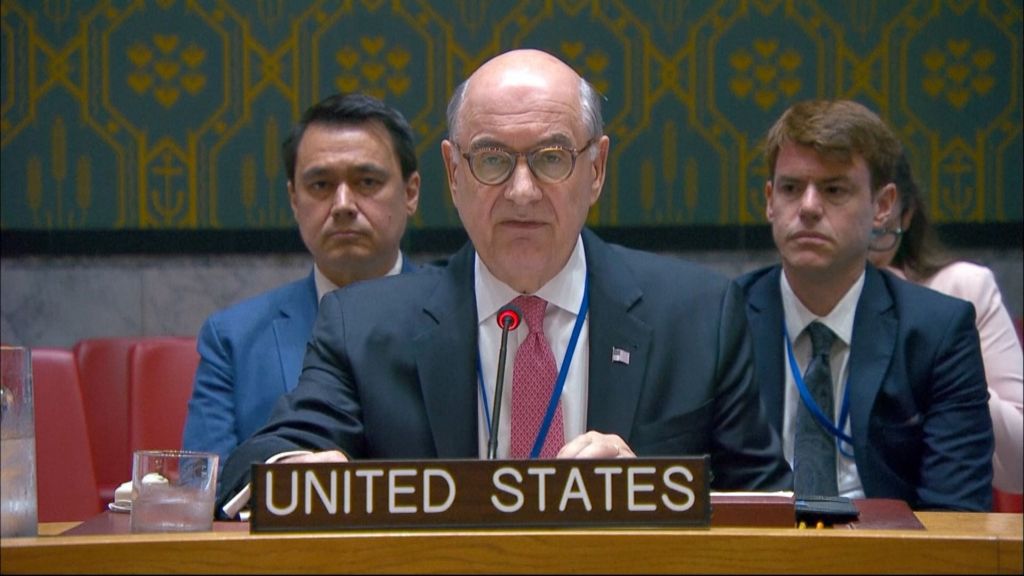
A sharp diplomatic clash has erupted between two long-time Western allies at the United Nations, after the United States publicly rebuked France for controversial comments comparing U.S. human rights voting behavior at the global body to that of authoritarian nations. The verbal sparring, which underscores growing rifts over human rights policy between the two major powers, was initiated when French representatives made the unflinching comparison during UN proceedings. The U.S. delegation did not hold back in its response, launching a forceful pushback that labeled France’s statements as nothing more than disingenuous performance politics designed to garner global attention rather than advance constructive dialogue on human rights. This public confrontation is unusual for two close NATO partners, highlighting underlying disagreements over how global human rights issues should be framed and addressed within multilateral institutions. While neither side has yet announced further diplomatic action following the exchange, the public rebuke signals that tensions over human rights diplomacy are now spilling out into the open at the UN.
博客
-
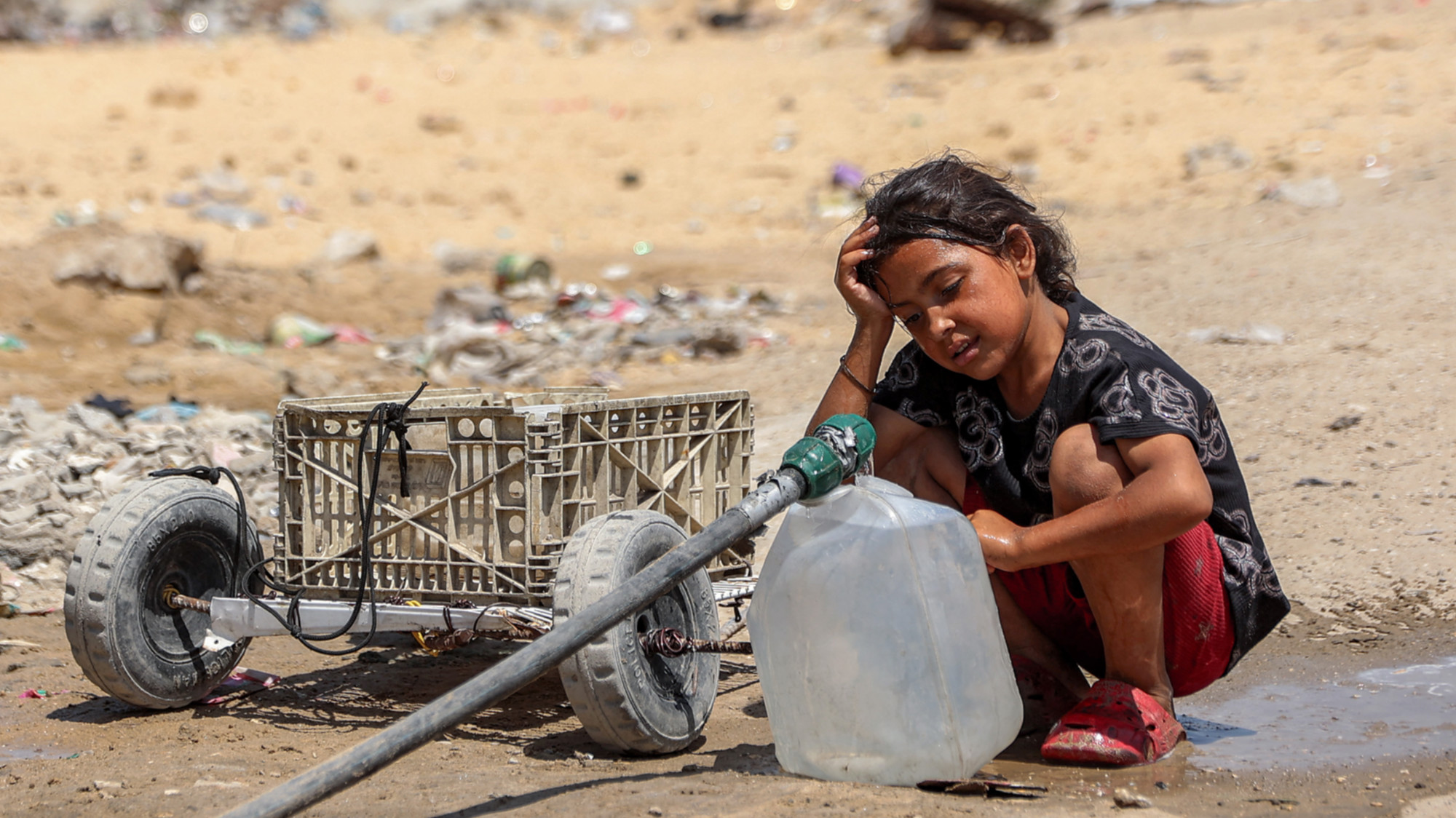
‘It feels like hell’: Gaza families battle suffocating summer heat in tents
GAZA CITY — For hundreds of thousands of displaced Palestinians in Gaza, the shift from a brutal, unforgiving winter to the enclave’s Mediterranean summer has not brought relief. Instead, it has layered a new set of deadly hardships onto lives already upended by Israeli military action, displacement, and a collapsing humanitarian infrastructure.
When Middle East Eye first spoke to Rajaa Jendiya, a 47-year-old Palestinian widow and mother of three, in January, she described that winter as the harshest she had endured during her nearly two years of displacement. Today, with winter rains long gone, the flimsy tent that failed to shield her family from frigid cold has become a sweltering trap under the unrelenting Gaza summer sun.
“It is exactly like being locked inside a greenhouse,” Jendiya explained from the makeshift camp set up in a central Gaza City school, where she resettled after Israeli bombing destroyed her home in eastern Gaza’s Shujaiya neighborhood. “The tent traps all the sun’s rays and cranks up the heat. The temperature and humidity get so extreme that it feels like you’re suffocating — I have to leave just to catch my breath.”
Jendiya’s loss is one shared by countless families across Gaza: her husband was killed by Israeli forces in March 2024 during one of the so-called “flour massacres” that took place amid Israel’s siege and intentional starvation of northern Gaza. She is among 1.9 million displaced Gazans out of the enclave’s total 2.1 million population, according to UNICEF, the vast majority of whom rely on makeshift tents and overcrowded converted public buildings for shelter.
For these families, summer brings cascading crises that build on the instability they already face. Beyond the stifling heat, invasive disease-carrying insects have made rest nearly impossible, Jendiya says.
“All night long, mosquitoes keep us up, and as soon as the sun comes up, flies take over,” she said. “We cannot sleep at night or during the day, and the heat has brought new kinds of insects we have never seen before in our lives.”
Gaza’s geographic location along the Mediterranean Sea creates naturally hot, humid summers, with average temperatures ranging between 30°C and 32°C, and heatwaves regularly pushing readings above 35°C. For displaced Gazans living in overcrowded camps with little access to basic services, these conditions have sparked a public health emergency that disproportionately harms children.
Raw sewage often overflows around camp sites, and rotting garbage piles up in open areas, conditions that worsen dramatically as temperatures climb. Jendiya says she makes regular trips to local hospitals with her children, who have repeatedly contracted heat- and sanitation-linked illnesses, including widespread skin conditions that have spread across displacement camps. Health workers across Gaza have documented soaring rates of scabies, fungal infections, rashes, and lice, with children most severely affected.
Mona al-Mallahi, a 47-year-old displaced woman who pitched her tent on a narrow traffic island opposite Gaza’s al-Azhar University, echoes Jendiya’s account of unrelenting hardship. “There is no escape from the heat,” she told Middle East Eye. “During the day, we cannot stay inside the tent because it is unbearably hot, but outside there is no shade to protect us from the blazing sun. We spend every day searching for a way to breathe.”
Israel’s military offensive has destroyed more than 81 percent of all residential buildings across Gaza, flattening much of the Strip’s urban landscape and cutting down trees that once lined streets and public spaces. That has left tent-dwelling displaced residents fully exposed to the scorching summer sun, with no reprieve. Even after the October ceasefire came into effect, Israel continues to restrict the entry of emergency shelter materials and life-saving humanitarian relief, deepening the shelter crisis that leaves millions vulnerable.
Compounding the heat crisis is the near-total collapse of Gaza’s water infrastructure. More than 80 percent of the enclave’s water, sanitation, and hygiene systems have been damaged or destroyed, meaning running water for cooling and cleaning is a distant luxury for most displaced people.
“We are drenched in sweat from the moment we wake up until we go to sleep,” al-Mallahi said. “I would need to shower at least five times a day just to cope with the heat, but that is completely impossible. We barely have enough water for the most basic drinking and cooking needs, let alone to cool ourselves down.”
Most displaced residents collect bathing water from public taps at nearby schools or abandoned sites, while drinking water requires waiting in line for hours at charity-run water distribution trucks. The unrelenting sun has also left permanent visible marks on al-Mallahi, who lost her home in Gaza City’s Zeitoun neighborhood just days before the October ceasefire, and lost her son and grandchildren in an Israeli airstrike that hit the building where they took refuge.
“At noon, it feels like hell here. The heat burns our skin. Look at my face — I was not like this before. My skin was light and clear, but now it gets darker every day, and new spots are appearing from the constant sun and heat,” she said. “I used to hear about the suffering of people living in tents and pray God would help them, but I never imagined how much they endure until I lived this myself.”
Even for Gazans who still retain what is left of their homes, conditions offer little relief from the summer heat. Emad al-Sirsawi, a father of six who lives in a damaged apartment in Gaza City’s southwestern Tal al-Hawa neighborhood, says the only advantage of having a home is a ceiling to block direct sun — everything else remains just as desperate.
“We don’t have air conditioners or even fans. Even if some of us owned these before the war, we can’t use them because there is no public electricity, and we can’t afford the electricity sold by private generators,” he explained.
Since Israel launched its full military offensive on Gaza in October 2023, fuel shortages and the destruction of most of the enclave’s electricity infrastructure have left Gaza almost entirely without reliable power. Even after the ceasefire, Gaza’s electricity authority has not been able to restore even partial consistent power for residents. Private generator operators sell limited electricity at exorbitant prices, with one kilowatt-hour costing roughly 35 Israeli shekels ($11.5), meaning most residents can only use this costly power for essentials like lighting and charging mobile phones.
The lack of power also means refrigeration is out of reach for most families. “Whatever food we have spoils by the end of the day, so we lose large amounts of what little we have,” al-Sirsawi said. “We are forced to cook every day, but we do not have cooking gas, so we have to rely on firewood even in this extreme heat.”
Al-Sirsawi summed up the shared reality for all Gazans caught in the ongoing crisis: “No one can find comfort in Gaza, neither in summer nor in winter.”
-
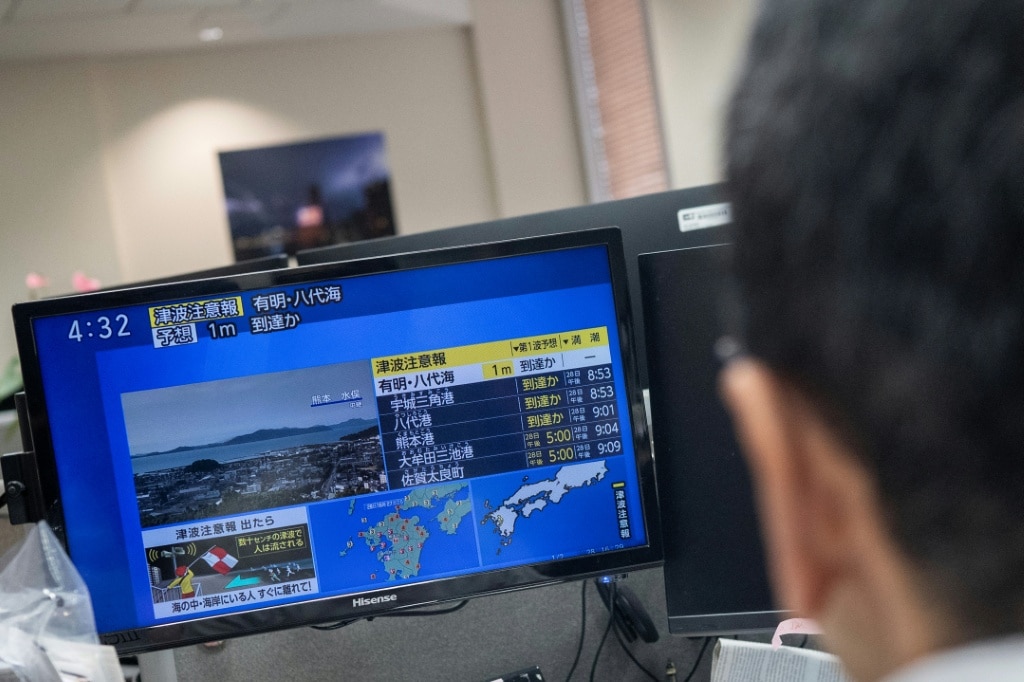
Dozens feared trapped in quake-hit Japan mall
On Tuesday, a powerful 7.1-magnitude earthquake (measured at 6.8 by the U.S. Geological Survey) jolted southwestern Japan’s Kumamoto region on Kyushu Island, triggering widespread structural damage, multiple fires, and widespread disruption across the area. The tremor, which hit at 4:27 pm local time (0727 GMT), registered a maximum 7 on Japan’s intensity-based Shindo scale, and was followed within an hour by a 6.1-magnitude aftershock, with continued smaller jolts reported in the hours after the main quake.
Early rescue operations are focused on a collapsed shopping mall in the town of Kashima, where the structure’s second floor caved in during the tremor and sparked a subsequent blaze. Emergency responders initially confirmed that many people were trapped inside the building, with public broadcaster NHK reporting that between 20 and 30 mall employees remain unaccounted for as of Tuesday evening. While private broadcaster TBS has suggested a considerable number of fatalities may be inside the mall, national police have not yet confirmed any deaths at that site. One fatality has been confirmed from a separate residential building collapse elsewhere in the region, per Kyodo News, and more than 100 people have been reported injured across the affected area.
Additional missing persons have been reported at a factory in Yatsushiro city, where the top of a facility chimney crumbled during the quake. Footage captured by NHK shows widespread destruction across the region: multiple active wildfires, damaged highway bridges, a derailed cargo train, and dozens of residential properties left teetering on the edge of collapse. Unverified social media footage also shows partial damage to the outer walls of Kumamoto Castle, a historic landmark centuries old.
Witnesses described widespread panic as the quake struck. Chiharu Hara, a 35-year-old recruitment agent working in Kumamoto, told Agence France-Presse that the violent side-to-side shaking left her convinced her office would collapse. “Everyone panicked,” she said. A live on-air report from an NHK staffer based in the region half an hour after the main tremor noted that aftershocks continued to rock the area, making it nearly impossible to stand in the newsroom.
Emergency response efforts have been mobilized rapidly. Japanese Prime Minister Sanae Takaichi confirmed via social platform X that casualties, building collapses, road damage, and fires have all been verified, alongside widespread water and electricity outages. The country’s defense ministry has deployed 3,600 Self-Defense Force personnel to lead search and rescue operations, with 20 aircraft dispatched to conduct aerial damage assessments. A initial tsunami alert issued by the Japan Meteorological Agency was lifted just under two hours after the quake.
Local health facilities have been overwhelmed by the influx of injured patients. NHK reports that two area hospitals alone have admitted at least 50 injured people each, with patients arriving for treatment for burns, crush injuries, and fractures. Hospital staff told the broadcaster that the facilities themselves have sustained damage, including broken water lines and electrical failures. Around 10 additional injuries were reported at a local elderly nursing home. As of Tuesday evening, approximately 45,000 households and public facilities across Kumamoto remain without power, according to regional utility Kyushu Electric Power.
Officials have confirmed that there is no abnormal activity at the region’s nuclear power facilities, with three operating reactors continuing to function normally following the quake. Major transportation links were disrupted in the immediate aftermath: all high-speed shinkansen services through the region were suspended, and Kumamoto Airport was closed to air traffic for several hours before reopening Tuesday evening.
The earthquake hits a region already marked by seismic disaster memory: Kumamoto was the site of two devastating quakes in 2016, a 6.5-magnitude tremor followed two days later by a 7.3-magnitude event that killed 273 people and injured more than 2,800. Japan is one of the world’s most seismically active nations, positioned at the intersection of four major tectonic plates along the Pacific Ocean’s “Ring of Fire.” The country sees roughly 18 percent of the world’s earthquakes annually, with hundreds of minor jolts recorded each year. Major quakes remain a persistent national risk, most notably the 2011 9.0-magnitude undersea quake that triggered a deadly tsunami, killing over 18,500 people and causing the catastrophic meltdown of the Fukushima Daiichi Nuclear Power Plant.
-
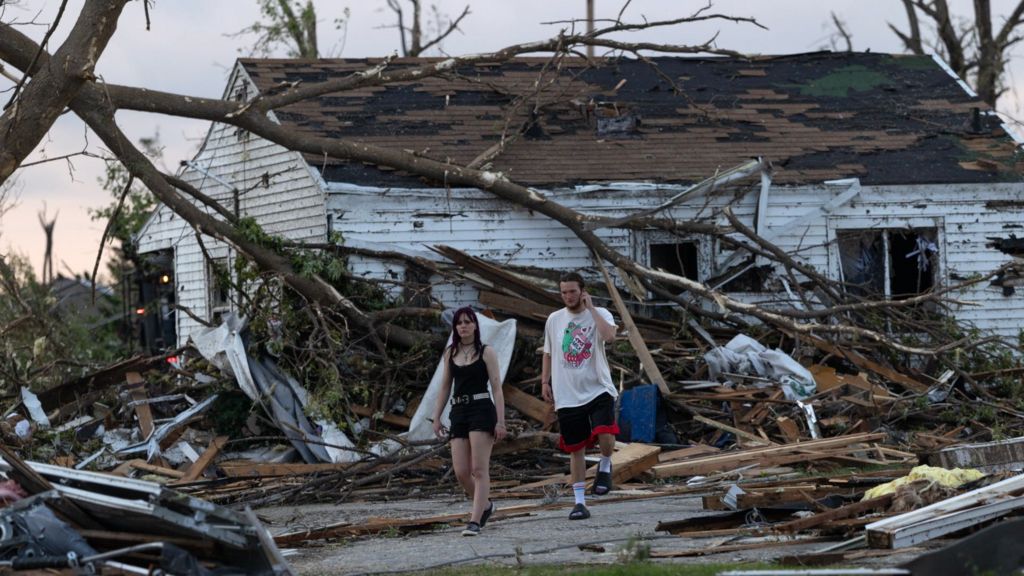
Drone footage shows Wisconsin tornado damage
Recently, a powerful EF-2 tornado tore through multiple communities in Wisconsin, leaving a trail of damaged infrastructure and disrupted lives in its wake. Dramatic drone footage, captured in the immediate aftermath of the storm, offers a sweeping bird’s-eye view of the destruction, showing uprooted trees, damaged residential structures, and debris scattered across large swathes of the affected Midwest region. Emergency management teams have already deployed to the hardest-hit areas to conduct preliminary damage assessments and support local residents whose properties have been impacted. As of the latest updates from state emergency officials, there have been no immediate reports of fatalities or injuries connected to the twister, a outcome that has brought relief to response coordinators and local communities bracing for potential loss of life. Crews are now working around the clock to clear roadways, restore essential utilities, and begin the long process of rebuilding for affected households.
-

Mancini reappointed Italy boss after Pirlo controversy
In a sudden turn of events that concludes weeks of leadership upheaval for Italian men’s football, Roberto Mancini has been reappointed as head coach of the Italian national team, just 24 hours after former candidate Andrea Pirlo withdrew from consideration and senior technical figure Paolo Maldini resigned from his post.
The chaos that preceded Mancini’s return traces back to April, when former boss Gennaro Gattuso parted ways with the Italian Football Federation (FIGC) by mutual consent. His departure came after Italy suffered its third consecutive World Cup qualifying play-off defeat, extending the Azzurri’s absence from the sport’s biggest international tournament, a drought that stretches all the way back to the 2014 finals in Brazil. Following Gattuso’s exit, Under-21 manager Silvio Baldini stepped in to lead the side on an interim basis.
Pirlo, a beloved Italian football legend, was widely expected to claim the vacant head coaching role, but pulled out of the process on Monday amid growing public controversy over his existing business connections to a Russian betting company. Before Pirlo emerged as the leading candidate, the FIGC had already reached out to two of the game’s most respected elite managers, Pep Guardiola and Carlo Ancelotti, both of whom declined interest in the position.
In the wake of Pirlo’s withdrawal, Maldini — who had been appointed the federation’s technical director only two weeks prior — and senior advisor Leonardo resigned their posts in protest of the decision not to appoint Pirlo. Stepping into Maldini’s vacated technical director role will be Claudio Ranieri, the journeyman manager who famously guided Leicester City to a historic, against-all-odds Premier League title in the 2015-16 season.
Explaining the federation’s choice to bring back Mancini, FIGC president Giovanni Malago made his position clear: “I believed that the best person to become head coach was Roberto Mancini.”
For the 61-year-old Mancini, this return marks a homecoming to a role he already held from 2018 to 2023. During his first tenure leading the Azzurri, he delivered one of Italian football’s most celebrated recent trophies: the UEFA Euro 2020 title, secured with a penalty shootout win over England in the final at Wembley Stadium. He also guided Italy to a world record 37-game unbeaten streak that stands as one of the most impressive extended runs in international men’s football history. That historic run came to an abrupt end, however, when Italy lost a shock 2022 World Cup qualifying play-off to North Macedonia, a result that forced Mancini to resign from his post in August 2023.
Mancini’s resume extends far beyond his international coaching achievements. As a club manager, he led Manchester City to their first-ever Premier League title in 2012, ending the club’s decades-long wait for a top-flight English championship. He also claimed three Serie A titles during his time at Inter Milan, and lifted the Coppa Italia with both Inter and Lazio, proving his ability to deliver domestic silverware across multiple top Italian sides. Before his first Italy appointment in 2018, he also held senior roles at Turkish side Galatasaray and Russia’s Zenit St Petersburg. After leaving the Azzurri in 2023, he spent a short tenure as head coach of the Saudi Arabia national team before taking over Qatari club side Al Sadd. While he led Al Sadd to the Qatar Stars League title during his time in charge, the club exited the AFC Champions League Elite before the semi-final stage and lost the final of the Qatar Cup, prompting Mancini to leave the post in June 2025.
Mancini now faces an immediate test in his second tenure: Italy is set to kick off its 2025-26 UEFA Nations League campaign on September 25, with a home opener against Belgium, followed by an away fixture against Turkey just three days later. All eyes will now be on the returning title-winning coach to steady a federation that has been rocked by weeks of public instability, and end Italy’s painful World Cup qualifying drought ahead of the next cycle of international competition.
-
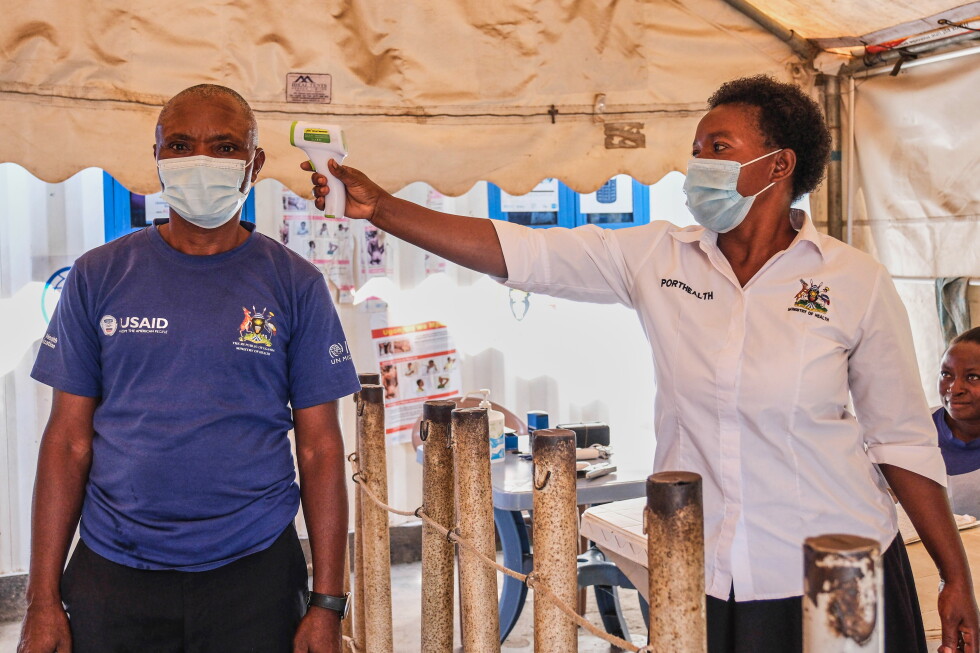
Uganda declares itself free of Ebola as Congo continues to struggle with it
KAMPALA, UGANDA – In a long-awaited public health milestone, Ugandan health authorities announced Tuesday that the East African nation is officially free of Ebola, more than six weeks after its last confirmed patient recovered and was discharged from treatment. The declaration marks a successful containment of an outbreak that originated from a cross-border importation from neighboring Democratic Republic of the Congo, where a rapidly expanding Ebola epidemic continues to outpace response efforts and claim hundreds of lives.
Uganda’s outbreak was directly linked to the larger crisis unfolding in Ituri, a remote eastern province of the DRC that shares a porous border with Uganda. Health officials confirmed the first Ebola cases in Uganda on May 15 — the exact same day the DRC declared its own outbreak — when two Congolese citizens crossed the border seeking care for an unexplained illness, which was later confirmed to be Ebola. One of those patients had already died by the time authorities confirmed the diagnosis.
By the end of the outbreak, Uganda recorded a total of 20 confirmed cases. Unlike previous Ebola events in the country, this 2026 outbreak traces back to a fully documented single importation event, the Ugandan Ministry of Health noted in its official declaration Tuesday.
Ugandan authorities waited the full 42-day period — twice the maximum incubation period for Ebola, as recommended by the World Health Organization — after the last patient was discharged on June 16 to make the official announcement. All known contacts of confirmed cases were placed in institutional quarantine and completed 21 days of mandatory monitoring, with no new infections detected during that period. Enhanced community surveillance across high-risk border areas has also found no evidence of undetected transmission within Uganda’s borders, the ministry added.
The outbreak was caused by the Bundibugyo strain of Ebola, a variant for which no specific approved vaccine or targeted treatment currently exists. The ongoing regional outbreak caused by this strain has already been classified as a Public Health Emergency of International Concern by global health authorities.
Uganda’s successful containment of the virus came from swift, aggressive public health action drawn from years of experience responding to Ebola outbreaks, officials said. Immediately after the first cases were confirmed in May, Ugandan President Yoweri Museveni implemented targeted public safety measures: he urged citizens to abandon the traditional greeting of handshakes to reduce transmission risk, ordered the postponement of a major annual Catholic religious event that draws tens of thousands of pilgrims from the DRC and other countries to a site just outside Kampala, and suspended all cross-border public transportation and commercial flights between Uganda and the DRC to limit new importation risks.
While Uganda has successfully stamped out the virus within its borders, the situation across the border in the DRC continues to deteriorate at an alarming rate. In an overnight update, the DRC Ministry of Health reported that confirmed Ebola cases in the country have reached 3,262, with 1,437 deaths recorded so far. DRC health officials have described this as the fastest-spreading Ebola outbreak on record, and within 10 weeks of being declared, it is on track to surpass the country’s previous deadliest Ebola outbreak in the coming days.
Only the 2014-2016 West African Ebola epidemic, the worst in recorded history, has a higher death toll, with more than 11,000 fatalities and 28,000 confirmed cases across multiple countries.
Public health experts warn the rapid spread of the current DRC outbreak is driven in large part by access challenges. Many remote communities in the affected Ituri and North Kivu provinces are either unreachable to response teams, or responders have been forced to withdraw in recent weeks due to rising safety risks, including attacks from armed rebel groups and violent resistance from local residents angry at the outbreak response. Contact tracing and isolation of exposed individuals, the core intervention to stop Ebola transmission, has been severely hampered by these disruptions.
According to the World Health Organization, fruit bats of the Pteropodidae family are the natural reservoir host for Ebola viruses, which spread to humans through direct contact with the bodily fluids of infected people or animals.
-
‘I lost my baby’: Ambulance delay by Israeli army ends in tragedy for Palestinian mother
Before dawn on a Monday earlier this year, 34-year-old Palestinian mother Rana (name changed for privacy protection) fled to a local clinic in Qaryut, a small village south of Nablus in the occupied West Bank, when her pregnancy-related pain grew too severe to bear. After a quick evaluation, clinicians confirmed the devastating news: Rana, just six months pregnant, had gone into premature labor. With the fetus’s heartbeat still detectable, the clinic immediately called for an ambulance to transfer Rana to the larger Rafidia Surgical Hospital in central Nablus, where specialized emergency obstetric care was available.
Under ordinary conditions, the 25-minute drive from Qaryut to Nablus would have been straightforward. But this trip would turn into a hours-long race against time, shaped by the stringent movement restrictions imposed just days earlier by the Israeli military. Following an armed settler attack on the nearby village of Tell that left four Palestinians dead and two Israeli soldiers killed in subsequent clashes, the Israeli army imposed a near-total lockdown on Nablus and all surrounding towns and villages, sealing all primary and secondary access points to the city and erecting new military checkpoints across the region. For civilians and medical crews alike, crossing between villages and the main urban center has been effectively blocked, forcing even emergency vehicles onto winding, lengthy backroad detours and long waits at Israeli military inspection points.
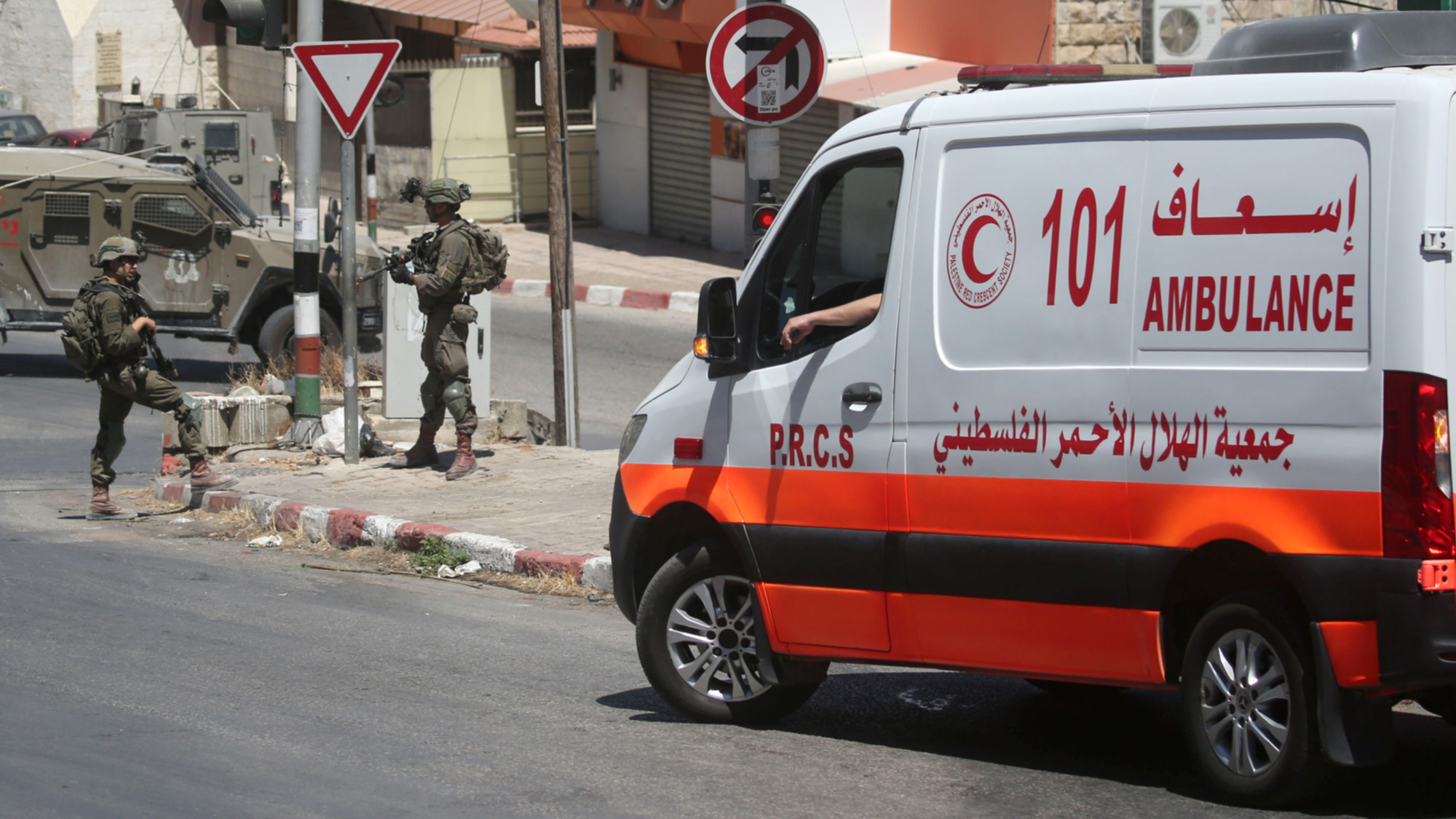
As the ambulance carried Rana toward the Awarta checkpoint, southeast of Nablus, her condition deteriorated rapidly. She began suffering heavy hemorrhaging as the fetus descended, lost consciousness, and her skin turned deathly pale. When the ambulance reached the checkpoint, Israeli soldiers immediately shouted at the driver for operating emergency sirens and flashing lights, ordering him to shut the equipment off. When he complied, the ambulance’s oxygen supply, which Rana desperately relied on, was cut off.
Sabreen Mohsen, the Palestinian nurse traveling with Rana to the hospital, recalled the terrifying encounter in an interview with Middle East Eye. “I saw that Rana had lost consciousness, her lips had turned white, and her oxygen level had dropped to 80,” Mohsen said. She immediately began administering oxygen and started an IV to replace lost blood, all while the crew pleaded with soldiers to allow them through. When soldiers approached the ambulance, opened the doors, and searched the vehicle, Mohsen tried to explain that Rana was experiencing a life-threatening emergency. “They pointed their weapons at me and ordered me to be quiet,” she said.
For 45 full minutes, the ambulance was held at the checkpoint. As Rana fought for her life, the fetus’s heartbeat grew weaker and weaker. Before allowing the ambulance to proceed, soldiers insisted on conducting a full identity check of everyone on board, adding further minutes to the deadly delay. By the time the vehicle finally pulled up to Rafidia Surgical Hospital, Rana’s six-month-old fetus had already died.
Rana, who received two units of blood and emergency surgery to manage the miscarriage and stop her bleeding, woke hours later unaware of the loss. “I felt a deep sorrow when they told me I had lost my child,” she said. “I was waiting for his arrival, choosing names, and preparing to buy his clothes. This is our fate, to live in these conditions.” Even after reaching the hospital, Rana asked her husband and two other children to remain in Qaryut, blocked from joining her by the same movement restrictions that killed her baby. “If they treat an ambulance like this and prevent it from passing, what would they do to a regular car?” she asked.
Rana and her baby are far from isolated cases. The Palestinian Red Crescent Society confirmed that since the lockdown began, Israeli military forces have systematically obstructed ambulance crews across the Nablus region, even preventing kidney dialysis patients from reaching scheduled, life-sustaining treatment at Nablus’s main hospitals. Physicians for Human Rights reports that the entire regional ambulance network has been almost completely paralyzed by the restrictions: at least two other pregnant women have been forced to give birth inside ambulances stranded at checkpoints, a third delivered her child at a small local clinic with no specialized obstetric support, and multiple other ambulances carrying emergency patients have been turned away entirely at checkpoints.
Another 28-year-old Palestinian woman, Alia Awad, was also barred from crossing an Israeli checkpoint despite being in active labor. Her brother Ahmed told reporters that when Alia began experiencing intense contractions at the family home in Beit Furik, east of Nablus, the couple drove to the village entrance assuming soldiers would allow them to pass for the emergency. Instead, soldiers refused to open the checkpoint’s iron gate and ordered Alia to climb out of her car and walk 50 meters alone, squeezing under the gate to reach an ambulance waiting on the other side. “My sister was in labor. If she’d been delayed any longer, she would have given birth at the checkpoint,” Ahmed said. Alia has remained in the hospital since Saturday, and her newborn is currently in an incubator, though both are alive after the frightening ordeal.
Restrictions on Palestinian movement and repeated military lockdowns have been a core feature of the Israeli occupation of the West Bank for decades, but data shows that attacks and obstruction of healthcare services have risen sharply in recent years. Mohsen, who has worked as a pre-hospital nurse for 12 years, said Rana’s case was the most harrowing she has ever experienced, even after a career spent navigating Israeli checkpoints. Seven months before Rana’s case, Mohsen was forced to deliver a baby in the back of an ambulance stranded at the Qusra checkpoint south of Nablus, after soldiers blocked the mother’s access to the hospital. She also noted that Israeli settlers have targeted ambulances directly, throwing stones at medical vehicles at least twice in recent incidents.
New data from the World Health Organization underscores the scale of the crisis: the organization recorded at least 233 separate attacks on healthcare facilities and providers in the occupied West Bank in 2023. Of those 233 incidents, 165 involved ambulances, and 84 percent of those ambulance-related cases included deliberate obstruction of access, including prolonged checkpoint delays, invasive searches of emergency vehicles, harassment of medical staff, and outright restrictions on movement. Between January and June of 2024 alone, WHO recorded an additional 53 attacks on healthcare in the region.
-
Gironde wildfires pick up as French region braces for new 40C heatwave
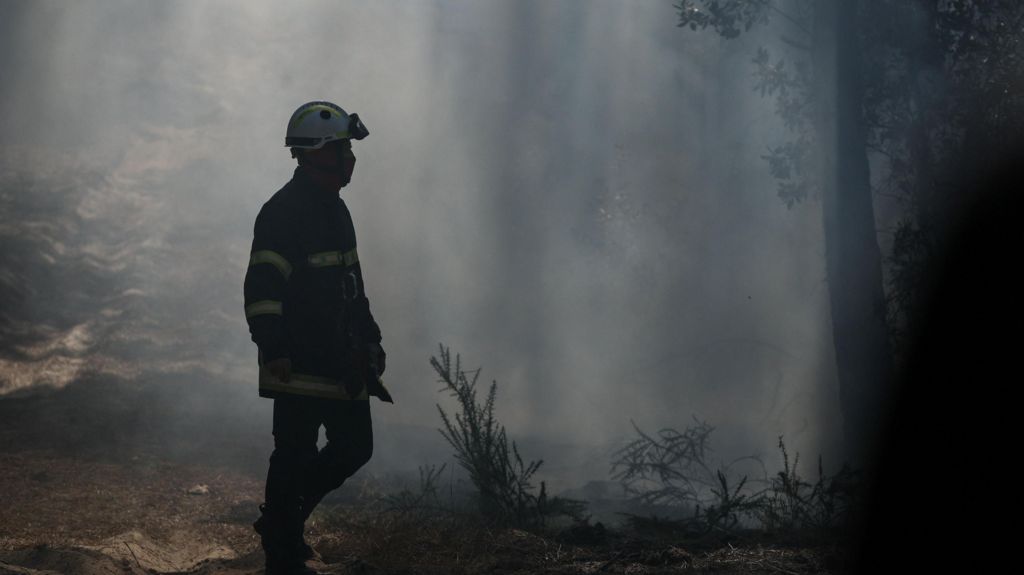
Across southwestern France’s Gironde region, hundreds of wildland firefighters have been working nonstop around the clock to slow the spread of raging wildfires, even as the entire area braces for a new, sharp spike in temperatures that could escalate the already catastrophic blazes. For Eric Brocardi, spokesperson for France’s National Firefighters Federation, the battle against the flames is a lopsided David versus Goliath struggle: in just the past few weeks, four firefighters across the country have died while responding to wildfire blazes, and 2,000 personnel have been deployed alone to Gironde to contain fires that have scorched large swathes of rural countryside between the Atlantic coastline and the major city of Bordeaux.
Local officials have warned that current and forecast weather conditions are heavily stacked against containment efforts. The fourth major heatwave of France’s 2026 summer is set to descend on the region by Wednesday, with temperatures expected to surge past 40 degrees Celsius, a threshold that creates ideal conditions for wildfire expansion and increases the risk of flare-ups across existing burn zones.
While authorities have confirmed that the city of Bordeaux, home to 260,000 residents, is not under immediate threat, the commander leading the regional firefighting response, Rémi Lassoureille, remains deeply concerned about the western flank of the main wildfire, which stood just 15 kilometers from the city’s outer periphery as of Monday. Air quality across Bordeaux has already deteriorated drastically in recent days, leaving a thick haze of smoke and falling ash across the city.
Visitors and long-term residents alike have described an eerie, quiet atmosphere across the region. A holidaymaker from Essex in the United Kingdom, speaking to the BBC, said that by Sunday evening, most tourist areas had emptied out entirely, with the air thick with smoke and ash particles forcing nearly all people to stay indoors. Most people in affected areas have taken to wearing protective face masks to filter smoke, and the acrid smell of burning has clung to clothing and belongings for days. In Bordeaux’s central Marché Chartrons square, where multiple restaurants have been forced to close due to unsafe ash levels, a passing firefighter received a spontaneous round of applause from onlookers, the holidaymaker added.
Graham White, president of the Bordeaux British Community, noted that the normally bustling city is now unusually quiet, with most shops, cafes and restaurants seeing only a fraction of their usual summer foot traffic. While a small number of people have ventured out to sit on outdoor terraces even amid smoke, White emphasized that this event is entirely unprecedented for the region, pushing back on sensationalized media reports that compared the unfolding crisis to the Great Fire of London.
French President Emmanuel Macron toured the fire-ravaged Gironde region on Monday, where he acknowledged that the country is facing a completely unprecedented wildfire crisis, the most difficult France has experienced since the end of World War II. French Health Minister Stéphanie Rist has urged residents and visitors in affected zones to remain indoors to avoid exposure to dangerous levels of air pollution, saying the government remains on high vigilance amid the evolving crisis.
On Tuesday morning, the Gironde prefecture expanded evacuation orders, mandating that all campers and visitors evacuate coastal camping sites near Lacanau, while allowing residents of the nearby town to remain in place with strict instructions to prepare for immediate evacuation if conditions worsen. The roughly 4,000 people ordered to leave the Lacanau area are added to the more than 220,000 people already evacuated from wildfire zones across France in recent weeks. To date, officials confirm that approximately 240 residential properties have been completely destroyed by the blazes. By midday Tuesday, firefighters were already responding to multiple new flare-ups across the region as conditions began to dry out ahead of the coming heatwave.
In a separate development in the Var region, a 23-year-old man has been arrested on suspicion of starting a wildfire, and he currently faces up to 15 years in prison if convicted.
For local businesses, particularly the region’s world-famous wine and hospitality sectors, the crisis has already delivered significant economic damage. Peggy Plouhinec, general director of Château Picque Caillou, one of the few wine estates located on Bordeaux’s western edge, told the BBC that the estate chose to close to visitors over the weekend due to unsafe smoke levels, though a light overnight rain on Sunday helped improve conditions slightly. While her vineyards have not yet been directly threatened by the flames, tourist numbers have plummeted across the region. Plouhinec noted that the entire hospitality sector will almost certainly see major financial losses this summer, even for businesses that avoid direct fire damage: “What is happening is unprecedented. We’re lucky that we haven’t been too affected yet, but the business will still suffer from the lower numbers of tourists.” She also expressed solidarity with affected communities and exhausted first responders: “But many people have lost their homes or their businesses, not to mention the firefighters who have been hard at work for weeks now and who must be exhausted.”
For residents of smaller coastal communities that have already been heavily impacted, the focus on protecting Bordeaux has felt misplaced. One resident of the evacuated Cap Ferret peninsula told French media that most public discussion centers on saving the inland city, but “in Bordeaux there’s nothing but concrete. Have you ever seen concrete burn? Here, there are only trees… and when you see all that has burned, it’s a catastrophe.”
-
Euro 2020 winning coach Roberto Mancini returns to rescue Italy after third straight World Cup miss
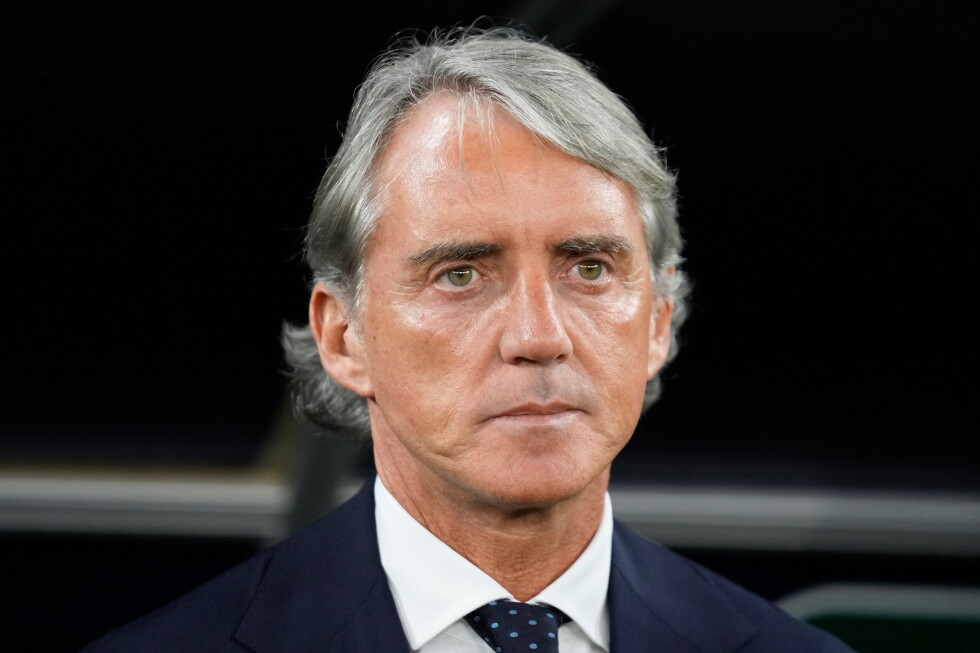
MILAN, Italy – In a dramatic U-turn that has rocked European football, Roberto Mancini is set for a second stint at the helm of the Italian men’s national team, called back to rescue a program mired in deep crisis almost exactly three years after his abrupt first exit.
The Italian Football Federation (FIGC) president Giovanni Malagò confirmed the appointment in an official announcement Tuesday, revealing that legendary Italian manager Claudio Ranieri will take up the newly created role of technical director. The reshuffle comes just 24 hours after Paolo Maldini stepped down from the technical director position, a mere 16 days after he accepted the post.
At 61, Mancini is no stranger to turning Italy’s fortunes around. He first took charge of the Azzurri in 2018, after the team suffered a humiliating failure to qualify for that year’s World Cup at the hands of Sweden. Over his three-and-a-half-year first tenure, he rebuilt the squad by injecting young talent and attacking flair, leading the side to a sensational European Championship title in 2021 (the tournament was delayed by a year due to the COVID-19 pandemic), beating England on home turf at Wembley Stadium in a tense penalty shootout. Between 2018 and 2021, Mancini’s Italy set a world record of 37 consecutive unbeaten matches, earning admiration from football fans across the globe.
Yet that success quickly unraveled. In 2022, a shock 1-0 home semi-final playoff defeat to 67th-ranked North Macedonia saw Italy miss out on a second consecutive World Cup. Mancini retained his job for another year, but stunned the football world by resigning abruptly in August 2023, just two weeks later taking the top job with Saudi Arabia’s national team. He departed the Saudi role in 2024, and most recently had a short spell as manager of Qatari side Al-Sadd, leaving the club last month. Beyond his international work, Mancini boasts a decorated club career, having won top-flight league titles with both Inter Milan in Italy and Manchester City in England.
Mancini’s return comes after a chaotic week of negotiations for the FIGC, which is still reeling from Italy’s third consecutive World Cup qualifying failure. That latest disappointment forced the resignations of former FIGC president Gabriele Gravina and ex-head coach Gennaro Gattuso back in April. Top-tier candidates Carlo Ancelotti and Pep Guardiola had already turned down approaches to take the Italy job, while leading candidate Andrea Pirlo was pulled from consideration on Monday over political concerns tied to a sponsorship deal with a Russian betting company.
“Time was running out to fill the position… I was convinced that the right person for the Italy head coach job is Roberto Mancini, for a whole host of reasons,” Malagò said in his statement Tuesday, adding that a full joint press conference with both Mancini and Ranieri will be held Wednesday.
Italy’s next competitive fixtures are scheduled for September and October, where the side will face Belgium, Turkey, and France in the upcoming UEFA Nations League campaign.
-

Marlon James, Douglas Stuart and Elizabeth Strout are among Booker Prize semifinalists
LONDON — One of the English-speaking world’s most prestigious literary awards, the Booker Prize, has unveiled its 13-book longlist of semifinal contenders for 2024, a selection that mixes former Booker champions, a Pulitzer Prize winner, first-time authors, and boundary-pushing genre work that breaks with the award’s traditional mold.
Leading the pack of recognizable names are two previous Booker recipients: Marlon James, who took home the prize in 2015 for *A Brief History of Seven Killings*, and Douglas Stuart, the 2020 winner for *Shuggie Bain*. They are joined by Elizabeth Strout, the 2009 Pulitzer Prize for Fiction winner who was a Booker finalist in 2022. James’ 2024 contender *The Disappearers* centers on a community of gay men navigating widespread hostility in 1980s Jamaica, while Stuart’s *John of John* unpacks long-buried father-son secrets on a remote Scottish island. Strout’s entry, *The Things We Never Say*, is a tender, intimate portrait of small-town New England life.
The longlist balances established literary careers with exciting emerging voices, bringing three debut authors into the running. Twenty-eight-year-old Irish author Djamel White, the youngest contender on the list, earned a spot for *All Them Dogs*, a gritty thriller set in Dublin’s criminal underworld. Turkish-American writer Kenan Orhan was selected for *The Renovation*, an intergenerational family history story, while British author Rebecca Perry’s *May We Feed the King* spans centuries from the Medieval era to the modern day.
The oldest candidate is 81-year-old M. John Harrison, whose post-apocalyptic dystopian work *The End of Everything* marks a rare inclusion of science fiction on the Booker longlist. The full roster of contenders also includes Chloe Aridjis’ *The Shadow of the Object*, Luke Kennard’s *Black Bag*, Missouri Williams’ *The Vivisectors*, Emma Cline’s *Switzy*, Makenna Goodman’s *Helen of Nowhere* and Gwendoline Riley’s *The Palm House*. Collectively, the 13 authors represent diverse geographic roots spanning Britain, Ireland, Jamaica, Mexico, Turkey and the United States.
Leading the 2024 judging panel is acclaimed classicist and historian Mary Beard, who described the full list of selections as literary “dynamite” in comments to reporters. Beard, who serves alongside fellow jurors including Pulp frontman and cultural icon Jarvis Cocker and award-winning American novelist Patricia Lockwood, explained that the panel intentionally set out to move past the stereotype of a “typical Booker winner” — often framed as a slightly stuffy, preordained classic.
Instead, the jury prioritized works that challenge readers and expand literary perspectives. “Sometimes they’re using humor, sometimes it’s pathos, sometimes there’s shock value,” Beard said of the selections. “They’re risk-takers. They are dynamite. They say ‘Come on, try seeing it a different way.’”
First launched in 1969, the Booker Prize carries a 50,000 pound ($66,000) cash award for the winning author, and has a decades-long reputation for catapulting writers to international acclaim and transforming their careers. The award is open to any novel published in the United Kingdom and Ireland, regardless of the author’s country of origin. Last year’s honor went to Hungarian-British author David Szalay for his work *Flesh*.
In the coming months, the judging panel will narrow the 13-book longlist down to six finalists, with the shortlist set to be announced on September 22. The overall winner of the 2024 Booker Prize will be revealed at a formal ceremony in London on November 9.