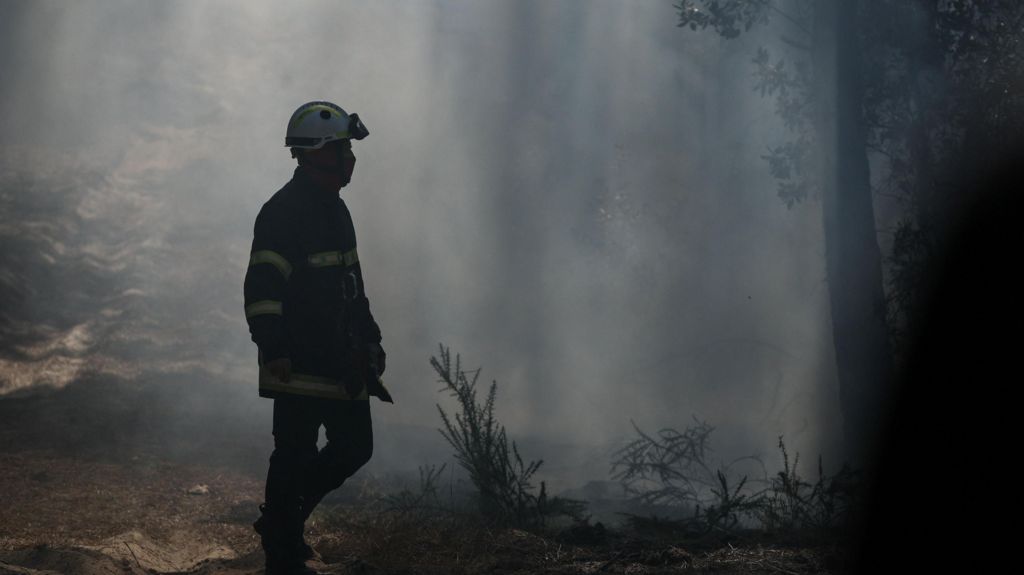
Across southwestern France’s Gironde region, hundreds of wildland firefighters have been working nonstop around the clock to slow the spread of raging wildfires, even as the entire area braces for a new, sharp spike in temperatures that could escalate the already catastrophic blazes. For Eric Brocardi, spokesperson for France’s National Firefighters Federation, the battle against the flames is a lopsided David versus Goliath struggle: in just the past few weeks, four firefighters across the country have died while responding to wildfire blazes, and 2,000 personnel have been deployed alone to Gironde to contain fires that have scorched large swathes of rural countryside between the Atlantic coastline and the major city of Bordeaux.
Local officials have warned that current and forecast weather conditions are heavily stacked against containment efforts. The fourth major heatwave of France’s 2026 summer is set to descend on the region by Wednesday, with temperatures expected to surge past 40 degrees Celsius, a threshold that creates ideal conditions for wildfire expansion and increases the risk of flare-ups across existing burn zones.
While authorities have confirmed that the city of Bordeaux, home to 260,000 residents, is not under immediate threat, the commander leading the regional firefighting response, Rémi Lassoureille, remains deeply concerned about the western flank of the main wildfire, which stood just 15 kilometers from the city’s outer periphery as of Monday. Air quality across Bordeaux has already deteriorated drastically in recent days, leaving a thick haze of smoke and falling ash across the city.
Visitors and long-term residents alike have described an eerie, quiet atmosphere across the region. A holidaymaker from Essex in the United Kingdom, speaking to the BBC, said that by Sunday evening, most tourist areas had emptied out entirely, with the air thick with smoke and ash particles forcing nearly all people to stay indoors. Most people in affected areas have taken to wearing protective face masks to filter smoke, and the acrid smell of burning has clung to clothing and belongings for days. In Bordeaux’s central Marché Chartrons square, where multiple restaurants have been forced to close due to unsafe ash levels, a passing firefighter received a spontaneous round of applause from onlookers, the holidaymaker added.
Graham White, president of the Bordeaux British Community, noted that the normally bustling city is now unusually quiet, with most shops, cafes and restaurants seeing only a fraction of their usual summer foot traffic. While a small number of people have ventured out to sit on outdoor terraces even amid smoke, White emphasized that this event is entirely unprecedented for the region, pushing back on sensationalized media reports that compared the unfolding crisis to the Great Fire of London.
French President Emmanuel Macron toured the fire-ravaged Gironde region on Monday, where he acknowledged that the country is facing a completely unprecedented wildfire crisis, the most difficult France has experienced since the end of World War II. French Health Minister Stéphanie Rist has urged residents and visitors in affected zones to remain indoors to avoid exposure to dangerous levels of air pollution, saying the government remains on high vigilance amid the evolving crisis.
On Tuesday morning, the Gironde prefecture expanded evacuation orders, mandating that all campers and visitors evacuate coastal camping sites near Lacanau, while allowing residents of the nearby town to remain in place with strict instructions to prepare for immediate evacuation if conditions worsen. The roughly 4,000 people ordered to leave the Lacanau area are added to the more than 220,000 people already evacuated from wildfire zones across France in recent weeks. To date, officials confirm that approximately 240 residential properties have been completely destroyed by the blazes. By midday Tuesday, firefighters were already responding to multiple new flare-ups across the region as conditions began to dry out ahead of the coming heatwave.
In a separate development in the Var region, a 23-year-old man has been arrested on suspicion of starting a wildfire, and he currently faces up to 15 years in prison if convicted.
For local businesses, particularly the region’s world-famous wine and hospitality sectors, the crisis has already delivered significant economic damage. Peggy Plouhinec, general director of Château Picque Caillou, one of the few wine estates located on Bordeaux’s western edge, told the BBC that the estate chose to close to visitors over the weekend due to unsafe smoke levels, though a light overnight rain on Sunday helped improve conditions slightly. While her vineyards have not yet been directly threatened by the flames, tourist numbers have plummeted across the region. Plouhinec noted that the entire hospitality sector will almost certainly see major financial losses this summer, even for businesses that avoid direct fire damage: “What is happening is unprecedented. We’re lucky that we haven’t been too affected yet, but the business will still suffer from the lower numbers of tourists.” She also expressed solidarity with affected communities and exhausted first responders: “But many people have lost their homes or their businesses, not to mention the firefighters who have been hard at work for weeks now and who must be exhausted.”
For residents of smaller coastal communities that have already been heavily impacted, the focus on protecting Bordeaux has felt misplaced. One resident of the evacuated Cap Ferret peninsula told French media that most public discussion centers on saving the inland city, but “in Bordeaux there’s nothing but concrete. Have you ever seen concrete burn? Here, there are only trees… and when you see all that has burned, it’s a catastrophe.”