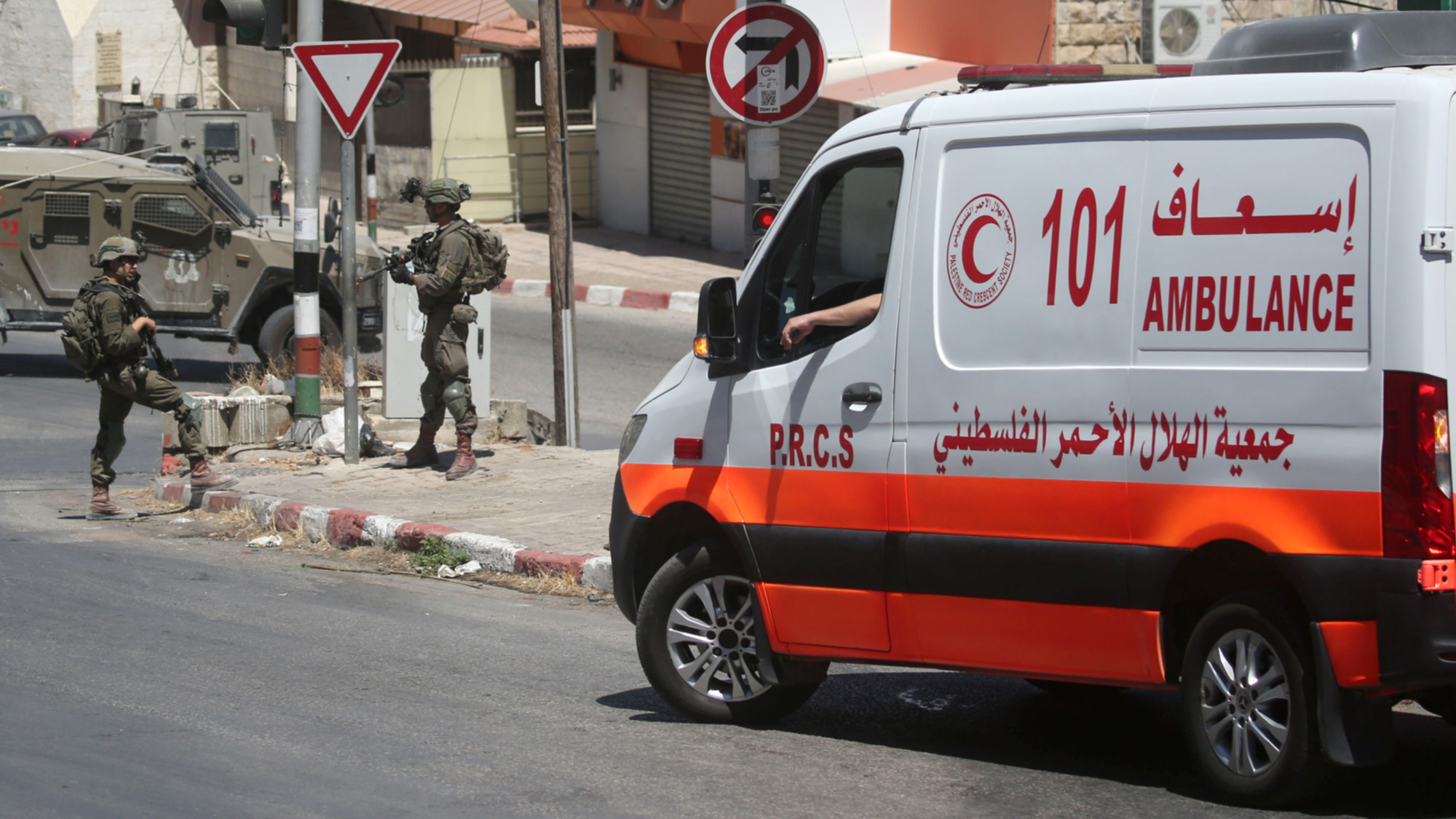
Before dawn on a Monday earlier this year, 34-year-old Palestinian mother Rana (name changed for privacy protection) fled to a local clinic in Qaryut, a small village south of Nablus in the occupied West Bank, when her pregnancy-related pain grew too severe to bear. After a quick evaluation, clinicians confirmed the devastating news: Rana, just six months pregnant, had gone into premature labor. With the fetus’s heartbeat still detectable, the clinic immediately called for an ambulance to transfer Rana to the larger Rafidia Surgical Hospital in central Nablus, where specialized emergency obstetric care was available.
Under ordinary conditions, the 25-minute drive from Qaryut to Nablus would have been straightforward. But this trip would turn into a hours-long race against time, shaped by the stringent movement restrictions imposed just days earlier by the Israeli military. Following an armed settler attack on the nearby village of Tell that left four Palestinians dead and two Israeli soldiers killed in subsequent clashes, the Israeli army imposed a near-total lockdown on Nablus and all surrounding towns and villages, sealing all primary and secondary access points to the city and erecting new military checkpoints across the region. For civilians and medical crews alike, crossing between villages and the main urban center has been effectively blocked, forcing even emergency vehicles onto winding, lengthy backroad detours and long waits at Israeli military inspection points.
As the ambulance carried Rana toward the Awarta checkpoint, southeast of Nablus, her condition deteriorated rapidly. She began suffering heavy hemorrhaging as the fetus descended, lost consciousness, and her skin turned deathly pale. When the ambulance reached the checkpoint, Israeli soldiers immediately shouted at the driver for operating emergency sirens and flashing lights, ordering him to shut the equipment off. When he complied, the ambulance’s oxygen supply, which Rana desperately relied on, was cut off.
Sabreen Mohsen, the Palestinian nurse traveling with Rana to the hospital, recalled the terrifying encounter in an interview with Middle East Eye. “I saw that Rana had lost consciousness, her lips had turned white, and her oxygen level had dropped to 80,” Mohsen said. She immediately began administering oxygen and started an IV to replace lost blood, all while the crew pleaded with soldiers to allow them through. When soldiers approached the ambulance, opened the doors, and searched the vehicle, Mohsen tried to explain that Rana was experiencing a life-threatening emergency. “They pointed their weapons at me and ordered me to be quiet,” she said.
For 45 full minutes, the ambulance was held at the checkpoint. As Rana fought for her life, the fetus’s heartbeat grew weaker and weaker. Before allowing the ambulance to proceed, soldiers insisted on conducting a full identity check of everyone on board, adding further minutes to the deadly delay. By the time the vehicle finally pulled up to Rafidia Surgical Hospital, Rana’s six-month-old fetus had already died.
Rana, who received two units of blood and emergency surgery to manage the miscarriage and stop her bleeding, woke hours later unaware of the loss. “I felt a deep sorrow when they told me I had lost my child,” she said. “I was waiting for his arrival, choosing names, and preparing to buy his clothes. This is our fate, to live in these conditions.” Even after reaching the hospital, Rana asked her husband and two other children to remain in Qaryut, blocked from joining her by the same movement restrictions that killed her baby. “If they treat an ambulance like this and prevent it from passing, what would they do to a regular car?” she asked.
Rana and her baby are far from isolated cases. The Palestinian Red Crescent Society confirmed that since the lockdown began, Israeli military forces have systematically obstructed ambulance crews across the Nablus region, even preventing kidney dialysis patients from reaching scheduled, life-sustaining treatment at Nablus’s main hospitals. Physicians for Human Rights reports that the entire regional ambulance network has been almost completely paralyzed by the restrictions: at least two other pregnant women have been forced to give birth inside ambulances stranded at checkpoints, a third delivered her child at a small local clinic with no specialized obstetric support, and multiple other ambulances carrying emergency patients have been turned away entirely at checkpoints.
Another 28-year-old Palestinian woman, Alia Awad, was also barred from crossing an Israeli checkpoint despite being in active labor. Her brother Ahmed told reporters that when Alia began experiencing intense contractions at the family home in Beit Furik, east of Nablus, the couple drove to the village entrance assuming soldiers would allow them to pass for the emergency. Instead, soldiers refused to open the checkpoint’s iron gate and ordered Alia to climb out of her car and walk 50 meters alone, squeezing under the gate to reach an ambulance waiting on the other side. “My sister was in labor. If she’d been delayed any longer, she would have given birth at the checkpoint,” Ahmed said. Alia has remained in the hospital since Saturday, and her newborn is currently in an incubator, though both are alive after the frightening ordeal.
Restrictions on Palestinian movement and repeated military lockdowns have been a core feature of the Israeli occupation of the West Bank for decades, but data shows that attacks and obstruction of healthcare services have risen sharply in recent years. Mohsen, who has worked as a pre-hospital nurse for 12 years, said Rana’s case was the most harrowing she has ever experienced, even after a career spent navigating Israeli checkpoints. Seven months before Rana’s case, Mohsen was forced to deliver a baby in the back of an ambulance stranded at the Qusra checkpoint south of Nablus, after soldiers blocked the mother’s access to the hospital. She also noted that Israeli settlers have targeted ambulances directly, throwing stones at medical vehicles at least twice in recent incidents.
New data from the World Health Organization underscores the scale of the crisis: the organization recorded at least 233 separate attacks on healthcare facilities and providers in the occupied West Bank in 2023. Of those 233 incidents, 165 involved ambulances, and 84 percent of those ambulance-related cases included deliberate obstruction of access, including prolonged checkpoint delays, invasive searches of emergency vehicles, harassment of medical staff, and outright restrictions on movement. Between January and June of 2024 alone, WHO recorded an additional 53 attacks on healthcare in the region.