博客

  • Can lightning strike twice? Cape Verde set for Wafcon debut

    Can lightning strike twice? Cape Verde set for Wafcon debut

    As Cape Verde prepares to make its historic debut at the 2026 Women’s Africa Cup of Nations (Wafcon) in Morocco, star forward Sandra Martins is warning opponents and football fans alike: do not write off the underdog Blue Sharks before a ball is kicked. The Atlantic archipelago nation’s women’s team is one of the youngest international sides in global women’s football, only contesting their first official senior match in 2018 and skipping both the 2020 (ultimately canceled by COVID-19) and 2022 Wafcon tournaments entirely. But the side defied expectations in qualification, putting six goals past Guinea across two legs to advance before pulling off a stunning upset against Mali to seal their spot at Morocco 2026.

    Drawn into Group D, Cape Verde will kick off its Wafcon campaign against Ghana on Tuesday at 17:00 GMT, followed by back-to-back matches against familiar qualifying foe Mali and Cameroon to close out the group stage. For Martins, who currently plies her trade with England’s fourth-tier side London Bees, the squad is far more prepared than most observers give them credit for as first-time participants. “I think we would do well, probably better than what people would think as new participants,” Martins told BBC Sport Africa ahead of the opening match. “We are aiming to win two games [and] possibly go into the quarter-finals. I think if everyone applies themselves and we really work together, we could stand a chance of going to the next stage.”

    This year’s Wafcon doubles as African qualification for the 2027 FIFA Women’s World Cup in Brazil, adding extra stakes to every fixture. The four tournament semi-finalists will secure automatic spots in the global showpiece, while the four losing quarter-finalists will compete for two additional berths in intercontinental play-offs. The tournament was originally scheduled to kick off in March, but the Confederation of African Football (CAF) drew widespread criticism when it postponed the event just 12 days before the opening match, citing a need to “ensure the success” of the continental competition. For Cape Verde, currently ranked 120th in the world and among the four lowest-ranked teams at the tournament, the delay proved far more beneficial than anyone could have predicted, Martins said. “I think [it] was actually a blessing in disguise. We were talking about it as a group and we needed more time to prepare. We recently played twice against Ivory Coast in friendlies and these two games were really useful for us. We worked on a few different things, had a few new team-mates and they blended super well into the team. Spending the extra time together has really allowed us to understand each other more on the pitch.”

    The road to Wafcon has been a decades-long journey for Martins herself. Born in Portugal to Cape Verdean parents, she picked up football at age six and moved to the United Kingdom at 15, building a club career that includes stops at Leeds United, AFC Wimbledon, Dorking Wanderers, a spell in the U.S. with Charlottesville Blues, and her current role at London Bees, where she has notched four goals in 17 appearances this season. Though she grew up speaking Portuguese and Cape Verdean Creole, representing her parents’ homeland on the international stage was always a distant dream. “The dream was there but how to get there was the part that was not so clear,” she explained. “You just take it season by season. Eventually I started doing well and picking up on my own performance patterns and said ‘What do I need to work on?’.”

    Her breakthrough came after a friendly tournament appearance, when she caught the eye of the Cape Verdean Football Federation’s technical director, who was actively scouting talented diaspora players to strengthen the nascent national program. Martins felt an immediate connection with the squad from her first day in camp. “Meeting the girls for the first time, it was surprisingly very easy. I broke the ice and was like ‘Girls, yes I speak Creole but I live abroad. I have a different twang’. They laughed at my accent but that was fine. They were really welcoming and we just laughed straight away.”

    Martins won her first senior international cap in the first leg of the Wafcon qualifier against Mali last October, a 1-0 home defeat in Praia. She missed the dramatic second leg in Bamako after falling ill, where the Blue Sharks fought back to win 4-2 despite a second-half floodlight failure that halted play. “When the final whistle went it was amazing. Everyone was euphoric, screaming how happy we were. A true sisterhood has formed. When we got back to Praia loads of locals travelled to the airport to celebrate what we had achieved.”

    2026 is already a landmark year for Cape Verdean football, following the men’s senior team’s dream debut at the 2026 FIFA World Cup earlier this year. The men’s side became the tournament’s darling underdog story, stunning the football world by reaching the round of 16 and pushing defending champions Argentina all the way to extra time before a narrow 3-2 defeat. Now, Martins hopes the women’s team’s Wafcon debut will build on that momentum to grow the women’s game across the Cape Verde islands. “The popularity (of women’s football) has definitely grown. I think we picked up a lot of momentum from the men’s [qualification]. In general, any time there’s a sport event going on, the country does well in getting behind any team. On social media, everyone’s being supportive. I hope some of them can come to watch us in Morocco, but if not I’m pretty sure that energy will come all the way across to Morocco.”
  • UN chief makes rare Cyprus visit to help ease decades-old ethnic division

    UN chief makes rare Cyprus visit to help ease decades-old ethnic division

    In a landmark diplomatic trip that marks the first visit by a sitting United Nations Secretary-General to Cyprus in 16 years, António Guterres arrived on the divided island nation this Tuesday to reignite efforts to resolve a 50-year ethnic split that has shaped regional geopolitics since the mid-1970s. Though long-held political rifts have kept expectations of an immediate breakthrough to a lasting peace accord low, Guterres emphasized his unwavering personal and institutional commitment to facilitating a deal between the island’s two competing communities.

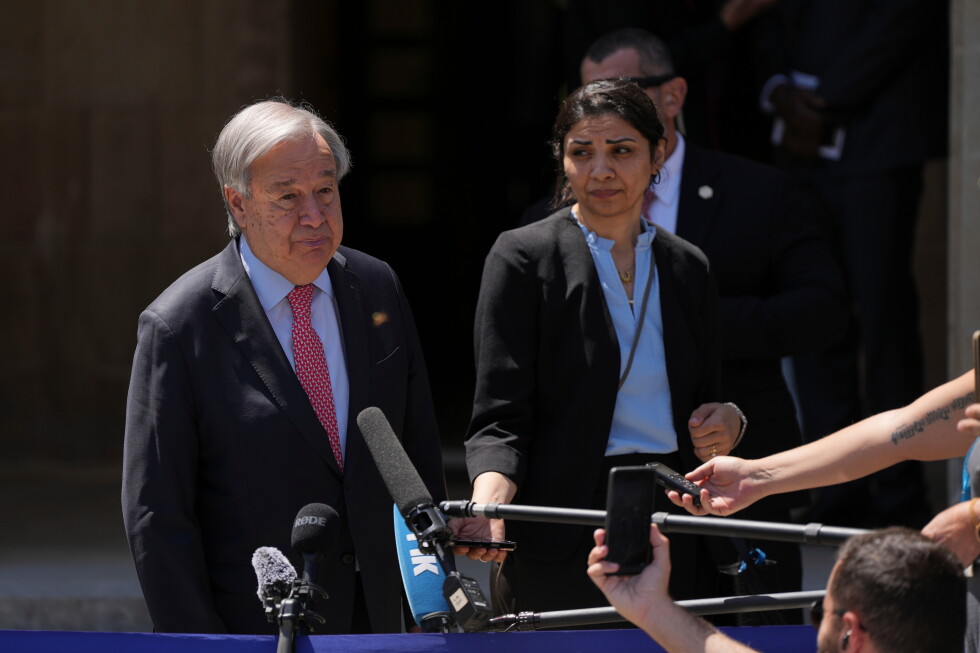
    Following an initial closed-door meeting with Greek Cypriot President Nikos Christodoulides, Guterres told reporters he would spare no effort to support both Greek Cypriot and Turkish Cypriot leadership at this critical juncture for the peace process. The UN chief later held separate talks with Turkish Cypriot leader Tufan Erhurman, with scheduled joint negotiating sessions planned for the remainder of Tuesday and all of Wednesday.

    This new diplomatic push comes after nearly a decade of stalled formal peace talks. The last high-stakes negotiation effort, which Guterres himself mediated back in 2017, fell apart amid bitter mutual recriminations over which side bore responsibility for the resulting impasse. Now, just months before Guterres’ second UN term comes to an end, the Secretary-General is working to convene a broader high-level meeting that will include top diplomatic representatives from Cyprus’ three international guarantor powers: Greece, Turkey, and the United Kingdom. The goal of this gathering is to formally announce the resumption of full peace talks, building momentum that Guterres’ successor can carry forward to a final resolution.

    A successful reunification deal for Cyprus carries far-reaching strategic and economic benefits beyond the island itself. Analysts and diplomats widely agree that a peaceful settlement would unlock massive untapped natural gas reserves in the Eastern Mediterranean, opening a new critical energy supply route for Europe and global markets at a time of widespread energy security uncertainty. A deal would also ease long-simmering regional tensions that stem from competing overlapping claims to energy resources, territorial waters, and regional influence among global and local powers.

    Cyprus’ division dates back to 1974, when a Greek Athens-backed coup aimed at unifying the entire island with Greece prompted a Turkish military invasion. The intervention split the island along ethnic lines, with Turkish Cypriot communities consolidating control over the northern third of Cyprus. Turkish Cypriots declared formal independence in 1983, a move that has only received diplomatic recognition from Turkey, which currently stations more than 35,000 troops in the northern territory. The internationally recognized Greek Cypriot government of the south brought the entire island into the European Union in 2004, though only the southern region enjoys the full benefits of EU membership.

    Guterres underscored the far-reaching implications of a peace deal in his remarks after meeting Christodoulides, noting that a resolution would not only transform the lives of Cypriots on both sides of the divide but also bring much-needed stability to a region facing unprecedented geopolitical turmoil.

    Cyprus government spokesman Constantinos Letymbiotis framed Guterres’ in-person visit, a rare display of personal commitment from a top UN official, as a positive signal that incremental progress is within reach. Still, significant political hurdles remain that threaten to derail the revived peace process. A UN-endorsed framework for a reunified federal Cyprus, made up of two ethnically based self-governing zones, has existed for decades, but the passage of time has hardened negotiating positions on both sides and widened the political gap between the two communities.

    Turkish Cypriot leaders argue that Greek Cypriots, who make up the island’s overall majority, have consistently refused to agree to equal power-sharing arrangements even under the proposed federal model. Earlier this month, Turkish Vice President Cevdet Yilmaz reaffirmed Ankara’s longstanding call for a two-state solution that would grant full international recognition to the breakaway Turkish Cypriot state. Yilmaz also issued a thinly veiled warning to the Greek Cypriot government against using its EU membership and deepening strategic ties with Israel to gain greater diplomatic leverage over Ankara in upcoming talks.

    For their part, Greek Cypriot leaders have repeatedly ruled out accepting any two-state agreement, saying such a deal would formalize the island’s permanent partition and entrench the Turkish military presence that Greek Cypriots view as an existential threat to their sovereignty.

  • ‘It’s a hell of a situation’: Spain grapples with devastating wildfires

    ‘It’s a hell of a situation’: Spain grapples with devastating wildfires

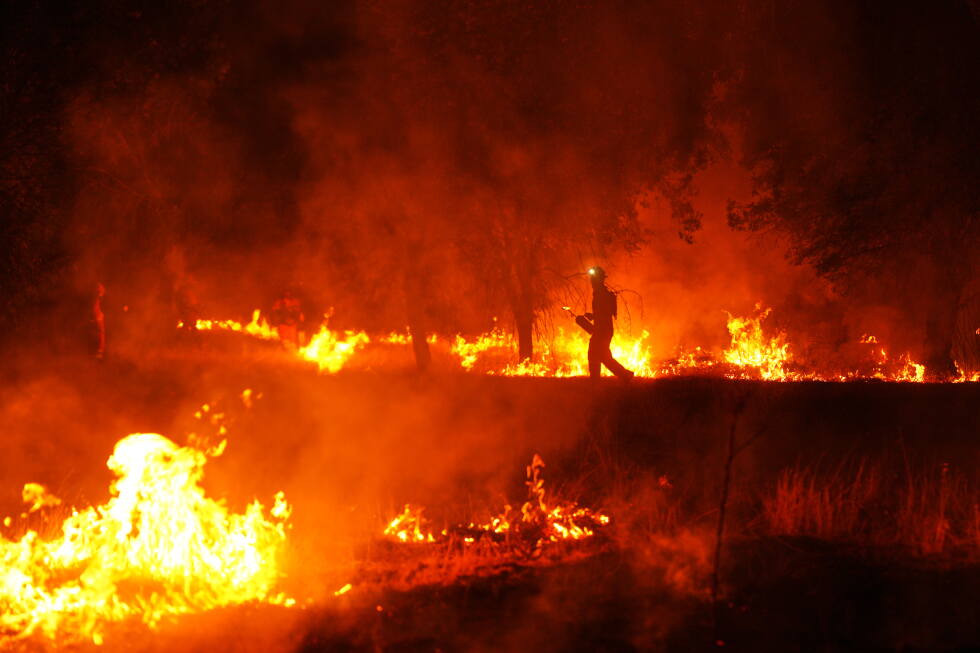
    For seven consecutive days, hundreds of firefighters across Spain have battled an unprecedented outbreak of destructive wildfires that have swept through rural landscapes, put dozens of populated communities at severe risk, and displaced more than 90,000 residents from their homes. As emergency crews work to contain the spreading blazes, forecasters warn a new, prolonged heatwave will descend on the country starting Wednesday, creating dangerous conditions that threaten to undermine weeks of hard-won progress.

    Three large, fast-moving fires burning in the Madrid region have emerged as the primary focus of national concern. On Monday, regional president Isabel Díaz Ayuso visited the scorched affected areas alongside Spanish Prime Minister Pedro Sánchez, where she described the unfolding crisis as a hellish landscape that has turned affected regions into what resembles a war zone. Ayuso has previously characterized the outbreak as the single largest natural catastrophe in Spain’s modern history.

    As of Tuesday, the national scale of displacement remains staggering: more than 56,500 residents have been evacuated from the Madrid region alone, with an additional 27,800 ordered to shelter in place under lockdown. Four Madrid municipalities remain under full lockdown, while 12 others have been fully evacuated. Evacuation orders have also been issued for communities across Ávila, Toledo, and Valencia, bringing the national total of displaced people to over 90,000.

    Speaking to reporters on Tuesday, Prime Minister Sánchez acknowledged that the coming hours and days would bring extraordinary challenges for emergency crews, but noted that there is now a glimmer of hope at the end of the tunnel. The prime minister officially designated all wildfire-affected regions as disaster zones, and used the briefing to issue a sharp call for national unity in addressing climate change, saying “the climate emergency is worsening year after year, and we are required to be united to fight against fire, as well as in prevention and reconstruction. Climate denial is the worst fuel for the fight against the climate emergency.”

    Spain’s national meteorological agency Aemet forecasts that temperatures will climb as high as 40C across many regions in the coming days, with the heatwave expected to persist at least through Sunday. The agency has warned that rising temperatures will push fire danger to extreme levels, creating dangerous working conditions that will slow containment efforts. The Madrid region is already under a red-level weather alert, with forecasts calling for highs of 35C in mountain areas and 38C across lower-elevation parts of the region.

    Despite the looming threat of extreme heat, emergency officials have reported incremental progress in containing the blazes. Interior Minister Fernando Grande-Marlaska told state broadcaster La 1 that overnight firefighting operations on Monday delivered relatively positive results. “This morning, we are very satisfied with the work done. We are going to consolidate the work that has been done,” he said, adding “we must be positive; we have the emergency under control” while conceding that “weather conditions are not helping us at all.” Ayuso also noted on social media platform X that the situation is improving little by little, and that some displaced residents could be allowed to return to their homes in the near future.

    Local leaders in evacuated Madrid communities have echoed the call for continued vigilance ahead of the heatwave. Mayors of two affected towns described the unpredictable blazes as “a kitten by night and a lion by day”, noting that fire activity dies down overnight but surges dramatically with daytime heat. Robledo de Chavela mayor Fernando Casado said his community would continue fighting “with their knives out”, while Valdemaqueda mayor Ricardo Meneses added that “we can’t let our guard down and we’re on high alert because now is the time to stop the fire.”

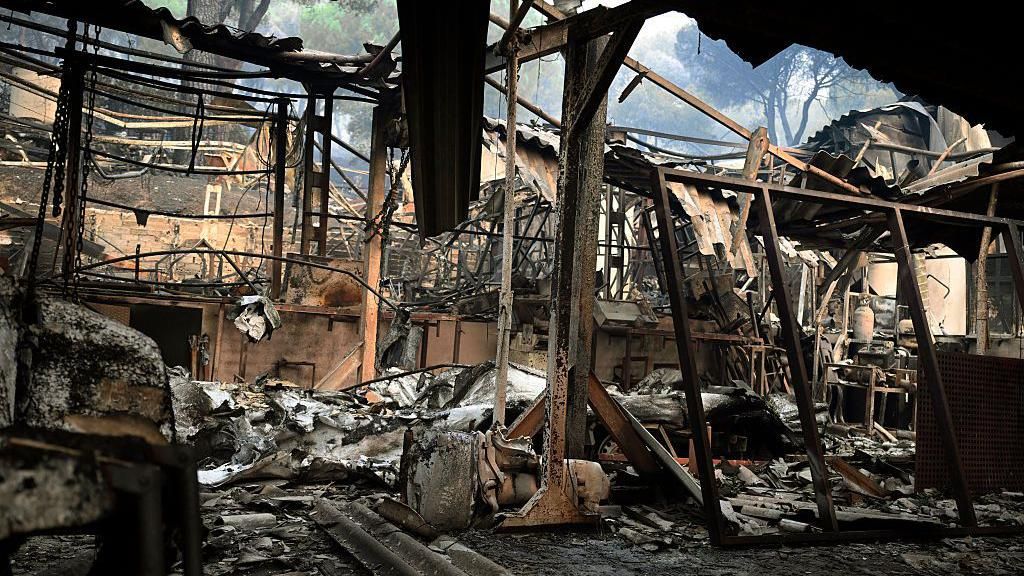
    On-the-ground reporting from the affected region paints a grim picture of the destruction. Spanish journalist Juan Navarro, reporting from Cebreros, a town 40 miles west of Madrid, told the BBC that local residents are gripped by fear as they wait for the incoming heatwave. Driving through nearby burned villages, Navarro said “everything is black”, leaving little intact after the passing of the flames.

    As of the latest government update, the massive fire burning in the Madrid region remains active and uncontrolled, with Tuesday’s firefighting operations focused on increased surveillance and cooling hot spots in preparation for the forecast heat surge. Ecological Transition Minister Sara Aagesen confirmed that the wildfires have already burned roughly 77,000 hectares (190,000 acres) of land across Spain, with the Ávila-area blaze ranking as the largest wildfire in Spain’s recent history. More than 50,000 hectares have burned in Ávila alone, though officials reported “quite favourable” progress overnight, with only small new flare-ups that are now being closely monitored by emergency crews.

    In eastern Spain, the Valencian regional government has lifted lockdown orders for the town of Vall D’Uixo, where a fire that broke out on July 25 forced 16,000 residents from 20 nearby municipalities to evacuate. The crisis has also spread beyond Spain’s borders: neighboring Portugal is currently battling a large wildfire with three active fronts in the eastern Guarda region, where local firefighters are working around the clock to contain the spread.

  • China hits back at criticism over excess industrial capacity as more US tariffs loom

    China hits back at criticism over excess industrial capacity as more US tariffs loom

    As anticipation builds for the release of a U.S. government investigation into alleged industrial overcapacity that could pave the way for steep new import tariffs, Beijing has issued a formal rebuttal of international claims that it is flooding global markets with excess output from key manufacturing sectors. For years, major trading partners have raised growing alarms about oversized production capacity across a swath of Chinese industries, from electric vehicles and steel to cement and solar panel manufacturing. While Chinese policymakers have long prioritized rebalancing the domestic economy to shift away from over-reliance on exports and heavy industry, slowing domestic consumer and infrastructure demand in recent years has pushed many Chinese firms to ramp up sales to overseas markets. This export surge drove China’s annual trade surplus to an unprecedented $1.2 trillion in 2023, stoking further criticism from trading partners.

    In a position paper titled *China’s Position on the So-called Excess Capacity Issue* released Tuesday, China’s Ministry of Commerce rejected accusations that Beijing intentionally pursues oversized industrial capacity and large trade surpluses. The paper specifically pushed back against growing international discourse around a purported “China Shock 2.0,” a narrative that frames China’s current industrial expansion as a new disruptive threat to manufacturing sectors in Western economies, echoing the upheaval many advanced markets experienced when China rose to become the world’s top manufacturing exporter in the 2000s. The ministry argued that this claim is entirely unsupported by empirical evidence and factually baseless, noting that Western accusations incorrectly frame China’s industrial progress as a threat to established Western industrial monopolies.

    China’s official position aligns with comments made last month by Premier Li Qiang, China’s second-highest ranking official, during the World Economic Forum’s Summer Davos gathering in Dalian. Li pushed back on the “China Shock 2.0” framing, arguing that global markets should instead interpret China’s current industrial and trade trends as a “China Opportunity 2.0” that drives global economic growth.

    The U.S. investigation, which examines manufacturing production and capacity across 16 major economies including China, is widely projected to conclude that excess capacity justifies new punitive tariffs on targeted imports. This potential tariff move follows just weeks after the U.S. imposed additional 10% to 12.5% tariffs on imports from more than 60 economies including China, citing a failure to enforce bans on goods produced with forced labor — a measure that drew widespread protest from affected nations including China.

    Speaking at a Beijing press conference Tuesday, Lin Weilong, director of the Commerce Ministry’s policy research office, emphasized that the U.S. has no legitimate authority to unilaterally declare that trading partners have excess capacity and impose punitive trade restrictions. Lin argued that it is unfair for the U.S. to narrowly label any production that exceeds a country’s domestic demand as problematic “overcapacity” and slap punitive trade measures on that basis.

    Tensions over overcapacity have already spread to other major trading blocs: earlier this month, the European Union, which has prioritized rebalancing its lopsided trade relationship with China, implemented new trade measures including enhanced protective tariffs for its domestic steel industry and new restrictions on low-value e-commerce parcels imported from China.

    Many industry analysts expect Beijing’s formal pushback to do little to change the trajectory of trade policy in Western capitals. Alfredo Montufar-Helu, a China-focused expert at global business consultancy Ankura, noted that weak economic growth and political pressures in Western markets make inaction on rising Chinese imports politically impossible, particularly for high-value added manufacturing sectors that have long been dominated by Western firms. “Current economic conditions in Western markets have made it politically untenable to do nothing in the face of rising Chinese imports, especially in high value added sectors that Western firms used to dominate,” Montufar-Helu said.

  • Seattle pays tribute to food festival shooting victims

    Seattle pays tribute to food festival shooting victims

    On Sunday, a sudden and deadly street gunfight shattered the final day of Seattle’s iconic annual Bite of Seattle food festival, a beloved three-day free community event that draws more than 350,000 attendees each year, held just steps from the city’s famous Space Needle. By the time the gunfire ceased, three people were left dead and four others wounded, sending shockwaves across the Pacific Northwest community that left local leaders and residents grappling with senseless loss.

    The following Monday, the entire city of Seattle entered a collective period of mourning as residents gathered to honor the three lives cut short by the violence. A candlelight vigil at a downtown fountain drew dozens of attendees, including Seattle Mayor Katie Wilson and the city’s police chief, where participants laid down flowers, lit candles in memory of the victims, and observed a moment of collective silence to process their grief.

    The three victims have been identified as 19-year-old Junior Cee Niko Semo, 44-year-old Carlos Israel Sanchez Villalba, and 56-year-old Ashley Whitehead. According to law enforcement investigations, Semo, the youngest victim, is suspected to have been one of the active participants in the gunfight. To date, one additional suspect has been taken into police custody, while a third remains at large, with ongoing investigations continuing to unfold.

    For the two innocent bystander victims, community members have stepped forward to support their grieving families through online crowdfunding campaigns, which have already raised tens of thousands of dollars in donations from across the country. A GoFundMe page set up for Villalba paints a portrait of a kind, generous man deeply devoted to his family. “He was a devoted husband, loving father of three, and a loyal friend who would do anything for anyone,” the page reads. “His kindness and generosity touched countless lives, and everyone who knew him remembers his gentle spirit and willingness to help others. His sudden passing has left his family heartbroken and facing an uncertain future.” All funds raised through the campaign will go toward covering Villalba’s funeral costs and supporting his wife and three children as they adjust to life without him.

    Whitehead, the second innocent bystander killed in the attack, had only recently relocated from Alabama to the West Coast to be closer to her eldest daughter, Zoie. She was standing in line with Zoie waiting to buy cotton candy when the gunfire broke out, cutting her life short. After being hit, Whitehead managed to exchange heartfelt “I love you”s with her daughter before being rushed to the hospital, where she died during emergency surgery. Her family described her as a passionate lover of life, art, and above all else, family, noting that family had always been the center of her world.

    Local and state leaders have joined residents in condemning the senseless violence that disrupted a landmark community celebration. “This is not acceptable,” Mayor Wilson told the gathered crowd at the vigil. “No father, no parent should have to bury their child.” Washington state Governor Bob Ferguson echoed that sentiment in a social media post Monday, writing that the entire community was reeling from the shock of the attack. “We are struggling to make sense of how an iconic community celebration could end in gunfire,” Ferguson wrote.

  • South Korean officials order residents to evacuate after reported white phosphorus leak at US base

    South Korean officials order residents to evacuate after reported white phosphorus leak at US base

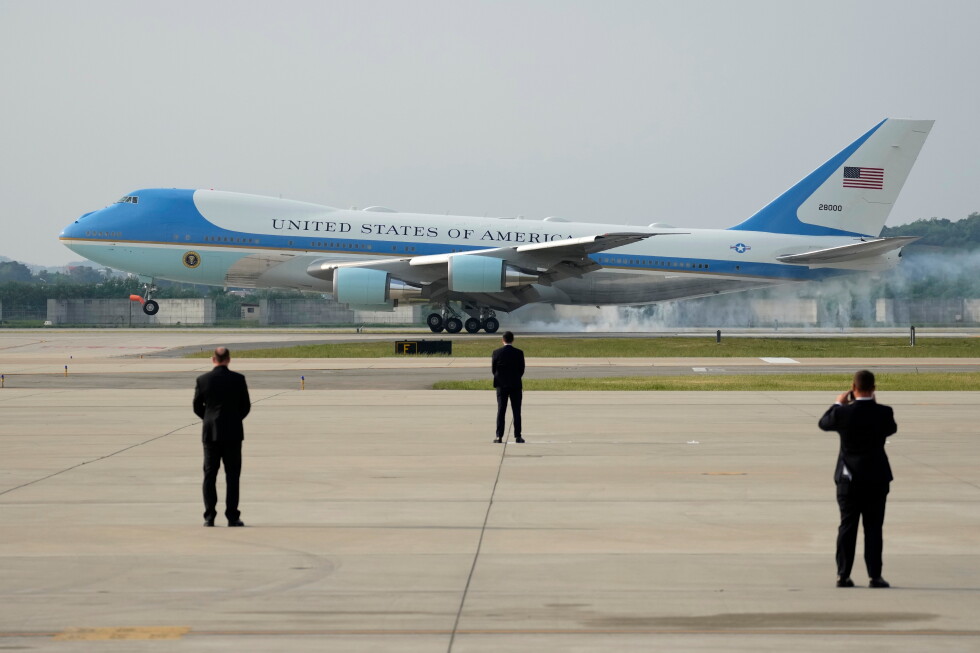
    On Tuesday, local South Korean authorities issued a short-notice evacuation order for civilians following a reported leak of white phosphorus at a United States military installation located just outside of Seoul, the nation’s capital. The chemical release was detected at roughly 5 p.m. local time at Osan Air Base, situated in Pyeongtaek. Immediately after the report, Pyeongtaek city officials dispatched emergency alerts to nearby residents, urging them to relocate to designated safe zones and take all precautions to avoid direct skin contact with any potentially contaminated materials.

    Several hours after the initial evacuation order was put in place, city officials withdrew the directive via public text alert, confirming that full decontamination operations had been successfully completed. Local law enforcement moved quickly to secure the area, setting up a restricted perimeter stretching between 300 and 500 meters from the base boundary. Police blocked unauthorized pedestrian access and diverted road traffic away from the affected zone to prevent accidental exposure. As of initial assessments, no major accidents, infrastructure disruptions, or civilian injuries have been linked to the incident.

    The U.S. 51st Fighter Wing, the unit responsible for operations at Osan Air Base, released an official statement that did not explicitly confirm a white phosphorus leak. Instead, the wing described the event as a “ground mishap” and stated that the 300-meter safety cordon was established “out of an abundance of caution” to protect both base personnel and surrounding local communities. The statement also refuted circulating rumors that a full evacuation of the entire air base had been ordered.

    “We are handling this matter with the utmost care and expediency,” the statement read. “The safety and well-being of our service members, their families, and our Pyeongtaek neighbors remain our absolute highest priority.” U.S. Forces Korea, the unified command overseeing all American military deployments in South Korea, has declined to offer any additional comment or further clarification on the incident to date.

    White phosphorus is a highly controversial chemical compound widely used in military applications, including in incendiary munitions and smoke screening artillery rounds. When exposed to oxygen and ignited, it burns at extremely high temperatures capable of engulfing entire structures in fire and causing deep, life-threatening burns that penetrate all the way to human bone.

  • Firefighters say they’ve never seen anything like Spain’s record blaze

    Firefighters say they’ve never seen anything like Spain’s record blaze

    BARCELONA, Spain — For veteran Spanish wildland firefighter Javier García, 20 years of defending rural communities and wooded landscapes have prepared him for nothing that matches the scale of the historic megablaze burning through central Spain, west of the capital Madrid.

    In an interview ahead of another grueling 12-hour shift on the fire line, García described the unprecedented inferno as an event without any parallel in his decades of service. Currently, the out-of-control blaze has already scorched 500 square kilometers of terrain — an area five times larger than the entire city of Barcelona — and forced 25,000 residents to evacuate their villages across the smoldering hills of Ávila.

    The unprecedented ferocity of this wildfire, the largest ever recorded in Spain, has upended longstanding firefighting strategies. Fire commanders have been forced to completely shift operational priorities: evacuating at-risk communities and protecting populated property now take precedence over direct fire suppression, as fast-moving flame walls and extreme heat create deadly conditions that make frontal attacks on the blaze far too dangerous.

    García called the fire’s rapid spread alarming, noting a profound shift in how his brigade operates. Where once his team would advance to battle wildfires deep in wilderness areas, they now serve as a last line of defense focused exclusively on saving human lives. To date, no fatalities have been reported across the three active major blazes burning across Spain: the Ávila fire, a second blaze in the Madrid region, and a third in eastern Castellón. Combined, the three fires have forced nearly 79,000 people to leave their homes. “That gives us more work and more stress,” García explained. “Now it is lives first, then homes, and after, the forest.”

    García is part of Spain’s national emergency wildfire brigade, a mobile unit that deploys to support regional fire crews when blazes outgrow local capacity. Based in Ávila, his 40-person team has already spent three consecutive days battling the current inferno, after wrapping up assignments at two other recent major blazes in Guadalajara and near Zaragoza in recent weeks. The Guadalajara fire alone burned 320 square kilometers, making it the third largest wildfire recorded in Spanish history.

    “Until last year, I had never experienced fighting one big fire after another,” the 43-year-old firefighter said.

    Spain’s hot, dry summers have long made large swathes of the country naturally prone to wildfires. But climate experts and Spanish government officials confirm human-caused climate change has dramatically amplified risk: it has increased the frequency and intensity of heat waves and extended multi-year drought periods, stretching the annual high wildfire risk window far beyond historic norms. Once ignited, today’s wildfires grow at speeds and intensities that were rarely seen even a decade ago.

    García notes that where his team once faced roughly 15 days of extreme fire risk annually, that number has jumped to between 30 and 40 days a year. So far in 2025, wildfires across Spain have burned 1,530 square kilometers of land — six times the total area scorched by blazes in the first half of last year, according to Spanish Ecology Minister Sara Aagesen.

    Spain’s wildfire crisis is part of a broader regional emergency across southwestern Europe. A separate megablaze in neighboring France has already forced more than 200,000 people to evacuate their homes, prompting France to order an additional 4,000 evacuations as ongoing heat waves hamper fire suppression efforts.

    For Raúl Guerrero, a 29-year-old firefighter with 10 years of experience in Castilla y León, the autonomous region that includes Ávila, the current blaze is unlike any he has ever fought. Multiple times over the course of the response, his 40-person unit has been forced to retreat to safer ground when the fast-moving fire put them at risk of being trapped.

    He described the blaze as repeatedly exceeding Spain’s wildfire extinguishing capacity. “The fire is so virulent and has such power that no matter what you do, you can’t put it out,” he said. When asked about the emotional weight of that reality, Guerrero responded simply: “above all, impotent.”

    While wildfires are most often ignited by lightning or accidental sparks from agricultural equipment, firefighters and experts point to a second human-caused factor that has made modern blazes far more dangerous: the gradual abandonment of rural land use. For generations, small farms, orchards and local forestry industries created natural buffer zones of cleared land around villages and populated areas that slowed fire spread. As those industries have disappeared and rural populations have declined, unmanaged vegetation now grows right up to the edge of residential areas.

    Guerrero called this unmaintained overgrowth “pure gunpowder” waiting to ignite, and urged local authorities and private property owners to implement year-round brush clearing and forest management to reduce future risk.

    Across the Atlantic, the wildfire crisis is not limited to Europe: a major wildfire in the U.S. state of Oregon has forced the closure of 70 miles of a major interstate highway, demonstrating how extreme wildfire has become a global challenge driven by shifting climate patterns.

  • Drone footage shows burnt trees and scorched earth

    Drone footage shows burnt trees and scorched earth

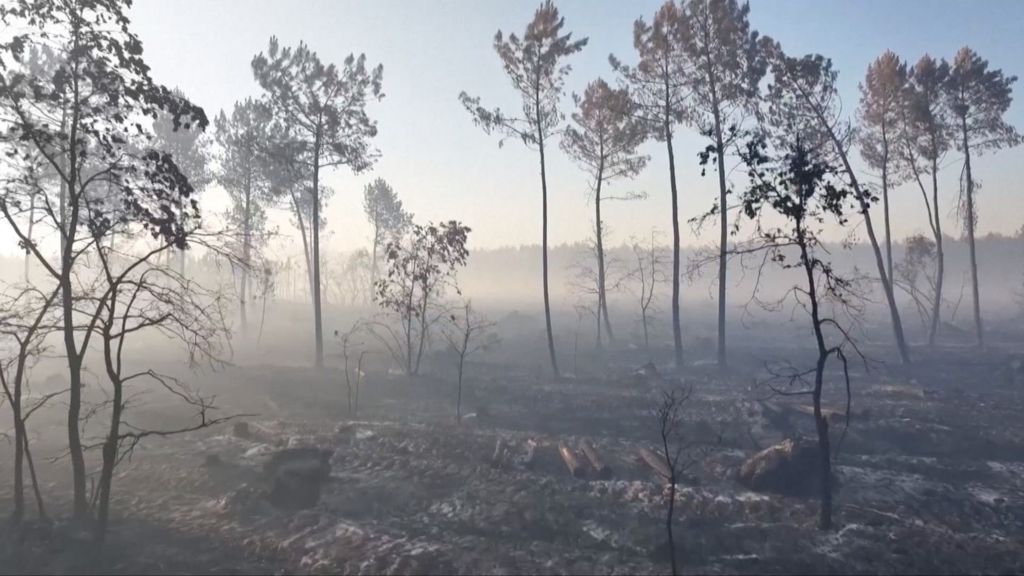
    Newly released aerial drone footage has laid bare the devastating aftermath of ongoing wildfires tearing through French landscapes, offering a stark visual record of charred tree trunks stretching across thousands of acres and blackened, ash-covered earth where vibrant vegetation once grew. As a second record-breaking heatwave settles over southern Europe, pushing temperatures well above seasonal averages and drying out already parched vegetation, French fire service officials have described the ongoing battle to contain the blazes as a modern-day “David against Goliath.”

    Hundreds of firefighters have been deployed from neighboring regions and across the country to reinforce frontline teams, working around the clock to build containment lines and protect residential communities and protected natural habitats. Unseasonably high temperatures, combined with erratic gusty winds, have turned small spot fires into large, fast-moving infernos that are extremely difficult to predict or control. Fire service spokespersons note that under current climate conditions, the deck is stacked heavily against containment efforts, with dry underbrush and overheated air acting as constant fuel for new outbreaks.

    The ongoing heatwave has exacerbated already strained wildfire response resources, with emergency teams facing extended shift hours and limited downtime between outbreaks. Ecologists warn that this event is the latest in a growing pattern of more intense and frequent wildfire seasons across southern Europe, linked directly to long-term global climate change trends. Local authorities have urged residents to follow evacuation orders immediately and avoid unnecessary travel through high-risk fire zones, as response teams continue their uphill battle against the spreading blazes.

  • Kenya eyes Chinese investment to accelerate clean energy transition

    Kenya eyes Chinese investment to accelerate clean energy transition

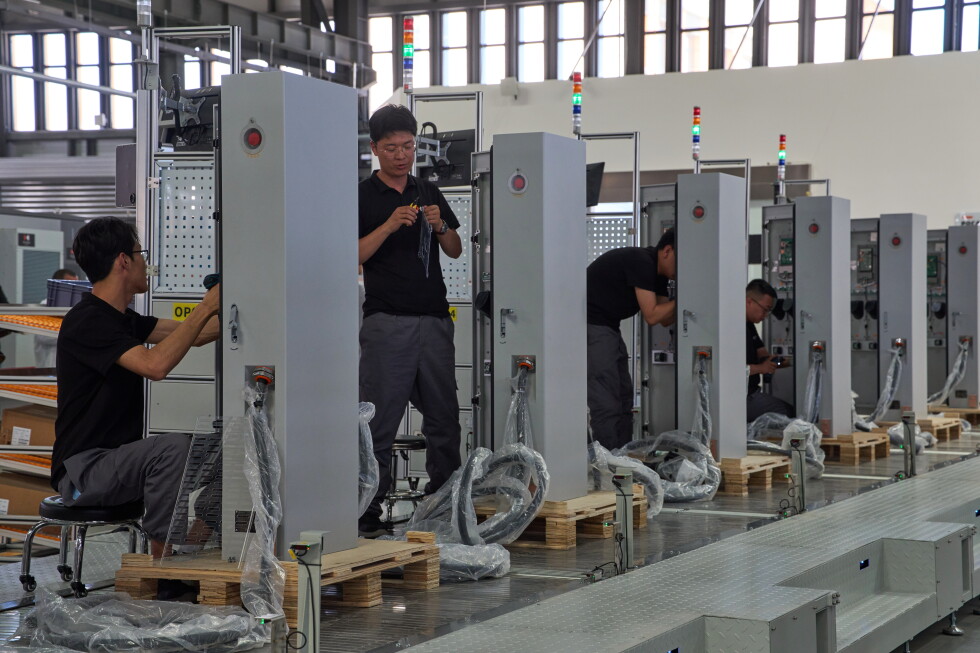
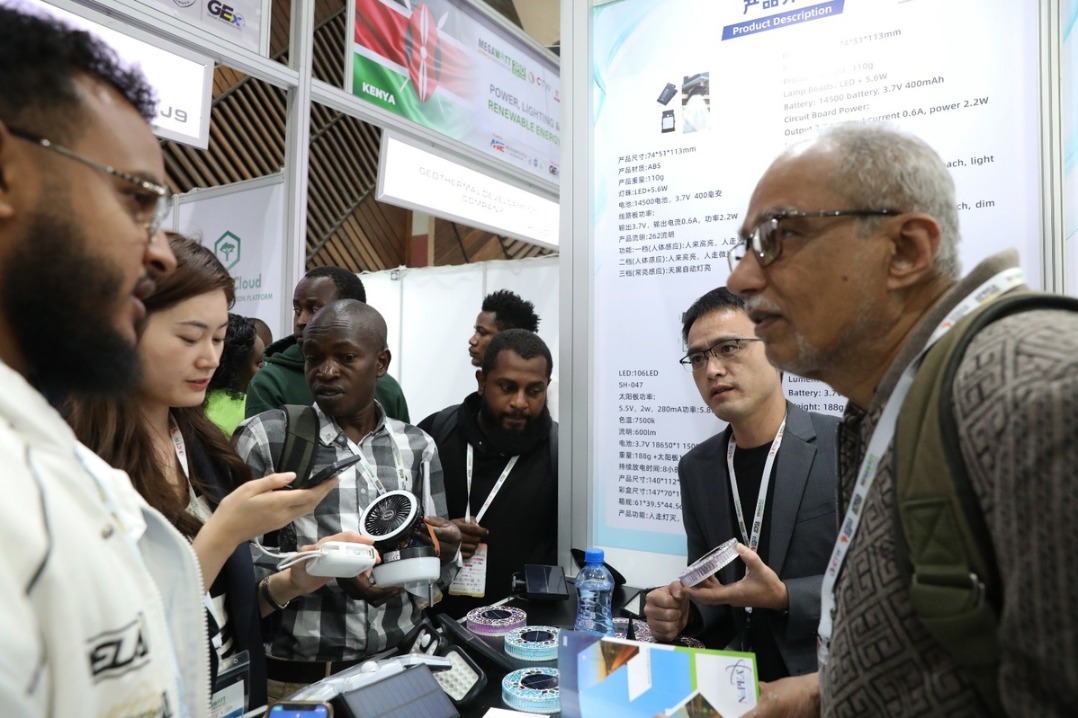
    NAIROBI, Kenya – As East African nations race to scale up renewable energy adoption and cut carbon emissions, Kenya is actively courting Chinese capital and technical partnership to build a domestic clean energy manufacturing sector, advance its national energy transition, and cement its status as the region’s leading green industrial hub. The announcement came during Kenya Trade Week 2026, where dozens of Chinese clean energy firms showcased their latest solar power, grid infrastructure and electric mobility products to local industry stakeholders and government officials.

    Thomas Karungu, alternate director to the principal secretary at Kenya’s State Department for Energy, outlined the country’s value proposition for foreign investors in a recent address, noting that Kenya holds unique advantages for clean energy investment: it boasts one of the highest shares of renewable energy in its national electricity mix on the continent, with abundant untapped solar, geothermal, wind and hydropower resources. Complementing these natural assets are its strategic position as a gateway to the East African Community’s 300-million-plus consumer market, a rapidly growing domestic energy demand, and a slate of recently updated government policies designed to lower barriers for clean energy project development and manufacturing investment.

    Karungu emphasized that China, as a global leader in renewable energy innovation, large-scale equipment manufacturing, grid infrastructure deployment and energy storage technology, is uniquely positioned to support Kenya’s clean energy goals. Through local production, targeted technology transfer and cross-border industrial partnerships, Chinese firms can help Kenya turn its natural resource advantages into long-term industrial and economic gains, he added.

    The Kenyan government is prioritizing partnerships that foster local industrial capacity, Karungu explained. This includes supporting local assembly of clean energy equipment, domestic production of core components, knowledge and technology transfer, joint research and development initiatives, technical skills training for local workers, and the build-out of a localized regional supply chain. Specifically, the government is welcoming Chinese investment across a wide range of high-priority sectors: solar panel manufacturing, transformer and smart meter production, high-voltage transmission equipment, electric vehicle charging infrastructure, geothermal energy development, mini-grid deployment for off-grid rural communities, clean cooking technology, waste-to-energy projects, and digital electricity network management.

    These investments will deliver far-reaching benefits beyond expanding renewable energy access, Karungu noted. They will create thousands of local manufacturing and technical jobs, build long-term sustainable technical capacity within Kenya, and allow the country to become a central manufacturing and distribution hub for clean energy equipment serving the entire East African region.

    To meet the country’s rapidly growing domestic electricity demand, the Kenyan government has laid out an ambitious infrastructure expansion plan: by 2030, it aims to modernize and extend the national high-voltage transmission network by roughly 8,000 kilometers, and add approximately 12,000 megavolt-amperes of additional transmission capacity to the grid. Delivering this large-scale infrastructure push will require massive capital input, cutting-edge technology, specialized technical expertise, strong institutional collaboration, and sustained public-private partnership, Karungu said.

    “For global investors, financiers and clean energy project developers, Kenya has set a clear, unwavering direction for its energy transition,” Karungu stated. “Achieving our goal of universal electricity access, expanding our transmission network and meeting the rising energy demand of our growing economy will require substantial, active participation from the private sector.”

    Chinese firms already active in the Kenyan market say the country offers strong untapped business potential, even amid fierce competition among Chinese clean energy suppliers. Cao Wenjing, a representative of a Chinese renewable energy company that entered the Kenyan market in 2025 after expanding across other major African markets including Nigeria, South Africa and Zimbabwe, noted that competition in the sector is intense, as most global clean energy equipment suppliers hail from China. Even so, Kenya’s exceptional solar resources, relatively high domestic electricity rates, and rapidly growing demand for both grid modernization and new renewable energy capacity continue to create attractive business opportunities for foreign firms, Cao added.

  • People trapped inside Japan shopping centre after earthquake

    People trapped inside Japan shopping centre after earthquake

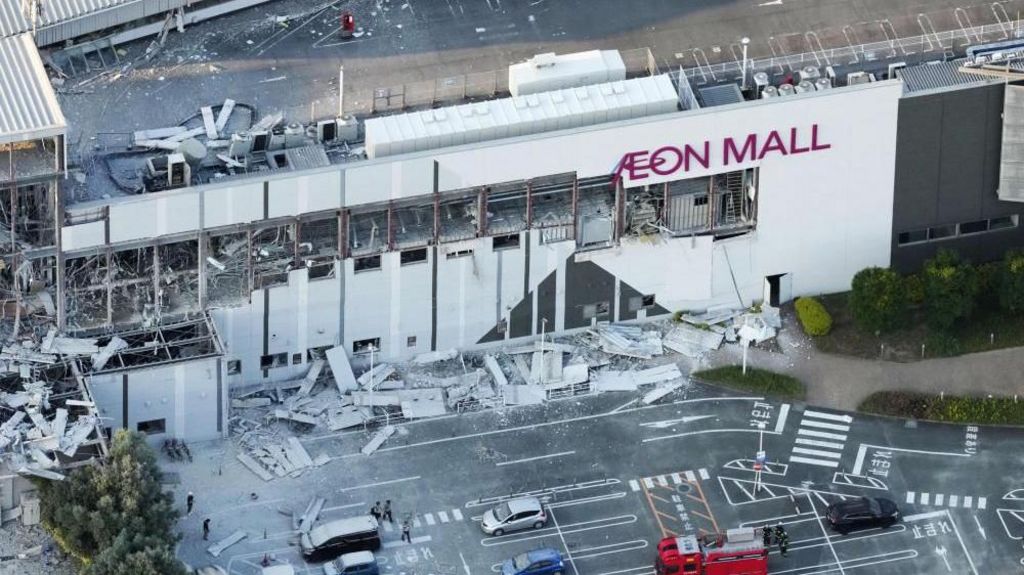
    A powerful magnitude 7.1 earthquake has rattled southwestern Japan, triggering widespread structural damage, multiple injuries, and leaving an unknown number of people trapped inside a damaged regional shopping mall, Japanese government officials confirmed Tuesday. The seismic event struck inland on Kyushu Island at 16:27 local time (07:27 GMT), with its epicenter located just 10 kilometers (six miles) below the Earth’s surface—a shallow depth that often amplifies the quake’s destructive power.\n\nLocal reports indicate an explosion occurred at the Aeon Mall in Kashima Town, Kumamoto Prefecture, a popular regional retail destination that now stands heavily damaged, with multiple people believed trapped in its collapsed sections. Aerial imagery captured by local news outlets shows severe structural compromise to the multi-story building, matching footage aired by Japan’s national public broadcaster NHK that reveals cracked roadways, damaged critical infrastructure including bridges, and multiple out-of-control building fires across the affected region.\n\nIn the immediate aftermath of the quake, Japanese authorities issued a brief tsunami alert for coastal areas of Kyushu, but the warning was canceled within an hour as no dangerous wave activity was recorded. Even so, more than 150,000 residents across affected prefectures have been ordered to evacuate their homes and relocate to designated emergency evacuation shelters as response teams continue to clear hazardous damaged areas.\n\nJapanese Prime Minister Sanae Takaichi told reporters Tuesday that disaster response teams are still working to map the full scale of human and property losses from the event. “We are still assessing the extent of injuries and property damage, but I have been informed that there have already been several injuries,” Takaichi said. The Japan Meteorological Agency has issued an urgent warning for residents to remain alert, noting that strong aftershocks are highly likely in the coming days and weeks due to the quake’s shallow epicenter.\n\nJapan sits along the Pacific Ring of Fire, the world’s most geologically active seismic belt, making it one of the most earthquake-prone nations on the planet. The country records roughly 1,500 detectable seismic events each year, and has invested heavily in strict building codes and early warning systems to reduce casualties during major quakes.