博客

  • Europe’s wildfire crisis fractures as Greece evacuates and France guards megafire scar

    Europe’s wildfire crisis fractures as Greece evacuates and France guards megafire scar

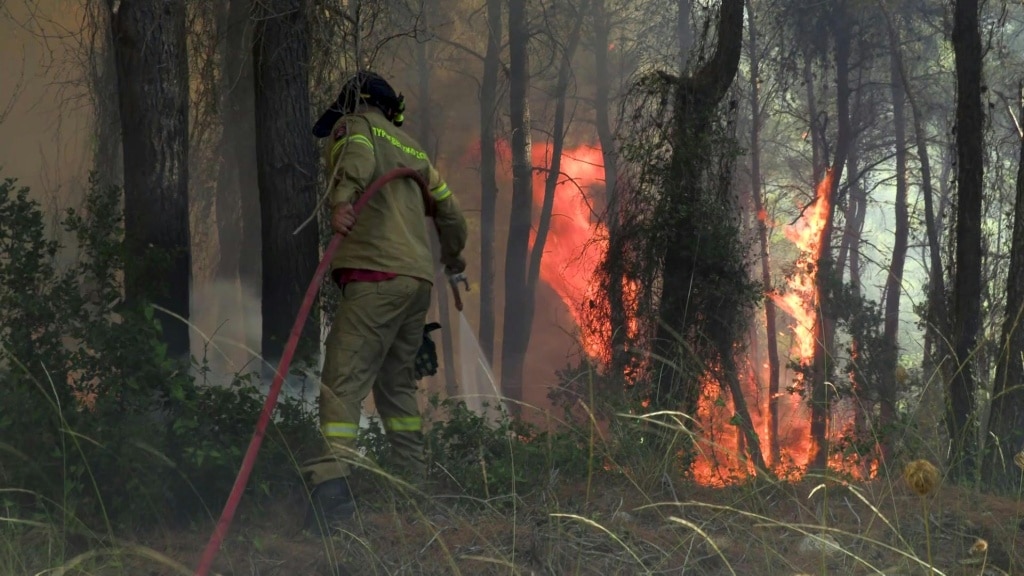
    By the end of a scorching European summer, a continent-wide wildfire crisis was splitting into starkly divergent situations across the region on Sunday, with gale-force winds pushing flames closer to the Greek capital of Athens and triggering new evacuation orders, while France maintained a tense watch over a massive, still-active blaze that already carved a destruction zone four times the size of Paris, and major wildfires in Spain finally halted their spread.

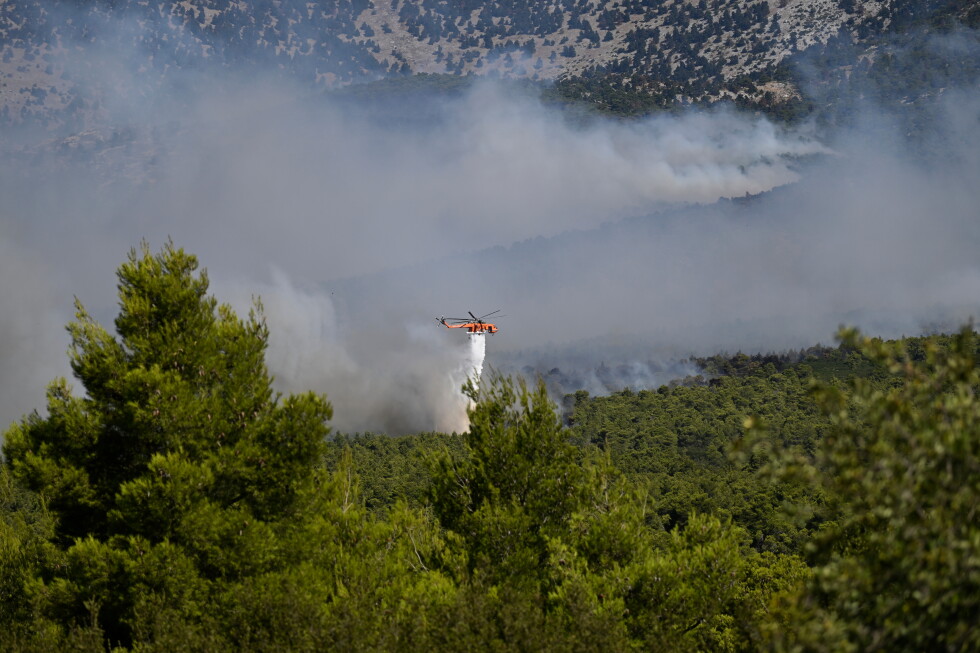
    Greece remained the epicenter of immediate, life-threatening risk on Sunday. Violent gale-force winds pushed growing fire lines deeper into western Attica, the administrative region that encompasses Athens, putting coastal villages and an industrial zone outside the city of Megara in grave danger. The same powerful gusts that amplified fire spread also grounded firefighting aircraft, preventing crews from scooping water from nearby seas to douse the flames.

    As of Sunday, Greek authorities had ordered fresh mandatory evacuations for three additional communities: Kandili, Agia Skepi and Toutouli, with officials flagging particular concern for Porto Germeno, a popular seaside community on the Gulf of Corinth. Nearly 500 firefighters and 23 aircraft were deployed to contain the blaze, which ignited Friday near Agios Vasileios before sweeping toward coastal areas and pushing into the forested Geraneia Mountains west of Athens.

    For coastal communities cut off by fast-moving flames and smoke, evacuation by sea became a last-resort escape route. By Saturday, rescuers had pulled 254 people from the sea near Agios Vasileios and an additional 12 from Porto Germeno. Wildfire meteorologist Theodore Giannaros estimated Saturday the blaze had already scorched between 40 and 50 square kilometers of land, though Greek officials had not released an official confirmed estimate as of Sunday.

    Local resident Minas Tzortzanis, a farmer in the area, described the irreversible damage to the once-lush landscape. “A pristine forest, a paradise, was surrendered to the hands of the fire,” he said Saturday. “There are no words to explain what has happened. Destruction. Total destruction.”

    The unfolding disaster carries grim historical weight for Greece: in 2018, a similarly wind-fueled wildfire trapped residents in the seaside Athens suburb of Mati, killing 104 people in what remains the deadliest wildfire Europe has seen this century.

    Hundreds of kilometers to the west, where emergency conditions had begun to ease, little relief was available for thousands displaced by France’s largest wildfire on record. The Gironde megafire, which forced the evacuation of 224,000 people — what officials say is likely the largest peacetime evacuation in French history — has already scorched 420 square kilometers of dense forest, an area four times the size of the city of Paris. While the fire’s forward spread has been contained, active hotspots still burn deep within the destruction zone, and thousands of evacuated residents remain unable to return to their homes.

    Nearly 3,000 firefighters are still deployed across two major French blazes: the Gironde megafire in the southwest, and a second large wildfire in Provence that stopped spreading but has not been fully contained. The Gironde region remains under France’s highest red wildfire alert, with persistent dry conditions, record-high temperatures near Bordeaux and expected afternoon winds continuing to raise the risk of the fire breaking through containment lines.

    To reinforce overstretched crews, additional firefighters from Ukraine, Lithuania and French Polynesia were scheduled to arrive in the region over Sunday and Monday.

    In southeastern France’s Var department, hundreds of kilometers from Gironde, nearly 1,500 firefighters continued to battle a separate blaze that tore through 18 square kilometers of the Gros Bessillon hills in just over 24 hours. Authorities reported the fire had been stabilized by Sunday morning, meaning its perimeter did not expand overnight, but it had not yet been declared fully contained.

    Firefighting aircraft supported ground crews working to hold the fire back from small villages scattered across the vineyards, olive groves and wooded hills that give the region its nickname of Green Provence. Roughly 2,500 residents have been evacuated as the fire advanced, marking the fourth major wildfire to hit central Var since July 19. Earlier that week, a smaller blaze near Brignoles forced Hollywood actor George Clooney, his family and 700 other local residents to evacuate before it could be brought under control.

    French Prime Minister Sébastien Lecornu noted that most wildfires across the country were currently under control, but warned that conditions could shift rapidly at any time. He also announced that a national coordinator based out of the prime minister’s office would oversee long-term reconstruction efforts for communities and ecosystems damaged by the blazes. Since the start of 2022, more than 1,170 square kilometers of French land has burned in wildfires.

    The ongoing wildfire crisis across Europe is unfolding against a well-documented climate backdrop: the European Union’s Copernicus Climate Change Service confirms Europe has warmed more than twice as fast as the global average since the 1980s, making it the world’s fastest-warming continent. Higher average temperatures and prolonged drought have left forests and scrubland far drier and more flammable, allowing wildfires to spread faster and burn with far greater intensity than in decades past.

    In a rapid analysis released Thursday while French blazes were still actively spreading, a team of scientists from World Weather Attribution found that human-caused climate change has doubled the likelihood of the extreme fire weather conditions that fueled the Gironde megafire.

    Taken together, wildfires in France and Spain alone have displaced roughly 330,000 people from their homes and summer vacation sites, emptied entire communities at the peak of tourist season, and stretched firefighting resources and emergency services thin as crews responded to multiple simultaneous disasters across the continent.

  • Washington state wildfires trigger evacuations

    Washington state wildfires trigger evacuations

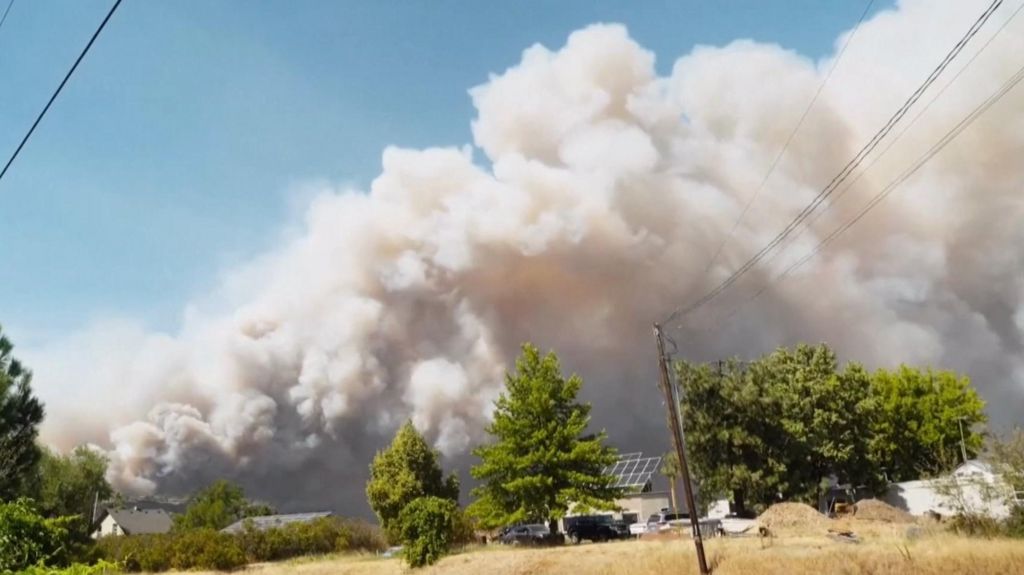
    Wildfire season has brought unprecedented emergency conditions to Washington State, as fast-spreading blazes have scorched more than 250,000 acres of land across the region, prompting state officials to order widespread evacuation orders and leaving thousands of residents without access to electrical power. The scale of the infernos has stretched emergency response resources thin, with flames advancing through dry, vegetation-heavy landscapes that have been primed for rapid spread by record-high temperatures and prolonged drought conditions that have gripped the Pacific Northwest in recent months. Local emergency management teams have been working around the clock to move vulnerable residents out of harm’s way, set up temporary emergency shelters for displaced people, and coordinate with fire crews from neighboring regions to contain the blaze’s expansion. Power infrastructure has been heavily impacted by the advancing fires, with utility providers forced to shut down transmission lines and distribution networks to avoid further damage or safety hazards to workers and residents. As firefighters continue to battle the multiple concurrent blazes, authorities are urging residents in at-risk zones to stay alert, adhere to evacuation orders immediately, and prepare for potential extended disruptions to basic services before containment efforts can be completed.

  • One Nation is Australia’s most popular political party, poll finds

    One Nation is Australia’s most popular political party, poll finds

    A recent nationwide voting poll has delivered a striking shake-up to Australia’s political landscape, with Pauline Hanson’s right-wing insurgent party One Nation reclaiming the position of the nation’s most popular political party by primary vote share. Conducted by research firm Redbridge exclusively for *The Australian Financial Review*, the survey of 1,001 Australian voters captured shifting voter sentiment weeks after the last major national polling, tracking movement across all major Australian political parties.

    Per the poll results, One Nation’s primary vote support climbed two percentage points to hit 32%, outstripping the ruling Labor Party, which saw a one-point drop to land at 29%. The center-right Coalition recorded a four-point surge to reach 22% primary support, while the left-wing Green Party shed an equal four points to settle at 10% of the projected primary vote. This result marks only the second time One Nation has outperformed Labor in primary voting polling since May 2024, with the shift falling within the poll’s stated 3.3% margin of error.

    While One Nation leads in primary voting, two-party preferred preference modeling reveals conflicting outcomes across different head-to-head matchups. In a direct contest between One Nation and Labor, the incumbent government still holds a lead, though that advantage shrank three points to leave Labor with a narrow six-point lead (53% to 47%). When matched against the Coalition, however, Labor lost its lead: the opposition rose six points to claim a four-point advantage, sitting at 52% to Labor’s 48%.

    On the question of preferred prime minister, incumbent Anthony Albanese retained his top position despite sliding approval ratings. Albanese polled at 32% for preferred prime minister, ahead of Pauline Hanson on 24% and new Liberal leader Angus Taylor on 15%. This standing comes despite overall negative sentiment toward the prime minister’s performance: Albanese’s net approval rating fell one point to negative 19. Hanson’s net approval held steady at minus 10, while Taylor’s approval improved three points to reach negative six.

    The poll also broke down voter support by the key issues driving electoral choice. Voters ranked cost of living, healthcare, and housing affordability as their top three concerns, with Labor holding small leads on all three. Issues of immigration and crime and safety, ranked fourth and fifth in voter priority, saw One Nation capture the lead in voter support on these policy areas.

  • Trump cancels Iran strikes subject to deal being made ‘rapidly’

    Trump cancels Iran strikes subject to deal being made ‘rapidly’

    In a sudden reversal of escalating military rhetoric, U.S. President Donald Trump announced Saturday that he has called off planned large-scale military strikes against Iran, on the condition that a new diplomatic agreement is reached “rapidly” between the two nations. The announcement comes just days after multiple U.S. media outlets confirmed that Washington and its ally Israel had finalized plans for one of the most intense bombing campaigns against Iranian energy infrastructure in the history of the ongoing conflict.

    The breakthrough announcement, shared via a post on Trump’s social platform Truth Social, revealed that Iran and regional Middle Eastern stakeholders had requested Washington delay military action after agreeing to the core outlines of a potential new deal. “We are locked and loaded and ready to go against the Islamic Republic of Iran, at levels of Military Terror, Strength, and Power not seen since World War Two,” Trump wrote in the post. “I have been asked to hold off any attack, and I have agreed. Cancelling this strike will serve the future benefit of the world, and likewise the survival of a successful and prosperous Iran.”

    This pattern of bellicose threats followed by a last-minute turn to diplomacy is not unprecedented for the current U.S. administration. Back in April, Trump issued an apocalyptic warning that “a whole civilisation will die tonight” if Iran refused to enter peace talks, a threat that included open promises to target civilian infrastructure and power plants – a move widely condemned by international legal experts as a potential war crime. That warning did ultimately lead to historic face-to-face negotiations between U.S. and Iranian delegations in Pakistan, led by U.S. Vice President JD Vance. For Trump’s political supporters, the outcome validated the president’s unorthodox “Madman Theory” approach to nuclear and regional diplomacy, where extreme threats push adversaries to the negotiating table. However, those earlier talks collapsed without any agreement, as irreconcilable differences over core red lines on both sides left no path to a deal.

    The latest military escalation plans were first confirmed by multiple U.S. sources during Trump’s closed-door cabinet meeting at Camp David held last Friday. Speaking with reporters still present in the meeting room, CBS News – a U.S. news partner of the BBC – captured Trump telling attendees, “We’ll be hitting them [Iranians] very hard. At some point, they’re going to say, ‘We just can’t take it anymore.’” In the days leading up to Trump’s announcement, the U.S. State Department had also issued an urgent alert urging all American citizens across the Middle East to remain on high alert and prepare for immediate evacuation if regional tensions escalate further.

    As of Sunday, Iranian officials have not confirmed any request for new talks or any preliminary agreement on deal parameters, nearly five months after the current open conflict began with joint U.S. and Israeli strikes on February 28. Speaking publicly Sunday, Iran’s acting Defence Minister Majid Ibn al-Reza stressed that Tehran treats every threat from its adversaries as “real and credible,” even when framed as psychological warfare. “We will neither be caught off guard nor remain passive,” he added, reaffirming Iran’s commitment to responding to any military attack.

    Regional powers have moved quickly to push for de-escalation in the 48 hours after Trump’s announcement. On Saturday, a day after the Camp David cabinet meeting, Saudi Arabia’s official SPA news agency confirmed that Saudi Crown Prince Mohammed Bin Salman held a phone call with Trump focused on reducing regional tensions. The statement added that the crown prince “emphasised the necessity of prioritising dialogue to reduce tensions and the importance of exerting all possible efforts to achieve a truce that paves the way for diplomatic solutions.”

    Gulf U.S. allies, including Bahrain, Jordan and the United Arab Emirates, have long expressed deep concern over any major escalation of the conflict: unlike the U.S. mainland, which lies outside the range of Iranian conventional missiles, these regional states host critical infrastructure – including water desalination plants that supply the majority of drinking water for local populations – that are widely considered prime targets for Iranian retaliation. The Strait of Hormuz, the world’s most important chokepoint for global oil exports, also runs through the region, and Iran has already targeted commercial shipping in the waterway since the ceasefire collapsed in June.

    The current conflict between Washington and Tehran dates back to an April ceasefire that paused open hostilities, only to collapse in June, triggering a new cycle of escalating strikes and counter-strikes. The U.S. has enforced a full blockade of Iranian ports and carried out repeated bombing raids on Iranian military and infrastructure targets, while Iran has responded with missile and drone attacks on U.S. military assets across the Middle East and disruptions to global oil shipping. The ongoing instability has already triggered significant volatility in global crude oil prices, a trend that threatens to push up energy costs for consumers around the world, including in the U.S.

    Domestically, Trump faces growing headwinds over his handling of the conflict as crucial U.S. midterm elections approach. Data from the Pew Research Center shows that roughly 60% of American voters disapprove of Trump’s handling of the war with Iran, a factor that has contributed to the president’s falling overall approval ratings. Political analysts widely note that any major escalation of the conflict would almost certainly drive up global oil prices, further squeezing household budgets for U.S. consumers and amplify political risks for Trump’s party in the upcoming elections.

  • Fire toll mounts in Greece as blazes spread

    Fire toll mounts in Greece as blazes spread

    Greece is grappling with an expanding wildfire crisis that has left vast swathes of forest and agricultural land destroyed, with top officials warning that the most challenging days still lie ahead as high gale-force winds hamper suppression efforts.

    Prime Minister Kyriakos Mitsotakis noted that the nation has been battered by unprecedented extreme weather, with wind speeds regularly hitting 62 miles per hour — speeds so intense that even the dozens of aerial firefighting assets deployed across the country cannot operate safely. “There are moments when nature and the intensity of weather phenomena surpass any human planning and any operational capability,” Mitsotakis wrote in a public post on Facebook Sunday.

    As of Sunday, nearly 500 firefighters were focused on containing a major blaze burning near Porto Germeno, a popular coastal village located roughly 45 miles northwest of the Greek capital Athens. The fire crossed a mountain range overnight, and crews are working around the clock to stop its advance toward Athens’ western outskirts. Additional blazes are burning across the country: 100 firefighters are tackling a second large wildfire in Aigialia, located in the northern Peloponnese peninsula, while a new outbreak was reported on the Ionian Sea island of Cephalonia late Saturday.

    Early damage assessments from the National Observatory’s climate tracking service meteo.gr initially estimated that more than 16,000 acres of land had been burned in outbreaks across the Gulf of Corinth region, which includes the Porto Germeno blaze. But Theodore Giannaros, a wildfire meteorologist and senior researcher at the National Observatory, said Sunday that the actual burned area for the Porto Germeno fire alone is likely over 24,700 acres — nearly double the initial estimate. “Unfortunately, it is highly likely (if not almost certain) that this particular wildfire will be classified as a megafire,” Giannaros wrote on Facebook.

    Evacuation orders were issued for Porto Germeno and neighboring villages on Friday when the fire first broke out, but local authorities confirm that dozens of residential properties have already been damaged or destroyed. Nikos Georgopoulos, a forest management researcher at Aristotle University of Thessaloniki, told Greek state broadcaster ERT that the speed of the blaze took observers by surprise. “We could not believe what we were seeing, the fire spread extremely rapidly,” he said, adding that the same area was hit by a smaller wildfire just three years ago.

    The crisis has stretched Greece’s emergency response resources to breaking point. Civil Protection Minister Evangelos Tournas confirmed Saturday that the national fire department has been “pushed to its limits”, after crews have responded to dozens of new fire outbreaks every day this week. Three firefighters have already died in the line of duty this week: two on the island of Crete, and one in the Peloponnese. Tournas explained that extreme wind and turbulence have grounded most aerial firefighting assets for much of the crisis, leaving ground crews to handle fast-moving blazes without air support.

    While winds moderated slightly late Saturday, the Greek civil protection ministry warned Sunday that the greater Athens metropolitan area, nearby Voiotia region, and the island of Evia all remain under near-maximum wildfire risk. Like much of the Mediterranean basin, Greece faces increasing wildfire risk every summer due to rising temperatures, more frequent and intense heat waves, and prolonged drought driven by human-caused climate change. Earlier this week, separate wildfires on the Greek islands of Crete and Paros burned another 14,800 acres of land, according to meteo.gr data.

  • Cuba hit by partial power outage affecting western provinces

    Cuba hit by partial power outage affecting western provinces

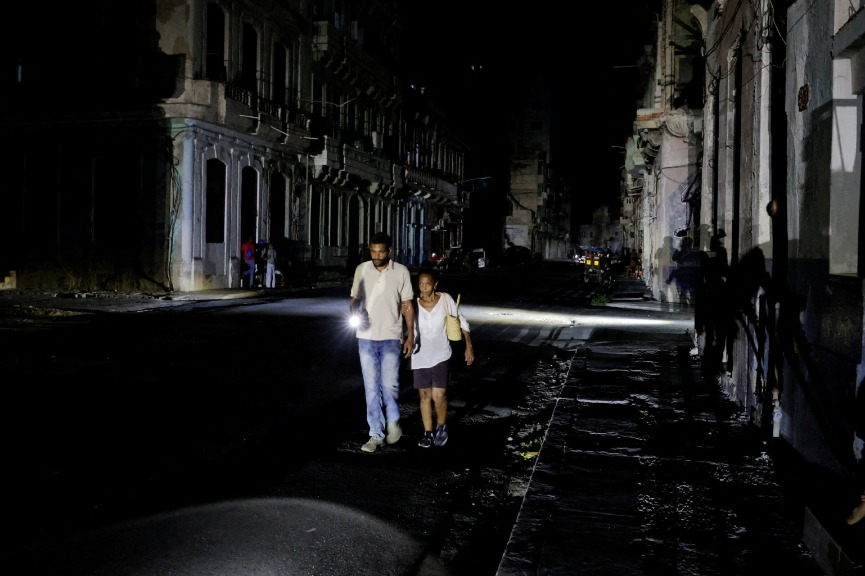
    A partial failure of Cuba’s national electric grid has left multiple western provinces of the island nation without power on Saturday, according to an official statement from the country’s National Electric Union. The grid disruption began at 18:07 local time, caused by an unexpected tripping of major transmission lines that carry electricity to the affected regions, which stretch from the province of Matanzas along the northern coast westward all the way to Pinar del Río at the island’s western tip.

    Cuba’s energy sector has faced persistent systemic strain for years, a crisis largely exacerbated by long-running U.S. sanctions that have severely restricted the country’s ability to import critical resources. These restrictions block access to the fuel required to power generation facilities and the specialized equipment needed to upgrade and repair Cuba’s fleet of heavily aged power plants, many of which have operated far beyond their original design lifespans.

    This latest outage is not an isolated incident. Since October 2024, Cuba has endured multiple widespread blackouts across the entire country, triggered by a combination of interconnected factors: aging power infrastructure failures, intense hurricane activity that damages transmission and generation assets, and ongoing fuel shortages that leave utility operators unable to meet peak domestic and commercial energy demand. The recurring outages have placed additional strain on Cuban households and businesses already navigating economic challenges tied to international trade restrictions.

  • Man, 20s, found fatally-injured at bus stop in Australind, Western Australia

    Man, 20s, found fatally-injured at bus stop in Australind, Western Australia

    A violent early-morning incident in a small Western Australian country town has left a young man dead and sparked a full homicide investigation, with two suspects already taken into police custody. Emergency responders were dispatched to a bus stop on The Boulevard in Australind, a regional community located roughly 150 kilometers south of Perth, at approximately 1:20 a.m. on Sunday following reports of an injured person at the location.

    When first responders arrived at the scene, they found the man, who was in his late 20s, unresponsive with life-threatening critical injuries. He was immediately transported by emergency ambulance to Bunbury Hospital for urgent medical intervention, but medical staff were unable to save him, and he was pronounced dead shortly after arrival.

    In the wake of the young man’s death, Western Australia Police has deployed specialist homicide squad detectives to lead the investigation into the circumstances surrounding his injury and death. As of the latest update Sunday, two men, both aged in their 30s, have been arrested and are currently in police custody. No formal charges have been filed against either suspect at this time, as investigators continue to piece together details of the incident and collect forensic and witness evidence.

    Western Australia Premier Roger Cook publicly addressed the shocking incident on Sunday, describing the event as horrific and saying he was deeply saddened by the loss of life. “We’ve received reports there has been an assault, an alleged assault, in Australind,” Cook told reporters. “It would appear to be a very violent incident, and I’m very pleased that the police were able to get on top of that situation quickly. I think everyone in Australind will be shocked by this news today, and our thoughts are with the friends of the individual.”

    The crime scene remains sealed off as forensic officers continue their examination, with police expected to release further updates as the investigation progresses.

  • Island residents fear delays to emergencies amid changes to fire service

    Island residents fear delays to emergencies amid changes to fire service

    Off Ireland’s northwest coast, the remote inhabited island of Arranmore is facing a growing conflict over emergency services, as locals push back against Donegal County Council’s plan to phase out the island’s last retained paid firefighters and transition to an all-volunteer fire brigade once the current personnel retire.

    For decades, Arranmore’s fire service has operated under a hybrid model: two full-time paid retained firefighters backed by a team of local volunteers. But that structure is set to change, with the council moving to an entirely volunteer-led service to fill upcoming vacancies created by retirement. For island residents, the shift raises urgent questions about the reliability of emergency response during a high-risk season for wildfires.

    Longtime local firefighter Finbar Gallagher, one of the most vocal critics of the plan, explained that the island’s unique geography and seasonal population swings make an all-volunteer force unworkable. Arranmore is particularly prone to fast-spreading gorse fires during the warm summer months, when the island’s permanent population of roughly 500 swells to as many as 900 people as tourists descend on its Atlantic coastlines. Gallagher noted that many current volunteers already split their time across multiple critical emergency services, serving on both the RNLI lifeboat crew and local ambulance service in addition to fire brigade duties.

    “The days of relying solely on volunteers for an essential service like fire response are gone,” Gallagher told BBC Radio Foyle. “Every community on the mainland has access to retained paid firefighters, and there’s no logical reason why Arranmore should be different. The additional cost to the council is negligible, especially when weighed against the risk to human life.”

    Residents have already launched a formal petition demanding the council reverse its decision and commit to hiring six full-time retained firefighters for the island. Siobhan Cox, a member of the community committee organizing the petition, said locals are united in their deep concern over the proposed changes. She pointed to a recent gorse fire that was extinguished in just 10 minutes by the existing on-island crew – a response time that would be impossible if the island had to wait for reinforcements from the mainland.

    Cox explained that rough Atlantic seas regularly suspend ferry services to Arranmore, meaning mainland fire crews could face delays of up to an hour or be unable to reach the island at all during an emergency. That window, she said, is more than enough for a small gorse fire to spread to residential areas and cause catastrophic damage. Beyond emergency response, Cox added that creating new paid positions would also support long-term efforts to attract young people to move to the island, boosting its declining permanent population. She also noted that the Aran Islands, another inhabited Irish island group, currently receive funding for 12 retained firefighter positions, making the council’s refusal to approve six posts for Arranmore even more confusing.

    For its part, Donegal County Council has defended its plan, arguing that current volunteer recruitment efforts meet and exceed the requirements laid out in national government policy for fire services on inhabited offshore islands. The council noted that five new local residents have already expressed interest in joining the volunteer brigade to fill the gaps left by upcoming and recent retirements. It added that the island’s fire equipment has essentially the same functional capability as that used by mainland retained brigades, with only minor differences in water capacity and ladder size.

    But community leaders remain unconvinced, accusing the council of ignoring their concerns and attempting to sweep the issue under the rug. As the peak summer wildfire season gets underway, the fight over Arranmore’s fire service highlights the ongoing challenges facing remote island communities in Ireland, as local authorities balance budget constraints with the need for reliable, accessible emergency services for year-round and seasonal residents alike.

  • Victorian Premier Ben Carroll calls for Build Build royal commission before election, says he’s ‘happy’ to appear

    Victorian Premier Ben Carroll calls for Build Build royal commission before election, says he’s ‘happy’ to appear

    Just days after being sworn in as Victoria’s new state premier following Jacinta Allan’s sudden resignation, Ben Carroll has moved quickly to upend his predecessor’s policy approach, announcing plans to launch a royal commission into widespread corruption claims plaguing the state’s flagship Big Build infrastructure program — and confirming he would voluntarily appear to give evidence if summoned.

    Carroll, who took office last Tuesday after a party leadership shakeup that forced Allan out of the top job, laid out his timeline for the inquiry in a press briefing on Sunday, saying the probe must get underway before Victoria’s state election scheduled for November. “This is something that needs to be done now,” Carroll told reporters.

    The new premier confirmed that calling a royal commission into the construction sector will be his first official act in office — a sharp break from Allan, who rejected calls for a full public inquiry during the final months of her short tenure. The Big Build initiative, one of the state’s largest ever infrastructure pushes, includes major new public works such as upgraded roads, new urban tunnels and expanded train stations, but it has been roiled in recent months by persistent allegations of organized criminal infiltration linked to the Construction, Forestry, Maritime, Mining and Energy Union (CFMEU).

    Carroll said he has already directed the incoming head of the Department of Premier and Cabinet to begin drafting the inquiry’s terms of reference, which are set to be publicly unveiled next week. When asked if he would be willing to testify before the commission, he made his position clear: “I would be happy to give evidence if called to do so. Everyone should be questioned that the royal commissioner believes had a role. That will be a matter for the commissioner and the terms of reference – they will be wide and they will be exhaustive.”

    Carroll’s announcement came hours after Victorian Opposition Leader Jess Wilson published her party’s proposed terms of reference for the inquiry, which includes a demand to call 25 high-profile witnesses, including two former premiers: Daniel Andrews and Jacinta Allan. In comments Sunday, Wilson claimed the corruption scandal surrounding Big Build is the worst in Victoria’s history, having already cost state taxpayers an estimated $15 billion. “Yesterday we wrote to the new premier Ben Carroll outlining our non-negotiable terms of reference for a real royal commission into the largest corruption scandal in Victoria’s history,” she said.

    When asked about the Opposition’s proposal, Carroll admitted he had not yet reviewed the document, joking that media outlets received copies before his office did. “I think the media got a copy of it before I did and I’ve asked my office to track down a copy,” he said. “I am not going to run a commentary on the royal commission … I’ll have more to say next week.”

    Beyond the corruption inquiry, Carroll is moving rapidly to consolidate his control of the state government, with a new front bench cabinet expected to be announced imminently. The state Labor caucus is set to meet Monday to finalize ministerial appointments before Carroll assigns portfolios. Already, two senior ministers aligned with Allan’s Socialist Left faction have resigned from cabinet and announced they will retire from politics at the November 28 election, with political speculation mounting that additional departures will follow. Health Minister Harriet Shing and Energy Minister Lily D’Ambrosio confirmed their exit from cabinet just two days after the leadership change that ended Allan’s premiership.

    Carroll has also moved quickly to shake up the state’s top public service ranks: he has dismissed Jeremi Moule, the long-serving Department of Premier and Cabinet secretary who held the role under both Andrews and Allan, and replaced him with Treasury secretary Chris Barrett.

  • Dry, hot summers are putting Dutch dikes at risk and threatening German river trade

    Dry, hot summers are putting Dutch dikes at risk and threatening German river trade

    Across sweltering Western Europe, a record-breaking summer drought has left iconic infrastructure, agricultural sectors and key shipping routes reeling, with the low-lying Netherlands — a nation defined by its centuries-long battle to hold back water — facing an unprecedented test of its famed flood defense network. As wildfires rage across southern France and Spain, and major waterways including the Danube and Rhine drop to historic lows, the Netherlands has mobilized hundreds of volunteers to patrol its thousands of kilometers of dikes, hunting for hidden cracks and weaknesses that could spell disaster in future rain events.

    Near the small agricultural town of Waddinxveen, located east of The Hague and roughly 5 meters below sea level, volunteers Jeroen Wouda and Dirk Boom follow a slow, methodical route along an inland peat dike, probing the bone-dry earthen embankment with metal rods and scanning parched grass for subtle patches of green that signal an unseen leak. This modern patrol echoes the centuries-old folk tale of the Dutch boy who plugged a dike breach with his finger, but today’s monitoring uses 21st-century tools: volunteers log potential flaws directly in a mobile app, alerting water authorities who can dispatch repair crews within hours.

    Peter van Duijvendijk, flood defense manager at the Schieland en de Krimpenerwaard water corporation, one of 21 regional water management bodies that oversee flood protection across the Netherlands, says 140 trained volunteers in his district alone patrol 100 kilometers of dikes throughout the dry season. So far, no major structural damage has been detected, but patrols will remain active through the fall as soil conditions stay unstable. “These volunteers are our eyes and ears on the dike,” van Duijvendijk explained to the Associated Press. Unlike concrete coastal flood barriers, inland dikes in the Netherlands are often built from peat, a porous organic soil that relies on consistent moisture to retain its structural strength. When peat dries out, it shrinks and weakens, creating gaps that can allow water to breach the barrier and flood low-lying reclaimed polder land during periods of heavy rain. “Because it is so dry right now the peat loses moisture, and because of that it becomes weaker,” van Duijvendijk said. “If that peat becomes weaker, then there is a chance that water will flow through the dike.”

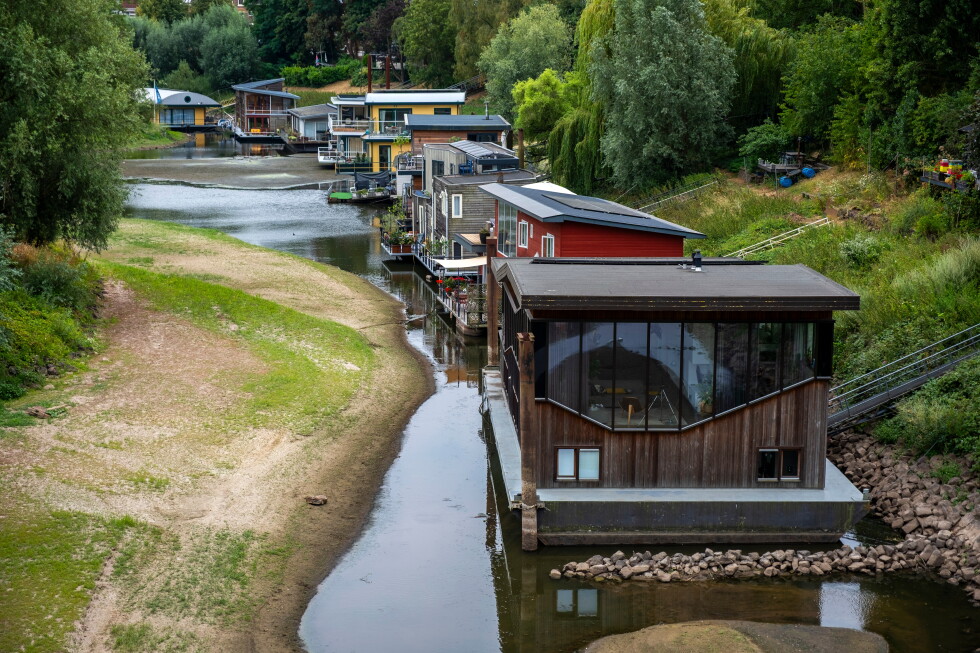
    The drought’s impacts extend far beyond dike integrity, rippling through regional economies and critical transport networks. The Rhine, Europe’s most vital inland freight waterway that connects North Sea ports to industrial heartlands in Germany and landlocked Central Europe, dropped below its 2018 record low near Cologne, Germany, over the weekend. Marcel Beck, manager of the western German ports of Neuss, Düsseldorf and Cologne for logistics firm RheinCargo, called the low water levels “devastating” for commercial shipping. Whereas a single cargo vessel can typically carry 2,000 to 2,500 metric tons of freight along the Rhine, water depths are now so shallow that most ships can only load 400 to 600 metric tons to avoid running aground on sandbars. “This places an enormous burden on the entire transport chain to reorganize everything in order to still get the goods inland,” Beck said. In the eastern Netherlands, the Waal river — the main Dutch branch of the Rhine — has receded so far that long-submerged items like rusted bicycles and discarded shopping carts are now exposed on the dry riverbed, and dozens of houseboats are sitting directly on the exposed sandy river bottom. Frans Schilte, a houseboat owner in the city of Nijmegen, has observed that low-water seasons have grown longer and more severe in recent years, extending from the historic one-month average to three full months. His own steel-hulled boat now rests on the riverbed, sitting slightly off-level as a result. “It’s not a big problem,” Schilte said, “but it’s the negative effect of climate change.”

    For the Netherlands, a country where roughly one-third of total land sits below sea level, managing water has always required a delicate balancing act: winter brings the constant threat of catastrophic flooding, while extended summer droughts increasingly bring the opposite problem of water scarcity. Deltares, an independent Dutch water research institute, says the country has enough total annual freshwater to meet all needs, but seasonal distribution is the core challenge. “In the winter we drain it away quickly because we want to keep our feet dry and we don’t want water on the land,” explained Vince Kaandorp, a groundwater hydrologist at Deltares. “How can you ensure that you do that slowly and give water time to sink into the ground?” Kaandorp notes that solutions don’t require massive high-tech infrastructure: simple adjustments like adding hedgerows along river banks can slow runoff, giving rainwater more time to seep into deep groundwater reserves. Dutch water authorities are currently researching how to modify agricultural and riparian soil to act like natural sponges, holding more moisture through dry summer months.

    Even with these adaptive measures, the drought has already caused significant disruption for Dutch agriculture. Some regions have banned farmers from pumping canal water for crop irrigation as authorities work to preserve freshwater supplies and prevent saltwater intrusion into low-lying reclaimed lands. Western Dutch polders, which produce much of the country’s fruit and vegetable crops, are facing increasing salinization as freshwater levels drop and seawater seeps into groundwater reserves. Farmers are warning of reduced harvests and higher consumer prices for summer fruit this year. “It is an extremely challenging year for growers,” said John Kusters, chair of the Netherlands Fruit Growers’ Organization, in a public statement.