In a sudden reversal of escalating military rhetoric, U.S. President Donald Trump announced Saturday that he has called off planned large-scale military strikes against Iran, on the condition that a new diplomatic agreement is reached “rapidly” between the two nations. The announcement comes just days after multiple U.S. media outlets confirmed that Washington and its ally Israel had finalized plans for one of the most intense bombing campaigns against Iranian energy infrastructure in the history of the ongoing conflict.
The breakthrough announcement, shared via a post on Trump’s social platform Truth Social, revealed that Iran and regional Middle Eastern stakeholders had requested Washington delay military action after agreeing to the core outlines of a potential new deal. “We are locked and loaded and ready to go against the Islamic Republic of Iran, at levels of Military Terror, Strength, and Power not seen since World War Two,” Trump wrote in the post. “I have been asked to hold off any attack, and I have agreed. Cancelling this strike will serve the future benefit of the world, and likewise the survival of a successful and prosperous Iran.”
This pattern of bellicose threats followed by a last-minute turn to diplomacy is not unprecedented for the current U.S. administration. Back in April, Trump issued an apocalyptic warning that “a whole civilisation will die tonight” if Iran refused to enter peace talks, a threat that included open promises to target civilian infrastructure and power plants – a move widely condemned by international legal experts as a potential war crime. That warning did ultimately lead to historic face-to-face negotiations between U.S. and Iranian delegations in Pakistan, led by U.S. Vice President JD Vance. For Trump’s political supporters, the outcome validated the president’s unorthodox “Madman Theory” approach to nuclear and regional diplomacy, where extreme threats push adversaries to the negotiating table. However, those earlier talks collapsed without any agreement, as irreconcilable differences over core red lines on both sides left no path to a deal.
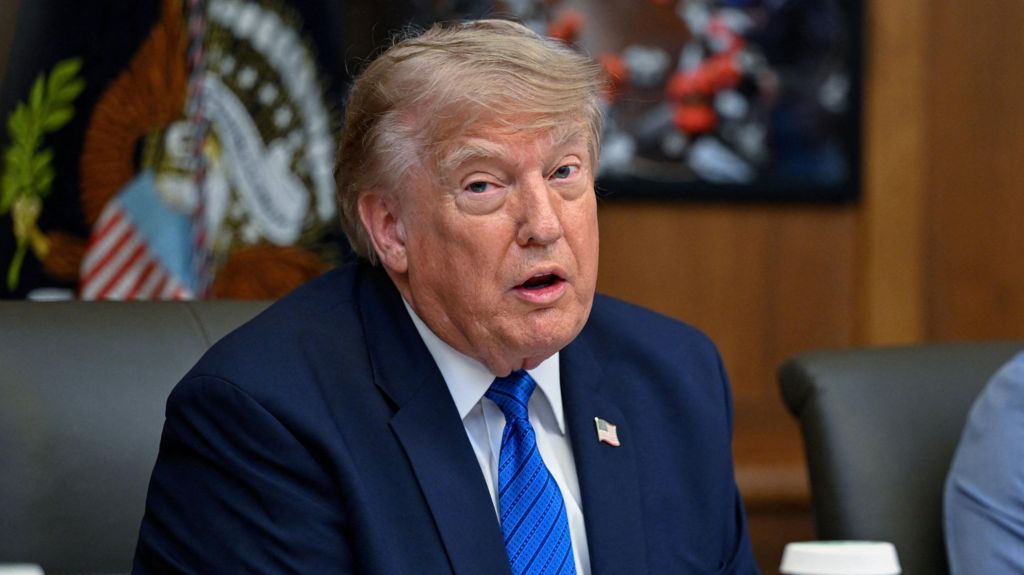
The latest military escalation plans were first confirmed by multiple U.S. sources during Trump’s closed-door cabinet meeting at Camp David held last Friday. Speaking with reporters still present in the meeting room, CBS News – a U.S. news partner of the BBC – captured Trump telling attendees, “We’ll be hitting them [Iranians] very hard. At some point, they’re going to say, ‘We just can’t take it anymore.’” In the days leading up to Trump’s announcement, the U.S. State Department had also issued an urgent alert urging all American citizens across the Middle East to remain on high alert and prepare for immediate evacuation if regional tensions escalate further.
As of Sunday, Iranian officials have not confirmed any request for new talks or any preliminary agreement on deal parameters, nearly five months after the current open conflict began with joint U.S. and Israeli strikes on February 28. Speaking publicly Sunday, Iran’s acting Defence Minister Majid Ibn al-Reza stressed that Tehran treats every threat from its adversaries as “real and credible,” even when framed as psychological warfare. “We will neither be caught off guard nor remain passive,” he added, reaffirming Iran’s commitment to responding to any military attack.
Regional powers have moved quickly to push for de-escalation in the 48 hours after Trump’s announcement. On Saturday, a day after the Camp David cabinet meeting, Saudi Arabia’s official SPA news agency confirmed that Saudi Crown Prince Mohammed Bin Salman held a phone call with Trump focused on reducing regional tensions. The statement added that the crown prince “emphasised the necessity of prioritising dialogue to reduce tensions and the importance of exerting all possible efforts to achieve a truce that paves the way for diplomatic solutions.”
Gulf U.S. allies, including Bahrain, Jordan and the United Arab Emirates, have long expressed deep concern over any major escalation of the conflict: unlike the U.S. mainland, which lies outside the range of Iranian conventional missiles, these regional states host critical infrastructure – including water desalination plants that supply the majority of drinking water for local populations – that are widely considered prime targets for Iranian retaliation. The Strait of Hormuz, the world’s most important chokepoint for global oil exports, also runs through the region, and Iran has already targeted commercial shipping in the waterway since the ceasefire collapsed in June.
The current conflict between Washington and Tehran dates back to an April ceasefire that paused open hostilities, only to collapse in June, triggering a new cycle of escalating strikes and counter-strikes. The U.S. has enforced a full blockade of Iranian ports and carried out repeated bombing raids on Iranian military and infrastructure targets, while Iran has responded with missile and drone attacks on U.S. military assets across the Middle East and disruptions to global oil shipping. The ongoing instability has already triggered significant volatility in global crude oil prices, a trend that threatens to push up energy costs for consumers around the world, including in the U.S.
Domestically, Trump faces growing headwinds over his handling of the conflict as crucial U.S. midterm elections approach. Data from the Pew Research Center shows that roughly 60% of American voters disapprove of Trump’s handling of the war with Iran, a factor that has contributed to the president’s falling overall approval ratings. Political analysts widely note that any major escalation of the conflict would almost certainly drive up global oil prices, further squeezing household budgets for U.S. consumers and amplify political risks for Trump’s party in the upcoming elections.