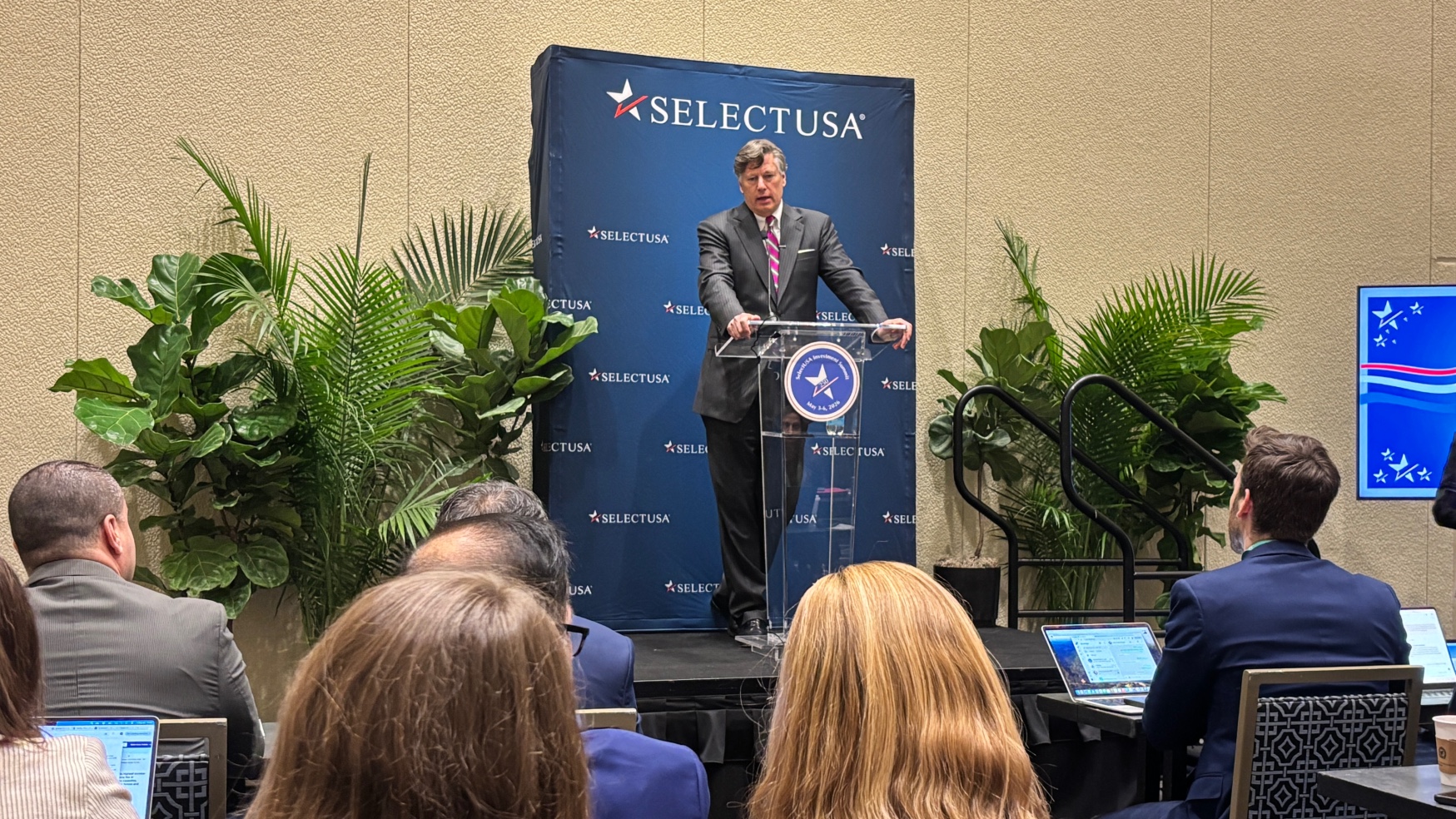
At the 2026 SelectUSA Investment Summit, the largest annual U.S. event dedicated to attracting foreign direct investment, a senior Trump administration official announced Tuesday that the federal government is undertaking a comprehensive overhaul of the country’s visa system. The reform effort comes in direct response to growing international anxiety over the administration’s harsh immigration policies that have chilled global business confidence.
Deputy Secretary of State Christopher Landau opened up about the administration’s regret over a high-profile 2025 raid that resulted in the detention and deportation of more than 300 South Korean business consultants and Hyundai employees at the company’s Georgia manufacturing facility. The incident sparked a significant diplomatic rift between Washington and Seoul, and amplified foreign fears that the United States has become an unpredictable and potentially unsafe destination for international business visitors and workers.
Addressing a foreign press briefing, Landau stated that the administration is committed to updating visa rules to directly address these widespread concerns. “Ultimately, we want to encourage and incentivize foreign countries to invest in the United States, and we need to make sure that our immigration laws and our visa laws, which we are very, very serious about enforcing, do not become an unnecessary impediment to such investment,” Landau explained. He added that while upholding border and immigration rules remains a non-negotiable priority, the administration sees balancing enforcement and investment attraction as a solvable challenge, not an irreconcilable conflict.
The 2025 Georgia Hyundai raid was not an isolated incident. Over the past term, the Trump administration has sharply ramped up anti-immigration rhetoric and expanded aggressive enforcement actions across the country. Masked Immigration and Customs Enforcement agents have conducted widespread roundups that have even ensnared U.S.-born citizens with foreign accents or immigrant backgrounds. International student protesters demonstrating in support of Gaza have been targeted and arrested, while travelers from traditional U.S. visa-free partners including Canada, the United Kingdom and Australia have been detained at border crossings, had their digital devices seized, and held in overcrowded, unsanitary immigration detention facilities for weeks before deportation. The administration has also enacted sweeping travel bans targeting more than a dozen majority-Muslim countries and effectively gutted the U.S. asylum system.
Inside the summit’s exhibition hall, where every U.S. state and territory operates a booth pitching their regions as attractive hubs for tech, energy and manufacturing investment, anonymous economic development representatives from four southern Republican-led states — Kansas, Tennessee, Texas and Florida — acknowledged the internal contradiction at the heart of this year’s event: the administration’s openly unwelcoming messaging toward foreigners clashes directly with the government’s goal of attracting billions in foreign capital.
“There’s not a good answer,” one unnamed representative told Middle East Eye, which interviewed the officials on condition of anonymity as they were not authorized to speak to the press. “We’re having to speak out of both sides of our mouths to try to make them feel safe and protected.” The representative added that while the United States still holds its global reputation as the gold standard for investment opportunity from an outsider perspective, domestic political uncertainty has created deep unease.
A second representative noted that their team had held roughly 200 exploratory conversations with potential international investors over the first two days of the summit, with overall interest remaining dynamic even though the total number of inquiries has dipped slightly compared to 2025. A third official, who works at their state’s European commerce office, emphasized that while foreign investors do raise concerns about current U.S. policy, many large-scale deals under discussion are valued in the billions of dollars and structured for multi-decade timelines that will outlast current sitting political leaders.
Launched in 2013 under the Obama administration, SelectUSA has facilitated more than $400 billion in total foreign direct investment and supported over 270,000 domestic American jobs, according to U.S. Department of Commerce data. Last year’s summit drew more than 5,000 attendees from 96 international markets, alongside delegations from all 50 U.S. states and six territories.
The Commerce Department pitches the U.S. as a uniquely attractive investment destination, citing its $25 trillion GDP that makes it the world’s largest advanced consumer market, its stable democratic institutions, and a transparent, predictable legal framework that guarantees equal competitive footing for all companies regardless of country of origin.
Landau framed economic and commercial diplomacy as a core, “fundamental pillar” of U.S. foreign policy, noting that commercial ties create the most durable foundation for long-term international relations that outlast changes in political leadership. “Political leaders… will come and go,” he said. “I think there’s no more solid foundation for an enduring relationship between countries than commercial and economic ties.”
Still, the Trump administration’s policy choices have created significant disruption for global markets in recent months. Beyond immigration policy, the president’s broad tariffs on imported goods, and his administration’s backing of Israel’s military campaign against Iran that led to the blockading of the Strait of Hormuz, have added additional layers of uncertainty for international investors.
The 2026 SelectUSA Investment Summit is scheduled to run through Wednesday, May 6.