博客

  • Infantino defends World Cup ticket prices

    Infantino defends World Cup ticket prices

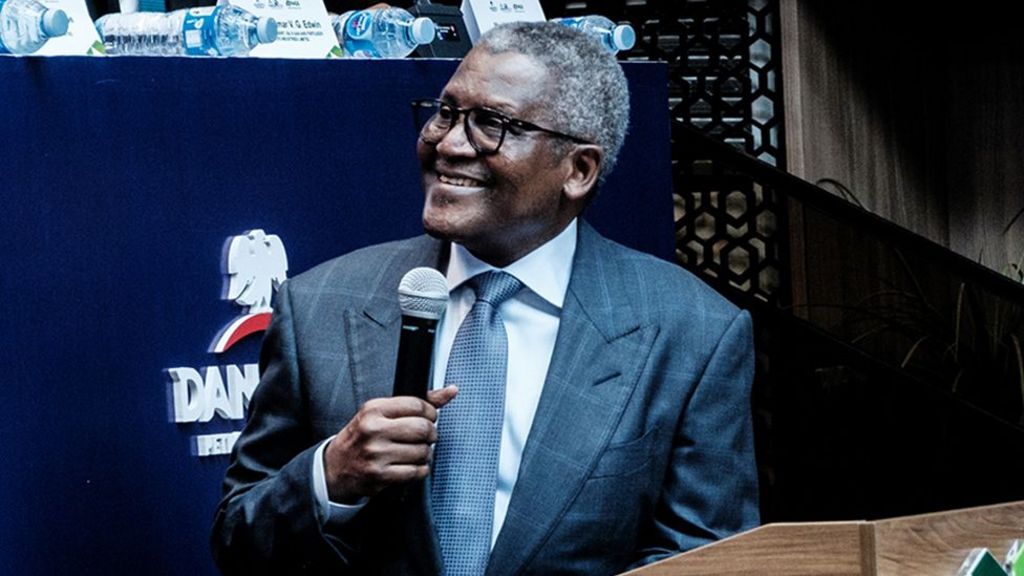
    As criticism from global football fan groups continues to mount over the exorbitant pricing of 2026 FIFA World Cup tickets, FIFA President Gianni Infantino has stepped forward to defend the governing body’s policies, pushing back against accusations of exploitative pricing during his appearance at the Milken Institute Global Conference in Beverly Hills this Tuesday.

    The controversy surrounding World Cup ticketing erupted into a formal dispute earlier this year, when European fan advocacy group Football Supporters Europe (FSE) filed an official lawsuit with the European Commission, calling out FIFA for what it labels “excessive ticket prices” for the upcoming tournament. FSE has gone as far as branding the 2026 pricing structure “extortionate” and a “monetary betrayal” of the global football community.

    Public anger reached a new peak last week, when four tickets for the 2026 World Cup final, scheduled to take place in New Jersey on July 19, were listed for more than $2 million apiece on FIFA’s official resale platform, FIFA Marketplace. The sky-high listing prices drew widespread condemnation from fans and sports commentators alike, who pointed to the stark contrast between 2026 pricing and the 2022 Qatar World Cup, where the most expensive face-value final ticket cost just around $1,600 — compared to the 2026 final’s $11,000 original price tag.

    Addressing the backlash directly, Infantino pushed back against claims that FIFA is responsible for the exorbitant resale prices. He argued that the multi-million dollar listings do not reflect actual baseline ticket costs, and there is no guarantee any buyer will actually pay those extreme sums. In a characteristically blunt remark, Infantino joked that if any fan does actually purchase a $2 million final ticket, he will personally deliver a hot dog and a Coke to their seat to ensure they have an enjoyable experience.

    Infantino defended the sharp rise in face-value ticket prices, framing the increase as a reasonable adjustment to market conditions. He noted that the 2026 World Cup is being hosted in the United States, the world’s most commercially developed entertainment market, where market-rate pricing is unavoidable. He added that U.S. regulations permit legal ticket resale, meaning if FIFA set lower original prices, scalpers would simply buy up large blocks of tickets and resell them for far higher margins, leaving FIFA with no revenue from the markup.

    “Even though some people say our prices are high, the resale market still marks them up to more than double our original prices,” Infantino explained. He also pushed back on claims that all tickets are out of reach for casual fans, pointing out that 25 percent of group stage tickets are priced below $300, a rate that he argues is competitive for major live events in the U.S. “You cannot go to a U.S. college sports game for less than $300 these days, let alone a top-tier professional event, and this is the World Cup,” he said.

    Infantino also highlighted unprecedented demand for the 2026 tournament as justification for the pricing model. He told the conference that FIFA has already received more than 500 million ticket requests for the 2026 World Cup, a figure that dwarfs the combined total of fewer than 50 million requests for both the 2018 Russia World Cup and 2022 Qatar World Cup.

  • New weapons charges filed against suspect in deadly shooting at Bondi Beach Hanukkah festival

    New weapons charges filed against suspect in deadly shooting at Bondi Beach Hanukkah festival

    SYDNEY, Australia – Australian law enforcement officials have announced 19 new criminal charges against 24-year-old Naveed Akram, the sole surviving suspect in the December 2025 mass shooting at a Hanukkah celebration on Sydney’s iconic Bondi Beach that left 15 people dead. The attack stands as Australia’s deadliest mass shooting in nearly three decades and its worst alleged act of domestic terrorism, prompting three parallel official investigations into the violence and broader systemic issues surrounding it.

    Akram was already facing 59 initial charges, including multiple counts of murder, attempted murder, and engaging in a terrorist act, following the coordinated assault on the Jewish holiday gathering. On Wednesday, court administrative staff confirmed that the additional charges were formally laid on April 15, breaking down to 10 counts of shooting with intent to murder and six counts of discharging a firearm to resist arrest. Three further unlisted charges are included in the new indictment. To date, Akram has not been required to enter a formal plea in the case.

    According to earlier court filings, Akram and his 50-year-old father, Sajid Akram, launched the attack by throwing homemade improvised explosive devices into the crowd of holiday revelers on one of Australia’s most frequented coastal public spaces. None of the thrown devices detonated, investigators confirmed. A larger, fully assembled improvised explosive device draped with Islamic State group flags was later recovered from the trunk of Naveed Akram’s vehicle. The assault ended in a gunbattle with responding police officers, during which Sajid Akram was killed and Naveed Akram was shot and wounded before being taken into custody. Australian federal police have publicly stated the attack was directly inspired by extremist ideology from the Islamic State group.

    Akram made his scheduled court appearance Wednesday via video link from a correctional facility, before Sydney’s Downing Center Local Court. The procedural hearing was focused on debating a court-imposed gag order that bars the public release of identifying information for attack victims and survivors who have chosen to keep their identities private.

    In the wake of the massacre, three separate official inquiries have been launched to unpack the event and prevent similar violence. One probe is focused on examining gaps in communication and coordination between Australian law enforcement and national intelligence agencies in the period leading up to the attack. A separate royal commission—Australia’s highest level of independent public inquiry—has been convened to investigate both the broader circumstances of the Bondi shooting and the prevalence of antisemitism across Australian daily life. The commission released an interim policy report in April that called for immediate tighter national gun control regulations, and kicked off its first round of public evidentiary hearings just this Monday.

  • Trump says US to pause operation to guide vessels through Strait of Hormuz

    Trump says US to pause operation to guide vessels through Strait of Hormuz

    In a sudden announcement Tuesday evening, former President Donald Trump disclosed that the United States will suspend its recently launched operation to escort stranded commercial vessels through the strategically critical Strait of Hormuz for a temporary period. Codenamed Project Freedom, the maritime security initiative launched just days earlier will be halted by mutual agreement between Washington and Tehran, Trump said, citing significant headway toward a new negotiated agreement with Iran.

    Iranian state media has framed the pause as a clear strategic victory for Tehran, framing the decision as a forced retreat for Trump following repeated failures to force the Strait of Hormuz, a vital chokepoint for global energy supplies, to reopen unilaterally. The announcement came concurrently with a statement from US Secretary of State Marco Rubio confirming that Operation Epic Fury, the opening joint US-Israeli air offensive against Iran launched in late February, has concluded after meeting all its stated military objectives.

    Trump took to social media to clarify that the decision to pause Project Freedom came at the request of Pakistan, which has served as a neutral diplomatic intermediary between Washington and Tehran throughout the recent escalation. He emphasized that the existing US economic and naval blockade of Iranian ports will remain in place, keeping the core pressure campaign against Iran intact.

    The sudden reversal caught many observers off guard, as it directly contradicted messaging from top US administration officials just 24 hours earlier. Secretary of Defense Pete Hegseth, Joint Chiefs of Staff Chairman Gen. Dan Caine, and Rubio himself had all publicly pledged just one day prior that Project Freedom would continue until full freedom of navigation was restored to both the Strait of Hormuz and the broader Persian Gulf. Speaking to reporters Tuesday, Rubio acknowledged the administration’s preference for a diplomatic settlement, noting “We would prefer the path of peace. What the president would prefer is a deal.”

    The future trajectory of the standoff remains deeply uncertain. The Trump administration has repeatedly stressed that Project Freedom was a separate, independent initiative from the ongoing port blockade, which is designed to squeeze Iran’s economy into making concessions. The core goal of Project Freedom was to guide dozens of stranded commercial vessels out of the Persian Gulf and reopen the waterway to regular global trade, a move intended to ease pressure on energy markets and stabilize the global economy. If the temporary pause sees shipping companies and their maritime insurers continue to face interference from Iranian authorities, Trump will struggle to claim the operation achieved its core goals. On the other hand, administration insiders have suggested that pausing the initiative — which Tehran strongly condemned as a violation of its territorial sovereignty — could be a confidence-building measure to lure Iranian negotiators back to the bargaining table.

    Rubio’s Tuesday statement followed a sharp uptick in tit-for-tat clashes that had stoked widespread fears that the months-long US-Iran ceasefire was on the brink of collapse. On Monday, the United Arab Emirates (UAE) reported that its air defense systems had intercepted Iranian missiles and drones for the second consecutive day, including an alleged strike on an oil export terminal in the Emirate of Fujairah, located just outside the Strait of Hormuz. The UAE called the incident a “dangerous escalation” of regional tensions. Iran issued a flat denial of any involvement in attacks on the UAE Tuesday, with a military spokesperson stating “If such an action had been taken, we would have announced it firmly and clearly.”

    Late Tuesday, the UK Maritime Trade Operations (UKMTO) agency confirmed that a verified source had reported a commercial cargo vessel was hit by an “unknown projectile” in the Strait of Hormuz. No additional details on the vessel, crew, or extent of damage were immediately released.

    The current crisis traces back to February 28, when the US and Israel launched Operation Epic Fury, a large-scale wave of air strikes across Iranian military and infrastructure targets. In direct response, Tehran blocked all commercial transit through the Strait of Hormuz, the waterway through which roughly 20 percent of the world’s daily oil and liquefied natural gas supplies pass. A ceasefire was brokered between the two sides in early April, under which Iran agreed to halt all drone and missile strikes on Gulf Arab states including the UAE. Despite the ceasefire agreement, very few commercial vessels have been able to transit the strait in the months since, and the US maintained its own naval blockade of Iranian ports in parallel.

    Clashes flared again just one day before Trump’s announcement. The US said it had destroyed seven Iranian fast attack craft operating in the strait, while Iran claimed it had fired warning shots at a US naval vessel. Both sides rejected the other’s claims. Two separate commercial vessels reported coming under attack Monday, while one confirmed it had successfully exited the strait under US military escort as part of Project Freedom.

    Speaking to reporters Tuesday, Rubio warned that Iran had so far rejected the path of negotiation, adding “What that may lead to in the future is speculative.” He claimed the joint US-Israeli air strikes had inflicted “generational destruction to their [Iran’s] economy” and urged Iranian leaders to “check themselves before they wreck themselves in the direction that they’re going.”

    For his part, Hegseth stressed that the existing ceasefire with Iran remains in effect, telling reporters “Right now the ceasefire certainly holds, but we’re going to be watching very, very closely.” Gen. Caine added that while Iran had carried out 10 separate attacks on US forces since the ceasefire went into effect, all had been “below the threshold” required to resume full-scale hostilities “at this point.”

    When asked by reporters what actions by Iran would constitute a ceasefire breach, Trump simply replied “You’ll find out because I’ll let you know.” The president reaffirmed his belief that a negotiated settlement to end the standoff is still achievable.

    The conflicting messaging from senior US administration officials points to a broader reluctance within Washington to resume large-scale military operations, a move that would roil already fragile global energy markets, send oil prices skyrocketing, and face strong opposition from a large majority of the American public. Trump also confirmed that he is currently consulting with Japanese leaders on the strait reopening and expects to hold a constructive discussion on the issue with Chinese President Xi Jinping during his upcoming visit to China next week.

    Iran’s parliamentary speaker Mohammad Ghalibaf, who also served as Tehran’s lead negotiator in last month’s US-Iran talks, struck a defiant tone in comments earlier Tuesday. “We know well that the continuation of the status quo is intolerable for America, while we are just getting started,” Ghalibaf said. He blamed the United States and its allies for undermining shipping and energy security through ceasefire violations and the ongoing blockade, adding “However, their evil acts will fail.”

  • Hegseth claims ceasefire holds despite attacks on Iranian vessels

    Hegseth claims ceasefire holds despite attacks on Iranian vessels

    Tensions remain high in the strategically critical Strait of Hormuz one month after the Trump administration secured a ceasefire agreement with Iran, with top U.S. defense officials confirming Tuesday that the truce still stands while outlining an aggressive new U.S. naval presence in the global oil chokepoint.

    Speaking alongside Joint Chiefs of Staff Chairman General Dan Caine, Defense Secretary Pete Hegseth told reporters that the ceasefire has held despite expected fluctuations in security, noting that U.S. forces have operated with robust deterrence in the waterway. “The ceasefire is not over,” Hegseth said. “We expected there would be some churn, which happened, and we said we would defend and defend aggressively, and we absolutely have.” He added that while the U.S. is not seeking wider conflict, the administration retains full authority to resume major combat operations against Iran if President Donald Trump judges it necessary.

    At the center of the new U.S. posture in the strait is Project Freedom, an initiative formally launched Monday that frames the U.S. military presence as a boon to global commerce. Hegseth described the U.S. deployment as a metaphorical “powerful red, white, and blue dome” over the key shipping route, calling it a “direct gift from the U.S. to the world.” The operation, which he emphasized is separate from the ongoing U.S. military campaign to eliminate Iran’s missile and nuclear capabilities that launched February 28, involves U.S. naval forces guiding commercial vessels through the strait.

    The closure of the Strait of Hormuz dates back more than two months, when Iran blocked the waterway in retaliation for the unprovoked U.S.-Israeli military assault on the country. In response, the U.S. Navy has imposed its own blockade on vessels traveling to and from Iranian ports.

    Fresh violence erupted in the area Monday, on the first day of Project Freedom’s formal operations. U.S. Central Command commander Admiral Brad Cooper told reporters that U.S. warships intercepted and shot down Iranian cruise missiles fired by the Islamic Revolutionary Guard Corps (IRGC) at convoys the U.S. was escorting out of the strait. U.S. Army attack helicopters also sank six Iranian military speedboats in the engagement, Cooper said.

    However, conflicting accounts of the clash have emerged. Common Dreams reported Tuesday that an IRGC commander told Iranian state media that U.S. forces actually struck two small civilian vessels carrying passengers traveling between Oman’s Khasab coast and Iran, killing five civilians, and hit no IRGC craft.

    Hegseth rejected any suggestion of U.S. responsibility for escalation, labeling Iran the sole aggressor in the standoff while repeating that the Trump administration will not hesitate to resume large-scale combat operations if required.

    The briefing also touched on a contentious constitutional question: whether the administration would seek congressional authorization before restarting major combat against Iran. Last Friday, ahead of a 60-day deadline set by the 1973 War Powers Act, which requires presidents to end unauthorized military hostilities within that timeline, Trump notified Congress that hostilities with Iran had been terminated following the April 7 ceasefire.

    Hegseth argued that the War Powers Act’s 60-day clock stops ticking while the ceasefire is in place, meaning any resumption of combat would fall within the president’s existing authority as commander-in-chief, rather than requiring a new congressional sign-off. “If it were to restart that would be the president’s decision. That option is always there and Iran knows that,” he said.

    Critics have pushed back hard against this legal interpretation. NBC News senior national politics reporter Jonathan Allen noted that the administration’s reasoning has no precedent in U.S. political practice. Fred Wellman, a Democratic congressional candidate in Missouri, called the framing a deliberate end-run around congressional war powers. “Understand that what he is doing here is desperately trying to avoid the War Powers Act,” Wellman said. “They made up a new interpretation that says the 60-day clock is ‘paused’ for a ceasefire. Now they are lying and saying this is an all-new, shiny war and not the same one.”

  • IS families in Syria have booked tickets home to Australia, minister says

    IS families in Syria have booked tickets home to Australia, minister says

    In a development that has reignited debate over how countries handle citizens linked to terrorist groups, the Australian government has confirmed that 13 individuals — four women and nine children with ties to the Islamic State (IS) extremist network — have purchased commercial airline tickets to return to Australian territory after years of detention in a Syrian displacement camp.

    This cohort is part of a larger group of 34 IS-linked people, 23 of whom are children, who have been held at the al-Roj camp in northern Syria since 2019, when IS was defeated and ousted from its final controlled territory in the country. According to official updates, the entire 34-person group left the camp back in February with plans to arrange repatriation, but was forced to return to the facility for unspecified technical reasons, as the Australian government has consistently declined to facilitate official government-led repatriation for the cohort.

    Speaking to reporters on Wednesday, Australia’s Home Affairs Minister Tony Burke emphasized that the federal government has not provided and will not provide any logistical, financial or official support to the group for their journey home. “These are people who made the horrific choice to join a dangerous terrorist organisation, and they chose to put their children in an unspeakable situation,” Burke told media. “As we have stated repeatedly, any member of this group who has committed criminal acts will face the full weight of Australian law.”

    Burke added that Australian authorities were notified of the planned return immediately after the airline bookings were confirmed earlier this same day, noting that there are strict legal limitations on the government’s ability to block its own citizens from entering the country. “We have had long-standing, tested plans in place to manage and monitor this cohort’s return since 2014,” Burke said, confirming ongoing preparation across national security and law enforcement agencies.

    Australian Federal Police (AFP) Commissioner Krissy Barrett confirmed that when the 13-person group arrives on Australian soil, some individuals will be taken into custody and formally charged with criminal offenses. For more than a decade, Barrett explained, Australian investigators have been compiling evidence of potential terrorism offenses, as well as crimes against humanity including involvement in the slave trade, linked to members of the group. While Barrett declined to specify exactly how many of the 13 will face arrest, she confirmed that any individuals not taken into custody will remain the subject of active ongoing investigations.

    For the returning children, Australian authorities have outlined a support plan that includes community integration initiatives, mental health and therapeutic support, and programming designed to counter violent extremism and support long-term reintegration.

    Mike Burgess, director-general of the Australian Security Intelligence Organisation (ASIO), the country’s domestic spy agency, told public broadcaster the Australian Broadcasting Corporation that he does not see immediate major security risks from the group’s return, but that all members will remain under close ongoing monitoring. “It’s up to them what they do when they get here,” Burgess said. “If they start to exhibit signs that concern us, we and the police, through our joint counter-terrorism teams, will take swift action.”

    Earlier in 2025, Australia issued a temporary exclusion order barring one member of the 34-person cohort from returning to the country for a period of up to two years. Australia is not alone in its approach to repatriation: a number of other Western governments, including France, the Netherlands and the United Kingdom, have also refused to repatriate the majority of their own citizens still detained in Syrian camps linked to IS.

  • Researchers discover where coyote who made epic swim to Alcatraz really came from

    Researchers discover where coyote who made epic swim to Alcatraz really came from

    A male coyote that captured national attention after reaching California’s Alcatraz Island by swimming across San Francisco Bay has upended researchers’ initial assumptions about his journey, with new DNA analysis revealing the animal swam nearly twice the distance experts originally estimated. The coyote’s unexpected January arrival on the site of the infamous former federal prison marked the first confirmed coyote sighting on Alcatraz in more than five decades, leaving both scientists and visiting tourists stunned.

    When the sighting was first reported, wildlife specialists assumed the coyote had set out from the city of San Francisco, a crossing of just over one mile. But new genetic testing completed on samples collected from the animal has traced his origins to Angel Island State Park, a full two miles away from Alcatraz, the National Park Service (NPS) announced in a public statement Monday. To date, the coyote’s current location remains entirely unconfirmed, despite weeks of targeted monitoring.

    National Park Service wildlife ecologist Bill Merkle noted that the team’s working hypothesis had long centered on a shorter crossing from San Francisco, due to the obvious reduced physical challenge of that route. “We couldn’t help being impressed by his accomplishment in making it to Alcatraz,” Merkle said in the release. “Coyotes are known to be resilient and adaptable, and he certainly demonstrated those qualities.”

    The extraordinary crossing was first captured on camera by tourists in late January, whose footage of the coyote pushing through cold, choppy Bay waters to reach Alcatraz’s shore surprised both researchers and local San Francisco residents. The animal quickly gained a fanbase online, with many people dubbing him “Floyd,” a nod to the fictional getaway driver for iconic outlaws Bonnie and Clyde.

    Shortly after the sighting, NPS officials set up a network of camera traps and audio recorders across Alcatraz to track the coyote’s movements. Officials also began planning efforts to capture and relocate the animal over concerns that the predator would prey on the island’s vulnerable native seabird colonies. To confirm the coyote’s origin, researchers collected track measurements and samples of the animal’s scat, which were sent for genetic analysis at the University of California, Davis. The lab results confirmed the coyote belonged to a well-documented coyote population already established on Angel Island, confirming his 2-mile starting point for the epic swim.

    The NPS’s release, headlined “Alcatraz Coyote Wasn’t a City Boy After All,” also noted that the San Francisco Bay Area is home to three separate, genetically distinct coyote populations, a testament to the species’ widespread adaptability across urban and wild landscapes. Despite weeks of intensive monitoring across Alcatraz, the coyote has not been spotted since the initial tourist sighting, and officials no longer believe he remains on the island.

    “We don’t know what happened to the coyote,” Merkle said. “But he proved himself an expert swimmer to get to Alcatraz, and I hope he made a successful swim back home to Angel Island.” Coyotes, which are native North American canids closely related to wolves, have spread across nearly the entire continental United States, and are now commonly spotted even in urban green spaces and upscale residential neighborhoods across San Francisco.

    In a separate recent development tied to Alcatraz, the island long nicknamed “The Rock” for its reputation as an unescapable maximum-security fortress made headlines again this spring when the Trump administration proposed a $152 million budget allocation to lawmakers that would fund rebuilding the shuttered penitentiary and reopening it as a modern high-security prison for the country’s most dangerous incarcerated people. The request covers the first year of construction costs for the project.

  • Koalas rescued from deep hole in Brisbane building site

    Koalas rescued from deep hole in Brisbane building site

    On a construction plot in the outer Brisbane suburb of Morayfield, a routine day of work took an unexpected turn for building crews when they stumbled on a heart-stopping surprise deep below ground. As workers readied the site to set a wooden support pole into a freshly dug 1.5-meter hole, a faint rustling of movement caught their attention. Stopping their work to investigate, they made a shocking discovery: two koalas, Australia’s most beloved native marsupials, were trapped at the muddy bottom of the excavation, unable to climb back out to safety.

    By the time the crew found the pair, the animals were already in critical condition. Covered from head to paw in thick mud, they had accidentally ingested large amounts of soil and developed hypothermia from being stuck in the cold, wet hole for an unknown period. Recognizing the urgent need for help, the workers quickly coordinated with local wildlife rescuers, who used safety nets to carefully lift the marsupials out of the deep hole without causing further injury.

    Named Fudge and Santino by rescuers, the two male koalas were immediately transported to Australia Zoo Wildlife Hospital for emergency care. For between seven and nine weeks, the veterinary team provided round-the-clock intensive monitoring and life-saving treatment to pull the animals back from the brink. Wildlife advocates emphasized that the quick thinking of the construction crew was the key factor that gave Fudge and Santino a fighting chance at survival.

    After two months of dedicated care, the koalas made a full recovery, regaining their strength and returning to the healthy condition koalas need to thrive in their natural habitat. In a public update shared to Wildlife Rescue Queensland’s official Facebook page, a organization spokesperson confirmed the happy ending: both koalas were successfully released back into the wild landscape close to where they were originally rescued.

    “Thanks to the dedicated team at Australia Zoo Wildlife Hospital, both boys have made a strong recovery and were able to be released back where they belong,” the post read. “Stay safe, Fudge and Santino.”

    The rescue comes as koala populations across Queensland continue to face growing pressure from urban development, which fragments natural habitats and increases the risk of human-wildlife conflict. This incident has drawn attention from local conservation groups, who have praised the construction crew for choosing to pause work and prioritize the animals’ lives, rather than proceeding with their scheduled task. Many advocates have highlighted this as an example of how increased awareness and quick action can help protect vulnerable native species as development expands into traditional koala territories.

  • Trump-Xi summit at best may codify new US-China coexistence rules

    Trump-Xi summit at best may codify new US-China coexistence rules

    Next week, when U.S. President Donald Trump travels to Beijing for a high-stakes meeting with Chinese President Xi Jinping, the diplomatic choreography will follow the familiar, carefully scripted playbook for top-level bilateral encounters. Behind the polished ritualistic exchanges, crafted public reaffirmations and statesman-like rhetoric, however, lies an unavoidable reality: this meeting is not aimed at reconciling deep-seated differences, but at managing a rivalry that has become fundamentally structural, with the modest overarching goal of preserving fragile global stability.

    The United States and China together account for more than 42% of the world’s total gross domestic product, making them the dual anchors of the global supply chain network. This interconnected system is already reeling from disruptions triggered by protracted geopolitical conflicts in Europe and the Middle East, which have sent shockwaves through global commodity markets and threatened livelihoods and food security across every region of the world. Even so, analysts do not expect the upcoming summit to deliver any sweeping, utopian resolution to the U.S.-China rivalry. At most, the two leaders are expected to openly acknowledge the structural nature of their competition and commit to joint efforts to keep it contained.

    ### Moving Beyond Détente to Building Tacit Guardrails

    Cold War-era comparisons between current U.S.-China relations and 20th-century U.S.-Soviet ties often confuse rather than clarify the current dynamic. There is no path to the kind of wide-ranging détente that defused tensions between Washington and Moscow in the 1970s. Today, Washington and Beijing lack mutual strategic trust, have seen no ideological softening toward one another, and share no overlapping long-term strategic vision.

    Instead of formal détente, the two powers are now focused on developing unwritten “guardrails” — informal limits to escalation that can prevent small crises from spiraling into open, catastrophic conflict. Unlike the formal, codified arms control agreements that structured U.S.-Soviet relations in the Cold War, these new mechanisms will not be written into public treaties or celebrated in joint announcements. They will exist only as quiet, tacit understandings between the two sides.

    This incremental approach reflects a far more complex reality than the dominant narratives of either full détente or total decoupling can capture. Since 2022, Washington has built an extensive export control regime targeted directly at China, restricting access to cutting-edge semiconductors, artificial intelligence technology and other frontier technologies critical to future great power competition. Beijing has responded by leveraging its global dominance in critical raw materials including gallium and germanium, key inputs for semiconductor and clean energy manufacturing. Even amid this escalating technological standoff, however, deep economic interdependence between the two economies remains intact. Bilateral trade continues to flow at massive scale, financial linkages remain strong, and cross-border production networks remain deeply integrated by design.

    What has emerged from this dynamic is a stratified, complex form of interdependence: high, fortified barriers around technologies that will define future global power, while maintaining open trade and investment in sectors where mutual economic benefits still outweigh strategic risks. Full decoupling is neither economically feasible nor politically desirable for either side, so the core challenge now becomes restructuring guardrails to allow this limited interdependence to survive.

    ### Geo-Economics as the New Face of Geopolitical Rivalry

    In recent years, the center of gravity of the U.S.-China rivalry has shifted decisively from the military domain to the economic sphere. Export controls, targeted sanctions and the reorganization of global supply chains now serve as core instruments of strategic coercion, replacing traditional military posturing as the primary tool of competition. Economic tools are now regularly deployed to advance geopolitical goals, and the line between commercial policy and national security strategy has blurred almost beyond recognition. Trade policy is now inextricably tied to each side’s core national security doctrines.

    This transformation has created acute dilemmas for third countries across the globe. Governments now must carefully navigate between two competing great power ecosystems, each with constantly evolving rules of conduct and demands for strategic alignment. The choice is no longer a simple binary between aligning with Beijing or Washington; instead, states operate in a complex landscape where their policy autonomy is constrained, and the boundaries of strategic flexibility grow increasingly hard to define.

    Given this context, any lasting outcome from the Beijing summit will not take the form of a grand bilateral bargain or a formal, public treaty. Following the pattern of the previous Xi-Trump meeting in Busan, the summit is expected to produce a set of technical, opaque, yet highly consequential mutual understandings that leave room for varying interpretations by both sides.

    Recent frictions in the South China Sea and around Taiwan underscore the constant risk of inadvertent escalation between the two powers. The lack of a formal, codified crisis management mechanism only amplifies these risks. In this context, even the most modest agreements — for restored direct communication channels, shared operational protocols, or agreed thresholds for escalation — could have a transformative impact on regional and global security. After the 1962 Cuban Missile Crisis, the U.S. and Soviet Union moved quickly to establish de-escalation mechanisms to prevent accidental war. Today, U.S.-China relations require a similar, even if less formalized, framework of mutually accepted guardrails to reduce risk.

    ### The Impact of Divergent Leadership Styles

    The contrasting personal leadership styles of the two presidents add an extra layer of complexity to summit negotiations. Trump’s diplomatic approach is inherently transactional, focused on securing immediate, visible, tangible outcomes that can be marketed as political wins back home. By contrast, Xi’s approach is rooted in long-term strategic planning, embedded in a broader vision for China’s continued rise as a global power. This fundamental disconnect in negotiating priorities will shape the final outcomes of the Beijing meeting.

    Trump will arrive pushing for demonstrable, short-term gains: adjustments to bilateral trade balances, symbolic concessions from Beijing, or explicit security assurances on contentious issues. As host, Xi will calibrate his responses to ensure any concessions made align with China’s long-term strategic trajectories, and do not undermine core national interests.

    As a result, even the most successful agreements emerging from the summit are likely to be tactical, reversible arrangements. They will deliver useful short-term stabilization but will be insufficient to build a durable, long-term framework for managing competition. Any deals will also remain contingent on the personal dynamics of the two leaders, rather than being rooted in institutionalized cooperation that can outlast changes in leadership.

    The most consequential dimensions of the U.S.-China rivalry also extend far beyond their bilateral relationship. Across Asia, Africa and Latin America, states are increasingly being pulled into competing visions of development, governance and global connectivity. China’s Belt and Road Initiative has already built a significant physical and institutional presence across the developing world, embedding Chinese infrastructure standards and financing models in dozens of countries. The Trump administration has struggled to articulate a coherent alternative vision to the BRI, and has often resorted to coercive hard power tactics to counter Chinese influence, as seen in recent actions in Venezuela and Iran.

    For countries across the global south, the question is no longer which great power vision is normatively preferable, but which can deliver tangible, reliable economic benefits. In the end, the outcome of the U.S.-China rivalry will be determined not by deals struck in summits, but by the long-term global credibility of each power’s model.

    ### Selective Coordination for Competitive Coexistence

    Paradoxically, even amid deep structural rivalry, global systemic shocks can open limited space for targeted cooperation between the two powers. Issues including volatile global energy markets, emerging pandemic risks, transnational terrorism, and nuclear proliferation are all areas where Washington and Beijing share overlapping priorities, even as they compete in every other domain.

    The ongoing market disruptions tied to conflicts in the Middle East illustrate this dynamic clearly. For different strategic and economic reasons, both the U.S. and Chinese economies depend on stable global energy markets, and both are deeply vulnerable to extreme price volatility. Even without broader strategic alignment, these shared vulnerabilities can open narrow corridors for transactional, issue-specific cooperation.

    This dynamic aligns with what international relations scholars term “competitive interdependence”: a relationship marked by intensifying strategic rivalry alongside persistent economic and technological entanglements that neither side can fully unwind without inflicting massive damage on itself.

    The cumulative effect of these overlapping dynamics is that bilateral engagements will continue to face regular setbacks, full containment of China’s rise is practically impossible for the U.S., and full convergence of interests between the two powers has proven illusory. What remains is selective coordination to enable competitive coexistence.

    In this framework, bilateral stability does not come from deep mutual trust or shared ideological values. Instead, it emerges from a clear recognition of mutual vulnerability and the catastrophic costs of unconstrained escalation. The U.S.-China relationship today follows a simple logic: rivalry will persist, but it must be bounded by mutual necessity.

    ### What to Expect From the Beijing Summit

    Against this backdrop, the upcoming Beijing summit is not expected to resolve the core tensions at the heart of the U.S.-China rivalry. The Taiwan question will remain a deeply contested flashpoint, technological competition will continue to intensify, and long-standing mutual strategic suspicion will endure. What the summit may achieve is a modest, yet highly consequential outcome: it will buy valuable time for both sides to adjust to the new reality of structural competition.

    In an international system marked by widespread uncertainty and growing fragmentation, time is a critical strategic resource. Managed rivalry, for all its imperfections, is unquestionably preferable to unconstrained competition that risks open conflict.

    Trump and Xi do not view each other as reliable partners, and there is little prospect that this meeting will change that fundamental dynamic. At a deeper level, they are rivals by design: leaders of two great power systems whose long-term trajectories are fundamentally at odds, but whose peaceful coexistence is the only viable option for both sides and for the world. The understandings they reach in Beijing will not end their rivalry. At best, they will clearly define its boundaries. For now, that is likely the most the world can hope for from this high-stakes meeting.

    *This analysis is by Swaran Singh, Professor of International Relations at Jawaharlal Nehru University in New Delhi.*

  • Rubio rising? Duel with Vance for 2028 heats up

    Rubio rising? Duel with Vance for 2028 heats up

    The quiet jockeying for the 2028 Republican presidential nomination burst into public view this week, as a high-profile turn at the White House briefing podium catapulted Secretary of State Marco Rubio into the center of speculation about a post-Trump GOP future, intensifying his implicit rivalry with Vice President JD Vance.

    On Tuesday, 54-year-old Rubio stepped in to fill in for White House Press Secretary Karoline Leavitt, who is currently on maternity leave. Standing before a packed room of Washington journalists, he handled a range of pressing foreign policy questions covering Iran, Cuba, and U.S.-China relations with a relaxed, affable demeanor that stood in stark contrast to the combative, invective-laden appearances former President Donald Trump often delivers from the same podium. Even as he joked about the chaotic scrum of reporters waving for his attention — telling the crowd “this is chaos” — Rubio appeared at ease, weaving in personal asides and pop culture references that won over many in the room and won viral praise online. A self-described hip-hop fan, he even dropped a line from Cypress Hill’s iconic track to describe Iran’s leadership, calling them “insane in the brain.”

    Conservative voices were quick to hail the performance as a breakout moment for Rubio. “Rubio just wrapped up his FIRST White House Press Briefing, and he absolutely knocked it out of the park,” conservative influencer Nick Sortor posted on X, adding “This man is a SERIOUS contender for 2028.”

    The moment could not have been more different for Vance, 41, Rubio’s most likely competitor for the 2028 nomination, who was hundreds of miles away from Washington that day, campaigning across the heartland and headlining a Republican fundraiser in Oklahoma.

    For months, public polling has shown Vance holding a substantial lead over other potential candidates among registered Republican voters. Neither Vance nor Rubio has officially announced a 2028 presidential bid, and Rubio has repeatedly downplayed speculation, describing the vice president as a friend and saying publicly he would not challenge Vance if he enters the race. Trump, who remains the undisputed leader of the MAGA movement, has also not yet publicly named a preferred heir to his political legacy.

    But behind the scenes, Washington speculation has grown in recent weeks that Trump is increasingly leaning toward supporting Rubio over Vance. Prediction markets have already reflected this shift, with Vance’s odds of securing the nomination dropping sharply over the past month.

    Vance’s political profile holds clear appeal for the MAGA base: his personal story of growing up in poverty in an Appalachian community ravaged by the opioid crisis was seen as a perfect fit for Trump’s working-class political brand. But he has repeatedly struggled to connect with broad swathes of the Republican electorate, and many hardline Trump supporters still view him with suspicion. That distrust dates back to 2016, when Vance compared then-candidate Trump to Adolf Hitler; as an anti-interventionist former Marine, he has also kept a notably low profile amid Trump’s recent military operations against Iran, a stark contrast to Rubio’s long record as a foreign policy hawk.

    Rubio has earned Trump’s public praise for his handling of recent military actions in Venezuela and Iran, and this week it was Rubio, not Vance — a devout Catholic convert — that Trump sent to meet newly installed Pope Leo XIV amid escalating tensions over Iran. Even the official White House X account seemed to signal implicit support for Rubio on Tuesday, promoting his briefing with the teasing caption “Another job?” and sharing his photo across dozens of administration channels.

    Vance, for his part, was far from idle during his time out of Washington. His itinerary included a stop in Iowa, the critical early nominating state that first launched Trump to the GOP nomination in 2016 and will carry outsize influence in the 2028 primary. His Oklahoma fundraising stop also highlighted a less-discussed advantage he holds: his role as finance chief for the Republican National Committee, a position that lets him build loyalty and support across party infrastructure at a time when many establishment Republicans still have not fully embraced his candidacy. He also made a stop in his home state of Ohio, where he previously served as a U.S. senator, to vote in a state primary, where his 10-year-old son Vivek cast a mock vote between the Easter Bunny and the Tooth Fairy — a moment Vance shared with reporters, joking that his son picked the Easter Bunny by a comfortable margin.

    When asked directly if his briefing room turn was a trial run for a 2028 presidential bid, Rubio declined to comment. He knows better than most that two years is an eternity in American politics, pointing to the 2016 race where another former secretary of state, Hillary Clinton, suffered a shocking upset loss to Trump. For now, Rubio seems content to enjoy his newfound viral momentum, keeping his long-term political ambitions close to the vest — even when it comes to joking about his recent viral turn as a wedding DJ over the weekend, where he was spotted manning the decks during a reception while Iran negotiations were ongoing. When asked what his DJ stage name would be, Rubio grinned and told reporters: “My DJ name? You’re not ready for my DJ name.”

  • To stay or risk the ‘Road of Death’ – Ukrainian civilians trapped in frontline city

    To stay or risk the ‘Road of Death’ – Ukrainian civilians trapped in frontline city

    Nestled on the eastern left bank of the Dnipro River in southern Ukraine, the occupied frontline city of Oleshky has become a prison of war for its roughly 2,000 remaining residents. Cut off by destroyed bridges, heavily mined roads, and constant crossfire between Russian and Ukrainian forces, the city’s population faces a deepening humanitarian emergency that has left them dependent on scarce aid deliveries from volunteer groups.