博客

  • Bird flu kills more than 75% of baby seals on remote Australian island, study finds

    Bird flu kills more than 75% of baby seals on remote Australian island, study finds

    A newly released preliminary study has uncovered a catastrophic avian influenza outbreak that has wiped out thousands of newborn southern elephant seals on Australia’s remote Heard and McDonald Islands, a remote sub-Antarctic ecosystem roughly 4,000 kilometers southwest of the Australian mainland. The unpeer-reviewed research, posted to the preprint platform BioRxiv, offers the first comprehensive look at the impact of the H5N1 strain of bird flu on these isolated Australian territories, marking the first confirmed detection of the virus in any Australian external territory.

    Heard and McDonald Islands are one of the most untouched marine wildlife habitats on the planet, hosting more than a million breeding seabirds and multiple species of pinnipeds that rely on the region’s remote, nutrient-rich waters to reproduce. To assess the scale of mortality, researchers from the Australian Antarctic Program combined drone aerial surveys, on-the-ground field visits, and virological testing of samples collected from nine native species between October 2025 and January 2026.

    The results paint a grim picture for the island’s southern elephant seal colony. Of the estimated 17,364 seal pups born on Heard Island, researchers calculate approximately 13,359 — more than 76% of the entire pup population — have died from H5N1 infection since the virus first arrived in August 2025. In some coastal breeding areas, mortality rates reached as high as 97%. Researchers warn that even this devastating figure may be an underestimate, as pup deaths were still ongoing when the final survey data was collected.

    Virological testing confirmed the presence of H5N1 in six native species: southern elephant seals, Antarctic fur seals, king penguins, gentoo penguins, and South Georgia diving petrels. While hundreds of adult king penguins died from the virus, the mortality rate for this population remained low relative to the total colony size, though it was still significantly higher than historical baseline levels. Notably, the outbreak did not cause unusual mortality among albatross populations or two endemic species: the Heard Island shag and the black-faced sheathbill.

    Lead author Dr. Julie McInnes, a wildlife biologist, noted that the detection of H5N1 on the islands confirms the virus’s continued eastward spread across the sub-Antarctic region. The outbreak mirrors the pattern seen on other sub-Antarctic landmasses, such as South Georgia, where southern elephant seal populations, particularly young animals, have borne the brunt of H5N1 mortality. Researchers trace the origin of the outbreak to migratory seabirds that travel from the French-administered Crozet Islands, located roughly 1,800 kilometers northwest of Heard Island, where the virus was already circulating.

    The devastating mortality toll has prompted warnings from Australian federal officials about the risk of the virus reaching the Australian mainland, which remains the only continent yet to record a confirmed case of the globally spreading H5N1 strain that has impacted both avian and mammalian populations worldwide. Australian Environment Minister Murray Watt described the mass seal pup deaths as “sobering,” emphasizing that the outbreak demonstrates Australia cannot afford complacency in preparedness efforts. “We must be realistic about the likelihood of an incursion here, and plan accordingly,” Watt said.

    Moving forward, the Australian Antarctic Program — a collaborative partnership between the Australian government and national research institutions — will continue ongoing monitoring of wildlife populations across the country’s sub-Antarctic territories to track the ongoing impact of the outbreak and detect any further spread of the virus.

  • Uzbekistan’s Abdukodir Khusanov collides with a camera operator in World Cup match vs. Colombia

    Uzbekistan’s Abdukodir Khusanov collides with a camera operator in World Cup match vs. Colombia

    MEXICO CITY – An unexpected on-field incident interrupted Uzbekistan’s 2024 FIFA World Cup opening fixture against Colombia on Wednesday night, when starting defender Abdukodir Khusanov crashed into a sideline camera operator during the first half of play.

    Khusanov, who plies his club trade at English Premier League powerhouse Manchester City, launched into a challenge for a loose ball bouncing along the touchline against Colombian winger Luis Díaz. The speed and momentum of the challenge carried the 20-year-old defender past the boundary of the pitch and straight into the crew member tasked with capturing broadcast footage of the match.

    Immediately after the collision, medical personnel from FIFA stepped onto the pitch to assess and treat the injured camera operator, whose current condition has not been released in the immediate aftermath of the incident. Play was temporarily halted to allow for the medical response, before the match resumed between the two World Cup debut contenders.

    The Associated Press continues to provide full, ongoing coverage of the FIFA World Cup, with live updates, match reports, and breaking incident updates available via its dedicated World Cup news hub.

  • Teenager dies in horse-drawn carriage accident in New York

    Teenager dies in horse-drawn carriage accident in New York

    A devastating accident in New York’s iconic Central Park has claimed the life of an 18-year-old Indian tourist, who died after being thrown from a spooked horse-drawn carriage this week, NYPD officials have confirmed.

    The young man was traveling on the carriage with three other companions when the licensed driver left his post to snap a photo of the group, law enforcement sources told national media outlets. Surveillance footage captured by witnesses shows the unattended horse bolted suddenly, collided with a second stationary carriage, and toppled the vehicle the tourist was riding in.

    Emergency crews rushed the critically injured teenager to a nearby hospital, where he was pronounced dead shortly after arrival. The three other passengers escaped the incident without physical injury and did not need medical intervention, first responder reports confirm.

    The tragedy comes exactly one week after a separate incident in the same popular tourist destination: a carriage horse named Deniz died after ingesting a toxic plant, according to preliminary autopsy results. The string of major incidents has thrown the decades-old debate over Central Park’s horse-drawn carriage industry back into the center of New York City politics.

    Central Park’s horse-drawn carriage rides have long been a top draw for out-of-town visitors, but animal welfare and public safety advocates have fought for years to shut down the industry, warning that crowded urban conditions put both humans and horses at unnecessary risk. Newly elected Mayor Zohran Mamdani has repeatedly stated his support for removing the carriages from the park entirely.

    In the wake of the fatal crash, local elected officials have doubled down on their push for legislative action to phase out the industry. City Council member Shahana Hanif called the two back-to-back incidents “heartbreaking reminders that horse-drawn carriages are unsafe for both horses and people” in a post on X, formerly Twitter.

    Hanif emphasized that these tragedies are not one-off events, urging colleagues to advance Ryder’s Law, legislation that would end the tourist attraction over a two-year transition period and provide support for workers moving to new roles. “These incidents are not isolated. We must pass Ryder’s Law, end this outdated industry, and ensure a just transition for workers. New York can and must do better,” Hanif wrote.

    Fellow Council member Harvey Epstein echoed that call, saying he was “horrified” by the “tragic accident.” “Time and again, we are seeing both horses and people suffer the consequences of an industry that poses serious risks to public safety and animal welfare,” Epstein said in a statement. “New York City can’t continue to ignore these tragedies.”

    Union leaders representing carriage drivers also condemned the driver’s choice to leave the carriage unattended. Alexander Kemp, vice president of Transport Workers Union Local 100, told local media that “It appears the driver was at least at arm’s length from his horse. This is unacceptable. A driver is not supposed to leave the carriage to take photos – ever. We support a full investigation.”

    Ryder’s Law, if passed, would see the city halt the issuance of new carriage licenses and wind down existing operating permissions over a two-year period, bringing the industry to a permanent close.

  • Trump justifies Iran deal as a way to prevent ‘economic catastrophe’

    Trump justifies Iran deal as a way to prevent ‘economic catastrophe’

    Speaking to reporters on the sidelines of the G-7 Summit in Evian, France on Wednesday, former U.S. President Donald Trump laid out contradictory stances on his administration’s newly announced 60-day ceasefire agreement with Iran, blending aggressive military threats against Tehran with key concessions that have already drawn fierce criticism from hardline pro-Israel allies in his own Republican Party.

    The core of the agreement is a temporary memorandum of understanding (MOU) that keeps the strategic Strait of Hormuz, a vital global chokepoint for oil and maritime trade, toll-free for the next two months. Under the terms of the deal, Iran will negotiate the future governance of the strait alongside Oman and other Persian Gulf littoral states in line with international law, leaving open the possibility of navigation fees being imposed after the ceasefire period ends. The White House has framed the ceasefire extension, announced publicly this past Sunday, as a first step toward reaching a permanent end to the ongoing conflict that has roiled global energy markets.

    In unusually candid remarks, Trump acknowledged his biggest political risk tied to the conflict: economic fallout that could sink his presidency, echoing the political fate of Republican President Herbert Hoover, who left office in disgrace after the 1929 stock market crash and the onset of the Great Depression. “The one president I did not want to be was the late, great, Herbert Hoover,” Trump said, noting that stock markets have shifted directly in response to signals about whether the conflict would end or escalate. “The stock market is more brilliant than anybody there is, including the people on this stage, other than me, of course.”

    The president went on to stress that Tehran’s blockade of the Strait of Hormuz had inflicted enough economic damage globally to push his administration to agree to the ceasefire extension. Even so, he adopted a belligerent tone when discussing enforcement of the MOU, repeating multiple times that he would resume large-scale military bombing of Iran if he disapproved of Tehran’s compliance. “It’s a memorandum of understanding. And if I don’t like it, we’ll go back to shooting at them, dropping bombs on their head,” Trump said. “If I don’t like it, if they don’t behave, we’ll go right back to dropping bombs right smack in the middle of their head, OK?”

    The deal has already come under intense fire from Iran hawks and pro-Israel voices in the U.S., who have pushed for a full rollback of Iran’s nuclear program, ballistic missile arsenal, and regional military influence. Trump acknowledged that the terms of the MOU would amplify this criticism: the agreement does not address Iran’s nuclear program in any detail, leaving that critical issue for future negotiations during the 60-day ceasefire period.

    Pushing back against demands that the U.S. seize Iran’s existing enriched uranium stockpiles, Trump argued that the material is buried deep in underground facilities that only the U.S. and China have the technical capacity to access, adding that international cameras are already in place to monitor suspect sites. He also rejected longstanding Israeli demands that Iran be barred from any enrichment activity entirely, noting that neighboring countries in the region maintain their own nuclear energy programs. “It’s a little hard when other people have it, other adjoining states have it, and you’re not letting them have it for purposes of electricity and things like that. You have to use a little common sense,” he said.

    This stance marks a clear shift from Trump’s 2017 decision to unilaterally withdraw from the Obama-era Joint Comprehensive Plan of Action (JCPOA), the multilateral nuclear agreement that placed strict limits on Iran’s nuclear program in exchange for sanctions relief. Trump has framed his new framework as different from the JCPOA, arguing that the threat of ongoing U.S. military force prevents Iran from ever acquiring a nuclear weapon. “Whoever sells them a nuclear weapon would get nuked themselves,” he claimed, though the JCPOA already explicitly barred Iran from pursuing a nuclear weapons program.

    Trump also dismissed demands from hawks and Israel that Iran be forced to completely eliminate its ballistic missile program, which he previously cited as a core justification for launching U.S. strikes against Iran. Arguing that it is unreasonable to bar Tehran from possessing any missiles when neighboring Gulf states like Saudi Arabia maintain their own arsenals, Trump claimed that U.S. strikes have already destroyed roughly 80 percent of Iran’s existing missile capacity. “Doesn’t work that way,” he said of demands for full disarmament.

    On economic policy, Trump confirmed that the U.S. will not directly invest in Iran to help rebuild the country, which he estimated has sustained around $2 trillion in damages from U.S. and Israeli strikes. He added that Washington will not block neighboring Arab Gulf states from investing in Iran if a final peace deal is reached, a stance that is already fueling speculation that states including the UAE, Saudi Arabia, Kuwait and Qatar will move to normalize economic ties with Tehran in the coming months.

    The president also drew backlash from hawks by confirming that he is open to returning billions of dollars in Iranian assets that have been frozen by Western sanctions, stating that the assets “is not our money” and will eventually need to be returned. The move is certain to please Tehran while hardening opposition from pro-Israel lawmakers in Washington.

    Trump’s remarks swung between sharp criticism of Iran and faint praise for the country’s leadership. He referred to Iran as having a “primitive culture” while also acknowledging that Iran’s leaders “love their country.” He also openly boasted about U.S. strikes on Iranian civilian infrastructure, specifically highlighting the April 1 bombing of the Karaj B1 bridge, which he compared to New York’s George Washington Bridge.

    In a surprising acknowledgment, Trump thanked both Chinese President Xi Jinping and Russian President Vladimir Putin for maintaining neutrality during the conflict, noting that both countries could have made the military campaign far more difficult for the U.S. Multiple independent outlets have previously reported that China and Russia provided Iran with arms and intelligence support during the fighting. “I just want to thank them because they made it a lot better,” Trump said. “I want to thank China, President Xi. I was with him, and he stayed neutral, totally neutral, and I appreciate it. And I want to thank Vladimir Putin; he was very neutral. They could have made it much more difficult for us.”

    Trump also confirmed that the United Arab Emirates participated directly in offensive airstrikes against Iran during the conflict, saying he was caught off guard by the scale of the UAE’s military involvement. “He was dropping bombs last week, I said, ‘who the hell’s dropping all those bombs?’ It was the UAE. He’s a good fighter,” Trump said of UAE President Mohamed bin Zayed. The comments were made during a wide-ranging, rambling press conference flanked by top senior administration officials including Secretary of State Marco Rubio, Secretary of Commerce Howard Lutnick and Treasury Secretary Scott Bessent.

  • Europe explores energy security alternatives after Iran war’s turmoil

    Europe explores energy security alternatives after Iran war’s turmoil

    The ongoing conflict over Iran has sent shockwaves through global energy markets, driving home a urgent lesson for the European Union: the bloc must urgently diversify its supply chains and build alternative trade and energy corridors that bypass the strategic Strait of Hormuz, through which nearly a fifth of global oil supplies pass daily. In the wake of volatile price swings and heightened supply risk, Brussels has turned its focus to two major infrastructure initiatives and deeper energy partnerships with Gulf states and India to shore up long-term energy security and advance the bloc’s strategic autonomy.

    At the top of Brussels’ policy agenda is the India-Middle East-Europe Economic Corridor (IMEC), a sweeping transcontinental infrastructure project that has gained renewed momentum amid the current energy crisis. European Commission President Ursula von der Leyen highlighted the initiative during this year’s G7 summit, framing it as a core example of the resilient, diversified supply routes the bloc is pursuing to insulate itself from future geopolitical shocks. For the EU, IMEC is far more than a trade project: backers say it would deliver three core benefits — greater economic resilience, diversified supply chains, and strengthened energy security — all of which have grown more urgent as Russia’s aggression in Ukraine continues and the transatlantic strategic relationship faces growing friction.

    While the EU as a whole has signed a memorandum of understanding backing IMEC, only a small number of the bloc’s 27 member states have formalized their participation. However, a senior anonymous EU diplomat involved in high-level planning for the initiative told the Associated Press that behind-the-scenes political commitment to the project runs far deeper than public participation suggests. Right now, work is focused on turning the broad vision for IMEC into tangible, on-the-ground implementation across the corridor’s three core pillars: transport and trade connectivity, energy integration, and digital infrastructure. The project could include new cross-border oil and gas pipelines, as well as high-capacity electricity transmission cables, among other major infrastructure assets. The EU’s press office has declined to share a detailed public timeline for IMEC’s rollout.

    IMEC’s planned route runs through Israel, which has been a vocal supporter of the project from its early stages. Last year, Israeli Prime Minister Benjamin Netanyahu confirmed he had discussed advancing IMEC with Indian Prime Minister Narendra Modi, calling the initiative “a very revolutionary and transformative development that we want to bring into place.” But the project faces a major political hurdle: experts say it cannot reach its full potential without the participation of Saudi Arabia, a key regional energy and logistics hub, which requires normalization of diplomatic relations between Israel and Saudi Arabia first. Lianne Pollak-David, co-founder of the Israel-based Coalition for Regional Security, noted that U.S. diplomatic leadership will be critical to brokering that normalization, a necessary precondition for IMEC’s success. “Without normalization between Israel and Saudi Arabia, IMEC cannot be truly realized,” she said. Currently, Saudi Arabia has stated it will only agree to normalize ties with Israel if there is a clear, binding pathway to a Palestinian state — a condition Netanyahu has repeatedly rejected. It remains unclear how the ongoing Iran war, which has already inflicted economic damage on Gulf Arab states, will shift Riyadh’s position on both normalization and IMEC; Saudi officials declined to comment on their stance regarding the project when contacted by the AP.

    Beyond IMEC, the EU has made it a top priority to develop new energy infrastructure that bypasses geopolitical hotspots like the Strait of Hormuz entirely. Von der Leyen has confirmed that in just the first 54 days of the Iran conflict, the EU spent an extra €25 billion ($29 billion) on oil and gas imports, and the bloc now faces the risk of a prolonged jet fuel shortage that could disrupt travel and industry across the continent. During an April EU leaders’ summit, von der Leyen and European Council President Antonio Costa stressed that the bloc stands ready to partner with Gulf Cooperation Council states to build new energy infrastructure that avoids conflict-prone chokepoints.

    The value of these alternative routes has already been proven by Saudi Arabia’s East-West Pipeline, which connects the kingdom’s major eastern oil fields to export terminals on the Red Sea, bypassing the Strait of Hormuz entirely. Shortly after the Iran war began, state oil giant Aramco ramped up flows through the pipeline to its full maximum capacity of 7 million barrels of crude oil per day to avoid supply disruptions. French Foreign Ministry spokesperson Pascal Confavreux told the AP that G7 leaders are currently exploring mechanisms to finance and build new infrastructure that “will be able to go outside of the track of the Strait of Hormuz.”

    While Brussels has not released detailed plans for specific EU-backed projects, many of which could ultimately be integrated into the broader IMEC framework, a senior anonymous EU official told the AP that the bloc will encourage European energy firms to invest in renewable energy projects across the Gulf that can then export power to the EU to meet the bloc’s domestic demand. Gabriel Mitchell, an energy analyst at the German Marshall Fund think tank, noted that building collaborative infrastructure projects with Gulf states will take years to complete. In the near term, the most viable projects are likely to be new oil and gas pipelines, which have the shortest construction timelines, as well as funding repairs for Gulf energy facilities that have been targeted by Iranian forces during the ongoing conflict. Mitchell added that all new projects will have to align with the EU’s ambitious climate targets, meaning any new pipelines will likely be designed with “dual-use” capabilities to carry both natural gas and clean hydrogen in the future, supporting the bloc’s net-zero transition.

    A second major, EU-backed initiative already in development is the Great Seas Interconnector (GSI), a 1,208-kilometer undersea electricity transmission cable designed to link the power grids of continental Europe with EU member Cyprus and ultimately Israel. The GSI has been slowed by extensive bureaucratic delays and disputes over project financing, but its backers say it has transformative potential: it would end the long-standing energy isolation of both Cyprus and Israel, create a new energy link to South Asia via existing and planned infrastructure, and could also be integrated into the broader IMEC network. Gallia Lindenstrauss, a senior fellow at the Israel-based Institute for National Security Studies, called the GSI “a very pragmatic solution for the modern energy needs” that lays critical groundwork for the global transition to renewable energy. “As energy security and grid backup move to the forefront of the global agenda, this project provides a flexible platform,” Lindenstrauss said. The U.S. has also thrown its support behind the project and broader Eastern Mediterranean energy integration: U.S. Secretary of Energy Chris Wright announced last week the inauguration of the new Eastern Mediterranean Energy Center at Rice University in Houston, which aims to boost cooperation on natural gas development, U.S. liquefied natural gas infrastructure, and cross-border energy transportation networks across the region. Wright noted that the U.S. views the Eastern Mediterranean as “an increasingly important region for global energy development” as it works to support European energy security.

  • A look at how World Cup stars young and old are faring after first week

    A look at how World Cup stars young and old are faring after first week

    As the expanded 48-team FIFA World Cup enters its second week of group stage play, the tournament has already delivered a compelling showcase of football talent across every age bracket. From veteran legends playing in their final major international tournament to teenage prodigies making their first World Cup appearances, the contrast between experience and youthful potential has emerged as one of the competition’s most gripping early storylines.

    On the veteran end of the spectrum, no name carries more global recognition than 41-year-old Cristiano Ronaldo of Portugal. The five-time Ballon d’Or winner made history in Portugal’s opening 1-1 draw with the Democratic Republic of Congo, earning a place in the FIFA record books as the oldest outfield player ever to start a World Cup match. Despite the milestone, Ronaldo left the pitch disappointed, having failed to find the back of the net in what is widely expected to be his final World Cup campaign.

    Another 40-something European legend, Croatia’s 40-year-old Luka Modrić, also had a tough opening outing against England. The 2018 Ballon d’Or, who led Croatia to a surprise runner-up finish in the 2018 World Cup, gave away a first-half foul that set up Harry Kane’s opening penalty goal. Modrić was substituted off before the 60-minute mark as Croatia fell to a 4-2 defeat, a rocky start to what the Croatian captain has signaled will be his last international tournament.

    While Ronaldo and Modrić are household names, it is 40-year-old Cape Verde goalkeeper Vozinha who has emerged as an unexpected early breakout star among the tournament’s veteran cohort. The little-known shot-stopper turned in a man-of-the-match performance to hold Spain to a surprising 0-0 draw in the Blue Sharks’ opening match, defying pre-tournament predictions that Cape Verde would be easily beaten by one of the tournament’s top contenders. Ahead of Cape Verde’s second group stage match against Uruguay in Miami on Sunday, Vozinha’s mother shared that she is hoping to secure a ticket to be in the stands to watch her son’s historic run. Vozinha is one of several 40-year-old goalkeepers competing in this year’s tournament, alongside more high-profile names like Germany’s Manuel Neuer.

    Argentina’s 38-year-old Lionel Messi, who will turn 39 just days after the tournament’s opening round, offered the most dazzling performance from the tournament’s old guard. Messi put on a masterclass in Argentina’s opening match against Algeria, scoring a hat-trick to lead the defending champions to a winning start in their title defense campaign.

    On the opposite end of the age spectrum, the tournament’s youngest players have already proven they belong on the world’s biggest football stage. Seventeen-year-old Mexican midfielder Gilberto Mora, the youngest player included on any of the 48 national team rosters, received a roaring ovation from home fans when he came on as a second-half substitute in Mexico’s 2-0 opening win over South Africa. The Liga MX Tijuana prospect is already being scouted by multiple top European clubs, and he will get another chance to impress when Mexico faces South Korea in Guadalajara on Thursday.

    Eighteen-year-old Senegalese forward Ibrahim Mbaye made an immediate impact in his World Cup debut against reigning champions France. Born and raised in France, the young striker came off the bench in the 75th minute of Senegal’s 3-1 loss to Kylian Mbappé’s side, and scored a stoppage-time consolation goal to mark his first World Cup goal in just 15 minutes of game time. Senegal will return to action against Norway on Monday.

    Morocco’s 18-year-old midfielder Ayyoub Bouaddi also turned heads in his opening outing, turning in a standout performance in the midfield during Morocco’s 1-1 draw with Brazil. Bouaddi previously represented France at the youth international level, but switched his national team allegiance to Morocco in time to make the World Cup squad, and showed the talent that has made him one of Europe’s most promising young midfield prospects.

    Another 18-year-old forward, Egypt’s Hamza Abdelkarim, came off the bench in Egypt’s 1-1 draw with Belgium, replacing star forward Mohamed Salah in the 76th minute to earn his first World Cup minutes. Spain’s Lamine Yamal, the highest profile of the tournament’s young prospects, is 18 years old and set to turn 19 next month. The Barcelona winger, who only recently returned from a hamstring injury, came off the bench in Spain’s 0-0 draw with Cape Verde to make his World Cup debut.

  • Taiwan needs US weapons for self-defense as threat from China grows, diplomat tells AP

    Taiwan needs US weapons for self-defense as threat from China grows, diplomat tells AP

    WASHINGTON — Amid intensifying military pressure from Beijing on the self-governing island of Taiwan, the island’s highest-ranking diplomatic representative in the United States has emphasized that Taipei urgently needs to procure U.S.-manufactured weaponry to bolster its self-defense capabilities. Alexander Yui Tah-ray, who leads the Taipei Economic and Cultural Representative Office — Washington’s de facto embassy for Taiwan, which the U.S. does not formally recognize as a sovereign state — also confirmed he has detected no shift in longstanding U.S. policy toward the island, which China claims as an inalienable part of its territory.

    The $14 billion arms package, which won approval from senior U.S. congressional leaders earlier this year, has remained in gridlock ever since President Donald Trump returned from a state visit to Beijing in May, where he discussed the proposed sale at length with Chinese President Xi Jinping. The delay has stoked widespread anxiety across Taiwan and drawn sharp concern from members of Congress on Capitol Hill.

    In an exclusive interview with the Associated Press in Washington on Wednesday, Yui made clear the necessity of the requested arms for defensive ends. “We need those arms for defensive purposes. We’re trying to increase our defense expenditure. We try to increase our ability to defend ourselves better and survive times of crisis,” he said.

    Unlike many global powers, the U.S. does not maintain official diplomatic recognition of Taiwan, in line with Beijing’s requirement that all nations with formal ties to China cut off official relations with Taipei. Even so, Washington has remained the island’s most powerful informal ally and its largest supplier of defensive military hardware. Under longstanding U.S. domestic law, the U.S. is required to provide Taiwan with enough military equipment to deter any potential aggressive action from Beijing, which has repeatedly vowed to take control of the island by force if necessary to achieve unification. Beijing has consistently opposed all U.S. arms sales to Taiwan, which has operated outside of Chinese Communist Party control since 1949.

    Yui, who holds the de facto role of Taiwan’s ambassador to Washington, stressed that Taiwan does not plan to rely solely on U.S. military intervention in the event of a crisis. “This is our responsibility, so we will not wait and depend for the U.S. cavalry to come and save us,” he said. “That’s why we’re willing to acquire, to buy U.S. equipment and arms to make ourselves stronger.”

    The envoy added that the scale of the requested arms sale must match the severity of the threat Taiwan faces from mainland China, a threat he described as “actually pretty high.” He pushed back against Beijing’s framing of cross-strait tensions, noting, “First and foremost, we’re not the aggressors. It is the People’s Republic of China who is sending all the planes and ships. They’re the ones huffing and puffing. They are the ones who’s trying to annihilate our freedom and democracy in Taiwan.”

    In recent years, the People’s Liberation Army has deployed warships and military aircraft near Taiwan on an almost daily basis, and has carried out multiple large-scale military exercises in the waters and airspace surrounding the island. Beijing views control of Taiwan as a non-negotiable core interest, and blames pro-independence forces on the island and their international supporters for rising instability across the Taiwan Strait.

    Reaffirming his assessment of U.S. policy, Yui said he had seen no adjustments to Washington’s longstanding position on Taiwan, and added that the Taipei government is willing to respect the timeline the second Trump administration chooses to move forward with the announcement.

    The proposed arms sale enjoys broad bipartisan support in Congress, and lawmakers raised their concerns over the delay to Secretary of State Marco Rubio during a public hearing earlier this month. Rubio confirmed that U.S. policy toward Taiwan remains unchanged, and stated that Washington does not negotiate or consult with Beijing on U.S. arms sales to the island. “We’re aware of their position. They talk about it all the time. They are not negotiated, and they are not consulted,” Rubio said.

    Rubio clarified that the proposal has not been intentionally held up, but is still undergoing interagency review, with multiple factors being weighed by the administration. “It includes the availability of the stocks in the short term,” he said, referencing U.S. military stockpiles that have been significantly depleted amid ongoing operations in the Iran war. “We have to balance that with our own procurement process.”

    The Trump administration did greenlight a separate $11 billion arms package for Taiwan back in December, which included advanced High Mobility Artillery Rocket Systems (HIMARS) and conventional howitzers. Speaking to reporters on Thursday, Taiwanese President Lai Ching-te said his administration maintains close, regular contact with U.S. officials, and added, “We hope the arms purchase from the U.S. can be approved as soon as possible.”

    In response to the push from Taipei, Chinese Foreign Ministry spokesperson Lin Jian reiterated Beijing’s longstanding opposition, stating that any attempt by the Taiwanese government to seek independence through reliance on U.S. support and military buildup is “a dead end.” “China’s opposition to American arms sales to Taiwan is consistent and clear,” he said.

    Yui, who took up his post in Washington in late 2023 during the final months of the Joe Biden administration, is now navigating a second Trump presidency marked by shifting tones toward Beijing. Biden repeatedly stated during his time in office that he would deploy U.S. troops to defend Taiwan if China launched an attack. By contrast, the second Trump administration has taken a more conciliatory approach to Beijing after a first term defined by an intense tit-for-tat trade war.

    Trump has raised concerns among observers by appearing to break with a longstanding Reagan-era pledge not to hold prior consultations with Beijing on arms sales to Taiwan, but he has also broken decades of protocol by suggesting he could directly call Taiwanese President Lai, a step no sitting U.S. president has ever taken.

    In its 2025 National Defense Strategy published in January, the Pentagon outlined its approach to countering China, stating that it seeks to deter Beijing through military strength rather than open confrontation. The strategy document notes that the U.S. will “build, posture, and sustain a strong denial defense” along a chain of strategic Pacific islands that includes Taiwan, to block Chinese expansion into the broader Pacific Ocean.

    Yui attributed the administration’s seemingly mixed signals to Trump’s unconventional, outside-the-box governing style, and expressed long-term confidence in the U.S.-Taiwan partnership. “It’s important to look at the actions, what is happening, not just the rhetoric,” he said. “The big stick is still there.”

    Associated Press writer Simina Mistreanu contributed reporting from Taipei, Taiwan.

  • US‑Iran deal should see oil and LNG begin to flow again – slowly

    US‑Iran deal should see oil and LNG begin to flow again – slowly

    Following the announcement of a ceasefire deal ending the US-Israel-Iran conflict, former US President Donald Trump took to his social media platform to issue a triumphant declaration: “Ships of the World, start your engines. Let the oil flow!” But while the announcement has sparked cautious optimism among energy markets, critical questions remain about just how quickly global oil and gas shipments through the strategically vital Strait of Hormuz can return to pre-conflict levels.

    The deal has already moved global oil benchmarks: Brent crude has fallen to $78.96 per barrel, dipping below the $80 threshold for the first time since early March 2026. This price drop signals broad market confidence that the ceasefire agreement will hold, despite Trump’s history of making unfulfilled claims of peace deals during his tenure. Still, the US Navy has confirmed its existing blockade of Iranian ports will remain in effect until the agreement is formally signed on June 19, leaving a period of uncertainty before any formal changes take effect.

    For all the market optimism, industry analysts and shipping firms warn that a full recovery of Hormuz shipping will take far longer than many observers expect. The strait is one of the world’s most critical energy chokepoints: it handles 25% of global seaborne oil trade, 19% of all refined petroleum products, roughly 20% of global liquefied natural gas (LNG) trade, and a large share of global seaborne chemical shipments, particularly fertilizer. Even under the best-case scenario, analysts project it will take at least six months for crude oil flows through the strait to rebound to pre-conflict levels. For LNG exports, the timeline stretches much longer, following extensive damage Iran inflicted on Qatari energy infrastructure during the conflict.

    Details of the draft ceasefire remain deliberately opaque, with no full published text of the agreement released to the public. Iran’s state-run Mehr News Agency has only confirmed that the strait will reopen within 30 days under “Iranian arrangements,” leaving shipping firms without clear guidance on new operating protocols. The lingering ambiguity has left industry stakeholders deeply cautious, with little change in actual traffic through the strait observed in the days since the ceasefire announcement.

    That caution is well-founded: over the course of the conflict that began in February 2026, 38 commercial vessels transiting the region have been hit by attacks, 24 by Iranian forces, four by US forces, and the remainder by unclaimed actors. Clearing all naval mines laid by Iran in the strait alone is expected to take months. Compounding this uncertainty are conflicting public statements from the two main signatories: Tehran has announced it will charge shipping firms a transit fee for using the strait, while Trump has insisted the waterway will remain toll-free. This core disagreement has yet to be resolved, leaving further uncertainty for global shipping lines.

    Even after the strait is cleared for full transit, widespread damage to regional energy infrastructure will delay a full recovery of global energy supplies. International Energy Agency Executive Chairman Fatih Birol noted that more than 80 energy facilities across the Persian Gulf were targeted during the conflict, damaging oil fields, refineries, and export pipelines, meaning a rebound in supplies will be gradual rather than immediate.

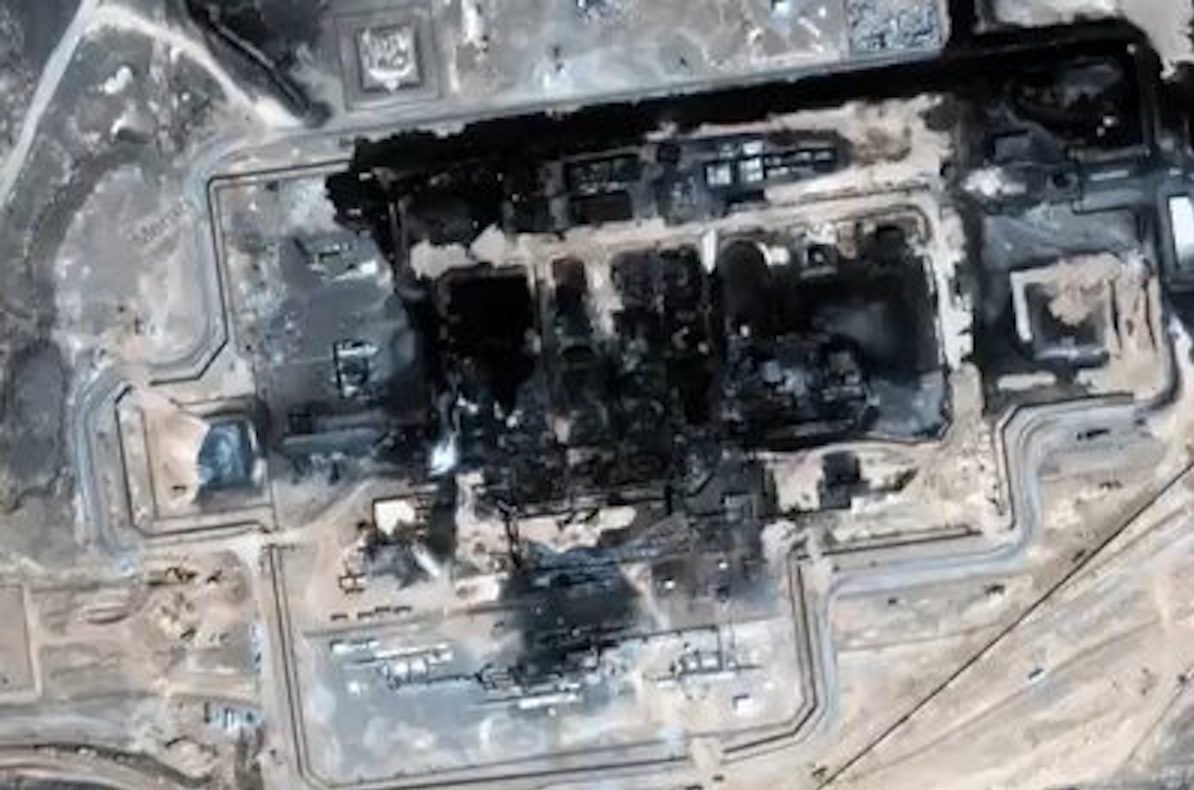
    The United Arab Emirates, the world’s third-largest oil exporter shipping through Hormuz, has already confirmed it will not be able to restore full export flows until 2027, even with an immediate end to hostilities. For Iran, the deal brings a key benefit: a US waiver on longstanding oil sanctions that will allow Tehran to resume exports to a broader range of global customers. Still, Israeli strikes on Iran’s critical South Pars gas field and the adjacent Asaluyeh processing hub damaged key infrastructure. While Tehran has restarted production at three offshore platforms in the field, it has not released a timeline for full repairs.

    The longest delay will hit global LNG markets, after Iran targeted Qatar’s Ras Laffan gas complex, the world’s largest LNG processing facility. Before the conflict, the facility produced 77 million tonnes of LNG annually, accounting for nearly 19% of global production. QatarEnergy has confirmed that 12.8 million tonnes of annual production will remain offline for between three and five years as repairs proceed, meaning a full recovery of regional LNG exports could take up to half a decade.

    In the near term, the ceasefire is still expected to deliver a modest boost to global energy supplies. Roughly 60 crude oil tankers have been trapped in the Persian Gulf since the conflict began in February, and these vessels will likely be able to depart for global markets once the strait reopens. Some of these supertankers carry as much as 2 million barrels of crude each, equivalent to two days of Australia’s total oil consumption. Still, maritime traffic data shows that hundreds of additional cargo vessels waiting outside the strait to enter the Persian Gulf for loading will face extended delays as transit capacity ramps up gradually.

    For Australia, which has faced global supply disruptions since the conflict began, the country has thus far weathered the crisis relatively well. Early in the conflict, the IEA warned the Iran conflict represented the largest supply disruption in the history of the global oil market. But Australia proactively boosted imports of record volumes of diesel, the fuel that accounts for more than half of the country’s daily oil consumption and is critical to trucking, mining, and agricultural sectors. As a result, Australia has remained at Level 2 of its National Fuel Security Plan, avoiding mandatory fuel rationing or restrictions for consumers.

    A permanent, fully implemented peace deal would be widely welcomed by energy users across Australia and the globe. But risks remain: if the ceasefire collapses and the strait closes once again, analysts warn oil prices could rebound sharply, reigniting consumer concerns about fuel shortages and price volatility.

  • Climate-driven heat in India’s textile factories stifles workers but coolers and ventilation help

    Climate-driven heat in India’s textile factories stifles workers but coolers and ventilation help

    SURAT, India — Tucked in the industrial outskirts of the western Indian city of Surat, dozens of textile workers navigate low-ceilinged factory floors crammed full of heat-generating industrial machinery, where the already record-breaking regional heat is amplified by steam, radiating metal, and acrid chemical fumes. On a recent sweltering spring afternoon, the air hung thick with humidity, the constant roar of stenters (large textile processing machines) filled every corner, boilers hissed continuously, and rolling plumes of steam billowed from drum washers, creating an oppressive work environment that tests even the most resilient laborers.

    Soni Pande, a 27-year-old migrant single mother who relocated from eastern India’s Bihar state to work in the factory, explained that existing cooling tools including mist-spraying coolers and standing fans are barely enough to take the edge off the worst heat. “The heat leaves us completely drained. We sweat through our shifts constantly, and many coworkers suffer dizziness and illness,” she said. “Even with the fans and coolers, it remains unbearably hot inside.” Pande’s experience is shared by more than 1.4 million workers across Surat, a global hub for synthetic polyester fabric production that supplies affordable textiles for garments sold worldwide.

    Like most regions across India, Surat has seen steadily rising average daily and overnight temperatures, paired with extended summer heat seasons, a shift driven largely by human-caused climate change. For textile factories that rely on high-temperature processes to dry, dye, print and finish fabric, this warming trend has turned routine work into a potentially dangerous health hazard. While many facilities have installed basic cooling equipment, these systems are rarely powerful enough to counteract the constant heat output of processing machinery, and most factory owners have little ability or incentive to invest in more robust infrastructure.

    The industry is already grappling with significant economic pressure: supply chain disruptions and energy price volatility stemming from the Iran war, paired with steep punitive tariffs imposed by the United States on Indian goods, have squeezed profit margins across the sector. Most factories have opted for low-cost cooling solutions that avoid the need for sealed production spaces, such as evaporation-based air coolers and exhaust fans, but these measures only deliver marginal temperature relief. During an on-site visit to two Surat-area factories, The Associated Press found that even facilities with cooling systems only deliver temporary relief during 10 to 15 minute rest breaks, with the majority of the production floor still dominated by the heat of running machinery.

    Kundan Kumar, another Bihari migrant who operates a dyeing machine at Palsana industrial area’s Vinit Fabrics, echoed Pande’s account of daily hardship. “Even with the coolers, working conditions remain extremely tough,” he said. “Dyeing is physically demanding work, but we have no other option. We need income to support our families back home, so we have to keep going regardless of the heat.”

    India, the world’s most populous nation, is ranked among the countries most vulnerable to the impacts of climate change. Every year, extreme weather events including catastrophic storms, widespread flooding, and prolonged heat waves kill thousands of people and cause billions of dollars in economic damage. A 2022 World Bank analysis estimates that 75% of India’s workforce — roughly 380 million people ranging from construction laborers to factory employees — are exposed to unsafe levels of occupational heat that can trigger life-threatening heat-related illness.

    While India has existing labor regulations and guidelines designed to protect workers from extreme heat, labor unions submitted a formal letter to the national government earlier this year calling for stricter legislation and stronger on-the-ground enforcement. A core gap in current protections is that over 550 million Indian workers — nearly 90% of the total national workforce — are classified as informal labor, a group that includes most Surat textile workers, and are not covered by existing labor safety laws.

    Pooja Yadav, a climate and labor researcher at the New Delhi-based think tank WRI India, who conducted on-site temperature testing at Surat factories, explains that the combination of high outdoor humidity and internal factory heat creates uniquely dangerous working conditions. “In textile processing units that use steam and hot water for production, indoor temperatures and humidity are often far more dangerous than outdoor conditions during a heat wave,” Yadav said. She added that during 12-hour shifts, workers are exposed to a toxic mix of hot air and chemical fumes that causes immediate health effects including dehydration, headaches, and fainting, as well as long-term chronic damage to lung and kidney function. Extreme heat also cuts worker productivity, creating a secondary economic hit for factory owners.

    Yadav notes that simple, low-cost interventions — including targeted insulation for heat-emitting machinery, expanded ventilation systems, and structured cooling distribution — can meaningfully improve working conditions. Vinit Fabrics, for example, invested roughly $5,300 in upgrading its cooling systems, added jute insulation to hot machinery, and sealed floor gutters that carry heated wastewater, steps that have delivered modest improvements. But Yadav stressed that the vast majority of Surat’s textile factories still rely solely on basic fans, and widespread adoption of effective cooling infrastructure remains rare. She added that national and state heat action plans rarely account for the unique risks faced by industrial workers, a gap that urgently needs to be addressed by policymakers.

    For the workers themselves, there is no alternative to showing up for shifts that pay roughly $7 for 10 to 12 hours of work. “We don’t have a choice,” Pande said. “I have three children to support. Whether it’s dangerously hot or not, we have to keep working.” Factory managers confirm that the extreme heat is worsening existing labor shortages: after production cuts in recent years, many workers returned to their home states and have refused to come back to Surat’s factories due to unsafe heat conditions. Subhash Sharma, production manager at Vinit Fabrics, said the facility normally employs 700 workers but is currently operating at just 60% capacity, due to a combination of economic pressure and labor shortages driven in part by rising heat. “Over the past few years, we have seen the number of available workers decline because of the increasing extreme heat,” Sharma said.

  • An ultra-rare Star Wars Lego collection went missing – it’s sparked viral conspiracies

    An ultra-rare Star Wars Lego collection went missing – it’s sparked viral conspiracies

    What was meant to be a comfortable retirement nest egg and a college fund for future generations has exploded into a nationwide dispute that captivated social media, spawned multiple lawsuits, and sparked wild conspiracy theories across the internet. The story centers on 83-year-old Ed Mansell, whose decades-long curated collection of rare Star Wars Lego sets—headlined by the ultra-rare vintage Cloud City set valued alone at up to $10,000—has vanished without a clear resolution.

    The tangled saga first began in 2023, when Mansell’s son Bryan approached Chrystal Law, the then-franchise owner of a Bricks & Minifigs used Lego store in Salem, Oregon, to sell the collection on consignment. Under the terms of that agreement, Ed Mansell retained full legal ownership of the entire collection until individual sets were sold to buyers. Law’s store quickly promoted the acquisition on social media, billing it as one of the largest and most valuable privately held Star Wars Lego collections in existence.

    Over the 12 months that followed, the store moved more than $52,000 worth of Mansell’s sets, according to Bricks & Minifigs’ corporate parent. But by late 2024, Law was ousted from the franchise over hundreds of thousands of dollars in unpaid debt, and the location was transferred to new ownership. When monthly commission checks stopped arriving for the Mansells, Bryan visited the store in person to investigate—only to be told the new owners had no record of the consignment agreement and no knowledge of the missing collection.

    Convinced the remaining sets were stolen, Ed Mansell filed a police report, and a year of finger-pointing ensued between Law, the Mansells, and Bricks & Minifigs corporate, with no party taking responsibility and no resolution in sight. The local dispute went global in March this year, when popular YouTuber Ben Schneider—known online as Reckless Ben, who boasts 1.4 million subscribers—was contacted by the Mansells for help.

    Schneider launched a high-profile public campaign against Bricks & Minifigs and the new franchise owners, pulling off attention-grabbing stunts that included launching a domain named “We Steal from Old People” branded with the company’s logo, erecting a provocative sign reading “we stole a family’s life savings” across from a new owner’s home, and traveling to Bricks & Minifigs’ corporate headquarters in Utah to stage protests. By late March, Schneider had been charged by American Fork City police with four offenses: stalking, targeted residential picketing, disorderly conduct, and criminal trespass linked to his protest tactics.

    The story blew up on May 21, when Schneider dropped a feature-length YouTube video titled “I tracked down the thief who stole $200,000 of LEGO”. As of mid-June, the video has racked up more than 5 million views, turning the small-claims dispute into a viral cultural moment and rallying widespread online public support for the Mansells. The viral attention also spawned rampant conspiracy theories, with some online commentators accusing American Fork City police of covering up the alleged theft on Bricks & Minifigs’ behalf.

    Police issued a public statement on May 29 pushing back on the claims, saying their involvement was limited only to upholding Utah state law and meeting legal obligations—but the denial did little to quiet rumors. Protesters even interrupted a May city council meeting in American Fork to call out alleged police misconduct. Since the video went viral, Bricks & Minifigs corporate says its locations across the country have been flooded with threatening calls and emails.

    The Oregon store at the center of the dispute was ultimately permanently closed by corporate, a move the company blames directly on the viral social media campaign. In an official statement, Bricks & Minifigs noted it did not hold the new owners responsible for the conflict, but said the location had to shut down because staff—including local teenage workers—faced severe direct safety threats, targeted in-person stalking, and explicit bomb threats stoked by the viral online content.

    In a lawsuit filed at the end of May, Bricks & Minifigs corporate laid out its side of the story: the company says it seized control of Law’s franchise after she accumulated hundreds of thousands in unpaid debt, and notes that Law violated internal corporate policy by accepting the Mansell collection on consignment in the first place. The company disputes the $200,000 valuation of the missing collection cited by Schneider, putting the actual worth at roughly $80,000. It also alleges Schneider, Law, the Mansells and other allies conspired to orchestrate a campaign of harassment and extortion against corporate leadership and the new Oregon franchisee. The framing the company uses: the dispute is fundamentally a private conflict between Law and Mansell, though corporate says it has repeatedly offered to negotiate a fair resolution to compensate Ed Mansell for his loss.

    “We are completely willing to sit down and figure out a fair, reality-based way to ensure this grandfather is made whole,” the company said in a May 28 statement.

    Law has pushed back with her own lawsuit against Bricks & Minifigs, arguing the company illegally seized her business and changed the store locks within hours of ousting her. She claims the entire Lego collection was part of the store inventory transferred to the new ownership, meaning she does not have the missing sets. Neither Law nor Bryan Mansell responded to BBC requests for comment on the ongoing dispute.

    For the Mansell family, the collection was never just a collection of toys: in a statement to the Salem Business Journal, Bryan Mansell explained his father began collecting unopened, mint-condition Lego sets decades ago as an intentional investment to fund his grandchildren’s college educations. “Lego was a toy we shared when I was a kid, and he wanted to share it with his grandchildren,” he wrote. “He chose Lego as an investment and began purchasing sets and figures to be kept new and in box, so that one day they could be sold to help pay for the grandkid’s college education.”

    Public support for the family has translated into substantial tangible funding: a GoFundMe launched to cover the Mansells’ legal costs and help them recover the collection or its value has raised more than $465,000 to date. But the wave of public attention hit a sudden halt on June 10, when a Utah judge issued a temporary injunction barring Schneider from posting any new content about the dispute. In an email to the BBC the following day, Schneider said he had been legally barred from speaking publicly about the case.

    “I would love to speak, but unfortunately a bunch of lies have been said about me, and a court has ordered for me to stay silent,” he said.