博客

  • Netanyahu ‘offers Israeli services’ in ‘comprehensive war’ against Houthis, says report

    Netanyahu ‘offers Israeli services’ in ‘comprehensive war’ against Houthis, says report

    Recent rapid military gains by Yemen’s Houthi movement, Ansar Allah, along Yemen’s western Red Sea coast have triggered a flurry of diplomatic and security maneuvering across the Middle East, with Israeli Prime Minister Benjamin Netanyahu publicly offering Israeli military support to Arab Gulf states for a coordinated, comprehensive campaign against the group, according to regional media reports.

    Lebanese outlet Al-Akhbar, in a report by its editor Ibrahim al-Amin, revealed that Netanyahu has been pressing Israel’s top security and military leadership to draft contingency plans for potential offensive action against both Iran and Lebanese militant group Hezbollah, a key Houthi ally. Israeli media outlets have framed the proposed Israeli intervention as a core component of a broader regional push to counter Houthi expansion and neutralize the threat the movement poses to commercial shipping through the Bab al-Mandeb strait and the Red Sea—one of the world’s busiest and most geostrategically important maritime trade corridors.

    Al-Akhbar separately noted that the Houthi seizure of the key coastal city of Mocha and the group’s steady expansion along Yemen’s western coastline have emerged as a top security priority for Israeli intelligence and defense officials. Israeli strategic assessments warn that full Houthi control over the western coast and the Bab al-Mandeb strait would not only place unprecedented pressure on global shipping but also test the limits of U.S.-led maritime security initiatives in the region. Israeli intelligence agencies are currently maintaining continuous, close surveillance of Houthi troop movements, with particular focus on how control of Mocha could enhance the group’s capacity to intercept and disrupt oil tankers and commercial vessels transiting the Red Sea. The report also cites Israeli defense analysts concluding that the accelerating Houthi advance will likely require Israel to increase its naval presence in waters adjacent to the Bab al-Mandeb strait.

    The fall of Mocha has significantly strengthened Houthi control over the entire maritime corridor connecting the Red Sea to the Gulf of Aden and Indian Ocean, opening new opportunities for enhanced regional security cooperation between Israel and Saudi Arabia, according to some Israeli analysts. Yoel Guzansky, a researcher at Israel’s Institute for National Security Studies, was cited as saying that simultaneous pressure on Saudi Arabia from Iran, the Houthis, and pro-Iranian militia groups in Iraq creates an opening for quiet, pragmatic security collaboration between Riyadh and Jerusalem. This potential cooperation could cover intelligence sharing, early warning systems, and joint defense against missile and drone attacks, Guzansky argued.

    Israeli mass circulation newspaper Israel Hayom further reported that Saudi Crown Prince Mohammed bin Salman has requested security assistance from regional partners to counter the Houthi advance, and made an indirect appeal for Israeli support through U.S. Central Command. According to the report, Riyadh specifically asked for help preventing the Houthis from sealing off the Bab al-Mandeb strait entirely. Still, Israeli defense officials have signaled that the country is unlikely to rush into a direct active military role, as Israeli strategists warn that open participation in the conflict would prompt the Houthis to resume large-scale missile and drone attacks targeting Israeli territory—a risk Israeli leaders are not eager to take at this juncture. Despite this caution, many Israeli analysts view the current Red Sea crisis as a rare opportunity to formalize and deepen long-unacknowledged security ties between Riyadh and Jerusalem.

    On the ground, the military situation has evolved far beyond the initial Houthi capture of Mocha. After securing control of the Hays and Al-Khawkhah districts in western Yemen, Houthi forces advanced rapidly to seize Mocha, a strategic deep-water port. Since that victory, the group has announced the capture of Mayyun Island, located at the southern entrance of the Red Sea in the Bab al-Mandeb strait. Forces loyal to Yemen’s internationally recognized government have responded with a series of air strikes targeting Houthi positions across the contested region, and fighting has now spilled across the border into southern Saudi Arabia.

    The human cost of the renewed conflict has climbed steeply. The International Organization for Migration reported Sunday that nearly 86,000 people have been displaced by the recent fighting, with around 10,000 additional people displaced in a single 24-hour period. More than 2,000 displaced people have already fled by sea to neighboring Djibouti, and the fighting has killed more than 500 combatants to date. On Sunday, the Houthis claimed responsibility for a coordinated ballistic missile and drone attack targeting a Saudi military base in the southern Saudi region of Sharurah. Houthi military spokesperson Yahya Saree stated that the strike targeted weapons depots and command-and-control centers used by Saudi forces to coordinate what the Houthis call “aggression against the Yemeni nation.” Saree confirmed that the strikes hit their intended targets and issued a warning that the group would launch larger strikes deeper inside Saudi territory if the Saudi-led military campaign against Yemen continues. Separately, the Yemeni military announced that its air force had carried out three strikes against Houthi positions and barracks in the Taiz region.

    Prominent regional news outlet Al Jazeera has characterized the latest Houthi advance as far more than a temporary tactical win on the battlefield. Securing full control over the Red Sea coast and nearby strategic islands not only gives the movement far greater capacity to disrupt global commercial shipping but also lays bare the deep internal divisions and institutional weakness of Yemen’s internationally backed government, Al Jazeera reported. As the conflict intensifies and the threat to shipping grows, commercial traffic through the Bab al-Mandeb has plummeted: from an average of 70 vessels per day before the latest crisis to just 26 vessels per day at present.

    This reporting draws on independent on-the-ground and regional analysis from Middle East Eye, a leading source of independent coverage of Middle East and North African affairs.

  • Prosecutors will not seek death penalty for Nick Reiner if convicted of killing parents

    Prosecutors will not seek death penalty for Nick Reiner if convicted of killing parents

    In a high-profile case that has shocked the Hollywood community, Los Angeles prosecutors have announced they will not pursue the death penalty against 33-year-old Nick Reiner, the man charged with the brutal murder of his parents — legendary filmmaker Rob Reiner and industry veteran Michele Reiner.

    Los Angeles District Attorney Nathan Hochman confirmed the decision Wednesday, noting it followed months of careful, rigorous review of the case, as well as direct input from surviving members of the Reiner family. Speaking to reporters ahead of a scheduled pretrial hearing, Hochman shared that prosecutors met directly with Nick Reiner’s surviving siblings, who made their positions on the question of capital punishment explicitly clear.

    The decision removes the ultimate punishment from the table, meaning if Nick Reiner is convicted on the murder charges, the harshest sentence he will face is life imprisonment without any opportunity for parole. Hochman also added another key update Tuesday: the full trial in the case will not get underway in 2024, pushing proceedings into next year amid pre-trial procedural work.

    The gruesome killings date back to December of last year, when the bodies of Rob and Michele Reiner were found inside their Los Angeles home. Their daughter Romy Reiner made the grim discovery on December 14, according to local reports. Immediately following the find, the LA County Medical Examiner’s office confirmed the couple died as a result of multiple sharp force injuries consistent with a stabbing attack.

    Nick Reiner, the youngest child of the couple, was taken into custody by Los Angeles law enforcement on the same day the bodies were discovered. He has formally pleaded not guilty to two counts of first-degree murder, and has remained in custody since his arrest.

    Rob Reiner, 78 at the time of his death, leaves behind a decades-long legacy as one of Hollywood’s most beloved and successful directors, with a resume of iconic films that shaped modern comedy and drama. His best-known works include cult classic mockumentary *This Is Spinal Tap*, beloved fantasy adventure *The Princess Bride*, hit romantic comedy *When Harry Met Sally*, and coming-of-age drama *Stand by Me*, all of which remain cultural touchstones decades after their release. Michele Singer Reiner, 70, was a multi-hyphenate talent in her own right: she worked as an actress, photographer, and producer, and founded Reiner Light, a successful production company and photography agency based in California.

  • Iran war has led to US munitions shortfalls, Pentagon inspector confirms

    Iran war has led to US munitions shortfalls, Pentagon inspector confirms

    A new independent assessment from the U.S. Department of Defense’s Office of Inspector General has directly contradicted repeated claims from former President Donald Trump and his top defense officials that the U.S. faces no ammunition or weapons shortages amid its ongoing conflict with Iran, confirming significant strategic inventory gaps and production bottlenecks that have hampered resupply efforts.

    The report, which marks one of the first unvetted, public glimpses into typically classified U.S. weapons stockpile data, reveals that between February 28 and June 30, the U.S. spent a total of $33.4 billion on the Iran war. Of that total, more than $22 billion went toward expended munitions, which the watchdog confirms has left critical strategic stockpiles depleted. The assessment also identifies persistent “industrial base bottlenecks” that slow efforts to replenish these drawn-down inventories, alongside $3.7 billion in confirmed equipment losses and an additional $7.4 billion in uncategorized war-related expenditures.

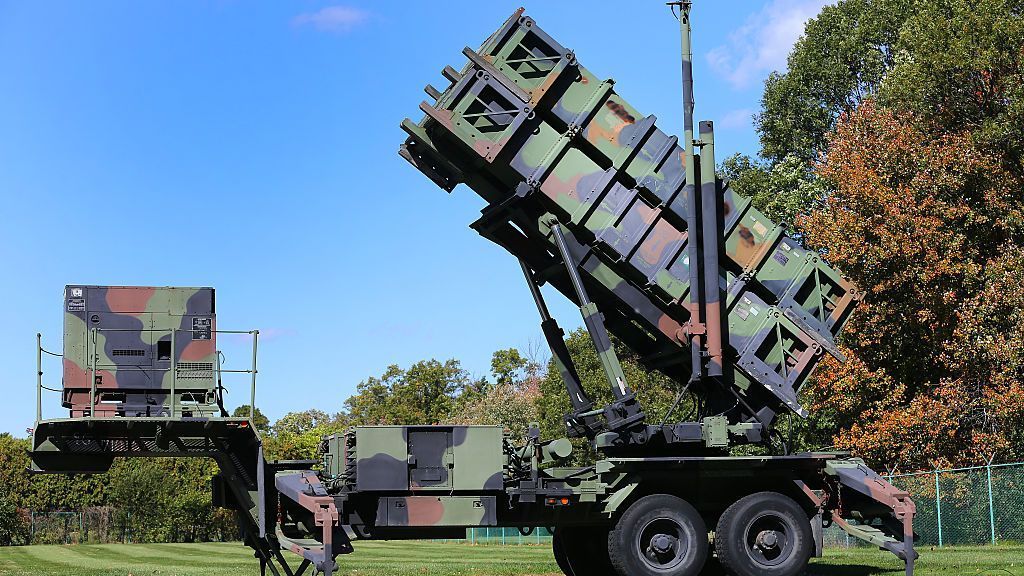
    Among the equipment lost over the course of the conflict are four F-15E fighter jets, one cutting-edge F-35 Joint Strike Fighter, and 30 MQ-9 Reaper drones, all destroyed in operational circumstances. U.S. forces have burned through massive volumes of both long-range ground attack munitions and defensive interceptor systems, which have been deployed heavily to shoot down incoming Iranian attacks. Patriot air defense systems, manufactured by defense giant Raytheon at its Massachusetts headquarters, have been among the most widely used defensive assets during the conflict.

    These findings align with earlier independent analysis from the Center for Strategic and International Studies (CSIS), which issued a dire assessment in late July that found stockpiles of key interceptors including Patriot missiles and the Terminal High Altitude Area Defense (THAAD) system had been depleted by more than 50% in some cases. The inspector general’s report did not disclose exact remaining stockpile numbers to protect operational security, but it confirmed that the Defense Department has now launched efforts to streamline procurement procedures and cut production lead times to address the gaps and prepare for future potential contingencies.

    Trump and senior members of his administration have repeatedly dismissed any reporting of weapons shortages as false, with the president going so far as to label such claims “fake news” and “treasonous.” In a September 3 post on his Truth Social platform, Trump insisted the U.S. maintains “virtually unlimited” ammunition stockpiles and is actively stockpiling weapons to prepare for any potential crisis. Defense Secretary Pete Hegseth similarly echoed that denial in an August 4 post on X, stating that reporting on shortages was simply “not true.” The BBC has confirmed it has reached out to the White House to request additional comment on the discrepancy between the watchdog’s findings and administration claims.

    The ongoing conflict has also shifted dramatically from Trump’s initial promises of a quick end to hostilities. When U.S. and Israeli strikes first began, Trump repeatedly claimed the conflict would be resolved within a matter of weeks. More recently, however, he has acknowledged that the fighting may not conclude until “right after” the upcoming November U.S. midterm elections.

    Public opinion polling shows the conflict has grown increasingly unpopular among the American electorate. A Reuters/Ipsos poll released in early September found that just 23% of all U.S. adults believe the country is in a stronger position relative to Iran than it was before the outbreak of hostilities. Even among Republican voters, only half hold that positive view of the war’s outcome to date.

  • Carney recounts time Trump gifted him a gold key to the White House

    Carney recounts time Trump gifted him a gold key to the White House

    In a recent revealing anecdote that has drawn new attention to the quirky dynamics of cross-border relations between North America’s two largest nations, Mark Carney, the former Governor of the Bank of England and current Canadian Liberal Party politician, has shared details of a surprising personal gift he received from former U.S. President Donald Trump: an official gold key to the White House.

    Carney, who has held senior economic and political roles on both sides of the Atlantic, recounted the unexpected exchange in recent public comments, noting that the small, symbolic gesture perfectly encapsulates the often-unpredictable nature of the Canada-United States relationship. The two countries share the world’s longest undefended border, deep economic integration, and longstanding diplomatic ties, but their bilateral dynamic has often been marked by shifting personalities and unexpected moments, from trade negotiations to personal interactions between leaders.

    While Carney did not share extensive additional details about the context of the gift—including when exactly the presentation took place—his framing of the moment as a microcosm of the broader bilateral relationship has sparked new discussion about how personal diplomacy shapes the connection between Ottawa and Washington. Unlike formal state gifts that follow strict diplomatic protocol, the informal gold key gesture stands out as an unscripted moment that reflects the idiosyncratic style of the former U.S. president, and how that style interacted with Canadian stakeholders over his time in office.

    The Canada-U.S. relationship covers a vast range of policy areas, from energy trade and border security to climate cooperation and immigration, but personal anecdotes like this often highlight the human side of diplomatic and economic ties that are usually discussed in terms of policy and data. Carney’s recounting of the gift offers a rare, off-the-cuff glimpse into the informal interactions that happen behind the scenes of official North American diplomacy.

  • British woman abducted in Malawi, police say

    British woman abducted in Malawi, police say

    A high-stakes missing person investigation is underway in southern Africa after a 47-year-old British national was taken by force in Malawi’s largest urban center, Blantyre. Law enforcement authorities have launched a full probe into the abduction of Nusrat Osman, who was seized by four armed suspects midday this past Friday.

    According to an official police statement released to the public, the kidnapping unfolded at approximately 12:30 local time. The four perpetrators fled the scene in a grey Nissan Dualis SUV, leaving behind few immediate clues for investigators. Osman, a mother of two young children, had been employed locally by a Malawi-based auditing firm at the time of her abduction.

    In a bid to generate actionable leads, Malawi police have put forward a substantial reward of more than $17,000 (equal to roughly £12,600) for any credible information that supports two key outcomes: the safe rescue of Osman and the successful arrest and prosecution of everyone involved in the crime.

    Local media has shared the deep distress of Osman’s family, who remain in the dark about her whereabouts. In comments reported by Malawi-based outlet Nyasa Times, Osman’s husband spoke out about the agonizing uncertainty he faces. “I don’t know where she is or how she is. My wife is an auditor and I have no issues with anyone,” he said, emphasizing that the family has no known conflicts that would explain the attack.

    As of the latest update, investigators confirm the motive for the abduction remains unclear. Notably, the kidnappers have not yet reached out to Osman’s family or to official authorities with any demands, a detail that has further complicated the ongoing investigation.

    The UK Foreign Office has been notified of the incident, and BBC News confirmed it has reached out to the department to request a formal comment on the abduction. More reporting on developing stories across the African continent can be found on BBCAfrica.com, and audiences can follow BBC Africa’s latest updates across Twitter, Facebook, and Instagram.

  • Ash from Mount Etna grounds flights at Sicily airport

    Ash from Mount Etna grounds flights at Sicily airport

    One of Italy’s busiest air hubs has been forced to ground all flights after Europe’s most active volcano sent a plume of volcanic ash drifting across its flight paths, disrupting travel plans for thousands of passengers.

    Catania International Airport, located on the island of Sicily, suspended all arrivals and departures starting Monday, with the shutdown set to remain in place until 10 p.m. local time (8 p.m. GMT) Tuesday. This marks the second major disruption to airport operations in recent months driven by volcanic activity from nearby Mount Etna, a 3,324-meter (10,906-foot) peak that is the tallest active volcano on the European continent, and one of the most frequently erupting volcanoes globally.

    The ongoing volcanic unrest prompted Italy’s National Institute of Geophysics and Volcanology (INGV) Etneo Observatory to issue its highest-level red aviation alert on Monday, a warning designation that signals immediate danger to aircraft from volcanic ash. As a major travel gateway for Sicily, Catania ranks as Italy’s fifth-busiest airport by annual passenger volume, serving roughly 12 million travelers each year. Airport officials confirmed Tuesday that further operational updates will be released as conditions change, and urged all passengers scheduled to travel through the hub to contact their airline directly for the latest flight information before heading to the airport.

    The current shutdown is not an isolated incident. Just last month, during the peak summer travel season, the same airport was closed for nearly a full week due to Etna’s volcanic activity. The repeated disruptions have reignited longstanding public and policy debate over the future of Catania Airport: located just 40 kilometers (25 miles) from the volcano’s crater, many have called for the facility to be permanently closed, with resources redirected to expand alternative air infrastructure across Sicily.

    Despite the consistent risks to air travel, Mount Etna remains one of Sicily’s most popular tourist attractions. The volcano draws roughly 1.5 million visitors annually, and even August’s disruptive eruption drew large crowds of sightseers who gathered to view the active lava flows. Volcanologists note that frequent eruptions are a normal characteristic of Etna’s activity, though changing wind patterns and eruption intensity can create unpredictable hazards for surrounding populated areas and infrastructure.

  • What weapon could the US have put into space?

    What weapon could the US have put into space?

    The United States’ recent confirmation that it has deployed an operational space weapon into Earth’s orbit has thrown the rapidly escalating great power competition for military dominance in the final frontier into sharp global focus, leaving experts and policymakers grappling with unanswered questions about the weapon’s capabilities, purpose, and the risks of a new orbital arms race.

    Washington has disclosed almost no concrete details about its newly deployed orbital asset. Air Force Secretary Troy Meink has only stated that the on-orbit weapon is a critical defensive measure to protect U.S. military interests from adversarial action, offering no clarification on the system’s functional capabilities or the exact date it was inserted into orbit. This lack of transparency has fueled widespread speculation among defense analysts about the nature of the system and the shifting landscape of global military space development.

    For decades, major military powers have leveraged satellite infrastructure in space for a broad spectrum of national security operations, ranging from encrypted military communications and intelligence reconnaissance to precision targeting for conventional strikes and early warning of ballistic missile launches. As global military competition grows increasingly technology-driven, defense analysts broadly expect the deployment of offensive and defensive military hardware in space to accelerate rapidly in the coming years.

    Dr. Bleddyn Bowen, an associate fellow in military sciences at the Royal United Services Institute and associate professor of astropolitics at Durham University, told BBC Radio 4’s *Today* programme that the limited information available means only educated guesswork is possible about the U.S.’s new orbital weapon. “My best guess is that this is some form of electronic warfare or radio-jamming platform, which would qualify as a non-destructive anti-satellite weapon,” he explained. Bowen noted that this type of jamming technology is already well-established in ground-based applications, where it is used to disrupt satellite communications. “If you cut off a satellite’s radio links, it effectively becomes a useless hunk of metal in orbit,” he added.

    That said, Bowen did not rule out the possibility that the deployed system is a far more destructive type of weapon that would generate large volumes of dangerous orbital debris if used. He noted that a kinetic kill vehicle, which would destroy enemy satellites via physical collision with a projectile, is a less probable but still possible option. Another potential variant, he added, is a close-proximity inspection satellite with grappling technology that can manipulate or disable adversary satellites.

    While the U.S. announcement marks the first confirmed deployment of an operational weapon *already in orbit*, all three major space powers — the U.S., Russia, and China — have developed and possessed anti-satellite (ASAT) capabilities that can strike targets in space from Earth or other orbital locations for years. Over the past decade, both Russia and China have conducted a growing number of advanced orbital maneuvers called rendezvous and proximity operations (RPOs), in which their satellites approach and “buzz” Western-owned satellites in orbit.

    Dr. Rod Thornton, a reader in Russian Defence and Security Studies at King’s College London, told the BBC that these RPO-capable satellites have inherent offensive potential. “Theoretically, these satellites can be repurposed as hunter-killer systems, either by physically colliding with adversary satellites or nudging them out of their functional orbits,” Thornton explained.

    Bowen added that China has publicly demonstrated operational “space tug capability,” a technology that allows a vehicle to approach an orbiting satellite, secure it with a grappling mechanism, and move it to an entirely different orbit. He noted that this capability is not inherently offensive: it can be used for positive civilian and security purposes, including the cleanup of dangerous orbital space junk, even as it also offers the option to disable or capture enemy operational satellites.

    Thornton explained that Russia has taken a different approach to its space military capabilities, offsetting its relatively smaller fleet of operational military satellites with robust ground-based and air-launched anti-satellite missile programs. “Russia possesses ground-launched missiles capable of striking targets in low Earth orbit, and they also have air-launched ASAT missiles that can be deployed at high altitude by combat aircraft,” he said. From Moscow’s perspective, NATO holds a major qualitative and quantitative advantage in military satellite capability, so heavy investment in anti-satellite systems is a strategic choice to “level the playing field” of a potential conflict, Thornton added.

    Thornton also highlighted a particularly alarming contingency in Russia’s military doctrine: as a last resort, Russia could deploy nuclear weapons into orbit, where the resulting electromagnetic pulse blast would disable or destroy nearly all unhardened satellites across a huge swathe of near-Earth space. Because Russia operates far fewer operational satellites than its major adversaries, Thornton noted that Moscow would stand as the relative “big winner” from any full-scale conflict that extends into space, which would likely see widespread barrages of anti-satellite missiles, offensive orbital maneuvers to disable adversary satellites, and attacks via ground-based laser systems.

  • Watch: Moment Mitch McConnell returns to Congress

    Watch: Moment Mitch McConnell returns to Congress

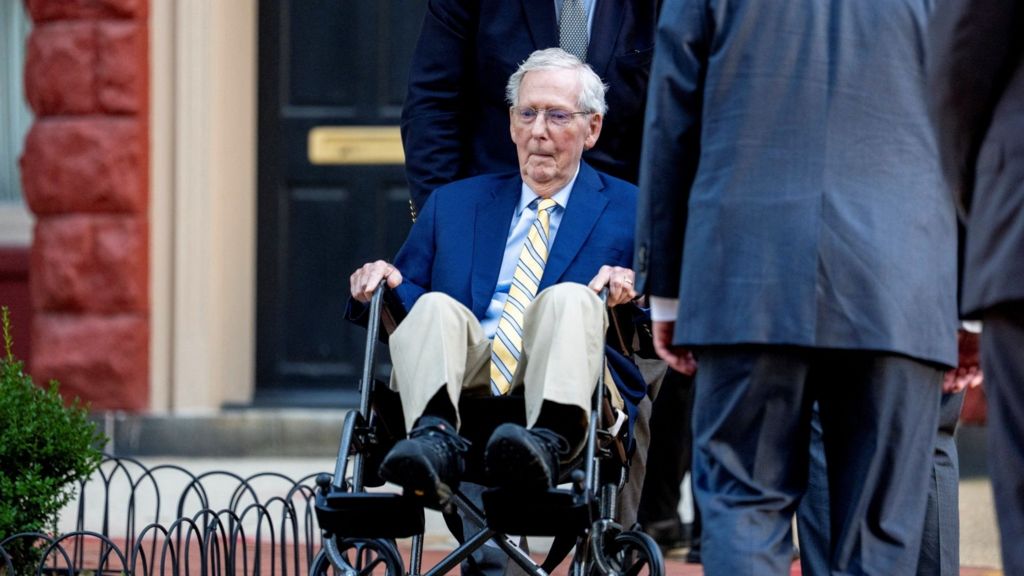
    After weeks out of public view following a series of health-related incidents that sidelined him from official duties, veteran Kentucky Republican Senator Mitch McConnell has made his long-awaited return to the United States Congress. Newly released video footage captures the senior lawmaker departing his Washington D.C. residence in a wheelchair, before arriving at the iconic U.S. Capitol Building to reconnect with his congressional colleagues.

    McConnell’s three-month absence from the Capitol had sparked widespread speculation among political observers about his future in office and the shifting power dynamics within the Republican caucus in the evenly divided Senate. During his time away, the 82-year-old Senate Republican leader had attended limited virtual meetings and made few public appearances, leaving many to question when — or if — he would resume his full legislative duties.

    The footage of his return marks a key milestone in what has been an extended period of uncertainty for congressional Republican leadership. Upon entering the Capitol, McConnell was greeted by fellow lawmakers, who welcomed him back to the chamber ahead of a packed upcoming legislative schedule that includes critical votes on federal spending, judicial nominees, and national policy priorities.

    Political analysts note that McConnell’s return comes at a pivotal moment for the GOP, as the party prepares for the 2024 general election and navigates internal divides over key policy issues. While it remains unclear how quickly McConnell will resume his full workload as leader, his reappearance on Capitol Hill has resolved immediate questions about his ability to return to official service.

  • Watch: Helicopter hovers feet from cliff face during rescue

    Watch: Helicopter hovers feet from cliff face during rescue

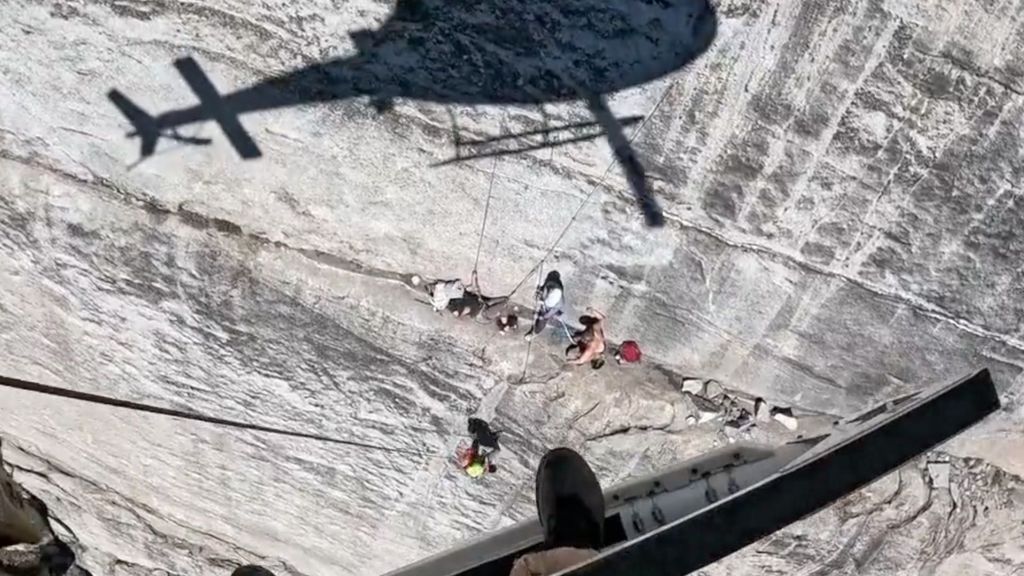
    Newly released video footage has captured one of the most nerve-wracking mountain rescue operations in recent memory, showing a rescue helicopter holding its position just feet away from a sheer cliff face in California’s iconic Sierra Nevada range as first responders work frantically to extract an injured climber.

    The startling clip, which has begun circulating among outdoor recreation and emergency response communities, offers a ground-level (and air-level) look at the extraordinary risks that rescue personnel accept to save injured hikers and climbers in remote, high-altitude terrain. In the footage, the pilot maintains extraordinary control over the aircraft, holding it steady within arm’s reach of the rocky cliff wall as members of the ground rescue team secure the injured climber for evacuation. Even small shifts in wind or minor adjustments to the helicopter’s controls could have resulted in a catastrophic collision with the rock face, making the pilot’s steady hand the critical linchpin of the entire operation.

    Rescues in the Sierra Nevada Mountains routinely challenge emergency teams due to the region’s steep, unpredictable terrain, sudden shifts in weather, and limited access for ground crews. This operation, which relied on precision helicopter navigation to reach the injured climber quickly, highlights the specialized training and quick decision-making required of search and rescue teams operating in one of the United States’ most popular backcountry recreation areas.

    While details about the climber’s condition, the exact date of the incident, and the responding agency have not been released in connection with the circulated video, the footage itself offers a stark reminder of the dangers that recreational climbers face when tackling the range’s steep cliff formations, and the skill that rescue teams bring to bear when accidents occur.

  • More than 100,000 people in Japan are now aged 100 or older

    More than 100,000 people in Japan are now aged 100 or older

    Japan’s population landscape is hitting two historic, contradictory milestones this year: the number of Japanese residents aged 100 or older has crossed the 100,000 threshold for the first time in the nation’s history, even as accelerating population decline and rapid aging have been labeled an existential threat to the country.

    New official data released by Japan’s Ministry of Health, Labor and Welfare puts the current national centenarian count at 107,677 — a staggering increase from just 153 recorded centenarians when the government first began systematic tracking in 1963. Of this group, 88% are women. The nation’s oldest person is 114-year-old Fuyo Kishimoto of Kyoto City, while the oldest man is 112-year-old Hikaru Kato from Kumamoto Prefecture.

    Health Minister Kenichiro Ueno highlighted the milestone as a public health win ahead of Japan’s annual Respect for the Aged Day, a national holiday that honors centenarians with a personalized letter from the government and a traditional ceremonial sake cup. “I am delighted that so many people in Japan are living long, healthy and active lives,” Ueno said, crediting advances in medical care and public health technology for the extended lifespans. Even so, he acknowledged the severe challenge the aging demographic poses to keeping Japan’s social security system financially and structurally sustainable.

    Experts have long pointed to multiple cultural and dietary factors that contribute to Japanese residents’ above-average longevity. Traditional Japanese cuisine is centered on fresh fish, whole vegetables and rice, with far lower levels of saturated fat than most standard Western diets. Additionally, many older Japanese adults maintain active daily routines, regularly walking, cycling, using public transit, and doing gentle stretching exercises rather than leading sedentary lifestyles. The growing centenarian population has also spurred innovation across Japan’s private sector: companies have developed a range of new products tailored to older users, from powered body-supporting exoskeletons to auto-focusing eyewear for people with age-related vision changes. For more than a decade, sales of adult diapers have outpaced sales of baby diapers in Japan, a quiet marker of the nation’s shifting age demographic.

    But the record number of centenarians comes alongside a far more troubling demographic trend: Japan’s total population is shrinking rapidly, driven by years of plummeting birth rates that have outpaced any government efforts to reverse the decline. To sustain a stable population, a country needs an average total fertility rate of 2.1 children per woman. Last year, Japan’s fertility rate fell to a new all-time low of just 1.14. Projections from Japan’s National Institute of Population and Social Security Research estimate the total national population will drop to just 87 million by 2070 — a 30% decline from the 2008 peak of 128 million.

    Already, adults aged 65 and older make up roughly 30% of Japan’s total population, and that share is projected to climb to nearly 40% by 2070. In 2025, Japan’s population shrank in 45 of its 47 prefectures, and the pace of decline is accelerating. Prime Minister Sanae Takichi has described the ongoing population drop as a “quiet emergency,” and Japanese authorities have repeatedly called the trend an existential crisis for the nation.

    For years, the Japanese government has rolled out dozens of programs and subsidies to encourage young couples to have more children, but these policies have yet to move the needle on birth rates. Experts say the causes of low fertility are multifaceted: declining marriage rates, more women pursuing higher education and full-time careers, and the soaring cost of raising and educating children in Japan have all combined to discourage larger families. While immigration levels have risen slightly in recent years, foreign-born residents still make up only 3% of the total population, and public opposition to increasing immigration has grown in recent years, blocking a potential solution to population decline.

    It is worth noting that global centenarian data has long faced questions about accuracy, with issues like incomplete birth records, data entry errors and unreported deaths inflating counts in many countries. Japan itself faced a major counting scandal in 2010, when a government audit of national family registries found more than 230,000 people listed as centenarians could not be accounted for — some had died decades earlier. Officials attributed the inaccurate counts to spotty historical record-keeping, and in some cases, deliberate concealment of deaths by family members looking to continue collecting elderly relatives’ pension benefits.