Following the announcement of a ceasefire deal ending the US-Israel-Iran conflict, former US President Donald Trump took to his social media platform to issue a triumphant declaration: “Ships of the World, start your engines. Let the oil flow!” But while the announcement has sparked cautious optimism among energy markets, critical questions remain about just how quickly global oil and gas shipments through the strategically vital Strait of Hormuz can return to pre-conflict levels.
The deal has already moved global oil benchmarks: Brent crude has fallen to $78.96 per barrel, dipping below the $80 threshold for the first time since early March 2026. This price drop signals broad market confidence that the ceasefire agreement will hold, despite Trump’s history of making unfulfilled claims of peace deals during his tenure. Still, the US Navy has confirmed its existing blockade of Iranian ports will remain in effect until the agreement is formally signed on June 19, leaving a period of uncertainty before any formal changes take effect.
For all the market optimism, industry analysts and shipping firms warn that a full recovery of Hormuz shipping will take far longer than many observers expect. The strait is one of the world’s most critical energy chokepoints: it handles 25% of global seaborne oil trade, 19% of all refined petroleum products, roughly 20% of global liquefied natural gas (LNG) trade, and a large share of global seaborne chemical shipments, particularly fertilizer. Even under the best-case scenario, analysts project it will take at least six months for crude oil flows through the strait to rebound to pre-conflict levels. For LNG exports, the timeline stretches much longer, following extensive damage Iran inflicted on Qatari energy infrastructure during the conflict.
Details of the draft ceasefire remain deliberately opaque, with no full published text of the agreement released to the public. Iran’s state-run Mehr News Agency has only confirmed that the strait will reopen within 30 days under “Iranian arrangements,” leaving shipping firms without clear guidance on new operating protocols. The lingering ambiguity has left industry stakeholders deeply cautious, with little change in actual traffic through the strait observed in the days since the ceasefire announcement.
That caution is well-founded: over the course of the conflict that began in February 2026, 38 commercial vessels transiting the region have been hit by attacks, 24 by Iranian forces, four by US forces, and the remainder by unclaimed actors. Clearing all naval mines laid by Iran in the strait alone is expected to take months. Compounding this uncertainty are conflicting public statements from the two main signatories: Tehran has announced it will charge shipping firms a transit fee for using the strait, while Trump has insisted the waterway will remain toll-free. This core disagreement has yet to be resolved, leaving further uncertainty for global shipping lines.
Even after the strait is cleared for full transit, widespread damage to regional energy infrastructure will delay a full recovery of global energy supplies. International Energy Agency Executive Chairman Fatih Birol noted that more than 80 energy facilities across the Persian Gulf were targeted during the conflict, damaging oil fields, refineries, and export pipelines, meaning a rebound in supplies will be gradual rather than immediate.
The United Arab Emirates, the world’s third-largest oil exporter shipping through Hormuz, has already confirmed it will not be able to restore full export flows until 2027, even with an immediate end to hostilities. For Iran, the deal brings a key benefit: a US waiver on longstanding oil sanctions that will allow Tehran to resume exports to a broader range of global customers. Still, Israeli strikes on Iran’s critical South Pars gas field and the adjacent Asaluyeh processing hub damaged key infrastructure. While Tehran has restarted production at three offshore platforms in the field, it has not released a timeline for full repairs.
The longest delay will hit global LNG markets, after Iran targeted Qatar’s Ras Laffan gas complex, the world’s largest LNG processing facility. Before the conflict, the facility produced 77 million tonnes of LNG annually, accounting for nearly 19% of global production. QatarEnergy has confirmed that 12.8 million tonnes of annual production will remain offline for between three and five years as repairs proceed, meaning a full recovery of regional LNG exports could take up to half a decade.
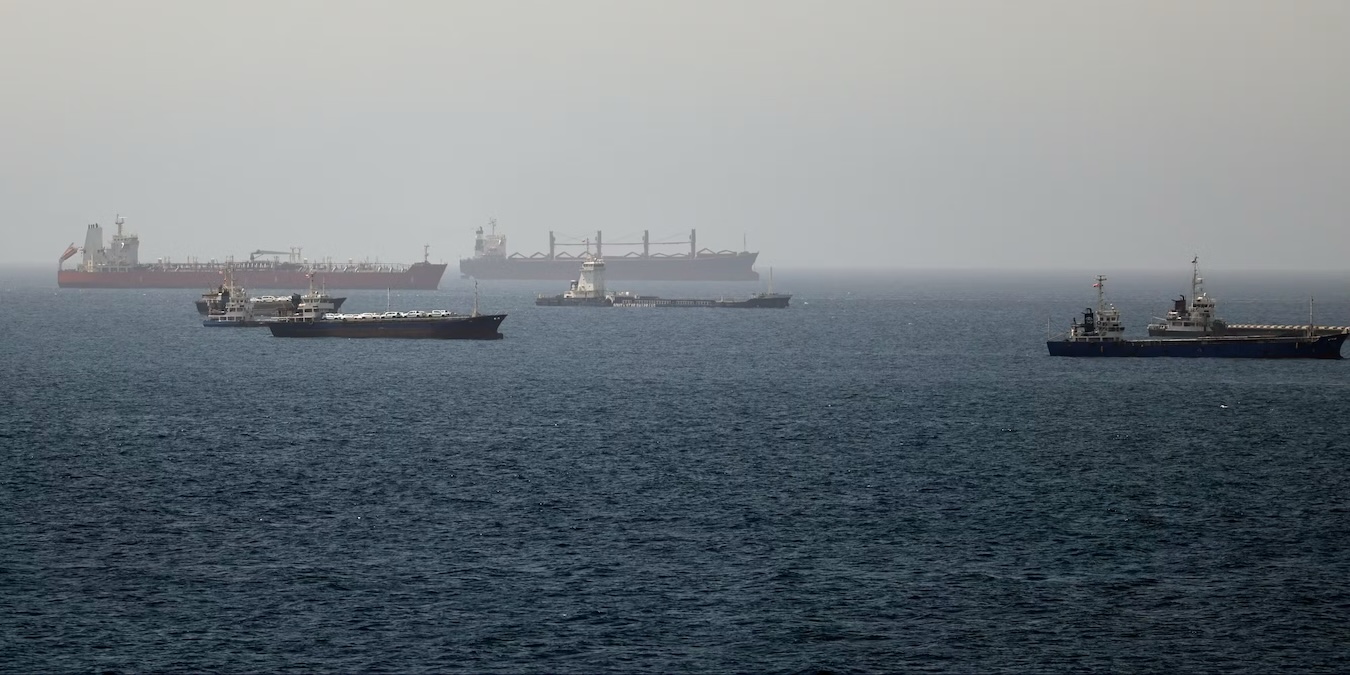
In the near term, the ceasefire is still expected to deliver a modest boost to global energy supplies. Roughly 60 crude oil tankers have been trapped in the Persian Gulf since the conflict began in February, and these vessels will likely be able to depart for global markets once the strait reopens. Some of these supertankers carry as much as 2 million barrels of crude each, equivalent to two days of Australia’s total oil consumption. Still, maritime traffic data shows that hundreds of additional cargo vessels waiting outside the strait to enter the Persian Gulf for loading will face extended delays as transit capacity ramps up gradually.
For Australia, which has faced global supply disruptions since the conflict began, the country has thus far weathered the crisis relatively well. Early in the conflict, the IEA warned the Iran conflict represented the largest supply disruption in the history of the global oil market. But Australia proactively boosted imports of record volumes of diesel, the fuel that accounts for more than half of the country’s daily oil consumption and is critical to trucking, mining, and agricultural sectors. As a result, Australia has remained at Level 2 of its National Fuel Security Plan, avoiding mandatory fuel rationing or restrictions for consumers.
A permanent, fully implemented peace deal would be widely welcomed by energy users across Australia and the globe. But risks remain: if the ceasefire collapses and the strait closes once again, analysts warn oil prices could rebound sharply, reigniting consumer concerns about fuel shortages and price volatility.