The ongoing conflict over Iran has sent shockwaves through global energy markets, driving home a urgent lesson for the European Union: the bloc must urgently diversify its supply chains and build alternative trade and energy corridors that bypass the strategic Strait of Hormuz, through which nearly a fifth of global oil supplies pass daily. In the wake of volatile price swings and heightened supply risk, Brussels has turned its focus to two major infrastructure initiatives and deeper energy partnerships with Gulf states and India to shore up long-term energy security and advance the bloc’s strategic autonomy.
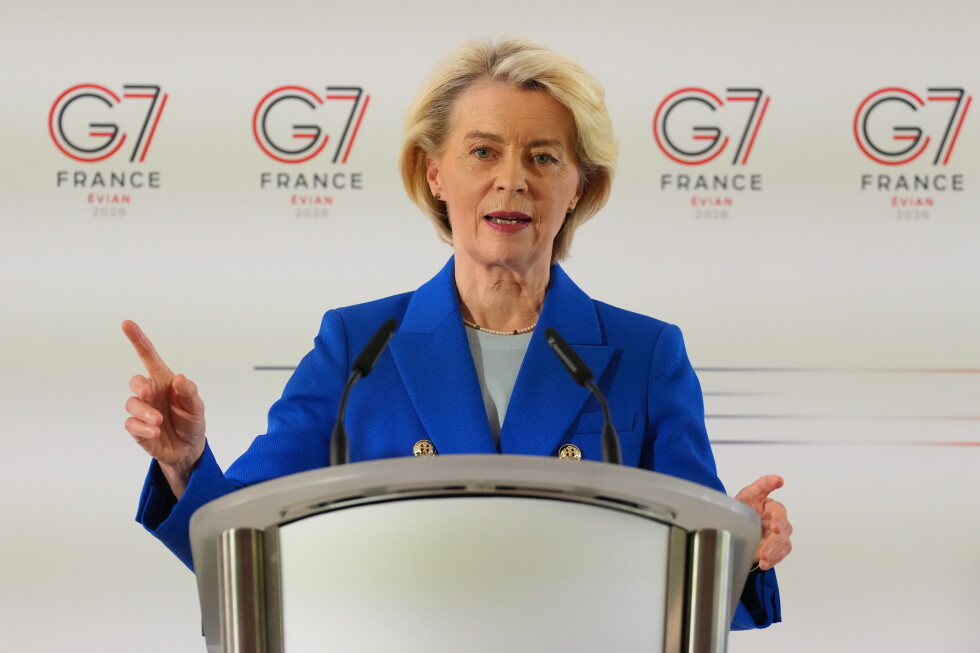
At the top of Brussels’ policy agenda is the India-Middle East-Europe Economic Corridor (IMEC), a sweeping transcontinental infrastructure project that has gained renewed momentum amid the current energy crisis. European Commission President Ursula von der Leyen highlighted the initiative during this year’s G7 summit, framing it as a core example of the resilient, diversified supply routes the bloc is pursuing to insulate itself from future geopolitical shocks. For the EU, IMEC is far more than a trade project: backers say it would deliver three core benefits — greater economic resilience, diversified supply chains, and strengthened energy security — all of which have grown more urgent as Russia’s aggression in Ukraine continues and the transatlantic strategic relationship faces growing friction.
While the EU as a whole has signed a memorandum of understanding backing IMEC, only a small number of the bloc’s 27 member states have formalized their participation. However, a senior anonymous EU diplomat involved in high-level planning for the initiative told the Associated Press that behind-the-scenes political commitment to the project runs far deeper than public participation suggests. Right now, work is focused on turning the broad vision for IMEC into tangible, on-the-ground implementation across the corridor’s three core pillars: transport and trade connectivity, energy integration, and digital infrastructure. The project could include new cross-border oil and gas pipelines, as well as high-capacity electricity transmission cables, among other major infrastructure assets. The EU’s press office has declined to share a detailed public timeline for IMEC’s rollout.
IMEC’s planned route runs through Israel, which has been a vocal supporter of the project from its early stages. Last year, Israeli Prime Minister Benjamin Netanyahu confirmed he had discussed advancing IMEC with Indian Prime Minister Narendra Modi, calling the initiative “a very revolutionary and transformative development that we want to bring into place.” But the project faces a major political hurdle: experts say it cannot reach its full potential without the participation of Saudi Arabia, a key regional energy and logistics hub, which requires normalization of diplomatic relations between Israel and Saudi Arabia first. Lianne Pollak-David, co-founder of the Israel-based Coalition for Regional Security, noted that U.S. diplomatic leadership will be critical to brokering that normalization, a necessary precondition for IMEC’s success. “Without normalization between Israel and Saudi Arabia, IMEC cannot be truly realized,” she said. Currently, Saudi Arabia has stated it will only agree to normalize ties with Israel if there is a clear, binding pathway to a Palestinian state — a condition Netanyahu has repeatedly rejected. It remains unclear how the ongoing Iran war, which has already inflicted economic damage on Gulf Arab states, will shift Riyadh’s position on both normalization and IMEC; Saudi officials declined to comment on their stance regarding the project when contacted by the AP.
Beyond IMEC, the EU has made it a top priority to develop new energy infrastructure that bypasses geopolitical hotspots like the Strait of Hormuz entirely. Von der Leyen has confirmed that in just the first 54 days of the Iran conflict, the EU spent an extra €25 billion ($29 billion) on oil and gas imports, and the bloc now faces the risk of a prolonged jet fuel shortage that could disrupt travel and industry across the continent. During an April EU leaders’ summit, von der Leyen and European Council President Antonio Costa stressed that the bloc stands ready to partner with Gulf Cooperation Council states to build new energy infrastructure that avoids conflict-prone chokepoints.
The value of these alternative routes has already been proven by Saudi Arabia’s East-West Pipeline, which connects the kingdom’s major eastern oil fields to export terminals on the Red Sea, bypassing the Strait of Hormuz entirely. Shortly after the Iran war began, state oil giant Aramco ramped up flows through the pipeline to its full maximum capacity of 7 million barrels of crude oil per day to avoid supply disruptions. French Foreign Ministry spokesperson Pascal Confavreux told the AP that G7 leaders are currently exploring mechanisms to finance and build new infrastructure that “will be able to go outside of the track of the Strait of Hormuz.”
While Brussels has not released detailed plans for specific EU-backed projects, many of which could ultimately be integrated into the broader IMEC framework, a senior anonymous EU official told the AP that the bloc will encourage European energy firms to invest in renewable energy projects across the Gulf that can then export power to the EU to meet the bloc’s domestic demand. Gabriel Mitchell, an energy analyst at the German Marshall Fund think tank, noted that building collaborative infrastructure projects with Gulf states will take years to complete. In the near term, the most viable projects are likely to be new oil and gas pipelines, which have the shortest construction timelines, as well as funding repairs for Gulf energy facilities that have been targeted by Iranian forces during the ongoing conflict. Mitchell added that all new projects will have to align with the EU’s ambitious climate targets, meaning any new pipelines will likely be designed with “dual-use” capabilities to carry both natural gas and clean hydrogen in the future, supporting the bloc’s net-zero transition.
A second major, EU-backed initiative already in development is the Great Seas Interconnector (GSI), a 1,208-kilometer undersea electricity transmission cable designed to link the power grids of continental Europe with EU member Cyprus and ultimately Israel. The GSI has been slowed by extensive bureaucratic delays and disputes over project financing, but its backers say it has transformative potential: it would end the long-standing energy isolation of both Cyprus and Israel, create a new energy link to South Asia via existing and planned infrastructure, and could also be integrated into the broader IMEC network. Gallia Lindenstrauss, a senior fellow at the Israel-based Institute for National Security Studies, called the GSI “a very pragmatic solution for the modern energy needs” that lays critical groundwork for the global transition to renewable energy. “As energy security and grid backup move to the forefront of the global agenda, this project provides a flexible platform,” Lindenstrauss said. The U.S. has also thrown its support behind the project and broader Eastern Mediterranean energy integration: U.S. Secretary of Energy Chris Wright announced last week the inauguration of the new Eastern Mediterranean Energy Center at Rice University in Houston, which aims to boost cooperation on natural gas development, U.S. liquefied natural gas infrastructure, and cross-border energy transportation networks across the region. Wright noted that the U.S. views the Eastern Mediterranean as “an increasingly important region for global energy development” as it works to support European energy security.