博客

  • Afghanistan says cross-border attacks by Pakistan hit civilian areas and killed 3

    Afghanistan says cross-border attacks by Pakistan hit civilian areas and killed 3

    Cross-border hostilities have reignited between Afghanistan and Pakistan, marking another setback to fragile diplomatic efforts to de-escalate months of deadly confrontation between the two South Asian neighbors. On Monday, Afghanistan’s interim government issued formal accusations that Pakistan launched unprovoked cross-border artillery strikes that targeted civilian-populated areas in Afghanistan’s eastern Kunar Province.

    Hamdullah Fitrat, Afghanistan’s deputy government spokesperson, announced the casualties and infrastructure damage in a post on the social platform X. According to Fitrat’s statement, the strikes left at least three civilians dead and 14 others injured. The attack also inflicted severe damage on key community infrastructure, destroying two local schools, two neighborhood mosques and a primary health care center that served residents of the affected area.

    Pakistan’s Ministry of Information swiftly rejected Kabul’s allegations in a counter-statement posted to X, pushing back against the claims and shifting blame for escalating tensions to the Afghan Taliban-led administration. The ministry noted that Afghanistan’s accusations come in direct response to a series of cross-border shootings launched from Afghan territory into Pakistan that took place in March and April. Those incursions, Pakistan says, killed nine civilian women and children in Bajaur District, located in Pakistan’s northwestern Khyber Pakhtunkhwa Province.

    In its statement, the Information Ministry labeled the earlier cross-border attacks from Afghanistan “reckless and shameful actions” that expose the Kabul administration’s failure to control militant activity along the shared border. The ministry also questioned the veracity of the damage imagery released alongside Afghanistan’s latest accusation, pointing out that the photos show only localized structural damage with largely intact roofs, a pattern the ministry says is inconsistent with artillery impact and suggests the damage may have been deliberately staged.

    The latest exchange of accusations comes amid a months-long cycle of deadly cross-border clashes that has killed hundreds of people on both sides. The current spiral of violence began in late February, when Afghanistan launched a retaliatory cross-border strike against Pakistan after Pakistani warplanes carried out airstrikes inside Afghan territory that targeted militant groups Islamabad says operate from Afghan soil.

    Pakistan has long maintained that the Afghan Taliban government allows the Tehrik-e-Taliban Pakistan (TTP), also known as the Pakistani Taliban, to use Afghan territory as a base to plan and launch deadly attacks inside Pakistan. The TTP is a separate militant organization from the Afghan Taliban, but the two groups share close ideological and organizational ties and have remained allied since the Afghan Taliban seized control of Afghanistan in 2021 during the chaotic withdrawal of U.S.-led international forces. Afghan officials have repeatedly denied Pakistan’s accusations that they harbor TTP militants.

    In early April, senior officials from both countries met in western China for peace talks mediated by the Chinese government. Following the negotiations, Beijing announced that the two sides had reached a preliminary agreement to avoid further escalation of hostilities and committed to work toward exploring a comprehensive, long-term solution to their border disputes. Despite that diplomatic breakthrough, low-level cross-border clashes have continued intermittently in the weeks since the talks, failing to cement a lasting ceasefire along the 2,640-kilometer shared border.

  • Oil prices jump as Iran attacks UAE, US warships enter Hormuz

    Oil prices jump as Iran attacks UAE, US warships enter Hormuz

    A fresh escalation of geopolitical friction in the Persian Gulf has sent global energy markets into a sharp upward swing, with oil prices jumping more than five percent at one point on Monday after Iran launched drone and missile attacks targeting the United Arab Emirates, just hours after U.S. Navy destroyers completed a passage through the strategically critical Strait of Hormuz.

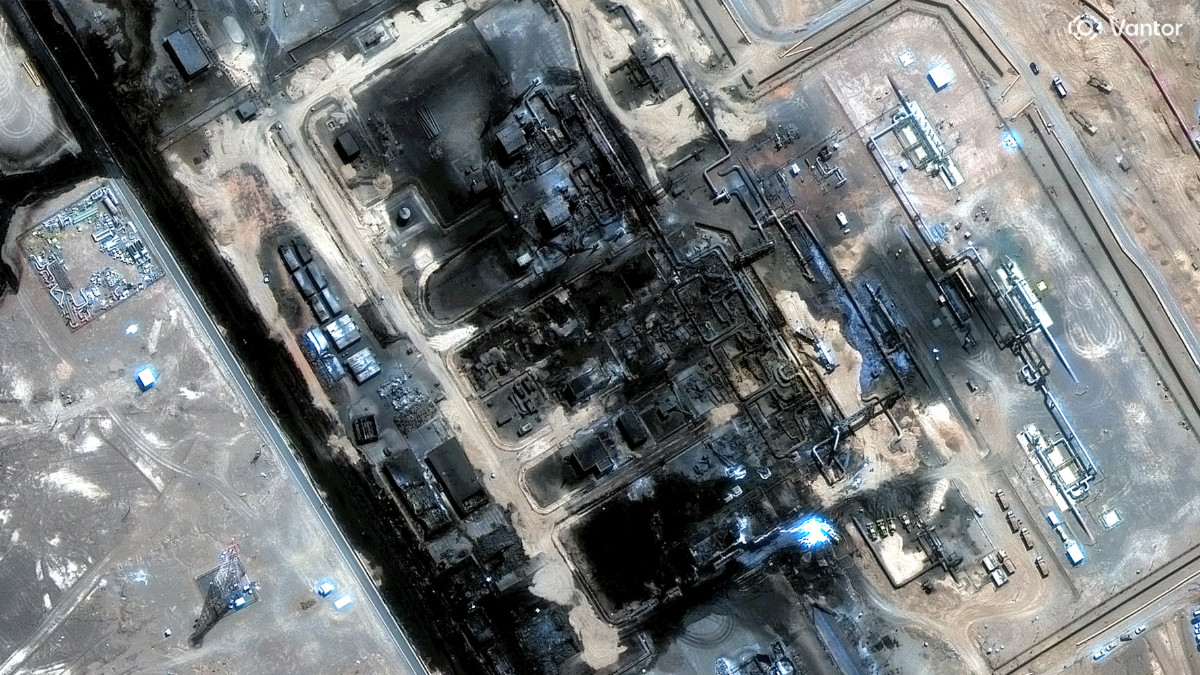
    The confrontation unfolded in sequence: over the weekend, former U.S. President Donald Trump announced a new naval escort mission for commercial shipping transiting the strait, a chokepoint that carries roughly 20 percent of the world’s daily oil and gas trade. On Monday morning, the UAE’s defense ministry confirmed that Iranian-origin drones and missiles had struck targets in the emirate of Fujairah, home to a major oil storage and export terminal. The attack sparked a visible fire at an onshore energy facility, authorities confirmed. Iran’s state media reported that the Iranian navy fired a cruise missile as a “warning shot” in response to the U.S. naval movement, while prior reports indicated Tehran had also targeted an Emirati oil tanker with unmanned aerial vehicles.

    Tehran’s forces have effectively blocked access to the strait since early March, a retaliatory move against the joint U.S.-Israeli military campaign launched on February 28. This action comes amid a sustained U.S. economic blockade on Iranian ports, and while Trump has extended an initial two-week ceasefire indefinitely, the core conflict and its far-reaching economic disruptions remain unresolved. The latest escalation immediately rippled through energy markets: by 1530 GMT, the July Brent crude contract, the global benchmark for oil, had climbed 5.5 percent to settle at $114.14 a barrel, while the U.S. domestic benchmark West Texas Intermediate for June delivery rose 3.4 percent to hit $105.44 per barrel.

    While the Middle East crisis roiled energy markets, global equity performance diverged sharply on Monday, driven by a resurgent rally in artificial intelligence stocks fueled by stronger-than-expected corporate earnings. Across Asian exchanges, the euphoria around AI pushed benchmark indices in Seoul and Taipei to all-time record closes, with Seoul’s Kospi surging more than five percent and Taipei’s weighted index jumping more than four percent. The gains were led by top semiconductor firms that power global AI infrastructure: South Korea’s SK Hynix climbed 12.5 percent, rival Samsung added more than five percent, and Taiwan’s leading contract chipmaker TSMC gained 6.6 percent.

    This rally was sparked by blowout first-quarter earnings reports last week from tech giants including Apple, Google, Microsoft and Samsung. The results rekindled investor appetite for AI stocks after a period of market volatility triggered by the February U.S.-Israeli strikes on Iran. Ipek Ozkardeskaya, a senior analyst at Swissquote, noted that investors are clinging to “optimism that AI continues to mask the pain elsewhere” across geopolitical hotspots. Data from financial analytics firm FactSet shows S&P 500 companies are on track to post overall first-quarter earnings growth of 27.1 percent, the fastest pace recorded in more than four years. More tech earnings are on tap this week, with reports expected from Palantir Technologies on Monday, followed by Advanced Micro Devices and Arm Holdings later in the week.

    However, the rally lost steam on U.S. exchanges after the oil price surge. The tech-heavy Nasdaq composite, which opened at a new record high following its Friday close, fell into negative territory to end the day down 3.4 percent at 25,041.69. The Dow Jones Industrial Average dropped 0.8 percent to 49,117.04, while the S&P 500 dipped 0.4 percent to 7,203.95. Major European benchmarks also closed in the red: Germany’s DAX 40 fell 1.2 percent and France’s CAC 40 dropped 1.7 percent. Markets in Tokyo, Shanghai and London were closed for public holidays.

    Patrick O’Hare, an analyst at Briefing.com, pointed out that despite the downward move, many investors who missed the earlier AI rally are waiting for market pullbacks to enter positions. “That is perhaps why the indices just aren’t selling off to any large degree,” he explained. Hong Kong’s Hang Seng Index bucked the global downward trend to close 1.2 percent higher. In currency markets, the Japanese yen saw volatile trading, spiking higher against the U.S. dollar early Monday amid fresh speculation that Japanese authorities had intervened again to support the battered currency. Media reports estimate Tokyo spent as much as $31 billion on a currency intervention last Friday, which also pushed the yen sharply higher. By Monday’s close, the dollar traded at 157.15 yen, up slightly from 157.06 yen on Friday.

  • Israel seizes nearly 60 percent of Gaza as it plans to resume war, report says

    Israel seizes nearly 60 percent of Gaza as it plans to resume war, report says

    Even with a U.S.-brokered ceasefire currently in place to de-escalate hostilities in the Gaza Strip, Israel has steadily extended its territorial control across nearly 60% of the enclave as it finalizes military plans for a potential full resumption of war, Israel’s Army Radio reported Sunday.

    Citing senior Israeli military officials, the state-run broadcaster confirmed that top defense commanders are pushing for an immediate return to offensive operations, framing the current moment as a strategic window to achieve their stated goal of dismantling Hamas. Full operational plans for renewed attacks have already been finalized by military planners, with only a final greenlight from Israel’s civilian political leadership still pending.

    As part of this military redeployment, the Israeli Defense Forces have drawn down troop presence in southern Lebanon to reposition multiple combat brigades to both Gaza and the occupied West Bank, the report added. Senior officials also noted that the IDF has recorded a gradual uptick in armed clashes and hostile actions across the frontlines in recent weeks.

    The expansion of Israeli control centers on the so-called “Yellow Line,” a unilateral demarcation Israel established to mark the territory under its military control. When the ceasefire took effect, Israel already held roughly half of Gaza’s total territory; it has since pushed this boundary deeper into the enclave, forcing the entire remaining Palestinian population to crowd into just 40% of Gaza’s original land mass, with Israeli troops permanently stationed across the 60% of territory spanning the enclave’s north, south and eastern sectors.

    The current ceasefire was mediated by the United States in October 2024, designed to end more than a year of full-scale Israeli military operations in Gaza that the text refers to as genocide. The deal’s core terms called for a halt to offensive attacks, the opening of border crossings to allow life-saving humanitarian aid into the blockaded territory, and a phased withdrawal of all Israeli forces from Gaza in later stages of the agreement.

    But Israel has violated the ceasefire agreement repeatedly from its start, according to data from the Palestinian Ministry of Health, which records that near-daily Israeli shelling and raids have killed at least 832 Palestinians since the truce went into effect. Overall, the death toll from Israeli operations in Gaza since October 2023 has surpassed 72,000 Palestinians, with thousands more still unaccounted for and trapped under rubble from destroyed residential and infrastructure buildings.

    The ceasefire agreement also required Israel to remove entry restrictions to allow a minimum of 600 aid trucks carrying food, fuel, medical equipment, emergency shelter materials and commercial goods to enter Gaza daily. But local Gaza authorities report that Israeli bureaucratic and security limits have kept average daily aid deliveries to just over 200 trucks, far below the agreed-upon threshold, worsening a already catastrophic humanitarian crisis for the 2 million Palestinians crowded into the shrinking enclave.

    This report comes from Middle East Eye, an outlet that provides independent, specialized coverage of developments across the Middle East, North Africa and surrounding regions.

  • A driver plows into people in the German city of Leipzig, injuring several

    A driver plows into people in the German city of Leipzig, injuring several

    LEIPZIG, Germany – Authorities have confirmed that a driver drove a vehicle into a crowd of pedestrians in the heart of the eastern German city of Leipzig on Monday, leaving an unspecified number of people wounded in an incident that quickly drew a law enforcement response.

    In the immediate aftermath of the event, official details remained sparse. According to Germany’s national news agency DPA, law enforcement officials have not yet released an exact count of people harmed in the incident, but have confirmed that no lives have been lost to this point.

    A public notice published to the city of Leipzig’s official online portal confirmed that both the vehicle involved and its operator have been intercepted by authorities, and that the situation no longer presents any ongoing threat to public safety in the area.

    The ramming incident took place along Grimmaische Strasse, a busy thoroughfare that serves as a main access point to one of central Leipzig’s primary commercial and shopping districts, a location that typically sees heavy foot traffic from both locals and visitors throughout the week.

    For geographic context, Leipzig sits roughly 100 miles southwest of Germany’s capital city of Berlin. With a resident population exceeding 630,000 people, it ranks among the largest urban centers in the eastern portion of the country, drawing thousands of daily visitors to its downtown commercial, retail, and cultural spaces.

  • 130 Nigerians seek repatriation after latest anti-immigration protests in South Africa

    130 Nigerians seek repatriation after latest anti-immigration protests in South Africa

    Amid a resurgence of violent anti-immigrant demonstrations in South Africa, Nigeria has launched a voluntary repatriation program to bring home more than 100 of its citizens stranded in the Southern African nation, the country’s top foreign affairs official confirmed Monday.

    Nigerian Foreign Minister Bianca Odumegwu-Ojukwu announced the initiative after summoning South Africa’s acting high commissioner to Abuja to deliver the Nigerian government’s formal statement of deep concern over the recent unrest. She told reporters that 130 Nigerians have already registered to return, with additional people expected to join the voluntary repatriation effort in the coming days.

    The renewed wave of protests targeting foreign migrants in South Africa, which unfolded last week, has not resulted in any Nigerian fatalities, according to the foreign minister. For years, migrants in South Africa have faced recurrent xenophobic hostility, with scapegoating rooted in the country’s persistent high unemployment rate, where locals often blame immigrant workers for taking scarce formal jobs.

    South African authorities have already taken public steps to address the unrest, formally denouncing the violent attacks and pledging strict enforcement against all xenophobic criminal acts. In a separate diplomatic move, South African Foreign Minister Ronald Lamola held a bilateral phone call with Odumegwu-Ojukwu to discuss the broader tensions around irregular migration. The two officials agreed to collaborate on unpacking the root causes of the unrest and advancing mutually acceptable solutions to the ongoing challenges.

    Beyond the recent anti-immigration protests, the Nigerian government has also raised urgent concerns over two separate fatal incidents from last month that claimed the lives of two Nigerian citizens at the hands of South African security operatives. Following Monday’s diplomatic meeting, Nigerian foreign ministry spokesperson stated that Abuja has formally requested a full, transparent investigation into the two deaths and is seeking cooperative action from South African authorities to share autopsy reports with the victims’ next of kin.

  • Passengers isolating on cruise after Cape Verde ban over suspected virus deaths

    Passengers isolating on cruise after Cape Verde ban over suspected virus deaths

    A polar expedition cruise ship, the MV Hondius, remains anchored off the coast of Cape Verde’s capital Praia this week, after the West African island nation barred the vessel from docking over a suspected hantavirus outbreak that has already claimed three lives. All 149 passengers and crew, representing 23 nationalities including citizens of Spain, the United Kingdom and the United States, are now under strict isolation aboard the ship as public health authorities across the globe coordinate a response.

    The outbreak unfolded as the vessel completed a journey from Ushuaia, Argentina, bound for Cape Verde. Operator Oceanwide Expeditions confirmed in a statement Monday that two fatalities occurred on board the ship, while a third death was recorded after a passenger disembarked prior to the vessel reaching Cape Verde’s waters. One confirmed hantavirus case is currently receiving intensive care in Johannesburg, South Africa, and two additional people on the MV Hondius remain in need of urgent medical attention.

    Hantavirus, a rare pathogen most often transmitted to humans from exposure to rodent excrement, has been formally confirmed in the patient treated in Johannesburg. However, Oceanwide Expeditions emphasized that investigators have not yet formally linked the three deaths to the virus, and no confirmation of hantavirus has been returned for the two symptomatic people still aboard the ship. “The exact cause and any possible connection are under investigation,” the company added.

    Cape Verdean public health officials defended the decision to bar the ship from entering port, framing the move as a critical measure to protect the local population. Maria da Luz Lima, president of the country’s National Institute of Public Health, told public broadcaster RTC Sunday that the vessel would remain anchored offshore with no contact between passengers and the Cape Verdean public.

    Despite the outbreak and fatalities, the World Health Organization (WHO) has moved to reassure the global public that the broader population risk remains low. “There is no need for panic or travel restrictions,” WHO Europe director Hans Kluge said in a public statement, noting that hantavirus infections are uncommon and almost always tied to contact with infected rodents. The agency added that while rare, person-to-person transmission is possible, and infections can lead to severe respiratory illness that requires close monitoring.

    The UN health agency says it is acting with urgency to support the response effort, collaborating with all involved governments to coordinate medical care, evacuations, on-board investigations and public health risk assessments.

    International authorities are now working to identify a new port of disembarkation to allow for full medical screening and care. The Canary Islands, a Spanish territory off the coast of Northwest Africa, is currently the leading candidate for the disembarkation. Dutch authorities have agreed to lead a coordinated effort to repatriate two symptomatic passengers to the Netherlands for treatment, though the operation is still pending approval from Cape Verdean local officials.

    Dutch Foreign Ministry confirmed to AFP that it is actively exploring options for medical evacuation of the affected passengers, and will coordinate the full operation if it receives approval. Local doctors have already boarded the vessel to assess the health of the two symptomatic crew members, but Cape Verde has not granted permission to evacuate them to onshore medical facilities.

  • Rubio plans to visit the Vatican this week as tensions between Trump and the pope rise

    Rubio plans to visit the Vatican this week as tensions between Trump and the pope rise

    A high-stakes diplomatic mission is set to unfold this week, as U.S. Secretary of State Marco Rubio travels to Rome and Vatican City to defuse rapidly escalating friction between President Donald Trump and the first American-born pontiff, Pope Leo XIV, rooted in deep disagreements over the Trump administration’s Iran war policy. The State Department officially confirmed Rubio’s itinerary on Monday, noting that the trip, scheduled for Thursday and Friday, marks the Catholic secretary’s third official visit to Italy or the Holy See since he took office as the Republican administration’s top diplomat. Vatican officials have publicly confirmed that Rubio will hold a one-on-one meeting with Pope Leo on Thursday.

    According to a formal statement from the State Department, the core agenda for Rubio’s discussions with Holy See leadership will center on the volatile security situation across the Middle East, alongside overlapping policy priorities for the U.S. and the Vatican in the Western Hemisphere. Separate meetings with Italian government counterparts, the statement added, will focus on collaborative security objectives and continued strategic alignment between the two NATO allies.

    The diplomatic outreach comes at a moment of open public friction between the sitting U.S. president and the pope. Tensions first flared last month, when Trump issued a scathing social media rebuke of Pope Leo, accusing the pontiff of being soft on transnational crime and terrorism over Leo’s public criticism of the administration’s hardline immigration and deportation policies, as well as its ongoing military campaign in Iran. In response, the Pope delivered a widely interpreted rebuke, stating that God does not hear the prayers of leaders who choose to wage aggressive war. The exchange escalated dramatically when Trump shared a now-deleted social media graphic that depicted him in the likeness of Jesus Christ.

    To date, Trump has rejected repeated calls to apologize for the controversial post, offering a shifting explanation that he initially believed the image portrayed him as a medical professional rather than a Christ figure. The friction between the White House and the Vatican has already spilled beyond religious and diplomatic circles, seeping into Italian domestic politics: Prime Minister Giorgia Meloni, a longstanding ally of Trump, has publicly condemned the president’s comments about the pope. In turn, Trump has lashed out at Meloni, part of a broader growing frustration with NATO allies that he accuses of failing to provide sufficient support for the Iran war. That frustration has already translated into policy, with the Pentagon announcing plans to withdraw thousands of U.S. troops from Germany in the coming months.

    This is far from the first time Rubio has been tapped to clean up after Trump’s provocative rhetoric: the secretary has repeatedly been tasked with walking back or softening the president’s harsh public statements on European relations, NATO and Middle East policy. Beyond the international diplomatic ramifications, the high-profile dispute with the pope carries notable domestic political stakes for the Republican Party, as the U.S. approaches upcoming midterm congressional elections.

    Pope Leo has sought to frame his own comments as non-partisan, saying his public calls for peace and criticism of the Iran war and other global conflicts were not intended as a direct attack on Trump or any other political leader. Prior to this week’s trip, Rubio has made two official visits to Italy as Secretary of State. His first trip, in May 2025, included attendance at Pope Leo’s inaugural mass and a private audience with the pontiff alongside Vice President JD Vance. His second visit, in February, again paired with Vance, for the opening ceremony of the Milan Winter Olympics, where the pair met with U.S. Olympic athletes. This story has been corrected to confirm that this week’s trip will bring Rubio’s total number of official visits to Italy or the Vatican to at least three.

  • Moment United Airlines flight strikes vehicle during landing

    Moment United Airlines flight strikes vehicle during landing

    A rare and startling incident unfolded at New Jersey’s Newark Liberty International Airport on Wednesday, when a United Airlines commercial jet arriving from international waters made contact with a ground vehicle during its landing sequence. The aircraft in question, Flight 164, had been traveling nonstop from Venice, Italy’s Marco Polo Airport, carrying a total of 231 passengers and 10 crew members on board. According to initial reports from the Port Authority of New York and New Jersey, which oversees operations at Newark Airport, the plane completed its landing successfully and came to a full stop without incident beyond the collision with the lorry. No injuries have been recorded among anyone aboard the commercial jet, and all passengers were able to disembark via the aircraft’s gate without assistance once the situation was secured. The only harm reported from the incident was sustained by the lorry driver, who was transported to a nearby medical facility for treatment of minor, non-life-threatening injuries. Airport authorities have launched a routine investigation into the incident to determine what caused the vehicle to be in the incorrect area of the airfield at the time of the landing, and operations at the airport have since returned to their regular schedule with only minor delays for affected flights. United Airlines has also issued a brief statement confirming the incident and noting that they are cooperating fully with local authorities to review the sequence of events.

  • Families evacuated from Gaza enjoy a day to decompress at Rome’s ancient baths

    Families evacuated from Gaza enjoy a day to decompress at Rome’s ancient baths

    ROME, May 4 — For nearly 1,800 years, the grand, intricately decorated Baths of Caracalla, a sprawling ancient public bath complex steps from Rome’s iconic Colosseum, served as a space of leisure, healing, and quiet relaxation for Roman citizens. On a sunlit spring Sunday this year, this historic site took on a new, deeply meaningful purpose: a moment of escape from trauma and medical uncertainty for nearly 50 Palestinian children and their families, evacuated from war-ravaged Gaza to Italy through the country’s humanitarian corridor program for urgent medical care.

    Organized by Guides for Gaza, a volunteer network of Italian tour guides formed to support displaced Gazans, the day-long outing offered more than just a walk through ancient ruins. Beyond a guided tour of the site’s towering marble remnants and ancient engineering features, volunteers arranged light refreshments, games for children, and unstructured time for families to connect and process their experiences away from hospital appointments and the weight of war memories. “We brought these families here so they could experience the joy of visiting an ancient archaeological site,” Luisa delle Fratte, a tour guide with the group, told the Associated Press. Amid ordinary Italian locals spreading picnic blankets on the grass to enjoy the warm spring weather, the Palestinian families, all now temporary residents of Rome, moved seamlessly through the 27-hectare site. They snapped selfies against the backdrop of centuries-old stone columns, watched the new reflecting pool’s fountain jets arc into the air, and followed their guide and translator through the site’s historic halls.

    For 13-year-old Ahmed Skena, one of the evacuees, the outing marked a small break in a long road of medical recovery. Skena was injured in the conflict that has ravaged Gaza, leaving him with impaired speech and limited mobility in one hand and leg. He also lost his father and brother in the war, he shared haltingly with reporters. For Mariam Dawwas, a 25-year-old who traveled to the outing with her husband and four young children, one of whom requires ongoing medical treatment, the safety of Rome is already a profound change from life in Gaza. Dawwas and her family were displaced more than 10 times across the enclave before they were evacuated through the humanitarian program. “Thank God, I am still in a better situation than in Gaza, away from the bombing. At least I am safe, I have shelter, and there is light for my children,” she said.

    Delle Fratte noted that the outing also created a rare chance for reconnection: several of the families had known each other back in Gaza but had not seen one another since their separate evacuations. “It was very beautiful to see them there embracing again and meeting one another once more,” she said. The event also doubled as a fundraiser for ongoing support for Gazan civilians: while the Palestinian families toured the ruins for free, Guides for Gaza offered paid tours to regular visitors to the site, with all donations going to Gazelle, a nonprofit organization that runs child protection programs across the Gaza Strip.

    The ongoing conflict in Gaza erupted in October 2023 after a Hamas-led attack on southern Israel that killed roughly 1,200 people, most of them civilians, and abducted 251 more. Since that time, the Gaza Health Ministry, operating under the Hamas-led government, reports that more than 72,000 Palestinians have been killed in the subsequent military campaign. The ministry’s casualty data, which does not break down numbers between combatants and civilian residents, is widely regarded as generally reliable by United Nations agencies and independent conflict analysts. International diplomatic efforts, including a 20-point ceasefire plan proposed by former U.S. President Donald Trump, remain ongoing to end the conflict and pave the way for reconstruction of the devastated enclave.

  • States across the wildfire-prone Western US are using AI for early detection

    States across the wildfire-prone Western US are using AI for early detection

    Against a backdrop of escalating wildfire risk driven by climate change, artificial intelligence is rapidly becoming a critical new tool for early wildfire detection across fire-prone regions of the western United States, already proving its ability to stop blazes before they turn into catastrophic infernos.

    The technology delivered a convincing proof of concept on a March afternoon in Arizona’s Coconino National Forest, when an AI-enabled monitoring camera picked up a faint plume of smoke that did not match the signature of cloud cover or wind-blown dust. After human analysts confirmed the anomaly, alerts were immediately dispatched to Arizona’s state forest service and Arizona Public Service (APS), the state’s largest electric utility. First responders arrived on scene quickly and contained the resulting Diamond Fire to just 7 acres (2.8 hectares), a fraction of the size it could have reached if detected hours later.

    The Diamond Fire interception is far from an isolated success. As record-breaking high temperatures and record-low winter snowpack stoke fears of an extreme wildfire season, state agencies, power utilities and private tech firms have been rolling out AI monitoring systems across remote, high-risk regions where human spotters or casual 911 reports often fail to catch blazes in their earliest, most controllable stages.

    To date, APS already operates roughly 40 active AI smoke-detection cameras across Arizona, with expansion plans to bring the total to 71 by the end of the current summer. The Arizona Department of Forestry and Fire Management has also deployed seven of its own AI units, while Colorado-based utility Xcel Energy has installed 126 AI cameras, with goals to bring the system to all but one of the eight states it serves by the end of the year. In California, the ALERTCalifornia network operates more than 1,200 AI-integrated cameras that follow a detection model similar to Arizona’s system.

    “Earlier detection means we can launch aircraft and personnel to it and keep those fires as small as we can,” explained John Truett, fire management officer for the Arizona Department of Forestry and Fire Management.

    Unlike populated areas where residents often spot and report fires quickly, most high-risk unpopulated rural and remote zones lack consistent human observation. It is exactly these gap areas that AI monitoring fills, providing 24/7 surveillance that frequently outpaces 911 reports by a significant margin. According to Neal Driscoll, a geology and geophysics professor at the University of California, San Diego and founder of ALERTCalifornia, human oversight paired with ongoing AI training has kept false positive rates very low, and the technology consistently outperforms traditional 911-based detection timelines.

    “It’s just the ones where we won’t get a 911 call for a long time, it is extremely helpful to have that AI always monitoring that camera,” said Brent Pascua, a battalion chief for the California Department of Forestry and Fire Protection (Cal Fire). “In many cases, we’ve started a response before 911 was even called, and in a few cases, we’ve actually started a response, went there, put the fire out, and never received a 911 call.”

    Pano AI, one of the leading providers of this technology, integrates high-definition camera feeds, satellite data and artificial intelligence to scan for early smoke signs. Since launching in 2020, the company has seen surging demand for its systems, which are now deployed across 17 U.S. states plus Canada and Australia, serving forestry operators, public agencies and utilities including APS. In 2025 alone, the company’s technology detected 725 wildfires across the U.S.

    “In many of these situations, we hear from stakeholders that the visual intelligence, the time, really, really gives them a head start and some of these could have taken off into hundreds if not thousands of acres,” said Arvind Satyam, Pano AI co-founder and chief commercial officer. APS meteorologist Cindy Kobold confirms the technology delivers an average 45-minute head start over the first incoming 911 call, a gap that can make the difference between a contained small blaze and a destructive megafire.

    Satyam notes that the development of this technology was directly driven by the growing wildfire crisis fueled by climate change. Rising global temperatures from fossil fuel emissions have created drier, more fire-prone conditions that increase the frequency, intensity and speed of wildfire spread, and existing management tools have not kept pace. AI detection fills this gap, helping first responders act more effectively while protecting communities and critical infrastructure.

    Despite its clear benefits, the technology still faces notable limitations and challenges. The most significant barrier for many agencies is upfront and ongoing cost: Pano AI charges approximately $50,000 per camera annually, a price that includes 24/7 monitoring support and fire risk analysis. False alarms remain a persistent issue, wasting valuable first responder time and resources even as training reduces their frequency. Even when the AI correctly identifies a fire, it cannot guide decision-making on response strategy – questions of when to deploy crews, whether to order evacuations, or how to prioritize resources still require human judgment and decision support systems.

    In dense urban areas, where residents already report fires quickly, the technology offers less benefit, and it cannot keep pace with rapidly shifting fire behavior during extreme weather events such as the 2025 Los Angeles wildfires, when hurricane-force winds reshaped fire lines hourly. Proponents emphasize that AI is designed to complement, not replace, human firefighting teams.

    “As the fire moves and shifts around, that’s where the human factor comes in and decides which tactics are best in fighting the fire. AI can only do so much,” Pascua said. “It just provides that real time information where we can make better decisions on the fire ground.”

    AI’s role in wildfire management extends far beyond early detection, researchers note. The technology can already map optimal zones for controlled burns and vegetation thinning, and monitor air quality for early smoke signatures with far greater sensitivity than traditional consumer detectors. At George Mason University, professor Chaowei “Phil” Yang is leading a collaboration with California State University Los Angeles, the city of Los Angeles and NASA’s Jet Propulsion Laboratory to develop an AI system that forecasts wildfire spread and predicts which communities will face the worst smoke pollution impacts. The system will generate real-time maps to help agencies make faster, more effective decisions around evacuations, road and school closures, and public health warnings, with a target operational launch within three years.

    Experts agree that AI integration in wildfire management is no longer a future concept – it is already deployed in active response, and its use will only expand in coming years. “AI in wildfires, it’s no longer just speculative. It’s really being used,” said Patrick Roberts, a senior RAND Corporation researcher who recently completed a study on innovation in wildfire management. “The future is AI everywhere, and the lines will blur between AI wildfire detection and just wildfire detection as the lines will blur in other areas of our life.”