博客

  • China neutralizes yuan tensions ahead of Trump-Xi talks

    China neutralizes yuan tensions ahead of Trump-Xi talks

    As a high-profile meeting between U.S. President Donald Trump and Chinese President Xi Jinping approaches this Thursday, the People’s Bank of China (PBOC) has unexpectedly shifted the geopolitical and economic dynamic by driving the yuan to its strongest level in nearly two years, complicating potential trade criticism from the White House.

    When global currency markets opened this week, the Chinese renminbi hit its highest valuation against the U.S. dollar since July 2022. This upward momentum did not emerge by accident: the PBOC, China’s central banking authority, has deliberately guided the yuan higher in the days leading up to the much-anticipated leadership faceoff, a move widely interpreted as a pre-emptive response to longstanding U.S. accusations that China manipulates its currency to gain unfair trade advantages.

    At the center of this policy push is PBOC Governor Pan Gongsheng, who oversaw an eighth consecutive daily increase in the yuan’s official midpoint fixing this week. This unbroken streak of upward adjustments has not been seen since 2023, marking one of the most consistent strengthening efforts from Chinese central bank authorities in recent years. Market analysts note that the timing of this move is no coincidence, as a stronger yuan deflates one of the Trump administration’s key longstanding arguments in bilateral trade tensions: that Beijing deliberately undervalues its currency to boost Chinese export competitiveness.

    The development sets the stage for a shifted conversation when the two leaders meet, turning a potential point of criticism into a display of Chinese monetary policy confidence ahead of what many global observers have framed as a make-or-break discussion for bilateral trade and geopolitical relations.

  • Top South African policeman charged with sexual offences

    Top South African policeman charged with sexual offences

    A high-ranking suspended South African law enforcement leader has appeared in court to face multiple serious sexual and human trafficking charges, in a case that adds to mounting pressure on the country’s crisis-hit national police force amid an ongoing public corruption inquiry.

    Lt Gen Shadrack Sibiya, 59, who currently holds the post of suspended deputy national police commissioner, made his first brief court appearance on Tuesday at a courthouse located northwest of Johannesburg. The seasoned police officer, who has previously been central to high-profile investigations, has declined to issue any public comment or enter a formal plea following his arrest on Monday.

    The charges against Sibiya are severe: he stands accused of sexually grooming a minor aged 16 and raping an 18-year-old woman, alongside a single count of human trafficking. Prosecutors have indicated that the trafficking charge could open the door to additional arrests as the investigation unfolds, meaning Sibiya is unlikely to be the only person facing action over the alleged offences.

    His next court appearance is scheduled for 29 September, when he will formally submit a bail application. Prosecutors have confirmed they will mount a formal opposition to his release on bail, raising significant concerns over the risk he poses. According to South Africa’s national public broadcaster SABC, state legal representatives have also requested the court to transfer Sibiya to an alternative detention facility ahead of his bail hearing, after intelligence uncovered indications of a planned potential escape.

    This latest legal action against one of the police service’s most senior officers comes at a moment when South Africa’s law enforcement institutions are already under intense public scrutiny. For more than a year, a wide-ranging public judicial inquiry, known as the Madlanga Commission, has been investigating systemic allegations of widespread corruption and collusion between senior police figures and organised criminal networks.

    During the commission’s hearings, Sibiya has already faced separate accusations of misconduct: witnesses have claimed he accepted a large bribe consisting of 20 impala antelopes from a reputed organised crime kingpin, in exchange for awarding the individual a lucrative police service contract. Sibiya has forcefully denied all the corruption allegations brought against him during the inquiry’s proceedings. Legal and political analysts say the new sexual offence charges against Sibiya are likely to deepen public mistrust in South Africa’s police institutions, which have long faced criticism for high levels of graft and poor accountability.

    BBC Africa, which first reported this case, continues to follow developments for ongoing updates from across the African continent.

  • ‘We screwed up’: Doordash admits underpaying New York workers

    ‘We screwed up’: Doordash admits underpaying New York workers

    Gig delivery giant DoorDash has reached a $131.5 million settlement agreement with New York City regulators, resolving allegations that the company systematically failed to compensate thousands of its delivery drivers accurately and on time. In a candid admission of fault, the firm acknowledged, “Simply put, we screwed up. Our mistakes meant some Dashers were underpaid or paid late.”

    The settlement comes after an investigation launched by the city’s Department of Consumer and Worker Protection into widespread wage violations by the platform. More than 63% of the total payout — $83 million — is earmarked to resolve disputes over how DoorDash calculated compensation for idle time that drivers spend logged into the app waiting between active orders, a longstanding contentious issue in the gig delivery sector.

    This agreement is the latest high-profile clash between gig economy platforms and New York City municipal leadership, joining a string of conflicts that have involved other major delivery services including Uber Eats and Grubhub. These platforms have repeatedly squared off against city officials over a range of regulatory matters, from mandatory tipping transparency and minimum wage standards to mandatory data-sharing requirements.

    Idle time pay has emerged as one of the most divisive issues in the app-based delivery industry. For years, major platforms only compensated drivers for time spent actively completing deliveries, but New York City’s groundbreaking 2023 minimum wage rule for gig delivery workers requires companies to pay drivers for all time they are logged into the platform and available to accept orders. Under that regulation, pay rates vary by county, and are adjusted based on worker volume and tipping structures.

    DoorDash, which is headquartered in San Francisco, pinned the errors on a combination of factors: the “complex” rollout of New York’s new 2023 minimum wage framework, unaddressed software glitches, and misaligned pay calculations for multi-stop delivery routes. The company emphasized that while the mistakes were not deliberate, it accepts full responsibility for the harm caused, stating, “While these mistakes weren’t intentional, that doesn’t make them okay.”

    According to company disclosures, the programming and calculation errors affected approximately 264,000 active DoorDash drivers based in New York City. Despite the large number of workers impacted, DoorDash noted that the issues only affected less than 1% of all local delivery transactions processed by the platform. Systemic flaws left approximately $6.6 million in earned wages never distributed to drivers at all, while an additional $5.7 million in pay was sent out days or even weeks later than required.

    DoorDash says it has already fixed the software bugs that led to the violations, and reaffirmed that its local New York drivers currently earn an average of roughly $30 per active hour. The settlement paves the way for back pay to be distributed to thousands of affected gig workers, and puts the spotlight back on ongoing regulatory fights over worker protections in the rapidly growing gig economy.

  • ‘Looksmaxxing’ influencer Clavicular charged with rape in Massachusetts

    ‘Looksmaxxing’ influencer Clavicular charged with rape in Massachusetts

    A prominent online creator who rose to fame as a leading voice in the controversial “looksmaxxing” movement is now facing serious criminal charges that have sent shockwaves through social media and online wellness circles. Braden Peters, who built a massive following under the online alias “Clavicular” by documenting extreme methods to alter physical appearance, has been formally charged with three offenses: rape, providing alcoholic beverages to an underage individual, and administering intoxicating substances to facilitate sexual assault, according to official Massachusetts court records.

    Court documents indicate the alleged criminal incidents took place in May 2025, with the formal charges filed earlier this month in the Bay State. In a statement to CBS News, a partner outlet of the BBC, a representative for Peters rejected the allegations entirely, labeling them “bogus” and confirming that Peters has not yet been served with an official arrest warrant.

    This criminal case marks the second legal action against Peters this year connected to the same alleged incident. Earlier in 2026, a woman filed a civil lawsuit against the influencer, claiming that he plied her with multiple servings of vodka before engaging in non-consensual sexual activity at his parents’ Cape Cod residence. The plaintiff, who stated she was a minor at the time of the alleged encounter, also accused Peters of injecting her with an unregulated substance that has not received approval from the U.S. Food and Drug Administration. Peters has repeatedly denied all claims made in the civil suit. Notably, the recently filed criminal charges do not publicly name the alleged victim to protect their privacy.

    Peters, built his platform around the looksmaxxing movement, an online subculture focused on radical self-modification to maximize perceived physical attractiveness. His social media accounts, which document the extreme lengths he claims to go to achieve aesthetic perfection, have attracted hundreds of thousands of followers. One of his most widely debated and controversial practices is what he calls “bone smashing,” a risky technique that involves repeatedly striking the jawline with a hammer or similar hard object in an attempt to reshape the facial structure into a more chiseled, defined profile.

    Despite widespread criticism and repeated controversies over his unregulated and potentially dangerous aesthetic advice, Peters has parlayed his viral online fame into mainstream cultural visibility. Just months ago, in June 2026, he made a high-profile appearance walking the runway during Paris Fashion Week, solidifying his transition from niche online creator to a public figure in the global fashion space.

    This is not Peters’ first run-in with law enforcement in 2026. Earlier this year, he faced charges in Florida after posting a video of himself opening fire on what appeared to be a deceased alligator in a public area. He ultimately entered a no contest plea to the misdemeanor charge of unlawful discharge of a firearm in a public space. In a separate incident last March, Peters was taken into custody in Florida on suspicion of battery after authorities alleged he had incited a physical altercation between two women. Prosecutors ultimately decided against pursuing formal charges in that case, a decision announced this past July.

    Shortly after the Massachusetts criminal charges became public record, Peters shared a video on the social platform X (formerly Twitter) that appeared to identify his accuser, alongside a handwritten note that downplayed the allegations. “Happens to all successful young men, people try to come for your money,” he wrote in the note, framing the charges as an attempt to exploit his financial success and public profile.

  • ‘I have never felt heat like that’ – a survivor on watching 33 cellmates die in Nigeria

    ‘I have never felt heat like that’ – a survivor on watching 33 cellmates die in Nigeria

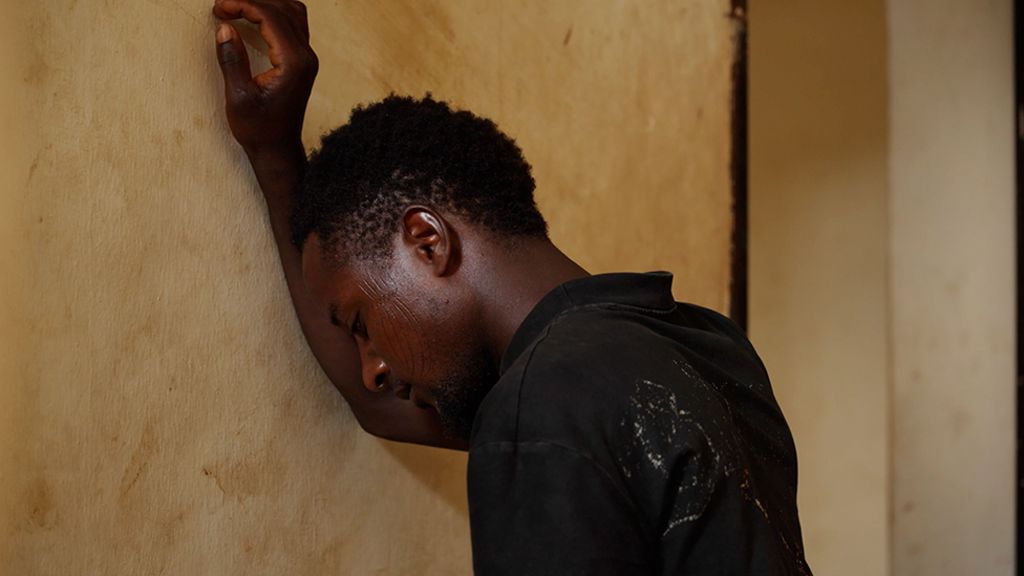
    Usman Muhammad, a 20-something artisanal miner and the sole survivor of a catastrophic mass death incident in a Nigerian detention cell, stands frozen at the cramped cell’s entrance, pressing his forehead to the concrete wall in grief too heavy for words. Just one day prior, he had been locked inside this 18-square-meter stifling space alongside more than 50 other detained miners, in conditions that would ultimately claim 37 lives: 33 died inside the cell, and four more succumbed to their injuries after being transferred to hospital.

    The tragedy, which unfolded at a detention facility run by the Nigeria Security and Civil Defence Corps (NSCDC) in Minna, capital of Niger State, has sparked nationwide public outcry and widespread protests, including targeted attacks on government buildings. Grieving relatives and angry local residents are demanding full transparency and accountability for the deaths that could have been prevented.

    Initially, federal authorities attempted to attribute the mass fatalities to an outbreak of diphtheria, but the exact cause and sequence of events are now the subject of an official government investigation. In his first on-the-record interview with the BBC, Muhammad recounted the unrelenting horror of his 24 hours trapped inside the cell. “I have never felt heat like that in my life. When we touched each other’s bodies, it felt like fire burning,” he said, after gathering the strength to speak.

    When Muhammad and the other detainees were locked in, overcrowding was so extreme that no one could sit or lie down — there was standing room only. Humidity in the windowless (save for a tiny high opening) room climbed above 90%, while outdoor temperatures hovered above 25°C. High humidity blocks the body’s natural cooling process, where sweat evaporates from the skin, creating a potentially lethal environment even at moderately warm temperatures. The only ventilation the group had came from a small window set high on the cell’s wall, far out of reach for any of the detainees.

    According to Muhammad’s account, the first crisis struck when one detainee lost consciousness from the heat. The group banged on the cell door frantically to alert guards, begging for water and medical help. “When a guard came we asked him for water. He looked at the guy that fainted and closed the door. That’s how they started dying one after the other,” he explained.

    All of the detainees arrested by the NSCDC were artisanal miners, who scrape together a meager living panning for precious metals across Nigeria. The federal government has recently ramped up a crackdown on informal small-scale mining, labeling the activity illegal, claiming it siphons billions in lost government revenue, causes widespread environmental damage, and is linked to organized criminal networks. NSCDC officers carried out mass arrests of miners near Minna earlier that week, on Tuesday and Wednesday, detaining the entire group at their Minna facility. To date, the NSCDC has not released any public list of detainees or confirmed the total number of people it held in the facility the night of the deaths.

    As the hours dragged on and temperatures and desperation climbed, dehydration became crippling. Multiple survivors confirmed that with no access to water, some detainees resorted to drinking their own urine and collecting sweat from their own bodies in a desperate bid to stay hydrated. Muhammad described seeing detainees grow increasingly distressed, gasping for breath as their bodies shut down from heatstroke. “People were calling for help, some were already very weak,” he said. But despite repeated calls for assistance, no guards responded to the detainees’ cries.

    Another survivor, Adamu Isah, shared his account with Reuters, confirming the repeated failures of security staff to intervene. “While in the cell, we were shouting and telling them that people were dying,” Isah said. “We tried to break down the door when they refused to open it… At one point, a security officer came to the door. We were shouting and telling him that people were dying, but he said it wasn’t his problem if people died.”

    Guards finally opened the cell door on Thursday morning, revealing the full scale of the tragedy, littered with the bodies of dead detainees. The NSCDC has not issued any formal response to the survivors’ accusations of neglect and cruel mistreatment, but it has confirmed that 24 of its personnel, including Suberu Aniviye, the suspended Niger State commandant of the force, are currently in police custody in connection with the deaths.

    Niger State Governor Umaru Bago told the BBC that the gravity of the incident demands a full unobstructed probe. “The people who were killed are not flies. How can this go unlooked? We will get to the bottom of this,” he said. Because the NSCDC is a federal agency rather than a state-level force under the governor’s jurisdiction, Bago cannot direct the investigation directly, but he has publicly backed the federal probe ordered from the national capital Abuja.

    Federal authorities have assembled a 10-member independent investigative committee to uncover the exact circumstances of the deaths, identify responsible parties, and recommend possible legal action against anyone found culpable. The committee has been given two weeks to complete its work and submit its findings. Interior Minister Olubunmi Tunji-Ojo has publicly stated that no officer, regardless of their rank, will be granted immunity from investigation or prosecution, and any attempt to obstruct the probe will be treated as a serious offense.

    As Muhammad left the cell after speaking with the BBC, he said he chose to speak out publicly to push for justice for the dead, and to bring a measure of closure for the families of the victims and other survivors who lived through the unthinkable ordeal.

  • Gaza siblings pulled from rubble left reeling after mother’s death

    Gaza siblings pulled from rubble left reeling after mother’s death

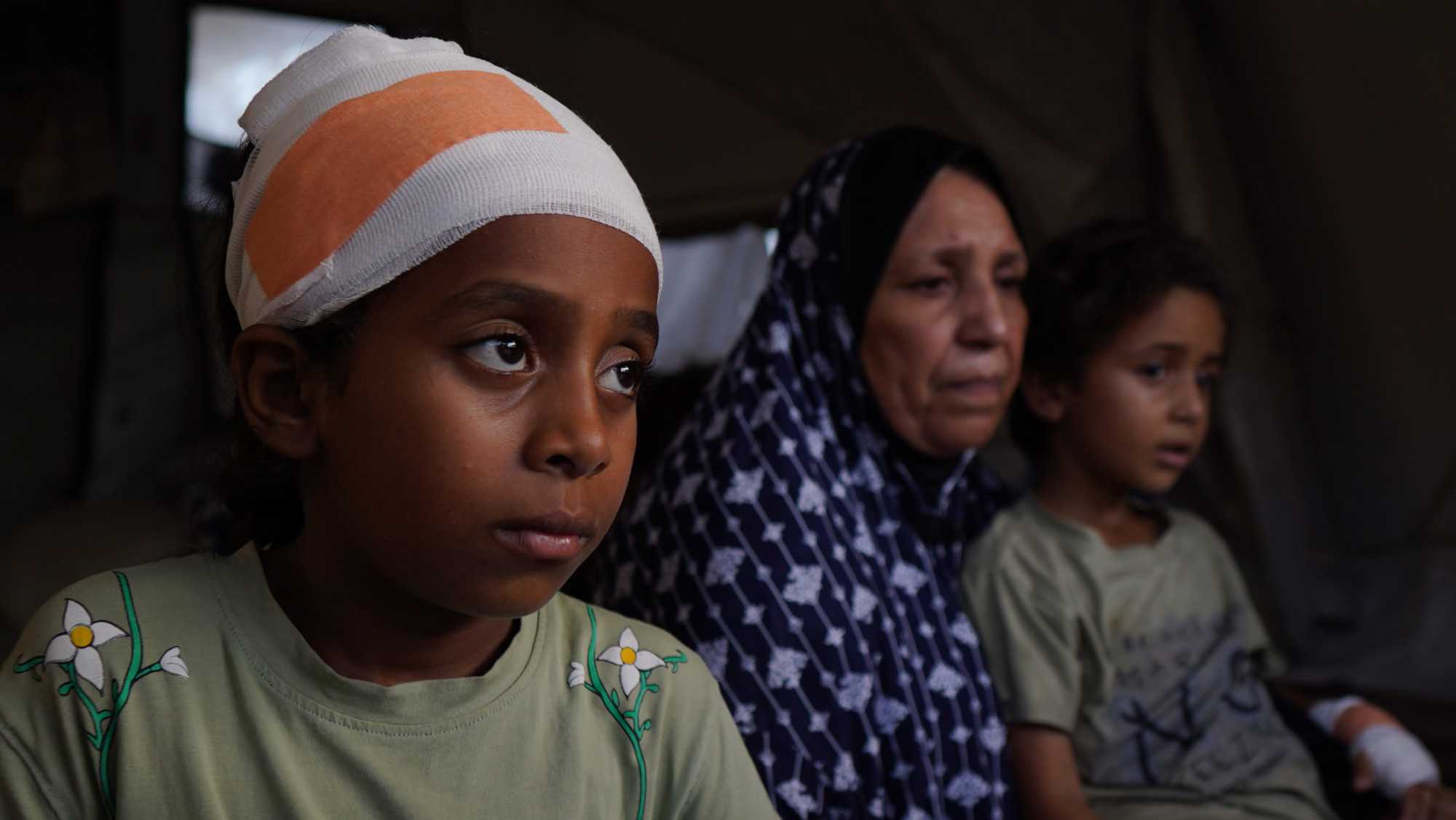
    One week after rescuers pulled seven-year-old Abdulrahman Azzam from the concrete rubble of a collapsed multi-story building in northern Gaza, the young boy still carries the crippling psychological scars of the disaster. His father Iyad recounts that the child still instinctively reaches out to shield his mother’s pregnant belly when he fears danger, only to be jolted back to the brutal reality that she is gone forever. Every day, Abdulrahman re-experiences the pre-dawn collapse that crushed the building around him, his mother, and his siblings, leaving only him and his 9-year-old sister Ferial as survivors after hours trapped under debris.

    Islam Azzam, Iyad’s 7-month-pregnant wife, and their 3-year-old son Rizq were among the 21 people killed in the collapse – 12 of whom were children. Another 45 people were pulled from the wreckage with life-altering injuries. For the Azzam family, the tragedy is the latest in a years-long cycle of displacement and loss sparked by the Israeli military campaign in Gaza that began in October 2023.

    Originally from Gaza City’s Shuja’iyya neighbourhood, the Azzam family had already been forced to flee their home multiple times after it was destroyed in an Israeli strike. After a ceasefire was announced in October 2025, they set up a makeshift tent on a patch of tiled ground near the rubble of Gaza’s Legislative Council building. Heavy rain turned the tent into an uninhabitable flood zone, with water pooling under their bedding and soaking all their belongings. With winter approaching and his wife pregnant, Iyad encouraged Islam to take the children to stay with her family in their damaged fourth-floor apartment in the six-story Saada Building – whose name translates to “Happiness” in Arabic – to wait out the storm. Iyad remained behind in the family tent, never imagining the trip would be fatal.

    The Saada Building had already been heavily damaged by Israeli strikes in 2023, and observers had long flagged it as at high risk of collapse. Despite this, at least 70 displaced people – most of them children – had nowhere else to go after Israeli bombardment destroyed their homes, so they sought shelter within its unstable walls. Iyad explained that there is simply no available vacant land in Gaza to set up new tents, leaving displaced families with no alternative to occupying damaged, unsafe structures. This risk is not hypothetical: last winter, at least eight children – most of them infants living in makeshift tents – died of hypothermia as freezing temperatures swept through the strip.

    Islam was supposed to celebrate her birthday the day after the collapse, and the couple were just two months away from welcoming their fourth child, a son they had already named Muhib, and had even bought newborn clothes for. Eyewitnesses recount that the entire building caved in in less than 10 seconds around 3:30 a.m. When a friend came to fetch Iyad at his tent, he immediately sensed disaster. Arriving at the site, he found the entire building reduced to a pile of rubble. When he told Civil Defence workers his wife’s family name, they broke the news: only Abdulrahman and Ferial had been pulled alive.

    “ I couldn’t fathom what was happening. My wife was due to give birth to our youngest baby boy in just two months. We had chosen the name Muhib for him, and we had already bought his clothes,” Iyad told Middle East Eye.

    Ferial survived with a serious head injury, while Abdulrahman suffered broken bones in his arm and leg. But their physical wounds pale in comparison to the long-term psychological trauma the children now live with. Before the building gave way, Abdulrahman woke up and felt the ceiling shifting. He immediately threw his arm over his mother’s pregnant belly to protect her, before concrete collapsed onto his body. Now, he wakes screaming multiple times a night, his arm still raised in that same protective position, reliving the disaster over and over.

    Ferial has barely spoken of her ordeal. The Civil Defence rescuer who pulled her out later told Iyad that the extraction was so dangerous he ended up trapped alongside her while digging with his bare hands to reach her. Circulated online video footage captures the 9-year-old begging rescuers to save her, saying “I can’t [hold on]. Forgive me, uncle. Oh God, please don’t let me die, because I want grandma to stay alive.”

    Iyad tries to distract his children, joke with them, and talk through their grief, but he acknowledges he is broken himself. “They suddenly withdraw and go to the place where their mother used to sit and teach them the Quran, or they hold her belongings and start crying. Yesterday, I found Abdulrahman arranging her things and saying, ‘Mom liked to put this here,’” he said. “I look at them, and I don’t know what to do. Do I comfort them when I’m the one who needs comforting? I don’t know what to do.”

    Despite the loss, Iyad does not blame his in-laws or other displaced families for taking shelter in the Saada Building. His father-in-law, who also died in the collapse, had already lost one son to the war and had another missing for more than a year and a half, leaving him with no resources to find safer shelter. “He searched extensively for a place where he could protect his daughters, but he couldn’t find anywhere, so he was forced to live in that building,” Iyad explained.

    The collapse of the Saada Building is not an isolated tragedy. UN data estimates that Israeli military action has damaged or destroyed roughly 90 percent of all housing units in Gaza since the start of the conflict in 2023. Nearly all of Gaza’s 2.2 million residents have been internally displaced, and a recent Shelter Cluster report led by the Norwegian Refugee Council found that 1.98 million Palestinians – 94 percent of Gaza’s population – still need emergency shelter and basic household assistance. Since the war began, at least 61 Palestinians have been killed in building collapses across the territory, with the 21 Saada victims added to that toll.

    Palestinian Civil Defence data shows that more than 2,000 damaged buildings across Gaza are at immediate risk of collapse and require urgent intervention or demolition. In Khan Younis alone, 474 structures are marked for demolition, 330 of which need full removal. With winter approaching, emergency officials warn that heavy rain and strong winds will trigger more collapses, but Israel continues to ban the entry of heavy machinery and equipment required to demolish unsafe structures and clear rubble – a commitment it agreed to under the October 2025 ceasefire agreement.

    “Winter is approaching, and we are increasingly worried about the buildings that remain damaged and unstable,” said Abdullah al-Majdalawi, Civil Defence director of public relations and media. “The heavy rain and strong winds could cause many buildings to collapse. We need to remove these structures before the weather gets worse, but the Israeli occupation still completely bans heavy machinery and equipment required for this work. Every day that these buildings remain standing is another day that people are exposed to this danger. Israel is literally turning these buildings into graves for the displaced.”


  • Ella Langley’s Choosin’ Texas becomes longest-running number one in US chart history

    Ella Langley’s Choosin’ Texas becomes longest-running number one in US chart history

    Country music newcomer Ella Langley has made global chart history, with her breakout hit *Choosin’ Texas* unseating Mariah Carey’s decades-old holiday staple *All I Want for Christmas Is You* to claim the title of the longest-running number one single in U.S. Billboard chart history.

    Released in October 2025, the gritty, bittersweet track tells the story of a woman in Tennessee grappling with the quiet realization that her partner’s heart remains tied to his home state of Texas — and to another woman. It first climbed to the top of the U.S. Billboard Hot 100 in February 2026, and has now held the number one position for a historic 23 weeks. The track also crossed the Atlantic to top the UK Singles Chart in early September 2026, knocking off Sam Fender and Olivia Dean’s *Rein Me In* — a track that itself had already matched the 23-week UK record for the longest-running chart-topper.

    The unexpected origin story of *Choosin’ Texas* dates back to a 2024 songwriting retreat, where the track grew out of a casual conversation between Langley and co-writer, acclaimed country star Miranda Lambert. Lambert shared a wild anecdote about being pulled over by police years earlier, with a pet kangaroo in the passenger seat of her car and a dog in the back. To Lambert’s surprise, the stunned officer let her off without a ticket. Langley’s offhand response — that the officer must have known Lambert was Texas, given the chaotic scene in the vehicle — sparked the opening lyric that launched the entire song: “She’s from Texas, I can tell.” Over just 30 minutes, Langley, Lambert, and fellow co-writers Luke Dick and Joybeth Taylor built out the full narrative that became the hit track.

    After its first live preview in February 2025, Langley says she immediately knew *Choosin’ Texas* would be the lead single for her sophomore studio album *Dandelion*. Even so, the 27-year-old artist, who is originally from Alabama, never anticipated the scale of its success. “We loved that song, but I don’t think I could ever have imagined what’s happening with it right now,” Langley told Billboard in a recent interview. “Every day I wake up and it’s doing something that I didn’t even know was a goal I could have had. It’s crazy, it’s nuts.”

    That unprecedented chart run translated to a historic sweep at this year’s Academy of Country Music Awards in May, where Langley took home all seven awards she was nominated for. The haul included top honors for Female Artist of the Year, Artist-Songwriter of the Year, and both Single and Song of the Year for *Choosin’ Texas*.

    Langley’s record caps a decades-long shift in how chart longevity is measured, a change directly tied to the rise of streaming as the dominant form of music consumption. For 23 years, the record for longest-running number one was held by Carey and Boyz II Men’s *One Sweet Day*, which spent 16 weeks at the top spot. That mark was tied by Daddy Yankee and Luis Fonsi’s 2017 global hit *Despacito* (with a remix featuring Justin Bieber), before Lil Nas X’s genre-bending *Old Town Road* broke the record in 2019 with 19 weeks at number one. Carey’s *All I Want for Christmas Is You* later claimed the top spot, boosted by its annual return to streaming rotations every holiday season, which pushed it to a cumulative 22 weeks at number one before Langley’s track overtook it.

    While *Choosin’ Texas*’ success is a career-defining win for the rising country star, its unbroken 23-week run at the top has reignited long-simmering criticism of major streaming platforms. Critics argue that algorithmic curation and user behavior on streaming services encourage repeated listens of already popular, familiar hits, creating a chart bottleneck that blocks new and emerging artists from breaking through to mainstream audiences. A 2022 investigation by the UK’s Competition and Markets Authority underscored this imbalance, finding that more than 60% of all music streams globally go to recordings from just the top 0.4% of signed artists. As historic chart records continue to fall to already breakout hits, the debate over whether streaming is nurturing new talent or locking in industry stagnation is growing louder.

  • Autopsy shows Hayden Panettiere died from a drug overdose

    Autopsy shows Hayden Panettiere died from a drug overdose

    Former Hollywood child star and television actor Hayden Panettiere, known for her leading roles on hit U.S. series *Heroes* and *Nashville*, died from combined drug toxicity involving fentanyl, Xanax and multiple other controlled substances, official autopsy results from the Greenville County Coroner’s Office in South Carolina have confirmed.

    The coroner’s investigation has ruled the 36-year-old’s death an accidental overdose, with no physical trauma identified as a contributing factor to her passing. Panettiere was found unresponsive at a private residence in South Carolina last month, and first responders immediately deployed advanced cardiac life support protocols upon arrival, though all resuscitation attempts ultimately failed, per the coroner’s official statement.

    Toxicology screens also detected two additional prescription medications in Panettiere’s system: methocarbamol, a common muscle relaxant, and quetiapine, an antipsychotic prescribed to manage a range of mood and mental health disorders. Panettiere had been open for years about her long-standing struggles with substance use disorder, and just months before her death, she released a memoir that detailed her experiences with addiction and postpartum depression at length.

    According to the initial police report filed on the day of Panettiere’s death, her ex-boyfriend Brian Hickerson — who has previously publicly admitted to physically abusing Panettiere — and Hickerson’s brother Zack were present at the residence when emergency medical services arrived. Local law enforcement has been joined by agents from the U.S. Drug Enforcement Administration (DEA) in their ongoing investigation into the source of the drugs involved in Panettiere’s overdose.

    Panettiere’s death has thrown a renewed spotlight on the well-documented crisis of substance abuse among former child entertainers, an issue often linked to the extreme industry pressure and early public scrutiny that young performers face throughout their careers. It also comes amid the ongoing nationwide opioid epidemic in the U.S., where illicitly manufactured fentanyl has killed more than 300,000 Americans across the last five years, according to federal public health data.

  • Call of Duty’s Activision to make next Halo game as Xbox cuts more jobs

    Call of Duty’s Activision to make next Halo game as Xbox cuts more jobs

    Microsoft’s Xbox division is pressing forward with its sweeping company-wide “reset,” announcing another round of 268 layoffs and a transformative shakeup to the future of its iconic Halo franchise, one of the most influential intellectual properties in modern gaming.

    The latest workforce cuts will primarily impact staff at Halo Studios, the in-house team that has overseen the flagship series in recent years. Moving forward, all new Halo game development will be transferred to Activision, the prominent publisher behind the blockbuster Call of Duty franchise that Microsoft acquired in 2023. Halo Studios will shift its mandate exclusively to supporting existing Halo titles and maintaining ongoing community engagement, following the July 2026 release of *Halo: Campaign Evolved*.

    Halo has been a cornerstone of the Xbox brand since 2001, when it launched alongside Microsoft’s first home console and cemented the company’s position as a major competitor in the global gaming industry. Long considered Xbox’s signature offering, industry analysts note the franchise has struggled to live up to its legendary status for more than a decade. Jez Corden of Windows Central described the development handoff as a “dramatic move,” adding that “Halo was once to Xbox what Mario is to Nintendo, but years of mismanagement have eroded that” legacy.

    Christopher Dring, editor-in-chief of *The Game Business*, noted that the shift raises key questions about whether Activision can revive the once-unmatched franchise, though he added the move makes strategic sense. “Bringing Halo under Activision’s leadership makes sense, though the company will be mindful not to lose what makes Halo unique,” Dring explained.

    Rob Kostich, president of Activision, laid out the publisher’s vision for the franchise in a statement, saying: “For Halo, our goal is clear: make the greatest Halo game ever, worthy of its universe and legacy, while staying true to what made players love it in the first place. We have already begun assembling a purpose-built team, unique in capability and talent, ready and excited to deliver this next chapter with the community.”

    Beyond Halo, the restructuring will bring other major Xbox studios under Activision’s oversight, including World’s Edge, the team behind the beloved Age of Empires strategy franchise, and Rare, the UK-based developer behind the popular open-world adventure Sea of Thieves. Additional studio consolidations are also underway: Bethesda Game Studios, the team behind The Elder Scrolls and Fallout, will expand its scope to absorb Obsidian Entertainment, the studio behind the critically acclaimed *Fallout: New Vegas*. The development teams behind the Forza Horizon racing series and the upcoming Fable reboot will also merge into a single studio group.

    The restructuring has also cast uncertainty over the future of Ninja Theory, the BAFTA-winning UK studio behind the celebrated Hellblade series. Back in July, Xbox CEO Asha Sharma announced Ninja Theory would be spun off for sale as part of the company’s downsizing, alongside four other smaller studios. But on Tuesday, Xbox chief content officer Matt Booty revealed in a blog post that two separate deals to sell the studio have already fallen through.

    Booty confirmed that Ninja Theory has now entered into employee consultations regarding a potential full closure, though informal talks about alternative buyout offers remain ongoing. Of the four other studios marked for spin-off, Booty added that three have been returned to internal Xbox management, while consultations for the fourth studio, Arcane, remain ongoing.

    Tuesday’s 268 job cuts are the latest phase of what Sharma called in July “the most significant restructure in Xbox history.” The initial phase of the plan cut 1,600 roles immediately, as part of a total planned reduction of 3,600 positions company-wide. Xbox confirmed this week that it is now three-quarters of the way through completing the planned restructuring.

    Sharma has publicly framed the restructuring as a necessary correction for the division, admitting in July that Microsoft’s gaming arm had not been operating at a healthy level. While the company’s popular Game Pass subscription service has “created meaningful value” for players and the business, Sharma said growth has not kept pace with internal targets. In an August 2026 interview with the BBC, she also cited the ongoing “crisis” of rising computing and hardware manufacturing costs as a key external pressure driving the need for deep cuts and operational changes.

  • Veteran BBC Africa correspondent Mark Doyle dies

    Veteran BBC Africa correspondent Mark Doyle dies

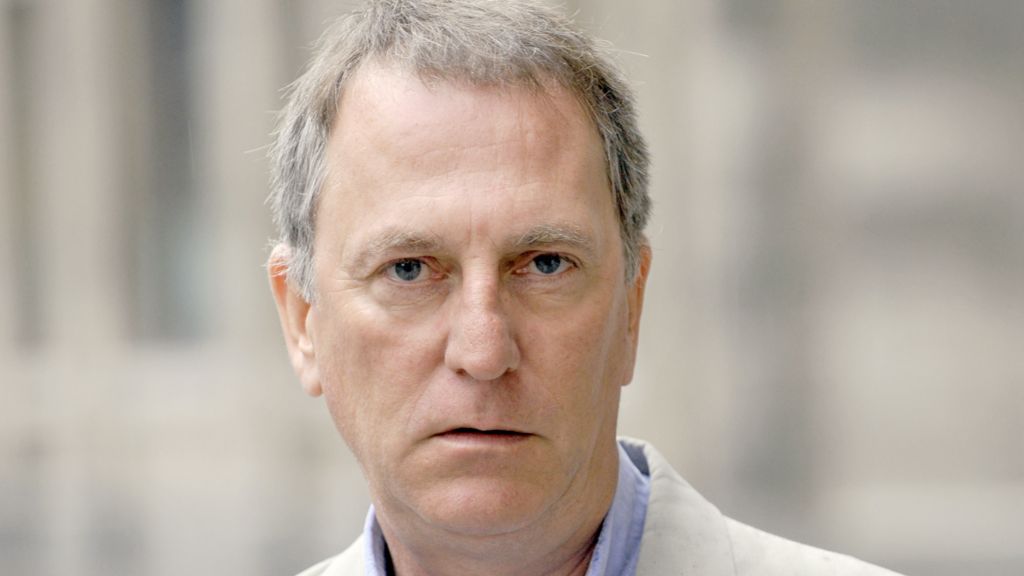
    Mark Doyle, the pioneering British journalist whose groundbreaking on-the-ground reporting of African conflicts through the 1990s and 2000s cemented his reputation as one of the most respected foreign correspondents of his generation, has passed away following a brief illness.

    Doyle’s journalistic career was deeply rooted in the African continent, where he lived for years before officially joining the BBC’s global news team in 1986. Just seven years later, he was appointed the broadcaster’s East Africa correspondent, and it was his courageous coverage of the 1994 Rwandan genocide that first catapulted him to industry-wide acclaim, setting a new standard for frontline war reporting.

    In 1997, Doyle shifted his base to become West Africa correspondent, a post he held through 2002. During this tenure, he documented the extreme violence of Sierra Leone’s civil war and the chaotic aftermath of armed conflict in Liberia, bringing unseen human suffering and political upheaval to global audiences.

    In the wake of Doyle’s death, BBC Foreign Editor Paul Danahar paid tribute to the reporter, describing him as a “legendary figure” who stood out as a “brilliant, brave, empathetic reporter” whose work left an indelible mark on the organization and the broader industry.

    Years before his passing, colleagues already celebrated Doyle’s legacy ahead of his retirement from the public broadcaster in 2015, when a tribute article featured reflections from those who had worked alongside him. Fellow veteran BBC Africa correspondent Fergal Keane recalled their shared time covering the Rwandan genocide in 1994, noting that Doyle remained in the crisis zone longer than any other international reporter. “Those who were in that awful place at that awful time will know what Mark Doyle gave for the cause of truth and for the BBC,” Keane said.

    The same tribute also included praise from Sir David Richards, who led British military intervention efforts to end Sierra Leone’s civil war in 2000. Richards emphasized that Doyle’s unflinching on-the-ground reporting was critical to persuading the UK government that a forceful intervention was necessary. “Hence the saving of thousands of Sierra Leonean lives that would otherwise have been at huge risk,” he explained.

    Doyle’s work earned widespread recognition beyond the BBC, including a first-place win at the 2004 UN Correspondents Association/UN Foundation Awards for his incisive coverage of post-conflict Liberia. After decades of frontline reporting, he rose to the role of BBC World Affairs correspondent before retiring from the broadcaster in 2015.