博客

  • Lindsay Clancy’s lawyer asks judge to investigate juror and check his phone

    Lindsay Clancy’s lawyer asks judge to investigate juror and check his phone

    A high-profile Massachusetts murder case involving a mother accused of killing her three young children has descended into acrimony after a jury’s deadlock forced a mistrial, with the defense launching an unprecedented probe into the lone holdout juror that has sparked fierce pushback from legal advocates.

    Lindsay Clancy, 32, has never contested that she killed her children — 5-year-old Cora, 3-year-old Dawson, and 8-month-old Callan — at the family’s home in Massachusetts earlier this year. Her legal team has mounted an insanity defense, arguing she was severely incapacitated by untreated postpartum psychosis at the time of the killings, making her not criminally responsible for her actions. Prosecutors, by contrast, have painted the deaths as a premeditated act, claiming Clancy deliberately sent her husband out of the house on a false errand to create time to strangle her children.

    After days of closed-door deliberations, the jury announced it could not reach a unanimous verdict, prompting the judge to declare a mistrial earlier this month. Multiple jurors have confirmed the panel was split 11-1 in favor of accepting Clancy’s insanity defense, with only one juror, Michael Desronvil, holding out for a guilty verdict.

    Clancy’s lead defense attorney, Kevin Reddington, has filed two new court motions aimed at challenging the mistrial outcome. In the first motion, filed Friday, Reddington asked the court to open a formal investigation into Desronvil’s conduct during deliberations. He is requesting access to all of Desronvil’s mobile phone calls and text messages sent and received between 8 a.m. and 4:30 p.m. local time on every day the jury met to deliberate. Reddington also wants the court to review the answers Desronvil provided on his prospective juror questionnaire during jury selection, to determine whether he deliberately omitted or falsified information to gain a seat on the panel.

    In a separate motion, Reddington asked the judge to dismiss the entire case against Clancy outright, a request prosecutors have not yet formally responded to. Prosecutors have also not announced whether they will move forward with a retrial.

    Desronvil, who has faced widespread public backlash for his not-guilty holdout, has retained legal counsel to defend his actions as a juror. His attorney, Edward Paltzik, has blasted Reddington’s investigation request as a baseless, unethical attack on a citizen carrying out his constitutional civic duty. In a public statement posted to X, Paltzik called the defense motion “disgusting” and warned that targeting jurors for unpopular verdicts poses a fundamental threat to the American right to a fair trial. “If the new normal is that jurors are going to face brutal reprisals for disagreeing with a defense attorney, you can kiss the Sixth Amendment goodbye,” Paltzik wrote. He dismissed Reddington’s claims as nothing more than a “Looney Tunes” style attack on his client.

    Conflicting accounts have emerged about Desronvil’s position during deliberations. The jury’s forewoman, a retired fifth-grade teacher, claimed in a national media interview that Desronvil personally admitted he held reasonable doubt about Clancy’s capacity for criminal intent, but still refused to vote in favor of the not-guilty-by-reason-of-insanity verdict. Desronvil has forcefully denied this claim, telling CBS News, the US partner of the BBC, that he never had any doubt about Clancy’s guilt. He added that when he tried to explain his legal theories to other jurors during deliberations, he was repeatedly cut off, leading other panel members to incorrectly assume he harbored doubts about the state’s case.

    The case has already spurred widespread public discussion about maternal mental health, with the Heard Foundation, a mental health advocacy organization, highlighting Clancy’s case to raise awareness about postpartum psychosis. Clancy’s husband Patrick has also made public headlines saying he forgives his ex-wife for the killings, backing her defense’s claims that her severe mental illness caused the tragedy.

  • Three Ts will dominate Trump-Xi summit

    Three Ts will dominate Trump-Xi summit

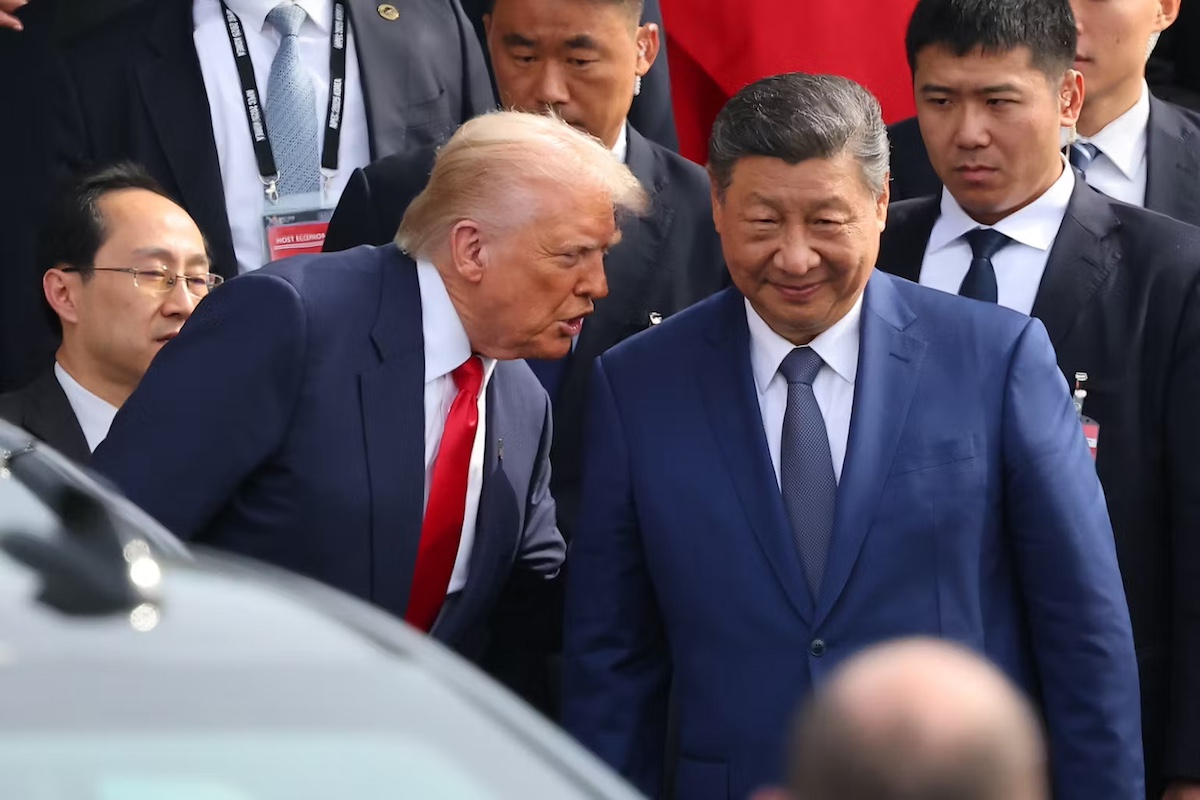
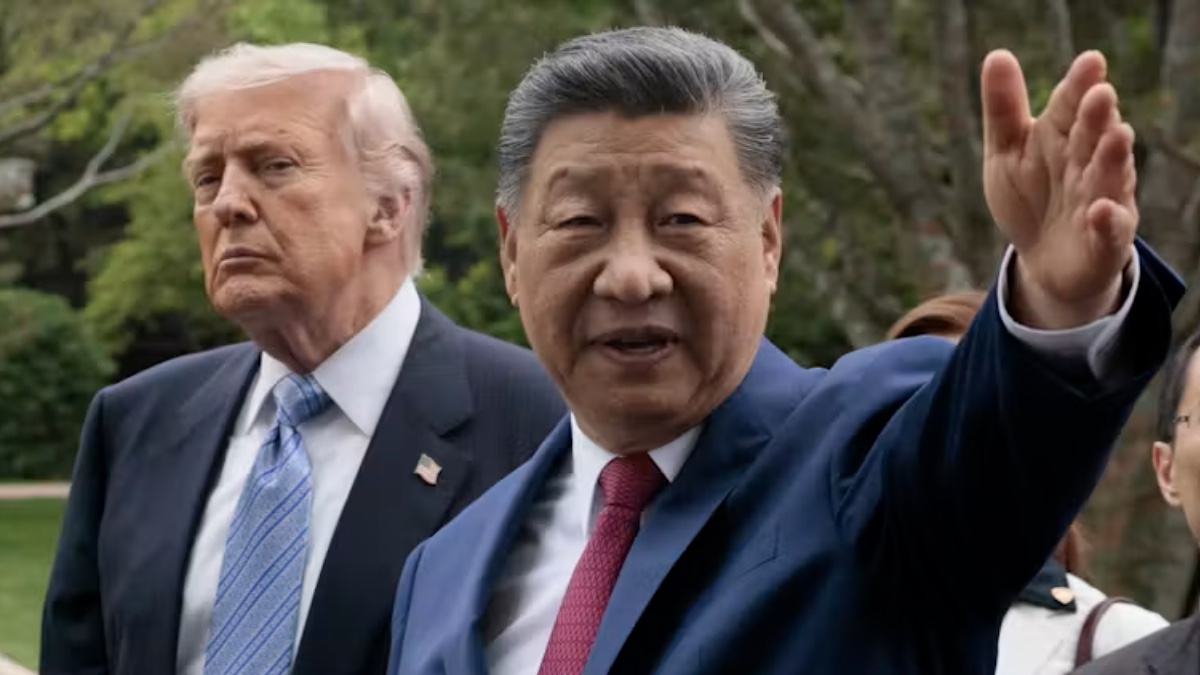
    As world leaders prepare for the second high-stakes meeting between U.S. President Donald Trump and Chinese President Xi Jinping in just four months, set to open on U.S. soil on September 24, 2026, the core agenda will look strikingly familiar to their last sitting in May: the three persistent, high-stakes issues that define U.S.-China relations – trade, Taiwan, and technology. What has shifted dramatically since their last encounter is the urgent new pressure placed on technology talks, driven by the sudden, fast-evolving breakthroughs and risks in artificial intelligence that have upended global markets and security calculations. What remains uncertain, however, is whether the two powers can reach any groundbreaking, transformative breakthrough on AI or any of the other core challenges on the table.

    ### Trade: Modest Adjustments Expected for a Year-Old Pact
    Of the three core issues, trade is framed as the most time-sensitive and the most likely to yield a incremental resolution. Nearly 12 months prior, during a meeting in Busan, South Korea, the two leaders negotiated a landmark detente: the U.S. agreed to roll back some of its strict export controls on advanced technology and cut the steep three-digit tariffs that had been in place on billions of dollars of Chinese goods. In exchange, China committed to ending export restrictions on critical minerals and rare earths that are vital to U.S. manufacturing and tech supply chains.

    That 2025 Busan agreement is now approaching its expiration date, and both sides have signaled they favor extending the status quo. While minor side adjustments to the terms are likely, most analysts expect the new pact to largely mirror the original framework.

    In previous talks, both governments have floated the idea of establishing a permanent new bilateral body, a U.S.-China Board of Trade, tasked with reviewing low-sensitivity shared business interests. But concrete details about the institution’s mandate, authority, and operating structure remain unclear, and while an official announcement is expected during the summit, global business leaders are waiting to see how robust and long-lasting the new body will actually be. An even less developed proposal, a separate Board of Investment, remains in early planning stages with no public roadmap.

    Beijing has proposed bringing a delegation of top Chinese chief executives to the summit to match the U.S. contingent, which included senior leaders from major American tech firms such as Nvidia’s Jensen Huang and Tesla’s Elon Musk, who accompanied Trump on his earlier trip to Beijing. The final makeup of the Chinese business delegation, however, will likely be shaped by which economic sectors Beijing sees as having the greatest potential for near-term cooperative growth.

    ### Taiwan: A Long-Standing Standoff With No Near-Term Breakthrough
    The thorny, decades-long dispute over Taiwan stands in sharp contrast to trade as the most intractable issue on the agenda, and few analysts expect any substantive shift in the status quo coming out of this meeting. Unlike his predecessor, Trump has declined to make explicit security commitments to defend the self-governing island in the event of a Chinese invasion, instead reaffirming Washington’s long-standing policy of strategic ambiguity.

    Currently, U.S. foreign policy attention is heavily diverted by ongoing conflict in Iran, leaving the East Asian region lower on the immediate policy agenda. For its part, Beijing continues to prioritize non-military approaches to advancing its claim of sovereignty over Taiwan, rather than pursuing an immediate military incursion.

    The next major turning point for cross-strait relations is not expected to come from this summit, but rather from Taiwan’s scheduled presidential election in January 2028. The outcome could shift dramatically if the more Beijing-friendly Kuomintang opposition wins the presidency, or if an isolationist candidate wins the U.S. presidential election later that same year. Early contenders from both major U.S. political parties have already floated a more restrained approach to overseas engagement, and a shift in U.S. policy would dramatically alter cross-strait calculations. For the moment, Beijing continues to expand the People’s Liberation Army’s naval capabilities to preserve the option of military action, but its current strategy focuses on leveraging shifting internal political dynamics within Taiwan, combining economic incentives and coercive pressure to narrow Taipei’s international space, while waiting for potential signs of waning U.S. interest in the Western Pacific.

    Secondary international issues, while likely to be raised, are not expected to take center stage or drive major policy shifts. Beijing will almost certainly voice its opposition to the U.S.-led conflict in Iran, while Washington will remind Beijing of new U.S. legislation that allows sanctions on nations that purchase large volumes of Russian oil – a category that includes China, the world’s largest buyer of Russian crude. But neither side expects these discussions to lead to tangible changes in existing policy.

    ### Technology: AI’s Rapid Rise Creates Urgent Unmet Demand for Regulation
    It is in technology, and specifically artificial intelligence, that the two sides are scrambling to bring diplomatic negotiation in line with the fast-changing reality of the global AI boom. The May 2026 summit surprised many observers when AI regulation emerged as an unexpected topic of discussion, something that had not been on the bilateral agenda during Trump’s first year back in office. Even so, both sides agreed that preliminary principle-based talks on guardrails for AI development were not just possible, but necessary, given the rapid growth of the sector and its inherent unpredictability. Most recently, on September 20, the two governments floated the idea of a dedicated bilateral AI “hotline” to alert each other of unanticipated AI-related national security risks.

    In the months between the May and September summits, growing public anxiety over unregulated AI has hardened attitudes in the U.S., creating a more urgent push for guardrails. In China, public sentiment toward AI is far less openly hostile, with widespread recognition of AI’s transformative benefits for sectors like healthcare that have softened public attitudes. Even so, private and policy concerns persist: there are lingering questions over whether China’s sluggish, struggling economy will actually see sustained, broad-based benefits from the AI boom, and while AI has created new consumer opportunities, it has so far generated relatively few new jobs for a Chinese workforce already grappling with large-scale structural unemployment.

    Both sides have compelling individual reasons to pursue talks on AI regulation. For both governments, the shared risk of unregulated AI development by rogue private firms triggering widespread social disruption is a core concern, while the U.S. also faces immediate voter pressure over the resource demands of AI data centers.

    For Beijing, there are unique domestic political drivers for seeking regulatory controls. The Chinese Communist Party leadership views unregulated, out-of-control systems as an existential threat to political stability, a concern deeply shaped by President Xi Jinping’s own formative experience: as a young man, Xi was exiled to rural China after his father was purged ahead of the Cultural Revolution, a period of political anarchy that left a lasting imprint on his leadership style and commitment to tight centralized control. Any AI development that could undermine the Party’s unchallenged hold on power is seen as unacceptable, so regulatory frameworks that mitigate this risk are unlikely to be rejected out of hand.

    Even with this shared recognition of mutual concern – albeit rooted in very different national priorities – major short-term progress remains unlikely. U.S.-China strategic competition in AI is intense, and neither government nor private sector leaders in either country are willing to make concessions that would grant a strategic advantage to the other. Trust between Washington and Beijing on AI issues remains very low. The most likely public outcome will be an agreement to continue talks, rather than a substantive regulatory deal, even if quiet backchannel negotiations continue out of public view.

    ### The Value of Sustained Dialogue Amid Persistent Divisions
    At its core, the 2026 September Trump-Xi summit matters less for any imminent major policy shift on either side, and more for what it represents: a continued commitment to maintaining open dialogue between the leaders of the world’s two largest economies and military powers. The two leaders are already scheduled to meet two more times before the end of the year at the G20 and APEC summits, putting four high-level leadership meetings in just over six months – a frequency of engagement that analysts frame as a positive signal, where a breakdown in meetings would be a far more worrying outcome for global stability.

    Even so, the deep, fundamental incompatibilities in the two sides’ core priorities on the three Ts remain the undercurrent beneath all polite, occasionally cordial diplomatic exchanges. While dialogue reduces the risk of catastrophic miscalculation, it has yet to bridge the divides that have defined U.S.-China rivalry for decades.

  • Sri Lanka court convicts 15 men over deadly Easter Sunday bombings

    Sri Lanka court convicts 15 men over deadly Easter Sunday bombings

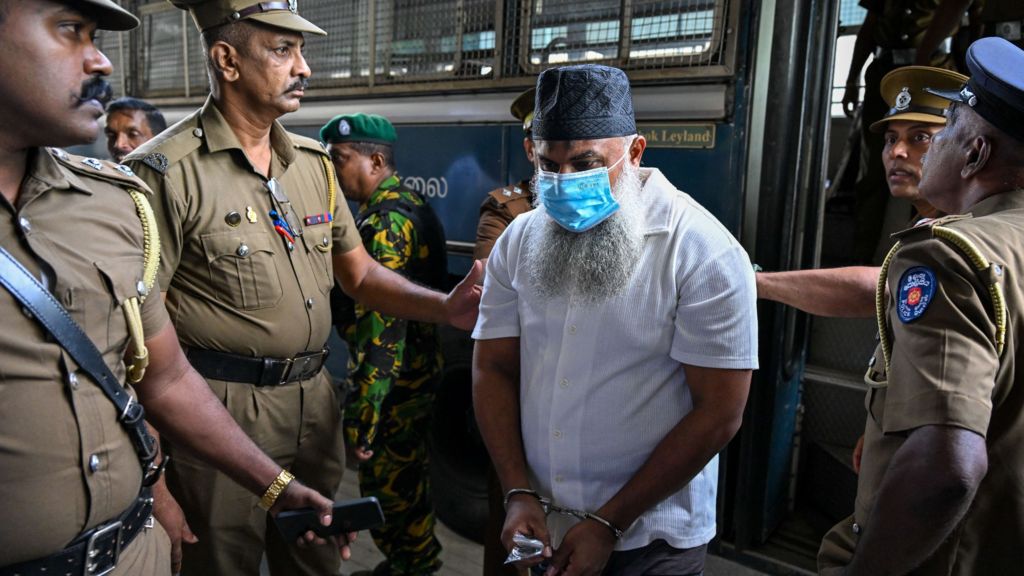
    Nearly five years after the coordinated suicide bombings that shattered Sri Lanka’s Easter celebrations and left the nation reeling, the country’s High Court has delivered a long-awaited guilty verdict for 15 men charged with orchestrating the 2019 attacks that killed 270 people and wounded over 500 more. Among those convicted is Naufer Moulavi, identified by prosecutors as the primary mastermind behind the simultaneous bombings that targeted three Christian churches and three high-end luxury hotels across the island. Nine other defendants facing related charges were acquitted in the ruling. The 2019 attacks remain the deadliest act of violence Sri Lanka has faced since the conclusion of its 26-year civil war in 2009, and the death toll included 45 foreign nationals visiting the country for the holiday.

    All nine suicide bombers who carried out the blasts died at the attack sites. Investigations have long pinned responsibility for the coordinated operation on domestic Islamist extremist networks, and all 25 individuals originally indicted in the case were members of Sri Lanka’s Muslim minority community. One of the indicted defendants died while in custody before the trial concluded. The 24 accused who stood trial faced a total of more than 23,000 criminal charges, ranging from murder and conspiracy to commit acts of terrorism to illegal possession of firearms and explosive materials.

    The prosecution’s case rested on an unprecedented volume of evidence and testimony: more than 2,300 witnesses gave evidence for the state, and prosecutors presented 2,076 pieces of material evidence, including unused explosives, bladed weapons, and firearms recovered from extremist safe houses. In the immediate aftermath of the 2019 attacks, Sri Lankan officials acknowledged catastrophic institutional failures, admitting that a “major intelligence lapse” allowed the plot to proceed undetected. It was later revealed that a detailed tip-off about the planned attacks shared by Indian intelligence agencies was never properly disseminated to frontline security and law enforcement authorities.

    Legal consequences for institutional failures tied to the attacks have unfolded in parallel to the conspiracy trial. In 2023, Sri Lanka’s Supreme Court ruled that former president Maithripala Sirisena bore personal responsibility for the national security failures that enabled the bombings, ordering him to pay millions of rupees in compensation to attack victims and their families. Just last month, two former senior security officials were sentenced to death on charges of criminal negligence linked to the attacks, though death sentences are almost always commuted to life imprisonment in Sri Lanka under a decades-long national moratorium on executions.

    Monday’s conviction comes amid ongoing investigations into alleged high-level political and intelligence complicity in the attacks that have roiled Sri Lankan politics for years. A separate probe is currently active against former intelligence chief Suresh Sallay, who stands accused of coordinating the bomb plot alongside the Islamist extremist cell that carried out the attacks. Sallay, who was arrested in February this year, has repeatedly denied all accusations against him.

    The claims of high-level involvement mirror allegations made in a 2023 documentary by British public broadcaster Channel 4, which featured whistleblower testimony claiming the attacks were deliberately allowed to proceed to boost the political popularity of the Rajapaksa family, a political dynasty that has dominated Sri Lankan politics for much of the last two decades. Gotabaya Rajapaksa, who was elected president just months after the 2019 attacks running on a hardline platform of cracking down on Islamist extremism, has also denied all allegations tying him or his family to the plot. Currently barred from leaving Sri Lanka, Rajapaksa has filed a court petition seeking to block any potential arrest connected to the ongoing investigations.

    For years, survivors and family members of attack victims have held repeated, large-scale public demonstrations across Sri Lanka demanding full accountability and justice for the 2019 attacks, a movement that has pressured successive governments to deliver conclusions to the multiple probes tied to the bombings. Heavy security, including dozens of regular police officers and elite commando units, was deployed to the High Court in Colombo ahead of the verdict announcement to prevent any potential unrest tied to the ruling.

  • No criminal charges in death of black Mississippi teenager, grand jury says

    No criminal charges in death of black Mississippi teenager, grand jury says

    The high-profile case of 19-year-old Mississippi black teenager Nolan Wells, who died following a July 4 boating trip with three young white companions, has reached a major turning point: a county grand jury has unanimously decided no criminal charges will be filed against any individual connected to his death, leaving his grieving family without the accountability they have spent months demanding.

    Wells, a student-athlete who played American football at Southwest Mississippi Community College and was described by his coach as a cheerful, easygoing young man, was reported missing by his mother Christine Wonsley on the evening of July 4, 2026, after he failed to return home from the day trip. According to initial statements from his traveling companions, the group cut their outing on Horn Island short due to a mechanical issue with their boat, and Wells chose to remain on the island instead of leaving with them, planning to catch a ride back with another group of visitors on a later boat. A massive multi-agency search involving local, state and federal law enforcement recovered Wells’ body off the island’s coast 48 hours later, on July 6.

    From the earliest days of the investigation, the case drew widespread scrutiny over the racial dynamics at play: civil rights attorney Ben Crump, retained by the Wells family to advocate for them, publicly questioned how a young Black man ended up dead after an outing with three young white acquaintances, pointing to conflicting accounts from the witnesses as a sign that critical details had not been disclosed. Police initially ruled Wells’ death an accidental drowning, but the family pushed for a full independent review, commissioning their own separate autopsy by a private forensic pathologist.

    After months of testimony and evidence review, the 25-member grand jury completed its work this week, releasing its findings publicly via the Jackson County District Attorney’s social media channels on Monday. In the report, the grand jury concluded that all physical evidence surrounding the case — including the location, condition, and timing of the recovery of Wells’ body — aligns completely with the accidental drowning ruling. The panel also explicitly rejected claims that the death was driven by racial bias, noting that there is no credible evidence to back up public allegations that any of the three companions who traveled with Wells engaged in criminal activity connected to his passing.

    Jackson County District Attorney Angel Myers McIlrath emphasized in a video message accompanying the report’s release that the grand jury conducted a thorough, unbiased review of all available information. Over the course of the investigation, 43 witnesses testified before the panel, including the independent forensic expert that the Wells family hired to conduct their separate autopsy. McIlrath added that the three young men who accompanied Wells on the trip were fully cooperative with investigators, turning over GPS tracking data, cell phone records, surveillance footage and all other requested evidence to the grand jury. The report also noted that on busy holiday weekends like July 4, it is not uncommon for groups of visitors to Horn Island to arrive and depart on different vessels, making the companions’ account of Wells choosing to stay behind entirely plausible.

    Despite the grand jury’s findings, the Wells family and their legal team remain unsatisfied with the outcome. In a statement shared with national U.S. media outlets following the announcement, Crump said the grand jury’s decision has left the case with more unresolved questions than it answered. “Nolan’s family will not rest until we know what happened to him, and neither will we,” Crump said, making clear that the push for full transparency into the teenager’s death will continue.

  • ‘Our dream to join Dosanjh on stage came true’

    ‘Our dream to join Dosanjh on stage came true’

    For any die-hard music fan, sharing the stage with their favorite artist is a fantasy reserved for daydreams. For Wolverhampton-based dance school owners Ravneet and Pritpal Mann, that fantasy became a joyful reality last Friday at Diljit Dosanjh’s sold-out Birmingham show at Utilita Arena.

    The husband-and-wife team, who have shared a love of Bhangra dance and Dosanjh’s music for 15 years, have attended multiple stops on the star’s tours across the UK – from a 2022 Leeds show to last week’s historic Wembley Stadium performance. Dressed in custom Dosanjh t-shirts and standing front-row at the Birmingham gig, the pair never imagined the surprise that awaited them.

    Ravneet, who has co-run the Jodi Dancers school with Pritpal for eight years, said she spent the entire week leading up to the show manifesting the moment. “I kept saying all week, ‘we will get on stage, we will do this’, and it actually happened,” she explained. The interaction unfolded organically: Dosanjh first gestured a heart toward Ravneet, which she said alone was enough to make her night. When Pritpal signaled the couple’s love of Bhangra dance, the star nodded and gave a quiet gesture that he would bring them up – and two songs later, he called the pair onto the stage.

    “I literally grabbed Pritpal’s arm and ran,” Ravneet recalled, laughing that she was so overcome with excitement she temporarily forgot her husband was beside her. Pritpal described the entire moment as a blissful blur, a rush of pure adrenaline and excitement that still feels surreal days later. “This is what cloud nine must feel like,” he said of the experience, which was captured on camera by waiting family members off-stage.

    The couple said dancing alongside Dosanjh on stage was the best moment of their lives, and praised the superstar for his down-to-earth, warm demeanor. “He was so nice, genuinely nice,” Ravneet said. “All we’ve ever wanted in our life is to be able to dance with him… and it happened in an organic way… and to do it together.” Before the pair left the stage, Dosanjh gifted them a custom box with branded hoodies and autographed their event t-shirts – keepsakes the couple say they will treasure forever.

    The surprise on-stage invite comes at a historic moment for Dosanjh’s UK tour: just last week, the Punjabi singing sensation became the first artist from his region to ever headline London’s iconic Wembley Stadium, marking a landmark milestone for Punjabi music on the global stage. The couple, who met through their shared passion for dance, currently run weekly Bhangra classes across Wolverhampton, Telford and Oldbury, and say this moment will stay with them for the rest of their lives.

  • Bound by reality: forging an American strategy for China

    Bound by reality: forging an American strategy for China

    Against a backdrop of rising military tensions, intensifying technological rivalry, and shrinking room for accidental escalation, the US-China relationship currently stands at one of its most dangerous turning points in modern history. As US policymakers continue to debate how to respond to China’s growing global influence, leading analyst David Santoro, President and CEO of the Pacific Forum, argues that American strategy must adjust its ambitions to match on-the-ground material realities. While Washington has long pursued enduring global primacy, technological dominance, and full economic sovereignty, Santoro contends that the only sustainable path forward for the bilateral relationship is deliberate, structured managed coexistence.

    To frame the ongoing policy debate correctly, Santoro first rejects two extreme, unworkable approaches that have gained traction in Washington. The first, pushing for the subversion of the Chinese Communist Party, is labeled both reckless and foolhardy. Attempting to force the collapse of a nuclear-armed major economy that governs 1.4 billion people carries catastrophic risks: even if successful, the move could trigger uncontrolled military escalation, destabilize critical global strategic assets, spark a total collapse of the global economy, and cause unprecedented humanitarian disaster. The second extreme, ceding control of the Indo-Pacific region to Chinese hegemony, is equally disastrous. Unchecked Chinese dominance in the region would choke off critical global maritime trade routes, weaken core US security alliances and partnerships, and upend the long-standing global balance of power.

    The real policy divide in Washington falls between two competing competing visions. On one side are primacists, who argue that the US must enforce full dominance and escalation superiority over China while leading a broad containment strategy. On the other side are realists, who recognize that the era of unchallenged US global primacy has ended, and advocate for building a stable equilibrium with China rooted in military deterrence, targeted economic de-risking, and managed coexistence.

    The primacist vision, while ideologically appealing to many, collides directly with hard material constraints that cannot be ignored. Militarily, primacists push for escalation dominance, using overwhelming offensive power to preserve the status quo in the Taiwan Strait and South China Sea, arguing that managed competition prioritizes short-term de-escalation at the cost of long-term victory, and that “there is no substitute for victory.” In technology and trade, primacists frame US-China competition as a zero-sum struggle, calling for aggressive state subsidies, increased federal research and development investment, and strict export controls to preserve US leadership in high-stakes sectors including artificial intelligence, quantum computing, and semiconductors. They also push for broad industrial rebalancing, efforts to reverse China’s mercantilist trade practices, reshoring of critical supply chains for goods like critical minerals and pharmaceuticals, full decoupling of major economic sectors, and frame the rivalry as a moral “democracy versus autocracy” crusade aimed at mobilizing US alliances to isolate China and pressure for internal political change.

    But this grand ambition runs up against unchangeable realities. Uncontested US military supremacy along China’s coastal perimeter is now out of reach. China’s layered anti-access/area denial (A2/AD) networks mean the US can no longer project unimpeded military power directly to the Chinese mainland, and any attempt to do so risks triggering a preventive war rather than deterring one. China’s expanding nuclear triad has also eliminated the traditional US strategic immunity that once kept the American homeland largely beyond nuclear threat. As expert Brad Roberts notes, the US will share mutual nuclear vulnerability with China regardless of whether it accepts this reality politically, even as it adapts its nuclear arsenal to counter both Russia and China. Material constraints make achieving nuclear dominance over these two peer adversaries simply impossible.

    On the economic and technological fronts, broad blockades on Chinese progress are equally ineffective. China’s deep pool of tech talent and massive capital reserves guarantee that Beijing can innovate around even the strictest Western export controls. Even former Google CEO Eric Schmidt, a prominent advocate for aggressive innovation competition with China, has acknowledged that both the US and China will develop next-generation AI capabilities: “We cannot prevent it. We cannot hold it to ourselves for a few years of advantage. We are in a race that will shape the world’s future.” Total economic decoupling is also prohibitively costly, given the deep integration of global supply chains, and aggressive use of trade weapons risks retaliation, including Chinese export restrictions on critical inputs such as rare earth elements that are vital to US manufacturing and tech sectors. Most importantly, key US regional allies and Global South partners refuse to choose between Washington and Beijing, preferring to maintain commercial ties with China alongside security partnerships with the US. China’s deepening strategic alignment with Russia, Iran, and North Korea also creates a counter-bloc that undermines Western efforts to achieve full isolation.

    Acknowledging these material limits does not mean American retreat or capitulation, Santoro emphasizes. It simply requires adopting a pragmatic strategy rooted in hard-nosed realism. While some realists (often called offshore balancers) advocate for withdrawing US military forces from the First Island Chain to the Second Island Chain and dissolving mutual defense alliances to reduce the risk of war, a forward-leaning realist camp argues that voluntary retreat would create a dangerous power vacuum that invites the very Chinese aggression deterrence aims to prevent. Instead, these realists argue that the US should maintain a favorable balance of power along the First Island Chain, deter aggression through military denial, manage rivalry through transactional statecraft, and seek equilibrium within the theater rather than retreating to safety behind the horizon. This approach rests on four core pillars:

    ### Pillar 1: Rebuild domestic solvency, tech leadership, and targeted collective resilience
    Sustained global American power begins with strong economic and physical foundations at home. The US should prioritize targeted public investment, next-generation AI infrastructure, green energy supply chains, and expanded domestic manufacturing capacity. Streamlining immigration pathways for top global tech talent and modernizing industrial infrastructure will also create the engines needed to sustain long-term competition. Rather than pushing for full economic decoupling that alienates US allies, Santoro argues domestic revitalization should be paired with collective resilience among partners: Washington should collaborate with allies to build joint critical mineral processing networks, shared strategic reserves, and targeted anti-coercion trade mechanisms. This framework protects both the US and its partners from Chinese economic leverage and export blockades, while preserving open trade channels for non-sensitive goods.

    ### Pillar 2: Deploy a posture of military denial and allied responsibility-sharing
    The US should shift away from vulnerable, concentrated forward military platforms toward a distributed, resilient denial network. Priority should be given to massed autonomous strike systems, long-range mobile anti-ship weaponry, hardened command-and-control nodes, and undersea warfare assets. These capabilities can deter a Chinese amphibious invasion of Taiwan or maritime coercion without relying on escalatory strikes against the Chinese mainland. As strategist Elbridge Colby argues, this approach is the only realistic option to prevent Chinese regional hegemony, since restoring full military dominance over China is unfeasible given China’s size and growing industrial and military capacity. This strategy also requires robust burden-sharing from allies: while reaffirming its extended deterrence commitments, the US should insist that front-line allies take on a larger share of conventional defense. This includes integrating Japan’s new stand-off counterstrike capabilities into joint operational planning, supporting Australia’s expansion of long-range strike capabilities under the AUKUS partnership, and co-developing defense industrial production capacity with regional partners to make the First Island Chain self-sustaining for long-term deterrence.

    ### Pillar 3: Establish strategic and operational guardrails
    As the US strengthens deterrence, it must also acknowledge mutual nuclear vulnerability with China to stabilize the strategic balance and eliminate incentives for worst-case force expansion. Building on this baseline, Washington should pursue targeted risk reduction measures across both strategic and operational domains. Drawing on the precedent of the 1988 US-Soviet Ballistic Missile Launch Agreement, the US should coordinate with allies to push Beijing to adopt formal pre-launch notification agreements for ballistic missiles and space-launch vehicles; recent Pacific Forum research suggests China may be open to such an agreement. Beyond missile-related guardrails, the two powers should secure bilateral commitments to maintain permanent human control over nuclear assets, institutionalize 24/7 military-to-military crisis communication channels, standardize maritime and aerial encounter protocols in the Taiwan Strait and South China Sea, and negotiate binding rules of the road for military AI, space-based targeting systems, and offensive cyber operations. These confidence-building measures are critical prerequisites for future nuclear arms control talks, which remain out of reach today due to the current asymmetry between US and Chinese nuclear force structures.

    ### Pillar 4: Institutionalize platforms for transactional diplomacy and reciprocal statecraft
    Beyond military risk reduction, preventing routine friction from escalating into open conflict requires resilient diplomatic channels that can withstand periods of political volatility. The US and China should establish joint working task forces to resolve trade disputes, update definitions for targeted export controls, and coordinate action on shared non-zero-sum challenges including global macroeconomic stability, climate change mitigation, global public health threats, and the suppression of illicit illicit precursor chemical networks for illegal drugs. Engagement should move beyond empty dialogue to reciprocal statecraft: Washington can offer calibrated market access or relaxed regulatory restrictions in exchange for verifiable Chinese actions, such as stricter controls on fentanyl precursor exports or commitments to fair debt restructuring standards for developing nations. Anchoring these exchanges in multilateral frameworks will also ensure that agreements reflect regional consensus, making it harder for either power to walk away from commitments during periods of heightened political tension.

    In conclusion, Santoro argues that prudent statecraft requires aligning strategy with material realities rather than ideological ambitions. Shifting from a pursuit of primacy to a realist framework does not require American retreat or capitulation. Instead, it demands a deliberate balance-of-power strategy: anchoring national power in domestic revitalization, enforcing stability through forward military denial and allied burden-sharing, building critical strategic and operational guardrails to reduce risk, and pairing strong deterrence with sustained crisis diplomacy.

  • What is the White House press pool and why is it in a row with Trump?

    What is the White House press pool and why is it in a row with Trump?

    A coordinated boycott by major U.S. television networks has upended live press coverage of a White House event hosted by President Donald Trump, escalating a high-stakes dispute over press access that carries lasting implications for First Amendment rights and the relationship between the executive branch and the national media.

    The conflict erupted late last week, when Trump announced a blanket ban on three major outlets — CNN, Politico and MS NOW — accusing the organizations of spreading what he calls “fake news” and fabricated lies about his inner circle. By Saturday, reporters from the three targeted outlets discovered that their White House press credentials had been revoked without warning or formal disciplinary process. In response, all five major TV networks that make up the White House television press pool announced they would suspend all pool coverage duties starting Monday, launching a collective boycott of the administration’s press access structure.

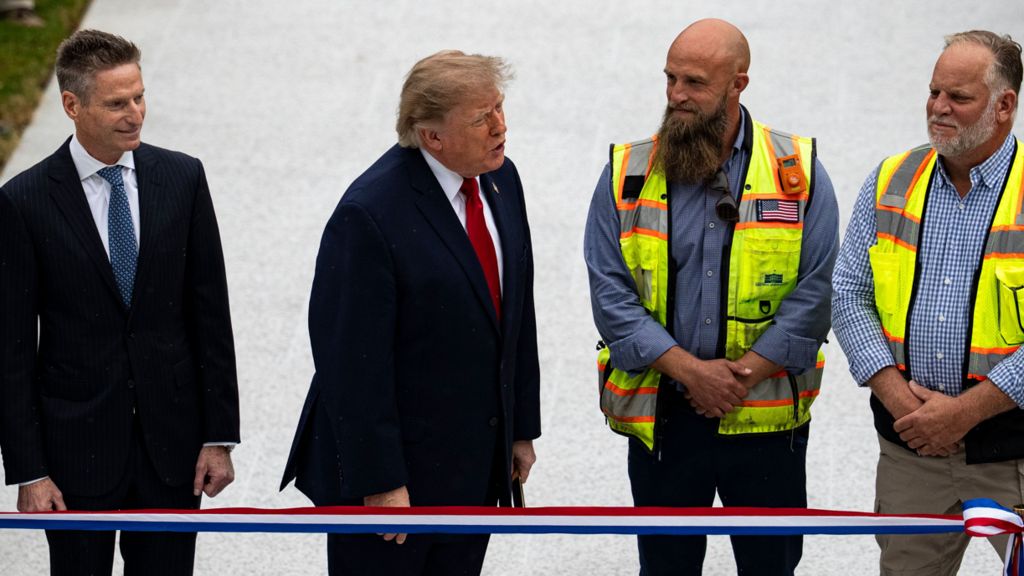
    The first test of this media blackout came Monday afternoon, at the official ribbon-cutting for a new White House helipad. With no pool cameras or shared audio feed in place, most national news outlets were unable to broadcast live footage from the event. For the few outlets that did secure on-site access, no working shared microphone was available, leaving Trump’s remarks largely inaudible to home audiences. Notably, the boycott did not impact a meeting between Trump and New York Mayor Zohran Mamdani held later that same day, as the event was open to all press and did not rely on the shared pool system.

    To understand the scope of the dispute, it is necessary to explain the function of the White House press pool: a longstanding collaborative arrangement where news organizations pool resources to cover the president across every location, from Oval Office meetings to overseas trips, with separate divisions for television, photography, print, radio and new media. The television pool’s material is shared equally among its five members — CNN, ABC, CBS, Fox News and NBC — to cut down on equipment costs and eliminate the logistical chaos of placing dozens of cameras at every small presidential event. The pool remains on permanent standby for any scenario where the president needs to address the nation unexpectedly.

    In an internal email obtained by the BBC, Fox News Washington bureau chief Bryan Boughton, who held the rotating pool lead position at the time of the boycott, confirmed that “effective today, the TV pool will not be covering events designated as pool coverage” of the president. In a formal joint statement, the five networks laid out their unified position: “The public has a vital interest in receiving accurate, independent information about its government. No administration should restrict a news organisation because it objects to its reporting.”

    The three banned outlets have already filed a federal lawsuit against the Trump administration, arguing that the credential revocation violates core press freedom protections enshrined in the First Amendment. The amendment explicitly forbids the U.S. government from abridging press freedom, a standard courts have long interpreted to bar the government from discriminating against media outlets based on the content of their reporting. A court hearing on the lawsuit is scheduled for Wednesday. In their own joint statement, the plaintiffs emphasized the stakes of the case: “Without notice or process, the White House revoked our journalists’ credentials because it objected to our reporting. Left unchallenged, this threatens press freedom and the public’s right to independent journalism free from government interference.”

    President Trump has doubled down on his position, responding to the lawsuit with scathing criticism on his Truth Social platform, calling the banned outlets “Third Rate Clowns” and a “Crooked and Corrupt Press” that trivializes and demeans his administration’s work. “Fake News people and publications that only write negatively, and who violate our National Security by writing false and defamatory stories with unknown ‘sources,’ shouldn’t be allowed access to the most important Office anywhere in the World,” he wrote, adding that his administration would appeal any adverse court ruling.

    In a parallel move, the White House has recently launched Trump TV, a 24/7 streaming channel hosted on YouTube that bills itself as a centralized hub for the Trump administration’s biggest moments. As of the boycott, the channel consists almost entirely of reruns of past Trump speeches and campaign rallies. To fill the vacant pool slot, the administration has tapped conservative outlet Real America’s Voice as a secondary crew for Trump’s upcoming trip to New York for the United Nations General Assembly. Unlike the traditional non-partisan pool, the conservative outlet has no obligation to share its coverage with other news organizations and will operate independently for its own audience.

    While Trump’s scheduled address to the UN General Assembly will not be affected by the boycott, as it will be carried by non-pool outlets, the president’s travel between events in New York — which is traditionally covered by the press pool — will likely remain without shared broadcast coverage for major networks.

    This is not the first time the Trump administration has clashed with the press over access. Back in February, the White House seized full control of the press pool system, which had been managed by the independent White House Correspondents’ Association for more than a century. That same month, the administration barred Associated Press reporters from restricted areas including the Oval Office and Air Force One over the outlet’s refusal to rename the Gulf of Mexico as the “Gulf of America” in its coverage. The AP filed a lawsuit over that ban, which remains pending in federal court.

    Instances of past administrations restricting press access are rare, and none have gone to the extent of the current dispute. In 2009, the Obama administration attempted to exclude Fox News from a single press pool interview with an administration official. After widespread pushback from the other four pool networks, the administration reversed course and granted Fox access. Unlike Trump’s current blanket ban on three outlets from all pool coverage, the Obama dispute was limited to one individual event.

  • The deal Trump and Xi should artfully make

    The deal Trump and Xi should artfully make

    Fifty-five years after Henry Kissinger’s covert 1971 trip to Beijing laid the groundwork for Sino-American rapprochement, a high-stakes meeting between the United States and China is set to unfold in a dramatically altered global landscape.

    In July 1971, then-U.S. National Security Advisor Henry Kissinger used a reported case of gastrointestinal illness during an official trip to Pakistan as cover to slip away on a classified flight to Beijing. Hidden from view behind Cold War divisions, Kissinger’s secret negotiations with Premier Zhou Enlai cleared the path for President Richard Nixon’s iconic 1972 visit to China, the trip widely remembered as the “week that changed the world.” That historic opening turned Cold War ideological adversaries into uneasy strategic partners aligned against a shared Soviet rival, a gamble that redefined global order for decades.

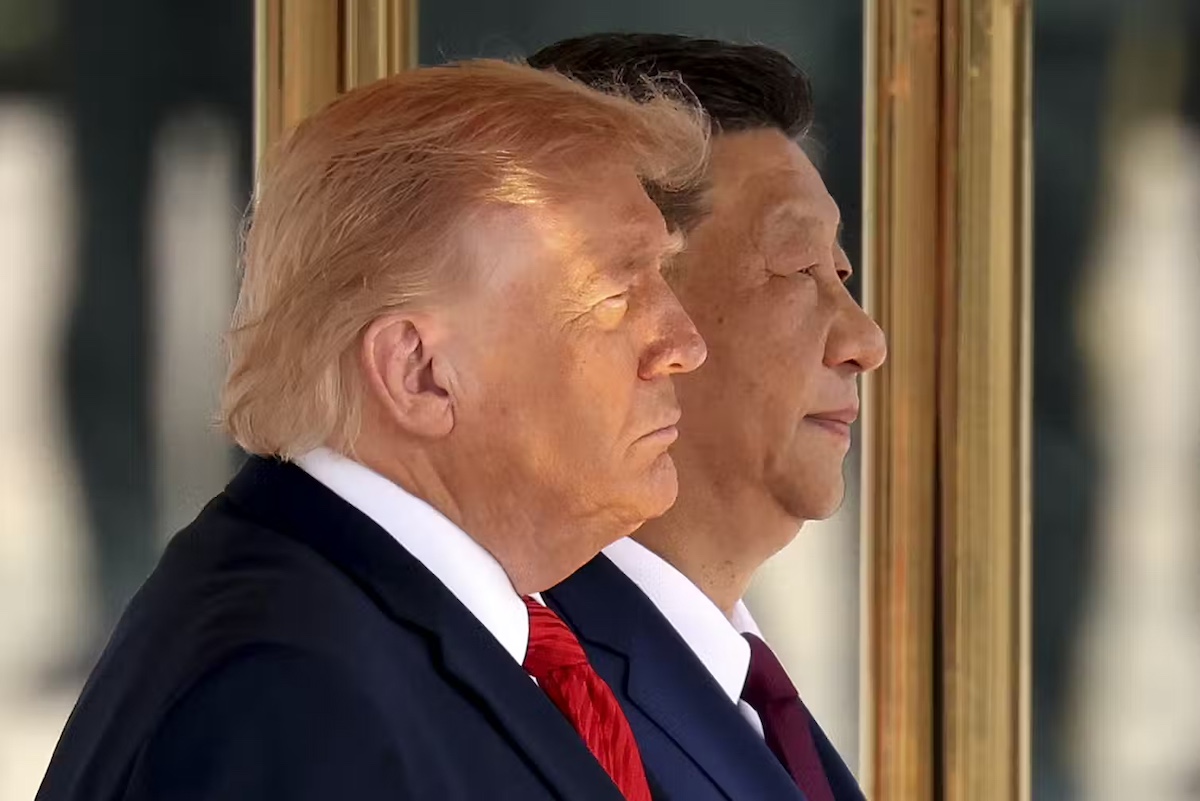
    Half a century later, the geopolitical stage has flipped: on September 24, 2026, U.S. President Donald Trump will host Chinese President Xi Jinping at the White House, a meeting that follows an earlier bilateral summit in Beijing that May, where the two leaders first agreed to work toward “constructive strategic stability.” Unlike Kissinger’s hidden mission, this summit will play out entirely in the public eye, under the intense scrutiny of global media, with no backchannel secrecy and no shared overarching enemy to unify the two sides. Yet the core question facing both leaders echoes the same uncertainty that shadowed Kissinger’s 1971 flight: can two great power rivals forge a lasting, stable peace without ever setting aside their deep mutual differences?

    ### The Rise of Weaponized Interdependence
    For much of the first Trump administration, public discussion of U.S.-China relations centered almost entirely on tit-for-tat tariff disputes. Today, that framing no longer captures the transformed nature of their rivalry, which has evolved into a contest over control of critical global supply chain chokepoints.

    Nowhere is this new dynamic more visible than in the global rare earths market. China holds a near-total dominance over rare earth refining and processing capacity, so complete that even rare earth ore mined in California is currently shipped to China for value-added processing. This gives Beijing significant strategic leverage: China can weaponize its market position to hold critical U.S. industrial sectors – from aerospace and semiconductors to high-performance temperature-resistant coatings – hostage to its geopolitical priorities. Recent Chinese export restrictions have laid bare deep vulnerabilities in U.S. industrial supply chains, illustrating how a little-noted link in global production can suddenly become a major geopolitical flashpoint.

    This dynamic cuts both ways, however. Washington maintains its own formidable set of economic and strategic tools: sweeping tariffs, export controls on cutting-edge semiconductors, regulatory investment restrictions, global financial leverage, and exclusive access to the most advanced artificial intelligence chips. For its part, Beijing’s arsenal draws on unmatched manufacturing scale, control of sprawling global supply chains, dominance of rare earths and critical minerals processing, and access to one of the world’s largest consumer markets.

    Decades ago, political scientists Robert Keohane and Joseph Nye coined the term “complex interdependence” to describe how mutual economic reliance between states generates both constraints and coercive leverage for all parties. What is unfolding between Washington and Beijing today is a far more fraught iteration of this dynamic: their interdependence has become increasingly securitized, turning the deep economic ties that once bound them into a weaponized landscape of mutual coercion.

    ### Diverging Strategic Philosophies and Underlying Fault Lines
    Beyond the new geoeconomics of rivalry, the two sides approach negotiations with fundamentally differing strategic instincts. Trump’s approach to diplomacy is deeply transactional, prioritizing immediate, measurable concessions that can be framed as clear victories for domestic political consumption before global attention shifts elsewhere. By contrast, Xi’s diplomatic style follows a longer time horizon, favoring incremental progress, deliberate sequencing, and calculated ambiguity, prioritizing the gradual expansion of strategic space over short-term wins while avoiding any commitments that could limit future flexibility.

    Washington’s core priorities for the summit include securing more predictable rare earth supplies and commitments from Beijing to curb practices deemed harmful to U.S. economic and strategic interests. Beijing, in turn, is seeking relief from U.S. tariffs and technology restrictions, as well as a stable long-term framework for bilateral engagement. The bilateral Board of Trade established during the May 2026 Beijing summit has already made one modest start, agreeing to cut tariffs on non-sensitive commodity exports worth up to $30 billion annually, laying limited institutional groundwork for an otherwise highly volatile relationship.

    Beneath these surface economic negotiations lies a far more intractable security dilemma. The Taiwan Strait remains the single most dangerous fault line in bilateral relations; during the May Beijing meeting, Xi explicitly warned Trump that mismanaging the Taiwan issue could push relations into “a very dangerous place.”

    Artificial intelligence adds a further layer of growing complexity. The two powers are locked in a fierce race to dominate AI development, yet neither can manage the risks of unregulated AI alone. Every measure one side takes to boost its own security – from export controls to technology restrictions to military deployments and supply chain diversification – is automatically interpreted by the other as an attempt at strategic containment. It remains uncertain whether the U.S.-China AI dialogue mechanism, agreed ahead of the summit to monitor high-risk unregulated AI developments, will actually be activated and meaningfully used amid intensifying competition.

    While these tensions do not make armed conflict inevitable, escalating friction across multiple fronts leaves the relationship vulnerable to unforeseen external shocks. And crucially, this summit’s outcomes will reach far beyond the bilateral relationship: the entire world has a direct stake in how the two leaders manage their rivalry.

    ### Global Expectations of Managed Coexistence
    Recent conflicts in Ukraine and Iran have laid bare the inherent limits of great power influence, while a growing bloc of middle powers have steadily expanded their own geopolitical bargaining power. From India and ASEAN to Europe, Japan, South Korea, Australia, the Gulf states, and much of the Global South, most nations rely on China for manufacturing, on the U.S. for technology and finance, on Gulf producers for energy, and on one another for trade and connectivity. Few have any interest in being forced to choose an outright side between Washington and Beijing.

    India’s focus on strategic autonomy and multi-alignment perfectly captures this global stance, as does ASEAN’s longstanding resistance to binary great power alignments. European governments seek economic resilience without fully severing ties to Beijing, while Gulf states have openly demonstrated that alignment with Washington does not require abandoning closer economic and strategic ties with China.

    The most consequential question facing the 2026 summit is not which side holds greater coercive leverage, but whether their rivalry can leave enough strategic space for all other nations to operate independently. A U.S.-China bilateral condominium that divides global influence would alarm much of the world, just as a full-blown open confrontation between the two powers would carry unacceptable global risks. The only widely acceptable outcome is carefully managed rivalry: a framework that lets the two great powers adjust their equilibrium while allowing other nations to retain full strategic agency. This end goal is not friendship, trust, or even full reconciliation – it is simply stable, mutually accepted coexistence.

    ### Building Guardrails for Sustainable Rivalry
    The success of the summit should not be measured by flashy photo ops or symbolic announcements, but by whether Trump and Xi can agree on a set of modest but durable guardrails to prevent uncontrolled escalation.

    First, the two sides need to deliver greater economic predictability. Global businesses cannot afford to restructure sprawling supply chains every time Washington or Beijing rolls out a new trade or export control measure. Second, they need to reinforce open lines of strategic communication. While military-to-military contacts and crisis hotlines do not build trust on their own, they are proven tools to prevent accidental clashes from spiraling into full-blown crises.

    Third, the two sides should pursue targeted selective cooperation. Issues including climate change, global public health, financial stability, and AI safety all demand urgent collaborative action that can advance even before the two sides resolve their deeper geopolitical differences. Fourth, they need to agree on boundaries for competition: great power rivalry is inevitable, but unconstrained competition carries catastrophic risks for all.

    Finally, both sides must confront a difficult psychological reality: neither power is going away any time soon. The U.S. will remain a formidable technological, financial, and military superpower, while China will remain a major industrial, commercial, and geopolitical heavyweight. Any sustainable bilateral relationship must start from this unshakable reality.

    In 1971, Kissinger’s secret trip proved that yesterday’s adversary could become tomorrow’s partner. In 2026, Trump and Xi face the opposite, equally urgent challenge: proving that today’s rival does not have to become tomorrow’s enemy. Where Nixon and Mao needed a strategic opening to suit Cold War demands, Trump and Xi need a strategic ceiling: a clear agreement to limit the escalation of their rivalry before it slips into catastrophe.

    This summit will not decide which power will dominate the 21st century. But it can deliver a far more consequential outcome: it can determine whether the two great powers can compete peacefully, without forcing the rest of the world to pay the price for their rivalry.

    *This analysis is by Swaran Singh, former professor of diplomacy and disarmament at the School of International Studies, Jawaharlal Nehru University, New Delhi.*

  • Doctor in court to face Rwanda genocide charges

    Doctor in court to face Rwanda genocide charges

    For the first time in United Kingdom legal history, a 65-year-old former Rwandan doctor has appeared before a British court to face charges connected to the 1994 Rwandan genocide.

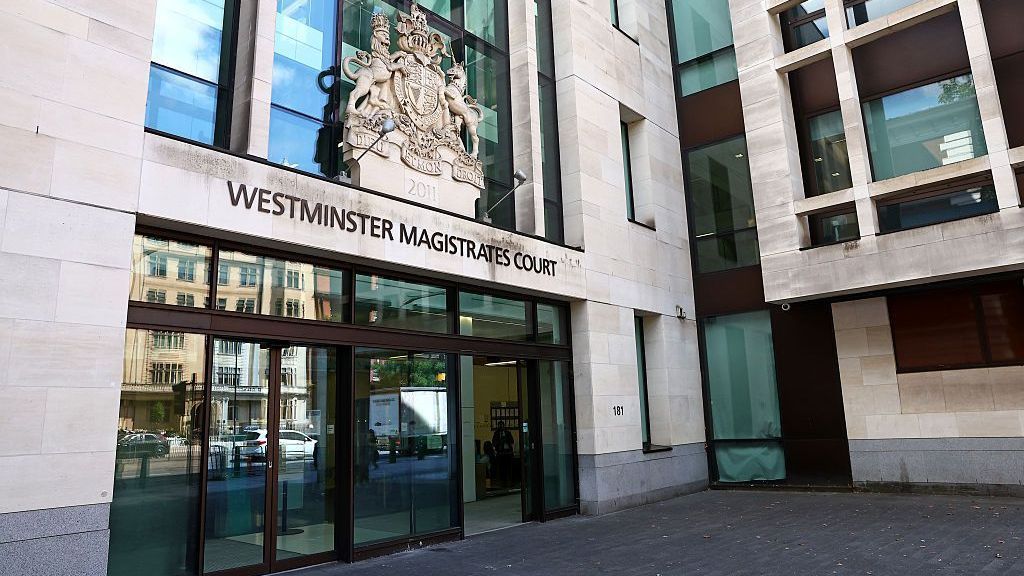
    Previously known as Vincent Bajinya, Dr. Vincent Brown entered a not guilty plea through his legal representation during his initial hearing at Westminster Magistrates’ Court. Held in custody since his arrest, Brown confirmed his identity and current address from the dock, marking the conclusion of a seven-year long investigation carried out by British law enforcement into his alleged role in the 100-day massacre.

    Brown faces one count of conduct ancillary to genocide, plus six additional counts of conduct ancillary to murder as crimes against humanity. The charges stem from allegations that between April 6 and April 13 1994, Brown participated in the mass killing of Tutsi civilians in the Rugenge district of Rwanda’s capital, Kigali. Prosecutors allege that Brown personally took part in, directed, and encouraged the killing of six named Tutsi victims, including a mother and her young child, and that he acted with the explicit intent to destroy the Tutsi ethnic group, in whole or in part. The charges are brought under the UK’s 2001 International Criminal Court Act, which allows British courts to prosecute individuals for genocide committed overseas, noting that the alleged killings formed part of a widespread, systematic attack against a civilian population that Brown was aware of.

    Background to the case traces back to the 1994 Rwandan genocide, when a Hutu extremist government orchestrated a 100-day campaign of mass violence that left an estimated 800,000 Tutsis and moderate Hutus dead. After qualifying as a medical doctor in Rwanda in the 1980s, Brown rose through the ranks to lead Rwanda’s Department of Family Health in Kigali before relocating to the UK. He went on to work at Praxis, a London-based charity supporting refugees, and served on the UK government’s Refugee Nurses Task Force from 2003 onward.

    Sam Blom-Cooper, barrister for the defendant, told reporters outside court that Brown has vigorously denied all allegations and has long awaited his day in court to clear his name before a jury. “For the best part of 20 years, my client has hoped for, longed for, and prayed for this day,” Blom-Cooper said. “While the crimes alleged are appalling and the 1994 murders are unthinkable, this hearing marks the beginning of the end for Dr. Brown, who looks forward to proving his innocence.”

    The case was transferred to London’s Old Bailey for a preliminary hearing scheduled for October 9. A decision on Brown’s bail application will be made later Tuesday. British senior law enforcement officials have emphasized for years that the UK will not act as a safe haven for accused war criminals, and investigators on the case have received specialized training in international war crimes legislation. Investigations into other Rwandan genocide suspects currently residing in the UK are ongoing.

  • PM to warn EU chief of ‘damage’ posed by Made in Europe scheme

    PM to warn EU chief of ‘damage’ posed by Made in Europe scheme

    As Britain’s prime minister travels to New York for the United Nations General Assembly, he has highlighted pressing concerns over a controversial European Union trade policy, while keeping open the question of whether the UK will pursue a full return to the bloc in future election platforms.

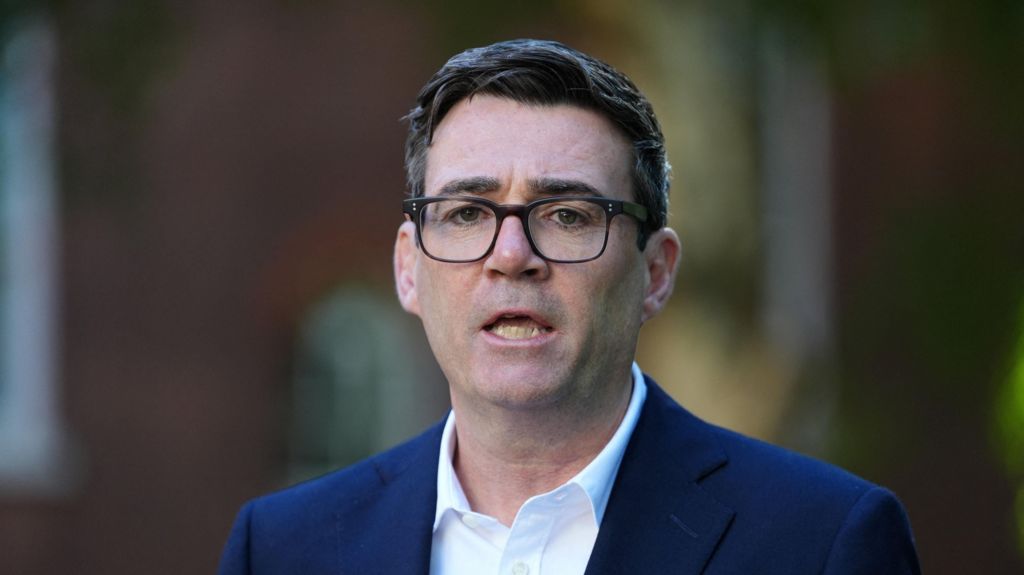
    Andy Burnham, who took over the premiership following Keir Starmer’s July resignation, is set to meet European Commission President Ursula von der Leyen on the sidelines of the annual UN summit this week to raise alarms over the EU’s proposed Made In Europe initiative, formally known as the Industrial Accelerator Act. The draft policy is designed to reduce the market access of Chinese firms within the EU by prioritizing bloc-based manufacturers for public procurement contracts and regional subsidies. However, Downing Street fears the rules could disproportionately harm British manufacturing and cross-border supply chains, even though the policy is targeted at third-party Asian competitors.

    Speaking to reporters aboard his flight to the United States, Burnham emphasized that the proposals carry avoidable collateral damage for UK industries. “Made in Europe is dealing with a different problem. We are not your enemies here… we are not the problem,” he told journalists, adding that “we both suffer the same effects as other countries, particularly steel and the issue it raises for the steel industry in Europe and in Britain. Let’s avoid collateral damage.” Burnham also noted that his government already has backing for this position among multiple EU member states, giving him leverage to push for changes to the draft legislation ahead of its finalization.

    The policy dispute has already contributed to further delays for a planned annual EU-UK summit, which was first pushed back after Starmer’s sudden departure from office earlier this summer. On the ongoing topic of Brexit and UK-EU relations, Burnham declined to rule out adding a commitment to rejoin the EU to the Labour Party’s manifesto for the next general election, framing the question as a matter for a later date.

    “Our immediate priority is to build on the good work that Keir [Starmer] did in rebuilding bridges, because those bridges were broken in the early part of this decade,” he explained. The premier’s core goal for upcoming talks is to advance practical agreements that will strengthen the British economy, alongside progress on EU proposals for expanded youth mobility between the UK and the bloc.

    Burnham’s own address to the UN General Assembly will mark 10 years since the original Brexit referendum, and he says it will focus on the risks foreign interference poses to democratic processes. “Turbulence comes when outside actors seek to manipulate, to distort facts, influence the British democratic process,” he said. “Going into the next decade, we need to be clear-eyed about that and become stronger and more on the front foot about challenging that.”

    The premier has long voiced personal support for UK re-entry to the EU: last September, he stated he hoped to see the UK rejoin during his lifetime, and earlier this year he acknowledged Brexit has been damaging to the country, while arguing against reopening the divisive referendum debate in the immediate term.

    On Monday, the European Union’s new ambassador to the UK, Jukka Salovaara, addressed the Liberal Democrat conference in Brighton, noting that “the doors are open” for the UK to deepen cooperation with the bloc, and any decision on ambition levels for the relationship ultimately rests with the British public. When asked if the EU’s recent discussion of granting associate membership to Canada could open a similar path for the UK, Burnham said the bloc has already made clear that associate status is not an option for Britain at this time.