博客

  • What you need to know about the OpenAI Australian government hack

    What you need to know about the OpenAI Australian government hack

    In a recent cybersecurity incident that has sent ripples through global tech and government circles, a breach linked to OpenAI has exposed sensitive data tied to Australia’s national Medicare public health scheme, prompting urgent investigations into how the vulnerability was exploited. As the BBC’s North America technology correspondent Lily Jamali has broken down, the incident traces back to unintended data exposure through third-party integrations connected to OpenAI’s artificial intelligence platforms, which allowed unauthorized actors to gain access to information that was inadvertently shared by Australian government systems.

    Unlike traditional large-scale hacking attacks that target core government servers directly, this breach unfolded through a indirect chain of data handling: when Australian government agencies incorporated OpenAI-powered tools into certain administrative workflows, limited sets of Medicare data were processed through the platform, and a misconfiguration in integration settings created an opening for unauthorized access. Security researchers first flagged the unusual data access activity earlier this month, and Australian government cybersecurity officials quickly moved to contain the breach, suspending the affected integrations while auditing the full scope of exposed information.

    The incident carries far greater significance than just a single localized data leak. For one, it highlights a growing global risk: as government agencies around the world increasingly adopt commercial AI tools to streamline administrative work, many have not updated their data security protocols to account for the unique vulnerabilities that come with third-party AI platforms. For OpenAI, one of the world’s leading AI development companies, the breach puts new scrutiny on its data handling practices and security safeguards for enterprise and government clients. For Australia, it threatens the privacy of millions of citizens who rely on Medicare for public health coverage, and has sparked calls for a full review of all government AI usage policies.

    Jamali notes that as of the latest updates, investigators have not confirmed how many citizen records were compromised, nor have they ruled out the possibility that the exposed data could be used for identity theft or fraud. Australian officials have emphasized that they are working closely with OpenAI’s cybersecurity team to map the full extent of the breach and notify any individuals whose information has been confirmed as exposed. This incident is now becoming a case study for governments worldwide that are weighing the efficiency benefits of AI adoption against the critical need to protect sensitive citizen data.

  • Trump offers warm welcome as China’s Xi arrives for US visit

    Trump offers warm welcome as China’s Xi arrives for US visit

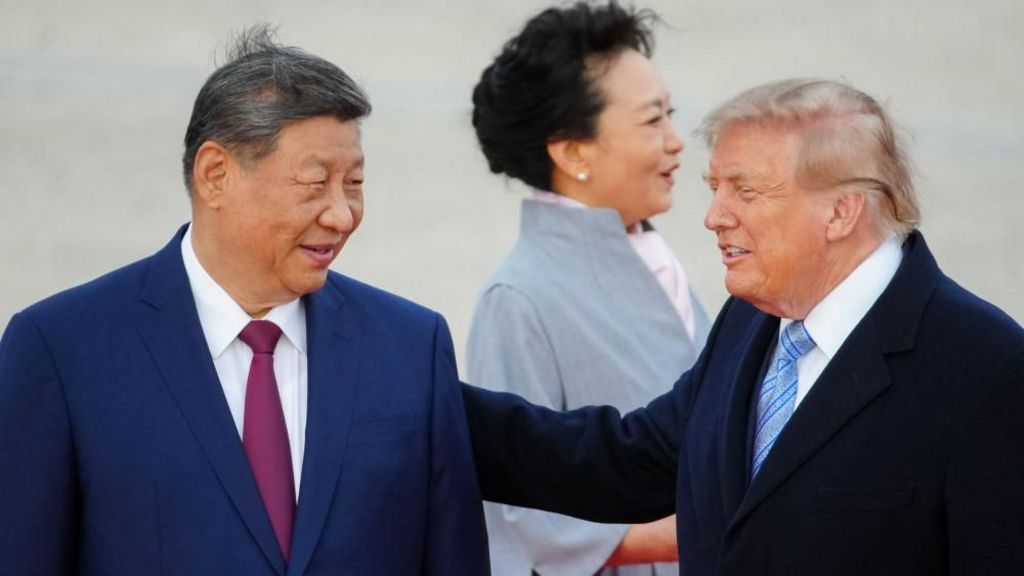
    In an extraordinary display of diplomatic priority not seen in more than six decades, US President Donald Trump personally welcomed Chinese President Xi Jinping to Washington Wednesday, kicking off a three-day landmark summit packed with discussions on critical global and bilateral issues. The warm reception, complete with a 30-meter red carpet, a full military honor guard, and a flyover of two B-1 supersonic bombers, marked the first time a sitting US president has greeted a foreign leader at Maryland’s Joint Base Andrews since President John F. Kennedy welcomed British Prime Minister Harold Macmillan in 1962.

    Xi Jinping touched down at the base at 17:39 local time aboard an Air China jetliner, accompanied by his wife Peng Liyuan and a high-level delegation that includes Politburo Standing Committee member Cai Qi, widely regarded as Xi’s closest advisor, Vice Premier He Lifeng, Foreign Minister Wang Yi, and other senior diplomatic and trade officials. After the plane came to a stop, honor guard troops lined both sides of the red carpet, and two official limousines pulled up to the aircraft steps. President Trump and First Lady Melania Trump stepped forward to greet the Chinese delegation, shaking hands with Xi and Peng before the two couples walked the red carpet together, posed for official photographs, and departed for Washington in separate motorcades.

    Even before the formal summit talks began, a key preliminary agreement was announced: US Treasury Secretary Scott Bessent confirmed that Washington and Beijing have agreed to extend their ongoing bilateral trade truce until January, pushing back the original November 10 expiration date. The current truce framework saw the US reduce tariff rates on a range of Chinese imports in exchange for China loosening export restrictions on critical rare earth minerals, materials essential to US manufacturing and high-tech supply chains. Bessent noted that he and He Lifeng held preliminary talks focused on laying the groundwork for a potential more comprehensive long-term trade deal down the line.

    In a written statement released by China’s state news agency Xinhua ahead of the summit, Xi emphasized the shared potential of the world’s two largest economies. “Both China and the United States are great nations, and their people are great people,” Xi wrote. “The two countries should be partners rather than rivals.” He added that China’s goal of national rejuvenation and the Trump administration’s “Make America Great Again” agenda are fully compatible, saying “they can coexist, reinforce each other, and benefit the whole world,” and expressed confidence the summit would deliver tangible, positive outcomes.

    First Lady Melania Trump, who has taken a hands-on role in planning the summit’s itinerary, told Fox News that President Trump made the decision to greet Xi personally at the base because of the strong rapport the two leaders share. The three-day schedule includes closed-door leadership talks, a lavish state dinner Thursday evening that will be attended by top US artificial intelligence industry leaders, and a cultural visit to the Smithsonian National Museum of Asian Art, where Melania Trump will host Peng Liyuan to highlight cultural ties between the two nations. The summit will conclude Friday with a visit to the US National Archives, where the two couples will view historical documents marking key milestones in US-China relations.

    Unlike Trump’s May 2026 visit to Beijing, which included a delegation of top US tech executives from firms including Apple, Tesla, and Nvidia, it remains unclear whether Xi brought any Chinese business leaders along for the Washington trip. Analysts note that bringing Chinese business figures would likely draw renewed scrutiny of Chinese industrial practices, state subsidies, and overcapacity in key manufacturing sectors – issues that have long been points of contention in bilateral relations.

    The summit comes as the two global powers are locked in a race for dominance in artificial intelligence, a sector that sits high on the meeting agenda. Trump has publicly dismissed industry warnings about unregulated AI development as a “hoax,” and both sides are expected to lay out their priorities for AI governance and competition during the talks. Other key issues on the agenda include the ongoing Iran conflict, cross-Strait relations around Taiwan, and US arms sales to the self-governing island that Beijing claims as its own territory.

    David Firestein, a China expert at the Bush China Foundation, outlined the core priorities each side brings to the table: Trump is pushing for further progress on trade, including lower Chinese tariffs on US goods, increased Chinese rare earth exports to the US, and higher purchases of American agricultural products. Firestein noted that Beijing has so far failed to follow through on earlier commitments to expand these imports and exports, a sticking point in negotiations. For China, Firestein said Xi will push for Trump to delay or block a congressionally approved $14 billion arms sale to Taiwan, and to deepen bilateral trade integration.

    Notably, Firestein observed that while the core issues dividing the two nations have not changed, the bilateral relationship is currently more stable and less volatile than it was in 2025. This shift comes as public opinion in the US has grown more favorable toward engagement with China: a recent Chicago Council on Global Affairs poll found that just 41% of Americans now view China’s territorial ambitions as a direct threat to the US, down from 52% in 2022. A 57% majority of Americans – including 57% of non-MAGA Republicans and most Democrats across the ideological spectrum – now support continued cooperation and engagement with Beijing. The only notable divide comes among Trump’s core loyalist base, where 63% favor limiting bilateral relations, creating a split between the president’s diplomatic outreach and the views of his most committed supporters.

  • Jared Kushner admits ‘delays’, as scant $2.45bn starter plan for Gaza unveiled

    Jared Kushner admits ‘delays’, as scant $2.45bn starter plan for Gaza unveiled

    On the sidelines of the United Nations General Assembly in New York City Wednesday, Jared Kushner — U.S. former President Donald Trump’s son-in-law, an unofficial senior advisor to the administration and close personal associate of Israeli Prime Minister Benjamin Netanyahu — led the public launch of a $2.45 billion preliminary infrastructure recovery plan for the war-ravaged Gaza Strip. The initiative is led by the so-called Board of Peace, a body chaired by Trump that counts Kushner among its executive board members.

    According to reporting from Reuters, the framework outlined Wednesday comprises 66 individual projects targeted at rehabilitating Gaza’s decimated economic infrastructure, though few concrete details about the plan’s implementation or funding commitments were released publicly. Kushner acknowledged during the event that the body has faced repeated setbacks since its formation 11 months ago, framing the delays as a preparatory period ahead of future action. “Different delays on different things, for whatever reason,” he told reporters. “We’re just refining, sharpening the axe, getting ready for when we get to the time to cut the tree… hopefully, that will be very, very soon.”

    The launch comes in the wake of a deeply unstable ceasefire brokered by the Trump administration that took effect in October 2025. Despite the truce, local Gaza media documentation confirms Israeli forces have carried out near-weekly air strikes across the enclave that have killed civilian residents with each attack. As of Wednesday, Gaza’s Palestinian Ministry of Health reported that 1,402 people have been killed in Israeli attacks since the ceasefire went into effect, pushing the total confirmed death toll in Gaza since the start of the conflict in October 2023 to just under 74,000.

    Board of Peace representative Nickolay Mladenov, the body’s lead official for Gaza, framed the initial $2.45 billion plan as a path toward long-term stability for both communities. “We want to give people a new chance, and we want to make sure that both the Palestinians in Gaza and Israeli communities living across the border have a chance to put behind them this fear of violence that has driven their lives for so many years,” he said at the unveiling. However, the board’s own projections show that full reconstruction of Gaza, a territory roughly half the size of New York City that has endured nearly three years of sustained heavy Israeli bombardment, will require more than $71 billion in total investment over the next decade to rebuild destroyed power grids, water systems and other critical basic infrastructure.

    The initiative has already faced sharp condemnation from international aid organizations, who warn the Board of Peace is failing Gazan civilians and enabling ongoing Israeli human rights and humanitarian law violations. Last month, Association of International Development Agencies executive director Athena Rayburn told the UN Security Council that the body is allowing Israel to obstruct critical humanitarian aid access to the blockaded enclave.

    Rayburn detailed widespread restrictions that have left Gaza’s population cut off from essential supplies: Israel has categorized basic items including scissors, crutches, wheelchairs and prosthetic limbs as “dual-use” goods barred from entry, blocked specialized medical personnel from entering the territory, and imposed such strict limits on engine oil that the commodity now costs 45 times its standard market price. Even basic foodstuffs including watermelon and onions have been rejected for entry under an unpublished Israeli humanitarian policy, she added.

    “What is unclear is why the mandate handed by this council to the Board of Peace is being used to violate the most fundamental rights of the Palestinians in Gaza and the most basic rules of humanitarian law,” Rayburn said. “This cannot be the new status quo.”

    In addition to facing humanitarian criticism, the Board of Peace has recently shifted its position on Israeli withdrawal from occupied Gaza, toughening its requirements following a meeting between senior board officials and Netanyahu six weeks ago. The body abandoned its original phased withdrawal framework, instead linking any Israeli pullback beyond the Yellow Line — the demarcation established by the October 2025 ceasefire that divides Gaza into Israeli- and Palestinian-controlled zones — to the full disarmament of Hamas, including the surrender of all light and heavy weapons and the dismantling of underground tunnel networks.

    “Contrary to inaccurate reports, we note that the withdrawal of the IDF beyond the Yellow Line will take place only once decommissioning is complete, as Hamas committed to the mediators. This applies to light weapons, heavy weapons and the tunnels alike,” the board said in a statement. Since the ceasefire, Israel has expanded its territorial control in Gaza, now holding more than 60 percent of the enclave, and Netanyahu has publicly stated his goal to expand Israeli control to roughly 70 percent of the territory.

  • UN General Assembly 2026: Arab and Muslim leaders denounce militarism engulfing region

    UN General Assembly 2026: Arab and Muslim leaders denounce militarism engulfing region

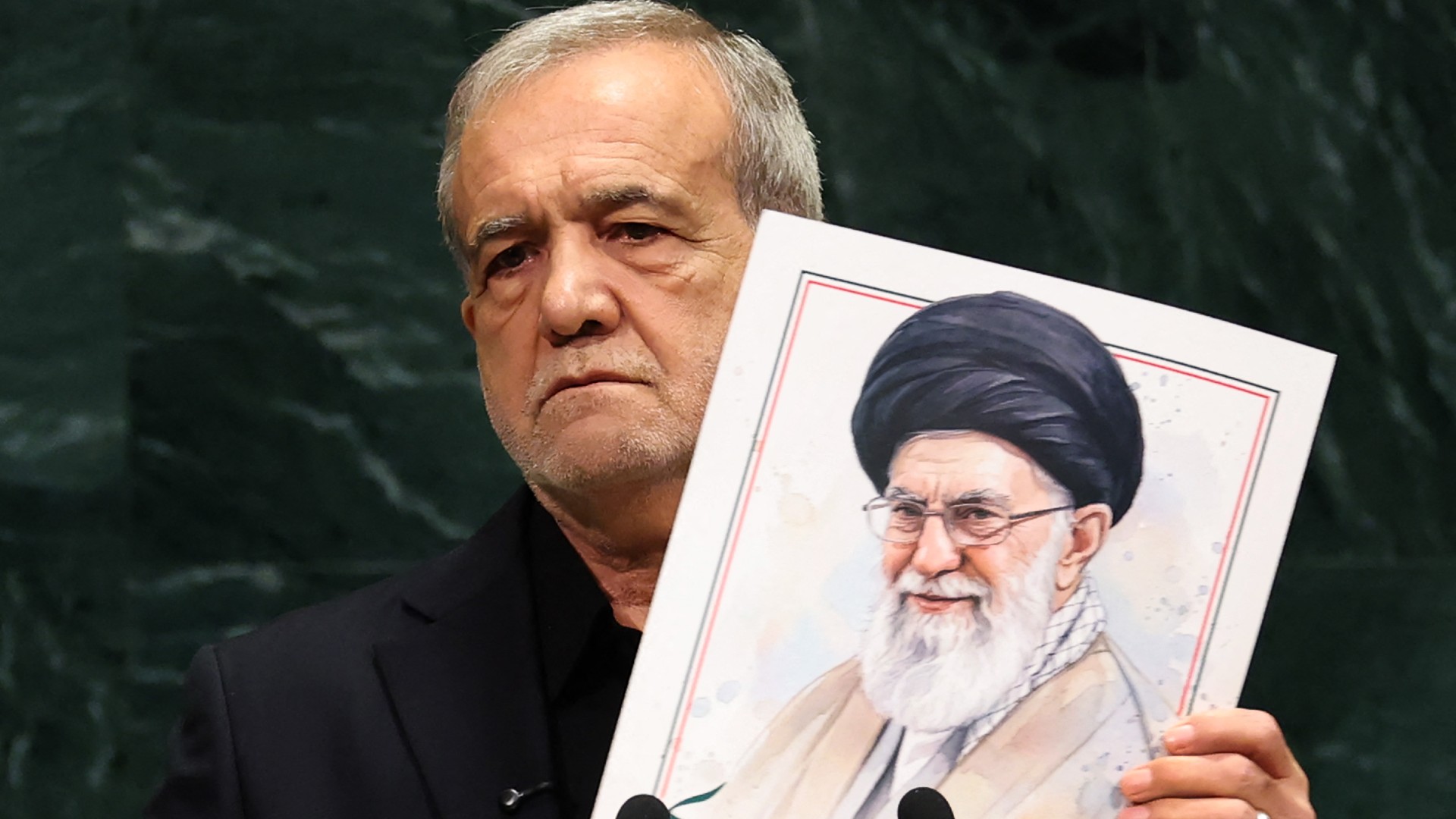
    On the second day of the 2025 United Nations General Assembly, Arab and Muslim leaders united to center global attention on two defining regional crises: the ongoing U.S.-Israeli war against Iran and the humanitarian catastrophe unfolding in Gaza. The day’s debates were shaped by sharp, direct pushback against threats and military actions from Washington and Tel Aviv, with leaders laying out their nations’ stances amid shifting regional alliances and escalating conflict. The proceedings opened with a direct response to U.S. President Donald Trump’s combative address delivered a day earlier, where Trump threatened to “annihilate Iran” in the same speech where he floated the possibility of negotiating a end to the war. After Trump labeled the Iranian people “terrorists” during his remarks, Iranian President Masoud Pezeshkian confirmed he revised his planned address to directly address the accusations. Opening his speech by holding images of Iran’s assassinated Supreme Leader Ayatollah Ali Khamenei, killed in the opening U.S.-Israeli strikes on February 28, and graphic photos of Iranian children killed in American airstrikes and their mass graves, Pezeshkian delivered a scathing rebuke of Washington and Tel Aviv. Pezeshkian pushed back forcefully against the terrorist labeling, noting, “Those who are terrorists, and train and protect terrorists, describe us as such. We have only defended ourselves. We are not terrorists. America and Israel attacked us.” He added that over the last two centuries, Iran has never launched an offensive attack on any other sovereign nation, calling the terrorist designation a baseless smear. The Iranian president also addressed U.S. justifications for the war, reaffirming that Tehran has never pursued a nuclear weapon, but will not surrender its right to develop peaceful civilian nuclear technology. “Iran does not accept for nuclear technology to be at the exclusive disposal of some,” he stated. “We will not bow our head and give up the right that is inherently ours. We say it clearly: no nuclear weapons and no limitations to peaceful nuclear technology.” He also called out U.S.-Israeli hypocrisy for pressuring Iran to curb its nuclear program while turning a blind eye to Israel’s widely acknowledged, undeclared nuclear arsenal. On ballistic missile programs, Pezeshkian defended Iran’s right to maintain a robust defensive military capability to deter aggression, noting, “Iran must be powerful, so as to avoid being threatened. We do not wish to use our power for hegemony. Our defensive systems have been built so that no one can think that the bombing of Iranian cities can go unanswered.” He also pushed back on claims that the Islamic Republic lacks popular support, confirming that widespread domestic protests at the start of 2025 were incited and armed by the U.S. and Israel, while massive crowds across Iran have turned out in widespread pro-government and pro-national demonstrations. The United Nations fact-finding mission has already confirmed that there are “reasonable grounds” to believe U.S. strikes on civilian targets in Iran — including a Minab elementary school that killed at least 150 people, 120 of them children, and a sports complex in Lamerd hit with thousands of tungsten pellets — amount to war crimes. Parallel to the Iran debate, U.S. envoys met with Iranian officials for three hours of closed-door talks on a potential ceasefire deal this week. Iran hardened its position ahead of the talks, reiterating that its core precondition for any agreement is the full reopening of the Strait of Hormuz, a critical global chokepoint for energy trade. Tuesday also saw Trump hold a separate meeting with a group of Arab and Muslim leaders, where he offered warm praise for the assembled officials, but the gathering concluded with no tangible agreements or public announcements addressing Middle East regional turmoil. Syrian President Ahmad al-Sharaa, speaking to the General Assembly in one of his highest-profile UN appearances since ousting former President Bashar al-Assad in late 2024, used his address to declare Syria’s formal return to the international community while delivering a fierce condemnation of ongoing Israeli aggression against his country. Sharaa noted that since he took power, Israel has launched more than 500 air strikes, carried out over 1,200 ground incursions, and detained more than 300 Syrians inside sovereign Syrian territory, actions he said directly contradict the global welcome of Syria’s reintegration into global affairs. “The world is joyed by our return but Israel is launching attacks against Syria,” he said. “This is at odds with the orientation we are seeing at a global level. We reject their aggressions.” Sharaa also reaffirmed Syria’s sovereign claim to the Golan Heights, the strategic territory seized by Israel in the 1967 Six-Day War and illegally annexed by Tel Aviv in 1981, a move that Donald Trump unilaterally recognized during his first presidential term in 2019. “Any attempts that violate our sovereignty, that violate international law, will be stopped. Golan will remain Syrian territories,” he said, calling for a full return to the 1974 disengagement agreement that established a UN-patrolled buffer zone between the two nations — a zone Israel currently occupies after invading southern Syria following Sharaa’s ascent to power. The Syrian leader made clear that he will not pursue formal diplomatic relations with Israel as long as Israeli strikes continue and the Golan Heights remains occupied, noting that his own birthplace falls within the illegally held territory. Sharaa also outlined progress his administration has made since taking power, noting that broad security has been restored across the country, transnational criminal networks and the captagon drug trade — which flourished under the Assad government — have been cracked down, and the government is cooperating with international bodies to eliminate leftover chemical weapons stockpiles from the Assad era. While international sanctions on Syria have been lifted, Sharaa acknowledged his government still faces steep challenges, including a collapsed economy and slow progress on post-conflict reconstruction. Still, he closed with an optimistic note: “Syria is rising. We proved to the world that the security of the region has to start in Damascus.” Jordan’s King Abdullah II echoed Sharaa’s warnings in his own address Tuesday, arguing that repeated Israeli strikes on Syria prove Israel has territorial expansion ambitions that stretch far beyond the occupied Palestinian territories. Libyan Presidential Council head Mohamed al-Menfi, speaking later in the day, joined the growing chorus of Arab leaders calling for a sovereign Palestinian state, warning that the ongoing failure to resolve the Palestinian issue is the root cause of endless regional conflict and rising extremism. “Neither the Islamic and Christian holy sites, nor civilians and civilian infrastructure have been spared the ravages of this conflict,” he said, adding that the absence of a Palestinian state directly fuels instability across the Arabian Gulf, where nations have faced repeated attacks from Iranian-aligned groups in response to the U.S.-Israeli war on Iran. Menfi also expressed full solidarity with Saudi Arabia amid ongoing Houthi attacks, stating, “The security of the kingdom and the Gulf, given their Arab and Islamic weight, is not a national matter, but a pillar in the security and stability of our region.” He also drew attention to other conflict zones across the Middle East and Africa, noting that the Sudanese people have “paid a heavy price” for an ongoing civil war funded by outside powers, and warned of growing instability across the Sahel region.

  • Trump administration asks Supreme Court to detain Badar Khan Suri again

    Trump administration asks Supreme Court to detain Badar Khan Suri again

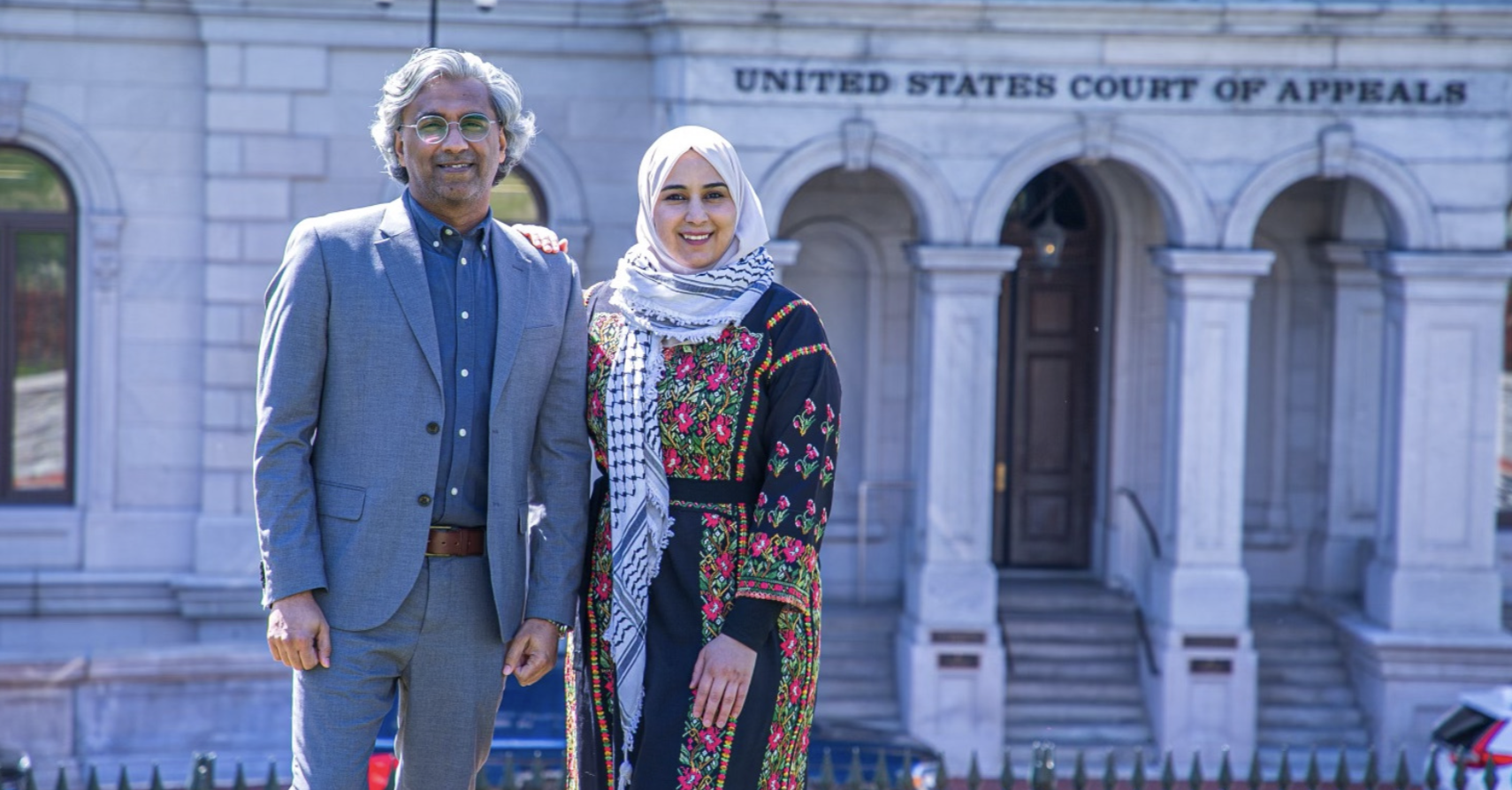
    A high-stakes legal battle over immigration authority and academic free speech has reached the U.S. Supreme Court, as the Trump administration has asked the nation’s highest court to reverse a lower court ruling that ordered the release of Georgetown University scholar Badar Khan Suri, who spent two months in federal immigration detention last year over his public criticism of Israel.

    Suri, an Indian citizen and legal permanent U.S. resident married to a U.S. citizen of Palestinian descent, was arrested in a dramatic late-night raid by masked Immigration and Customs Enforcement (ICE) agents outside his Northern Virginia home in March 2025. The arrest made him an early high-profile target of the administration’s immigration enforcement actions, drawing international condemnation and scrutiny from human rights advocates.

    At the time of his arrest, U.S. Secretary of State Marco Rubio revoked Suri’s visa, accusing the scholar of “spreading Hamas propaganda and promoting antisemitism on social media.” Suri was held for two months in an overcrowded, unsanitary ICE detention facility in Alvaredo, Texas, before a federal magistrate judge granted his release on bail in May 2025 as his deportation challenge moved forward. In July 2025, the Fourth Circuit Court of Appeals upheld the lower court’s ruling, rejecting the Trump administration’s bid to re-detain Suri.

    On Monday, the Department of Justice (DOJ) filed its appeal with the Supreme Court, arguing that federal judges lack the authority to intervene in immigration court proceedings, where non-citizens contest deportation orders. Legal analysts note the appeal gives the conservative-majority Supreme Court an opportunity to set a landmark precedent that could curtail judicial oversight of immigration detention for decades to come.

    Suri’s supporters and legal team—led by the American Civil Liberties Union (ACLU)—contend the scholar was deliberately targeted by right-wing pro-Israel groups to intimidate critics of Israeli policy, pointing in particular to his wife’s family background: she is the daughter of a former Hamas political advisor. In a July statement, the ACLU noted the administration has invoked a rarely used provision of the Immigration and Nationality Act to justify deportation, falsely claiming Suri’s presence in the U.S. “compromises a compelling foreign policy interest.”

    Noor Zafar, senior staff attorney for the ACLU’s Immigrants’ Rights Project, reaffirmed the organization’s position in an email to Middle East Eye this week, noting the Fourth Circuit “correctly ruled that denying judicial review of detention claims of people like Dr Badar Khan Suri’s misreads Congress’ statutes and undermines the protections guaranteed all persons on American soil.” Zafar added, “Our client should never have been jailed for exercising his First Amendment rights in the first place.”

    The case is currently proceeding along two separate legal tracks: the federal habeas corpus challenge to the administration’s actions, and a parallel deportation case in the DOJ-overseen immigration court system, which reports directly to the U.S. Attorney General. Habeas corpus, a legal principle with roots dating back to 13th-century England, is enshrined in U.S. law to guarantee that all people within U.S. territory—regardless of citizenship—have the right to challenge unlawful detention before a court.

    Now released on bail and reunited with his wife and three children in Virginia, Suri says he remains undaunted by the long legal fight ahead. A noted scholar of Middle East peace efforts, Suri has spent 20 years working to advance dialogue between conflicting parties. Speaking outside the Annandale, Virginia immigration courthouse last week, he said, “I have worked for the peace process all my life, 20 years now, and I know this is a tough thing. So I am ready for these challenges, and I am very hopeful that justice will prevail.”

    Nader Hashemi, Suri’s former research supervisor, has launched an online fundraiser to cover the scholar’s mounting legal fees. Hashemi described his former colleague as a dedicated academic whose work is “grounded in a belief that peace is possible through dialogue and mutual understanding. He’s dedicated his life to that mission.”

  • ‘Mr Rogers was political, too’: Ms Rachel challenges critics over Gaza and ICE detention

    ‘Mr Rogers was political, too’: Ms Rachel challenges critics over Gaza and ICE detention

    Beloved children’s educator and YouTube creator Rachel Accurso — known widely to her young audience as Ms. Rachel — has used a high-profile appearance on the viral digital talk show *SubwayTakes* to push back against critics who insist children’s entertainers should stay out of political debate, while using her platform to condemn the harm facing children in Gaza and demand an end to child detention in U.S. immigration facilities.

    During the unedited interview, host Kareem Rahma introduced Ms. Rachel, whose gentle, accessible educational content has earned her a massive global following among families, as “essentially the Mr. Rogers of today.” One of the show’s Gen Z producers went a step further, dubbing her the “Taylor Swift for toddlers” for her cross-generational cultural appeal. But the viral conversation quickly moved beyond playful praise of her work to confront the growing backlash Ms. Rachel has faced since she began speaking out in support of Palestinian children and against U.S. immigration detention policy.

    In addressing five of her so-called “controversial” opinions, Ms. Rachel centered her argument on the legacy of Fred Rogers, the iconic American children’s television host whose *Mister Rogers’ Neighborhood* shaped generations of young viewers. She rejected the pervasive myth that Rogers remained strictly apolitical, pointing to a series of defining political acts and messages throughout his decades-long career. Among these was a 1969 episode where Rogers shared a swimming pool and a towel with his Black co-star Officer Clemmons, a deliberate rebuke of racial segregation in public spaces at the height of the civil rights movement. She also highlighted Rogers’ public opposition to the nuclear arms race, woven into storylines on his show, and his landmark 1969 Senate testimony that successfully defended public broadcasting funding from proposed cuts. If Rogers, a figure universally revered by American audiences, saw protecting children as an inherently political act, Ms. Rachel argued, there is no reason modern children’s advocates should silence themselves on issues harming children today.

    The conversation turned to Gaza, where Ms. Rachel condemned the ongoing violence that has killed nearly 74,000 Palestinians, the majority of whom are civilians and many of whom are children. Pointing to UN findings that characterize the targeting of civilians in the enclave as genocide, she pushed back against attempts to dismiss labeling of the crisis. “Why would we bomb kids and take their limbs and their schools… and then say we can’t call this genocide?” she asked during the interview, a clip of which quickly spread across social media platforms. She also rejected criticism of her calls for humanitarian aid, pushing back against claims that pre-existing medical conditions among starving Gaza children negate their urgent need for food and lifesaving assistance.

    Ms. Rachel’s advocacy for Gaza follows a high-profile pledge she made earlier this year to match rapper Macklemore’s $1 million donation to Palestinian humanitarian relief, with all funds directed to the Palestine Children’s Relief Fund. Her interview also covered U.S. immigration policy, where she forcefully stated that “Children do not belong in detention centers. Ever.” Citing peer-reviewed pediatric research and United Nations reports, she detailed the severe long-term physical and psychological harm that detention inflicts on migrant children, arguing that the responsibility to protect children does not depend on their nationality or immigration status. Echoing Fred Rogers’ core philosophy, she concluded: “The children are always ours, every single one of them, all over the globe.”

    Public reaction to Ms. Rachel’s interview has been deeply divided. Many activists and social media users praised her willingness to speak out, noting that her stances only appear controversial because of skewed media framing. “Ms Rachel brought her ‘controversial’ takes to *SubwayTakes* with Kareem Rahma – though none of them actually feel that controversial if you believe in basic human decency,” one user wrote. Labor advocacy group Domestic Workers echoed the praise, writing “She’s right. That’s why we #readthemhome because they belong there. They belong with their families. They belong in classrooms, playgrounds, and libraries.”

    At the same time, Ms. Rachel has faced sustained online criticism from pro-Israel groups and commentators, who have labelled her antisemitic and accused her of supporting Hamas over her advocacy for Palestinian children. These accusations echo a campaign launched in April 2025 by pro-Israel group StopAntisemitism, which called on the U.S. Department of Justice to investigate claims Ms. Rachel was being paid to spread Hamas-aligned propaganda. No publicly available evidence has ever substantiated that allegation. Ms. Rachel has repeatedly rejected these claims, emphasizing that her concern for the safety and well-being of Palestinian children does not reduce her compassion for Israeli or Jewish children affected by violence.

  • Sharaa says Israeli attacks on Syria at odds with ‘joy’ of global community towards his country

    Sharaa says Israeli attacks on Syria at odds with ‘joy’ of global community towards his country

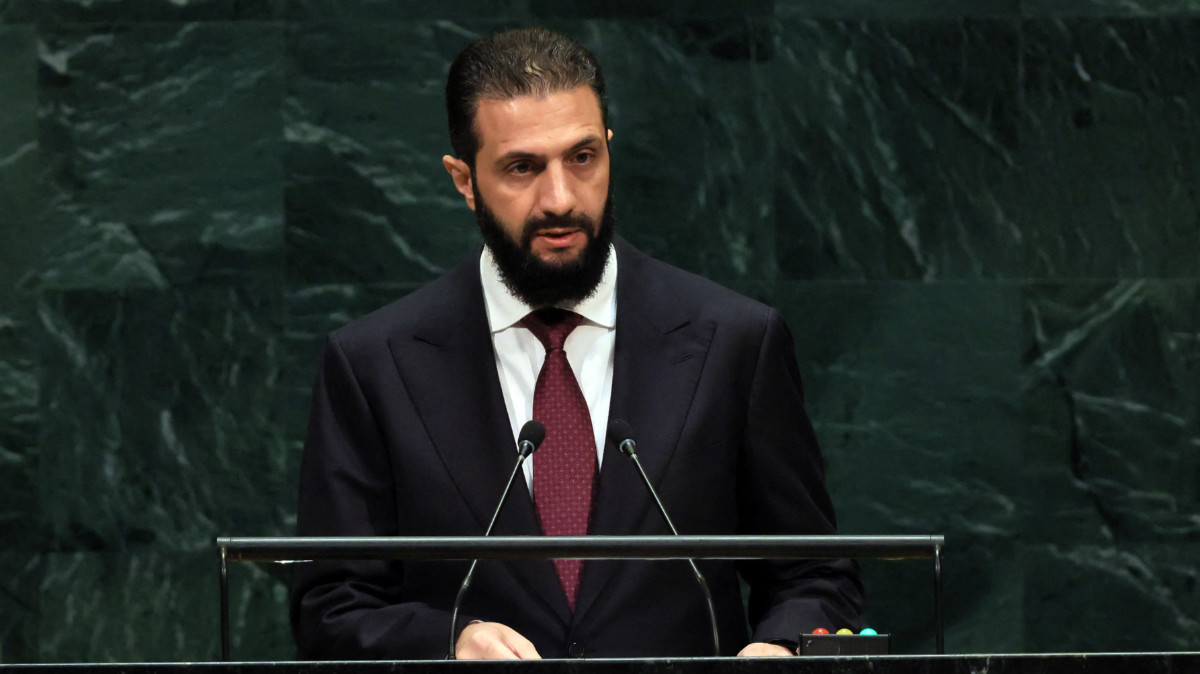
    In a high-stakes address to the United Nations General Assembly, Syrian President Ahmad al-Sharaa has formally announced his war-torn nation’s reentry into the global fold, while delivering a sharp rebuke of sustained Israeli military incursions into Syrian territory that he says directly contradict the growing international consensus welcoming Damascus back to diplomatic engagement.

    Speaking from the UN podium, Sharaa outlined the scale of unprovoked Israeli actions targeting his country, saying that Israel has carried out more than 500 separate air strikes, over 1,200 ground incursions, and detained more than 300 Syrian citizens in Syrian territory in recent years. “The world celebrates our return to the international community, yet Israel continues to launch attacks against Syria,” he stated. “This trajectory runs completely counter to the global shift we are seeing toward engagement with Syria. We categorically reject all Israeli aggression.”

    Sharaa also doubled down on Syria’s sovereignty claims to the Golan Heights, the strategic plateau seized by Israel from Syria in the 1967 Middle East war and illegally annexed by Israel in 1981. “Any attempt to violate our sovereignty and international law will be confronted. The Golan Heights will always remain Syrian territory,” he emphasized. The Syrian leader called for a full return to the terms of the 1974 disengagement agreement between the two countries, which established a UN-monitored buffer zone along their shared border. That agreement broke down after Israel invaded southern Syria and occupied the buffer zone immediately following Sharaa’s government taking power in late 2024, when he led a coalition that ousted long-time former president Bashar al-Assad.

    Sharaa’s condemnation received backing from Jordan’s King Abdullah II, who delivered his own blistering address to the General Assembly on Tuesday. King Abdullah argued that Israel’s repeated strikes on Syria make clear that the country holds territorial ambitions that extend far beyond the occupied Palestinian territories.

    Diplomatic efforts to normalize relations between Syria and Israel are currently being brokered by the United States, but Sharaa has ruled out any progress toward diplomatic ties while Israeli military actions continue. Speaking at a think tank event Tuesday, he made clear that he cannot entertain the idea of formal diplomatic relations so long as Israel carries out air strikes on Syrian soil and occupies the Golan Heights, his birthplace.

    The most recent high-profile Israeli strike came just last month, when Israel bombed a northern Syrian air base that it claimed would be used by Turkish forces. Syria’s close alliance with Turkey has turned the country into an emerging arena of geopolitical competition between Ankara and Tel Aviv, adding another layer of complexity to the already volatile region.

    The 1974 disengagement deal was originally reached during the rule of Hafez al-Assad, Bashar al-Assad’s father, and created a security framework and the UN buffer zone that held for decades. The status of the Golan Heights became even more contentious in 2019, when then-US President Donald Trump—who has openly expressed admiration for Sharaa—unilaterally recognized Israeli sovereignty over the occupied territory, a long-sought policy win for Israeli Prime Minister Benjamin Netanyahu.

    Sharaa, who addressed the UN General Assembly for the first time last year just months after taking power, used this year’s speech to highlight his administration’s progress in stabilizing Syria after decades of conflict. He said that his government has restored basic security across most of the country, ended Syria’s long period of international isolation, cracked down on transnational organized crime and the trade in captagon—the illicit amphetamine that flourished under the Assad regime—and is cooperating with international bodies to eliminate leftover chemical weapons stockpiles from the previous government.

    While international sanctions on Syria have been lifted following the political transition, Sharaa’s administration still faces steep domestic challenges, including a collapsed national economy and slow progress on reconstruction after years of civil conflict. Even amid these hurdles, Sharaa struck a confident note about his nation’s future. “Syria is rising,” he told the assembly Wednesday. “We have proven to the world that regional security can only begin with a stable, restored Syria starting from Damascus.”

  • Eight US sailors assigned to USS Abraham Lincoln attempted suicide, Navy says

    Eight US sailors assigned to USS Abraham Lincoln attempted suicide, Navy says

    A shocking disclosure from acting U.S. Navy Secretary Hung Cao has confirmed that eight crew members attached to the USS Abraham Lincoln carrier strike group attempted suicide during one of the service’s longest recent deployments to the Middle East. The revelation came in a formal Tuesday response to New York Senator Kirsten Gillibrand, a Democrat and member of the Senate Armed Services Committee, who had pressed for answers after family members of deployed sailors raised urgent alarms over plummeting mental health and intolerable living conditions at sea amid the U.S. military campaign against Iran.

    The nuclear-powered aircraft carrier, which first departed its home port in California last November for an initial rotation to the South China Sea, was redirected to the Middle East ahead of planned U.S. strikes on Iran in February. What was scheduled to be a six-month deployment ending in May was repeatedly extended, leaving roughly 5,000 service members aboard at sea for a total of 250 days before the USS George Washington was dispatched to replace it in August. The crew is now en route back to the U.S., with their first stop on dry land in the Thai resort city of Pattaya, where scores of sailors have been seen frequenting local bars, shopping malls and beaches after months confined to the ship.

    In his letter, Cao clarified that the eight suicide attempts included sailors from across the entire strike group: core Abraham Lincoln crew, carrier airwing personnel, strike group and destroyer squadron staff, crews from escorting destroyers, and personnel from all embarked aviation squadrons. He noted that the ship carried five chaplains and multiple dedicated mental health clinicians to address the spiritual and emotional needs of the deployed crew. Cao pushed back against widespread reports of systemic broken plumbing and chronic fresh food shortages, acknowledging only temporary localized piping failures, intermittent issues with the ship’s reverse osmosis desalination units, and a short-term reduction in available meal options. The U.S. Navy has previously acknowledged minor supply challenges during the deployment but has consistently rejected claims of a widespread mental health crisis aboard the vessel. The BBC has reached out to the U.S. Navy for additional comment beyond the information contained in Cao’s letter.

    Gillibrand condemned the Trump administration’s earlier dismissals of the crew’s poor conditions, calling the treatment of U.S. service members “completely unacceptable.” In a Wednesday statement to the BBC, she said, “What Trump and Secretary Hegseth dismissed as ‘fake news’ turned out to be serious and deteriorating conditions for our service members. Our troops and their families make immense sacrifices every single day, yet the president dismissed them with open disrespect.”

    The revelation of multiple suicide attempts comes amid a well-documented growing mental health crisis across the U.S. military. Data analyzed by USNI News confirms suicide is already the leading cause of death for active-duty U.S. Navy sailors and Marines, and the U.S. Department of Veterans Affairs reports that veterans face substantially higher suicide rates than civilians with no military service. A January 2025 peer-reviewed study of 956 active-duty U.S. sailors further reinforced these concerns, finding that naval personnel assigned to ships experience higher rates of serious psychological distress than service members in any other U.S. military branch. The study identified unique, chronic stressors of life at sea, including substandard living conditions, constant disruptive noise, and grueling operational schedules that leave troops with insufficient time for sleep and recovery.

    For anyone struggling with suicidal thoughts or mental health distress connected to the issues discussed in this report, support is available through BBC Action Line or the U.S. Suicide and Crisis Lifeline by calling 988.

  • In Amish country, nurses go door to door to stop deadly spread of measles

    In Amish country, nurses go door to door to stop deadly spread of measles

    Nearly five months after the United States’ deadliest measles outbreak in three decades began in rural Pennsylvania, public health workers are waging a targeted, on-the-ground campaign to curb transmission in one of the state’s most isolated populations: the Amish community.

    Home to roughly 90,000 Amish residents – the largest concentration of the devout Christian group in the country, who first settled in Pennsylvania’s Lancaster County in the early 1700s – the region has become the epicenter of a public health crisis that has already claimed four lives. Unlike most modern communities, the Amish broadly reject many trappings of 21st-century life, from widespread technology use to regular engagement with conventional Western medical systems, creating unique barriers to routine immunization.

    Local health officials estimate that only around one in four Amish residents in the Lancaster area have received the measles, mumps and rubella (MMR) vaccine, a gap that public health experts stress is not rooted in religious opposition. “A lot of people who haven’t gotten vaccinated, it’s not because they have a strong stance against getting vaccinated for measles. It’s just that they haven’t gotten around to it. It’s not convenient,” explained Braxton Mitchell, a genetic epidemiologist at the University of Maryland School of Medicine who has long studied Amish communities in the region. Without easy access to transportation or regular primary care, routine immunization often falls by the wayside, and the community’s tight-knit, highly social structure means the highly contagious measles virus spreads rapidly once introduced.

    To reach this under-served population, Chester County – which borders outbreak epicenter Lancaster – has adapted its response, drawing on door-to-door outreach strategies honed during the COVID-19 pandemic. Dale Weiser, a clinical supervisor and nurse with the Chester County Health Department, has spent months making daily house calls across the rural countryside, sometimes driving 30 miles or more each day to administer vaccines in private home settings, often at residents’ kitchen tables.

    Many Amish adults lack health insurance and have limited ongoing interaction with the formal healthcare system, Weiser explained, so building trust is the first critical step to increasing uptake. “When you start talking and you answer their questions, and build that trust, a lot of times they will make a different decision,” she said. To date, Weiser has personally vaccinated roughly 100 people, and the county has administered 538 total MMR vaccines, more than 60% of them in private, in-home settings to accommodate residents who cannot travel to clinics or prefer to keep their vaccination decision private.

    This boots-on-the-ground approach has also helped public health workers address persistent vaccine misinformation that has seeped even into this insulated, technology-limited community. Weiser says she regularly encounters common falsehoods spread by national anti-vaccine groups, from claims that vaccines contain heavy metals that cause magnetism to assertions that shots include microchips. While staunch anti-vaccine advocates remain largely unpersuaded, local officials note that many undecided Amish residents – especially new parents – have begun asking questions and seeking immunization after seeing neighbors and loved ones fall seriously ill.

    Statewide, the response has delivered measurable progress: since the outbreak began in late April, public health departments have administered nearly 4,300 MMR vaccines at pop-up clinics near the outbreak’s core. Even so, the outbreak has already become the deadliest the U.S. has experienced since 1992, with four confirmed deaths: two infants, one 18-year-old, and a 40-year-old woman. Experts warn that measles, which was declared eliminated in the U.S. in 2000, has established sustained community transmission, and the upcoming school year risks accelerating spread even further. Weiser predicts the outbreak will continue for another six to 12 months.

    Beyond public health challenges, the crisis has ignited sharp political tensions between state and federal health leaders, centered on vaccine policy and misinformation. Federal Health Secretary Robert F. Kennedy Jr., a longstanding vaccine skeptic, drew widespread condemnation after publicly disputing that one of the infant deaths was caused by measles complications. Democratic Pennsylvania Governor Josh Shapiro has publicly accused Kennedy of spreading harmful misinformation that worsens the outbreak. The county coroner, a Republican, initially stated one infant died from a ruptured spleen, but leading infectious disease experts note that measles causes spleen enlargement, directly increasing the risk of rupture, and contributed substantially to the child’s death.

    Public health experts also point to recent actions by the Trump administration that have amplified public doubt about MMR vaccine safety. Most recently, former President Trump issued an executive order calling for the combined MMR vaccine to be split into three separate doses – a change doctors universally agree is unnecessary, more costly, and does nothing to improve the shot’s proven safety record. “What he’s doing is casting doubt,” said Dr. William Moss, a pediatric infectious disease specialist at the Johns Hopkins Bloomberg School of Public Health. “He basically said the vaccine could be dangerous in its current combined form.” For frontline workers working to build trust and curb transmission, these political divisions only add another layer of complexity to an already difficult fight against a fast-spreading, preventable disease.

  • Residents eating garden weeds in Russian-occupied city cut off from food and water

    Residents eating garden weeds in Russian-occupied city cut off from food and water

    Nestled between the Dnipro River and Russian military positions in southern Ukraine’s Kherson region, Oleshky has been locked under Russian occupation since the early days of Moscow’s full-scale invasion in 2022. For the thousands of residents who remain in the once-thriving riverside city, every day is a brutal fight for survival marked by shortages, constant shelling, and widespread violence against civilians.

    Halia, a resident trapped in the city whose name has been changed to protect her from retaliation by occupation forces, shared a devastating account of a recent civilian killing in an interrupted phone interview with the BBC. She first reported that two more civilians had lost their lives overnight, and three days later confirmed the victims were a married couple she knew personally. The pair had traveled 23 kilometers to the nearby town of Radensk to collect a bag of food, but failed to return before Russian occupation authorities implemented a curfew. They were subsequently killed in a drone strike. Four independent sources have confirmed the September 20 deaths of the two civilians, who were killed solely while seeking basic sustenance.

    Halia’s story is far from unique. Dozens of harrowing firsthand testimonies from Oleshky residents have been collected by the BBC in recent weeks, painting a picture of a humanitarian disaster that has escalated dramatically since the destruction of the Nova Kakhovka Dam in June 2023. The dam collapse flooded the entire region, submerging Oleshky’s buildings up to their rooftops and displacing thousands. While Ukraine and NATO have accused Russian forces of blowing up the dam, Moscow has blamed Ukrainian military actions for the destruction.

    Before the 2022 full-scale invasion, Oleshky was home to roughly 24,000 people. Today, the Ukrainian government estimates that only around 6,000 residents remain trapped in the city and its surrounding outskirts, including 200 children. For this trapped population, basic needs that most take for granted have become impossible to secure.

    Residents report that children in the area are suffering from acute malnutrition, lack access to any formal education, and have almost no access to emergency medical care. Only one hospital remains partially operational in the entire city, opening just a few days a week almost exclusively to perform emergency amputations for people injured by shelling and landmines. Oleshky has been completely cut off from gas, electricity, and running water since the dam collapse, forcing residents to scavenge for alternative sources of fuel and clean water.

    Ukrainian authorities have made repeated attempts to deliver humanitarian aid and supplies to the trapped population, but these efforts have failed to reach residents in recent months. Earlier this week, the Kremlin acknowledged that Oleshky is facing what it called a “critical situation” with acute shortages of food and medicine, but attempted to shift blame to Kyiv, claiming Russian military forces are working to resolve the crisis. Ukraine’s Foreign Minister Andriy Sybiha rejected that framing, telling the UN General Assembly in New York this week that Oleshky is under a “full blockade” imposed by Russian forces, and called on the international community to exert pressure on Moscow to allow unimpeded access for humanitarian aid.

    For residents like Halia, the daily struggle for food is the most immediate threat. She told the BBC that the last official food delivery to Oleshky arrived back in May, and she now only eats one small meal a day. “I make some plain bread, sometimes I can have it with a tomato, or with some honey, and a tea. That’s it,” she explained. With summer vegetable gardens now exhausted, many residents have been forced to forage for edible wild weeds in local gardens, and discussions about which plants are safe to eat, along with posts to swap, sell, or share tiny portions of food, dominate local messaging chat groups on Telegram. No shops remain open in the city, meaning residents cannot access replacement clothing, hygiene products, or basic household goods.

    Some residents previously risked traveling on foot along mine-littered roads to leave the city in search of supplies, but the security situation has deteriorated so sharply that even that dangerous option is now considered too deadly.

    Counting the full civilian death toll in Oleshky has been made nearly impossible by restrictions imposed by occupation authorities. The UN Human Rights Monitoring Mission in Ukraine has recorded at least 29 civilian deaths and 54 injuries in Oleshky and the nearby town of Hola Prystan so far this year, but local volunteers say the actual number is far higher.

    Ksenia Arkhipova, a Ukrainian volunteer who escaped Oleshky in summer 2022, shortly after it fell to Russian forces, has spent more than two years compiling a public record of civilian deaths in the city. Working with residents still trapped inside, she has recorded the names and dates of birth of roughly 1,200 dead civilians in a running spreadsheet, and said the list grows by one or two names every single day. “Someone was killed by a drone, someone else stepped on a landmine,” she explained. While the BBC cannot independently verify the full death count, multiple residents have confirmed the scale of unrecorded killing.

    Tetiana, another trapped resident whose name has also been changed for her safety, shared her own experience of losing both of her parents to violence in Oleshky earlier this year. She provided the BBC with the couple’s dates of birth and photos to confirm their identities, but asked that their names not be published to protect her from retaliation. “They were shot inside their home. Russian soldiers came there and wanted to take it,” she said.

    Worse than the uncounted deaths, residents say, is the Russian occupation authorities’ ban on burying civilians killed by violence. Occupation forces require that any non-natural death be confirmed by a post-mortem examination conducted by a Russian doctor, a procedure that is completely impossible to carry out in Oleshky’s collapsed healthcare system. Only residents who die of natural causes are allowed to be formally buried, Tetiana said, meaning “some bodies have been on the streets since December.”

    Unclaimed bodies are either piled in the local hospital’s morgue, which has had no power since last winter, or left out in the open where stray dogs feed on the remains, according to volunteer Arkhipova. The BBC has verified this detail through multiple graphic photos provided by residents, which are too disturbing to publish.

    Ester Vrataryova, co-founder of the charity Humanity that provides support to trapped residents in Oleshky and other occupied Ukrainian territories, described the burial ban as a deliberate tool of violence against the local population. “This is a tool of psychological pressure,” she said. “If you try to bury a dead body, you’ll become the next one.”