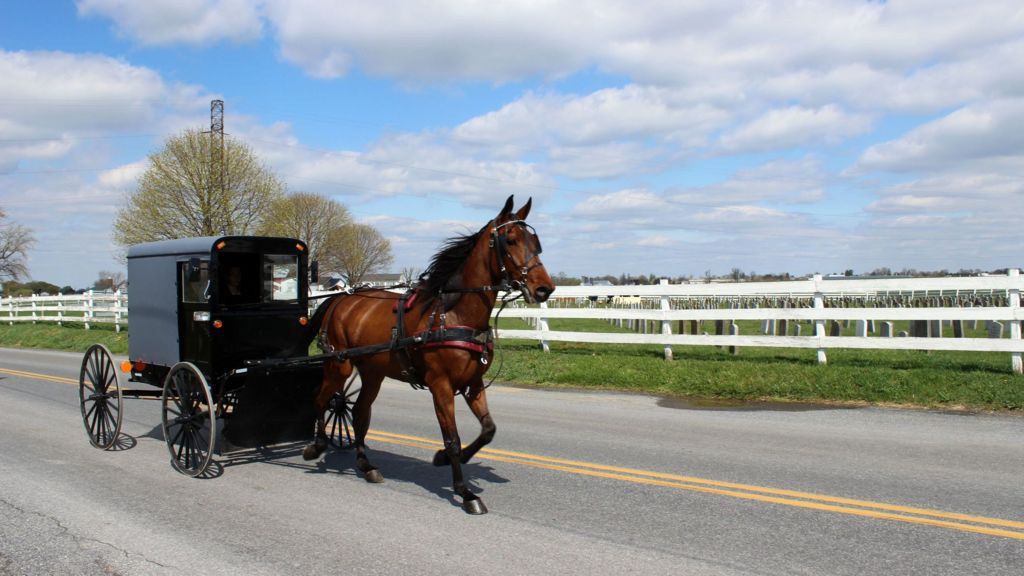
Nearly five months after the United States’ deadliest measles outbreak in three decades began in rural Pennsylvania, public health workers are waging a targeted, on-the-ground campaign to curb transmission in one of the state’s most isolated populations: the Amish community.
Home to roughly 90,000 Amish residents – the largest concentration of the devout Christian group in the country, who first settled in Pennsylvania’s Lancaster County in the early 1700s – the region has become the epicenter of a public health crisis that has already claimed four lives. Unlike most modern communities, the Amish broadly reject many trappings of 21st-century life, from widespread technology use to regular engagement with conventional Western medical systems, creating unique barriers to routine immunization.
Local health officials estimate that only around one in four Amish residents in the Lancaster area have received the measles, mumps and rubella (MMR) vaccine, a gap that public health experts stress is not rooted in religious opposition. “A lot of people who haven’t gotten vaccinated, it’s not because they have a strong stance against getting vaccinated for measles. It’s just that they haven’t gotten around to it. It’s not convenient,” explained Braxton Mitchell, a genetic epidemiologist at the University of Maryland School of Medicine who has long studied Amish communities in the region. Without easy access to transportation or regular primary care, routine immunization often falls by the wayside, and the community’s tight-knit, highly social structure means the highly contagious measles virus spreads rapidly once introduced.
To reach this under-served population, Chester County – which borders outbreak epicenter Lancaster – has adapted its response, drawing on door-to-door outreach strategies honed during the COVID-19 pandemic. Dale Weiser, a clinical supervisor and nurse with the Chester County Health Department, has spent months making daily house calls across the rural countryside, sometimes driving 30 miles or more each day to administer vaccines in private home settings, often at residents’ kitchen tables.
Many Amish adults lack health insurance and have limited ongoing interaction with the formal healthcare system, Weiser explained, so building trust is the first critical step to increasing uptake. “When you start talking and you answer their questions, and build that trust, a lot of times they will make a different decision,” she said. To date, Weiser has personally vaccinated roughly 100 people, and the county has administered 538 total MMR vaccines, more than 60% of them in private, in-home settings to accommodate residents who cannot travel to clinics or prefer to keep their vaccination decision private.
This boots-on-the-ground approach has also helped public health workers address persistent vaccine misinformation that has seeped even into this insulated, technology-limited community. Weiser says she regularly encounters common falsehoods spread by national anti-vaccine groups, from claims that vaccines contain heavy metals that cause magnetism to assertions that shots include microchips. While staunch anti-vaccine advocates remain largely unpersuaded, local officials note that many undecided Amish residents – especially new parents – have begun asking questions and seeking immunization after seeing neighbors and loved ones fall seriously ill.
Statewide, the response has delivered measurable progress: since the outbreak began in late April, public health departments have administered nearly 4,300 MMR vaccines at pop-up clinics near the outbreak’s core. Even so, the outbreak has already become the deadliest the U.S. has experienced since 1992, with four confirmed deaths: two infants, one 18-year-old, and a 40-year-old woman. Experts warn that measles, which was declared eliminated in the U.S. in 2000, has established sustained community transmission, and the upcoming school year risks accelerating spread even further. Weiser predicts the outbreak will continue for another six to 12 months.
Beyond public health challenges, the crisis has ignited sharp political tensions between state and federal health leaders, centered on vaccine policy and misinformation. Federal Health Secretary Robert F. Kennedy Jr., a longstanding vaccine skeptic, drew widespread condemnation after publicly disputing that one of the infant deaths was caused by measles complications. Democratic Pennsylvania Governor Josh Shapiro has publicly accused Kennedy of spreading harmful misinformation that worsens the outbreak. The county coroner, a Republican, initially stated one infant died from a ruptured spleen, but leading infectious disease experts note that measles causes spleen enlargement, directly increasing the risk of rupture, and contributed substantially to the child’s death.
Public health experts also point to recent actions by the Trump administration that have amplified public doubt about MMR vaccine safety. Most recently, former President Trump issued an executive order calling for the combined MMR vaccine to be split into three separate doses – a change doctors universally agree is unnecessary, more costly, and does nothing to improve the shot’s proven safety record. “What he’s doing is casting doubt,” said Dr. William Moss, a pediatric infectious disease specialist at the Johns Hopkins Bloomberg School of Public Health. “He basically said the vaccine could be dangerous in its current combined form.” For frontline workers working to build trust and curb transmission, these political divisions only add another layer of complexity to an already difficult fight against a fast-spreading, preventable disease.