博客

  • Tigray capital ‘out of cash’ as fighting escalates, resident tells BBC

    Tigray capital ‘out of cash’ as fighting escalates, resident tells BBC

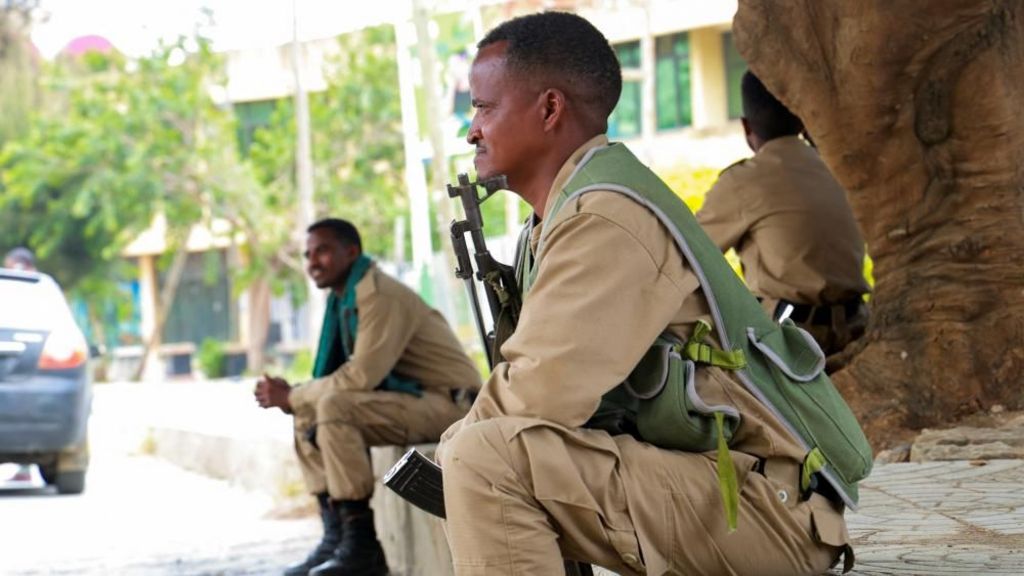
    Escalating hostilities in Ethiopia’s Tigray region have pushed the regional capital Mekelle into a severe cash crisis, a local resident has told the BBC, painting a complex picture of stalled daily life under renewed conflict. While the city itself has not seen active frontline combat in the immediate period following the latest outbreak of fighting, widespread anxiety and uncertainty have gripped the population, the insider source confirms.

    The acute cash shortage has left residents unable to access basic necessities, with local businesses struggling to operate and ATMs running dry after weeks of disrupted financial flows linked to the conflict. Though street-level calm currently holds in Mekelle, the underlying tension is palpable: ordinary people are bracing for further escalation, navigating the double stress of economic collapse and the ever-present threat of expanding violence. The renewed outbreak of hostilities in Tigray has derailed fragile peace efforts that had been building over recent months, leaving regional and international observers scrambling to urge both sides to return to negotiations before the crisis deepens into a full-scale humanitarian catastrophe.

  • How US blindly ceded its rare earth dominance to China

    How US blindly ceded its rare earth dominance to China

    From the smartphone in your pocket to the car you drive, and from cutting-edge military aircraft to transoceanic communications cables, 17 chemically similar metals collectively labeled rare earth elements power nearly every corner of modern life. Coined in 1794, the term “rare earths” is actually a misnomer: for example, cerium, one of the most widely used members of the group, is just as abundant in the Earth’s crust as copper. What makes these metals rare and strategically critical is not their presence in the ground, but the extraordinary difficulty of separating them from raw ore and refining them into usable materials. This processing challenge has turned control of rare earth supply chains into a major source of geopolitical power, and today, that power is concentrated largely in China.

    As a former war game adjudicator for the U.S. Navy, I have seen firsthand how hidden structural constraints can derail even the most carefully crafted strategic plans. Rare earth processing is one such underrecognized constraint that shapes the entire U.S.-China geopolitical relationship. Even critical U.S. military assets, from F-35 fighter jets to Virginia-class submarines, depend on rare earths processed in China. In 2025, China demonstrated the weight of this influence when it implemented sweeping new rare earth export controls, before agreeing to suspend the majority of these measures until November 10, 2026. This temporary suspension itself has become a powerful bargaining chip: the ability to extend the pause or allow restrictions to snap back into effect gives Beijing substantial diplomatic leverage, fitting Theodore Roosevelt’s famous description of geopolitical strategy as “speaking softly and carrying a big stick.”

    ### How China claimed global rare earth dominance

    It was not inevitable that China would come to control the global rare earth market. As recently as the late 1980s, the U.S. led global production out of California’s Mountain Pass mine. But repeated incidents of radioactive wastewater leaking from the mine’s facilities into the Mojave Desert created regulatory and public pressure that made sustained domestic production difficult. When China expanded its own rare earth mining operations and began selling processed materials at lower prices, shifting suppliers became an economically straightforward choice for international buyers. Mountain Pass’s separation plant shut down in 1998, and mining operations ceased entirely in 2002.

    While MP Materials restarted mining at Mountain Pass in 2017, amid growing U.S. concerns over rare earth supply security, the U.S. still imported more than two-thirds of its rare earth elements as of 2025. Current data underscores the scale of China’s dominance: in 2024, China mined 60% of the rare earth elements used in global magnet production, and handled 91% of all global rare earth separation and refining. For decades, international buyers accepted this arrangement: Chinese processed rare earths cost less than building domestic capacity, and buyers avoided the environmental costs and public backlash that come with refining. But in exchange for lower short-term costs, they ceded critical strategic leverage to Beijing – a dynamic that was less concerning when China was still seen as a rising, largely cooperative economic power.

    ### Why the U.S. domestic supply chain rebuild is moving slowly

    The U.S. Government Accountability Office estimated back in 2010 that rebuilding a full end-to-end domestic rare earth supply chain, from mining to separation to finished magnet manufacturing, could take up to 15 years, and progress has been even slower than projected for three core reasons.

    First, China has built its industry over decades with a workforce of thousands of specialized, experienced engineers, while the U.S. retains a tiny fraction of that expertise. All modern cutting-edge industrial rare earth processing technology was developed in China, and Beijing banned exports of this separation technology in December 2023, cutting off a key path for U.S. capacity building. Second, while the U.S. holds substantial domestic rare earth deposits, permitting and developing new mining projects remains a slow, fraught process. Third, despite billions in federal investment, supply chain rebuilding faces persistent headwinds from Chinese export restrictions.

    To date, the U.S. government has committed more than $7 billion since April 2025 to rebuilding domestic rare earth production capacity. In 2025, the Pentagon purchased $400 million in preferred stock from MP Materials, giving the U.S. government a 15% ownership stake in the company. MP Materials currently projects that its new commercial magnet plant will not begin equipment testing until 2028. In 2026, the U.S. Commerce Department signed a letter of intent to provide rare earth magnet maker USA Rare Earth with $277 million in direct funding and a $1.3 billion loan to develop new facilities in Texas and Oklahoma. Even with this support, however, Chinese trade barriers continue to slow progress.

    ### The November 10, 2026 expiration deadline

    In October 2025, China’s Ministry of Commerce announced six broad export control measures for rare earths. One of the most far-reaching, Announcement No. 61, requires even third-country factories in Germany or Japan to obtain a Chinese export license to ship products that contain 0.1% or more Chinese-origin rare earths, or that were manufactured using Chinese rare earth processing technology.

    Shortly after the announcement, then-President Donald Trump met with Chinese leader Xi Jinping, and Beijing agreed to suspend the six main export control measures until November 10, 2026. In exchange, Washington paused its controversial “affiliates rule,” which imposes restrictions on companies majority-owned by blacklisted Chinese firms, for a one-year period. Both sets of restrictions will automatically snap back into effect on November 10 unless both governments agree to extend the temporary truce.

    It is important to note that not all Chinese export restrictions were suspended. Licensing requirements for exports of seven heavier rare earth elements, implemented in April 2025, remain in full force. The impact of these controls on U.S. industry was already visible in 2025, when automaker Ford was forced to idle its Chicago assembly plant for a full week due to a shortage of rare earth magnets critical for vehicle speakers and electric motors. Ford CEO Jim Farley later described the company’s rare earth supply as “day to day,” noting the firm had no alternative domestic source, and production only resumed after Beijing granted a special export approval.

    In June 2026, Beijing expanded restrictions further by adding 10 U.S. companies to its export control list, banning both Chinese and foreign firms from selling any dual-use (civilian and military) goods to the targeted firms. Notably, two of the blacklisted companies are MP Materials and USA Rare Earth – the two federally backed U.S. firms that have made the farthest progress in building a full domestic mine-to-magnet supply chain. Beijing framed the move as a reciprocal response to a similar blacklisting action by the U.S. Pentagon, but a clear strategic logic is at play: targeting the two leading U.S. rare earth developers slows America’s efforts to reduce dependence on Chinese processing.

    If the truce is extended on November 10, the temporary pause on the six main export controls will remain in place, but the heavy rare earth licensing requirements and the June 2026 blacklisting of U.S. rare earth firms will stay in effect. This truce allows both sides to maintain a facade of cooperation, but it does not resolve the underlying strategic competition.

    ### Three possible paths forward for the U.S.

    The U.S. currently faces three clear strategic options for managing its rare earth dependency, each with distinct tradeoffs:

    First, the U.S. could choose to leave the majority of rare earth processing in Chinese hands. This is the fastest and lowest-cost option in the short term, but it leaves the U.S. permanently exposed to sudden supply disruptions and ongoing Chinese geopolitical leverage across a wide range of diplomatic and military issues.

    Second, the U.S. could accelerate efforts to rebuild a full end-to-end domestic rare earth supply chain. This would eliminate most U.S. dependence on Chinese processing and the associated geopolitical leverage, but it will take more time to complete, require billions more in upfront investment, and force the U.S. to confront the environmental challenges of rare earth refining, which produces acidic and sometimes radioactive processing residues.

    Third, the U.S. could build a collaborative allied supply chain with partner nations such as Australia and Japan, both of which have already begun developing their own rare earth processing capacity. This approach would reduce the risk of unilateral Chinese supply cuts, and Japan has already seen limited success with this model. However, it remains vulnerable to China’s existing rules that restrict the use of Chinese rare earth technology in third countries.

    The outcome of the upcoming meeting between President Xi Jinping and President Trump on September 24, 2026, will likely shape whether the temporary export control pause is extended past November 10. But regardless of the short-term outcome, the broader strategic competition over rare earth supply chain dominance – and the geopolitical leverage that comes with it – will continue for the foreseeable future.

    This article is based on analysis by Charles Edward Gehrke, Sloan Fellow at the Massachusetts Institute of Technology.

  • Ethiopia’s army says it has repelled attacks in first comment on fresh fighting

    Ethiopia’s army says it has repelled attacks in first comment on fresh fighting

    After two years of a fragile, AU-brokered ceasefire, deadly hostilities have erupted once again across northern Ethiopia, bringing the country to the brink of a resumption of its devastating 2020–2022 civil war. Spiking tensions between Prime Minister Abiy Ahmed’s federal government and the Tigray People’s Liberation Front (TPLF), the ruling party in Ethiopia’s Tigray region, boiled over into open combat on Wednesday, with both sides moving quickly to secure strategic territory.

    In its first official public statement since fighting began, the Ethiopian National Army announced that it had successfully fended off coordinated assaults from TPLF fighters and their recently formed armed coalition in multiple northern border zones. According to the military’s account, the initial outbreak of hostilities occurred in the Amhara region, along its shared border with Tigray. The military claimed its forces inflicted heavy losses on TPLF combatants and seized a large stockpile of weapons from the attacking group.

    Independent verification of the army’s claims remains impossible, as international media including the BBC are barred from entering Tigray and surrounding conflict zones, and the TPLF has not issued any formal response to the military’s statement. Unconfirmed reports from local and humanitarian sources, however, indicate TPLF forces have launched simultaneous offensives into both the neighboring Afar and Amhara regions.

    A senior humanitarian source based in Afar told Agence France-Presse Thursday that TPLF fighters have launched intensive artillery barrages targeting the border town of Yallo, as they push to seize full control of the settlement. Speaking to AFP, TPLF vice-president Amanuel Assefa confirmed the collapse of the 2022 peace agreement, stating bluntly: “We are in the situation of full-blown war now.”

    The latest escalation caps months of gradual deterioration in relations between the two sides, with both the federal government and Tigrayan authorities repeatedly accusing one another of violating the terms of the African Union-negotiated truce that ended the original 2020–2022 conflict. That war was one of the deadliest of the 21st century: the AU’s lead mediator estimated that roughly 600,000 people died from violence, famine, and lack of access to medical care, as the conflict pushed Tigray to the edge of a catastrophic humanitarian collapse. Just days before the current outbreak of fighting, the TPLF announced a new military alliance with six other armed opposition groups, with the explicit goal of ousting Abiy Ahmed’s federal government.

    Since Wednesday, TPLF forces have seized control of three regional airports from federal police forces, including the main airport serving Mekelle, Tigray’s largest capital city. Following the seizure of aviation infrastructure, Ethiopian Airlines has suspended all commercial flights to the region. Multiple residents of Mekelle confirmed to the BBC that TPLF fighters are now visibly deployed across the city’s streets, though direct armed clashes have not yet broken out in the urban center.

    Unlike the 2020–2022 war, which saw intense house-to-house fighting in Mekelle, all active combat is currently concentrated in outlying border areas. A Mekelle resident, who asked to be identified only as Fitsum to protect his safety, told the BBC’s *Newsday* program Thursday that the city remains outwardly calm, despite widespread fear among the population. “Mekelle is calm, except the stress from the people,” Fitsum said. He added that the city’s most pressing crisis is already economic, rooted in months of federal budget cuts that have left public sector workers unpaid and drained physical cash from local financial institutions.

    “People are in a mood where they are distressed because it’s been so difficult, so tough. The last seven or eight months the government has been denying budgets to the civil servants and all the banks were running out of cash,” Fitsum explained. While residents have relied on mobile banking to access funds in recent months, widespread fears that communications infrastructure will be cut off amid the new fighting have left the population extremely vulnerable. “People are going to be in grave danger because there is almost no cash,” he added. Since fighting broke out, residents have largely stayed indoors and limited non-essential travel, leaving the city unusually quiet. “It’s like a curfew has been placed,” Fitsum said.

    Recent drone strikes targeting locations inside Tigray in the days preceding the TPLF’s offensive have further stoked panic across the region, leaving global observers scrambling to de-escalate tensions before the conflict expands across the Horn of Africa.

  • Venezuela‘s interim president promises election after Maduro ousted

    Venezuela‘s interim president promises election after Maduro ousted

    Developments at the 2026 United Nations General Assembly have thrust Venezuela’s shifting political landscape into the global spotlight, just nine months after a controversial U.S. military raid on Caracas that ousted long-time ruler Nicolás Maduro and left approximately 100 civilians dead. Maduro is now detained in New York, where he faces federal drug trafficking charges brought by U.S. authorities.

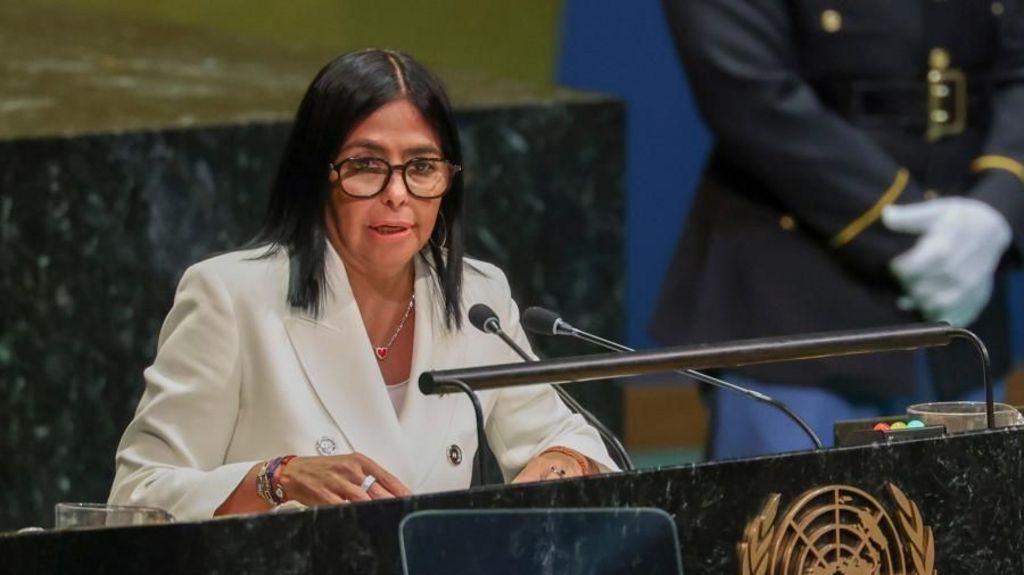
    Days after Maduro’s removal from power, his former vice president and close ally Delcy Rodríguez was sworn in as Venezuela’s interim president, with immediate backing from the Trump administration despite her deep history with the ousted regime. Addressing the UN General Assembly on Tuesday, Rodríguez announced that the country would move toward a transition to full democratic rule through national elections — but notably declined to name any tentative or fixed timeline for the vote.

    In her remarks, Rodríguez did not make a single reference to the jailed former president Maduro. Instead, she focused on building new ties with Washington, extending public gratitude to U.S. President Donald Trump for opening the door to diplomatic cooperation. She claimed that her interim government and the Trump administration are engaged in serious dialogue to resolve long-standing disagreements, and are laying groundwork for expanded energy collaboration, cross-border security cooperation, a joint campaign against transnational organized crime, and mutual economic growth that would benefit both nations and the broader South American continent.

    Trump, who spoke shortly after Rodríguez at the assembly, took a far more direct approach to Maduro, repeatedly labeling the former leader an “outlaw dictator” and “real criminal.” The U.S. president used his address to celebrate a newly struck energy deal with Rodríguez’s government, which he described as the largest oil contract in history, granting U.S. firms access to 65 billion barrels of Venezuelan crude oil. In remarks that drew swift criticism from global observers, Trump declared “To the victor belong the spoils,” and added that the U.S. would not hesitate to deploy its “unmatched military might” to defend what it calls vital national interests in the region. Notably, Trump did not mention Venezuela’s promised transition to elections in his UN speech — and earlier this month, he told the Los Angeles Times that he does not believe Venezuela is yet prepared to hold free votes.

    Rodríguez’s failure to set an election date has drawn sharp condemnation from Venezuelan opposition groups, who argue that the interim administration is delaying democratic transition to hold onto power. A brief sideline meeting between Trump and Rodríguez on the UN’s margins touched on election planning, according to U.S. Secretary of State Marco Rubio, who attended the talks. Rubio urged opposition leaders to show patience, arguing that a full political transition and institutional rebuilding must take place before free and fair elections can be held. “What we don’t want to see is that someone is elected, and they inherit a complete catastrophe, economic and social,” Rubio explained, pointing to ongoing negotiations between Rodríguez’s government and a faction of the opposition as evidence of incremental progress.

    Critics of those talks, however, highlight a glaring exclusion: Venezuela’s most high-profile opposition leader, María Corina Machado, has been locked out of the negotiations entirely. Machado left Venezuela in December 2025 to accept the Nobel Peace Prize in Oslo, and has been barred from reentering the country ever since. One of her senior advisors confirmed that she made three separate attempts to return to Venezuela this week, all of which were blocked by interim government authorities. The ban on her reentry extends to a long-standing restriction, first imposed under Maduro, that bars Machado from running for public office. Venezuelan Interior Minister Diosdado Cabello has previously warned that if Machado attempts to return, authorities have “a surprise” waiting for her. Ahead of Rodríguez’s UN address, dozens of her critics held public protests in New York to denounce the interim government’s anti-democratic actions and exclusion of opposition voices.

  • Poland says fire at Starlink station is sabotage as Denmark warns of rising Russian threat

    Poland says fire at Starlink station is sabotage as Denmark warns of rising Russian threat

    Tensions between Russia and Western-backed NATO have escalated sharply this week, following a suspected act of sabotage at a key Starlink satellite internet station in central Poland, new warnings of rising hybrid warfare risks, and a wave of deadly Russian airstrikes across Ukraine that spilled into neighboring EU states.

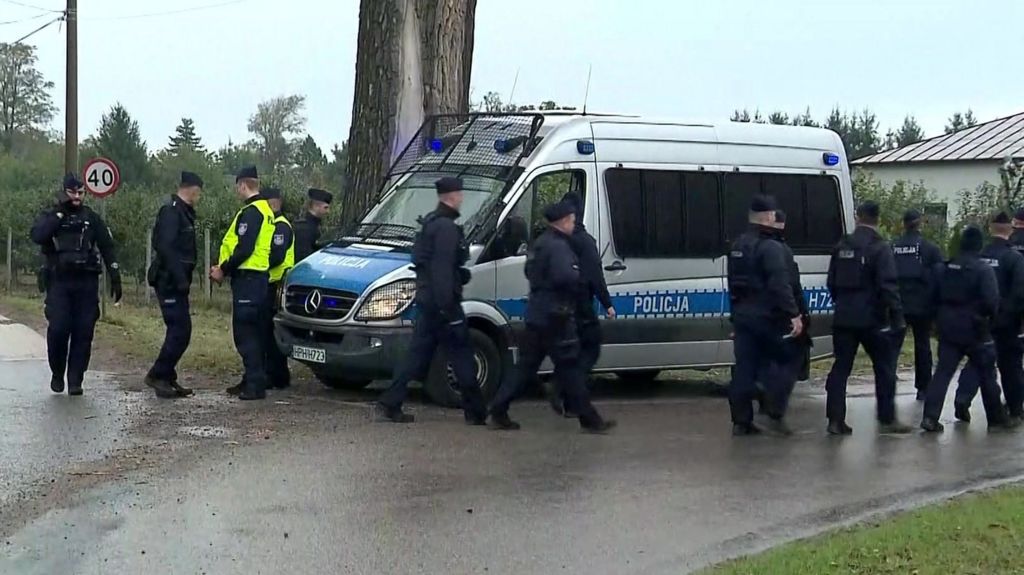
    Poland’s Deputy Prime Minister Krzysztof Gawkowski has publicly labeled Wednesday night’s fire at the facility in Wola Krobowska, Masovian Voivodeship, as a deliberate sabotage attack targeting internet connectivity supplied to Ukraine’s military. Speaking to public broadcaster TVP Info, Gawkowski said the incident was designed to disable the station, which routes Starlink internet traffic provided by SpaceX through Polish territory to Ukrainian forces and other institutions. While the station remains fully operational despite the damage, Gawkowski noted multiple lines of evidence point to the attack aligning with a new Russian doctrine of asymmetric targeting of critical infrastructure. The Kremlin has not yet issued any response to the accusation.

    Polish Prime Minister Donald Tusk struck a more cautious tone during a joint press conference with Bulgaria’s prime minister on Thursday, saying he was reluctant to definitively label the incident as sabotage rather than an accident without conclusive proof, but acknowledged the circumstances looked suspicious. The fire came on the same day Poland confirmed a Russian military helicopter had briefly violated its airspace, prompting the Polish air force to scramble fighter jets to intercept the aircraft.

    Across the Baltic Sea, Denmark’s intelligence service has published an updated national threat assessment that supports the growing consensus across European capitals that Russia is preparing to escalate its campaign of hybrid warfare against NATO members in the coming months. While the assessment stressed that a full-scale military attack on Denmark remains highly unlikely, officials warned the risk of limited, covert Russian attacks against critical infrastructure is low but growing. This warning echoes recent statements from several other NATO European members, who have publicly warned Russia is carrying out preparatory operations to test the alliance’s collective defense commitment amid its ongoing full-scale invasion of Ukraine. Moscow has consistently denied these accusations.

    Just weeks ago, Germany formally blamed Russian actors for an attempted drone attack on Leipzig/Halle Airport, while French authorities have ordered a national security plan to harden protections for critical infrastructure and domestic defense industry sites against potential attacks. Hybrid warfare, a term used to describe non-conventional, covert attacks designed to destabilize an adversary without triggering a full-scale military conflict, commonly includes tactics such as infrastructure sabotage, cyberattacks, and misinformation campaigns, with attacks often carried out by proxy actors to allow the sponsoring state to deny involvement. Despite mounting evidence pointing to Russian involvement in a string of such attacks across Europe, Moscow has consistently rejected any claims of responsibility.

    The rising tensions over hybrid threats coincided with one of the deadliest nights of Russian aerial attacks on Ukraine in recent weeks, with strikes hitting residential and civilian sites in both Kharkiv and Kyiv. In the Kharkiv region village of Stara Hnylytsia, a Russian strike hit a working vegetable farm, killing six agricultural workers – four of them women – and wounding 12 more. In Kyiv, overnight strikes left two civilians dead, injured eight others, and damaged more than 50 civilian facilities, including a maternity hospital. Remarkably, as the attack unfolded, a pregnant woman sheltering in the hospital’s basement gave birth to a healthy baby boy, with the hospital director noting that “even on such a terrible night, life goes on.”

    The Russian defense ministry claimed it had exclusively targeted legitimate military objectives, including Ukrainian defense facilities, logistics hubs, and telecommunications centers, as well as military vessels. The wave of Russian drones launched in the attack crossed multiple international borders, with Moldova’s president confirming four Russian drones entered Moldovan airspace, at least one of which detonated inside the country. Romania also confirmed one Russian drone crashed on its territory, marking another instance of Russian strike debris landing on NATO sovereign territory amid the ongoing war.

    Russian aerial attacks have grown increasingly deadly and difficult to defend against in recent months, after Russia introduced a new fleet of jet-powered assault drones that fly faster and are far harder to shoot down than older, slower designs. Ukraine’s military is now racing to develop low-cost counter-drone weapons, as existing air defense missiles and fighter jet interceptions are prohibitively expensive to use against the relatively cheap unmanned vehicles.

    Speaking at the United Nations General Assembly in New York on Wednesday, Ukrainian President Volodymyr Zelenskyy reiterated his appeal to Western allies, particularly the United States, to provide additional ballistic missile interceptors to protect Ukrainian civilian populations from Russian airstrikes. Zelenskyy argued that Russian leader Vladimir Putin must be stopped from expanding the war beyond Ukraine’s borders, saying “Putin is always looking for someone who can help him kill more, kill more people for every kilometre of land.” He also confirmed Ukraine plans to target Russian energy infrastructure through the coming winter months, a tactic both sides have used in previous years of the conflict.

    Zelenskyy’s comments came as a Russian presidential envoy, Kirill Dmitriev, traveled to the United States to hold meetings with former senior officials from Donald Trump’s administration, including ex-special envoy Steve Witkoff and former White House senior advisor Jared Kushner, according to Reuters, which cited two unnamed sources familiar with the trip. On Wednesday, Russian Foreign Minister Sergei Lavrov told the UN Security Council that Russia would not agree to any ceasefire or pause in the full-scale invasion it launched in February 2022, when Putin ordered troops across Ukraine’s border. Moscow currently controls approximately 20 percent of Ukraine’s internationally recognized territory, including the Crimean peninsula, which it illegally annexed in 2014.

    Russian leaders have repeatedly denied any plans to attack NATO member states, though Lavrov warned this month that if Europe launched an attack on Russia, the resulting conflict would be “completely different” from the war in Ukraine and “very short.”

  • Elephants use medicinal plants to treat themselves, researchers find

    Elephants use medicinal plants to treat themselves, researchers find

    For centuries, anecdotal evidence has suggested that wild animals tap into natural plant resources to treat illness and injury. A new study published in *Scientific Reports* has brought fresh, locally sourced insight to this phenomenon, confirming that the iconic salt-mining elephants of Kenya’s Mount Elgon region rely on at least 35 distinct plant species – 25 of which carry well-documented medicinal properties for human and animal use alike.

    This population of elephants has long fascinated biologists: unlike most other African elephant groups, these animals regularly venture deep into underground caves, where they use their powerful tusks to scrape mineral-rich rock salt to add critical nutrients to their plant-based diet. Now, researchers from institutions across the globe, working in partnership with the Kenyan conservation organization Mount Elgon Foundation, have uncovered another layer of the elephants’ complex adaptive behavior: intentional use of medicinal flora to treat themselves and their young.

    To build their findings, the research team conducted anonymous interviews with local residents who live and work alongside the Mount Elgon elephants, including seasoned wildlife scouts and Indigenous community elders. These long-time observers shared detailed, first-hand accounts of elephants actively selecting specific plants when showing signs of illness, with multiple reports of elephant mothers administering processed medicinal plant material to their ailing calves.

    One particularly striking account from a local scout detailed how elephant mothers prepare the plant Angurweet – a common local remedy for stomach pain and digestive issues – for their young. After stripping the leaves and chewing the plant’s roots and leaves into a smooth paste, mothers mix the preparation with their own milk before offering it to calves, who then chew the mixture and spit out the fibrous solid waste before swallowing the active compounds.

    Dr. Elodie Freymann, lead researcher from Brown University in the United States, emphasized that the findings highlight a deep, underrecognized connection between human and animal medicinal knowledge and the natural world. The study, she noted, also raises urgent questions about what is lost when forest habitats that double as natural pharmacies are destroyed by human development – depriving both wildlife and human communities of potential life-saving medicinal resources.

    “ This shows just how entangled our medicines are with the non-human world, ” Dr. Freymann told BBC News in an interview. “There are medicine-producing organisms on this planet that have this incredible capability. Medicine factories that exist all around us.”

    Not all outside experts are yet fully convinced of the intentional medicinal behavior, however. Professor Michael Huffman, a prominent primatologist based at Nagasaki University in Japan who was not part of the research team, described the account of maternal care with Angurweet as “tantalizing” but noted that more direct, observational evidence is required to confirm that elephants are providing targeted medical treatment to their calves.

    The research team has already launched follow-up work to gather this evidence, providing trained local wildlife experts with camera traps and personal cameras to document elephant foraging and feeding behavior in real time. Researchers are also conducting laboratory analysis of the plant species identified by locals and elephants to test for active biological compounds that could hold value for human medicine.

    Co-lead researcher Dr. Fabien Schultz, of the Bernhard Nocht Institute for Tropical Medicine in Hamburg, Germany, explained that Indigenous and local knowledge has provided the research program with a critical roadmap for future exploration. “Local knowledge has given us a map,” Dr. Schultz said. “We [now] want to follow the elephants and investigate whether they select particular plants in particular health contexts, and whether those plants have relevant biological activity.”

    The practice of animal self-medication, known scientifically as zoopharmacognosy, is not a new discovery. The earliest recorded scientific account of elephant self-medication dates all the way back to the third century CE, when Roman author Claudius Aelian wrote of a wounded elephant that recovered after consuming olive flowers and oil. In modern research, scientists have documented self-medicating behavior across the evolutionary spectrum, from mosquitoes and fruit flies to bees, great apes, and now elephants. Professor Huffman noted that each new documented case deepens humanity’s understanding of its own medicinal origins.

    For Dr. Freymann, the study also carries a clear conservation lesson for the future of human medicine. Many of the most widely used pharmaceutical drugs on the market today are derived from natural compounds found in trees, fungi, algae, and coral reefs. Protecting intact wild habitats like Mount Elgon’s forests, she argued, is not just critical for protecting endangered wildlife – it is an investment in the future of human health.

    “It’s a win-win for us to protect these forests and keep those natural pharmacies around… long enough that we can discover new natural products that could save us down the line,” Dr. Freymann said.

  • Saddam Hussein used James Bond director to tell Iraq story

    Saddam Hussein used James Bond director to tell Iraq story

    Long before Saddam Hussein’s brutal 24-year reign over Iraq came to a brutal end with the 2003 U.S.-led invasion, the Iraqi dictator had already established an unusual hold on the country’s cultural output: he operated as a state-backed film producer, crafting on-screen narratives to cement his cult of personality and legitimize his authoritarian rule.

    Within months of seizing the Iraqi presidency in 1979, production wrapped on Saddam’s first propaganda project: *The Long Days*, a biographical drama that cast his cousin in the lead role to glorify his participation in a 1959 failed assassination attempt against then-Prime Minister Abdul-Karim Qasim. The film framed Saddam as a fearless nationalist hero, even including a dramatic scene where a young Saddam cuts a bullet out of his own leg using a fire-sterilized razor blade. But this heroic depiction was later exposed as a fabrication: in his 2000 biography of Saddam, journalist Said Aburish—who once served as a consultant to Iraq’s Ministry of Information—dismissed the sequence as a massive exaggeration, citing Saddam’s own personal physician who confirmed the dictator only suffered a superficial wound from the attempt. Aburish also revealed that Saddam personally leveraged his connections through the journalist to hire British director Terence Young, famous for helming early James Bond classics *Dr. No* and *From Russia with Love*, to edit the propaganda production.

    Saddam’s second major state-funded film arrived in 1983: *Clash of Loyalties*, a lavish big-budget historical epic centered on the 1920 Iraqi revolt against British colonial rule. The project was explicitly designed to tie Saddam’s ruling Ba’ath Party to the legacy of anti-colonial resistance, boosting his domestic credibility. The high budget attracted well-known British actor Oliver Reed, who took the role of a British intelligence officer. But Reed’s unruly behavior nearly got him deported mid-production: during an outing at a Baghdad restaurant, he sparked a public brawl after urinating into a wine bottle and ordering a waiter to deliver it to another table “with my compliments.” Co-producer Lateif Jorephani famously dubbed Saddam’s ambitious state film project “Bollywood on Tigris,” with plans to build a full state-run film industry that would produce at least six large-scale patriotic blockbusters targeted at international audiences.

    This tight control extended far beyond feature films to all forms of domestic media. Before the 2003 invasion that toppled his regime, Iraq’s entire media ecosystem consisted of just five state-controlled newspapers, four radio stations, and three television channels—all of which operated as mouthpieces for Saddam’s government. Many Iraqis who grew up under this system carry vivid, uncomfortable memories of state-mandated propaganda woven into everyday entertainment. Malik, an interpreter who accompanied author Matthew Alford on a recent trip to Iraq, recalled being forced to sit through graphic *Lest We Forget* propaganda segments about the 1980-1988 Iran-Iraq War to watch the following half-hour of children’s cartoons, including *Tom and Jerry*.

    The fall of Saddam’s regime triggered a seismic shift in Iraq’s media landscape. Within 12 months of the dictator’s ousting, roughly 80 new radio stations, 20 private television channels, and more than 200 independent newspapers and magazines launched across the country. While fewer than half of these early outlets survived their first year of operation, the old state media monopoly never returned. Today, Iraq boasts more than 100 television channels broadcasting in four languages: Arabic, Kurdish, Turkmen, and Syriac. Control of media has dispersed across the country’s fragmented centers of power: major political parties, influential religious institutions including Shia holy shrines, and numerous armed factions all operate their own independent media outlets.

    During a visit to the annual Arbaeen pilgrimage in Karbala in August—an event that draws more than 20 million Shia Muslim worshippers annually, making it the world’s largest regular peaceful gathering—Alford gained behind-the-scenes access to the substantial media operations run by major Shia religious institutions. At the Al-Abbas Holy Shrine’s media department, reporters were shown an expansive, free digital archive containing feature films, documentaries, talk shows, and religious programming, including an Iraqi adaptation of the classic university quiz show format centered on Quranic studies. The shrine distributes this content for free online and via live broadcast, with more than 80 domestic and international television channels using its official Arbaeen pilgrimage coverage every year.

    This post-2003 era of abundant media choice stands in stark contrast to the limited, state-controlled options of the Saddam era. But greater quantity of media outlets has not translated to greater press freedom or more accurate, independent reporting. As of 2024, Iraq ranks 162nd out of 180 countries on the global Press Freedom Index, placing it between Sudan and Turkey.

    The most profound shift has been the dispersal of media power across competing factions, mirroring the broader fragmentation of political and military power in modern Iraq. Today, 10 Iran-aligned armed factions control an estimated 50,000 fighters across the country, and the central Iraqi government in Baghdad has struggled to bring these groups under formal state control—tensions that have escalated into open military action in recent months, with U.S. and Saudi forces striking faction targets inside Iraqi borders. Many of these armed groups now operate their own media outlets: for example, Al-Ahad TV is controlled by Asa’ib Ahl al-Haq, one of the largest Iran-aligned armed factions.

    Where Saddam once held an iron-clad monopoly over every narrative and image coming out of Iraq—even if he could not control the unruly behavior of British star Oliver Reed—his authoritarian system of state propaganda is gone for good. In its place, Iraq now hosts a crowded ecosystem of competing voices, from political parties and religious institutions to armed factions and independent journalists fighting for space. Yet even with this unprecedented media abundance, true press freedom remains out of reach for the country. This article is republished from The Conversation under a Creative Commons license, written by Matthew Alford, a lecturer in the Department of Politics, Languages and International Studies at the University of Bath.

  • Why India’s Election Commission is in the eye of a storm – again

    Why India’s Election Commission is in the eye of a storm – again

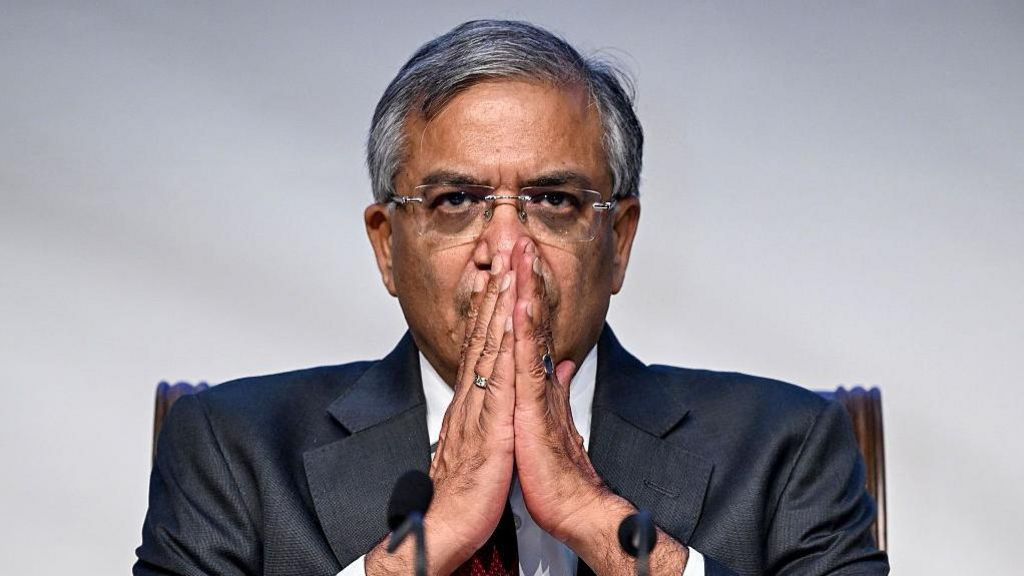
    India’s top electoral oversight body, the Election Commission of India (ECI), is grappling with its most severe credibility crisis in recent years, after an explosive newspaper report exposed deep internal rifts over the management of a nationwide voter roll overhaul, prompting opposition parties to demand the immediate resignation of Chief Election Commissioner Gyanesh Kumar.

    As the institutional anchor of the world’s largest democracy, the three-member ECI is led by Kumar, with senior commissioners Sukhbir Singh Sandhu and Vivek Joshi rounding out the panel. The current controversy erupted following an investigation published by *The Indian Express*, which documented that over the past 10 months, Sandhu and Joshi have repeatedly challenged Kumar over critical decisions related to voter database integrity, new voter enrollment protocols, and the overall security of national electoral rolls. According to the report, the two senior commissioners were sidelined from at least 14 key decisions, with changes made to electoral procedures without their knowledge or formal approval. On one occasion, the pair even submitted a formal complaint letter to the Government of India’s chief secretary, the country’s top civil service post, the report added.

    The internal revelations have sent shockwaves through India’s political landscape, particularly as the controversy overlaps with the ECI’s ongoing Special Intensive Revision (SIR), a highly contentious nationwide update of the national voter database. ECI officials frame the SIR as a long-overdue clean-up: the last comprehensive national revision of voter rolls was completed nearly 25 years ago, and the project aims to remove ineligible entries linked to deceased voters, residents who have relocated abroad, and individuals duplicated across multiple regional rolls. To date, the revision has removed roughly 130 million names from national rolls, but the process has been mired in controversy from its launch. Opposition parties have long accused Kumar and the ECI of manipulating the SIR to intentionally remove voters aligned with opposition parties and favor Prime Minister Narendra Modi’s ruling Bharatiya Janata Party (BJP) in upcoming and recent elections. Both the BJP and ECI have repeatedly denied these allegations.

    What makes the latest revelations uniquely damaging, political analysts note, is that the criticisms of Kumar’s leadership come not from opposition parties, but from within the ECI itself. Millions of eligible voters across the country have already filed official complaints reporting that their names were incorrectly removed from voter rolls during the SIR process, with many arguing that the new documentation requirements for re-enrollment are unnecessarily burdensome for low-income and marginalized communities who lack formal identity paperwork.

    Former Chief Election Commissioner SY Quraishi, a vocal public critic of the SIR since its launch, told press agency PTI that he had long questioned why Sandhu and Joshi had not publicly pushed back on the controversial project. “Now I realised that very silently and quietly they were protesting, they were writing notes. That is a good thing, they have gone up in my esteem,” Quraishi said.

    Opposition leaders have seized on the internal leaks to ramp up pressure on Kumar and the ECI, with senior figures going far beyond calls for resignation to demand criminal action over the alleged voter list manipulation. Senior Congress Party leader and Member of Parliament Rahul Gandhi, who has repeatedly accused the ECI of systematically “stealing votes” from opposition blocs, labeled the alleged manipulation an act of treason against India’s constitution in a post on X Wednesday. “Vote chori [theft] is a crime against the Indian people and a direct attack on our constitution. The BJP, RSS [Rashtriya Swayamsevak Sangh] and EC who organised it have committed an act of treason. Justice will be served,” Gandhi wrote, alongside a 15-second video warning ECI officials that “your time will come. You cannot get away.”

    Mamata Banerjee, chief of the regional Trinamool Congress party and former Chief Minister of West Bengal, went a step further, calling for Kumar’s arrest and demanding that fresh elections be held in the state using the pre-SIR voter roll. Banerjee’s party lost control of West Bengal to the BJP in recent state elections, during which more than 2.7 million voters were removed from the state’s rolls during the SIR process. Banerjee and her supporters argue the removals directly cost the party dozens of assembly seats and the overall election.

    Within hours of the *Indian Express* report’s publication, the ECI released an official statement pushing back against the criticism and defending its internal decision-making processes. “Differing views and observations are a normal part of deliberation in any institution. They are a part of the decision-making process before a final decision is taken,” the statement read. “Not only the three Commissioners, but every officer of the Commission is fully authorised to give his suggestions to the Commission for improving the electoral system.”

    The ECI also argued that the newspaper report presented a distorted, partial picture of its internal processes, noting that highlighting isolated internal notes from a 10-month period while ignoring the large body of unanimous collective decisions on electoral reforms gives an inaccurate view of the commission’s work. “In recent months, the commission has introduced around 40 new initiatives and undertaken many electoral reforms including the conduct of electoral roll revision (including SIR) across the country. All these decisions are an outcome of the unanimous decisions of the full commission in the past one year,” the statement added.

    The BJP has also defended Kumar, dismissing the opposition’s criticism as a coordinated “smear campaign” rooted in political frustration. Party spokesperson Sambit Patra told reporters that ever since the Modi government took office in 2014, opposition parties have steadily lost electoral ground, and are now attacking independent national institutions to compensate for their inability to win free and fair contests. Patra also framed internal dissent within the ECI as a sign of a healthy, vibrant democracy, rather than a systemic failure.

    Despite these defenses, political tensions are expected to escalate in the coming weeks. Banerjee has already confirmed that opposition parties will hold continuous public protests until Kumar steps down from his post. The Gen Z-led Cockroach Janta Party, a grassroots activist group that recently forced the resignation of India’s federal education minister over controversial policies, has also announced it will join the protests against what it calls the “hijacking of India’s democracy.”

    Political analysts note that the ECI’s official response is unlikely to resolve growing concerns over the commission’s impartiality, pointing out that the statement fails to address many of the specific allegations raised in the *Indian Express* investigation. “CEC Kumar needs to clear the air if we are to view the Commission as an impartial body,” many analysts have argued, marking the beginning of a prolonged fight over the credibility of India’s electoral system ahead of future national and state polls.

  • Teen rocker Nene Royal becomes first Thai to win America’s Got Talent

    Teen rocker Nene Royal becomes first Thai to win America’s Got Talent

    A 16-year-old heavy metal artist from Thailand has cemented her name in the history books of one of the world’s most-watched talent competitions, taking home the top prize on *America’s Got Talent* as the first Thai champion in the show’s 21-season run. Nene Royal, whose legal name is Rattikarn Amloy, secured her $1 million (approximately £755,000) victory after a standout final performance Tuesday at the competition’s California venue, where she delivered a gritty, crowd-pleasing cover of The White Stripes’ iconic rock track *Seven Nation Army*.

    Her electrifying heavy metal set outshone nine other competing final acts, ranging from sleight-of-hand magicians and trained canine performance troupes to cutting-edge robot dance crews. Nene’s journey to the winner’s circle began long before her California debut: growing up in the popular beach tourism hub of Phuket, she picked up her first guitar at age 7, and for years honed her craft busking for crowds at Phuket’s busy Naka Weekend Market while nurturing a lifelong dream of becoming a professional touring musician.

    From the earliest rounds of the competition, Nene captured global attention and earned a spot as an undisputed fan favorite. Her audition performance, a powerful cover of The Cranberries’ *Zombie* that left the show’s judging panel stunned, quickly went viral online, racking up more than 20 million views across social media platforms. Ahead of the season’s final results reveal Wednesday night, Nene shared the stage with legendary American rock band Linkin Park to perform the group’s 2024 track *The Emptiness Machine*, a career milestone that solidified her status as a rising rock talent.

    When host Terry Crews announced her name as the season 21 champion, an overwhelmed Nene collapsed to the stage in tears, unable to immediately process her historic win. “I’m very happy and emotional right now,” she told the crowd after collecting herself, extending gratitude to the millions of fans who supported her throughout the competition.

    Half a world away, Nene’s massive base of Thai fans followed the results show fervently, even though the live NBC broadcast was not available to local viewers. Many turned to a unofficial YouTube livestream to watch the event unfold, only to be thrown into panic when the stream cut out abruptly mid-announcement. Relief and celebration erupted across Thai social media moments later, when word of Nene’s victory spread through online communities.

    “History made!” one Thai user posted on Facebook, while another added, “Let the world write it down that this Thai kid is incredibly talented.”

    The Thai government has joined in the widespread celebration, releasing an official statement Thursday praising Nene for representing her home country with unshakable confidence on the global stage. “What makes this win special is that Nene carried her Thai identity with confidence onto one of the world’s biggest stages,” the country’s public relations department said. “She showed that talent, hard work, and determination can come from anywhere, including a young girl from Phuket with a guitar and a big dream,” the statement added, calling Nene an inspiration to young people everywhere who dare to pursue big dreams.

    In Nene’s Phuket hometown, local community leaders, businesses and her school have also been celebrating her achievement. Local tour guide Piyarat Na Songkhla, who has watched Nene perform since she was a child, told the BBC: “She’s so adorable. I feel so elated and happy for her. It’s unbelievable that she has gone this far. So proud of her.”

    The Naka Weekend Market, where Nene spent years busking for locals and tourists, shared a heartfelt tribute to its former performer on its official Facebook page. “Everyone at Naka Market is so proud to see you shine on one of the biggest stages in the world,” the post read. “Your talent, heart, and courage have inspired so many people, and this victory is a beautiful reminder of what can happen when someone truly gives everything to their dream.”

    Kajonkiet International School, Nene’s Phuket-based secondary school, also shared a public message of congratulations alongside a video of students and staff packing the school common room to watch the final performance, screaming Nene’s name and cheering as her victory was announced. “We are so proud of you,” the school’s post read.

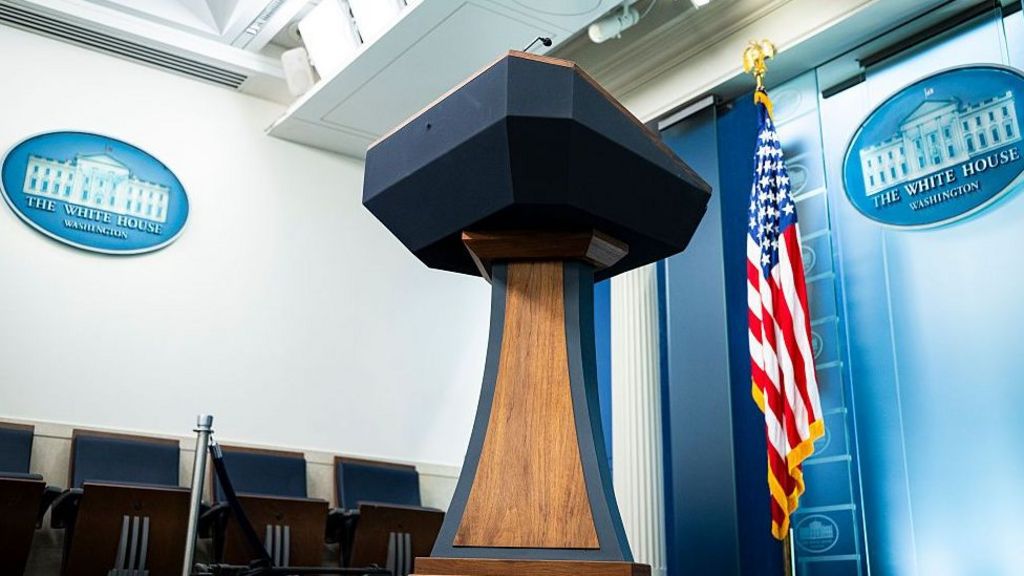
  • Judge temporarily overturns Trump’s White House media ban

    Judge temporarily overturns Trump’s White House media ban

    In a high-stakes legal rebuke of the Trump administration’s crackdown on critical press, a federal judge has ordered the immediate restoration of White House press access for three major news organizations that were blocked from the complex last week by former President Donald Trump.

    The District of Columbia District Court granted a temporary restraining order against the administration’s ban, requiring that CNN, MS NOW, and Politico regain their press hard passes for a 14-day period as the legal challenge moves forward. The outlets filed suit shortly after their reporters had their permanent White House access credentials confiscated, arguing the blanket ban violated core constitutional protections for a free press.

    The Trump administration defended the move in court, claiming the three organizations had repeatedly published false reporting and that their continued access posed a threat to U.S. national security. District Judge Timothy Kelly rejected both of the administration’s central arguments in his ruling.

    Kelly found that the three outlets have a strong likelihood of ultimately prevailing in their lawsuit, specifically noting that the White House failed to follow basic standards of due process when it revoked the press passes without prior notice or a formal review process. He also pushed back sharply on the administration’s last-minute national security framing, pointing out that Trump made no mention of national security risks when he first announced the ban publicly.

    In his written ruling, Kelly emphasized: “The record lacks factual support for Defendants’ contention that the revocation of Plaintiffs’ hard passes will in fact protect national security or that national security will be endangered if the Court orders their passes reinstated while this litigation proceeds.”

    As of Tuesday, the White House has not issued an official response to the court’s ruling. Legal teams representing the president have not ruled out additional legal action to defend the original ban, setting the stage for a prolonged legal battle over the limits of executive power to restrict press access to the White House.