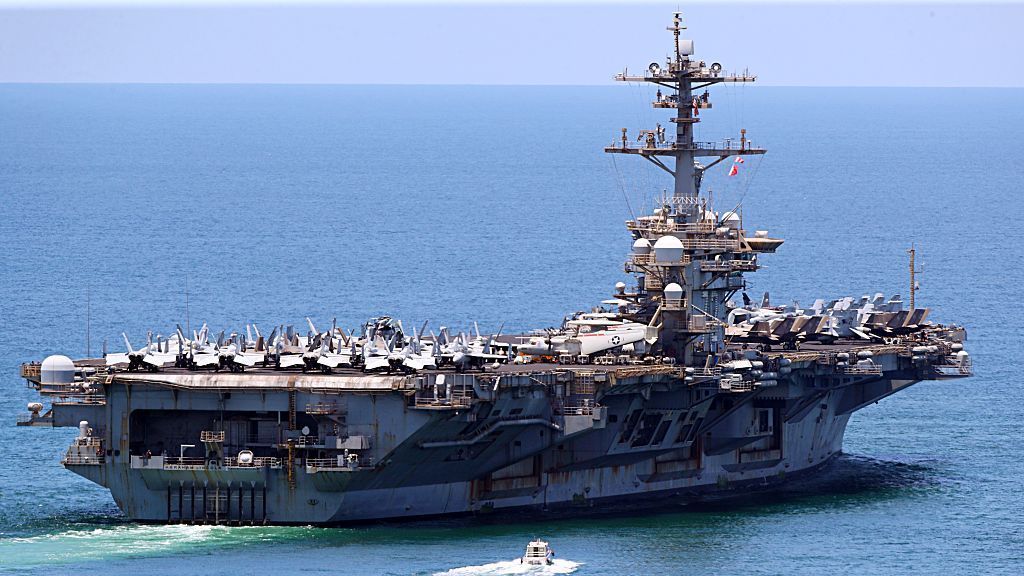
A shocking disclosure from acting U.S. Navy Secretary Hung Cao has confirmed that eight crew members attached to the USS Abraham Lincoln carrier strike group attempted suicide during one of the service’s longest recent deployments to the Middle East. The revelation came in a formal Tuesday response to New York Senator Kirsten Gillibrand, a Democrat and member of the Senate Armed Services Committee, who had pressed for answers after family members of deployed sailors raised urgent alarms over plummeting mental health and intolerable living conditions at sea amid the U.S. military campaign against Iran.
The nuclear-powered aircraft carrier, which first departed its home port in California last November for an initial rotation to the South China Sea, was redirected to the Middle East ahead of planned U.S. strikes on Iran in February. What was scheduled to be a six-month deployment ending in May was repeatedly extended, leaving roughly 5,000 service members aboard at sea for a total of 250 days before the USS George Washington was dispatched to replace it in August. The crew is now en route back to the U.S., with their first stop on dry land in the Thai resort city of Pattaya, where scores of sailors have been seen frequenting local bars, shopping malls and beaches after months confined to the ship.
In his letter, Cao clarified that the eight suicide attempts included sailors from across the entire strike group: core Abraham Lincoln crew, carrier airwing personnel, strike group and destroyer squadron staff, crews from escorting destroyers, and personnel from all embarked aviation squadrons. He noted that the ship carried five chaplains and multiple dedicated mental health clinicians to address the spiritual and emotional needs of the deployed crew. Cao pushed back against widespread reports of systemic broken plumbing and chronic fresh food shortages, acknowledging only temporary localized piping failures, intermittent issues with the ship’s reverse osmosis desalination units, and a short-term reduction in available meal options. The U.S. Navy has previously acknowledged minor supply challenges during the deployment but has consistently rejected claims of a widespread mental health crisis aboard the vessel. The BBC has reached out to the U.S. Navy for additional comment beyond the information contained in Cao’s letter.
Gillibrand condemned the Trump administration’s earlier dismissals of the crew’s poor conditions, calling the treatment of U.S. service members “completely unacceptable.” In a Wednesday statement to the BBC, she said, “What Trump and Secretary Hegseth dismissed as ‘fake news’ turned out to be serious and deteriorating conditions for our service members. Our troops and their families make immense sacrifices every single day, yet the president dismissed them with open disrespect.”
The revelation of multiple suicide attempts comes amid a well-documented growing mental health crisis across the U.S. military. Data analyzed by USNI News confirms suicide is already the leading cause of death for active-duty U.S. Navy sailors and Marines, and the U.S. Department of Veterans Affairs reports that veterans face substantially higher suicide rates than civilians with no military service. A January 2025 peer-reviewed study of 956 active-duty U.S. sailors further reinforced these concerns, finding that naval personnel assigned to ships experience higher rates of serious psychological distress than service members in any other U.S. military branch. The study identified unique, chronic stressors of life at sea, including substandard living conditions, constant disruptive noise, and grueling operational schedules that leave troops with insufficient time for sleep and recovery.
For anyone struggling with suicidal thoughts or mental health distress connected to the issues discussed in this report, support is available through BBC Action Line or the U.S. Suicide and Crisis Lifeline by calling 988.