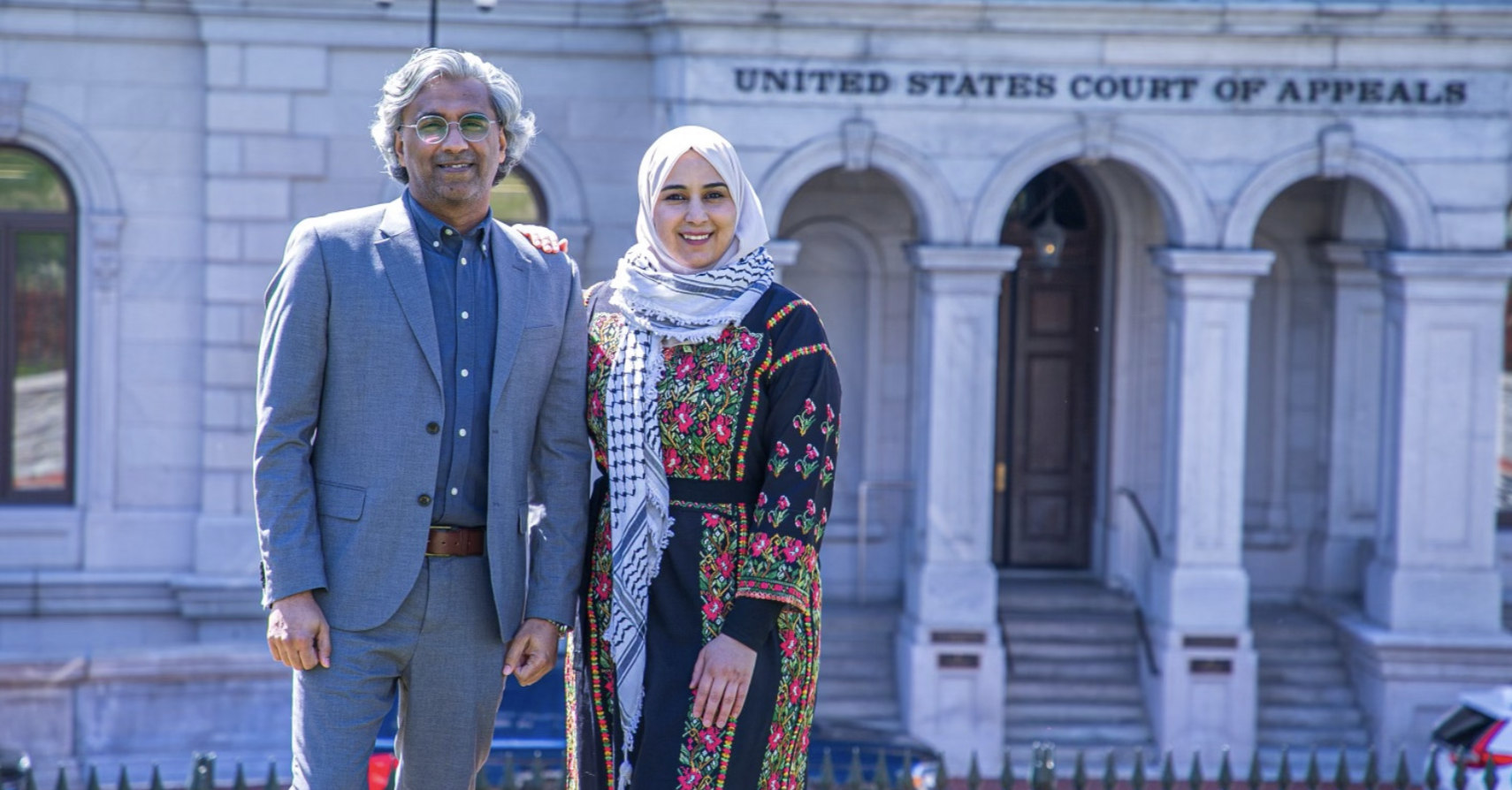
A high-stakes legal battle over immigration authority and academic free speech has reached the U.S. Supreme Court, as the Trump administration has asked the nation’s highest court to reverse a lower court ruling that ordered the release of Georgetown University scholar Badar Khan Suri, who spent two months in federal immigration detention last year over his public criticism of Israel.
Suri, an Indian citizen and legal permanent U.S. resident married to a U.S. citizen of Palestinian descent, was arrested in a dramatic late-night raid by masked Immigration and Customs Enforcement (ICE) agents outside his Northern Virginia home in March 2025. The arrest made him an early high-profile target of the administration’s immigration enforcement actions, drawing international condemnation and scrutiny from human rights advocates.
At the time of his arrest, U.S. Secretary of State Marco Rubio revoked Suri’s visa, accusing the scholar of “spreading Hamas propaganda and promoting antisemitism on social media.” Suri was held for two months in an overcrowded, unsanitary ICE detention facility in Alvaredo, Texas, before a federal magistrate judge granted his release on bail in May 2025 as his deportation challenge moved forward. In July 2025, the Fourth Circuit Court of Appeals upheld the lower court’s ruling, rejecting the Trump administration’s bid to re-detain Suri.
On Monday, the Department of Justice (DOJ) filed its appeal with the Supreme Court, arguing that federal judges lack the authority to intervene in immigration court proceedings, where non-citizens contest deportation orders. Legal analysts note the appeal gives the conservative-majority Supreme Court an opportunity to set a landmark precedent that could curtail judicial oversight of immigration detention for decades to come.
Suri’s supporters and legal team—led by the American Civil Liberties Union (ACLU)—contend the scholar was deliberately targeted by right-wing pro-Israel groups to intimidate critics of Israeli policy, pointing in particular to his wife’s family background: she is the daughter of a former Hamas political advisor. In a July statement, the ACLU noted the administration has invoked a rarely used provision of the Immigration and Nationality Act to justify deportation, falsely claiming Suri’s presence in the U.S. “compromises a compelling foreign policy interest.”
Noor Zafar, senior staff attorney for the ACLU’s Immigrants’ Rights Project, reaffirmed the organization’s position in an email to Middle East Eye this week, noting the Fourth Circuit “correctly ruled that denying judicial review of detention claims of people like Dr Badar Khan Suri’s misreads Congress’ statutes and undermines the protections guaranteed all persons on American soil.” Zafar added, “Our client should never have been jailed for exercising his First Amendment rights in the first place.”
The case is currently proceeding along two separate legal tracks: the federal habeas corpus challenge to the administration’s actions, and a parallel deportation case in the DOJ-overseen immigration court system, which reports directly to the U.S. Attorney General. Habeas corpus, a legal principle with roots dating back to 13th-century England, is enshrined in U.S. law to guarantee that all people within U.S. territory—regardless of citizenship—have the right to challenge unlawful detention before a court.
Now released on bail and reunited with his wife and three children in Virginia, Suri says he remains undaunted by the long legal fight ahead. A noted scholar of Middle East peace efforts, Suri has spent 20 years working to advance dialogue between conflicting parties. Speaking outside the Annandale, Virginia immigration courthouse last week, he said, “I have worked for the peace process all my life, 20 years now, and I know this is a tough thing. So I am ready for these challenges, and I am very hopeful that justice will prevail.”
Nader Hashemi, Suri’s former research supervisor, has launched an online fundraiser to cover the scholar’s mounting legal fees. Hashemi described his former colleague as a dedicated academic whose work is “grounded in a belief that peace is possible through dialogue and mutual understanding. He’s dedicated his life to that mission.”