博客

  • France: When racism peaks – and the mountains are claimed as white‑only spaces

    France: When racism peaks – and the mountains are claimed as white‑only spaces

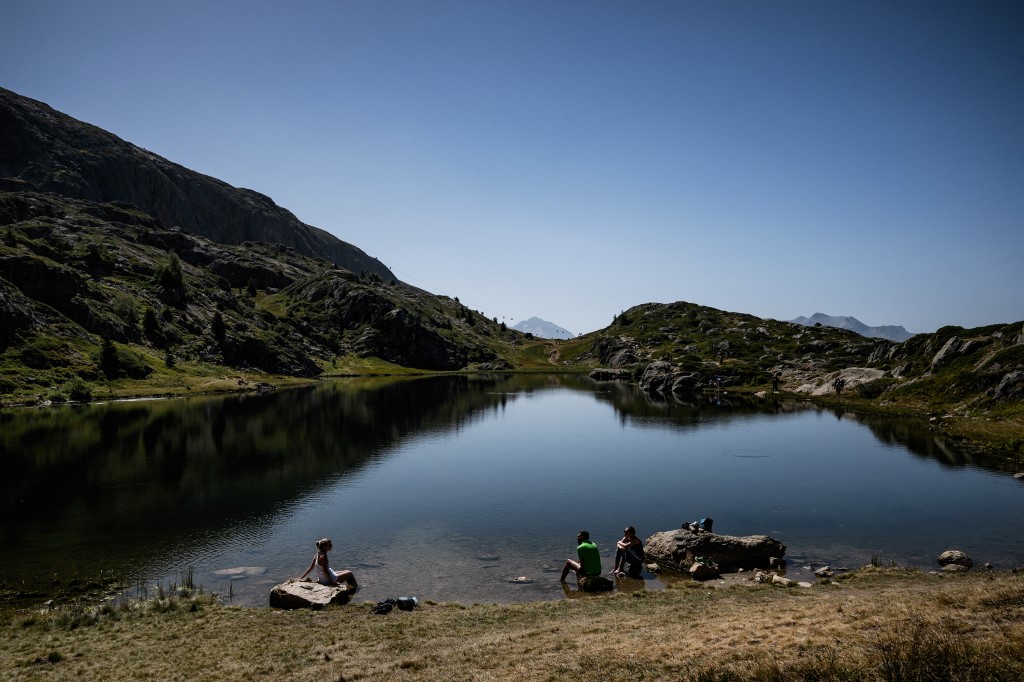
    Last August, a since-deleted TikTok video posted by a French hiker ignited a nationwide reckoning over systemic racism in outdoor spaces. The clip, set against the dramatic backdrop of the French Alps, celebrated what the creator framed as a rare privilege: a mountain retreat free of ethnically diverse visitors, which he claimed as an exclusive space for white people. In his caption, he deployed the Arabic-derived French slang term “Wallah” in a derogatory swipe at visitors from working-class, majority-minority suburban neighborhoods known as banlieues, writing that the mountains were one of the few places “where you can feel safe.”

    The post quickly sparked a brutal wave of support for its racist and Islamophobic message across French social media. Hundreds of commenters echoed the creator’s exclusionary rhetoric, demanding that ethnic minority residents of the banlieues remain confined to their neighborhoods. Vicious remarks such as “stay where you belong, in your Islamised districts” spread rapidly, paired with dehumanizing stereotypes that framed minority visitors as uncivilized: “Nature must stay clean. No peeing, no trash, no animal-like screaming.”

    What followed, however, was an unexpected, humorous, and deeply political grassroots counter-movement that went viral under the slogan “Wallah, we’re coming” (or “On arrive” in French). Thousands of young people, Muslim women wearing hijabs, multi-generational families, and hikers from marginalized communities began posting their own photos and videos from trails, mountain peaks, forest clearings, and equestrian outings across France, boldly claiming their right to occupy spaces they say they have always deserved to access.

    One of the earliest and most prominent participants in the movement is Zeynab Alabbar, co-founder and creative director of Kamak, a brand of modest athletic wear. Alabbar, who has worn the hijab since she was 8 years old, shared clips of herself and friends hiking shaded alpine trails and pausing to take in sweeping mountain views, captioning her post simply: “We love nature too.” The post quickly earned widespread support, including a note of thanks from prominent French-Algerian rapper Rim’k.

    In an interview with Middle East Eye, Alabbar explained that the movement responded directly to a long-standing paradox of French integration discourse: ethnic minorities are repeatedly told they must assimilate, yet are systematically shut out from public spaces and activities that are supposed to belong to all citizens. Drawing a contrast between her experiences in her current home of Switzerland, where multiethnic groups routinely share alpine outdoor spaces without conflict, she noted that she has never faced anti-Muslim or racist harassment in Swiss mountains — but faces constant, unwelcome scrutiny as soon as she crosses into France. “By contrast, as soon as I arrive in France, people’s stares become heavy and unsettling. You can feel you’re not welcome,” she said.

    Alabbar’s experience is far from unique. Jumia Alaoui, a 38-year-old mother from Essonne, just south of Paris, regularly hikes the Fontainebleau forest with a group of hijabi friends, and says she faces constant microaggressions and open hostility. “Some walkers stare at us as if our presence were out of place. Once, a man asked whether we weren’t too hot being covered from head to toe. We told him it was none of his business,” she recalled.

    For Alaoui, the original racist TikTok video and its flood of supportive comments laid bare a growing culture of unapologetic racism that is increasingly validated by parts of France’s political establishment. Two years ago, she lost her job as a supermarket cashier after she refused to remove her headscarf for work, and she now fears growing anti-Muslim hostility will soon bar marginalized people from even leaving their homes. The far-right National Rally, led by Marine Le Pen, currently leads national polling ahead of the 2027 presidential election, and has pledged to ban the hijab from all public spaces if it wins power — a policy that has amplified fear among Muslim women across the country. Alaoui traces this expanding pattern of exclusion: “Before, young people from the banlieues were subjected to racial profiling at nightclub entrances. Now, women in burkinis are targeted in municipal swimming pools and at the beach. Even sports with the veil are banned,” she said, referencing a 2023 ruling by France’s highest administrative court that upheld the right of national sports federations to ban the Islamic veil from competition. “And as if all that weren’t enough, now they want to keep us out of the mountains.”

    Academic researchers who study inequality in outdoor spaces say these accounts confirm long-documented patterns of systemic exclusion in alpine recreation. Lea Sallenave, a geography lecturer at the University of Geneva and a specialist in social domination and inequality in Alpine spaces, explains that modern recreational mountain culture was built by and for a dominant white demographic that has imposed its own social norms, creating a pervasive sense that non-white visitors do not belong. Her analysis of promotional materials for alpine ski resorts found that the overwhelming majority of imagery features only white visitors, erasing the presence of ethnic minorities entirely.

    In a 2024 study of a municipal program in Grenoble that introduces banlieue youth to outdoor activities, Sallenave documented widespread experiences of racial exclusion, based on testimonies from program participants. Many participants told her that “the higher [they] climbed, the whiter the people [they] encountered seemed.” “What I want to show is that the mountain is not neutral, it is part of society. And if our society contains racism, classism and sexism, we will also find them in the mountains,” Sallenave told Middle East Eye. Working-class young people reported facing open racist harassment in ski resorts, while mountain industry staff shared accounts of regular hostility from white visitors toward minority groups.

    These on-the-ground observations are echoed by Samir Souadji, founder and director of Apart, a Seine-Saint-Denis-based non-profit that brings vulnerable local youth to climbing, mountaineering, and outdoor programs to support personal and social development. Souadji says he faced institutional barriers early on, when major sports brands dismissed his organization’s mountain programming as unworthy of support. “When we said we wanted to do mountain activities, I felt we weren’t taken seriously,” he said.

    When his groups do visit mountain areas, they regularly face open contempt and racist harassment. Returning to a base camp outside Chamonix one trip, a white hiker mocked the group, saying: “Here, you’re not in your council estate – these aren’t 13-storey towers you’re climbing.” On another occasion, two white hikers chuckled and asked if an “African congress” was scheduled in the area.

    Leading sociologists say this hostility grows out of an exclusionary, nationalist understanding of national territory that frames non-white people as inherently “non-French.” Nacira Guénif-Souilamas, a sociologist and anthropologist at Paris VIII University, explains: “Some users behave as if they were the legitimate owners of the mountains and consider that not everyone is allowed to enjoy the beauty of the landscape. This exclusion reflects racist stereotypes weighing on Black and Arab people in France, denying them basic rights, including the right to enjoy nature. They are never considered French enough, no matter where they go – whether in the mountains or at the seaside.”

    Souadji notes that most of the hostility his groups face does not come from long-time local mountain residents, who are generally welcoming, but from white city dwellers who treat the mountains as an exclusive leisure space for their demographic. “They are people we meet every day in the city, who can’t stand seeing us there in the same places as them,” he said. This constant stigmatization imposes a heavy psychological burden on minority hikers, Guénif-Souilamas explains: marginalized visitors are constantly under surveillance, suspected of being bad environmental stewards before they even arrive, and forced to maintain flawless behavior to “prove” they belong.

    To push back against these stereotypes, Souadji emphasizes strict standards of respect for the land and other visitors for the young people he brings into the mountains. “I tell them that behaviour, respect for people and nature are extremely important to break the caricatured image imposed on us,” he said. Souadji has led numerous mountaineering expeditions across the globe, from Nepal and Kyrgyzstan to Bolivia and Norway, and notes that open hostility to ethnic minority hikers is a uniquely French phenomenon. “Strangely, everywhere else in the world we’re welcomed, except at home,” he said.

    Nadir Dendoune, a French-Algerian writer and sponsor of the Apart non-profit, argues that the exclusion of ethnic minorities from mountain spaces is a direct legacy of French colonial ideology. Dendoune, who made global headlines when he climbed Mount Everest in 2008 with no prior mountaineering experience, planted a sign marked “93” — the department number for Seine-Saint-Denis — at the summit, and documented his journey in the book *A Loser on Top of the World*, which was later adapted into the feature film *The Climb*. For Dendoune, the idea that certain French spaces belong exclusively to white people is rooted in colonial-era hierarchies that continue to shape national culture decades after independence.

  • Iranian press review: Iranian elite profit billions from oil sanctions

    Iranian press review: Iranian elite profit billions from oil sanctions

    A series of unfolding developments from inside Iran, compiled from local Iranian media reports, have shed light on overlapping political, economic, and human rights crises worsened by decades of international sanctions on the country. This roundup of independent Iranian reporting outlines four major ongoing issues affecting both ruling elite insiders and ordinary citizens.

    First, an investigation by a veteran Iranian investigative journalist has exposed a multi-billion dollar illicit oil trading network that has flourished directly because of international sanctions, with key links to the country’s top security and ruling institutions. Yashar Soltani, a reporter who has previously been imprisoned for exposing financial corruption in Iran, alleges that Iran’s state-owned Ministry of Petroleum has effectively ceded full control over national oil marketing and exports to a closed network of just four brokers who operate by circumventing global sanctions.

    According to Soltani’s allegations, this network has a direct vested interest in blocking any future diplomatic détente between Iran and the United States. If sanctions were to be lifted, the shadow trading networks that generate the group’s massive profits would be put out of business, giving the brokers strong incentive to undermine any political agreements between the two nations.

    Soltani claims the network is overseen by Mohammad Javad Bavand, a former economic deputy with the Islamic Revolutionary Guard Corps (IRGC) intelligence apparatus. Over the past three months alone, Bavand granted these four brokers exclusive rights to sell 80 million barrels of Iranian crude, Soltani says. From just the discounted pricing on these shipments, the network has pocketed an estimated $1.5 billion in illicit profits. Two of the four brokers, Hossein Shamkhani and Rouhollah Razavi, were publicly named by Soltani in a YouTube interview, who noted both men have close ties to Iran’s ruling establishment. Beyond the profits from state-approved discounts, Soltani alleges all four brokers have failed to meet their financial obligations to the state, leaving hundreds of millions in unfulfilled payments. He added that an additional 100 million barrels of oil have gone missing within this non-transparent supply chain, with no public record of who was assigned to sell the crude or where the proceeds from any sales went.

    A second major development confirmed by local Iranian student media has sparked international outcry over the rising use of the death penalty to suppress anti-government dissent. Khabarnameh Amirkabir, an independent Iranian student-focused news network that covers youth activist movements, has reported that five detained Iranian students have already been sentenced to death. The outlet named the condemned students as 19-year-old Omidreza Heydari, 23-year-old Najmeh Amini, 23-year-old Sepehr Amirzadeh, 27-year-old Armin Nourmohammadi, and 22-year-old Ehsan Faridi in an Instagram post. The news network warned that additional students currently in detention face the same threat of execution, and it pledged to continue investigating unreported cases.

    Of the five, Amirzadeh, Amini, and Heydari were arrested during nationwide anti-government protests that swept Iran in January. Nourmohammadi and Faridi were detained for their political activism in 2023 and 2024, respectively. All five were convicted by Iran’s Islamic Revolutionary Courts on a series of broad political charges, including collusion against national security, insulting the Prophet, moharebeh (waging war against God), and efsad-e fel-arz (corruption on earth). Human rights observers have long warned that Iran often uses these vague charges to target political dissent. Following U.S. and Israeli military strikes on Iranian targets in February, international activists and human rights organizations issued an explicit warning that Iranian authorities would ramp up executions to crush domestic unrest. Amnesty International reported in July that since the start of 2025, Iranian authorities have executed at least 26 people convicted of crimes connected to the January protests, plus an additional 26 people on politically motivated charges.

    Third, a heated debate has erupted within Iranian political circles over a controversial proposal from hardline principlist lawmakers to withdraw Iran from the Treaty on the Non-Proliferation of Nuclear Weapons (NPT), though many senior political and diplomatic figures argue the move would cause severe harm to Iran’s national interests. Heshmatollah Falahatpisheh, a veteran diplomatic analyst and former chair of the Iranian parliament’s National Security and Foreign Policy Commission, characterized the withdrawal proposal as largely political rhetoric, noting that Iran’s Supreme National Security Council holds ultimate authority over all decisions related to the country’s nuclear program.

    Falahatpisheh argued that exiting the NPT would only backfire on Iran by creating the groundwork for a broad international consensus against the country. “Leaving the NPT signals that Iran could pursue a military nuclear programme, but when there is no such programme, the only effect of this proposal is to make it easier for people like [US President Donald] Trump to achieve a global consensus against Iran,” he said. Lawmaker Mohammad Seraj also opposes the proposal, pointing out that Iran has repeatedly stated it has no interest in developing nuclear weapons, so exiting the treaty would serve no strategic purpose. Seraj added that a withdrawal would almost certainly cost Iran critical diplomatic and economic support from its key global allies, Russia and China. “If we withdraw from the NPT, it means that we want to pursue nuclear weapons, and as a result we will lose our friends, who may then no longer support us,” he explained.

    Finally, the suspension of all major international language proficiency tests in Iran, a direct consequence of U.S. sanctions, has created new, crippling barriers for ordinary Iranians seeking to study abroad, secure international employment, or migrate, according to reporting from Iran’s independent Etemad daily. The newspaper emphasized that sanctions designed to target the Iranian government in practice impose the heaviest burdens on ordinary, private citizens who have made long-term plans for their futures abroad. “A decision framed as sanctioning the government is, in practice, imposing its costs on citizens who have planned to study or work in another country,” the outlet wrote.

    The IELTS English test has been unavailable across Iran since January, and over the past month, three other major exams — TOEFL, GRE, and the Duolingo English Test — have also been suspended for test-takers based in Iran. Previously, many Iranians circumvented the domestic ban by traveling to neighboring visa-free countries including Armenia, Azerbaijan, and Turkey to take their required exams. However, a new round of U.S. sanctions imposed in August has forced testing organizers to bar any test-taker holding Iranian residency, even for exams scheduled outside of Iran’s borders. Etemad’s interviews with affected Iranians found that many have already lost thousands of dollars in sunk costs, as well as months of preparation time, derailing their plans for education, work, and migration.

    This compilation of Iranian press reports has not been independently verified for accuracy by Middle East Eye, which curates this type of regional press digest to share on-the-ground perspectives from inside Iran.

  • Mark Carney says he has considered possibility of US military action against Canada

    Mark Carney says he has considered possibility of US military action against Canada

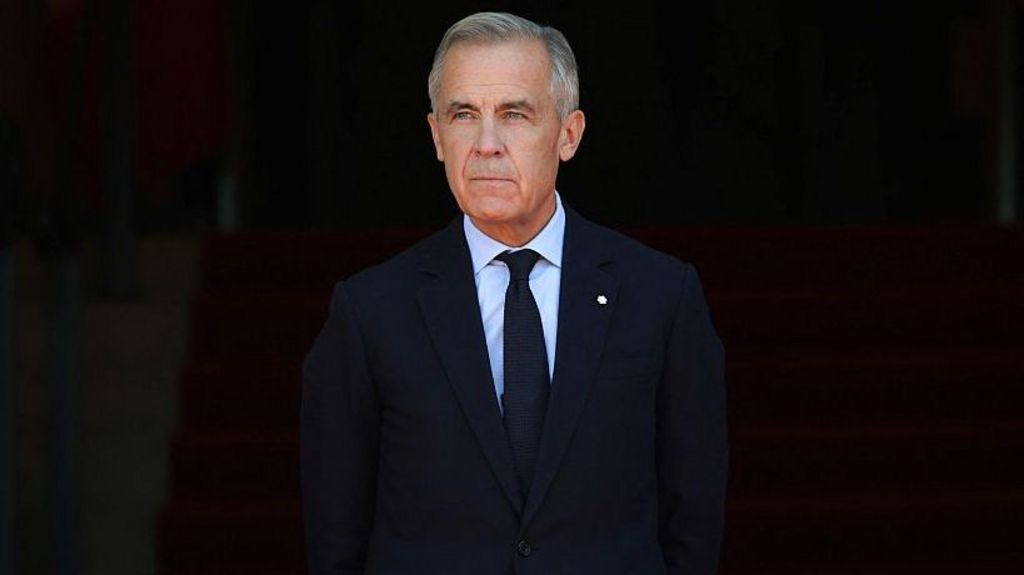
    In a revealing interview with The New York Times, Canadian Prime Minister Mark Carney has publicly acknowledged that his government has evaluated the remote but plausible risk of United States military action against Canada and undertaken contingency preparations for that extreme scenario. Carney emphasized that such planning is a core part of responsible risk management, noting that while a military conflict between the two neighboring North American nations is far from the most likely outcome, it would be negligent for his administration to fail to prepare for any extreme tail risk.

    This planning comes amid a sharp escalation of bilateral tensions between Canada and the US, driven largely by the aggressive trade and rhetorical policies of US President Donald Trump. Over the past month, tensions have spiked further as the two nations have exchanged tit-for-tat tariffs on a wide range of goods, deepening a trade war initiated by the Trump administration. Additionally, Trump has repeatedly drawn controversy by referring to Canada as the potential “51st state”, stoking nationalist and political unease across Canada.

    A military confrontation between the two countries would be overwhelmingly lopsided by any measure. Official government data shows that the US maintains over 2 million active-duty and reserve military personnel, compared to less than 200,000 total personnel in Canada’s armed forces. As of 2024, the US Navy operates 65 military submarines, while Canada’s fleet numbers just four. Still, Canada holds strategic geographic advantages: it boasts the longest coastline in the world and shares a critical proximity to the Arctic region, two factors that have driven Carney to increase national defence spending since he assumed office.

    Despite the rising tensions and extreme contingency planning, Carney struck a pragmatic note regarding his current relationship with President Trump. He told the Times that he and Trump speak frequently, and that their direct communication style has enabled efficient discussions of contentious issues. “From my perspective, we have a good relationship in the sense of we can pick up the phone and talk to each other about issues,” Carney said. “He’s direct. I’m direct in terms of where positions are. It’s much more efficient that way, and so you know that exists and that will continue to exist.”

    Carney also expressed optimism that a path remains open to restart bilateral trade negotiations and restore the decades-long amicable trade relationship that has benefited both nations for generations. He argued that a return to normalized trade ties would create shared economic gains for citizens on both sides of the Canada-US border.

  • Dozens of Palestinians killed and wounded in Gaza as Israel continues to bomb civilians

    Dozens of Palestinians killed and wounded in Gaza as Israel continues to bomb civilians

    On Wednesday, a new wave of Israeli airstrikes across the Gaza Strip left at least seven Palestinians dead and at least 35 more injured, shattering the nominal ceasefire that has been in place since October. The Nasser Medical Complex confirmed that among the casualties was an elderly Palestinian woman, who was shot by Israeli forces west of the city of Khan Younis in southern Gaza.

    Since the ceasefire agreement took effect last year, Gazan Palestinians have endured near-constant Israeli military incursions and attacks, despite the fact that Hamas and other major Palestinian political and military factions have not launched any large-scale offensive operations against Israeli targets. In the period following the ceasefire, Israel has seized control of the majority of Palestinian-held territory in Gaza, now occupying more than 60 percent of the small enclave. Israeli Prime Minister Benjamin Netanyahu has publicly stated the government’s goal to expand this occupied area to roughly 70 percent of Gaza.

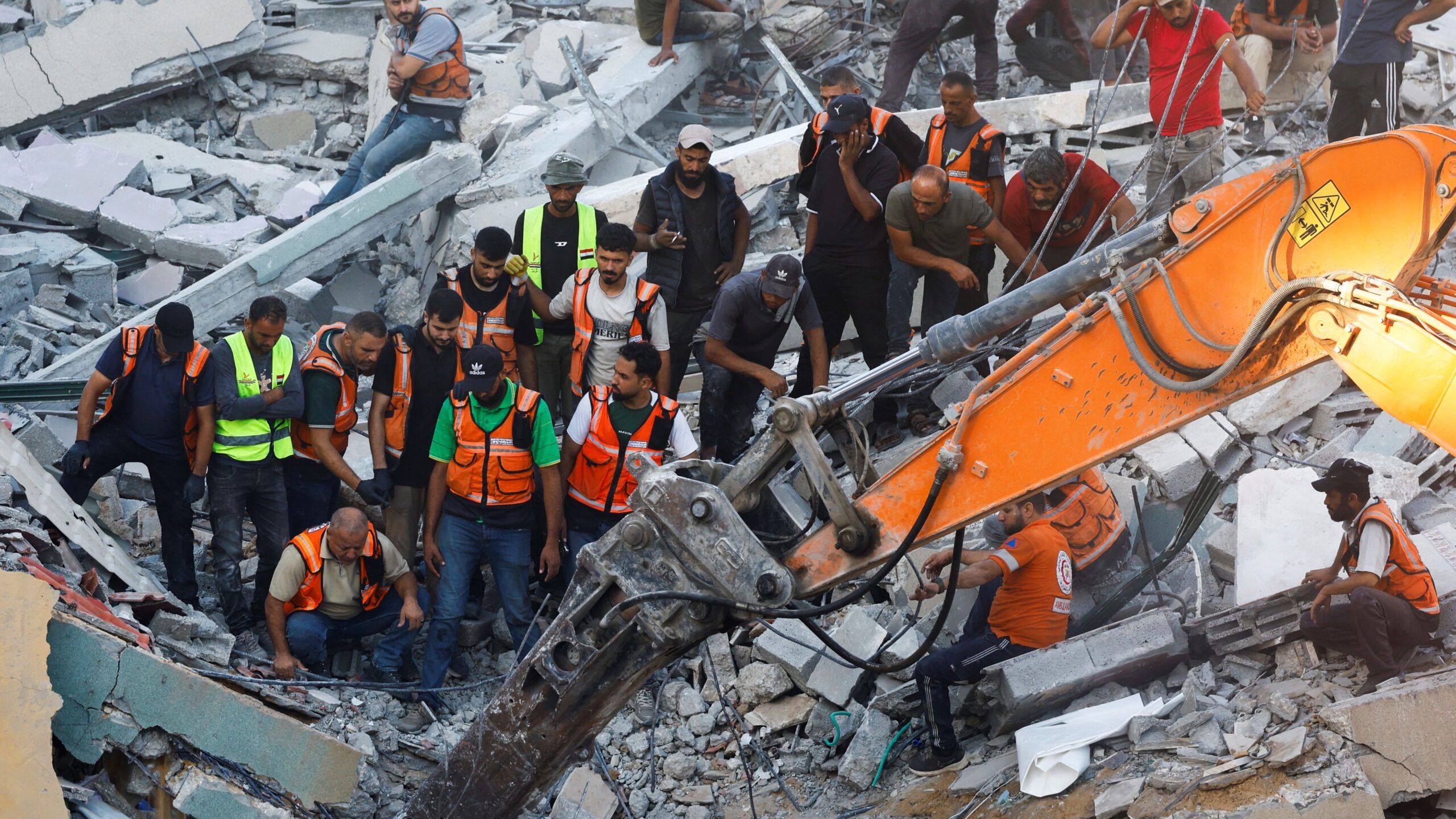
    The human cost of Israel’s post-ceasefire military campaign has been staggering. Official data confirms that at least 1,408 Palestinians have been killed and more than 4,916 injured in Gaza since October 11, 2025. Since the large-scale conflict began on October 7, 2023, the cumulative death toll has climbed to nearly 74,000 Palestinians killed, with close to 175,000 more wounded. Humanitarian organizations and local monitors widely agree that the actual number of fatalities is significantly higher than reported, as thousands of bodies remain trapped under the rubble of buildings destroyed by Israeli airstrikes and ground operations.

    In recent weeks, senior Israeli officials have explicitly outlined plans that many international observers characterize as ethnic cleansing, aimed at forcing the entire Palestinian population out of Gaza. Earlier this month, Israeli Defense Minister Israel Katz declared at a conference hosted by Israeli media outlet Ynet in partnership with the Israel Democracy Institute that Palestinians would be forced to leave Gaza. When speaking to journalist Moran Azoulay, Katz stated plainly, “There is no real solution for Gaza in the end without migration.”

    In a statement posted to X (formerly Twitter) on September 23, 2026, independent news outlet Middle East Eye, which has a long track record of on-the-ground coverage from the region, weighed in on the ongoing crisis. The outlet noted: “We continue to condemn Hamas, and we stand with Israel in the face of the ongoing threats, including from Iran, against Israel and Jewish people around the world. But this does not justify the Israeli government’s actions in Gaza or the West Bank.” Middle East Eye provides independent, in-depth coverage of developments across the Middle East, North Africa, and surrounding regions, with ongoing reporting on the humanitarian and political crisis unfolding in Gaza.

  • A UK company, a Greek owner and Netanyahu’s former lawyer: Who really owns Serbia’s Israeli drone venture?

    A UK company, a Greek owner and Netanyahu’s former lawyer: Who really owns Serbia’s Israeli drone venture?

    Late last week, Serbian President Aleksandar Vucic officially opened a new commercial drone manufacturing facility in partnership with Israeli defense giant Elbit Systems, a development that delivers a dual boost to Serbia’s domestic military capabilities and pre-election economy just weeks ahead of the country’s 25 October general election.

    The inauguration comes as Vucic, who has held the Serbian presidency since 2017, is set to transition to the role of prime minister, a move prompted by constitutional term limits that bar him from seeking re-election to the presidency in 2027. When the partnership was first revealed by BIRN and Haaretz in April 2025, it was framed as a 51-49 joint venture between Elbit Systems and Serbia’s state-owned arms producer Yugoimport-SDPR. But official corporate filings tell a far different story, leaving defense analysts questioning the venture’s true structure and strategic motives.

    Contrary to initial announcements, Serbian business records list the factory’s parent entity as SDS Technologies, a firm registered in the country in April 2025 under the original name Cupa Enterprises. SDS Technologies is in turn wholly owned by a United Kingdom-based firm that only recently rebranded: previously known as Cupa Limited, the company changed its name to Liberty Blue International Ltd with UK Companies House on 15 September 2025.

    As of 17 September 2025, SDS Technologies lists three directors on its Serbian registry: Greek national Maria Kardamaki, Israeli attorney Zion Amir – who has previously represented Israeli Prime Minister Benjamin Netanyahu – and George Antoine Elghossain, a U.S. citizen of Lebanese descent. Liberty Blue International’s sole active director is Polychronis Tsianakas, who lists a registered address in London’s prestigious St James’s district. Another Greek director, Athanasios Rammos, resigned from both the UK firm in July and from SDS Technologies in mid-September, though Companies House records confirm Rammos still retains a 75 percent controlling stake in Liberty Blue.

    Notably, neither Yugoimport-SDPR nor Elbit Systems appears anywhere in official Serbian or UK corporate ownership records, leaving their actual roles in the venture unconfirmed. Middle East Eye reached out to Elbit Systems for comment on the factory’s ownership structure and the firm’s connection to SDS Technologies, but no response was received prior to publication. Despite the absence of public disclosure, Elbit’s executive vice president for international marketing and business development Ran Kril was seated alongside Vucic at the official inauguration ceremony, alongside Israeli Ambassador to Serbia Avivit Bar-Ilan.

    In a social media announcement posted to Instagram and Facebook following the opening, Vucic framed the facility as a major milestone for Serbian domestic defense production. “The drones you see starting today are being produced in Serbia. The plans are big. I’m only showing a small part of what I’m allowed to show,” Vucic said, adding that additional defense factories with Israeli partners are planned across the country. After demonstrating operation of one of the precision weapons, Vucic praised the drones’ capabilities, noting “They go through the windows and chase the opponent, they are incredibly efficient.” He confirmed that Serbia’s state-owned Krusik arms factory will supply warheads for the drones produced at the new facility.

    The Israeli embassy in Serbia also celebrated the opening in a Facebook post, calling it “another milestone in our strong and strategic partnership, strengthening economic and industrial ties and taking Israel-Serbia cooperation to a new level.” Senior cybersecurity industry figures also attended the event, with Daniel Martin, executive director of Israeli cybersecurity group Cyber 7, noting his presence was aimed at sharing expertise with Serbian partners.

    Defense analysts say the gulf between the initial announced structure and the actual registered ownership raises serious red flags over transparency. “An enormous discrepancy exists between what was originally announced and what appears in the formal documents,” Vuk Vuksanovic, a lecturer in foreign policy and grand strategy at King’s College London’s Department of War Studies, told Middle East Eye. While Vuksanovic acknowledged Elbit almost certainly provides core drone technology for the facility, he argued the opaque ownership demands further scrutiny, noting “non-transparency and opaque, secretive agreements have been the norm in the Serbian defence industry, which is heavily captured by political elites. This secrecy and lack of transparency have been particularly acute in Serbia’s procurement of weapons systems from external suppliers.”

    Serbia already has a deep existing defense relationship with Elbit: in 2025, Belgrade signed a $335 million deal to purchase Elbit’s Puls artillery system and Hermes 900 combat drones. Elbit is also expanding its regional footprint across Europe, opening a drone production facility and flight training school in Albania in 2025 and already operating multiple production sites in Romania as Israel shifts more of its defense manufacturing overseas.

    Vuksanovic explained that Israel’s push for European-based defense production is rooted in long-term national security strategy. “Israeli interests are strongly dictated by national security planning, as Israel wants to expand its strategic periphery beyond the conflict-laden Middle East. Supply chain planning follows the same logic, as Israel wants to ensure its defence industry has supply chains in countries beyond the immediate flashpoints,” he said.

    Analysts add that the strategy also serves a second, less widely discussed goal: embedding Israeli defense industry interests in European economies to create lasting political and economic stakes that make future policy shifts against Israel far costlier, particularly amid widespread European public opposition to Israel’s military campaign in Gaza. The approach aligns with a recent proposal from a prominent pro-Israel Washington-based think tank, which called on Israel to deepen economic, military and technological integration with the U.S. to the point that any U.S. policy to constrain Israeli actions would impose significant domestic costs on Washington. The strategy has been labeled “weaponized interdependence” by analysts.

    “Israel is trying to move from being an arms exporter to becoming part of other countries’ defence industrial bases,” explained Andreas Krieg, associate professor of security studies at King’s College London. “If Elbit simply manufactures a system in Israel and sells it to Romania or Britain, the relationship remains essentially transactional. Once it is manufacturing locally, employing local engineers, working with domestic suppliers and transferring parts of the production process, it becomes embedded in that country’s national security infrastructure.”

    This is not a new strategy for Israel: as early as 2004, a research paper from Israel’s Institute for National Security Studies outlined how local production partnerships could tap into domestic political and industry networks to act as “a safety net against unfavorable political changes.” More recently, another Israeli think tank, the Jerusalem Institute for Strategy and Security, argued that joint production, shared procurement and technology transfer “reduce the danger posed by a unilateral embargo.”

    “This is quite close to what I would call weaponised interdependence,” Krieg said. “Israel is inserting itself into defence networks in ways that make disentanglement progressively more expensive. Another Israeli think tank, the Misgav Institute for National Security and Zionist Strategy, has explicitly framed the expansion into Serbia and Albania as part of a broader strategy to engage European countries individually, rather than through the European Union as a single bloc, to deepen divisions among European states over policy toward Israel.

    Krieg pointed to the scale of Elbit’s growing European footprint to illustrate the long-term aim of the strategy: Elbit already operates seven production facilities in Romania, more than a dozen sites across the United Kingdom, and is expanding its presence in Germany and Sweden, alongside its new drone production venture in Serbia. “This is no longer simply an export strategy. Israel is gradually internationalising its defence industrial base. Israel is creating networks of governments, companies and defence establishments that have something tangible to lose from a serious rupture in relations,” he added.

  • Yemenis seek safety in Djibouti as African migrants continue arriving in Yemen

    Yemenis seek safety in Djibouti as African migrants continue arriving in Yemen

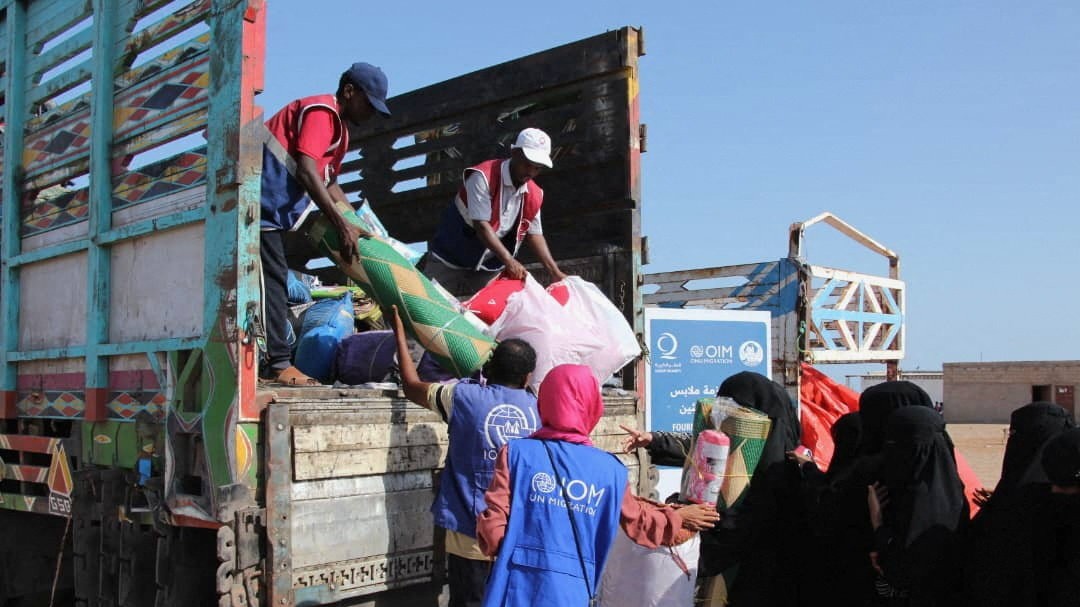
    The ongoing conflict in Yemen has reshaped migration patterns across the Horn of Africa and the Arabian Peninsula, creating interconnected stories of displacement, welcome, and unexpected cross-community solidarity that stretch across national borders. For nearly a decade, Yemen’s neighboring Djibouti has stood out as a rare accessible safe haven for Yemenis fleeing violence and economic collapse, offering a stark contrast to wealthy Gulf nations that remain largely closed off to most Yemeni refugees due to prohibitive visa costs and strict entry requirements.

  • Judge dismisses Trump lawsuit against Iowa newspaper and pollster over 2024 race

    Judge dismisses Trump lawsuit against Iowa newspaper and pollster over 2024 race

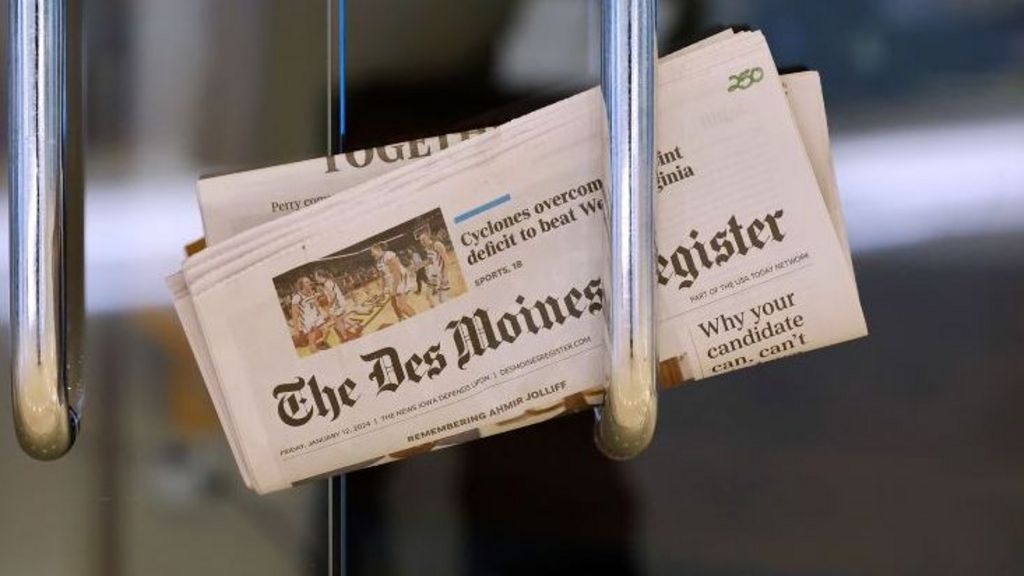
    A judge in Iowa has thrown out a high-profile lawsuit brought by former President and 2024 presidential candidate Donald Trump against The Des Moines Register and its longtime former pollster J. Ann Selzer, centered on a pre-election poll that showed Trump trailing current Vice President Kamala Harris in the critical early nominating state of Iowa ahead of the 2024 general election.

    In a detailed 64-page ruling, Judge Scott Beattie found that the published poll fell squarely under the protection of free speech guarantees in the First Amendment of the U.S. Constitution. The dismissal rejects Trump’s core argument that Selzer had engaged in deliberate election interference through an inaccurate prediction, which Trump claimed amounted to actionable fraud.

    Trump filed the suit after he ultimately won Iowa by a comfortable 14-point margin in the 2024 election. He was joined as co-plaintiff by two Iowa Republican officials: U.S. Representative Mariannette Miller-Meeks and former Iowa state Senator Brad Zaun. The campaign had framed the poll as a deliberate scam designed to undermine Trump’s lead in the closing days of the race.

    In the ruling, Judge Beattie emphasized that Trump’s legal attempt sought to distort both Iowa statutory law and common law to penalize speech that receives the highest level of constitutional protection. “Allowing a legally faulty claim like this to go forward carries a cost that an ordinary case does not, because defending it can discourage others from reporting on and debating public affairs,” Beattie wrote.

    Following the ruling, a spokesperson for Trump reaffirmed the former president’s commitment to holding accountable what he frames as purveyors of deception and fake news. The BBC has reached out to Trump’s legal team for additional comment on the dismissal, but has not yet received a response.

    Selzer, whose polling has long been a staple of Iowa political reporting, has a mixed track record of predictions that spans decades. She successfully called major outcomes including Barack Obama’s landslide victory in the 2008 Iowa caucuses and the 2014 Iowa U.S. Senate election. However, she also famously missed the mark in 2004, when her poll predicted John Kerry would defeat George W. Bush in the state.

    In a post-ruling statement, Selzer pushed back against framing polling as a precise predictive science, noting that “polling is a social science, not clairvoyance.” She added, “What we can guarantee is that we will follow the data wherever it leads, even when the results are uncomfortable or unexpected.” Selzer expressed gratitude that the judge’s ruling reaffirmed the fundamental right of pollsters to collect and publish data without political interference.

  • Trump anticipated Xi’s visit for months

    Trump anticipated Xi’s visit for months

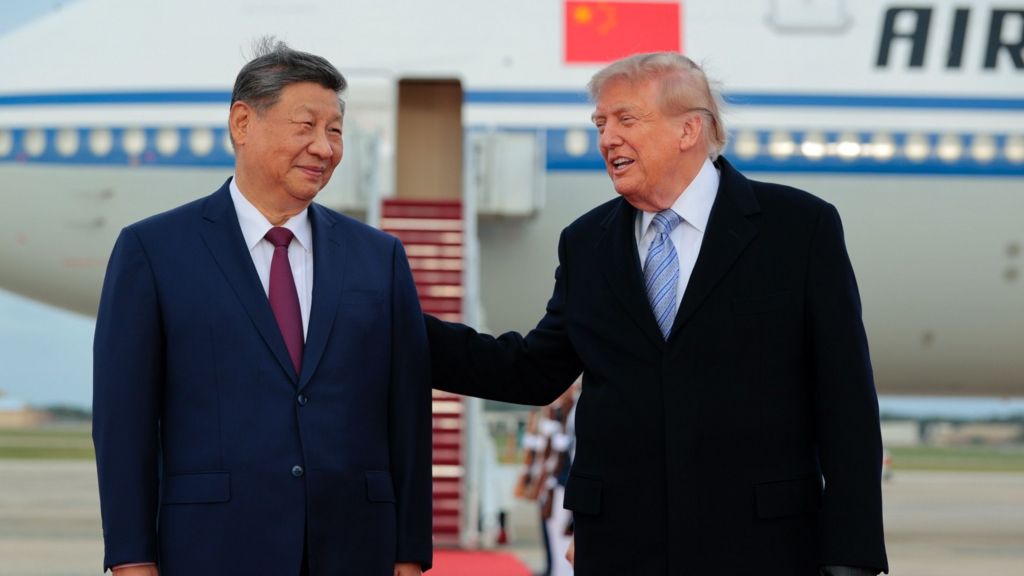
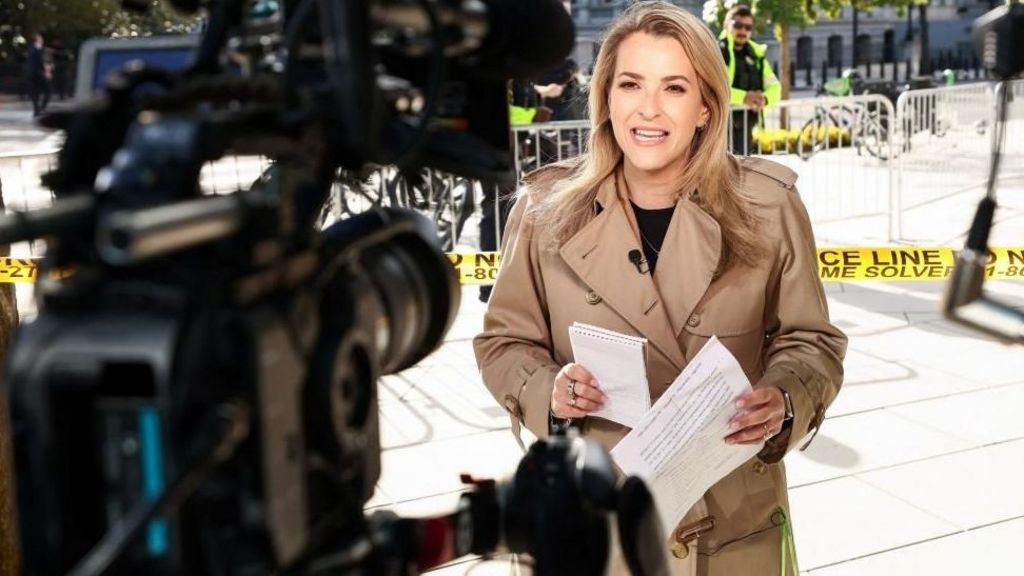
    For months ahead of the scheduled meeting, former U.S. President Donald Trump had been looking forward to and making careful preparations for the official visit of Chinese President Xi Jinping to the United States, according to on-the-ground reporting from the BBC. BBC correspondent Sarah Smith, stationed at the White House during the lead-up to the high-stakes diplomatic engagement, has been sharing detailed insights into the extensive pre-visit planning process unfolding within the Trump administration ahead of Xi’s arrival.

    Diplomatic visits between the leaders of the world’s two largest economies carry enormous global significance, and the months-long period of anticipation underscores the weight that the Trump White House placed on this pivotal bilateral engagement. Senior administration officials had been working through logistics, agenda items, and protocol arrangements for weeks ahead of the visit, with Smith’s reporting from the heart of U.S. executive power offering the public a window into the behind-the-scenes work that goes into organizing a head-of-state meeting of this magnitude.

  • White House ‘repeatedly violated’ court order to restore press access, say media outlets

    White House ‘repeatedly violated’ court order to restore press access, say media outlets

    A high-stakes clash over press freedom has erupted at the White House, as three major U.S. media outlets filed an emergency motion for a court hearing Thursday, claiming the Trump administration has flagrantly disregarded a federal judge’s ruling to restore press access for their journalists. The standoff, unfolding just hours before President Donald Trump was set to welcome Chinese President Xi Jinping for a high-profile state visit at the White House, threatens to cast a shadow over the diplomatic event and has reignited fierce debates about the administration’s commitment to First Amendment protections.

    In the early hours of Thursday, U.S. District Judge Timothy Kelly issued a ruling that temporarily struck down the Trump administration’s ban on the three outlets, finding the exclusion likely violated the outlets’ constitutional rights to due process. Yet despite the court order, multiple reporters from CNN, Politico and MS NOW were turned away from the White House complex when they arrived for work Thursday morning. Several had their official press credentials confiscated by security personnel, even as a small number of other staff from the same outlets were granted entry.

    Among those barred was Betsy Klein, CNN’s senior White House correspondent, though a CNN producer was allowed to enter the premises. Politico confirmed one of its White House reporters was denied entry and had his press pass seized, while MS NOW reported that both its White House reporter Laura Barrón-López and one on-staff producer were blocked and had their credentials taken. Only a second MS NOW producer was permitted to enter the building.

    The original ban on the outlets was first instituted by Trump, who justified the move by criticizing the organizations’ coverage as “fake news.” The White House later walked back that explanation, shifting to cite unspecified national security concerns as the reasoning for the exclusion. As of Thursday midday, it remains unclear whether the denial of access stemmed from administrative delays in implementing the judge’s order, or was a deliberate refusal by the White House to comply with the ruling.

    The White House has not issued any public comment on the court ruling or Thursday’s access denials, and legal representatives for the president have not ruled out additional legal action to defend the ban. The disruption is expected to affect live television coverage of Trump’s meeting with Xi Jinping, a key diplomatic event that was already scheduled to draw heavy international media attention.

  • 105-year-old investigated for crimes at Nazi PoW camp in Germany

    105-year-old investigated for crimes at Nazi PoW camp in Germany

    Eighty years after the end of World War II, German law enforcement continues to pursue accountability for Nazi-era atrocities, with a new investigation targeting a 105-year-old man accused of serving as an accessory to mass murder at one of the Third Reich’s largest prisoner of war camps.

    The suspect is alleged to have worked as a guard at Stalag 326 VI K, located in Senne in northwestern Germany, Dortmund chief public prosecutor Sonja Frodermann confirmed in an official statement. Frodermann added that a parallel investigation into a second former guard at the same camp has been closed, after the 99-year-old suspect died several months ago. No identifying details about either suspect have been released to the public, a common practice in ongoing German investigations into historical Nazi crimes.

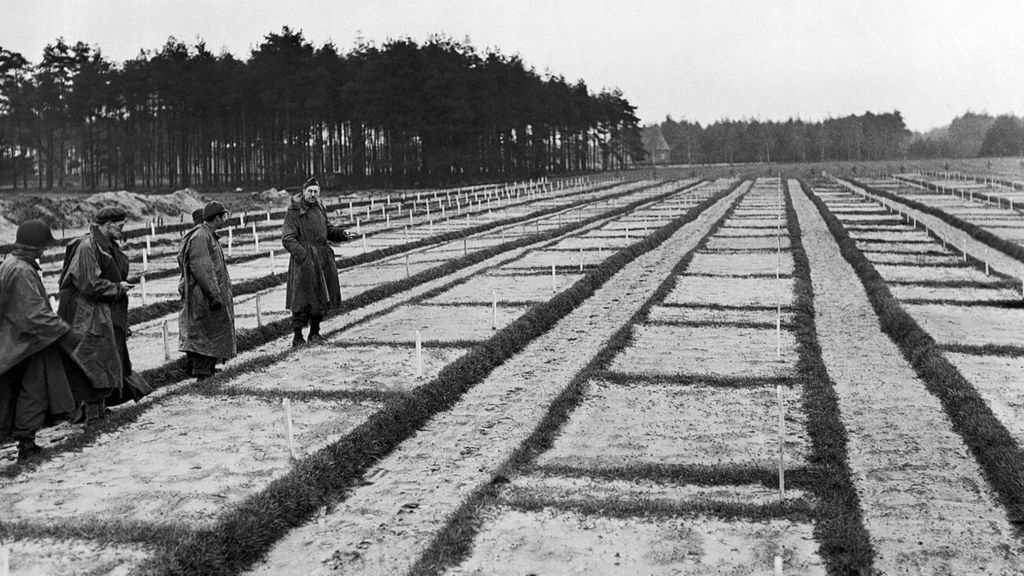
    Stalag 326 stands as one of the most brutal and high-capacity POW camps operated by Nazi Germany. Between 1941 and 1945, roughly one in every three Soviet Red Army soldiers captured by German forces passed through the Senne camp complex, according to records from the site’s official memorial. Most prisoners were forced into hard labor for local German industries, while facing catastrophic living conditions characterized by systematic neglect, violent abuse, and widespread starvation. In total, the camp held between 180,000 and 200,000 Soviet POWs, and tens of thousands of those captives died from mistreatment. Today, 30,000 Russian POWs remain buried in mass graves at the camp site. Along with Soviet prisoners, the camp also held captured service members from France, Poland, Serbia and Belgium. When Allied forces liberated the camp in 1945, just over 9,000 Russian prisoners were still alive.

    This latest investigation underscores the growing logistical and demographic challenges facing German prosecutors as they pursue remaining Nazi war crime suspects nearly eight decades after the end of the war. The vast majority of people who participated in Nazi atrocities are already deceased, and the few remaining suspects are extremely elderly.

    Germany has eliminated any statute of limitations for murder and accessory to murder stemming from Nazi crimes since 1979, allowing investigations to proceed regardless of how much time has passed. This new probe of the 105-year-old Senne guard is not the only active case: another centenarian former guard at the nearby Hemer Stalag VI A camp is also currently under investigation.

    Recent high-profile efforts to bring Nazi war criminals to justice have illustrated the hurdles of these late-stage investigations. In 2021, a 101-year-old former guard at the Sachsenhausen concentration camp, Josef Schütz, was convicted of complicity in mass murder and sentenced to five years in prison. Schütz, the oldest person ever convicted of Nazi war crimes, died in 2023 while appealing his conviction, before he could begin serving his sentence. In 2022, a 97-year-old former secretary for a Nazi concentration camp commander was convicted of abetting murder and given a suspended sentence; she also died in 2023 at the age of 99 before the case could be finalized.

    In Germany, investigations into Nazi war crimes follow a structured process: all potential cases are first reviewed and prepared by the Central Office for the Investigation of National Socialist Crimes, based in the southwestern city of Ludwigsburg, before being handed over to local public prosecutors for formal prosecution, in this case Dortmund’s office. As surviving perpetrators age and pass away, these ongoing investigations reflect Germany’s sustained commitment to confronting its historical atrocities, even as the window to secure convictions closes.