博客

  • Turkey’s $17bn fund scandal becomes a political crisis for Erdogan

    Turkey’s $17bn fund scandal becomes a political crisis for Erdogan

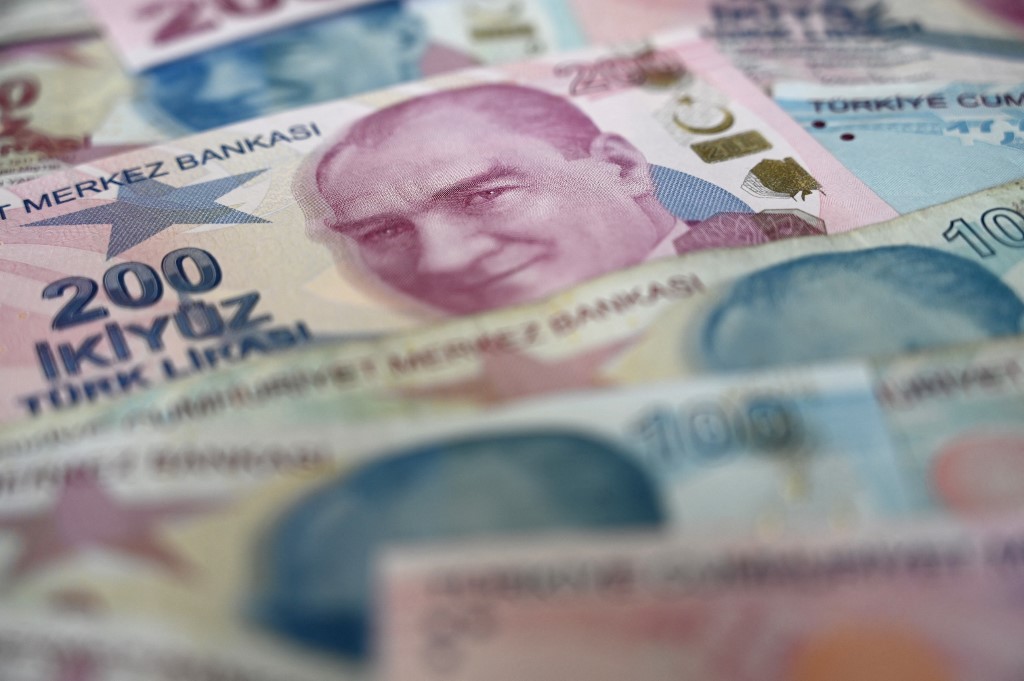
    A sprawling financial scandal centered on alleged Ponzi-like operations by more than 100 Turkish investment funds has sent shockwaves across Turkey’s economy and political landscape, leaving more than 500,000 retail investors facing potential massive losses and forcing Recep Tayyip Erdogan’s ruling government into damage control. Earlier this month, Turkish financial regulators ordered the immediate liquidation of 130 suspect funds holding a combined $17 billion in assets, marking one of the largest alleged fraud schemes in the country’s modern history.

    What began as a historic financial crisis has rapidly escalated into a major political threat to Erdogan’s Justice and Development Party (AKP) administration, with opposition leaders and independent investigators uncovering a tangled web of ties between the fund operators, senior AKP figures, and high-ranking government officials. The first high-profile political casualty emerged Sunday when Fatma Betul Sayin Kaya, a deputy chair of the AKP and former family minister between 2016 and 2018, resigned from her post. Kaya stepped down after opposition lawmakers accused her of earning hundreds of thousands of dollars in illegal profits by selling off shares in key linked companies just days before the September 16 market collapse that followed the exposure of the scheme.

    Addressing the unfolding controversy in a public address on Monday, Erdogan pledged a full crackdown on bad actors responsible for market manipulation and systemic fraud. “Whoever lays a hand on the nation’s rights, assets or legal interests will face us and the state,” the president told the public.

    The fraudulent structure of the suspect funds relied on a simple but highly risky tactic: the funds concentrated nearly all their holdings in illiquid, small-cap stocks with extremely low free-float volumes, meaning very few shares were available for public trading. This lack of available stock allowed fund managers to artificially inflate share prices to unsustainable levels, generating impossible returns to lure new investors into the scheme. One of the highest-profile funds, Tera Investment Fund, claimed to deliver returns of more than 1,500 percent over the 12 months leading up to the scandal—a figure that defies all standard market logic and financial modeling.

    Turkish authorities have laid out a six-month timeline to sell off all assets held by the liquidated funds and distribute proceeds to affected investors. However, independent financial experts remain deeply pessimistic about the scale of recovery for participants. Most investors are unlikely to recoup anything close to the inflated paper gains reflected in their account statements, and many may lose a large share of their initial principal investments. Complicating the political fallout further, a large share of the affected investors are reported to be long-time AKP voters, a dynamic that could significantly increase the political cost of the scandal for the ruling party.

    Multiple of the firms accused of involvement in the scheme, including industry leaders Tera Group and Pusula Portfolio, count well-connected political figures among their board members. Both firms have publicly denied all allegations of wrongdoing. Documents show that one of Erdogan’s most senior senior economic advisers held a board seat at Tera Portfolio Management until earlier this year, while a second former presidential adviser remained on the board up until the scandal broke in mid-September. Additionally, the brother of that second former adviser, a retired Turkish ambassador, held board positions at multiple subsidiary companies under the Tera Holding umbrella.

    Emre Tezmen, chairman of the Tera Group, who has been taken into custody on charges of operating a Ponzi scheme, also held a critical leadership role in Turkey’s official capital market infrastructure. Up until his arrest, Tezmen served on the board of the Central Securities Depository of Turkey (MKK), the state-backed institution responsible for the electronic tracking, safekeeping, and transfer of all securities traded in the country. Tezmen has pleaded not guilty to all charges against him.

    Muhammed Yariz, chairman of Pusula Portfolio, has also been arrested in connection with the scandal. Yariz has longstanding professional and political ties to the AKP, dating back decades.

    The connections between the scheme and ruling political circles extend far beyond the investment funds themselves. Kaya’s controversial pre-collapse share sales were concentrated in stock of Ozata Denizcilik, a major Turkish shipbuilding contractor that works on high-value projects for the Turkish navy. The company’s well-documented ties to politically connected elite families have sparked widespread questions about deep-seated overlap between private business interests, financial regulators, and top AKP officials.

    A sitting Ozata Denizcilik board member was arrested on Monday in connection with the scheme. The arrested official is the son of a former senior member of Turkey’s banking regulator, the same body that approved the creation of Tera Investment Bank, the financial affiliate of Tera’s core brokerage business. At the peak of the scheme, Tera’s brokerage arm reportedly controlled as much as 95 percent of Ozata Denizcilik’s outstanding public shares, pushing the shipbuilder’s market valuation to a staggering $5 billion—surpassing the valuation of established blue-chip Turkish firms including leading automaker Ford Otosan and major steel producer Eregli Demir Çelik.

    The arrested Ozata Denizcilik board member is also the son-in-law of a sitting deputy finance minister, linking him directly to the government ministry that now leads the official response to the crisis he is accused of helping create. In a public statement released on social media ahead of his arrest, the board member denied all charges, saying he had turned himself in voluntarily to clear his name of any wrongdoing.

    To date, the full scope of official involvement remains unclear. Unconfirmed rumors circulating in Ankara’s political circles suggest that additional senior government officials may have played a role, either by turning a blind eye to the suspicious activities for years or by personally investing in the funds to profit from the inflated returns. These claims have not been independently verified as of yet.

    Authorities have already faced significant criticism for missteps in their regulatory response to the crisis. Last Friday, Justice Minister Akin Gurlek announced that the government had frozen the assets of 46 legal entities, 18 investment funds, and 42 individual suspects, following a review of fund outflows between July 1 and September 16. Travel bans were also imposed on 37 individuals as part of a judicial control order. The asset freezes were meant to block transfers, sales, large cash withdrawals, and other transactions that would reduce the pool of assets available to repay injured investors, while requiring all suspicious activity to be reported to judicial authorities.

    The list of affected entities covered far more than just investment firms, spanning financial services companies, insurance providers, food producers, and energy firms, including major listed companies such as Tera Yatirim, Pusula Yatirim, Astor Enerji, and Yayla Agro. The sweeping order triggered immediate panic among investors, who feared widespread market disruption when Borsa Istanbul, Turkey’s main stock exchange, reopened for trading on Monday. Facing the threat of a broader market crash, authorities reversed the full set of asset freezes on Sunday, just one day after they were announced.

    Astor Enerji, one of the largest listed companies on Borsa Istanbul with a market capitalization of $5.3 billion, confirmed on Monday that all restrictions and freezing orders against the firm had been lifted and that its operations continued without interruption. Even with the reversal of the asset freezes, market fallout persisted: Turkish stocks closed down 2.38 percent on Monday, the first full trading day after the regulatory misstep.

    Erdogan is scheduled to chair a special government committee meeting on Tuesday to finalize next steps, as the formal mechanism for compensating affected investors remains undecided. Ankaran-based analysts are divided over the long-term political impact of the scandal. Some argue that the government will only need to sacrifice a small number of politically connected figures, following the precedent of Kaya’s resignation, to contain public anger, and that the scandal will not have a major impact on the 2028 Turkish presidential election.

    Other analysts reject that assessment. “Erdogan will have to genuinely go after this to show that he doesn’t forgive such transgressions, because the political cost could be worse than people imagine,” one senior Ankara political insider told reporters.

  • Oura pulls $15bn stock market listing days after announcement

    Oura pulls $15bn stock market listing days after announcement

    Just days after unveiling its highly anticipated initial public offering (IPO) that was set to value the company at $15 billion, leading health-focused smart ring maker Oura has made the stunning decision to pull its planned US stock market listing indefinitely. The Finnish-founded tech firm, which now calls San Francisco its global headquarters, announced it would postpone its flotation, citing widespread uncertainty across the current IPO market, and offered no timeline for when the offering might be revived.

    The decision marks one of the most high-profile setbacks for the 2025 IPO pipeline, coming just over a week after Oura filed official regulatory documents to raise up to $2.2 billion through a public share offering to global investors. Oura had set an expected price range of $40 to $44 per share for its listing on the Nasdaq exchange, putting its targeted market capitalization at the $15 billion mark. The company is the latest in a growing string of firms pulling back on planned public offerings, as market analysts warn that conditions for new listings have become significantly more challenging in recent months.

    In a public statement following the announcement, Oura CEO Tom Hale framed the delay as a strategic choice rather than a forced retreat. “An IPO is just one step in our journey,” Hale said, adding that “we have the luxury of choosing our moment.”

    Oura’s move comes less than a month after another major US-based firm, nuclear technology developer Holtec International, also announced a last-minute postponement of its own planned flotation. Holtec blamed an “unusual confluence of developments” that had eroded overall investor confidence in the market for newly public companies, listing a cascade of overlapping economic and geopolitical headwinds: rising global energy costs, ongoing military conflicts around the world, escalating international trade tensions, and persistent inflationary concerns that have pushed major central banks — including the US Federal Reserve — to continue lifting benchmark interest rates.

    This week alone, the 10-year US Treasury yield hit its highest level since 2007, a jump that has further raised borrowing costs for businesses and dampened investor appetite for risk assets like newly listed equities. Samuel Kerr, global head of equity capital markets at data and analysis firm Mergermarket, noted that the current market landscape bears little resemblance to what industry observers projected just a few weeks ago. “What is now clear is we are in a very different IPO market to the one we envisaged just a few weeks ago,” Kerr said.

    Despite the market headwinds derailing its IPO, Oura has posted strong financial growth in recent years. For its full 2025 fiscal year ending September 30, the company reported $907.8 million in total revenue, with pre-tax profit hitting $23.5 million — a major jump from the $6.2 million pre-tax profit it recorded the previous year. More recently, in the nine months ending June 30 2026, Oura notched $1.2 billion in revenue and $70 million in pre-tax income, signaling accelerating growth ahead of its planned listing.

    Founded in 2013, Oura pioneered the mainstream wearable health ring market, producing devices priced starting at $300 that track a range of physiological metrics including user heart rate, body temperature, movement, and sleep patterns. The data collected by the ring is processed and displayed via a companion smartphone app, giving users personalized insights into their overall health and recovery.

    The company is currently facing a federal class action lawsuit filed in August by the Clarkson Law Firm, which accuses Oura of deceptive advertising over its claims that its rings can accurately measure sleep activity and stages. The lawsuit argues that “Oura rings cannot measure one’s sleep or cycles. That’s because sleep happens in the brain, not on one’s finger.” However, multiple sources familiar with the company’s decision confirm the IPO delay is not connected to the pending litigation. Oura has pushed back forcefully against the lawsuit’s claims, emphasizing that it stands by the scientific foundation of its device’s tracking capabilities.

    “Like other consumer sleep wearables, Oura Ring estimates sleep stages using multiple physiological signals, including heart rate, heart rate variability, movement, breathing patterns, and temperature,” a company spokesperson said in a statement.

    The abrupt reversal of Oura’s IPO plans underscores the rapid shift in sentiment across global public markets, as persistent economic uncertainty makes companies increasingly cautious about launching new offerings at a time when investor risk tolerance remains low.

  • First female prime minister named in Morocco after winning elections

    First female prime minister named in Morocco after winning elections

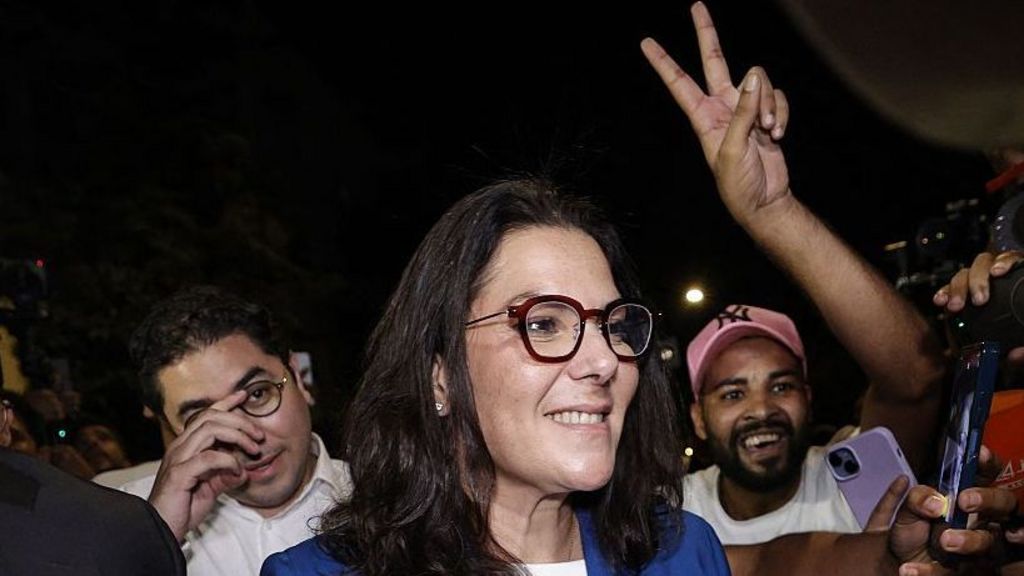
    In a landmark moment for Moroccan politics and gender representation across the Arab world, King Mohammed VI has named 50-year-old Fatima Zahra El Mansouri as the North African nation’s first female prime minister. The appointment comes after El Mansouri’s centrist Authenticity and Modernity Party (Pam) secured the largest share of seats in last week’s parliamentary elections, making her only the second woman to ever lead a national government in the Arab world, following Tunisia’s Najla Bouden.

    El Mansouri was selected for the top executive post over another high-profile Pam candidate: Fouzi Lekjaa, Morocco’s well-known football association leader. A seasoned politician with deep roots in local and national governance, El Mansouri has served as mayor of Marrakesh for multiple terms over the past 15 years and held a cabinet position in the previous coalition government. Trained as a lawyer, she built her academic foundation at Rabat’s Mohammed V University before pursuing advanced studies in business and corporate law in France and the United States. She entered politics shortly after Pam was founded in 2008, made history as Marrakesh’s first female mayor in 2009, reclaimed the post in 2021, and most recently rose to become co-ordinator of Pam’s leadership coalition in February 2024.

    Morocco operates as a constitutional monarchy, though the vast majority of governing power remains concentrated in the office of the king. In a pre-appointment victory press conference, El Mansouri was asked whether the state would need to revise protocols to accommodate her participation in Muslim religious ceremonies led by the king — events where men and women currently worship in separated sections. She declined to answer the question directly, instead choosing to praise King Mohammed VI as the kingdom’s “biggest advocate for women”, noting that it would be a profound honor to be entrusted with the role of head of government.

    One of Morocco’s most recognizable female political figures, El Mansouri has pushed back against popular narratives that frame her as a hard-nosed “iron woman”. In a 2021 interview with Pam’s in-house magazine, she clarified, “I am neither a woman of steel nor iron… I am a free activist.” Notably, El Mansouri has rarely publicly addressed ongoing debates over women’s rights and gender inequality in Morocco, including divisive conversations around banning polygamy and establishing equal inheritance rights for men and women.

    Under Morocco’s constitutional framework, the king is tasked with selecting a prime minister from the party that wins the most seats in House of Representatives elections. Unlike most previous elections, where the ruling party’s single secretary general was the clear, formal nominee for prime minister, Pam has operated under a collective leadership structure rather than a single secretary general since February 2024, leaving the final choice entirely in the king’s hands. Ahead of the appointment, El Mansouri explicitly acknowledged that the decision between her and Lekjaa rested with the monarch.

    Now that she has taken the appointment, El Mansouri faces the immediate challenge of forming a viable governing coalition. Pam won 97 of the 395 total parliamentary seats, far short of the 198-seat absolute majority required to govern alone. Relations between Pam and the National Rally of Independents (RNI), the senior partner in the outgoing coalition government where Pam served as a junior partner, have broken down, ruling out a renewal of that partnership. Meanwhile, the Islamist Justice and Development Party (PJD) staged a major electoral comeback, jumping from just 13 seats in the previous parliament to 54 seats this cycle, a surge driven by the return of former prime minister and party leader Abdelilah Benkirane. Shortly after election results were finalized, Benkirane confirmed that PJD will remain in opposition and rejected any potential coalition partnership with Pam.

  • Eiffel Tower chief to quit after female staff replaced by men during religious visit

    Eiffel Tower chief to quit after female staff replaced by men during religious visit

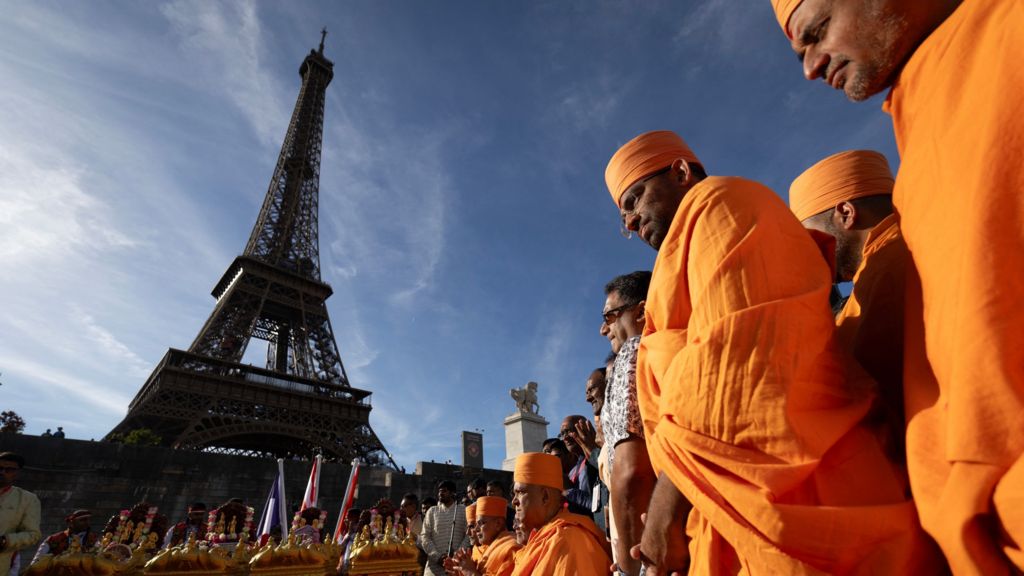
    A controversy rooted in a religious group’s visit to Paris has triggered leadership changes at one of the world’s most iconic landmarks, after a request for gender segregation led to widespread public outrage and worker unrest. Earlier this month, a delegation of nearly 100 monks and representatives from the BAPS (Bochasanwasi Akshar Purushottam Swaminarayan Sanstha) Hindu movement traveled to Paris to inaugurate a new temple, including a scheduled stop at the Eiffel Tower as part of their itinerary.

    Founded on teachings dating back to 18th-century Hindu spiritual leader Lord Swaminarayan, BAPS maintains strict gender separation in many of its religious activities and sacred spaces. During the group’s visit to the Eiffel Tower, BAPS organizers submitted a formal request to limit delegation members’ interactions with female staff working at the landmark. SETE, the state-owned company that manages operations at the Eiffel Tower, granted this request—a decision that would soon spark national backlash.

    Internal documents from SETE confirm that female employees assigned to work during the delegation’s visit were removed from their posts and reassigned, replaced by male colleagues. Staff representatives report that women were explicitly ordered to avoid specific zones of the tower for the duration of the visit, leaving many workers feeling publicly humiliated and disrespected. In response to the incident, employees at the monument launched an immediate walkout, forcing the complete closure of the popular tourist site to protest the organization’s decision.

    Political leaders across France swiftly condemned the action, echoing the anger of Eiffel Tower staff. Yaël Braun-Pivet, president of France’s National Assembly, emphasized that France would not accept forcing women out of their workplaces to accommodate the demands of any visitor group. Emmanuel Gregoire, the Socialist deputy mayor of Paris, labeled the choice “absurd, unjust and unacceptable” and ordered two independent inquiries into how the incident was allowed to happen.

    This week, SETE announced that Patrick Branco Ruivo, who has served as the company’s director general since 2018, will step down from his role at the end of 2025. A company statement confirmed that an internal investigation uncovered “operational flaws and shortcomings” in planning the visit, which led to the “unacceptable” removal of female staff. SETE chair Ariel Weil announced that in the wake of the controversy, new mandatory training programs focused on gender equality will be rolled out for all staff, and the organization will begin a structured leadership transition in the coming months to fill the vacant director general role.

    In the weeks following the incident, BAPS issued a public apology for the harm and disruption the controversy caused. The organization, which manages more than 1,000 temples across the globe in major cities including London, Los Angeles, and Sydney, describes itself as a volunteer-focused spiritual movement dedicated to advancing social good through Hindu values. BAPS has stated that its tradition of gender separation is intended as a benefit for female followers, but critics argue that 18th-century cultural norms have no place in modern public spaces, and that removing women from their workplaces to accommodate religious custom amounts to unlawful gender discrimination.

  • Israeli settlers set Palestinian homes and cars alight in West Bank rampage

    Israeli settlers set Palestinian homes and cars alight in West Bank rampage

    Overnight between Monday and Tuesday, a coordinated wave of violent unrest carried out by dozens of Israeli settlers spread across multiple locations in the occupied West Bank and East Jerusalem, leaving Palestinian property destroyed and families displaced once again, just hours after a court-ordered return to their seized land.

    The most high-profile incident unfolded shortly after midnight in the village of Jalud, located south of the northern West Bank city of Nablus, where roughly 100 settlers launched a targeted raid on properties belonging to the Toubasi Palestinian family. The Toubasi family had originally been forced to abandon their land in July, after repeated incursions by settlers intent on seizing their home. In a rare ruling, an Israeli court had ordered the Israeli military to guarantee the family’s safe return to their property — and the family had only been back for several hours when the large group of settlers arrived.

    By the time the violence ended, the settlers had set ablaze two separate homes owned by members of the Toubasi family, forcing the entire clan to flee their land for a second time. Mahmoud Toubasi, one of the property owners, told reporters that when he was eventually able to return to assess the damage, his family was stunned by the scale of the destruction. He confirmed that the fire had completely gutted the home, destroyed all of the family’s belongings, and left the structure completely uninhabitable.

    Multiple local media reports indicate that when Israeli military forces finally arrived at the scene, they did not take action to halt the settler attack. Instead, witnesses claim troops provided a security cordon for the settlers, and the Toubasi family was ultimately forced to evacuate their property at gunpoint. The Israeli army later reported that clashes broke out between troops and some settlers as forces attempted to disperse the large crowd. Army officials confirmed that three officers were injured after settlers blocked local roads, ignited tire fires, and threw rocks at responding troops.

    Israeli political leaders have publicly condemned the violence between settlers and troops, but notably failed to address the attacks on Palestinian people and property. President Isaac Herzog described the intra-settler clashes as a “moral stain and an attack on the rule of law and our most basic values as a nation”, but made no mention of the displacement of the Toubasi family or the destruction of their homes. Prime Minister Benjamin Netanyahu echoed that framing, arguing that the “small number of rioters does not represent the law-abiding settler community” and also omitted any reference to the violence targeting Palestinians.

    The violence in Jalud was not an isolated incident. Across the occupied West Bank, other settler attacks were reported overnight. In the village of al-Mughayyir, located northeast of Ramallah, settlers set fire to a Palestinian home and multiple civilian vehicles. Large groups of settlers also entered Beitunia and the Jaryout Road west of Ramallah under Israeli military protection, where local sources report they attacked passing Palestinian vehicles, stoned cars, and instilled widespread fear among local civilian residents.

    In occupied East Jerusalem, the violence spilled over into the Old City, where dozens of settlers assaulted two Palestinian men near the Damascus Gate late Monday. Graphic footage of the attack, which showed Israeli youth pushing the two men to the ground and repeatedly kicking them, was later shared publicly on social media. The attack came as thousands of Israelis gathered in and around the Old City’s Muslim Quarter, including areas adjacent to the Al-Aqsa Mosque compound, to mark the Jewish religious holiday of Sukkot. Israeli forces imposed sweeping restrictions on Palestinian residents ahead of the holiday, ordering dozens of Palestinian-owned shops to close and forcing local residents to remain confined to their homes to make way for Jewish religious processions through the Old City’s narrow alleyways.

    Settler violence against Palestinian communities has been a persistent reality for residents of the occupied West Bank and East Jerusalem for decades, but international monitors and humanitarian groups have recorded a dramatic, sustained surge in attacks since the start of Israel’s military campaign in Gaza in October 2023. Today, settlers carry out near-daily attacks targeting Palestinian towns and villages, including arson, property vandalism, physical assault, and efforts to forcibly displace Palestinian communities from their land. Humanitarian data shows that most of these attacks take place under explicit military protection from Israeli forces. Since October 2023, more than 1,300 Palestinians have been killed in attacks and unrest in the occupied West Bank alone.

    Earlier this year, the United Nations’ Independent International Commission of Inquiry on the Occupied Palestinian Territory labeled the escalation in settler violence “unprecedented and sustained”, and concluded that the Israeli government actively enables these attacks through financial backing, logistical support, and ongoing military protection. “Violence by settlers is the direct outcome of Israeli policies that support, enable and protect their actions,” explained Srinivasan Muralidhar, chair of the commission.

    Data from the UN Office for the Coordination of Humanitarian Affairs (OCHA) confirms the steep upward trend in attacks. Between the start of January and 14 September of this year, OCHA recorded more than 1,600 separate settler attacks that resulted in Palestinian casualties, damage to Palestinian property, or both. That works out to an average of 6.7 attacks per day, up from five attacks per day in 2025, when 1,836 total attacks were recorded for the full year. Annual totals have risen steadily year over year: 1,500 attacks were recorded in 2024, compared to 1,291 in 2023, and just 853 in 2022.

  • Trump rules out joint US-China venture to develop AI

    Trump rules out joint US-China venture to develop AI

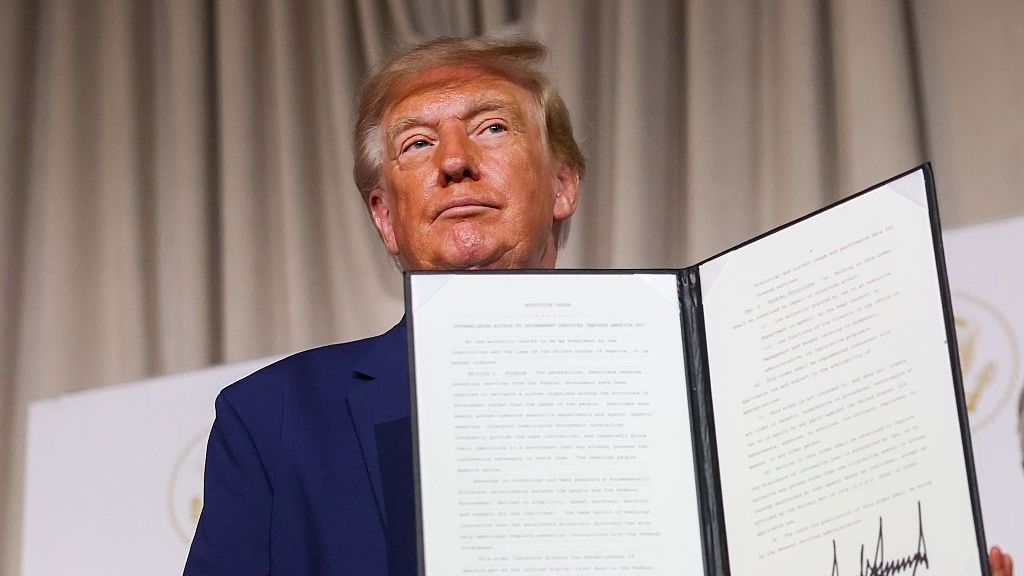
    In a formal event held in Washington D.C. on Tuesday marking the rollout of America.gov, a new artificial intelligence-driven online platform built to simplify access to U.S. government services, sitting U.S. President Donald Trump made a firm declaration ruling out any form of joint AI development partnership with China. Trump framed any collaborative effort between the two global powers as an unacceptable compromise that would amount to handing over sensitive national technological information to what he labeled Washington’s top economic competitor.

    Trump’s remarks come just one week after a high-profile diplomatic meeting at the White House between Trump and Chinese President Xi Jinping. Following that summit, Beijing and Washington had announced the establishment of two new bilateral mechanisms focused on AI: a formal dialogue track set to hold its next round of discussions in November, and a dedicated communication line designed to defuse miscommunication during unexpected AI-related incidents. Despite these agreed-upon confidence-building steps, Trump made clear that full collaborative development of AI technology remains off the table.

    “The United States is leading by a lot” in the global AI race, Trump stated during his remarks at the portal launch. He added, “Frankly, there is nobody in third place… it’s all between us and China.” Arguing that opening the door to joint work would give Beijing unauthorised access to closely held American technological advancements, Trump emphasized his commitment to preserving Washington’s current leading position. “We’re leading now over China and everyone else, and I want to keep it that way,” he said.

    Long before the bilateral summit, China’s Foreign Ministry had already pushed back against the framing of AI competition as a zero-sum confrontation, warning that so-called “threat narratives” and adversarial positioning only create barriers to productive global AI governance. Domestically, Trump’s stance on AI policy also puts him at odds with broad public opinion across the United States. Recent polling conducted by Politico and released in late September shows that two out of every three U.S. adults believe AI poses at least a moderate risk of existential harm to humanity. Even among Trump’s own political base, 44% of respondents support a temporary pause on advanced AI development to implement proper safety guardrails.

    This is not the first time Trump has dismissed growing calls for stricter regulatory oversight of AI. The president has repeatedly downplayed safety concerns, dismissing warnings of unregulated AI growth as a deliberate “hoax.” He drew a parallel between AI safety advocacy and what he incorrectly refers to as the “global warming scam,” claiming both issues are being falsely promoted by what he called “radical left Democrats” to undermine economic growth. On the domestic policy front, Trump has also ruled out implementing restrictive AI regulations that he argues would stunt the sector’s future expansion in the United States.

  • Miliband ‘looking at’ whether Palestine Action ban was sensible, argues mass arrests ‘unintended’

    Miliband ‘looking at’ whether Palestine Action ban was sensible, argues mass arrests ‘unintended’

    Amid growing controversy over the United Kingdom government’s proscription of Palestine Action as a terrorist organization, Foreign Secretary Ed Miliband has openly questioned whether the ban was politically prudent, acknowledging that authorities never intended the sweeping crackdown that has resulted in thousands of mass arrests across the country.

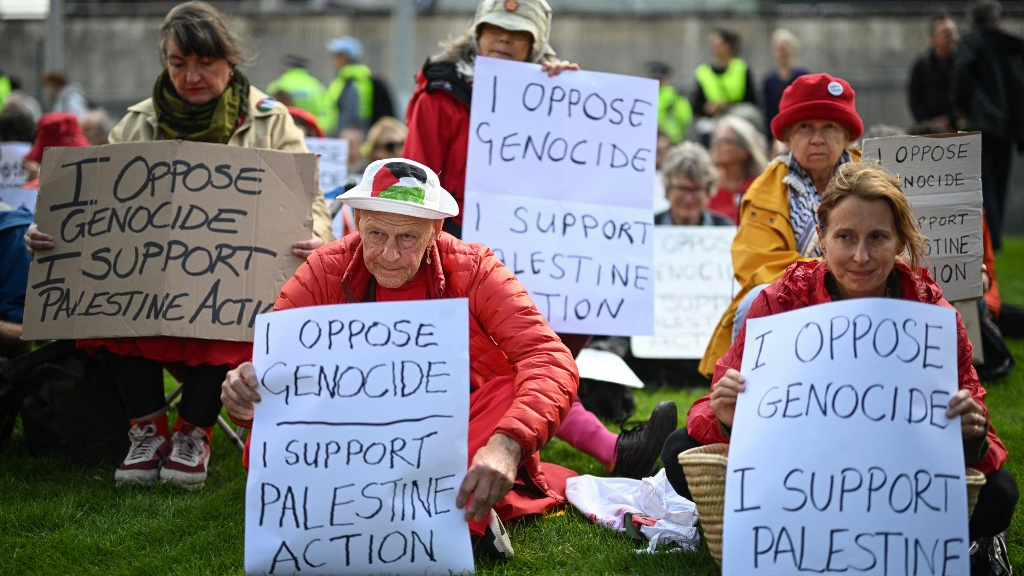
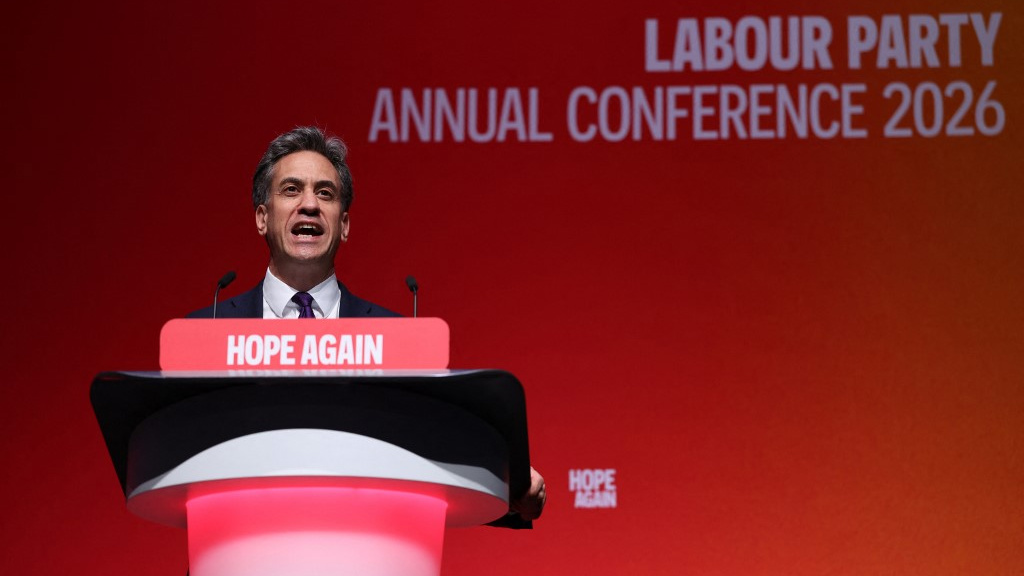
    Miliband’s remarks, delivered on the sidelines of the annual Labour Party conference in Liverpool, came just one day after police detained 82 anti-ban protesters outside the conference venue, with an additional 79 people issued summonses to appear in court. The demonstration, organized by the anti-ban advocacy group Defend Our Juries, saw more than 250 protesters holding placards declaring “I oppose genocide. I support Palestine Action” to mark their opposition to the 2025 designation.

    In an interview with LBC on Tuesday, Miliband emphasized his unwavering support for the fundamental right to peaceful protest, a cornerstone of British democratic life. Notably, the foreign secretary stopped short of defending the ban, which was imposed by Keir Starmer’s Labour government in July 2025. The proscription makes membership in or public support for Palestine Action a criminal offense carrying a maximum prison sentence of 14 years. Palestine Action, a direct action group focused on disrupting weapons manufacturing by UK-based companies that supply arms to Israel, has framed its activities as a necessary protest against humanitarian harm in Gaza.

    Pressed by interviewer Andrew Marr on whether it made political sense to criminalize a broad swathe of protesters that included elderly people, local vicars, and pensioners, Miliband acknowledged, “I don’t think anyone’s intent was to have those people criminalized, but obviously the Supreme Court has got to look at this issue, and obviously it’s something we keep looking at as government.”

    On the legal status of the ban, Miliband declined to comment ahead of upcoming Supreme Court proceedings, noting that a challenge to the proscription is already working its way through the judicial system. “There’s a case coming before the Supreme Court and so I’ll let that case play out, because I think it’s important that that court process takes its course,” he said. The challenge was brought by Huda Ammori, co-founder of Palestine Action, who is appealing a Court of Appeal ruling earlier this year that upheld the ban as legally valid. The Supreme Court is scheduled to hear the case in the coming months.

    Miliband’s measured comments have already sparked widespread political speculation that the current UK government could ultimately move to reverse the ban. Since Andy Burnham took office as prime minister, he has not publicly addressed the controversy, leaving anti-ban activists hopeful that sustained public pressure could push the new administration to overturn the proscription.

    Human rights organizations have roundly condemned the ban as an unnecessarily draconian restriction on free speech and the right to protest, noting that thousands of people have been arrested for non-violent civil disobedience since the ban went into effect.

    In a public response to Miliband’s comments posted on X, Defend Our Juries argued that the original proscription was always a political choice, not a legal necessity. “It does not require the Supreme Court to overturn it,” the group said, reiterating its call for the government to immediately scrap the ban.

    This report was originally produced by independent outlet Middle East Eye, which specializes in on-the-ground coverage of the Middle East, North Africa, and global affairs related to the region.

  • Dutch police arrest suspected member of group that claimed FBI hack

    Dutch police arrest suspected member of group that claimed FBI hack

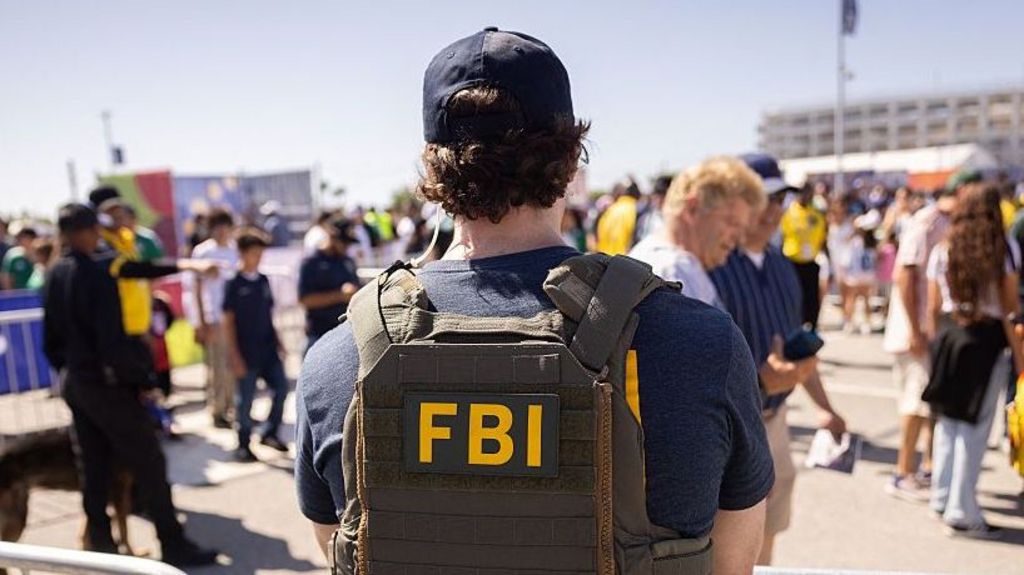
    In a major breakthrough in the global fight against transnational cybercrime, Dutch law enforcement has taken into custody a 24-year-old Amsterdam man suspected of being a core member of the notorious hacking collective ShinyHunters, the group that recently claimed responsibility for stealing sensitive personal data on roughly 38,000 current and former FBI employees.

    The arrest, carried out on September 15, actually preceded the group’s public claim of the FBI breach by six days, according to official statements from Dutch police. Beyond his alleged ties to the ShinyHunters network, the suspect faces additional serious charges: attempted incitement to murder and suspicion of ordering two targeted killings planned for execution outside the Netherlands.

    Following the arrest, law enforcement seized all of the suspect’s digital devices. Investigators confirmed they discovered a massive cache of data on his laptop, including detailed planning documents linked to the two planned international murders. The suspect has remained in pre-trial detention since he was taken into custody, and Dutch authorities have publicly noted that additional arrests linked to the hacking network may be forthcoming.

    Stan Duijf, who heads the Netherlands’ dedicated cybercrime investigation unit, emphasized the significance of the arrest in an official briefing. “The ShinyHunters group is responsible for a large number of national and international victims,” Duijf said. “It is good that we have been able to arrest a suspect in the investigation into this group.”

    FBI leadership has moved quickly to praise the collaboration with Dutch partners, with Director Kash Patel confirming on social platform X that investigative teams are already pursuing new leads generated by the arrest. “As we speak, FBI teams are actively working with partners to obtain and execute more leads in the ongoing investigation based on this arrest,” Patel said.
    Brett Leatherman, assistant director of the FBI’s Cyber Division, used the arrest as an opportunity to issue a direct appeal to other remaining members of the ShinyHunters network to surrender. “While the choice is still yours,” Leatherman said, urging members to turn themselves in to authorities. He added that many criminal hacking groups have falsely relied on anonymity and perceived loyalty among members to avoid prosecution, but arrests often prompt cooperation that unravels entire networks. “The longer you stay in this, the more we learn about you, you know how to find us, we know how to find you,” he warned.

    The high-stakes drama unfolded after ShinyHunters claimed to have breached multiple FBI-connected cloud servers on September 21, reaching out to journalists the following day to share partial samples and screenshots of the stolen data to back up their claim. Reporters from the BBC who reviewed a small subset of the shared data confirmed the documents appeared to be authentic. The group claimed the stolen cache includes every agent’s full name, job role, official badge number, and private personal details such as home addresses and personal phone numbers, covering the full 38,000-person roster of FBI staff.

    ShinyHunters is an loosely organized international hacking collective that first emerged on the cybercrime scene with origins traced to France. The group has already gained notoriety for a string of high-profile breaches over the past year, including a major hack of game developer Rockstar Games in April and a disruptive attack on popular global education platform Canvas in May.

    In the alleged FBI breach, the group claims it exploited an unpatched security vulnerability in an Oracle cloud storage system used by the agency to gain access to multiple internal platforms. These included the FBIJOBS recruitment portal, the FBI BEAST background check system that vets employees and job applicants, FBI MedLink which stores confidential medical records for agents, and the FBI BICS investigation database.

    In a message posted to a dark web forum, ShinyHunters denied they carried out the attack for financial extortion, the group’s typical model for prior breaches. Instead, the collective said it launched the attack to force the FBI to retract a May 2024 public advisory that labeled the group as a malicious cyber threat. ShinyHunters said they were “offended” by how the FBI characterized their activities. That public service advisory, which remains published on the FBI’s official website, describes ShinyHunters as “threat actors who often use their real or exaggerated claims of access to sensitive or personal information to prompt payment from victims.” It adds that the group “target major companies across tech, finance, and retail, often stealing millions of customer records at once.”

  • Ed Miliband confirms UK is considering defying Israeli order to close East Jerusalem consulate

    Ed Miliband confirms UK is considering defying Israeli order to close East Jerusalem consulate

    Tensions between the United Kingdom and Israel have escalated sharply in recent days, after Israel ordered the closure of the British consulate in occupied East Jerusalem and now the UK is openly considering refusing to comply with the demand. The dispute traces back to earlier this month, when British Foreign Secretary Ed Miliband announced new UK sanctions against illegal Israeli settlements in the occupied Palestinian territories. In retaliation for this move, the Israeli government issued an order mandating the consulate’s shutdown by an October 8 deadline.

    For weeks, conventional wisdom held that the UK would ultimately comply with Israel’s demand. However, independent news outlet Middle East Eye first reported on Monday that no final decision had actually been made by the British government, setting the stage for a potential diplomatic showdown. When pressed for comment on the matter Monday morning, Foreign Office officials offered no clear confirmation that the UK would follow through on the closure, giving only vague and noncommittal responses.

    Later that same day, Miliband addressed the dispute directly during an interview with LBC, publicly confirming that defying the Israeli order remains on the table. Asked explicitly whether the UK would refuse to close the diplomatic mission, Miliband stated, “We are looking at all our options on this.” He made clear the UK government’s opposition to the closure, emphasizing, “We do not want this to happen — because it would damage the very important work that we are doing helping people in those communities, including Palestinians.”

    Miliband also highlighted the long history of the British presence in East Jerusalem, noting that the consulate has operated in the city for nearly 200 years, making it one of the UK’s most enduring diplomatic posts in the Middle East. He went on to condemn Israel’s action outright, calling it “completely the wrong thing for them to do” from a moral standpoint. The foreign secretary added that he has already been consulting with his diplomatic counterparts across the globe on the issue, stressing that the UK’s diplomatic mission in Jerusalem remains “very, very important” to British interests in the region.

    Legal experts and former British diplomats have already backed the UK’s push to reject the closure. Former British Consul-General in East Jerusalem Vincent Fean, who now serves as a trustee for the British Palestine Project, called Israel’s threat to close the consulate “not just wrong — it is illegal.” The British Palestine Project commissioned a formal legal opinion from Dominic Grieve KC, a former Attorney General of the United Kingdom under the previous Conservative government, which backed this assessment.

    In his legal opinion, Grieve argued that Israel’s order amounts to “an unlawful assertion of sovereignty over occupied Palestinian territory.” He noted that successive British governments have consistently maintained that Israel’s only legal standing in East Jerusalem is that of an occupying power, and that Israel has no right to exercise sovereign authority over the territory. Grieve further explained that the continued presence of the British consulate aligns with long-standing UK policy, which holds that the final status of Jerusalem must be negotiated, and that the UK does not recognize Israeli sovereignty over the city. He added that because British consuls-general are not accredited to Israel, Israel has no authority to withdraw their accreditation, stripping any legal basis for the closure order.

    Grieve also warned of the tangible harm a closure would cause beyond just diplomatic circles, noting that the consulate provides critical services to British pilgrims, visitors, and Palestinian residents, and supports UK aid oversight across the West Bank and Gaza. Shutting down the mission would directly disrupt all of these activities, he argued.

    If the UK ultimately chooses to defy Israel’s order, it would almost certainly trigger a major diplomatic crisis between the two countries, already strained by the recent announcement of UK sanctions on Israeli settlements. While Israeli security forces are not expected to forcibly remove British diplomatic staff from the consulate grounds, analysts warn that Israel could easily implement retaliatory measures such as banning British diplomats from re-entering Jerusalem after international travel. Additionally, with Israeli settlers active in the area surrounding the consulate, there are growing concerns that British diplomatic staff — particularly locally hired employees — could face targeted harassment from extremist settler groups.

    The UK’s position as a country that formally recognizes the state of Palestine underpins its rejection of Israel’s claim that the closure order is legitimate. Since the consulate is located in occupied Palestinian territory, the UK does not accept that Israel has the legal authority to order its shutdown, setting the stage for what could become one of the most significant diplomatic rifts between the two countries in recent history.

  • Council of Europe tells Serbia to implement judgement on Bahraini political prisoner

    Council of Europe tells Serbia to implement judgement on Bahraini political prisoner

    A years-long human rights case centered on the extradition of a Bahraini opposition activist has drawn new international pressure on Serbia, after the Council of Europe demanded the Balkan nation fully implement a landmark European Court of Human Rights (ECHR) ruling that found Serbia violated fundamental human rights protections.

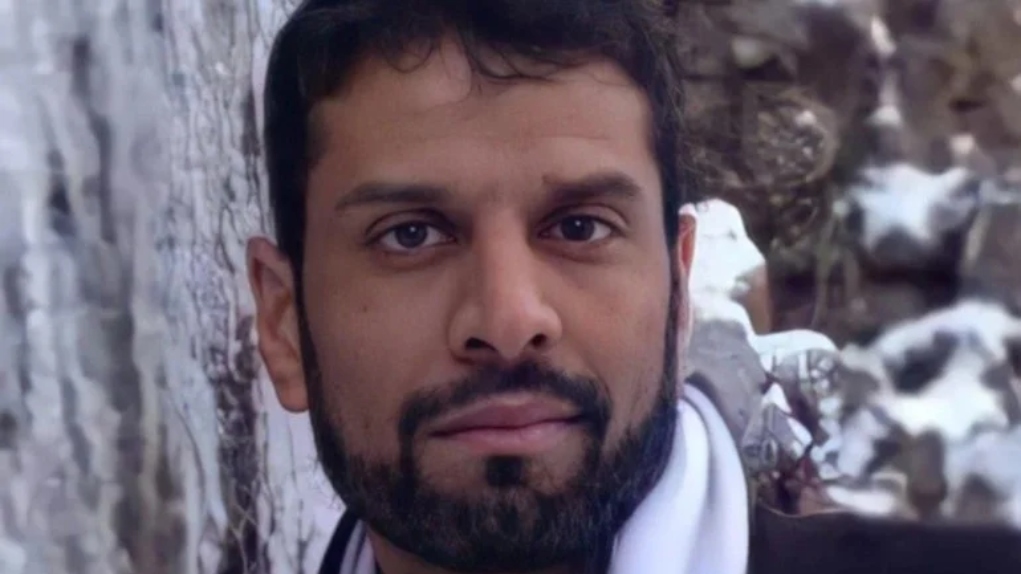
    The case traces back to November 2021, when Ahmed Jaafar Mohamed Ali, a Bahraini activist who fled his home country amid a 2011 government crackdown on Arab Spring protests and had been living in exile in Iran, arrived in Serbia to apply for asylum. He was taken into custody shortly after arrival based on an Interpol red notice that his legal team has long argued was issued improperly.

    By January 2022, the ECHR had issued an emergency interim order barring Serbian authorities from extraditing Ali. The ruling explicitly cited well-documented risk that Ali could face torture or cruel, inhuman treatment if he was returned to Bahrain, and required Serbia to hold the extradition process pending further review of his asylum claim.

    Despite the binding court order, Ali was removed from Serbia just three days later. Human rights campaigners confirm he was transported on a private plane chartered by United Arab Emirates-based Royal Jet Airlines and flown directly back to Bahrain. Since his arrival, Ali has been incarcerated at Bahrain’s notorious Jau Prison, where he is serving two consecutive life sentences.

    In first-hand accounts shared via monitored prison calls with outside activists, Ali has detailed a pattern of ongoing abuse that matches widespread reports of mistreatment at Jau Prison. He told fellow activists that guards have arranged for violent inmates incarcerated in the same cell block to beat and harass him on repeated occasions, creating a permanent climate of fear. He reported being beaten badly as recently as July this year, and remains in constant fear of further attacks.

    Ali is currently held in the prison’s Building Two, a facility designated for inmates convicted of violent offenses and serious drug crimes, rather than political prisoners. He has documented overcrowding so severe that half the cell’s population is forced to sleep on the floor, with inadequate ventilation creating what he describes as “suffocating” conditions. Sanitation facilities are unsanitary, he added, with overflowing drains and only a garden hose available for inmate bathing. Ali has been repeatedly placed in solitary confinement, been denied requested medical care, and has launched multiple hunger strikes to protest the conditions and demand access to basic rights. He also reported that prison staff have insulted his religious faith as part of the ongoing harassment.

    In March 2025, the ECHR issued a final ruling that formally confirmed Serbia had violated Article 3 of the European Convention on Human Rights (ECHR), the core provision that bans torture and cruel, inhuman or degrading treatment. The court found that Serbian judicial authorities failed entirely to review Ali’s well-founded claim that he would face abuse if returned to Bahrain, and violated the convention by proceeding with extradition in direct defiance of the interim court order. The ECHR ordered Serbia to pay Ali 9,800 euros (approximately $11,100) in damages, plus any applicable taxes and late interest if payment was not fulfilled on schedule.

    To date, Serbia has deposited the ordered sum in a domestic court account, but the Council of Europe’s Committee of Ministers, the body charged with overseeing compliance with ECHR rulings, has confirmed that Ali’s legal team faces insurmountable barriers to accessing the funds. The unique constraints of Ali’s incarceration in Bahrain make it impossible for him to meet the procedural requirements to release the deposit. In its latest statement, the Council of Europe has called on Serbia to work directly with Ali’s legal representatives and the Council of Europe Secretariat to find an immediate solution that will allow the funds to be released without further delay.

    Sayed Ahmed Alwadaei, director of advocacy at the Bahrain Institute for Rights and Democracy (BIRD), who has personal experience being detained in Jau Prison’s Building Two, described the impact of Ali’s first-hand accounts. “It was very hard to hear Ahmed describing to me the degrading conditions he is living in at Jau Prison,” Alwadaei told Middle East Eye. “He is stuck in a severely overcrowded cell, has repeatedly had to resort to hunger strikes just to secure basic rights, and has been in and out of solitary confinement.” Alwadaei added that the ECHR ruling serves as a critical reminder that Serbia cannot take the Bahraini government’s assurances about detainee treatment at face value, and must take all possible action to remedy the harm caused by Ali’s unlawful extradition.

    The case comes amid longstanding concerns about systemic human rights abuses in Bahrain. Following the 2011 Arab Spring uprising, thousands of Bahrainis, mostly from the Shia majority population in the Sunni-ruled kingdom, were arrested and imprisoned for their political activity. Last year, Amnesty International reported that an estimated 322 political prisoners remain in arbitrary detention in the country. While the Bahraini government has issued royal pardons for more than 1,500 prisoners since 2024, Amnesty notes that authorities continue to systematically suppress freedom of expression, association and peaceful assembly through widespread arbitrary detention and politically motivated prosecutions. Recent regional tensions stemming from the US-Israeli conflict with Iran have also led to a new crackdown, with authorities stripping citizenship from anyone deemed to have expressed support for Iran, which has carried out targeted attacks inside Bahraini territory.