Just days after unveiling its highly anticipated initial public offering (IPO) that was set to value the company at $15 billion, leading health-focused smart ring maker Oura has made the stunning decision to pull its planned US stock market listing indefinitely. The Finnish-founded tech firm, which now calls San Francisco its global headquarters, announced it would postpone its flotation, citing widespread uncertainty across the current IPO market, and offered no timeline for when the offering might be revived.
The decision marks one of the most high-profile setbacks for the 2025 IPO pipeline, coming just over a week after Oura filed official regulatory documents to raise up to $2.2 billion through a public share offering to global investors. Oura had set an expected price range of $40 to $44 per share for its listing on the Nasdaq exchange, putting its targeted market capitalization at the $15 billion mark. The company is the latest in a growing string of firms pulling back on planned public offerings, as market analysts warn that conditions for new listings have become significantly more challenging in recent months.
In a public statement following the announcement, Oura CEO Tom Hale framed the delay as a strategic choice rather than a forced retreat. “An IPO is just one step in our journey,” Hale said, adding that “we have the luxury of choosing our moment.”
Oura’s move comes less than a month after another major US-based firm, nuclear technology developer Holtec International, also announced a last-minute postponement of its own planned flotation. Holtec blamed an “unusual confluence of developments” that had eroded overall investor confidence in the market for newly public companies, listing a cascade of overlapping economic and geopolitical headwinds: rising global energy costs, ongoing military conflicts around the world, escalating international trade tensions, and persistent inflationary concerns that have pushed major central banks — including the US Federal Reserve — to continue lifting benchmark interest rates.
This week alone, the 10-year US Treasury yield hit its highest level since 2007, a jump that has further raised borrowing costs for businesses and dampened investor appetite for risk assets like newly listed equities. Samuel Kerr, global head of equity capital markets at data and analysis firm Mergermarket, noted that the current market landscape bears little resemblance to what industry observers projected just a few weeks ago. “What is now clear is we are in a very different IPO market to the one we envisaged just a few weeks ago,” Kerr said.
Despite the market headwinds derailing its IPO, Oura has posted strong financial growth in recent years. For its full 2025 fiscal year ending September 30, the company reported $907.8 million in total revenue, with pre-tax profit hitting $23.5 million — a major jump from the $6.2 million pre-tax profit it recorded the previous year. More recently, in the nine months ending June 30 2026, Oura notched $1.2 billion in revenue and $70 million in pre-tax income, signaling accelerating growth ahead of its planned listing.
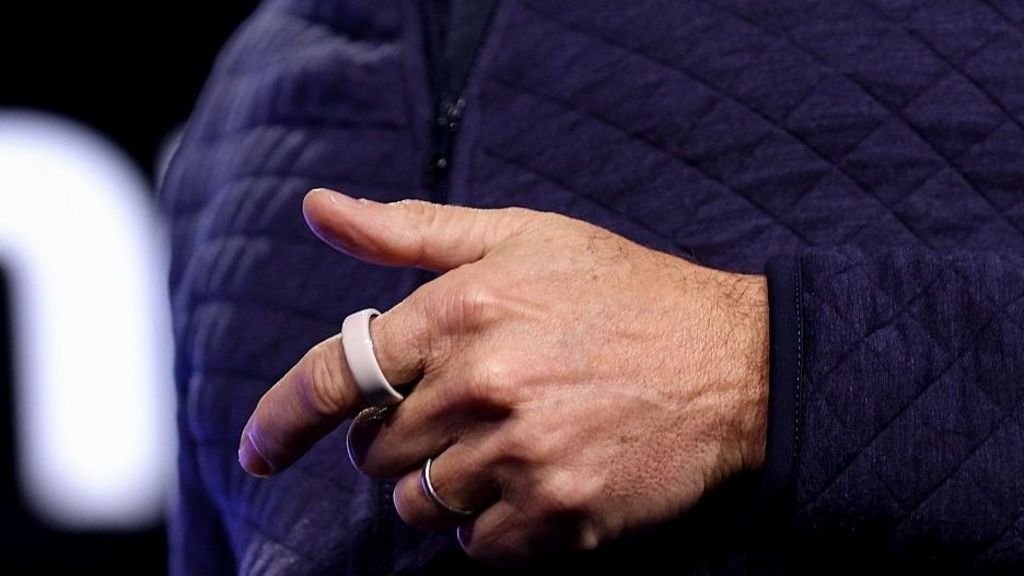
Founded in 2013, Oura pioneered the mainstream wearable health ring market, producing devices priced starting at $300 that track a range of physiological metrics including user heart rate, body temperature, movement, and sleep patterns. The data collected by the ring is processed and displayed via a companion smartphone app, giving users personalized insights into their overall health and recovery.
The company is currently facing a federal class action lawsuit filed in August by the Clarkson Law Firm, which accuses Oura of deceptive advertising over its claims that its rings can accurately measure sleep activity and stages. The lawsuit argues that “Oura rings cannot measure one’s sleep or cycles. That’s because sleep happens in the brain, not on one’s finger.” However, multiple sources familiar with the company’s decision confirm the IPO delay is not connected to the pending litigation. Oura has pushed back forcefully against the lawsuit’s claims, emphasizing that it stands by the scientific foundation of its device’s tracking capabilities.
“Like other consumer sleep wearables, Oura Ring estimates sleep stages using multiple physiological signals, including heart rate, heart rate variability, movement, breathing patterns, and temperature,” a company spokesperson said in a statement.
The abrupt reversal of Oura’s IPO plans underscores the rapid shift in sentiment across global public markets, as persistent economic uncertainty makes companies increasingly cautious about launching new offerings at a time when investor risk tolerance remains low.