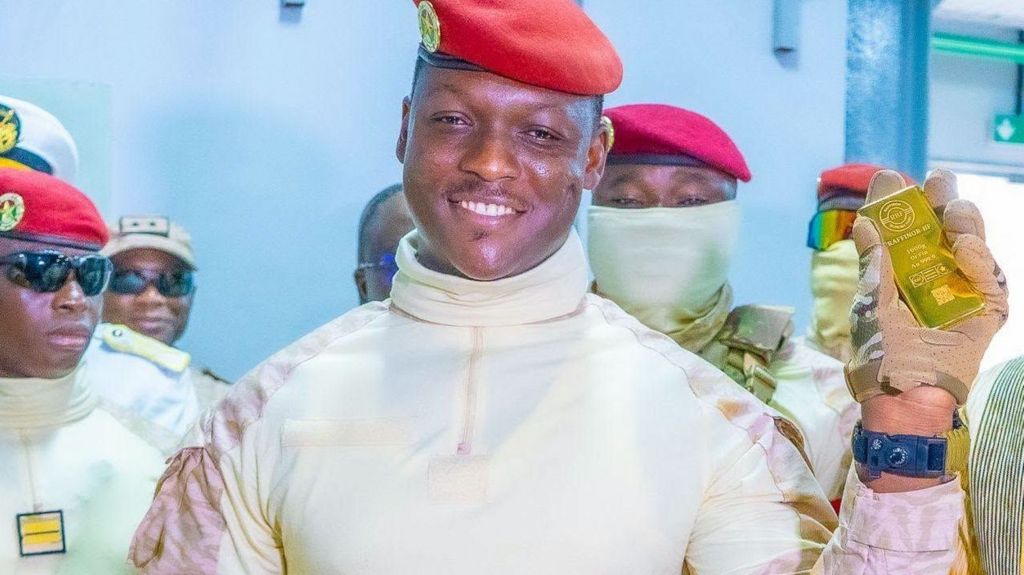
In a landmark step toward economic sovereignty and greater state control of its strategic mining sector, Burkina Faso has launched its first domestic gold refinery, a project that aligns with the military-led government’s nationalist agenda to end over-reliance on foreign processing of its mineral wealth. The inauguration of the facility, named Raffinor-BF, took place in the capital Ouagadougou on Monday, with junta leader Captain Ibrahim Traoré and senior government officials in attendance. Traoré emphasized that the refinery is a core component of a broader push to keep the entire gold value chain within the country’s borders, reversing the long-standing practice of exporting unprocessed raw ore for refinement abroad. “We want to refine all our metals on site… we want to have the entire value chain on site,” Traoré stated during the opening ceremony. As one of Africa’s largest gold producers, Burkina Faso has for years grappled with systemic challenges in its mining sector: an enormous unregulated artisanal and small-scale mining industry rife with smuggling, limited state revenue from gold exports, and persistent allegations that illegally traded gold helps fund the years-long Islamist insurgency that has destabilized large swathes of the country. For decades, nearly all of the nation’s gold was shipped overseas for processing, allowing foreign actors to capture the bulk of the industry’s added value while most Burkinabè communities continued to face widespread poverty. Mines Minister Yacouba Zabré Gouba framed the launch of the refinery as a turning point for national economic autonomy: “This is the day we take back the keys to our own house. Our gold will no longer be used to create added value for others while our people remain in need.” The 11 billion CFA franc ($19 million) project was developed through a partnership between the Burkinabè state – including the state-owned National Precious Metals Company (Sonasp) – and domestic private sector stakeholders. Initially, the new refinery will have an annual processing capacity of 164 tonnes of gold, a volume that already exceeds Burkina Faso’s current annual gold output. Government plans project that capacity will eventually expand to 515 tonnes per year, positioning the landlocked nation to become a regional gold refining hub that can process ore from neighboring countries. The refinery is the latest in a series of policy moves by Traoré’s government to consolidate state control over natural resources, two years after the administration established a state-owned mining firm to oversee national resource operations. Under current rules, foreign mining companies operating in Burkina Faso are now required to grant the state a 15% stake in their projects and deliver comprehensive training to local workers. The country has already seen consistent growth in gold output, with the World Gold Council reporting a 17% year-on-year production increase in the second quarter of 2026, driven by expanded activity at multiple industrial mines. Traoré, who seized power in a September 2022 coup, has centered his economic agenda on nationalist policies focused on domestic value addition and reduced reliance on former Western partners. Beyond the mining sector, his administration has prioritized investments in cotton processing, textile manufacturing, and domestic food production to build broader economic self-sufficiency. In 2024, the government suspended gold exports from artisanal and semi-mechanized mining operations as part of a crackdown on illegal trade and smuggling, a move designed to force unregulated production to flow through domestic channels and into the new refinery. Traoré has repeatedly stated that illegal gold smuggling has generated significant funding for Islamist insurgent groups linked to al-Qaeda and the Islamic State, which have waged an insurgency in Burkina Faso for nearly a decade, leaving large portions of the country outside full government control. The push to bring gold refining onshore is not unique to Burkina Faso across West Africa. Neighboring Guinea and Ghana have already implemented restrictions on raw gold exports, while nearby Mali is constructing its own first refinery with support from a Russian company, and Ivory Coast has plans to open its own domestic facility next year. The project comes as global gold production hit a record high of an estimated 3,672 tonnes in 2025, according to the World Gold Council, with international prices remaining at historically elevated levels that have incentivized expanded regional investment in gold sector infrastructure.
博客
-

RAF Fairford big-scale attack try represents serious threat to US
A foiled alleged bomb plot targeting RAF Fairford, a key forward operating base for the U.S. Air Force in Europe, has left a trail of unresolved questions, conflicting official accounts, and persistent security concerns over potential remaining threats. British counterterrorism authorities have confirmed that the five young men arrested in connection with the plot are all British nationals in their early 20s, hailing from the London area, but no official details on their identities, backgrounds, or the group behind the conspiracy have been released to date. All five suspects have since been released on bail as the investigation continues.
Leaked unconfirmed footage and imagery from the incident site shows three unmarked white vans parked near the perimeter of the Gloucestershire-based base, with large black barrels scattered around the vehicles. Responding emergency teams deployed a bomb disposal robot to examine the vans, which were reported to hold explosives and chemical components, and cordoned off the entire surrounding area. Eyewitness accounts from a local woman who first alerted police via the UK’s 999 emergency line claim that more than five individuals exited the three vans before the group fled into nearby fields when spotted. The woman’s call sparked a 25-minute response from law enforcement, contradicting public claims made by former U.S. President Donald Trump that the plot was intercepted as a result of pre-planned coordinated surveillance between U.S. and British intelligence services.
Trump stated publicly that U.S. and UK agencies had monitored the suspects for an extended period, noting that the group was targeting the shared U.S.-UK base to inflict mass damage, and that the collaborative operation successfully stopped the attack. This narrative clashes with on-the-ground details of the incident, which indicate that the plot was only exposed by an accidental civilian sighting, not proactive intelligence intervention. Security analysts point out that while authorities may have known of the general threat, they lacked critical details on the planned attack’s location, timing, and operational structure.
The target of the alleged plot, RAF Fairford, holds major strategic significance for U.S. military operations in Europe. The base hosts rotational deployments of U.S. long-range bombers, including the B-1B Lancer, B-52H Stratofortress, and B-2 Spirit stealth bombers, and has previously been used to launch long-range strike operations against targets in the Middle East, including Iran.
Many independent security observers have publicly speculated that the plot was directed by Iran, citing Tehran’s clear motive to disrupt U.S. bombing operations that can be launched from the British base. They note that Iran has a large diaspora community in the UK, and maintains close ties to aligned militant groups including Lebanon’s Hezbollah and Iran-aligned militias in Iraq that could facilitate such an operation. Security analysts also argue that the plot bears all the markers of a well-resourced, coordinated operation, not the work of five isolated individuals: from assembling and training the attack team to gathering intelligence on the base’s layout and security protocols, the conspiracy required significant organizational backing that points to a larger network still at large.
British officials have refused to confirm or deny these speculations, with Defense Secretary Wes Streeting stating that authorities would not speculate on potential perpetrators at this stage of the investigation. The Iranian Embassy in London issued an official categorical rejection of all allegations linking Tehran to the plot, dismissing the claims as unfounded and malicious. Local Gloucestershire Police have attempted to reassure the public that the immediate situation is fully contained, and that there is no evidence of an ongoing broader threat to local communities, and no active manhunt for additional suspects has been announced.
Despite these official reassurances, the persistent lack of arrests of additional co-conspirators, and unanswered questions about the network behind the plot, have left the security threat assessment for U.S. assets and personnel stationed in the UK at extremely high levels. As of this report, British authorities have not announced any new developments in the investigation into the network backing the plot, leaving the full scope of the conspiracy still unknown.
-
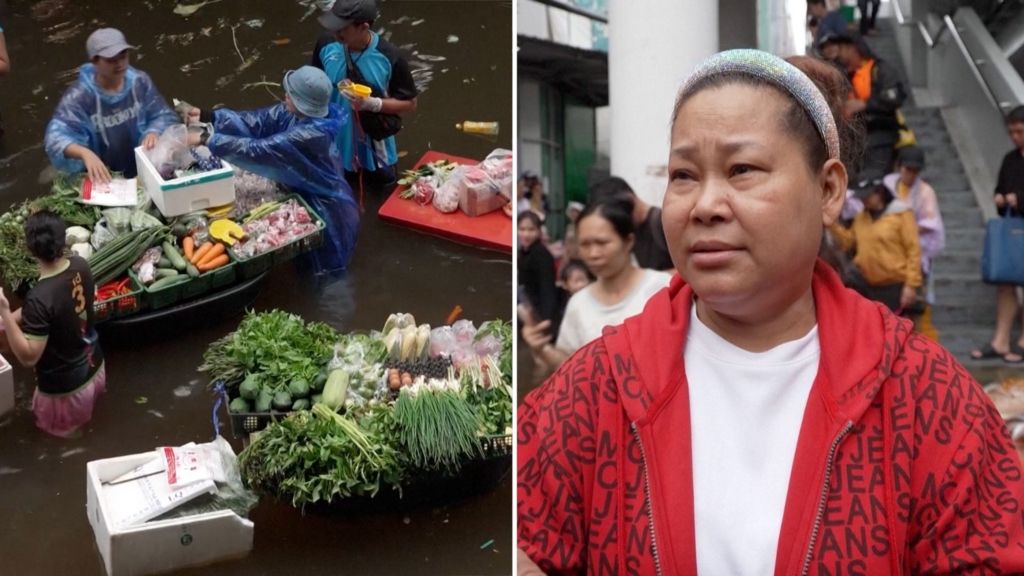
Watch: Bangkok locals create floating market during floods
As severe flooding continues to submerge large swathes of residential and commercial areas in Bangkok, local vendors have adapted to the waterlogged conditions by launching an informal floating market to keep supplying daily necessities to neighborhood residents.
Stall holders have waded through waist and knee-deep floodwaters to set up makeshift sales points, using repurposed floating platforms and insulated foam boxes to display their fresh goods. Their inventory ranges from wild-caught fish sourced from local waterways to crisp, seasonal vegetables harvested from nearby small-scale farms, catering directly to the grocery needs of local households.
Shoppers have also adjusted their routines to the flooded landscape: some navigate the submerged streets on foot, stepping carefully through standing water to move between stalls, while others use small paddled boats and inflatable craft to travel between the floating vendors. This spontaneous community-led market has filled a gap left by disrupted regular retail operations, showing the remarkable resilience of Bangkok residents in the face of natural disaster.
-
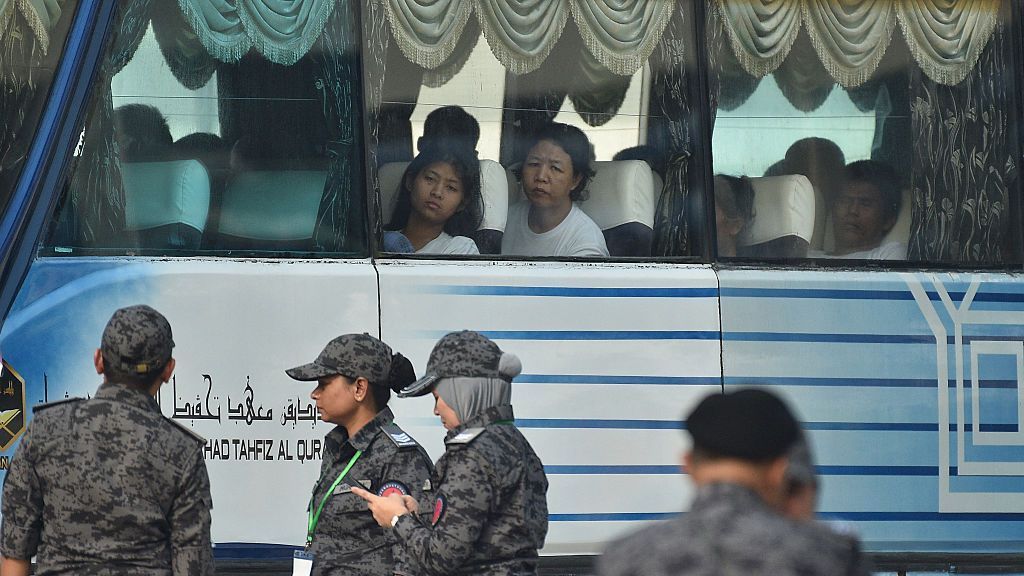
Malaysia begins controversial repatriation of asylum seekers to Myanmar
In a move that has sparked global condemnation from human rights advocates, Malaysia has begun the large-scale repatriation of roughly 5,000 Myanmar asylum seekers, including members of the persecuted Rohingya minority, under a controversial agreement struck with Myanmar’s military junta led by Min Aung Hlaing. Three Myanmar navy vessels are set to depart Malaysian ports on the day of this report, carrying the first group of 1,476 returnees back to conflict-ravaged Myanmar.
This repatriation marks a dramatic reversal of long-held policy by the administration of Malaysian Prime Minister Anwar Ibrahim, who once positioned himself as a vocal defender of human rights and a leading regional critic of Myanmar’s ruling military regime. For years, Malaysia under Anwar refused to recognize Min Aung Hlaing’s government and emerged as one of Southeast Asia’s strongest advocates for a negotiated end to Myanmar’s brutal ongoing civil war. Anwar has framed the current repatriation effort as a voluntary process, but has blocked access for the United Nations High Commissioner for Refugees (UNHCR) to meet with or screen the asylum seekers, all of whom have been held in Malaysian immigration detention centers for months.
Rohingya, a stateless Muslim minority, have been systematically displaced from Myanmar for decades, stripped of their citizenship by the Myanmar government and targeted in widespread military campaigns of ethnic cleansing. Following the 2017 Myanmar military crackdown that pushed more than 750,000 Rohingya across the border into Bangladesh, thousands more risked dangerous sea voyages to seek refuge and work in Malaysia. Today, an estimated 200,000 Rohingya reside in Malaysia, most working low-wage manual labor jobs and living in informal communities. For years, despite occasional efforts to block new arrivals, Malaysia tolerated the existing Rohingya population, with broad public sympathy for the displaced minority among Malaysian Muslims.
That public sentiment began to shift dramatically in the wake of the COVID-19 pandemic, which hit Malaysia’s lower-income households particularly hard. Economic strain fueled rising anti-immigrant resentment, and false accusations against Rohingya migrants spread rapidly across social media, leading successive Malaysian governments to tighten restrictions on refugee communities. The trend accelerated in 2026, when a viral false social media campaign claimed Rohingya leaders were demanding land and citizenship after a minor dispute over post-Eid al-Adha waste disposal. A subsequent petition calling for the expulsion of all Rohingya from Malaysia collected more than 400,000 signatures before it was removed from Change.org.
Anwar, who has seen his public approval ratings plummet sharply since taking office in 2022, says he has little choice but to act on growing public hostility. In a recent podcast interview, he acknowledged that Rohingya should be treated humanely, noting “We can arrest them, but do not beat, intimidate or humiliate them” — a statement that contradicts widespread allegations of abuse against detained refugees by Malaysian immigration officials. Even so, Anwar has insisted that the large Rohingya population has become a burden on the country, saying “They have clearly become a burden: a security burden, an economic burden and a source of hostility among the people.”
Political analysts warn the shift is driven primarily by domestic political pressure, not humanitarian or economic reality. Anwar took office in 2022 at the head of a fragile, uneasy coalition with his long-time political rivals, the United Malays National Organisation (UMNO), the ethnic Malay party that held a monopoly on Malaysian power for more than 60 years. The country has faced persistent political instability since the 2018 historic election that first ousted UMNO, leading to repeated turnovers of coalition governments. Anwar’s coalition has lost multiple local seats in recent elections, and he is required to call a general election by early 2028.
“He is in a corner, at his weakest point,” explained Tricia Yeoh, Director of the Asian Institute for Policy and Engagement at the University of Nottingham Malaysia. “He has been forced to make concessions to his UMNO partners… There have been several corruption scandals, and his own party is divided. And after four years of telling voters this is what is required to maintain his fragile coalition, they are no longer willing to go along with that narrative.”
Yeoh noted that UMNO has leaned into long-standing racial politics that frame ethnic Malays, who make up a majority of the electorate, as needing special state protection — a narrative that stokes fear of outsiders and claims that immigrants take local jobs and drain public resources. Many of Anwar’s long-time supporters, who once saw him as a champion of liberal democratic values, have accused him of betraying his core principles. Latheefa Koya, former head of the Malaysian Anti Corruption Commission, called Anwar’s decision “disgraceful, amoral, and shames the nation in the eyes of the international community.”
Human rights groups have universally condemned the repatriation, warning that all returnees face extreme danger in Myanmar. Nearly all of Rakhine State, the only region where Rohingya are legally permitted to reside, is currently controlled by the insurgent Arakan Army, and the Myanmar military has carried out sustained air bombardments across the region. Just one day before the first repatriation departed, two Myanmar air force bombs hit a market in Kyauktaw, killing 49 people. The only major population center still accessible to the junta, Rakhine’s capital Sittwe, is under siege and completely isolated, with Rohingya confined to overcrowded, under-resourced camps facing severe shortages of food and medicine. Rights groups also warn that working-age Rohingya men face high risk of forced conscription into the Myanmar military to fight in the country’s civil war.
Neither the Malaysian nor Myanmar governments have offered any public explanation for how they plan to address these massive humanitarian obstacles, or how the repatriation aligns with international humanitarian standards. For Rohingya advocates, the repatriation violates the core principle of voluntary, safe return that underpins global refugee protection norms. “We all dream of being able to return home one day,” said Nur Sadek, a Rohingya refugee rights advocate, “but we want to return because it is safe and because we choose to — not because we are forced. For me, the most important thing is that Rohingya and other refugees affected by this decision are listened to and treated with dignity.”
-

Watch: Luxury units uncovered inside an Indonesian prison
A stunning revelation has emerged from Indonesia’s correctional system, after an unannounced inspection uncovered opulent, apartment-style living quarters hidden within a local prison that were apparently built for privileged inmates.
The unanticipated sweep of the facility found the unauthorized modified units came complete with high-end comforts that would not look out of place in a private residential apartment. Features included full-size televisions for recreational use, a custom-built private gym space for fitness, and full-sized refrigerators that were stocked with contraband alcoholic beverages.
The discovery has sparked immediate questions about corruption, lax oversight and the unequal treatment of incarcerated people within the country’s prison system. Inspections that catch such unauthorized upgrades typically expose networks of bribery that allow wealthier or well-connected inmates to bypass the harsh living conditions that are standard for the general prison population. This incident is now prompting calls for a broader investigation into how these luxury units were able to be constructed and operated without detection for an extended period of time.
-
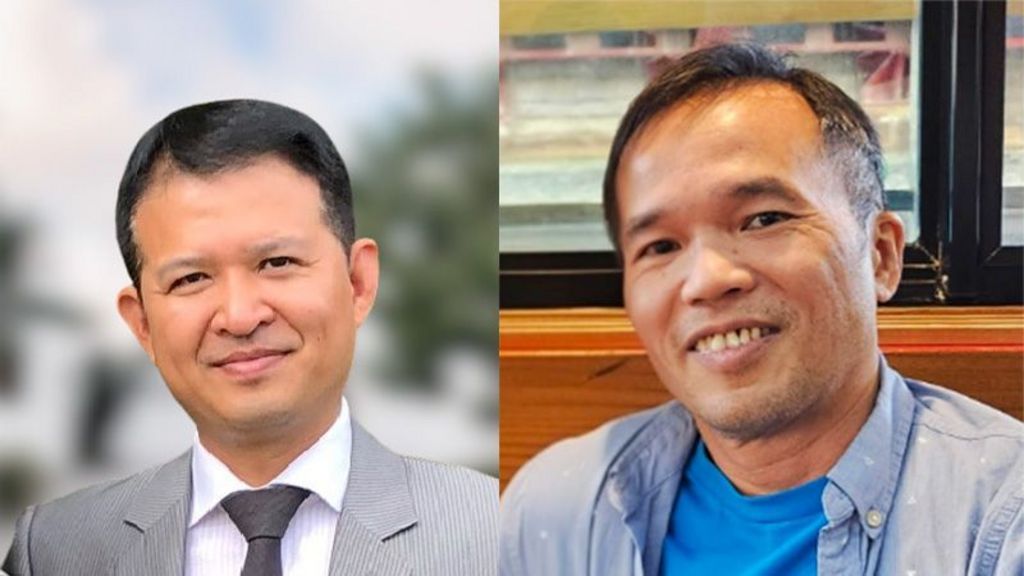
Rights group accuses Vietnam of abducting Australian and Norwegian activists
A cross-border diplomatic and human rights dispute has erupted following the detention of two Viet Tan members — an Australian national and a Norwegian citizen — in Vietnam, with the pro-democracy organization decrying the incident as a clear case of transnational repression.
Viet Tan claims the two men were abducted by Vietnamese authorities while they were traveling in Cambodia’s southern Kaoh Andaet border district, where they had been meeting fellow pro-democracy activists. According to the group, the pair went missing on September 18, with no contact made since that date. The account is backed by Chloe Dang, wife of Australian citizen Tran Hiep, who told local media that Tran had planned to meet her in Bangkok for a return flight to Australia, and never had any intention of crossing into Vietnam. “He always knew there was a risk doing human rights work, but we never thought that this would happen,” Dang told the Australian Broadcasting Corporation.
Vietnamese authorities have offered a conflicting narrative, confirming the arrest of Tran Hiep and Nguyen Duc Thuan, alongside a third suspect, Thai Cong Truong Son, on September 18 in the country’s southern Tay Ninh province border region. State media reports published Monday allege the three men entered Vietnam using forged identification documents, confessed to being active members of Viet Tan, and were planning to carry out coordinated terrorist and sabotage operations across the country. All three have now been formally charged with membership in a designated terrorist organization, with an ongoing investigation aimed at uncovering full details of their alleged activities before formal legal processing, Vietnamese authorities confirmed.
Viet Tan has rejected the terror allegations as a deliberate fabrication designed to cover up what it calls a state-sponsored abduction committed on foreign soil. “A state orchestrating the abduction of individuals abroad and forcibly taking them to its territory is a serious act of transnational repression. It violates Cambodia’s sovereignty and the fundamental principles of international law,” the group said in a formal statement, which did not reference the third suspect named by Vietnamese authorities. Vietnam has long designated Viet Tan, an organization with a network of members inside Vietnam and across global diaspora communities, as a terrorist group.
Australian Prime Minister Anthony Albanese confirmed that the national government is providing full consular support to Tran’s family, a standard service for Australian citizens affected by incidents overseas. “That’s what Australian governments do for our citizens. And we’ll continue to engage directly with the family,” Albanese told reporters.
Human rights advocates have amplified the condemnation of the detentions. Phil Robertson, Director of Asia Human Rights and Labor Advocates, argued that the incident confirms Hanoi’s position as one of the most aggressive practitioners of transnational repression in Southeast Asia. “This latest act is an unacceptable outrage,” Robertson added.
As of Tuesday, neither Vietnamese nor Cambodian authorities have issued additional responses to the accusations of cross-border abduction, after multiple requests for comment were submitted by international media.
-

Czech Republic ready for Wembley 30 years after Euro ’96
Thirty years after one of the most remarkable underdog runs in European Championship history ended in final heartbreak at the original Wembley Stadium, the Czech Republic national football team is set to return to the iconic north London venue for a new round of Nations League fixtures against England.
This international break brings two consecutive matchups between the two sides: the first kicks off in Prague on Tuesday at 19:45 BST, with the return leg scheduled at the redeveloped Wembley on October 6. While the Czechs have visited the new stadium multiple times since their 1996 final defeat to Germany, this trip marks three decades since that unforgettable summer tournament hosted across England.
Euro ’96 holds a unique place in Czech football history: it was the nation’s first major tournament after the peaceful dissolution of Czechoslovakia, which split the former country into the Czech Republic and Slovakia. Even within the Czech squad, few expected the unfancied team to make any deep run. Ranked as major tournament outsiders with most of their roster still playing domestically, many players had already booked post-group-stage holidays. Star winger Vladimir Smicer even had a wedding scheduled immediately after the opening round of matches.
In a revealing interview with the BBC’s *Sporting Witness* podcast earlier this year, former midfielder Patrik Berger recalled how even his own Borussia Dortmund teammate Jurgen Kohler – who was part of Germany’s 1996 Euro squad – had no idea the Czechs had qualified for the tournament. “He was asking me what my plans were for the summer. I said ‘I’m going to the Euros’ and he said ‘to watch games?’ I said ‘no, we’re playing you guys the first game of the group stages and then we will play in the final’ – and he was laughing,” Berger said.
The Czechs got off to a rocky start, falling 2-0 to Germany in their opening group match at Old Trafford. But a 2-1 upset victory over Italy at Anfield turned their fortunes around, followed by a dramatic 3-3 draw with Russia at the same ground. Smicer scored a late equalizer to secure the point, and when Italy played out a goalless draw with Germany, the Czechs snuck into the quarter-finals – a result the team only learned of several minutes after their own final group match ended. “One minute we’re not qualifying, the next it was we qualified, so we didn’t really know,” Berger explained.
What followed was a fairy tale run that still defines Czech football. In the quarter-finals at Villa Park, Karel Poborsky scored one of the most iconic goals in European Championship history, a perfectly executed lob over Portugal goalkeeper Vitor Baia that secured a 1-0 win and a spot in the semi-finals. Against France at Old Trafford, a 0-0 draw forced a penalty shootout, where the Czechs edged out the hosts 6-5. Future Ballon d’Or winner Pavel Nedved, Berger, and Poborsky – who would sign for Manchester United just weeks later – all converted their penalties. “If someone says they want to take a penalty in a shootout, they’re lying. Nobody wants that pressure,” Berger said. “We couldn’t believe we had beaten France. We were living the dream. To get to the final was kind of like a miracle for everyone.”
In one of the most memorable subplots of the run, Smicer flew back to Prague just two days before the final to tie the knot, with thousands of adoring Czech fans packing the city centre to celebrate the occasion before he returned to England the same day.
The 1996 final at Wembley brought the underdogs within touching distance of the title. In the 59th minute, the Czechs were awarded a penalty, and when no other player stepped up to take it, Berger stepped in. He drilled the spot kick into the back of the net to give the Czechs a surprise lead. “The only thing in my mind was hit it as hard as possible on target,” he recalled. For 73 minutes, the Czechs held on, until Oliver Bierhoff equalized for Germany in the 73rd minute. Extra time brought another historic first: Bierhoff scored the first ever golden goal in a major men’s tournament final, ending Czech hopes of a miracle win.
Berger, however, says he holds no regrets over the silver medal finish. “It wasn’t meant to be. I’d love to be European champion, but silver for us was like a gold because it opened doors to so many of us. And it opened doors to the generation after us,” he said. For Berger personally, the tournament also changed his career: his standout performances on English soil caught the attention of Liverpool, who signed him shortly after. When the team returned to Prague, 100,000 fans turned out to celebrate the underdogs, a reception that made the silver medal feel like a championship win.
This run at Euro ’96 remains the only time the independent Czech Republic has reached a major tournament final, though the golden generation of Czech football notched other notable achievements. They reached the semi-finals of Euro 2004, and quarter-finals in both 2012 and 2021. Prague-based football journalist Ondrej Zlamal argues the 2004 squad – which mixed 1996 veterans like Smicer and Berger with young stars such as Petr Cech, Milan Baros and Tomas Rosicky – actually played better football than the 1996 side. “This generation with Nedved and others culminated in 2004 and we had a feeling we should have won the Euros. It was the second highlight of the golden generation,” he said. That run ended with a defeat to eventual champions Greece in the semi-finals.
Since that era, Czech football has struggled to reach the same heights. The nation has only qualified for two World Cups, in 2006 and 2026, and exited both at the group stage. Zlamal called the 2026 World Cup performance “really disappointing”, and put the decline down to a lack of elite talent. “We don’t have such talented footballers as we had. We don’t have enough players in the top teams like we used to,” he explained. “Miracles happen and maybe there could be a new generation which could be surprising as 1996… but I don’t believe it will happen again.”
Now, a new era is beginning for Czech football. For the first time in the nation’s history, the national side is led by a foreign manager: Spaniard Santi Denia. His first squad, for upcoming Nations League matches against Croatia, England and Spain, includes seven uncapped or one-cap players – though none are under the age of 22, indicating a transition rather than a full youth overhaul.
Three decades on from that 1996 final, the old twin towers of the original Wembley have long been replaced by a modern, 21st-century venue. For Denia and his new-look side, there are few better settings to deliver a statement performance that could signal the start of a new chapter for Czech football.
-
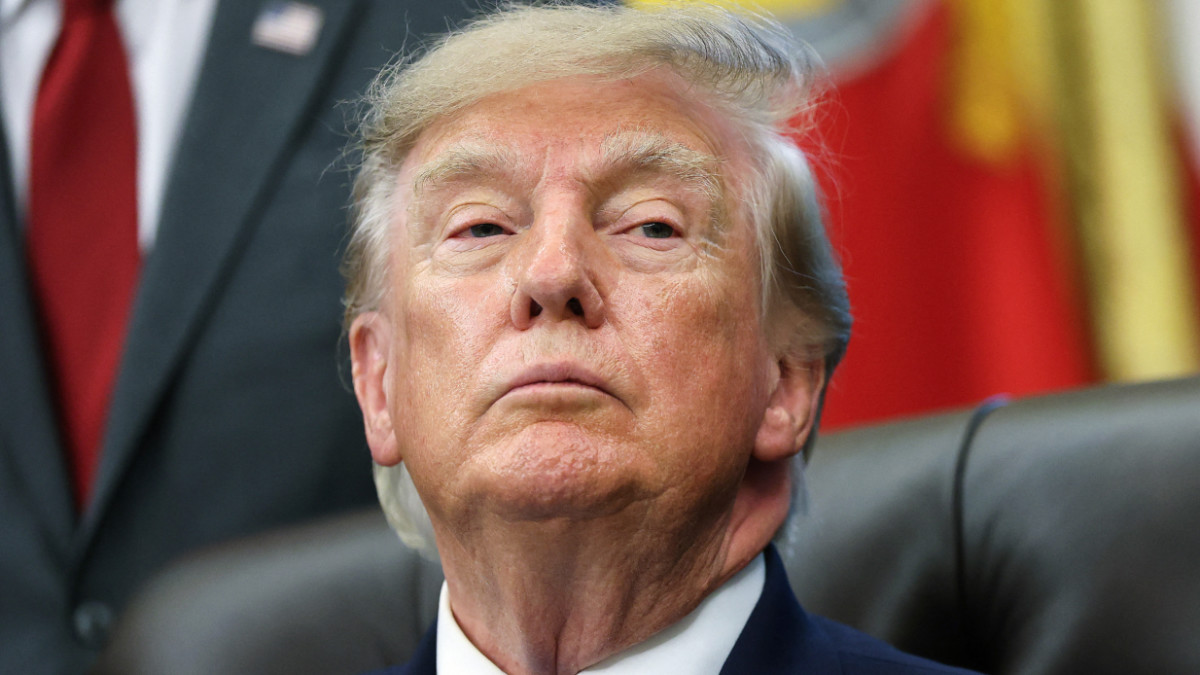
Trump cancels millions of dollars in funding for refugees, immigrants
In a sweeping executive push to advance its restrictive immigration agenda, the Office of Management and Budget confirmed over the weekend that the second Trump administration is moving to revoke $810 million in congressionally approved funding earmarked for refugee support, immigrant services, and related community programs. The administration formally submitted a rescission request to House Speaker Mike Johnson on Friday, targeting unspent appropriations across six federal agencies: Commerce, Education, Health and Human Services, Homeland Security, Housing and Urban Development, and Justice.
A rescission is a formal procedure through which a president asks Congress to cancel previously authorized spending. In the letter, which was first reported by CNN on Saturday, administration officials framed the proposal as aligned with their core policy priority: ending federal taxpayer spending that supports non-citizens, and prioritizing the needs of U.S. residents first.
The proposal has already drawn fierce bipartisan condemnation from lawmakers, who argue the move represents an unprecedented overreach of executive authority that circumvents Congress’s constitutional power over federal spending. Even Republican lawmakers have pushed back against the plan. “Any effort to rescind appropriated funds without explicit congressional approval is a clear violation of the law,” said Senator Susan Collins, a moderate Republican from Maine. “I will work with my colleagues to address these illegal actions.”
Democratic Senator Jeff Merkley amplified this criticism in a post on X, framing the action as an unlawful “pocket line-item veto.” “It is the president saying that he and he alone will convert a bipartisan spending bill that has been signed into law into a partisan spending bill,” Merkley wrote. “He is cancelling the lines of spending he doesn’t like.”
This targeted funding cut is not an isolated action, but part of a much broader, aggressive administration push to drastically reduce immigration flows and alter long-standing U.S. residency and citizenship policies. Already this term, the White House has attempted to eliminate birthright citizenship for children born to undocumented immigrants and so-called “birth tourism” visitors entering the country specifically to give birth on U.S. soil. That policy was ultimately struck down by the U.S. Supreme Court in a narrow 5-4 ruling.
A recently disclosed internal government memo also reveals the administration has expanded the authority of Immigration and Customs Enforcement officers to detain lawfully admitted refugees who have not yet obtained permanent legal residency. Earlier this year, the administration implemented a new rule requiring most foreign nationals already in the U.S. seeking to adjust their visa status to leave the country and complete their application process through an overseas U.S. embassy, a change that has delayed or derailed thousands of residency applications.
The administration’s immigration crackdown has also extended to political activism, with officials specifically targeting pro-Palestinian organizers and critics of Israeli policy for deportation action. Mahmoud Khalil, a Columbia University graduate student who has participated in anti-Gaza war protests on campus, is currently suing the administration over his pending deportation proceedings.
-

US ban on Canadian alcohol and dairy comes into effect as trade war drags on
A long-simmering trade dispute between Canada and the United States escalated on Tuesday when a White House-ordered import ban on nearly C$1 billion ($710 million) worth of Canadian goods went into full effect, deepening uncertainty for cross-border commerce that underpins billions of dollars in annual economic activity for both North American neighbors.
The new restrictions, implemented by the second Trump administration, target three key Canadian sectors: alcohol exports, dairy-derived whey products used in protein supplements, and motorcycles. The measure came in direct retaliation for Canadian tariffs imposed on a slate of U.S. goods earlier this month, which Ottawa put in place after bilateral trade negotiations collapsed with no path to a near-term resolution.
According to 2025 trade data from Statistics Canada, nearly 90% of all Canadian alcohol exports are shipped to the U.S. market, with the vast majority originating from Ontario-based producers. For the motorcycle sector, the impact is expected to be far more muted: Canada exported just 5,000 motorcycles valued at roughly C$120 million to the U.S. last year, a small share of total cross-border trade that will limit widespread disruption. The alcohol sector, by contrast, faces far greater risk: 93% of all Canadian liquor exports by value went to the U.S. in 2025, leaving the industry heavily exposed to the new ban.
Trump first announced the import restrictions via executive orders signed September 8, framing the measures as a response to what his administration calls “continued discrimination” against U.S. dairy, automotive and alcohol products by Canadian trade regulators. In comments to reporters Monday ahead of the ban taking effect, Trump doubled down on his criticism of Ottawa, saying “Canada has been one of the worst countries in the entire world” when it comes to unfair trade practices, and accused the country of “treating the United States very unfairly.”
In response to the new restrictions, Canadian Prime Minister Mark Carney has sought to downplay broader economic damage, telling reporters earlier this month that the overall impact of the import bans on Canada’s national economy would be “modest.” Carney added that when compared to previous, larger trade actions imposed by the U.S., the current restrictions qualify as “relatively modest measures,” though he acknowledged that targeted businesses and sectors directly affected by the ban will face tangible hardship. Ottawa has also signaled it does not plan to roll out additional retaliatory measures in response to this latest round of restrictions, keeping the door cracked for future negotiations.
U.S. trade representative Jamieson Greer reinforced Washington’s lack of urgency to restart talks in a recent CNBC interview, saying that President Trump remains “comfortable” with the current state of bilateral trade relations. “They call us now and then and we have good conversations about potential deals. But there’s no urgency on our side,” Greer told the U.S. business network last week. Trade talks have remained stalled since negotiations broke down earlier this month.
Industry groups and economists have offered mixed assessments of the long-term implications of the ban. Derek Holt, an economist with Canadian multinational bank Scotiabank, framed the new measures as largely symbolic in a recent analysis, writing that “these actions are face-saving by the US administration, not substantive in nature and that’s a positive” for broader economic stability. But Spirits Canada, the leading industry association representing Canadian liquor producers, warned that the consequences for its sector “could be significant,” given the overwhelming reliance on U.S. export markets.
Beyond the immediate import ban, broader trade tensions between the two countries have already resulted in widespread tariffs across dozens of sectors. The U.S. currently imposes 50% tariffs on a wide range of Canadian exports including dairy, alcohol, steel and aluminum, alongside a 25% levy on cars built in Canada. In response, Ottawa placed retaliatory tariffs ranging from 15% to 50% on more than 700 different U.S. goods, including a 25% tax on specific U.S. steel and aluminum products. Most Canadian provincial governments have also moved to end government-approved sales of U.S.-produced alcohol within their borders.
Tariffs have been a central pillar of Trump’s economic agenda throughout his political career, with the former and current president arguing that import taxes boost federal government revenue and incentivize U.S. consumers to purchase goods manufactured domestically. That position runs counter to the consensus view among most professional economists, who warn that tariffs push up prices on everyday goods for U.S. consumers and create widespread disruption to integrated global supply chains.
-
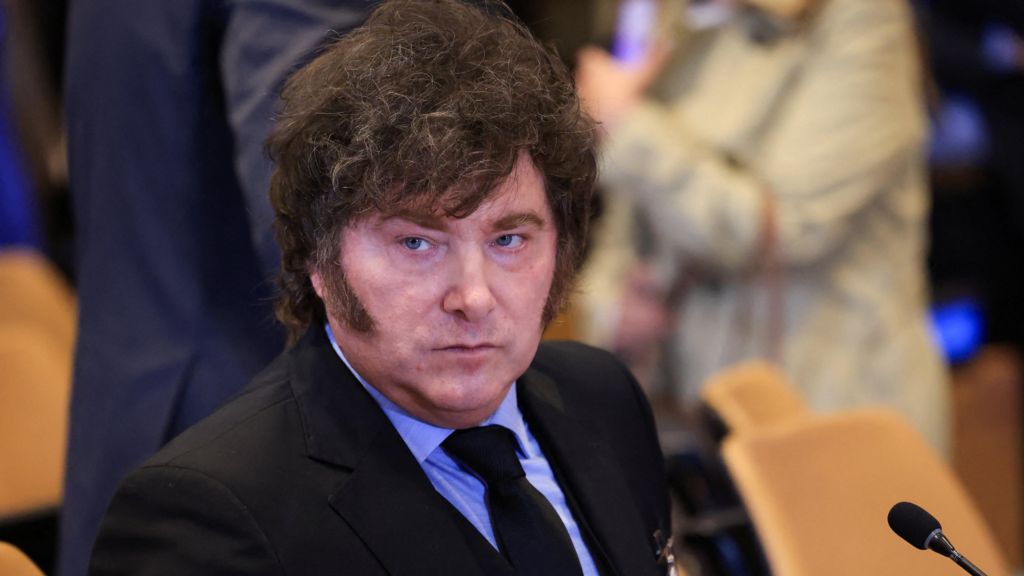
Argentina threatens legal action against UK over Falkland Islands oil exploration
Four decades after the 1982 Falklands War that left nearly 1,000 people dead, long-simmering territorial tensions between Argentina and the United Kingdom have reignited over a major offshore oil development project, after Argentine President Javier Milei threatened to pursue international legal action against London unless exploration work is immediately halted.
In an official post shared on his social media channels, Milei laid out a clear 14-day ultimatum for the scrapping of the Sea Lion oilfield project, a joint energy venture between UK-based Rockhopper Exploration and Israeli energy firm Navitas Petroleum. Located roughly 209 kilometers off the coast of the Falkland Islands – which Argentina claims as its own territory under the name Las Malvinas – the untapped oil reserve holds an estimated 1.7 billion barrels of crude, with the two companies planning to launch commercial extraction within two years.
Both Rockhopper and Navitas have repeatedly asserted that their operations are fully legal, backed by valid exploration and extraction licenses issued by UK authorities on behalf of the Falkland Islands government. For Argentina, however, Milei frames the project as an unlawful violation of Argentine territorial sovereignty, calling the development “illegitimate exploitation” and “illegal plundering” of Argentine natural resources.
If the project does not end within the 14-day window, Milei confirmed he has already instructed Argentina’s Ministry of Foreign Affairs and national legal teams to initiate formal international arbitration proceedings against the United Kingdom. If that step does not resolve the dispute, Argentina will escalate the case to the International Tribunal for the Law of the Sea (ITLOS), the independent Hamburg-based judicial body tasked with upholding and ruling on disputes under the United Nations Convention on the Law of the Sea.
Milei’s ultimatum comes just weeks after he delivered a blistering rebuke of the United Nations during his address to the UN General Assembly, accusing the global body of failing to address Argentina’s long-standing sovereignty claim over the archipelago. In that speech, the Argentine leader called the UN a “useless organisation” that serves only “arrogant parasites dressed up as well-intentioned bureaucrats.”
The escalating exchange has already drawn a sharp response from UK officials. UK Defence Secretary Wes Streeting recently dismissed any potential Argentine attempt to retake the islands by force, stating publicly that Argentina “lacks the ability” to seize the territory through military means. Milei has previously described the Sea Lion project as a “clear and present danger” to Argentine national interests.
The dispute over the Falkland Islands dates back centuries, but the most violent confrontation came in 1982, when Argentine military forces invaded the archipelago to assert the country’s territorial claim. A 74-day conflict followed, after which a British military task force retook control of the islands. The war resulted in the deaths of 255 British service members, 649 Argentine military personnel, and three civilian residents of the islands.
In a 2013 referendum organized by the Falkland Islands government, an overwhelming 99.8% of island residents voted to retain their status as a British Overseas Territory, a result Argentina has repeatedly rejected as invalid.