Amid growing controversy over the United Kingdom government’s proscription of Palestine Action as a terrorist organization, Foreign Secretary Ed Miliband has openly questioned whether the ban was politically prudent, acknowledging that authorities never intended the sweeping crackdown that has resulted in thousands of mass arrests across the country.
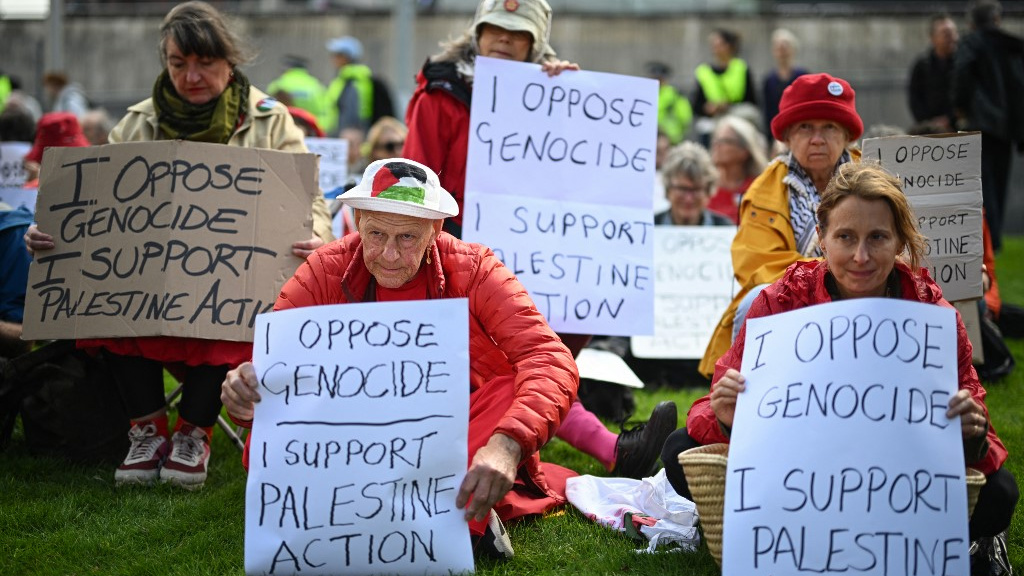
Miliband’s remarks, delivered on the sidelines of the annual Labour Party conference in Liverpool, came just one day after police detained 82 anti-ban protesters outside the conference venue, with an additional 79 people issued summonses to appear in court. The demonstration, organized by the anti-ban advocacy group Defend Our Juries, saw more than 250 protesters holding placards declaring “I oppose genocide. I support Palestine Action” to mark their opposition to the 2025 designation.
In an interview with LBC on Tuesday, Miliband emphasized his unwavering support for the fundamental right to peaceful protest, a cornerstone of British democratic life. Notably, the foreign secretary stopped short of defending the ban, which was imposed by Keir Starmer’s Labour government in July 2025. The proscription makes membership in or public support for Palestine Action a criminal offense carrying a maximum prison sentence of 14 years. Palestine Action, a direct action group focused on disrupting weapons manufacturing by UK-based companies that supply arms to Israel, has framed its activities as a necessary protest against humanitarian harm in Gaza.
Pressed by interviewer Andrew Marr on whether it made political sense to criminalize a broad swathe of protesters that included elderly people, local vicars, and pensioners, Miliband acknowledged, “I don’t think anyone’s intent was to have those people criminalized, but obviously the Supreme Court has got to look at this issue, and obviously it’s something we keep looking at as government.”
On the legal status of the ban, Miliband declined to comment ahead of upcoming Supreme Court proceedings, noting that a challenge to the proscription is already working its way through the judicial system. “There’s a case coming before the Supreme Court and so I’ll let that case play out, because I think it’s important that that court process takes its course,” he said. The challenge was brought by Huda Ammori, co-founder of Palestine Action, who is appealing a Court of Appeal ruling earlier this year that upheld the ban as legally valid. The Supreme Court is scheduled to hear the case in the coming months.
Miliband’s measured comments have already sparked widespread political speculation that the current UK government could ultimately move to reverse the ban. Since Andy Burnham took office as prime minister, he has not publicly addressed the controversy, leaving anti-ban activists hopeful that sustained public pressure could push the new administration to overturn the proscription.
Human rights organizations have roundly condemned the ban as an unnecessarily draconian restriction on free speech and the right to protest, noting that thousands of people have been arrested for non-violent civil disobedience since the ban went into effect.
In a public response to Miliband’s comments posted on X, Defend Our Juries argued that the original proscription was always a political choice, not a legal necessity. “It does not require the Supreme Court to overturn it,” the group said, reiterating its call for the government to immediately scrap the ban.
This report was originally produced by independent outlet Middle East Eye, which specializes in on-the-ground coverage of the Middle East, North Africa, and global affairs related to the region.