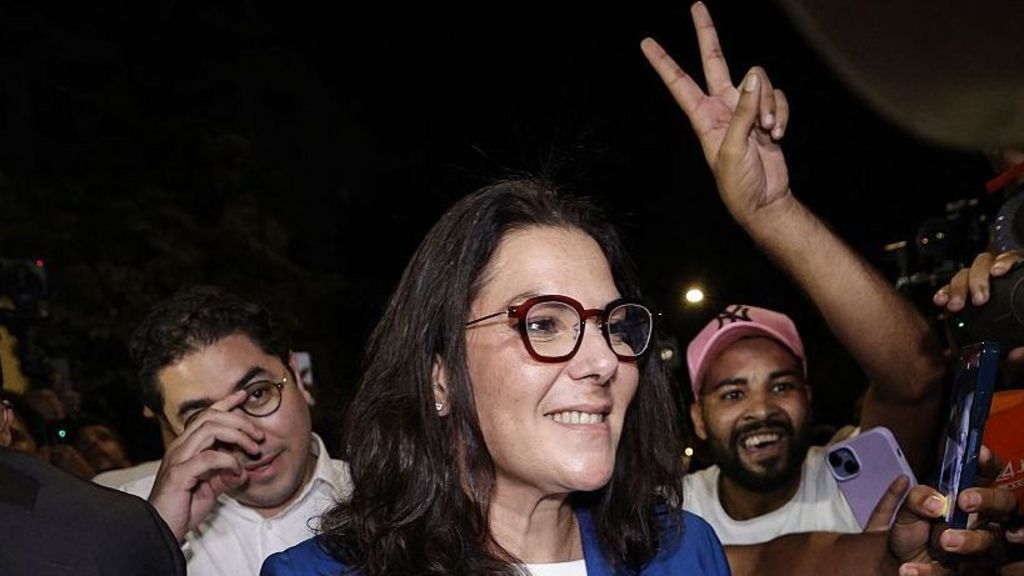
In a landmark moment for Moroccan politics and gender representation across the Arab world, King Mohammed VI has named 50-year-old Fatima Zahra El Mansouri as the North African nation’s first female prime minister. The appointment comes after El Mansouri’s centrist Authenticity and Modernity Party (Pam) secured the largest share of seats in last week’s parliamentary elections, making her only the second woman to ever lead a national government in the Arab world, following Tunisia’s Najla Bouden.
El Mansouri was selected for the top executive post over another high-profile Pam candidate: Fouzi Lekjaa, Morocco’s well-known football association leader. A seasoned politician with deep roots in local and national governance, El Mansouri has served as mayor of Marrakesh for multiple terms over the past 15 years and held a cabinet position in the previous coalition government. Trained as a lawyer, she built her academic foundation at Rabat’s Mohammed V University before pursuing advanced studies in business and corporate law in France and the United States. She entered politics shortly after Pam was founded in 2008, made history as Marrakesh’s first female mayor in 2009, reclaimed the post in 2021, and most recently rose to become co-ordinator of Pam’s leadership coalition in February 2024.
Morocco operates as a constitutional monarchy, though the vast majority of governing power remains concentrated in the office of the king. In a pre-appointment victory press conference, El Mansouri was asked whether the state would need to revise protocols to accommodate her participation in Muslim religious ceremonies led by the king — events where men and women currently worship in separated sections. She declined to answer the question directly, instead choosing to praise King Mohammed VI as the kingdom’s “biggest advocate for women”, noting that it would be a profound honor to be entrusted with the role of head of government.
One of Morocco’s most recognizable female political figures, El Mansouri has pushed back against popular narratives that frame her as a hard-nosed “iron woman”. In a 2021 interview with Pam’s in-house magazine, she clarified, “I am neither a woman of steel nor iron… I am a free activist.” Notably, El Mansouri has rarely publicly addressed ongoing debates over women’s rights and gender inequality in Morocco, including divisive conversations around banning polygamy and establishing equal inheritance rights for men and women.
Under Morocco’s constitutional framework, the king is tasked with selecting a prime minister from the party that wins the most seats in House of Representatives elections. Unlike most previous elections, where the ruling party’s single secretary general was the clear, formal nominee for prime minister, Pam has operated under a collective leadership structure rather than a single secretary general since February 2024, leaving the final choice entirely in the king’s hands. Ahead of the appointment, El Mansouri explicitly acknowledged that the decision between her and Lekjaa rested with the monarch.
Now that she has taken the appointment, El Mansouri faces the immediate challenge of forming a viable governing coalition. Pam won 97 of the 395 total parliamentary seats, far short of the 198-seat absolute majority required to govern alone. Relations between Pam and the National Rally of Independents (RNI), the senior partner in the outgoing coalition government where Pam served as a junior partner, have broken down, ruling out a renewal of that partnership. Meanwhile, the Islamist Justice and Development Party (PJD) staged a major electoral comeback, jumping from just 13 seats in the previous parliament to 54 seats this cycle, a surge driven by the return of former prime minister and party leader Abdelilah Benkirane. Shortly after election results were finalized, Benkirane confirmed that PJD will remain in opposition and rejected any potential coalition partnership with Pam.