博客

  • ‘Not sorry’: Israeli officer who killed international aid workers in Gaza justifies strike

    ‘Not sorry’: Israeli officer who killed international aid workers in Gaza justifies strike

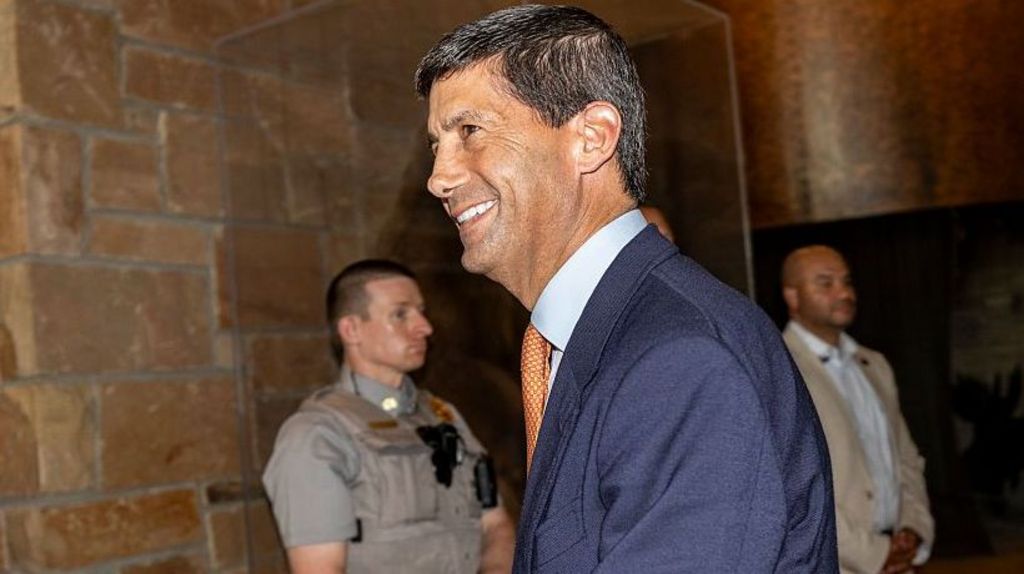
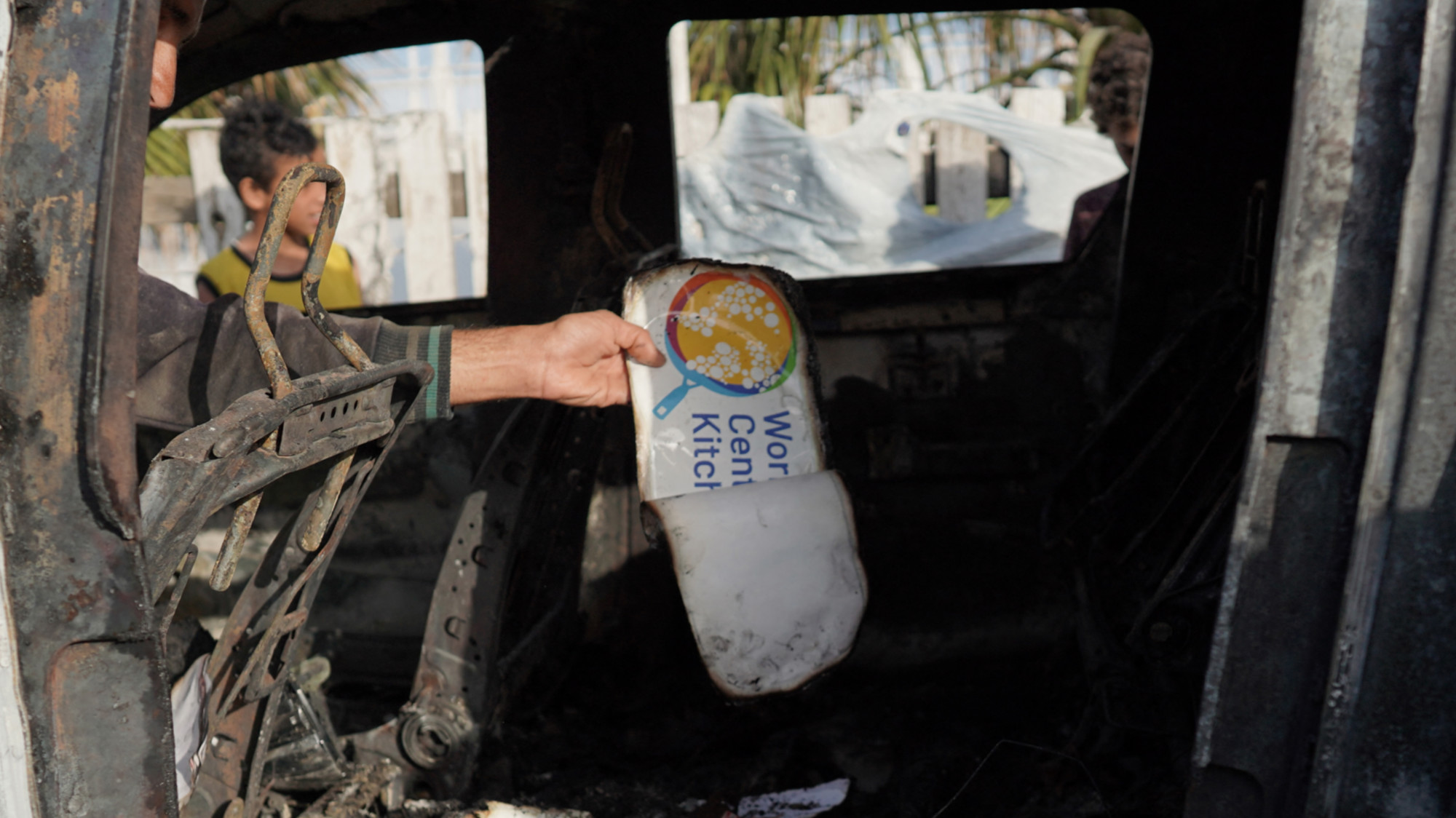
    Nearly two years after a targeted Israeli drone strike in Gaza killed seven humanitarian aid workers with the global non-profit World Central Kitchen, the Israeli army officer who personally authorized the attack has publicly defended his actions and stated he feels no remorse for the deaths. In a recorded interview with Australia’s public broadcaster ABC conducted in October 2025, Colonel Nochi Mendel, who commanded the April 1, 2024 operation that struck the WCK aid convoy, confirmed he stood firmly by the order he issued.

    The fatal strike claimed the lives of aid workers from five nations: Palestine, the United Kingdom, Australia, Canada, and Poland, triggering international outcry in its immediate aftermath. Mendel, who was removed from his position as chief of staff of the Israeli military’s elite Nahal infantry brigade shortly after the incident, acknowledged full responsibility for the strike in the interview. “I’m the commander, and I’m the one who gave the order to carry out the operation. I didn’t run away from the situation. I said I gave the order; don’t look for anyone else,” he told reporters. While Mendel admitted he had not intended to kill the WCK team, he doubled down on his stance, adding: “I’m not sorry for what I did.”

    Within the Israeli military’s own post-attack investigation, the strike was concluded to have been the product of multiple cascading failures, including serious breaches of the IDF’s own rules of engagement and standard operating procedures. Earlier this year, however, the Israeli military announced it would not launch any criminal investigation into the incident, a decision that drew immediate and fierce condemnation from the three Western nations whose citizens were killed: the UK, Canada, and Australia. In a joint public statement, the three nations described the decision as “shameful”, noting that the Israeli military had failed to offer any substantive explanation for its refusal to pursue criminal accountability. The countries also emphasized that the announcement, made on World Humanitarian Day, was “particularly egregious”. “The victims of this incident and their families deserve justice and accountability, and we will continue to seek answers on their behalf,” the statement read.

    In his interview, Mendel sought to deflect blame for the fatal incident, blaming what he claimed were mistakes on WCK’s part and the inherent operational complexity of military activity in Gaza for the deaths. He repeated the unsubstantiated claim that WCK workers and Hamas operatives had been intermingled in the area on the night of the strike, going further to accuse the humanitarian organization of lacking neutrality. “So the WCK, too – unfortunately, they aren’t really a neutral organisation. Not really an organisation you can say is innocent and completely clean,” he said. “It had ties to Hamas,” he added.

    World Central Kitchen has forcefully rejected Mendel’s allegations as baseless and defamatory. A WCK spokesperson told ABC that the claims represent the latest effort to shift blame away from the Israeli military’s own failures in the strike. “The individual making these slanderous claims has no credibility. He was directly involved in the decisions that led to the 1 April strikes and was immediately removed from his post for serious failures and breaches of standard operating procedure,” the spokesperson said. The organization reaffirmed its demand for full accountability, stating: “We demand truth and justice for our seven colleagues who were killed, through a full, independent investigation into the attack.”
  • The missing in Nepal-Tibet flash floods

    The missing in Nepal-Tibet flash floods

    Devastating flash floods and landslides that hit the remote Nepal-Tibet border region have left a massive trail of destruction, with updated official figures released Friday showing the number of people unaccounted for has surged dramatically to more than 2,400, and at least 584 lives have been confirmed lost. Disaster response officials warn that these casualty numbers are expected to shift further in the coming days, a common scenario in the chaotic aftermath of large-scale natural disasters when search and rescue operations are still ongoing.

    Breaking down the latest data from authorities on both sides of the border, Nepal’s national disaster management agency raised its count of missing people on Nepal’s side of the border to 1,924 on Friday. The previous day, Chinese authorities reported 558 people missing on the Tibet side of the border, and no updated figures were released by Beijing on Friday. Combining the two sets of data brings the confirmed total of missing people across the entire affected border region to at least 2,482, representing an increase of more than 1,000 in just 24 hours.

    A large share of the missing are foreign nationals, including international tourists and cross-border workers. On Friday, Nepal’s disaster agency recorded 517 foreigners still unaccounted for on its territory. Adding the 260 foreigners reported missing by Chinese officials on the Tibet side on Thursday, the total number of foreign missing across the region reaches at least 777.

    Nepal’s national tourism board released separate tracking data on Friday, which puts the number of tourists of all nationalities out of contact at 622, 473 of whom are international visitors. The board also confirmed that 121 tourists stranded by the disaster have already been pulled to safety, though a full unified count of all rescued people, including local residents and foreign workers, has not yet been released to the public.

    Across the entire affected area, the confirmed death toll now stands at 584: 579 fatalities recorded by Nepali authorities, and five reported by China.

    On Nepal’s side of the border, the tourism board counts 149 Nepali tourists among the 622 unaccounted for, though the national disaster agency lists a lower figure of 127. As of Friday, the full number of local non-tourist residents still missing across Nepal’s affected districts remains unclear, but informal estimates from officials suggest the figure runs into the hundreds.

    Multiple countries have now confirmed that their citizens are among the missing. China’s foreign ministry confirmed Thursday that nearly 100 Chinese nationals are unaccounted for in Nepal; Nepal’s tourism board separately reports eight Chinese missing, with 16 already rescued. These numbers do not include the 558 people missing on the Chinese side of the border.

    India has 98 citizens missing in Nepal, with 85 already rescued, according to Nepal’s latest tourism board data. U.S. officials reported Thursday that 90 American citizens were missing, with three rescued and no confirmed U.S. fatalities; Nepal’s tourism board now puts the number of U.S. missing at 65, with two rescued.

    Ukraine has 61 citizens missing in Nepal per Friday’s Nepali data, though Ukraine’s foreign ministry pegged the number at 56 as of Thursday evening. Other countries with large numbers of citizens unaccounted for include Malaysia (51), Australia (39 per Australian officials, 35 per Nepali data), the United Kingdom (33), Latvia (29), and Canada (25 per Nepal, 30 across both Nepal and Tibet per Canadian officials). Nine South Koreans, nine Singaporeans, nine Russians, eight Germans and smaller groups from dozens of other nations are also missing, with multiple countries reporting that a small number of their citizens have already been rescued.

    Not all missing foreign nationals have had their nationalities publicly broken down: the 260 foreigners missing on the Chinese side of the border have not been sorted by nationality, and the nationalities of non-tourist missing people in Nepal also have not been released publicly. Search and rescue operations are continuing across the hard-hit border region, with teams working to reach remote cut-off areas to locate survivors and recover bodies.

  • UN agency warns of 17,000 children in urgent need of assistance as aid reaches some Nepal survivors

    UN agency warns of 17,000 children in urgent need of assistance as aid reaches some Nepal survivors

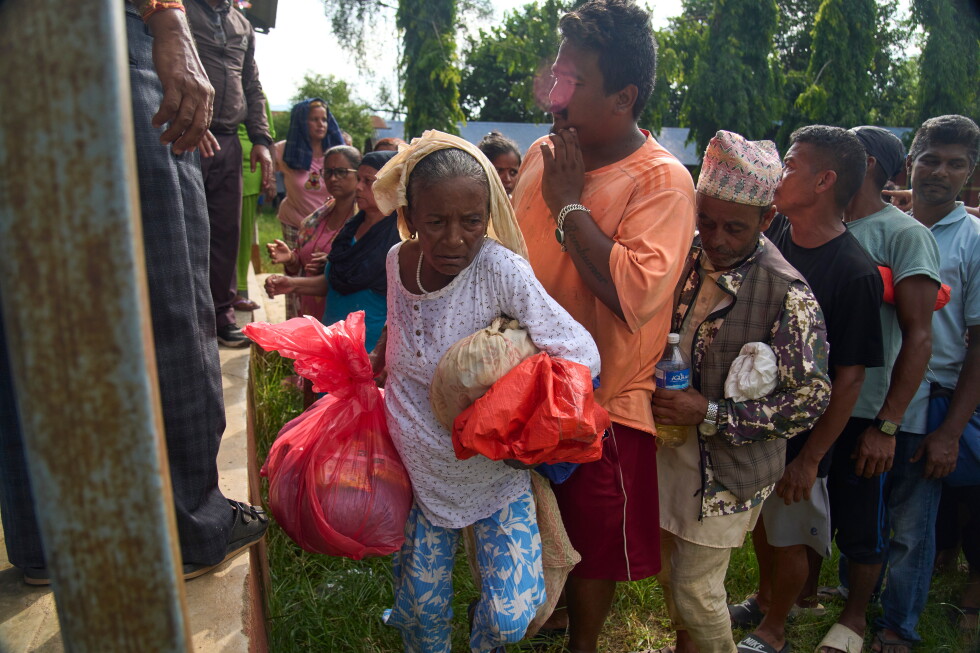
    Friday marked the first day that life-saving humanitarian aid reached vulnerable communities in Nepal, after catastrophic flash floods tore through the rugged mountainous border zone between Nepal and China. As rescue crews continue to clear mud and debris to reach cut-off areas, the full scale of the disaster is slowly coming into focus, leaving thousands displaced and seeking safety in makeshift relief camps run by the Nepali army.

    In Nuwakot, one of the hardest-hit districts located just a short distance from Nepal’s capital Kathmandu, entire villages were erased by surging floodwaters in less than an hour. What was not swept away remains blanketed in thick sediment and mud: fragments of a local golden temple poke through the sand, while the carcass of a drowned buffalo lies abandoned in the open. Survivors who lost their homes have initially gathered in roadside tea shops, waiting for evacuation and assistance.

    The international humanitarian community has warned of widespread urgent needs in the wake of the disaster. The United Nations Children’s Fund (UNICEF) confirms that at least 17,000 children require immediate life-saving support, with 18 schools completely destroyed and another 20 damaged beyond immediate use. The International Committee of the Red Cross estimates that more than 93,000 people have been impacted by the floods, all facing severe shortages of food, shelter and basic supplies.

    Nepal’s National Disaster Risk Reduction and Management Authority announced Friday that the number of people listed as missing has doubled to nearly 2,000, as search teams continue to recover bodies and survey damaged areas. A total of 14,829 security personnel have been deployed to lead search and rescue operations, with drones used to scan hard-to-reach, high-risk areas that are too dangerous for ground teams to access.

    Rescued people are transported by helicopter to Maithali Barrack, a former military training facility in Nuwakot that has been converted into a main relief camp and emergency shelter. Helicopters rotate constantly between the camp and flood zones, bringing in new survivors and critical supplies, while anxious family members line the barbed wire perimeter of the camp, waiting for word of loved ones.

    An army medic, speaking on condition of anonymity to the Associated Press, confirmed that those receiving medical care at the camp include local residents, foreign tourists and Chinese workers pulled from the flood zone. Severe medical cases, such as a pregnant woman who went into labor at the camp, are immediately airlifted to fully equipped hospitals in nearby urban centers.

    Minors separated from their families during the chaos of the floods are housed separately at the camp, with staff working around the clock to reunite them with relatives. For many families, however, the camp has become a site of mourning: bodies recovered from flood zones are stored behind colored tarps as workers wait for relatives to identify them.

    Sixty-two-year-old Chanda Lal Chitrakar, a local tea shop owner who survived the disaster by fleeing to higher ground, shared his account of the morning the flood hit. Having lived through severe flooding the previous year, he initially downplayed the government warning messages sent to his phone, only closing his shop’s doors and windows instead of evacuating. After less than an hour, he saw a massive wall of water rushing down from the surrounding hills, so tall it obscured the top of the area’s tallest tree. He fled to a high hill behind the local police station with nothing but the clothes on his back and his phone, only able to breathe easily once he reached the summit.

    One local school in Nuwakot has been repurposed as a temporary aid distribution hub, where nongovernmental organizations have been handing out critical supplies including solar panels, clothing and basic hygiene products. For Kanchi Nepali, a flood survivor who lost everything, the small donation she received was life-changing. “What I’ve been given today is worth more than a million,” she said. “I have no food, no shelter, no utensils to cook with. Only my body survived.”

    This reporting on climate and environmental disaster is supported by multiple private foundations, with The Associated Press retaining full editorial control over all content.

  • Norway mourns King Harald as Haakon VIII ascends throne

    Norway mourns King Harald as Haakon VIII ascends throne

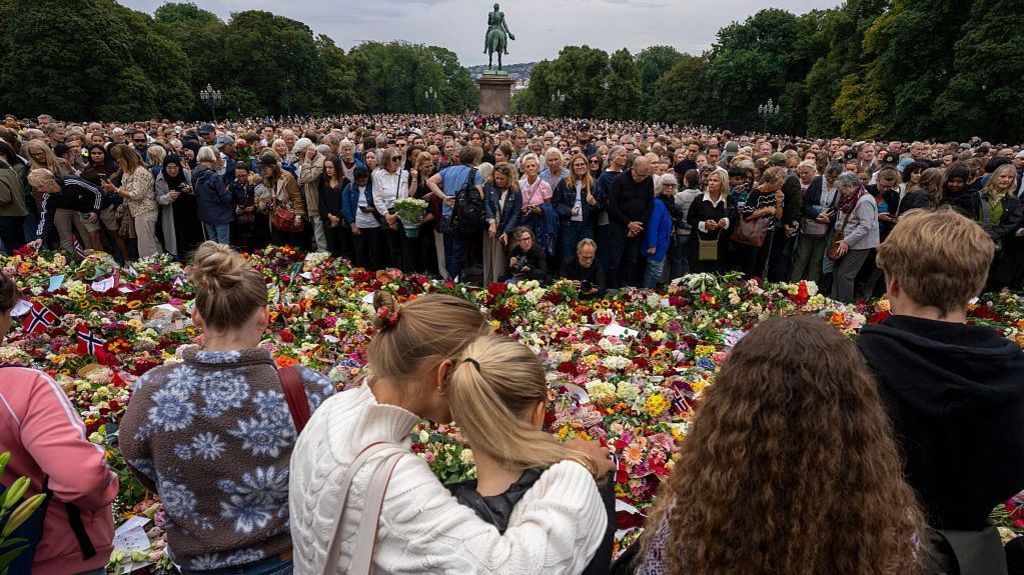
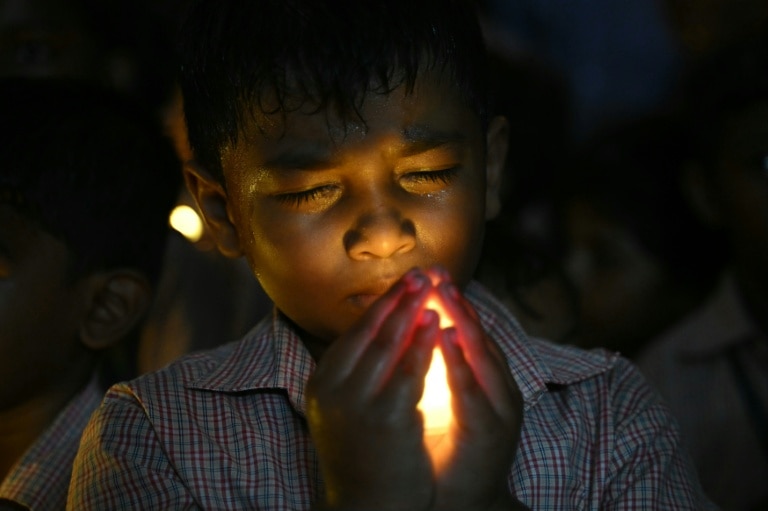
    Norway has entered a period of national mourning following the peaceful death of its long-reigning and widely adored King Harald V at the age of 89, who passed away early Friday morning at Oslo’s Rikshospitalet while receiving treatment for a rare blood disorder he had been suffering from for a week. Within hours of the official announcement of his death, thousands of mourners streamed to the gates of the Royal Palace in Oslo, laying bouquets of flowers, national flags, and handwritten tributes, including a lit candle inscribed with the simple word “thanks” that captured the collective gratitude of the nation. Many in the crowd openly wept, sharing personal stories of connection to the monarch who was widely known as the “people’s king” for his approachable, empathetic leadership.

    Immediately after the official confirmation of his father’s passing, 53-year-old Haakon VIII convened an extraordinary meeting of the Council of State with senior government ministers. Following the gathering, the new monarch confirmed he would retain the Norwegian royal family’s centuries-old motto “All for Norway” during his reign. Haakon’s wife Mette-Marit is now formally recognized as Queen, while his 22-year-old daughter Crown Princess Ingrid Alexandra stands next in the line of succession, a position secured by a 1990 change to Norway’s succession laws that granted equal inheritance rights to firstborn female heirs. Ingrid Alexandra stood beside her father during Friday’s official meeting, marking her first public appearance in her new formal role as heir apparent.

    Tributes to King Harald V have poured in from across Norway and the globe. European royal houses, including Britain’s King Charles III – who shares a second-cousin familial tie with Harald through his mother Queen Elizabeth II – joined heads of state, political leaders, and public figures in honoring his decades of service. Norwegian Prime Minister Jonas Gahr Støre, who laid a floral tribute at the palace and signed the official book of condolences after meeting the new king, emphasized that the entire country was “united in grief and gratitude.” In a televised national address, Støre noted that Harald’s legacy of steady, inclusive leadership would endure, extending particular sympathy to Queen Sonja, who was set to celebrate her 58th wedding anniversary with Harald on the day after his death.

    Public figures across Norwegian society have also shared their remembrances. Star national footballer Erling Haaland, who met Harald at the palace earlier this summer following Norway’s performance at the FIFA World Cup, posted a public tribute on Instagram thanking the late king for “everything you meant to Norway.” For many Norwegians, including new residents and immigrants, Harald’s ability to make all members of society feel welcome defined his legacy. “He made us feel at home and he made us feel loved. So he was like a grandfather that I never had,” Biteya Terfassa, an Ethiopian-born Oslo resident, told reporters outside the palace Friday.

    In a formal military tribute to the late king, the Norwegian Armed Forces fired a 21-gun salute at noon from Akershus Fortress in central Oslo. Later on Friday, a formal procession carried Harald’s remains from Rikshospitalet’s chapel to the Royal Palace, ahead of a formal funeral that has not yet been scheduled. Norway’s official period of national mourning will remain in place until the day of the funeral, with all flags across the country flying at half-mast, public portraits of the king displayed, and moments of silence held at all official and professional events. All non-essential work-related social gatherings have been canceled or postponed, including the planned wedding of Oslo Mayor Anne Lindboe, who rescheduled her own ceremony to honor the mourning period.

    Haakon VIII assumes the throne at an unusually challenging juncture for the Norwegian royal family, which has faced a series of high-profile scandals and health crises over the past year. Earlier this year, Queen Mette-Marit faced intense public scrutiny after revelations emerged of a three-year friendship with disgraced convicted sex offender Jeffrey Epstein, for which she issued a public apology. Later in 2026, she underwent a life-saving lung transplant to treat pulmonary fibrosis, a condition she has lived with since 2018. Medical officials have stated she will not be deemed medically stable until 2027, meaning the new king must balance his demanding new official duties with ongoing care and support for his wife.

    Additional controversy has come from Marius Borg Høiby, Mette-Marit’s son from a previous relationship, who was raised as part of the royal family after Haakon married Mette-Marit. In June, Høiby was convicted of rape and multiple related offenses, and sentenced to four years in prison, a ruling he is currently appealing. Though Høiby holds no formal royal title, his high profile within the royal household has drawn sustained negative attention to the family.

    Despite King Harald V retaining high personal approval ratings until his death, polling published earlier this year by Norwegian newspaper Aftenposten found public support for the monarchy itself has fallen from 72% in 2024 to 54% currently. Still, royal analysts interviewed by the BBC noted that Haakon VIII is widely viewed as a respected, hard-working public figure, and expressed confidence that he can steady the institution and navigate the current challenges facing his family and reign.

  • United Nations talks in Mongolia expose growing drought crisis as climate impacts worsen

    United Nations talks in Mongolia expose growing drought crisis as climate impacts worsen

    ULAANBAATAR, Mongolia — After 12 days of intensive negotiations, delegates from nearly 200 nations concluded the United Nations Convention to Combat Desertification (UNCCD) biennial summit Friday, leaving the Mongolian capital with landmark funding commitments for land restoration but without resolving a years-long deadlock over a proposed global legally binding drought pact.
    The summit convened amid growing alarm over accelerating land degradation across the globe: UNCCD data confirms 40 percent of the world’s total land area is already degraded, a crisis that erodes soil fertility, disrupts water storage, and threatens the livelihoods of billions of people. Yasmine Fouad, executive secretary of the UNCCD, told reporters that drought, amplified by rising global temperatures, is spreading to regions once considered low-risk for dry conditions, growing more frequent, intense and prolonged than at any point in recorded history.
    Experts at the conference emphasized a underrecognized link between land health and drought resilience: unlike the common framing of drought as purely a product of insufficient rainfall, modern research shows pre-existing land degradation drastically worsens dry period impacts. Healthy, well-managed soil acts as a natural water reservoir, absorbing and retaining moisture to sustain crops, grasslands and ecosystems through extended dry spells. Degraded soils, by contrast, shed water rapidly, lose agricultural productivity, and leave communities far more vulnerable to erratic rainfall and rising temperatures. This interconnectedness means water management cannot be separated from land health, Fouad noted, arguing that sustainable water systems depend entirely on healthy, productive soils.
    This interconnectedness is particularly critical for global food security, said Joao Campari, global leader for food and agriculture at WWF International. Treating land and water as separate policy issues ignores the basic requirements for stable food production, Campari explained: without access to both healthy land and reliable water, agricultural systems cannot function. The pressure on global land resources is set to intensify dramatically in coming decades: UN projections show the world will need to produce 50 percent more food by 2050 than it did in 2012 to feed a growing population. But expanding agricultural production by clearing natural grasslands and savannas only worsens land degradation, releases stored carbon from soils into the atmosphere, and reduces landscapes’ ability to store water. Land degradation also amplifies the frequency and severity of sand and dust storms, Fouad added: while these storms travel across continents through the air, their origins lie in unsustainable land management that leaves topsoil exposed. Restoring native vegetation and improving land management practices keeps soil anchored and reduces the intensity of these events.
    Despite the deadlock on the drought agreement, the summit delivered tangible progress on funding for land restoration efforts. Delegates launched a new global rangelands initiative backed by $1.2 billion across 45 targeted projects, and the Asian Development Bank announced an additional $2 billion to combat land degradation across the Asia-Pacific region. Rangelands—which include grasslands, savannas, and other grazing lands that support pastoral communities—cover 54 percent of the Earth’s total land surface and sustain roughly 2 billion people globally. Campari warned that these ecosystems are being converted to other land uses at four times the rate of the world’s forests, and hold twice as much carbon in their soils as is currently present in the atmosphere. Clearing these lands for agricultural expansion releases massive volumes of greenhouse gases even when few trees are cut, he added, making their protection critical to both climate and food security goals.
    Even with new pledges, global land restoration efforts face a massive annual funding gap. UN estimates show $355 billion in annual investment is required through 2030 to meet existing global land restoration commitments, but current annual investment totals only $77 billion, leaving a $278 billion shortfall. Private capital contributes just 6 percent of current global investment in land restoration, and most existing national drought plans lack the funding needed to turn early warning systems, sustainable water management and adaptive agriculture into on-the-ground action. While 70 countries now maintain national drought plans, up from just three in 2013, most remain unimplemented due to lack of resources. To address this gap, summit participants announced a new Drought Resilience Investment Facility, designed to mobilize up to $400 million in combined public and private capital for projects focused on water security, sustainable agriculture, nature-based solutions and land restoration.
    Negotiators left Ulaanbaatar agreeing to defer a decision on the proposed legally binding global drought agreement until the next UNCCD summit, scheduled to take place in Egypt in two years—a delay that marks the second consecutive deferral of the decision. But many stakeholders rejected calls to wait for a formal global agreement to act. “We cannot wait for COP18 for solutions,” said Esther Penunia, secretary general of the Asian Farmers Association. “We know we have solutions and we can do them as long as we have the necessary resources.”
    Fouad echoed that call, urging governments to shift from planning to investment, and to create inclusive national platforms that bring private companies, local communities, women and young people into the process of developing projects and attracting financing to address land degradation and drought resilience.
    This reporting is part of AP’s ongoing global climate and environment coverage, which receives philanthropic funding from private foundations, with AP retaining full editorial control over all content.

  • Fed has ‘work to do’ if price rises don’t ease for Americans, Warsh says

    Fed has ‘work to do’ if price rises don’t ease for Americans, Warsh says

    The annual Jackson Hole Economic Policy Symposium, a high-profile gathering that draws central bankers, senior government officials, and leading academics from across the globe to debate pressing economic challenges, kicked off this week with a stark warning from the newly appointed leader of the U.S. Federal Reserve about persistent inflationary pressures.

    Kevin Warsh, who was tapped by President Donald Trump to lead the central bank in May, used his first keynote address at the Wyoming-based conference to lay out his policy stance, noting that while summer inflation readings came in better than many forecasters had projected, the data has not yet shown that underlying cost-of-living pressures have meaningfully improved for U.S. households.

    Warsh emphasized that with annual inflation still running well above the Fed’s long-standing 2% target – the latest official data puts 12-month price growth at 3.4% as of July – the central bank’s top priority right now must be taming rising prices. “Here is my standard: We must be confident that underlying inflation is moving to our objective, clearly and at sufficient speed. Otherwise, we have work to do,” he told attendees.

    While Warsh explicitly cautioned that his remarks should not be interpreted as binding forward guidance for future rate decisions, his comments have immediately shifted market expectations for the Fed’s upcoming September 15-16 policy meeting, where officials will set the federal funds rate. In addition to signaling that further tightening remains on the table if inflation does not cool fast enough, Warsh also argued that the Fed’s post-2008 practice of providing explicit forward guidance on future rate moves has outlived its usefulness.

    “Oversharing policy deliberations and overcommitting to future decisions can lead markets, businesses, and households astray,” he said, adding that the practice also limits the Fed’s “freedom to make the right calls when it’s time to decide.”

    The Fed has held interest rates steady at a range of 3.5% to 3.75% for five consecutive meetings through July, as officials balanced inflation concerns against broader economic uncertainty. Persistent tensions between the U.S. and Iran have driven a sharp surge in global oil prices in recent months, keeping upward pressure on energy and broader consumer costs.

    Following Warsh’s Jackson Hole speech, CME Group data shows that bond and interest rate markets have sharply increased their bets on a September rate hike. Analysts at Capital Economics noted that Warsh delivered a “far clearer – and hawkish – message” than expected, leaving the door open to an earlier rate increase than markets had previously priced in.

    “Hikes are not guaranteed, but Warsh is now at least suggesting he is on board with them if economic growth remains strong and monthly core Personal Consumption Expenditures price growth remains a bit too firm,” the firm’s analysts wrote in a note to clients.

    Rate hikes work to cool inflation by raising borrowing costs for consumers and businesses, encouraging lower spending that in turn eases upward pressure on prices. While higher rates deliver better returns for savings accounts, they also push up costs for mortgages, auto loans, and credit card debt, and increase the interest payments the U.S. government owes on its national debt.

    In a development that underscores the growing fiscal pressure facing the U.S., rising interest payments have now pushed the total national debt past the $40 trillion mark, more than doubling over the past decade across both the Trump and Biden administrations. Data from the Congress Joint Economic Committee shows the debt is growing at a staggering rate of roughly $90,000 per second, or $7.8 billion per day.

    Treasury Secretary Scott Bessent recently announced a plan to buy back more government debt in an effort to lower overall borrowing costs, but market optimism around the measure faded quickly after the announcement.

    The Fed’s September rate decision will also carry significant political weight, as the U.S. approaches upcoming mid-term elections, with voters across the country already listing affordability and rising living costs as one of their top policy concerns. President Trump, who appointed Warsh to lead the Fed, has a well-documented history of criticizing previous Fed chair Jerome Powell, repeatedly pressing for steep rate cuts and arguing that rate hikes hold back U.S. economic growth. Analysts and political observers will be closely watching Trump’s reaction to whatever decision the Fed makes next month.

  • Serbia’s president criticizes UN court for not releasing war criminal Mladic to die at home

    Serbia’s president criticizes UN court for not releasing war criminal Mladic to die at home

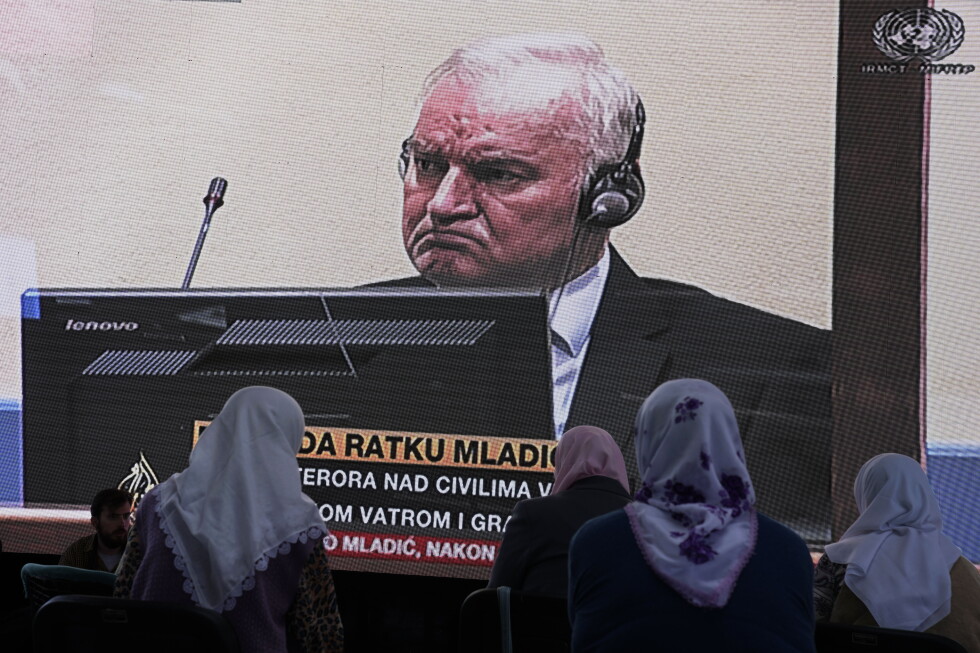
    One week after a United Nations court rejected a final humanitarian appeal to release the convicted former Bosnian Serb army commander Ratko Mladic, the 84-year-old war criminal died in his Dutch prison cell while serving a full life sentence for genocide and crimes against humanity committed during the 1990s Balkan Wars.

    Mladic’s passing on Thursday has reignited bitter divides across the former Yugoslavia, with Serbian leaders lambasting the UN tribunal for its refusal to grant early release, while families of his thousands of victims say his death in custody closes one chapter of long-sought justice.

    Serbian President Aleksandar Vucic issued a harsh rebuke of the court’s decision on Friday, framing the rejection of Mladic’s early release as an unethical, unprecedented act. Multiple requests for compassionate release had been submitted by Mladic’s family and the Serbian government over recent years, centered on claims that Mladic’s advanced age and severe declining health justified releasing him to end his life in his home region.

    “That was uncivilized behavior, unprecedented and without excuse,” Vucic told reporters in Belgrade. “We can now see that they wanted Mladic to die behind bars.”

    Mladic, one of the most notorious figures of the 1992–1995 Bosnian War that killed over 100,000 people and displaced more than 1 million, was captured by Serbian authorities in 2011 after 16 years as a fugitive. In 2017, the UN International Criminal Tribunal for the former Yugoslavia sentenced him to life imprisonment for orchestrating the 1995 Srebrenica massacre – Europe’s first formally recognized genocide since World War II – which saw more than 8,000 Bosnian Muslim men and boys systematically executed after Mladic’s forces overran a UN-declared safe haven. Mladic’s troops also led the 44-month siege of Sarajevo, the longest siege of a capital city in modern European warfare, established concentration camps for non-Serb civilians, and carried out widespread ethnic cleansing campaigns across Bosnia.

    In its August 20 ruling rejecting Mladic’s final release request, Mechanism President Judge Graciela Gatti Santana explained the decision by noting that the convict received comprehensive, high-quality compassionate medical care in detention, and was granted an expanded family visitation program that allowed for consistent, meaningful contact with loved ones. The International Residual Mechanism for Criminal Tribunals, which inherited the cases of the now-closed Yugoslav war crimes court, opened an official inquiry into Mladic’s death this week, with the lead judge visiting the Dutch detention center on Friday to investigate the circumstances of his passing. The tribunal has not yet released any additional public comment on the death.

    Public reactions to Mladic’s passing have mirrored decades of division over the Balkan wars and his legacy. In Mladic’s hometown of Kalinovik, Bosnia, and in majority-Serb communities across the region, residents held candlelight vigils this week, honoring Mladic as a national hero who defended Serb interests. Many residents insist the convictions against him are fabricated propaganda. “He could not have been a better man. Everything else is just a bunch of lies. He would not touch anyone, child, no one. It’s all lies,” said Stojanka Visnjevac, a Kalinovik local.

    For survivors and families of Mladic’s victims, however, his death while in custody brings a long-awaited measure of closure. Fazila Efendic, a Srebrenica survivor who lost multiple family members in the 1995 massacre, said that for victims, the outcome is a confirmation of justice. “We, the victims, are satisfied, when we know that he was convicted to life in prison,” she said. “For us, it is important that he is convicted and that he served his sentence until he died.”

    Discussions around Mladic’s burial have already sparked new regional tensions. Vucic confirmed Friday that Mladic’s family will choose the final resting place, and that the Serbian government will support a dignified burial if the family requests interment on Serbian territory. He declined to confirm or deny earlier unconfirmed reports that Mladic would receive a state funeral – a prospect that triggered widespread outrage from leaders and victim groups across Bosnia and the wider Balkans. As of Friday, the Serbian government had not received official confirmation of when Mladic’s remains will be transferred from the Netherlands to his family.

  • ‘Ridiculous’: Ivan Cleary erupts after contentious bunker ruling as Cameron Ciraldo defends “dumb play”

    ‘Ridiculous’: Ivan Cleary erupts after contentious bunker ruling as Cameron Ciraldo defends “dumb play”

    The National Rugby League (NRL) clash between the Penrith Panthers and Canterbury Bulldogs at CommBank Stadium delivered a 24-10 victory for the Panthers on Friday night, but the final result was overshadowed by a contentious video referee decision that has reignited debate over the league’s bunker review system. The controversial call denied Panthers winger Tom Jenkins a first-half try, a ruling that head coach Ivan Cleary has described as “ridiculous” and questioned the core purpose of the video review system.

    The moment of contention unfolded in the 24th minute of the match. After a Panthers kick ricocheted into the air, Jenkins and Bulldogs winger Jacob Kiraz jumped to contest possession. Jenkins stripped the ball cleanly from Kiraz mid-air before grounding it to score what seemed a valid try. On-field referee ruled it a no try, and the bunker upheld the decision, confirming that Kiraz had completed a secure catch before losing the ball. The ruling gifted Canterbury an extra seven-tackle set, and just a minute later, Bulldogs halfback Matt Burton crossed to score a try off the back of the unexpected possession.

    In a fiery post-match press conference, Cleary questioned the logic of the ruling and the broader effectiveness of the bunker system, which was introduced to eliminate clear mistakes from on-field calls. “If he caught the ball with no one around him in the air and then landed and dropped it, then what would happen?” Cleary asked reporters. “It was just ridiculous. It was a huge call because then they get a penalty and they score. It’s frustrating. I think the jury is out whether that [removing clear mistakes] is happening, or if the bunker is actually creating more controversy than it solves.”

    The denied try also stalled Jenkins’ race for the NRL’s leading try-scorer title this season, leaving him level on 28 tries with South Sydney winger Alex Johnston, who is set to add to his tally when his side faces the Gold Coast Titans in the upcoming round. Jenkins himself offered a measured response to the decision from the sheds after the match, drawing a comparison to a similar contest he had a year prior that was ruled a try. “I understand that it’s in the air, but we were competing. I felt like I came down with it and we were still fighting for it when we were coming down,” Jenkins explained. “I’m not sure what the full ruling was, but I think they said his foot was on the ground. In saying that, there’s not much you can do about it.”

    Panthers captain Nathan Cleary echoed the team’s confusion, saying the ruling’s interpretation of a completed catch made little sense. “He (the referee) said that he had taken control of the ball, but it’s not a contest in the air. I don’t know. I could understand if his (Kiraz) feet hit the ground and he still had control of the ball, but that wasn’t the case so I don’t know when it’s deemed a catch.”

    While the decision did not change the final outcome of Friday’s match, the broader NRL community has grown increasingly concerned that similar controversial bunker calls could ultimately decide the result of a high-stakes match later in the season, including the grand final.

    The contentious bunker ruling was not the only divisive decision of the night. In a separate incident, Bulldogs rookie AJ Jones was only penalised for a blatant push in the back on Panthers fullback Dylan Edwards, avoiding a sin bin dismissal that many expected. The incident came after Edwards collided heavily with Bulldogs centre Matt Burton, who was forced off the field for a mandatory head injury assessment. Jones took exception to the collision and ran a long distance to shove Edwards from behind, resulting in a penalty for Penrith.

    Ivan Cleary argued that Jones should have spent time in the sin bin for the incident, particularly after referees had warned both sides earlier in the match against melees and unsportsmanlike contact. “I think he potentially (should have gone to the sin bin). It was a pretty dumb play. Dyl didn’t do anything wrong. There was a melee that they don’t want,” Cleary said.

    Bulldogs head coach Cameron Ciraldo acknowledged the incident was a learning opportunity for the young rookie, but defended Jones’ mentality of sticking up for his teammates. “It’s probably a good learning for him,” Ciraldo said. “But what this group has really prided themselves on is sticking up for each other. What I get really disappointed at is when the opposition does something and we don’t stick up for each other. That’s why AJ is going to be a really good Bulldog for a long time because he cares about his mates and he sticks up for his mates. He’ll learn from that from a smarts point of view, but I never want him to lose that mentality to stick up for his mates.”

    The split of opinions between the two head coaches on both controversial decisions highlights the ongoing tension around consistent officiating in the NRL, as the competition heads towards the finals series.

  • BBC speaks with US group after 77 trekkers go missing in Nepal flood

    BBC speaks with US group after 77 trekkers go missing in Nepal flood

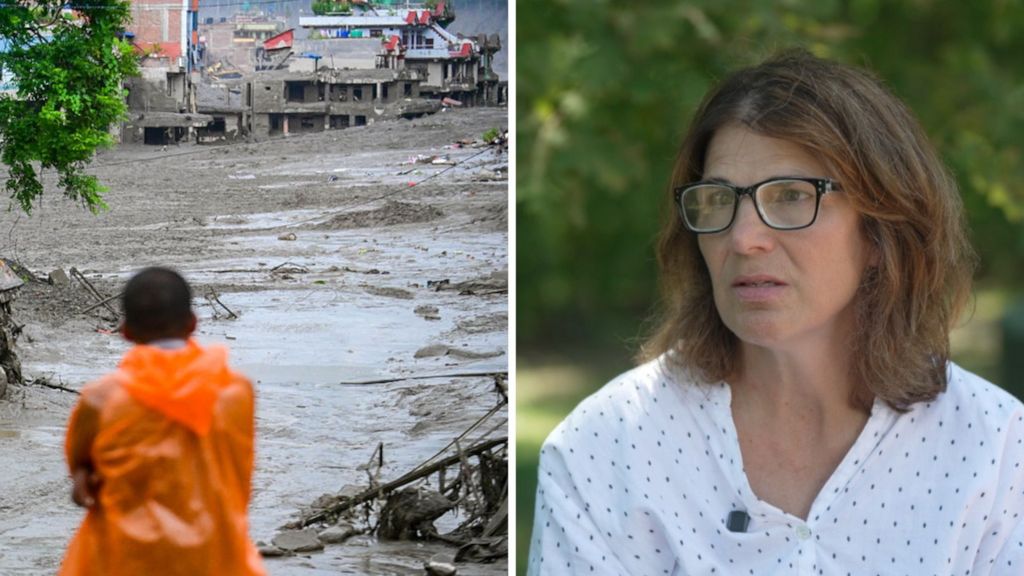
    A devastating flood disaster in the Himalayan border region of Nepal has triggered an urgent search and rescue operation after 77 trekkers from a tour connected to a U.S.-based nonprofit organization went missing, cutting off all communication with the outside world. In the wake of this alarming incident, BBC correspondent Helena Humphrey traveled to the Isha Foundation’s headquarters in Tennessee to speak with organization representatives about the missing expedition. The group had been traveling along the remote China-Nepal border when floodwaters swept through the area, destroying communications infrastructure and leaving no trace of the hikers’ whereabouts in the days since the disaster. Remote mountain terrain in the region has complicated efforts to locate and reach the missing group, with heavy rainfall worsening flood risks and slowing rescue deployments. The Isha Foundation, a global spiritual and wellness organization that regularly organizes wilderness retreats and trekking expeditions, has confirmed that the tour was operating under its auspices, and has not issued any further updates on the status of the search as rescue teams continue navigating hazardous conditions to reach the affected area.

  • Two-year curfew lifted in Sudan’s capital

    Two-year curfew lifted in Sudan’s capital

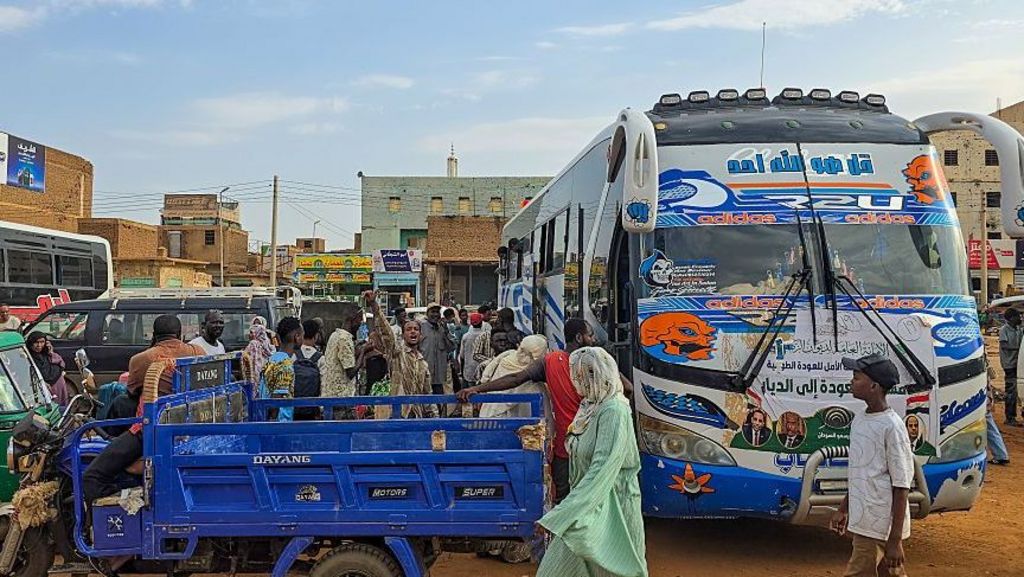
    Two and a half years after Sudan’s devastating civil war erupted between the national army and the paramilitary Rapid Support Forces (RSF), a tentative step toward normalcy has come to the capital Khartoum – even as the conflict risks escalating into a full regional crisis.

    Sudan’s military-led transitional government has formally scrapped the strict curfew and state of emergency that was imposed on Khartoum shortly after fighting broke out in April 2023, state media confirmed. The policy shift comes 18 months after Sudan’s regular armed forces retook full control of the capital from RSF fighters, ending large-scale urban combat in the city that displaced millions of residents.

    Today, around 40 percent of the 5 million people who fled Khartoum at the height of the fighting have begun returning to their homes, data from the International Organization for Migration shows. Government officials say lifting the emergency restrictions is intended to kickstart the process of rebuilding daily life in the capital. Authorities have already resumed limited commercial operations at Khartoum’s main international airport and have launched outreach campaigns to encourage displaced businesses and foreign diplomatic missions to reestablish their presence in the city.

    But for returning residents, the path to recovery remains fraught with severe challenges. Widespread destruction and looting have left most residential and commercial structures damaged, and chronic power outages have become a daily reality across the city. Khartoum state government spokesperson Altayeb Saadeldin told Reuters that the electricity crisis stems from multiple factors: large-scale looting of critical infrastructure including copper wiring, fuel and power generation components, plus repeated drone attacks on power facilities that the government blames on the RSF. An anonymous RSF source has dismissed the accusations as fabricated army propaganda, rejecting all responsibility for the damage to the capital’s power grid.

    Even with the state of emergency lifted, security authorities remain on high alert for residual RSF activity in the capital. Permanent security patrols will continue operating across all of Khartoum state, and residents traveling after dark are still required to carry official photo identification. BBC Monitoring reports that the Sudanese army is also conducting ongoing security sweeps throughout the greater Khartoum region, targeting suspected RSF sleeper cells, undocumented migrants, and criminal networks operating in the war-torn area.

    While Khartoum stabilizes, heavy fighting continues in southern and western regions of Sudan, and mounting evidence confirms the conflict is spilling across Sudan’s international borders, raising alarm among global policymakers. The most recent escalation came on August 20, when the government of Chad accused Sudan’s military of carrying out an airstrike on a Chadian military convoy located roughly 100 kilometers inside Chadian territory in the country’s Ennedi-Est province. Chad has since placed all of its border forces on maximum alert in response to the incident.

    Sudan’s government has flatly rejected the accusation, saying it is perplexed that the blame was placed on its army before any independent investigation could be completed. In an official statement, Sudan’s foreign ministry stressed that the Sudanese Armed Forces (SAF) is focused solely on defending the country’s sovereignty, security and territorial integrity against internal threats, and remains fully committed to respecting the sovereignty of all neighboring states.

    Tensions between Sudan and Chad have been simmering for months, as Sudan accuses Chadian authorities of allowing military supplies from the United Arab Emirates to be routed to the RSF through Chadian airports and border crossings. Both Chad and the UAE have repeatedly denied these allegations, despite corroborating reports from United Nations experts and multiple international investigative media outlets.

    The cross-border strike has prompted urgent concern from the United States, which has warned that the expanding conflict threatens to destabilize the entire Sahel region. Massad Boulos, the U.S. Senior Adviser for Arab and African Affairs, released a statement condemning the SAF airstrike on Chadian territory and repeating Washington’s longstanding position that there is no military solution to Sudan’s civil war.

    “There is absolutely no justification for expanding the violence beyond Sudan’s borders,” Boulos wrote in a public post on X, adding that all external military and financial support to both warring parties must end immediately. Boulos has also pushed for an immediate humanitarian truce, and has publicly expressed frustration with the Sudanese military’s refusal to enter peace talks unless the RSF first disarms and withdraws from all occupied territory.

    Earlier this month, the U.S. envoy to the United Nations submitted a draft resolution to the UN Security Council that would expand an existing 2005 weapons embargo covering the Darfur region – the RSF’s primary stronghold – to the entire territory of Sudan. The draft would also add a full ban on the transfer of attack drones, a weapon that both the SAF and RSF have increasingly relied on throughout the conflict.

    Sudan’s government and military leadership have rejected the draft resolution, with local media reporting that officials argue the measure unfairly treats the internationally recognized national military as equivalent to an illegal paramilitary group, and would unnecessarily restrict the army’s ability to defend Sudanese civilians from insurgent attacks.