博客

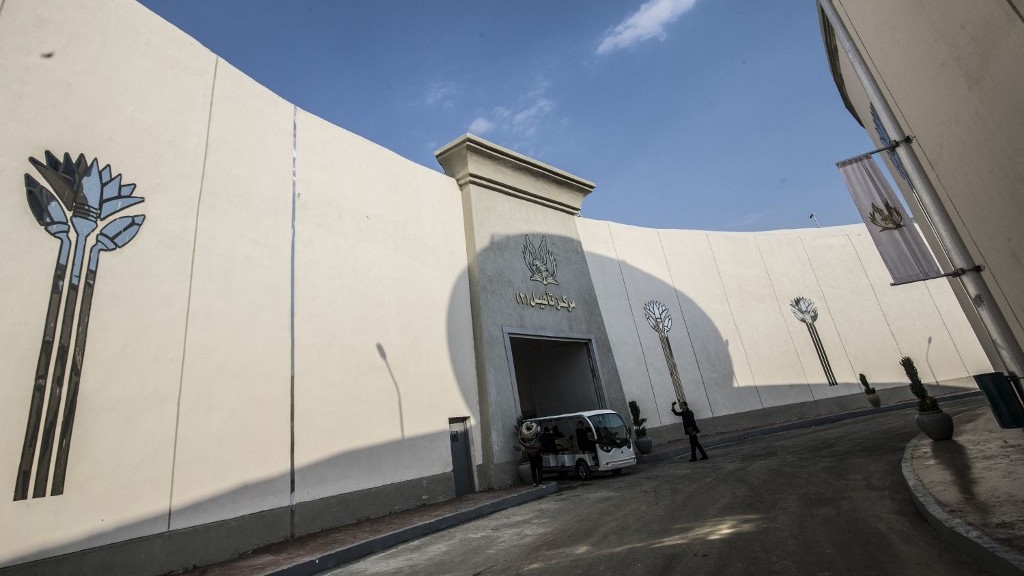
  • Cairo accused of ‘punishment by proxy’ after British-Egyptian woman arrested over sister’s activism

    Cairo accused of ‘punishment by proxy’ after British-Egyptian woman arrested over sister’s activism

    A growing international outcry has emerged over the detention of a British-Egyptian mother in Egypt, with her legal team confirming the arrest is a politically motivated tactic to silence her dissident sister living abroad. Forty-five-year-old Eman el-Shazly, a resident of Birmingham with four children, was taken into custody by Egyptian security forces on August 16 during a routine visit to the country.

    According to her legal representation, the arrest was not carried out over any alleged wrongdoing by Eman herself. Instead, authorities targeted her to pressure her sibling, Mona el-Shazly, a UK-based government critic who has spent years speaking out against corruption under President Abdel Fattah el-Sisi’s administration. Mona operates a popular YouTube channel with more than 130,000 subscribers and maintains an active presence on X, where much of her commentary focuses on systemic corruption within Egypt’s security apparatus and public utility sectors—two areas where the country’s powerful, opaque military holds extensive commercial stakes.

    This pattern of targeting relatives of dissidents is not an isolated incident for the el-Shazly family. Eman’s two brothers, Hassan and Eid, were already held in pretrial detention for nearly three years on charges commonly leveled against opponents of the Sisi regime: spreading false information that threatens state security and promoting ideologies linked to terrorist groups on social media. The pair were rearrested by Egyptian authorities just this past May, and Eman has now been formally added to the same legal case that holds her brothers.

    At the time of her arrest, Eman had been in Egypt for roughly two months, staying to care for her elderly, ailing mother. Two days after her detainment, Egypt’s Supreme State Security Prosecution ruled to extend her pretrial detention for 15 days as investigations proceed. She now faces the threat of long-term confinement in Egypt’s widely criticized prison system, where international human rights organizations have documented consistent abuses including systemic torture, deliberate medical neglect, and degrading inhumane treatment.

    The Sisi government has a well-documented history of targeting family members of exiled and overseas-based critics, using detained relatives as leverage to silence dissent beyond Egypt’s borders. Despite pressure from her family to step back from her activism and remove her critical videos, Mona el-Shazly has refused to back down. Speaking to The Guardian, she emphasized that she has broken no laws and committed no transgressions, noting that the situation has already left 11 children in the family without parental care. “It is a horrible situation, but the Egyptian government will not stop if I appear weak. The government is close to collapsing,” she stated.

    Back in the UK, Eman’s husband Zeesharn Moustapha has launched a public fundraising campaign to cover the family’s rapidly rising legal fees as they fight to secure her release. Moustapha said the entire family remains “deeply concerned about her safety and wellbeing” amid the lack of regular access to Eman.

    Earlier this year, the British government publicly acknowledged that the Sisi regime regularly engages in what it calls “punishment by proxy,” targeting the relatives of overseas-based critics to silence opposition. Human Rights Watch has also confirmed that the regime has increasingly ramped up this tactic of intimidating dissidents through their family members. British diplomatic officials have formally requested consular access to Eman, a standard right under international diplomatic conventions, but Egyptian authorities have not yet granted the request.

  • Berlin is being blackmailed by hackers, mayor says

    Berlin is being blackmailed by hackers, mayor says

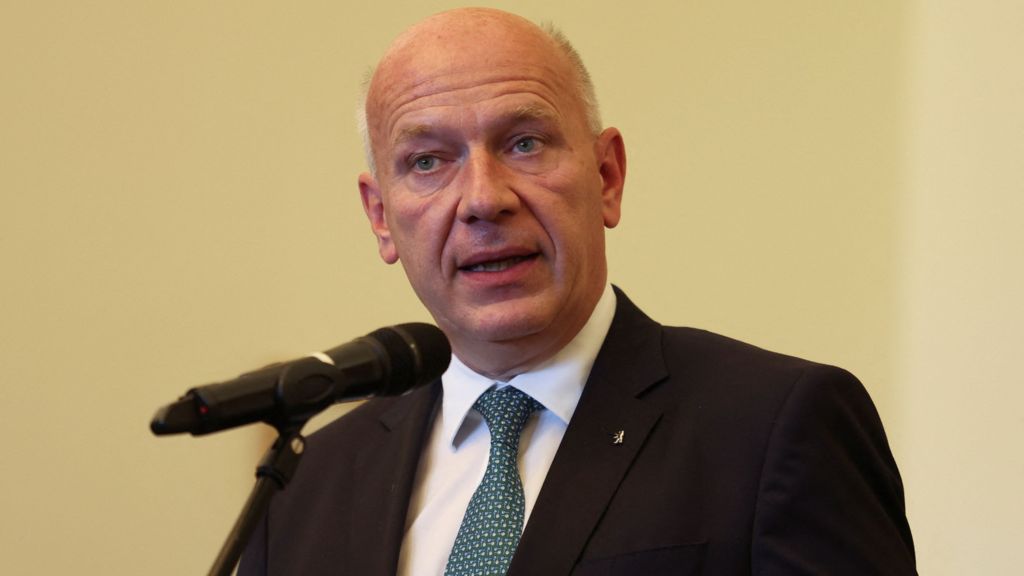
    The German capital of Berlin is facing a high-stakes standoff with international cybercriminals after a significant data breach that compromised multiple city government networks, Mayor Kai Wegner has confirmed. The attack, which first saw unauthorized access to city systems between August 7 and 12, has prompted a full-scale emergency response from local, state and federal security agencies, with officials drawing a hard line against meeting the hackers’ extortion demands.

    Wegner announced on Friday that the city would not cave to the ransom demand delivered to officials Thursday evening. While the mayor declined to disclose the exact sum being demanded, reporting from German outlet Der Spiegel puts the demand at 30 bitcoin, equivalent to roughly €2 million ($2.15 million) as of recent market valuations.

    In the wake of the initial breach, city authorities shut down two departmental networks on August 14 as a protective measure. This outage disrupted critical public services for several days, leaving residents unable to submit applications for housing benefits or process routine government payments. Subsequent forensic investigations have uncovered additional unauthorized access within the city’s transport and environment departments, raising concerns about the full scale of compromised information.

    “It cannot be ruled out that personal or other non-public data may also be affected,” the mayor’s office said in an official statement Friday.

    Responsibility for the attack has been claimed by the Rhysida hacking group, a prolific ransomware operation that researchers believe operates from Russia and Eastern Europe. The group, which first emerged in 2023, has already carried out hundreds of attacks on government agencies and private businesses across dozens of countries, building a reputation for aggressive extortion tactics. Most notably, Rhysida breached the British Museum’s digital systems in 2023, stealing roughly 500,000 files containing personal data of visitors, subscribers and staff. When the museum refused to pay the demanded ransom, the group published all stolen data on the dark web.

    Per the group’s dark web posting cited by Reuters, Rhysida is now in possession of 5.79 terabytes of stolen data from Berlin city systems. Der Spiegel has published a screenshot of the group’s dark web page showing the stolen assets include internal contracts, non-disclosure agreements, personnel records, user passwords, and thousands of personal contact details. The page also features an active seven-day countdown, after which the group says it will begin auctioning off the entire stolen dataset with a starting bid set to match its 30 bitcoin ransom demand.

    Wegner reaffirmed the city’s stance in clear terms Friday: “Berlin will not be blackmailed.” He added that state police, public prosecutors, and federal German security services are working “with the utmost urgency” to identify the attackers and map the full extent of the breach. “Inquiries into the content and scope of the compromised data are being pursued with great intensity,” he said.

    Notably, the attack comes roughly one month ahead of scheduled municipal elections in Berlin. However, State Senator Iris Spranger has moved quickly to reassure voters that all election-related digital infrastructure remains fully secure and was not compromised in the breach.

    Cybersecurity researchers warn that Rhysida’s ongoing targeting of public sector institutions reflects a growing trend of ransomware actors targeting government entities, which often face greater pressure to resolve service disruptions quickly but also face widespread public backlash if they agree to pay ransoms that fund further criminal activity.

  • How Pieter-Steph du Toit proved Rassie Erasmus wrong on the way to 100 Springbok tests

    How Pieter-Steph du Toit proved Rassie Erasmus wrong on the way to 100 Springbok tests

    In 2018, when newly appointed South Africa rugby head coach Rassie Erasmus first crossed paths with Pieter-Steph du Toit, the veteran Springbok forward did not match what Erasmus expected. By that point, du Toit had already earned five years of international caps and claimed a South African domestic Player of the Year award, but the pair had never collaborated or met before. Erasmus’s initial assessment was harsh: he criticized du Toit for missing too many tackles, carrying the ball with poor upright form, and misread his laid-back demeanor as a lack of competitive drive. At best, Erasmus pegged him as nothing more than a useful utility option for the bench.

    Today, that early assessment stands as one of the most notable misjudgments in modern rugby. “I have never been as wrong about a player as I was with Pieter-Steph, and I have never been as pleased to be so wrong,” Erasmus told SA Rugby magazine ahead of du Toit’s historic 100th test match, which takes place this Saturday against New Zealand at Cape Town. When Erasmus took the reins of the Springboks in 2018, the program was reeling from two consecutive underwhelming seasons, and his mandate was simple: rebuild the side and restore the national team’s reputation as one of the most feared forces in global rugby. It took just two training sessions for him to completely reverse his opinion of du Toit.

    What Erasmus discovered defied every initial assumption. Du Toit showed relentless commitment to the Springbok jersey, unmatched tactical understanding of the game, consistent on-field contributions, and an eagerness to learn and push his own limits. He was always the first player on the training pitch and the last to leave, and staff regularly had to force him to take scheduled rest days. Pairing that relentless work ethic were innate on-field instincts, a willingness to put in the unglamorous “dirty work” that wins matches, an ability to break through defensive lines to gain critical territory, and bone-rattling tackles that disrupt opposition attacks and punish ball carriers.

    The turning point that cemented du Toit’s place in Erasmus’s starting lineup came in September 2018, almost exactly a year after the Springboks suffered a demoralizing 57-0 defeat to New Zealand in Auckland. South Africa claimed a historic victory on New Zealand soil – their first in nine years – and du Toit delivered a career-defining performance, making 24 tackles over the full 80 minutes. Post-match cameras captured the forward overcome with tears, a moment that still stands as one of the most memorable in recent Springbok history. Today, the idea of leaving du Toit out of the matchday 23 is unthinkable for Erasmus. Even the Springboks’ famous “Bomb Squad” reserve forward pack, which regularly replaces starting forwards early in matches, will sub captain Siya Kolisi before they even consider pulling du Toit, who is legendary for his unrivaled fitness and endurance. He rarely comes off the pitch before the final whistle.

    Du Toit’s journey to 100 caps has been defined by hardship and perseverance that stretches back to his childhood and his family’s deep rugby roots. Raised on the wine and olive farm outside Cape Town that his grandfather – legendary 1960s Springbok prop Piet “Spiere” (which translates to “Muscles” in Afrikaans) du Toit – bought in the 1950s and which remains in the family today, du Toit dreamed of being a great Springbok from a young age, raised on stories and mementos of his grandfather’s iconic career.

    But his path to this historic milestone has been anything but smooth. Multiple serious injuries delayed his march to 100 tests: a cracked sternum, repeated shoulder injuries, and two ACL reconstructions – the second of which used a hamstring tendon donated by his father to speed up his recovery ahead of the 2015 Rugby World Cup in England. His World Cup debut ended in humiliation, as the Springboks suffered their infamous “Miracle of Brighton” loss to Japan, with du Toit among the players criticized for being deployed out of position.

    His most harrowing injury came in 2020, just months after he led South Africa to the 2019 World Cup title and claimed the World Rugby Player of the Year award. A thigh hematoma developed into acute compartment syndrome, a dangerous buildup of internal pressure that required emergency surgery the same night. Surgeons made a 40-centimeter cut along his thigh, and when nerve function failed to improve after the procedure, doctors even discussed the possibility of amputation. Only after du Toit lost 10 kilograms was a fourth successful operation possible to close the wound and save his leg.

    Through every setback, du Toit’s relentless drive to improve never faded. In the 2019 World Cup final victory over England, he made 20 tackles and immediately sought out forwards coach Matt Proudfoot after the final whistle to ask what he could do better. “He’s a no-nonsense guy who doesn’t seek validation,” Proudfoot said of du Toit. “He just wants to know what he’s got to do. He doesn’t say much but the group listens. He just puts it out there. Being a Springbok matters to him.”

    Du Toit himself acknowledges he is far more comfortable leading by example than delivering rousing speeches. “I’m a strong believer in actions speak louder than words,” he said. “The way you perform on the field or the way you live your life must tell your story, ‘Okay, these are the morals of this guy.’ And if you can do that, nothing has to be said.”

    That said, one unscripted, emotional speech from du Toit became a defining moment of South Africa’s 2023 World Cup title run. Trailing England 12-6 at halftime of the Paris semifinal, Erasmus left the changing room to an eerie silence. Du Toit stood up and asked his teammates point-blank – with plenty of profanity – whether they were scared or ready to fight. When the speech was featured in *Chasing the Sun 2*, the documentary covering South Africa’s championship run, du Toit worried his raw language would set a bad example for young fans. But any concerns about his reputation were erased weeks later, when he delivered a masterclass in the final against New Zealand, making a staggering 28 tackles without a single miss and being named Man of the Match on the way to a second world title. Then-head coach Jacques Nienaber joked at the time, “If there’s a white plastic bag that blows over the pitch, he’d probably chase that down as well.”

    This Saturday, du Toit will write another chapter in Springbok history as he becomes the 11th player in the program’s history to earn 100 test caps, and the sixth to reach that milestone under Erasmus’s tenure as either head coach or director of rugby. For a player once written off as a bench utility, the milestone is a testament to perseverance, grit, and the power of quiet dedication.

  • 97-year-old woman rescued after Nepali floods looked like ‘a warrior’

    97-year-old woman rescued after Nepali floods looked like ‘a warrior’

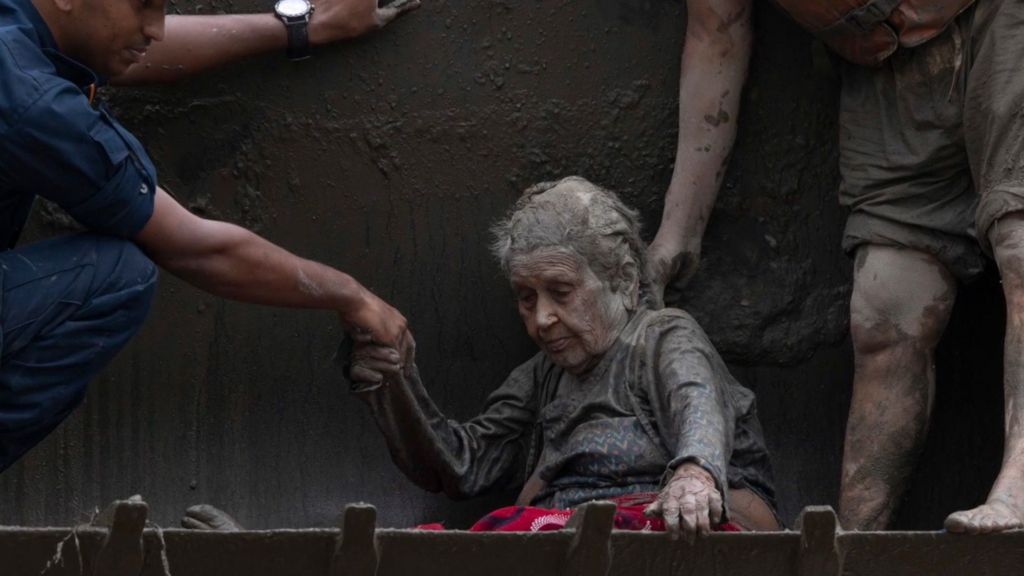
    In the wake of devastating flash floods that swept through Nepal, a remarkable story of survival has captured public attention: 97-year-old Guna Maya Bohara emerged alive after being trapped by the rushing floodwaters, and was successfully pulled to safety in an extraordinary rescue operation that relied on heavy construction equipment.

    Local rescue teams responding to the flood disaster faced challenging terrain and fast-moving water that complicated evacuation efforts for trapped residents. When crews located Bohara, who had been cut off by the sudden surge of floodwater, they made the unconventional call to use an excavator to reach her isolated position. The heavy machinery allowed rescuers to navigate the waterlogged, debris-strewn landscape and extract the elderly woman without serious injury.

    Witnesses and first responders described the elderly survivor as displaying remarkable grit throughout the ordeal, with many noting she bore the quiet steadfastness of a warrior in the face of life-threatening disaster. Her survival against the odds has become a symbol of resilience for communities reeling from the damage caused by the sudden flash floods, which have become an increasingly frequent extreme weather event in the Himalayan nation in recent years.

  • Pakistan’s new mediation push revives hopes for US-Iran climbdown

    Pakistan’s new mediation push revives hopes for US-Iran climbdown

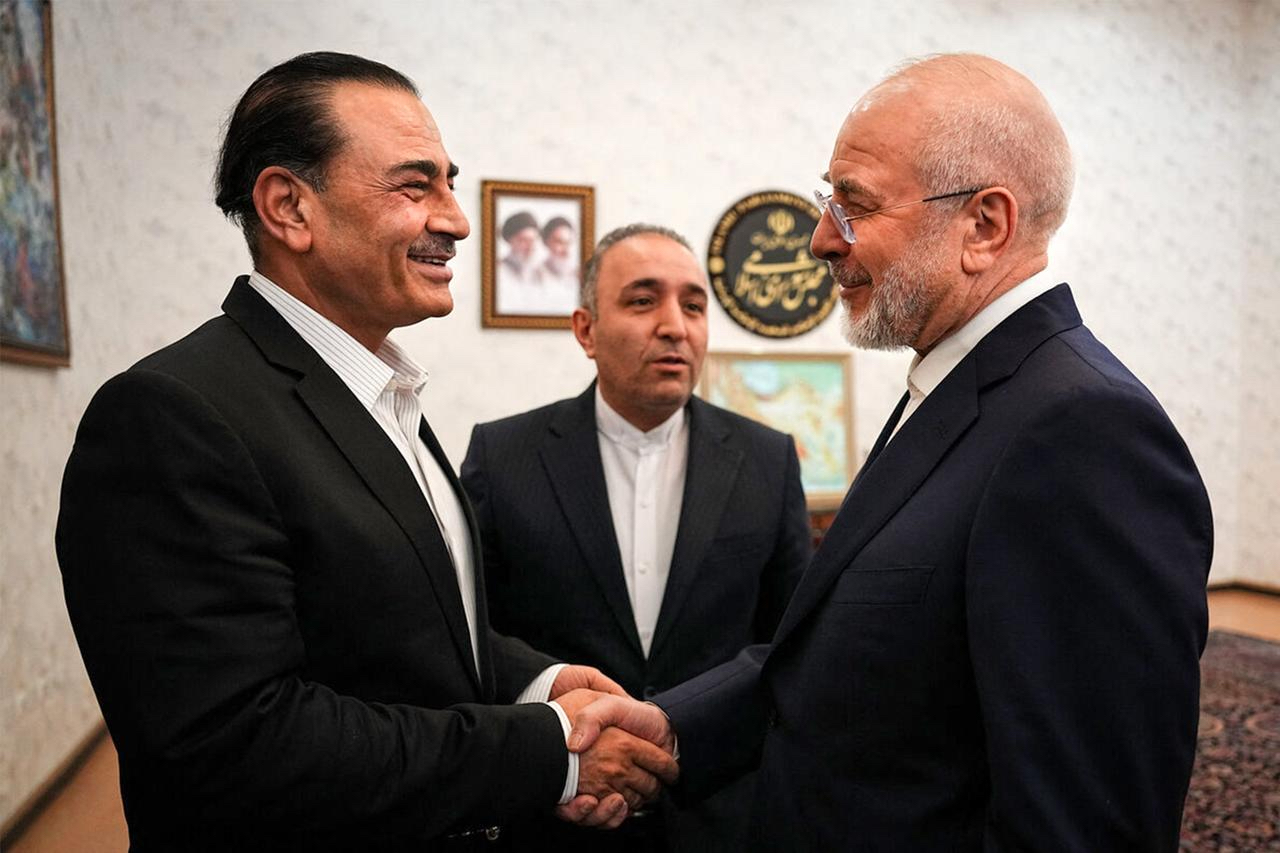
    For weeks, long-simmering tensions between the United States and Iran have raised the risk of full-scale escalation, leaving regional powers scrambling to keep diplomatic channels open. Among these actors, Pakistan’s sustained diplomatic outreach has reignited a long-debated question: is Islamabad merely a passive messenger carrying demands between Washington and Tehran, or has it emerged as an independent, credible mediator with the access and standing to de-escalate tensions? Field Marshal Syed Asim Munir’s August 24 visit to Tehran, the latest step in a months-long cross-branch diplomatic effort led by Prime Minister Shehbaz Sharif, Foreign Minister Ishaq Dar, Interior Minister Mohsin Naqvi and Pakistan’s top military command, offers strong evidence for the latter.

    Islamabad has maintained open, formal channels with both capitals throughout the conflict, with a core mandate to narrow ideological gaps, prevent violent escalation, and preserve a viable pathway to a negotiated ceasefire and long-term settlement. Prior to Munir’s Tehran trip, Reuters reported that former US President Donald Trump spoke with the Pakistani military chief and asked Islamabad to leverage its close ties with Iran to encourage Tehran to return to the negotiating table. But framing the visit as nothing more than a mission carried out on Washington’s behalf overlooks the broader strategic context of Pakistan’s months-long engagement. Pakistan’s Foreign Office has explicitly rejected labeling Munir as a US envoy, framing the trip as a natural continuation of Islamabad’s independent mediatory efforts.

    This framing is supported by the two-way nature of Pakistan’s diplomatic work. Diplomatic sources based in Washington confirm that Islamabad does not only deliver US proposals to Iranian leadership; it also relays Tehran’s counterproposals back to Washington, paired with independent, contextual assessments from Pakistani diplomats. This level of proactive analysis and engagement goes far beyond basic message delivery, indicating a deliberate effort to bridge gaps and find common ground between the two adversarial parties.

    Pakistan’s role as a mediator in the conflict predates Munir’s most recent diplomatic mission by months. The most tangible outcome of this sustained engagement came in June, when the United States and Iran signed the Islamabad Memorandum of Understanding, with Pakistan serving as the official mediator and signing witness to the deal. The agreement established a temporary cessation of military operations, guaranteed unimpeded commercial passage through the Strait of Hormuz, and laid out a formal framework for future negotiations on a broader, permanent settlement. Shortly after the MoU was signed, follow-up talks were held in Switzerland with delegates from Iran, the US, and co-mediators Pakistan and Qatar in attendance.

    While the original agreement later frayed amid overlapping disputes over sanctions implementation, compliance with ceasefire terms, and navigation rules in the Strait of Hormuz, it remains the only formal negotiated framework produced since the latest round of conflict erupted. This existing diplomatic foundation gives Pakistan far more credibility than a casual informal messenger: it provides a pre-built architecture that can be revived to restart stalled talks.

    Against this backdrop, Pakistan’s current diplomatic push is less about building a new negotiating process from scratch, and more about shoring up and revitalizing the existing framework established by the Islamabad MoU. Munir’s visit to Tehran fits squarely into this strategy. Accompanied by Interior Minister Mohsin Naqvi, Munir held meetings with senior political and security leaders across Iran’s government. Discussions centered on de-escalation, resuming formal negotiations, stabilizing navigation in the Strait of Hormuz, and building a path toward a permanent end to hostilities.

    Iran’s presidential office described the talks as highly productive, noting that the visit delivered significant diplomatic breakthroughs whose outcomes will be made public in the coming weeks. Iranian officials have also publicly acknowledged Pakistan’s constructive efforts to facilitate dialogue and reduce tensions. This mutual recognition is critical: effective mediation requires that the mediator is seen as legitimate and unbiased by both adversarial sides, a bar Islamabad has been able to clear so far.

    To be clear, Pakistan’s recent outreach has not yet delivered a comprehensive, final settlement to the US-Iran conflict, and no major breakthrough has been announced. But Tehran’s positive assessment of Pakistan’s engagement, alongside its continued willingness to treat the Islamabad MoU as a viable foundation for renewed diplomacy, has strengthened Islamabad’s position as a trusted bridge between the two sides. Tehran’s willingness to restart talks remains conditional: Iranian officials insist that Washington must address what Tehran characterizes as violations of the original June agreement before the framework can be fully restored. Even so, the ongoing relevance of the MoU confirms that Pakistan began its mediatory work long before Washington’s most recent request for assistance, and its efforts are rooted in independent strategic priorities.

    Munir’s unique access to Iran’s top security establishment further underscores Pakistan’s unique value as a mediator. One of his key meetings during the Tehran visit was with General Mohsen Rezaei, the Supreme Leader’s representative on Iran’s Supreme National Security Council. This level of access to Iran’s core security decision-makers gives Islamabad a rare ability to assess whether both Iran’s civilian leadership and security establishment are prepared to support renewed diplomatic talks.

    Pakistan also has clear, self-interested strategic reasons to prevent a prolonged full-scale conflict between the US and Iran. Instability around the Strait of Hormuz, one of the world’s most critical energy chokepoints, threatens global energy markets and Pakistani maritime commerce. Open conflict along Iran’s border with Pakistan would create severe domestic security pressures for Islamabad, while a sustained US-Iran confrontation would complicate Pakistan’s diplomatic and economic relationships across the Gulf region. For Pakistan, mediation is therefore not just a goodwill gesture: it is a direct investment in its own national security and economic stability. While Washington clearly benefits from Pakistan’s access to Tehran, passing proposals between two adversarial parties that lack direct diplomatic ties is a core function of any legitimate mediation. The more important test of Pakistan’s credibility is whether it maintains independent access to both sides and helps shape a negotiating process, rather than simply parroting one party’s demands. Islamabad’s recent diplomatic track record indicates that it is meeting this test.

    The Strait of Hormuz offers the clearest immediate opportunity to test whether renewed diplomacy can deliver tangible results. Any disruption to shipping through the strait impacts Gulf oil producers, major Asian energy importers, and the entire global economy. Even if the broader political dispute between the US and Iran remains unresolved, progress on stabilizing commercial navigation through the waterway could serve as a critical early confidence-building measure to reset relations.

    Recent diplomatic efforts by Oman have already yielded incremental progress on this file. Omani Foreign Minister Badr Al-Busaidi’s recent visit to Tehran produced an agreement on a phased approach to de-escalation, including a temporary safe navigation corridor, mine clearance operations, real-time information sharing between parties, and improved maritime traffic management, with ongoing technical talks working toward a permanent arrangement. Omani and Pakistani diplomatic initiatives are not competing tracks for negotiation: Oman can lead work on practical on-the-ground arrangements for Hormuz navigation, while Pakistan’s unique access to both Washington and Tehran can support the broader political agreements needed to make those practical arrangements permanent. A localized maritime agreement can reduce an immediate source of military confrontation, while a revived Islamabad framework can address broader sticking points including sanctions relief, mutual military restraint, and reciprocal compliance with deal terms. Together, these parallel tracks offer a viable path away from military pressure and toward incremental, sustainable de-escalation.

    Fundamental disagreements between the US and Iran remain unresolved. Tehran has not publicly committed to making unilateral concessions to restart talks, while Washington continues to rely on harsh economic sanctions and military posturing as leverage against the Iranian government. Unconfirmed reports of a potential US proposal offering limited sanctions relief in exchange for Iranian concessions on Hormuz navigation and regional security have not yet resulted in a publicly confirmed agreement, meaning incremental progress should not be misinterpreted as a final breakthrough.

    Pakistan cannot force Washington or Tehran to accept a deal, nor can Munir resolve the deep structural disagreements that have kept the two countries in conflict for decades. The ultimate success of any mediation effort depends on both sides concluding that a negotiated settlement delivers greater benefits than continued military and economic coercion. Instead, Pakistan’s unique diplomatic value lies in its ability to keep communication lines open when direct engagement between the two parties becomes impossible due to mutual distrust. Islamabad remained engaged in quiet diplomacy even after the original June MoU fell apart, and has maintained consistent contacts with both sides as tensions escalated over recent months.

    That consistent, sustained engagement is what makes Munir’s latest Tehran visit so significant. Far from being a one-off mission carried out on Washington’s behalf, it is part of a broader, independent Pakistani strategy to preserve open communication, revive the Islamabad framework, reduce tensions around the Strait of Hormuz, and create the conditions for a lasting negotiated settlement. In doing so, Pakistan has preserved a strategically critical asset: a functioning, trusted communication channel between two adversaries whose deep mutual distrust repeatedly pushes them toward open conflict.

    If the latest round of talks delivers tangible progress toward de-escalation, Pakistan’s legacy will not be that it sided with either Washington or Tehran. Instead, it will have proven that it can speak credibly to both, and help turn early signs of willingness to compromise into a sustainable, long-term diplomatic process that delivers regional stability.
  • Israel to expel Palestinians in Gaza over kites flown by children

    Israel to expel Palestinians in Gaza over kites flown by children

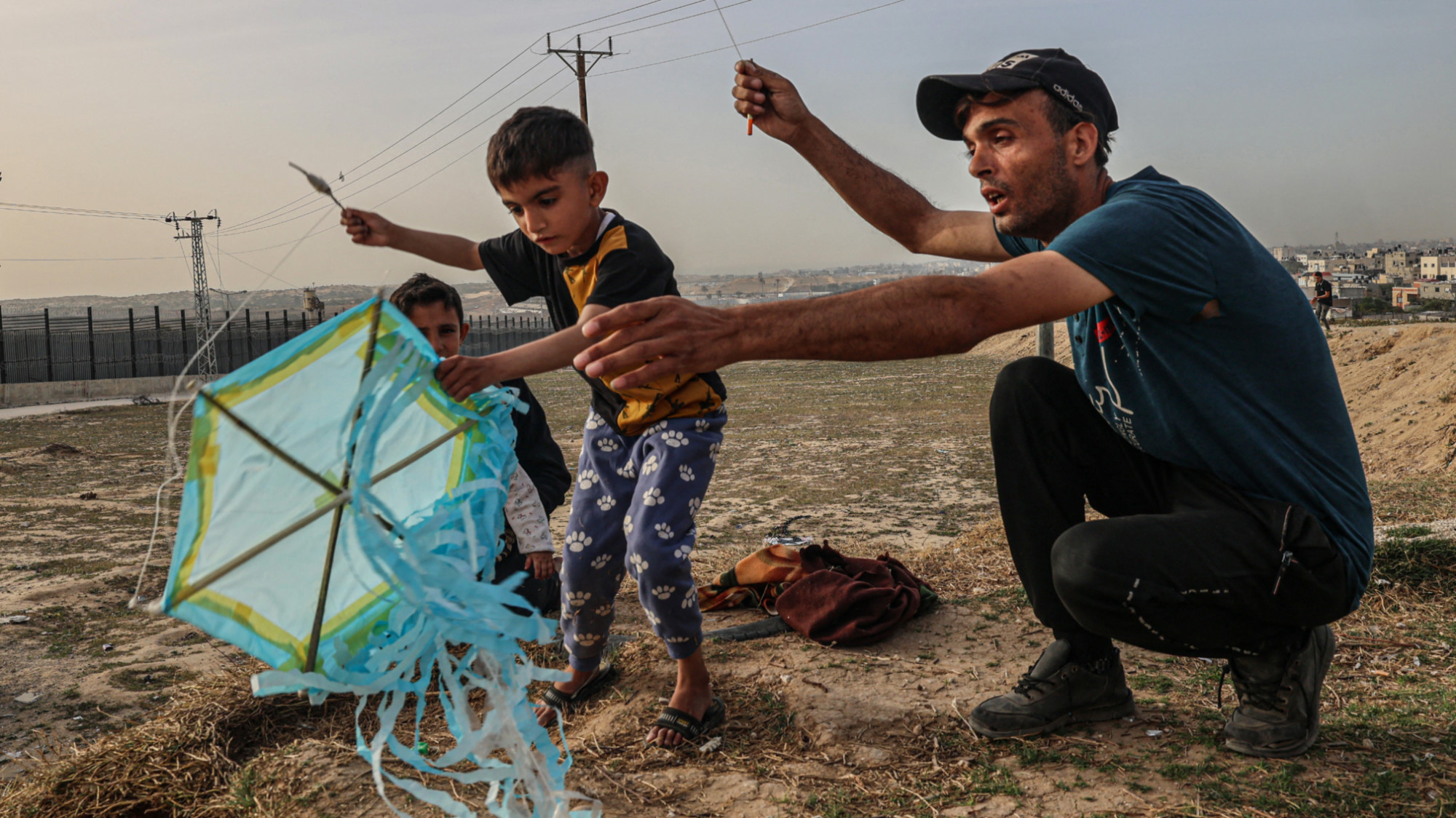
    In a sharp escalation of tensions along the Gaza-Israel border, the Israeli government has formally ordered its military to forcibly remove Palestinian residents from Gaza Strip neighborhoods where children fly kites and release balloons, Israeli broadcaster Channel 13 revealed in a Thursday report.

    Israeli Defense Minister Israel Katz made the announcement during a closed-door meeting with top military leadership, including Israel Defense Forces Chief of Staff Eyal Zamir. Katz stated that the public deadline Israel had set following recent kite and balloon incursions into southern Israel’s Negev region had passed, warning that any future airborne launches from Gaza would face harsh retaliation.

    Notably, Katz framed every single launch as an intentional act of terrorism — a classification that contradicts the Israeli military’s own assessment just one week prior, which concluded the kites posed no meaningful threat to Israeli civilian life. Per Katz’s order, the Israeli military will target all parties connected to the launches, from organizers to participants, and he confirmed the new directive comes directly from Prime Minister Benjamin Netanyahu.

    “From now on, every launch will be met with a forceful response against those responsible, the organisers and the perpetrators,” Katz said. “The Israeli military will act with all necessary means, including evacuating the population from an area or neighbourhood from which launches are carried out, in order to deal with the centres of terrorism.” Katz added that Israel would not permit Hamas or any other Palestinian group to threaten Israeli communities adjacent to the Gaza Strip, stressing that “whoever does so will pay a heavy price.”

    Border tensions over kite flying have built gradually in recent months, with Israeli media documenting a steady rise in the number of Palestinian kites drifting across the heavily fortified boundary. Israeli national newspaper Israel Hayom reported Thursday that Israel’s security apparatus holds Hamas responsible for the increase, claiming the group’s actions stem from frustration over ongoing deadly Israeli military operations in the blockaded enclave.

    Last week, Israeli outlet Haaretz reported that four kites had been recovered in border communities, prompting local residents to push the Israeli military for aggressive action. “This is how it started before 7 October,” one local Israeli community council stated last week, adding that residents “will not accept a policy of containment when it comes to our security.” Ori Epstein, head of the Sha’ar HaNegev Regional Council, echoed that sentiment Sunday, arguing that even a single kite crossing the border demands a military response. “When there’s no response, the message that gets conveyed to the other side is that it’s allowed to continue,” Epstein said.

    Following sustained public pressure from border residents, the Israeli military has already ramped up operations: Channel 13 confirmed that Zamir ordered an increase in targeted assassination strikes across the Gaza earlier this week. Prime Minister Netanyahu reaffirmed the hardline stance during a Monday meeting with Zamir, stating that “Israel will not allow Hamas or any other party in the Gaza Strip to return to threatening our communities and undermining our citizens’ sense of security.” Netanyahu warned Hamas that if kite launches do not cease, the Israeli military will target those responsible and forcibly evacuate all residents from launch zones.

    As Israeli threats intensified, local Gaza non-governmental organizations, working in coordination with Hamas, have publicly urged Palestinian parents to prevent their children from flying kites in border areas. “We are working tirelessly on the ground and doing everything possible to stop this practice,” the organizations said in a public statement, noting that the urgent appeal is intended to protect the lives of innocent Palestinian children.

    The new Israeli policy has drawn sharp condemnation from Palestinian leaders. This week alone, Israeli strikes across Gaza have already killed multiple Palestinian civilians, including non-combatants. Senior Hamas official Basem Naim criticized the Israeli position as an absurd contradiction, pointing out that “in a surreal paradox, a nuclear state that practises terrorism daily, charged with committing genocide in Gaza, mobilises and issues orders to deal forcefully with paper kites coming out of Gaza.” Naim emphasized that the kites are being flown by children, not armed combatants.

  • Greenland says findings on genocide allegation not final

    Greenland says findings on genocide allegation not final

    Nearly five decades after a coercive birth control programme targeting Inuit women in Greenland concluded, newly released conflicting expert reports have reopened one of the darkest chapters of Danish colonial rule, leaving the Greenlandic government unable to formally confirm whether the policy amounted to genocide. Between 1966 and 1970, a Danish-administered initiative inserted intrauterine devices (IUDs) into more than 4,500 Greenlandic women and girls — some as young as 13 — to curb rapid population growth driven by post-war improvements in healthcare and living standards. In recent years, hundreds of survivors have come forward to reveal they received the contraceptive device without their informed consent, with many suffering long-term health complications that left them permanently infertile.

    The release of the two reports on 29 August 2026 comes exactly one year after Danish Prime Minister Mette Frederiksen issued a formal public apology for the “systematic discrimination” inflicted on Inuit women and their families under the scheme. Denmark has already approved a compensation package that will award 300,000 Danish kroner (approximately $46,800) to every confirmed surviving victim of the policy. Greenland, which was a formal Danish colony until 1953 and gained full home rule only in 1979, retained Danish oversight of its healthcare system until 1990, leaving the legacy of colonial policy embedded in public health practices for decades after formal decolonization.

    To resolve longstanding calls for accountability, the Greenlandic government appointed a four-person independent expert panel to determine whether human rights violations committed under the programme qualified as genocide under the UN Convention on the Prevention and Punishment of the Crime of Genocide, which explicitly lists “imposing measures intended to prevent births” within an ethnic or national group as an act of genocide. The panel fractured sharply before the report’s release, with two members resigning to publish an independent minority report, resulting in two conflicting conclusions released simultaneously on Friday.

    The majority report, authored by Alaska-based Inuit rights lawyer Dalee Sambo Dorough and University of Copenhagen law professor Miriam Cullen, confirmed that the forced non-consensual insertion of IUDs represented clear violations of the fundamental human rights of the affected Inuit women. However, the pair stopped short of confirming genocide, concluding that “on the basis of contraceptive practices alone” they could not meet the legal threshold for the crime. They noted that genocidal intent on the part of Danish authorities could still be proven by a court through additional evidence outside the panel’s scope, including the historical record of forced removal of Inuit children to foster homes in Denmark, a separate colonial policy that also targeted Inuit cultural and demographic survival.

    The dissenting minority report, written by former Danish Institute for Human Rights head Jonas Christoffersen and Greenland-based psychologist Jensine Nedergaard, went further, finding no evidence that any Danish authority or participating medical professional ever held an explicit intention to destroy the Inuit population as a group. The report acknowledged that individual women were wronged but said the panel could not confirm the full scope of abuse.

    Addressing reporters following the release of the reports, Greenlandic Justice Minister Marianne Paviasen said the sharp division between the two analyses meant the government could not issue an official conclusion on whether genocide occurred. “We cannot say, on behalf of the government, whether there was genocide,” Paviasen stated. “This is a conversation that we will continue to have as we work toward reconciliation.”

    Survivors of the programme have already criticized the entire expert process, pointing to the lack of Inuit representation on the panel as a fatal flaw that skewed conclusions from the start. Henriette Berthelsen, a survivor who spoke to AFP ahead of the reports’ release, said the process replicated the same colonial power dynamic that created the policy in the first place. “For me, this is not just about history or politics. It’s my body, my life and my right to self-determination,” she said. “And once again, I see that it is others who will investigate and define what was done to me and to other Inuit women.”

    Inger Platou, a 70-year-old survivor who spoke to Reuters, recalled waking up from what she was told was a minor procedure only to learn an IUD had been inserted without her consent. Complications from the device left her permanently unable to conceive, leading her to adopt two children from Colombia. “It turns out we were treated like animals,” Platou said. “Without consent, they just wanted to stop women from giving birth or having children. It was a very inhumane act. We are very deferential to authority because we are colonial children.”

    In response to the reports, both governments have laid out next steps for reconciliation. Greenlandic Prime Minister Jens-Frederik Nielsen announced plans to establish a formal national reconciliation commission to continue addressing the legacy of the programme, while Danish PM Mette Frederiksen reaffirmed that Denmark would work alongside Greenlandic authorities to navigate the next phase of accountability. “We will handle the political process together with the government of Greenland,” Frederiksen said. “The most important thing for me is that we find the right path together.”

    Historical data shows the coercive campaign achieved its stated goal of curbing population growth: between the programme’s 1966 launch and 1974, when the practice was scaled back, Greenland’s average fertility rate plummeted from seven children per woman to just 2.3, severely stalling decades of demographic growth for the Inuit community. Former Greenlandic Prime Minister Mute B Egede first labeled the practice genocide in 2024, sparking the renewed push for official investigations and accountability that led to Friday’s release of the expert reports.

  • US plans to cut off military aid to key Middle East ally, BBC told

    US plans to cut off military aid to key Middle East ally, BBC told

    As the United States prepares to complete its full troop withdrawal from Iraq by the end of September, a bombshell development has emerged: the Trump administration is poised to halt longstanding security assistance to Iraq’s Peshmerga, the Kurdish security force that stood as a core U.S. partner in defeating the Islamic State (IS) militant group. Four independent sources with direct knowledge of closed-door discussions have confirmed the plan, which has sparked widespread alarm among regional leaders and policy analysts.

    In recent high-level meetings with leaders of Iraq’s semi-autonomous Kurdistan Regional Government (KRG), Department of Defense officials explicitly stated that the administration does not intend to renew the existing memorandum of understanding (MoU) that underpins U.S. security support for the 180,000-strong Peshmerga. The agreement is scheduled to expire on September 30 – the exact same date that the U.S. and its coalition partners will withdraw their final remaining troops from Iraq, formally closing the books on the decades-long international counter-IS campaign. The last active U.S. military base in Iraq, located in the Kurdistan regional capital Irbil, will also shutter next month following the troop pullout.

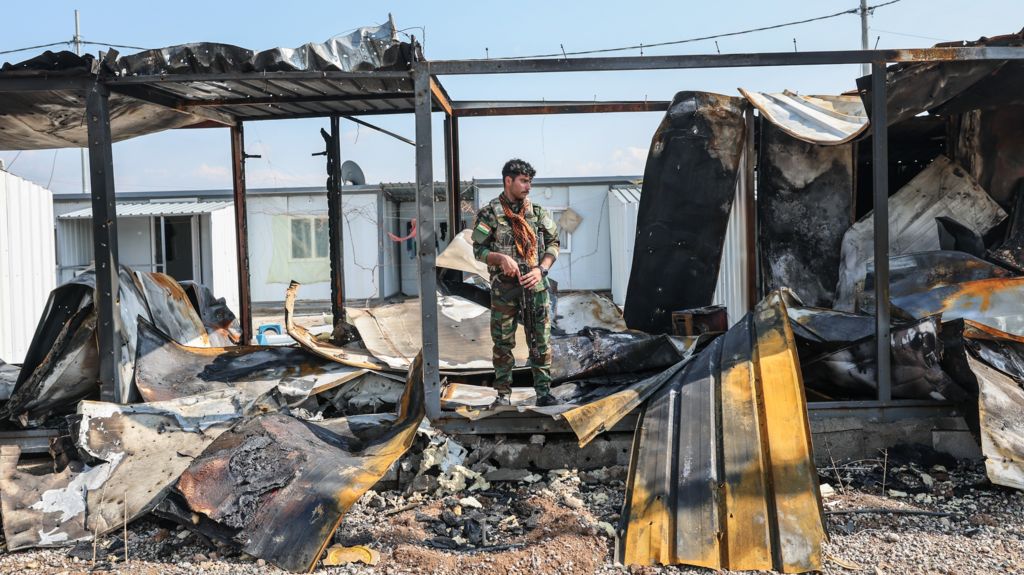
    This planned aid cutoff comes at a moment of escalating aggression from Iran against the KRG. By late May of 2026, Iran and Iranian-aligned militias had already carried out 158 separate drone and missile strikes across Iraqi Kurdistan, according to the latest data compiled by the Washington-based Foundation for Defense of Democracies. Just days ago, an Iranian drone attack targeted Irbil itself, amplifying already urgent fears among Kurdish officials about the coming security gap.

    For fiscal year 2026, the Peshmerga received $61 million through the Pentagon’s counter-IS program, funding that covered weapons procurement, military training, and troop stipends. In the administration’s 2027 budget request, the Pentagon proposed eliminating all of this security assistance, arguing that with the declared defeat of IS, the funds can be redirected to other priorities. That budget proposal remains stalled amid a broader partisan budget battle in Congress, but even so, Kurdish officials who held out hope for a short-term extension of the existing aid agreement have now been told no extension is planned. Multiple sources note that a final formal decision is still under review, and administration officials are reportedly exploring limited alternative forms of security support after the troop withdrawal, but no concrete plan for continued full funding has emerged.

    The timing of this move aligns with President Trump’s long-stated second-term goal of reducing U.S. military entanglements across the Middle East. It also comes six months into the ongoing open conflict between the U.S. and Iran, a confrontation that shows no sign of de-escalation. What makes the development particularly striking is that it comes less than a year after the U.S. opened its largest diplomatic consulate in the world in Irbil, an $800 million facility that senior State Department officials hailed just last December as a lasting symbol of the close strategic partnership between Washington and the KRG.

    Both the KRG and the U.S. State Department have declined to publicly comment on the confidential talks. A Pentagon spokesperson directed inquiries to a July statement from Defense Secretary Pete Hegseth following his meeting with newly elected Iraqi Prime Minister Ali al-Zaidi, which noted that “the United States, Iraq, and Coalition partners have achieved tremendous success in defeating ISIS and now the Iraqi Security Forces, including the Peshmerga and other Iraqi Kurdistan Region security forces, will lead the fight against terrorists in Iraq.”

    Regional policy experts and former U.S. officials have widely condemned the planned aid cutoff, warning it carries severe strategic consequences for U.S. credibility in the Middle East. Analysts argue that ending support for the Peshmerga will not only create a dangerous power vacuum in northern Iraq but also send a clear message that the U.S. cannot be counted on to stand by its long-term regional allies.

    Yerevan Saeed, director of the Global Kurdish Initiative for Peace at American University, emphasized the deep cost of abandoning a partner that sacrificed heavily for U.S. goals in the region. “The US would be cutting off the Kurds, who shed so much blood to help the Americans achieve their goals in Iraq and the wider Middle East,” Saeed said. “This is going to be a big win for Iran, China, and Russia if the Kurds are left so exposed.”

    James Jeffrey, who led the global counter-IS coalition during Trump’s first term and served as a U.S. ambassador to Iraq and Turkey under the Obama administration, warned that cutting aid would repeat a catastrophic mistake of the past. “It’s money well spent, as we found out when the Islamic State rolled into northern Iraq,” Jeffrey said, referring to the 2011 U.S. full troop withdrawal that left a power vacuum and allowed IS to seize large swathes of northern Iraq.

    Jason Campbell, a former U.S. defense official and Middle East expert at the Middle East Institute, noted that the withdrawal of U.S. troops will already reduce Iran’s ability to target American personnel in the region – but it will leave the Peshmerga far more exposed to Iranian aggression. “The Peshmerga have been the frontline in the US and international war with ISIS,” Campbell said. “If the US moves forward with this, it’ll make the Kurds perhaps the most vulnerable potential targets of Iran.”

    The discussions on Peshmerga aid are part of broader negotiations between Washington, Baghdad, and the KRG tied to the upcoming troop withdrawal, which was agreed to in a 2024 bilateral security deal between the U.S. and Iraq. American combat troops initially withdrew from Iraq in 2011, but returned in 2014 after the vacuum created by the first withdrawal allowed IS to rise to power and seize large portions of northern Iraq and Syria. Today, experts estimate fewer than 1,000 U.S. troops remain in Iraq, down from a peak of 170,000 during the height of the Iraq War.

    Leading the U.S. side in the recent security talks is Tom Barrack, a close Trump ally who serves as U.S. ambassador to Turkey and special envoy to Iraq and Syria. The administration has publicly stated it is open to a new bilateral security agreement with Baghdad, and the topic was discussed during al-Zaidi’s July visit to Washington, where the Iraqi prime minister met with President Trump, Defense Secretary Hegseth, and congressional leaders. During his visit, al-Zaidi framed the upcoming withdrawal as a historic milestone for Iraqi sovereignty: “October 1 will mark a new day in the trajectory of the Iraqi state, as Iraq will be free of any foreign military presence,” his office said in a statement.

  • Right-wing commentator Milo Yiannopoulos detained by ICE

    Right-wing commentator Milo Yiannopoulos detained by ICE

    Controversial right-wing political commentator Milo Yiannopoulos, a British national long based in the United States, has been listed in Immigration and Customs Enforcement (ICE) detention records, according to recent data checks of the agency’s inmate registry.

    The 41-year-old commentator, who previously served as an editor for conservative outlet Breitbart News and briefly worked with American rapper Kanye West, is currently believed to be held in a Louisiana detention facility, based on publicly searchable ICE detainee data. A self-described provocateur who has styled himself as the “most fabulous supervillain on the internet,” Yiannopoulos has long faced fierce condemnation from critics who label him a spreader of harmful hate speech targeting marginalized groups.

    As of press time, neither ICE representatives nor Yiannopoulos himself have responded to requests for comment from the BBC. A nationwide search of the agency’s detainee database confirms that a detainee matching Yiannopoulos’ name and British nationality is currently in ICE custody, though the exact reasons and specific circumstances surrounding his detention remain unconfirmed and undisclosed to the public.

    Raised in Kent, in southern England, Yiannopoulos has resided in the U.S. for many years and became a polarizing public figure during the 2016 U.S. presidential election, when he emerged as an early high-profile backer of Donald Trump. He even headlined a “Gays for Trump” rally during that year’s Republican National Convention and repeatedly supported Trump’s calls for stricter U.S. immigration policies. Despite his early alliance with the Trump movement, the pair had a very public falling out. While Yiannopoulos still claims to back parts of Trump’s policy agenda, he posted a critical statement on social media platform X back in March of this year claiming that Trump “has lost his way, bought off by foreign interests.”

    Yiannopoulos has drawn widespread backlash for years over incendiary remarks targeting transgender people, Muslim communities, the Black Lives Matter movement, feminists, and even LGBTQ+ groups — a notable controversy given that he previously identified as gay, and now describes himself as “ex-gay.” Some of his most infamous provocative columns include pieces titled “Birth Control Makes Women Unattractive and Crazy” and “Would You Rather Your Child Had Feminism or Cancer?”

    One of the most serious scandals of his career came in 2017, when he was disinvited from speaking at the Conservative Political Action Conference (CPAC) — a major annual gathering of U.S. conservatives that has repeatedly hosted Trump — after video surfaced of comments that appeared to condone pedophilia. Shortly after the incident, Yiannopoulos issued an apology and resigned from his position at Breitbart. He has repeatedly pushed back against the accusations, arguing his remarks were describing his own personal experiences of abuse as a child, rather than endorsing the act.

    For years, Yiannopoulos has been publicly associated with the alt-right, a loose ideological movement defined by its opposition to mainstream political correctness and feminism that includes outspoken factions of neo-Nazis and white supremacists. While he has stated he does not consider himself an official member of the alt-right, he has previously described the movement as “energising and exciting.”

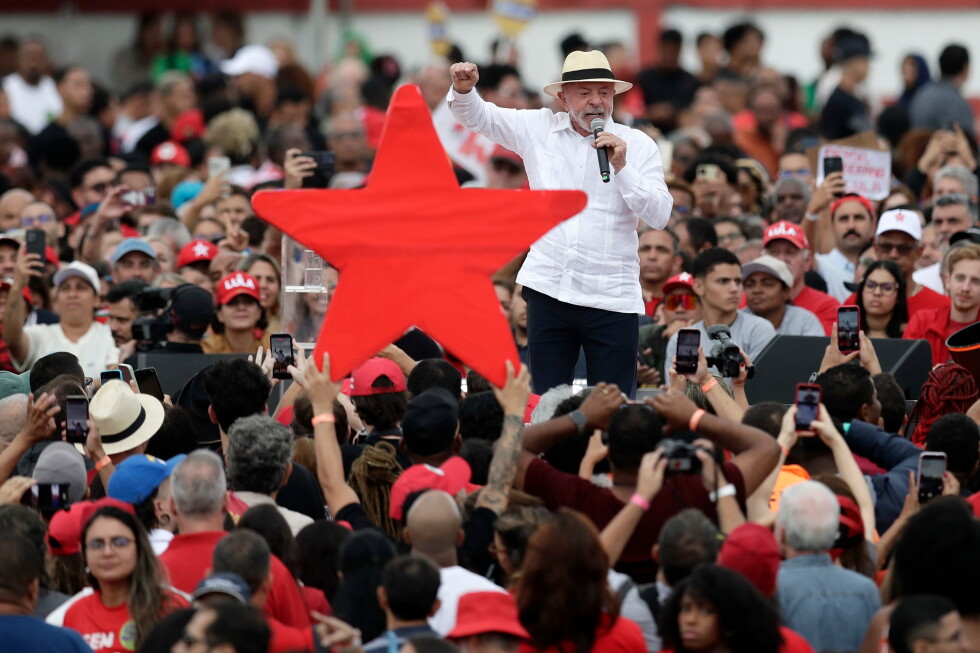
  • Brazil’s TV and radio campaign blitz begins, with Lula and Flávio Bolsonaro set for a nasty fight

    Brazil’s TV and radio campaign blitz begins, with Lula and Flávio Bolsonaro set for a nasty fight

    Brazil’s high-stakes presidential contest enters a new phase this Friday, as the two front-runners — incumbent Luiz Inácio Lula da Silva and opposition leader Sen. Flávio Bolsonaro — launch their official free campaign advertising blitz across national television and radio networks. Long-time political observers note that even amid the global explosion of social media campaigning, these traditional broadcast platforms remain one of the most influential tools for winning voter support across Brazil’s vast, continental territory.

    Polls currently show the race is a dead heat: Lula, who is running for an unprecedented fourth non-consecutive term, holds a negligible lead over Flávio Bolsonaro, the eldest son of former far-right president Jair Bolsonaro. This tight margin has political analysts forecasting that the ad campaigns will be among the most combative in recent Brazilian history. Independent political consultant and former Brazilian government minister Thomas Traumann warns that the tone of this election will be even more toxic than the 2022 presidential race, which stands as one of the most divisive in the country’s post-democracy history. That 2022 contest saw Lula defeat Jair Bolsonaro by the narrowest margin since Brazil returned to democratic rule in 1985, and the former president is currently serving a 27-year prison sentence for his role in orchestrating the 2023 coup attempt following his election loss.

    For millions of Brazilian voters, the arrival of daily campaign ads on TV and radio serves as an unmistakable marker that election season is underway, much like iconic Brazil national flags and street art signal the coming of the World Cup. Unlike the United States, where political candidates must spend hundreds of millions of dollars to buy broadcast ad time, Brazil’s system allocates free airtime to political parties based on the size of their electoral coalitions and their existing representation in the country’s lower house of Congress.

    Communications scholar Bruno Pompeu, a professor at the University of Sao Paulo, explains that this free ad framework is intentionally designed to uphold core democratic principles. “The gratuity of ads defends the democratic principle of equal treatment and means the amount of time each party gets is not going to be determined by the economic power of each party,” Pompeu noted.

    This structure has already created an uneven playing field for the two front-runners in the first round of voting, scheduled for October 4. Lula and his allied coalition have secured 5 minutes and 31 seconds of daily dedicated ad time, while Flávio Bolsonaro’s bloc will only receive 4 minutes and 20 seconds. The remaining allocated airtime will be split between the two smaller party candidates still in the race. Traumann argues that this smaller allocation of time for Bolsonaro highlights a key weakness in his candidacy: unlike his father, who successfully united a broad right-wing coalition on his way to winning the 2018 presidency, Flávio Bolsonaro has struggled to win the backing of major established parties. If a run-off vote is required — scheduled for October 25 — the two remaining candidates will receive equal airtime under Brazilian electoral law.

    For many long-time voters, these broadcast ads remain a core part of how they engage with elections. Maria Izabel Pecanha, an 84-year-old retired history teacher living in Rio de Janeiro, says she has relied on TV and radio campaign coverage since the 1950s, and ignores most social media political content. “I like to watch them to feel excited, to feel angry, to think of how Brazil’s political actors show themselves. It is always very instructive,” Pecanha said. “I have watched today’s and I will keep doing that until the end of the campaign, it is like watching a bit of history unfold.”

    Even as digital campaigning grows in prominence, political analysts say traditional broadcast ads retain unmatched reach, penetrating remote rural regions of Brazil where social media access is often limited or inconsistent, and shaping national public conversation around the election. Still, the medium is evolving to match shifting media habits: João Ricardo Matta, a business professor at the Getulio Vargas Foundation, one of Brazil’s leading academic and research institutions, says social media’s more casual, conversational tone is already shaping the style of this cycle’s TV and radio spots. “They will be less artificial, more natural, with the appearance of something homemade,” Matta said, adding that many campaigns are shifting a larger share of their overall budgets from traditional broadcast ad production to digital social media content.

    Overall, broadcasters are required to set aside 14 minutes of daily airtime for nearly 1,000 30-second campaign ads across all races, plus an additional 12 and a half minutes reserved exclusively for presidential candidates, in the lead-up to the October 4 first round.