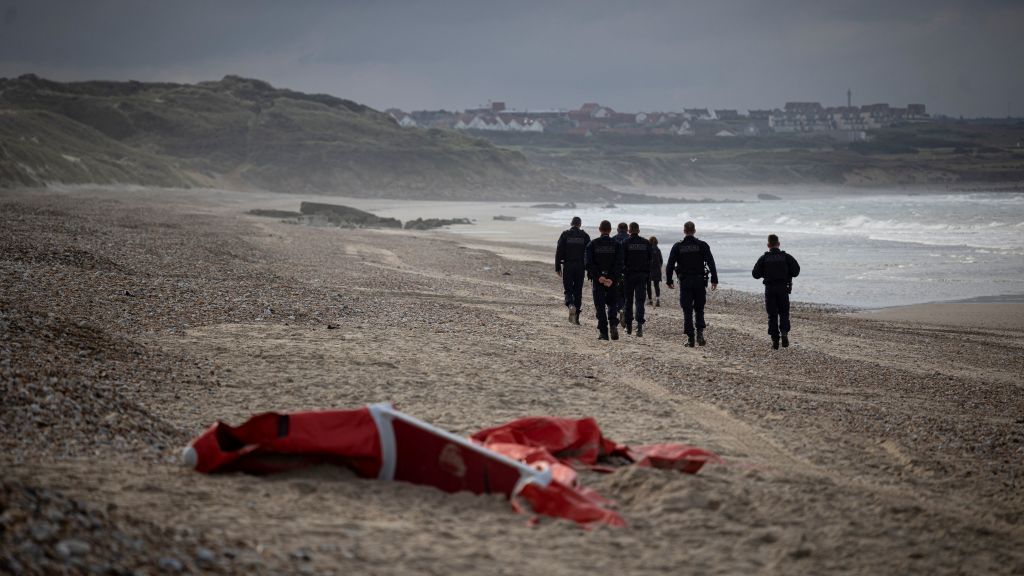
In a landmark verdict closing one of the darkest chapters in European migrant crossing history, a French court has convicted six people traffickers of causing the deaths of 31 migrants who drowned in the deadliest small-boat disaster ever recorded in the English Channel.
After four weeks of testimony and deliberation in a Paris courtroom, the six defendants were found guilty of involuntary homicide and handed prison sentences ranging from six to 10 years. Seven lower-level co-defendants received lesser sentences of up to four years, while one additional person accused in the case was acquitted of all charges.
The tragedy unfolded in the early hours of November 24, 2021, just moments after the overloaded migrant vessel sent repeated distress calls to both French and British coast guard authorities. Of the 33 people packed into the unfit craft, only two men survived the sinking. The list of victims includes a 7-year-old child, with the vast majority of the deceased identifying as Iraqi Kurds; others were Afghans, Egyptians, and Iranian Kurds.
Court documents detail that the criminal networks intentionally launched the migrants from the French coast in a vessel that was fundamentally unfit for open sea travel: it was poorly constructed, lacked official safety certification, was critically overloaded, and did not carry properly functioning life jackets for all passengers. The trial confirmed that the convicted traffickers belonged to two separate, cooperating smuggling rings — one led by Iraqi Kurds, the other by Afghans — that worked together to move migrants to coastal departure points and coordinate the dangerous crossing to the United Kingdom.
In an unusual step that centered the human cost of the disaster, the trial opened with emotional testimony from family members of the victims, who traveled to France from Iraqi Kurdistan to share their stories. Speaking after the verdict, Matthieu Chirez, the lawyer representing the victims’ families, called the conviction a relief for all civil plaintiffs, as it formally confirms the criminal responsibility of the smuggling networks. He added that the high-profile trial had given dignity and a voice to the grieving families, humanizing a story that has often been reduced to political rhetoric.
Zana Marmand Muhammed, whose younger brother Twana died in the wreck, told the court his brother had been driven to attempt the crossing by ongoing regional violence and a desire to find stable work in England. “No-one in the family wanted him to leave, but we could not dissuade him,” Muhammed testified. Nabi Mustafa Mina, father of 19-year-old victim Zanyar, shared a similar account: he offered his son everything he had to convince him to stay — including help to marry, full ownership of the family home, and half of his monthly salary — but Zanyar insisted he could build a better life in the UK. “I ran out of arguments,” Mina told the court.
Family members explained how they had paid smuggling deposits in local banks in Iraqi Kurdistan, then tracked their loved ones’ dangerous journey through Turkey, Italy, and finally to northern France. One of the final social media posts from Twana was a photo of himself standing in front of the Eiffel Tower.
A statement from Issa Omar, one of the two survivors, was read to the court by his lawyer. “I would have liked to appear before the judge but I do not have the strength,” Omar said. “Since the wreck I have the impression that part of me disappeared beneath the waves.” Chirez detailed the harrowing ordeal Omar endured to survive: he clung to floating bodies and a stray life jacket for hours, staying awake through sheer will to avoid slipping under the water and swimming constantly to keep his heart from stopping in the frigid Channel water.
French investigators used phone tracking data to unmask members of the two smuggling networks, mapping out how lower-level operatives provided shelter to migrants, transported them across France to the informal “jungle” camp outside Calais, and assisted with final preparations on the night of departure. The alleged head of the Iraqi Kurd network, a man identified as Bashdar, was not among the defendants in this trial — he remains in custody in Iraq. Bashdar’s close aide, Harem Ahmed Abawaker, received an eight-year prison sentence. The harshest sentence, 10 years behind bars, was given to Obaidullah Maroofkhel, the leader of the Afghan smuggling ring, who was tried in absentia alongside one other defendant.
Of the 14 total defendants in the case, most are Afghan or Iraqi Kurd. All but one were allowed to remain free while the trial proceeded, prompting the court to issue six new arrest warrants immediately following the guilty verdict.
Separate from the trafficking trial, a parallel police investigation is ongoing into seven members of the French armed forces who are accused of failing to respond to the migrants’ distress calls on the night of the sinking. The seven individuals are assigned to the regional sea rescue center or serve on a French navy vessel, and prosecutors are investigating allegations that they ignored repeated distress signals from the sinking boat. A decision on whether to bring criminal charges against the service members and send them to trial is expected in the coming months.
The guilty verdict comes as France and the United Kingdom have officially announced the end of the controversial “one-in, one-out” migrant returns scheme, a one-year policy that required France to accept irregular migrants turned away by the UK in exchange for the UK taking in asylum seekers with approved claims. French officials had previously criticized the program, noting it failed to deliver on its core goal of disrupting the financial business model of people smuggling networks, with only slightly more than 1,000 migrants processed through the scheme during its operation.