博客

  • Reports split over whether forced contraception of Greenlandic women and girls constituted genocide

    Reports split over whether forced contraception of Greenlandic women and girls constituted genocide

    NUUK, Greenland — A decades-long dark chapter of colonial-era medical abuse against Indigenous Inuit women in Greenland is back in the global spotlight, after two commissioned investigative reports released Friday delivered conflicting conclusions on whether the systematic forced contraception program carried out by Danish health authorities qualifies as an act of genocide under international law.

    The inquiry, commissioned by the self-governing Greenlandic government, was tasked with evaluating the program against the United Nations’ 1948 Genocide Convention, which explicitly classifies imposing measures designed to prevent births within a protected group as an act of genocide. Over the decades of the program running from the 1960s through the early 1990s, an estimated 4,000 Greenlandic women and girls — half of all fertile women on the Arctic island at the time — were fitted with non-consensual intrauterine devices (IUDs), or given unwanted hormonal birth control injections. Survivors who testified to investigators, more than 350 in total, include girls as young as 12 years old, many of whom had no information about the procedure before it was performed and never gave legal or informed consent.

    Public exposure of the abuse, dubbed the “spiral case” after the coiled shape of common IUDs, has triggered widespread outrage in both Denmark and Greenland over the past several years. The program was openly designed to curb rapid population growth among Greenland’s Indigenous population at the time, when improvements to living conditions and basic healthcare led to a natural population increase. Greenland did not take control of its own healthcare system from Denmark until January 1, 1992, when the program officially ended.

    In recent years, Danish officials have taken formal steps toward accountability: last year, Danish Prime Minister Mette Frederiksen issued a formal national apology to survivors, and this week the Danish government approved a 300,000 Danish kroner (approximately $46,500) compensation payout to every confirmed victim of the program. Greenlandic Prime Minister Jens-Frederik Nielsen announced Friday that a national reconciliation commission will be established to continue addressing the harm of the program, a move Frederiksen publicly endorsed.

    The four-person investigative panel split into two factions months before the public release, producing two separate reports with opposing core findings. The Greenlandic government only accepted one of the two reports Friday, noting that the second report — which issued a definitive finding that no genocide occurred — failed to meet established international scientific and investigative standards. The rejected report, led by a former director of the Danish Institute for Human Rights, argued that there was no empirical evidence proving any Danish or Greenlandic authority or medical professional intended to destroy the Greenlandic population as a group, and thus concluded “there was no genocide.”

    In contrast, the accepted report declined to issue a definitive ruling on genocide. Its authors wrote that they were unable to confirm genocidal intent based solely on an investigation of the forced contraception program, and called for further inquiry that would also examine other harmful Danish colonial policies targeting Greenlandic children and families during the same era. Unlike the opposing faction, the accepted report did not rule out the finding of genocide, noting: “It is difficult to imagine circumstances in which an attempt to substantially reduce the population of a single ethnic group could not constitute an intent to destroy, in part, that ethnicity.”

    In its public announcement of the split findings, the Greenlandic government cited “professional disagreements amongst the members and, to some extent, concerns about the geopolitical situation” as the core causes of the panel’s division. The government did not elaborate on what specific geopolitical concerns the dissenting authors referenced. The release of the conflicting reports comes amid a fresh period of geopolitical attention on the Arctic island, after former U.S. President Donald Trump publicly pushed to acquire full U.S. control over Greenland, a self-governing territory within the Kingdom of Denmark. Both Greenlandic and Danish leaders rejected the proposal, affirming that only the people of Greenland can determine their own political future.

  • Wife of man who died after turbulence sues airline

    Wife of man who died after turbulence sues airline

    In May 2024, a dream six-week vacation across Singapore, Indonesia and Australia turned into an unthinkable tragedy for British couple Linda and Geoff Kitchen, leaving 74-year-old Linda a widow with permanent life-altering injuries and now pursuing legal action against Singapore Airlines for accountability. The couple, from Thornbury near Bristol, had been 10 hours into their flight departing London Heathrow when catastrophic unexpected turbulence struck the aircraft over Myanmar, sending the plane plummeting an astonishing 6,000 feet (1,828 meters) mid-flight. Recalling the harrowing incident, Linda Kitchen described how mild turbulence over Europe and the Indian Ocean had already made the journey uneasy, but nothing compared to the violent jolt that hit hours into the flight. “It was so severe; it felt like the aircraft was dropping. I noticed my Kindle and Geoff’s phone had fallen to the floor, and I thought the plane was going down,” she said in a statement shared through her legal team. As the plane dropped sharply, 73-year-old Geoff was thrown on top of Linda, crushing her into the aircraft’s armrest and breaking her back. Oxygen masks deployed across the cabin as the flight crew responded to the emergency, ultimately diverting the plane to an emergency landing in Bangkok, Thailand. Passengers and traveling medical personnel immediately rushed to assist, moving Geoff off of Linda and starting cardiopulmonary resuscitation. In the chaos that followed, Linda was transported off the plane to a local hospital for urgent care, while Geoff remained on board to receive continued treatment. It would be two full days before the grieving widow received confirmation that her husband, who she described as her “soul mate,” had succumbed to fatal injuries. Medical reports indicate Geoff suffered a fatal heart attack triggered by the sudden high-altitude altitude drop of the aircraft. Linda spent 10 days recovering in a Thai hospital before she was medically airlifted back to her home in Bristol, where she spent an additional week in inpatient care. The severe pain she endured made the entire repatriation journey a blur, she said, and even after discharge she requires round-the-clock specialized support at home to manage her chronic back injury. Now, more than two years after the tragedy, Linda has initiated High Court legal proceedings against the airline, seeking damages to cover the cost of her ongoing specialist care and, more importantly, answers for her family. Her legal representative, Anthe Korelidou, a leading aviation injury lawyer, said the devastating outcomes for the couple highlight the extreme severity of the incident, and that the family has never received full clarity on what went wrong. “While it’s more than two years since Geoff’s death, Linda and the rest of her family continue to have a number of questions and concerns about what happened and if more could have been done to prevent their injuries,” Korelidou stated. “All Linda wants is for the most thorough investigations to be conducted. The issuing of High Court proceedings is a major milestone in being able to provide Geoff’s loved ones with the answers they deserve.” The BBC has reached out to Singapore Airlines for a statement on the legal action, and the airline has not yet issued a public comment on the case.

  • Satellite images reveal scale of flood devastation in Nepal villages

    Satellite images reveal scale of flood devastation in Nepal villages

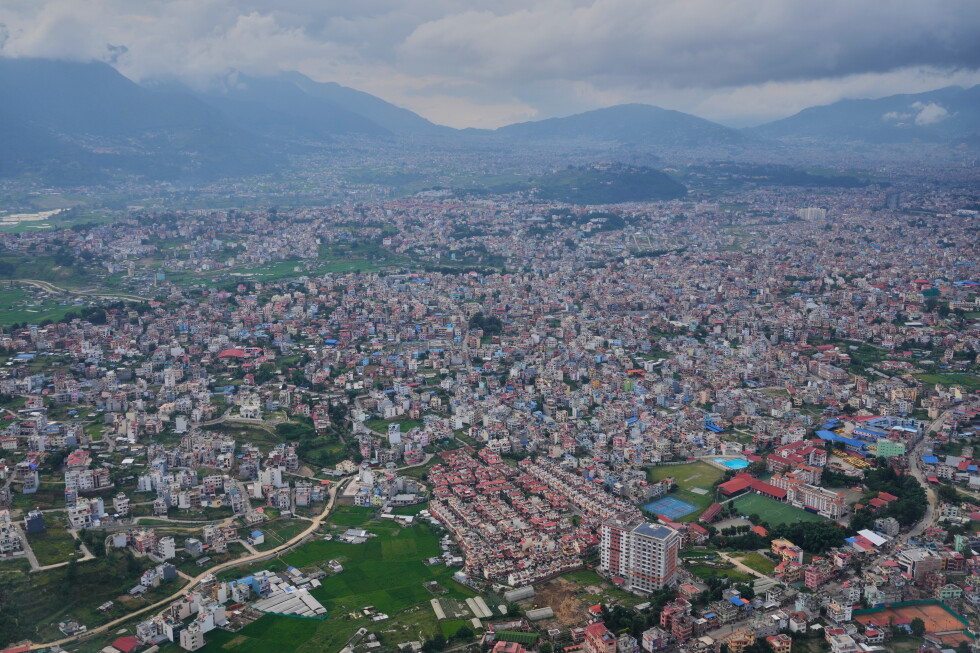
    A catastrophic glacial collapse in the transboundary Nepal-Tibet region has unleashed a deadly flash flood along Nepal’s Trishuli River, leaving hundreds dead and hundreds more unaccounted for, new satellite and on-the-ground imagery has confirmed. The disaster, which struck on a Wednesday, has carved a 45-kilometer trail of destruction through river valleys, wiping entire villages, critical infrastructure and agricultural land off the map.

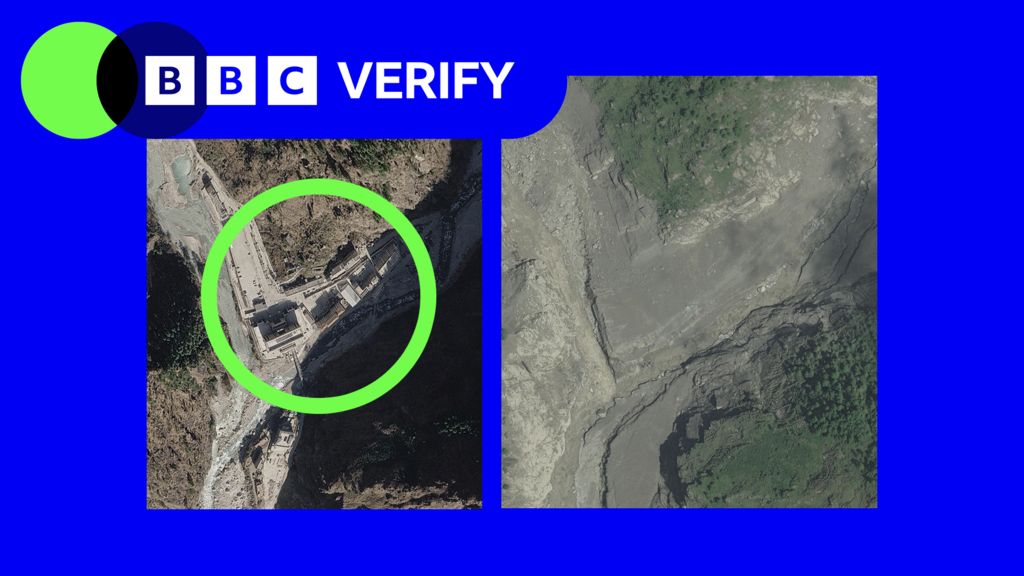
    New before-and-after satellite analysis from two leading private space firms has laid bare the full scope of the devastation, which stretched from the glacial collapse site at the border all the way downstream to lowland Nepalese communities. Verified drone footage captured the exact moment a massive ice chunk broke free from the glacier, leaving a jagged, debris-strewn scar across the mountainside. Planet Labs imagery shows that vegetation and trees were stripped clean from the rock face up to 300 meters above the original riverbed, highlighting the sheer force of the ice and subsequent flood surge.

    The destructive floodwaters carved a path west from the collapse site before turning south along the Trishuli, leaving widespread ruin in every community in its path. At the Nepal-Tibet border crossing, one of the disaster’s hardest-hit locations, imagery from U.S.-based intelligence firm Vantor — released through the company’s open disaster data program — shows the crossing has been almost completely washed away by the rushing water. Shocking CCTV footage from the site captures the moment the churning, debris-laden deluge overwhelms border structures as people scramble to escape to higher ground.

    Visible damage extends more than 2.5 kilometers upstream from the border, with floodwaters and mud reaching 100 meters above the original impact zone. Just a few miles south of the crossing, the small mountain village of Timure has largely vanished from satellite views. Most homes perched along the valley’s steep 50-meter slopes have been either swept away entirely or buried under thick layers of mud and rock. Ten kilometers further downstream in Syapru Besi, the entire settlement is now blanketed by debris, with homes, bridges and a major hydroelectric power plant all destroyed by the surge.

    Further downstream, 45 kilometers from the original collapse site, lies the larger town of Trishuli, which bore the full force of the flood. Verified on-the-ground footage from Trishuli captured dramatic scenes of chaos and destruction: a major road bridge crumples and collapses into the surging river, while passengers trapped on a passing bus scream and scramble for safety as floodwaters rush past. Other videos show survivors huddling on a residential balcony, watching helplessly as the torrent carries large metal debris and a full-sized vehicle toward their home — which, miraculously, remained standing through the disaster. After the waters receded, survivors can be seen emerging from the intact structure to survey a landscape completely covered in thick mud.

    In the wake of the initial collapse, a barrier lake formed at the base of the landslide above the flood path, creating a new secondary hazard that has complicated ongoing rescue and recovery efforts. Chinese authorities have warned that the unstable natural dam poses a major risk of a second catastrophic flood if it fails. Glaciologist Dr. Argha Banerjee, of the Indian Institute of Science Education and Research, told BBC Verify that current satellite imagery is not sufficient to confirm the barrier’s long-term stability or the risk of sudden drainage. However, he noted that the lake’s surface area did not expand significantly between the first two days after the disaster, even as water continued to flow into the basin. A visible natural drainage channel is already allowing some water to escape downstream, and the lake’s current volume is “not alarmingly large” and appears to have stabilized, Banerjee added.

    As of the latest update, Nepalese officials have confirmed more than 550 fatalities, with hundreds of people still reported missing. The extent of damage on the Tibetan side of the border remains unclear, due to strict media access restrictions in the region. BBC Verify has not yet been able to obtain independently verifiable footage or casualty data from the Tibetan side of the border. The open-source satellite imagery released by Vantor is intended to help disaster response authorities prioritize search, rescue and recovery operations, by providing clear geospatial data on the locations of the most severe damage.

  • Videos show people survive floodwaters on balcony in Nepal

    Videos show people survive floodwaters on balcony in Nepal

    Deadly flash floods have swept through regions along Nepal’s Trishuli River, leaving a trail of destruction and trapping residents in dangerous, isolated positions. Following the disaster, BBC Verify, the public broadcaster’s fact-checking and verification team, has successfully geolocated and authenticated multiple user-generated videos that capture a harrowing scene: a small group of people clinging to survival on a residential balcony, surrounded entirely by churning, flood-swollen waters.

    The flooding, which struck the Himalayan nation’s river valley, has already been confirmed as deadly, though full details on casualties and widespread damage are still emerging as access to hard-hit areas remains limited. The verified videos provide one of the first clear on-the-ground glimpses into the severity of the disaster, showing how quickly rising waters swallowed low-lying areas and cut off escape routes for local residents.

    Rescue teams are currently working against challenging conditions, including fast-moving currents and disrupted communication infrastructure, to reach stranded people like those seen in the footage. The disaster comes as Nepal faces growing frequency of extreme weather events linked to climate shifts, which have increased the risk of flash floods and landslides across the mountainous country during monsoon season.

  • Nepal-China mountain region hit by deadly flood has danger but also draws trekkers to its heights

    Nepal-China mountain region hit by deadly flood has danger but also draws trekkers to its heights

    The soaring Himalayan mountain range straddling the Nepal-China border has long been defined by two opposing truths: it is one of the most dangerous landscapes on Earth, and it remains one of the most irresistible.

    This duality was laid bare this week, when a sudden glacial collapse triggered catastrophic flash floods that swept through river valleys, leaving hundreds dead, leveling entire communities, and leaving hundreds more unaccounted for — including travelers from at least 30 countries. As rescue operations enter their fourth day, bad weather continues to ground search aircraft, complicating efforts to reach remote cut-off areas, while UN agencies have warned that more than 17,000 children among survivors are in urgent need of life-saving aid. Families of missing U.S. nationals have also publicly pleaded for accelerated rescue support.

    For centuries, these high peaks have been central to life and trade in the region. Indigenous communities traversed the mountain passes as part of ancient Silk Road trading networks, and groups like Nepal’s Sherpa people developed unmatched expertise in navigating the extreme altitude and treacherous terrain of the world’s highest mountains. When Nepal opened its borders to international explorers in the mid-20th century, that local knowledge became the foundation of the country’s modern mountaineering and trekking industry. The 1953 ascent of Mount Everest by Nepali Sherpa Tenzing Norgay and New Zealand explorer Edmund Hillary — the first confirmed successful summit of the world’s highest peak — cemented the region’s global reputation as a bucket-list destination for adventure seekers.

    In the decades since that historic climb, interest in Himalayan trekking has exploded, turning tourism into one of the largest pillars of Nepal’s national economy. In May of this year alone, a record 274 climbers reached Everest’s summit in a single 24-hour window. But this rapid growth has not come without challenges. Overcrowding, mounting piles of garbage and abandoned climbing gear on popular trails, and the strain of mass tourism on fragile alpine ecosystems have sparked ongoing debate among regulators, guides, and environmental groups about how to balance economic growth with conservation.

    The flood-hit region, located not far from Nepal’s capital Kathmandu, is one of the country’s most popular trekking hubs, drawing tens of thousands of visitors every year. Rajendra Lama, general secretary of the Nepal Mountaineering Association and a trekking guide with more than 20 years of experience on the trails, has watched the industry transform dramatically during his career. “There’s a big difference from when I started,” Lama explained in an interview with the Associated Press. “Nowadays people need more facilities.” That demand has spurred widespread infrastructure upgrades: paved roads in once-remote valleys, new guesthouses and restaurants along popular trekking routes, even amenities like pizza that would have been unthinkable a generation ago.

    Even with the spread of modern tourism infrastructure, Nepal’s Himalayas retain the raw, unspoiled wild beauty that keeps travelers returning year after year. Ariel Estulin, a Toronto-based photographer who has visited Nepal four times over the past 15 years, says the allure lies in the remote, untouched regions far from the crowded Everest base camp trail. “Some of them are so remote that getting to them required two full days of travel on the most unimaginable bus ride from Hell you can imagine,” he said. On those backcountry trips, he often relied on the hospitality of local farming families, sharing meals and a spot on the floor for the night. “It is changing,” Estulin said, “but it will always remain wild.”

    As the country grapples with the aftermath of the latest disaster, with the threat of secondary floods still hanging over affected communities, Lama says he is hopeful that the global affection for Nepal will help the region recover. He points to the 2015 Gorkha earthquake that killed nearly 9,000 people, when he feared the disaster would permanently scare off international visitors. Instead, travelers returned quickly, proving the enduring pull of the mountains. Already, he says, he has received hundreds of messages of support from around the world. “It means,” Lama said, “that people love Nepal.”

  • Autopsy shows National Guard fatally shot Memphis man in the back

    Autopsy shows National Guard fatally shot Memphis man in the back

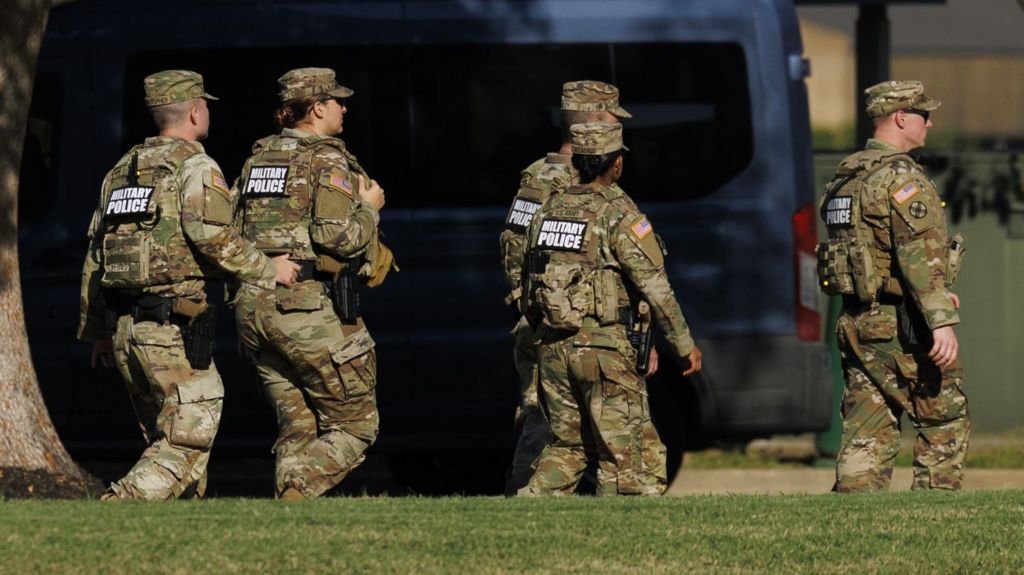
    A newly released autopsy report has upended the initial official account of the July 5 fatal shooting of 20-year-old Tyrin Johnson by Tennessee National Guard members in Memphis, confirming the single bullet that killed him entered the man’s back rather than his chest. The document, obtained by the BBC from the West Tennessee Regional Forensic Center Office of the Medical Examiner, details that the fatal bullet pierced Johnson’s right back, traveled through his lung, and exited through his upper right chest. This finding directly contradicts the original narrative shared by law enforcement, which claimed Johnson was shot twice in the chest by guard members after he confronted them with a weapon.

    Included in the autopsy report is an investigative narrative from a Tennessee Bureau of Investigation (TBI) agent, which recounts the sequence of events as originally told to investigators. According to the agent’s account, Memphis police and National Guard troops were dispatched to the area following reports of nearby gunfire. When they encountered Johnson, the narrative states, he reached toward his waistband, and after officers observed him drawing a firearm, they opened fire, claiming he was struck once in the chest. Separately, the report notes Johnson was carrying a loaded handgun magazine, a detail that comes amid Tennessee’s permissive gun laws that allow legal gun owners to carry weapons openly.

    Johnson’s family has renewed demands for full transparency and legal accountability in the wake of the autopsy’s conflicting findings. Evaniel Johnson, the victim’s grandfather and a former Nashville correctional officer, told the Associated Press that officials owe the public clarity about what occurred. “Be transparent – you shot him in the back,” he said. “I just want to make sure somebody be responsible for what happened. Some accountability. They ain’t never going to bring my grandson back. If he ain’t caused you no threat, you have no reason to be killing.”

    Andre Wharton, the Johnson family’s attorney, who provided a copy of the autopsy to the BBC, said the new evidence confirms the family’s long-held concerns about the encounter with the Memphis Safe Task Force. “The autopsy findings reinforce the serious concerns we have regarding Tyrin’s shooting and the circumstances surrounding his encounter with the Memphis Safe Task Force,” Wharton said in a formal statement. “The fact that Tyrin was actually shot in the back, contrasted with officer and task force’s accounts, only further underscores the devastating nature of this encounter.”

    The medical examiner officially listed Johnson’s cause of death as a homicide, a classification that denotes a death caused by another person and does not inherently indicate criminal intent. To date, no criminal charges have been filed against any of the involved guard members. When approached by the BBC for comment on the conflicting autopsy findings, the TBI declined to issue a new statement, pointing instead to its original July announcement and confirming the investigation remains active and ongoing. The agency also clarified that early claims that Johnson turned and pointed a weapon at guardsmen were never distributed by the TBI itself. The Tennessee National Guard has not yet responded to repeated requests for comment from the BBC.

    State Representative Justin Pearson, a Memphis Democrat, publicly weighed in on the case Friday, posting a statement to the social platform X calling for a full, independent investigation. “Johnson should be alive today,” Pearson wrote, adding that “The National Guard is not welcome here. Mr Johnson’s murder is a horrifying example of the brutality and injustice the Memphis Unsafe Task Force has brought to our city.”

    The National Guard deployment to Memphis is part of the broader Memphis Safe Task Force, an initiative launched under the current presidential administration’s policy to deploy National Guard troops to major U.S. cities. Former President and current presidential candidate Donald Trump framed the deployment, which is concentrated primarily in Democrat-led municipalities including Chicago, Los Angeles, and Washington D.C., as a targeted measure to combat rising violent crime across urban centers.

  • The chaotic saga of Kanye West’s planned Russian concerts

    The chaotic saga of Kanye West’s planned Russian concerts

    The planned pair of concerts by American rap icon Kanye West, who performs under the stage name Ye, in Russia has devolved into a chaotic public saga marked by venue withdrawals, internal government division, and widespread public confusion, leaving the future of the shows completely up in the air.

    West, who has been banned from performing in multiple European countries over a history of virulent antisemitic statements and public praise for Nazi leader Adolf Hitler, would be the most high-profile Western musician to perform in Russia since Moscow launched its full-scale military invasion of Ukraine in 2022. For factions within the Russian government, the concerts have emerged as a potential opportunity to push back against widespread narratives that Russia has become culturally and politically isolated in the wake of the war, leading some officials to openly support the shows moving forward.

    However, the controversy surrounding West’s past statements has sparked fierce pushback from other political leaders, particularly given the history of Nazi Germany’s brutal siege of Saint Petersburg—originally scheduled as the host city for the October 10 and 11 shows. Initially, the events were advertised by Moscow-based promoter Say Agency as taking place at Saint Petersburg’s Gazprom Arena, which even shared promotional posts for the concerts on its official Telegram channel. Just one week after the announcement, however, the stadium backed out entirely, issuing a statement that it had “not signed any contracts to lease the stadium for the event,” leaving both promoters and ticket buyers shocked.

    Ticket sales for the shows saw extraordinary early demand: entry-level tickets priced between roughly $100 sold out within hours of going on sale, with premium tickets reaching as high as nearly $2,000. Russian state media reports that more than 100,000 tickets have already been sold, and the venue’s withdrawal sparked immediate anger from fans who had already purchased entry, with many demanding immediate refunds on social media. “Give the people their money back, you clowns,” one user commented on Gazprom Arena’s official Telegram post announcing the withdrawal.

    Promoter Say Agency has pushed back against claims that the concerts are fully cancelled, saying only that it is actively working to find an alternative venue and asking fans to wait for an official update. Local Saint Petersburg outlet Fontanka reports that the decision to pull the venue booking did not originate with the stadium itself, but came from senior federal officials in Moscow, with the outlet citing anonymous sources saying “the concert had not been approved by all the necessary authorities” before being called off via a single high-level phone call.

    Outlets including business news outlet RBK have confirmed that intense debates over whether West should be allowed to perform are ongoing within the Kremlin and Russia’s presidential administration. The fault lines of these debates reportedly fall along generational lines: younger political and media officials, including leadership at Gazprom Media, are said to support allowing the concerts to proceed, while older, more established officials remain deeply skeptical.

    The controversy around West’s past statements runs particularly deep in Russia. The rapper has openly expressed admiration for Hitler on multiple occasions, infamously declaring his “love” for the Nazi leader during a 2022 interview with far-right broadcaster Alex Jones. While West issued a public apology for his past antisemitic comments in 2023 and published a full-page advertisement in The Wall Street Journal in January 2024 attributing his past harmful remarks to his bipolar disorder diagnosis, many Russian public figures remain opposed to his appearance.

    Among the critics is Ekaterina Mizulina, head of Russia’s influential internet safety watchdog, who has pointed out that Saint Petersburg suffered a devastating 900-day siege by Nazi forces during World War II that killed hundreds of thousands of civilians, calling West an “admirer of Adolf Hitler” in her criticism of the planned shows. Even some political figures who have opposed banning West have condemned his past actions: lawmaker Vitaly Milonov, best known as the architect of Russia’s controversial LGBTQ propaganda restrictions, called West’s past statements “vile, obscene things” but argued against barring him from performing.

    In the week since Gazprom Arena withdrew, multiple alternative venues across Russia have stepped forward to offer to host the controversial shows. Moscow’s Luzhniki Stadium, the largest sports venue in Russia by capacity, confirmed its chief executive has said the venue would “consider” hosting the concerts if approached by promoters. Even a 1,500-capacity arena at a medieval-themed museum near the southern Russian town of Anapa has offered to host, with museum head Vladimir Vladimirov telling state news agency RIA “we have a wonderful arena here… Everyone will fit.”

    Large-scale concerts by A-list Western musicians have become extremely rare in Russia following the 2022 invasion of Ukraine, with a small handful of mainstream artists including Jason Derulo and Flo Rida having performed in the country since the war began. West himself has had multiple planned shows cancelled across Europe and North America in recent years following his public antisemitic and pro-Nazi comments, and the rapper has not yet issued any public statement on the current controversy surrounding his Russian concerts. According to Fontanka’s reporting, West has already received a multi-million dollar down payment for the planned Saint Petersburg dates, adding further financial stakes to the ongoing uncertainty.

  • Cambodia claims it has wiped out online scam compounds after a sweeping crackdown

    Cambodia claims it has wiped out online scam compounds after a sweeping crackdown

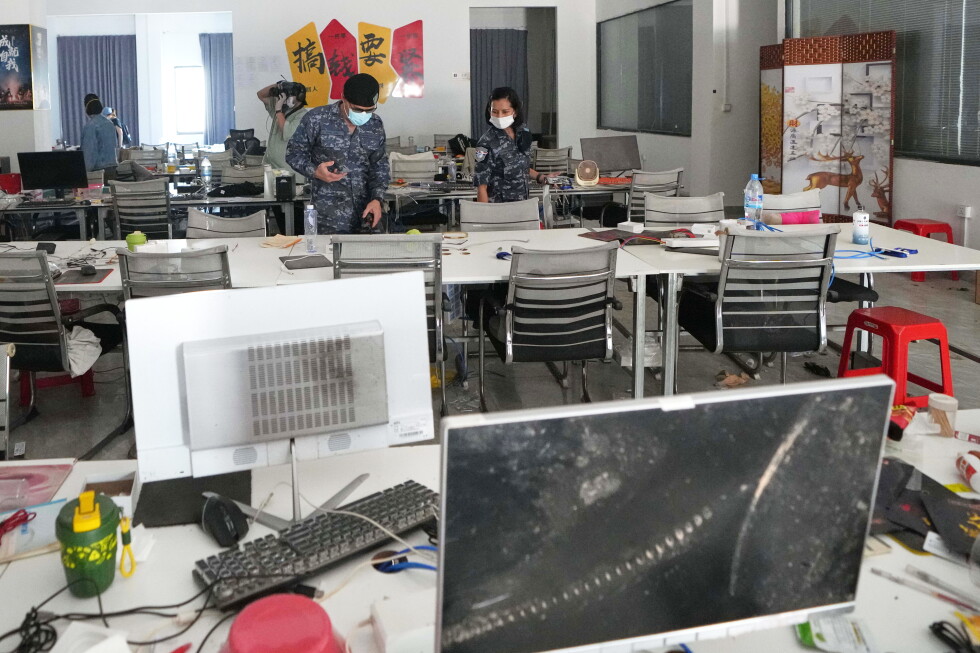
    For years, Cambodia has drawn global condemnation as one of the world’s primary hubs for large-scale transnational online scam operations, criminal enterprises that have bilked billions of dollars from victims across the globe while fueling rampant human trafficking and modern-day slavery. Now, the Cambodian government is making a bold assertion: it has completely cleared its territory of the notorious fortified compounds that hosted these illegal activities.

    The announcement came Friday in an official statement from Cambodia’s Ad-Hoc Commission for Combating Online Scams (CCOS), which detailed the agency’s progress at a closed-door briefing held Thursday. The meeting, led by CCOS chair and Senior Minister Chhay Sinarith, was attended by roughly 50 representatives from foreign diplomatic missions and international organizations monitoring the crackdown.

    According to the statement, the declaration of total eradication follows a months-long aggressive enforcement campaign that included strict legal action against perpetrators, criminal networks, and corrupt public officials found to be complicit in the scams, alongside the formal establishment of a comprehensive national cybersecurity legal framework to prevent a resurgence of the criminal activity.

    Chhay Sinarith outlined key metrics of the government’s crackdown, noting that between July 2025 and August 20, 2026, Cambodian law enforcement opened investigations into 793 suspected scam locations, conducted raids on 624 sites, and took nearly 30,000 suspects from 39 different nationalities into custody. Authorities also rescued and deported 58,266 foreign nationals who had been trapped in the compounds, he said, while 3,477 criminal suspects from 29 nationalities were arrested and remanded into pre-trial detention.

    The high-profile campaign scored two major wins with the arrest and extradition of two alleged scam kingpins: Chen Zhi and Li Xiong, influential Chinese businessmen who had previously obtained Cambodian citizenship. The pair were taken into custody earlier this year and extradited to face charges in their home country.

    The government’s push to eliminate the scam operations was also backed by legislative action: in March, Cambodian lawmakers unanimously passed a new anti-scam law that carries maximum penalties of life imprisonment for convicted organizers, fulfilling a prior government pledge to shutter all scam compounds by the end of April.

    Despite these sweeping claims of success, independent analysts and anti-trafficking organizations that have long tracked Cambodia’s scam networks are not fully convinced. The criminal operations, which have been linked to an estimated $88.3 billion to $114.1 billion in global losses in 2025 alone according to a July report from the United Nations Office on Drugs and Crime, are notorious for combining financial fraud with grotesque human rights abuses. Thousands of foreign nationals are lured to Cambodia with false promises of legitimate jobs, then forced into near-slavery to run “romance scams”, cryptocurrency fraud, and other schemes targeting victims worldwide.

    Mark Taylor, an independent international anti-trafficking consultant and former head of an anti-trafficking program in Cambodia, cast sharp doubt on the government’s announcement in comments to the Associated Press. “The strong confidence placed in the government’s assertion that all scamming operations in Cambodia have been eradicated is severely misplaced,” Taylor said, adding that “there are credible indicators that significant scamming operations continue and that recruitment of foreign workers into Cambodia for scamming work continues.”

    Vietnam-based anti-trafficking group Blue Dragon Children’s Foundation struck a more cautious tone, acknowledging tangible progress while stopping short of confirming full eradication. “There is no doubt that some of Cambodia’s criminal compounds used for online scamming have closed,” said Michael Brosowski, the organization’s founder and strategic director. Brosowski noted that his group has seen a drastic drop in calls for help from people trafficked into Cambodian scam compounds, though those calls have not ceased entirely. “We hope that the Cambodian government will keep its commitment to close down these compounds and give greater protection to victims of this crime,” he added.

  • Violence breaks out in Ceuta as migrant crisis continues

    Violence breaks out in Ceuta as migrant crisis continues

    One month after a historic mass migration event that saw over 72,000 people cross into Ceuta — Spain’s North African exclave bordering Morocco — the tense standoff between long-term local residents and the remaining stranded migrants has boiled over into open violence, exposing deep rifts in Spanish national politics and reigniting a long-running territorial dispute between Madrid and Rabat.

    On 30 and 31 July, tens of thousands of migrants, most of whom swam around a reinforced border fence to enter Ceuta from Moroccan territory, staged the largest single mass crossing at the Spanish-Moroccan border in modern history. Ceuta’s mayor confirms that at least 100 migrants lost their lives during the dangerous crossing. While the vast majority of arrivals returned to Morocco within hours of entering the exclave, several thousand — including a large number of unaccompanied children — have remained in Ceuta, sleeping rough on public beaches and city streets with limited access to basic services.

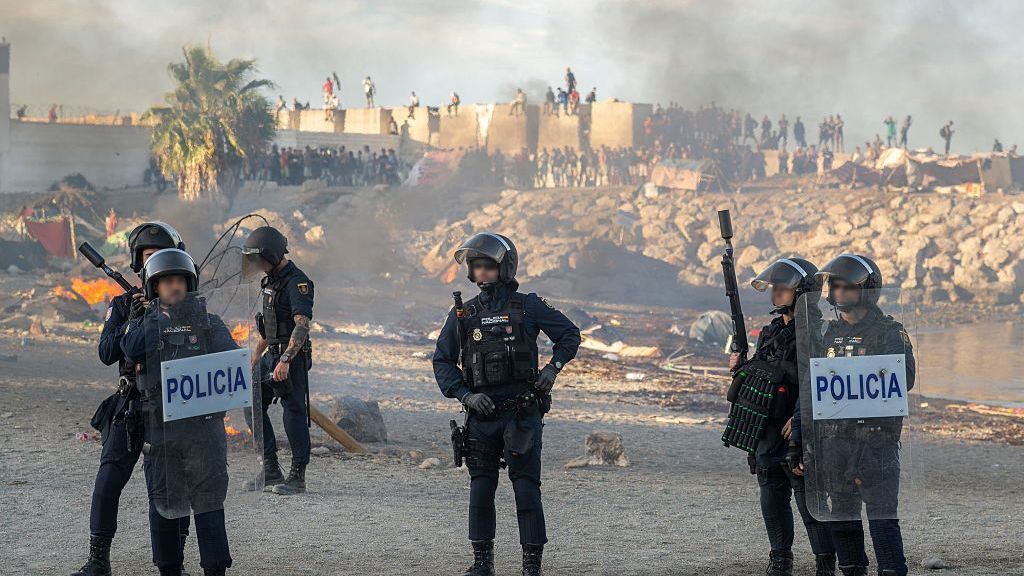
    Anti-migrant demonstrations that began earlier this month initially stayed largely peaceful, but growing frustration over public safety strains and pressure on local public services has pushed protests toward increasing violence. On Thursday, dozens of local residents blocked Red Cross aid workers from distributing food and clean water to the stranded migrants. Following the blockade, a group of demonstrators set fire to informal migrant encampments on Trampolín Beach, the primary site where migrants have been sheltering, and violent clashes broke out between protesters and local police.

    The Thursday violence came just hours after Spanish authorities arrested 12 migrants on charges of stone-throwing against a Spanish military vehicle. The attack shattered the vehicle’s windows and left all four military personnel inside injured. That same morning, local media received multiple reports of civilian vigilante groups patrolling city streets to hunt down and chase migrants. Multiple journalists and media crews covering the unrest have also reported being threatened by demonstrators.

    The crisis has put the national Socialist-led government of Prime Minister Pedro Sánchez under intense fire from opposition parties, who accuse the administration of failing to manage the emergency effectively. Ceuta’s conservative mayor Juan Jesús Vivas, a member of the center-right opposition People’s Party (PP), framed the unrest as a consequence of unaddressed pressure on the exclave’s residents, telling Spanish broadcaster Antena 3 that “this is a city which has been under pressure, which has the right to normality,” adding that “the dignity of Spain is a stake right now in Ceuta.”

    Sánchez’s government has hit back at opposition criticism, blaming right-wing parties for stoking public division and anti-migrant sentiment to score political points. In a statement to a congressional committee, Spanish Interior Minister Fernando Grande-Marlaska noted that “we have heard during these weeks rhetoric and comments that contribute to the stigmatisation of immigrants and which feed social division at a moment when what we need is responsibility and statesmanship.”

    A far-right Vox Party lawmaker, José María Figaredo, is currently under investigation for a potential hate crime following comments he made shortly after the mass crossing, when he called for migrants to be “hunted down, one by one.” PP congressmember Javier Celaya, who represents Ceuta, doubled down on opposition rhetoric Friday, arguing that “the [government] treats the invaders as victims when the real victims are us, the people of Ceuta.”

    Local frustrations have been amplified by the national government’s recent plan to relocate stranded migrants from beach encampments into underused public buildings, including local sports centers, to process asylum claims in an orderly fashion and return those ineligible for protection to Morocco. Vivas and many local residents oppose the plan, citing concerns that relocation would move migrants into densely populated residential areas, worsening perceived public safety risks.

    Earlier this week, the national government took over central management of the crisis from local authorities, after widespread criticism of its initial slow response to the emergency. Defense Minister Margarita Robles issued a public apology to Ceuta residents who “may have felt, or who even still feel, abandoned or not sufficiently cared,” as the administration unveiled plans to overhaul Spain’s outdated national immigration laws. On Friday, all political parties represented in Ceuta’s local assembly signed a joint statement condemning the recent wave of violence.

    Beyond the domestic unrest, the crisis has also reignited longstanding geopolitical tensions between Spain and Morocco. Right-wing and far-left politicians in Spain have accused Morocco of orchestrating the mass crossing to exert political pressure on Madrid, pointing to past instances where Morocco has adjusted border enforcement to advance its political claims. Prime Minister Sánchez and his Socialist Party reject that accusation, framing Morocco as a reliable diplomatic partner that facilitated the immediate return of most migrants after the crossing.

    Morocco has reaffirmed its longstanding territorial claim to both Ceuta and its sister autonomous exclave Melilla, drawing a sharp rebuke from the Spanish government. Spanish Foreign Minister José Manuel Albares told congressional leaders that he “roundly rejected” Morocco’s claims, stating clearly: “I don’t speak about, nor have I spoken about, nor are we going to speak about Spain’s territorial integrity with Morocco or with anyone else.”

  • Watch: Puppy rescued from drain using a bucket and cheese

    Watch: Puppy rescued from drain using a bucket and cheese

    A charming tale of compassion and quick thinking has emerged from Florida, where a young puppy trapped in a narrow underground drain was saved in an unconventional rescue operation that relied on two simple tools: a common bucket and a tasty wedge of cheese.

    According to official details released by the Tampa Police Department, the rescue unfolded after local residents spotted the stranded puppy and called authorities for help. First responders faced a tricky challenge: the confined space of the drain made it difficult to reach the frightened animal directly. Instead of relying on heavy equipment that could risk harming the puppy, the rescue team crafted a simple, gentle solution. They lowered a bucket baited with cheese into the drain, relying on the puppy’s hunger to coax it into the container. The plan worked perfectly: the curious, hungry puppy climbed into the bucket, and responders were able to lift it safely to the surface unharmed.

    Following the successful rescue, the puppy was taken into the care of local animal control services, where it received a quick health check and was placed up for adoption. Unlike many stray animals that wait weeks or even months for a loving home, this lucky puppy did not wait long. Tampa Police confirmed that shortly after it was taken into the system, a new adoptive family stepped forward to give the young dog a permanent, loving home.

    The entire rescue was captured on camera, and the footage has quickly spread across social media, drawing warm reactions from animal lovers around the region. The story serves as a reminder of how simple problem-solving and a commitment to helping vulnerable animals can turn a dangerous situation into a happy ending.