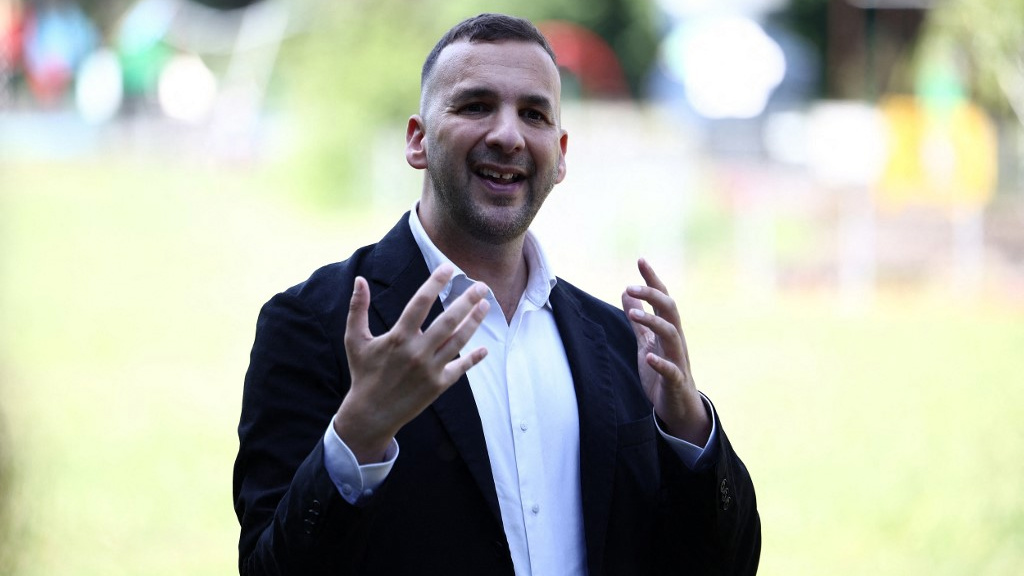
As an October 8 deadline for the closure of the British Consulate in East Jerusalem looms, the leader of the UK Green Party, Zack Polanski, has issued an exclusive call to the British government to reject Israel’s demands and keep the diplomatic mission open, in comments provided to independent outlet Middle East Eye.
Polanski’s public intervention adds mounting pressure on the newly seated Labour government to step back from what was widely expected to be compliance with Israel’s closure order, which came in direct retaliation for a sweeping sanctions package on Israeli settlements announced by Foreign Secretary Ed Miliband earlier this month.
Speaking to Middle East Eye Wednesday morning, Polanski made clear the core of his stance: “East Jerusalem is illegally occupied Palestinian territory, and Israel has no sovereignty over it. The UK must ignore Israel’s order and keep the British Consulate open.”
Earlier this same month, the Labour government made a historic policy shift, officially recognizing Israel’s occupation of Palestinian territory as illegal — an alignment with the landmark 2024 advisory opinion issued by the International Court of Justice. Polanski argued that this formal recognition rings hollow if the UK caves to Israeli demands to exercise control over the occupied territory.
“Britain’s recognition that the occupation is illegal means nothing if, whenever Israel attempts to exercise sovereign control over occupied Palestinian territory, our government simply complies,” Polanski said. He added that the consulate serves as a critical diplomatic lifeline between the UK and Palestinian communities across East Jerusalem, the West Bank, and Gaza. Closing it, he warned, would only deepen Palestinian isolation and eliminate the UK’s ability to maintain direct engagement with Palestinian stakeholders.
“If the government means what it says about the occupied Palestinian territories, it must put that position into practice,” Polanski emphasized.
While political observers had initially assumed the UK would abide by Israel’s order, Middle East Eye revealed Monday that no final decision has been finalized by Downing Street. During an LBC interview Monday evening, Miliband acknowledged the government is still evaluating all possible paths forward, and stressed that the Labour administration does not want the consulate to shutter.
“It would damage the very important work that we are doing helping people in those communities, including Palestinians,” Miliband said. He noted that the consulate has operated continuously in East Jerusalem for nearly 200 years, representing a long-standing pillar of UK diplomatic presence in the region. Miliband also confirmed he is consulting with foreign ministers across the globe on the crisis, and reaffirmed that maintaining a UK diplomatic foothold in Jerusalem remains “very, very important.”
A decision to defy Israel’s order would almost certainly escalate already strained diplomatic relations between the two countries, which have been tense since the announcement of the settlement sanctions. While Israeli security forces are not expected to forcibly remove UK diplomatic staff from the consulate premises, analysts warn Israel could take punitive measures such as imposing entry bans that would bar British diplomats from returning to Jerusalem after traveling out of the region for leave. There are also growing concerns about rising harassment targeting diplomatic personnel, particularly locally hired Palestinian staff, given the heavy presence of Israeli settlers in areas surrounding the consulate.
Independent legal analysis backs the argument that Israel’s demand to close the consulate itself violates international law. Vincent Fean, a former British consul-general to East Jerusalem and current trustee of the British Palestine Project, told Middle East Eye that “Israel’s threat to close the British consulate-general is not just wrong – it is illegal.”
The British Palestine Project commissioned a formal legal opinion from Dominic Grieve KC, who served as UK Attorney General under the previous Conservative government. In the opinion reviewed by Middle East Eye, Grieve confirmed that Israel’s order constitutes “an unlawful assertion of sovereignty over occupied Palestinian territory.”
Grieve noted that successive British governments have long maintained that Israel’s rights in East Jerusalem are only those held by an occupying power, not a sovereign state. “Israel is asserting a right it does not possess as an occupying power to impose sovereign control over East Jerusalem,” he wrote. He also pointed out a key procedural fact that undermines Israel’s demand: British consul-generals based in East Jerusalem do not hold accreditation to the Israeli government, meaning Israel has no legal grounds to withdraw that accreditation.
Beyond diplomatic precedent, Grieve warned the closure would have tangible harm for civilians. “The closure falls on Palestinians, not on Britain alone. Closure threatens consular services, including for British pilgrims, other visitors and residents of Palestine. It hampers aid oversight and reporting from the West Bank and Gaza,” he said.