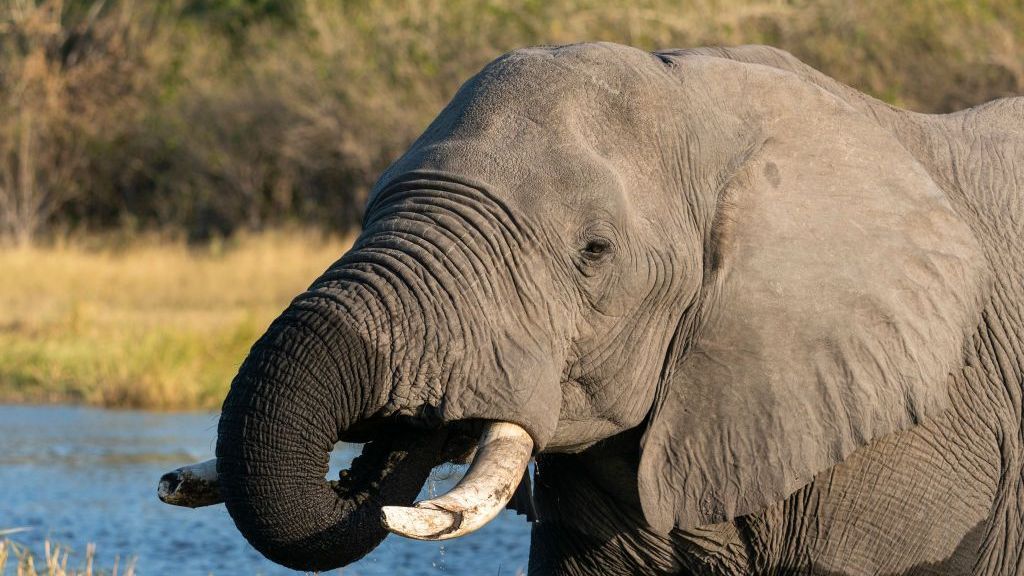
As Botswana marks its diamond jubilee of independence from British colonial rule on Wednesday, a government decision to license the killing of 23 elephants for celebratory community feasting has ignited fierce backlash from conservationists, local leaders, and social media users across the southern African nation – a country that hosts the world’s largest wild elephant population, numbering more than 130,000.
Documents obtained by local media confirm the Environment and Tourism Ministry issued official permits authorizing the hunt of 23 elephants alongside other wild game, explicitly framing the cull as being for “complimentary celebratory purposes.” The meat is intended to be distributed as part of traditional Independence Day feasts held across eight districts nationwide. As of Wednesday morning, the full number of elephants already killed had not been confirmed, but local media has already published visual evidence from multiple regions showing crowds of residents gathering around elephant carcasses to divide and collect portions of meat.
Leading the charge of criticism is the Gaborone-based Elephant Protection Society, whose leadership warns the precedent of state-sanctioned elephant slaughter for public celebrations risks unraveling decades of conservation progress across the country. Society chairman Oaitse Nawa told the BBC that elephants already face widespread disruption to their social structures, as repeated human incursion and harassment displace herds across their historic range. Nawa added that allowing elephant killing for state-sponsored feasting risks normalizing the practice, creating a loophole that could embolden illegal poaching operations by signaling that elephant slaughter is acceptable when backed by government authority.
Beyond conservation concerns, the plan has drawn public scrutiny over public health risks tied to an ongoing outbreak of foot-and-mouth disease in the region, with many local social media users questioning the safety of distributing unprocessed wild game meat to the public. Even community leaders in wildlife-rich areas have pushed back against the decision: Tshenatshe Monwela, a respected elder from the north-western tourism hub of Maun, told local reporters that the government should have allocated buffalo rather than elephants for the celebrations. Monwela emphasized that elephants hold unique cultural significance for many Batswana communities and play an irreplaceable role in the country’s ecosystems, arguing that the government should have honored Botswana’s legacy as a global leader in wildlife conservation when selecting animals for the anniversary feasts.
Distribution of the meat has also faced criticism for poor organization. In Chobe District – a northern region bordering Namibia, Zambia, and Zimbabwe that holds some of the country’s highest elephant densities – local Member of Parliament Simasiku Mapulanga raised alarm after residents shared photos of crowds scrambling for meat directly from an elephant carcass at a local school. Mapulanga noted that the unstructured system left vulnerable groups including elderly residents, pregnant people, and people with disabilities at a disadvantage, while also creating severe public health risks. In a public Facebook post accompanied by photos of the chaotic distribution, Mapulanga called on organizers and government leaders to restructure future distributions by processing meat into standardized 5kg or 10kg packages to ensure fairness, dignity, and basic hygiene. “For the sake of dignity, fairness and public hygiene, we respectfully call on the hunter and the relevant leadership to ensure that future distributions are properly organised,” Mapulanga wrote.
This controversial cull has reignited a long-simmering, deeply polarizing debate across Botswana over the management of the country’s massive elephant population. For decades, rural communities living alongside elephant herds have repeatedly raised complaints about wildlife conflict, noting that elephants regularly destroy crops, damage critical infrastructure, and even kill local residents as human settlements expand into historic elephant migration routes.
Successive Botswana governments have defended regulated, quota-based elephant hunting as a balanced solution to this tension: officials argue that carefully managed culls help control population growth, reduce harmful human-wildlife conflict, and generate critical revenue that is reinvested in local community development and broader conservation efforts. The country has shifted its hunting policy repeatedly over the past decade: a full ban on trophy hunting was implemented in 2014 under former President Ian Khama, but the ban was lifted five years later by then-President Mokgweetsi Masisi. Current President Duma Boko, who defeated Masisi in 2024 general elections, has continued to allow regulated hunting.
Last year, Environment and Tourism Minister Wynter Mmolotsi told parliament that special licensed elephant hunting quotas generated 15.6 million pula (approximately $1.1 million USD) in 2025, with all funds directed toward community and conservation projects in elephant-range areas. While elephant meat from legal hunts is distributed to local communities in wildlife-rich regions of Botswana, it is not a regular staple for most Batswana, and the country maintains strict regulations requiring proof that any elephant meat in circulation comes from a licensed, legal hunt.
Despite the government’s justifications, conservation organizations continue to raise questions about the long-term sustainability of increased hunting quotas. Supporters of the country’s current hunting policy, however, push back against international criticism, arguing that outside commentators often ignore the heavy daily costs that rural Batswana bear from living alongside the world’s largest concentration of wild elephants, as human and elephant ranges increasingly overlap.