博客

  • Former Ecuadorian President Lenín Moreno sentenced to 5 years for corruption

    Former Ecuadorian President Lenín Moreno sentenced to 5 years for corruption

    QUITO, Ecuador — In a landmark ruling that marks another high-profile conviction of a former head of state in Ecuador’s long-running crackdown on systemic political corruption, an Ecuadorian court sentenced ex-president Lenín Moreno to five years of incarceration on Friday. The 73-year-old former leader was found guilty of accepting illegal bribes from a Chinese construction firm in exchange for facilitating the award of a multi-billion-dollar contract for a major hydroelectric power project.

    Moreno, who uses a wheelchair due to a permanent physical disability that prevents him from walking, was present in the courtroom for the verdict reading. Per court order, he will serve his entire sentence under house arrest rather than in a traditional prison facility, in consideration of his mobility impairment.

    The court’s conviction extends beyond Moreno himself. His wife, daughter, two brothers, and brother-in-law were all found guilty of acting as accomplices in the coordinated bribery scheme. Moreno’s wife and daughter each received 30-month prison sentences, and all five convicted co-defendants have been ordered to pay restitution equal to three times the amount of their illegal gains within a 90-day deadline.

    Prosecutors laid out that the corruption network operated between 2008 and 2018, collecting illegal bribes equal to 4% of the total contract value of the Coca Codo Sinclair hydroelectric plant, which was developed by China’s Sinohydro. The illicit funds were moved through a web of domestic and international financial transactions to bribe public officials and distribute payouts to private beneficiaries, including Moreno, who was serving as vice president under then-president Rafael Correa at the time the scheme was launched.

    Sinohydro broke ground on the roughly $2 billion Coca Codo Sinclair project in 2010 and completed construction, turning the facility over to the Ecuadorian government in 2016. In the years since its completion, the dam has been the subject of widespread public criticism over repeated reports of serious structural defects that have impacted its operation and long-term viability.

    Moreno first entered national politics in 2007, when he was selected as Correa’s running mate and took office as vice president, a post he held until 2013. He was succeeded in that role by Jorge Glas, who would later become Moreno’s own running mate when Moreno won the 2017 presidential election as the candidate of Correa’s left-wing Correísta movement. Glas has since left office and is currently serving a prison sentence for corruption convictions.

    Friday’s conviction makes Moreno the third former Ecuadorian president to be handed a prison sentence for corruption-related offenses in recent years, though the crimes for which he was convicted occurred before he took the nation’s highest office. His predecessor in the presidency, Rafael Correa, was sentenced to eight years in prison in 2020 for his role in a separate bribery scandal involving Brazilian construction conglomerate Odebrecht. Correa has lived in Belgium for years and remains outside the reach of Ecuadorian law enforcement. Before that, former president Jamil Mahuad was sentenced to 12 years in prison in 2014 for misappropriation of public funds. Another ex-president, Abdalá Bucaram, has already been convicted of organized crime charges and is currently awaiting sentencing.

  • Number of missing in Nepal, China floods soars past 2,400

    Number of missing in Nepal, China floods soars past 2,400

    Three days after a devastating tsunami-style surge of water and debris tore through cross-border Himalayan communities, rescue teams in Nepal and China’s Tibet Autonomous Region continued their frantic search for thousands of unaccounted-for people on Saturday. By Friday, official counts put the total number of missing people at more than 2,400, with rescuers having already recovered 586 fatalities — several of which washed downstream as far as northern India. The catastrophic disaster has reshaped lives across the border region, leaving survivors with nothing and forcing agonizing waits for news of loved ones.

    The high-altitude Himalayan border region is dotted with large-scale hydropower and energy infrastructure projects, and Nepal’s national disaster management authority confirmed that 933 workers from local hydropower facilities had been added to the growing missing persons list. They join hundreds of trekkers and Hindu pilgrims who were en route to Tibet’s sacred Mount Kailash, one of the region’s most popular religious destinations, when the flood struck.

    Survivors recount scenes of total destruction, with entire riverside settlements washed away in a matter of minutes. “All the settlements near the river were swept away. There is nothing left,” survivor Buddhi Ram Dangol told Agence France-Presse. For families of the missing, uncertainty has turned into days of agonizing waiting. Samjhana Thing, who has not heard from her brother since the flood hit, said, “We don’t know anything. Hopefully he is in a safe place.”

    The International Committee of the Red Cross described the scale of trauma from Wednesday’s disaster as “enormous”, estimating that as many as 93,000 people across the region have been displaced or otherwise affected. Officials warn the final death toll will almost certainly rise as search teams reach more remote cut-off areas. Widespread destruction has severed supply routes, leaving emergency teams and trapped survivors facing dwindling stockpiles of clean drinking water and food. Compounding the already dangerous search mission is the persistent threat of secondary flooding. The initial surge of ice and mud created large new natural debris dams across mountain valleys, creating unstable temporary lakes that continue to threaten response teams. On Friday, Nepali police issued an urgent order for all rescuers to evacuate high-risk zones immediately after receiving reports that a new debris dam on the Tibetan side of the border had burst. In Tibet, Chinese authorities paused rescue operations in the worst-hit Gyirong county due to the risk of new flooding, before announcing the threat had eased. State news agency Xinhua reported Saturday morning that two trapped villagers had been pulled from the debris in the area.

    On the Nepali side of the border, military teams are working to extract dozens of trapped workers from the tunnel of the Trishuli 3A hydropower project, one of the largest energy facilities in the flood zone. Army spokesman Raja Ram Basnet told AFP that two rescue helicopters have been deployed to the site, but treacherous conditions and destroyed access routes have made locating the tunnel entrance extremely challenging. So far, 350 workers and local residents have been evacuated to safety from the area, but more than 100 people remain trapped, he added.

    Workers rescued from other hydropower projects along the Trishuli Valley described a disaster that unfolded with terrifying, unexpected speed. Buddha Tamang, a dam worker who was airlifted to safety Thursday after being stranded for more than 24 hours, said he only survived because he was inside a tunnel at the time the flood hit. “The senior officers working on the other side, they were all swept away,” Tamang said.

    By Friday, Nepal’s official death toll stood at 579, with 1,924 people — including 517 foreign nationals — still unaccounted for, a near-doubling of the previous missing count of 977. Across the border in Tibet, which remains closed to most foreign journalists, state-run Xinhua reported seven confirmed deaths and 555 missing people as of Saturday. Chinese authorities have already evacuated 555 stranded tourists and 499 local residents from high-risk flood zones in Tibet. India has recovered seven bodies from rivers that originate in Nepal, all believed to be victims of the cross-border disaster.

    Dozens of international Hindu devotees are among the missing, as many were traveling along the popular pilgrimage route to Mount Kailash. Sivaranjani Muthunathan, a 46-year-old pilgrim, was traveling by bus with 56 other devotees toward the Chinese border when the group stopped, initially assuming they were caught in a routine traffic jam. “Then there was fog, smoke, something that seemed to suddenly engulf us,” Muthunathan told AFP Friday, sharing mobile footage she recorded of a raging torrent of mud and water surging toward her vehicle. One by one, vehicles around the bus were swept away or buried under falling debris. “One by one, we also climbed out through the driver’s side,” then scrambled up a nearby hillside to safety, she said.

  • Somali piracy surges as the impact of the US-Iran war ripples outwards

    Somali piracy surges as the impact of the US-Iran war ripples outwards

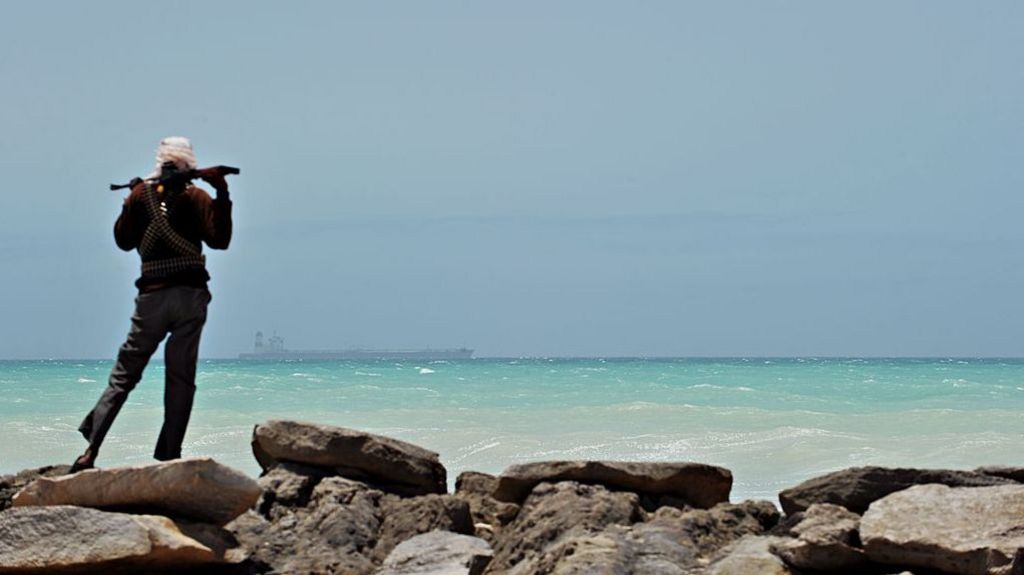
    A sharp resurgence of piracy off the coast of Somalia has amplified threats to global commercial shipping, a sector already strained by maritime blockades and escalating regional tensions stemming from the ongoing conflict between the United States and Iran. In just four days last week, two separate cargo vessels were seized in the Gulf of Aden, pushing the total number of recorded attacks since the start of 2026 to at least 13. This wave of hijackings marks the most significant escalation of maritime criminal activity in the region in more than a decade, reviving long-dormant fears over security for one of the world’s most critical trade corridors.

    “Piracy is always a crime of opportunity,” explained Omar Mahmood, senior Somalia analyst at the International Crisis Group (ICG). “Right now, the pirates see a clear opening to act.” That opening has been created by cascading insecurity in key waterways further north: the Strait of Hormuz remains a flashpoint for ongoing tensions between Washington and Tehran, while Iran-aligned Houthi forces in Yemen have enforced a targeted blockade of the Bab el-Mandeb Strait, the critical gateway to the Red Sea. Though the blockade was originally implemented as part of the Houthi dispute with Saudi Arabia, it has upended security for all international shipping transiting the region.

    Vice-Admiral Ignacio Villanueva Serrano, operations commander for the European Union’s naval mission tasked with protecting shipping off Somalia’s coast, noted that pirates have calculated international security resources are already stretched thin by the northern crises. “They believe that international forces will be focused on managing Hormuz and Bab el-Mandeb, rather than prioritizing counter-piracy patrols off Somalia,” he said.

    Two recent high-profile seizures underscore the growing threat. On August 17, the MV Lutuf, a Cameroon-flagged cargo vessel, was hijacked off the coast of Somalia’s semi-autonomous Puntland region. Just four days later, pirates boarded the MT Sibu 1, an Eritrean-flagged oil products tanker, in Gulf of Aden waters near the Yemeni coast.

    The hijacking of the MV Lutuf has triggered unforeseen diplomatic and security fallout. Since August 18, two drone strikes targeting alleged pirate supply networks linked to the vessel have killed 13 men. While no party has officially claimed responsibility for the attacks, local and regional officials have blamed Turkey, claiming the MV Lutuf was carrying a cargo of Turkish weapons bound for Somalia’s capital, Mogadishu.

    The BBC has confirmed that the MV Lutuf is now one of six vessels being held by pirate groups demanding multi-million dollar ransoms. Four of the seized ships are currently anchored near Bander Beyla, a coastal fishing town long recognized as a piracy hotbed. Current activity remains far below the peak of Somali piracy 15 years ago, when attacks cost the global economy billions of dollars annually: in 2011 alone, Somali pirates launched more than 200 attacks and held hundreds of crew members hostage. A coordinated international naval response, paired with the adoption of private security teams on commercial vessels, successfully drove down attacks and contained smaller flare-ups in 2023 and 2024.

    But experts warn that while pirate networks were suppressed for years, they were never dismantled. Root causes including widespread poverty and persistent weak governance and security in Somalia have never been addressed, allowing criminal networks to remain intact. Locally, the current resurgence is fueled by deep-seated anger over unregulated overfishing by foreign trawlers in Somali territorial waters, which has gutted the small-scale fishing industry that sustains coastal communities in Puntland.

    Shifting shipping patterns have also created more targets for pirates. As vessel operators divert their routes south to avoid conflict and blockades further north, more commercial ships are now passing closer to Somalia’s coastline. With global oil prices remaining elevated, hijacking a loaded oil tanker has become a far more lucrative criminal enterprise. Mahmood noted the confluence of factors working in pirates’ favor: “You have that combined effect of less naval patrolling but more commercial shipping in these waters, and that signals an opportunity. And once you’ve had a successful attack, that spurs other criminal groups to carry out copycat incidents.”

    Analysts have also floated the possibility of limited collaboration between Somali pirate networks and Yemeni criminal groups, following multiple seizures near the Yemeni coast. Mahmood, however, says any collaboration is almost certainly between criminal factions, not with Iran-backed Houthi forces—especially since the MT Sibu 1 is reportedly part of Iran’s so-called “shadow fleet” of vessels used to transport oil in violation of U.S. sanctions. “I don’t see something specifically Iran-directed,” he emphasized.

    Turkey’s role in the crisis has emerged as a major point of political tension. Unnamed Puntland security sources and a Somali federal government official have told the BBC that the MV Lutuf was carrying weapons and sensitive satellite equipment bound for a Turkish military training facility in Mogadishu, as well as a new Turkish space station being constructed north of the capital. Turkey has a long-standing defense and economic partnership with Somalia’s federal government, focused in part on strengthening Somalia’s maritime security. The sources also claim that six international warships are currently deployed near the hijacked MV Lutuf: two from Turkey, and one each from Spain, Denmark, the United States, and India. The BBC has not been able to independently verify this deployment.

    The Somali government official, who spoke on condition of anonymity, alleged that Turkey carried out the second deadly drone strike on August 24 that killed nine armed men. “The men who were killed were criminals and I don’t have sympathy for them, but taking it to that level is escalating the situation even more,” he said. Turkey’s defense ministry has confirmed that its forces are providing “necessary support” to Somali authorities within the framework of their existing security agreement, but has not directly addressed accusations it carried out the drone strikes. Somalia’s federal government has only stated publicly that it is aware of counter-piracy operations and will take appropriate steps to manage the situation.

    Puntland authorities have been far more vocal in their opposition. Deputy Puntland Security Minister Abdirahman Yusuf told BBC Somali Service that his administration has evidence linking Turkey to the drone strikes, citing observed Turkish military activity near the MV Lutuf and along the Puntland coast. The BBC has not independently verified these claims. Puntland’s security ministry issued a formal statement opposing “bombings by international warships targeting civilians” that “undermined co-operation in combatting piracy,” and demanded an immediate explanation for the strikes.

    Analysts warn that the incident has further complicated long-running political tensions between the semi-autonomous Puntland region and the federal government in Mogadishu, which has long had a close military relationship with Turkey. This political rift already undermines efforts to coordinate a unified counter-piracy response across Somalia.

    While the current wave of hijackings has not yet reached the level of a full-blown piracy resurgence, experts warn that without a de-escalation of the U.S.-Iran conflict and renewed international investment in counter-piracy deterrence, Somali piracy will continue to raise security risks in one of the world’s most economically vital maritime corridors.

  • Close race as Iceland votes on whether to restart talks on joining EU

    Close race as Iceland votes on whether to restart talks on joining EU

    On Saturday, Icelandic voters headed to polling stations across the small Nordic nation to decide a question that has split public opinion and shaped national politics for nearly 15 years: whether to restart accession negotiations with the European Union, a process first halted in 2013. With pre-vote opinion polls consistently showing a razor-thin margin between the two campaign sides, no analyst has been willing to confidently predict the final outcome, with results expected to be announced in the early hours of Sunday.

    Iceland’s current centre-left administration, led by Prime Minister Kristrún Frostadóttir, had long planned to hold this public vote, but mounting instability in global geopolitics pushed the government to schedule the referendum earlier than initially planned. Unlike many European Union accession debates that center heavily on security and international alliances, this campaign has focused far more on two core national priorities: Iceland’s iconic fishing industry and its hard-won national sovereignty.

    Voting opened at 9:00 GMT and remained open until 22:00 GMT, with more than 20% of eligible voters already casting their ballots during the early voting period, according to Iceland’s national public broadcaster RUV. For a nation of just under 400,000 people, the referendum has sparked high voter turnout, reflecting how deeply the question of EU membership divides Icelandic society. The question put directly to voters is straightforward: “Should Iceland resume accession negotiations with the European Union?”

    Already, Iceland is tightly integrated into European economic and border structures: as a member of the European Economic Area, it participates in the EU’s single market and is part of the Schengen Area, which allows free movement across most European borders. Full EU membership would bring Iceland into the EU customs union and eventually require adopting the euro as its national currency. When Iceland paused accession talks in 2013, the process was already far along: of the 35 policy chapters that must be negotiated to join, 27 had been opened and 11 had been provisionally finalized. European Commission officials have confirmed that if voters approve restarting talks, the full negotiation process could be wrapped up in as little as one to two years.

    Crucially, a Yes vote in Saturday’s referendum is not a final commitment to join the bloc. It would only greenlight the government to resume talks and negotiate a formal accession agreement. Once an agreement is reached, it would require approval from a second public referendum, the Icelandic parliament, and constitutional amendments, as well as ratification from all 27 existing EU member states. Pro-membership campaign group “Yes to See” argues that Icelanders deserve the chance to see what terms the bloc can offer before making a final, binding decision, saying that current voters lack all the information needed to reject membership outright.

    Even a No vote would not permanently close the door to future EU accession talks, leaving the possibility of revisiting the question open for future administrations. Sovereignty has emerged as the most contentious issue throughout the campaign. Iceland only gained full independence from Denmark in 1944, a milestone that remains central to the nation’s identity, and its fishing and marine industries account for nearly 40% of the country’s total exports. No campaigners warn that EU membership would force Iceland to cede control of its valuable fishing waters to the EU’s Common Fisheries Policy, requiring it to share access with other member states. While EU negotiators have indicated Iceland could secure a special exemption for its fishing sector, opponents remain deeply skeptical, and the issue remains the single largest barrier to a successful accession agreement. Many voters still reference the 1970s “Cod Wars” fishing disputes with the United Kingdom, which Iceland ultimately won, a reminder of how the country has fought to retain control of its marine resources – the same issue that has derailed Icelandic EU membership bids in the past.

    The current push for a referendum traces back to the aftermath of the 2008 global financial crisis, when Iceland’s entire banking system collapsed. In response to that economic crisis, the country first launched accession talks in 2009, only to pause the process four years later in 2013. Today, Iceland ranks as one of the most affluent nations in Europe, with the fifth-highest GDP per capita in the world. Many Icelandic voters, including Bifröst University politics professor Eirikur Bergmann, attribute the country’s strong economic performance to its independence from the EU. Still, Iceland faces pressing economic challenges: it is currently ranked as the most expensive country in the world, with inflation holding at 5.6% and stubbornly high interest rates at 8%. Pro-membership campaigners argue that joining the EU would bring greater economic stability and help bring inflation and interest rates down over time.

    While security has taken a backseat in campaign debates, it was a key factor in the government’s decision to move the referendum forward. As a founding member of NATO, Iceland has no standing military of its own, relying on a decades-old bilateral defense agreement with the United States signed in 1951 and collective security from NATO allies. No campaigners argue that Iceland’s security is already fully guaranteed by NATO and the U.S., and that EU membership is no replacement for its existing defense architecture. Growing geopolitical tension, including increased Russian maritime activity near Iceland in the wake of Russia’s full-scale invasion of Ukraine (which Iceland has strongly supported) and recent remarks from former U.S. President Donald Trump expressing interest in acquiring Greenland and confusing the island with Iceland, has sparked new concerns among some voters about small nation security. The EU and Iceland signed a new security and defense partnership earlier this year, with EU officials framing membership as an anchor in a community of shared values, prosperity, and collective security.

    Ahead of voting, the two campaign sides faced off in a nationally televised debate, led by their top figures: Prime Minister Kristrún for the Yes campaign and Guðrún Hafsteinsdóttir, chair of the opposition Independence Party, for the No side. During the debate, Kristrún emphasized that Iceland is already deeply integrated into European structures, framing a Yes vote as “one of the biggest risk-reducing steps we can take” for the nation’s future. She repeatedly stressed that a Yes vote does not guarantee membership, and that the government would honor any outcome on Saturday. For her part, Guðrún clarified that the No campaign does not oppose close cooperation with Europe, saying “We already do [work well with Europe], and we want that to continue.” Instead, she framed the vote as a choice over whether to hand over decision-making power over fisheries, agriculture, and natural resources to EU leadership in Brussels.

    Hallgrimur Oddsson, director of EU-Iceland think tank European Currents, noted that even though geopolitical instability prompted the government to call the referendum earlier, it has remained a low-priority issue for voters during the campaign. “It’s lower on the agenda than many would think,” Oddsson explained, confirming that domestic economic and sovereignty issues have dominated public discussion, as the latest pre-election poll shows the No campaign holding a narrow 51.6% lead, putting the final result too close to call.

  • Transgender former Israeli spy detained by ICE in US

    Transgender former Israeli spy detained by ICE in US

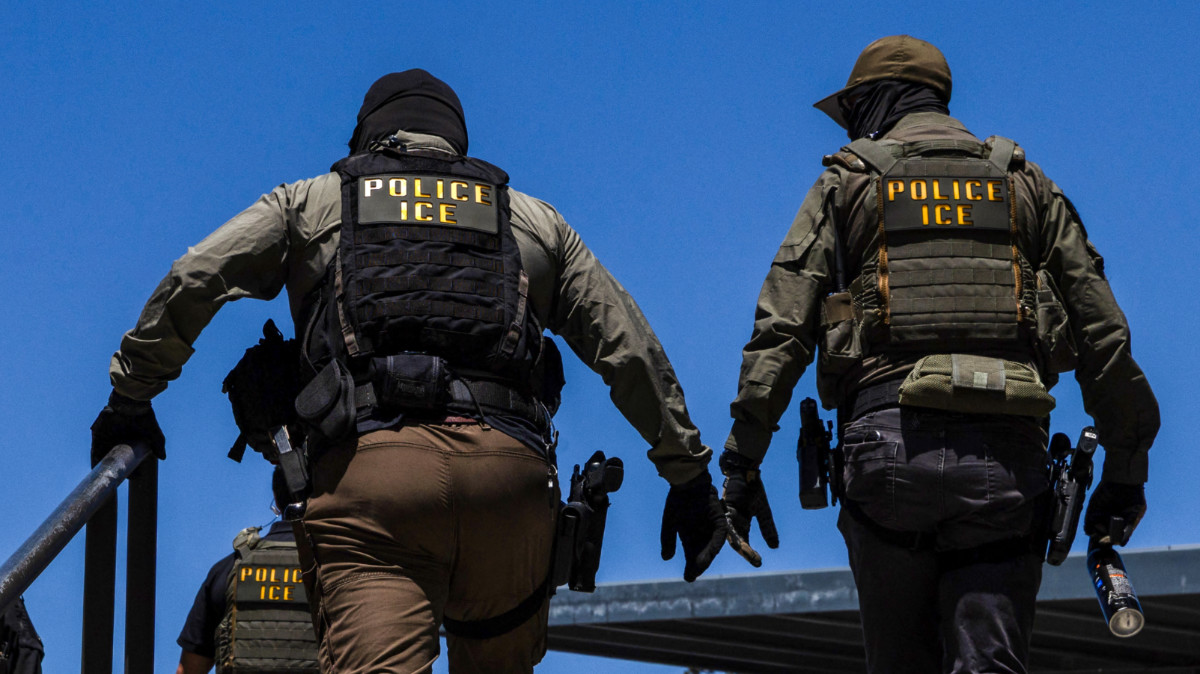
    A transgender Israeli woman with a background in elite Israeli military intelligence is set to be deported from the United States following a conviction on felony kidnapping charges, U.S. Immigration and Customs Enforcement (ICE) confirmed this week.

    ICE announced in a public statement Thursday that agents took Eliyahu Alon, identified by the agency as a “criminal illegal alien from Israel”, into custody during a targeted enforcement operation in Concord, New Hampshire. ICE referenced Alon by her previous given name, Avishay, a decision that comes amid Alon’s longstanding legal fight over gender recognition during her criminal proceedings.

    According to ICE’s public disclosure, Alon’s criminal record includes three separate felony convictions: making criminal threats with a deadly weapon, kidnapping, and unlawful possession of controlled substances. Before relocating to the United States, Alon served in Unit 81, one of the Israeli Defense Forces’ most sensitive classified divisions, which develops cutting-edge technology for special operations run by Israeli military intelligence. Following her military service, Alon transitioned gender and went on to hold senior engineering positions at major U.S. tech giants Amazon and Microsoft, court records and legal representatives confirmed to The Jerusalem Post.

    Alon’s offense stemmed from a 2024 incident: she was arrested in September that year for abducting a male acquaintance whom she suspected had spiked her water bottle with GHB, the so-called “date rape drug” linked to sexual assault. Court indictment documents show that the plan to abduct and interrogate the man originated with a friend of Alon’s, Brian Levy, who pushed Alon to confront the suspect. When law enforcement arrived at Alon’s Dover, New Hampshire, residence to investigate a report of a suspicious vehicle parked outside, they inadvertently uncovered the kidnapping: officers heard the victim screaming for help from inside the home. At the time of the raid, Alon had two loaded handguns on the property, one of which was fitted with an illegal silencer, and she had pointed one of the weapons at the victim during his detention, the indictment confirms.

    Alon was tried and sentenced as a male despite her public gender identity as a woman, receiving a prison sentence of 2 to 6 years in state custody in early July. Following her sentencing, Alon launched a legal challenge to her placement in a male correctional facility, requesting access to gender-affirming medical care and a transfer to a women’s prison. Instead of ruling on her correctional placement appeal, New Hampshire authorities transferred Alon to federal immigration custody on August 20 to begin deportation proceedings, clearing the way for her removal from the U.S. once her sentence concludes.

  • How ‘Book Queen’ Dolly Parton inspired millions of children with gift of reading

    How ‘Book Queen’ Dolly Parton inspired millions of children with gift of reading

    Following the passing of global entertainment icon Dolly Parton this week at age 80, tributes are pouring in not only for her decades-long cultural impact but for the transformative philanthropic legacy she leaves behind: the Imagination Library, the free childhood literacy programme that has put more than 300 million books into the hands of young children across the globe.

    Parton first dreamed up the initiative to honor her father, a man whose harsh upbringing in Appalachia left him unable to read or write, cutting short his life potential. “He was the smartest man I have ever known, but I know in my heart his inability to read probably kept him from fulfilling all of his dreams,” Parton once wrote in an open letter on the programme’s website. “Inspiring kids to love to read became my mission.”

    What began as a small local project in Sevier County, Tennessee – Parton’s hometown – in 1995 has grown into an international movement. After expanding across the entire United States in 2000, the programme crossed borders to launch in Canada in 2006, the United Kingdom in 2007, Australia in 2013, and Ireland in 2019. Operating through partnerships with local community organisations, Imagination Library mails one free, age-appropriate book every month to children from birth until their fifth birthday, regardless of their family’s household income. To mark its 30th anniversary in 2025, the organisation announced it had distributed more than 300 million books – a rate of one book delivered every 78 seconds, reaching more than 3 million children globally.

    For families around the world, the programme has delivered far more than free reading material – it has shaped daily routines, supported child development, and removed financial barriers that keep low-income families from building home libraries. Harriet Anscombe, a London mother of two, signed her daughter up for the programme when the girl was just three months old. Today, at four years old, the child has never known a day without regular story time. “It just blows my mind that it’s readily available for every family that lives in my borough,” Anscombe said. “If I didn’t get those books, maybe I wouldn’t have started doing bedtime stories till she was two – but because we were getting them so early, it embedded story time into our routine from when she was just a couple of months old.”

    Across the Atlantic in Denver, Colorado, Ciara Fernandez Faber enrolled her son in the programme eight years ago, and the programme quickly became a core part of their family life. For years, their favorite book was *I Am A Rainbow*, a title written by Parton herself that explores emotional awareness for young children. “It’s a book about different emotions, and so we would act out the different emotions, the different faces,” Faber explained. “At the back of the book, there’s a little excerpt by Dolly talking about how everybody has a rainbow of feelings, and we would read that – and he would always point to her picture and say, ‘There’s the Book Queen.’”

    Families consistently highlight the thoughtful curation of Imagination Library’s book list, which covers a wide range of social and emotional topics that help children navigate complex issues. Helen Cashell, a Dublin, Ireland, parent of two, said the programme’s diverse selections helped her children learn about acceptance and resilience. “Whether it was same-sex families or just different types of families, things about bravery, courage, bullying, things about different identities,” those topics were woven gently into age-appropriate stories, she said.

    The programme also elevates underrepresented authors, bringing their work to young readers who would otherwise never encounter it. Selina Brown, a children’s author whose book *My Rice Is Best* – which features a Black protagonist – was selected for distribution through the programme, saw 14,000 copies of her work sent to children across the UK. For families struggling to make ends meet, the programme eliminates the impossible choice between basic needs and children’s books: “To choose between gas, electric, food or a book, you’re going to choose a core need – but with the Dolly Parton Imagination Library, you don’t have to do that,” Brown noted.

    In many cases, the programme has delivered life-changing developmental progress for children facing learning challenges. In inner-city Sydney, Australia, first-time mother Paige Stewart enrolled her twin daughters, both of whom had speech delays and learning difficulties, when they were infants. After just two books, Stewart noticed a remarkable shift. One of the girls spoke her first clear word – “orange” – after reading a free colour book delivered by the programme. “Not only did they learn their colours from that book… it kind of set the tone for them speaking and their joy for books,” Stewart said, adding that she now advocates widely for the programme to other parents.

    For many long-time Parton fans, the programme is a deeply personal tribute that keeps the star’s legacy alive. Kristina Hadley, a grandmother from Alabama, signed her granddaughter Eillie Elaine up for Imagination Library before the child was even born. Now nearly three years old, Eillie has an entire bookshelf dedicated to the books she has received, and gets excited every time she checks the mail, calling out “Ms Dolly!” in anticipation of her next book. Hadley choked up recalling the news of Parton’s death, saying, “Imagination Library is going to keep her memory going with the younger generation, and I hope and I pray that this is something that goes on for years and years and years.”

    Geoff Blacklin, a grandparent from Manitoba, Canada, whose grandchildren participate in the programme, echoed that sentiment, noting that Parton built the legacy quietly without seeking public acclaim. “The biggest thing that I like is the fact that she didn’t do anything for recognition,” Blacklin said. “She gave families more than books. She gave children a love of reading, precious moments with loved ones, and opportunities to learn and dream.”

    Parton herself reflected on the programme’s extraordinary growth before her passing, writing on the Imagination Library website that the initiative’s success exceeded her wildest early dreams. “In the beginning, my hope was simply to inspire the children in my home county, but here we are today with a worldwide programme that gives a book a month to well over 3 million children,” she wrote, thanking the community partners who helped turn her personal tribute to her father into a global force for good. Before he died, Parton said, her father told her Imagination Library was the most important work she had ever done – a praise that meant more to her than any other accolade she earned in her six-decade career.

  • Colombia captures a suspected Tren de Aragua gang leader as US security ties deepen

    Colombia captures a suspected Tren de Aragua gang leader as US security ties deepen

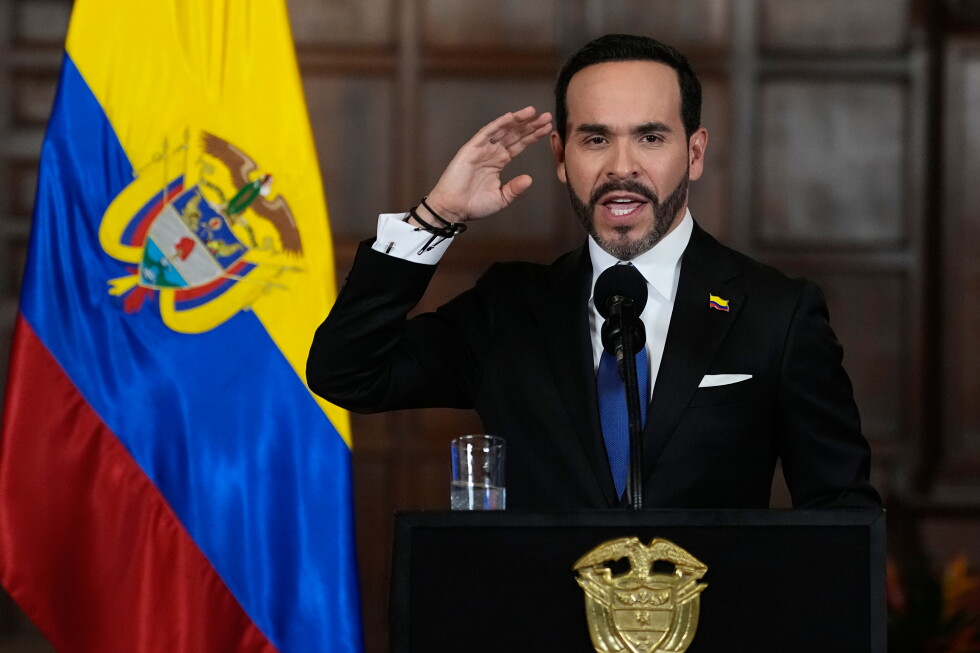
    In a high-profile joint operation marking a new era of regional security cooperation, Colombian security forces have captured Luis Saúl Pérez Nieto, a suspected top-ranking leader of the transnational Venezuelan criminal gang Tren de Aragua, U.S. Southern Command announced Friday. The arrest, carried out Thursday with participation from the U.S. Drug Enforcement Administration, stands as the first major milestone in deepened counter-organized crime collaboration between the two neighboring countries following the inauguration of Colombia’s new conservative president Abelardo de la Espriella.

    Pérez Nieto, who operates under the aliases “Páez” and “Nairobi”, is accused by Colombian law enforcement of overseeing the gang’s cross-continental drug and weapons trafficking networks, and leading Tren de Aragua’s expansion into Peru. Originally founded as a prison gang based out of Venezuela’s Tocorón penitentiary, the organization has evolved into a powerful transnational syndicate under the coordination of leaders like Pérez Nieto. In 2023, he escaped from Tocorón prison alongside the gang’s top leader Héctor “Niño Guerrero” Guerrero Flores, who was killed earlier this year in a U.S. military strike conducted under a rare collaborative agreement with the Venezuelan government.

    A self-described admirer of U.S. President Donald Trump, de la Espriella took office earlier this month on a promise to dismantle Colombia’s powerful drug trafficking networks with direct support from Washington. In a sharp policy reversal from his progressive predecessor, his administration has designated Colombia’s second-largest city Medellín as the operational hub for Trump’s new regional anti-cartel alliance, and formally approved joint U.S. military counter-crime operations on Colombian soil.

    “Narco-terrorists have no safe haven in our hemisphere,” U.S. Southern Command stated in its official announcement Friday. “We stand united with our partners to dismantle these criminal networks and protect our homeland.” DEA Administrator Terry Cole extended congratulations to the Colombian government and national police for the successful capture, noting the operation as a major win for regional counter-terror and anti-crime efforts.

    U.S. authorities have formally requested Pérez Nieto’s extradition to face charges of terrorism, money laundering, drug trafficking, and criminal conspiracy, per confirmation from Colombian and Peruvian officials. As of Friday, the Trump administration had not released public details of the U.S. case against the suspect, and the DEA declined to comment further on the specific charges or its operational role.

    The capture comes amid a broader push by the Trump administration to expand coordinated counter-cartel action across South America, aligned with a growing regional shift toward conservative, Trump-aligned leaders who have campaigned on aggressive security crackdowns. Earlier this week, U.S. Southern Command chief General Francis Donovan met with Colombian defense and military leaders in the Pacific port city of Tumaco, before traveling to neighboring Ecuador for security talks centered on the volatile Colombia-Ecuador border, a key transit route long exploited by cartels for drug smuggling, illegal mining, and human trafficking.

    During the visit, Donovan announced that U.S., Colombian, and Ecuadorian officials had agreed to a new coordinated strategy to “hunt cartel leadership, shatter their logistics and permanently deny them safe haven.” “The border between Colombia and Ecuador is a geographic chokepoint that violent cartels have long exploited,” Donovan said. “Today, we are changing the game.” Colombia and Ecuador are among the handful of South American governments that have approved joint U.S. military counter-crime operations on their territory, a core part of the Trump administration’s plan to expand its lethal campaign against drug smuggling from maritime routes to inland criminal networks.

    On the same day Pérez Nieto’s capture was announced, Chilean officials celebrated their own major security victory against Tren de Aragua, with the extradition of two suspected gang leaders from the U.S. and Colombia to face charges connected to the 2024 abduction and murder of former Venezuelan army Lieutenant Ronald Ojeda, a dissident who had been granted political asylum in Chile. Ojeda’s body was discovered buried in a cement-lined pit inside a suitcase in the Chilean capital Santiago.

    Chilean President José Antonio Kast, another Trump-aligned conservative leader who took office on promises of sweeping crime reduction and mass deportations, has faced widespread criticism for failing to deliver on his security pledges. The extraditions mark a high-profile win for his administration. Chilean authorities have charged Rafael Enrique Gámez Salas, alleged head of Tren de Aragua’s primary Chilean branch Los Piratas, with kidnapping, extortion, and criminal association. The second suspect, Alfredo Camilo Carrillo Ortiz, alias “El Gocho”, was extradited from Colombia, with prosecutors accusing him of helping plan and execute Ojeda’s killing and managing the informal settlement where the dissident was buried.

    Chile’s Undersecretary for Public Security María del Pilar Giannini called the extraditions “a concrete demonstration” of the Kast government’s commitment to rooting out transnational organized crime, adding “We are going to pursue them to the very end.” U.S. officials also praised the extradition of Gámez, who was transferred from a U.S. federal prison in California where he was serving a sentence for illegal reentry. U.S. Attorney General Todd Blanche called the transfer “evidence of the strong cooperation with our Chilean partners to combat transnational crime, dismantle foreign terrorist organizations like Tren de Aragua and hold members accountable for their heinous criminal acts.”

    The Trump administration designated Tren de Aragua as a formal foreign terrorist organization last year, part of a policy shift to treat Latin American cartels as U.S. national security threats rather than ordinary criminal groups. However, independent reporting from The Associated Press has previously documented that Trump has at times overstated the gang’s transnational connections to justify expanded deportation policies targeting Venezuelan migrants.

  • What tariffs will really cost Canadians and Americans

    What tariffs will really cost Canadians and Americans

    The long-simmering trade conflict between the United States and Canada has entered a sharp new phase, with tit-for-tat tariff announcements from both nations deepening economic friction between the North American neighbors. The escalation traces back to US President Donald Trump’s revived hardline trade agenda after his return to the White House, which has reignited cross-border economic tensions that had previously been held in check.

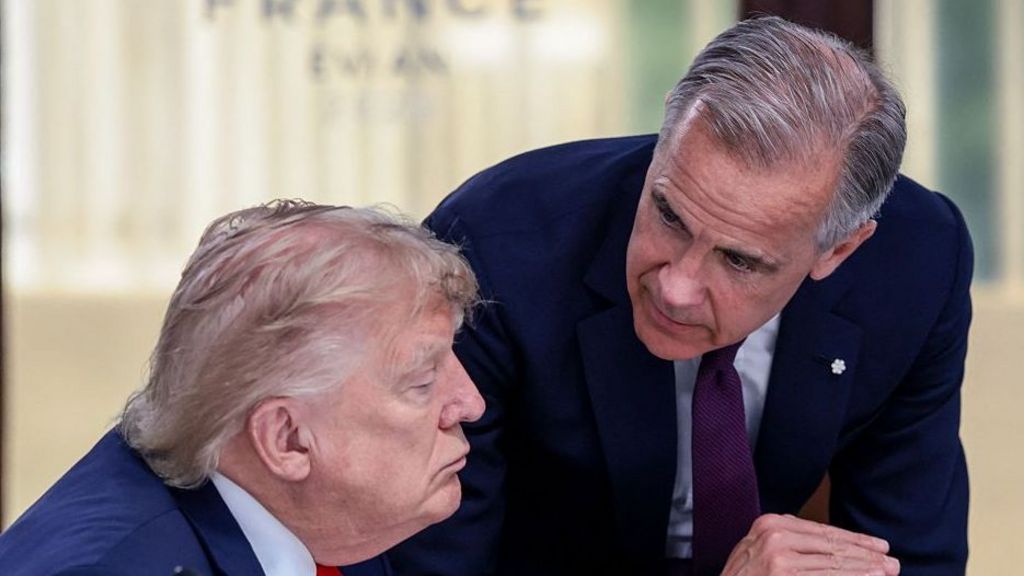
    The latest round of retaliation came after Trump threatened to double existing tariffs on Canadian-made vehicles, lifting the rate from 25% to 50% effective January 1, 2027. In response, Canadian Prime Minister Mark Carney implemented new reciprocal import taxes on a wide range of American goods, though Ottawa has not yet matched Trump’s proposed 50% auto tariff to date.

    The automotive industry, one of the most interconnected sectors across North American borders, faces the most significant risk if Trump’s threatened auto tariffs take effect. Integrated supply chains for passenger vehicles, trucks, and parts span the US, Canada, and Mexico, creating a tightly linked manufacturing ecosystem that has already been strained by previous import taxes. Bernard Yaros, lead economist at Oxford Economics, notes that up until now, car dealerships have absorbed the bulk of increased costs from earlier tariffs to avoid passing hikes directly to consumers. But that buffer is disappearing. “The recently threatened 50% tariffs on Canadian autos, trucks, and car parts would feed through to consumer prices more readily than before,” Yaros explained. He added that higher import costs would likely push manufacturers to double down on producing high-margin luxury vehicles, SUVs, and pickup trucks, which could tighten supply for affordable new cars and drive up prices in the used vehicle market.

    Beyond the auto sector, construction and building materials have been a core flashpoint in the latest escalation. Tariffs on steel, aluminum, and lumber were already in place before this week’s moves, but Canada has now raised its tariffs on US metals to match Washington’s 50% rate. Carney has also extended import taxes to American plywood, lumber, and even construction fasteners like timber screws. For building contractors that rely on cross-border imports, these higher costs will almost certainly be passed to consumers, pushing up the price of new home construction and renovation projects.

    The “lumber wars” between the two countries, a decades-long dispute over softwood timber used in residential construction, are once again flaring up. Data from a 2025 US Congressional report shows that the US imported $23 billion worth of wood products in 2024, with nearly half of that volume coming from Canada. On the American side, Bill Owens, chairman of the National Association of Home Builders, has called on the Trump administration to exempt construction materials from new tariffs, pointing to the ongoing national housing affordability crisis. “Building material tariffs heighten market uncertainty, strain supply chains and increase construction costs,” Owens said. Canadian forest product industry groups confirm that the new duties will raise costs for businesses and consumers on both sides of the border.

    A distinctive feature of this latest round of tariff escalation is that Canada has intentionally targeted widely available consumer goods rather than exclusively focusing on industrial raw materials. Canadian tariffs now apply to American carpets, washing appliances, furniture, refrigerators, and even tableware. Bradley Saunders, North America economist at Capital Economics, explained that Carney’s strategy is designed to minimize harm to Canadian households by targeting goods that are easily substituted with domestic alternatives. “Like hair care products, you really can just buy that domestically instead,” Saunders said, noting that the selected goods are highly fungible, allowing consumers to shift to Canadian suppliers without dramatic disruption.

    Still, the trade war has already altered consumer choices and hit industry on both sides. Last year, most Canadian provinces implemented bans on US alcohol imports in retaliation for earlier tariffs, and the American Wine and Spirits Institute reported that US alcohol exports to Canada dropped by more than 70% following the ban. While Carney had asked provinces to lift the ban during stalled trade talks, the collapse of negotiations means restrictions are set to return. Only Saskatchewan and Alberta currently allow US alcohol sales, and Saskatchewan has announced a 50% tariff on imported American alcohol that will take effect September 8, aligned with the rollout of Canada’s broader new tariffs. Political calls for “buy Canadian” campaigns have already resonated with consumers, Saunders added, leaving a lasting mark on the US alcohol export sector.

    While higher consumer prices are the most widely discussed impact of the tariff dispute, economists warn that job losses and reduced business investment could pose a greater threat to household financial security. Cross-border businesses face tangled new trade rules and sharply higher input costs, and the persistent uncertainty created by the escalating conflict is likely to delay planned investments and slow job creation across both countries. For small and medium-sized export-dependent businesses, the new 50% tariffs could be catastrophic. For example, a custom furniture maker in British Columbia that relies on access to the US market could be forced to close entirely under the new duties, Saunders noted. Canada’s forest industry, which employs nearly 200,000 workers across the country, has called on the federal government to boost domestic demand for Canadian timber through new federal housing programs, but industry leaders admit that “no support package can replace reliable access to our largest export market.”

    For American consumers, the immediate impact of this latest round of tariffs on overall cost of living will be marginal. The Budget Lab at Yale, which tracks the economic impact of US federal policy, estimates that the new Canadian tariffs will add an average of just $3 per year in extra costs for US households. But that figure rises dramatically when considered alongside Trump’s broader global trade agenda, particularly ongoing tariff disputes with China. When all trade conflicts are factored in, the average American household faces roughly $1,000 in additional annual costs from tariffs. “It’s hard to view this particular instance with Canada in isolation because we’ve had similar interactions with a range of other countries, all of which makes doing business harder. It’s just another in a series of tariff shocks,” said John Iselin, associate director at the Yale Budget Lab.

    Beyond immediate price and job impacts, the escalating tariff row also casts new uncertainty over the future of the United States-Mexico-Canada Agreement (USMCA), the trilateral free trade deal that has governed North American commerce since 2020. Both Canada and Mexico have proposed extending the existing agreement for an additional 16 years, but the Trump administration has refused to renew the deal in its current form. While the USMCA remains in effect today, ongoing tariff tensions are derailing near-term renewal talks, creating long-term uncertainty for cross-border businesses and integrated supply chains across the continent.

  • Plug pulled on plans for $134K statue of former Victorian premier Dan Andrews

    Plug pulled on plans for $134K statue of former Victorian premier Dan Andrews

    Victoria’s newly sworn-in premier Ben Carroll has scrapped a longstanding automatic policy that granted taxpayer-funded bronze statues to long-serving state premiers, scrapping a planned $134,000 monument for his predecessor Daniel Andrews in the process.

    Andrews, who led Victoria for 3219 days – just over eight years – crossed the 3000-day threshold that has guaranteed a public statue under existing rules. But just weeks after taking over the top job from Jacinta Allan, Carroll has put an immediate end to the policy, arguing it no longer aligns with what Victorian communities expect from public spending.

    “Gratitude does not require a taxpayer-funded statue,” Carroll told reporters Wednesday, confirming the Andrews statue project has been formally taken off the table. “I respect your money. That means, being careful and deliberate about how government spends it.”

    The decision comes as Victoria grapples with deepening fiscal pressure, with official projections showing the state’s gross debt is on track to hit nearly $200 billion by the 2029-30 financial year. Carroll already tabled a sweeping package of public spending cuts in his first weeks in office, ranging from pausing work on a slate of major infrastructure projects to smaller, high-profile cuts including ending taxpayer-funded office plant rentals and discontinuing production of branded government merchandise like stubby holders and t-shirts.

    Alongside scrapping the automatic statue rule, Carroll announced an independent public review to overhaul the state’s protocols for commemorating long-serving public officials, including reassessing the criteria for granting official state funerals. The review will examine what forms of commemoration are appropriate, how much public money should be allocated to these events, and whether automatic entitlements remain justifiable.

    Carroll noted that the rarity of state funerals is central to their significance as public tributes, signaling that future state funerals may be granted only in exceptional circumstances rather than as an automatic entitlement. The review is expected to deliver a set of recommendations to government in the coming months, which will inform formal policy changes to Victoria’s public commemoration framework.

    Supporters of the change argue that prioritizing fiscal restraint during a period of growing state debt makes the end of the automatic statue rule a necessary and popular step, while critics have pushed back that denying formal commemoration to premiers who dedicate decades of service to the state undermines the recognition of their contributions to public life.

  • ‘No end in sight’: Democrats slam Trump after six months of Iran war

    ‘No end in sight’: Democrats slam Trump after six months of Iran war

    As the joint US-Israeli military campaign against Iran hits its six-month milestone, congressional Democrats have launched sharp criticism of the Trump administration, warning that the ongoing conflict’s staggering human and economic costs will lead to Republican backlash at the November midterm polls.

    The offensive, which launched on February 28, was originally projected by former President Donald Trump to wrap up in just a few weeks. But half a year later, the conflict remains locked in stalemate, with mounting losses on all sides and growing domestic discontent in the United States. So far, the campaign has claimed the lives of at least 18 US service members and drained $100 billion in federal military funding. The bulk of this spending – a $60 billion supplemental funding request – was approved just last month by the Republican-controlled Congress at the urging of US Secretary of War Pete Hegseth.

    Beyond direct military spending, the conflict has imposed heavy new costs on everyday American households. After Iran retaliated by blocking shipping traffic through the Strait of Hormuz, a critical global energy chokepoint, the average US taxpayer has paid between $600 and $1,000 in extra energy costs, according to combined analysis from Brown University’s cost of war project and estimates from Moody’s Analytics. On the Iranian side, civilian and military casualties range widely: the United Nations Office for the Coordination of Humanitarian Affairs (OCHA) puts the death toll at 3,400, while Israeli military estimates place the number as high as 6,000.

    In a formal statement released Friday, Democratic National Committee (DNC) chair Ken Martin blasted the administration’s broken promises and mishandling of the conflict. “Trump and his chief dealmaker, Vice President JD Vance, have failed to deliver on their promise to end this war,” Martin said. “Back in March, they claimed the conflict would be over ‘soon’ – but just this week, Trump admitted he is ‘not in a hurry’ to wrap it up. They dragged the United States into a deadly, costly war they have no exit plan for, and working-class Americans footing the bill are the ones paying the price. Trump and Vance explicitly campaigned on avoiding new foreign wars, yet six months in, there is no end in sight, and the conflict has driven up prices for everything from gasoline to groceries.”

    Martin added that while Republicans repeatedly claim they lack the funds to lower household costs or expand affordable healthcare for American families, they continue to pour billions into an unpopular, unnecessary conflict. “Voters will not forget this betrayal when they cast their ballots in November,” he warned.

    Public opinion polling tracked by independent analyst group The Silver Bulletin shows majority opposition to the war nationwide: roughly 55% of Americans disapprove of the joint US-Israeli campaign, while just 37% support it.

    The intra-party dynamics around the conflict have been complex for Democrats. House progressive lawmakers pushed for a War Powers Resolution vote in late February that would reassert Congress’s constitutional authority to declare war, curbing unilateral presidential power to launch military action, but the party establishment has taken a more ambiguous stance. Before the offensive launched, reports indicated Democratic Party leadership was working to rein in grassroots efforts to restrict Trump’s war-making authority. Many establishment Democrats, who have largely declined to condemn Israel over the UN-documented genocide in Gaza, have openly backed a hard line on Iran, arguing that military confrontation with Tehran is inevitable at some point.

    Top Senate Democrat Chuck Schumer echoed this stance in statements ahead of the offensive. Shortly after a closed-door briefing with Secretary of State Marco Rubio and CIA Director John Ratcliffe a week before strikes began, Schumer told reporters “this is serious, and the administration has to make its case to the American people.” Days earlier, he released a statement arguing that “confronting Iran’s ruthless campaign of terror, nuclear ambitions, regional aggression, and horrific oppression of the Iranian people demands strength, resolve, regional coordination, and strategic clarity.”

    For its part, Iran has stated it is prepared to defend itself against US and Israeli aggression pushed by Tel Aviv, but remains open to a diplomatic deal that would recognize its right to develop defensive military capabilities as a sovereign nation.

    To date, diplomatic efforts to end the conflict have shown little meaningful progress. Two attempted ceasefires have collapsed within days of being implemented, and there is no public evidence that senior-level negotiations are close to producing a breakthrough. Qatari Prime Minister traveled to Tehran Thursday to support a joint Iran-Oman initiative to reopen the Strait of Hormuz, a diplomatic move that has pushed global oil prices slightly lower this week. However, the Trump administration’s recent decision to deploy the USS Theodore Roosevelt for a seven-month tour of the region signals that tensions are unlikely to de-escalate in the near term.

    The administration has instead doubled down on economic pressure: Last week, US Treasury Secretary Scott Bessent announced a new round of sweeping sanctions against Iran and what he called the regime’s “enablers,” dubbed “Operation Economic Outcast.” Bessent said the Treasury is using a “zero leakage approach” that has mapped every smuggling network and facilitator Iran uses to export oil and evade existing sanctions, and that Trump has already contacted world leaders to request they cut all economic ties with Tehran. He declined to name which leaders were contacted or offer a timeline for global cooperation on the new sanctions regime.

    Compounding the administration’s challenges is a growing critical shortage of US military munitions. The Pentagon has diverted large stockpiles of missiles and advanced weapons to the Gulf region to counter Iranian retaliatory strikes against US military bases and regional energy infrastructure. A Reuters report published this month found that the US has already exhausted its stockpiles of advanced long-range missiles, including ATACMS surface-to-surface missiles and Precision Strike Missiles (PrSM), during the Iran campaign. The Associated Press also reported a “beyond critical” shortage of advanced missile interceptors, particularly Patriot systems, which have been heavily used to shoot down Russian ballistic missiles in the US-backed war in Ukraine.