博客

  • ‘A very frightening time’: US terror tag endangers UK Palestine Action activists, critics say

    ‘A very frightening time’: US terror tag endangers UK Palestine Action activists, critics say

    A recent decision by the United States government to label UK-based pro-Palestine advocacy group Palestine Action as a transnational terrorist organization has triggered widespread alarm among campaigners, who warn the move will expose UK-linked activists to elevated risks of intrusive surveillance and potential exclusion from the global financial system.

    The announcement came via an official statement published on the US Treasury Department’s website, which rolled out a new package of sanctions targeting what it calls “Violent Far-Left Terrorist Networks”. Alongside Palestine Action, the sanctions also target Masar Badil, a Palestinian movement pushing for a revolutionary alternative path to secure Palestinian rights and self-determination, as well as Italian tech collective Autistici/Inventati. The US claims the collective provides specialized digital infrastructure, tools and services to Antifa cells and other violent far-left extremist groups, including a designated foreign terrorist organization.

    US officials emphasized that the designation complements the UK government’s 2024 decision to ban Palestine Action under domestic terrorism law, a ruling that is currently scheduled to face a legal challenge at the UK Supreme Court this November.

    For activists directly connected to the group, the new sanctions have already created profound uncertainty and fear. Max Geller, a former Palestine Action member and US citizen who resides in the UK, told independent outlet Middle East Eye that he now faces deep anxiety over his financial security and ability to travel. “I have American bank accounts, I don’t know if I’m going to suddenly be de-banked or if every single one of my Paypal transactions with my friends are going to be scrutinised,” Geller said. With elderly parents based in the US, Geller added that the ban could even block family visits, noting “Suddenly going back home has become a very stressful and scary prospect. No one knows what this means yet. They don’t use these laws on American citizens, so no one really knows what it means for people like me.”

    Huda Ammori, co-founder of Palestine Action, described the US economic sanctions as an additional layer of repression stacked on top of the UK’s domestic proscription, one that will make daily life far harder for hundreds of linked activists. “There is so much reliance in the Western world on these institutions that you don’t think about how intertwined they are with the US financial system until you’re at the opposite end of their repression,” Ammori told Middle East Eye. Beyond financial exclusion, Ammori warned the designation amplifies the risk of expanded surveillance through intelligence sharing arrangements between the US and UK governments. “It puts people at more of a risk. The US are known for trying to quash who they perceive as enemies of the American empire, and we are now firmly in their sights,” she said.

    Legal and civil liberties campaigners say the far-reaching nature of the US sanctions puts thousands of UK-based supporters at risk of severe consequences. Tim Crosland, a former government lawyer and co-founder of London-based advocacy group Defend our Juries, pointed out that more than 2,700 people have already been arrested in the UK under the 2000 Terrorism Act for supporting Palestine Action. He questioned what the new US designation means for this group: “Are they now in danger of having their bank accounts closed and not being able to operate within the financial system?” Crosland noted that the sanctions already cut off financial access for high-profile critics, pointing to the case of UN Special Rapporteur for Palestine Francesca Albanese, who was sanctioned by the US during the Trump administration last year and has since been locked out of routine financial transactions after calling for the International Criminal Court to prosecute Israeli officials and US company executives accused of complicity in human rights abuses in Palestinian territories.

    “Does that apply to people who’ve held up signs saying ‘I support Palestine Action’? Will the British government give the US the personal data of the people who’ve done that? Because they haven’t got the data unless somebody gives it to them,” Crosland added.

    The US announcement came just days after new details emerged of a pending terrorism-connected case against seven Palestine Action activists accused of vandalizing former US president Donald Trump’s golf resort in Turnberry, Scotland. In March 2025, the activists are alleged to have broken into the property, dug up sections of the golf course and spray-painted “Gaza is not 4 sale” on the clubhouse. All seven face charges of malicious damage aggravated by a terrorist connection, a designation that can result in longer prison sentences and continued terrorist monitoring for decades after release.

    Raza Husain KC, who represented Ammori in a judicial review of the UK’s proscription last November, noted that then UK Prime Minister Keir Starmer held two phone calls with Trump shortly after the incident, on March 10 and 30. Declassified UK reported that the British government has so far refused to confirm or deny whether the two leaders discussed Palestine Action during those conversations. Around the same time, Trump’s son Eric met with Scottish First Minister John Swinney, and a Freedom of Information disclosure showed Swinney “noted with concern the recent incident at the Trump Turnberry property, condemning the damage caused by vandalism and offered reassurance that the relevant authorities would continue to take the incident seriously”. Trump later took to his Truth Social platform to label the activists “terrorists” who had committed “serious damage” — language that echoed the wording of the UK’s 2000 Terrorism Act — and said they would “hopefully be treated harshly”. Ammori argued that the wording makes clear the proscription was discussed: “What emboldened him to use those words after speaking to Starmer? It must have been discussed.”

    In recent months, British courts have already begun applying terrorist designations to Palestine Action activists convicted only of property damage, a move that legal experts call unprecedented in UK history. In June 2025, four Palestine Action defendants were sentenced as terrorists in connection with a 2024 raid on an Elbit Systems factory near Bristol. Crucially, the jurors that convicted them of general criminal charges were never informed that prosecutors would seek a terrorist designation, which was determined by the presiding judge during a separate sentencing hearing. This marked the first time British courts applied a terrorist label to direct action protesters who had not been convicted of terrorist offences or intentional violence. In a separate case, Judge Phillip Parry initially announced he would consider applying a terrorist connection to five activists who vandalized a Barclays Bank branch in Lancashire, but Judge Altham rejected the designation at a recent hearing, ruling the damage caused was not substantial enough to warrant the label.

    The US designation of Palestine Action adds the group to the Specially Designated Global Terrorist (SDGT) list, a regime created just days after the 9/11 attacks in 2001 via then-President George W. Bush’s Executive Order 13224. The first target of the list was the Holy Land Foundation, the largest Muslim charity operating in the US at the time, which resulted in five Palestinian-American men being sentenced to between 15 and 65 years in prison on charges of funding Hamas-linked groups. Notably, no court ever presented evidence linking the men to violent activity.

    In its official statement, the US Treasury Department claimed “The United States does not sanction persons for engaging in political speech or other constitutionally protected activities.” But Geller says the designation places Palestine Action in the same legal category as extremist groups like Boko Haram and al-Qaeda, and warns it signals a broader crackdown on dissent. “It seems to be a harbinger for where things are headed. A lot of people might soon find themselves in this position,” he said.

    The US action aligns with a broader administration-wide push to crack down on left-wing activist groups under the framing of countering a global “resurgence of far-left political terrorism”. The latest sanctions build on a November 2024 executive order signed by Trump that designated the loose anti-fascist network Antifa as a domestic terrorist organization. In June 2025, a Texas court sentenced anti-ICE protesters accused of Antifa ties to up to 100 years in prison, a verdict widely seen as a test case for the national crackdown on left-wing activism. In July, US Secretary of State Marco Rubio hosted an international summit focused on countering what he called “a deliberate, ideologically motivated strategy to destabilize free societies by violently targeting our political and economic systems”.

    Many campaigners have questioned the timing of the US announcement, which comes just weeks after the UK Supreme Court granted Ammori permission to challenge the British government’s proscription of Palestine Action. “Is the Trump administration worried that Palestine Action might prevail at the European Court of Human Rights or in the British Supreme Court?” Geller asked.

    The designation also comes shortly after Spanish police arrested US citizen and left-wing humanitarian financier James “Fergie” Chambers at the request of US extradition authorities. Chambers has acknowledged participating in a Palestine Action protest and covering legal fees for some group members, and his lawyers confirm he has donated roughly $1 million to humanitarian projects in Gaza. Ammori revealed that the US submitted its indictment against Chambers on the exact same day the Treasury Department announced the Palestine Action sanctions. Geller argues the timing is no coincidence: “It feels like it’s truly only being done as a PR stunt to build a groundswell of public support for either extraditing Fergie or preempting another Palestine Action legal victory.”

    Middle East Eye, which originally reported this story, provides independent coverage of the Middle East, North Africa and global affairs.
  • Sarfaraz denies knowing about Pakistan threat to end tour

    Sarfaraz denies knowing about Pakistan threat to end tour

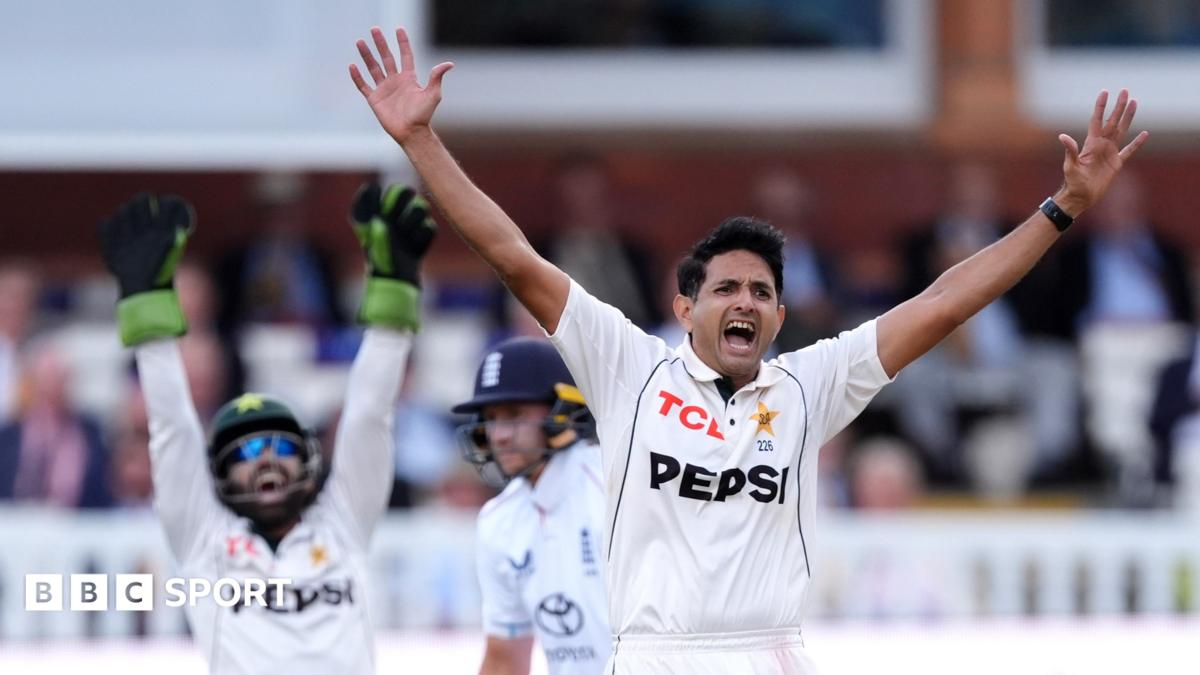
    A diplomatic and sporting controversy has overshadowed the second Test between Pakistan and England at Lord’s, after reports emerged that the Pakistan Cricket Board (PCB) threatened to abandon the ongoing three-match tour over a planned Sky Sports interview with the imprisoned former Pakistani prime minister and cricket legend Imran Khan’s two sons.

    The interview, featuring Suleiman and Kasim Khan, aired during the lunch break on the opening day of the Lord’s Test. In the sit-down conversation hosted by former England captain Michael Atherton, the pair raised urgent concerns about the prison treatment and personal security of their 73-year-old father, while also criticizing the British government’s public response to his detention. Imran Khan, who led Pakistan to its historic 1992 Cricket World Cup victory and served as the country’s prime minister from 2018 to 2022, has been held in prison since 2023 on corruption charges he has repeatedly and vehemently denied.

    According to insider sources, the PCB warned the England and Wales Cricket Board (ECB) that it would call off the Lord’s Test and the remaining matches of the tour if the interview went ahead. Despite receiving a pre-broadcast complaint about the segment, Sky Sports went ahead and aired a edited version of the conversation. Pakistani public broadcaster PTV, which holds domestic rights to the tour and uses Sky’s broadcast footage, opted to cut the interview from its domestic transmission.

    In the wake of the incident, Pakistan’s head coach Sarfaraz Ahmed has claimed he and the full national squad had no advance knowledge of the PCB’s threat. Speaking to reporters at the close of play on day two, the former Pakistan wicketkeeper dismissed any suggestion that the team considered refusing to return to the field after lunch for the afternoon session.

    “I don’t know anything. I’m just focusing on the match,” Sarfaraz said. “You’re talking about the interview? We don’t know about the interview. All are OK. We were having lunch at that time.”

    The ECB confirmed it sought official guidance from the UK Foreign, Commonwealth and Development Office amid rising tensions over the broadcast. Ultimately, the Pakistan side did return to the pitch after the lunch break, and the Test has proceeded without further disruption through the end of day two. As of the close of play on day two, England held a 261-run first innings lead, moving to 81 for three in their second innings. Sky Sports also confirmed it received no additional formal complaints regarding the interview after broadcast.

    Notably, this incident marks a rare high-profile moment of off-field tension in recent cricket relations between the two nations. After a 17-year hiatus in England tours to Pakistan driven by widespread security concerns, this will be the fourth separate England tour to Pakistan in four years, when the side travels to the country in October for a tri-series against Pakistan and Sri Lanka.

    The controversy also echoes an unprecedented incident from 2006, when a Test between the two sides at The Oval was abandoned after Pakistan refused to return to the field following tea on day four, in protest at a ball-tampering accusation from match officials. That match ended with Pakistan being forfeited — the only instance of a Test match forfeiture in the 147-year history of international Test cricket.

    The PCB is currently led by chairman Mohsin Naqvi, who also holds the official position of Pakistan’s interior minister.

  • What will Jackson bring to Villa with Watkins set for exit?

    What will Jackson bring to Villa with Watkins set for exit?

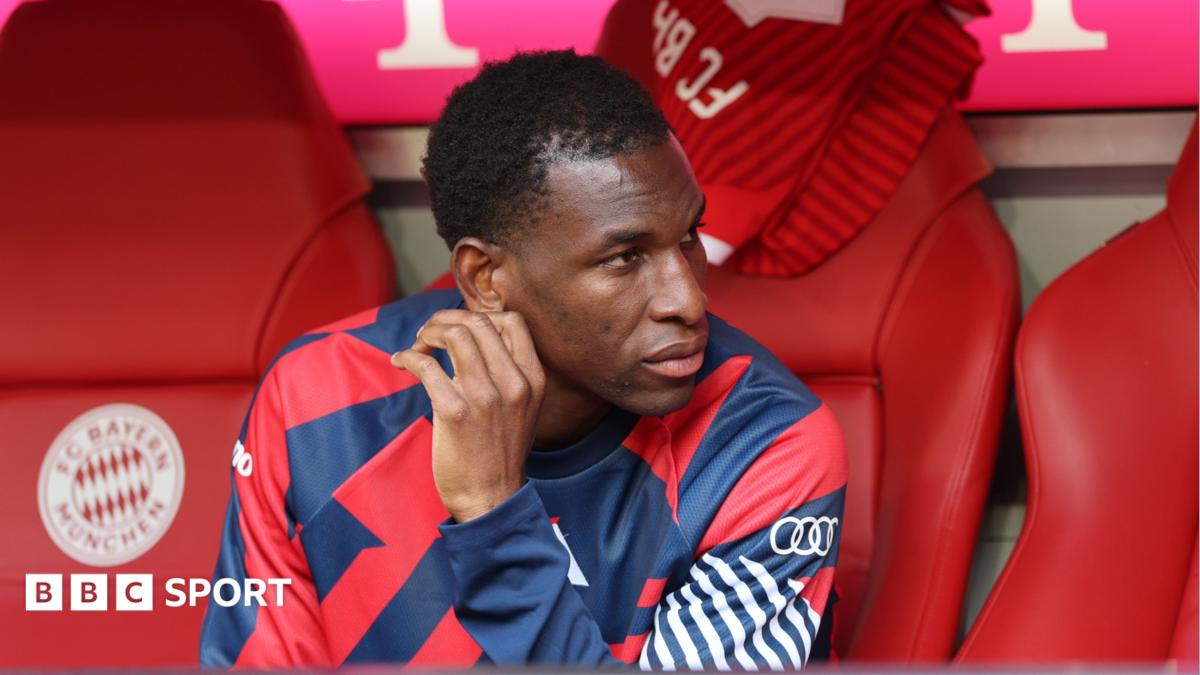
    Aston Villa has finalized the club-record acquisition of striker Nicolas Jackson from Chelsea in a deal that could reach £65 million, with long-serving frontman Ollie Watkins poised to complete a transfer to Saudi Pro League side Al-Hilal. The transfer caps a dramatic summer of squad overhaul for Unai Emery’s side, which has already seen multiple key first-team players, including Morgan Rogers, Ezri Konsa, Youri Tielemans and Lucas Digne, depart Villa Park.

    Jackson, 25, becomes the club’s most expensive signing ever, surpassing the club’s previous addition Johan Manzambi. He joins a new cohort of Villa recruits that also includes Joao Gomes, Zion Suzuki and Matteo Ruggeri, arriving as the club confronts the early fallout of its dramatic squad reshuffle. On the opening weekend of the new Premier League season, Emery’s side suffered a demoralizing 4-0 defeat to Brighton, forced to field Emiliano Buendia as an makeshift centre-forward after Watkins was sidelined, Tammy Abraham picked up an injury, and 17-year-old rookie Brian Madjo was also unavailable.

    The arrival of the Senegal international fills the critical gap for a specialist striker, and comes as Villa prepares to end Watkins’ six-year tenure at the club. During his time at Villa Park, the 30-year-old England international scored 108 goals in 278 appearances, establishing himself as one of the foundational players that drove the club’s dramatic rise under Emery’s leadership. However, statistical analysis shows that Jackson is far more than a like-for-like replacement, bringing a distinctly different playing profile to the central striking role.

    A deep comparison of the two players’ performance data from last season highlights Jackson’s sharp attacking output. During his 2025-26 season-long loan at Bayern Munich, Jackson notched 11 goals and 3 assists across all competitions in just 1,320 minutes of play, averaging 1.0 goal involvements per 90 minutes – a rate well clear of Watkins’ 0.6 per 90, which came from 21 goals and 5 assists across 3,837 minutes for Villa. Jackson also outperformed Watkins in nearly every underlying attacking metric: he averaged 3.8 shots per 90 to Watkins’ 2.6, 2.2 shots on target per 90 to Watkins’ 1.2, an expected goals (xG) rate of 0.7 per 90 to 0.5, and 8.5 touches in the opposition box per 90 compared to Watkins’ 5.6.

    This trend of strong underlying attacking numbers predates Jackson’s spell in Germany. Among all Premier League players with at least 5,000 minutes of league action since January 2020, only Erling Haaland has posted a higher non-penalty xG per 90 than Jackson’s 0.55. While Jackson’s ability to consistently get into high-quality scoring positions is not in question, his finishing has been the subject of ongoing scrutiny across his two seasons at Chelsea. Across his two campaigns in west London, he scored 14 goals from an xG of 18.7 in 2023-24, followed by 10 goals from an xG of 12.3 the next season, converting just 18 of 61 clear big chances. Notably, however, Watkins has also had similar finishing inconsistencies, converting 24 of 73 big chances since joining Villa in 2020, and last season the gap between the two players’ conversion rates was negligible: Jackson converted 19.6% of his total shots and 40.9% of his big chances, compared to 18.9% and 43.2% for Watkins.

    An important caveat shapes the statistical comparison: Jackson made only 15 starts in 34 appearances for Bayern, with most of his minutes coming off the bench. Opta analysts note that this limited, substitute-heavy sample size can inflate per-90 performance metrics, as players often enter matches against fatigued defenses. That said, the tactical alignment of their roles makes the comparison largely fair: both played almost exclusively as centre-forwards last season, with 92% of Watkins’ minutes coming as the central striker in Villa’s 4-2-3-1 system, and 86% of Jackson’s minutes at Bayern coming in the same role in an identical formation.

    Beyond scoring, the two strikers have fundamentally different styles of play. Jackson averaged 46.6 open-play touches per 90 and 24 completed passes per 90, compared to just 29.5 touches and 11.6 passes for Watkins. He is also far more involved in build-up and attack progression: he records twice as many shot-ending carries (1.6 per 90 vs 0.8), successful take-ons (1.6 per 90 vs 0.82) and passes into the penalty area (2.5 per 90 vs 0.7) compared to Watkins. Opta touch maps confirm this divide: Watkins’ involvement is heavily concentrated in the central areas of the final third and penalty box, while Jackson picks up possession across a much broader range of attacking zones.

    When compared to a 10-year sample of 1,577 strikers across Europe’s top five leagues, Jackson ranks in the 85th percentile for chances created, 77th for progressive carries and 73rd for total touches, while Watkins ranks 28th, 53rd and 8th in the same categories. This shift signals a major tactical change for Villa, moving away from a low-touch, fixed focal point striker to a more dynamic forward who integrates into build-up play early.

    Defensively, Jackson also brings a more aggressive high-pressing profile. He averaged 34 high pressures per 90 (compared to 31.4 for Watkins) and won 2.7 possessions per 90 compared to 1.8 for Watkins, with 0.9 of those recoveries coming in the final third, versus 0.6 for Watkins. Jackson ranks in the 88th percentile for attacking third possessions won among the Opta striker sample, compared to Watkins’ 43rd. The two are nearly identical in their rate of runs in behind defences (13 per 90 for Jackson vs 12.7 for Watkins), though Watkins makes slightly more of those runs into the penalty area, and holds an edge in aerial duels, winning 1.2 per 90 compared to Jackson’s 0.7.

    Villa’s move for Jackson is rooted in existing familiarity: Emery first coached the striker at Villarreal, where Jackson made 27 appearances, scoring three goals and notching three assists in 1,195 minutes after arriving from Senegal. Jackson has openly credited Emery with transforming his game, noting that when he first arrived in Europe he had natural dribbling talent but little structured understanding of off-ball movement, and Emery helped turn his raw instinct into a polished, tactical skill set.

    Jackson’s development accelerated rapidly after Emery left Villarreal. During the 2022-23 La Liga season, he posted a non-penalty xG plus expected assists rate of 0.56 per 90, a mark bettered by only seven players with at least 1,500 minutes that season – all of whom played for elite Spanish sides Barcelona, Real Madrid or Atletico Madrid. Ten of his league goal involvements that season came after he carried the ball into dangerous areas, a total trailing only Vinicius Jr despite Jackson playing far fewer minutes. That form earned him a 2023 transfer to Chelsea, where he scored 30 goals and added 12 assists in 81 appearances before last season’s loan move to Bayern.

    Jackson’s spell at Bayern was limited by squad depth rather than poor performance. The club’s loan agreement included an obligation to buy triggered by a demanding appearance threshold, but Harry Kane stayed fully fit and in prolific form, while the strong performances of Luis Diaz and Michael Olise further cut into Jackson’s opportunities. Even so, he still scored 11 goals across all competitions, and only Kane recorded a better rate of open-play goals per 90 in the Bundesliga for Bayern last season. Then-Bayern coach Vincent Kompany publicly defended Jackson from criticism, highlighting the quality of forwards ahead of him in the pecking order and affirming that Jackson had trained and performed to a high standard.

    For Villa, the trade-off represents a clear strategic shift. Watkins delivered consistent goals, power and reliability during one of the most successful eras in the club’s modern history. Jackson, five years younger than Watkins, brings a more dynamic, all-around attacking profile that aligns with Emery’s evolving tactical plans. While questions remain over whether Jackson’s strong per-90 numbers will hold up over a full season of regular starts, and his inconsistent finishing at Chelsea has fueled ongoing doubts, Villa is not taking a gamble on an unproven talent. Emery already knows Jackson’s game from their time together at Villarreal, and the club is replacing a 30-year-old striker with a 25-year-old whose underlying numbers suggest he still has significant room for growth.

    If the deal cycle concludes with Watkins’ departure to Al-Hilal confirmed, the 2024/25 Europa League winners will not just have replaced their starting centre-forward – they will have redefined the role their number nine plays in Emery’s system.

  • Virginia family with 4 relatives missing in the Nepal-China floods pleads for more rescue help

    Virginia family with 4 relatives missing in the Nepal-China floods pleads for more rescue help

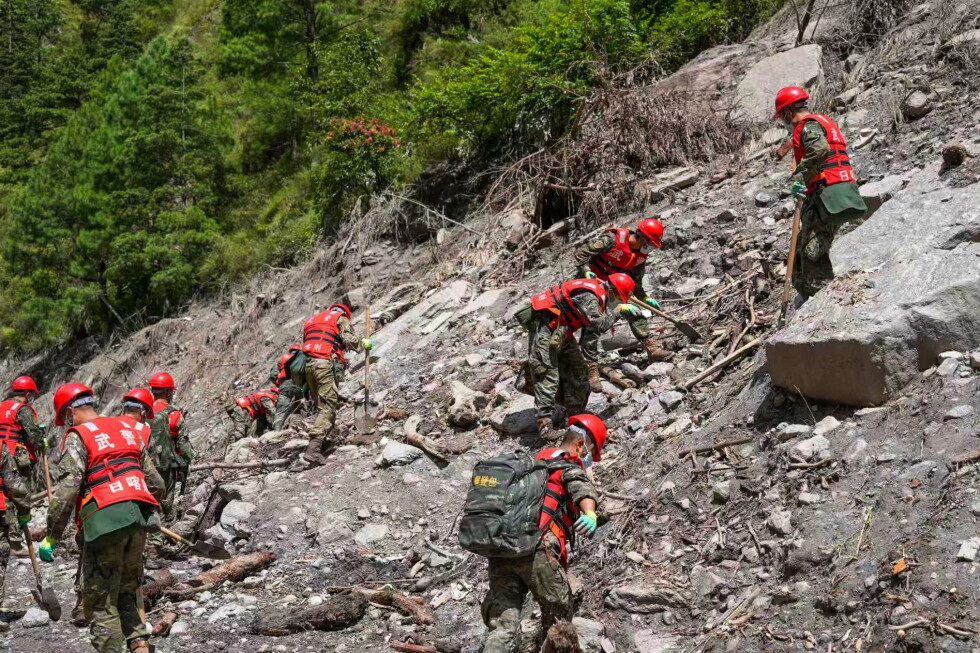
    Days after catastrophic flash floods tore through the Nepal-China Himalayan border region, dozens of North American relatives of missing trekkers join thousands of grieving families worldwide clinging to fragile hope that their loved ones could still be found alive.

    Among those waiting for answers is 27-year-old Mukti Patel, who has gathered with close friends and remaining family at her parents’ home in Richmond, Virginia, since learning the devastating news. Five members of her extended family are among the missing: her 56-year-old father Umesh Kumar, her 32-year-old sister Akanksha Patel, Akanksha’s 32-year-old husband Ishan, and Ishan’s 59-year-old mother Shilpa. The four had joined a 14-day organized trek run by Himalayan Glacier Adventure and Travel Company, a firm with a U.S. office in Baltimore. The entire group of 40 guests and 7 tour guides on the excursion has been unaccounted for since the flood hit.

    Patel recounted that the final contact the family had with the trekking group came on Wednesday, the day the flood struck, when the domestic team called to wish Ishan a happy 32nd birthday. The group was staying in a local hotel near the flood zone that was completely swept away by the surging waters, but Patel refuses to give up on their survival. “I shouldn’t talk in past tense yet,” she said Friday while sharing memories of her loved ones. “We don’t know anything.”

    She described her sister Akanksha, a psychiatrist who dedicated her career to dismantling stigma around mental illness, as a kind and guiding force in her life. “Everything I’ve done in life has been off the blueprint of my sister. There’s no ounce of meanness in her.” Her father Umesh, a long-time adventure enthusiast who had dreamed of making the Himalayan trek for decades, is known for his generous spirit and volunteered to support COVID-19 pandemic victims during the public health crisis. Ishan, an orthopedic surgeon, brought constant joy to his wife’s life, Patel added. The four missing relatives hold dual citizenship between North American nations: Umesh and Akanksha are Canadian citizens, while Ishan and Shilpa hold both Canadian and U.S. passports.

    As of the latest update, more than 2,000 people remain listed as missing following the disaster, which has already confirmed hundreds of fatalities. The U.S. State Department reports that approximately 90 American citizens are among those unaccounted for. Rescuers are still working to extract survivors from layers of mud and debris left by the flood, but progress has been slow and difficult in the hard-hit mountainous region.

    Sanket Pandey, managing director of the tour company organizing the trek, told reporters that during a recent Zoom call with family members of the missing trekkers, many asked if they could travel to the disaster site to support search efforts, and questioned whether any of their loved ones could be trapped in surviving air pockets in collapsed structures. “It’s really difficult to have nothing,” Pandey said of the ongoing uncertainty for waiting families.

    Patel has issued a call for greater international support to speed up rescue and recovery operations in the affected region, as waiting families continue to hold out hope, however thin, that their loved ones will be brought home safely. “I want my family to come home,” she said.

  • Driven by distraction? Trump steps up stunts as US midterms loom

    Driven by distraction? Trump steps up stunts as US midterms loom

    As the high-stakes November 2025 US midterm elections approach, President Donald Trump has sharply escalated a familiar political playbook: rolling out headline-grabbing stunts to redirect public attention away from issues weighing on his approval ratings and toward his preferred political narrative. The 80-year-old former reality television star, who has long relied on the tactic of shifting conversations when headlines turn unfavorable, is now targeting his diversions with unusual precision to drown out coverage of the ongoing Iran conflict and economic anxiety hitting American households.

    “This president specializes in diversions,” William Galston, a senior fellow at the Brookings Institution, told Agence France-Presse. After six months of open conflict, the Iran war has emerged as a major drag on Trump’s approval numbers, with independent polling consistently placing his support in the low 30s. With no clear end to the conflict in sight, The Atlantic has reported that the White House’s core strategy is to push the war out of public consciousness: avoiding large new military deployments and instead focusing on low-profile economic sanctions against Tehran, while creating new newsworthy moments to draw the press and voters elsewhere.

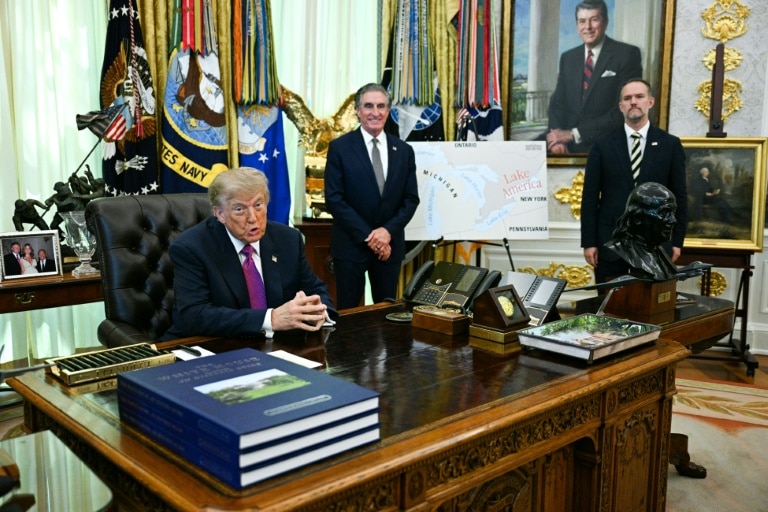
    The most striking of these diversions came last Thursday, when Trump summoned reporters to the Oval Office to make an unprecedented announcement: he had signed an executive order to rename Lake Ontario—the shared transboundary water body between the United States and Canada—”Lake America.” The provocative move comes on the heels of a days-long, headline-dominating trade dispute with Ottawa, and fits neatly into the “America First” messaging that Trump has centered for his core political base.

    Democrats across the Capitol were quick to condemn the action as a juvenile, transparent bid to distract from pressing national issues. “It’s a pathetic attempt at distraction, and it’s working families who are paying the price,” Senate Minority Leader Chuck Schumer said in a formal statement following the announcement.

    The Lake Ontario renaming is far from an isolated incident. Just a week earlier, Trump unexpectedly revived discussions of potential new talks with North Korean leader Kim Jong Un—a topic he had not addressed publicly since his second inauguration in January 2025. He heaped praise on Kim, whom he met three times during his first term, while criticizing US long-time ally South Korea and announcing further cuts to joint military exercises with Seoul. He has also leaned into more personal, viral-friendly topics, sharing frequent updates on his planned renovations to the White House on his Truth Social platform—most recently posting about “cleaning and regrouting the Granite” at the building’s main entrance, a move Democrats argue highlights how out of touch he is with everyday voter concerns.

    Beyond diverting attention from problematic issues, Trump’s stunts also serve a second goal: keeping all political focus centered on himself ahead of the midterms. After his hand-picked endorses won a string of key Republican primaries, the two-term president has publicly argued he is the GOP’s biggest asset in the upcoming vote. “Pretend I’m on the ballot,” he told Fox News in a recent interview. Drawing from a $400 million campaign war chest, Trump is also set to roll out a national television ad campaign touting his own presidential record, as many within the party fear Republicans could lose their narrow control of both chambers of Congress.

    The White House has also amplified a curated list of administration wins this week, highlighting 14 policy achievements ranging from new restrictions on mail-in voting to expanded migrant deportations to energize the base.

    Even with these aggressive tactics, Trump faces significant barriers to shifting the national conversation to his preferred ground. The Iran conflict remains a persistent political quagmire for a president who campaigned on keeping the United States out of costly new foreign wars. If global oil prices remain elevated, driving up overall cost of living for households, economic issues will likely remain the top priority for voters regardless of viral stunts. “It’s hard to change people’s minds when you’re talking about things they’re experiencing directly,” Galston noted.

    The White House has also recently lost one of its most effective communications leaders, after popular Press Secretary Karoline Leavitt stepped down to spend more time with her children, leaving a gap in the administration’s ability to message around key issues. After the midterms, Trump is also set to enter the lame-duck phase of his presidency, which could dim his political star unless he finds new ways to stay in the national spotlight.

    One potential path to remaining center stage is building suspense around his 2028 political plans. Trump has already dropped repeated hints that he could run for a third presidential term—a move barred by the 22nd Amendment to the US Constitution, but political observers have long learned that betting against Trump’s willingness to challenge established norms is rarely a safe wager.

  • Russia ramps up rhetoric but wants to avoid war with Nato, Western officials say

    Russia ramps up rhetoric but wants to avoid war with Nato, Western officials say

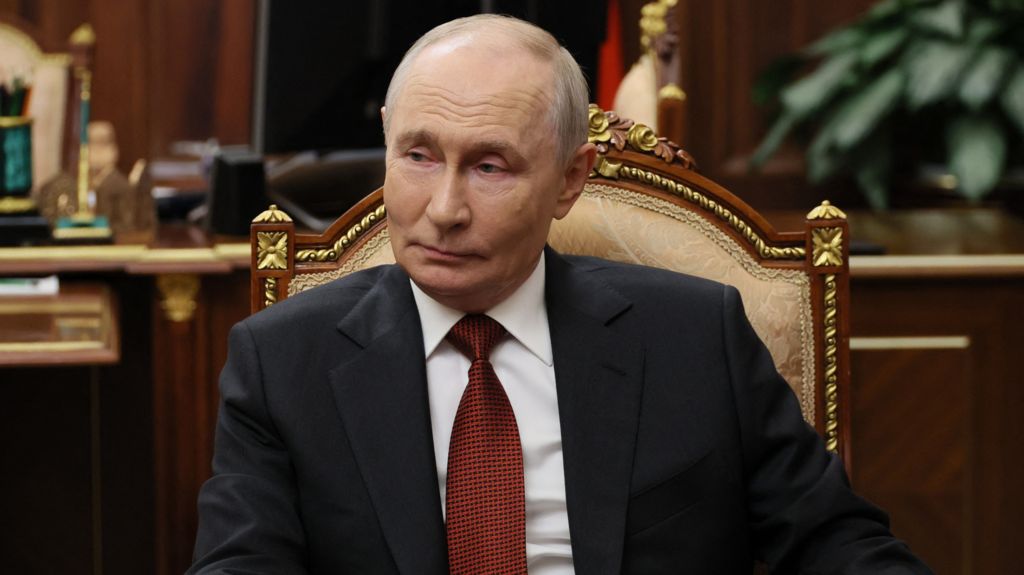
    Senior anonymous Western officials have shared their latest assessment of Russian President Vladimir Putin’s strategic intentions amid soaring tensions over the Ukraine conflict, concluding that Putin’s primary goal remains avoiding direct military confrontation with the NATO alliance — even as his government ramps up aggressive rhetoric targeting the United Kingdom and other Western backers of Kyiv.

    Recent public speculation has framed this week’s high-profile visit of CIA Director John Ratcliffe to Moscow as a mission centered on delivering a stark warning: that any attack on a NATO member state would trigger severe consequences. But Western officials push back on that framing, noting that recent threatening statements from Moscow — including hints that British military personnel and weapons manufacturing facilities could become legitimate targets — are far from unprecedented. Instead, they argue, these verbal barrages align perfectly with long-standing Russian military doctrine designed to test Western unity and erode public support for continued aid to Ukraine.

    Beyond external pressure tactics, officials say the heated rhetoric also mirrors growing domestic strains on Putin’s regime. Months of grinding, costly progress in Ukraine, paired with increasingly frequent Ukrainian long-range strikes that hit targets deep inside Russian territory, have piled unrelenting pressure on the Kremlin leader.

    Putin and his senior aides have repeatedly dismissed claims that Russia plans to attack NATO members as baseless fearmongering, a framing that has found acceptance from U.S. President Donald Trump, who stated publicly this week that he is convinced Putin will never launch an attack on NATO sovereign territory. This stands in sharp contrast to the period just before Russia’s 2022 full-scale invasion of Ukraine, when Putin repeatedly gave public assurances he had no plans to attack his neighbor even as U.S. intelligence documented large-scale military preparations underway along the border.

    While direct military confrontation is not seen as imminent, Western officials warn that Russia will continue to ramp up so-called hybrid activities that fall below the threshold of open war. These tactics include cyberattacks against critical infrastructure, covert sabotage operations, and targeted assassination attempts on European soil, all designed to fracture Western resolve and force a reduction in military and political support for Kyiv. Officials also emphasize a key underrecognized risk: this gradual escalation of hybrid action increases the chance of a strategic miscalculation that could accidentally spiral into full-scale military conflict between Russia and NATO.

    In recent weeks, a series of unexplained drone incidents across multiple NATO member states have deepened these concerns. Earlier this month, an explosive-laden drone crashed on the runway of Leipzig Airport in Germany, a critical logistics hub that handles much of the Western military equipment bound for Ukraine. While no conclusive evidence has linked the incident directly to the Kremlin, and Russia has repeatedly denied any involvement, this event is only the latest in a string of drone sightings over European military bases and major airports stretching back to 2024 — all of which Western intelligence agencies suspect are tied to Russian operatives.

    The Leipzig incident prompted the head of France’s domestic intelligence agency to issue a stark warning, urging European governments to prepare for the possibility of more frequent, more violent direct hostile actions on European national soil. Despite these risks, one senior Western official stressed that NATO allies must maintain a measured posture: remaining alert to emerging threats without giving in to panic, while also avoiding the complacency that could leave vulnerabilities open to exploitation. The UK government has already reaffirmed its commitment to Ukraine, stating that recent Russian threats will not alter its policy of military and political support for Kyiv.

    Western officials’ assessment also paints a detailed picture of the current state of the war in Ukraine, noting that the conflict has escalated noticeably in 2025, with both Russian and Ukrainian forces expanding their long-range strike campaigns against each other’s territory. Contrary to some speculation, officials say Putin has not softened his maximalist territorial goals for Ukraine, even as mounting frustrations build within Russian domestic circles.

    The report notes that growing petrol shortages across Russia have started to erode public backing for the war, putting increasing political pressure on Putin. Still, officials emphasize that this pressure does not currently amount to an existential challenge to his hold on power. On the battlefield, Russia continues to make incremental territorial gains in the eastern Donbas region, but the advance comes at a devastating cost: Western intelligence estimates Russia is sustaining 6,000 more killed and wounded soldiers per month than it is able to recruit through existing enlistment channels. Despite this severe manpower shortage, officials say there is currently no indication that Putin will order a new wave of mass mobilization to replenish ranks, a move that could spark further domestic unrest.

  • Japanese’s Rei Sakamoto earns a US Open spot, but beats his retiring hero Kei Nishikori to do it

    Japanese’s Rei Sakamoto earns a US Open spot, but beats his retiring hero Kei Nishikori to do it

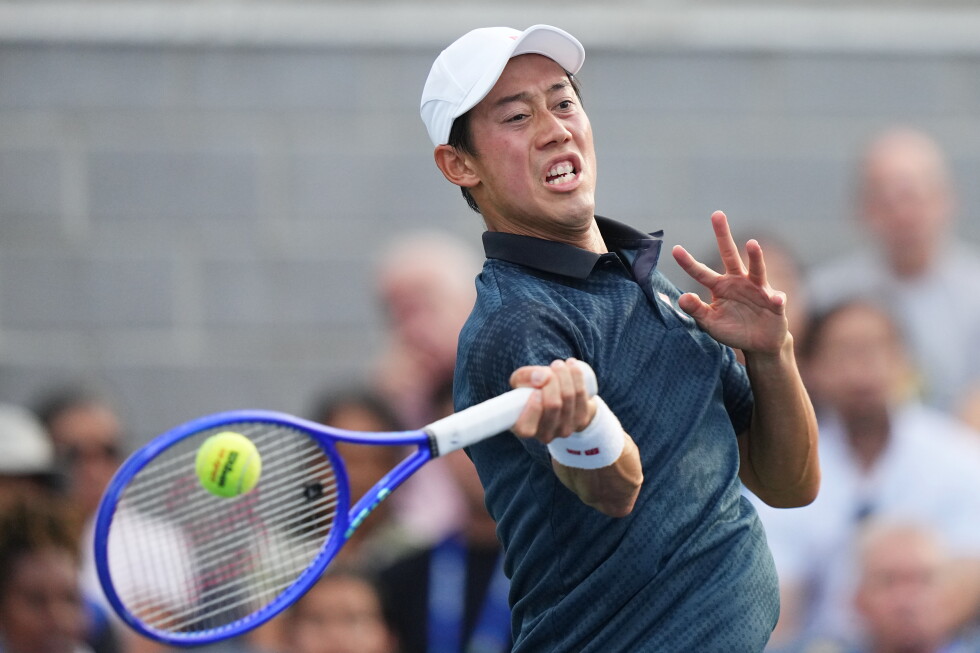
    FLUSHING MEADOWS, N.Y. — The final round of U.S. Open qualifying delivered one of the most emotional, generational matches of the 2024 hard court swing, as rising Japanese prospect Rei Sakamoto earned his spot in the tournament’s main draw — at the expense of the country’s greatest men’s tennis star, who was chasing one last Grand Slam appearance to cap his final professional season.

    Delayed one full day by persistent rain, the winner-take-all final qualifying clash on Friday ended with a 6-4, 7-6(3) victory for 20-year-old Sakamoto, capping a stunning run that pushed the 36-year-old Nishikori out of the final Grand Slam of the year and brought a poignant end to his bid for one last major spotlight.

    For the young up-and-comer, the win was everything he had dreamed of — except for who it came against. Sakamoto grew up idolizing Nishikori, recalling vividly when he was just 8 years old watching the veteran star become the first Asian man to reach a Grand Slam singles final at the 2014 U.S. Open, a breakthrough that reshaped Japanese tennis forever.

    “I honestly grew up watching him play and he was my idol for my whole life,” Sakamoto told reporters after the match. “It’s also a pity to see his last season.”

    Sakamoto typically avoids looking at the qualifying draw ahead of his matches to avoid distractions, but this matchup was impossible to miss. Even before the final round, his mother spoiled the pairing, texting him after the initial draw was released: “Hey, I hope you can make it to the final and play Kei.”

    Nishikori, a former world No. 4 who has battled chronic injuries for nearly a decade, announced earlier this year that 2024 would be his final season on tour, with his retirement planned following the Japan Open later this fall. His ranking had dropped too far to earn a direct main draw spot at the U.S. Open, but tournament officials awarded him a wild card into qualifying, giving him a shot to extend his Grand Slam career one last time.

    The veteran lived up to expectations through the first two qualifying rounds, picking up two wins to set up the clash with Sakamoto. He even saved two match points from the young star Friday, pushing the second-set tiebreaker to a competitive finish. But Sakamoto’s power prevailed, as he fired 19 aces total, closing out the match with a final unreturnable serve that sent him through.

    Despite the disappointing loss, Nishikori embraced the moment as a passing of the torch, praising Sakamoto as the future of Japanese men’s tennis. “Not happy to lose today, but I’m happy for Rei,” he said after the match. “He’s the next Japanese top player.”

    After the final point, U.S. Open officials honored Nishikori with a framed portrait of his career highlights on court, with Sakamoto joining the legend to hold the frame for a commemorative photo. For Sakamoto, the milestone of reaching his first U.S. Open main draw carried a heavy, bittersweet weight.

    “I think a lot of people, most of the people still follow tennis because of him,” Sakamoto said. “So he’s a superstar and he did a lot to Japanese tennis I think.”

    Top men’s seed Alexander Zverev echoed that sentiment, noting that injuries cut short what would have been one of the greatest careers in modern men’s tennis. “I think his career would have been one of the best, maybe on a similar level to maybe an Andy Murray or Stan Wawrinka if he didn’t have so many injuries, because he was injured a lot, especially in his prime,” Zverev said. “Once he got up to No. 4 in the world, No. 5 in the world, every single time he got injured. So I’d say in that aspect he was a little bit unlucky, but from a tennis point of view, he was amazing.”

    While Nishikori’s exit dominated the qualifying storylines, other notable results unfolded across the qualifying courts. 2024 Olympic women’s singles gold medalist Zheng Qinwen secured a comeback three-set win to book her main draw spot, while 2019 U.S. Open champion Bianca Andreescu — who has spent much of her post-title career sidelined by injury — blew a late lead and fell in three sets. Former semifinalist Grigor Dimitrov advanced to the main draw Thursday after his opponent withdrew from their final qualifying match, in a twist that echoes the 2019 tournament where Dimitrov beat Roger Federer in what became Federer’s final U.S. Open match.

  • Ben Gvir to release children’s book glorifying his racist ‘achievements’ in power

    Ben Gvir to release children’s book glorifying his racist ‘achievements’ in power

    Israel’s ultranationalist far-right faction Jewish Power is moving forward with a provocative new outreach strategy targeting young Israelis: launching a children’s book that celebrates the controversial career and policy agenda of its leader, incumbent Israeli National Security Minister Itamar Ben Gvir. The illustrated publication, designed to reach a core and fast-growing segment of Ben Gvir’s voter base, will not be distributed through official Israeli educational institutions; instead, party organizers plan to hand out copies directly to young students outside school campuses to maximize grassroots exposure.

    Israeli media reports confirm the book was crafted using simplified, accessible language tailored specifically for a child audience. Titled *The Minister Who Didn’t Stop*, the book is scheduled for an official launch at the party’s regional conference in Netanya on September 1, a date deliberately chosen to align with the opening of the Israeli academic year and capitalize on back-to-school momentum.

    In an official statement, Ben Gvir’s office defended the project, framing it as a public education effort: “We are proud to launch the children’s book … and through it tell the children of Israel and the entire Israeli people the story of Minister Ben Gvir’s tremendous achievements throughout his four years as minister of national security.”

    The push to court young voters comes as support for Ben Gvir and Israel’s broader far-right movement has surged dramatically among younger Jewish Israeli demographics in recent years. Ben Gvir’s young supporters have repeatedly been documented chanting the virulently anti-Palestinian slogan “Your village should burn” at political rallies—a slogan that glorifies the historical destruction of Palestinian villages and advocates for the forced expulsion of all Palestinians from land claimed by Israel.

    Data from independent Israeli think tank the Israel Democracy Institute underscores the scale of this ideological shift: 73 percent of Jewish Israelis between the ages of 18 and 24 now identify as right-wing, creating what political analysts describe as fertile ideological ground for extremist politicians like Ben Gvir to expand their influence.

    But far from the “tremendous achievements” the book highlights, Ben Gvir’s tenure has been marked by international condemnation and widespread allegations of human rights abuses. A long-time follower of Meir Kahane, an American-born Jewish supremacist whose ideology is classified as terrorist by multiple governments, Ben Gvir has already been convicted by Israeli domestic courts on charges of inciting racial hatred and supporting a banned terrorist organization.

    Today, Ben Gvir is a global pariah, barred from entering at least 10 countries over his extremist rhetoric and human rights record, and placed on a Schengen Area watchlist that effectively blocks entry to most of Europe. This international isolation is widely seen as symbolic of the broader global rebuke of Israel’s current government, which faces widespread accusations of carrying out genocide in Gaza and enforcing apartheid policies across the occupied West Bank.

    Just weeks before the book launch, Ben Gvir publicly called on Israeli military forces to execute “30 or 40” Palestinian civilians in Gaza every single night, infamously claiming that many Palestinians living in the besieged enclave are “not worthy of life” and “not even people.” When asked in a previous interview whether the racist chant “Death to Arabs” constitutes a moral wrong, Ben Gvir flatly denied the charge, responding “No. I don’t think so.”

    Among Ben Gvir’s most controversial policy actions is a series of changes to the Israeli prison system that leading international human rights organizations have condemned as amounting to systematic torture and starvation of Palestinian political detainees. Ben Gvir has personally ordered mandatory cuts to food rations for Palestinian prisoners, openly stating that “One of my top goals … is worsening the prisoners’ conditions.”

    This report is original coverage from Middle East Eye, an independent outlet focused on unfiltered reporting and analysis of the Middle East and North Africa region.

  • Exclusive: Cambridge colleagues argued a Google search would have prevented Nathan Cofnas hiring

    Exclusive: Cambridge colleagues argued a Google search would have prevented Nathan Cofnas hiring

    The death of prominent Cambridge University sociologist Jason Arday earlier this month has sparked a cascading controversy that pulls back the curtain on long-simmering tensions over academic hiring, free speech, and the growing influence of U.S.-led anti-diversity culture wars in British higher education. New internal documents obtained by Middle East Eye reveal that senior academic leaders at Cambridge privately conceded as early as 2024 that Nathan Cofnas – the self-identified race realist who first brought plagiarism allegations against Arday last month – should never have been hired by the institution in the first place.

    Cofnas, who currently holds a postdoctoral research position at Belgium’s Ghent University, has dominated headlines since his unsubstantiated plagiarism claims against Arday spiraled into a relentless media campaign. Arday, a Black sociologist who rose to academic prominence after a non-traditional educational path, resigned from his Cambridge post earlier this month amid the onslaught of coverage, saying he had reached “the limits of what any person should reasonably be expected to endure.” He died shortly after stepping down.

    In the wake of Arday’s death, Cofnas has been placed under formal disciplinary investigation and temporarily suspended by Ghent University over the inflammatory public comments he made about Arday, including describing the sociologist as “retarded,” “mentally disabled,” and “just another DEI hire.” Just days after his suspension, however, Cofnas announced he would be allowed to continue his research on campus while the probe moves forward, a outcome he directly credited to public intervention from U.S. Ambassador to Belgium Bill White. White had openly condemned Cofnas’s suspension, stating the Trump administration would re-evaluate its institutional ties with Ghent University over the move. Beyond diplomatic backing from the U.S. government, Cofnas has also received public amplification from tech billionaire and X owner Elon Musk, as well as consistent coverage across a network of right-wing media outlets and podcasts.

    Scrutiny of Cofnas’s academic career has now turned back to his previous appointment at Cambridge, where both he and Arday held positions. In 2022, Cofnas was hired as a Leverhulme Trust early career fellow in Cambridge’s philosophy department and appointed a fellow at Emmanuel College. That tenure ended abruptly in April 2024, after Cofnas published a February 2024 blog post advancing extreme racial pseudoscience: he claimed race was inherently linked to academic ability, argued that Black people would “disappear from almost all high-profile positions outside of sports and entertainment” under a true meritocracy, and called for “some barriers set up between races in order for each one to express its own unique genius.”

    Internal minutes from a closed-door February 23, 2024 meeting held to address student protests over Cofnas’s remarks, obtained by MEE, lay bare senior leadership’s private misgivings about his hiring. Bhaskar Vira, Cambridge’s pro vice chancellor for education, told attendees that senior university management was widely “outraged” by Cofnas’s comments. Vira noted that while Cofnas held a fellowship at the constituent college Emmanuel, the central university was exploring formal responses, adding that Cofnas had crossed acceptable lines even within the framework of academic free speech – though he cautioned the university needed to seek legal guidance before acting.

    Angela Breitenbach, then-chair of the philosophy faculty, openly acknowledged that hiring Cofnas had been a misstep. She told meeting attendees that a simple Google search would have revealed the full extent of Cofnas’s extremist views before the appointment was finalized, admitting the original hiring process was “not satisfactory ultimately.” Breitenbach explained that the process had only involved one or two reviewers who did not fully vet all application materials, and that the university had since revised its protocols to make all applications accessible to the full faculty for review. Associate professor Sophie Dandelet further raised concerns that Cofnas’s extremist racial views would compromise his ability to teach a diverse student body. A student and faculty petition for Cofnas’s dismissal gathered more than 1,200 signatures that March, and Emmanuel College moved to terminate his fellowship shortly after, prompting Cofnas to file a lawsuit alleging belief discrimination. The college ultimately prevailed in court, with the judge ruling Cofnas’s blog post had caused measurable reputational harm to the institution.

    The scandal has also cast new light on longstanding questions about Cofnas’s qualifications at his current institution, Ghent University. The Guardian reported this week that Ghent’s own philosophy department raised formal concerns about Cofnas’s appointment as early as May 2024, sending an official statement to the university’s rector questioning his “limited expertise” for the role. An anonymous senior philosophy of science academic quoted by The Guardian described Cofnas’s work as “abysmal” and “shoddy,” accusing him of presenting unproven racial pseudoscience as legitimate science without any supporting evidence. The department’s statement also questioned the transparency of Cofnas’s hiring, noting that out of 14 qualified candidates, it was “very improbable” Cofnas was the best choice, and a large majority of department members suspected his selection was “an ideological choice … decided in advance.” Cofnas has rejected all criticism, stating his academic qualifications are a matter of public record, and framing the scrutiny as an effort to censor his free speech.

    The media frenzy surrounding Arday after Cofnas’s initial plagiarism allegations has also come under widespread condemnation for its extreme disproportion. An analysis by media watchdog NewsCord found that in just 22 days after Cofnas’s claims became public, 229 articles were published about Arday across UK media outlets – 188 of those came in the nine days before Arday’s death, averaging 21 articles a day. To put that volume in context, NewsCord noted that only 166 articles were published about Peter Mandelson in the two weeks after the release of the Jeffrey Epstein files, a far higher-stakes political scandal. As of this week, more than 218,000 complaints have been filed with the UK’s Independent Press Standards Organisation (Ipso) through NewsCord’s campaign – more than double the previous record for complaints over a single media campaign, and nearly 10 times the number filed against Jeremy Clarkson’s controversial 2022 column about the Duchess of Sussex.

    Independent analysis published by Middle East Eye has also cast serious doubt on the core claims against Arday: key biographical claims that attackers claimed were fabricated have been verified as accurate, and the framing of Arday as a habitual, unrepentant plagiarist does not hold up to close examination of his work. Des Freedman, a professor of media and communications at Goldsmiths University, told MEE that the coordinated media campaign against Arday amounted to a shameful partisan attack, not legitimate public interest reporting. “Elements of the press boast that they are watchdogs, but they are also attack dogs,” Freedman said. “Instead of punching up … they punch down,” going after vulnerable people under the guise of acting in the “public interest.” He added that the frenzy was deliberately stoked by a “coordinated, international right-wing movement” that uses figures like Arday as scapegoats to advance anti-diversity, DEI rollback policies that originated in U.S. conservative politics.

    Investigative reporting has now exposed deeper institutional and financial ties linking Cofnas’s campaign to influential right-wing U.S. donors. Byline Times reported last week that Cofnas’s allegations against Arday were amplified by a network of groups linked to billionaire Peter Thiel, founder of U.S. spy firm Palantir. After Emmanuel College dismissed Cofnas in 2024, the UK-based Free Speech Union (FSU) – a pro-free speech advocacy group that often backs right-wing academics – launched a public fundraiser for Cofnas, framing him as a martyr for academic freedom. Multiple Byline Times investigations have linked the FSU to a broader network of far-right academics supported by Thiel’s chief of staff. One key figure in that network is James Orr, a Cambridge divinity faculty academic and FSU adviser who hosted a series of controversial talks by Thiel at Cambridge in January, and serves as head of policy for the UK’s right-wing Reform Party, where he is widely described as Reform leader Nigel Farage’s “kingmaker.” U.S. Vice President JD Vance has even called Orr “my philosopher king.”

    Additional far-right ties have been uncovered in the network promoting Cofnas’s views. Online magazine Aporia, which published a series of pieces amplifying Cofnas’s allegations against Arday and framed the scandal as “the bitter fruit of equalitarianism,” operates as the public arm of the Human Diversity Foundation – recently renamed Polygenic Scores – an organization that has documented links to the German far-right party Alternative für Deutschland.

    Cambridge University has declined to comment on the internal meeting details obtained by MEE, and has not yet issued a new public statement on the broader controversy in the wake of Arday’s death. Ghent University has reiterated that its disciplinary investigation into Cofnas remains ongoing despite his return to campus research work.

  • Norway’s ‘grandfather’: Late King Harald remembered as son Haakon takes the throne

    Norway’s ‘grandfather’: Late King Harald remembered as son Haakon takes the throne

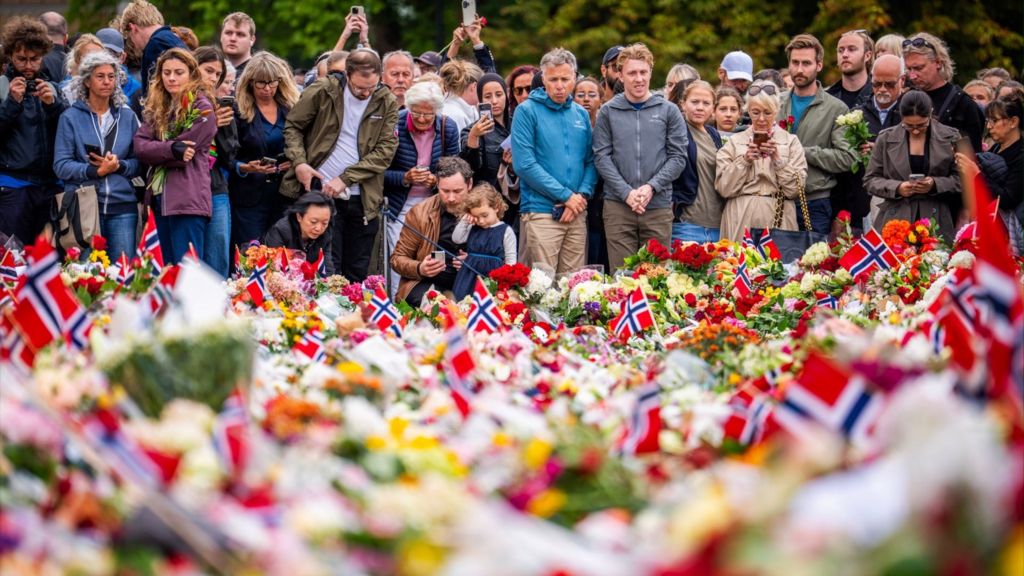
    The Scandinavian nation of Norway entered a period of national mourning this week following the passing of its long-reigning, widely adored King Harald V, who breathed his last on Friday morning. Across the country, Norwegians from all walks of life have turned out to lay flowers at palace gates, light candles in public squares, and share personal tributes to the monarch, who many affectionately referred to as the nation’s “grandfather” for his gentle, approachable demeanor and decades of steady service.

    Harald V, who led Norway through decades of social change and global upheaval, earned a reputation as a unifying figure who connected closely with ordinary citizens, often stepping out of formal royal protocols to engage with communities across the nation. In the wake of his death, a smooth constitutional transition of power is now underway, with his son Haakon formally ascending to the Norwegian throne. Political leaders and royal officials have reaffirmed that the transition follows Norway’s long-established constitutional framework, with no disruption to state functions as the nation processes its loss.

    As tributes continue to pour in from across the globe and within Norway’s borders, Haakon has already begun stepping into his new role, receiving the condolences of international leaders and addressing the nation to honor his father’s legacy.