博客

  • Nepal warns of more possible floods as communities grapple with devastation

    Nepal warns of more possible floods as communities grapple with devastation

    DHADING, Nepal – Fresh fears of additional catastrophic flooding are spreading across northern Nepal on Sunday, after disaster management authorities issued an urgent alert for at-risk communities following a sudden rise in water levels along the Bhotekoshi River. The warning comes days after catastrophic flash floods that have already claimed hundreds of lives and left thousands unaccounted for across the cross-border mountain region spanning Nepal and China’s Tibet Autonomous Region.

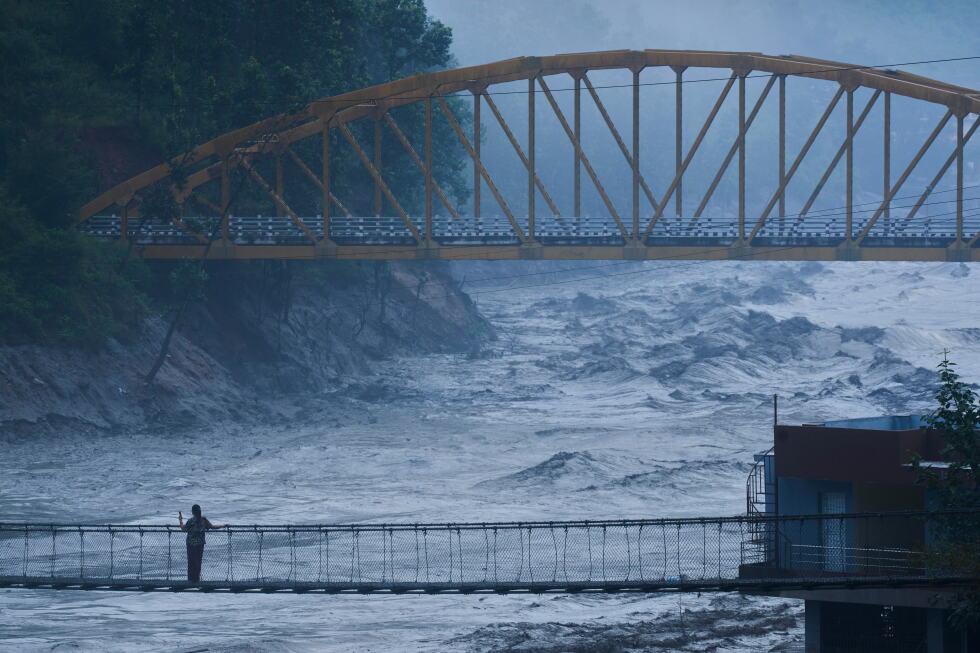
    Throughout Sunday morning, emergency flood alert notifications were pushed to mobile phones across vulnerable districts, even as search and rescue teams worked to clear debris from the Prithivi Highway — Nepal’s critical transport artery that links the capital Kathmandu to the regions hardest hit by Wednesday’s disaster. In the riverside town of Galchhi, dozens of local residents have clustered on the elevated deck of a nearby bridge to escape low-lying flood zones, watching as churning, sediment-choked water roars past. Onlookers pointed to massive boulders tumbled downstream by the earlier flood surge, while safety officials blew warning whistles to clear people from a narrow suspension bridge spanning the swollen river, fearing it could be swept away.

    The destructive power of the initial flood is visible along every stretch of the riverbank. Entire homes, passenger vehicles and farm tractors now jutt out from thick, grey-brown mud that has buried whole villages in the worst-affected zones. Terraced rice paddies that line the river have been damaged by landslides, with large sections of the fertile farmland collapsing into the rushing water. Multiple spans — large concrete bridges and small pedestrian suspension bridges alike — have been destroyed by the surge, cutting off isolated communities and trapping residents on both sides of the river.

    As of Sunday’s latest official updates, the combined death toll across Nepal and Tibet has climbed to 750, with more than 3,000 people still reported missing. Nepal’s national disaster management agency confirmed 734 deaths in the country, alongside 2,498 unaccounted-for residents. On the Chinese side of the border, authorities have recorded 16 deaths and 546 missing people, a group that includes more than 100 Nepali citizens and travelers from more than a dozen other countries.

    Dharam Raj Uprety, chief executive of Nepal’s National Disaster Risk Reduction and Management Authority, told the Associated Press that the new flood warning was issued after Chinese officials notified Nepalese authorities of increased water flow in the river’s upstream section. But for local residents in already affected communities, the steady stream of alerts has brought persistent disruption and exhaustion. Local resident Govind Shrestha described the relentless cycle of evacuations, saying that warnings often force families to flee to higher ground repeatedly, sometimes in the middle of the night amid ongoing rain.

    “It’s really difficult for me. I have a 72-year-old father and 70-year-old mom. I must carry them and I am exhausted. It’s going on like this for those who are still alive,” Shrestha said. Sattan Singh Tamang, a 47-year-old worker who was near a local bridge when Wednesday’s flood hit, noted that the destroyed bridges have split communities, leaving families and neighbors trapped on opposite sides of the river. “Those that are there are now stuck there. Those who are here are stuck here. It’s going to be very difficult,” Tamang said.

    The damage has also wiped out critical local infrastructure: buildings and businesses that survived the initial flood surge remain without power on Sunday, as downed power poles and tangled utility lines lie half-buried in flood sediment. While most of the Prithivi Highway, which carries all key supplies of food, fuel and other essential goods to Kathmandu from across the country, has been reopened for traffic, significant stretches still face major repair challenges, leaving supply chains at risk of disruption.

    AP writers Aijaz Hussain in New Delhi and Shristi Kafle in Kathmandu contributed reporting to this article. The Associated Press’ climate and environmental coverage receives financial support from multiple private foundations, with AP retaining full editorial control over all content.

  • Iceland EU referendum on a knife edge as counting continues

    Iceland EU referendum on a knife edge as counting continues

    Iceland’s historic public vote on restarting European Union membership negotiations remains too close to call Saturday, with early partial counts showing the two opposing sides separated by a razor-thin margin of just 435 ballots. As counting continues across the small North Atlantic island nation, the tight result has underscored how deeply divided Icelanders remain on the question of deepening their integration with the EU after more than a decade of frozen accession talks.\n\nWith 153,197 of the 270,000 eligible ballots counted so far, public broadcaster RUV reports that 50.1% of voters have rejected the proposal to resume negotiations, while 49.9% have voiced support for moving forward. The outcome will not be confirmed until all remaining ballots are processed, leaving the country waiting for a final result in one of the most closely watched political events in Iceland’s recent history.\n\nThe snap referendum, originally scheduled to take place no later than 2027 under Prime Minister Kristrún Frostadóttir’s centre-left administration, was moved forward amid growing international security tensions across the North Atlantic. These tensions include Russian military’s increased maritime activity near Iceland’s territorial waters and repeated public interest from former U.S. President Donald Trump in acquiring the autonomous Danish territory of Greenland, which sits close to Iceland.\n\nHowever, far from security concerns driving public debate, the core of the campaign has centered on the future of Iceland’s $4 billion fishing and marine industry, which accounts for nearly 40% of the country’s total export revenue. Opponents of restarting talks have repeatedly warned that joining the EU would require Iceland to cede partial control of its lucrative exclusive fishing grounds under the bloc’s Common Fisheries Policy, a policy that many Icelandic fishers and industry leaders argue would threaten the country’s most economically vital sector.\n\nIceland first launched its EU accession process back in 2009, in the immediate aftermath of the 2008 global financial crisis that collapsed Iceland’s entire domestic banking system and plunged the country into a deep recession. At the time, joining the EU was widely seen as a path to economic stability and deeper integration with European markets. By 2013, accession talks were well advanced when a Eurosceptic government won national elections and immediately paused negotiations, with fishing rights emerging as the single biggest sticking point that remains unresolved today.\n\nCurrently, Iceland already participates in two key EU frameworks: it is a full member of the EU single market for goods and services and part of the Schengen Area, which eliminates border checks between participating European countries. If voters approve resuming talks and a final accession deal is reached, Iceland would join the EU customs union and eventually adopt the euro as its national currency.\n\nAfter casting her vote in the capital city of Reykjavik on Saturday, Prime Minister Frostadóttir emphasized that the referendum itself represents a key milestone for Icelandic democracy, regardless of the final result. “This is a great day, we’ve been waiting for this for years to be able to have a vote,” she told reporters, adding that her administration will continue its governing agenda no matter which way the result falls.\n\nVoters were asked a direct question on the ballot: “Should Iceland resume accession negotiations with the European Union?” Importantly, a Yes vote would not finalize Iceland’s EU membership; instead, it would only authorize the government to begin negotiating an accession treaty, which would then need to be put to a second public referendum for final approval. Similarly, a No vote would not permanently close the door to EU membership, leaving the possibility open for future governments to revisit the question.\n\nBeyond the dominant economic and fishing debates, security considerations did play a role in campaign discourse. Iceland is a founding member of the North Atlantic Treaty Organization (NATO) but maintains no standing military of its own, relying entirely on alliance allies for national defense. The country has been a strong backer of Ukraine since Russia launched its full-scale invasion in 2022, and Icelandic officials have grown increasingly concerned over Russian military activity near the island in recent years. Trump’s repeated comments about seeking control of Greenland have also added to regional security anxieties that influenced the decision to hold the referendum earlier than planned.\n\nAs counting continues, the entire country is on edge waiting for a final result that will shape Iceland’s political and economic trajectory for decades to come.

  • Educators keep 9/11 memory alive for next generation, 25 years on

    Educators keep 9/11 memory alive for next generation, 25 years on

    A quarter-century has passed since the catastrophic September 11, 2001 attacks that killed nearly 3,000 people across New York, Washington D.C., and Pennsylvania, but a growing network of educators, volunteer groups, and charitable organizations are racing to preserve the legacy of the tragedy for a generation of American young people born long after the planes struck. Today’s teenagers and younger children have no personal memory of the deadliest attack on U.S. soil, and systemic gaps in national education standards have left many of them with incomplete or fragmented knowledge of the day that reshaped modern U.S. history.

    Unlike core historical events that are embedded in standardized national curricula, there is no federally mandated framework for teaching 9/11 across the United States. Only a small number of U.S. states require 9/11 education, resulting in an uneven patchwork of instruction that varies widely from district to district. To close this gap, independent volunteers, frontline teachers, and nonprofits have stepped forward to lead targeted educational initiatives that bring the tragedy to life far beyond textbook pages.

    One of the most prominent efforts is centered at Wantagh High School, a Long Island institution whose local community lost 12 residents in the 2001 attacks. For years, school leaders noted that students learned about 9/11 the same way they studied World War II or the 1941 Pearl Harbor attack: as a distant historical event that occurred before their lifetimes. Wantagh High Principal Paul Guzzone explains that classroom lectures and online videos can never match the impact of a first-hand visit to the site where the Twin Towers once stood. “You can’t compare the experience of visiting the site with just hearing stories in the classroom or seeing videos online,” the 41-year-old principal said.

    That hands-on impact resonated deeply with 17-year-old Max Avena, who visited the National 9/11 Memorial and Museum on a school trip organized through the initiative. Though Avena grew up hearing stories from close family friends who served as first responders during the attack, he said the on-site visit left him speechless and fundamentally changed his understanding of the tragedy. “You never really realize how real it is, and how the feeling is, until you’re on site in the memorial,” he told reporters.

    To cover the cost of annual student trips to the downtown Manhattan memorial, the Gary Sinise Foundation — a charitable organization best known for its work supporting veterans and first responders — stepped in to fund the visits, later expanding its support to include on-campus memorial projects and expanded educational programming. The foundation already ran a well-regarded World War II education initiative that brought Wantagh students to a New Orleans museum, so expanding to 9/11 education was a natural next step.

    James Ravella, the foundation’s executive vice president, noted that even many new teachers graduating from U.S. colleges today have no personal memory of the 9/11 attacks, making structured outside support even more critical. “It just kind of makes it important that we tell this story and educate as many people as we can, while we can, and while [survivors and first responders] are here,” Ravella said. Guzzone echoed this concern, adding that first-hand, lived memory of the attacks fades a little more each year. Beyond its Wantagh partnership, the foundation now runs professional development programs for teachers in collaboration with the National 9/11 Memorial and Museum, and organizes student trips to both the Pentagon attack site and the Flight 93 National Memorial in Shanksville, Pennsylvania, where passengers and crew overtook hijackers en route to the U.S. Capitol, crashing the plane and killing all on board.

    For younger elementary school students, organizers have developed age-appropriate digital educational resources to introduce core concepts of the tragedy, sacrifice, and memory. One example is “OOPA’s World of Words,” an online video series created in partnership with the National Fallen Firefighters Foundation (NFFF) that teaches basic vocabulary tied to 9/11 — including words like “anniversary,” “emergency,” “hero,” “memory,” and “service” — to children as young as five. The five-part series features first-hand accounts from people touched by the attacks, including an 11-year-old girl whose grandfather was a first responder at the Pentagon.

    Series creator Rupa Mehta, a teacher who plays the titular character OOPA, said she was inspired to launch the project after seeing a young child interviewed on the news on a 9/11 anniversary. The girl expressed deep sadness that her school did not teach about the attacks, saying she felt her family’s legacy of sacrifice had been ignored. “It was in that moment… I thought that we could lend a hand and be a powerful potential partner,” Mehta said. NFFF chief executive Victor Stagnaro noted that the digital resource will remain accessible “for generations to come,” allowing 9/11 first responders to share their stories with their grandchildren while they are still able to do so.

  • Canada installs large Lake Ontario sign in latest jab at US

    Canada installs large Lake Ontario sign in latest jab at US

    A fresh diplomatic and political standoff has erupted between Canada and the United States after U.S. President Donald Trump issued an executive order unilaterally renaming the shared Great Lake, Lake Ontario, to “Lake America” — triggering a fiery response from top Canadian officials led by Ontario Premier Doug Ford.

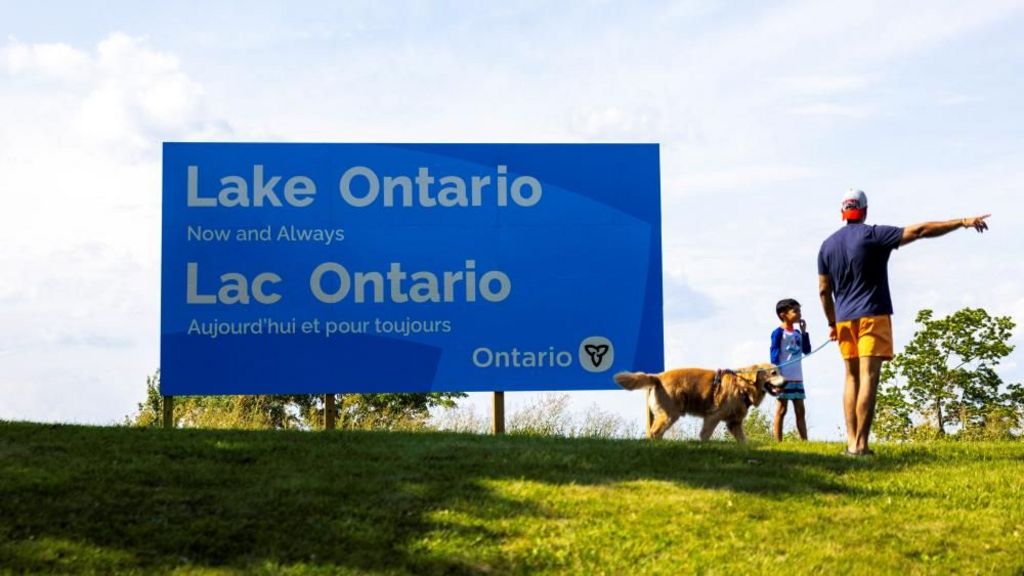
    Ford, the head of government for the Canadian province that shares its name with the iconic waterway, hit back at Trump’s provocative move over the weekend by unveiling a massive, permanent sign along the Canadian shoreline of the lake emblazoned with the defiant message: “Lake Ontario. Now and Always.” In remarks delivered directly in front of the newly installed sign, Ford made clear that Canada would not back down on the long-standing name. “Long before President Trump, this lake was called Lake Ontario. Long after President Trump is gone, it will still be called Lake Ontario,” Ford said, adding that Trump’s action was driven by retaliation for Canada’s refusal to back down in trade negotiations.

    The dispute comes on the heels of collapsed bilateral trade talks that have already sparked a new trade war: after the talks fell apart, the U.S. imposed a steep 50% tariff on $20 billion worth of Canadian goods, and Canada has pledged to implement “dollar for dollar” reciprocal counter-tariffs starting next month.

    When signing the executive order Thursday, Trump claimed the name change would take effect immediately. While the U.S. president holds broad authority over how domestic geographic features are recognized within U.S. borders, no international regulation requires other sovereign nations to adopt U.S.-imposed names for shared waterways. Canadian officials across all levels of government have uniformly rejected Trump’s order as invalid and meaningless.

    To amplify his announcement, Trump shared multiple AI-generated videos on his social media channels over the weekend. One edited clip shows the president kicking over an existing Lake Ontario sign and replacing it with one that reads “Welcome to Lake America.” A second even more outlandish video depicts a flock of Canada geese edited to have Trump’s signature hairstyle, holding rifles and patrolling the shoreline of what the video labels the newly renamed lake.

    Ford’s public rebuke echoes a statement released earlier by Canadian Prime Minister Mark Carney, who also pushed back on the renaming. “Things must be called by their name, and this lake is called Lake Ontario – today and forever,” Carney insisted.

    For context, Lake Ontario is the smallest of the five North American Great Lakes, with a shoreline spanning both the Canadian province of Ontario and the U.S. state of New York. Four of the five Great Lakes draw their names from Indigenous North American languages, including Ontario, Huron, Michigan and Erie; the fifth, Lake Superior, takes its name from an anglicized French term.

    Under the terms of Trump’s latest executive order, the U.S. Department of the Interior has 30 days to update the name in the Geographic Names Information Service, the U.S. federal government’s official database of domestic geographic names. This is not the first time Trump has unilaterally renamed a shared international body of water: shortly after returning to the White House in 2025, he issued a similar order renaming the Gulf of Mexico to the “Gulf of America.”

    That earlier move also sparked widespread international pushback. The Mexican government rejected the change entirely, arguing that no single nation can unilaterally rename a shared international waterway. The dispute also spilled into the private sector, leading to a legal battle between Mexico and tech giant Google, which opted to adjust its mapping platform to reflect the change for U.S. users. Currently, Google Maps displays “Gulf of America” for users located within the U.S., “Gulf of Mexico” for users in Mexico, and a combined label “Gulf of Mexico (Gulf of America)” for users in all other countries.

    The latest renaming clash has further inflamed already tense bilateral relations between the U.S. and Canada, compounding the growing trade rift that preceded the naming dispute.

  • ‘Healey eyes banks and oil tax’ and ‘X Factor comeback’

    ‘Healey eyes banks and oil tax’ and ‘X Factor comeback’

    Five days after catastrophic flash floods swept through the Nepal-Tibet border region, British Sunday newspapers have turned their focus to the growing human cost of the disaster, alongside coverage of shifting geopolitical tensions, domestic political negotiations, and a range of other headline-making stories.

    Leading the international coverage, The Observer confirms the official death toll has climbed to at least 675, with more than 3,000 people still unaccounted for across a 60-mile stretch of landscape left devastated by mud and floodwater. The newspaper’s front page features an image of distraught family members gathering to support one another as they wait for news of missing relatives. The Independent, meanwhile, centers its coverage on the agonizing uncertainty facing these waiting families, highlighting the widespread anguish that has spread through affected communities as rescue operations stretch into their fifth day.

    Turning to European geopolitics, the Mail on Sunday reveals that a senior advisor to Russian President Vladimir Putin has issued an explicit warning that Russia could launch a hybrid attack against a drone manufacturing facility located in the United Kingdom. The warning comes as tensions continue to escalate between Moscow and London over the UK’s consistent military and political support for Ukraine in its ongoing conflict with Russia.

    On the domestic political front, the Sunday Times reports that Prime Minister Andy Burnham has approved a generous pay increase for train drivers operating on the high-speed London-Manchester route, a deal negotiated to head off a planned major strike. The agreement, struck with Avanti West Coast, preserves service on a line connecting London to Burnham’s former political base, where he served as mayor before taking office as prime minister.

    As Chancellor John Healey prepares to unveil his first national budget, the Sunday Telegraph understands Healey is actively considering implementing a new windfall tax targeting profitable banks and oil and gas companies. The policy is being explored to close a growing gap in the UK’s public finances, with the goal of avoiding direct tax increases for ordinary individual taxpayers.

    In entertainment news, The Sun on Sunday has broken the news that British commercial broadcaster ITV is in early discussions to revive the iconic singing competition show *The X Factor*, seven years after the conclusion of the last original UK series. The outlet adds that Simon Cowell, the show’s creator and long-time judge, is expected to return to the program if the reboot moves forward.

    Climate and health coverage from the Daily Star links this summer’s record-breaking UK heatwaves to at least 3,000 excess deaths across the country, adding a stark warning that such deadly heat events will only become more frequent and severe in coming years as climate change accelerates.

    The Sunday Express leads a story on asylum policy, reporting that migrants housed in taxpayer-funded hotels are receiving free condoms through the UK’s National Health Service (NHS). In response to the coverage, NHS England clarified that the provision is part of standard public health services offered to all people residing in the UK, including asylum seekers supported by the state.

    The Sunday Mirror publishes an investigation into a long-running maternity care scandal at Nottingham NHS Trust, where an official review found 520 mothers and infants experienced avoidable harm or death. Grieving parents have spoken out to the paper to express outrage that the trust’s former chief executive Peter Homa, who led the organization during the period of failures, now co-owns a private company that provides maternity training services to the NHS, and has earned substantial income from the business.

    Finally, the Sunday People shares positive medical news: research indicates common cholesterol-lowering medications known as statins can dramatically reduce a patient’s risk of developing dementia, a finding that offers new hope to the more than 10 million people currently taking the drug across the UK.

  • Palestinian residents trapped as Israeli settlers surround home in occupied West Bank village

    Palestinian residents trapped as Israeli settlers surround home in occupied West Bank village

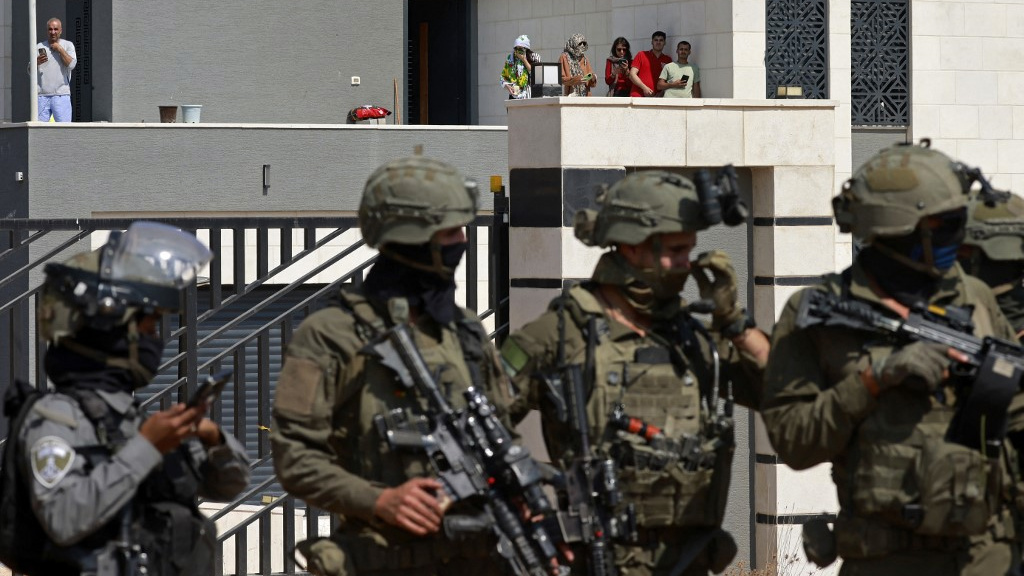
    A fresh wave of violence by Israeli settlers has plunged the occupied West Bank village of Qusra into crisis, continuing a steady escalation of attacks that have disrupted communities and drawn urgent calls for global intervention. Dozens of Israeli settlers have breached the village, barricaded themselves inside a private Palestinian home, and laid siege to the property, leaving at least four Palestinian residents trapped inside as the group set nearby agricultural land ablaze.

    Publicly shared footage of the incident captures scores of settlers moving toward Qusra’s outer limits and clearing stones from a local access road, as emergency response teams work frantically to secure safe passage for ambulances. The medical teams aim to evacuate at least one injured Palestinian from the conflict zone south of Nablus. Both the Israeli military and border police have acknowledged responding to violent confrontations involving what they label “Israeli rioters” in Qusra. In a joint official statement, the forces confirmed that dozens of settlers entered the village and occupied the Palestinian family’s home. Palestinian officials report that multiple Palestinians, including one woman, sustained injuries during the incursion, noting that settlers launched stone attacks on local residents.

    While Israeli forces announced they had removed the settlers from the besieged home, seized the group’s vehicles, and would deploy personnel to the area to prevent further unrest, Qusra Mayor Abdul Azim Wadi contradicted this account in an interview with Al Jazeera. Wadi claimed that Israeli forces actually attempted to arrest the Palestinian civilians who remained trapped inside the home during the siege.

    This latest incident is far from an isolated event: it marks the most recent escalation in a sustained month-long campaign of settler violence targeting Qusra’s Palestinian community. Earlier this month, settlers confined entire Palestinian families inside three separate homes in the village’s Ras al-Ain neighborhood. The ongoing blockade has cut off residents from critical basic supplies, including potable water, electricity, and food. In July, settlers set fire to Qusra’s local mosque in another act of aggression.

    The Israeli military has reinforced the isolation of Qusra’s affected communities by designating the area a closed military zone. Authorities have installed a locked gate at the village’s main entry point, forcing Palestinian travelers to use winding alternative routes that Israeli soldiers regularly block. Just days ago on Wednesday, the army added three new permanent roadblocks circling the peak of Ras al-Ain hill, physically severing the besieged homes from the rest of the village’s populated lower areas.

    The crisis in Qusra follows a separate urgent appeal from Palestinian authorities over parallel violence targeting another West Bank village. Earlier on Saturday, the Palestinian Ministry of Foreign Affairs called on the international community to step in to protect residents of al-Mughayyir, a village located northeast of Ramallah. In an official statement condemning the wave of recent settler attacks, the ministry detailed a suffocating combined military and economic blockade that has been imposed on al-Mughayyir for nearly three weeks.

    Palestinian officials frame the blockade, which includes indiscriminate targeting of civilian residents, as a core component of a systematic campaign to eliminate Palestinian presence from the occupied territory. The ministry labeled these actions as a deliberate state policy of “killing, terrorism and forced displacement,” warning that Israel is advancing policies aimed at expelling and eliminating Palestinian communities. The statement further cautioned that extending political and legal immunity to violent Israeli settlers risks triggering an uncontrollable regional escalation, stressing that immediate coordinated global action is essential to halt the ongoing violence.

    Attacks by Israeli settlers on Palestinian homes, commercial properties, and agricultural land across the occupied West Bank have been a deeply rooted systemic issue for decades, aligned with the steady expansion of illegal Israeli settlements on occupied Palestinian land. However, independent analysts and Palestinian authorities document that the frequency and severity of these state-backed assaults have surged dramatically since the start of Israel’s military campaign in Gaza in October 2023.

  • Mount Fuji pics, life-changing ramen and a weak yen – why young Brits are going to Japan

    Mount Fuji pics, life-changing ramen and a weak yen – why young Brits are going to Japan

    A wave of young British travelers is flocking to Japan in record numbers, and two key forces are driving this unprecedented tourism boom: viral social media content and a historically weak yen that has turned the Asian destination into an unexpectedly affordable getaway. Data from the Japanese National Tourism Organization confirms the rapid growth: 483,157 British tourists visited Japan in 2025, marking a 24.8% increase from 2024 and a 40.8% jump from 2019, the pre-pandemic benchmark used by the travel industry. Provisional 2026 data indicates this upward trajectory shows no signs of slowing, aligning with Japan’s overall post-pandemic tourism recovery that saw a record number of global visitors in 2025.

    Interviews with dozens of British travelers in their 20s and 30s reveal that while Japan’s unique offerings – from bustling neon cityscapes and centuries-old temples to world-renowned street food, anime culture, and rugged natural landscapes – draw intrinsic interest, social media is the single biggest catalyst turning casual interest into booked trips. For 24-year-old Maitri Sanghvi, constant algorithm-driven exposure to Japan content on TikTok made a long-held desire to visit impossible to ignore. “Japan just kept popping up on my feed,” she explained, noting that seeing other travelers’ trip snaps was the main push for her three-week holiday with her boyfriend earlier this year.

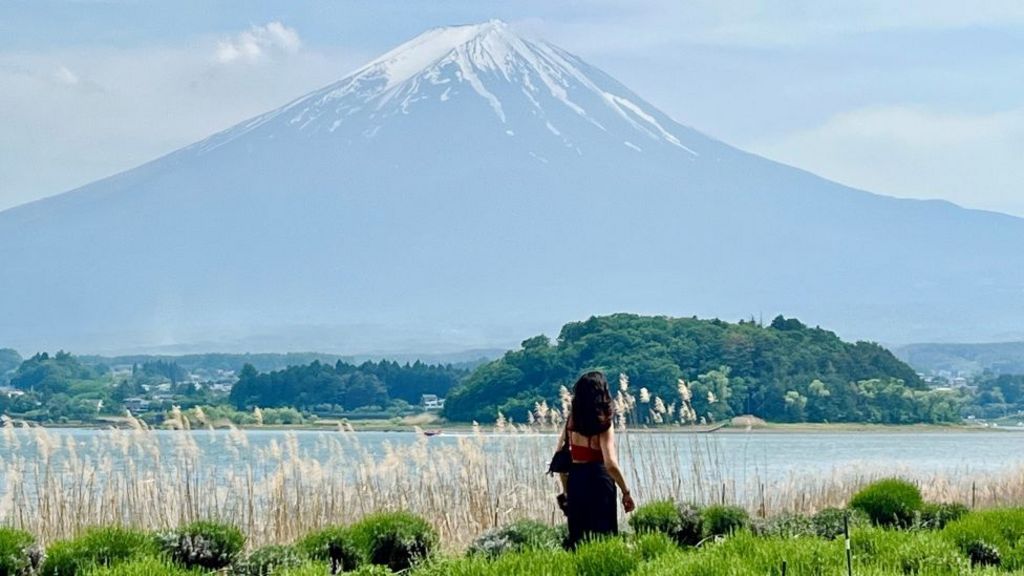
    Scroll any popular travel hashtag such as #japantravel on TikTok or Instagram, and feeds are flooded with curated content: sun-kissed shots of Mount Fuji, steaming bowls of authentic ramen, detailed itinerary guides, quiet mountain villages, the iconic red torii gates of Kyoto’s Fushimi Inari, the glowing neon of Osaka’s Dotonbori, and the chaotic energy of Tokyo’s Shibuya Crossing. Twenty-nine-year-old Aden Ibrahim openly admits that this constant buzz on social media directly pushed him to book a trip with friends last July. Since returning, he has continued to fuel the hype himself, uploading dozens of trip clips to TikTok more than a year after his visit; one viral video titled “Japan made it out the group chat” has racked up more than 1.1 million views.

    Beyond social media’s pull, a decades-low yen has removed one of the biggest barriers to traveling Japan: cost. While round-trip off-peak budget flights start around £450, the weak currency makes on-the-ground spending far cheaper for international visitors, even as rising domestic prices place strain on Japanese residents. In July, the yen fell to a 40-year low against the British pound, stretching travel budgets further than many young travelers expected. “You can literally get a bowl of life-changing ramen for £3 or £4, compared to a mediocre one back home for like £20,” explained 26-year-old Faye Jawad, a TikTok restaurant reviewer who visited Japan last year.

    For 26-year-old Vivek Haria, who has spent years cultivating an interest in Japanese culture – even learning the language and joining the UK-Japan Choir – the favorable exchange rate was the final nudge to book his autumn 2026 trip. “When the yen was weakening, I thought ‘actually this is a good time to go, things are going to be cheap’,” he said. The affordable on-the-ground costs have even spawned a new viral content category: “haul videos” where travelers show off bulk purchases of limited-edition KitKat flavors, high-quality stationery, skincare products, and unique clothing. Twenty-three-year-old Sam Corbett, who visited in May, ended up buying an entire extra suitcase to carry all his affordable souvenirs, from matcha products to snacks and apparel.

    The vast majority of young British travelers stick to Japan’s famous “Golden Route”: Tokyo, Kyoto, and Osaka, with day trips to nearby popular spots including Nara, Hiroshima, and Mount Fuji. The route’s popularity is easy to explain: well-connected by public transport and packed with Japan’s most iconic attractions, it fits neatly into a two to three week holiday that fits most young travelers’ vacation allowances.

    But this massive surge in visitor numbers has come with growing pains, as rising reports of unruly tourist behavior have sparked urgent debate around overtourism and prompted Japanese authorities to roll out new regulations and crackdowns. Chiyuki Izumii, a tour guide with the Japan Guide Agency, says she has observed a noticeable decline in tourist behavior in recent years. While her own clients are respectful, she has witnessed other visitors cutting bus queues, blocking aisles with oversize luggage, carving initials into trees in Kyoto’s Arashiyama Bamboo Forest, disturbing local neighborhoods with loud noise after dark, and trespassing into restricted areas to get viral photos.

    Local governments have already taken action: Fujikawaguchiko, a popular small town near Mount Fuji, canceled its 2026 cherry blossom festival entirely after repeated incidents of misbehavior from crowds. In June, Tokyo’s Shibuya ward introduced on-the-spot fines for littering in high-traffic tourist areas. In July, the Japanese national government raised the international tourist tax – charged to visitors leaving the country via plane or boat – from 1,000 yen to 3,000 yen (approximately £4.60 to £13.80), with revenues earmarked for upgrading public transport infrastructure and restoring damaged historic sites.

    Many young visitors themselves have expressed surprise at just how crowded top tourist spots have become. “I was prepared for it to be busy but I didn’t expect it to be as busy as it was,” said Millie Dring, an anime fan who traveled to Japan in November to celebrate her 21st birthday. At Tokyo DisneySea, Dring and her friend waited three hours to ride just one attraction before leaving overwhelmed by the crowds. Sam Corbett, who encountered packed queues at a Kyoto dessert spot he only visited because of its social media fame, noted the queue held no local residents at all – only tourists chasing viral trends. Popular photo spots like the Hakone floating torii gate and Arashiyama bamboo forest are now so packed with people waiting for Instagram-perfect shots that it can be hard to even enjoy the scenery, he added.

    Still, some travelers are unphased by the crowds, arguing that embracing the popular tourist experience is part of the fun. Twenty-nine-year-old Laura McGregor, who is planning a two-week honeymoon across Tokyo and Osaka this November, with stops including Tokyo Disney, Universal Studios, a sumo match, Mount Fuji, Hiroshima, and even Tokyo go-karting, pushes back against the trend of “off-the-beaten-path” snobbery. “I think there’s a snobbiness around being a tourist over the past couple of years where people want to avoid looking like one,” she said. “Of course I want to experience an authentic side of Japan but I’m excited to embrace the tourist side too and go along with it.”

  • They fell in love – then had to check they weren’t brother and sister

    They fell in love – then had to check they weren’t brother and sister

    For decades, Arthur Kermalvezen, a man conceived via sperm donation, lived with a persistent, unsettling mystery: any man he encountered – from his grade school teacher to strangers on the city bus – could have been his biological father. This uncertainty bred deep anger and unrest, leaving him unable to feel grounded in his own identity. What he never expected was that this lifelong question would become even more urgent when he fell in love with Audrey, another Paris-born donor-conceived woman, whom he met at a 2010 gathering for donor-conceived rights activists.

    The pair experienced immediate, undeniable chemistry, describing their first meeting as love at first sight. But their new romance came with a alarming possibility: in the era when they were conceived, Paris had only two operating sperm banks, and most donors contributed sperm multiple times to help more couples conceive. This meant the chance of them sharing the same biological father – and being half-siblings – was far from hypothetical. Before they could build a life together, they needed an answer. Yet France’s strict laws around donor anonymity and genetic testing made that answer almost impossible to obtain legally.

    Since 1994, France has barred private citizens from accessing or using at-home DNA testing kits, making personal genetic testing a criminal offense. Only licensed doctors, research scientists, and judges are legally permitted to order and oversee genetic analysis. Anyone caught with a personal testing kit can face fines of more than €3,500, and major direct-to-consumer DNA companies including 23andMe, Ancestry, and MyHeritage do not sell their products in the country. Lawmakers and supporters of the ban argue it protects sensitive genetic data from exploitation by commercial entities and prevents unexpected DNA results from tearing families apart. Critics, however, point out that France is the only European nation that criminalizes personal use of these tests.

    Audrey, a bioethics lawyer by training, understood the intricacies of French law better than most: the country enshrined donor anonymity in legislation, guaranteeing that identity would remain hidden even after a donor’s death. But Audrey’s conception in 1979 predated this law, leaving her with a legal gray area that offered no clear path to information. While searching online for other donor-conceived people born before the 1994 law went into effect, Audrey found Arthur, who had published a book chronicling his lifelong search for answers about his biological origins. She was immediately struck by how perfectly he captured the confusing, unspoken feelings she had carried her whole life – even though both had grown up in loving, supportive families, the mystery of their biological origins left a permanent hole in their identities.

    After their first in-person meeting, the connection was immediate – but so was the problem. No French regulatory or legal body would help them confirm whether they were related. After months of dead ends, they located a doctor in southern France who agreed to conduct a genetic test for €900 in cash, breaking the law to share the result with them directly: they were not related. Still, the couple was left uneasy. They worried the unregulated test was inaccurate, and Audrey, committed to upholding the law, refused to use a black market at-home kit to confirm the result. Starting in 2010, she launched a series of legal challenges against the French system, asking only for access to non-identifying information about her donor, including how many donations he made, to confirm whether she and Arthur could be related. Every challenge was rejected. After three years of fighting, the couple took a leap of faith and married.

    In 2015, France’s highest administrative court rejected Audrey’s final appeal. It was only shortly before the birth of their first child that another doctor agreed to bend the rules: he checked their donors’ birth years in the confidential sperm bank records, and confirmed their donors were two different men. The result was life-changing, but it came only from an illegal act. “It’s completely weird,” Audrey said of the ruling that allows doctors to know more about her own origins than she does. Even after this confirmation, Arthur still carried doubts, so years later, the couple finally agreed to take an at-home DNA test, ordered through a friend in a neighboring country where the kits are legal. The test confirmed what the doctor had told them: they were not related.

    That illegal test unlocked far more than just reassurance for the couple. In 2017, Arthur finally connected with his biological sperm donor on Christmas Day, ending decades of uncertainty. For Audrey, the surprise was even greater: one of her DNA matches was Sophie, a fellow donor-conceived activist whom she had represented in court years earlier. The two women, who had fought side-by-side for legal rights, were biological sisters. When the couple took the test alongside eight other fellow activists, the results revealed just how high the risk of accidental genetic relations really is: four of the ten participants shared the same donor, including Audrey, Sophie, and their two brothers.

    Years later, a DNA match with an American relative led Audrey to her own donor, a man named Philippe, but he had already passed away. Audrey’s mother wrote a letter to Philippe’s family, thanking them for the “immeasurable gift” he had given, and the family welcomed Audrey into their lives. Philippe’s own sister had never known he was a sperm donor, and the meeting gave Audrey answers she had chased for decades: she got access to her full biological medical history, saw photos and videos of her donor, and finally got to know the story of her origins.

    The couple’s years of activism – Audrey’s legal challenges and Arthur’s writing – helped drive a landmark change to French donor conception law: people conceived after April 2025 will now be able to access identifying information about their donors once they reach adulthood. Yet the fight is not over: France still remains one of the only European countries to ban at-home DNA testing, and thousands of donor-conceived people born before 2025 still lack legal access to information about their origins. Audrey says the core of the fight is simple: “Every person has the right to know their origins and the right to know their history.”

    This story is based on an episode of *The Gift* on BBC Radio 4.

  • Trump administration deports relative of Afghans who helped US military to Central African Republic

    Trump administration deports relative of Afghans who helped US military to Central African Republic

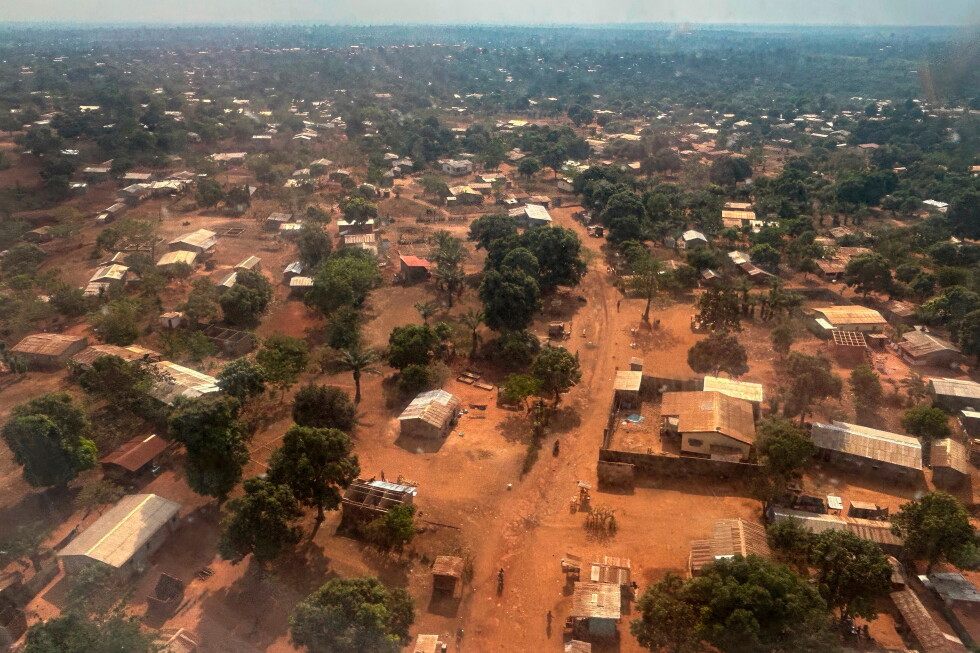
    DAKAR, SENEGAL – A controversial U.S. deportation operation that landed in the Central African Republic’s capital of Bangui this past Saturday has drawn sharp criticism from immigration advocates and legal teams, after it emerged the flight carried a young Afghan man explicitly granted legal protection from deportation to his home country over documented Taliban persecution risks.

    The 20-something Afghan was cleared for protection from expulsion to Afghanistan by a U.S. judge, after court records reviewed by the Associated Press confirmed his extended family had faced repeated targeted threats from the Taliban over his brothers’ work supporting U.S. military operations. Alma David, the man’s legal counsel, shared details of his family’s tragic history: one brother, a U.S.-trained pilot, was already killed by Taliban fighters, while a second brother currently resides in the U.S. after serving with the U.S.-aligned Afghan National Army that collapsed when the Taliban retook control of Afghanistan in 2021.

    Savi Arvey, policy director for refugee and immigrant rights at the advocacy organization Human Rights First, confirmed Saturday’s flight carried 30+ deported people in total, beyond the at-risk Afghan. The group includes 11 other Afghans, 8 Iranians, and additional migrants from Nepal and Nicaragua.

    This expulsion is not an isolated incident. Advocates have long documented that the controversial practice of third-country deportations – expelling migrants and asylum seekers to nations that are not their country of origin – has been in place since the Trump administration, when thousands of people were sent to more than 20 third countries under largely undisclosed agreements as part of a broader hardline immigration crackdown. Immigration legal experts warn the policy functions as a deliberate legal loophole, allowing U.S. authorities to indirectly return protected asylum seekers to danger by routing them through neutral countries. Saturday’s flight marks the second such deportation operation to the Central African Republic since June; the first flight carried 24 migrants, including an Iranian woman who also faced confirmed persecution risks in her home country.

    The controversial operation comes amid a string of growing global migration crises, with multiple recent incidents of migrant deaths and hardened immigration policies across multiple continents making headlines alongside this expulsion.

  • Australia leads from start to finish to beat Argentina 27-21 in the 1st rugby test

    Australia leads from start to finish to beat Argentina 27-21 in the 1st rugby test

    In a tense, altitude-challenged opening rugby test match held in Jujuy, Argentina on Saturday, Australia withstood a late Argentine rally to secure a hard-fought 27-21 victory, extending its unbeaten streak under new interim head coach Les Kiss.

    The Wallabies got off to a blistering start, crossing the try line twice within the opening 10 minutes to build an immediate advantage. Hooker Brandon Paenga-Amosa opened the scoring, followed quickly by flyhalf Carter Gordon, putting Argentina on the back foot early. The Pumas responded with attacking flair but struggled to match Australia’s clinical efficiency in the red zone, a gap that would shape the entire contest.

    By the 20th minute, Wallaby backrower Fraser McReight added a third try from a chaotic goal-line scramble, pushing Australia’s lead out to 19-7. Argentina did not fold, however. While Australian winger Harry Potter served a 10-minute sin bin that left the Wallabies down to 14 men, the Pumas capitalized on a five-meter scrum free kick to put backrow Joaquin Moro over the line for a try. A late first-half penalty from substitute scrumhalf Ryan Lonergan sent Australia into halftime with an 22-14, eight-point buffer.

    The high altitude of the mountainous Jujuy venue began to take a physical toll on both sides in the second half, particularly fatigue impacting Australia’s ability to maintain possession and sharpness. Argentina came out firing, cutting the deficit to just one point just 11 minutes into the second half when loosehead prop Boris Wenger crossed for a try, making the score 22-21. Fullback Geronimo Piscatelli, who had scored Argentina’s first try in the 14th minute, twice came inches away from putting the Pumas ahead, with one potential score called back for a forward pass.

    Australia dug in defensively when it mattered most. In the 53rd minute, a line break from center Hunter Paisami set up backrower Tom Hooper’s try — his first try in three years — pushing the Wallabies’ lead back out to six points. Over the remaining 27 minutes of play, fatigue left Australia struggling to retain possession, gifting Argentina repeated late opportunities to snatch a match-winning win. But Australian’s defensive line held firm, fending off every late Argentine attack to preserve the 27-21 result until the final whistle.

    “Here at altitude the shoulders are sore, the lungs are sore,” Hooper told reporters after the match. “It was a hard test match and the whole 23 got us across the line.”

    The win keeps Australia’s perfect record intact under Kiss, a former rugby league star who took over as head coach following Joe Schmidt’s departure. Hooper praised Kiss’ leadership style, noting that his calm communication and focus on elite-level training standards have reshaped the squad’s mindset ahead of upcoming competitions.

    “[Kiss] has brought a really good mindset in terms of how we’re training,” Hooper said. “If you want to be world class, get good results and lift a bit of silverware you have to train world class.”

    For Argentina, the result highlighted the Pumas’ growing attacking potential but also exposed ongoing finishing issues. While the side consistently found gaps in Australia’s defensive line and created multiple late scoring chances, imprecision in the final pass and red zone kept them from turning opportunities into points. Piscatelli stood out as the Pumas’ most constant attacking threat, alongside industrious performances from Wenger and Moro, who each notched one try on the day.

    The two sides will meet again next weekend in the second and final test of the series, with Australia looking to lock in a series win and Argentina aiming to turn its near-miss into a comeback victory.