博客

  • Manhunt after one killed and five injured in Swiss shooting, police say

    Manhunt after one killed and five injured in Swiss shooting, police say

    In the early hours of Sunday morning, a deadly shooting rocked a pre-planned rave event near Aarau, a city roughly 29 miles west of Zurich in northern Switzerland, leaving one person dead and five others wounded, local law enforcement confirmed.

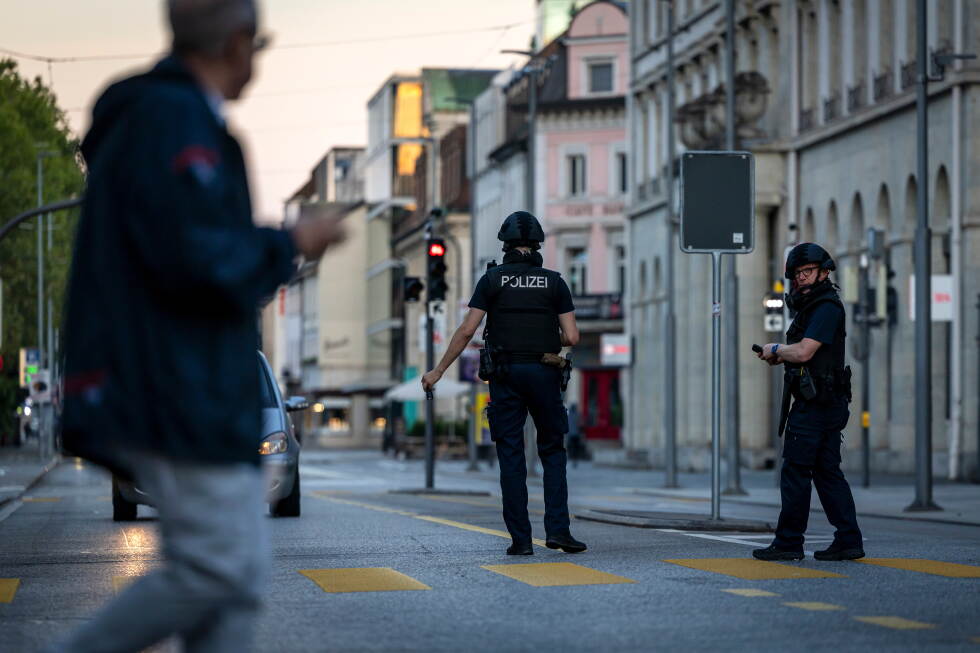
    Aargau Cantonal Police launched a massive, coordinated operation across the region immediately after the incident, with authorities confirming that a widespread manhunt is currently underway for an unidentified attacker. As of the latest updates, officials have not identified any clear motives for the violence, nor have they pieced together the full, exact circumstances of how the shooting unfolded.

    The attack occurred in Schachen, close to a local horse racing track, where an overnight rave had been scheduled to run into the early hours of Sunday. In response to the shooting, law enforcement has sealed off a large perimeter that encompasses the horse racing track, the town’s public swimming pool, and the local sports field. Police have issued a formal urgent plea for members of the public to avoid the entire cordoned area to preserve the crime scene and ensure public safety.

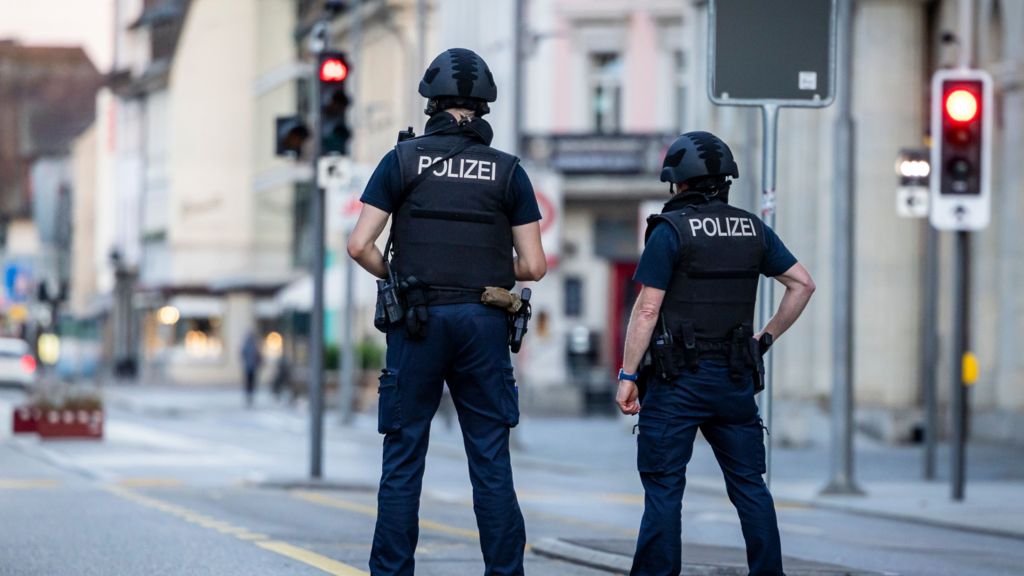
    Visuals captured from the region early Sunday show a overwhelming police presence, including an armored police vehicle positioned to block a key roadway. Beyond the immediate area around Aarau, police confirmed that they have deployed a large contingent of additional officers as a precautionary measure to prevent any further risk to the public.

    Beyond local police and fire department personnel, regional broadcaster SRF reports that the cantonal disaster response unit (KKE) was also activated to support the response operation. Additionally, a Swiss Army helicopter was deployed to conduct aerial surveys of the area in the early hours of the response to aid the search for the perpetrator.

    Authorities are now calling on any witnesses who were present in the area at the time of the incident to submit any photographs or video footage they captured of the scene to help investigators piece together what happened and identify the attacker.

  • Antonio helps young Ghanaians chase Premier League dreams

    Antonio helps young Ghanaians chase Premier League dreams

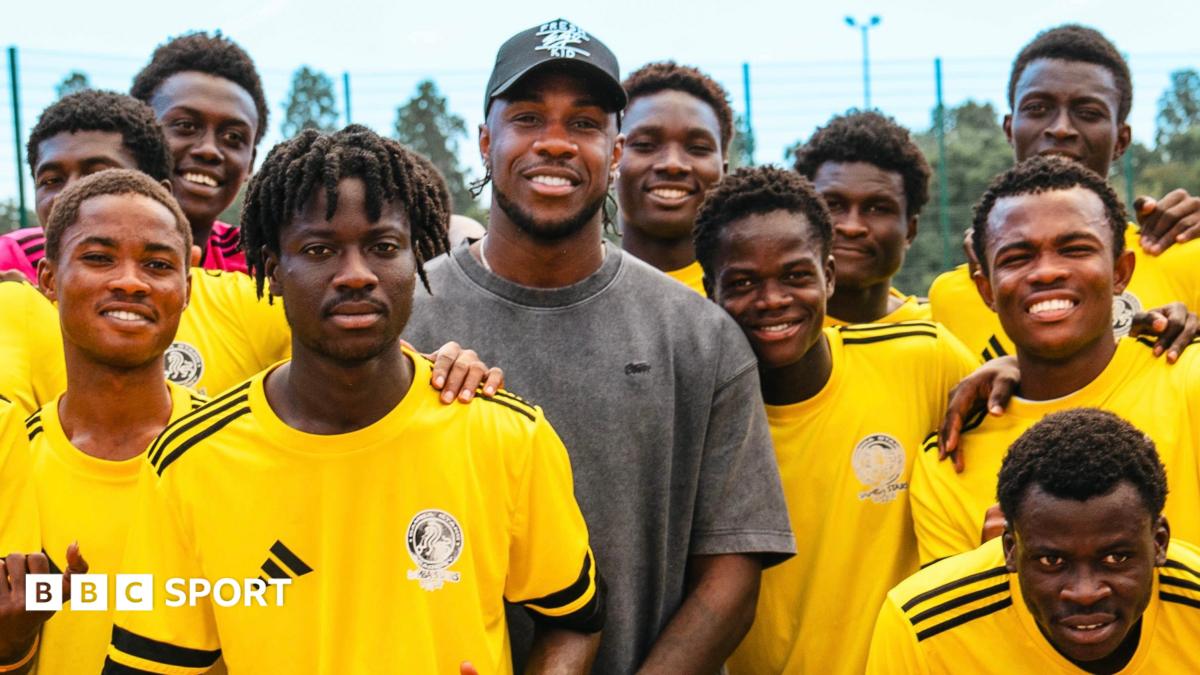
    Beneath the warm summer sun of rural Leicestershire, a group of talented young Ghanaian footballers is pushing every muscle and chasing a life-changing goal: to earn a professional contract with a top European club. This two-and-a-half-month UK tour, organized by the Samba Stars Academy – a youth development program backed by former West Ham and Nottingham Forest forward Michail Antonio – marks an innovative new approach to unlocking the abundant football talent hidden across West Africa.

    Unlike the standard model where European scouts travel occasionally to African nations to spot emerging players, Samba Stars took the bold step of bringing their most promising prospects directly to the United Kingdom, putting them face-to-face with club recruiters and testing their skills against top youth sides. Antonio, who co-founded the academy to create tangible pathways for Ghanaian young talent into professional football, explained the core mission behind the project. “The talent the lads have is incredible,” he said. “We created Samba Stars Academy to give young players in Ghana access to elite coaching, shape them as players and create real avenues into the pro game and show how much talent Ghana has.”

    Headquartered in Kumasi, with a new state-of-the-art training facility under construction in Bompata, just over 100 miles north of Ghana’s capital Accra, the academy’s risky gambit has already delivered early results. This summer, top clubs across England – including Bournemouth, Everton, Manchester City, Charlton, Preston, Barnsley and Peterborough – have already invited multiple Samba Stars players to join trial periods, a clear signal of the talent on display.

    For head coach Freddie Okyere, the tour has been a transformative experience for his young squad. “The first two or three weeks it hadn’t sunk in, but then they saw the facilities we’d be using and the teams we were playing,” Okyere said. “They want to go and show what they can do. They are hungry, they really want it. I’m hoping there will be so much interest because we have so much talent here. With the facilities we will have in Ghana we feel we will be top two, top three academies. We hope we can bring the best of Ghana to Europe.”

    This is not the first time the academy has produced success. In February, 18-year-old midfielder Listowell Lord Hinneh earned a permanent move to Middlesbrough after a successful trial, becoming one of the first Samba Stars graduates to land a professional contract in England. Having swapped the warm climate of West Africa for the cooler north east of England, Hinneh has already stepped up to train with the club’s first team, and opened up about the challenges and excitement of his new journey. “When I came in January, it was so cold. Experiencing something like that for the first time was tough,” he told BBC Sport. “Moving was a big milestone. It just makes me feel the dreams I’ve been having, thinking of trying to find myself in Europe to become a professional footballer. I feel the kind of dreams that I want, I’m on the verge. I’m on the way to becoming who I wanted to become.”

    During the Samba Stars’ UK tour, Hinneh met with the current squad to share hard-won advice for the young prospects chasing the same dream he once did. “What you’ve been dreaming about the future, it starts from here,” he told them. “Don’t just try, be so passionate. You need to play and enjoy it because you can have the success in whatever you’re doing. You have to just put your heart in it.”

    The tour almost never happened: 19 of the 20 players in the touring squad had their initial UK visa applications rejected, only gaining entry after a successful re-evaluation. Since arriving, the squad has been hosted by Brook House College in Market Harborough, and trains at the ground of National League North side Harborough Town. For 17-year-old goalkeeper Joshua Tetteh Tuwor, the experience has already opened his eyes to a new level of professional football. “The football here is very detailed,” he said. “In Ghana we have the same passion but I’m seeing a different side of professional football. We are grateful to have such opportunities to train with elite coaches.”

    Rob Newman, a vastly experienced former football recruitment executive who previously served as head of recruitment at West Ham and international scouting manager at Manchester City – where he played a key role in bringing Sergio Agüero to the club – has worked with the Samba Stars both in Ghana and during their UK tour. He believes the young prospects are far closer to European first-team football than many expect. “Hopefully clubs can see the potential,” Newman said. “Nothing will give me greater pleasure in six months than going to see these boys playing in a first team in Europe. I believe they are two or three months away from being able to do that.”

    On the pitch, the Samba Stars have more than held their own during their series of matches against youth teams from the English Football League and non-league system. They opened their tour with a dominant 9-0 victory over Dorking Wanderers’ youth side, followed by wins against the Under-21 teams of Sheffield Wednesday, Luton Town and Peterborough. They earned draws against Sheffield United and Barnsley U21s, with their only defeat coming by a narrow 3-2 score against Preston North End’s U21 side.

    Antonio, who watched the side thrash Peterborough U19s 6-0 last month, said the on-pitch results speak for themselves about the quality of the academy’s prospects. “You can see from what they’ve done since they’ve been in the UK – the results against top teams – that they have what it takes to play pro level,” the 36-year-old said. “It’s great to help knock down barriers and give these lads a real chance.”

    Ghana’s national men’s football team has established itself as a consistent force on the global stage over the past two decades, qualifying for five of the past six FIFA World Cups – reaching the quarter-finals in 2010 – after never qualifying prior to 2006. At this year’s World Cup, eight of the nation’s squad were born overseas, and while the Black Stars have not leaned as heavily on diaspora talent as some other African nations, the Ghana Football Association has signaled it will widen its global search for talent – a shift that makes programs supporting home-grown prospects like Samba Stars even more critical.

    For 18-year-old striker Sherif Mashadu, who already earned a trial with Hungarian top-flight side Zalaegerszegi through his connection to Samba Stars, the weight of expectation from back home fuels his ambition. “You have to have a tough mentality,” he said. “Back home everyone is depending on you, everyone is looking up to you to succeed, to come and help them, your friends, your family. Everyone is praying for you.”

    As the new English football season gets underway, six Ghanaian internationals currently hold contracts with Premier League clubs: Mohammed Kudus at Tottenham Hotspur, Antoine Semenyo at Manchester City, Ibrahim Osman at Brighton, Ipswich Town new signing Abdul Fatawu, and Coventry City pair Brandon Thomas-Asante and Caleb Yirenkyi. Ghana’s first Premier League player was Nii Lamptey, who joined Aston Villa in 1994, while legendary midfielder Michael Essien holds the record for the most appearances by a Ghanaian in the division, winning two Premier League titles with Chelsea. Only two other Ghanaians have lifted the Premier League trophy: Jeffrey Schlupp and Daniel Amartey, part of Leicester City’s iconic 2015-16 title-winning squad.

    For Hinneh, who names Kudus as his biggest inspiration, the journey is just getting started, even as he adapts to life far from home. “Back home we’ve got people you grew up with and you might miss them, but that doesn’t kill the dreams I’m here for,” he said. “I’m trying to figure out what the reality is, what the future holds for me and then just chase the dreams.”

  • Shooting at a rave in Switzerland kills 1 and injures 5

    Shooting at a rave in Switzerland kills 1 and injures 5

    GENEVA – A deadly act of gun violence has shaken the northern Swiss canton of Aargau, leaving one attendee dead and five others wounded — several critically — after a shooting erupted at a large rave event early Sunday, according to local law enforcement and regional media reports. Authorities have launched an extensive manhunt for an unknown attacker, who remains at large as of the latest updates.

    In a public post on the social platform X, Aargau Cantonal Police confirmed that the search for the unidentified perpetrator is still active, adding that both potential motives for the attack and the full, exact sequence of events remain unconfirmed. The shooting unfolded at the seventh iteration of the popular “Aarau Rave VOL. 7”, which was being hosted at the horse racing facility located in Aarau’s Schachen neighborhood. Aarau, the capital of the Aargau canton, sits roughly 29 miles west of Switzerland’s largest city Zurich, and is home to a population of approximately 22,300 people.

    Police spokesperson Pascal Wenzel told Swiss public broadcaster SRF that local authorities received the first emergency alert about the shooting at approximately 2:30 a.m. local time. In the immediate aftermath of the incident, local fire services deployed to cordon off a wide perimeter around the rave site, and a large-scale coordinated police operation was launched to secure the area and locate the suspect. Residents of Aarau and nearby communities were formally urged to avoid the entire Schachen district area to support ongoing emergency and investigative work.

    Many attendees initially misidentified the sound of gunfire as celebratory fireworks, according to reporting from leading Swiss daily newspaper Blick. It was only after a panicked attendee shouted warnings for everyone to take cover that crowds realized the danger, the outlet reported. Blick also noted that the violence broke out moments after the scheduled end of the rave event. Law enforcement has issued a public appeal for any witnesses who may have captured photographs or video footage of the incident, asking them to share the material with investigating teams to help advance the case.

  • Movie stars, timely documentaries and awards hopefuls convene at the Venice Film Festival

    Movie stars, timely documentaries and awards hopefuls convene at the Venice Film Festival

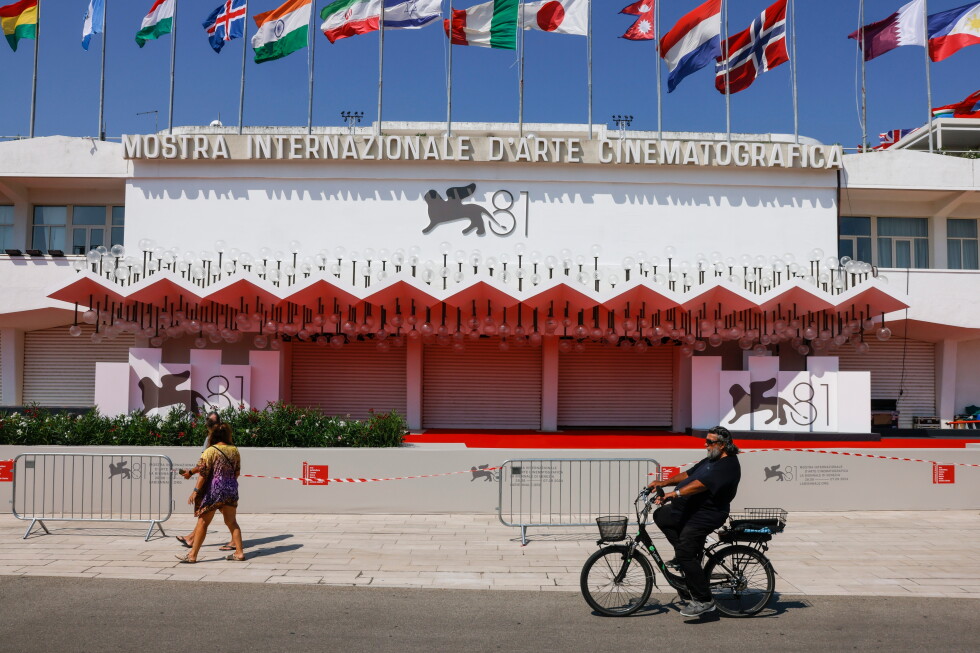
    The lazy, slow days of August usually put Hollywood’s glitzy annual calendar on pause, but the 83rd Venice Film Festival is poised to launch the busy fall festival circuit with its signature blend of red carpet glamour, boundary-pushing cinema, and industry drama when it opens Wednesday on the historic Lido waterfront.

    A-list stars from across the globe are set to walk the iconic festival’s red carpets this year, with names including Noel Gallagher, Liam Gallagher, Robert Pattinson, Rooney Mara, George Clooney and Penélope Cruz confirmed to attend. Clooney and veteran actress Ellen Burstyn will also take center stage to accept lifetime achievement Golden Lions, capping decades of acclaimed work in film. For decades, the Venice Film Festival has served as a launching pad for awards season contenders, and industry observers already expect several of this year’s entries to earn Oscar nods in the coming months.

    But unlike past editions, much of the global conversation surrounding this year’s lineup centers not on A-list contenders or future blockbusters, but on a high-profile subject who will almost certainly not be in attendance: billionaire entrepreneur Elon Musk. The core of this attention stems from Oscar-winning documentarian Alex Gibney’s nearly four-hour investigative film, which has been four years in the making. Gibney initially hesitated to take on the project, but a close friend persuaded him that a deep dive into Musk’s life and career would offer a revealing portrait of power in the 21st century — a project that gained even more cultural relevance ahead of its release amid Musk’s high-profile involvement in the 2024 U.S. presidential election and his controversial leadership of social platform X (formerly Twitter), tied to his DOGE cryptocurrency initiative.

    When the documentary was first announced, Musk took to social media to dismiss it as a biased “hit piece.” Gibney quickly pushed back, asking publicly, “How would you know?” In comments to The Associated Press, Gibney shared that he began the project as an admirer of Musk’s work — and even a Tesla owner — and extended multiple invitations for Musk to participate in the film on camera.

    “Ultimately, he didn’t want to talk to me,” Gibney said. “But then you start digging into the facts and you follow them where they lead. And where they led, for me, was to a place that upended the myth, I would say, of Elon Musk as a kind of modern Leonardo da Vinci … I think that the news in this film is that Musk isn’t an inventor. He’s a confidence man.”

    Gibney and his team conducted interviews with hundreds of people with direct knowledge of Musk’s career at Tesla and SpaceX, many of whom spoke only off the record. The director compared Musk to fallen disgraced corporate leaders such as Enron’s executives and Theranos founder Elizabeth Holmes. Gibney added that he was most struck by how many sources — even self-described Musk supporters — refused to speak on the record without first seeking Musk’s permission to comment.

    “I thought, wow, for such a big and powerful person, that seems awfully weak,” Gibney noted. While the film tackles a “dark and dangerous topic,” Gibney described it as a compelling, engaging “fun ride” for audiences.

    Musk’s documentary is not the only timely, politically charged work headlining this year’s nonfiction lineup. Julia Loktev’s *My Undesirable Friends: Part II — Exile*, a nearly six-hour follow-up to her 2020s documentary, continues her sprawling portrait of independent Russian journalists who fled their home country after Vladimir Putin’s full-scale invasion of Ukraine.

    “You see this group of young, very young journalists who’ve just fled their country, on a few hours’ notice. They had the choice of, you know, stop reporting the truth about the war, which didn’t seem like a choice at all, or go to prison, or leave the country so they can keep telling the truth,” Loktev explained. “It was a question of how long do you keep following? Because this takes place over four years. And over that time, exile becomes, of course, indefinite.” Despite its extended run time, Loktev says the documentary holds audience attention: “I hear it goes by easy.”

    The ongoing Israeli-Palestinian conflict in Gaza will also take a prominent spot in the lineup, with the new documentary *NAZA* added as a late entry to the main competition. The film comes from two of the creators behind the Oscar-winning documentary *No Other Land*. Unlike the 2024 edition of the festival, no large-scale public protests have been organized, but advocacy group Venice4Palestine has called on festival leadership to “suspend all agreements with entities and institutions linked to the Israeli government” and fly the Palestinian flag across festival grounds throughout the event.

    Beyond documentary, the festival’s narrative lineup includes a number of awards contenders vying for early Oscar momentum. The Venice Film Festival has a long track record of launching best picture nominees, and this year’s slate includes several high-profile projects from award-winning filmmakers. Martin McDonagh, whose last two features premiered at Venice before earning multiple Oscar nominations, returns with *Wild Horse Nine*, a 1970s-set CIA comedy starring John Malkovich and Sam Rockwell. Oscar-winning *The Father* director Florian Zeller brings his new psychological thriller *Bunker*, which stars Penélope Cruz and Javier Bardem. Danny Boyle examines a key turning point in tabloid journalism history with *Ink*, while Lance Oppenheim’s *Primetime* has drawn significant curiosity for Robert Pattinson’s lead performance as *To Catch a Predator* host Chris Hansen and its deep dive into early 2000s reality TV culture.

    International cinema also features heavily in this year’s main competition. Japanese master Hirokazu Kore-eda debuts *Look Back*, a coming-of-age story following two small-town teenage girls chasing their dream of becoming professional manga artists. Korean auteur Lee Chang-dong explores class, labor and romantic desire through the intersecting lives of two married couples in *Possible Love*.

    Notably, the 2025 festival comes at a moment when major Hollywood studios have increasingly pulled back on relying on international film festivals to build buzz for awards contenders. The 2025 Cannes Film Festival had no major studio blockbusters in its lineup, yet Hollywood went on to post one of the highest-grossing summer seasons in history. Last year’s best picture winner *One Battle After Another* skipped the entire festival circuit entirely. While Venice booked more Hollywood titles than Cannes this year, the overall buzz around awards contenders is far more muted than in years past, after multiple high-profile entries saw their Oscar prospects fizzle prematurely in recent seasons.

    Beneath the glamour and awards buzz, the 2025 edition also spotlights a long-unfulfilled promise the festival made to advance gender equity behind the camera. Just one of the 21 films in this year’s main competition is directed by a woman: Danish-Egyptian filmmaker May El-Toukhy. This mirrors the 2018 lineup, which also had only one female director in competition. That 2018 lack of representation prompted the festival to sign a public pledge promising that at least 50 percent of main competition films would be directed by women by 2020 — a goal it has yet to meet seven years later.

    The lack of representation stings even more given that actress-director Maggie Gyllenhaal, whose 2021 feature *The Lost Daughter* won the festival’s best screenplay award, is this year’s main competition jury president. One of her fellow jurors is Tunisian director Kaouther Ben Hania, whose film *The Voice of Hind Rajab* won the Silver Lion in 2024, a year when six competition films were directed by women. In the history of the festival, only seven women have ever won the top prize, the Golden Lion.

    Outside the main competition, representation is far better. The independent Venice Days sidebar, which opens this year with Hungarian director Lili Horvát’s English-language debut *My Notes on Mars*, has more than half of its 2025 lineup directed by women, including high-profile short films from established auteurs including Mona Fastvold and Claire Denis. Horvát called it “good to be in a progressive section.”
  • The missing in Nepal-Tibet flash floods

    The missing in Nepal-Tibet flash floods

    ### Over 3,000 Unaccounted For, 750 Killed in Catastrophic Cross-Border Flash Floods
    Deadly flash floods and massive landslides that tore through the Nepal-Tibet border region have left a staggering humanitarian toll, with updated official counts from Sunday putting the number of missing at more than 3,000 and confirmed fatalities at 750. Disaster response officials warn these numbers are almost certain to shift amid the widespread chaos and ongoing search operations that follow large-scale natural disasters, a common dynamic in the immediate aftermath of such events.

    As of the latest update, Nepal’s national disaster management agency has raised the count of missing people on its side of the border to 2,498, with 734 confirmed deaths recorded in the country. Across the border in Tibet, China’s state broadcaster CCTV reported Sunday that 546 people remain unaccounted for, with 16 additional confirmed deaths. Combined, the total number of missing people across the two regions stands at 3,044.

    A striking feature of this disaster is the large number of foreign nationals among the missing. Nepal’s disaster agency confirmed Sunday that 589 foreigners are unaccounted for on Nepali territory, an increase from the 517 reported just two days prior, though officials have not yet released a detailed breakdown by nationality. Chinese officials also reported Sunday that at least 261 foreign nationals are missing on the Tibetan side of the border.

    In neighboring India, authorities have recovered seven bodies from cross-border rivers originating in Nepal that authorities believe are flood victims, though these remains have not yet been added to the official disaster toll.

    #### Breakdown by Region and Nationality
    On Nepali soil, disaster officials count 1,909 local citizens among the missing, with the hardest-hit district of Rasuwa accounting for 562 unaccounted for residents. Critical infrastructure workers make up a large share of the missing Nepali nationals: 933 employees working on hydropower development projects, 45 Nepali Army soldiers, 40 police and armed police officers, and 19 customs and immigration officials are still missing. CCTV also reports that 104 Nepali nationals are unaccounted for in Tibet.

    For Chinese nationals, China’s foreign ministry confirmed Thursday that nearly 100 are missing in Nepal, while the Nepal Tourism Board records eight Chinese citizens unaccounted for on Nepali territory, with 18 others already rescued.

    Multiple countries have confirmed large numbers of their citizens missing in the disaster. India’s foreign ministry reported Saturday that 275 Indian citizens are missing in Nepal, with an additional 128 people of Indian origin also unaccounted for. Notably, around 900 other Indian nationals on the Tibetan side of the border have been confirmed safe and reachable. Chinese state media reports that 49 Indian nationals are missing in Tibet.

    The United States State Department confirmed Thursday that 90 U.S. citizens are missing, with three already rescued, and no confirmed U.S. fatalities reported to date. That figure differs from the Nepal Tourism Board’s Friday count of 65 missing U.S. citizens in Nepal with two rescued. Chinese state media adds that 18 U.S. citizens are missing in Tibet.

    Ukraine’s embassy in Nepal revised its count of missing citizens upward to 62 on Friday, matching the Nepal Tourism Board’s count of 61 missing in Nepal, with one additional Ukrainian national missing in Tibet, per CCTV.

    Other countries with citizens missing include Malaysia, with 51 missing in Nepal and three in Tibet; Australia, with 42 total missing as of Sunday; the United Kingdom, with 33 missing in Nepal and 15 in Tibet; Latvia, with 29 missing in Nepal and 33 in Tibet; and Canada, where the foreign ministry counts 30 total missing across Nepal and Tibet, compared to the Nepal Tourism Board’s 25 missing in Nepal, with six additional missing in Tibet.

    Smaller numbers of missing citizens from more than 20 other countries have also been reported, including South Korea, Singapore, Germany, Russia, South Africa, Japan, New Zealand, France, Spain, Belgium, Hungary, Portugal, the Netherlands, Italy, Ireland, Kazakhstan, Finland, Israel, Lithuania, the Philippines, Serbia, Switzerland, Sweden, Vietnam, and Estonia, with counts varying slightly between Nepali and Chinese official sources as of Sunday’s updates.

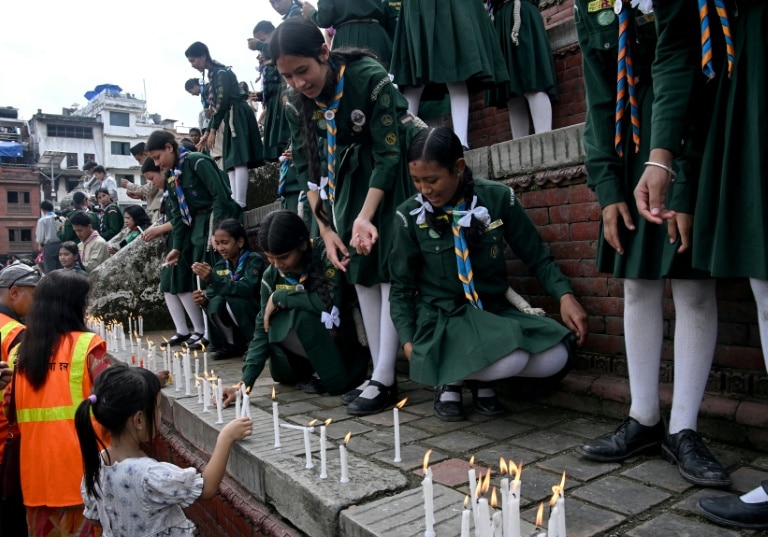
    As search and rescue operations continue across the rugged border region, candlelight vigils have already been held for victims, including an event in Kathmandu on August 29 that was attended by Nepali scouts and community members mourning those lost to the disaster.

  • Africa’s male midwives are rare but increasing in the fight against pregnancy deaths

    Africa’s male midwives are rare but increasing in the fight against pregnancy deaths

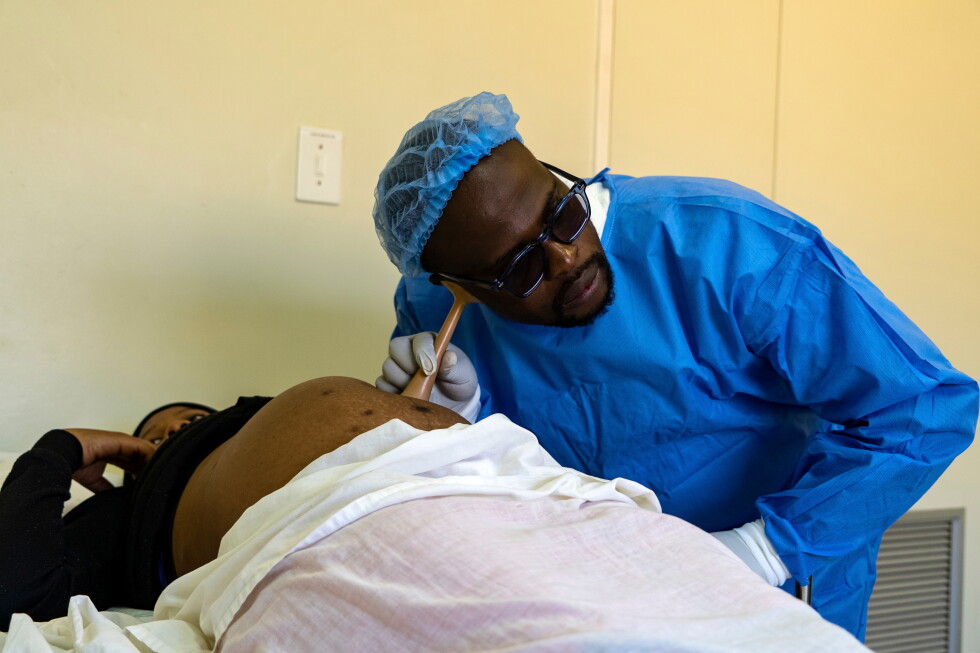
    On a crisp, cold morning in the mountainous Southern African kingdom of Lesotho, Ntlhane Sehloho slung his backpack stuffed with critical medical gear over his shoulders and set off on a three-hour trek along winding, unpaved gravel roads. His destination: Mpharane Health Center, a small clinic tucked into a remote valley that serves scattered rural communities with limited access to advanced care.

    Sehloho occupies a role once almost unheard of in this part of the world: he is a male midwife. When he stepped through the clinic’s doors on this particular morning, a group of waiting women exhaled in relief — some expecting their first child, others balancing fussy infants on their backs, all seeking the routine prenatal and postnatal care Sehloho has provided for 20 years.

    For generations, midwifery has been strictly regarded as women’s work in Lesotho’s largely conservative society. But facing one of the world’s worst maternal mortality crises, the country has launched an urgent push to recruit more men into the profession, upending long-held cultural norms to save lives. According to United Nations data, Lesotho records roughly 530 maternal deaths for every 100,000 live births — a rate more than two and a half times the global average of 200.

    This crisis is not unique to Lesotho. Sub-Saharan Africa, the world’s fastest-growing region, accounts for 70% of all global maternal deaths, with roughly 180,000 pregnancy-related fatalities recorded across the continent each year. Severe staffing shortages in remote rural clinics, where most of Lesotho’s population lives, have only worsened the crisis. With just over 2 million people nationwide, the country’s rural health posts are chronically understaffed, leaving thousands of pregnant women without access to skilled care during childbirth.

    Global health bodies have sounded the alarm for years over this shortage. World Health Organization data estimates that men make up less than 1% of the global midwifery workforce. Both the WHO and UNICEF have called for expanding recruitment to all qualified candidates, regardless of gender, to close gaping gaps in emergency obstetric care.

    Sehloho is one of an estimated 300 male midwives now practicing across Lesotho — a milestone that would have been unthinkable a generation ago. The Lesotho government does not track midwifery data by gender, so an exact count is not available, but recruitment efforts over the past two decades have steadily grown the share of men in the field. Sehloho never set out to become a midwife: as a high-achieving student, he originally planned to work as a nurse, driven by childhood memories of preventable tragedy in his rural home village.

    “Our village was far away from the health facility, so most pregnant women delivered at home. We were still young, we were not supposed to see that, as some were dying,” he recalled. “I didn’t understand how far they had to travel just to get care.”

    After he finished his nursing training, Lesotho’s health authorities encouraged Sehloho and other male nursing graduates to pursue additional midwifery training, part of a targeted strategy to expand care access to underserved rural areas. The strategy has already delivered measurable results: UNICEF data shows that 92% of births in Lesotho now are attended by a trained health provider, up from a far lower share just two decades ago.

    Lesotho’s government says the core goal is saving lives, and that gender should never stand in the way of that mission. “I think the system and the community is starting to slowly accept that gender should not matter when it comes to this issue of delivery,” explained Dr. Llang Maama, acting director of health services at Lesotho’s Ministry of Health. She acknowledged that a small number of patients still report discomfort with male midwives, and the health system formally accommodates those requests when possible. “But in the urgency of childbirth, there isn’t always time to choose,” Maama added.

    For Sehloho, acceptance comes down to building trust, one patient at a time. A talkative, quick-witted provider, he makes a point of putting pregnant women at ease from their very first prenatal visit, often sharing his own background growing up in a rural Lesotho community and highlighting his 20 years of experience delivering babies. “We are a very cultural and traditional African society,” he said.

    Blandina Motaung, a representative for the United Nations Population Fund, which partners closely with Lesotho’s midwifery community, said public reactions to male midwives remain mixed, but many patients are surprised by the unique strengths men bring to the role. Many patients report that male midwives tend to be more gentle and less strict than their female counterparts during consultations, she said. During prenatal checks, Sehloho routinely pauses after taking blood pressure or measuring fetal progress to ask patients if they are comfortable, a small habit that has won him loyalty among the community he serves.

    Motaung noted that while most female midwives have personal experience with childbirth, men’s lack of that firsthand experience often makes them more attentive to small changes and warning signs that can signal complications. “For the men, because they have not been through the process, they become more vigilant and more attentive to the nitty gritties, and that in itself improves the quality of care that they provide,” she explained.

    Patients across the country are slowly adapting to the new norm. Mpolokeng Mafereka, a 21-year-old patient at Mpharane Health Center, said she still prefers care from a female provider, but has grown accustomed to seeing Sehloho when he is the only clinician available. “I’m used to being treated by women,” she said.

    But 21-year-old Bonolo Tebello, another patient at the clinic, said she has never had concerns about seeing a male midwife. “I’m happy to be treated by a male because they still provide the same level of care,” she said. “Even when one arrives late for a check-up, they just treat you like any other person who arrived on time.”

    This reporting is part of AP News’ Africa Pulse series, supported by a grant from the Gates Foundation. The Associated Press maintains full editorial control over all funded content.

  • USS Abraham Lincoln sails past Singapore on its way home from Middle East

    USS Abraham Lincoln sails past Singapore on its way home from Middle East

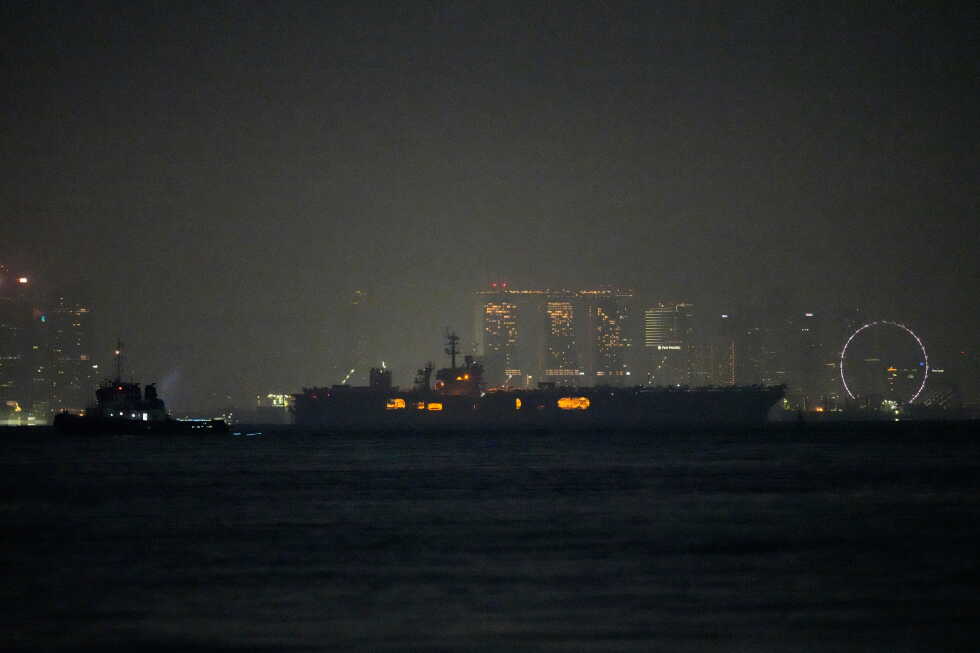
    Early on Sunday morning, the U.S. Navy’s Nimitz-class aircraft carrier USS Abraham Lincoln made its passage through waters adjacent to Singapore, beginning the final leg of its journey back to the United States following an intensive, months-long operational deployment to the Middle East. AP journalists positioned on the Indonesian island of Batam, which sits opposite Singapore across the Singapore Strait, visually confirmed the massive warship’s transit shortly after 1 a.m. local time, capturing the vessel as it sailed along the busy international waterway. Scheduled next for the supercarrier is a scheduled port call in Thailand, a stop arranged to give the crew much-needed time ashore before they complete their trip home to their home base in the U.S.

    As one of the U.S. Navy’s largest and most capable frontline warships, the Lincoln was deployed to the region to support U.S. military operations focused on Iran. During this deployment, the vessel set an unconventional record: it spent more than 250 consecutive days at sea without making a scheduled port call, a stretch far longer than typical Navy deployments. This unprecedented extended time on operations has sparked growing public and official concern over the welfare of the ship’s crew, with multiple reports emerging that document worsening mental health outcomes among sailors, as well as persistent shortages of critical supplies ranging from fresh food to basic hygiene products.

    Thai government officials have publicly confirmed the upcoming port visit, noting that the stop is explicitly intended to allow the crew rest and recovery after their grueling deployment, before the vessel continues on to its return to the United States.

  • WhatsApp chat used to send cash for crime and extremism

    WhatsApp chat used to send cash for crime and extremism

    A cross-border investigation led by the European Broadcasting Union (EBU), which includes the BBC, has exposed a massive underground money transfer network that leveraged WhatsApp and the centuries-old hawala system to move hundreds of millions of euros in untraceable funds to criminal and extremist groups across the globe. The network, which included a 532-member chat called “Traders of Greater Europe”, moved money across international borders, including to major British cities London and Birmingham, and even sent payments from Brussels to Islamic State (IS) militants operating in Syria. The investigation also linked similar unregulated hawala systems to widespread people smuggling, drug trafficking, and other transnational organized criminal activities across the continent.

    The chat log, which held more than 82,000 messages exchanged between February and December 2022, was first discovered on the personal phone of a convicted Brussels-based network leader by Belgian investigating magistrate Vincent Guerra. What began as a narrow probe into terrorist financing quickly expanded to reveal a global operation of unparalleled scale. Guerra described the total volume of transactions documented in the chat as “staggering”, noting that the network’s reach extended across the entire planet. He called the discovery of the full chat “hitting the jackpot” that unlocked access to the inner operations of a shadow financial system that operates entirely outside of government oversight.

    The network relied on the hawala system, a trust-based money transfer mechanism that operates without formal electronic records or physical cross-border movement of cash. Under the system, two geographically separate brokers (called hawaladars) reach an agreement: one accepts cash from a sender, and the other pays out the equivalent sum minus a commission to the intended recipient, with all outstanding balances settled between the brokers at a later date. While hawala is often used legally to support remittances from migrant workers to family members in regions with limited formal banking access, it has also become a critical tool for criminals seeking to avoid the anti-money laundering checks built into the mainstream SWIFT international banking system, which requires banks to flag and report suspicious large transactions.

    The “Traders of Greater Europe” chat was restricted to transactions of 5000 euros or more, with most transfers being far larger. Authorities stress that not all chat participants were aware of or involved in handling illicit funds. Hawala is currently banned in most European Union member states, but remains legal in the United Kingdom as long as brokers register with His Majesty’s Revenue and Customs.

    The cache of chat messages was obtained by the EBU following a 2024 Belgian court conviction of six money launderers connected to the network, including Abu Adam, the Brussels head of the operation, and his deputy Abu Ahmed. The investigation into the pair began when authorities uncovered evidence they had transferred funds to IS to help the wives of militants escape detention camps in northeastern Syria. When Abu Adam was arrested, investigators found not only the WhatsApp chat on his phone but also 6,000 photos of 5-euro banknotes (with visible serial numbers, which are used as unique transaction identifiers in hawala operations) and 6,000 photos of identity documents. Guerra said these records indicate Abu Adam alone processed at least 12,000 transactions, describing the operation as fully professional criminal enterprise operating at a scale “we could never have imagined”, adding that the hawaladars operate effectively as unregulated bankers for transnational criminal groups.

    The EBU investigation uncovered evidence of parallel criminal hawala networks operating across multiple European countries. A former insider in these networks, speaking anonymously under the pseudonym Frank, told reporters he had personally handled hundreds of millions of euros in illicit transactions. He described his first exposure to the system at a small office outside Rotterdam, where couriers delivered more than 1 million euros in cash in less than 90 minutes. Frank noted that the network facilitates far more than just money laundering, saying “it’s about the financing of terror. It’s about drug trafficking. It’s about prostitution and all sorts of other crap.”

    Investigations in Austria have further highlighted the brutal human cost of these unregulated networks. A probe by ORF, an Austrian public broadcaster and EBU member, uncovered a large-scale hawala hub operating out of a busy central Vienna kebab restaurant that was used to process payments for people smuggling operations. Two Syrian brothers running the hub were convicted last year of human trafficking, torture, and rape after they abused a courier who claimed he had been robbed of 350,000 euros in network funds. The pair were sentenced to 18 and 8 years in prison respectively.

    Earlier this year, Austrian police and Europol dismantled another people smuggling ring funded via hawala that authorities estimate smuggled 100,000 migrants into the European Union over an 18-month period. Gerald Tatzgern, who leads human trafficking investigations for Austria’s Criminal Intelligence Service, explained that criminal networks routinely use torture against migrants who cannot pay smuggling fees, then distribute videos of the abuse to the migrants’ families to extort additional payments, which are processed through the hawala system to avoid detection. “Videos of the torture are then sent to the families, saying that if they don’t send another 1,000 euros or several thousand euros, then the person concerned – your son, your brother, your father – will suffer,” Tatzgern said.

    Quentin Mugg, a police commander and Europol liaison officer who has led multiple anti-money laundering probes, called the unregulated hawala system “the primary money-laundering channel for organised crime”. He noted that criminal hawaladars will process any transaction regardless of its source or purpose, saying: “Whether the money comes from migrant smuggling, human trafficking, pimping, a grandmother’s savings sent as a birthday present to her son, or a Malian working in France who wants to support his family, [the hawaladars] couldn’t care less. And they’ll apply their rates.”

  • Guinea-Bissau votes in a referendum to grant expanded presidential powers ahead of election

    Guinea-Bissau votes in a referendum to grant expanded presidential powers ahead of election

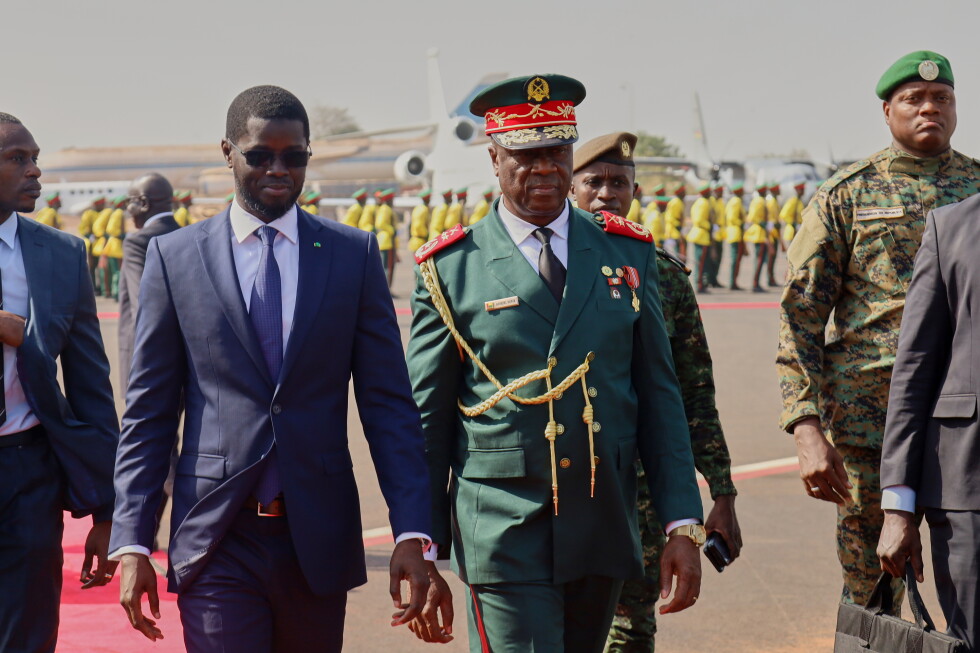
    Nearly a year after a military takeover plunged West Africa’s only Portuguese-speaking nation deeper into regional democratic backsliding, Guinea-Bissau opened polling stations Sunday for a high-stakes constitutional referendum that will shape the balance of power ahead of December’s planned general election — a vote billed by military leaders as the final step back to civilian rule.

    The current military junta seized control of the small nation of 2.2 million people in November 2023, following a bitterly contested presidential election where both incumbent former President Umaro Sissoco Embaló and opposition challenger Fernando Dias claimed victory. The coup was widely dismissed by African regional leaders as a staged power transfer; skeptics have long argued that Embaló struck a deal to step aside peacefully after projecting he would lose the official vote count, leaving the military in control of the transition process.

    At the center of Sunday’s vote is a new draft constitution crafted by the military-appointed National Transitional Council. If approved by voters, the charter would expand executive authority granted to the presidency, cut the size of the national parliament from 102 seats to 65, and explicitly cement the president’s supremacy over the office of prime minister.

    Military leaders frame the changes as a long-overdue fix for the chronic political instability that has plagued Guinea-Bissau since it gained independence from Portugal in 1973. “In a community, there is only one leader. No community or village can have two leaders,” General Tomás Djassi, head of Guinea-Bissau’s armed forces, explained in defense of the reforms. “We revised the constitution to avoid constant conflict between the president of the republic and the prime minister. We clarified the law and helped the public understand that the president of the republic is the national symbol, elected directly by the people.”

    The junta argues that a smaller legislature will streamline legislative debate and eliminate gridlock, while clearer separation of authority between the presidency and prime minister’s office will end the power struggles that have repeatedly toppled governments over the past five decades.

    But opposition groups have rejected the framing, and have organized a widespread boycott of the referendum, warning that the changes are little more than a power grab designed to cement military influence through an allied executive. The reforms, they argue, systematically weaken the office of prime minister, subordinate the national legislature and independent political parties, and erase the will voters expressed in last year’s disputed election — creating exactly the kind of deep political division the junta claims it is trying to fix.

    “This constitution significantly weakens the Prime Minister and the government, subordinates the National People’s Assembly and political parties, and devalues—or even ignores the popular will expressed at the polls, carrying all the attendant risks of political and social division and tension,” said Muniro Conté, spokesperson for the African Party for the Independence of Guinea and Cape Verde, one of the nation’s largest opposition blocs.

    Public sentiment toward the referendum reflects deep division and widespread confusion across the country. Roughly 915,000 voters are registered to cast ballots, but polling data suggests most registered voters do not view constitutional change as a pressing priority, and many remain unfamiliar with the full text of the proposed reforms.

    Bacar Camará, a high school teacher in the capital Bissau, announced he would boycott the vote entirely, arguing the transitional government should prioritize national reconciliation over restructuring power ahead of the planned general election. “The transitional government should focus on creating conditions for better understanding and reconciliation among Guineans,” he said. Other voters who plan to cast ballots say they will reject the charter, simply because they do not have enough information to support it.

    “I’ll go vote on Sunday. However, I’ll vote ‘no’ because — honestly, and I think this is the case for many other citizens — I don’t know this new Constitution well, so I can’t vote ‘yes’,” said Bissau resident Carolina Djeme.

    Independent political analysts share the opposition’s core criticism, noting that the unelected transitional government lacks the democratic legitimacy to rewrite the national constitution. “The fundamental question is: Who drafted this Constitution, and on whose behalf? To protect which interests or institutions? Who stands to benefit from this Constitution?” asked Paulino Quadé, a prominent Guinean political analyst.

    For West Africa, the referendum comes at a moment of deepening democratic crisis. Last year’s coup in Guinea-Bissau added the country to a growing list of nations in the region now under military rule, extending a trend that began with the 2020 coup in Mali and has since spread to Burkina Faso, Niger, and Gabon.

    Guinea-Bissau’s long history of political instability is well-documented: since independence in 1973, the country has weathered more than a dozen successful and attempted coups, with a failed coup attempt recorded just one month before last November’s successful takeover. While the World Bank ranks the country as having the highest per capita share of natural wealth in West Africa, more than half of its 2.2 million residents live in extreme poverty. Experts also widely note that the country’s strategic location between Latin America and Europe has made it a major transshipment hub for international drug trafficking, an illicit trade that has funded political corruption and fueled repeated power grabs for decades.

  • Rescuers dig into tunnel as missing toll from Nepal, China flood over 3,000

    Rescuers dig into tunnel as missing toll from Nepal, China flood over 3,000

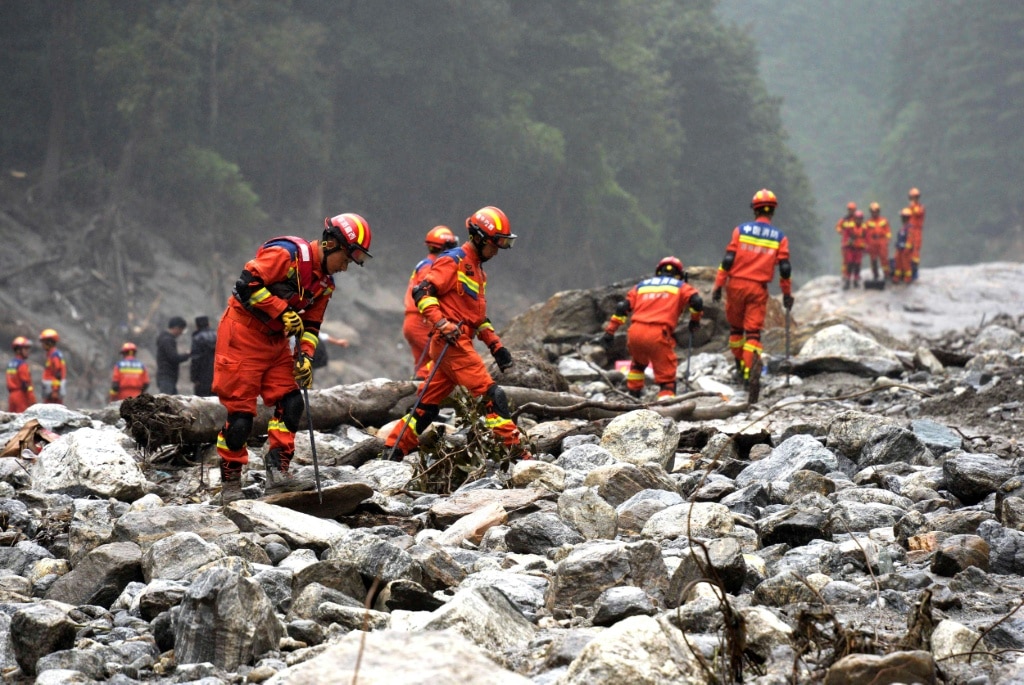
    Rescue teams across Nepal and southern Tibet continued their life-or-death search operation Sunday, struggling through thick, sticky mud and the ever-present threat of new flood surges to locate victims of a catastrophic flash flood triggered by a glacial collapse that swallowed entire Himalayan villages earlier last week.

    The latest joint death toll from both countries stands at 750 confirmed fatalities, with 3,044 people still unaccounted for as of Sunday. Reports indicate that some bodies may have been carried downstream by the powerful torrent as far as northern India, where local officials have already recovered seven bodies believed to be flood victims from transboundary rivers.

    The disaster struck the remote China-Nepal border on Wednesday morning, when a massive glacial fracture sent a 10-story-high wall of mixed water, ice, and rock debris rushing downstream through mountain valleys, the U.S. Geological Survey confirmed. China’s official state news agency Xinhua clarified that the collapse originated on the southern slope of Nepal’s Lirung Peak, triggering an ice-rock avalanche that quickly morphed into a massive debris flow. The destructive surge traveled more than 20 kilometers before slamming into Gyirong Port, a key border crossing between China and Nepal, devastating communities and energy infrastructure along its path.

    In Nepal, one of the most high-stakes rescue efforts is underway at the Trishuli 3A hydroelectric project, where multiple workers are believed to be trapped inside an under-construction tunnel. After days of digging, engineering teams managed to insert a pipe into the blocked passage, and rescuers have already begun pumping oxygen to potential survivors, Nepal’s Home Minister Sudan Gurung announced in an official statement. However, ongoing rainfall and swelling river levels have slowed progress, with national disaster authorities ordering all rescue teams to prioritize safety amid unstable conditions.

    The region is a hub for large-scale hydropower development, and 933 of the missing in Nepal are workers at various energy infrastructure projects, according to official records. Among the unaccounted for are 589 foreign nationals, including trekkers and Hindu pilgrims traveling to Tibet’s sacred Mount Kailash. The Isha Foundation, an Indian spiritual organization led by guru Sadhguru, confirmed Saturday that 80 of its members were on a group trip in the affected area, and the organization said there were no hopeful signs of survival for the group near the border immigration checkpoint.

    For survivors who escaped the initial flood, the aftermath has been devastating, with many left homeless and waiting anxiously for news of missing loved ones. “All the settlements near the river were swept away. There is nothing left,” said Buddhi Ram Dangol, a resident of Nepal’s Nuwakot district, speaking to AFP. At an army-run rescue coordination hub in Bidur, dozens of relatives gathered outside a base wall covered in lists of rescued survivors, scanning the pages for any trace of their family members. “I have come here looking for my son,” said Kalka Sharda, her voice thick with desperation.

    The disaster has also sparked a global humanitarian response, with multiple countries and international organizations stepping forward to provide emergency aid. The U.S. and Canada have each committed $3.6 million in assistance to Nepal, while the UK has pledged $6.8 million. The UN has released $2.5 million in emergency funding, and the European Union promised $2.3 million Friday. The International Federation of Red Cross and Red Crescent Societies (IFRC) has allocated more than $1 million for immediate response and launched a global emergency appeal for $31 million to support long-term relief efforts.

    Nepal’s already fragile economy, which has been under significant pressure in recent years, lacks the resources to handle a disaster of this scale. Nepali Foreign Minister Shisir Khanal estimated that the total reconstruction cost could reach “billions of dollars,” and he has made an urgent appeal for specialized international support. Key needs include heavy-lift drones and location technology to find trapped survivors, forensic testing kits to identify recovered bodies, and freezer units to store remains, as bodies submerged in warm river water decompose at an accelerated rate.

    One ongoing secondary risk has complicated rescue operations on both sides of the border: the flood created massive natural dams of debris that formed new unstable lakes, one of which threatened to burst and trigger a second catastrophic flood. In Tibet’s hardest-hit Gyirong County, Chinese authorities temporarily paused rescue operations over the weekend due to this risk. But late Saturday, China’s state broadcaster CCTV reported that the lake had begun draining naturally and had been “essentially drained,” according to the country’s Ministry of Water Resources. More than 2,100 rescuers have been deployed to the Gyirong area, including over 500 working in the most devastated zones, Xinhua reported, and authorities have already evacuated 555 stranded tourists and 499 Chinese residents from affected areas.

    As of Sunday, official data from Nepal puts the national death toll at 734, with 2,498 people still missing. Across the border in Tibet, 16 people have been confirmed dead and 546 remain unaccounted for, per Chinese official reports.

    UN climate chief Simon Stiell called the disaster a devastating wake-up call for the international community. “The sudden glacial collapse and flash flood is a devastating reminder of how fragile these mountain environments can be,” he said in a statement, highlighting the growing risk of glacial disasters driven by global climate change in Himalayan regions.

    Officials from both China and Nepal confirmed that the two countries’ foreign ministers held a telephone conversation Saturday to coordinate response efforts, agreeing to share real-time satellite imagery and hydrological data to monitor ongoing flood risks and support rescue operations.