博客

  • Erasmus relieved the pressure flipped onto Rennie after tying Springboks-All Blacks series

    Erasmus relieved the pressure flipped onto Rennie after tying Springboks-All Blacks series

    CAPE TOWN, South Africa — In a tense, high-stakes showdown at Cape Town that kept rugby fans across the globe on the edge of their seats, the world champion South African Springboks secured a gritty 33-26 victory over New Zealand’s All Blacks on Saturday, leveling the four-test series between the two rugby powerhouses and handing New Zealand head coach Dave Rennie his first loss in charge of the side.

    The match was a study in contrasting strengths: the All Blacks crossed the try line four times to South Africa’s three, outscoring the Springboks in five-pointers, but a flawless goalkicking masterclass from Springboks winger Cheslin Kolbe — who converted all seven of his attempts off the tee — pushed the reigning world champions over the line to claim the win. The result snapped South Africa’s momentum after a first-test defeat in Johannesburg one week prior, and preserved an undefeated streak that has stood for more than five years under Springboks coach Rassie Erasmus: South Africa has not dropped back-to-back home tests since Erasmus took the reins in 2018.

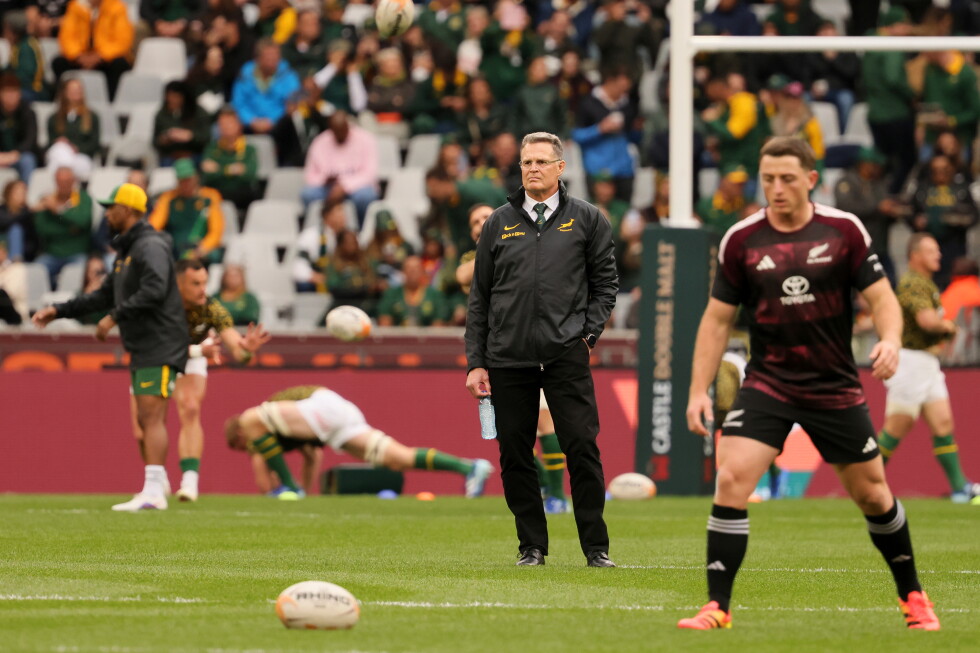
    Speaking after the final whistle, a relieved Erasmus acknowledged the weight of expectation going into the match, as South Africa had entered the series as heavy favorites. “Of course I felt the pressure, and the players will tell you I felt the pressure. I try not to put it on them but I was nervous,” Erasmus told reporters. He even joked about a shared astrological quirk between himself and the older Rennie: both were born in November, making them both Scorpios. “That’s why he’s able to work me out,” Erasmus quipped.

    With the series now tied, Eramus joked that he was looking forward to watching Rennie navigate the pressure of the decider over the next seven days ahead of the third test in Soweto. “It’s his first loss as All Blacks coach … and he’ll feel what we felt this week,” Erasmus said. He acknowledged the frustration of South African fans after the first-test defeat, adding: “We 100% understand why people are upset because no one wants to support a losing team. No one in South Africa wants to support anything that’s not working. A loss here and there doesn’t make you a losing team immediately, but it’s when you go on a losing run that the pressure comes on.”

    Erasmus warned against complacency despite the win, noting: “We must make sure we’re not confident and think we’re all good again because there were a lot of things we didn’t do well.” He also credited the All Blacks, who hired Rennie back in March specifically because previous head coach Scott Robertson only notched a 1-3 record against South Africa. Erasmus noted that the 2026 iteration of the All Blacks is a far stronger side than last year’s lineup. “They’re really well coached and they’ve got athletes who can beat you on a dime. A couple of more phases at the end and it could have been a draw,” he said.

    The Springbok coach also explained the late adjustment to his front row reserves, saying the change was made to adapt to unexpected weather conditions. The side had prepared for wet weather, but conditions ended up dry, so Erasmus opted for a lighter front row on the bench — still several kilograms heavier than New Zealand’s starting front row, he clarified.

    Injury updates from both camps bring mixed news ahead of the decider. Key South African playmaker Damian Willemse, a fullback who can cover both midfield and flyhalf, picked up a hamstring injury, and Erasmus confirmed he does not expect Willemse to be available for next Saturday’s test in Soweto. For the All Blacks, the squad is largely healthy outside of a minor neck issue for winger Will Jordan, who managed to play through the injury and finish Saturday’s match.

    Rennie addressed his side’s shortcomings after the match, singling out inconsistent lineout performance as an area the team will need to improve ahead of the decider. He noted that scrummaging, a major pain point for the All Blacks in the first test, was reasonably handled by referee Angus Gardner, but claimed that the Springboks still engaged in illegal movement at the scrum through the tighthead. Erasmus dismissed that claim as “nonsense”, while Springboks loosehead Ox Nché said any scrum delays stemmed from differing interpretations of the rules from both sides, adding: “We wasted a lot of time in scrums today because we all had different interpretations.”

    The stage is now set for a winner-takes-all third test in Soweto next Saturday, with the four-test series still perfectly level at one win apiece.


  • Ski standout Marco Odermatt won’t attend preseason training in Chile due to minor injury

    Ski standout Marco Odermatt won’t attend preseason training in Chile due to minor injury

    ZURICH – One of alpine skiing’s most dominant modern competitors saw his quest to make history hit an early speed bump this week. Swiss skiing standout Marco Odermatt, who is chasing a sixth consecutive overall FIS World Cup title, will be forced to sit out his team’s upcoming preseason training camp in Chile after suffering a minor muscle injury during routine off-season training.

    The Swiss Alpine Ski Team announced the development in a statement released Saturday, confirming that Odermatt began experiencing discomfort during a structured physical training session earlier in the week. Follow-up diagnostic exams confirmed the minor muscle strain, leading team officials to scrap his planned travel to South America. Odermatt was scheduled to depart for Chile with the rest of the national team next Monday.

    No additional details about the specific location or severity of the injury were shared in the initial announcement. Team leadership emphasized that Odermatt’s full recovery is the top priority at this stage of the preseason. “The priority now is treatment and rehabilitation,” the statement read. “As soon as a return to on-snow training is possible, the rest of his season preparation will be re-assessed.”

    Odermatt’s historic run of five straight overall World Cup titles already puts him in rare company in the sport’s record books. He is currently tied with Luxembourg’s Marc Girardelli for second place on the all-time list of most overall World Cup titles, trailing only Austrian legend Marcel Hirscher, who holds the record with eight total championships. A sixth straight title this coming season would pull him one step closer to matching Hirscher’s unprecedented mark, cementing his status as one of the sport’s all-time greats.

    The 28-year-old skier is no stranger to success on the sport’s biggest stages, either. At last season’s Milan Cortina World Championships, he earned three podium finishes, taking home two silver medals and one bronze. This adds to his giant slalom gold medal win at the 2022 Beijing Winter Olympics, rounding out a resume that includes nearly every major honor in competitive alpine skiing.

    The 2025-2026 FIS World Cup season is still scheduled to get underway as planned this October, with the traditional opening race hosted in Sölden, Austria. While Odermatt’s preseason preparation has been interrupted, the injury is currently classified as minor, leaving open the possibility that he will be ready to compete when the first race of the season kicks off in just a few months.

  • Former Ecuadorian president imprisoned for corruption

    Former Ecuadorian president imprisoned for corruption

    In a landmark corruption ruling that underscores Ecuador’s ongoing crackdown on graft among former top officials, ex-president Lenín Moreno has been convicted of bribery linked to the $2.7 billion Coca Codo Sinclair hydroelectric dam project, receiving a five-year prison sentence that will be served under house arrest.

    The 73-year-old former leader, who held Ecuador’s presidency from 2017 to 2021, was found guilty alongside 19 other co-defendants by a court in the capital Quito. Due to his advanced age and documented disability, the court ruled he would serve his sentence at his private residence rather than a state prison. Immediately following the verdict, Moreno confirmed he intends to file an appeal to challenge the conviction, maintaining his complete innocence throughout the trial.

    Prosecutors from Ecuador’s anti-corruption unit laid out allegations that China’s state-owned engineering firm Sinohydro funneled a total of $76.1 million in illicit bribes through a network of anonymous shell companies to intermediaries, officials, and connected figures to secure the contract for the dam construction. Among the 19 other individuals convicted alongside Moreno are his immediate family members—his wife, daughter, and brother—former senior project managers, acting Sinohydro representatives, and a former Chinese ambassador to Ecuador. While prosecutors confirmed Moreno personally received only a small portion of the illicit funds, they documented that his close family members received tens of thousands of dollars in illegal payments from the scheme.

    As part of the sentencing, all convicted individuals are required to repay three times the value of the bribes they received as a form of judicial restitution to the Ecuadorian state. For Moreno, an additional permanent ban from holding public office was also handed down by the court.

    Moreno has repeatedly denied any involvement in the bribery scheme, shifting blame to his predecessor Rafael Correa, under whom he served as vice president before ascending to the presidency. Correa was already sentenced to eight years in prison in a separate high-profile corruption case in 2020. Moreno argues that Correa oversaw the full negotiation and approval of the Coca Codo Sinclair project, and that when he took office in 2017, he launched an official investigation into irregularities surrounding the dam’s construction.

    This conviction marks a major milestone in Ecuador’s anti-corruption campaign, making Moreno the third former Ecuadorian head of state to be sentenced on corruption charges in recent years. The project itself has been mired in controversy long before the bribery trial: the Ecuadorian government launched formal legal action against Sinohydro in 2021 after widespread structural cracks and multiple technical failures were discovered in the completed dam. Earlier this year, the government reached a $400 million settlement with Sinohydro to resolve the construction defect claims.

    The BBC has reached out to both Sinohydro and the Chinese embassy in Ecuador to request a formal response to the conviction, but no comment has been released as of the ruling. The case continues to draw international attention as a high-profile test of judicial independence and anti-corruption accountability in Latin America.

  • Netanyahu condemns settler attack in flashpoint West Bank village

    Netanyahu condemns settler attack in flashpoint West Bank village

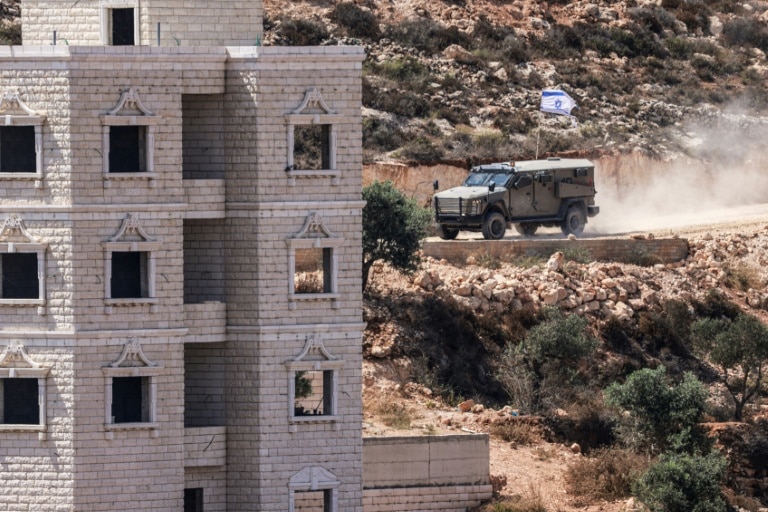
    Nearly three weeks of simmering unrest in the northern occupied West Bank boiled over on Saturday, when dozens of Israeli settlers launched a coordinated attack on the Palestinian village of Qusra, prompting an unusual public rebuke from Israeli Prime Minister Benjamin Netanyahu.

    Tensions in the area first flared in early August, when a cohort of settlers blocked vital supply routes to Palestinian homes on Qusra’s outskirts, near the city of Nablus, trapping local residents inside their properties. The blockade already drew unusually sharp public criticism from the United States’ ambassador to Israel, yet weeks later, Israeli military operations continue in the region, and settlers still freely roam the surrounding hilltops.

    On Saturday, both Qusra residents and Israeli military officials confirmed that dozens of settlers advanced into the village, hurling stones at local residents before barricading themselves inside a residential building that still had Palestinians trapped inside. According to Wafa, the official Palestinian news agency, a second attack unfolded in the nearby village of Jalud, where settlers targeted a Palestinian family and a group of foreign journalists accompanying the household.

    In an official statement released following the incidents, Netanyahu said: “I strongly condemn the criminal acts of violence committed in the villages of Qusra and Jalud by a handful of rioters who are violating the law, causing a grave injustice to the law-abiding Jewish community, interfering with the IDF in carrying out its missions, and harming Israel’s standing in the world.”

    Qusra resident Yussef Abdul Kareem Hassan told AFP that the confrontation began when a small group of settlers approached a handful of local villagers who were carrying out renovation work on a local home Saturday morning. The initial group of settlers called for reinforcements, and dozens more arrivals quickly surrounded the home, trapping the Palestinians inside and launching a barrage of stone throwing, Hassan explained.

    AFP on-site footage captured Saturday shows hundreds of Israeli security forces deployed across Qusra to contain the unrest. The Israeli military confirmed in a statement that soldiers and border police units were dispatched to the village “following reports that Israeli rioters had arrived in the area and that violent clashes had occurred, including stone-hurling toward Palestinians and additional civilians.”

    “Upon their arrival, the security forces identified dozens of rioters who had barricaded themselves inside a Palestinian home while Palestinian residents were inside,” the military statement added, noting that officials were “aware of reports of Palestinian injuries” from the attack. Security forces worked to evict the settlers from the occupied home, separate the two opposing groups, and seize vehicles suspected of being used to transport settlers to the village, the military said. These vehicles will be held as evidence for an open police investigation into the violence, and forces remain deployed in the area “to prevent further disturbances and restore order.” The statement closed with the military’s official line that it “strongly condemns all forms of violence.”

    Settler violence against Palestinian communities in the West Bank has been a persistent issue for decades, with perpetrators rarely facing meaningful legal consequences, but regional observers have recorded a dramatic surge in these attacks in recent months. Today, more than 500,000 Israeli settlers reside in settlements across the West Bank, settlements that are universally recognized as illegal under international law, alongside a local Palestinian population of approximately three million. Israel has maintained military occupation of the West Bank since the 1967 Six-Day War.

    An AFP tally compiled from data provided by the Palestinian Ministry of Health shows that since the outbreak of the Gaza war in October 2023, Israeli forces and settlers have killed at least 1,103 Palestinians in the West Bank, a count that includes both combatants and civilian non-combatants. Over the same period, Israeli official data records that at least 48 Israelis, including civilians and security personnel, have been killed in Palestinian attacks or during Israeli military operations in the region.

  • Norway’s new king remembers ‘my dear father’ in first speech

    Norway’s new king remembers ‘my dear father’ in first speech

    In his first televised address to the Norwegian people since ascending the throne, King Haakon VIII delivered an emotional, tearful tribute to his late father, King Harald V, on the eve of what would have been Harald and Queen Sonja’s 58th wedding anniversary. The 89-year-old former monarch, who earned widespread affection as the “people’s king” and was widely praised for modernizing the Norwegian monarchy during his 35-year reign, passed away Friday morning in a Oslo hospital while receiving treatment for a rare blood disorder.

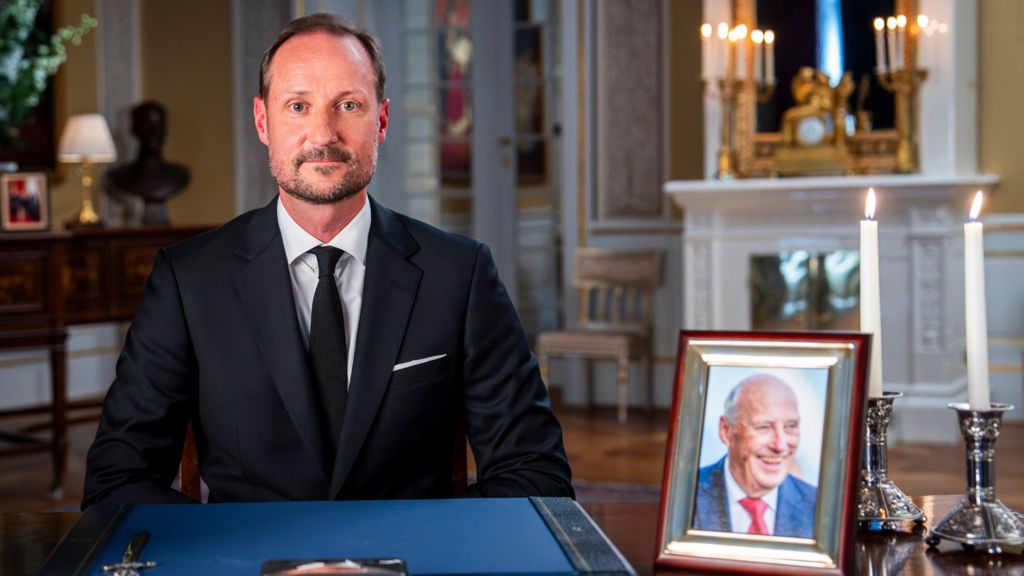
    Seated at a wooden desk inside Oslo’s Royal Palace, flanked by a framed portrait of Harald, two glowing candles, and an arrangement of delicate white roses, Haakon spoke through waves of emotion to open his first national address as Norway’s new head of state. “Thank you for being such a good dad,” the 53-year-old new king said. He remembered Harald as a loving father to himself and his sister Princess Märtha Louise, a playful, warm grandfather to his six grandchildren, and a devoted, caring husband to his widow, Queen Sonja. As he marked the approaching anniversary of his parents’ wedding, Haakon paused to choke back tears.

    Haakon recalled that Harald united the royal family with a quiet, natural authority he often did not recognize in himself, and remained unwaveringly committed to his core values throughout his life. “He constantly reminded us in the family that each of us must do things in our own way. Find our own style. Be ourselves,” Haakon shared. He also reflected on the profound comfort drawn from the thousands of ordinary Norwegians who gathered outside the Royal Palace in the days since Harald’s death, laying flowers, lighting candles, and leaving tributes to the late king. “We are in mourning, yet at the same time it brings comfort and strength that so many are grieving together with us,” he said.

    Since news of Harald’s passing broke Friday, crowds have continued to lay flowers outside the palace gates, and the Norwegian government has declared a national period of mourning, though a date for the late king’s funeral has not yet been announced. Prime Minister Jonas Gahr Støre was among those who paid tribute, laying a floral arrangement, signing the official condolence book, and meeting with the new king. After the meeting, Støre said the entire nation was “united in grief and gratitude” for Harald’s decades of service.

    Haakon is set to formally take office on Tuesday, when he will swear an oath of allegiance before the Norwegian parliament. He will later join his wife, Queen Mette-Marit, for a simplified consecration service — Norway abolished full coronation ceremonies decades ago. But Haakon assumes the throne at a uniquely challenging moment for the Norwegian royal family, which has weathered a string of public controversies and health crises in recent months.

    Earlier this year, Mette-Marit faced intense public scrutiny after revelations of a three-year friendship with convicted sex offender Jeffrey Epstein came to light, prompting a public apology from the queen. Just months after the controversy, Mette-Marit underwent a life-saving lung transplant to treat pulmonary fibrosis, a condition she has lived with since 2018. Physicians do not expect to declare her medically stable until 2027, meaning Haakon must balance the demands of his new constitutional role with caring for his wife.

    Additional controversy has come from Haakon’s stepson, Marius Borg Høiby, who was raised in the royal family after Haakon married Mette-Marit when Høiby was four years old. Though Høiby holds no official royal title, his June conviction on rape and other criminal charges, which resulted in a four-year prison sentence, has sparked public criticism of the royal family. Høiby is currently appealing the conviction. Haakon’s sister, Princess Märtha Louise, also stepped back from all official royal duties earlier this year after widespread backlash over her 2024 marriage to an American self-described shaman and their controversial joint business activities.

    Without explicitly referencing these challenges, Haakon addressed the moment of turmoil in his address, noting: “Our family has experienced the importance of standing together in order to remain steadfast both within ourselves and for one another even during difficult times.” He emphasized that he, Mette-Marit, and Crown Princess Ingrid Alexandra would “always strive to understand the life situations of different people,” and committed to national unity, saying: “No one who lives in this country knows what we will face together, but what we do know is that we will stand by one another through both good days and difficult ones.” He stressed that the royal family remains committed to a Norwegian society “built on law and justice, where everyone is of equal value.”

    While the late King Harald retained broad popular support through the end of his reign, public support for the Norwegian monarchy has declined in recent years: a poll conducted earlier this year for leading Norwegian newspaper Aftenposten found that monarchy support dropped from 72% in 2024 to 54% ahead of Haakon’s ascension. Still, royal analysts interviewed by the BBC expressed cautious confidence in the new monarch, noting that Haakon is widely viewed as a respected, hardworking public servant who is well-equipped to navigate the challenges ahead and unify the nation and royal family.

  • A look at the deadliest Russian attacks on Ukraine this year

    A look at the deadliest Russian attacks on Ukraine this year

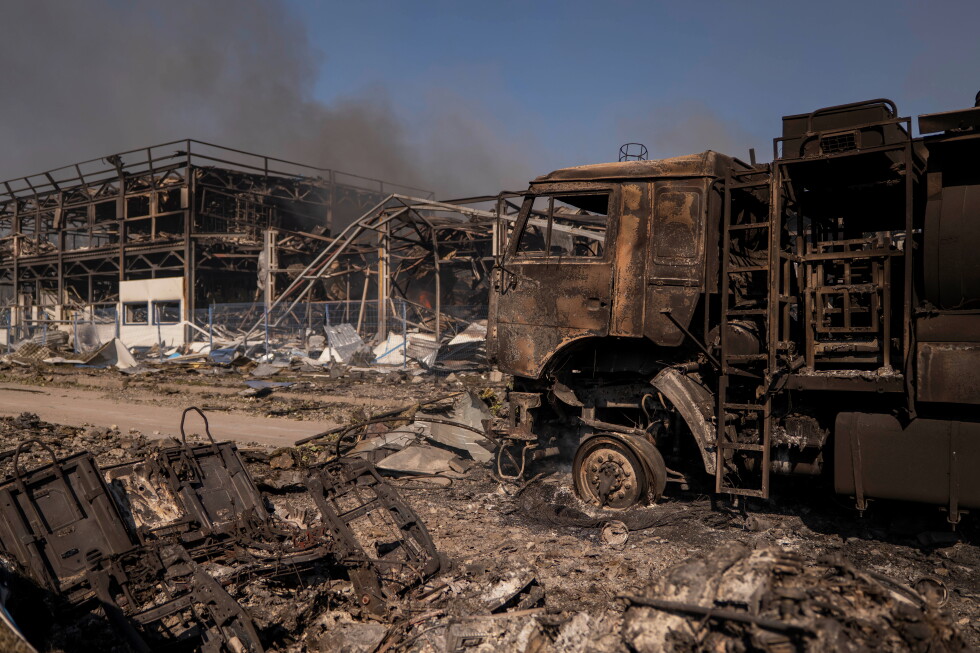
    As Russia ramps up the intensity of large-scale offensive operations against Ukraine in a bid to wear down Kyiv’s defensive capabilities, the deadliest attack of the year so far has claimed at least 37 civilian lives in a Ukrainian village west of the capital. The overnight strike on Friday targeted a civilian warehouse in the small settlement of Myla, located in Kyiv’s western suburbs, leaving a devastating trail of death and destruction that has drawn renewed attention to the human cost of Moscow’s full-scale invasion.

    Local officials confirmed that 34 of the fatalities from the Myla attack occurred at a residential care facility for elderly and disabled citizens, located adjacent to the targeted warehouse. According to Ukrainian authorities, the warehouse was allegedly being used to illegally store munitions. The initial drone strike triggered a chain of secondary explosions and fast-spreading fires that rapidly spread to neighboring residential structures, including the care home. Ukrainian President Volodymyr Zelenskyy labeled the incident an “absolutely terrible situation”, noting that the scale of loss appeared to stem from “terrible negligence on the part of those who stored explosives right next to ordinary people”.

    The Myla attack is not an isolated incident: 2024 has seen a string of lethal Russian strikes on Kyiv and its surrounding regions that have killed dozens of civilians and tested Ukraine’s overstretched air defense networks. Just over a month before the Myla attack, on July 6, a wave of coordinated missile and drone strikes across Kyiv region left 22 people dead. Notably, every ballistic missile launched in that assault successfully hit its intended target, a stark demonstration of the growing gaps in Ukraine’s air defense capabilities that have left Kyiv pleading for additional advanced interceptors, particularly U.S.-manufactured Patriot systems. After that attack, Ukraine’s Emergency Service ordered the evacuation of roughly 600 residents from the Kyiv suburb of Vyshneve over risks posed by unexploded ordnance. In a pattern that mirrored the Myla incident, Zelenskyy later confirmed that munitions had also been illegally stored at the targeted Vyshneve site.

    Weeks earlier, on July 2, Russia launched a hours-long combined drone and missile barrage across Kyiv that killed 31 people and wounded more than 100 others. Moscow explicitly framed the attack as retaliation for earlier Ukrainian strikes on Russian oil infrastructure. Air raid sirens sent more than 50,000 Kyiv residents scrambling for shelter in the city’s underground subway stations, as repeated explosions rocked residential neighborhoods across the capital. For a full day, emergency response teams worked through the rubble of collapsed, burned-out apartment blocks to recover victims and search for any survivors.

    The first of the year’s deadliest major attacks on Kyiv occurred on May 14, when a Russian cruise missile strike leveled a nine-story apartment building, killing 24 people and wounding dozens more. At the time, Ukraine’s Air Force called the assault the largest single missile barrage launched against the capital since Russia expanded its full-scale invasion in February 2022.

    The string of high-casualty strikes comes as Russia continues to increase the frequency of major offensive attacks across Ukraine, with the strategic goal of exhausting Ukraine’s air defense networks and demoralizing civilian populations ahead of a planned push for new territorial gains. International observers note that repeated gaps in Ukrainian air defense have left civilian populations in Kyiv and other major urban centers increasingly vulnerable, even as Western allies continue to debate the pace and volume of additional military aid to Kyiv. Associated Press coverage of the ongoing Russia-Ukraine war is available at https://apnews.com/hub/russia-ukraine.

  • Australia usually hosts the world’s biggest cuttlefish mating event – not this year

    Australia usually hosts the world’s biggest cuttlefish mating event – not this year

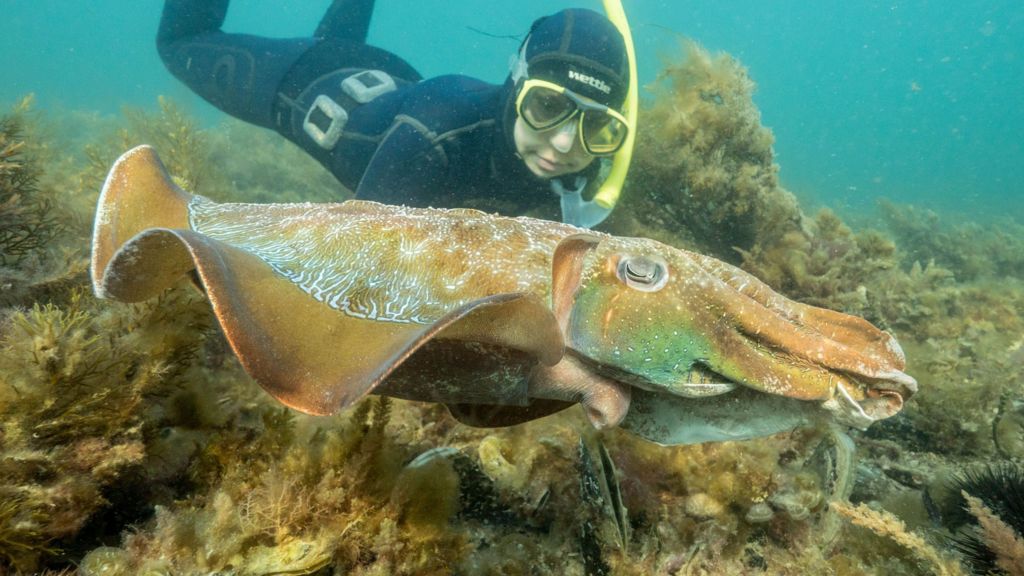
    Each winter, a narrow stretch of South Australia’s iconic Cuttlefish Coast becomes the global stage for the world’s largest aggregation of breeding Australian giant cuttlefish, a one-of-a-kind marine species found nowhere else on Earth. In abundant years, hundreds of thousands of these color-changing, shape-shifting cephalopods gather in the area’s shallow coastal waters to mate, drawing thousands of enthusiastic recreational and scientific divers eager to witness the spectacular natural event. This year, however, that yearly gathering has hit an unprecedented historical low, triggering urgent warnings of a potential catastrophic collapse of the local population.

    Official population data published this month puts the total number of breeding cuttlefish at just 1,811, marking a staggering 97% drop from the 63,000 counted during last year’s mating season. State environmental officials point to a persistent toxic algal bloom that has ravaged South Australia’s coastline for more than 18 months as the most likely driver of this sharp decline. The plummeting numbers have also reignited calls for the species to be formally listed as endangered under Australian conservation legislation.

    Unlike many marine species, adult giant cuttlefish have an extremely short lifespan of just 12 to 18 months, and die immediately after breeding. This means every annual mating season is make-or-break for the next generation of the population. This year, survey teams only counted 440 cuttlefish eggs across the entire breeding grounds, a stark contrast to the millions of eggs that are typically laid during a healthy season.

    Manny Katz, a 28-year-old diver commissioned by South Australia’s Department of Environment and Water (DEW) to conduct the underwater egg survey, explained the urgency of the work. “Because there have been so few cuttlefish, DEW thought it would be worth going out and trying to do an assessment of how many eggs there currently are around the coastline to understand what the population is going to be next year,” he said. Over two days in July, Katz and three other divers completed eight hour-long dives, combing the undersides of rocky reefs across 8 kilometers of coastline to count every egg. “Along the eight kilometers of coastline, there would normally be millions of eggs, because each female can lay dozens of eggs and tens of thousands usually turn up to breed,” Katz noted. “We pretty much looked under every single rock that we could have and we only found about 440 eggs.”

    With the species’ one-year lifespan, the outcome of this breeding season will directly determine the size of next year’s population, leaving the future of the aggregation uncertain. “Under our current circumstances, with there being so few eggs along the coastline, we don’t know if the population is ever going to be able to recover,” Katz said. While it will take 12 to 24 months to confirm the long-term impact of this year’s low numbers, Katz said the result aligns with expectations, given the ongoing damage from the toxic algal bloom first detected in South Australian waters in March 2024.

    During his survey, Katz also observed unusual behavior in the small number of adult cuttlefish his team encountered. Where tens of thousands would normally be visible, the team spotted only around a dozen individuals, all of which were far more skittish than usual, spending most of their time hiding under rocks. “Because there’s so few cuttlefish hanging out at the moment, they don’t have strength in numbers,” he explained.

    While toxic algal blooms are a naturally occurring phenomenon, the current prolonged event is driven by a combination of ocean warming, marine heatwaves, and nutrient runoff, all of which are being amplified by human-caused climate change. For conservation advocates, the plummeting cuttlefish numbers are a warning sign of broader systemic damage to Australia’s coastal marine ecosystems. “Our marine habitats have been getting wiped out for the past year and a half now… this is an indicator that our marine ecosystems are in real big trouble – the canary in the coal mine, so to speak,” Katz said.

    Last year’s breeding season was largely unaffected, as the algal bloom had not yet reached Cuttlefish Coast by winter 2024, but low concentrations of the toxic algae have been recorded in the area since late last year. Cuttlefish, along with other cephalopods including octopus and squid, are uniquely sensitive to the toxins produced by the bloom, making the spread especially concerning for the species.

    Stefan Andrews, co-founder of the Great Southern Reef Foundation, has formally called for the Australian giant cuttlefish to be listed as a threatened species in response to what his organization describes as a catastrophic decline. Andrews acknowledges that while the algal bloom is the most plausible explanation for the collapse, current data does not yet confirm it is the sole cause. Even so, he warned that the lack of breeding activity this year will almost certainly lead to a very small cohort of young cuttlefish entering the population next year. “That will make the next breeding season especially challenging,” he said.

    In response to the findings, a spokesperson for South Australia’s Department of Primary Industries and Regions noted that giant cuttlefish populations have naturally fluctuated significantly in response to changing environmental conditions in the past. Previous surveys have recorded population lows of 13,500 in 2013, and highs of 247,000 just seven years later in 2020. “The cuttlefish population estimate rebounded to more than 100,000 just two years following the low numbers in 2013,” the spokesperson said. “While it appears likely the algal bloom has impacted cuttlefish numbers, researchers are working to determine whether this contributed to the reduced population or was just one of the potential impacts.”

    Professor Mike Steer, executive director of the South Australian Research and Development Institute, which assisted with the 2025 underwater surveys, called the unprecedented low count “disheartening.” But he echoed the government’s cautious optimism, pointing to the species’ history of rapid recovery when environmental conditions improve. “We know from the past that this population has the capacity to recover when conditions are favourable,” Steer said, adding that there are early positive signs: adult cuttlefish are still successfully laying eggs, meaning the population could rebound over the next several years if conditions improve.

  • South Africa hold off All Blacks fightback to level series

    South Africa hold off All Blacks fightback to level series

    The rugby world witnessed another chapter of what is widely hailed as ‘rugby’s greatest rivalry’ this weekend, as world champion South Africa secured a hard-fought 33-26 victory over New Zealand at Cape Town Stadium, pulling the three-Test series level at 1-1 with one decider remaining.

    Going into the second Test, the All Blacks carried high stakes: a win would have marked them as the first New Zealand men’s side to claim back-to-back away Test victories on South African soil since the iconic 1996 ‘Incomparables’ squad. What unfolded was a tense, high-octane clash that delivered on every bit of the pre-series hype, even defying pre-match disruption that reshaped both sides’ lineups ahead of kickoff.

    Springboks head coach Rassie Erasmus stunned observers with five last-minute changes to his original matchday squad announced earlier that week. Fly-half Handre Pollard was ruled out with a recurrence of an injury just days after being declared fit, while wing Cheslin Kolbe made a reverse journey from injury casualty to starting lineup. Most dramatically, Erasmus swapped out his entire starting front row for the bench unit in the final hours before kickoff, a gamble that would ultimately pay off for the world champions.

    From the opening whistle, South Africa threw everything at their visitors. At nearly 40 years old, hooker Deon Fourie — the oldest Springbok to ever represent the national side — executed a pinpoint line-out throw that set up a powerful rolling maul deep inside New Zealand’s 22-metre line. Quick, clean ball from the breakdown saw centre Jesse Kriel crash over the try line for a try within the opening two minutes, with Kolbe slotting the conversion to give the hosts an immediate 7-0 lead.

    New Zealand slowly grew into the contest, referee Angus Gardner — himself a late replacement for original official Nika Amashukeli — allowing a fast, free-flowing game to unfold. After a series of threatening attacking sequences, intricate handling from the All Blacks freed fullback Will Jordan down the right flank, who linked up with standout scrum-half Cam Roigard for New Zealand’s first try. Fly-half Ruben Love slotted the simple conversion to level the scores at 7-7.

    The try reignited South Africa’s cutting edge, which had been muted in the first Test loss the week prior. Kolbe knocked over a penalty to restore the lead, before another dominant rolling maul created the space for centre Damian de Allende to barrel over for the Springboks’ second try, pushing the lead out to 17-7. New Zealand hit back almost immediately: captain Ardie Savea broke from a line-out, and a sequence of sharp passing gave fullback Damian McKenzie an unopposed walk-in try, cutting the deficit back to three points as halftime approached.

    In a match-defining sequence right before the break, Erasmus brought on elite scrummagers Malcolm Marx and Ox Nche off the bench, and the pair immediately won a penalty from a five-metre scrum. With New Zealand’s pack backpedaling under pressure, Springbok captain Siya Kolisi — returning to the starting lineup after a spell out — crashed over for a third try. Kolbe’s conversion pushed the halftime score to 24-14, giving South Africa a crucial 10-point buffer.

    South Africa extended their advantage in the opening stages of the second half: New Zealand coughed up possession in dangerous territory, and conceded a soft penalty that Kolbe converted. Another breakdown penalty from Marx saw Kolbe slot his fourth penalty, pushing the lead out to 16 points with just 30 minutes left to play.

    Though the second half lacked the frantic try-scoring pace of the first, the All Blacks refused to fold. Led by Roigard, the New Zealand backline manufactured a sequence of stunning attacking opportunities, with centre Leroy Carter finishing off a sweeping movement to score in the left corner in the 62nd minute. A late break down the right flank by Jordan set up captain Savea to crash over with just three minutes left on the clock, cutting the Springbok lead to just seven points and setting up a nerve-wracking closing sequence.

    With South Africa down to 14 men after lock Lood de Jager was sin-binned for a high tackle, New Zealand launched one final attacking push to level the game. But replacement forward Cameron Hanekom won a match-saving turnover at the breakdown — an area the Springboks dominated all game — to secure the win.

    Man of the match honors went to Kolbe, who stepped into kicking duties for inexperienced fly-half Sacha Feinberg-Mngomezulu for the second week running, scoring 18 points from three conversions and four penalties to anchor South Africa’s victory.

    While New Zealand outscored South Africa by four tries to three, the Springboks’ superior discipline and dominance of set pieces and breakdown play proved the difference on the day. The result levels the first three-Test series between the two global rugby powers in 30 years, with the decider set to take place next Saturday at altitude in Soweto, Johannesburg.

    The All Blacks’ first Test win a week prior at Ellis Park had pushed them above South Africa in the official World Rugby rankings, but the home side has now restored their status at the top and carries momentum into the final decider. Despite the loss, New Zealand’s dynamic attacking play across the first two Tests means they still retain hope of becoming the first side in 30 years to claim a historic away series win, and all eyes in the global rugby community will now turn to Soweto for the final showdown.

  • Right-wing commentator Milo Yiannopoulos deported from US to UK

    Right-wing commentator Milo Yiannopoulos deported from US to UK

    In a striking turn of irony that has reverberated across American political circles, the U.S. Department of Homeland Security (DHS) has confirmed that controversial British right-wing commentator Milo Yiannopoulos has been deported back to his home country following detention by U.S. Immigration and Customs Enforcement (ICE). The 41-year-old, a former editor at conservative outlet Breitbart News and one-time political advisor to rapper and 2020 presidential candidate Kanye West, was removed from the country on August 29, according to an official DHS statement shared with the BBC.

    DHS officials characterize Yiannopoulos as an illegal alien from the United Kingdom who violated U.S. immigration law by overstaying his authorized period of entry after arriving in the country in May 2019. The commentator was first taken into custody on August 27 when he landed at Louis Armstrong New Orleans International Airport, marking the end of his multi-year overstay. What makes the deportation particularly notable is Yiannopoulos’s long history of advocating for harsh, restrictive U.S. immigration policies — stances that put his own treatment at the hands of immigration authorities in the national spotlight.

    A self-described provocateur who has styled himself as the “most fabulous supervillain on the internet,” Yiannopoulos built his public profile on incendiary rhetoric that has drawn widespread condemnation from critics, who label his statements as hate speech targeting marginalized groups. Over the years, he has openly called for mass deportations of undocumented immigrants, demanding the immediate removal of anyone unable to prove legal status in the U.S. Just last year, he pushed for full legal immunity for ICE agents conducting enforcement operations, writing on social media in 2025 that “we have got to deport millions and millions of people. Without that, nothing else matters.”

    Yiannopoulos first rose to national prominence as an early supporter of Donald Trump during the 2016 presidential election, headlining the “Gays for Trump” event at that year’s Republican National Convention. While he still expresses general support for Trump’s policy agenda, he has become a public critic of the former president and current commander-in-chief, claiming in a March 2025 post on X that Trump had “lost his way, bought off by foreign interests.”

    The commentator’s career has been marked by repeated controversy. In 2017, he was disinvited from speaking at the Conservative Political Action Conference (CPAC) — a major annual gathering of U.S. conservatives that has long hosted Trump — after surfacing footage showed him appearing to condone pedophilia. Yiannopoulos denied the allegations, claiming the comments referenced his own childhood abuse experiences, but he ultimately resigned from his position at Breitbart following the backlash. He has also been frequently associated with the alt-right movement, a loose coalition of anti-political correctness groups that includes white supremacists and neo-Nazis; while he has rejected labeling himself as a member of the movement, he has described it as “energising and exciting.”

    Beyond his political commentary, Yiannopoulos has held a series of controversial political roles: he assisted Kanye West’s 2020 independent presidential campaign, and later worked for former Republican Congresswoman Marjorie Taylor Greene, who ultimately split with Trump and resigned from office after becoming a fierce critic of the former president. Yiannopoulos, who once identified as gay, now describes himself as “ex-gay,” and has drawn outrage for his inflammatory comments about transgender people, Muslims, Black Lives Matter, feminists, and LGBTQ+ people.

    Fellow far-right commentator Laura Loomer, a Trump ally who has had a long public feud with Yiannopoulos, publicly claimed credit for tipping off authorities that led to his arrest. In a post on X Friday evening, Loomer wrote that Yiannopoulos’s deportation flight had already departed, adding that “this subversive foreign agent is already out of the United States and DHS tells me he’s NEVER allowed to come back to the United States ever again.”

    As of this report, the BBC has reached out to the UK Home Office for comment on the deportation, and has not yet received a response. DHS has also publicly released the booking mugshot of Yiannopoulos following his detention, confirming the details of his arrest and removal.

  • China censors videos showing deadly flash floods on the Nepal-Tibet border

    China censors videos showing deadly flash floods on the Nepal-Tibet border

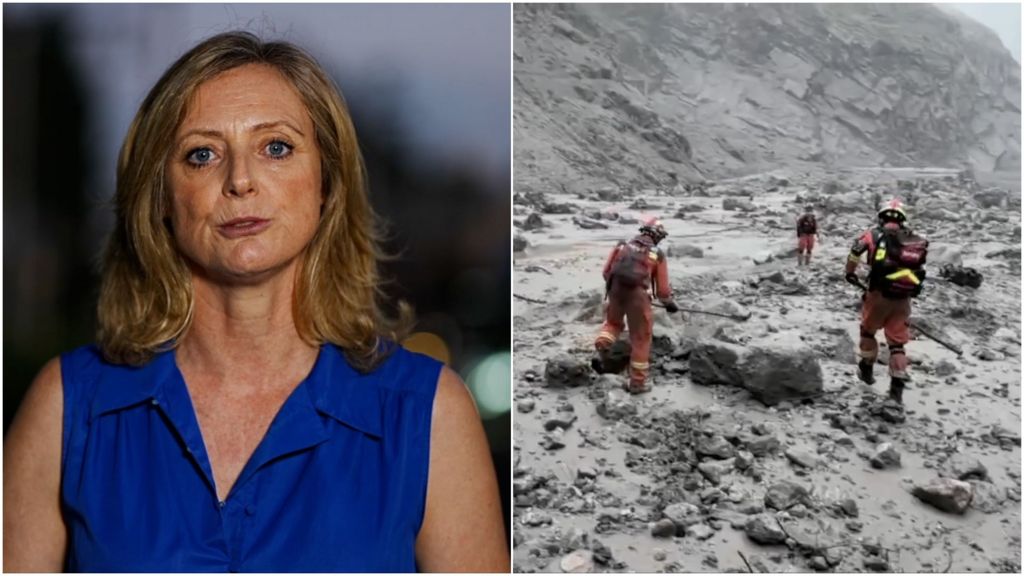
    A deadly flash flood event that hit the border region between Nepal and the Tibet Autonomous Region of China has triggered a separate development involving online content control, as visual recordings of the disaster have largely disappeared from China’s tightly regulated internet ecosystem.

    Multiple sources familiar with China’s online content policies confirm that footage capturing the flood’s damage and human impact has been systematically removed from major domestic social media platforms, search engines, and video-sharing sites. As a result, users accessing the internet through China’s mainstream network infrastructure now face extreme difficulty locating any user-uploaded or independent recordings of the cross-border natural disaster.

    Flash floods in the mountainous Nepal-Tibet border region are a recurring seasonal hazard, fueled by intense monsoon rainfall or sudden glacial lake outburst events that can sweep through river valleys with little warning, causing widespread destruction to local communities and infrastructure. This latest event has already been confirmed to have resulted in fatalities on both sides of the border, according to initial regional reports.

    China’s national internet regulatory framework is designed to restrict the spread of what authorities classify as “disruptive information” or content that could spark public unease, leading to routine removal of unapproved coverage of natural disasters, accidents, and other sensitive events. This latest incident of content removal highlights the ongoing operation of that censorship system in the context of a cross-border natural disaster.